
May 20, 2021 · 37 minutes · Episode 230
About this episode
Is laughter truly the best medicine? Certified Laughter Yoga Leader and certified yoga instructor Jamie Poster talks about laughter yoga and its effect on your emotional, physical, and mental health.

Learn more about your ad choices. Visit megaphone.fm/adchoices
See Privacy Policy at https://art19.com/privacy and California Privacy Notice at https://art19.com/privacy#do-not-sell-my-info.
Key quotes
“So, laughter yoga is just a practice of choosing to laugh for no reason.”
“but the actual reason is because we're choosing to laugh for our health, because of all the wonderful, delicious, juicy benefits of laughter, for not just our physical health, but our mental health, our emotional health, our energetic health.”
“You see a lot of people who are in chemotherapy turning to laughter yoga, or people who have prosthetic limbs turning to laughter yoga, just because it is so accessible.”
“But for me, I can laugh for two to five minutes and that helps me transition in that moment.”
“But a minute and a half of laughter and then 30 seconds of breathing, you have two minutes and I dare you to try it.”
Related episodes
- Ep. 273 Briana Henry – Before Birth
- Ep. 518 Yoga & Mindful Motherhood with Liberté Chan
- Ep. 503 No Warning with Zuleyma Santos
- Ep. 493 In Conversation with Esther Friedman Schwartz
Transcript
AI-generated transcript with speaker labels — may contain errors, especially names and medical terms. Dr. Elliot Berlin, DC appears in blue; Jamie Poster in orange.
Download PDF of the Transcript
Dr. Elliot Berlin, DC [1:36] Welcome to the informed pregnancy and parenting podcast. I'm your host dr. Elliott Berlin Well, we know that laughing can feel pretty good sometimes from stress relief to inducing pure joy We've all hopefully experienced a good laugh at some point, but have you ever heard of laughter yoga? My guest today stumbled upon the laughter yoga movement years ago in Portland, Oregon After starting her own laughter yoga collective and spending time studying and researching it She's here to tell us from a personal perspective all that she has learned Including what it actually is and what positive benefits it can offer us Jamie poster. Welcome to the podcast
Jamie Poster [2:14] Hi, thanks. Glad to be here. Well, you know laughter is medicine and Yes, indeed. Yeah, it's my favorite kind of medicine It's Well, it's free and it's a readily accessible to anyone who seeks to invoke the power of it So that is a plus although I do have to say you see a lot of research out there with questions like is laughter really the best medicine and My personal belief on it is that it is medicine and it is certainly beneficial Is it the only program that most people need to either enhance their mood or physical health? No, like that program is something you should consult with your medical doctor And it could be a part of that program But it's not the best medicine that bl and i'll leave the rest of it behind
Dr. Elliot Berlin, DC [3:04] Oh my doctor's been calling because it's been more than a year since my last visit And uh, he's okay. You're overdue for your physical. I was like don't worry. I've been laughing No, okay And how did he respond to that? He wasn't laughing. He was not laughing at all and I was like, you know That's not healthy doctor I need to adapt a little bit of laughter Um, let's start at the beginning. Where are you from?
Jamie Poster [3:28] What do you do? I'm from los angeles born and raised in the san sanando valley and I currently Moved over the hill to the city side of los angeles and uh, I work in urban planning as a private land use consultant
Dr. Elliot Berlin, DC [3:42] Wow, my kids told me recently that I moved over the hill Did you have a 50th birthday is that it's coming up pretty soon
Jamie Poster [3:52] It's out there It's hanging out there like a big monster ball. So you're from la originally Eight one eight originally born and raised eight one eight. That's right so i'm a Second generation angelino
Dr. Elliot Berlin, DC [4:05] Like did you always know you wanted to be in urban planning?
Jamie Poster [4:09] Oh, no, definitely not I had a quite the circuitous path in uh finding my current career path Um, I majored in music in college musicology So looking at basically an english major but studying musical text instead of book text literature text And then after that I spent a lot of time just moving around. I spent some time in colorado chopping down trees
Dr. Elliot Berlin, DC [4:34] I spent some time. You can't just gloss over that. What do you mean chopping down trees?
Jamie Poster [4:41] Um, well, I was on my college lumberjack team
Dr. Elliot Berlin, DC [4:44] There's a team. It's a sport
Jamie Poster [4:46] Oh, yes timber sports. It's a whole world out there. I mean I went to college in maine So the timber sports you find collegiate teams in timber sports in locations of the country where there would have been a history of So you see it in the Northeast, you see it in the South, actually, there's a big logging community down there, places like Wisconsin, and California also, but in the northern part of the state, so, like, Humboldt, Cal has a team.
Dr. Elliot Berlin, DC [5:12] So, it's like how quickly you can take down a tree, or?
Jamie Poster [5:16] Yeah, well, we do, not actual trees, but we simulate chopping down a tree. So there's something called a vertical chop, where you place a piece of, like, eight-by-eight wood in a stanchion, a vertical stanchion, and then you speed chop it in half. Sometimes it's a doubles event, where one person chops one side and another person chops the other side. Other times it can be an event called fell and twitch, where they actually insert a pole in the ground, and then two people chop the tree down at fall. You get points if the pole lands on a peg in the ground, and then the other four members of your team run out with chains and drag the fallen pole across the finish
[5:55] line.
Dr. Elliot Berlin, DC [5:56] Wow. I mean, I had no idea this even existed.
Jamie Poster [5:59] Oh, yeah.
Dr. Elliot Berlin, DC [6:00] We all need tire fractors in our thirties. Yeah, I bet you do. It sounds dangerous. I, like, as an anxious Jew, all I could think about is, like, if I'm chopping one way and my teammate's chopping the other way, I don't want to get shot by accident, or if it falls this way or that way.
Jamie Poster [6:14] Yeah, no, my parents thought so, too. Yeah.
Dr. Elliot Berlin, DC [6:17] Do people get hurt?
Jamie Poster [6:18] Not so often. No, I mean, most of the events, well, there are some events with axes and saws, because it is a historical sport. There are other things like chain throw, where 10 chains equals an acre, and the sport, it's like a measuring tape, and you roll it out in a very straight line, and then whoever coils it up the fastest wins the event. Or there's another one called match light, where, you know, strike anywhere matches, and they stick it in a stump, and you get a hatchet, and you try to light the match with the hatchet. It's very difficult. And sometimes it's a timed event. Sometimes they'd score you on how many tries it takes for you to light the
[6:55] match on fire.
Dr. Elliot Berlin, DC [6:56] I just have a hard time lighting the match on that safety strip. So, OK, so you sidetracked me because you got me in the logging and the tree sports.
Jamie Poster [7:07] Sorry, surprise.
Dr. Elliot Berlin, DC [7:08] Yeah, look at that. It seems like a great workout.
Jamie Poster [7:10] You know, I'm not going to go with my college years being my healthiest years of my life.
Dr. Elliot Berlin, DC [7:16] Well, I didn't say your whole college years, but I mean, has moving trees around a good workout? It sounds like it would be.
Jamie Poster [7:22] Yeah, well, I mean, it's really a sport of technique. So if you are doing your job well, you shouldn't be using very much of your physical body at all. A chop should take approximately 30 seconds to one minute, especially in competition. So that's about eight to 16, what we just call them, slacks on each side of the log. So you're really only moving like 30 times and then you're done. I think you see a lot of people hop off the log and just crack open a beer. OK, I mean, it sounds like you got more athletic after that or more health oriented. Health oriented. So I actually wasn't very health oriented when I found laughter yoga. So I'm just going to like skip ahead if that's OK.
[8:06] I had spent some time in West Virginia. I was working there as an AmeriCorps VISTA at a local opera house. It was a staple in the community. It had been there since 1910. And it was used for both. We brought in a cultural performance series, so we tried to bring in some diverse musical acts. We had a lot of local music acts come and play. And then it was used for all kinds of community events. People got married there. We had lectures there when the state senator would come into town. He would go speak there. So it was just kind of a multipurpose fixture in the community. But in West Virginia, I mean, the diet was basically like sausage and biscuits. I didn't know that a sausage biscuit was a thing until I moved to
[8:51] West Virginia. But like for a dollar on the side of the road on your way to town, somebody would just be standing there with like a biscuit. It was like tamales in Los Angeles because somebody on the corner who wants to sell you one. Pre-COVID times. Although, you know, there are still some tamales out there to be found. Yeah. So West Virginia was not my healthiest time, having nothing to do with the state and more to do just with my state, my mental mindset while I was living there, I was 25, 26, and just kind of eating everything I could see and drinking everything I could see. And I moved home and was the heaviest I'd ever been in my life and feeling
[9:30] really uncomfortable over my body. I didn't know what was wrong. And I ended up seeing a doctor in L.A. who kind of married East and West medicine. And he got me to lose 40 pounds through that. I ended up having a cyst on my fallopian tube removed that I didn't know was there. I got a breast reduction through that process. And that's kind of what I found, a more traditional style of yoga, traditional as to how we think about it in the Western world anyway. And that was where I got. into fitness. Wow. But that is not the same as my laughter journey. Yeah, yeah. Oh, it's totally different, you're saying. It's a totally different journey. They are not connected.
Dr. Elliot Berlin, DC [10:13] Well, let's do this. Why don't we take a quick break, and when we come back, we're going to get into laughter journey, because I am very curious about laughter yoga is, how somebody stumbles into it, and maybe how I could do it. I don't really do yoga, but I think I

Dr. Elliot Berlin, DC [12:53] Welcome back to the Informed Pregnancy Podcast. Now we're going to talk about laughter yoga with Jamie. Okay, so how did you stumble across laughter yoga?
Jamie Poster [13:03] So I graduated college in 2008, which it probably goes without saying was not the best time to enter into the workforce. And I had moved back in with my parents in Los Angeles and I was just trying to figure out what I was going to do with the rest of my life. I had no idea. And I had a friend who was working as a power yoga instructor in Portland, Oregon, and she had an extra room in her house for $400 a month. And I didn't have a ton of savings, but for $400 a month, I could make it work for a little bit. So I moved up there and she was teaching yoga all over town. So it was definitely a focus of hers and had read in a community newspaper up there that there was a free laughter yoga meeting
[13:48] at 7 15 in the morning on like a Tuesday morning. And it is fascinating to me because we were like 24 25 and we set our alarm clocks at 6 30 in the morning on a Tuesday, got up and rode our bicycles down to the laughter club. And after we were there for like three minutes, I think both of us just kind of fell in love with the whole experience of it. Everything about it was best. Well, we just experienced laughter yoga and the people who showed up to do it at 7 15 in the morning. And the woman who showed up to lead it wasn't making any money from it. She was doing it for free. She just kind of loved laughter yoga. And we loved it also. So we got lucky because shortly thereafter finding it,
[14:35] the woman who led that club actually led a laughter leaders notification. So we did that certification. And then shortly thereafter started our own laughter clubs all over the city. I think we were leading like five laughter clubs a week. We had one at our neighborhood park. We had a couple in yoga studios, but I had moved to West Virginia a few months after that. So our time as Portland in laughter and yoga, or play laughter, as we call ourselves, was only about six months.
Dr. Elliot Berlin, DC [15:06] And I- Wait, but what about the mechanics? Like, what happens when you go into a laughter? What happens in laughter yoga?
Jamie Poster [15:13] Yes. This is a great question. So, laughter yoga is just a practice of choosing to laugh for no reason. Although we say for no reason, but the actual reason is because we're choosing to laugh for our health, because of all the wonderful, delicious, juicy benefits of laughter, for not just our physical health, but our mental health, our emotional health, our energetic health. Pick and choose whatever works for you. But I think there is lots of research to show the benefits of laughter, but really just qualitatively. Ask anybody who walks out of a laughter yoga session, and I think they're gonna tell you that even if they were so uncomfortable the whole time,
[15:49] that they at least feel good.
Dr. Elliot Berlin, DC [15:52] Okay, uncomfortable, why?
Jamie Poster [15:54] Oh, because admittedly, laughter yoga looks insane. If you didn't know what you were walking into, and you just stumbled in upon a room full of grown adults laughing out of their minds while they're pretending to be airplanes running around the room, you would think that you, I don't even know where you'd think that you were. It looks crazy. And when you're new to it, it also, I think most people feel crazy. And I think that's part of the beauty of it as being a group activity, and a social activity, and that laughter is just contagious, is because if you are doing it in a group setting for your first time, and you're making eye contact with strangers,
[16:40] whether you're laughing because you are terrified, or you're so uncomfortable, or you're feeling awkward, or you're anxious, like whatever it is, you're probably gonna end up laughing, and then you get the benefits of it. So it doesn't really matter whether or not you thought it was weird.
Dr. Elliot Berlin, DC [16:55] The research that you're talking about, I think that there's clearly demonstrated research that shows laughing is beneficial for you, but does the research that you're talking about indicate that those benefits are, regardless of whether it's spontaneous laughter, or almost like conscious laughter?
Jamie Poster [17:15] Yeah, I think that it's a pretty complicated topic. The actual volume of laughter research is pretty limited for a long time. Biologists and sociologists and anthropologists were not so interested in researching positive emotions and positive emotion contagions, and so the body of research on laughter is much smaller than it would be on stress. Or even love, I think that is a topic that gets talked about more than just laughter. But we do have the studies that I think is the most scientifically sound, looked at a group of older women in Iran, and they had three groups. One was a group of women who went to like a regular workout class that would be appropriate for elderly women,
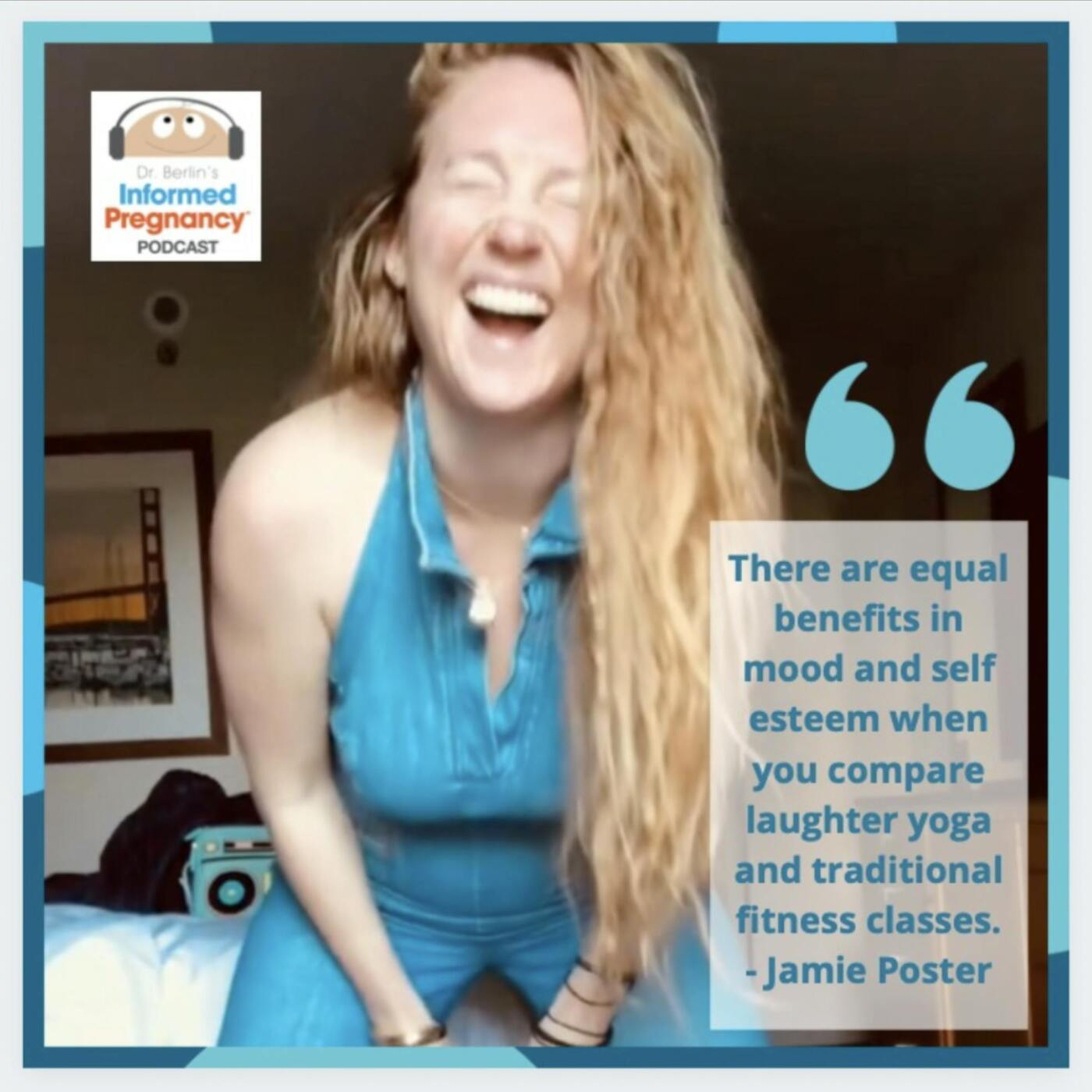
[18:06] another that did a laughter yoga group, and another that just went and sat in a room together. And they found that there were at least equal benefits in mood, and just like overall wellbeing, quality of life, self-esteem in the groups that did laughter yoga and a more traditional workout class. So I think from that study, we know that at least laughter yoga is as beneficial as a more traditional fitness class. I think people who are attracted to laughter yoga are more people who would not be able to perform a traditional fitness class. You see a lot of people who are in chemotherapy turning to laughter yoga, or people who have prosthetic limbs
[18:45] turning to laughter yoga, just because it is so accessible. And I mean, it's not just something that we talked about earlier, that it's free, that it's available inside all of us, just innately because we're animals, but it's also something that is just physically accessible, with the exception of, and if you have a chronic lung condition, you should certainly talk to your doctor before you try laughter yoga, or unfortunately, if you're pregnant, which is really, I think, a time that you might need it the most, but it also can spontaneously induce labor.
Dr. Elliot Berlin, DC [19:16] Can you just do giggle yoga?
Jamie Poster [19:19] You know, I have to tell you, I was 41 weeks plus two days with my baby, and I tried laughing, and it did not make that baby come out of my body.
Dr. Elliot Berlin, DC [19:31] Jokes on you.
Jamie Poster [19:31] So, that's right.
Dr. Elliot Berlin, DC [19:34] Do you feel that doing laughter yoga
Jamie Poster [19:36] makes you a more spontaneous laugher? I think that doing laughter yoga makes me a more spontaneous laugher, yes.
Dr. Elliot Berlin, DC [19:43] Well, there you have it.
Jamie Poster [19:48] No, I think it's just hard for me to tell because, for me, I've always been more inclined towards being, they call it, like, laugh talk or laugh speech, and I'm a little on the gigglier. side if you haven't picked up on that. So I can't say if it makes you more spontaneously inclined to laugh in conversation. I think what we do know is that it can make you more sympathetic and it can make you more in tune with other people and what the social science shows about laughter is that we use it as social signaling that we're showing somebody else that we hear them, that we love them, that we appreciate them. So if we're speaking with somebody who we care about and they're telling us the story it might make
[20:29] us more inclined to acknowledge that and if we choose that to be through laughter, I would love for that to be a benefit of laughter yoga. I can't say if
Dr. Elliot Berlin, DC [20:40] that's true for all people though. For other people. I have two interesting ideas. I mean just observations. Number one, when people get chiropractic adjustments and there's a big release sometimes, that release comes out in different ways from different people. Sometimes it's just like you kick them in the chest. You know every single time I do an adjustment on that. Everything's fine but it just sounds like I did something terrible to you. Other people cuss. I don't like literally every time and then some people laugh with every single adjustment and I like it. Oftentimes they're embarrassed by it. I don't know why I'm laughing and then I'll do another adjustment. It's a release, right?
[21:31] Everybody has a release in a different way. I have this personal theory that you have a built-up, I call it the ESR, the emotional poop reservoir, the EPR on a clean podcast, and there's only so much ES you can hold in your reservoir before you hit that point called threshold and you just unleash, you trigger somehow. And there's different ways to vent out that built-up tension that's in the reservoir. Sometimes exercise does it, sometimes meditation doesn't. Laughter seems like it would be a great way to empty out ES from the R but not everybody does it. So I think that sometimes when we do those adjustments and the laughs come out, that's what
[22:13] it is. It's like a release of that trapped nervous energy that's been in there for some reason and it's kind of nice to get it afterwards. They usually say, wow, I feel, you know, I feel lighter, like a load has been lifted or released from my body. The second observation is, and this is a terrible thing to say about a person, but it's me that I'm saying about so I can say it. I think I have this reaction when something shocking happens, startling happens. Maybe it's related to the chiropractic thing. I can't help but laugh. My first reaction is a laugh. So, you know, even if it's something terrible, I first giggle a little bit and then I'm like, oh my God,
[22:53] are you okay? Can I help you? Famously, one of the worst, something I would have divorced myself for is we're at the airport, my wife and I were at the airport and, you know, we put the luggage in the trunk and it was time to like close down the trunk on the sedan. And for some reason, the second I went to close on the trunk, she stuck her head in there. So I like slam the trunk down on her head and it was like the worst possible thing. And I was like, oh my God, are you okay? I don't know why that happens. I don't know of other people that happens to, it was just me and I always feel so bad. Like every single time that happens, I feel terrible about it. Not every single time I slam the trunk of
[23:30] my wife's head. That only happened the one time.
Jamie Poster [23:33] Your reaction, yes, I hear you. I think it's an amazing thing. Like we don't really know what causes us to laugh if we're going to be spontaneously laughing. There are some things we know that can trigger like we know that some people are ticklish and they get stimulated into laughter. We know that some people are really funny. So you choose to be around those people because you might end up spontaneously laughing at their humor and, and other environments you would go to laughter yoga and just say, I'm going to choose to laugh. I am going to put myself in an environment where I am okay with other people laughing around me because there is such a thing as
[24:15] fear of laughter. And I think it's something that we do in our casual lives. If we hear people laughing as we're walking on the street, we like turn like, are you laughing at me? Like, hey, what up? So laughter yoga is a place where it is safe. Like, yeah, maybe people are laughing at you, but you're inviting them to and it's okay. They're doing it to support you. They're not doing it to try and take you down. And then the other piece of that is that it's just okay to fake it. It's okay. If it doesn't come organically, it's okay to put like the way that we do it in laughter yoga is by playing with laughter sounds. And we also do activities that help facilitate
[24:56] childlike playfulness. And when we're able to laugh is person in non-COVID times and the before times or the after times we really encourage making eye contact because there's just something that like if you are almost laughing naturally and you look at somebody on the eyes the like likelihood that that laughter is gonna spark is really just amplifies itself so those are kind of the tools that we use in a laughter yoga group setting so the laughter sounds that we use ho and ha we use a he but ho and ha are the big ones so there's the laughter chant that you'll see in any laughter yoga session where you clap and laughter we clap with our whole hands so
[25:34] you tap the acupressure points at the ends of your hands so no no golf flaps so it's good so it's ho ho ho ho and since this is a podcast you might not be able to see you but you kind of dance with your hands you clap up over your shoulder you clap in front of your body and you can twirl around and I think we should probably do it together Dr. B are you ready well you
Dr. Elliot Berlin, DC [25:56] know what I think we should take a break but when we come back I will definitely take your cue we'll be right welcome back to the informed pregnancy podcast I am about to feel dumb but hold on a second before we get to that I do have a few other questions number one isn't like doing laughter yoga not too dissimilar from going to a comedy club oh no
Jamie Poster [26:31] it's very dissimilar from going to a comedy it's the opposite hey that's a good question that is a ridiculous question how did you even become a
Dr. Elliot Berlin, DC [26:44] host I'll tell you how I bought a microphone on Amazon and I have a
Jamie Poster [26:48] laptop on my computer you can be a host too okay school me okay so when you go to a comedy club you kind of go with this edge you're like I dare you to make me laugh with the exception of a headliner if you go to a comedy club because you want to see somebody that you already think is funny you've already opened up your own emotional willingness to let laughter flow a little so with that I think because it's more of a challenge we're like asking them to make us laugh whereas within a laughter yoga club you're not asking anybody to make you laugh you are going and choosing to laugh for yourself so that's do I think the big difference and the part that is
[27:31] similar is that different than sitting in your living room and watching a comedy special on your television by yourself where you might at best get like that by yourself in a comedy club you will be around a group of people and so there's kind of that signaling where other people are laughing you're like oh that is funny and then you're more inclined to laugh and especially vocalize that laughter since laughter is a nonverbal
Dr. Elliot Berlin, DC [27:57] way of vocalizing well as a person who produces comedy and does stand-up comedy here are two things that I will tell you for sure number one I was an actor in college and I only did comedies if the audience is not full beyond a certain percentage capacity it is very tough on the actors and comedians because you don't get that like group laughter mentality you have to have like a certain amount to hit that threshold where one or two people laugh and then everybody just jumps in I don't know why if you feel comfortable because other people are laughing it just compounds on itself and the laughter really picks up not just because there's more people so
[28:37] it's louder it's exponentially louder when you have and just more more from the you know they're having a better time they're laughing deeper inside if you don't have a full enough crowd it's almost like people aren't comfortable laughing even though they think it's funny the other thing is that you said at home well actually you know what's really hard in my stand-up comedy shows the two things that help bring laughter in a comedy club with the same exact comedy that will make the response better number one alcohol and number two is the group if you have a nice full group right so of course I choose to do pregnancy comedy so nobody's drinking you know and half I'm going to labor so we're missing seats are
[29:17] empty I'm like oh great now I could tell them hey if you think I'm bad at comedy wait till you see what kind of question I asked Jamie on the third section episode question not even an actually not even an actually just a flat-out that sucked but here's the other thing okay at home to your point when I'm reading funny tweets or emails or I don't I just say tweets to pretend like I know what I'm talking about but you know when I get a funny facts I'm older when something happens funny at home And I'll just write back, LOL. I just write LOL, but rarely do I actually. LOL. And it's a little bit telling. So it makes sense why people would have to go to a group and work on actually.
[30:12] It's a little bit telling. And yeah, like, imagine you were face to face with somebody and I said something funny and you said, Oh, LOL, that'd be such a let down. Unless if you're driving and somebody cuts in front of you and you say honk.
Jamie Poster [30:30] But I think if there's one thing that I hope people at home can take away from this conversation is that, especially because we're in this like weird time where we can't really gather together as a group, but just because it is easier to do laughter or practice laughter in a group full of people, it doesn't preclude you from doing it by yourself. It just means that you need to be a little bit more intentional about it. I think.
Dr. Elliot Berlin, DC [30:56] So would you think it could be done in the zoom group?
Jamie Poster [30:59] Oh, it certainly can be done in the zoom group. And in fact, it's been a really cool time because in the laughter community, if you just like go on Facebook and search for virtual laughter clubs, hundreds of them will show up. And it's actually been a time where a lot of people in the States end up joining laughter yoga Philippines or laughter yoga Malaysia, whereas before the laughter community, I don't think was as connected. So I think that is one tip for laughing at home alone, or even just like with a partner is that you can certainly find either like a YouTube or just a zoom live session to be laughing with other people online. But like other things that you can do if you're just in your car and you're
[31:41] driving home from work and you are know you're in a bad mood and you have parked in your driveway. And this is of course in the other times you park your driveway, you know, your family's in there waiting for you and they're going to like climb all over your body. The second you walk in the door, it's like, what do you need to do to get you in that head space? And there's a thousand different tools that people can use. Some people do meditation or like a traditional meditation or traditional breathing meditation, or some people will do five minutes of yoga before they go talk to their families. But for me, I can laugh for two to five minutes and that helps
[32:16] me transition in that moment. That being said, really to feel the full benefits of your laughter practice, they do say that you need to laugh for at least 10 minutes, if not 15 minutes. And then I need to pretty continuously laugh. And then at the end, I think it's really important that you slow it down with at least one breathing exercise. So much like you would take a Shavasana at the end of a posture yoga class, just because otherwise your energy is going to be like vibrating in every direction. And it's a little crazy.
Dr. Elliot Berlin, DC [32:47] I don't think I need my energy vibrating in every direction.
Jamie Poster [32:51] Nobody wants that. But a minute and a half of laughter and then 30 seconds of breathing, you have two minutes and I dare you to try it.
Dr. Elliot Berlin, DC [33:00] Okay. Well, we're going to do it together. We're going to do it. Not that long, but I don't know far away on your mobile.
Jamie Poster [33:08] Oh, this is very exciting. So I think a good introductory laughter exercise is just Aloha laughter because it plays with the laughter sounds and it's a greeting exercise. So you get your arms out in front of you and you say, hello, as you lift your arms up and then you say, ha ha ha ha ha ha as you put your arms down. So we'll do it together. Okay. And then we go a very good, very good. Yay. When you say, yay, I like to do a little jazz. Thumbs up. Very good.
Dr. Elliot Berlin, DC [33:57] Yeah. Wait a second. That also it's so therapeutic because it also makes me feel like I'm in Hawaii.
Jamie Poster [34:06] Yeah, that's right.
Dr. Elliot Berlin, DC [34:09] Basically a beach vacation.
Jamie Poster [34:13] Yeah, that's a, actually it does feel good. It feels very good.
Dr. Elliot Berlin, DC [34:17] Should we do another one? I mean, I think that we can do them all night, but I do have this question for you. Are you, cause you took a break from leading classes.
Jamie Poster [34:25] I did. I did.
Dr. Elliot Berlin, DC [34:27] And is there truth in the rumor that you're bringing laughter back?
Jamie Poster [34:32] We are bringing laughter back. Yes, we are. So actually I was having a really tough 2020 and then I went to go see it.
Dr. Elliot Berlin, DC [34:44] Who wasn't having a, yeah, very few people. I'm like, yeah, 2020 rocked it for me. It was my favorite.
Jamie Poster [34:56] Yes, whatever. 2020 was not great for many people. And I. was carrying a lot of trauma in my body and I went to go see my prenatal chiropractor and while he was doing a very intense neck release he told me to breathe and I was doing a jai breath you can't tell I'm talking about you and that's weird questions but I can put two and two together you were like you were like that's not the right way to breathe while I'm trying to release your neck and I was like I don't understand what I'm supposed to do and I ended up laughing and you were like well that works and so I said I'm a professional laugher which I was a little bit of a lie at the time because we weren't really leading laughter yoga at that time so that
[35:41] instance happened and it kind of planted the seed like maybe wait this was the thing that I used to do that made me feel really good and I like it a lot and it's fun and this year kind of sucks and I think that a lot of other people might appreciate just a little bit of laughter showing up in their feed so I was talking to my friend who I had originally started Portland laughter and yoga with and then she was kind of feeling a similar vibe in her life like everything was pointing her back to bringing laughter back so right now we're really just having an Instagram feed where we're posting daily laughter exercises and we're having a really good time doing it so I hope that it is helping somebody else out
[36:20] there who might need it it's they're just 30 seconds of laughter so if you're trying to build your laughter practice you can start off with a 30 second laughter exercise and then see if you can pile on maybe seven to ten of them and then you get your uh 10 minutes of laughter in for the day and then you're you're all good you don't need to go to the doctor anymore
Dr. Elliot Berlin, DC [36:41] you're gonna put dr b out of a job yeah that's fine I could use a nap um okay so one thing a final thought I have here is that as someone who tends labor with people and my goal is always to help calm the mind really I'm working on calming the body oh that's what I do I'm a body worker but the real goal is to calm the mind and then sometimes you can soothe the mind through the body but sometimes you can calm the mind with laughter and even in the throes of labor when somebody is just not able to let go sometimes a little joke or putting on something funny for the right person with permission will actually help them let go and what I realize is when you're laughing your body knows you're not in danger
[37:25] and sometimes your body is not quite sure in 2020 I think my body never knew if it was in danger or not it always assumed the worst for good reasons there's a lot going on and I was in danger many times in 2020 for various reasons so my body's not sure what's going on and you know I can try the breathing and I can try more classical yoga but laughter like when you're laughing your body knows hey we wouldn't be laughing if we're being chased by a tiger so the science is there behind it but just practically speaking I think it's quite therapeutic and I've seen it in action in many different settings including that one for people really really really struggling to calm down and relax and surrender laughter
[38:04] sometimes the answer I am very curious uh just did one exercise and I feel like a new person where can we find your instagram laughter through the sessions online uh we're just play laughter
Jamie Poster [38:19] one word one handle uh you can also find us at play laughter.com and we're hoping to build that out a little bit more and maybe uh have some individual laughter sessions online or do parties and that kind of stuff but we're not there yet it's really just for fun and I would love for it to be in my full-time job one day but it is not yeah. I think there should be pre-medal
Dr. Elliot Berlin, DC [38:42] laughter groups as part of labor preparation. I think there should be a postpartum laughter group. Oh for sure yeah the whole kit and caboodle. Jamie I appreciate you thank you for laughing when I uh tortured you with your neck massage then getting this whole party started it was very helpful. Well thank you for being curious. Oh yeah of course and also I was just glad you weren't cussing at me because I get that a lot. I appreciate you sharing what you know here it's a very fun interesting episode and we're always looking for different ways to help people feel better in mind and body and some of them are like supplements and some of them are other things that you got to pay people to do for your therapies
[39:21] like you said earlier this one is you can do it anywhere anytime and it's absolutely free so that's the power of laughter. At home thanks for listening to the informed pregnancy podcast we are here for you reach out if you have questions if you would like to suggest a topic idea we are right now working on three different episodes that are suggestions from listeners and if you want more of this type of information visit us on instagram at dr berlin it's d-o-c-t-o-r-b-e-r-l-i-n
Want more pregnancy + parenting? Start your FREE TRIAL of Informed Pregnancy+ and get access to all our curated pregnancy and parenting content — original series, iconic birth films like The Business of Being Born, prenatal workouts and more.
