
July 18, 2019 · 43 minutes · Episode 127
About this episode
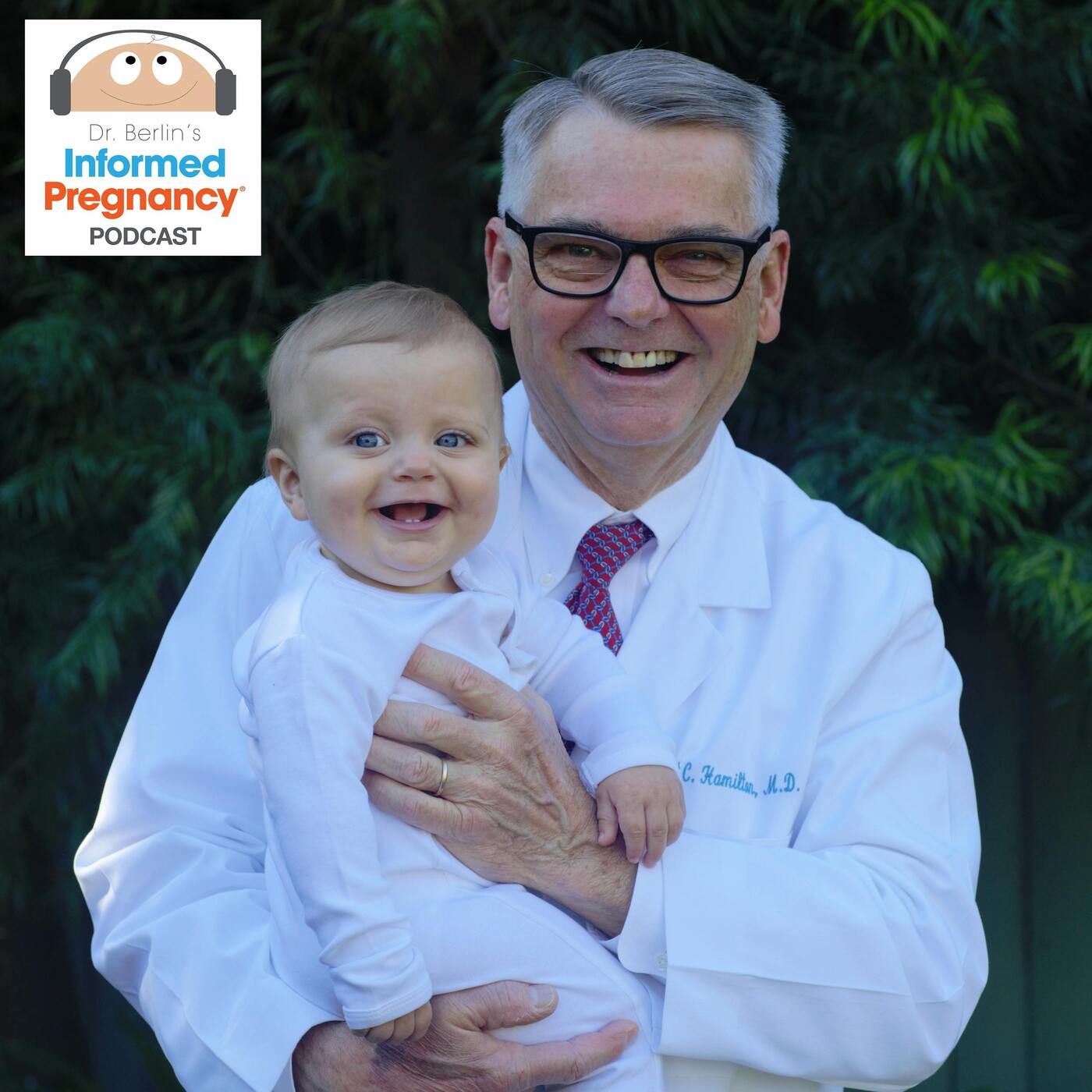
Pediatrician Dr. Robert Hamilton, creator of the baby calming technique the “Hamilton hold” joins the podcast to give us tips and tricks for finding the right pediatrician, the secret to calming a crying baby and other gems gleaned from his decades of practice in pediatric medicine and his new book.

Learn more about your ad choices. Visit megaphone.fm/adchoices
See Privacy Policy at https://art19.com/privacy and California Privacy Notice at https://art19.com/privacy#do-not-sell-my-info.
Key quotes
“You should look for someone that you kind of resonate with. You kind of have a conversation, and I think that most people get a feeling for other people when they talk to them, eyeball to eyeball, and that is important.”
“But the point is that these are people who work with the doctors day in day out. They know them They know how they practice they know their temperament and they will tell you the truth”
“My rule is this if you're worried you call”
“In other words, I tell people after a while there is a plumb line of normalcy in every child and mothers will figure it out”
“my thesis is this children are wonderful they're great don't miss out you're gonna fall in love it'll change your life have fun with them”
Related episodes
- Ep. 268 Anastasiya Rul – After Birth
- Ep. 174 Ildiko Ferenczi – Birth Story
- Ep. 50 The Real Midwives – Megan B. Post-Birth Journey
- Ep. 460 Skin with Dr. Gaby Newman
Transcript
AI-generated transcript with speaker labels — may contain errors, especially names and medical terms. Dr. Elliot Berlin, DC appears in blue; Dr. Robert Hamilton in orange; Juliet Lamar in purple.
Download PDF of the Transcript
Dr. Elliot Berlin, DC [1:36] Welcome to the informed pregnancy and parenting podcast. I'm your host dr. Elliott Berlin and hosting right beside me today Juliet Lamar
Juliet Lamar [1:42] I'm right here always
Dr. Elliot Berlin, DC [1:45] guys, if you like our show do me a favor and take a moment to share with your friends and Go into your podcast app It'll take you one second leave us a rating and some feedback because we Actually respond to all that feedback and we're always happy to hear from you Our guest today is a pediatrician with over three decades of experience in Santa Monica, California He's the creator of the Hamilton hold a method for soothing crying babies has seen on YouTube by over 30 million people He's also the author of seven secrets of the newborn secrets and happy surprises of the first year He's a proud father of six children and grandpa to eight more little ones
[2:22] He lives right here in Santa Monica, California with his high school Sweetheart Leslie to whom he has been married for a brief 45 years Dr. Bob Hamilton, welcome to the podcast. Thank you. Really a pleasure to be here. Talk to us about medicine. When did you? Let's go back a minute in time How early in your life were you interested in medicine?
Dr. Robert Hamilton [2:44] You know, it's funny. My father was in the Navy. My father was a guy who never got an eighth grade education But he went into the Navy as a young man and became Involved he was a medic I think in the Navy and worked in that capacity And I will tell you that from the time I was a young child. My father said to me Bob be a doctor I don't know if he planted that seed in my brain or whatever But for whatever reason maybe I didn't want to you know, disappoint my father or what? But I also had actually a fair amount of medical exposure as a young child, too I was pretty significant asthmatic and I remember as a young child being, you know Shuttled over to the hospital to get in those days a shot of epinephrine which cured me immediately
[3:32] Hyped me up a little bit. I think I remember It's adrenaline adrenaline. Yeah, that's what epinephrine is full on adrenaline. So, you know your your asthma went away But you were you know hyped up for the rest You don't need a rollercoaster or get just injected in you so I think you know when I look back I've actually thought that I mean what what drew me to this profession because I really thought of it really even when I was In junior high and high school. I thought I'm gonna be a doctor. I didn't articulate it But I thought that I think it was probably those early the early seeds that were planted in my life
Dr. Elliot Berlin, DC [4:09] Hmm as a Navy family. Did you move around a lot? Where did you grow?
Dr. Robert Hamilton [4:13] You know, no way we that was my dad's former life when you I grew up in a little town called Eureka, California Eureka, it's hard to not say it that way. Yeah, exactly. I found it and Actually Eureka is on the state seal. If you look at California says Eureka and as a kid growing up, I thought Everybody's hometown was on the state But anyway, that was my hometown born and raised there and Never really left Eureka hardly until I was in my 20s We were my dad was a mill worker and had a family of five and we were you know Our idea of a vacation was driving two hours to you know Motel and jumped in a swimming pool. Yeah, so pretty humble
Dr. Elliot Berlin, DC [5:00] I think a lot of people grew up that way.
Dr. Robert Hamilton [5:03] We did. I can tell you Humble County, that was the way we did it. There wasn't, we went to the rivers, we went to the beaches, we kind of went into nature.
Juliet Lamar [5:11] It's rich with that nature up there though. I mean it's just full of it.
Dr. Robert Hamilton [5:15] Humble County is absolutely beautiful. Really I mean it's home of the redwoods and so you go up there and you look at these trees that have been alive for thousands of years and you kind of go, there's an awesomeness and the solemnity if you will of these redwood groves. You walk into them and you look around and you realize I'm tiny. I remember being tiny as a child but even as an adult I'm tiny.
Dr. Elliot Berlin, DC [5:45] Yeah, it's amazing. I do sometimes think about trees, trees in general and those redwoods in particular and just all the things that they've been around for. Yeah, thousands of years. Sometimes it's really just very calming to know that the world will go on.
Dr. Robert Hamilton [5:59] You know, I have been in Israel where you actually go, there's some of these old olive groves, the Mount of Olives and the Garden of Gethsemane. There are olive trees which are literally thousands of years old and you kind of go, what has that tree witnessed?
Dr. Elliot Berlin, DC [6:18] Yeah, it's mostly over there.
Dr. Robert Hamilton [6:20] Over there, unbelievable.
Dr. Elliot Berlin, DC [6:22] Wow, so did you aim straight for medical school? I mean you wanted to.
Dr. Robert Hamilton [6:28] Well, I wish I could say I did. I actually went one year to college and dropped out for a year and kind of did, you know, lived kind of what people did in Humboldt County, lived on a commune for a while which was kind of the thing I did, people did in that time. And really it was actually a point of turning in my life. I said, you know what, I have to figure out what I want to do here. And I went back to school with an ardor which really kind of carried me through. It turns out that going to medical school is an effort and it was hard to break.
Dr. Elliot Berlin, DC [7:02] It's not easy. Not easy.
Dr. Robert Hamilton [7:03] And to get in and to make it through that bottleneck, if you will, into the doors of the medical school is really a tremendous amount of work. And I had to, you know, look, I lived under a book. I lived in a library. I spent hours and hours of my life studying. And, you know, fortunately I had a wonder if I got married young and I had a wonderful wife who supported me and was there the whole time. So I'm a fortunate guy.
Dr. Elliot Berlin, DC [7:36] Did you have kids while you were in school?
Dr. Robert Hamilton [7:38] I did. My first son Josh was born, we were young, we were 22. Don't recommend that to everybody.
Juliet Lamar [7:46] I was like, wow, that's young.
Dr. Elliot Berlin, DC [7:48] Well, your prefrontal cortex is not really mature. Mature is about 25.
Dr. Robert Hamilton [7:53] My son can tell you that. Maybe even now. But anyway, that being said, yeah, I was a senior in Davis. I graduated from UC Davis. And I remember having Josh and the exhilaration of having a baby is unbelievable. I will tell your audience that I actually heard your previous guests on your show. I listened in a little bit. And the incredible exhilaration, the joy, the fullness. I mean, I will tell you that I wept when Josh was born. I get emotional now thinking about it. But the joy of that moment, you know, blew me away. And then, and shortly that was in September, I went back to my senior year. Now, let me tell you, P-Chem and organic chemistry and physics, it doesn't really bring
[8:49] a tear to your eye. And so the grandeur of what I had experienced in that delivery room with my wife, you know, and then going to back to the classroom. Let me tell you, I felt, I remember thinking, I'm really glad I only have one more year to go because I don't think I'm going to make too many my undergraduate days I'm talking about. And then that I had, yes, I had children in medical school, too. My daughter, Noelle, was born. And my third year, she actually became a pediatrician. She's in practice with me in Santa Monica.
Dr. Elliot Berlin, DC [9:25] Oh, no kidding.
Dr. Robert Hamilton [9:26] Very, very happy about that. And then my third child, Sarah, was born during my training in pediatrics.
Dr. Elliot Berlin, DC [9:34] Wow.
Dr. Robert Hamilton [9:34] So three of my six children were born really during my training.
Dr. Elliot Berlin, DC [9:38] Did you decide early in your medical career that you wanted to do pediatrics, or did that come later?
Dr. Robert Hamilton [9:44] Came a little bit later. I really, I think it was really a function, Elliot, of the fact that, you know, I knew children. I was one of the very few people in my medical school class to actually have children. There were, there were a handful. us but we were rare and I when I got into my pediatric rotation I did it over here I went to medical school at UCLA so I did my pediatric rotation at Cedars and I remember being there and feeling like I belong I know I know what a child I can pick up a child and I and the confidence that I had at that point two children of picking up a child and dealing with them and handling them people would look at me and go wow you really know children I kind of do
[10:29] you know I have a couple of them in my home you live with them yes so then to
Dr. Elliot Berlin, DC [10:36] after you finish like what's the structure you do basic four years of
Dr. Robert Hamilton [10:40] medical school yes you get your undergraduate degree which I did from Davis I got it in biochemistry and then I came to UCLA in medical school was one of our class was about 150 students and then you do four years of medical school at that point you graduate with a medical degree and you can do nothing you can pay your debt and you can hang it on the wall but you have to do in California you have to do an internship so at that really it is during your fourth year that your third and fourth year you're beginning to make a decision about what you know Avenue you want to go and you want to do internal medicine pediatrics OBGYN there's a number of
[11:26] radiology surgery a whole bunch of different avenues of course you can go into and looking back I really think that when I did my pediatric rotation I loved it I loved it I love the the idea of working with children are you by definition are working with young mothers and fathers who are hopeful people they're people who are having children there are people who are you know by definition if you have a child you're you're thrusting yourself into another generation and to do that albeit some people it hands it happens with how much forethought I understand but for people who are intentional which we hope that most most people are this is a big deal but there that
[12:14] means by definition they're moving into a they're moving forward in their life and it's wonderful to be around those those kind of people do you
Juliet Lamar [12:22] think that you would have gone into pediatrics if you had not had children
Dr. Robert Hamilton [12:26] of your own it's a very good question I kind of think that maybe I would have gone into like family practice because I am a little bit of a jack-of-all-trade you know I like to know a lot about a lot and I think that that would have been more more of my destiny to be honest with you I also I'm I harken from a small town yeah and we don't have a lot of specialists we have the people who took care of me yeah exactly they were family physicians
Dr. Elliot Berlin, DC [12:56] it means that seems like a narrowing field the family physician I know one here but mostly people just love to go to specialist I think that family
Dr. Robert Hamilton [13:10] practice in a big urban area like this is really tough because there are people you know in this town who are specialists in everything and so you can really go to people who really are the experts in their field yeah but I will tell you that in the in the real world out there in the rural America family practitioners are wonderful wonderful people yeah and I know I know many of many of them here who I refer to in law in Los Angeles as well who are highly skilled they're not doing everything anymore I don't think they're doing as much OBGYN yeah maybe they're they're beginning to really kind of specialize within their world of family practice but the avenues that they have in the value my gosh they're valuable
Dr. Elliot Berlin, DC [13:55] people we have an episode on family medicine and it's just yeah yeah Dr. Stephanie Canale and it's just it's interesting because she's sort of like the general contractor of the medical people in your life so I think what happens when you run from specialist to specialist is you sometimes don't have that glue holding it all together looking at all the moving pieces and
Dr. Robert Hamilton [14:18] organ orchestrating that no Stephanie is the fundamental I will tell you I refer people to Stephanie and she's great and you know what you're right Elliot I think that there there's that sense of who's really following who's really knowing who I really am because you're going from one to another and to a degree it I'm a general pediatrician you know we have that to a degree in our field as well we hand off our patients to pediatric cardiologist or endocrinologist or whatever and sometimes I think the patients may be confused who their doctor really is that's a big
Juliet Lamar [14:50] problem I think it's like if your pinky hurts it could it could be because you broke your pinky or it could be because you're stressed and you know there's so many different factors that go into why your body's reacting a certain way and that's getting lost a lot. Sometimes the big picture gets lost. The big picture gets totally lost and that's a great
Dr. Elliot Berlin, DC [15:05] episode. We're just looking there. Yeah, exactly. Medicine changes pretty quickly from day to day, week to week, month to month. You've been in it for a minute. How has pediatrics changed during
Dr. Robert Hamilton [15:16] the time that you've been practicing? Great question and I think that there are, I think the most important things are number one, I think we have to say that the vaccinations have really radically changed. I think the number of vaccinations, I know for a fact that this is really increased by a huge number, a little bit overwhelming I have to say to my patients because things like, you know, for example chickenpox. When we were kids, when I was a kid, I always speak for myself, I had chickenpox. We all did. We had measles. We had mumps. We had all this stuff and that was kind of the rite of passage and we don't have that anymore. We have a vaccination against chickenpox. We actually have, you know, and chickenpox is only one example,
[16:02] we have vaccinations now against bacteria. Nobody knows about it but called hemophilus influenza type B, HIV. The Hib. That's right and the Hib was not there when I began my medical career and I will tell you that sadly we would, when we were on call, you know, kids would come into the emergency room, high fevers, very very sick. We would do a lumbar puncture. It would come out pus, purulent, you know, horrible CSF, spinal fluid and that child had HIV meningitis, a common, you know, occurrence in young children at that point in time. We saved them. We were able to give them antibiotics and kind of pull them back from the edge but many of these children went home blind or neurologically impaired or, you know,
[16:59] hearing loss. This is a tragic thing that happened, I will tell you, not infrequently in this city in Los Angeles and so we have a Hib of vaccination now and I will tell you, Elliot, that that has radically changed. I have not seen a kid with HIV meningitis really for 20, 25 years now. That's great. Huge. This is a major breakthrough and so, you know, vaccinations, listen, there are people out there who feel that they're not good or whatever, they're confused by them. I have to tell you, I stand unashamedly and Fortsquare behind the idea that vaccination car progress, as much progress as when we look at our cell phones, we have the miracle of our cell phones. Well, that technology that has
[17:46] gone into cell phones, medicine has been on the forefront of technology too. You have to realize that, thank God, we live in 2019 and not, you know, 1919, okay? There was a flu that just ravished the world in 1918, 1919 that knocked off millions and tens of millions of people around the world, the Spanish flu, and the reality is that kind of stuff doesn't happen in our world today. Anyway, that's been in my lifetime, Elliot, and I think that that has been a tremendously, you know, positive, powerful thing. Look, other things have happened in the world. I think there's a lot more anxiety in raising children, which is one reason why I ended up writing a book, we'll talk about that later, but really the amount of anxiety that
[18:33] people feel about raising children in the old days, people had kids. Okay, you have, you know, the parents, you know, okay, you're on your own, go, you know. I remember as a child, I just may date myself, but I remember as a kid, literally five, six, seven years of age, I mean, leaving my home for hours at a time and walking around the neighborhood.
Dr. Elliot Berlin, DC [18:53] With no GPS tracker?
Dr. Robert Hamilton [18:55] No, no, my mother, I mean, we were blocks away from my mother, we were playing with kids, we were doing crazy things, we were in the woods, you know, I mean, this was Humboldt County, of course, but I'm telling you, it was a great life.
Juliet Lamar [19:09] What do you think is causing the change of anxiety? Because it's not just in cities, I can see how, okay, well, you grew up in Eureka, it's a much more community driven place with nature, you know, not necessarily safer, but at least no one's going to kidnap you as easily, but it's a change that we see everywhere. Why do you think this anxiety is being risen?
Dr. Robert Hamilton [19:26] I think the culture is in the culture, I can't explain it. I will tell you one thing, this is a kind of random maybe off our off topic here, but a couple, a month ago, I was actually in the Golan Heights in Israel, and I happened to be with friends of mine, beautiful family here from Los Angeles who went aliyah, which means they went up or they went to Israel, okay, all right. So anyway, I had promised to visit them for many years, and we did. And I will tell you that we got there and the place was Unbelievable. It's a beautiful little they call a Moshav. Okay, which is like a little settlement out in the middle of nowhere On the border of Syria, by the way, we walked over and looked at the at the wall between Syria and Israel
[20:12] It's amazing and there were kids everywhere Everywhere they're running around I kind of go and it took me back to my childhood. I thought wow We don't see this. I think to a degree the the culture, you know, the way we live now Listen a Moshav in Israel is kind of like the shtetl in Eastern Poland or something, you know, it's like a little communities that we lived in Think about LA think about how we live think about we live in these homes, which are kind of far away from each other We got to drive places to visit our friends that sense of community there I had I remember having a good child. I really did and What I saw in the Golan it was the same thing
[20:55] I mean, you know, we were there were all the people were these people were kind of like wandering into the house You know, who are you? Where are you? Where are you going? This is you know This fluidity and and the number of kids and people and now is in creaking chaos It was total chaos but it took me back to my childhood and I think that the culture has radically changed in terms of our connectedness to each other and Whether that is spawning anxiety. I don't know I think that I think people have our anxious, you know all over the world all the time to be honest with you But that sense of delight and community that I felt over there. I have to tell you Elliott
Dr. Elliot Berlin, DC [21:33] It was like a flashback. It's kind of interesting too. Cuz like at the same time There's civil war going on right over the hill You can sometimes hear and see with you know tanks going by and helicopters flying over and the kids are still playing outdoors with less anxiety but I think I think the community issue the the Information overload the constant dramatization of whatever is happening in the world that's what I was saying about the Redwoods like you watch cable news and you know, I Was I was at somebody's house doing a home visit one time and they were watching cable news and every story that came On I had the dramatic Special alert the world is coming to an end and then I noticed something
[22:14] I was like the first commercial that came on was for like a waffle place and then the second commercial came on And it said do you have high blood pressure and I'm like I didn't before I started You know But it's just that's what we're exposed to 24-7 on the screens on the phones on the tablets on the you know And it's just like you can't shut that out and just go into nature and enjoy your spot in the universe for the time That we have to be here. So I think that creates a lot of anxiety, too And then also I wonder in my mind as much as our relatives can get on our nerves sometimes If not living in the village, you know being supported and surrounded by your loved ones as you raise children
[22:53] Also creates quite a bit of anxiety for us. We're kind of out on our own
Dr. Robert Hamilton [22:56] Yeah, we are and and I will tell you that I you know family's important family's very important and when you start having children and you feel that sense of Being alone in the world and definitely there are a lot of people who are raising children people who are listening to my voice Right now who feel alone in the world They don't have their parents and for whatever reason their parents, you know We live in a very mobile world community society now people are you know It's not uncommon for families to be completely divided between East Coast West Coast You know all over and other countries other countries is unbelievable So I you know the old idea, you know, I will tell you a little anecdote and that is I have a family in my practice
[23:40] sweet family and They have a couple kids and they actually bought the lot next to her parents and they tore the fence down They built a new home. And so these young children actually run back and forth Oh between the homes of their their grandparents and their parents they've tore the you know, they have a big yard bigger yard All right, and you know what and the parents are great people But they also have that incredible support from from parents who were right there Yeah, who can actually, you know, they can go out to dinner and not call a babysitter and say hey mom and dad Come over and watch the kids or kids are gonna run over to you Yeah, get over mom and you know grandma grandpa's guy
[24:20] We're gonna go out to dinner and that that freedom and that that wonderful Sense of community that they have created and you can it can be done here in LA and people do it
Dr. Elliot Berlin, DC [24:28] You know, look they're we might not need as much as Anna's. Yeah
Juliet Lamar [24:33] Exactly. Yeah, it's someone who doesn't have kids yet, but lives in Los Angeles That's one of the things that gives me anxiety about having kids is not having the village like once I do this It's like my husband and I and our family's pretty close. But at the same time, they're not next door You know We would have to do all that and that's something I think a lot of people my age are Thinking about like I have to put everything on hold because there is no backup plan once you have this kid
Dr. Elliot Berlin, DC [24:55] Yeah, people end up hiring the village. That's what the rule of the childbirth educator lactation comes
Juliet Lamar [25:00] But that is so much money, and then you're like…
Dr. Elliot Berlin, DC [25:02] Oh, it's a lot of money, but I'm just saying that's where all those professions came from, because we don't live with them anymore. Alright, let's take a very quick break. We're gonna be right back with Dr. Bob Hamilton.

Dr. Elliot Berlin, DC [27:37] Welcome back to the Informed Pregnancy Podcast. We're talking about Dr. Bob Hamilton. I want to talk about the Hamilton hold, and I want to talk about your awesome new book, Seven Secrets of the Newborn, but before we get there, give me some practical tips. Someone who's about to have a kid looking for a pediatrician, what are some of the things that you look for in that interview?
Dr. Robert Hamilton [27:56] Very good question, and what you do, and you should interview the pediatrician, and most pediatricians in the west side of Los Angeles actually do make that available for people who come into their office and check it out, and meet them and talk to them. You should look for someone that you kind of resonate with. You kind of have a conversation, and I think that most people get a feeling for other people when they talk to them, eyeball to eyeball, and that is important. You should find a pediatrician who's there. You can find people who are highly regarded or well-known or even famous, but do they actually do the job? And what I mean by that is that there are people who are,
[28:36] you know, all over the world doing different things, lectures and whatever, and they're well-known, but are they really actually in the office doing the work? That's actually important. Definitely availability. Are the pediatricians there? What are their hours? I actually believe the weekends are important, too, because kids don't know what day of the week it is.
Dr. Elliot Berlin, DC [28:57] They don't knock it sick on Saturday and Sunday?
Dr. Robert Hamilton [28:59] They don't.
Dr. Elliot Berlin, DC [29:01] They're not born on that time.
Dr. Robert Hamilton [29:03] They're actually born usually at the wrong time. But, you know, and the other thing, too, I think that people need to be available if they're not in the building, they need to be available by telephone. Accessible. That's important. Certainly, you want to find someone who is current medically, and you can ask them. People ask me all the time, you know, do you go to conferences? Do you read books? And that is a legitimate question
Dr. Elliot Berlin, DC [29:31] to ask your doctor. Well, like we said earlier, medicine changes
Dr. Robert Hamilton [29:35] fairly quickly. All the time, literally. So those are the important things. And to really, if you really want to choose, and I say this with a little bit of trepidation, but you can also do this, call the head nurse of the hospital, in Laban Delivery, in the nursery, at your local hospital, wherever you are, people, and say, who do you guys recommend over there? That's a real gem of a tip. They they'll go well and don't and not one person but maybe two maybe three names Call the night shift call the day shift call a couple, you know, call a couple of hospitals There will be names that will pop up again again Yeah, go talk to them because the truth be told people can be SU. We all know that. Yeah, and
Dr. Elliot Berlin, DC [30:20] Everything I read on Google is yeah, you can yeah
Dr. Robert Hamilton [30:25] Yelp review or whatever But the point is that these are people who work with the doctors day in day out. They know them They know how they practice they know their temperament and they will tell you the truth
Dr. Elliot Berlin, DC [30:36] Are there things that people freak out about? New parents because with the you know, when my first born was born my son came out After he came out there was the placenta came out maybe ten minutes later and I kept waiting I thought there was gonna be like an owner's manual Maybe like a 100% money back guarantee None of that came out. So it's sort of like and didn't come out of your wife. You mean So you sort of kind of you know on your own for a little bit and you have this human life to take care of and and they don't talk they yell at you, but it's You know, it's kind of like you're not sure what to do a lot of the time Are there things that parents sometimes get really nervous about and call in the middle of the night that really aren't that concerning or vice
[31:26] Versus something like hey if you see this you should really reach out
Dr. Robert Hamilton [31:30] you know, yeah people get nervous about a lot of things and I my rule about reaching out to me is a very simple rule because you have to give the parents the benefit of the doubt and My rule is this if you're worried you call Period I have no core let's get a lot of calls I my I do have one secondary rule. Okay, if you're not worried, don't call. Okay And so the reality is that parents they don't know but they're the learning curve is quite steep and Young people who have children they're completely they're going what they don't know what they're they don't know what they're doing Even if they if even if they're a doctor or whatever whoever they are
[32:10] They don't really don't know because having a child is so intense That is when you need a mother or a doula or somebody to kind of step in and help you and those people if they're in your life, you're fortunate, believe me, but No people get worried about a lot of things I mean get you know, how many bowel movements our kid had that day how you know temperature is a big issue How much they're sleeping how much they're whatever they're doing. I will tell you that there are You know people They don't have that plumb line yet set up in their life In other words, I tell people after a while there is a plumb line of normalcy in every child and mothers will figure it out
Dr. Elliot Berlin, DC [32:51] Very quickly very quickly and fathers by the time they're in college
Dr. Robert Hamilton [32:55] Yeah fathers are have a different job You know exactly what I mean anyway, if you're worried you call the doctor
Dr. Elliot Berlin, DC [33:06] Yeah, I I do think that that we all have sort of like a deep instinctual voice It's a quiet little voice that kind of tells you everything's okay Everything's not okay, but our brains are so clouded with information that we don't often hear that voice and so that's why I think we get nervous more often than we probably need to and then sure better better be safe than Sorry, but it's true having four kids. So Over time I even become in tune with that plumb line I mean I was a EMT before I became a chiropractor and so I don't generally stay pretty calm and pretty intense Situations and have a pretty good feel for when things are okay versus not. Okay, just street smart kind of feel
[33:47] But when I had my own kids, it took a minute even though I have that training it took a minute to trust it And so by a minute, I mean like 12 years. So yeah
Dr. Robert Hamilton [33:56] No, I I have I have walked in the emergency rooms at you know Two o'clock in the morning with my own child as a pediatrician I'm talking about on my in my I'm on staff at this hospital and say my baby has a fever Would you please look at him? Yeah And they look at me. Hey, they go Hamilton. You're the pediatrician I know that but please look at my child. It's hard to it's hard to talk to your own family
Dr. Elliot Berlin, DC [34:19] Yes, it's really hard to separate yourself All right. So let's talk about YouTube when you started pediatrics. There was no YouTube There's not even my space There was a dial-up there probably wasn't dial-up So You end up on YouTube and you've taken the screaming baby and you hold the baby in a pretty unique way Right and the baby is all of a sudden very quiet and happy I almost felt like I wish sometimes at nighttime when I'm trying to fall asleep I wish I was small enough for dr. Bob to hold me like that. That's when my next video Is coming I just have to kind of work out after you try holding me like that I will fix your back yeah I mean how did you even get to put it on YouTube
[35:05] like is that a hold that you've just developed over time that you you know
Dr. Robert Hamilton [35:11] here's what happened as a pediatrician you make babies cry okay you look at them and the oddness of you know a cold stethoscope and you know feeling them and everything they all cry and so when they cry to have a meaningful conversation with a parent I felt like I needed to make them not cry okay so I'm a father I feel very comfortable with children picking them up and holding them so I would naturally kind of pick up a child to try to comfort them okay I'm talking about in the room after the mother's had the baby she's laying in a bed I'm on the other side of the room examining her child so I would naturally pick up the child and comfort them myself okay
[35:49] rather than racing the child over to the mother so I would do that and over time I just kind of begin to develop this funny little thing of picking them up and holding their arms basically I'm swaddling their arms all that's all I'm doing that's what it looks like yeah yeah I'm swaddling the swaddle arms in the front exactly yeah and I hold them at that you know 45 degree angle so they don't fall out of my hands and I grabbed a little bottom and shake it up and you know what I I you know I think that we you know Harvey Karp my friend calls that the calming reflex and I completely agree you definitely calm them down I also think I'm overwhelming them neurologically I think they're kind of going what is going
[36:29] on to my body there's a lot of sensory yeah there's a lot there's a lot going on and whatever it is I don't really care what's going on their brain I really I mean I shouldn't say that but you know but but whatever it is boom they will they will if you do it right I'm telling you I'm not bragging here I'm telling you they quiet it down and it really does work quite well so I did that for you know many many years and what happened is my patients said to me hey Bob why don't you put that on YouTube now mind you I didn't really know what you know what kind of you know I don't know I kind of vaguely knew what YouTube was but I wasn't like how do I put
[37:09] something on YouTube I didn't know how to do that so anyway I finally said to myself you know what I'm gonna do this I'm gonna make that video so it's kind of like a to-do you know you kind of check off your to-do list on your list yeah I'm making I promise that was what it was oh really that was what it was it was not like I had this scheme of I'm gonna make a video that's gonna be seen by I would have been happy if that video would have been seen by 10,000 people that was my I did have a goal it was 10,000 well what happened of course is now amazing and it took off and it went viral viral to as a doctor means that you've got a bad cold or you've got diarrhea something something bad oh no anyway so it did it did go you
[38:03] know happily so look it was happy it has helped people all over the world literally and people in New York saw it they liked it that I got to go on Good Morning America I got to go I've gotten I got to meet Dr. Oz who's by the way a great guy yeah and Fox and Friends invited me on I got to do the whole thing and it was a lot of fun and in the aftermath of that then St. Martin's Press also in New York came up to me and said would you like to write a book and I thought about it I thought well let me think you know what kind of write a book about and of course what I know best is children and so I came back to him and said you know what I've been in
[38:42] practice for 30 years I do have something to say to the community about babies and so we made a deal and took me two and a half years to write it I hired a ghost writer to help me Sally Collins who's phenomenal lady and we worked together for a couple years and last September it was published and
Dr. Elliot Berlin, DC [39:04] it's like you had a baby with an elephant gestation what it kind of felt like to let me tell you what are some of the key things that we would
Dr. Robert Hamilton [39:16] find in your book you know my book is kind of good old-fashioned common sense I will tell you the thesis of my book is not necessarily in the title my thesis is this children are wonderful they're great don't miss out you're gonna fall in love it'll change your life have fun with them but I am concerned about people missing out on children I mean that because the number of babies who are being born in our culture right now is actually the lowest ever in California history I think you know that probably this is real and I have women who come into me in their mid-30s having their first child and they look at me and they and I talked to my patients
[40:00] you feel about it being a mother and they look at me and with tears in their eyes say why didn't anyone tell me why why are not people talking about babies and I go what do you mean and they go I am so happy I'm so overwhelmed this is incredible why why is our culture not telling people to have babies and I you know I've had more than one conversation like that I looked at these moms and said you know what I thought to myself I'm gonna be the one to tell them I'm gonna be the one to go out and tell people so really my book is a is a pro-child book if you will it's you know what kids are great and don't miss out we need them in the culture and they they radically change you they
[40:45] change you from the inside out they they actually enlarge who you are in so many ways you have for a while you they humble you because they're they're not overwhelmed by who you are your degrees or anything anything about you there they just want what they want and so you learn to be empathetic you learned you learn a lot being a parent so anyway that's kind of the essence in my book there are a lot of practical things there I tell people don't buy a bunch of stuff in the first month of life mm-hmm don't please don't buy any clothes for your one-week-old baby because they'll outgrow them in one week another week you know you don't need a whole lot the
[41:24] first month should be what I call a skin-to-skin extravaganza it should be a time to embrace your child and love your child and look at them and tell them they're great and hold them and caress them and and you just enjoy the
Dr. Elliot Berlin, DC [41:39] the wonder of life it's a book you know as I went through the book a little bit it's a book that I think is really great to read before the baby arrives mm-hmm as sort of because I think when the baby comes it's kind of like part four to the chiropractic boards I don't know how the medical boards are but the the earlier parts of the chiropractic boards are pen and paper tests right but part four is a practicum so you actually go from room to room where they have actors as patients and you're given all sorts of labs and x-rays and imaging and you're supposed to put together a clinical case and make clinical diagnoses decision-making differential diagnosis and set up treatments and things like that it's a
[42:22] kind of test you've never taken before in your whole life and so I never did board review for any of the earlier parts of the board exam but for part four I felt like I needed to do a board review because I just was having these dreams of like I don't understand how this test works even I don't understand what I'm gonna do when I get there the mechanics of the test and when I did board review and I explained how it all works then I the data wasn't a problem for me when I did the boards but my I guess my nightmare was that I'm going to show up to this big test and not have any idea right and that's in retrospect a little bit how I felt when my first
[42:59] child was born and so to have a book like this to kind of just read during the peaceful part of pre-parenting when the baby's still brewing in there when the baby's still cooking I think it gives you sort of like a driver's permit enough information that you can kind of go out there with just enough confidence to kind of like maybe sloppily drive down the street but not harm anybody you know and then and then you learn through experience like the more you do it the more you learn and you have a good pediatrician behind you then you know you have the full compliment so I think it's a really nice book and you obviously you have this wealth of experience starting with your own children and your progression through
[43:42] having children seems to have led you into pediatrics and and then now led one of your children into pediatrics with you that must be really gratifying
Dr. Robert Hamilton [43:50] to you and each week I don't forget eight grandchildren to eight grandchildren eight grandchildren and nine on the way oh wow yeah so my life
Dr. Elliot Berlin, DC [44:00] is completely surrounded by children in my mind that's just like even a lot
Dr. Robert Hamilton [44:04] of names to remember my name is a lot of birthdays my wife and I practiced that by the way we the names and birthdays well the names are we got the names down but the birthdays we actually do practice we kind of quiz
Dr. Elliot Berlin, DC [44:18] each other a little quizlet I don't know we just plug them into Google calendar yeah well I really appreciate your coming and sharing your information and your expertise with us and with our listeners where can we
Dr. Robert Hamilton [44:38] find you online I'm online at roberthamiltonmd.com and also 7 secrets of the newborn.com and all over YouTube and on YouTube yes yeah go
Dr. Elliot Berlin, DC [44:50] YouTube thanks for joining us dr. Bob and Juliet thanks for being here with me again at home if you have questions or topics and we're getting a lot of People are sending in topic requests, we read every single one of them, we reply to pretty much all of them, and we make episodes based on the information that you're seeking. So reach out to us at info at informedpregnancy.com.
Want more pregnancy + parenting? Start your FREE TRIAL of Informed Pregnancy+ and get access to all our curated pregnancy and parenting content — original series, iconic birth films like The Business of Being Born, prenatal workouts and more.
