
August 20, 2020 · 39 minutes · Episode 189
About this episode
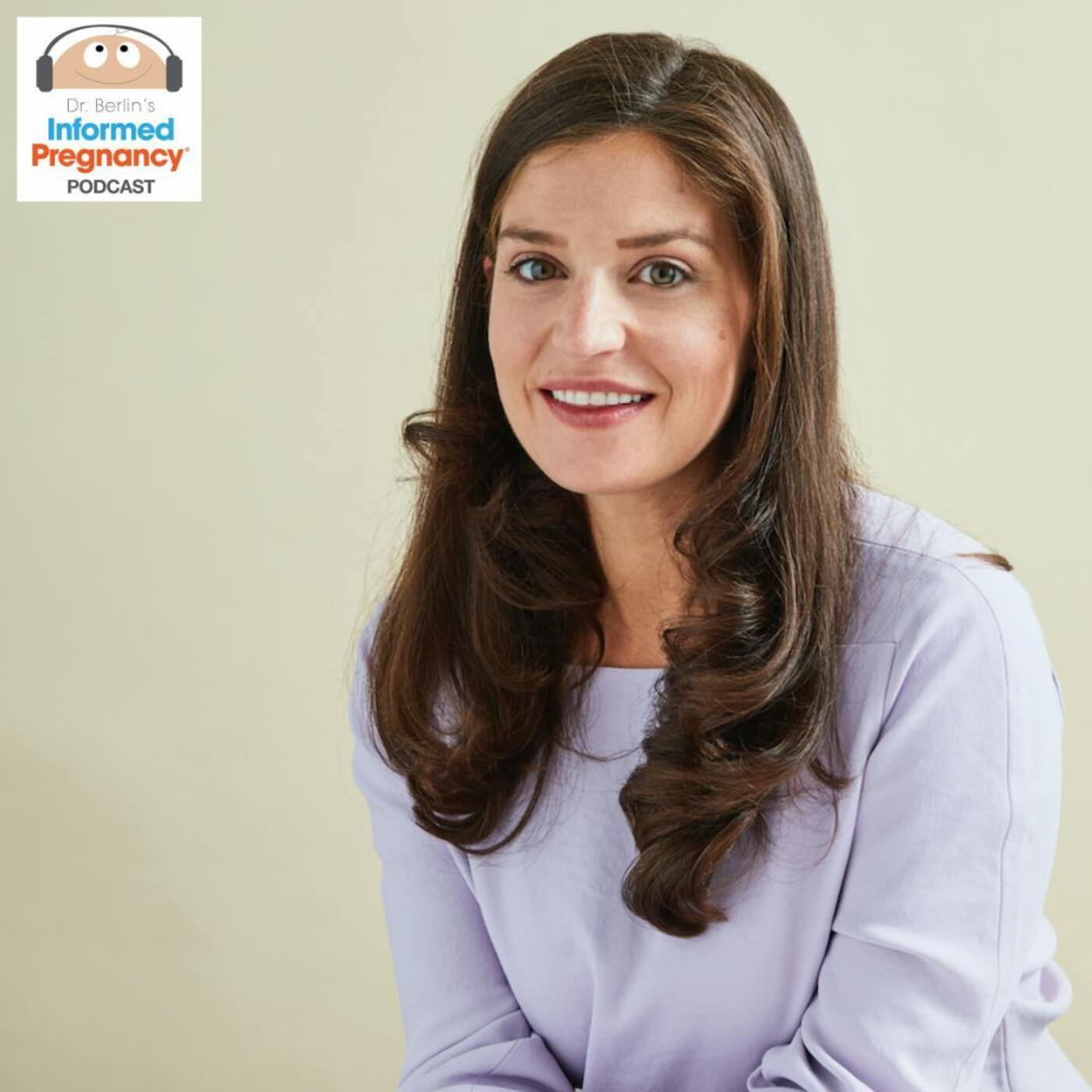
Julie Sawaya, Co-Founder of ‘Needed’, a nutrition company driven to provide women proper nutritional supplements for every stage of pregnancy explains her motivation for making better supplements for womens health and shares her own pregnancy journey as she plans for birth during the pandemic.

Learn more about your ad choices. Visit megaphone.fm/adchoices
See Privacy Policy at https://art19.com/privacy and California Privacy Notice at https://art19.com/privacy#do-not-sell-my-info.
Key quotes
“But when he started bringing home the insulin and and would do his twice daily insulin injections Like I remember it very vividly from the time I was probably five in our kitchen just seeing him doing that and I think that in a lot of ways has informed my interest in nutrition and finding ways to stay well outside of Western medicine.”
“97% of women who are pregnant take a prenatal vitamin so people are generally really compliant with them and yet 95% have nutrient deficiencies. So this has to tell you that something's not adding up”
“a notion that less is more when it comes to your prenatal and the reality is less is not more.”
“if you start out pregnancy with good levels you can give yourself a little bit of a break if on any given day you don't feel up to eating your normal diet or it's a huge struggle to take a totally nutritionally complete prenatal vitamin. The earlier you start preparing your body for pregnancy the more nutrients you have in the bank that you can draw from.”
“And I am really looking forward to the postpartum support that is really baked into the midwifery model. And the fact that that's part of our conversations at thirty four, thirty six weeks, it's not all about planning for birth or just looking at, you know, your GBS testing or the like. It's really planning for how are you going to be nourished and how are you going to be well supported postpartum?”
Related episodes
- Ep. 190 Julie Sawaya – After Birth
- Ep. 385 Needed: Holistic Nutrition with Ryan Woodbury
- Ep. 188 Joanna Bavero – Birth Story
- Ep. 182 Randi Wood – Birth Story
Transcript
AI-generated transcript with speaker labels — may contain errors, especially names and medical terms. Dr. Elliot Berlin, DC appears in blue; Julie Sawaya in orange.
Download PDF of the Transcript
Dr. Elliot Berlin, DC [1:13] Welcome to the informed pregnancy and parenting podcast. I'm your host. Dr. Elliott Berlin today We're gonna be talking about nutrition and nourishment Especially relating to women and even more specifically before during and after pregnancy I guessed grew up in a family of doctors and medicine in Las Vegas And now she's the co-founder and co-ceo of a unique supplement company called needed She and her team have been working hard to bring proper nutrition to all women including meeting the unique nutritional demands during pregnancy And postpartum and as we speak she is in the final stretch of a pregnancy and expecting her first baby very soon
Julie Sawaya [2:14] Julie Sawaya, welcome to the podcast. Thank you so much for having me. Dr. B
Dr. Elliot Berlin, DC [2:19] Pleasure first of all, it's I got to meet you and work with you Which is amazing, but every time I talk to you I learned something new and I'd love to share that information with our audience so when I go to certain stores some of them have nutritional supplementation aisles that go on forever and it's extremely challenging sometimes to kind of get a sense of what makes one different from another or Which of those vitamins minerals and other supplements are important for me specifically? You have a lot of information about that and I can't wait to get into it But let's start at the beginning you grew up in Las Vegas that which sounds kind of cool
[2:56] Is it or is it just sound cool, you know?
Julie Sawaya [2:59] I often say that when I tell people that I'm from Las Vegas I'm like bracing myself for disappointing them because they're expecting some story about how you know I grew up in a casino or my mom's a cocktail waitress or whatnot But the reality is I grew up in a pretty normal kind of upper middle class background I my parents are both in the medical profession They met in a hospital my dad is a cardiologist and my mom is a nurse both of them are retired So it was I'd say an interesting place to grow up But in a lot of ways it's kind of like Scottsdale or parts of LA where you have a lot of strip malls and golf Courses and it's sunny most of the year. So you're not an amazing car truffler. I am actually pretty terrible
[3:42] Everything related to gambling My husband's pretty good. He grew up in Indiana So can't really put the two and two together there, but uh, yeah, I'm pretty bad
Dr. Elliot Berlin, DC [3:52] I'm decent, but my kids always are like dad teach us how to do the cool car truffles. I'm like I was hoping Julie could help us but I guess not so a cardiologist and a nurse so you grew up with medicine
Julie Sawaya [4:04] yes, yeah from a really young age and you know as a kid kind of playing doctor and Always from a young age. I thought it was really cool that my dad was a doctor and I loved you know early I guess childhood Aspects of science I thought that it would be cool to grow up to become a veterinarian or something like that But also I think the kind of pivotal thing for me from a really young age was when my dad was diagnosed with diabetes I was about five and I always knew my dad was a doctor and that he went off and practiced medicine in a Hospital or had patients that concept sort of made sense to me But when he started bringing home the insulin and and would do his twice daily insulin injections
[4:49] Like I remember it very vividly from the time I was probably five in our kitchen just seeing him doing that and I think that in a lot of ways has informed my interest in nutrition and finding ways to stay well outside of Western medicine.
Dr. Elliot Berlin, DC [5:05] Yeah, that's kind of interesting. I have a similar background. I was going to be, you know, hardcore medicine, and then my father, when I was 19, just suddenly died. And partially from a medical mix-up, and it just made me take a big step back and really want to explore other forms of healthcare besides pharmaceuticals and surgery. And I think that where I ended up, we work really well together, complimenting each other. And I'm really grateful that people do that. But it was like an early lesson, not as early as yours on the importance of taking care of yourself.
Julie Sawaya [5:41] And I think that's not, at least in the medical era that my dad went through his training in and grew up in, that was not uncommon that doctors, you know, you often hear doctors make the worst patients. You know, at that time, it was super common for doctors to be, as it is still now when you're doing your training, but to be working crazy long hours and for kind of the basic lifestyle, diet, sleep, exercise to go out the window, even though they're, you know, maybe preaching it at a high level to their patients. It's really not part of, you know, emphasized at the time in their curriculum as being important for them. And unfortunately today, you know, it's still the case that a lot of Western
[6:24] medical doctors don't have much nutrition training at all, maybe up to four hours in their entire 12 years of training, if that. And it's not the focus for them. Yeah, it's unfortunate. And I come from my dad's side of the family is Lebanese American and eats a really healthy diet. His extended family has awesome longevity and is in really good health. And I can't help but think that part of that is due to lifestyle and nutrition and just kind of a growing your own food or knowing where your food comes from. And a lot of that, I think, in the busyness of my dad's career for him, a little bit went out the window.
Dr. Elliot Berlin, DC [7:06] I, unfortunately, even myself in chiropractic school, we do get probably more nutrition training than they do. But I think what happens a lot of times with doctors is that we're givers. And so as people start to seek what you're giving, and the demand increases, you start to give to them instead of giving to yourself. And it's really easy to fall into that pitfall of even if you know, not really taking care of yourself in terms of sleeping enough, eating, eating properly and getting enough exercise. But the nutritional components even more complex because I think everybody can find some kind of exercise to do or make more time to sleep. But nutrition gets a little tricky. Before we jump into that. So
[7:49] when you went to undergrad, what did you study?
Julie Sawaya [7:52] Yeah, I am. I went to Northwestern for undergrad. And that's actually where my dad went undergrad and for med school and where my older sister went. My sister is two years older than me. We're really close. And she ended up studying pre med. So truthfully, I probably would have gone down that path had it not been for just wanting to carve out my own path, loved the school but didn't want to totally follow in her footsteps. So I ended up studying economics and international studies and loved both. I loved understanding how it's going to sound a little nerdy, but how markets work like basic supply and demand. And really enjoyed learning about different aspects of business and things like
[8:36] that. But I think what most captivated me about economics was understanding incentives. And this led me in my senior year at Northwestern to complete a thesis. So like a full year research project, and I ended up studying food deserts, which are areas underserved by access to healthy food. So an area in this case, I studied them in Chicago, where I was living and looking at what are all of the factors from socioeconomic factors to supply side factors, like, you know, things that a grocery store would look for when deciding whether to locate in a certain place, access to public transportation and tons of different factors on both the supply and demand side. And in
[9:23] short, what I learned is that there are huge incentives on both sides that impact, you know, the access to quality fruits and vegetables and other healthy foods, as compared to like fast food restaurants and convenience stores, which are generally everywhere. And what I learned is that there's a lot of factors, but ultimately, it comes down to education being super important. And that's so important for consumers in terms of the kinds of foods that they're demanding. And then there's some areas where, you know, unfortunately, government does need to step in and make sure that grocery stores do locate in some lower socioeconomic neighborhoods. But it was a really, really interesting way
[10:09] of looking at nutrition. And nutrition is something that I've always cared about, going back to being really young. And I loved, as a kid, cooking and just learning as much as I could about food and how it's grown. But seeing it, I think, from a systems perspective was really eye-opening.
Dr. Elliot Berlin, DC [10:26] That's really interesting, the concept that food deserts are partially because of lack of education and part of lack of economic incentive, but that it comes from both sides. And both sides really need to be addressed. There's no excuse in our country, an affluent country, for there to be any neighborhoods where people can't get access to healthy fruits and vegetables and the foundations of a healthy diet.
Julie Sawaya [10:53] Yeah, yeah, it's so true. But I think what we often find is, and think about the US kind of at a high level, we are very affluent and we are very educated overall as a population, and yet our health isn't all that great. And a lot of us do know some of the basics of, nutrition is immensely complex, but some of the basic information about eating more fruits and vegetables or eating fewer processed foods, a lot of us know that, but it's harder to put that into practice. So some of it comes down to education, making sure people know things like that. And then there are tons of other factors too, like what did your family grow up eating and how available is the food,
[11:34] both in terms of can you get it physically and is it affordable to you? So it's complicated, but I think for me at least just endlessly fascinating.
Dr. Elliot Berlin, DC [11:45] Wow, our platform is all about education and information. So we're gonna take a quick break, but when we come back, we'll start with the education piece because you have so much knowledge to share, don't go anywhere. We will be right back with Julie Sawaya.

Dr. Elliot Berlin, DC [14:22] Welcome back to the Informed Pregnancy and Parenting podcast. I'm your host, Dr. Elliott Berlin, and we're talking to Julie Sawaya. Let's talk about women's nutrition and especially prenatal and postpartum nutrition, and your unique approach to it. How did you even get into the backgrounds that got you excited about nutrition from a business perspective? How did you get into forming a company? You went to business school.
Julie Sawaya [14:48] I did, yeah. So after a few years of working in actually the finance profession, I realized that what I really wanted to do was to start a… company and during that time I was working crazy long hours and nutrition was that lifeline, that thing that kept me feeling sane and healthy and good and it became clear that it was more than just a hobby and it was really something that I wanted to dedicate my working hours towards. So ended up going to Stanford Business School and on the first day of school I met my now co-founder Ryan. We were actually next-door neighbors our first year of school and Ryan is in so many ways a kindred spirit. Similarly has been
[15:31] passionate about food and nutrition and the connection between environmental and human health her whole life. So Ryan and I were kind of I'd say nutrition nerds is a fair characterization. Both of us paid a ton of attention to what we were eating and in spite of that we started doing some nutrient testing just to really understand you know how are we doing. We know that we're shopping at the farmers market and you know paying attention to what we're eating but you know we knew enough to know that doesn't always translate to what are your nutrient levels and how much of a nutrient are you absorbing.
Dr. Elliot Berlin, DC [16:06] Is that driven by you feeling a certain way or not feeling anyone or
Julie Sawaya [16:11] just sheer curiosity? I'd say it was a mix of both. It was a combination of for me personally I had at various points in time experimented with being vegan and initially felt awesome had like a huge surge of energy and then with time was starting to feel more tired than normal and I was getting sick more often than I had been in years past. So there was a there's a mix of not feeling my absolute best and also just being curious of you know was I okay on nutrient levels because I had followed this kind of strict diet and was careful about making sure I was hitting what I needed but what I realized through the testing and Ryan similarly learned is that we both had real nutrient deficiencies like a
[16:58] shocking number of them and a shocking level of them and the more we research this the more we realize we were really not alone at all in this. Most women do you have nutrient deficiencies. Are we talking about specific elements of the nutritional panel? Yeah so for both Ryan and I we we had pretty common ones that you see in the research that a lot of women have for omega-3 for vitamin D for B12 some of the other nutrients that are super important for women are you know vitamin A folate and you can test for most of those nutrients through a combination of you know blood and urine and saliva tests. So I guess the genesis was realizing we food wasn't
[17:46] meeting our needs we needed to take supplements and this is a few years before we were actively trying to start families. We had a number of friends who were in that stage of life who were trying to get pregnant struggling with infertility or who were pregnant but were just generally kind of lost and confused as to what they should take as you said in the opening it's a really complicated space trying to figure out what do you need nutritionally and what makes for a good supplement and you know a less
Dr. Elliot Berlin, DC [18:15] good supplement. Yeah in general but especially during the perinatal phase what's gonna prepare your body and kind of roll out the red carpet for that little passenger and give you everything you need to sustain both of you during the growth and development phases and and afterwards when you naturally get depleted and start breastfeeding. Yeah and the
Julie Sawaya [18:36] reality is that most people think their prenatal is covering all that they need but most prenatals are actually designed to meet minimum nutrient needs not to optimally nourish women and this is measured a pretty surprising stat when I heard this is 97% of women who are pregnant take a prenatal vitamin so people are generally really compliant with them and yet 95% have nutrient deficiencies. So this has to tell you that something's not adding up yeah and what we learned through really researching this and getting needed off the ground was that oftentimes there is a notion that less is more when it comes to your prenatal and the reality is less is not more. We do have a need for better prenatal
[19:23] vitamins that can set you up for optimal nourishment because it takes a lot to grow a healthy baby baby takes a lot from mom and most women start out pregnancy already deficient so that depletion ends up compounding.
Dr. Elliot Berlin, DC [19:37] Okay I definitely want a t-shirt that says more is more. Sometimes it is you
Julie Sawaya [19:45] know everything in balance it's not to say that an unlimited dosage of a certain nutrient is best for your body but in general most prenatal vitamins were designed around recommended values recommended nutrient that were set 50, 60 years ago and are based on how do you avoid serious diseases like scurvy or spina bifida, not how do you set women up to have enough nutrients to perform higher level functions like postpartum tissue repair or energy metabolism so that you feel well during pregnancy.
Dr. Elliot Berlin, DC [20:21] Yeah, it's a totally different approach and both with merit, by the way, because people used to really suffer with those things and coming up with a supplement that they can take to easily avoid them was a big step. But then as we evolve and we learn more, why not take the next step and not just try to prevent horrible things from happening, but also boost and promote and give yourself the factory, the tools it needs to provide a good product. And the other thing that you kind of think about also is there's no way everybody's the same, that everybody has the same needs or is lacking in the same areas. And also how you deliver that nutrition, you know, just because it's on the label
[21:05] doesn't mean it's getting into your bloodstream. So I'm curious about how you went about approaching some of these things and creating your product.
Julie Sawaya [21:12] Yeah, it's a great point. So there is no replacement for getting your nutrient levels checked with a practitioner and actually understanding what are your levels. But for most women, it is a little bit overwhelming to try to cobble together a perfect dosage of each nutrient. And in our prenatal, for example, there's 14 vitamins, 12 minerals, two botanicals. That's a lot of nutrients to factor in. So getting a custom dosage of each of those takes a lot of work. So we've designed our products, we've designed it with the frame of mind of looking at nutrient forms that are optimally utilized by the body. So the form that your body can put to use best and can best absorb.
[21:58] And oftentimes that is a more expensive form of a nutrient. It's a less commonly used form of a nutrient. And a good example of this is magnesium. There's so many different forms of magnesium. The form that we like is called magnesium glycinate. The most commonly used form of magnesium in prenatal vitamins is magnesium oxide. And that nutrient can be awesome for some other pregnancy related needs like constipation. It's so poorly absorbed by the body that it actually can help with bowel movements. Speed things up. Yeah. But it's important to note on a nutrient by nutrient basis, what is the point of the nutrient form that you're using. And we've tried to select the forms with every single nutrient that we're using that
[22:42] your body can really put to work in the way that we're intending it. And they need to play well together since there's a lot of things in there. There is. There is. And I think, you know, it's been a journey for us. We started the company in 2017. And we've spent the last three years formulating a better prenatal and the other products that really complete a prenatal like an omega-3, like collagen protein, like a pre and probiotic. Really trying to design a simplest system as possible for women to make sure that they're getting everything that they need. Needed. But it takes work. And we've not done it alone. We've been working with a team of health practitioners who are really providing us
[23:22] insights into what they're seeing in their practice. And this gets back to your point about individual needs. These practitioners are every single day testing women's nutrient levels and seeing what they need. OK, are they currently taking a supplement, for example, for vitamin D? Are they supplementing with vitamin D? And if so, what are their levels look like? And oftentimes those insights are informing our dosages in a way that a lot of supplement companies just aren't factoring in what's actually happening on the ground and what do real deficiencies look like in otherwise pretty healthy women. And sometimes it's kind of surprising, like 90% of the women that the
[24:03] practitioners we work with test are deficient in vitamin D despite, you know, many of them taking a supplement. So things like that, I think those nuances are so important and so often overlooked.
Dr. Elliot Berlin, DC [24:16] I love, love, love that you put so much resource and time and effort into integrating the products rather than just putting together a bunch of this and that. I think that towards the end of pregnancy, you sometimes see, especially in the later second trimester and through the third trimester, that people start to feel sometimes really fatigued and just low energy, uncomfortable, not sleeping well. And even some of the things that come up, it constantly crosses my mind. You know, some of the things that we don't even understand, like colostasis or other end of pregnancy things where the body even starts to turn toxic on itself. You just can't help but wonder, is there something lacking in the nutritional?
[25:00] panel that the body needed but didn't have. And so the way you're thinking about you know finding out where the deficiencies tend to be and filling them in is really promising. What is the delivery method for your prenatal
Julie Sawaya [25:13] supplement? So our prenatal multivitamin, our omega-3, and our collagen protein are all powdered form and that's intentional. Powder is really the format where you can pack in more nutrition than you can in a pill. So in general you know we spoke about nutrient forms and about proper dosages. In general there is a trade-off between how easy the product to take and how nutritionally complete it is. That's just unfortunate. So some of the better absorbed nutrients tend to be large molecules and just take up more space. The way that we've gotten around this is by making our product a powder. So it's as nutritionally complete as possible. If it were in
[25:57] a pill form it would be probably 10 to 15 pills which no one wants to take pregnant or not. And they're designed to be paired together so you can blend them into a smoothie or you know in the early periods of first trimester when you're feeling totally nauseous you can just mix the prenatal into a glass of almond milk and a little bit of protein with your prenatal and find something that works for you that isn't a big pill to swallow. No pun intended. Yeah yeah that's still gonna give you what you need. I think that's a that's an important point in terms of you know I have now lived through this and have experienced firsthand what it feels like to not
[26:38] feel your best in the beginning of pregnancy. And I think that's why it's so so important and often really not talked about how important it can be to start taking your prenatal vitamin before pregnancy. Your OB might tell you you know look for something with folate or folic acid three months before you're trying to conceive and that's great as long as it's folate which is the the natural form of benign. But there's so much more that you can be doing to set your body up to be well so that you start out pregnancy with good levels. And there is a lot of research showing that how nutritionally optimal you are impacts how you feel in that first trimester.
[27:20] And also one of the things I kept in mind during my first trimester is that you know if you start out pregnancy with good levels you can give yourself a little bit of a break if on any given day you don't feel up to eating your normal diet or it's a huge struggle to take a totally nutritionally complete prenatal vitamin. The earlier you start preparing your body for pregnancy the more nutrients you have in the bank that you can draw from.
Dr. Elliot Berlin, DC [27:49] That's a good point too. I'm sort of getting a hankering for my prenatal vitamin smoothie. I had mine this morning. Hashtag jealous. Speaking on your pregnancy it's a crazy time to be pregnant let's take a little break and we come back talk a little bit more about what you've been experiencing we will be right back with Julie Sawaya. Welcome back to the informed pregnancy podcast we're talking to Julie Sawaya. I'm so grateful to you for sharing more of the information and what drove you so passionately to pursue finding where the voids are and creating supplementation that not just gives you the bare minimum but really thoughtfully puts the ingredients in
[28:43] that are gonna help the body do its best in general for women and also during and after pregnancy. You're pregnant now and congratulations and you're getting close to the end and also it's a crazy time in the world and it's a crazy time to be pregnant because we're in the middle of at this recording hopefully the end of the peak of the COVID-19 pandemic. Did you plan to be pregnant at this time? I mean nobody could have predicted. No and
Julie Sawaya [29:11] you know it is funny I don't know I am a little bit of a planner and you know looking ahead at you know one would be the right time to get pregnant I think it just goes to show there is never a perfect time but I think there's you know it's definitely not without its challenges. Fortunately I think you know in early March when all this is happening I still knew that I safely had a few months for hopefully the situation to normalize a little bit at least in the you know the medical system here in LA but there's probably both good and bad about about this time and it's certainly it's certainly one for the history books for sure.
Dr. Elliot Berlin, DC [29:49] Absolutely. In your planning did you think early on about things like where you would want to have your baby and who you would want to have your baby? attend your birth?
Julie Sawaya [30:01] Yeah. So I think because of my family background in the medical field, I always assumed, I guess my default choice was to work with an OB. And I found a great OB. My husband and I moved to LA about a year before we got pregnant. And so I was kind of forming my health community in LA alongside my preconception rep and found a great OB that I was really happy working with. And I think I naturally kind of gravitated towards the idea of midwifery care for a few reasons, one of which is lower medical interventions, a greater emphasis placed on nutrition. And the idea of having a baby at home instead of a hospital was really appealing to me. But I think starting out as a first time mom,
[30:56] it was a little bit too foreign of a concept coming from the family I came from for me to pursue it very seriously. So I kind of continued for probably the first five months of my pregnancy kind of happily on the path of planning to deliver in a hospital, hoping for a low intervention birth. We had hired a doula who's wonderful and felt really supported in that high level birth plan. And that was all well and fine until COVID happened. And at least in LA, the hospital situation changed rapidly. But very early on, there was a policy where partners could not join a birthing woman in labor. And then that got relaxed. And then partners could come, but they
[31:45] couldn't stay postpartum in any case. And it's still the policy in hospitals here as of right now. Dulas or secondary support people can't accompany laboring women to the hospital. So I think that was probably the first moment of reassessment for my husband and me around, are we going to be able to have the birth experience that we're hoping for in a hospital setting in light of what's happening?
Dr. Elliot Berlin, DC [32:11] You know, it's interesting. So as someone who attends birth, and I don't even know what I would be called really. Sometimes at the hospitals around here, including the one that you were planning to go to, they're very pre-COVID, very relaxed about who you bring. I've seen five or six people in the room, the laboring person, and maybe her mom, and a sister, and a friend, and a doula, and a birth photographer, and me doing whatever I do, body work. And then also, you know, other people that come and go, like the nurses, or doctor, and even midwives sometimes at that hospital. So to all of a sudden. And then at home, you see also some people just want nobody around them.
[32:52] Just one person or two people, or literally nobody. I've seen people like run away to the bathrooms or sit on the toilet and not come out for hours just because they want to be alone. Which is great, everybody has their thing. But for the people who like support and want people around them, it's been a really difficult transition now because most of the hospitals will let you bring one person at most. And you know, especially if it's a long labor and you're trying to do it on the natural side, it used to be great to have maybe your partner around you for a little bit, and then swap out with the doula who had a little rest and your partner can rest.
[33:27] And there's always fresh energy around you and different pieces of the birth puzzle that people have had to adapt to. Not having the same way. I mean, I see people doing virtual doula where they have a big iPad next to them and their doula's face is there. And they can do some things like the coaching and the talking and the psychological first aid, but it's not nearly the same as being there with you. And on the other side of the coin, especially having recently been in the hospital as a patient, I can totally respect and understand how the hospital's first priority is safety. Safety for all the patients, including the laboring people and their staff.
[34:03] They're doctors, nurses, everybody else who is in the hospital, even therapists, respiratory therapists, other people who just work the supply chains or sanitation, everybody who's in there needs to be protected. And so during these pandemic times, every extra person who comes into the building or into the room to them is a risk or a threat. And so it's how do you juggle and manage having a person have the support that they want and need while they're in labor while also minimizing the amount of people coming in and minimizing the viral spread. I would not wanna be that decision maker. It's very challenging to find the right balance. But what I have seen a lot of people do,
[34:45] especially with your initial birth plan, which is to have the baby at the hospital, but ideally with as little intervention as possible, some people are switching a home birth or out of hospital birth at a birthing center at home. Or we just had one where she decided to. labor close to the hospital and bring her whole birth team and have everybody around her and then just at the very end go in for pushing. I even have a patient right now who is switching out of hospital birth because she cannot in her mind picture the idea of laboring and pushing a baby out with a mask on.
Julie Sawaya [35:17] Yeah. Yeah. And I can relate to all of that. And our doula who we are working with is actually also a midwife. So she was able to provide us with monetary care if we had so chosen. And that's something we thought really seriously about. Let's labor at home as long as possible. It's sort of the best of both worlds. We can be monitored safely at home and know how I and the baby are doing and then just go in for pushing. And I think some of the things that caused us pause in that decision is the more I researched it and realized how important continuity of support really is, you know, the idea of feeling so safe at home with, you know, with our doula or our monetaries and then
[36:02] transferring to a hospital into a totally different environment. You know, knowing that that could take me out of, you know, the mindset of birth naturally progressing and put me more in the front of my mind, filling out paperwork. Or I even heard stories of the partner needing to wait in the car for you to be checked to see if you can be admitted with all of your belongings. And there were, you know, I'd say there are definitely covid related factors that pushed us in this direction. But it was really important to me that we not rush into a fear based decision, you know, through my research. And we're so lucky in LA, as you said, to have so many options of where
[36:41] you can deliver and be completely safe and well cared for. And I, you know, I took the time to really understand what are the options and ultimately where where I shook out is that this really felt the most right to me transitioning to mid wifery care and planning for a home birth just felt like the right choice. It felt like covid had kind of put that near up to, you know, my face maybe and realizing this is actually what what I've always wanted or always would have ideally planned for. But I think the silver lining is I probably wouldn't have made that choice had it not been for a global pandemic.
Dr. Elliot Berlin, DC [37:17] And that's what I'm finding is the people who are switching to out of hospital birth always had the thought, the curiosity had done a little exploration about it and were kind of not 100 percent sure where they wanted to give birth, but maybe had, you know, 60 40 in favor of the hospital. And then all of a sudden with the new information and factors went 60 40 the other way or 70 30 or whatever it is. So, you know, I'm excited for you. I think that your energy and the kind of support that you can get right now at home is so much more rich than the kind of support you can get at the hospital. But of course, you have a backup plan and you're able
[37:55] to go to a hospital if you need that medical safety blanket for any
Julie Sawaya [37:58] reason. Yeah, yeah, I'm really excited for it, too. And I think two things about the midwifery model of care that really, really appeal. One is I just love the notion it's so closely aligned to what we believe it needed that setting women up throughout their pregnancy to feel well, to stay low risk through lifestyle is core to the midwifery model of care because it's so predicated on women being low risk. And, you know, you're not a candidate for home birth if you're not low risk. And so I just love that focus on how do we practice kind of preventative wellness. It really, really resonates with me. And then the other idea is, you know, I'm going to also be a first time mom in the midst of a pandemic.
[38:43] And I am really looking forward to the postpartum support that is really baked into the midwifery model. And the fact that that's part of our conversations at thirty four, thirty six weeks, it's not all about planning for birth or just looking at, you know, your GBS testing or the like. It's really planning for how are you going to be nourished and how are you going to be well supported postpartum? It's just unfortunately not part of the standard OB care.
Dr. Elliot Berlin, DC [39:11] That's an excellent point. It's something that I see as extremely valuable and hopefully starting to shift a little bit in the obstetric model. But, you know, they're so focused on pregnancy and childbirth. And then there's this like big gap afterwards where you're kind of on your own. And in midwifery, it doesn't work that way. That's every much important, if not more than what was going on before. So we are running out of time here. I really am grateful to you, first of all, for the work that you're doing and for explaining to us more about nutrition and nourishment and your company. Where can we find you online?
Julie Sawaya [39:51] Yeah, well, our company is online. We sell our products primarily direct to consumer and through a network of health practitioners. But you can order products. from us at thisisneeded.com and we're also really active on Instagram at nourishmentisneeded and Dr. Berlin has been part of a recent series in light of COVID we've shifted a lot of our content on social media to having conversations that help support women to make the right nutrition decisions and other nourishment choices for themselves especially during these times where access to health practitioners can be a little bit more limited so we'd love for more women to join us on that movement to find
[40:33] nourishment we'd say a lot of times no we're obviously a nutrition company and we're clearly a supplement company but our mission and what we're all about is about nourishment and all of the things you know that's sometimes nutrition and it's in a lot of ways more than just nutrition it's feeling informed it's feeling empowered and feeling supported so that's what you're
Dr. Elliot Berlin, DC [40:54] very focused on. And so this is needed N-E-E-D-E-D I don't know if you know that one of the options in the running when we were naming our massage and chiropractic practice was needed K-N-E-A-D-E-D so I feel like a soul
Julie Sawaya [41:09] sister to you. The puns never end. No they never end. It's a good name honestly we ended up on it because we just again and again when we were starting the company just kept saying we're focused on not nutrition fads but what you really need and at some point someone just turned to us and said why don't you just call yourself
Dr. Elliot Berlin, DC [41:26] it's very fitting that's perfect Julie thanks for joining us at home thanks for listening to the informed pregnancy podcast if you like our program share us with your friends and leave us some feedback in your podcast app and for more pregnancy and parenting related media visit us at informedpregnancy.com
Want more pregnancy + parenting? Start your FREE TRIAL of Informed Pregnancy+ and get access to all our curated pregnancy and parenting content — original series, iconic birth films like The Business of Being Born, prenatal workouts and more.
