
December 14, 2023 · 39 minutes · Episode 385
About this episode
Holistic nutritionist and co-founder of Needed Ryan Woodbury shares her own pregnancy and birth journey, how she found holistic medicine, and tips on choosing a supplement. Needed is a nutrition-powered company created by two mothers and trained nutritionists with the mission of finding a better way to deliver mothers and families life-long health.

Connect with Ryan online: https://www.instagram.com/ryrywoodbury/
Learn more about Needed: https://thisisneeded.com/
Start your FREE Informed Pregnancy+ subscription and check out our blog here: https://informedpregnancy.com/single-post/cultivating-connection-pregnant-partner-yoga/
Keep up with Dr. Berlin and the Informed Pregnancy Project online!
www.instagram.com/doctorberlin/
www.facebook.com/InformedPregnancy
Learn more about your ad choices. Visit megaphone.fm/adchoices
See Privacy Policy at https://art19.com/privacy and California Privacy Notice at https://art19.com/privacy#do-not-sell-my-info.
Key quotes
“tanks to clean the shark tank. Yeah, and I've been in scuba gear out in Santa Monica Bay to collect samples like fish and seaweed for the tanks too.”
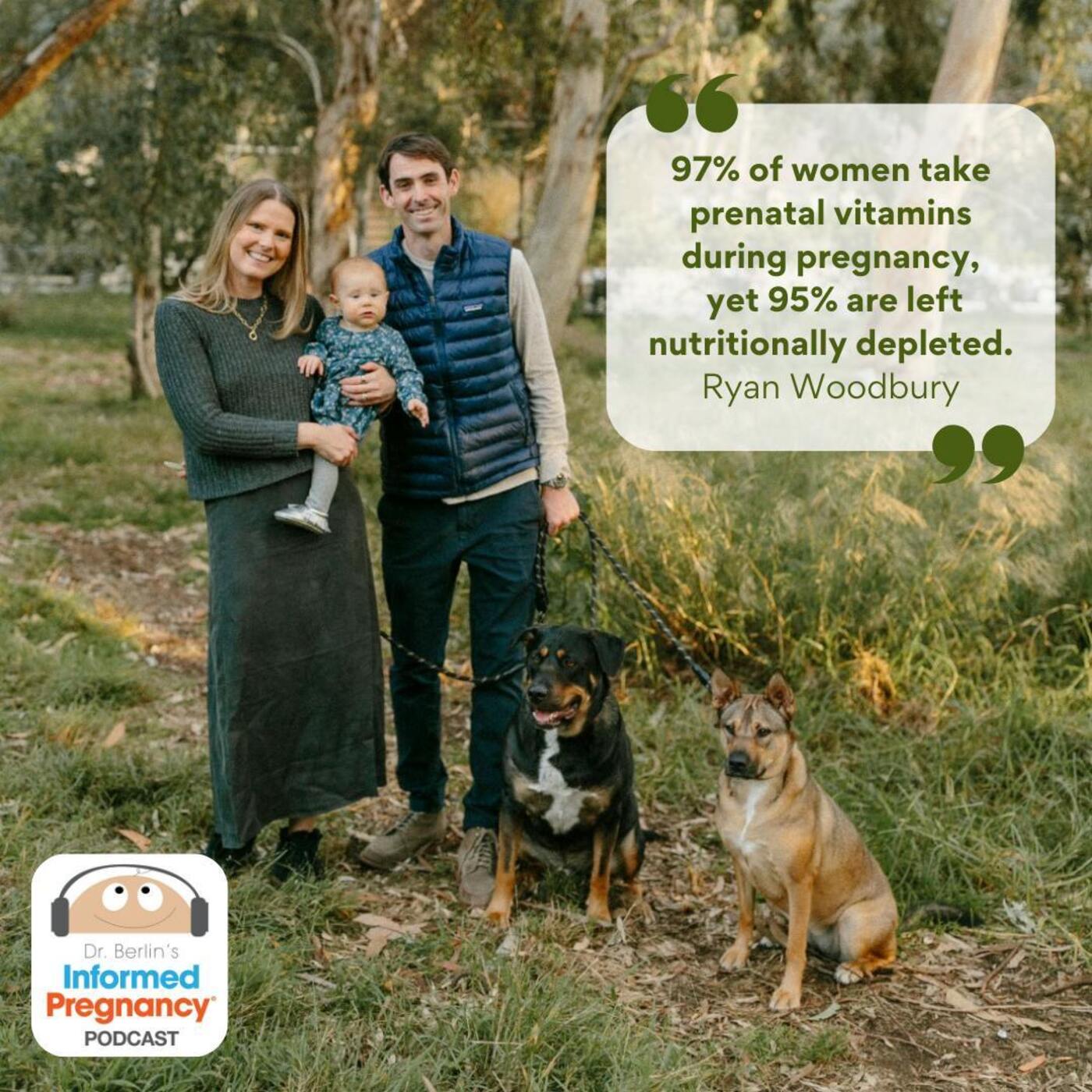
“shocking how many prenatal vitamins there are but there was a core problem that despite 97 percent of women in the u.s taking a prenatal vitamin 95 percent of them are nutrient deficient is what the research suggested so we needed a radically better prenatal vitamin and think about sort”
“I mean one of the biggest ones of just making sure what's on the label is in the bottle is something that we do through third-party testing. So every single batch of products that we make goes out to a third-party lab to make”
“a long preconception journey of learning that, hey, you can impact fertility. You can sort of impact the health of the baby through what you do before actually getting pregnant.”
“it needed is just like, there is so little you can control on this journey. And the more that you can just like, stay open, love the moment and stay like relaxed, loving better. But we like to also remind folks that, hey, nutrition is one of those things that you like can control and it dramatically can change outcome. So doing what you can to support your nutritional health”
Related episodes
- Ep. 358 HealthyGirl Kitchen with Danielle Brown: Before Birth
- Ep. 386 Pregnancy & Postpartum Yoga with Tara Lee
- Ep. 350 Ciara Whaley: After Birth
- Ep. 381 Super Scar with Lauren Aboulafia
Transcript
AI-generated transcript with speaker labels — may contain errors, especially names and medical terms. Dr. Elliot Berlin, DC appears in blue; Ryan Woodbury in orange.
Download PDF of the Transcript
Dr. Elliot Berlin, DC [0:36] Welcome to the Informed Pregnancy and Parenting podcast. I'm your host, Pregnancy Focus chiropractor, Dr. Elliott Berlin. My very exciting guest today is a mother of one kiddo and two dogs, who also happens to be a holistic nutritionist and co-founder of my favorite company in the whole wide world, Needed. You hear me talk about them all the time. She's going to tell us a bit about how she got into nutrition and supplementation and her own pregnancy and birth story, and maybe at the end, a little surprise. Ryan Woodbury, welcome to the podcast. Dr. B, I'm thrilled to be here. I'm such a fan
Ryan Woodbury [1:16] and it's really fun to be recording with you. It's mutual. I met you and Julie before Needed. I maybe had one product before the explosion, the growth of the family forestry
Dr. Elliot Berlin, DC [1:28] of products. Yeah, I think you were behind the scenes early and testing some, you know, wonky samples as we were trying to get R&D off the ground. Yes, always happy to test wonky samples. And then, yeah, I fell in love with you guys as people on your mission, what drove it, what was driving it and probably still drives it today. And the adoration has only grown as I've gotten to know you guys better and as I see what you're doing with nutrition for all of us. So I'm very excited to have you and I want to talk about it all, but let's start at the beginning. Where are you from originally?
Ryan Woodbury [2:02] I grew up here in LA, so I'm a local. Which part of LA? I grew up in Castina, so on the east side of LA, but I took every moment that I could to come to the west side where I live now. I'm not too far from the water and my first job working through sort of middle school was working for the aquarium underneath the Santa Monica pier. So I spent as much time at the beach as I possibly could.
Dr. Elliot Berlin, DC [2:29] Oh my gosh, what did you do at that aquarium? That was possibly the first
Ryan Woodbury [2:32] aquarium my kids have ever went to. Yeah, I cleaned shark tanks, fed the fish, led educational tours. So that was my kind of summer and weekend job. Did you scuba in the tank? I have been in scuba gear in the tanks to clean the shark tank. Yeah, and I've been in scuba gear out in Santa Monica Bay to collect samples like fish and seaweed for the tanks too.
Dr. Elliot Berlin, DC [2:59] Oh, wow. I always wonder what makes the sharks not eat you. Yeah, well, they have baby sharks there, so they're not that scary. Oh, I see. All right, so you love the water? Love the water, for sure. Now you get to live near the water. You are a holistic nutritionist and you're the co-founder and co-CEO of Needed. How did you get into all of that and is it like something from childhood? You're like, wait a second, I love nutrition.
Ryan Woodbury [3:27] There's absolutely roots in childhood, but did I ever expect to start a supplement business? Not really. My background is actually in environmental science, which you can kind of see the ties from working at an aquarium at an early age and I think got interested really early in nutrition, really around the time where I was working at the aquarium. I think times were different back then when I was able in middle school to lead the aquarium on my lunch breaks and end up in Santa Monica and business at various yoga studios and health food stores when they were very much emerging and sort of the healthcare movement, you know, many decades ago was kind of more novel in LA, but I fell into it very early
[4:12] and sort of found kind of the connection between what I was doing at the aquarium on educating around environmental health to be very linked to human health and that you actually got a lot of people to start caring more about environmental issues if you could link it to more of the humanistic element around like, hey, like pollution matters because your kids are going to get sick, you know, swimming in the ocean if there's a toxic algal bloom or, you know, paying attention to diet and nutrition is very linked to the food being sourced in a way that was environmentally positive, also being nutritionally positive to your body. So really link and root is an environmental science, environmental health,
[4:57] but always had an early, early connection. to human health and that was where I think the research led me of. I was an environmental science major in college but spent a good portion of my time with a med school nutrition professor around how do you teach a farm-based nutritional education to kids and basically tracking that if you could get kids outside having them have more exposures to a wider variety of homegrown foods at an earlier age you're actually able to track outcomes in the trajectory of their food and diet preferences later in life. So anyway it's long story short you never know exactly the path but a lot of the elements were certainly there from a young age. Yeah but it sounds like
[5:40] a very natural journey from one point to the next but as a kid were you raised in a nutritionally conscious home? No not really at all. I would say like my mom was very adamant about family dinners and would make dinner every night. We didn't eat much takeouts. It was very much a home-cooked meal but there wasn't really much of an interest at all in kind of talking about it from a nutritional framework that really came out of an environmental food systems related orientation for me. My parents thought I was annoying and picky and crazy for many years.
Dr. Elliot Berlin, DC [6:18] And now look at you. What was the impetus to move from your interest in nutrition,
Ryan Woodbury [6:26] healthy eating, healthy sourcing to supplements? Yeah so Julie my business partner and I we met as next-door neighbors in grad school at Stanford Business School and both had been done outside school nutritional training had long-time interests but it was at a moment in time where a lot of at-home nutritional testing was becoming a lot more accessible and we tested our nutritional levels pretty comprehensively and we were shocked to find that we were not just deficient in one or two things but a multitude of things despite paying a lot of attention to diet and you know I spent a lot of time sourcing the right regenerative meats and shopping at the farmers market but it wasn't getting me
[7:12] all the way there to have my nutrition at an optimal state so I think it was that paired with so realizing like even just for a standard kind of healthy woman in her 20s at the time supplementation was matter just for optimal health and well-being and then both of us were beginning to think about our journeys to motherhood at that time and doing a lot of research around recommendations around perinatal health and nutrition and watching friends go from the journey from beginning to end and just being shocked by how nutritional care just basically didn't exist in the standard of care and we felt that a lot of issues friends were struggling with whether it was fertility issues through you know
[8:03] hypertension and pregnancy all the way to kind of postpartum recovery that a lot of that through our nutritional training could be much better supported if these women were nutritionally supported so it kind of triggered an interest in better supplementation and then an increased focus around hey the largest need for better supplementation is in pregnancy when a woman's needs are the most heightened at any stage of her life so go deep into perinatal nutrition and supplementation you know it's a tall order and almost a trepidatious order because you definitely don't want to get it wrong with pregnancy yes you definitely don't want to get it wrong and it took us and because of that about three and a half years to get to launching
[8:51] our current product assortment and really i think for one we weren't looking to create just a new prenatal multivitamin there's hundreds of them out there it's like actually shocking how many prenatal vitamins there are but there was a core problem that despite 97 percent of women in the u.s taking a prenatal vitamin 95 percent of them are nutrient deficient is what the research suggested so we needed a radically better prenatal vitamin and think about sort of dosing quite differently than what was the current standard of care but to get comfortable with this there were just too many research gaps that we had to pull insights from the clinical
[9:34] practice of practitioners because there's many women's health practitioners and you know yourself included that are helping their patients intervene on different supplement protocols and tracking that pretty rigorously with various nutrition and biomarker testing so we are able to pull this data now from about 4 000 different practices to refine our product assortment and dosing. and get comfortable that, you know, both that this would help women and help change outcomes, but also would be safe and you weren't getting it wrong and
Dr. Elliot Berlin, DC [10:10] potentially causing harm. I would imagine that if someone's taking a supplement, a prenatal supplement, and they're still very deficient in the nutrients, one of two things must be off or both. Either what you see on the label as you're getting all this nutrition in this product is not enough of either some of those products or even not enough of those nutrients. The types of nutrients being deficient or, and possibly both, that what you see on the bottle is not what actually gets into your system or even if it gets into your system, it's not a good source. So how do you sort of go about addressing that duo or trio of problems? Yeah, there's a number of different ways.
Ryan Woodbury [10:58] I mean one of the biggest ones of just making sure what's on the label is in the bottle is something that we do through third-party testing. So every single batch of products that we make goes out to a third-party lab to make sure, you know, not only is the micro not out of order, but there's a whole host of other things that we don't want that isn't in the bottle, like heavy metal contaminants, but also that the nutritional label matches the spec. So if you say there's 4,000 IU of vitamin D in there, you can actually test that it's in there plus the overage to maintain shelf life. So we're pretty rigorous about that testing effort. And then the second question of like,
[11:37] hey, is your body going to actually be able to use it? That is something that we work heavily to validate with the clinical practice of practitioners of, hey, look at the research, but also are you when you use our products, are you seeing, you know, outcome changes on labs and looking at nutrient levels and associated biomarkers to make sure it's happening the impact that you want because there is you guys have probably seen looking at a nutritional label is very confusing. You know, there's like many different types of magnesium and magnesium glycinate versus magnesium citrate have different methods that wish to break down in the body and you're there for their
[12:18] usability by your body varies. And a lot of this usability is driven by, you know, your microbiome what you ate in that day in your genetics, and we certainly want to make a product that is as usable as possible at your body can actually put it to work and you're not just, you know, spending money for something that you're not going to be able to utilize. So there's a big effort on our part around, how do you look at optimally designing the supplements, so picking the right dosage, nutrient forms and source of those nutrients and making sure they're paired with the right other nutrients. An example of that is iron is a very common nutrient and most prenatal vitamins, we actually sell
[13:02] our iron separately, because iron interacts with the absorption of a number of other nutrients, so you don't want to take them at the same time. So we set things up in our protocols as we think of our products all working together in a system and they should be able to work together and make some of those, hey, sorry, we think you need iron, but we're going to make sure you take it separately and at a different time by putting it in a different product to help make sure as much as possible can actually get absorbed.
Dr. Elliot Berlin, DC [13:33] I love how important it was to you to make sure that the supplement that a pregnant person is taking is going to have everything they need, not have things that you don't want in there and be in a form that is readily absorbable and usable by the body. In my olden days, I would be like, oh, multivitamin, let's just take the one a day. Why would anybody take a three a day, a five a day, a seven a day? That's so dumb. And then you realize, oh, when you cram everything you need into a day into one piece of concrete, it's not going to absorb very well. So your thoughtfulness and your effort and your time that you put into research and development and
[14:17] the heart that you put into every bottle, it comes through and it's much appreciated. Let's take a little break. When we come back, I still have more supplement questions for you because that was like the rollout product, your little flagship product, your prenatal, and not just one, but three variations of prenatal. And then everything that came behind it, I just want to touch on lightly the growth of the product line. We'll be right back with Ryan Woodbury. before we get into your own pregnancy and birth experience, you have three different kinds of prenatal vitamin. You have the powder, and you have capsules, and then you have essentials.
Ryan Woodbury [16:34] What's the difference between the three? Yes. So the powder and our eight capsule version are the same nutritionally. We just wanted to offer an alternative as eight capsules is a lot for many to take it in powdered form. So you can mix it into smoothies or a glass of almond milk. And for many, that can be a lot easier to take, especially in the first trimester of pregnancy. And the reason for eight capsules is, so I sort of referred to earlier, we, in many cases, dose a lot heavier than what a two-of-day prenatal dose is at because we want to give you more nutritional support. And a lot of nutrients that are very important, like choline, for example, are very bulky. So it's pretty much impossible to get them
[17:22] in a beneficial amount in just two capsules. So we have those two sort of flagship products. You can pick powder or pills, many consumers switch off between the two. And then we also offer a pared down three capsule essentials version for those moments where you really can't handle more. And when you say you can't handle more like first trimester, when people are a little bit nauseous and yeah. And that way you can think about it of like, okay, I only have to take one pill per meal. So you take one with breakfast, one with lunch and one with dinner, and it just makes it more accessible to at least get some therapeutic nutrition. And we think of that product as the most nutritionally dense prenatal and three
[18:04] capsules that you can find. You know, if you can handle it, take the larger one, but it's a great solve for those moments in time where the idea of taking eight capsules or, you know, downing a full glass of almond milk or a smoothie with your powder is just not
Dr. Elliot Berlin, DC [18:18] possible. And then I don't know if I'm going in order of birth here, so to speak, but you'll have the pre and probiotics, which you originally had a women's pre and probiotic, right? And then I was taking that forever. We still have that product, but I think we then lynched a men's one, which maybe you switched over. Yes, I switched over to the men's.
Ryan Woodbury [18:40] I felt so good on the women's that I was a little hesitant to switch when the men's came out. But also I was afraid, like, is this going to make me lactate? What's going on here? But it didn't. Yeah. So the basics of it is, I think I mentioned before, we knew we had to redesign a prenatal multivitamin from the ground up. The current assortment wasn't cutting it. It wasn't supporting women, but quickly kind of realized on that endeavor that vitamins and minerals alone at this life stage is not sufficient. We really think as part of your baseline nutritional support, there are other supplements that all women ideally would be taking. So we launched our complete plan, which is a system of products to really support you
[19:20] before, during, and after pregnancy, which will include one of those three multivitamins. We already talked about a pre and probiotic as Dr. Berlin just alluded to, which can be beneficial for everyone, but it was specifically designed to support the maternal microbiome and setting up a healthy microbiome because you're passing your microbiome onto baby for both seeding baby's guts and supporting a healthy pregnancy. And then a collagen protein as protein is so important in pregnancy. And there's a couple of amino acids like glycine in the collagen protein that are conditionally essential during pregnancy and hard for a lot of women to get enough of.
[20:01] And then of course, an Omega-3, DHA, EPA kind of fatty acid. So like a fish oil, because that's an important component. So those four products make up our core before, during, and after complete plan system. And then since then, we've launched a number of other specific products to support you at various stages, whether that's a egg quality support for fertility or a pregnancy safe sleep support or a stress support that's really designed for, hey, how do you bring a woman back to her vitality postpartum? And what's cool about each of those products, I mean, they're all wonderful in their own right. And we spend a lot of time with practitioners
[20:46] picking every single ingredient and dose and validating the suppliers and building them from the ground up. But they are all designed to work together in a system. So for our egg quality support, we are sort of shocked to find that when you are looking at egg quality support products on the market, they either interfered with your prenatal multivitamins. So if you were gonna be taking an egg quality support in your prenatal, and if you're taking egg quality support, you're probably in a fertility trying to conceive stage. You were getting way too much folate, which could lead to mood imbalances in women. Or it was an egg quality support paired with some other kind of hormonal balancers,
[21:28] like an ovulation support or thyroid support, and not all women sort of needed that specific balancer. So we really wanted a standalone, potent antioxidant egg quality support that did just that, and you could still take your prenatal multivitamin one day.
Dr. Elliot Berlin, DC [21:48] I get very thoughtful, like really thinking it out all the way through to the end, and it's a puzzle to put together to figure out how to get enough of the right stuff without interfering with the other things you're taking. I don't know how you get a postpartum woman back to herself, but I am a huge fan for myself of the stress response, the stress support supplement. It's been invaluable to me. And then I also really like immune support for the whole family, with all the kids going to school and coming back with all the different germs. We feel good taking the immune support, and secretly it's delicious.
Ryan Woodbury [22:27] Yeah, it is delicious.
Dr. Elliot Berlin, DC [22:28] My daughter asks for her pink wala every single day. And then also hydration, which depends on the year, but in Los Angeles could be a hydration town every day some years.
Ryan Woodbury [22:41] Yeah, just past couple weeks for sure. Yeah, I think Mother Nature's going through menopause and have a hot flash.
Dr. Elliot Berlin, DC [22:50] Certainly going through a big transition.
Ryan Woodbury [22:52] Absolutely.
Dr. Elliot Berlin, DC [22:54] So, okay, that makes sense that A, you moved from your love of science, environmental science, into human science, food science, nutrition, and then fortuitously met Julie and started this lovely company. Now, you said when you met, you were both kind of thinking through nutrition for pregnancy. Were you already thinking about babies at that time?
Ryan Woodbury [23:17] Not actively, but I would say I was married at the time and Julie was engaged and I knew I wanted to be a mom. So I think that definitely started a long preconception journey of learning that, hey, you can impact fertility. You can sort of impact the health of the baby through what you do before actually getting pregnant. So it kicked off a couple of year long preparing for pregnancy period and many ways wanting to make sure I had the needed products to use as soon as I was pregnant.
Dr. Elliot Berlin, DC [23:51] So rolling out the red carpet, what kind of things did you do in the pre-pregnancy phase?
Ryan Woodbury [23:57] Yeah, probably the biggest aspect for it was I had some residual gut issues and so I'd gotten salmonella in college and had never quite recovered. And I think learning more about the maternal microbiome while working on the design of our pre and probiotic, I got very motivated to kickstart my gut healing and gut repair knowing that my daughter would be inheriting my gut or future child. I didn't know she was gonna be a daughter at that point in time. So the biggest aspect of it was gut healing, but there certainly were other aspects with just getting nutritional levels in a good place. A lot of what you talk about of communication with your partner
[24:40] and making sure marriage and the like is in a good place, the list goes on.
Dr. Elliot Berlin, DC [24:46] When you were ready, was it something physical that made you feel ready or was it something in the relationship, something emotional or did nature tell you you're ready?
Ryan Woodbury [24:56] You know, it was one of those like, I think we both felt my husband. And I had a turning point where we just felt like, Hey, it's time. Like I felt physically ready. And then I think business was maybe far enough along that I felt like I could divert some attention around away from my kind of first baby to my family. And I think it was sort of like, Hey, we're like open to this now and put that seat out there. And then we ended up getting, getting pregnant on effectively the first try. So,
Dr. Elliot Berlin, DC [25:23] well, you were literally out there.
Ryan Woodbury [25:25] Yeah.
Dr. Elliot Berlin, DC [25:26] Well, that must be exciting.
Ryan Woodbury [25:28] Yeah. In a lot of ways, yeah, it came as a relief. You know, I think there's a lot of fear and worry that comes with those. I have a lot of friends where the journey has been a lot longer. And, you know, I certainly feel grateful for not having the weight and the stress associated with that.
Dr. Elliot Berlin, DC [25:45] How are the various phases of pregnancy for you? And if you had ideas on what they might be like, how were they compared to those ideas?
Ryan Woodbury [25:54] Yeah. So I think a lot of this came down to the preconception prep that I did, that I honestly think I was my absolute healthiest self going into pregnancy. And you never know for sure. Some people I think are just lucky and you can do everything that you possibly can and you're still going to feel awful, but I didn't extraordinarily smooth pregnancy. No nausea, no fluid aversions, not that much uncomfort. I think a lot of it was I had heavy support from Dr. B and others that made me physically feel really good, but that was a lot of the sort of the luckiness of, you know, founding needed at the same time you're on the journey yourself is we have an amazing sort of
[26:38] network of support and care team. And I was an outlier in terms of ease of pregnancy.
Dr. Elliot Berlin, DC [26:45] I'm glad you deserve it. And you did a lot of prep work, like you said, to get your mind ready, your body ready, and you did work all the way through to continue to take care of yourself. So I think you definitely earned it.
Ryan Woodbury [27:00] Yeah. You think about it that way and it all comes in spades of like, you know, I maybe got a little bit cocky. That pregnancy was easy. My birth was very smooth and what I had hoped for. And I would say that first couple of weeks of recovery, my midwife was like, I don't think I've ever seen someone recover this quickly was all wonderful. And then I was kind of your car. I have a wonderful car factor and Dr. B and then yeah, I had a, you know, a wonderful midwife and kind of care team across the kind of LA birth community.
Dr. Elliot Berlin, DC [27:35] Well, it gives us a little bit of insight in what your birth plan was. Let's take one more break and we come back, find out what you planned and how it went.

Dr. Elliot Berlin, DC [27:55] Welcome back. We're talking to Ryan Woodbury. Okay. So we know that pregnancy was smooth and birth went how you wanted it to. What was the plan and what motivated that plan?
Ryan Woodbury [28:05] Yeah. So I had a home birth and I think a seed was planted when I was a kid about home birth being a possibility. And my family is not a fan of me doing a home birth up until the last moment, but like a preschool assistant teacher who had a home birth. And I have memories of hearing about that experience. And I think somehow it planted a seed early that maybe birth was this kind of beautiful, wonderful thing and didn't have a lot of the kind of scary or nastier elements that can come with it. And if you don't listen to podcasts like this one, so knew I wanted a home birth and then I think it took a little bit of time to get my husband comfortable with that, but we started interviewing midwives around town and
[28:53] that got him at least comfortable enough with the idea pretty quickly.
Dr. Elliot Berlin, DC [28:58] And what did you do to prepare your home and your relationship or any
Ryan Woodbury [29:05] other preparations for giving birth at home? I don't know if we truthfully like did that much and prepping at home, at least not physically. I mean, our house is very much a dog house. I'd say like the dogs rule the roost and it's kind of chaos to that regard. So there was some work and I had a vision of the dogs being there. And my midwife, Davey killed that idea pretty quickly. And my husband was already like, you know, very much on the like, no, Ryan, we need to get them out of the house. And when Davey seconded that, that was, you know, some of the prep work that I had to change my mental model around how the birth night would exactly go, but a lot of the other prep was just, I think
[29:47] managing stress and feeling close with my partner and keeping a lightness and healthy food around and a good loving environment.
Dr. Elliot Berlin, DC [29:57] How did your labor start?
Ryan Woodbury [29:58] Started with Castor. oil, actually. I, at 41 weeks in a day, I went in for an ultrasound and my OB, my backup OB, who's wonderful, had been kind of worried about my fluid levels for a little while. It was very kismet the day he first got worried about my fluid levels, we actually launched needed hydration support. So I was able to access that, but I think there was still back of the mind worry about my fluid, uterine fluid levels. And went in for the ultrasound, I, you know, passed the fetal stress test, but he said that just the way fluid levels were showing up on the ultrasound, if you were my patient, I would induce you to day, popped it over with our midwife. And she's like, I think you have some time, why don't
[30:49] we see if we can get you into labor? And so I took castor oil that afternoon and it definitely worked and started labor a couple of hours later.
Dr. Elliot Berlin, DC [30:59] Did you have a cocktail? Did you have anything with the castor oil?
Ryan Woodbury [31:04] I did not end up having a cocktail. The way my midwife or Davey recommends is like, take a tablespoon every hour. And after the third hour, if things haven't started to move, finish the bottle with vodka. And I didn't have to get to finishing the bottle with vodka.
Dr. Elliot Berlin, DC [31:23] Okay. And then how did things progress once it started?
Ryan Woodbury [31:27] Yeah, I'd say labor came on pretty quickly. I am overnight. Effectively, I had contractions every two minutes, like all night long. So it went into really close together contractions rapidly. So from like zero to 60, I would say labor still felt in control, but it was, you didn't get much break in between the entire night. That happened the whole night. We called our doula and midwife first thing in the morning. And Davey was like, yep, I'm heading over immediately. They came to the house and things kind of stalled. And I took a nap. We went for a walk around the neighborhood and then came back home. It was a full moon kind of morning. So it was a beautiful, beautiful walk. And then labor picked up again and
[32:19] spent some time in the water and the shower. And my contractions, even though they were very close together overnight, never ended up coming that close together. They stayed a few minutes apart. And I think Davey said four minutes apart all the way up through my daughter being born that afternoon the next day. I mean, labor's intense. Generally speaking, did it feel intense to you? It felt intense, but I would say it surprised me and it felt more manageable the whole way through than I would have expected. Were there any particular things that helped you stay calm or, you know, surrender? Yeah, I think there was kind of a recording I listened to a lot before birth that was very much around
[33:12] every contraction brings you closer to your baby. And that kind of mantra certainly helped me relax and just breathe as they came on, as the waves came on. Did you have a plan to like birth in water or on land? I don't have a set plan about it. I mean, I've always had, you know, as we talked about in the beginning, a love of water and a strong association with water and had the birth tub. But I didn't have a set like, this is how I imagine it going through and playing out the steps. So it was nice to spend time in the water. It certainly felt good. But ultimately, my daughter was born in bad and I didn't have any attachment to her not being in the water. How was your postpartum experience? The initial part was wonderful.
[34:05] You know, I would say there's a couple instances of I now recommend to friends of like having a lactation consultant regular on the ready. It took a, you know, 24 hours or so for Emerson to latch. And that certainly was stressful. So made like the first night a little bit more angsty than I would have liked. But luckily, the next day, we were able to get a lactation consultant to the house that really helped. And I think there is just, you know, experienced as my midwife and do well were there is something special for lactation consultant that's really, really trained in that. So other than that, like a little bit of angst around that, the first few weeks of postpartum were magical. It was really nice. My husband was able to
[34:53] take a decent amount of time off and it was really nice family time. And after a week in bed, getting some prenatal body work at home for the nervous system, which is incredible. We were, you know, out and about and going on, you know, very long dog walks as a whole family and I had a lot of
Dr. Elliot Berlin, DC [35:11] fun. You have two rescue dogs, right? Two rescue dogs. How did they welcome their little sister?
Ryan Woodbury [35:19] One of them loved her immediately and wouldn't leave her side. The other one had a lot of trouble with the adjustment. And I think that's been probably one of the hardest aspect of my postpartum journey. He just kept his distance for the little bit of didn't want to come near the baby. But where things got really tough is my daughter started crawling at five months and taking steps seven months. So really early. And when she became mobile, it became a very scary thing for our dog and scary for us when you had a hundred plus pound rescue dog that looks like a Rottweiler snapping at your baby. So there's been a lot of work in figuring out postpartum, how do we, you know, make our house feel safe and loved for everyone. And
[36:14] that's been a journey. Yeah, you never know what sort of phase of the journey is going to be hard. And I looked at the first phase is really hard, but some of the later phases were really hard. I think like, you know, we love like I've humanized this dog. I love this dog like a child and never thought we'd have, you know, conversations about rehoming him or how do you make your home safe? And with a lot of support across a whole host of spectrum of, you know, me even ending up going to a dog intuitive so I can communicate more easily with him and understand, you know, it's kind of woo woo as hell, but there's aspects of it that really helped. So I'm sticking with it. Yeah, I think our house just recently is starting to
[37:00] feel like the home's nervous system is okay. Out of fight or flight mode. Exactly. Well, we did promise a little surprise. And as it turns out, yeah, we have another baby on the way, which is exciting, exciting and terrifying. We wanted a second, but we are not thinking it would come this quickly. I think effectively, we feel like we have our hands full with our three current children, but the world was, you know, telling us it, you know, it needed to happen. And of course, and it really was oops, I did it again. Exactly. Yeah, two instances, I think the first time we were actually trying this time, I guess we were just weren't actively avoiding it, but didn't think it would happen this quickly. And you know, we're really
[37:49] excited and are really, really thrilled. But we are refiguring out how we're gonna manage care for all four. Same plan for birth. Same plan for birth. Yeah, working with the same midwife have you as support and a host of others. My doula sadly moved across country, but my midwife's assistant who we love last time around is going to be our doula this time.
Dr. Elliot Berlin, DC [38:12] So it feels like a very consistent care team. Beautiful. Is there in closing anything that you learned from going through the experience of pregnancy, birth and postpartum that you'll sort of take a lesson from this time around? You know, a lot of things that we talk about
Ryan Woodbury [38:31] it needed is just like, there is so little you can control on this journey. And the more that you can just like, stay open, love the moment and stay like relaxed, loving better. But we like to also remind folks that, hey, nutrition is one of those things that you like can control and it dramatically can change outcome. So doing what you can to support your nutritional health is an awesome thing to feel empowered to take control of. That's really well said. Although now every time I see you, all I can picture is someone in the shark tank with a little scoop of
Dr. Elliot Berlin, DC [39:10] gear. Yeah, it was really fun to now be able to take Emerson to the aquarium. So, you know, going full circle in that way. She loves the sharks. Ryan, thanks a million for joining me and for all the work that you do originally for mamas, but now for the whole family with your nutritional research and development and product line, I can almost never wait to see what's coming next. It's always a surprise. Where can we find you and needed online?
Ryan Woodbury [39:41] Yeah, absolutely. I would probably look first to needed as I am about now it's been about a month that I'm off Instagram, which actually has been wonderful. You can't find me directly online, but you'll find me through needed. So at needed on Instagram or this is needed.com.
Dr. Elliot Berlin, DC [40:00] Perfect. Thanks again for joining me, and at home, thanks for listening to Informed Pregnancy. For more in pregnancy and parenting information, visit us online at InformedPregnancy.com
Want more pregnancy + parenting? Start your FREE TRIAL of Informed Pregnancy+ and get access to all our curated pregnancy and parenting content — original series, iconic birth films like The Business of Being Born, prenatal workouts and more.
