
September 16, 2020 · 55 minutes · Episode 193
About this episode
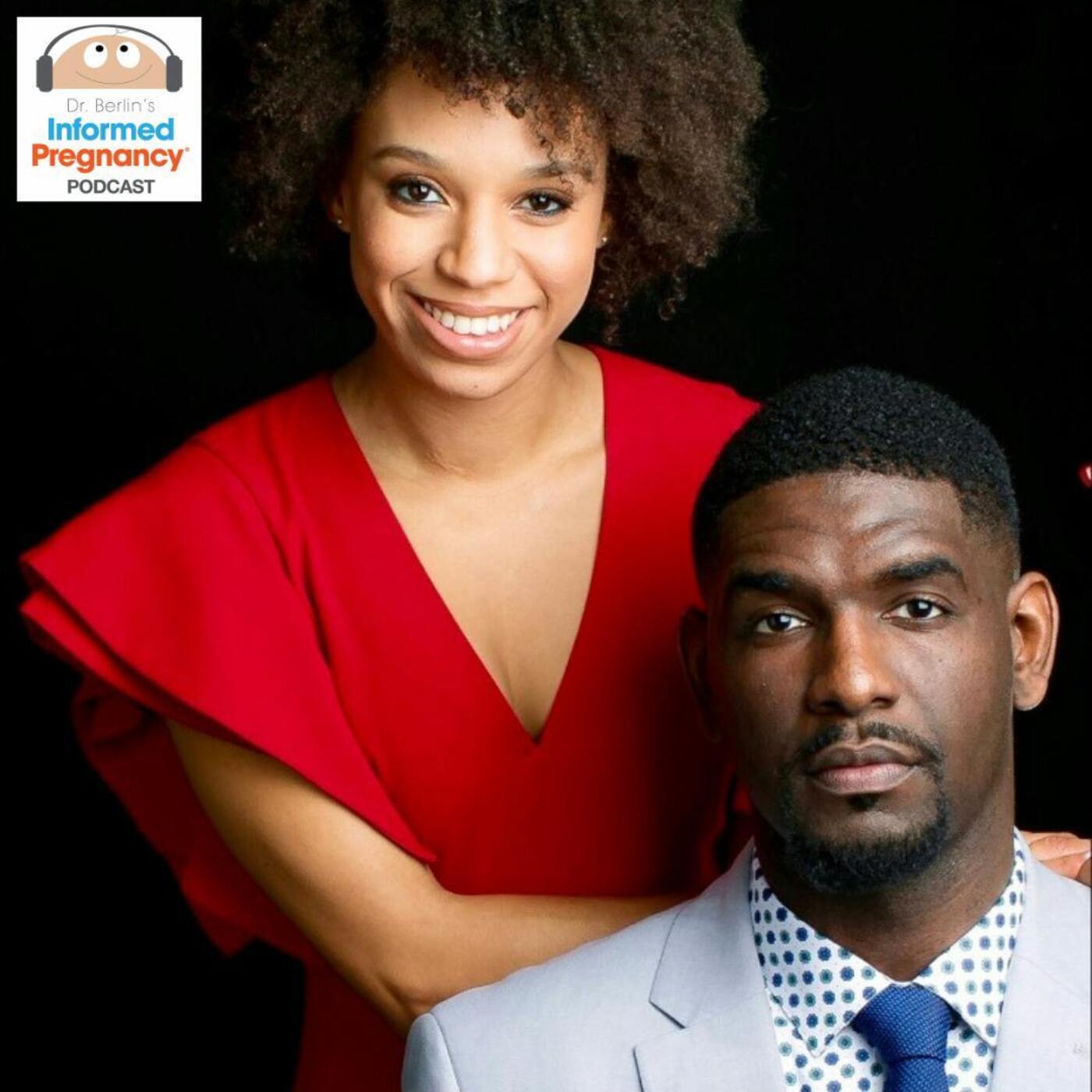
Leslie, a talented poet, writer and pre/postnatal fitness specialist and her husband, poet, singer and ‘Hamilton’ cast member Carvens are nearly due with their first baby. The dynamic power couple share their views and experiences of pregnancy during pandemic, racial inequality in general and in healthcare, hope for a better tomorrow and plans for their imminent birth.

Learn more about your ad choices. Visit megaphone.fm/adchoices
See Privacy Policy at https://art19.com/privacy and California Privacy Notice at https://art19.com/privacy#do-not-sell-my-info.
Key quotes
“I think a part of my resistance has been joy, trying to find joy in my pregnancy through poetry, through spending time with my son.”
“That the implications of me waiting for my black son's arrival lights my heart on fire and also makes me fear in a way that I didn't know my bones could fear existing in as a black man and in this black body”
“And I think like what's missing in that conversation is how are we keeping them alive? What are we providing for them? How are we providing resources?”
“it blew me away it made me ask the question if if we have this information about the mortality rates of women at the hospitals especially black women if we have the research especially in New York of the rate of”
“Yeah, I'm like, I'm very hopeful. And this pregnancy has brought me so much joy and I feel so grateful for my health and just the baby growing. And I'm just, I'm really excited to meet him and show him the world and travel. So I'm very hopeful.”
Related episodes
- Ep. 205 Leslie and Carvens Lissaint AFTER
- Ep. 166 Gillian Shure: Before Birth
- Ep. 208 Katie Lunger Lilly – Before Birth Journey
- Ep. 129 Jen Lilley – Before Birth
Transcript
AI-generated transcript with speaker labels — may contain errors, especially names and medical terms. Dr. Elliot Berlin, DC appears in blue; Leslie Lissaint in orange; Carvens Lissaint in teal.
Download PDF of the Transcript
Dr. Elliot Berlin, DC [1:36] Welcome to the informed pregnancy and parenting podcast. I'm your host. Dr Elliot Berlin my guests today are a truly dynamic and creative power couple She is a poet writer dancer and fitness instructor who by the way has been offering virtual high-intensity Interval training workouts while pregnant as if I didn't feel bad enough about myself before I met you He's a first-generation Haitian-american poet actor and singer who was gearing up to star in Hamilton at the Los Angeles Pantages Theatre until The pandemic hit together. They're expecting baby. Number one Leslie and Carvin's LaSante. Welcome to the podcast Yeah Thank you for having us and your bump. This is the first podcast for your unborn child. Yeah, I assume this is the first
[2:23] So there's so much to cover you guys are clearly extremely creative and I feel lucky to have met you I didn't get to know you Too well yet, but I think that you're both very inspiring and I love the energy from the two of you and I can't wait to see what that turns out to be in a child with Half of your genes and half of your genes. Let's start at the beginning. Where you guys both from?
Leslie Lissaint [2:45] So I'm Leslie. I'm from Minneapolis, Minnesota I lived in New York for seven years I'm from Minneapolis, Minnesota. I lived in New York for seven years and now we're in LA. Yeah. Yeah, I'm Carvin's I am from New York City
Carvens Lissaint [2:57] was raised in upper Manhattan Harlem, New York area lived in Brooklyn for seven years with Luckily Leslie here. And yeah, we are new new to the loss of the Angeles's welcome aboard
Dr. Elliot Berlin, DC [3:11] We're thrilled to have you. I'm a New Yorker myself Yeah, none of us talk like that though. I don't know I Was in Los Angeles got to keep it a little bit under the surface
Carvens Lissaint [3:22] First of all, do you know any other Carvin's is not one? There's one on Facebook and I think they're spam But oh really I might be the only Carvin's you're the only Carvin's not in a can
Dr. Elliot Berlin, DC [3:37] Where does the name come from
Carvens Lissaint [3:39] From what I how I understand it. I think it was a mistake Oh my parents are i'm first generation american my Parents are from Haiti Um, and I believe my name was supposed to be Kevin but the name the way you pronounce Kevin in Haitian Creole is Kevin's so My father was new to the country. So he went and wrote down Kevin's on the Page and it was c-a-r-v-e-n-s not Kevin but carbon so my name was it was a mistake and i'm happy it was a mistake because I got to make something beautiful out of Tragic mistake. Yeah, well and super unique, you know, I wasn't sure
Dr. Elliot Berlin, DC [4:18] So I searched the origin of the name and nothing absolutely nothing came up now. I can add something. It was yeah, that's that's the worst According to those naming websites less than a hundred people were named Carvin's this year Really? So there you go
Carvens Lissaint [4:33] Zero
Dr. Elliot Berlin, DC [4:35] Yeah and then leslie what you know, you're just leslie, but you make up for it by in so many other creative ways and Who knows maybe they're mistakes That you can share also at some point You both have a background in poetry
Leslie Lissaint [4:51] Yes, that's how we met. Yeah
Dr. Elliot Berlin, DC [4:53] How do you what do you mean? That's how you met
Leslie Lissaint [4:55] We had mutual friends. I was at the university of wisconsin madison a part of the, what is it called?
Carvens Lissaint [5:01] First wave.
Leslie Lissaint [5:02] Well, first wave program, I was saying that I was part of a poetry slam competition, Cupsie, which is the-
Carvens Lissaint [5:08] It's the Collegiate National Poetry Slam, where all colleges from all over participate. They all have their own poetry slam teams and they come to one area and they sort of have a festival. So it was workshops, performances, open mics, so-
Leslie Lissaint [5:23] And they compete. Yeah. So I was competing with the UW Madison team. He was a coach for NYU, but we had mutual friends. Knew each other in the poetry world, but never met in person. So that day, it was just very mutual. He had a girlfriend at the time. I was about to go abroad, live my best free single life. And we were just, you know, how you doing? Oh, nice to meet you, like your poem. Yeah, very cordial. Fast forward to like-
Carvens Lissaint [5:49] Well, yeah, for the better half of two years after that, we would connect on and off via Facebook, talk about faith, talk about acting, talk about art, maybe about, we missed each other a whole bunch. There were times that she was in New York and was supposed to be at like the same party that I was supposed to be at. And we missed each other. There were times I was supposed to get booked for it, a gig over in Wisconsin, and then that will fall through. So we missed each other for the better half of two years.
Dr. Elliot Berlin, DC [6:15] They accidentally hired Kevin for that gig. It was terrible. Yeah, straight up, straight up.
Carvens Lissaint [6:20] And then, yeah, and then in 2012, we sort of reconnected. She got into this theater program called Theater Makers at the Eugene O'Neill Institute, which is in Connecticut, right near New York.
Leslie Lissaint [6:33] He slid in my DMs. Or no, I think it was posted. You're like, oh, are you coming to New York before? We should hang out. And I was like, yeah, we should. I'm coming to New York before. And then we had like, I think either right before I was coming to New York or like a month before, we ended up reconnecting on Skype. And this is like, we never did a video before, so it was really random. One time, okay. But it felt random. And I was like in pajamas trying to get like cute. And then he was like, let me call you back. My manager called. And I was like, what?
Carvens Lissaint [7:04] And my manager did call.
Leslie Lissaint [7:05] And then, but he did call me back. And then we never stopped talking, like for hours.
Dr. Elliot Berlin, DC [7:12] I gotta write that one down. Hold on. I gotta go. My manager's calling. Sorry, mom. Okay. Wow, there's so many things already. And then there's so many more things. First of all, I'm jealous of both of you because I crave to understand poetry and to get poetry and art in general. I look at art and I just sometimes stare at it for hours. And I'm just like, what are people saying here that I'm not seeing? And, you know, I sometimes hear poetry and it sounds beautiful, but sometimes it goes way over my head. So I feel, what's that?
Carvens Lissaint [7:46] Sometimes it goes way over my head.
Dr. Elliot Berlin, DC [7:47] Okay, good. I don't feel alone now. But I wish, like I sometimes I read it to my kids. I'll read books and poetry to my kids just cause I don't want them to not get it. I'm probably screwing them up even worse, putting the punctuation in all the wrong places. But then you said also you connected on faith. Do you share faith?
Carvens Lissaint [8:05] Yeah, we're both Christians.
Dr. Elliot Berlin, DC [8:08] I've heard of that.
Carvens Lissaint [8:09] Yeah. Yeah, at the time I was sort of like very new in the, I mean, I grew up sort of in the Catholic church, but that's very different. That's a whole other story. Yeah, at the time I was just recently just starting to go to church, investigating the faith for myself, connecting with my own sort of relationship with Jesus. And she was doing the same. And yeah, we really connected. That was actually the key.
Leslie Lissaint [8:32] Yeah, I was gonna say that first convo, I think it was like the first, within the first five minutes he asked me, tell me about your relationship with God. And I think from there, everything had like a depth of vulnerability, a rawness and honesty, where we talked about how we struggled in our faith and what sins we were battling and like what relationships looked like in the past without God at the center. And like what we imagined it would look like if we had a relationship that was faith centered. We talked a lot about like our families and like not seeing a relationship with God at the center. So I feel like the first conversation was real, real,
[9:09] real, like super deep. Like I was crying and I was like, oh my God. And then he was like, now I said at the end of the call, oh, you know what we should do? He was like, what, pray? And I was like, yeah. And it was just like, very, I don't even know, like just divine, I guess.
Dr. Elliot Berlin, DC [9:26] I mean, I'm jealous again. It took me like three or four months in my relationship with my now wife to really understand what pizza toppings she liked. And at the end, I was just like, let's just order a pizza, baby. It was like a big moment. It was a big moment. That's so special and sweet. Do you guys have siblings?
Carvens Lissaint [9:44] Yeah, I have two sisters, one older, one younger.
Leslie Lissaint [9:48] Yeah, I have an older brother and I have a younger brother and a younger sister.
Dr. Elliot Berlin, DC [9:54] And do your siblings have kids?
Carvens Lissaint [9:57] Yes. Yes, my older sister.
Dr. Elliot Berlin, DC [10:00] four daughters oh my goodness uh wow where does her husband be
Carvens Lissaint [10:04] that's that's crazy he was uh yeah they were busy
Leslie Lissaint [10:11] and they all the same and then actually my older brother um has uh one son and three girls and my younger brother has two girls so there's a lot of there's a lot of women so you're gonna have like experience with not really okay experience with jason yeah you know we lived in new york and we didn't really only like we'll see our family maybe like holidays and stuff like that i guess to see how they do their you know home and yeah
Dr. Elliot Berlin, DC [10:41] but your aunties and uncles yeah yeah your auntie and uncle all right you're both super busy with your careers so where do we start all right well that's too busy now because i was saying there was a little thing out there called covet 19 that kind of stops and things i've heard i read about that
Carvens Lissaint [11:00] yeah yeah he's all over the place that guy it's really it's it's gone
Dr. Elliot Berlin, DC [11:05] viral uh that's what i've been saving that for one of these episodes um so let's talk about right before the pandemic hit you guys moved to la we moved to la december we found out
Leslie Lissaint [11:21] we're pregnant in january i had it's going great yeah i just got back from hosting an international women's retreat in columbia i was feeling really good yeah we had just moved
Carvens Lissaint [11:32] yeah i mean we moved here for for the job for for your job and in hamilton yeah yeah i mean you know that that was sort of the blessing that brought us over but we always talked about living on the west coast trying to la it was such a good timing i think even in our own marriage for our own mental health to leave sort of the hustle and bustle of new york so yeah the timing was was was prime for i think for a transition so it was great yeah so we were really excited just about you know transitioning uh coming into this market in terms of television and film and yeah you know investigating that and seeing how it would be and yeah i was both in like tech rehearsal for the show
[12:12] and late march we had just had like our first prenatal visit
Leslie Lissaint [12:16] yeah i just started my screenwriting class here in la i was like very excited and yeah that was sort of pre-covid
Carvens Lissaint [12:24] yeah just being prepared to see what the year yeah what the year was going to bring in this new sort of situation
Leslie Lissaint [12:30] i definitely was thinking through like baby shower in minnesota new york i definitely was like you know baby moon maybe hawaii like definitely was like excited had lots of ideas and plans
Dr. Elliot Berlin, DC [12:42] i don't know how theater works even though i was a theater major i don't know how theater works and was this supposed to be like based in los angeles for a long time or is it traveling around
Carvens Lissaint [12:53] no well contractually it was a year and a half the show was going to sit down for oh wow i think it was like maybe around 16 17 months um so yeah and that's you know that's not too common you know for a show to come and sit down that long in a city like like super it was definitely a blessing but
Dr. Elliot Berlin, DC [13:15] um and so had you been in that show someplace else before
Carvens Lissaint [13:20] yeah i was i was a part of the show for two years uh i joined the show in 2017 on broadway as a standby and then i went on one of the tours as a george washington and then came back and took over the lead role of george washington on broadway so i was with the show for about two
Dr. Elliot Berlin, DC [13:36] years oh wow so and that's what you were going to continue that role here
Carvens Lissaint [13:40] yeah i was going to continue the role of george washington
Dr. Elliot Berlin, DC [13:44] yikes okay so did it just like hit you like a ton of bricks that this is all going to come to a screeching halt or did it kind of
Carvens Lissaint [13:52] hit you in phases yeah yeah but then at the same time i i was also very exhausted i mean you know i had done the show for two years i left the show in june of 2019 and you know sort of gave myself somewhat of a sabbatical just so i can give you know i was like spending some time working on my mental health working on my physical health and i think the time was good and i had just grinded and worked so hard for the better half of like the 16 years of like my young adult life as a professional artist all the way up until now but i said man like so i wasn't too like sort of angry that the show stopped in the beginning i mean outside of like the check and i'm
[14:31] like oh lord i don't know what am i about to do for money child
Dr. Elliot Berlin, DC [14:34] um there was that but those george washington's
Carvens Lissaint [14:38] exactly i mean george washington's but but what was the most sad was the community that that's really you know outside the show was the community the people of the company we had an amazing company man it was an all-star cast of different folks from every single hamilton company and you know i love those So it's the company and the people I think that that's what hurt the most. I don't know Because you had a lot of Leslie had a lot of things. Yeah, I have a woman show called
Leslie Lissaint [15:09] This is how we heal so I had like a festival here in LA I was gonna do I was gonna travel was continent performant I had a Brazil retreat that I was you know planning like it was a Lot of things that I was like really looking forward to that literally like each week It was that email like we don't know and then another week like we're gonna have to cancel the contract You know, like it was like a slow trickle of like everyone's like we got a cancer. We got a cancer maybe virtual We got a cancer. So
Carvens Lissaint [15:36] Financially, it was a strain. I mean we were living off the gifts of our church back on savings Yeah, no, we that was gone. I was gone Maybe so gone. We spent all our savings moving out here
Dr. Elliot Berlin, DC [15:49] Have you been able to adapt and do things during the pandemic? I know Leslie you're doing workouts
Leslie Lissaint [15:57] Yeah, so I mean when March hit you know, also My middle is like yeah, you just stay active So yeah, I started a virtually hosting hit workouts for day the week And that just became word-of-mouth like my mom and then a friend and then it just kind of spread and I was just
Dr. Elliot Berlin, DC [16:13] Donation-based I've been doing that since March. By the way, that's the same as my podcast at first it was just my mom and Now it's my mom and my auntie Jane. So They're gonna love you guys
Leslie Lissaint [16:29] Grateful for unemployment and pandemic relief, I'm helping like, you know self-employed gig workers and stuff like that Yeah, I'm trying to think just Pivoting, you know
Dr. Elliot Berlin, DC [16:41] guys writing
Leslie Lissaint [16:43] Yeah. Yeah. He's writing a lot. I think I went more like poetry Just been focused on like pregnancy I think a lot of my writing has been like essay based and really like reflecting what it means to be pregnant during this time or things I'm noticing like What's missing like what narrative what stories what voice they're missing in pregnancy that I've been noticing in my own journey So I think there's been a lot of like journaling and writing of articles and personal reflection But not I haven't wrote like a play or script in the beginning I tried and I think it was just really hard because it didn't matter to me Yeah
Dr. Elliot Berlin, DC [17:21] Have you guys written together?
Leslie Lissaint [17:24] No, but we definitely collaborated So with my one-woman show who is very helpful and helping with direction and like helping with rehearsals and Script editor. He was an amazing script editor. I didn't do all those other things. She just mentioned
Dr. Elliot Berlin, DC [17:39] You
Leslie Lissaint [17:41] Were helping me with the configuration We rented a space what I was just
Carvens Lissaint [17:47] Re-configuring what was already configured Yeah, it was more the right yeah, I was there
Leslie Lissaint [17:55] Yeah, we did a writer's retreat a one weekend and I finished a whole draft and he helped
Dr. Elliot Berlin, DC [18:04] That signal means it's time for a quick break We're gonna go take a commercial break we'll be right back with Leslie and carvings not Kevin Luzon

Dr. Elliot Berlin, DC [20:41] Welcome back to the Informed Pregnancy Podcast. We are talking to Leslie and Carvens Lassonde. Okay, you guys are pregnant. I don't want to let the cat out of the bag, but was this planned for now? Yeah, it was planned. I've got a lot of people pregnant right now that were not planned. You're a little further advanced, but they're like earlier in the pregnancy, and apparently they're pandemic babies. I think we're going to call them coronials.
Carvens Lissaint [21:09] That's hilarious. No, we did. Yeah, we planned. We discussed it a lot, I mean,
Leslie Lissaint [21:13] over the years. Yeah, we've been married for six, almost seven years. And I think throughout our marriage, one thing we valued was just having a strong foundation before we had children. And then I think we went through different phases. Carve was ready, and I was like, I'm not ready. And then I was ready. He was like, I'm not ready. So then we finally came to a nice place where we both were like, okay, we're ready. Well, it was more so the place
Carvens Lissaint [21:39] was there's no way to actually fully be prepared. We can be as mindful as possible, make sure that we investigate our own traumas before we bring a kid into the world, trying to make sure that we're financially somewhat stable, although that's not a reality in our line of work. So yeah, we were mindful, but we came to the realization like there'll
Leslie Lissaint [21:59] never be a right time. So why not? Yeah. And I was going to say just to add the realization of like, if we don't plan it, we could totally like get busy with work and it won't happen. You know, like time will go by and we're like, oh, remember that idea about having a baby? You know, so I think it was very much intentional. And like we both did a lot of outside work. Like a year before I was like, you know, serving my friends who had babies and I joined kids ministry. Like I was really intentional about being around children because like in New York, I'm not seeing any kids. So I think there was a lot of intentionality around wanting to become parents. Yeah. I mean, if it makes you
Dr. Elliot Berlin, DC [22:33] feel any better, my first born is 16 years old and I still don't feel ready. So yeah, but I have been married for 25 years and I'm starting to get the hang of that. I felt good about it. All right. So, but you mentioned trauma healing. Is there specific things that you did to heal from trauma? Was there trauma to heal from?
Leslie Lissaint [22:55] Yeah. I think like coming, like my parents are divorced, not ever seeing what it meant to grow up with a father. So I think going to therapy, my one woman show talks a lot about healing from family trauma, using art and poetry and dance. But wondering about those impacts, right? Like generationally, if you come from families upon families who've never been married or you've never seen a father interact with a child, like how does that, you know, what does that look like? So I think it was that.
Carvens Lissaint [23:23] Do you want to add anything? Yeah. I mean, for me, it was just more so wanting to heal from not really growing up in a house that felt like there was love in there or my version of it, or even God's version of love. I wanted to do the work in myself, make sure that my house was filled with humility, that my house is filled with reconciliation when there's contention, to make sure that my house is filled with affection, a lot of those things I didn't experience. How do you do that? Yeah. So for me, I mean, it's a couple of things, right? The first one is just, you know, if you're thinking pragmatically, therapy, right? Investigating those sort of parts of my
[24:09] myself and of my childhood and seeing what am I holding onto, seeing what patterns am I sort of exhibiting right now, even before the kid gets here. That's it. A lot of introspection for me. I have in the past created a lot of art around it as just the vehicle just to get it out. So I felt like I wasn't fostering anything. Again, faith is big, so it's praying a lot about forgiveness, praying a lot about how to be healthy and whole, even in spite of not coming from maybe a family or a group of people or an environment that exhibited those types of fruits of the spirit, patience, kindness, forbearance, things that you would like to see. So the work looks like that for me.
Leslie Lissaint [24:55] And being in community, I think is really big. Like we got married young, you know. What are the examples of of the family that we want to see if we didn't grow up seeing really great examples So I think being in community has been really helpful talking to Families like we like the way you parent, you know, tell us more about that. What does that look like?
Carvens Lissaint [25:15] Yeah, that's pretty cool. Yeah watching other parents Seeing the challenges seeing the blessing yeah, so that we weren't you know thrown off, you know Like we real like me and leslie are real. We like those hard questions
Dr. Elliot Berlin, DC [25:31] Everything you're saying is so beautiful and so thoughtful. It's so deliberate All I could think to myself is if you want to adopt a 46 year old You're from new york It just sounds like you're creating a beautiful nest a really beautiful nest We hope so we yeah your energy like even the first time I met you just had this really beautiful spiritual calm energy and um
Carvens Lissaint [25:55] It's probably her because she was glowing
Dr. Elliot Berlin, DC [26:00] Okay, so How did you find out you were pregnant?
Leslie Lissaint [26:04] um, I knew I already knew car felt that I was I didn't know and I didn't want to waste another pregnancy test. I was like lady, you know I was like, oh, we don't need to use i'll just wait And then carvin was speaking to his mom on facetime
Carvens Lissaint [26:18] Even before that for three weeks. I was looking at her like take this pregnancy test because I know you're pregnant
Leslie Lissaint [26:22] I was like And then you were talking to your mom on facetime and then she was like, let me see leslie She looked at me and she was like you're pregnant. Oh, wow And then after that phone call, I got a test. I know I took the test we had the test I took the test And I was like, oh my gosh
Dr. Elliot Berlin, DC [26:43] I'm so excited and like you were the last to know yes Yes
Leslie Lissaint [26:49] Yeah, he was being really calm and I was in the bathroom like Okay. Oh my god, like I was very like don't know but very excited
Carvens Lissaint [26:59] I do think and then she got real anal. She was like we have to go to whole foods right now and get prenatal
Dr. Elliot Berlin, DC [27:04] right
Leslie Lissaint [27:09] Yeah, I was very honest like it was like excitement film our You know memories and took some photos and I was like we have to go get my prenatal pills right now
Dr. Elliot Berlin, DC [27:19] Yeah, it had only you taking that test three weeks earlier. It was also nine o'clock at night on a sunday. Yeah Instacart So how was the first trimester for you?
Leslie Lissaint [27:30] It was rough. I got the stuff. Yeah A lot of morning sickness Yeah, it was really challenging I'm grateful car was there like every day to help, you know Pick up my head off the toilet and shower like all that was super helpful And i'm so grateful that Like when I was able to talk to my midwife bliss and she was like, okay This is a plan like let's get some more protein So then every two hours I was eating protein and that really helped and then I had a change from I couldn't swallow my pills. So I switched all my vitamins into smoothies and that really helped But it was it was really hard And sleeping a lot like taking so many naps. I felt like drugs like I couldn't even keep my eyes open
[28:18] I was very very tired And that lasted all the way a little bit into my second trimester like two or three weeks into my second trimester
Dr. Elliot Berlin, DC [28:25] Oh, wow, when you say morning sickness, it sounds like it wasn't really just morning It was more like all day sickness
Leslie Lissaint [28:33] Yeah, I mean it definitely started in the morning. It was like if I didn't eat within five to ten minutes of waking up I was throwing up So then I start keeping, you know kind bars by my bed making pb and j like waking up like breakfast You know like as soon as possible, which is very new for me. Have you seen on shark tank the bacon alarm clock?
Dr. Elliot Berlin, DC [28:54] Yeah, it was a this product that you put bacon strips in there whatever time you want to wake up It starts warming them up just a few minutes before that. So you wake up to the smell of bacon. That's funny
Leslie Lissaint [29:06] That's funny, which is so crazy like that That's one of the things I like to eat during pregnancy that I didn't eat before before pregnant
Carvens Lissaint [29:14] She didn't eat any red meat not like no Oh really for health as soon as she got pregnant. She's like, I want me a grilled cheese
Leslie Lissaint [29:26] Like so crazy all the cravings burgers and steak and cheese
Dr. Elliot Berlin, DC [29:31] Wow, I might be pregnant Those are all my things you mentioned a couple of times your midwife So I take it you're birthing with a midwife. I know your midwife. So I know you're birthing at home Was that a plan like even pre-pregnancy or did like how'd you come to because not that many people? I think we're up to like two percent give birth with a midwife out of a hospital Yeah, yeah, you're one of the weird every time I tell them we're going yeah there was there's some kind of witchcraft involved
Leslie Lissaint [30:04] yeah it's that way you picked it no well one I would say I think I first heard of my midwife from your podcast oh you know kudos to you it's not just my mom and Auntie Jane that anymore but no when I was in college my last year I took a woman's studies class about a woman's health biology and they changed my life I wrote this whole paper in research about why home birth was safer than the hospital did a lot of research Wow in college yeah my last year was this like that's intense mind you in college my freshman year college roommate was the first person I ever met who was born at home and never heard of a home birth before though and so yeah my last year had this
[30:53] really great professor she had all these great resources we learned about Twilight's sleep and I'm a man and granny midwives and just the hospitalization of birth and I remember watching Business of Being Born and all these different documentaries and it just really changed my life honestly it impacted me in such a way that I knew that I wanted to have a home
Dr. Elliot Berlin, DC [31:15] birth in the future did you guys talk about that the partners are not always like super on board they're nervous well yeah no
Carvens Lissaint [31:23] she told me when we dated like even before we were like boyfriend and girlfriend she was like and just so you know if I ever have a baby I'm having it at home all right cool like whatever and then uh you know we spoke about it while you know we were you know married and we spoke about it when we dated so I mean I was always open to it but I was like who what is this weird hippie like I'm not and my mom is a nurse a lot of my my sister's a nurse so I sort of grew up with the hospital being a part of the culture of like growing up like I went to the hospital all the time to visit my mom at work I you know my aunts and nurses so I don't have the same
[32:05] relationship yeah to like hospitals and then she does not to say that I haven't experienced some really messed up things yeah doctors but yeah overall I mean I was open and then as soon as we found out we were pregnant you know I'm all about research and I'm all about being informed so I'm like word like I'm trying to be woke like give me all the information and we watched the business of being born she had already watched it so she was just sitting there with some popcorn looking at me like and I watched it it blew me away it made me ask the question if if we have this information about the mortality rates of women at the hospitals especially black
[32:46] women if we have the research especially in New York of the rate of c-sections being over what 70 or 80% if we have lunch and dinner yeah your lunch and dinner if we have this information about the type of intervention in the environment be it high levels of potos and all this stuff why are we doing this at that hospital then like it was really kind of like logical for me and I think a woman should feel empowered to birth anywhere she would like you know um and I think most people feel comfortable at the hospital but a lot of people I know feel comfortable at the hospital don't have all the information so I think it's important to have all the
Leslie Lissaint [33:25] information and then make that choice and I was gonna say just to add to that I think yes after that class but also I haven't had like the greatest experiences at hospitals or interaction with doctors you know I've experienced a lot of like disrespect and racial profiling and like when you know feeling empowered after taking these a couple of women's studies classes about women's health and coming to my doctor to try to have like a conversation and they're just like surprised and like shutting down a conversation more like I'm gonna tell you what to take and what to do or like if I ask like do I have to take that medicine you know what are the
[34:02] other options it was always it wasn't an open conversation it wasn't a space where I felt like I was really getting helped in that it was a safe environment for me personally and so another reason to have a home birth is because I just felt safer at home and I really valued a relationship especially because I traveled a lot so I've always seen different doctors if
Dr. Elliot Berlin, DC [34:23] that makes sense when I needed to yes so you don't get the long-term
Leslie Lissaint [34:26] relationship yeah so I think I really valued like oh if I have a midwife and a doula there's gonna be like this relationship built over
Dr. Elliot Berlin, DC [34:33] time around our pregnancy yeah and your midwife in particular I love her so much I'm told this we love bless young and she's been on the podcast before I told her recently that I've been trying to get pregnant so she could be my midwife we haven't succeeded but I'm gonna keep trying oh you know what it's freaking time to take another break I love talking to you guys we're gonna be right back after this quick Welcome back to the Informed Pregnancy Podcast. We're talking to Lesley and Carvens, and you guys are due any moment. And in addition to being pregnant during a pandemic, you touched on a couple of things already just in terms of your healthcare experiences and being profiled racially.
[35:31] We know that during pregnancy and postpartum, there's this huge disparity between outcomes between black and white moms and black and white babies. It's now, in this time, just during your pregnancy, and I know you're from Minnesota, Lesley, so I don't think anybody watched the George Floyd video of him being murdered and wasn't touched by it, wasn't moved by it, and of course the whole nation and really the whole world has risen up and tried to figure out what do we do and how do we do it and how do we make significant meaningful changes in healthcare and in general for racial equality. So, you know, I wonder what it's like for you guys being black in America at this
[36:16] time in general, but also during this particular time coupled, especially with your pregnancy.
Leslie Lissaint [36:23] Yeah, I think, I mean, it's a mix of emotions, right? With pregnancy, there's this joy and excitement of this blessing and this baby being born. And then there's just like the duality and juxtaposition of all what's going on in the world and this attack on the black body of this erasure of men and women that happen to be black. And I think it's been difficult, you know, it's been hard to see the news, to see another hashtag, to be on social media where it's just like another video, another image. I think a part of my resistance has been joy, trying to find joy in my pregnancy through poetry, through spending time with my son. I think the work behind the scenes, you know, like I'm from Minneapolis, like
[37:12] that's where my family's from. They've all been to the memorial, like they marched on the freeway where the semi try to run over protesters. You know, it's really real. Like it's before you see it on Facebook, I'm on the phone with someone who's on the freeway running for their life. So I think that in particular hit home. I think it's been a struggle, like, you know, dealt with nightmares and not being able to sleep very well. I think that it's been like, for example, Carvens has a book, Target Practice, and with his book, and I have a planner that I created, the greater than planner, if anybody wanted to buy it, all the donations went to Breonna Taylor and a foundation in Minnesota to help.
[37:55] So I think we personally didn't make the choice to be outside and protest physically here in LA for safety reasons with COVID and me being pregnant. But I think we've always been about social justice work in our lives, whether it was with our art, with Carvens poetry book, Target Practice and an EP. I think there's always been this conversation. It's not a, the pandemic and COVID happening now we're talking about it. This is something that's always been in our lives. Yeah.
Carvens Lissaint [38:23] I think I like to frame this time with sort of these two words that have been this sort of crippling duality that this has been the craziest time in my life where I felt the most gratitude and the most despair. That the implications of me waiting for my black son's arrival lights my heart on fire and also makes me fear in a way that I didn't know my bones could fear existing in as a black man and in this black body and knowing the pains of the world and you know, being deemed a threat, being deemed inherently criminal, you know, even for someone like me who would quote unquote operate with some type of social status, being the biggest Broadway show in the world, having three degrees, being a part
[39:19] of all these different institutions. You would think that I would be one of the good ones who wouldn't fall victim to this type of prejudice or this type of violence. And I haven't, I've been stopped by the cops that I've been profiled. So many times I have experienced the violence against me in so many different ways that it made me realize like, Oh, it doesn't even matter how I operate in this world. I will be deemed a criminal. I will be deemed a threat. And yeah, it's a scary reality, especially when you bring in a kid into this world. So again, it's been the sort of mixture of immense gratitude and utter despair and grief. Yeah.
Leslie Lissaint [40:00] I was just gonna add to that, been thinking a lot about, like there's a lot of statistics, like black women are likely to die three to four times, you know, like that's been repeated. People have sent me articles about that. And I think like what's missing in that conversation is how are we keeping them alive? What are we providing for them? How are we providing resources?
Carvens Lissaint [40:21] Healthcare.
Leslie Lissaint [40:22] Yeah, like, you know, and there's like this argument like, well, they had pre-diagnosed or all these different things. And I'm like, it starts so much at the beginning. And I think Lathan Thomas said it in an interview. She said, the way that we spend energy on black death, mourning, protesting, what if we use that energy on black life? What if we use those resources to celebrate a child who's coming into the world? What if we built up a family? What if we, you know, gave that neighbor those groceries, you know, when they're pregnant and tired? And it just really challenged, you know, how we can funnel that energy. And I'm not trying to take away anything
[41:00] from someone's mourning, but it was a great question about like, how are we celebrating life? Because I do think that thing like, you know, give the person a flower before they die, that quote. I really been thinking about that.
Dr. Elliot Berlin, DC [41:13] Like, how can we celebrate life? It's all very powerful. And I'm just, I'm listening a lot because I'm learning a lot. And I've been on occasion, a victim of antisemitism, not often, thankfully, in New York and Los Angeles and other places. And it's once in a blue moon. And I did an episode on the racial disparity in childbirth with a black midwife, Debbie Allen, who's super brilliant and always teaches me so much. And in general, I found the more I shut up and listen, the more I actually just learned by having such an inquisitive mind that, in retrospect, I think I asked too many questions last time, so I'm just here listening. But, you know, one of the things that she pointed out
[41:55] is I could potentially hide my Jewish and you can't really hide your black. So not that you should have to or I should have to, but it's just like, you're always, you know, the first thing someone sees when they look at you is you can't hide that you're black. And so she made it so clear, and I had never thought about it, that just every place she goes, if she's going to buy a car, if she's going to look at real estate, anything that she does, like it's just looked at through a different lens. And until that conversation, which was about two years ago, I never really even imagined that. So on a bigger scale, when it's not just buying a car or buying a house,
[42:34] like when it's getting pulled over by the police and other things.
Carvens Lissaint [42:38] We've been driving by the police. Like, you know, we were on our way to Palm Springs for our baby move, and I just drove by the police and was like riddled with fear. I just drove. I just drove. I was like, wait, was I speeding? Am I going to get stopped? It's also the fear of the unknown or even the… Cause that's what trauma is, right? You know, I had an acting teacher say that trauma is the inability for activity, right? Something there is broken, and it doesn't allow you to sort of live and exist as fully and as whole as you would like. And yeah, there are moments where, you know, it doesn't seem that I'm in sort of any imminent danger, but you know, these things play in your mind.
[43:22] These YouTube videos play in your mind, these Instagram viral videos play in your mind, and it's hard to sort of erase yourself from that. And when I think about it in the context of even sort of this birthing world, something that I as a… I'm also like a 6'3", you know, tall, you know, full-figured chocolate dude. What I realized about, you know, being this sort of man that takes up spaces, I'm always sort of considered strong and that my threshold for pain supersedes a lot of other people. And that happens to black women all the time. And, you know, in hospitals, you know, when they try to advocate for themselves, they're like, no, you're okay, you can take the pain.
[44:05] Like, you know, you have a black woman trying to advocate and say, hey, I'm feeling this, you know, hey, I'm feeling that, hey, I'm in pain. A lot of doctors won't listen. So we have to investigate the intricacies and the psychology behind these prejudice. Or violence and racial profiling. A lot of it isn't malicious, right? A lot of it is actually small, but it's those small things, those microaggressions, if you will, that actually lead to very big macro problems.
Dr. Elliot Berlin, DC [44:36] I have this unpopular opinion that within healthcare, it's possible that there's many people in healthcare, doctors, nurses, and other healthcare practitioners that don't even realize that they're doing it.
Leslie Lissaint [44:48] Yeah, yeah, totally.
Dr. Elliot Berlin, DC [44:51] If I'm right about that, then a little bit of bias training, if we could somehow even point out that you're doing this unconsciously. I think they themselves would be mortified and you know bend over backwards to make sure that it doesn't happen again. But I also do think I myself I had a bad case of COVID and I'm still even though physically I'm feeling pretty great talk about trauma I'm a little bit traumatized by the whole thing and I haven't really moved into any new projects and also with COVID but it's a project that I really want to get involved with which is I feel like anybody who goes into health care in America needs to have not just a workshop but like heavy bias training
[45:33] we all have different biases we all do and we may not be aware of them but in a good bias training program we should be able to kind of look deep inside ourselves and try to figure out what are our biases where they come from how do they affect my decision making how do they affect my approach to giving care to people from different backgrounds and you shouldn't really be able to get a license I don't think in any kind of health care profession until you've done that you may not institution that's in the people business need to have extensive workshops on sexual
Carvens Lissaint [46:07] harassment on anti-racism especially if it's in America right where it is woven in the fabric of what the country was sort of built on it it's systematic it's large and yeah I definitely agree with you because we need to understand the implications of what we do all of us
Leslie Lissaint [46:27] and I was gonna say I think like the work is those hard conversations right I think what you said about like okay in this hospital we're gonna have bias training well people aren't honest you know they don't feel safe there they're friendly gonna lose their job like I think the real work is those tough conversations at the lunch table where you're having those uncomfortable conversations where you might lose a co-worker lose a friend because you guys have different biases and different opinions but I think that's where the work is right like you don't let that free go just because they believe differently than you like you work through you have those tough conversations to empathize and see their side and I think
[47:07] that's the work that's missing people want diversity inclusion packet about how to be anti-racist and what to do and what to say but it really starts with
Dr. Elliot Berlin, DC [47:16] your heart and like yeah it's like more than a workbook that is true and it just it means me
Carvens Lissaint [47:27] it means we say that again I said you need both you need both legislation and a heart change
Dr. Elliot Berlin, DC [47:31] absolutely it just pains me that we're in this place and hopefully it's it's a transition to a much better place it just pains me that we're in this place where we just are so focused on our differences and our differences truly I think are small compared to what we have in common with each other what we're all looking for in this world and what we want to experience ourselves and provide for our children and I think that's where we have so much in common and to find a way to sort of make things equal for everybody and so everybody feels the same when they go to a hospital and everybody feels the same when they drive by a police officer you know safe you feel extra safe and I think I'm so so sorry to cut you off
Carvens Lissaint [48:18] no problem I think the sameness in our humanity right the sameness is in our humanity but I think we should actually it's not a bad thing to focus on our differences we can celebrate our
Dr. Elliot Berlin, DC [48:30] differences I'm happy to celebrate our differences as long as we also celebrate what we have in common and bond over what we have in common and you know I think that way with gender I think that way in general that we're just not the same we're equal but not the same and so we can bond over what we have in common and celebrate our differences and what a little utopian world I'm painting here but hopefully right there and that's sort of I want to get into actually we're going to go a little long if you don't mind because you mentioned something two things that I want to get into also but I kind of hope first of all Leslie what you said I thought that was beautiful like celebrating life too and really bringing
[49:09] happiness and joy and making a big deal out of life as well but I hope that the despair and the gratitude are you know during this time I'm asking actually it's a question during this time does the momentum on the ground at this time give you more hope or
Carvens Lissaint [49:30] make you more fearful that's a great question for me personally it's hard to have faith in this country it just is the type of sort of radical systematic and both sort of personal heart change that I would need to see for me to listen at the end of the day racism systematic oppression is for me it's on a spiritual level it's sin right hatred is sin and until we deal with that radical level of spiritual infraction to look at another person and say, I know you're made in the image of God, but I hate you. We can never grow. So a part of me, I feel empowered that people are brave to speak out and to stand up. But for me to feel hopeful, that's something that I'm working on.
[50:24] Because even as a person of faith, hope is difficult for me. So I sort of take it one day at a time. I have maybe moments of hope. I have maybe have moments of like, man, I think some things can change. But most of the time I'm like, well, yeah, this is just a rerun. I have a line in a poem of mine that I say, the black body is a rerun, a never-ending cycle of birth and departure, birth and departure, magic that no one enjoys. The black body is a treadmill running for dear life, it's still ending up in the same place. Scratch your record, looping the agony of its history. And that's how I feel. I feel we're not seeing anything new, right? We just happen to see it on Instagram.
[51:09] We're not experiencing anything that this country didn't experience 400 years ago. It's a cycle. So in order to break a cycle, something supernatural has to happen. That's just me.
Leslie Lissaint [51:22] I'm one of the hopeful ones.
Dr. Elliot Berlin, DC [51:24] Yeah, that's what we have.
Carvens Lissaint [51:26] That's why she married.
Leslie Lissaint [51:27] She's doing the face-off. Yeah, I'm like, I'm very hopeful. And this pregnancy has brought me so much joy and I feel so grateful for my health and just the baby growing. And I'm just, I'm really excited to meet him and show him the world and travel. So I'm very hopeful.
Carvens Lissaint [51:49] But you're hoping for the baby, not for the-
Leslie Lissaint [51:51] Well, I'm saying-
Carvens Lissaint [51:52] I know you're not,
Leslie Lissaint [51:54] but you'd be up in here walking around- It's a mix.
Carvens Lissaint [51:56] Okay, it's a mix. You'd be walking up and down this house like, ah, ah, this is crazy, baby, never go change.
Leslie Lissaint [52:01] But I'm saying the baby has continued to give me hope and joy. And the world itself, I would say it's been a back and forth, right? There are beautiful interactions that I have with people that continue to remind me of people's humanity and love. Like we've been blessed in so many different ways with community and stuff like that. But then I do think it's juxtaposed with pain and another hashtag. So I think it's a constant mix of emotions, to be honest.
Dr. Elliot Berlin, DC [52:28] Makes sense. And it's kind of, you know, we've had momentum before and sometimes it creates change, positive change, and sometimes it doesn't. So day by day, I think is right. It's the only way to go to see where we end up. The two things that you mentioned that I wanted to talk about real quick are target practice. You glossed over that. Carvens has a book and an EP. Tell me more about that.
Carvens Lissaint [52:56] Yeah, so target practice is something I started writing in my last year of graduate school at NYU in the grad acting program. I was working on a play that I wanted to write. At the time, I was working on this other play called Bury Child. I played the character named Father Dewis. So AKA, I was not really in the play. So I had a lot of time backstage. Ended up seeing a video live of Philando Castile, who's from St. Paul, Minnesota, and watched him get murdered in front of his girlfriend, in front of his girlfriend's daughter. Yeah, and in that moment, I felt charged to write. The book ended up being, instead of it being a play, it ended up being a collection of poetry.
[53:36] I also felt sort of moved to create music around it.
Leslie Lissaint [53:39] So I created a- He's a great singer.
Carvens Lissaint [53:41] I'm okay. I made a five track EP that, yeah, and listen, this piece investigates violence against black bodies in light of police brutality. My experiences as a Haitian American, growing up in this country with my narrative of blackness coming from the Caribbean, and just sort of my day-to-day experiences as a Broadway actor, walking into my apartment building, walking on the streets of New York of microaggressions that I experienced and how I sort of wrestle and-
Leslie Lissaint [54:11] Operate in the world.
Carvens Lissaint [54:12] Yeah, and operate in the world. So yeah, the book, I've worked on it for the better half of like about two years, and it took a lot out of me. It took a lot out of me, and I released it last year, and the book is still on sale. EP is still open for streaming, and that is-
Dr. Elliot Berlin, DC [54:29] Where can we find them?
Carvens Lissaint [54:31] The book is on small press and distributions.
Leslie Lissaint [54:34] All the links are on his website.
Carvens Lissaint [54:35] Yeah, all the links are on my website, www.carmenflausant.com. You can Google the book, Target Practice, and it should come up. But yeah, I think it's a piece of work that I feel is important, and I'm writing a play right now that isn't solely based off the book, but loosely inspired by just my experiences.
Dr. Elliot Berlin, DC [54:55] Sounds great. I will check them out. And also, Carmen Flausant sounds like one of those- names you don't have to do like carvinslasant6263 at gmail.com because it was already taken
Leslie Lissaint [55:09] and then leslie you mentioned an organizer yes i created a planner last year i laugh about it because you know it's like the year i launched my planner the year the plans were canceled the anti-planner yeah but i mean it was you know a passion project something i always wanted to do i'm definitely like both creative and also a type like love excel spreads and timetables and stuff like that so um yeah i created a planner called the greater than planner god's plans are greater than ours and that was 2020 and i will be launching small small small you know pre-orders for 2021 where do we get those on my website just leslielasant.com
Dr. Elliot Berlin, DC [55:52] all right i got two websites to check out um before we close how many weeks are you guys now
Carvens Lissaint [55:58] 38 wow you have so much energy
Dr. Elliot Berlin, DC [56:04] yeah she does no kidding i'm like go to sleep and we're looking at your birth center right now behind you you're planning your birth at home with a midwife and you said is there also
Leslie Lissaint [56:18] a doula yeah karen filled there's our doula she's amazing she's really great sounds like
Dr. Elliot Berlin, DC [56:24] an amazing team you have there and then haze is uh yes probably going to be with you too what an incredible team i'm excited for you guys i would ask you if you're up to it come on back after you have the baby and tell us out when of course of course we'll plop them right here yeah thank you perfect until then thank you so much for being here and having these really wonderful conversations i appreciate you both and i'm sending you lots of positive birth vibes for an amazing experience i look forward to talking to you when you come back thank you and right after we close this out i'm going to check out both of your websites at home thanks for listening to the informed pregnancy podcast if you like
[57:04] our program share us with your friends and leave us some feedback in your podcast app i read them all and for more pregnancy and parenting related media visit us at informed pregnancy.com
Want more pregnancy + parenting? Start your FREE TRIAL of Informed Pregnancy+ and get access to all our curated pregnancy and parenting content — original series, iconic birth films like The Business of Being Born, prenatal workouts and more.
