
September 24, 2020 · 43 minutes · Episode 194
About this episode
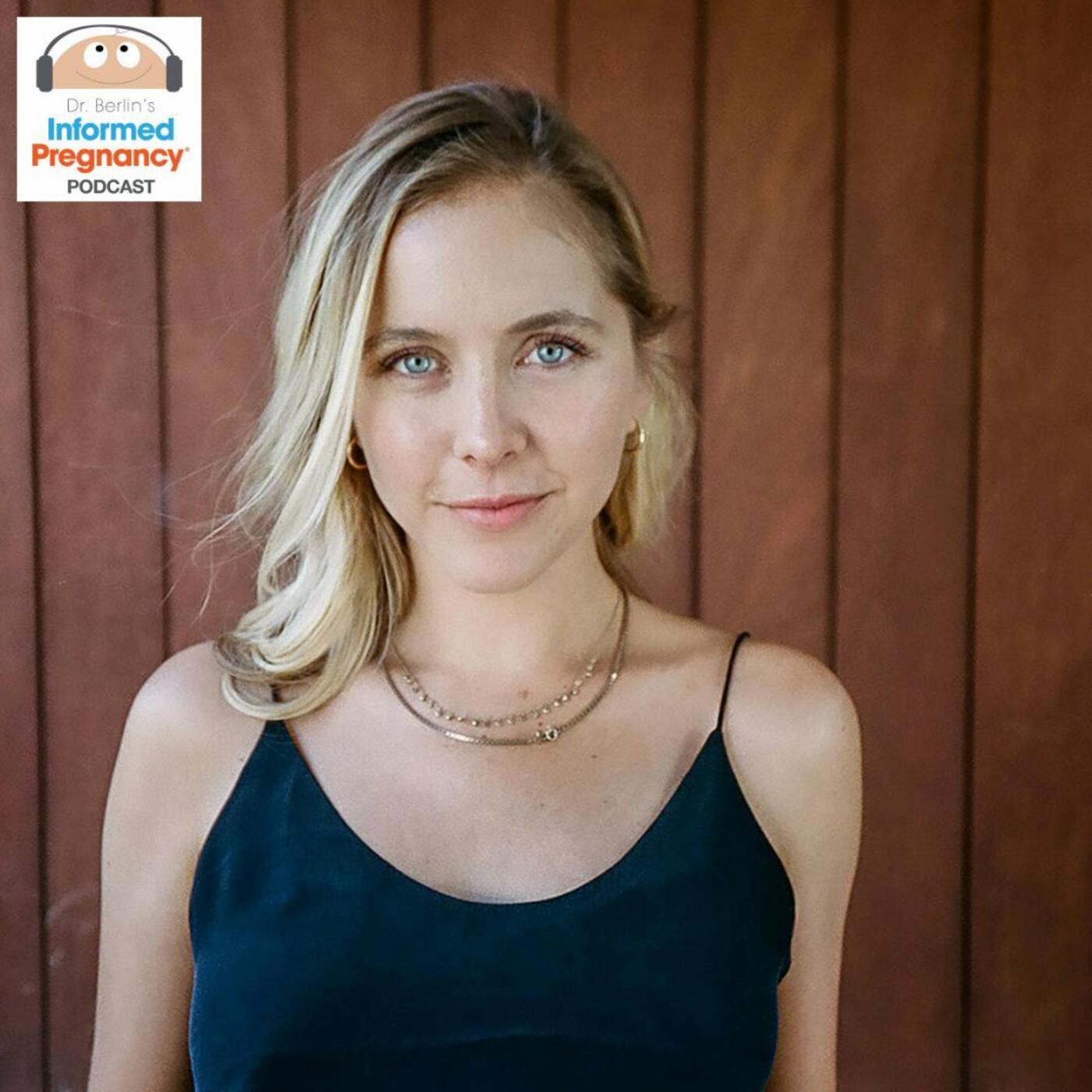
Author and screenwriter Stephanie Danler, expecting her 2nd baby any day now, talks about the emotions of childbirth, her plan for homebirth, and the anxiety of preparing or birth during a pandemic.

Learn more about your ad choices. Visit megaphone.fm/adchoices
See Privacy Policy at https://art19.com/privacy and California Privacy Notice at https://art19.com/privacy#do-not-sell-my-info.
Key quotes
“and I do think that having a difficult childhood gave my sister and I a certain amount of resilience and independence from a really young age”
“It's finding the right partner that kind of makes you feel confident that you could take on something like having a child which I think is the most serious thing that you could possibly take on”
“And I've always been very small and I loved getting big. I loved having big boobs and big stomach. And I loved when people got out of my way on the street.”
“I am, I know that this is how I'm supposed to be giving birth to my daughter, like 100%. So I have no doubts or misgivings about the home birth.”
“It is, yeah, but it is 100% a mental game, and I would say that to anyone who is preparing to give birth.”
Related episodes
- Ep. 195 Stephanie Danler & Midwife Jessica Diggs – After Birth
- Ep. 382 Caitlin Wilder: Before Birth
- Ep. 351 Katelyn Fusco: 'Happy Homebirth Fix'
- Ep. 456 Liberté Chan: Before Birth
Transcript
AI-generated transcript with speaker labels — may contain errors, especially names and medical terms. Dr. Elliot Berlin, DC appears in blue; Stephanie Danler in orange.
Download PDF of the Transcript
Dr. Elliot Berlin, DC [1:13] Welcome to the informed pregnancy and parenting podcast. I'm your host dr Elliott Berlin today's episode is a before birth episode and we'll dive into some of the emotions of childbirth and the anxiety of Preparing for birth and a new baby during the kovat 19 pandemic My guest today is a novelist memoirist and screenwriter whose work has appeared in vogue the New York Times book review and The Paris Review Daily She is the author of the international bestseller sweet bitter creator and executive producer of the sweet bitter series on stars and Her memoir stray just recently released. She's also the mother of a handsome little guy And is expecting a baby girl very soon. Definitely Danler. Welcome to the podcast. Hi, dr
Stephanie Danler [2:19] Berlin, this is such a treat
Dr. Elliot Berlin, DC [2:21] Well, I would say the same you're a fascinatingly interesting person and I don't know much about your background Even though I just recently got a hold of your memoir. So soon. I'll know everything every last juicy detail. Yes But I think you're pretty unique and interesting and I'd love to learn more and there's a lot to talk about with your life Work your first pregnancy or birth and motherhood experience your imminent birth. Let's jump right in. Where are you from originally? Seal Beach, California just down the coast. All right, actually we did talk about that because I went to seal Beach thinking that it would be like a big old beach town and there was like tiny little beach town
[2:59] There was like a restaurant and a bike shop. Mm-hmm. Wait, is that? Oh, that's not where the ferry is the ferries down by Balboa Island Yeah, so we didn't have much to do over there, especially during the pandemic. What was it like growing up in Seal Beach?
Stephanie Danler [3:12] I mean beach childhoods are pretty idyllic There's a lot of freedom a lot of skateboarding around in a bikini a lot of surfing
Dr. Elliot Berlin, DC [3:20] Sounds just like my childhood
Stephanie Danler [3:28] And I always I lived in New York for many years But I think when I started thinking about having kids I couldn't imagine being in a non coastal environment I definitely the impulse to come back to California was based around the beautiful parts of my childhood
Dr. Elliot Berlin, DC [3:46] What took you to New York?
Stephanie Danler [3:48] Life wanting to be a writer. I Left California when I was 16. I went to Colorado to finish high school I moved to Ohio and then I drove my car from Ohio to New York and I said I'm never gonna live anywhere else. I lived there for 12 years and here you are Now I say I'll never leave California, but we'll come where you have it
Dr. Elliot Berlin, DC [4:10] Where am I headed? I mean, I mean every time you say I'll never
Stephanie Danler [4:14] It seems like you do something you're up I'll head to Europe
Dr. Elliot Berlin, DC [4:19] We might be all headed to Europe soon. That's what I'm saying. Oh Mexico at anywhere So you have this like cool beach childhood, do you have siblings? I do I have a sister
Stephanie Danler [4:30] She's 21 months younger than I am and we're extremely close. Oh you are were you always close? We were always very close. We had I guess you call them bad parents And so we really depended on each other for our entire childhood and we've always been best friends
Dr. Elliot Berlin, DC [4:50] What makes them bad parents?
Stephanie Danler [4:53] You know, they're not bad parents they were not equipped emotionally to be parents They are both addicts. They are both emotionally unstable and We still my sister and I don't have contact with them. Oh my I'm so sorry. It's totally okay
Dr. Elliot Berlin, DC [5:14] Do you think because I think you turned out pretty terrific. Do you think that? sometimes people with great parents turn out terrific because they have a great example of who to be in life and Sometimes having not the greatest parents Helps you turn out terrific because you have a great example of what not to be in life. I
Stephanie Danler [5:32] Think that you can find exceptions to both of those rules. I think my husband has great parents and I'm very attracted to Men in general that have like a sense of wholeness from their families and I do think that having a difficult childhood gave my sister and I a certain amount of resilience and independence from a really young age and so I Think about that now when I'm raising my son who's 19 months and I'm like we're giving him this wholesome childhood with two parents in the house my parents divorced when we were very young and What's he gonna struggle with because you think you have to it builds a certain amount of character You don't want to make it too easy on them
Dr. Elliot Berlin, DC [6:18] Yeah, I mean I haven't thought about that But maybe there's a whole parenting book on how to challenge your kids if you're too good of a parent Maybe we should do an episode on that being too good of a parent I mean, there are lots of studies on where resilience comes from and it definitely comes from having bad parents So yeah, but that's what I was saying I think that sometimes having parents that aren't really there for you does make you stronger and You know if you figure it out if you find a path and you emerge strong and resilient
Stephanie Danler [6:50] Like you said a lot of luck involved as well. But yes, were there other family members that stepped in? There were in my memoir. I talked a lot about my relationship with my aunt and then there were always teachers parents friends I Got sent away at 16. Things were really turbulent with my mother to go to Kind of disciplinary school in Colorado Where my father lived and those teachers really changed my life and put me on a very different course than the one I had been on in Southern, California But I think when you lack this parental structure You're always looking for mentors for people to teach you about who you can become Who you want to be how to be an adult because you lack the examples at home
[7:40] So then it shapes who you are as a parent. Were you nervous becoming a parent the first time? Like what if I screwed up too? I never wanted kids I know I had Julian when I was 35, but we wouldn't have talked because you work mostly on pregnant women But if we talked when I was 31, I would have said I'm never having kids all through my 20s I had been married to my first husband in throughout most of my 20s and he really wanted children And I was like I'll never do it. It's too fraught. It's too dangerous and makes you too vulnerable and
Dr. Elliot Berlin, DC [8:16] Scared seems like it would be a huge point of contention in a relationship though. Well that first marriage didn't work So then it must be interesting though because then you've got married and decides have kids
Stephanie Danler [8:28] It was gradual and a part of it is Matt right by my husband It's finding the right partner that kind of makes you feel confident that you could take on something like having a child which I think is the most serious thing that you could possibly take on and As soon as I got pregnant with Julian, I was terrified and it didn't really stop until he was like six months old
Dr. Elliot Berlin, DC [8:50] But like terrified Well, I just never thought about it. I wonder if a lot of people who had a rough upbringing are afraid to have kids I bet that's true. Yes. When did you know you wanted to get into writing?
Stephanie Danler [9:03] My whole life only thing I ever wanted to do. Did you journal a lot as a kid? I did I wrote stories I wrote ghost stories. I wrote babysitters club type stories The earliest ones I remember were when I was eight I read constantly which is really common for children that are having a hard home life to escape into books But I've never had a job besides I worked and got a restaurant job when I was 14 years old in Seal Beach at the one restaurant and I worked in restaurants my entire my entire life because I wouldn't get an office job I was like I'm gonna be a writer then I was like 31 and I was like I'm a waitress this is really scary, but I Was committed to the writing. So do you read a lot as well?
[9:51] Constantly I don't really watch TV Read and write read and write. Yes is what I do. How did your
Dr. Elliot Berlin, DC [10:00] a pursuit of writing as a career in New Yorko?
Stephanie Danler [10:03] That was mostly a pursuit of restaurant.
Dr. Elliot Berlin, DC [10:06] Oh, really?
Stephanie Danler [10:07] I stopped shortly after I got to New York, I stopped believing that I could write a novel that I would ever be published. And I thought, okay, I'm gonna be in restaurants forever. So I went to wine school, I became a sommelier, I started managing restaurants. And then after like nine years of that, I was still writing in my private time, right? Like as a hobby, thinking that this is just something I've always done and will always do. And I decided to go back to graduate school and give myself two years to write a book. And that book was Sweet Bitter.
Dr. Elliot Berlin, DC [10:41] Graduate school for more writing?
Stephanie Danler [10:44] Yeah, back to school.
Dr. Elliot Berlin, DC [10:47] Not more wine?
Stephanie Danler [10:48] No, that was the best school I've ever been in though.
Dr. Elliot Berlin, DC [10:51] Wine school? I have so many questions about wine for you now, but that'll be for another time.
Stephanie Danler [10:55] You can do part two.
Dr. Elliot Berlin, DC [10:57] Talk to me about Sweet Bitter.
Stephanie Danler [11:00] That is a female coming of age story set in an elite restaurant in Manhattan. And I gave myself the two year MFA program to complete it. And I sold it right after school and it sent me on a crazy roller coaster. It changed my life.
Dr. Elliot Berlin, DC [11:20] In what way?
Stephanie Danler [11:21] Well, I was able to quit waiting tables. I became a full-time writer. I toured for a year. I turned it into a television show. I wrote the pilot. I executive produced the show for two seasons.
Dr. Elliot Berlin, DC [11:36] That's huge.
Stephanie Danler [11:36] I mean, that book didn't stop. It was like five years of nonstop. I toured internationally.
Dr. Elliot Berlin, DC [11:44] That's amazing, especially for your first go.
Stephanie Danler [11:47] It's absolutely insane. And it is like winning the lottery. It has so little to do with my talent. It's just luck and timing. I mean, it has a little bit to do with my talent. It looks good. It's a good book. But when I look back on what happened with that book, it was totally out of my control.
Dr. Elliot Berlin, DC [12:07] Were you back in California when you wrote the book?
Stephanie Danler [12:10] I wrote it all in New York. I was at the new school for my MFA and I wrote it during those two years. And then when I sold the book, I was like, I'm out of here. I'm done with New York. Back to California. Yeah.
Dr. Elliot Berlin, DC [12:24] Did you meet your husband here or there in California?
Stephanie Danler [12:27] In California. I met him like two weeks after I moved back and I was totally heartbroken, hung up on someone else. And I was like, I've got to just like put myself out there. And I did. Here we are.
Dr. Elliot Berlin, DC [12:41] With a kid and all knocked up and everything. Okay. Well, let's take a little break. When we come back, I'd love to talk about your journey into motherhood, your first pregnancy and birth. Don't go anywhere. We'll be right back.

Dr. Elliot Berlin, DC [15:12] Welcome back to the Informed Pregnancy Podcast. We're talking to Stephanie Danler. So I have a question for you. You get married, you come back to California two weeks later, you meet the guy, you get married, and you were scared to have kids. When did that change?
Stephanie Danler [15:31] It didn't.
Dr. Elliot Berlin, DC [15:32] You were still scared to have kids.
Stephanie Danler [15:34] I'm still terrified to have this, but no.
Dr. Elliot Berlin, DC [15:38] You were determined not to have kids at some point.
Stephanie Danler [15:41] Yes. That changed about three years into our relationship. And part of it, as I said earlier, is Matt, who he is as a person, and who we are together. But part of it was also sweet bitter, like putting the book out and feeling like I had established a career. I was just scrambling in New York for so many years. I couldn't imagine taking care of anyone besides myself. I could barely do that in New York. And once the television show was on the air, I was like, OK, I might be able to do this for a living and support a family. And so we started to talk about it. I was told I was not going to have an easy time getting pregnant. I had an ectopic pregnancy when I was 23 that took my fallopian tube with it and was
[16:25] very scary. And I was in the hospital for a week. And so I had always been told that I, you know, ovulate every other month. And you still have one fallopian tube. Still got the one. All you need is one, from what I hear. Apparently. I'm on my second kid. But we got pregnant right away. And I had I had been telling Matt, my husband, I was like, we're going to have to try for a year. We're probably going to need some help. And. I was so excited, but very, very scared that first pregnancy, I was I was anxious. You know, I see those moms now. And part of it is being pregnant for your first time and not really knowing what's happening to your body.
[17:11] And then part of it is if you have I have an anxious personality like I needed to hear the heartbeat all the time. If I didn't feel him move, I took myself to the emergency once they left set. We were filming. Oh, wow. Went to go hear a heartbeat. Like, I'm not like that with this kid.
Dr. Elliot Berlin, DC [17:28] The crazy one. Before pregnancy, were you generally an anxious person?
Stephanie Danler [17:33] I mean, I am, but I cope fairly well with anxiety. Therapy, meditation, exercise. I used to exercise a lot. Yeah, a lot of a lot of therapy, but something about the. Yes, writing is definitely therapeutic. Not not writing my memoir. That was horribly depressing, but in general, in general, writing is good.
Dr. Elliot Berlin, DC [17:58] Well, I don't know if I told you this, but I was a drama major and you didn't most of my undergraduate. I did writing and focused on screenwriting and I just loved it. I would never really don't think I would like to do it for work, but I loved writing and creating these worlds and stories where I can control things unlike real life until eventually my characters got away from me and I had no more control, but I found it very therapeutic to write. You said because you had lost the tube that it might take you a long time to get pregnant, did it?
Stephanie Danler [18:31] No, like the second month of trying.
Dr. Elliot Berlin, DC [18:36] Surprising. Shocking. How did you find out?
Stephanie Danler [18:41] I woke up at five a.m. I looked at Matt and I said, I'm going to throw up. I think I'm pregnant. And we waited for the right day to open at seven. We just like stood outside the doors for them to open. And, you know, you know, you've been there. It's it has to be a shock for everyone.
Dr. Elliot Berlin, DC [19:03] OK, but did you believe the first test or did you also take the second test that you should come to in a box?
Stephanie Danler [19:08] I took the second test.
Dr. Elliot Berlin, DC [19:09] Everyone takes the second test with her.
Stephanie Danler [19:11] The girl I'm pregnant with now. I took four tests because she was such an accident. I know we're supposed to call them surprises, but it was like she was not supposed to happen.
Dr. Elliot Berlin, DC [19:23] Oh, well, before we get to her. So your first pregnancy, your body changed. I know you said it was like scary, all the body changes. But I mean, was it also cool? Did you enjoy some of the things that were happening?
Stephanie Danler [19:35] Yeah, definitely. I was more anxious that something was going to happen to him. Like I loved I'm a small person. I'm like five, three. And I've always been very small and I loved getting big. I loved having big boobs and big stomach. And I loved when people got out of my way on the street.
Dr. Elliot Berlin, DC [19:53] And you're describing second grade for me. That's exactly how it was. Except for people getting out of my way, yeah.
Stephanie Danler [20:03] It's empowering, right? And so I, there was so much of it, but I was filming Sweet Bitter and I was flying back and forth between New York and LA and like until 36 weeks. It was hard, hard time.
Dr. Elliot Berlin, DC [20:18] When did you think about how you, your birth ideas?
Stephanie Danler [20:22] So I had an interest in midwifery, but purely academic one. I had written a couple of papers on it in college and because I thought I'd never was going to have kids, I'd never planned a birth or thought about what I would like. And so I thought about home birth immediately and I was like, God, I wish that I was strong enough to do this, but I'm too scared. I'm too, look at me. I like can't go a week without getting an ultrasound. Like I'm definitely not strong enough to have a home birth, but maybe I can have an unmedicated birth. And so that became a focus. And to be honest, I got too attached to it. I really, I, you know, I read like 30 books.
[21:06] I'm a reader and I was meditating and I was watching Ina Mae Gaskin give Ted talks and I hired Jess as my doula and I was like, we're doing this, I'm going to have an unmedicated birth, but in the hospital because I'm too scared. And so that is how my birth plan emerged. But my instinct with the first one was I wish I could have a home birth. I wish I was a strong enough person.
Dr. Elliot Berlin, DC [21:35] How did your labor start?
Stephanie Danler [21:37] I did an induction Thursday where I did every single self induction thing in one day and why, why did you, I was five, I was five days over and I didn't want to be induced by a doctor.
Dr. Elliot Berlin, DC [21:54] And did your doctor have a time limit?
Stephanie Danler [21:56] Yes, he did. Um, 41 weeks, 41. And I could have probably pushed him, but you could have
Dr. Elliot Berlin, DC [22:05] done anything you wanted to. That's true. People get out of the way for you.
Stephanie Danler [22:09] That's what I'm saying. Bowling ball coming down the street. Um, so I was like, okay, it was, what kind of things
Dr. Elliot Berlin, DC [22:17] did you do on induction Thursday?
Stephanie Danler [22:19] Oh my God. I started at my acupuncturist. I walked around the silver lake reservoir. I did that curb walk where one foot, yeah, one foot up. We had night market, really spicy Thai food for dinner. I had sex, even though I was not in the mood and did like extra nipple stimulation, I did Clary sage oil in my bath and in a diffuser and all of this in one day.
Dr. Elliot Berlin, DC [22:46] Wow.
Stephanie Danler [22:47] And I got up to go to the bathroom at 2 a.m. I'm exhausted. I mean, something worked. I got up to go to the bathroom at 2 a.m. And as I walked back to the bedroom, it was just,
Dr. Elliot Berlin, DC [23:01] Oh, your water broke.
Stephanie Danler [23:02] Yep.
Dr. Elliot Berlin, DC [23:03] Oh, cool.
Stephanie Danler [23:04] No question about it.
Dr. Elliot Berlin, DC [23:05] Definitely.
Stephanie Danler [23:06] Yeah.
Dr. Elliot Berlin, DC [23:07] Okay. How did things go after the spot? Did you, was your husband awake? Did you wake him up?
Stephanie Danler [23:13] I woke him up and I texted Jess, my doula. And I said, my water is broken. I'll keep you guys posted on contractions. And I sent my husband back to bed and they started immediately. Like within 10 minutes, contractions started by 6 a.m. They were pretty regular five minutes apart and I wanted to labor at home for as long as possible. So Matt got up and I was like, okay, let's like do this circuit that we've been talking about. Let's get on the birth ball. Let's get in the shower. Let's do everything by 10 a.m. They were pretty regularly, like three minutes apart and Jess got there. And we continued to labor at home until about noon when I was puking and
[24:01] they were coming in close to two minutes apart. And she was like, I think it's time to go to the hospital. And I didn't want to. I mean, the thought of getting into a car at that point, I almost thought I had waited too long because I could not make it down the hallway without having a contraction.
Dr. Elliot Berlin, DC [24:21] How far from you to the hospital?
Stephanie Danler [24:23] It was 15 minutes.
Dr. Elliot Berlin, DC [24:25] Oh, okay. So at least not a terrible drive.
Stephanie Danler [24:27] I don't recall it as being not terrible.
Dr. Elliot Berlin, DC [24:30] Oh, okay. Let's say at least not a terribly long drive.
Stephanie Danler [24:34] I recall it as being at least three hours.
Dr. Elliot Berlin, DC [24:37] And it must be so hard to be in a confined space like that.
Stephanie Danler [24:43] It is really hard. And I was in the backseat facing the trunk of the car, holding on. And Jess was squeezing my hips. But at one point she and Matt were like, is that a new restaurant? Everyone.
Dr. Elliot Berlin, DC [25:00] So when you get to the hospital, did you have a guess how far along you were?
Stephanie Danler [25:05] Well when Jess said that I might be transitioning, I was hoping to be in the seven range.
Dr. Elliot Berlin, DC [25:12] Where were you truly?
Stephanie Danler [25:14] I mean, it's up for debate still, but this awful nurse, she was really terrible. I'm, you know, I'm in labor and she's like, so is there a history of substance abuse in your family? Do you feel safe at home? Have you ever suffered from depression? She's doing this intake form. What are you talking about? Get me into a room. What are you talking about? And then she checked me and she was like, okay, four centimeters. And I started crying and Jess and my husband took me into the bathroom and Jess said, I am 100% certain you are not four centimeters and just hold on. And I was like, no, I'm done. I can't make it. We have to get the epidural now. They told me it was going to take an hour.
[26:04] Like I need drugs. I'm absolutely not going to make it from four to 10, the way that I am right now. And she was like, let me ask for another check. But of course, because my water had broken, it was going to be a bit before they would check me again. So I was like, fine, we can ask for another check, but we need to order the epidural right now. Like I can't do it. Just broke. I was like, oh my God, I've lost my way. Even if it had been six, I might have been able to make it. And so they, they checked me an hour and a half later, right before the epidural showed up and I was eight centimeters and I still got the epidural.
Dr. Elliot Berlin, DC [26:51] Is that just because you were already fried from when you heard four just deflated?
Stephanie Danler [26:58] Yeah. I had been counting the minutes on the clock until that guy got there. And I didn't understand how I could only be four and I'd been having contractions two minutes apart for like hours and hours. And he was on his way just outside the door. And I was like, okay, I'm going to get the epidural for the last push. And my labor stopped for 10 hours.
Dr. Elliot Berlin, DC [27:22] Oh, once you got the epidural, it just completely stopped. Oh no. So you hear about that a lot and anesthesiologists, you know, we've had anesthesiologists on the show say, no, no, that doesn't happen. But I mean, I see it. I used to, well, before the pandemic, when we used to be able to go to the hospital, I'd see it all the time. Something must happen. I don't know if it's because you're laying on your back or if it's the drugs or I don't know. Something happens and it just goes away. Were there things that you were trying to do to bring it back?
Stephanie Danler [27:51] Yeah. The epidural was light. I was able to get on all fours. I was like shaking my butt back and forth. I couldn't fully squat, but I was like kind of, we like lifted the bed, part of the bed up and I was trying to get as vertical as possible. And then of course everything starts to go wrong when your labor is stalled for 10 more hours. At that point, you're on the hospital clock and nothing really went wrong. But like Julian's heart rate dropped a bunch of times. And then they're talking to me about a cesarean and then we're finally to pushing and it's not going fast enough. And they're talking to me about an episiotomy and I have a fever. I developed a 103 fever and I've got oxygen mask on and I'm like, this
[28:38] has devolved from labor's crazy. It wasn't like I was in control of what was happening. I was, the pain shocked me. But once I got to the hospital, I mean, I regretted everything. And your instinct at the beginning was to do it at home. Yeah, and it's not for everyone, but I think I don't like hospitals in general. And it was just the textbook of once you take the medication or once you get the pitocin, like everything starts to spiral.
Dr. Elliot Berlin, DC [29:12] Right. Slippery slope.
Stephanie Danler [29:14] Yeah.
Dr. Elliot Berlin, DC [29:15] How did it end?
Stephanie Danler [29:17] It ended with a vaginal birth to a baby boy who needed a little bit of help breathing, but he was perfect. And I felt like a total failure.
Dr. Elliot Berlin, DC [29:29] Oh, no, don't say that. Why?
Stephanie Danler [29:32] I don't know. I was so relieved that he was out and healthy. Of course, the entire time I'm just like, let's make sure he's healthy. I don't want to hear that his heart rate is dropping. Like, you can't process that. And I was happy to meet my son, but I felt so sick from the drugs. Opiates are really hard on me. I was super nauseous. I'd been throwing up since I got the epidural. I had a terrible fever and I felt like I had made a huge mistake. with my birth, even in the midst of all of this joy and like, oh my God, we have a child and he latched immediately. Like, I'm so, so, so lucky and I got to have a vaginal birth and that was great. But emotionally, I was not well.
Dr. Elliot Berlin, DC [30:15] I'm so sorry. Girl, it's totally okay. Every step of the way, you did what you felt like you needed to do. And, you know, it's not like you failed in any way. You didn't fail.
Stephanie Danler [30:28] I know that. And Jess was so good, my doula, in the follow-up visits and talking to me on the phone extra, just, you know, saying even if we had been at home and his heart rate had dipped that many times, we would have gone, you were always gonna give birth in a hospital setting. But it just took me a minute to process. I don't feel that way now.
Dr. Elliot Berlin, DC [30:49] Okay, good.
Stephanie Danler [30:50] That I was a failure.
Dr. Elliot Berlin, DC [30:51] I feel like your kids are so lucky to have you as a mom. We're gonna take another break because you are not just pregnant now. You're like, ready to pop. Like, you could wake up in the morning at two o'clock and have a big splat. We don't know. You're very, very close to the end. So we'll take a break. We'll come back and find out about this pregnancy. Don't go anywhere. Welcome back to the Informed Pregnancy Podcast. We are talking to Stephanie Danlar. I literally, I'm just like wiping the tears out of my eyes. You made me cry. I'm with your birth story. But during that little break, we talked and you're absolutely right. A lot of people paint a picture of childbirth
[31:39] like it's gonna be this incredible, beautiful, nothing could possibly be wrong, most euphoric moment of your life. And sometimes it's not like that at all. Oftentimes it's not like that at all. And it's okay to not feel 100% amazing about your experience, even in the moment and even afterwards and to have questions about it. But it's emotion. I think logically, you also said you had a good hospital birth. It could have gone bad in a lot of different ways that it didn't. And at the end of the day, you grew this baby in your body and you gave this baby life and you brought this baby into the world with your body. And it's an amazing thing, but it's not always easy physically or emotionally.
Stephanie Danler [32:21] Yeah, I know. I think it's really complicated for a lot of women. And I had been kind of told that it was going to be like the most triumphant, happiest moment of my life. And meeting my son was the biggest thing that has ever happened to me. But I couldn't fully say that it was the happiest moment. I was just very lost right after my birth.
Dr. Elliot Berlin, DC [32:45] Well, just generally during childbirth, people go into another realm anyway. Like the conscious mind is supposed to, I think, shut off a little bit and you give birth from this hardwired subconsciousness that's inside you. And a lot of people, I think, look at the pictures if they have a video afterwards and a video especially, they'll see things or hear things that they just don't recall because they weren't totally there.
Stephanie Danler [33:07] Yeah, absolutely.
Dr. Elliot Berlin, DC [33:09] What's the age gap going to be between your kids?
Stephanie Danler [33:12] 19 months.
Dr. Elliot Berlin, DC [33:13] They're pretty close. Very close. Yeah, you look very relaxed. 19 months. So you said it was an oopsie baby, but did you think maybe we'll have another baby at some point?
Stephanie Danler [33:27] I did, I did. But the transition into motherhood felt so immense to me and Julian took up so much space in my life and in my heart that I wasn't thinking about it at all. I was thinking maybe when he was three, we'd consider it.
Dr. Elliot Berlin, DC [33:46] Were you trying to prevent pregnancy and he stuck through anyway?
Stephanie Danler [33:50] She and yes. I had stopped breastfeeding two weeks before and was actively tracking. I had gotten my cycle back and so I was tracking and had been for months and I was being very, very careful. And if I look at my app on my phone, it still says I wasn't ovulating on the day.
Dr. Elliot Berlin, DC [34:13] I feel like there's a whole, a very, very large, there could be a very large Facebook group of tracking babies.
Stephanie Danler [34:21] Oh, yeah. Not the most. Mist-tracked babies? Yeah, mist-tracked. Not the most effective method of birth control.
Dr. Elliot Berlin, DC [34:31] No, it is not. So when you found out, I know you're probably surprised, but were you excited? Were you panicked?
Stephanie Danler [34:41] I mean, we could not stop laughing because it was so ludicrous. And she was going, my book's original release date was in late July. Like she, the timing could not have been worse. I had before COVID, a very large U.S. tour planned for my memoirs. and she was due essentially when the book was coming out and so I had to rethink everything. Move the book up, call everyone at Knopf even though I was only a few weeks pregnant, Knopf's my publisher, and talk to all these men and say, hey I'm six weeks pregnant but we need to move this book. How did you find out the second time? Honestly, Matt went away for a day of work. He had a conference in San Diego and I had been alone with Julian all day and I was so
[35:32] excited to drink after he went to bed. I was just like all day, I was like oh my god there's this bottle of Chenin Blanc in the fridge. I'm gonna put Julian to bed and I'm gonna drink half the bottle. I'm gonna take a bath and it's gonna be amazing and I looked at it and I was like that didn't look good. Oh my god I'm pregnant. And I took a test and when Matt got back from San Diego that night I was like I can't curse on the show. I did in real life. I have a
Dr. Elliot Berlin, DC [36:07] question what's it like being pregnant? What's it been like for you being
Stephanie Danler [36:11] pregnant with a toddler during a pandemic? It's funny that I'm gonna say I'm less anxious about the pregnancy but maybe that's because I have more ambient environmental anxiety going on. I mean there isn't that much space to think about her or the pregnancy all the time just because we live in a thousand square feet. The toddler's everywhere. I've been virtually promoting the book from my bedroom and Matt has been able to work a tiny bit but not really because toddlers take full-time care. I almost wish there was a zoom room for him or that I could get him to even sit. We like to train him how to watch TV. Now we've created Monster. But we were like sit on the couch and watch Daniel Tiger.
[37:01] Oh Daniel Tiger. Yeah. Have people around you gotten sick? Well you got sick. I got sick just so I could be the one. I know and so you could tell us all about it. No one in my immediate circle has gotten sick yet which I'm extremely grateful for. Are there things in terms
Dr. Elliot Berlin, DC [37:22] of self-care that you would be doing that you aren't able to the same way
Stephanie Danler [37:26] because of the pandemic? Yeah with my first pregnancy I had acupuncture and body work pretty constantly. I also did yoga which I should be able to do at home but I just mentioned the tiny house situation. Yeah. Doesn't sound conducive. I haven't done any yoga. I did prenatal Pilates with the first one and I've been able to walk a little bit but it's still Julian takes up all all of my energy and all the space. Yes you
Dr. Elliot Berlin, DC [37:57] have two things going on at the same time. You have a pandemic and you have a toddler. Like most people don't have enough time for self-care the second time around because they're so involved with raising the first one but you throw a pandemic on top of that and it's really crazy. I mean it's
Stephanie Danler [38:11] really scary. We were on vacation when the shelter in place order came in and we were panicked getting back home and terrified and you know this is mid-march and nobody knows exactly what this is going to be. Was that when
Dr. Elliot Berlin, DC [38:25] you were sick? Yeah I was on vacation too. Where were you? Cedar Sinai Medical Center. Oh stop. It was a little break from me every day. So now after everything with your first birth what's your plan for round two or
Stephanie Danler [38:42] maybe you don't have a plan. I don't know. I do have a plan. So Jessica Diggs who was my doula for Julian. She was finishing midwifery school when he was born and she is now a midwife and she was the third phone call I made after my sister and my best friend. I called her and I was like Jess we're gonna do it. We're gonna do it. We're gonna do it at home. That night in the hospital I remember looking around and thinking Jess is the smartest person here. Why did I ever leave my home and that is the mindset that I'm going into this birth with and so pending that everyone is normal and healthy and that we can we will be giving birth in my living room or my bedroom.
Dr. Elliot Berlin, DC [39:29] Somewhere in that thousand square feet. Who's coming? Is it Jess the only one coming?
Stephanie Danler [39:36] Yeah she'll have an assistant and then you know just us. Matt's parents are gonna come take Julian. The second time birth there's something if I was going to a hospital it would be like a vacation from Julian and we could just have someone stay in our house but we need to figure out what to do with him and where to get him out because I really I'm gonna need the whole
Dr. Elliot Berlin, DC [40:00] Well, a thousand square feet, it's all yours. What about comfort measures? What do you have in mind for comfort measures while you're in labor?
Stephanie Danler [40:07] We've got a bigger tub, my tub's a bit small, we found out during the first labor. Water is really great for me, historically, whenever I'm sick or upset even. You could have a bath or a shower. Yeah, totally. And then we've got the birth ball, and Matt was really active in the first labor, laboring with me. I really needed to pull or hang on something, and it was mostly him. So we'll see how this labor goes. I mean, we're gonna use everything at our disposal within this house. Are you excited going into it, or are you anxious going into it? I mean, I'm scared of the pain, like any rational human being would be, but I am excited. I am, I know that this is how I'm supposed
[41:01] to be giving birth to my daughter, like 100%. So I have no doubts or misgivings about the home birth. It's more how am I gonna get through the pain, and I'm just gonna take it one contraction at a time. I don't know.
Dr. Elliot Berlin, DC [41:16] I mean, there always is a chance that even at home, for one reason or another, you may need to transfer to a hospital. Are you mentally open to that? Are you ready for that?
Stephanie Danler [41:27] I am, of course, yeah. The baby's wellbeing is top priority. My wellbeing is like somewhere a little further down the line, but the baby is first. And so we would transfer to Children's Hospital, which is very, very close to my house, like a four minute drive, and anything where you get a baby at the end is a happy birth story, I think.
Dr. Elliot Berlin, DC [41:50] So you have flexibility in your plan if you need to.
Stephanie Danler [41:54] Yes, but I will say that because, as you mentioned, I'm ready to pop. I'm very much in the like, this is happening, we're doing this at home, like the pump yourself up phase.
Dr. Elliot Berlin, DC [42:05] Yeah, I mean, I've done some pretty intense things with you, like body work-wise, and you're pretty tough. I am, I am tough. I think physically you're kind of like a little tank, but I kind of wonder if it's more like what's going on in your head, and it sounds like you're much more comfortable mentally at home, psychologically in your own environment than in a hospital environment.
Stephanie Danler [42:26] It is, yeah, but it is 100% a mental game, and I would say that to anyone who is preparing to give birth.
Dr. Elliot Berlin, DC [42:32] Yeah, so my observation is when someone feels safe, first of all, it seems less intense to begin with, but the intensity doesn't all register as pain. Some it registers as pressure, or even pleasure, or other sensations. But when you're afraid, it seems to magnify whatever you're feeling, and everything is perceived as pain. And so it's a lot harder to relax, and let things just open up and happen than when you're in an environment where you feel safe.
Stephanie Danler [43:01] Yes, I believe that 100%, and I think that that was a large part of my first birth experience.
Dr. Elliot Berlin, DC [43:08] Yeah, although if this one goes exactly the way you wanted, wouldn't you credit the chiropractor mostly with it?
Stephanie Danler [43:13] Absolutely.
Dr. Elliot Berlin, DC [43:14] Okay, me too.
Stephanie Danler [43:15] Well, actually, I was breech at 36 weeks, and you flipped my baby in one visit, so I couldn't-
Dr. Elliot Berlin, DC [43:20] I flipped your baby, and you made room for your baby to flip on her own.
Stephanie Danler [43:23] You literally flipped her. You lifted her off my pubic bone, and sent her spinning, and I was like, wow, I'm having a lot of lightning pain now.
Dr. Elliot Berlin, DC [43:34] Oh right, that left you with a head down baby, but lightning crunch, so.
Stephanie Danler [43:39] Yep.
Dr. Elliot Berlin, DC [43:40] Before we close this out, although I love talking and I can go on for hours, I would like to know just a tiny bit more of your memoir, which I have, and I'll be reading over the weekend. But give me a little preview. Give us all a little preview.
Stephanie Danler [43:52] Oh my God, what a depressing book. I know, it's really hopeful at the end. It's very happy. It ends with a baby. Oh, so you're saying read it all the way through. Don't stop. It is about being the child of addicts and the inheritance of damage. I think when we talk about children of addicts, we're often looking for like a one-to-one, which is my mom's an alcoholic, and I'm an alcoholic. My dad's crystal meth addict, and I love crystal meth, which has not been my experience.
Dr. Elliot Berlin, DC [44:21] You don't love crystal meth?
Stephanie Danler [44:23] I don't. I don't love it. And miraculously, I'm not an alcoholic, but I have inherited some of their darker spots or their like need for self-destruction or their inability to take care of themselves. And so the book is about my coming to terms with that, which is something that if I didn't do, I definitely, definitely would not be able to be a mother.
Dr. Elliot Berlin, DC [44:50] Well, that's powerful, and kudos for writing it. It must've been very difficult.
Stephanie Danler [44:55] It was unpleasant. My first book was really fun. It's all about New York and… sex and drugs and drinking. Okay, I'm going to read them both then.
Dr. Elliot Berlin, DC [45:06] Let's balance it out. Stephanie, where can we find you online?
Stephanie Danler [45:09] Oh, at smdanler and Stephanie Danler website, but you can find me on Instagram.
Dr. Elliot Berlin, DC [45:16] smdanler on Instagram. Thank you for being you and for coming on and sharing all of your stories. And I really appreciate you. And I'm looking forward to an amazing second birth experience any minute. And then we're going to come back. No matter what happens, we're going to come back. You're committed by contract here.
Stephanie Danler [45:35] Absolutely. I tell you the second story. All I know is that it's not going to go the way it goes in my head. So we'll see. Maybe it will be a nice surprise.
Dr. Elliot Berlin, DC [45:48] Thanks for being here. Next time we see you, we'll be talking about your birth experience, your second birth experience at home. Thanks for listening to the informed pregnancy podcast. If you like our show, please share us with your friends and leave us some feedback in your podcast app. I look at all of it. And for more pregnancy and parenting related media, visit us online at informedpregnancy.com.
Want more pregnancy + parenting? Start your FREE TRIAL of Informed Pregnancy+ and get access to all our curated pregnancy and parenting content — original series, iconic birth films like The Business of Being Born, prenatal workouts and more.
