
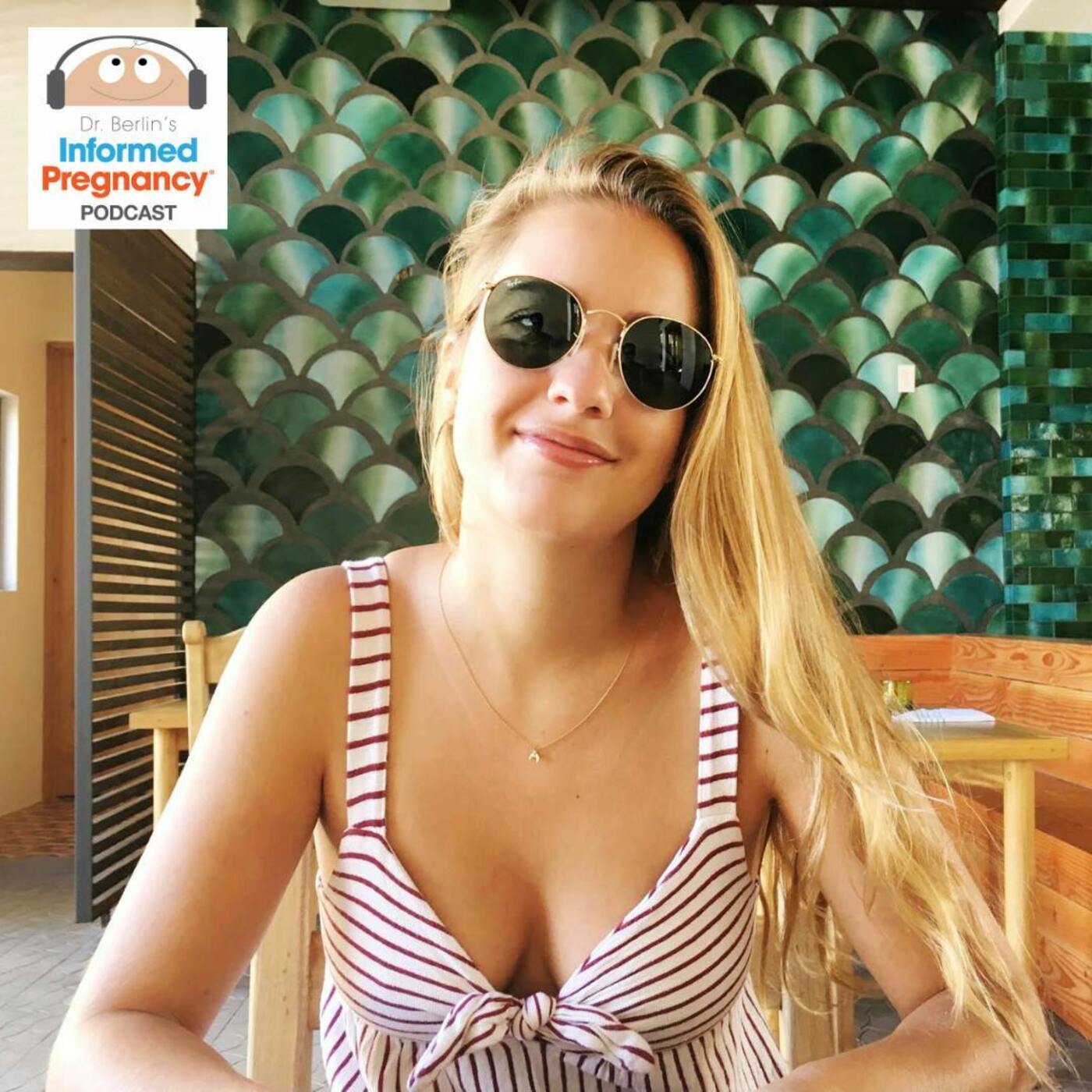
March 3, 2021 · 53 minutes · Episode 218
About this episode
New mom Ashton gave birth to her son just as the novel coronavirus was thrusting the entire world into lockdown. After delivering her baby Ashton contracted Covid-19 perhaps at the worst possible time.

Enjoy special offers from our sponsors https://www.doctorberlin.com/sponsors .
Learn more about your ad choices. Visit megaphone.fm/adchoices
See Privacy Policy at https://art19.com/privacy and California Privacy Notice at https://art19.com/privacy#do-not-sell-my-info.
Key quotes
“it was like splash zone at SeaWorld, but it's so much water.”
“She was doing massage, doing breath work with me, which was so helpful. I didn't realize breathing could be a form of pain management, but it really is.”
“I really wanted to feel all of those feelings and like experience him moving through my body. I always thought the process of birth was so cool.”
“And it just was like not a great way to start. You know, we had such a beautiful birth and then to have that happen so soon after it just was like a total and complete 180.”
“Honestly, I had such a beautiful experience at UCLA with the midwives. I would do that again in a heartbeat. That was such a great experience.”
Related episodes
- Ep. 219 Mandy Moore – After Birth
- Ep. 220 Hilary Duff – BEFORE Baby #3
- Ep. 223 Anna Prager – After Birth
- Ep. 214 Richelle Monae – After Birth
Transcript
AI-generated transcript with speaker labels — may contain errors, especially names and medical terms. Dr. Elliot Berlin, DC appears in blue; Ashton Palmer in orange.
Download PDF of the Transcript
Dr. Elliot Berlin, DC [1:13] Welcome to the informed pregnancy and parenting podcast. I'm your host. Dr. Elliott Berlin today We get to hear a unique personal story with quite a dichotomy The joy of giving birth to your first child and all that entails together with the experience of having a pandemic Smack you in the bum right after your baby comes out. I'll explain more my guest today is a first-time mom She's a creative. She's a lifelong Angelino And she was put through the ringer. She's also one of the nicest nicest people I know I say that but you're gonna hear this from her directly. She is super wonderful Ashton Palmer. Welcome to the podcast
Ashton Palmer [2:13] Thank you so much for having me. I am honored to spend yet another 35 minutes with you
Dr. Elliot Berlin, DC [2:19] It's my second time today. I know how lucky am I that's what I was about to say jinx. Thanks. Yeah people don't know We're starting a band. They don't but you just told them so it's the OCD ADD band Yeah, just alphabet. We'll just call the alphabet. Okay. We'll let you guys know when the first album is coming out All right, let's start from the beginning. Where are you from? How did you meet your husband? How did you get into this pregnancy situation in the first place? I
Ashton Palmer [2:44] am born and raised in Los Angeles and Grew up in Santa Monica and now my husband and I live in Marvista and we met in 2012 I think and we were introduced by my best friend Brittany who was working as his Segment producer at the time on the show Survivor. I've heard of it. Yeah, it's been around for quite a while Yeah, so she introduced us which was great. That's how you got to meet your husband That's how I got to meet him. Yeah, and he's still working on Survivor. Yeah, he's been on the show for like 15 years, I think he started as a PA and he worked his way up to co-executive producer So I'm very proud of him. Yeah, that's quite the climb. Yeah, he's one of the hardest working people
Dr. Elliot Berlin, DC [3:31] I know I mean he's like literally succeeding at Survivor. Yeah, he's surviving if you know what I mean Yeah I would never be able to do that because I assume that when you guys have an argument over dinner and you obviously When every time then he obviously yeah, then you must say the tribe has spoken I do and then you put out his candle To extinction island to extinction island. Yes. Yeah. I have a pitch for the co-executive producer through the boss of the co-executive producer Yeah, I think they should do an episode where they go to the dreaded husband island But it's a trick because when they get there it's like a man cave with a big movie theater and screen and all those
[4:16] Snacks and drinks you want but you can't tell anybody that's the whole thing You're automatically off the island. So other people you're trying to get voted off You're trying to get voted off But you're telling people like it's so awful there and horrible and then you have to be like an a-hole to people To try to get on. Yeah Okay. Yeah, I will pitch that to him when we're done with this call. Thank you very much and I'll give you the feedback Anyway moving on so you guys dated for a bit you got married
Ashton Palmer [4:43] Were you talking about children from the beginning or yeah, we both always knew that we wanted kids I wanted to be a mom since I was little and he is about nine years older than me So he'd been ready for quite a bit to start a family. And so we decided we'd start trying after our wedding and then I planned this big honeymoon and felt like I didn't want to be pregnant for that. We went all over Africa. It was about four weeks long. We started in Paris, which I know is not an Africa. We moved down to Morocco and we spent some time going to a couple different cities there and then we were in South Africa for a bit. And we did a safari and then we ended in Uganda and
[5:28] we did a gorilla trek, which was like the highlight of my life. It was the coolest thing ever, but also not something that you'd want to be pregnant for. Yeah, it was a 10 hour trek through Bwindi National Forest and it's like a steep vertical climb and you're on foot. It's pretty dangerous, but the coolest thing ever. You're like up close and personal with these huge gorillas. And that had been like a bucket list thing for both of us. So I just knew
Dr. Elliot Berlin, DC [5:57] they don't care that you're climbing up their house.
Ashton Palmer [5:59] No, they see people every day. So they're like very used to human interaction and they couldn't have cared less that we were there.
Dr. Elliot Berlin, DC [6:06] Do you feed them?
Ashton Palmer [6:08] No. You have to maintain like a healthy distance because they're still, you know, wild and huge and unpredictable.
Dr. Elliot Berlin, DC [6:16] Yeah. Yeah. It just sounds like not the kind of thing you want to do in your first trimester.
Ashton Palmer [6:21] Right. So that was my thinking. So we waited until after we got home to start officially trying.
Dr. Elliot Berlin, DC [6:27] Good thinking. Yeah. And then once you started trying, did it come quick and easy for you or did you have to work out of it?
Ashton Palmer [6:33] No, it was pretty easy, pretty fast. It was I think the third month after we started trying that we got pregnant. We had to time it with his work so that I got pregnant and the baby would be due when he was at home in LA because he is out of the country on location for his job three months out of the year. So there was that kind of aspect of the planning that we had to keep in consideration. But I went out to visit him. He was in Fiji at the time and that's actually where I ended up getting pregnant. So I didn't find out until I came back home like two weeks later.
Dr. Elliot Berlin, DC [7:10] Thank you, survivor. Yeah, I mean, that's a nice place to conceive, I would think.
Ashton Palmer [7:14] Yeah, it was beautiful, very stress free and relaxing. And that's I feel like what everybody says is when you're in that kind of state of mind, it just happens.
Dr. Elliot Berlin, DC [7:23] Yeah. Yeah. How was pregnancy for you? How was that first trimester that you could have been climbing up cliffs and looking at gorillas?
Ashton Palmer [7:30] First trimester was pretty rough. So I'm glad that I wasn't going uphill with gorillas in my first trimester. I was feeling great like the first couple weeks and I was almost cocky like, oh my god, I'm going to be one of those women like I'm going to have one of those pregnancies. And I was really excited about that and then one morning I woke up and it was like a light had just like flipped and I was so exhausted. So nauseous. I was throwing up a lot. And obviously at that point, it was still a secret from everyone outside of my immediate family and my husband.
Dr. Elliot Berlin, DC [8:07] So he back home then or still in Fiji?
Ashton Palmer [8:10] No, he was home then. But he wasn't home for about two weeks after I knew I was pregnant. So I had to keep that secret to myself.
Dr. Elliot Berlin, DC [8:19] Oh, you didn't tell him?
Ashton Palmer [8:20] No, I didn't want to tell him over like FaceTime or zoom. I wanted to tell him in person. So I like talking and you're just like keeping it to yourself. Yeah, it was so hard. It was really hard. But he came home. He came home and we were unpacking all his stuff from his trip and I was helping him do laundry. And he has this like vintage shirt. That's his favorite shirt. And I pulled it out of the dryer and took it over to him with a onesie behind it. And I was like, Oh my god, your shirt shrunk in the dryer. Like I'm so sorry. And then he looked at it and saw the onesie and he was like, Oh, that's cute. Who's that for? I'm like, didn't register to him. And then I
[9:02] told him we're having a baby and then you know, it was really sweet and special and emotional. And that was like one of I think three times in my life. I've seen him cry. So but it was hard to keep that secret for the time that he wasn't home.
Dr. Elliot Berlin, DC [9:15] Yeah, no, it must be much easier to keep secrets. Yeah, totally. So he was home at least when you started feeling crummy.
Ashton Palmer [9:23] Yeah, he got home right when I started feeling badly.
Dr. Elliot Berlin, DC [9:27] Interesting.
Ashton Palmer [9:28] So it was kind of good timing because I could lean on him for support. But that first trimester was rough. Yeah.
Dr. Elliot Berlin, DC [9:35] And second trimester? Did that go away like on time?
Ashton Palmer [9:39] No, not exactly. The second trimester was rough as well. I had a rough start to it. I was hospitalized at 14 weeks. I have something called Meniere's disease, which is an inner ear disorder. Do you know what that is?
Dr. Elliot Berlin, DC [9:53] Yeah, it gets like the ringing or the like?
Ashton Palmer [9:56] Yeah. Yeah. So I get severe vertigo from it. and it's genetic. So my mom had this, my grandmother had this.
Dr. Elliot Berlin, DC [10:04] Is there a way to control it?
Ashton Palmer [10:06] No, so they don't know what causes it and there's no treatment at the moment. So basically people are prone to these kind of like episodes or attacks and you just get really dizzy. Your vision can go in and out. You have no balance really. And so I started experiencing that around 14 weeks and I was throwing up for about 18 hours straight one night. And so we went to the ER.
Dr. Elliot Berlin, DC [10:34] Did you know that it was that?
Ashton Palmer [10:35] Was it familiar to you from, yeah. Yeah, but I had never had it that severely. Like I'd had attacks in the past but I'd never had to be hospitalized for them. So that one was really tough and the doctors were thinking not necessarily that the pregnancy caused it but it may have exacerbated it and like made the symptoms worse. And then of course, because you're pregnant they can't give you anything. So typically I would take oral steroids but they didn't want to give that to me when I was pregnant, obviously. So my instructions were basically just to go home and rest.
Dr. Elliot Berlin, DC [11:08] Did they give you something for nausea at least?
Ashton Palmer [11:11] I think I had some kind of like herbal remedy for nausea and I mean, they hooked me up to an IV and they made sure my fluid levels were back to normal before they released me. But I was on like bed rest for two weeks. I couldn't go to work. I couldn't drive because my vision was so, it feels like someone picked you up and threw you across the room. Like you have no perception of depth or like where you are. It's so disorienting. So that was hard. And that was in the very beginning of the second trimester. But then after a little bit that all subsided the symptoms went away and then I was back to normal and the rest of the second trimester was amazing.
Dr. Elliot Berlin, DC [11:53] What work were you doing?
Ashton Palmer [11:55] I was working for a letterpress studio called Swell Press at the time. And so that's a pretty physical job. You're standing, you're on your feet all day. You're working with these big machines. And so that was tough when I wasn't feeling my best but in the second trimester, I had more energy. I wasn't as nauseous. The secret was out, like my bump was popping. I felt beautiful. So that period of time was really great. We had a big gender reveal party. It was fun.
Dr. Elliot Berlin, DC [12:26] I want to find out more about your gender reveal party. But you said something that triggered another similarity between us. I remember distinctly.
Ashton Palmer [12:33] Another one?
Dr. Elliot Berlin, DC [12:34] Yeah, there's so many, by the way. I just remember when my bumps started really popping out and I did not feel beautiful. Similar but different. Yeah, same, same, but different. That could be our band. All right, let's take a quick break. We come back. We're gonna find out about this gender reveal party and so much more. We'll be right back.

Dr. Elliot Berlin, DC [15:17] Welcome back to the informed pregnancy podcast. We're talking to my twinny, Ashton Palmer. It's just that like in session we find out we have so many things in common. Like we both play piano by ear. Uh huh. We both like black. We both like wearing black. And what else? That was it. I think that was no, that can't be it. There's so much more.
Ashton Palmer [15:41] One of us can sing really well. You know, you well, I haven't heard you sing. So that's
Dr. Elliot Berlin, DC [15:46] not fair. I sang today. I just got a snippet. I need more. Oh, I didn't realize it was like American Idol. Okay, fine. I could do it. Your whole family's into the reality competitions. All right. Here we go. So you're a pregnant. First trimester was a doozy. And then you realize you're not a very good secret keeper, but you did it. And then you're starting to feel better in the middle trimester. Now this is like literally right before COVID, right? Well, when I gave birth was right before COVID. This was like August. Oh, okay. This is this is summer September. Yeah, this is pre COVID. Okay. So it's one of those times where you can have a big party for a
Ashton Palmer [16:31] gender reveal. Exactly. Which like I look back on that stuff now that and like the baby shower that my friends threw me, like I feel so lucky that I was able to have those big celebrations with our family and friends, like the gender reveal party and the shower that my best friends threw me, because I know that with COVID, a lot of moms didn't get to celebrate those things just because it wasn't safe. So that's kind of sad. Yeah, there's so many things that I kind of look back at from just a month or two before the pandemic. And I'm like, wow, that was like a
Dr. Elliot Berlin, DC [17:04] completely different world. Right. And you have no idea what's coming. Right. It's like, sometimes you watch those, I don't know, America's funniest home videos or something like that. And you'll see the classic somebody hits a baseball and hits dad in the crotch with the baseball. But that moment right before it happens, he's got no ideas, just totally relaxed. And then all of a sudden, it's like, the whole world changes there for a minute. Literally, the whole world has changed now. But we'll get to that shortly. How did you do the gender reveal?
Ashton Palmer [17:34] So we had a big backyard in our old place. And we just invited all of our family and all of our closest friends over and we had the best man at our wedding, Ryan's best friend, Jimmy. He found out the gender from the doctor and then ordered a bunch of those like confetti poppers. And we didn't realize how much confetti was in each one. So we got 40. Oh, wow. Had every person at the party pop it. And so it all came out blue. And you know, everyone was freaking out and so excited. And it was so much fun. And then we just we had a taco truck come and people were drinking and eating. And it was a special day. Like good old days.
Dr. Elliot Berlin, DC [18:16] Like good old days. I know. All right. Now, at what point do you start thinking about how you want this baby to come out of you?
Ashton Palmer [18:26] I think because I had always wanted to be a mom and birth has always really fascinated me. I'd always had an idea in my head. I originally thought that I wanted to have a water birth because my like happy place, my safe place is in my bathtub. I love baths. I love being in the water. It's like such a calming force for me. And so we talked about the idea of home birth. We looked into a couple birthing centers. And then at the end of the day, I just decided that the hospital was where I felt most comfortable for my first child. But we ended up going with the midwives at UCLA. And so that was sort of like my middle of the road in between compromise
[19:11] because I felt like they were super holistic and natural. But I was still in like a safe, protected environment should anything go wrong.
Dr. Elliot Berlin, DC [19:22] So you get the midwiffic model of all the care during your pregnancy and birth, but you have the hospital safety blanket. Should you need any kind of medical intervention? But they don't do your happy place, which is water.
Ashton Palmer [19:35] No, and I even talked to you about this when I came to see you like I was trying to find any hospital that would allow water births. And it's really tough to find. I don't think for as progressive of a city that LA is, they don't really offer that.
Dr. Elliot Berlin, DC [19:51] Yeah, I mean, I find California in general to be selectively progressive. Right. But that could be a whole other podcast. So it's hard here. There's birthing centers do have the tubs, but they don't have that medical safety blanket you were looking for. There's one hospital, they're on and off again about using their tubs and they do have midwives. It seems hard to coordinate being able to birth in that part of the hospital. And then I know there's another hospital where the doctor is trying, the chief of OB is trying to get the hospital to go along with water, birth and tubs, but it's an uphill battle. So you had to make a choice and you chose not to have your happy place, but you chose what felt like a safe
[20:36] place, which I generally think is a good idea. And I just have this one question. Is water your happy place or is your bathtub your happy place? Like, do you love going
Ashton Palmer [20:45] to the ocean and swimming pools? No, if I had to say between the three, my bathtub is my happy place. Yeah. Like the open ocean kind of freaks me out. So that's not my happy place. Contained bathtub. Yeah. Contained warm bubble sudsy. That's my happy place. Lufa soft music playing the background candles. Hell yeah. All right. Maybe next
Dr. Elliot Berlin, DC [21:08] baby. So yeah, that's your plan. And are you reading books or doing classes or?
Ashton Palmer [21:14] I was reading all the books. I was watching all the movies. I was listening to all your podcasts. I was the one, me and your mom. My mom too. Yeah. We went to a birthing class at loom and Jessica digs was the midwife who was teaching it. And we loved her. She was so amazing. So I did put a lot of thought and research into my plan. I just wanted to be as informed as possible, you know, informed pregnancy. I like that idea. I'm all about that. See another thing, 20. Okay. So was your plan to labor at home? Yeah. So I did have a birth plan, but it was pretty loose. It's not something that I like wrote down and laminated and like passed out to my birthing team. It was sort
[22:05] of more like in my head, a list of how I would ideally want things to go, what I was comfortable with, what I wasn't comfortable with. And the goal at the end of the day was to have an unmedicated birth, but obviously like it was a flow chart. So if things didn't go as planned, which most of the time birth doesn't, I was going to be flexible and open to changing if I had to. Well, if I did my job right, you would have been flexible and open. Yeah, I was flexible and open. Did you, uh, do you have a doula? I did. I had Catalina Clark who was just so fantastic. She was kind of like, yeah, she's a midwife now. Yeah. She was kind of like my rock through the whole thing. She's amazing. She also shares her birth story on
Dr. Elliot Berlin, DC [22:51] the informed pregnancy podcast. Yeah, it's a good episode at the end of pregnancy. You had a potential roadblock to a vaginal birth. I did.
Ashton Palmer [22:59] The baby was breach and I was breach. That's another sign. It's another twin characteristic. So I think I had been seeing you at that point and I was coming to you frequently because the way that his legs were, he was kicking into my ribs and it was causing so much pain. And you did a lot of manual work and eventually he flipped. I want to say it like the 37 week mark, maybe right before. Yeah. Right before you would have had to make the turn. Right. Medically. Yeah. He flipped himself and then he was in a great position and that pain kind of started to dissipate in my side. Let's talk about labor starting
Dr. Elliot Berlin, DC [23:39] then. We're in relation to your due date. How many days before or after
Ashton Palmer [23:43] did things start happening? So the first due date that I was quoted was February 20th. And then I think after the anatomy scan, they got like a clearer picture and they said February 17th. So at like 1230 at night on the 17th, I went into labor. So his actual due date was really cool. But I woke up, I'd been asleep for like two hours and I woke up and felt just like wetness. And so I got up and I turned the light on and there was like a little pool of water in the bed on the sheets. And so I texted a picture to Catalina and she was like, okay, like that could be a sign that things are starting, but it also could be a long time before anything else happens. So just get back in bed and try and
[24:29] rest as much as you can. So I was like, all right. And I went into the bathroom and put on one of those diapers, those postpartum diapers. Because my friends had warned me like, they're going to give you a couple at the hospital, but you should stock up for postpartum, you're going to need them. So I had like two boxes of Depends at home. Oh yeah, it's never too early. Never too early. And they're so glamorous. Yeah. So I slipped one on just in case and I got back into bed and I tried to sleep but I I was like full of adrenaline at that point. I couldn't.
Dr. Elliot Berlin, DC [25:03] I was wondering, like you could say go back to bed, but your water just broke, which means.
Ashton Palmer [25:06] Well, I didn't know if it broke because it was just a little bit. You know?
Dr. Elliot Berlin, DC [25:10] So you just peed on yourself?
Ashton Palmer [25:10] I was like, did I pee? Like, I don't know. It was such a tiny amount, but in case I put it on and I tried to lay back down and rest. And then of course, like I could not go to sleep for the life of me. And so my husband and I were just laying there talking and then maybe 45 minutes later, it was like splash zone at SeaWorld, but it's so much water.
Dr. Elliot Berlin, DC [25:32] The first 12 rows?
Ashton Palmer [25:34] Like 15, 15, it was so much water. Thank God for that diaper. It shot like up my back. Yeah. I don't know if that's TMI, but it was a lot. So I was like, okay, this is happening. This is my water breaking. That trickle was nothing. And so I went into the bathroom to like clean up. And when I took the diaper off, I saw that there was meconium. So my heart kind of like sank when I saw that.
Dr. Elliot Berlin, DC [26:04] Because?
Ashton Palmer [26:06] Because I knew that that could mean that the baby was in distress. And I don't know, I just didn't want him to be scared. Like I was like, what's going on with you? Why is this happening? You know, that meant that the whole plan to labor at home and like being in and out of the bathtub, that went out the window. We called the midwives and they were like, okay, come straight in. It wasn't like a scary situation, but it was not ideal for what we had planned.
Dr. Elliot Berlin, DC [26:35] Was your dealer with you at that point? Or you met at the hospital?
Ashton Palmer [26:39] No, we let her know that that was happening. And she said, you know, get to the hospital, have them check you and like keep me posted.
Dr. Elliot Berlin, DC [26:49] All right, so there's a couple of thoughts here. First of all, this is February 17th. This is like when the earliest cases of COVID are hitting the United States. We're looking at the rest of the world, pointing to them and talking about COVID, which looks awful in Europe and China. But nobody knows anybody who has it here. They're not even talking about it in the news as being here and you're in the hospital having a baby.
Ashton Palmer [27:12] Yeah, and no one's wearing masks at that point. Like it's not a thing yet.
Dr. Elliot Berlin, DC [27:16] It's not a thing, it's right before it's gonna, it's right before that kid swings the bat. Right, exactly. Dad has no idea what's coming. You know, he doesn't know, he's never gonna be able to have kids again. Okay, fine. So here's the other question. Just out of curiosity, did anybody ask to see your meconium?
Ashton Palmer [27:35] I am an overachiever, so I took a picture and sent it to the midwives and sent it to Catalina. I wanted to show them what it looks like just to make sure.
Dr. Elliot Berlin, DC [27:45] Look what I made.
Ashton Palmer [27:46] Yeah, look what I did, aren't you proud? Yeah, I mean, I knew it was meconium, but I wanted to show them to see if maybe they were like, oh, it's just a little, or, oh, wow, that's a lot. And it was like yellow, like there was a lot of it. So.
Dr. Elliot Berlin, DC [28:00] Pea soup. Ugh.
Ashton Palmer [28:02] Yeah, so. I thought there's like kind of that consistency.
Dr. Elliot Berlin, DC [28:05] Right, yeah.
Ashton Palmer [28:06] Yeah, the midwife was like, yes, come in.
Dr. Elliot Berlin, DC [28:09] All right, let's take a break. Okay. Pea soup is a great time to take a break. A word from our sponsor, Marty's Pea Soup. We'll be right back. Welcome back to the Informed Pregnancy Podcast Over the break, I just had a warm cup of soup. And here we are with Ashton.
Ashton Palmer [28:35] It was mushroom.
Dr. Elliot Berlin, DC [28:36] Oh, good, thank God. You're welcome. Okay. So you're in labor, your water breaks at home shoots up your back, just as a recap. And then there's meconium in it, and your midwife wants you to come to the hospital. So you go to the hospital. What happens when you get there?
Ashton Palmer [28:51] Okay, so we got to the hospital around 3 a.m. and got admitted, checked into the room, and then the midwives came and she checked me and I was 90% effaced and three centimeters dilated.
Dr. Elliot Berlin, DC [29:03] Only 10% to go. Yeah.
Ashton Palmer [29:05] And seven centimeters.
Dr. Elliot Berlin, DC [29:06] Were you checked before that?
Ashton Palmer [29:08] No, that was the first time I'd been checked because I just went straight from home to the hospital.
Dr. Elliot Berlin, DC [29:14] In labor, but I'm saying the midwives, because a lot of OBs start to check at 37. Oh, right, no, we didn't. You had never been checked? We didn't do that, no. Was it uncomfortable?
Ashton Palmer [29:24] Not particularly, not that I remember. At that point, I was having contractions regularly, but they were manageable. They were painful, but I could talk through them. I was still excited. I wasn't in too much pain yet, so.
Dr. Elliot Berlin, DC [29:40] It's been a minute, but do you remember where you felt the sensations of your contractions within the front?
Ashton Palmer [29:46] Yeah, they were in the front. I didn't have back labor at all, which was, yeah, I was worried about that. Who's your chiropractor? It's this guy. I forget his name. He's not, I can't remember. I gotta go see him. Yeah. So the pain was kind of like in the front lower, sort of like where you get period cramps. It was like, yeah, really bad menstrual cramps. But what I do remember is the midwife checking me and saying, have you talked to your doula yet? And I said, Oh yeah, we checked in with her and she said, you know, check back in in a couple hours. Like she'll probably come in the morning. Once I'm in active labor and the midwife was like, no, you need to tell her
[30:26] to come now. And so I was like, Oh yeah. So she was like, you're progressing really quickly. Like you need to have her come now, like call your support people and have them come. So I called my mom, my mom came, Catalina got out of bed and started heading to the hospital. So things kind of picked up from there. And were you indeed progressing quickly? I did. Yeah. So they went from manageable contractions that were painful, but like I could talk through to like around 5am. That's when they got super intense. And yeah, like two hours and a half after I got there, Catalina had just arrived at that point and she was so helpful. We were in and out of the robozo. She brought essential oils.
[31:14] She was doing massage, doing breath work with me, which was so helpful. I didn't realize breathing could be a form of pain management, but it really is. We were like low moaning and groaning and all of that stuff. Sounds so bizarre, but it helps so much. Sounds like when I clean the garage. Really? That's what you do. Yeah. Yeah. So I was laboring in the bathroom by myself for a really long time sitting on the toilet. Yeah. I mean, I was just sitting on it, but the way that it positions your body just felt comfortable, like better than standing or walking around or being in the bed. So I was sitting there and I started throwing up. So I knew that was a good sign that I was approaching transition,
[32:03] maybe. And then we got into the shower and we put all of these candles in the shower. And I put a pillow down on the ground and made kind of like a little cave. And that's where I stayed for most of the time. I was in there for hours. Oh, really? Yeah. You had pillows in the shower? I did. Yeah. And they were okay with it. I just put one pillow down on the floor. Cause I think even in that mental state, like when you're that deep into labor, you really go out of your body. It didn't even really feel like I was conscious. Like I was operating from like a very primal, basic place. And there's a lot that I don't remember, but I do remember being like, I don't want my knees and my shins to touch the floor of
[32:47] this hospital. Like I need a pillow to sit on. And so I was in the shower for a long time, just with the nozzle on my belly and on my back and that hot pressure of the water felt great. And I remember thinking, which is funny, like, oh, I would not want to be in a
Dr. Elliot Berlin, DC [33:04] bathtub right now. Wow. That's really interesting. Did they seem concerned about
Ashton Palmer [33:07] the meconium during this time? Right. So we didn't even touch on that. But when I first got there, I was hooked up to a monitor and they were watching him and they weren't worried. His heartbeat was strong. They said everything looks fine. So I switched to a couple of different monitors throughout the labor. They had the one that's strapped to you that's constant. And then I think when I was walking around and in the shower, there's one that's attached with like a tape and it's waterproof. The Wi-Fi one, Bluetooth, the Bluetooth one. Yeah. So he was being monitored the whole time and they kept saying his heartbeat looks strong. Like everything was fine. So they weren't that worried. They weren't worried. No,
[33:51] there was no talk of like C-section or anything that was never brought up.
Dr. Elliot Berlin, DC [33:57] Are you in the shower as things are progressing, picking up? Was there ever a point where you thought maybe I should get drugs now?
Ashton Palmer [34:05] No. Like things happened so quickly that I didn't even remember that I really had that option, to be honest. Like I was so in a different place that I was just concentrated on getting from one contraction to the next and like moving through those that I didn't even think about the epidural. I didn't ask for it. It wasn't on my mind.
Dr. Elliot Berlin, DC [34:27] I mean, when you get towards the end, right? How do you know if you're in the shower, how do you know that you're progressing or that your cervix is finishing its dilation?
Ashton Palmer [34:36] I felt like a really intense urge to push probably around like 9.30 a.m. And they said, okay, get out of the shower, get in the bed, and we'll check you. Because I didn't really want to be checked after the first time. I was fine with the first check, but I was worried that, you know, six hours of labor would go by and they'd check me and say like, okay, you're four centimeters now. on the face. Yeah, I would lose all steam. So I kind of was like, I don't really want to know, you can check me if you want to, but don't tell me where I'm at until it's go time. And so when I said I felt this pressure and I felt like I had to push, they put me back in the bed and they
[35:15] checked me and she was like, okay, it's time. So was that like a shock to you? Kind of, because it was so fast. I mean, my water broke at 1230 and 930. I'm getting ready to push. So that's like, I mean, I don't know if my math's good. No, no, no. First, maybe that's a pretty quick one. How was pushing? Pushing for me was the most painful part. Oh, really? Yeah. And I feel like other people have said the reverse, that it's kind of like they get a sense of relief from it. And I found it to be like the most painful. It was the most intense. Yeah, I don't know. It was like the most excruciating part, I think. Like in the down below parts? Yeah, in the down below parts. So this wasn't your like
[36:02] contractions anymore? No, it moved. It was like a different kind of beast. Yeah. Like it was contraction pains. And then when they talk about the ring of fire, like I just remember saying it burns, it burns, it burns. Like it was. How long did that go on? I pushed for 15 or 20 minutes before he was born. But I mean, that feels like an eternity.
Dr. Elliot Berlin, DC [36:24] Yeah. I mean, but you felt that burning the whole time you were pushing?
Ashton Palmer [36:28] No, not the whole time. I mean, I watched the videos back and it's for most of it. And I had two tears that happened. I had one internally and one superficial and I could feel both of them. Wow. Yeah. In the video, I say like, I think I just tore. I've never seen anybody say that. Yeah, I could feel it, which is what I wanted. I mean, that's why I wanted an unmedicated birth. I really wanted to feel all of those feelings and like experience him moving through my body. I always thought the process of birth was so cool. So that's what I wanted, even if it was uncomfortable and painful and intense. Yeah. I mean,
Dr. Elliot Berlin, DC [37:09] you walk straight up a mountain for 10 hours. Yeah. There was a walk in the park compared
Ashton Palmer [37:14] to this. That's a great way to put it. Well, your little guy went to the NICU. Why? So after he was born, he had all of his newborn tests done. And then they noticed that his breathing was a little bit labored. And then they also said that his blood sugar was low. So I remember I was on that bar at the edge of the bed in a squat. That's how I gave birth. And I reached out with one hand and I helped pull him out. And after I pulled it out, he wasn't crying for a little bit. And they didn't seem too worried about that. And then he let out a cry, but it wasn't like that deep, hearty cry that you like to hear from babies. And so I just remember people kept coming into the room and they were watching him
[38:03] and we got to do skin to skin. We got to do delayed cord clamping and we were initiating beating by then. So it wasn't too scary of a situation, but I just kept noticing that people were coming into the room more and more people and they weren't leaving. It was starting to freak me out. And they just said, you know, we're watching him breathe and it just looks a little bit labored. Like we're worried he may have swallowed some of the fluid. So they wanted to take him to the NICU to monitor him. He ended up having some fluid in his lungs. So they were worried about a possible risk of infection. And so they started him on antibiotic drip and kept him there for three days just to monitor him.
Dr. Elliot Berlin, DC [38:42] Oh, wow. So during those three days you would normally get discharged after 24 hours.
Ashton Palmer [38:47] Right.
Dr. Elliot Berlin, DC [38:47] Is that what happened or did they keep you there?
Ashton Palmer [38:50] We stayed together. So, I mean, he was in the NICU, but I was in postpartum and we all ended up leaving at the same time.
Dr. Elliot Berlin, DC [38:57] Is postpartum right near the NICU there?
Ashton Palmer [38:59] No, it's in a different room in a different wing of the hospital. So we'd have to go down there. I think it was like every two hours because I was pumping colostrum. Then we'd go down to feed him that and just to visit with him. But we ended up being able to stay at the hospital for the same amount of time until he was discharged from the NICU. And then for that he was okay. Yeah. And he was discharged with a clean bill of health. He never had an infection. It was just to monitor him. But obviously being separated like hours after he was born was a little bit traumatic, you know, to have your baby be taken away.
Dr. Elliot Berlin, DC [39:35] Totally. Especially after that big natural climactic experience.
Ashton Palmer [39:39] Right. It was such a high and then, you know, it got knocked down a little bit after that.
Dr. Elliot Berlin, DC [39:45] Okay. We're going to have one of these rare episodes where we do a bonus fourth segment. Don't go anywhere. This story is just about to get interesting. We'll be right back. Welcome back to the informed pregnancy podcast. We almost never talk about when we record these because it doesn't really matter whether it's an expert topic that we're talking about or a birth story that we're talking about. It doesn't matter to you when it happened unless it becomes outdated in which case we pull it out of our library. Right now I'm going to break that rule and we're in the February of 2021 and 2020 was a doozy of a year. It started good when Ashton had a baby in February and then
[40:33] March really hit the fan and I got COVID then got a really bad case of COVID then my whole story is on an episode here with Ricky Lake. I don't know if you ever heard that. I did. Yeah, of course. I was following your story closely. So Ricky the business of having COVID my episode and then I recovered from it. You know, in the back of my mind was all the mums that I had been working with leading up to that time but it was kind of in the back of my mind. It's usually in the forefront of my mind. I'm always thinking about you guys. But there I was just trying to thinking about breathing and staying alive. So it wasn't too much later that I found out I was not alone. My twinny was going through something similar.
[41:13] So let's talk about that. How soon after you had your baby did you start to feel funny?
Ashton Palmer [41:18] Okay, so we were home for about two weeks after he was born before I started to feel sick. And in that time, you know, Ryan had gone back to the office here and there and we'd had visitors come over. So people were in and out of the house. And I just remember, yeah, it was about two weeks after he was born. I called my mom one morning and I said, I know that you're supposed to feel like really exhausted after you give birth, but I feel like something's wrong. Like I can't keep my eyes open. Like I feel just so broken down right now. Can you come over? So she came over and she was taking care of the baby. And I just progressively got worse and worse. I started having fever, chills,
[42:05] body aches. I was exhausted. And Ryan came home from work later that day. And he said, should we call their doctor? They have a travel doctor that they see for survivor that they go and get all of their shots and vaccines for before they go to whatever country they're filming. And he had just been to see her because they were about to leave. He was supposed to leave two weeks after that to go back to Fiji. And she mentioned to him that she had gotten the COVID test. And so she said to him, if you know of anyone who needs it, I have it at my office. Just call me. So he was like, should we call Dr. Rock? So we called her office and she said, yes, drive over by yourself, stay in your car and I'll come meet you and give you the test.
[42:54] She didn't want me to come upstairs to her office. So I pulled into her parking lot and she came down in a full hazmat suit and tested me through my window. And that's kind of when I was like, oh, this is serious. Because I thought there's no way in hell I have COVID. I have not left the house since the baby was born. I haven't been to China. I haven't been on a cruise. I don't know anyone who's been out of the country and then come to see me. I thought I just had the flu or something. So she said, I'll test you for the flu. I'll give you a flu panel and then I'll also do the COVID panel. And if the flu panel comes back positive, then I wouldn't worry. It's probably just the flu. So I was like, okay, cool.
[43:38] So I went home and I waited a couple of days and then the flu panel came back negative.
Dr. Elliot Berlin, DC [43:45] There's a few things to keep in mind. At the beginning of the pandemic, at this time in March, when I was in the hospital, they barely had tests to do. There were no tests. Nobody had tests. And people were calling up and saying, I have this symptom, that symptom. And they would even say, just assume you have COVID. We can't test you. We can't waste the test on you. Just assume you have it. So the fact that I got tested was like kind of a miracle.
Ashton Palmer [44:10] I don't know how that worked out. And the tests that they had were not like now where you can find out in 15 minutes or 24 hours. They were like a few days until you got results. So I didn't even hear. So it took a few days to get the flu panel back. And that was negative. And I didn't even hear about the COVID for 10 days. And so in that time period, they said like, just in case, because we don't know if it's positive yet, but just in case, you need to act as if it is positive. So you have to quarantine. You have to call everyone you've been in contact with. Ryan had to tell his whole office, like, my wife might have this. I can't come into work. And we had to stay in our house. We lost all of the postpartum support
[44:54] that we had. Oh, wow. I didn't even think about that. Yeah. I mean, but you weren't
Dr. Elliot Berlin, DC [44:58] told to quarantine for.
Ashton Palmer [45:00] each other or from the baby? So in between the time where we were waiting for my COVID result, they told us just to quarantine in our house. She said, try and stay away from the baby as much as you can. Were you breastfeeding? I was breastfeeding at that time. How did you do that from the next room over? Well, I mean, I was pumping and Ryan was giving him breast milk from a bottle. But we also lived in a one bedroom, tiny apartment, you know, that you can't really escape each other. There was one bathroom, there was one kitchen. So whatever's in that house was shared amongst the three of us. Like there was really no way to escape that. Also, just by way
Dr. Elliot Berlin, DC [45:42] of painting the picture, I only knew a couple of people who had it before I got it. And I was like, wow, those people are really unlucky. Like a handful of people will get this thing and those guys. And then I found out I had it. And even then, like, I was so blessed. So many people wrote in on social media and emails and things like that. And the common theme was like, oh my goodness, you're the only one who I know who has this. You're the only person I knew at the time that had it. You're the only person I didn't know had it, but had it.
Ashton Palmer [46:13] Yeah, right. I didn't even find out about you for a couple of weeks. But I mean, yeah, at that time, I knew no one else that had it. And it was just such a scary thing to be going through because it was so new. And, you know, once we eventually ended up getting the positive result back, that's when people started to sort of freak out and say, like, okay, you can't be around the baby. Like, we don't know how this is going to affect him. Like, you have to stay away. So I was isolated in our bedroom, Ryan and the baby moved out to the living room. And I didn't touch him, hold him anything for two weeks. I wasn't allowed. I mean, you're physically struggling. What kind of symptoms do you have?
[46:55] I mean, I'm physically struggling from postpartum recovery. You know, like that on top of COVID now. It just got worse and worse. It was just like a really, really, really terrible flu. I never, thank God, had any respiratory issues or problems breathing or anything. Like, I know you struggled with that. I didn't have any of that. I had a really bad cough. I had a loss of taste and smell. I had headaches. You didn't have that? No. Oh, see, it's so weird. It varies from person to person, but I mean, it just knocked me out. Like I was in bed for
Dr. Elliot Berlin, DC [47:34] two weeks. Did you lose taste and smell before you got your positive test result? No, that was after I think. That's so strange. So kind of slow evolved for you. Jokingly, I sort of wonder if I would have given up my respiratory distress to keep my taste and smell. I kind of think you would have. I like to taste stuff. I know, but it came back. It came back. But yeah, it was just a tough time. You know, we were separated when he was born because he went to the NICU. I was just thinking that. So physically, it must be a big struggle, a physical postpartum recovery with COVID. It would in such a mind screwy kind of way because it was so early and nobody knew anything.
[48:19] And I know when I was in the hospital, all they're talking about is like people are ventilators and dying and they had nothing to treat it with. They had hydroxychloroquine,
Ashton Palmer [48:28] which nobody knows if it helped or didn't. Right. And so Ryan took that as a precaution. He ended up taking that because they said, you know, in case you have this, take hydroxychloroquine. And I still don't know if he had it. We haven't gotten him antibody tests, but he couldn't get a test at that point. Like Dr. Rock didn't even have tests for him to get tested. But my main concern was the baby, you know, like it was really hard physically. It was even harder emotionally, I think, just to deal with all of that anxiety. And I remember like around that time after I had first gotten diagnosed, the first infant had been reported to have passed away from COVID in Chicago. And I was just thinking like,
[49:12] I have this new baby in the house with me that I've been all over. He's been breastfeeding. We're living in the same close quarters. How can he not have this? And you're watching the news and it's just every day was like so full of anxiety and just uncertainty and fear. And it just was like not a great way to start. You know, we had such a beautiful birth and then to have that happen so soon after it just was like a total and complete 180.
Dr. Elliot Berlin, DC [49:40] Like you said, to have that great birth and then the babies plucked away from you for three days, it hurt my heart when you said that. And then again, to be in the same house, but not be able to breastfeed, which I know you wanted to do. And to, you know, to feel like you're a hazard to your baby. Like you might be harmful to your baby's health. if we know it's safe mentally pumping milk from your body and then giving it to the baby must also be scary because it's coming from you and you're infected. And if you've ever watched Walking Dead or anything like that.
Ashton Palmer [50:12] I haven't.
Dr. Elliot Berlin, DC [50:13] Okay, good. Now it's probably a better time than. Yeah. When do you get to all clear? Like, okay, now you're not infectious to people.
Ashton Palmer [50:20] So I couldn't after that get another test because that was at the point when there were just like no tests available. So they said after you wait like a full two weeks, you should be clear. Like your symptoms. Yeah, your symptoms should. We think. Yeah, we think you'll be fine. But they were still having me do like a process of cleaning myself before I pumped the milk. Like I had to sterilize my body. I had to take a hot shower before I had to put on clean clothes. I had to like clean the nipple with sanitizer. And like that kept going.
Dr. Elliot Berlin, DC [50:55] Sanitizer?
Ashton Palmer [50:56] And then wipe it off. And then, yeah, I mean, this is before they knew if it could get into the breast milk. Like Dr. Rock had me give samples of my breast milk to her. So she could try and like test it and. There was a lab that tests breast milk, lactation lab. I don't know what happened with those samples. I don't know if they tested them or what came of that. But I mean.
Dr. Elliot Berlin, DC [51:16] My hands get irritated from sanitizer.
Ashton Palmer [51:19] Well, my nipples were already irritated from the two weeks of breastfeeding. Right. So I was like, just pile it on. Why not?
Dr. Elliot Berlin, DC [51:27] Sure, okay. New product from Purell. Yeah, nipple salve. You're a trooper. You know, I said at the beginning, you're kind of an amazing person. I think that anyone can hear like your positivity through these very, very challenging, difficult physical and emotional times for you individually. I mean, and in the world, it was just a scary, crazy time. And you were right in the epicenter at that moment.
Ashton Palmer [51:53] So were you.
Dr. Elliot Berlin, DC [51:54] Yeah, I mean. I was at the hospital and they didn't even test to test negative afterwards. They're like, no, we can't waste another test on you.
Ashton Palmer [52:01] Yeah, so they just kind of say after a period of time, you know, you should be fine. And we were, we all were.
Dr. Elliot Berlin, DC [52:07] I came home, I'm telling you, for the next three weeks, you know, if I was walking down the block, my neighbors would cross the street on the other side.
Ashton Palmer [52:15] Yeah, you're like a leper. It's crazy. Yeah, I understand that feeling.
Dr. Elliot Berlin, DC [52:20] Yeah, I don't blame them, but it was just sort of like I, I didn't really have a good response. I'm like, well, they told me I'm probably not contagious anymore.
Ashton Palmer [52:28] Yeah, yeah.
Dr. Elliot Berlin, DC [52:29] All right, I get it.
Ashton Palmer [52:29] You go over there. Yeah, better safe than sorry. But now it's like so many people have it. It's, you know.
Dr. Elliot Berlin, DC [52:36] Like two weeks ago, one in three people in Los Angeles had it. We're like, really the eye of the storm now.
Ashton Palmer [52:42] Yeah, it's pretty bad.
Dr. Elliot Berlin, DC [52:43] And luckily most people get it, really just are sick for a week or two and they get over it and they have mild to medium symptoms. Unfortunately, you know, some people generally once who are predictable either because of their age or pre-existing conditions, but once in a while, someone who's like scarily unpredictable.
Ashton Palmer [53:01] Right, like I was a healthy young person. I mean, maybe my immune system was a little low from giving birth. So I contracted it that way, but you know, I also gave it to my mom who passed it to my dad and they're over 65. And my dad got kind of sick, like a bad flu, but my mom was asymptomatic. So it's, you know.
Dr. Elliot Berlin, DC [53:23] You still have no idea. And like we were just talking about before, even the people who get it, some loose taste and smell, some mine started all digestive. I had such a weak, uncomfortable stomach and at the time they didn't know that was related to it. So my doctors actually thought it wasn't COVID because of those symptoms. And then like three weeks later, the CDC is like, here's another list of five things that could be COVID. Yeah, it's just updated constantly. Yeah. You're amazing. I appreciate you. And I feel lucky and blessed by the universe to have been put in the same arena as you.
Ashton Palmer [53:55] Oh, I feel the same way. Thank you so much.
Dr. Elliot Berlin, DC [53:58] Oh, you're welcome. And to play a tiny little role in your big epic journey and to still be able to give you some new mom on TLC once in a while. Yeah, I love that. So I guess my last question would be like, if you have another baby at some point, where's the next survivor shooting? I don't know if I can say that. Oh, really? Yeah. Okay. Well, if you get pregnant some other exotic place or on the husband Island episode, do you have thoughts on how you would do birth the second time around?
Ashton Palmer [54:30] Honestly, I had such a beautiful experience at UCLA with the midwives. I would do that again in a heartbeat. That was such a great experience. It was beautiful. So-
Dr. Elliot Berlin, DC [54:42] It's really awesome to hear you say.
Ashton Palmer [54:44] Yeah, they're a great group of midwives. The nurses there are amazing. And I just felt really safe and comfortable and cared for. So.
Dr. Elliot Berlin, DC [54:52] So, so nice. Sadly, you don't hear that very often.
Ashton Palmer [54:58] Yeah, that's why I want to say that.
Dr. Elliot Berlin, DC [55:00] Yeah, as a first birth experience, I love that you had that experience. Yeah, it was great. All right. Well, we can't do a bonus fifth segment because that's never happened. Thanks a million for joining me and for sharing your personal story.
Ashton Palmer [55:14] Of course.
Dr. Elliot Berlin, DC [55:16] And I'll be over soon to record our first song. Okay.
Ashton Palmer [55:19] I will be waiting.
Dr. Elliot Berlin, DC [55:20] Thank you very much. At home, thanks for listening to the Informed Pregnancy podcast. For more pregnancy and parenting information, visit us online at InformedPregnancy.com. If you have a topic suggestion, write to info at InformedPregnancy.com or come hang out with us on Instagram at Dr. Berlin. It's D-O-C-T-O-R-B-E-R-L-I-N.
Want more pregnancy + parenting? Start your FREE TRIAL of Informed Pregnancy+ and get access to all our curated pregnancy and parenting content — original series, iconic birth films like The Business of Being Born, prenatal workouts and more.
