
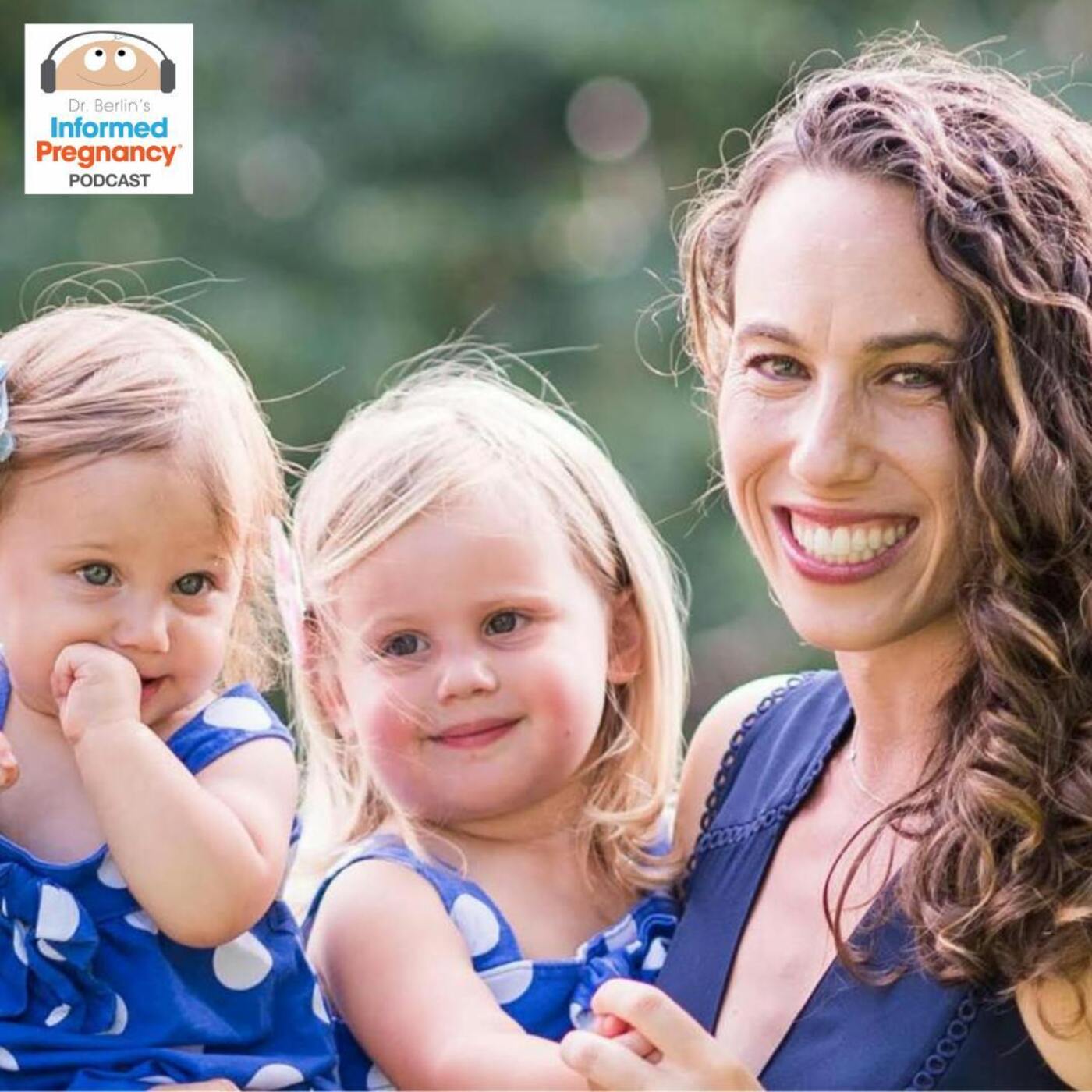
April 1, 2021 · 31 minutes · Episode 223
About this episode
Anna returns to share the story of her attempted VBAC with baby number three and the unexpected curveball that happened after returning home from the hospital.

Enjoy special offers from our sponsors https://www.doctorberlin.com/sponsors .
Learn more about your ad choices. Visit megaphone.fm/adchoices
See Privacy Policy at https://art19.com/privacy and California Privacy Notice at https://art19.com/privacy#do-not-sell-my-info.
Key quotes
“But she and I talked it through and I made it clear to her throughout my pregnancy It was extremely important for me to have a v-back that was a priority for me”
“Different practitioners would have a different opinion as to whether or not eight is low and low meaning problematic But I've also learned in my experience working with different doctors, you know, all doctors have different risk tolerances”
“Even that evening, I think my induction, I had to arrive at the hospital at like two a.m. And I remember seven o'clock at night, I was starting to feel contractions. So it really felt like things were progressing. And so that also made me more comfortable with it.”
“in my mind, you know, it took the edge off there. I still felt the contractions. I felt pressure, but I wouldn't say I felt a tremendous amount of pain. So for me, I had used a walking epidural with my first vaginal birth,”
“but the amount of anxiety and fear was very intense.”
Related episodes
- Ep. 219 Mandy Moore – After Birth
- Ep. 214 Richelle Monae – After Birth
- Ep. 205 Leslie and Carvens Lissaint AFTER
- Ep. 220 Hilary Duff – BEFORE Baby #3
Transcript
AI-generated transcript with speaker labels — may contain errors, especially names and medical terms. Dr. Elliot Berlin, DC appears in blue; Anna Prager in orange.
Download PDF of the Transcript
Dr. Elliot Berlin, DC [1:13] Come to the informed pregnancy and parenting podcast. I'm your host dr Elliott Berlin after receiving disappointing fertility news in her 20s My guest today was successful with a vaginal first birth and cesarean second birth with her first two children She recently gave birth to her third baby. She was hoping for a vaginal birth after cesarean and Last time we saw her she was getting pretty close to it. Let's find out how it went Anna Prager Welcome to the podcast. Thank you. Great to be back. You know carpractors always say we're glad to see you're back
Anna Prager [2:07] Thank you very much. I'll be here all night
Dr. Elliot Berlin, DC [2:09] All right. So last time I saw you're getting pretty close and you had everything already You already had the vaginal birth you already have the cesarean birth and now you're going for the trifecta vaginal birth after cesarean How was the end of your pregnancy?
Anna Prager [2:21] Good the end of my pregnancy was I would say pretty uneventful I you know had developed Classic fatigue and aches and pains, but I was feeling pretty good and around 38 weeks or so I went in for a weekly checkup and my doctor noticed that my fluid level was getting a bit low and So when that happened, I started going in daily for her to monitor it because she was concerned that if it went Too low it could jeopardize my chance of being able to have a v-back and So I would say around 39 weeks or so I went in and my fluid level Wasn't where she wanted it to be so her recommendation for me was to do an induction at 39 weeks and I was ambivalent about this because
[3:18] My body really hadn't I was I think two centimeters dilated perhaps like 80% of face So my body was getting there, but I wasn't you know fully there and so the idea of inducing me and potentially What that could mean or what that could lead to was a little anxiety provoking? But she and I talked it through and I made it clear to her throughout my pregnancy It was extremely important for me to have a v-back that was a priority for me And I wanted together both she and I to do everything we could to make sure it happened and her advice to me She ultimately left it up to me She said to me if you want we can wait and we can give it a few more days and see
[3:58] but her recommendation was that if I really wanted to have a V-back if that was my priority in that moment Everything was looking good and she advised that the chances of having a successful outcome was to do an induction then
Dr. Elliot Berlin, DC [4:15] Just a few questions. You don't have to share if you don't want to but do you remember? The numbers when it came to how much food you have I
Anna Prager [4:23] Think it was like eight eight was when she was a little bit concerned and then I spent a day and a half Chugging water and I got it up to ten So then at ten she was like, okay, you're out of the woods Just keep doing what you're doing. We'll wait and then a day or two later I went back and it had gone down to eight and so I know you know, I advocate for myself So I did a lot of research and I understood that Different practitioners would have a different opinion as to whether or not eight is low and low meaning problematic But I've also learned in my experience working with different doctors, you know, all doctors have different risk tolerances
[5:00] Some are going to see the eight and say, it's fine, we'll wait, we'll see, we'll be fine. Others are going to say, no, this is concerning. And I knew, based on the doctor I had chosen and knowing her style, I knew that if a VBAC was going to happen, all the check boxes had to be checked. And so I made the decision that for me, if I wanted that VBAC to happen, I was open to trying the induction, given, you know, the information she presented to me.
Dr. Elliot Berlin, DC [5:30] It's so interesting because you talk about risk tolerance and it's true, it's risk tolerance and it's comfort zone. You know, at the end of the day, we all work for you. So the most important things should be your comfort zone, but we're human too. And we also have consequences, you know, if we do things and they don't go amazingly well. And so, you know, the conversation sounds like you had a respectful conversation about it and you heard each other and that she was respectful in terms of giving you the option, but letting you know you were getting out of her comfort zone.
Anna Prager [5:57] Exactly.
Dr. Elliot Berlin, DC [5:58] And you were respectful and, you know, not pushing her out of her comfort zone because you, you know, took the information that you had and made a calculated decision and felt like you can move forward. It's also interesting because a lot of doctors won't induce a VBAC. So there's comfort on the other side that she was comfortable doing that. I firmly believe that your doctor in particular and most wouldn't give the same recommendation to themselves and their close family members as they're giving you. It's just everybody has a different set of factors that lead to what's comfortable for them and what isn't comfortable for them. So you chose to go along with the induction.
[6:32] And the truth is, I also have this because you're pretty in touch with your body. Aside from the data that they told you, like two centimeters and 80 percent, did you feel like you were getting closer? Did you feel signs of getting closer?
Anna Prager [6:45] Definitely. Even that evening, I think my induction, I had to arrive at the hospital at like two a.m. And I remember seven o'clock at night, I was starting to feel contractions. So it really felt like things were progressing. And so that also made me more comfortable with it. I remember I got to the hospital and they hooked me up to the monitor and you could see contractions. They weren't totally regular or in any pattern, but they were happening and I was feeling them. And I think by the time I got to the hospital, I was already three centimeters dilated. So I was on my way.
Dr. Elliot Berlin, DC [7:15] Seventy percent of them were there and activity going on. So was there a plan on how the induction would gather so many different methods?
Anna Prager [7:23] Yeah, so what was really interesting is that she had told me early on if she were to induce what methods she would feel comfortable with. Because like you said, there are some doctors who won't even induce for a VBAC. And she said she very, very, very rarely will use pitocin. So she would first use a balloon, which she didn't think I needed because I was already three centimeters dilated.
Dr. Elliot Berlin, DC [7:49] You're almost there. They don't want to take you to the fort.
Anna Prager [7:51] Right. So that wasn't worth it. So her suggestion was to break my water, which they did. And she was hopeful that once that happened, my body would kick in and kind of labor would quickly progress. But it really didn't. After they broke my water, I think I got to maybe five, six centimeters, but not much. And things were slowing down and not much was happening.
Dr. Elliot Berlin, DC [8:15] So I have a question. Were you medicated for that water breaking?
Anna Prager [8:19] I was I medicated like pain relief medication. I received a walking epidural, but I can't remember if that happened before
Dr. Elliot Berlin, DC [8:26] or after the water. Oh, okay. Then you won't be able to answer my next question. What did it feel like when they broke your water?
Anna Prager [8:32] I didn't feel much. So perhaps that answers our question. Perhaps that
Dr. Elliot Berlin, DC [8:35] already received. I don't know. You're pretty tough. I don't know if that answers our question, but it wasn't all that
Anna Prager [8:40] memorable, it sounds like. No, no. I remember feeling a lot of water, warm water. You know, it's interesting with my first delivery, which is a vaginal birth, I remember my water breaking, which happened on its own. And I remember it felt similarly. So eventually she gave the go-ahead to administer. I was very concerned because once they broke the water and a few hours later, I wasn't really progressing. In my mind, I thought that meant, okay, she's not going to give me pitocin. I'm not going to progress. This is going to result in a C-section. And so I was starting to get disappointed, but she decided to try a very small dose of pitocin. And that's all it took. And my body just took off from there.
[9:20] And within, I think, maybe two hours, two, three hours after they administered the pitocin, I was fully dilated.
Dr. Elliot Berlin, DC [9:28] Okay. I have so many questions. First of all, even on a walking epidural, so pitocin, and even on a lower dose, pitocin contractions tend to be a bit stronger, longer, and closer together. How did that feel to you with the walking epidural? And not everybody probably understands, because very few places offer a true walking epidural. In this town alone, Los Angeles, yours is really the only hospital I know of that offers a true walking epidural. It's placed just like a regular epidural, but the drugs that are putting through to bathe the your spine are less than the full cocktail that you usually get. So it's generally a mix of things like analgesics and anesthetics. The
[10:08] anesthetics prevent you from feeling tapping and pulling and tugging. The analgesics prevent you from feeling pain. And so on a walking epidural they give you less of the analgesics, so you still feel some of the pain, and it's not an exact sign. Sometimes you still feel a lot of it. Sometimes you feel almost nothing, and there's everything in between. Without the anesthetics, you feel the tugging and the pulling, but you also can feel your feet against the floor. You can feel your legs in space. So it gives you the sort of win-win situation that a lot of people are looking for, where you can walk around and be mobile, but also, you know, have some help with the
Anna Prager [10:40] intensity. Yeah, for me it was a really great option because it gave me that mobility. I was able to be out of bed, you know, laboring, walking around. And in my mind, you know, it took the edge off there. I still felt the contractions. I felt pressure, but I wouldn't say I felt a tremendous amount of pain. So for me, I had used a walking epidural with my first vaginal birth,
Dr. Elliot Berlin, DC [11:03] and it worked well for me. It's your thing. Yeah, and the other thing is, you know, oftentimes they joke if you've already had a vaginal birth, and especially if you're starting to dilate and interface, that you just really have to smell the bottle of pitocin and things get going. Exactly. That's what happened. Literally seems to be what happened for you. All right, let's take a quick break. When we come back, we'll find out how this birth

Dr. Elliot Berlin, DC [13:54] Welcome back to the Informed Pregnancy podcast. We're talking to Anna Prager. Up until this point, she has had a vaginal birth, she has had a cesarean birth and now she is in labor in our story with a hopeful vaginal birth after cesarean. Your story is always a bit of ups and downs like expect the unexpected. I feel like even when the expected is like things are not going to go your way as in the fertility story, boom, expect the unexpected. So at this point, you're 10 centimeters and you have a walking epidural. So do you feel the urge to push on your own?
Anna Prager [14:29] I didn't, which was part of the problem when I was ready to push. So they were able to lower the epidural, decrease it and then that allowed me to feel the urge to push. So that was really helpful because I was trying to push but it's hard to push if you don't feel that urge. You don't it's like what are you doing?
Dr. Elliot Berlin, DC [14:48] And I can't imagine but I do see a lot of women at birth say that like, what do you mean? I thought I was pushing or things like that.
Anna Prager [14:55] Right. So I don't know with a regular epidural if they have the ability to I assume they can. decrease it. They turn it down if they can if you want to. So they did that with me and then I was able to feel a stronger sensation which allowed me to you know feel the sensation and feel the need to push and from there I mean I think I started pushing around like 5 30 and he was born at six o'clock like a half hour. Oh it's great. Yeah it was great. I mean was it intense for you was it relaxed for you. Very relaxed the whole experience. You know when I look back on it it's like a very nice memory for me. Yeah you know I don't think I had that with my first two births and this time I think I was just in the right
[15:38] mental space. I think I had prepared myself well emotionally physically and my doctor was really amazing. She spent the majority of the day at the hospital waiting for me so I felt like she was very present and that felt very supportive and also this was really nice actually. There was a lot of women delivering at the same time so they were slightly understaffed so the only people in the delivery room was me and my husband, my doctor, and the nurse. That was it and I remember you know when I had a c-section I was in an OR with god knows how many people and then my first vaginal birth there was also a lot of people. It's probably also because of COVID they can't have as many people in the room so I think just that
[16:24] in itself lended to a really tranquil environment. Peaceful silver lining. Yeah. Would you have brought a doula if you could have? No I actually could have brought a doula. I gave birth November 14th so right before that surge and doulas were allowed but I knew from my first vaginal birth experience that if I was planning on having the walking of the doral I didn't think it was needed. We did work with a doula for a few months prior to the birth more so just talking about my birth plan and expectations and I think my work with my doula that my husband and I did together was really helpful for both of us in terms of getting us into the right head space
[17:04] and feeling like we were you know as in control of the situation as we could be.
Dr. Elliot Berlin, DC [17:10] In the hospital giving birth so you gave birth in the window basically when the pandemic started pretty soon afterwards doulas were no longer welcome at the hospital. In fact for a short window some of the partners weren't welcome at some of the hospitals you just had to go do it on your own and there were all these different iterations of that partners can come but then they have to leave as soon as the baby's over partners can come but they can't come and go once they leave they can't come back and then the numbers got good here in southern California. We flattened the curve and all of a sudden doulas were allowed back in again but I guess right after you gave birth I think after all the Thanksgiving gatherings and
[17:48] whatnot our numbers spiked even higher than the first time like two or three times higher than the original spike and then I mean it's just you and your partner and that's it or you plus one some patients actually chose to bring their doula right or a family member like a mom or a sister instead of their partner and their partner would be home like say watching the toddlers or whatever. So that part didn't affect you but were there parts of being in the hospital during a pandemic that felt like you were in the hospital during a pandemic in a negative way?
Anna Prager [18:19] No actually and again I think it was because I delivered in that time really where things had gotten better in that I remember my husband we had initially gone to the hospital thinking that he wasn't going to be allowed to leave the hospital he was going to have to stay with me the whole time but he was able to come and go so he actually went home to our toddlers and then came back. I would say besides just having to wear a mask otherwise it really didn't feel much different than when I had been there for my other two births before
Dr. Elliot Berlin, DC [18:50] COVID. Because you had some doubts leading up to the end of your birth like when your water was broken and not really progressing and you start to feel disappointed what was the feeling emotionally when it happened when your baby actually came out?
Anna Prager [19:08] It felt right and what do I mean I think that from his conception to my pregnancy and the birth it was my first time not having to go through infertility and feeling like I was empowered to make my own how I wanted to birth. I really felt a very strong sense of connection to my son and to myself in the whole process both from conceiving him to my pregnancy to his delivery it was an experience and feelings I hadn't felt I think in my first two just given all the different infertility struggles I had and birthing difficulties I had and this time for just to have gone this way really felt special and very meaningful and yeah it's a really it's a deep sense of connection to myself and to my son.
Dr. Elliot Berlin, DC [19:55] Is there in your mind and of course there are other factors well there's in your mind a difference in the recovery from your original vaginal birth to your c-section to your
Anna Prager [20:06] v-back? Absolutely. This was by far my easiest recovery. I mean, I think I didn't need painkillers afterwards. I was very lucky and had no tearing. I think within two days, you know, besides from the kind of after birth aches and pains you have, I had nothing notable. But it obviously is a c-section surgery. So even though I was lucky with my c-section, I had a relatively easy recovery. It was still hard. And my first vaginal birth, I had had some kind of tough internal tearing that also led to a really challenging recovery and a lot of discomfort. So this one by far
Dr. Elliot Berlin, DC [20:42] was much, much easier. All right. We're going to take a quick break and find out, because you came home during a pandemic, now with a baby and two toddlers. And just when everything seemed perfect, things took a little turn. We'll be right back. Welcome back to the Informed Pregnancy Podcast. We are talking to Anna Prager, who now has three kids. She has had a vaginal birth, a cesarean birth, and a vaginal birth after cesarean. Before we get into what happened when you got home, would you feel like your family's complete now? Are you
Anna Prager [21:24] up in the air? Are you thinking maybe there's more? It does feel complete. I remember soon after we came home from the hospital and I had my three kids together and there was a new sense of fullness, a real richness that obviously I felt that way when I had just my daughters. But now there's definitely a sense of completeness was felt. So at this point, I suspect that we're done. We actually have frozen embryos from when we had gone through IVF. So that's now something we have to figure out and make decisions about. So that's our next step is trying to make a decision about that.
Dr. Elliot Berlin, DC [22:03] Yeah. I'm so happy for you that you feel complete. Let your families complete. And it sounds like your husband is too. And for both of you to get to that same point at the same time is really nice. I'm sad a little bit because I was like, what other kinds of birth can Anna have? Exactly. The next will be a rainbow birth.
Anna Prager [22:21] Yeah. Yeah. Twins. I have no idea. Okay. I remember when I first got diagnosed with diminished ovarian reserves and my fertility doctor said to me, you know, how many kids do you want? And I said to her, I'd love to have three. And I remember the expression on her face when I said that. And it was this expression of like, you better adjust your expectations. That's not going to happen. So I often think back to that because I knew from the beginning that's what I wanted. And so I feel just incredibly grateful that I was able to manifest that it had happened. I'm so happy for you. The universe obviously felt like we needed
Dr. Elliot Berlin, DC [22:57] more nice people. Okay. So when you came home from the hospital during pandemic,
Anna Prager [23:02] what happened? So when we came home from the hospital, we had a family come into town, which was really great. My parents live in Maine on the East coast and I hadn't seen them for several months. And my husband's parents were also here. So we had both of our families together and it was really great to have everyone here. And yeah, we were enjoying our son and everyone being together. And when my son was about two weeks old, my mom started not feeling well. And it wasn't anything anybody thought anything about in terms of COVID precautions. Everyone was being very cautious. So it wasn't even something we considered as a possibility, but a few days of not feeling well, she
[23:50] decided, you know, it was probably time to take a COVID test. And she took a COVID test and it came back positive. And the day we got her results, I started feeling like I had a sore throat and my husband started feeling a tremendous amount of fatigue. And so the next day he and I got tested and he and I were both positive. Oh, wow. So my baby was now three weeks old and my husband and I are both positive for COVID. And it became a very challenging two weeks. We were very lucky in that we had mild cases, but the amount of anxiety and fear was very intense.
Dr. Elliot Berlin, DC [24:34] Yeah. I mean, first of all, you just never know if it's going to be mild or not. You would expect that for young, healthy people, it's going to be mild, but you don't know, you know, we literally just had an episode. I don't know if you saw it or not, but somebody who got COVID right after she came out from the hospital, but it was a little different because hers was just as the pandemic was starting. We didn't know anything. And so So I won't even tell you how they handled her case, but I'm kind of curious because yours isn't like, let's say that was March when it happened to her. Yours is more like December, right?
Anna Prager [25:10] December, yeah.
Dr. Elliot Berlin, DC [25:11] So it's like nine months later and we'd learned a lot more. In fact, in March, you couldn't even get a test. So, you know, it was very hard to even find out if she had it. It was like by way of a miracle that she was able to get a test. In your case, by the time you did it, like there were tests on every street corner, just go get a test and find out, but still very scary. And at that time probably it was already kicking up the hospitalization rates, the positivity rates, the ICU rates, the death rates, and you have a newborn. You know, you don't know how they're gonna react to it.
Anna Prager [25:42] Exactly.
Dr. Elliot Berlin, DC [25:44] So I assume there are other ramifications here, like I don't know if you had other people in the house helping you out, but then I assume they leave.
Anna Prager [25:52] Correct. My beloved nanny who had been helping us ended up also testing positive and she got it from us, which was really hard.
Dr. Elliot Berlin, DC [26:01] And her case was okay as well?
Anna Prager [26:04] Yes. Fortunately, yes, yes, yes. All considering everyone is fine and fortunately has had no long-standing issues.
Dr. Elliot Berlin, DC [26:14] What was the recommendation? I mean, if you have it and your husband has it and you have no other caretakers and you have three kids, did you test the toddlers?
Anna Prager [26:22] We did test the toddlers. We followed the guidelines of their preschool. So their preschool, they asked us to wait five days and have them tested because that would have been five days from their last exposure to my mom who was quote unquote patient zero within our family.
Dr. Elliot Berlin, DC [26:38] Your pod.
Anna Prager [26:39] In our pod, exactly. And they tested positive as well.
Dr. Elliot Berlin, DC [26:43] Oh wow. Do they have symptoms?
Anna Prager [26:45] So my five-year-old, before we got her positive test, one evening she had 105 fever and she complained that her eyes hurt. And then she was like fine, not even 24 hours later. And then our three-year-old, she was pretty much asymptomatic until it was actually really interesting. She got like a runny nose several days after she had her positive test, which was kind of interesting. So for them really, it was like nothing. The baby, he had, and I truly am not exaggerating, he had like one afternoon, two hours of a little bit of sinus congestion. And that was it. We didn't test him. The pediatrician didn't think it was necessary. So we assumed that he probably had it as well.
[27:35] But it was interesting because I remember, we find out my husband and I are positive and I have these two toddlers here and the three-week-old baby and my husband is asthmatic. And at the time they didn't really know. I don't think as much of concern. I don't know if they consider it an underlying condition at this point, but then I think it was. So I'm trying to think about all these different people. And when I called the pediatrician's office, they really weren't alarmed or concerned. They said, monitor the baby. But what they said to me is, you're breastfeeding. And we have research that shows that antibodies transmit through breast milk. So she basically said,
[28:09] make sure you continue to breastfeed him. And she also recommended giving my toddlers breast milk as well.
Dr. Elliot Berlin, DC [28:15] And did you do that?
Anna Prager [28:17] Yeah, yeah. So I made them hot chocolate with breast milk.
Dr. Elliot Berlin, DC [28:21] I mean, why not breast milk for the whole family, for mom and everybody else?
Anna Prager [28:26] Exactly. I was basically feeding a family of five.
Dr. Elliot Berlin, DC [28:28] Wow. I did think that at some point early on when we didn't know the vaccine was gonna come this quickly, I was like, why not take all the lactating women who got exposed, you know? And we can slowly give people antibodies that way. It seems like a movie plot that I'll start working on as soon as we're done recording this. So what happened to your mom? Was she living with you and then had to move out or?
Anna Prager [28:51] No, she had come to Los Angeles to help with the baby and she was gonna be here for a few weeks and she had been staying in an Airbnb. So we had her Airbnb and recovered and actually ended up, she extended her stay by a month or two and just left recently.
Dr. Elliot Berlin, DC [29:05] Oh, wow.
Anna Prager [29:05] But the thing is, we don't even know how she got it. We truly are one of those cases where we have absolutely no idea.
Dr. Elliot Berlin, DC [29:12] I mean, it's not possible she got it traveling?
Anna Prager [29:14] No, not possible because she'd already been in LA three weeks and when she first came to LA, we had her quarantine and test before we even interacted with her.
Dr. Elliot Berlin, DC [29:23] No kidding, okay.
Anna Prager [29:24] This all happened after.
Dr. Elliot Berlin, DC [29:26] And your in-laws were with you too?
Anna Prager [29:28] My in-laws were there as was my dad but they all went home before any of us got sick.
Dr. Elliot Berlin, DC [29:34] Oh, so they never got it.
Anna Prager [29:35] They never got it. There was a few days in between when they had left and when my mom first started getting sick, so.
Dr. Elliot Berlin, DC [29:40] Did you guys lose your taste and smell?
Anna Prager [29:43] My husband lost smell. I lost taste.
Dr. Elliot Berlin, DC [29:46] Oh, what a nice little pair.
Anna Prager [29:51] We were very lucky in that we both got it back. I think he got his smell back within 48 hours and I got taste back within four days. That's really quick. Some people. Really quick, yeah.
Dr. Elliot Berlin, DC [30:00] like lose it for a month i know i've read articles people who've lost it for several months now i sort of wonder what people would rather lose taste or smell if they had to choose one it wasn't so fun not having taste i would want taste and give up smell for a week i think that's probably what i would i think but we'll do a poll we'll see because when i had covid i had like every symptom under the sun except that one really i never lost taste and smell i thought so crazy about this virus right it's just the way it impacts people in such different ways well it was interesting because when i was in the hospital they weren't feeding me anything no food at all
[30:37] ice chips i couldn't even have liquids ice chips only because i begged for them they didn't want me to have ice chips iv fluids but no food or drink it was like three or four days of no food and drink and i kept asking them like how about some food or drink today and they were like we think you might end up on a ventilator so we can't and that's why they weren't giving me any food or drink and like the fourth day came around i was like you know if i was home and not feeling well and sick i would nourish my body with vitamins and minerals and nutrients from food and drink and she's like i just want you to know you're the only one in this entire
[31:09] unit asking for food and drink and it wasn't until after that that i realized okay first of all i'm gonna make it because i want food and drink exactly that was the thing for me
Anna Prager [31:19] i had no appetite when i had it i just couldn't even look at food but then i saw i remember i was talking to a girlfriend who got diagnosed with it i offered to drop off food and i said oh actually i forgot when i had covid i had no appetite she said oh no i have an appetite so
Dr. Elliot Berlin, DC [31:33] it's like who knows everyone knows yeah but then i realized later because it was just coming out that a lot of the people in the rooms around me had no smell or taste and didn't really care about food anyway it's just different textures for them right so i don't know it's different for everybody like you said uh in terms of the five of you and your mom six of you there's nobody has any long-term ramifications nothing so one thing my husband had a physical and his liver enzymes were slightly elevated and the doctor thought it's possible it could have been something from covid but nothing that's impacting us on a daily basis yeah it's where the hospital here where you give birth actually is opening a
[32:12] covid center for long-term issues they plan to do a lot of diagnostics and a lot of testing to come up with treatments for the longer term things that people have so you know hopefully we see the letter at the end of the tunnel for this pandemic but in terms of its wrath and aftermath we're going to be looking at that for a long time well for you as always i'm so grateful when you guys come and share your stories because people listen to them they learn and they relate and you know somebody will relate to your stories and i love your story and you know the whole thing from day one how many babies do you want to have three and she's like let's try to squeak out one and now you got three and then you're not sure
[32:55] what to do with the rest of them and then all your different twists and turns and just how you generally just stay so positive and strong and whatever hurdles pop up in front of you you're like i will have to jump over that so i'm just gonna jump over it very inspiring so thank you for sharing that and again just super grateful to know you and work with you and be inspired by you and grateful to the universe for taking care of your home together with me
Anna Prager [33:22] having your back thank you thank you for all of your support and and all you do for
Dr. Elliot Berlin, DC [33:27] pregnant women all over the world oh thanks and at home thanks for listening to the informed pregnancy podcast visit us online we're overhauling our website and who knows you might actually find some pretty cool things in the coming weeks and months including some awesome giveaways we are informedpregnancy.com
Want more pregnancy + parenting? Start your FREE TRIAL of Informed Pregnancy+ and get access to all our curated pregnancy and parenting content — original series, iconic birth films like The Business of Being Born, prenatal workouts and more.
