
August 19, 2021 · 35 minutes · Episode 243
About this episode
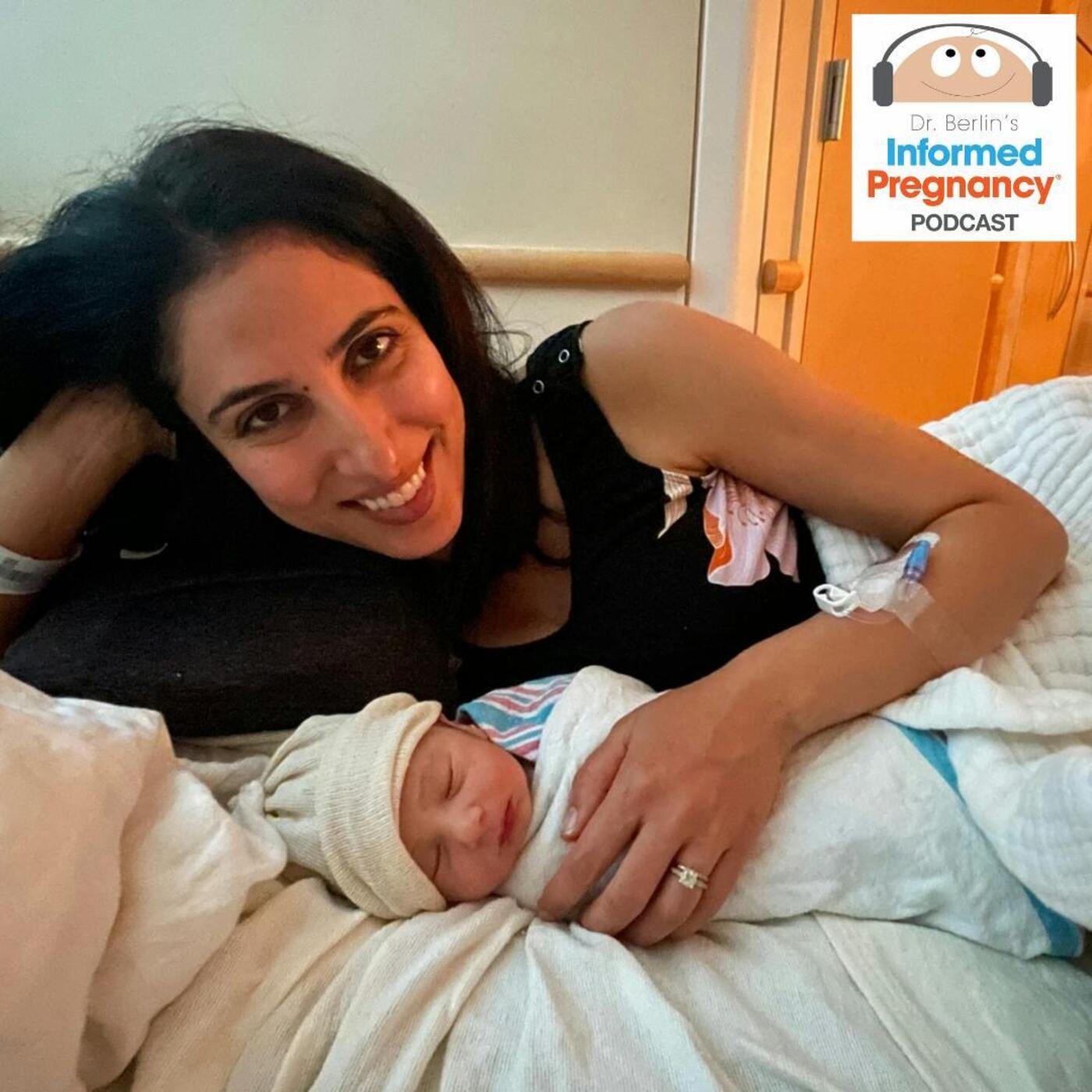
Emergency medicine physician, certified yoga teacher and brand new mother Dr. Negean Afifi shares her adventurous pregnancy journey and unexpected birth experience.

Learn more about your ad choices. Visit megaphone.fm/adchoices
See Privacy Policy at https://art19.com/privacy and California Privacy Notice at https://art19.com/privacy#do-not-sell-my-info.
Key quotes
“Essentially what happens in emergency medicine is you have this brief moment in time to like meet a person get their story Interact fix them and then move on to the next and that really worked well for me”
“No, because I've always considered myself a very nauseated human being Put me on a boat nauseous put me in any sort of situation even looking at fast-moving things I feel like I get dizzy easily So I always thought I would be very nauseous and I was expecting to be vomiting like every day and I had mild nausea”
“well, maybe I'll get an epidural once I get to the hospital. Maybe not, but definitely I'd say more natural holistic was always the birth plan I wanted.”
“I want to have all the facilities and luxuries that a hospital provides, but I want to try to avoid what I can by staying home as long as possible, maybe doing the hypnobirthing thing and seeing what I can do. So I was trying to kind of blend both worlds as best that I could imagine.”
“You know, I went to a prenatal yoga class where someone said the key to a short labor is ignoring your labor for as long as possible. And that's basically what I did.”
Related episodes
- Ep. 518 Yoga & Mindful Motherhood with Liberté Chan
- Ep. 438 Postpartum Preeclampsia with Dr. Jamie Barstein and Dr. Nathan Fox
- Ep. 188 Joanna Bavero – Birth Story
- Ep. 182 Randi Wood – Birth Story
Transcript
AI-generated transcript with speaker labels — may contain errors, especially names and medical terms. Dr. Elliot Berlin, DC appears in blue; Dr. Negean Afifi in orange.
Download PDF of the Transcript
Dr. Elliot Berlin, DC [1:13] Welcome to the informed pregnancy and parenting podcast. I'm your host dr. Elliot Berlin in this episode We have a very unexpected birth story at the end of a pregnancy journey full of twists and turns my guest today is an emergency medicine physician and Wait for it a certified yoga teacher. She has a passion for self and preventative care Dr. Nagina Fifi, welcome to the podcast
Dr. Negean Afifi [2:02] Thank you
Dr. Elliot Berlin, DC [2:03] Okay, which came first yoga or emergency medicine?
Dr. Negean Afifi [2:07] Well, I started practicing yoga during my emergency medicine residency
Dr. Elliot Berlin, DC [2:11] So I'd say emergency medicine first and were you doing yoga before that or did you? Start yoga to counter some of the stresses of medical school
Dr. Negean Afifi [2:21] Yeah, I think I definitely was not doing yoga before medical school is during residency that I sort of found one of those Groupons for a studio and check it out Then I kind of fell in love from there. Oh, look at that. That was a successful group
Dr. Elliot Berlin, DC [2:35] Indeed and then in my mind at least they sort of are opposite ends of the spectrum
Dr. Negean Afifi [2:41] Very much so and I think that's what draws I know I've drawn a lot of my colleagues to yoga as well You sort of need a space to breathe and and know how to chill out
Dr. Elliot Berlin, DC [2:52] It's amazing. And then why?
Dr. Negean Afifi [2:55] Emergency medicine out of all the different possibilities, I think I have a little bit of ADD and Essentially what happens in emergency medicine is you have this brief moment in time to like meet a person get their story Interact fix them and then move on to the next and that really worked well for me I think the general practice and long office visits sort of seems more drawn out and just isn't as interesting We're moving from one person to the next as far as medicine goes always intrigued me. Does it stress you? It is stressful, you know at times during the shift But the truth is the majority of people I feel that come to the emergency department are not actually having a true emergency
[3:37] They feel they are so it's actually pretty unique Opportunity to kind of connect with them and alleviate their stress so a lot of times, you know, you run a few tests and you make them feel better and Reassure them and so that can be quite rewarding a lot of psychological first aid
Dr. Elliot Berlin, DC [3:54] Definitely. Definitely. Do you have them start doing yoga? I
Dr. Negean Afifi [3:58] Talked to a lot of my patients about not just yoga, but just generally, you know, just breathing meditation Gratitude nutrition, you know I kind of try to figure out what will speak to them the most and give them the little sound bite that I
Dr. Elliot Berlin, DC [4:12] Think will work on them now. Let's talk about you. You just recently had your first baby. You can graduate Yes, I did. Thank you. So let's start at the beginning. How was your pregnancy?
Dr. Negean Afifi [4:24] Um, well, it started out. Well, I'd say first trimester, you know, I felt good a little bit of nausea But everything else was good. I was feeling good throughout the pregnancy
Dr. Elliot Berlin, DC [4:34] Did you expect to feel good in your first trimester?
Dr. Negean Afifi [4:38] No, because I've always considered myself a very nauseated human being Put me on a boat nauseous put me in any sort of situation even looking at fast-moving things I feel like I get dizzy easily So I always thought I would be very nauseous and I was expecting to be vomiting like every day and I had mild nausea I took some ginger choose. And, you know, I never actually threw up. That was pretty good for me.
Dr. Elliot Berlin, DC [5:04] Pretty wonderful. And then how was your second trimester? That's usually the golden one.
Dr. Negean Afifi [5:10] Yeah, second trimester was also pretty good. You know, I'm trying to think when is 30 weeks? Is that following the third more third? Yeah. So second trimester, I'd say everything was smooth sailing. I was a little stressed because, you know, I was still working. And obviously, I was in the ER and obviously there was a lot of COVID. And I was still seeing COVID patients in second trimester. So that was a bit stressful. Is that pre-vaccine? Yeah. Yeah, that was pre-vaccine. So that's kind of intense. Yeah. And I chose to wait to get vaccinated until after I gave birth. So, you know, I was still stressed on that decision because it was a very difficult one that I think I could have
[5:50] gone either way on. Yeah. So it was definitely stressful. You know, I have a lot of patients of mine that are stressed with the same exact decision. You know, it's not that they don't want to get the vaccine per se, it's just getting it during pregnancy seems daunting. Yeah. Even just the thought of like, oh, I'm going to feel sick after the second dose and tired and body aches and maybe I'll spike a fever. And then I'm really happy I waited because I liked the fact that I was able to know that I'm breastfeeding while I, you know, am producing the antibody.
Dr. Elliot Berlin, DC [6:19] So I feel good about that. Oh, that's great. So you had a good second trimester. You're kind of a worker-outer. Did you work out through the pregnancy? Yes. I started doing my regular
Dr. Negean Afifi [6:32] routine, which was, you know, I had really gotten into Pilates actually more than yoga early pregnancy. And then at some point talking to my dual, I switched over to just yoga and walking, but I did that pretty religiously throughout the entire pregnancy. How did it feel different than when you're not pregnant? Well, I didn't get that same workout. You know, I don't know if it's a high, but I didn't really push myself and let myself really do a crazy workout because I just wanted to take it a bit easy. It felt good, but I at times missed that sort of mental release that I usually got with regular exercise. But did you find it more challenging or more enjoyable? I actually found it a bit more enjoyable
[7:15] because efficiency is big for me. So I always wanted to get a lot of bang for my buck in my workouts, which is actually why I switched over to Pilates. Yeah. And so it was nice to know that for my body, the best thing was actually to go walking and to do yoga and not push myself. And so allowing myself to be in that space was quite rewarding, actually.
Dr. Elliot Berlin, DC [7:37] Now on the other side, did you jump back to pushing yourself or you mellow out a little?
Dr. Negean Afifi [7:43] No, I definitely mellowed out a little, which is nice. I hope I stay in this mode because, you know, walking is a great form of exercise and, you know, it's enjoyable as well,
Dr. Elliot Berlin, DC [7:53] especially in this Los Angeles weather we have. Yeah. All right. So you're kind of holistic and you're kind of allopathic. You know, you got the medicine side and the natural side. How does that translate into what kind of birth you would have wanted to have?
Dr. Negean Afifi [8:10] You know, anytime I embark on a new journey, I sort of do my own research and go down rabbit holes. And one of the first things I came across was a hypno birthing podcast, or I think it was something on Spotify. Actually, I started to listen to that. And I immediately sort of became hooked with the idea of a natural birth. And previously, I had wanted a natural birth too, but sort of knowing the medical side, I was sort of could go either way. I thought, well, maybe I'll get an epidural once I get to the hospital. Maybe not, but definitely I'd say more natural holistic was always the birth plan I wanted.
Dr. Elliot Berlin, DC [8:46] Did you end up doing hypno birthing? Not at the birth, but I mean, as a preparation tool?
Dr. Negean Afifi [8:51] Yeah. So I listened to an audio book on hypno birthing, and that was kind of all I did, but I did enjoy listening to that. And I practiced it during pregnancy, sort of in preparation for the day. And my thought was always to, you know, at that point, I decided, okay, I'm going to try to labor as much at home as possible, go natural as long as I can. And then, you know, I always wanted to have a birth in the hospital. So the plan was at some point to transition and then kind of do what needed to be done on the
Dr. Elliot Berlin, DC [9:20] medical side. Did you do an OB rotation while you were in medical school? Yes, I did one
Dr. Negean Afifi [9:27] in medical school, and then even in residency for emergency medicine, we have to do the rotation.
Dr. Elliot Berlin, DC [9:33] So I had seen a lot of births. And I assume most of them are not unmedicated.
Dr. Negean Afifi [9:39] That's right. Most of the births I saw, and I think, you know, certain things stick to your mind. So what I saw for a lot of first time moms were extremely long labors that were very intervention heavy. So not just epidurals, we're talking ptosin, induction, 36 hour labor. So that's kind of what stuck in my mind is what a first time mom generally goes through. long labor that generally requires interventions.
Dr. Elliot Berlin, DC [10:03] But after seeing all that, you kind of hoped to have your baby in the hospital without all those interventions.
Dr. Negean Afifi [10:09] Yes. And I think it's just that once you see certain things go awry, you know, in medicine, I thought I'm not comfortable with the home birth. I want to have all the facilities and luxuries that a hospital provides, but I want to try to avoid what I can by staying home as long as possible, maybe doing the hypnobirthing thing and seeing what I can do. So I was trying to kind of blend both worlds as best that I could imagine.
Dr. Elliot Berlin, DC [10:32] All right. This is already turning out to be an interesting story, and we haven't even reached the first twist or turn. Let's take a quick break, and we'll come back and we'll find out where things headed next.

Dr. Elliot Berlin, DC [13:05] Welcome back to the Informed Pregnancy Podcast. We are talking to Dr. Nagin Afifi. Okay, you're pregnant, your first trimester goes better than expected. Your second trimester is wonderful. How's the third trimester?
Dr. Negean Afifi [13:21] Well, the third trimester is kind of where things start to get a little bit sticky. I guess I'll start with I had a 30-week ultrasound that my regular OB just decided I should have to check for growth. And I remember she kind of made it sound like it was optional because my 20-week anatomy scan, everything looked good. So I went in for that 30-week ultrasound and they actually said I had what's called growth restriction, IUGR. So they said that I think it was based on the abdominal circumference that the baby was measuring at less than the fourth percentile. And then he also commented that the baby would breach at that time, but, you know, that I had plenty of time to sort of deal with that.
[13:59] So I was then put on a regimen of weekly NSTs. So going in for those weekly checks. And then every two weeks I had to go into another facility for placental Dopplers just so they could monitor everything. And at that time they didn't really see a reason for it, but they were concerned.
Dr. Elliot Berlin, DC [14:16] So the baby's 30 weeks measuring really small.
Dr. Negean Afifi [14:20] Yes.
Dr. Elliot Berlin, DC [14:21] And the non-stress test sort of tells you, the NST sort of tells you if the baby's thriving and happy in there. And then the even more specific ultrasounds give you a better idea of what the placenta is doing. Is the placenta continuing to thrive or starting to end its 40-week contract on the early side?
Dr. Negean Afifi [14:41] That's right.
Dr. Elliot Berlin, DC [14:43] I mean, do they have any thoughts on why the baby might be that small?
Dr. Negean Afifi [14:47] No, I mean, initially the MFM, the high-risk OB guy just said, you know, honestly, I think likely this is just a small baby and it's just you, you know, you're, you're lean and your husband's lean and it's likely. that, but you know this is measuring small, so we have to check all these things. So they were giving me reassurance, but then still really wanting me to go full force with all these extra
Dr. Elliot Berlin, DC [15:10] monitoring and tests. Okay, and we also just recently did an episode on IUGR with Dr. Steven Radd, so anybody who's curious about that can check it out. So at 30 weeks, maybe small and breach, so not head down yet, which generally is not a big deal at 30 weeks.
Dr. Negean Afifi [15:28] How do the scans continue to go? So you know every week the NSTs were reassuring as far as how Baby was doing, but you know I actually knew she was breached because I could kind of feel where her head was. So every week from there on out, you know just continued to hear that she was breached and they didn't do another growth scan until I think it was around 37 weeks I had another growth scan. So every week seeing that the baby's happy and thriving, Placenta's happy and thriving, so there's no reason to do another growth scan? Yeah, yeah actually I think at four weeks after that they did another growth scan that was similar, and you know he kept saying that
[16:10] it's really just the measurement of the abdominal circumference. So one of the factors of all the different measurements was still measuring small, but it had gone up. So I think I went from fourth percentile to maybe 10th percentile, so still an IUGR diagnosis, but there was some growth. So that was reassuring because at that time I had been told that you know having IUGR I would be needing an induction. So the induction would either be at 37 weeks or 39 weeks. So at the 34-week scan I learned that the induction wouldn't have to happen until
Dr. Elliot Berlin, DC [16:42] week 39. Okay, so that gives you more chance for the more natural kind of birth that you were planning for. So that 34-week scan, is the baby still breech? Baby was still breech, yes.
Dr. Negean Afifi [16:56] Was anybody concerned about that? Yeah, you know they kept saying baby will flip. You know I was concerned about that. That's probably right about the time I even reached out to you, and I had already been doing prenatal chiropractor, spinning babies, and all sorts of alignment stuff. I myself took it to the next level and sort of put myself on a program of different stretches, and you know I was inverting on the ironing board and doing all that probably pretty aggressively starting around that 34th week. I'm impressed that you
Dr. Elliot Berlin, DC [17:26] have an ironing board. I was impressed to find one in this house somewhere. I think the only purpose they serve now is breech baby tilting. Pretty much. Okay, so I guess you're doing these natural things. Acupuncture also? Yes. So acupuncture, moxibustion, chiropractic, massage, inversions. Is anything showing signs of hope? No, nothing was showing signs of hope,
Dr. Negean Afifi [17:56] and they already were trying to put my scheduled c-section on the calendar, and you know I started to do the research on a version at that time. Okay, an external
Dr. Elliot Berlin, DC [18:08] version where they can try to turn the baby. So that was an offer to you? I am the one who
Dr. Negean Afifi [18:13] brought it up, and what I was told initially was that as a first-time mom, you know, the chances were about 50-50 that it would work, and that you know it's pretty painful, and you know it being my first time, probably not that successful, but we could give it a try if we
Dr. Elliot Berlin, DC [18:29] want. It's an interesting approach, because as 50-50 it may work, and I mean it's literally half and half, so the way it's delivered to you is sort of like we don't really want to do this.
Dr. Negean Afifi [18:42] Yeah, there wasn't a lot of enthusiasm around it, I'll say that for sure. But you wanted to do it, so did they get on board? Yes, and I actually found a facility and a team of docs that were very comfortable doing it, and I actually chose to schedule it there at the 30, I think I was 36 and 6, so just right before I became 37 weeks. So if your baby were to stay
Dr. Elliot Berlin, DC [19:07] breech, are there any other options besides cesarean? You know for me, I had obviously
Dr. Negean Afifi [19:14] looked, I knew there was a lot of like practitioners that do breech deliveries, but unfortunately none in my hospital system did them, and so I was told by the OBs that for a hospital birth it would have to be a c-section. I did a little bit of research, I found some physicians that would do breech vaginals, I was not comfortable with a home birth that was breech vaginal, just because I was never comfortable with a home birth to begin with.
Dr. Elliot Berlin, DC [19:37] And being breech didn't make you more comfortable? Yeah, no that definitely made
Dr. Negean Afifi [19:42] that a little bit more, but what essentially would be going to another hospital and fully paying out of pocket, and then I have this little feeling inside me of like you know, what if something went wrong and here I am sticking to my selfish like plan of how I want this birth to be, so to me if she remained. breach, it was going to be a C-section, which I was not excited about at all.
Dr. Elliot Berlin, DC [20:05] Okay. So we're getting close to your version date. What happens next?
Dr. Negean Afifi [20:10] So I go in for it. Um, I had done a lot of the sort of exercises before a lot of the body work and everything I could think of. And I went in for it and I decided I'd put my hypnobirthing to work during the procedure and they do an NST first and then they put the ultrasound on me, did the mineral oil and they were able to flip her with one try. So it was successful.
Dr. Elliot Berlin, DC [20:36] That's not the picture that was painted originally about the, uh, ECV. I wonder if being small was helpful.
Dr. Negean Afifi [20:44] Yeah. And I think the physician who did it did mention that, you know, they actually were happy to do it. They did one day a week was when they did versions. So I could have gone either when I was close to 38 weeks or close to 37. I decided, and so did that physician go earlier. So she's smaller and it's easier. And it was easy for them to do it.
Dr. Elliot Berlin, DC [21:04] Yeah. And on top of everything else that you did to get your mind and body ready for it. I remember I got the text and it was like an extremely happy moment. I was so excited for you.
Dr. Negean Afifi [21:15] Yes, I was thrilled.
Dr. Elliot Berlin, DC [21:17] So this kind of puts you back on track, except for the 39 week potential induction, at least now you're on course for a vaginal birth.
Dr. Negean Afifi [21:28] Yes. And right before I had the version, the day before I actually had another growth scan with a different provider who actually said that the growth looked fine and that she was in the 20th percentile and that I was in the clear, which was very confusing. And I actually went back to my original provider to get him to do his own growth scan. And, you know, I was told there's a lot of error in ultrasounds, but once baby had flipped, I had another growth scan and it confirmed that growth was on track was now around 20th percentile and the induction I did not need to have, although I was still encouraged to have one given my age. And, you know, they felt generally at my age,
[22:07] inductions are lower risk, but I think by that time they've had me figured out and they knew I wouldn't go for that.
Dr. Elliot Berlin, DC [22:12] Okay. I'm not going to say your age, but it's. Elderly Prima Gravita. Your advanced maternal age, whatever they call it now, dinosaur mom. I basically would say that you're over 35, but you're not old and you're very, very healthy, like super fit and healthy until you just said that I forgot that you were over 35 because you seem a lot younger than that. Okay. So you went from wanting a lightly to non-interventive vaginal birth at the hospital to potentially needing to be induced at 37 or 39 weeks because the growth was slow to potentially needing a cesarean birth because of the breech baby and nobody who delivers vaginal breech at your hospital network
[22:57] to not needing the cesarean because the baby turned and not needing to be induced because the baby grew.
Dr. Negean Afifi [23:03] Yes.
Dr. Elliot Berlin, DC [23:04] That's a lot of truth. Now we need to find out how the actual birth went, but first we'll take a quick break and we'll be right back. Welcome back to the Informed Pregnancy Podcast. We're talking to Dr. Nagina Afifi and okay, 37 weeks you're encouraged to induce because of your advanced maternal age. Are you thinking of getting induced because of that or are you just in your mind?
Dr. Negean Afifi [23:38] No, no, I mean, induction was probably one of the interventions I was most against from the very beginning. So I was already contemplating going against their recommendations with the growth stuff. So once I got the clear on that, I was no pitocin. No, thank you.
Dr. Elliot Berlin, DC [23:54] Okay. Where in the week count did your labor begin?
Dr. Negean Afifi [24:00] I was the day after my due date. So I was seen on my due date by my OB. I had felt nothing, no Braxton Hicks, nothing. And at that point, they told me, you know, at 41 weeks, we really are going to have to think about inducing you. So I was offered a membrane strip. I was actually offered that at 39 weeks, but I opted to wait until my due date. So on my due date, I got the membrane strip. And then it was the next morning that I began feeling something.
Dr. Elliot Berlin, DC [24:28] Okay. So a few questions right there. When they did the membrane strip, did you get like a check of the cervix? Yes, they checked my cervix. I was one
Dr. Negean Afifi [24:36] centimeter, but I went to go. Yeah, exactly. That wasn't reassuring.
Dr. Elliot Berlin, DC [24:41] There were some cervical changes, though, some facemen and softening. So that was good. If you don't mind saying, what did the membrane sweep feel like to you?
Dr. Negean Afifi [24:51] It wasn't bad at all. It felt like a pelvic exam when they kind of, not the speculum, but when they check your ovaries. So it was a little bit of pressure, but it wasn't. And I mean, I guess it was uncomfortable, but as brief, it's quick. Yeah. It was quick and felt like a little cramp and like, Ooh, get out of there. And then they're out of there.
Dr. Elliot Berlin, DC [25:10] Okay. And then the next morning you started to feel something. What did you start to feel?
Dr. Negean Afifi [25:14] I had actually had an induction acupuncture just because I really again, wanted things to get going naturally without having their induction. So a couple hours after the acupuncture, I started feeling what I thought were just very mild period cramps that were like very short, like 10 to 20 seconds at a time, every like 10 minutes, five minutes, something like that.
Dr. Elliot Berlin, DC [25:35] And what time of day was that?
Dr. Negean Afifi [25:38] That was around noon that that started again, very mild. I remember at 2 PM, I was still feeling it at the same intensity, but you know, I talked to my Dula and she told me about curb walking. And I actually walked half a mile to Trader Joe's and back doing the curb walking much slower than my normal walks. Cause I would feel those again, what I call period cramps, but they would come on and go pretty quick. So 10, 20 seconds max.
Dr. Elliot Berlin, DC [26:02] Normally are period cramps painful for you?
Dr. Negean Afifi [26:05] No, I don't really get period cramps. So it's kind of like what I imagined they would.
Dr. Elliot Berlin, DC [26:10] Okay. Oh, that's great. And then I'm so curious what you got at Trader Joe, but I'm going to push past it because I love Trader Joe. Uh, what happened after that?
Dr. Negean Afifi [26:19] So I came back home. I noticed that they were getting a little bit more where I like would have to inhale and exhale and, you know, practice a little bit of hypnobirthing. But again, everything was less than a minute long, 30 seconds. Um, so I chatted with my Dula at some point and, you know, she just said, try to get as much rest as possible, eat well and nap and all that stuff. So I essentially kind of finished my errands of the day. Trader Joe's, I made sure the car seat padding was all washed and things like that. And I think it was around four or 5 PM that I was like, okay, I'm still, to me, these were still, I even thought they could be Braxton Hicks.
[26:57] I know they were the frequency was anywhere from five to 10 minutes, but again, they were never close to a minute long. So I thought this isn't really anything. This is not labor. So I ate a meal. I remember around 5 PM, I eat Chipotle and then I decided, you know what, like, let me go lay down and try to get a nap. So I got into bed and I just started, I couldn't actually fall asleep, so I realized they were uncomfortable enough that I couldn't sleep, but I started practicing the breathing and I just try to sort of rest through them. And that was kind of steady state like that between from 5 PM to around 8 PM, where nothing was ever close to a minute long.
[27:38] They intensified a bit, but my breathing was able to manage it. It was around 9 PM that things changed a little bit. I really had to tap into that meditation to feel better. I did not want to actually get out of bed. I was just laying on my left side. They would come on and, you know, I couldn't speak through them anymore, but again, they were less than a minute long. And for some reason in my head, it had to be a minute to be real.
Dr. Elliot Berlin, DC [28:02] You're very focused on that minute. You're like, okay, there were 10 seconds and they're very mild. I could just walk to Trader Joe, then they're 30 seconds there. They're a little stronger. And then you're like, okay, they're 50 seconds. And I have to like really concentrate to get through it, but they were in a minute. Yeah.
Dr. Negean Afifi [28:20] You know, I went to a prenatal yoga class where someone said the key to a short labor is ignoring your labor for as long as possible. And that's basically what I did.
Dr. Elliot Berlin, DC [28:29] Um, accomplished. So nine hours into it, basically from noon to nine, you're really having to breathe, were the sensations all in the front?
Dr. Negean Afifi [28:39] I was starting to have some feelings in the back around that same eight or 9 PM Mark when I thought, okay, things are kind of starting to pick up, so it was front or pressure. I would call it pain. I remember the surge, like with the surge. Yeah. You know, I had my husband try to do the light touch and things like that. I didn't even have him do the hip squeezes. We were too early for that. None of that was helping. I kind of stayed like that till around 11 and 11 is when I kind of hit a wall and I was like, I can't do this and I had stopped timing them. But I told him, you know, let's get in touch with the doula and you know, get me that I have a 10 unit and I wanted to try that for the pain.
[29:18] We tried that. That wasn't doing it. He was in communication with the doula who eventually decided that she would come over and that I should get in the shower. So I got in the shower around, I think it was 11 45. I was miserable in the shower. Um, being in bed was better. I think I was able to focus on the breathing and I was able to breathe through them and tricked myself. There are some that like, I'd say the hypnobirthing work that I really felt what was like a vibration sensation, but in the shower, it was like, this sucks, I don't want to do this. I remember telling my husband like, you know what, that whole like no epidural plan, like that's out.
[29:54] I need, I need to know you're going to be okay with me, you know, going for for us with all this. And of course he said the scripted line that I had told them to say when I say that, which is, Oh baby, you got this. And it was like, I don't even know why I gave him that line because it was, you know, your body's meant to do this. I don't even remember what it was, but it was so not what I wanted to hear at that moment. And so I told him, I knew the doula was on the way, but I told him, okay, we're going to get ready to go to the hospital and you know, I'm a very like prepared person. So there's a list of things for him to do just before we go to the
[30:27] hospital, you know, take bags to the door, get birthing ball to the door. On this list was also make peanut butter and jelly sandwiches, because I have food anxiety and they always talk about, you want food when you're laboring. So he asked me, do you really want me to make these sandwiches? And this is the first time he hears me like moaning during this whole process. Earlier in the night, like at 10 PM, he said he thought I was sleeping, even though I was just sort of breathing through the pain. So as I'm moaning, for some reason, I still wanted him to make the sandwich. He's in there making sandwiches. I'm in the shower and then I sort of suddenly feel a pop.
[31:05] And I thought, was that my water breaking? I couldn't tell because I was in the shower, but I actually felt like immediately great. I got out of the shower. I started to towel off and I thought, you know what? I got this. The doula is going to be here any second. Maybe we don't need to go to the hospital yet. This is early labor. I just need to get back in the zone. As I'm drying off, I start to feel pressure down below. And I kind of noticed my abdomen's contracting a bit. And it was a very surprising feeling. And I thought like, maybe this is like the pressure you get with bowel movements. I heard you usually clear your bowels before. And so I sort of just continued to dry off.
[31:42] And then I felt a whole lot more pressure towards the front. And again, I just thought this is all probably normal, but something told me like I should check myself. So at that point I checked myself and probably like two centimeters in, I could feel a head.
Dr. Elliot Berlin, DC [31:58] Oh, wow. Wow.
Dr. Negean Afifi [32:01] Yeah. And I was in complete shock. I was like, there's no way. I just could not believe this could be happening that fast. And here I am at home. So I immediately tell my husband who at this point, I think between sandwiches, I had him running the bath downstairs and I was giving him like poor guy was getting a new order every 30 seconds. I told him to call nine one one. Cause I realized immediately, like this is happening. No, I'm not making it in that moment.
Dr. Elliot Berlin, DC [32:26] You remember, are you nervous, excited combination of both?
Dr. Negean Afifi [32:31] I was more like, it was a lot of shock. I felt slightly nervous and I was more just like, I cannot believe this. Like, how is this happening? Like, there's no way this is this fast. Like I just had never seen a first time mom in my experience have such a short first stage of labor, if you will. So yeah, there was a lot of shock and I was just starting to think, okay, how am I going to do this? What are the logistics? So I have my husband, I'm asking him to bring towels, bring a mirror. Cause I just wanted to confirm. And I was deciding like, okay, where am I going to do this? And I'd seen, you know, plenty of these videos and things like we had
[33:08] watched and I knew that I wanted to be in an upright posture. So I decided to actually go sit on the toilet.
Dr. Elliot Berlin, DC [33:14] Oh, it's also a sort of Pavlovian that things just open up when you sit on the toilet.
Dr. Negean Afifi [33:21] Yeah. And I figured like, where am I going to catch and all of that. So at this point I'm like, well, where's our doula, you know? And my husband's like, oh, and he's checking his phone. He's like, she's outside. And so I'm like, we'll go get her. And as soon as he's walking away, I feel another contraction and I know she's going to come out. And then I kind of, I'm like, wait, no, don't go. And I said, well, go open the door. And so as he walks away, again, I'm not really pushing. Like this head is coming down and I just try to breathe. And I really thought about, I didn't want to tear a lot. And I get thinking about all my OB rotations. I had learned you need to control the head.
[33:59] So I had my fingers on her head as the head came out in, you know, like one contraction, the head was out and then right then in walks my doula with like the most shocked face ever. Because on her way up the stairs, my husband's telling her, Oh, she's crowning and my husband's a jokester. She didn't believe him. And I heard her giggling as they came up the stairs and I'm like, what is, what's so funny right now? And she walks in and I, you know, I still was like, oh, you know, there's gloves in the cabinet if you want, she's just washed her hands and she came over to me. And right then I had another sort of contraction and I kind of leaned back and the rest of her body essentially came out and she helped
[34:40] me lift her onto my chest and yeah, then here she was.
Dr. Elliot Berlin, DC [34:45] Wow. That's an amazing birth story. Okay. So many questions. How big was she at birth?
Dr. Negean Afifi [34:53] She was five pounds and 14 ounces. So on the smaller side, smaller side, she was long though. I think she was like 20. or something, 19 and a half inches. But yeah, definitely small. Yeah.
Dr. Elliot Berlin, DC [35:04] And you had called 911. How soon after you gave birth did 911 come?
Dr. Negean Afifi [35:11] They got there four minutes after she came out and it looked like the entire fire department was in our living room. They do send a lot. Oh my gosh, there were so many people. What was their reaction to it? They, you know, were taking it back a little bit and I know, I'm sure they deliver babies, but they kept asking me if I was okay and I was fine. And I did not want them to take her off my chest, which they didn't because she looked good. And yeah, they were like, I saw some thumbs up, some photos taken with my husband, like my husband and them were like, kind of having a little mini celebration while I was
Dr. Elliot Berlin, DC [35:46] still not sure what had just happened. Oh, wow. I mean, you sort of wanted an intervention birth. I mean, it sounds like your only intervention was a membrane sweep.
Dr. Negean Afifi [35:59] Yeah. I mean, in the end, everything's said and done. You know, myself and my husband are both like really happy that, you know, I got to feel that I got to have a birth. I didn't need an epidural and talk about delayed cord clamping. Like she was attached to me until I didn't let them cut it until after we got to the hospital. So plenty of skin to skin and sort of all those things I didn't really have to fight for. They just naturally happened,
Dr. Elliot Berlin, DC [36:23] but how it all went down. Well, congratulations. It's kind of amazing. I think where we went wrong is you stopped timing your contractions right before they hit a minute. Yes. So you didn't know. It's an amazing story, very inspiring and powerful story. Here's my last question. Do you have thoughts on what you would do for a second baby?
Dr. Negean Afifi [36:47] You know, I realize now that laboring at home is probably the most comfortable way to be, because, you know, I was able to trick myself into this. So I think I would maybe, maybe do a home birth just with obviously like a midwife and trained professionals and possibly be in a location that I knew was within minutes of a hospital, if anything was needed. So yeah, I'm much more comfortable with the process because I don't think that any of that would have gone that quickly if I was in a hospital environment, laying in a hospital bed. So I really felt, you know, how much being in my own element, how good that felt. And I even remember at some point in that, when things were getting bad,
[37:24] just the thought of getting in the car and going to a hospital was just like, oh my gosh, like I almost feel like I was putting it off just because I did not want to go over that hurdle. Well, I'm grateful to you for sharing
Dr. Elliot Berlin, DC [37:36] your story with us and with the audience. We constantly get feedback that these stories are helpful for people who are trying to picture what the unknown might be like, and hearing different stories firsthand is quite helpful to them. So I'm grateful to you. Thank you for sharing your story. Of course. Thank you so much for having me. And inspiring me to think about doing yoga. At home, thanks for listening to our podcast. Connect with us online. You could visit drberlin.com or at Instagram, D-O-C-T-O-R-B-E-R-L-I-N Dr. Berlin.
Want more pregnancy + parenting? Start your FREE TRIAL of Informed Pregnancy+ and get access to all our curated pregnancy and parenting content — original series, iconic birth films like The Business of Being Born, prenatal workouts and more.
