
January 27, 2022 · 48 minutes · Episode 266
About this episode
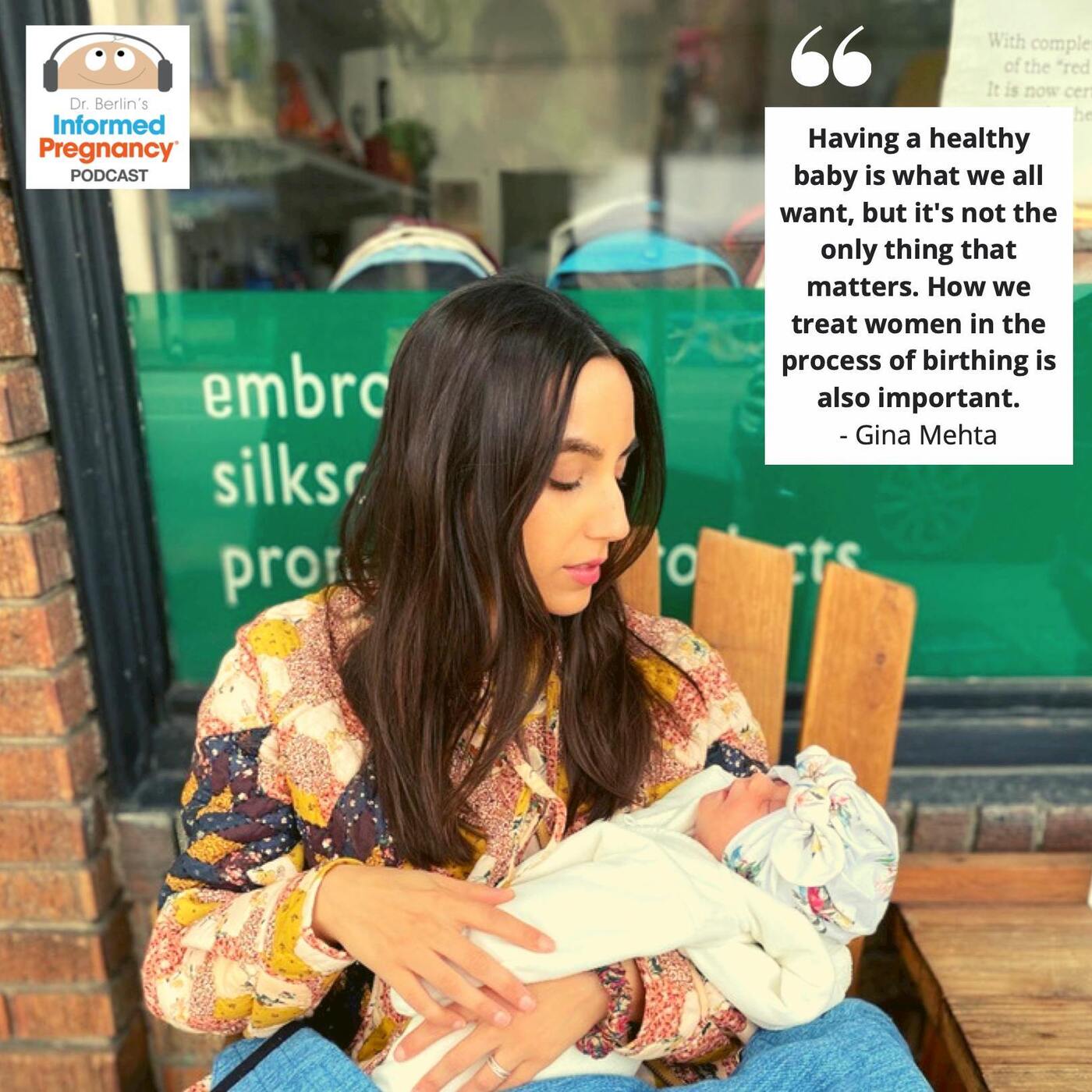
Certified Functional Nutrition Consultant Gina Mehta recounts her two birth stories and important lessons she learned along the way.

Learn more about your ad choices. Visit megaphone.fm/adchoices
See Privacy Policy at https://art19.com/privacy and California Privacy Notice at https://art19.com/privacy#do-not-sell-my-info.
Key quotes
“Where I wanted to have birth wasn't something that I'd actually thought of, you know, growing up or leading towards getting pregnant, but it just felt very natural to me to want to have a home birth because it just went along with my lifestyle. I'm not a huge fan of hospitals. I don't necessarily feel very comfortable with them or with doctors for that matter.”
“I found my hospital experience very traumatic. Just how many people were kind of not only in the room, but how they treated me, how when with all the pushing, how many hands were in and out of my vagina was without kind of any space for saying, is it okay if we do this? Is it okay if we're going to try this now? Would you be okay with this? I feel like consent was sometimes implied instead of making a pause for it.”
“Definitely at home. After my experience at the hospital, I did not want to be in the hospital again. And so, yeah, I decided I wanted another home birth. I mean, I didn't get my first home birth, but I nearly did. So I decided that I definitely wanted to be back at home.”
“Yeah. It made sense to me, which is why I thought I should cut back on the athletic stuff and kind of do, you know, walk, do my stretches, do some yoga, do my spinning babies, see you. I was doing hypno babies classes too, and I was reading a lot about physiological birth, which my doula got me into. This time I decided to have a doula.”
“I feel like labor is something that is just so, so out of our control, that it shouldn't be this rigid kind of standardized procedure that needs to happen in a certain amount of time. It varies so, so much for each and every one of us.”
Related episodes
- Ep. 361 Rachel Mans: A Mother's Journey Through Pregnancy, Adoption, and Birth Work
- Ep. 440 Holiday Top 10 Countdown: Part II
- Ep. 382 Caitlin Wilder: Before Birth
- Ep. 520 Before Birth with Kea-Sophie Stack
Transcript
AI-generated transcript with speaker labels — may contain errors, especially names and medical terms. Dr. Elliot Berlin, DC appears in blue; Gina Mehta in orange.
Download PDF of the Transcript
Dr. Elliot Berlin, DC [1:36] Welcome to the informed pregnancy and parenting podcast. I'm your host. Dr. Elliot Birdland My guest today is a functional nutritional Consultant a wife and a mother of two the universe blessed me with the opportunity to work with her during her very recent second pregnancy and birth and To play a tiny role in supporting her goal to have a better second birth experience than her first Gina met
Gina Mehta [1:57] Welcome to the podcast. I talked to Berlin. Thank you for having me
Dr. Elliot Berlin, DC [2:01] Honored. Okay. So this is one of those podcasts where you got to listen quickly because there's a lot to cover here You just had your second baby Congratulations your first birth Wasn't exactly what you were planning for you worked very hard to make your second birth different and we want to cover all of that In a nutshell, how did you get to be you? You're awesome
Gina Mehta [2:22] Thank you. Well, you're pretty awesome, too. Let's see. I was born in London I lived there till I was 10 years old when my parents split up. I moved with my mom to Colombia and I moved to LA seven years ago. I got into nutrition initially because I myself was having a lot of health issues I Suffered from kidney stones from a very young age since I was 15 and I was having them recurrently
Dr. Elliot Berlin, DC [2:51] Does that work in your family?
Gina Mehta [2:53] It does from both of my aunt's side my mom's side and my dad's side
Dr. Elliot Berlin, DC [3:00] No chance of escape
Gina Mehta [3:03] No chance doctors told me that I would just have to live with them and that they were just going to be a part of my life and I Didn't accept that I thought you know This is not something I want to live with after having had to have an operation on the last one that I had I decided I need to take this into my own hands and I started to make changes in my diet and After that, I actually never had a kidney stone again I cut out all processed food I stopped eating red meat, which I wasn't eating a lot of at the time But I basically focused on a very plant rich and plant-based diet And I never had a kidney stone again. That's amazing. So Yeah So that kind of just made me want to help other spend
Dr. Elliot Berlin, DC [3:53] 30 seconds talking about what the peak of a kidney stone feels like
Gina Mehta [3:59] A lot of people compare it to labor To contractions to waves And I guess you could compare it to that. It's very intense. It's back pain. That's very intense I would say labor is much more intense having been through both experiences
Dr. Elliot Berlin, DC [4:15] So I know a lot of people now that have had Kidney stones and that have had unmedicated labor and not one of them said That labor was more intense than their kidney stone. That's why I asked I thankfully have never had one But I've seen people sometimes come to the carpenter because it's a back pain like on my back And then you realize it's a kidney stone. I know it's not me. That's you know
Gina Mehta [4:36] Well, I guess the main difference is with a kidney stone The pain is constant with contractions that you know, you have a little rest in between Sometimes not at the end, but you know at the beginning So I think that would be the main difference, but I found in having had back labor twice now Yeah, that labor is much more intense
Dr. Elliot Berlin, DC [4:57] More intense than your kidney stones Oh, really? Okay. So you're the first for me. Yeah, I am. Always the first for everything. Yeah. And you're the first in a lot of different ways. So here, you're very nature-minded in your lifestyle and in your diet. You get pregnant. And then at what point do you start thinking, how do I want my pregnancy and birth to go?
Gina Mehta [5:20] Where I wanted to have birth wasn't something that I'd actually thought of, you know, growing up or leading towards getting pregnant, but it just felt very natural to me to want to have a home birth because it just went along with my lifestyle. I'm not a huge fan of hospitals. I don't necessarily feel very comfortable with them or with doctors for that matter. There's no particular reason, I guess, having had my fair share of, you know, kidney stones and having to stay in hospitals for days at a time, I was out of my comfort zone. So when I started reading and learning about home birth, it just seemed like a great option for me. Is this when you're already pregnant? Yes, it was.
Dr. Elliot Berlin, DC [6:03] Okay. So prior to that, were you seeing a medical doctor and then switched over to
Gina Mehta [6:09] midwives? So I did co-care just because I had my insurance with Kaiser and I found an OB who was recommended to me. But the problem with Kaiser is anyway, if I would have gotten into labor with them, you see whoever's on call. So that OB wasn't going to be present for the birth. So my plan was to do co-care and get my labs and everything done with Kaiser and see my midwife at the same time. But it was just easier to have everything built through my insurance, which was with Kaiser. And for home birth, were you picturing water or land? I was picturing water. Water sounds very appealing to me. I do love water. And yeah, it was going to be my husband and myself and, you know, our family asked to come,
[7:01] but we actually said we wanted to be by ourselves and that's how we did it.
Dr. Elliot Berlin, DC [7:05] So your husband was comfortable with home birth also and your family was comfortable with it?
Gina Mehta [7:11] Yes, he was comfortable with it. Actually, now that I think about it, my brother-in-law was the one who kind of got me into home birth because he told me to watch the documentary of The Business of Being Born. And I remember that just kind of made me, it was a no brainer. I just felt I definitely want a home birth. This was before getting pregnant.
Dr. Elliot Berlin, DC [7:32] I can't believe I'm the only one wondering why your brother-in-law told you to watch The Business of Being Born before you got pregnant.
Gina Mehta [7:39] Well, he's an interesting guy and he's a dentist and he's very skeptical of everything. And yeah, he just comes up with fun facts sometimes and he steered me in that direction. And so yeah, I'll always be grateful for him. Did he already have kids?
Dr. Elliot Berlin, DC [7:54] No. Oh, okay. That's even less sensible, but I like it. So during your pregnancy, what kind of things did you do to get ready for home birth? Like mentally, physically, educationally?
Gina Mehta [8:07] I tried to get as informed and educated as possible. I took classes, I read, I did all the things that I thought I should be doing. But I guess physically, I was always very active. So I continued Pilates and yoga and I continued doing that. But beyond that, I don't think I didn't do much else. I thought, you know, this was going to happen and being informed and educated about my choices was going to be enough. Yeah.
Dr. Elliot Berlin, DC [8:34] Okay. And was there no doula?
Gina Mehta [8:37] There was no doula.
Dr. Elliot Berlin, DC [8:38] Was that a conscious choice?
Gina Mehta [8:40] I guess I had this misconception that, and my husband really, he's a very hands-on partner. He loves to be involved in everything and he's very supportive. And we had the common misconception that the doula would kind of replace him and he didn't want to miss anything. And it wasn't even his choice. I just thought we didn't need an extra person there. You know, we could do this by ourselves.
Dr. Elliot Berlin, DC [9:04] Sure. Okay. How did your labor start?
Gina Mehta [9:08] My labor started. It was a Saturday. I remember, well, technically a Sunday morning at 1 a.m. And I started having contractions, surges, whatever you want to call them. And I did have from what I can remember, back labor the entire time. So it started in my back and it was very intense.
Dr. Elliot Berlin, DC [9:29] Whoa. Were you having like Braxton Hicks before you went into labor?
Gina Mehta [9:33] I was. I'd been having Braxton Hicks for a while. I mean, I think I'd been having Braxton Hicks for months, but they were getting more intense, I guess, getting towards labor.
Dr. Elliot Berlin, DC [9:42] But were those Braxton Hicks also in your back?
Gina Mehta [9:45] No.
Dr. Elliot Berlin, DC [9:46] Okay. So once labor started, it was a different story.
Gina Mehta [9:49] Yes.
Dr. Elliot Berlin, DC [9:50] Where were you in relation to your due date?
Gina Mehta [9:53] I was 39 weeks and two days when everything started.
Dr. Elliot Berlin, DC [9:57] Okay. So one o'clock in the morning. boom, contractions in your back.
Gina Mehta [10:03] Yes.
Dr. Elliot Berlin, DC [10:04] Did that surprise you?
Gina Mehta [10:06] It did. I guess I wasn't prepared for them to be in my back. I guess I tired back labor was a thing. I didn't necessarily think it was going to happen to me.
Dr. Elliot Berlin, DC [10:15] Was it reminiscent of your kidney stone pain?
Gina Mehta [10:19] I honestly didn't think about it at the time. I just saw it. Well, this is intense, but you know, I would get through them. I would kind of change positions and they were very far apart at the beginning, so I fell bearable.
Dr. Elliot Berlin, DC [10:33] It's one o'clock in the morning. So Saturday night, Sunday morning. So had you already gone to sleep and they woke you up?
Gina Mehta [10:40] We were asleep and they woke me up and I told my husband, well, labor's starting. And I remember we woke up and we put some essential oils in a diffuser. And we were really naive to think that things were going to have progressed so quickly because they didn't. But yeah, my husband was up with me and we kind of were just waiting for each wave instead of going back to sleep, which I now I book. I don't know why we did that. But yeah, since I was feeling them in my back, it just didn't feel very appealing to go back to sleep at the time.
Dr. Elliot Berlin, DC [11:15] That makes sense. How long did that go on for?
Gina Mehta [11:18] So I can say that in total from start to finish, my labor was 54 hours.
Dr. Elliot Berlin, DC [11:25] Whoa. Did you ever end up getting sleep?
Gina Mehta [11:31] No.
Dr. Elliot Berlin, DC [11:32] So from that point, when they started hitting your back from that point to you're holding your baby, really just nonstop contractions and no sleep.
Gina Mehta [11:42] Yes.
Dr. Elliot Berlin, DC [11:42] At what point does your midwife get involved?
Gina Mehta [11:45] My midwife arrives on Monday at, I would say 1 PM or 12 PM.
Dr. Elliot Berlin, DC [11:53] So this is 36 hours in.
Gina Mehta [11:56] Yeah.
Dr. Elliot Berlin, DC [11:57] Wow.
Gina Mehta [11:58] I mean, my contractions while I was progressing, you know, they started out as every 10 minutes, then they would continue that way for a while. Then they go to 15 and then they go to five. It was all over the place for that Sunday. So, you know, there was no reason for her to come before that.
Dr. Elliot Berlin, DC [12:16] How do you manage them? Like is anything helping?
Gina Mehta [12:20] My husband was doing hip squeezes the entire time. He was amazing.
Dr. Elliot Berlin, DC [12:23] Oh, wow.
Gina Mehta [12:24] His hands hurt very badly for days after that. Yes.
Dr. Elliot Berlin, DC [12:29] I've been on that supporting role. Nothing compared to what you guys do, but still it takes a toll. That's incredible that even he had the wherewithal to keep up with it for that long.
Gina Mehta [12:39] Yeah, he did. He was amazing. I unfortunately wasn't able to eat or drink anything. I just kept throwing up and everything was coming out.
Dr. Elliot Berlin, DC [12:47] So you're tired, dehydrated, in pain, and not progressing.
Gina Mehta [12:53] Yes.
Dr. Elliot Berlin, DC [12:54] Did anybody check the position in the week or so leading up to your labor starting?
Gina Mehta [12:59] My midwife did check the position. She was between ROA and LOA consistently each week. So she was on the right and left side.
Dr. Elliot Berlin, DC [13:07] So of your baby against the sort of soft part of your belly to either the right or left.
Gina Mehta [13:12] Exactly.
Dr. Elliot Berlin, DC [13:13] Okay. I'm sort of in suspense about what happens next, because this is shaping up to be, I mean, it's already intense for me. I can feel the intensity. The one thing I don't know is what essential oil you use. That would even bring me deeper into the experience.
Gina Mehta [13:30] I wish I remembered. I feel like it was Clary Sage.
Dr. Elliot Berlin, DC [13:33] I'm going to go with Clary Sage because it's so earthy and you're so earthy. It makes sense.
Gina Mehta [13:38] I think it was. Yes, it does. It does. It was Clary Sage. And I remember the bedrooms feeling amazing. And I remember still having conversations with my husband between contractions and kind of being excited, but yes, it was a very long 54 hours.
Dr. Elliot Berlin, DC [13:54] Okay. Let's take a little break. When we come back, we'll find out what happened in the second day or third day. I think we're up to of your labor. We will be right back.

Dr. Elliot Berlin, DC [16:21] slash Dr. Berlin for up to 30% off. Welcome back to the Informed Pregnancy Podcast. We're talking to Gina Mehta. And you're like, God knows how many days into your labor story. What happens next?
Gina Mehta [16:38] Well, the contractions start getting closer together. And so we call my midwife and she arrives. My husband starts getting the birth tub ready because we hadn't yet. I can't remember, honestly, why. But it was ready, but we just hadn't filled it with water. But we couldn't get it the right temperature. And so it didn't feel great to me.
Dr. Elliot Berlin, DC [17:01] Meaning first too cold, then too hot or too hot or?
Gina Mehta [17:04] Too cold. And I was just, yeah, I was dehydrated. And so I was having the shakes and my midwife gave me an IV and that helped. And she checked me and I was fully dilated.
Dr. Elliot Berlin, DC [17:19] Oh, was that a surprise?
Gina Mehta [17:21] Yeah, it wasn't even something I'd thought about, to be honest. I was just so in kind of this is happening that I wasn't even wondering. It was a good surprise, but I hadn't really been thinking about it before she arrived.
Dr. Elliot Berlin, DC [17:34] Did you spend any time in a shower or bath, not the birth tub, like just the warm hot shower or bath?
Gina Mehta [17:41] I did get in the shower.
Dr. Elliot Berlin, DC [17:42] Was that helpful for your back labor?
Gina Mehta [17:44] It was. It felt nice. When my midwife arrived, she also suggested the shower and I remember getting back in. But yes, the water felt good.
Dr. Elliot Berlin, DC [17:54] So she checks you, your 10 centimeters. The tub is not panning out. So I guess you're planning to push in bed.
Gina Mehta [18:01] Exactly. So I'm kind of, we're moving around the room. My midwife at this point asks me since, you know, I kind of stalled in the sense that my contractions were closer together. But at this point, since I was having back labor and it had been going on for so long, my midwife offered to break my water. And I agreed. So she broke my bags of water. And I remember, you know, continuing to have these surges. And we at this point could see my baby's head coming in and out because before this, my midwife tells me to start to try pushing. I didn't actually feel an urge to push, but we started to try to push.
Dr. Elliot Berlin, DC [18:47] What was that like?
Gina Mehta [18:49] I don't know how to describe it. I didn't feel an urge. So it was kind of just something that felt very forced. We tried a bunch of different positions. I got on the toilet. I went up and down the stairs. But, you know, I was continuing to have back labor. That didn't change. And the contractions were feeling stronger. But the pushing felt, for me, it felt frustrating because nothing was happening. Then at one point, we start to see my daughter's head turtle in and out, in and out, in and out with the pushings. And I just remember kind of thinking, okay, she's going to come out any time now. She's right there. And my midwife, you know, says, you know, she's right there. You can do this.
[19:37] And instructs me to keep pushing, to keep trying, but nothing's happening. At this point, my midwife calls for another midwife to come and assist her because quite a few hours have gone by. And the other midwife arrives. And I just remember I did not know this other person. So it definitely felt strange to have another person there. that I didn't know and I just felt kind of a doom come over the room. So there's a bit of doom in the air and we try getting me in all these different positions on the bed, on the stairs, squatting, doing all the things but McKenna's head, McKenna's the name of my daughter, just kept turling in and out and nothing was happening. So after quite a while my midwife says it's time to
[20:31] transfer to the hospital. Since this has been happening for so long I really couldn't believe that we were gonna have to end up in the hospital but she suggested that I needed to rest, I hadn't slept in so long and that my uterus was tired and so that I would benefit from getting an epidural and laboring down. So that was a plan. We were gonna go to Kaiser and that's what we did. We headed over to Kaiser in the car. Did the epidural take away that back labor? It did. Okay. Did that give you an opportunity to rest? No because as soon as I got to the hospital actually the first thing they told me was you need a c-section and I declined. I said no because my baby's heart rate
[21:13] was very stable and there was no reason for it but once I got the epidural I was not allowed to labor down instead about 20 people came in the room and instructed me to push and push and yeah it got very intense. Was there a particular urgency? No not at all there was no urgency. It was just the protocol? I guess they wanted to get things on the road. Okay that sounds different than the setting you were aiming for. Extremely different. A lot of people, a lot of lights, a lot of shouting, a lot of threats. I remember things when I got the epidural and when we started with the pushing there was a time when my contractions slowed down again and so they
[22:04] said I needed to get pitocin. I declined but I remember there was always this threat of a c-section. Well if you don't get the pitocin then we are just gonna have to go to the c-section and I really did not want a c-section so my baby was doing fine her heart rate was stable so there wasn't a reason for one. When I get the pitocin I continue to push and they bring a mirror for me to see and I just see her head going in and out in and out in and out and it was really frustrating and you know all these people are screaming and shouting and making me feel like I'm not doing it properly when I'm pushing with everything that I have but nothing was happening she wasn't coming out. You're pretty tough and very
Dr. Elliot Berlin, DC [22:46] strong but also this is three days into labor, hours and hours into pushing, no sleep, very little hydration, very little nutrition. I mean even if you're giving it everything you've got sounds like there's not that much
Gina Mehta [23:00] left. I know I just felt like I could keep going and I wanted to at home I didn't want to go to the hospital but I obviously wanted to give my baby the chance to come out how she wanted to come out at the same time I felt that I could do it I felt that this was gonna happen I just maybe needed more time even though it had been so long already I don't know why I believe that it was gonna happen. Was a vacuum ever an option? Yes so I was gonna go to that then that was a time when they said well okay she's right there you know we can see her hair come in and out let's do a vacuum so they tried the vacuum and they tried it twice or three times actually. This
[23:45] is five hours into pushing at the hospital and the vacuum did not work they couldn't grab her so at that point she starts having heart decelerations so we have to go to the c-section. Obviously you wanted a
Dr. Elliot Berlin, DC [24:03] healthy baby but also that was like the bottom of your list of how to get one
Gina Mehta [24:07] what did that feel like in your mind? You know it felt very frustrating because I felt like her and I had done all this work and she'd been fine before and it just felt very frustrating to have gone through all of that and then end up in a c-section and I guess I questioned at the time whether you know when they gave me the pitocin is when she started to have dips that was actually the point when they offered the vacuum and so I started to wonder if that had caused her distress but at that point I kind of just gave up and kind of surrendered to I'm gonna meet my baby and this is how she's gonna come out and yeah I remember they told my husband that he couldn't come in the room but he thought to the nail
[24:55] and he said I'm going in. Why not come in the room? I don't know they said, you know, you can't be there for the susection. Not in the room, sorry, for the surgery.
Dr. Elliot Berlin, DC [25:05] Right. That's what I mean. In the delivery room, essentially, the operating room. Oh, that's really weird. Well, I imagine that afterwards you got what a lot of people get, which is, well, you have a healthy baby, and that's all that matters.
Gina Mehta [25:19] Yes. A lot of people told me that, and that annoyed me a lot, because, of course, that's all that matters to all moms is that we have a healthy baby. I mean, obviously, it's what it's all about. But at the same time, I feel like we don't have to undermine what women are feeling. I found my hospital experience very traumatic. Just how many people were kind of not only in the room, but how they treated me, how when with all the pushing, how many hands were in and out of my vagina was without kind of any space for saying, is it okay if we do this? Is it okay if we're going to try this now? Would you be okay with this? I feel like consent was sometimes implied instead of making a pause for it.
Dr. Elliot Berlin, DC [26:05] Yeah. And like you said, of course, having a healthy baby is the number one goal, but it's not the only thing that matters. If we chopped your torso off and taken the baby, I don't know. But if you have a healthy baby, that's the only thing that matters.
Gina Mehta [26:19] I feel like it matters, but it's how we treat women, and the process is so important, too. And I just felt like I was a turkey in the hospital, to be honest.
Dr. Elliot Berlin, DC [26:29] Oh, sorry. Okay. Now, you just very, very recently had your second baby. Let's take a break and come back and find out how you planned for your second birth and how things went. Welcome back to the Informed Pregnancy Podcast. We're talking about Gina Mehta. And after your first birth, I mean, what an incredible person. I said it at the open, but literally everything that you went through to give the baby, you know, the kind of time and space to find her way out, and then ending up at the hospital, and then just ending up in what sounds like a chaotic scene that is the total opposite of what you were aiming for, and then into a caesarian birth, which you accepted, but did not enjoy.
[27:22] The fact that you even like found the strength to do it again is impressive. When you were pregnant the second time recently, what options went through your mind for having
Gina Mehta [27:33] your birth after having had a caesarian birth? Oh, for me, it was a no-brainer that I definitely wanted to be back. I remember even after having my first daughter, I remember at the hospital, people telling me, oh, but you know, you can have it be back. I remember one person, and it was the anesthesiologist who was kind. But for me-
Dr. Elliot Berlin, DC [27:53] It was your brother-in-law. But I do have this question. No, my brother-in-law thought I was crazy for waiting so long and enduring such a long labor. My other question, did anybody at any point be like, oh, this is why it had to become a z-section? Did they put a reason on it? Why the baby wouldn't come out?
Gina Mehta [28:11] No one did. I remember at the hospital, they said, oh, well, I mean, obviously McKenna was OP, and her chin was not untucked, so she was in a military position.
Dr. Elliot Berlin, DC [28:23] So OP, meaning the bony part of her skull, was, I guess, at some point had switched over to being against the back of you. It was. Against your spine, and also the way the chin was oriented makes it harder for the head to come out. Exactly. I was just out of curiosity. Were you doing like bodywork and chiropractic during the first pregnancy?
Gina Mehta [28:46] I was not. I guess it wasn't something that I thought of. I was always active. I did Pilates and yoga, but I did not do bodywork.
Dr. Elliot Berlin, DC [28:54] All right. So you're like definitely VBAC, and you originally were aiming for home birth. Is VBAC something you would entertain at home or at the hospital or both?
Gina Mehta [29:05] Definitely at home. After my experience at the hospital, I did not want to be in the hospital again. And so, yeah, I decided I wanted another home birth. I mean, I didn't get my first home birth, but I nearly did. So I decided that I definitely wanted to be back at home.
Dr. Elliot Berlin, DC [29:23] Okay. A lot of people struggle with VBAC or repeat C just because of nerves about things that can go wrong. A lot of people struggle with home birth versus hospital because what if something goes wrong? Did any of that cross your mind as you're now planning for not just a home birth, but a VBAC at home?
Gina Mehta [29:43] No. I mean, I knew that. I know. And I knew that at the time that, you know, midwives, they know when to make the call. They transfer you way before there's a medical emergency. So I trusted that fully. And there was never a worry in my mind about that. The chance of uterine. rupture is so small, and I know it can happen, but there is also a 99 percent chance of that not happening. So, I felt confident in having this birth at home.
Dr. Elliot Berlin, DC [30:11] You did different things during pregnancy to prepare for your second birth?
Gina Mehta [30:17] I did. I did many different things. I definitely, I saw you, which made a huge difference.
Dr. Elliot Berlin, DC [30:25] In my life too.
Gina Mehta [30:27] Thank you. I walked a lot. I was not a walker before, but I walked a lot. I did spinning babies. I got down on the pilates towards the end of my pregnancy because I wasn't sure if, you know, maybe I was not too strong, but that for some reason, you know, I was too tight and my muscles were too tight, and that could have maybe influenced in Makena, my first daughter, having trouble turning.
Dr. Elliot Berlin, DC [30:57] Athletic-y people, what we sometimes find is the combination of being strong and tight creates a pretty rigid environment that could make it hard for your body to accommodate or facilitate movements that may need to happen. And the stronger you are, strong inherently being healthy and good, the more dysfunctional the tightness that you'll have becomes, the more profound it becomes. So the tightness is a dysfunctional shortening of muscles, and it creates a rigidity. But if you're very strong and tight, it just creates this, I named it athletic pelvic syndrome, where just things are super rigid. And if you can get rid of the tightness and just have all that strength, it's amazing.
[31:40] But the combination is not the best for labor and delivery.
Gina Mehta [31:45] Yeah. It made sense to me, which is why I thought I should cut back on the athletic stuff and kind of do, you know, walk, do my stretches, do some yoga, do my spinning babies, see you. I was doing hypno babies classes too, and I was reading a lot about physiological birth, which my doula got me into. This time I decided to have a doula.
Dr. Elliot Berlin, DC [32:07] So the second time around, you have the same midwife, you brought a doula into the mix, and you had a different plan for backup should you need to go to the hospital. What role did you feel like the doula would play?
Gina Mehta [32:22] Well, you know, when it was with McKenna, with my first daughter, it was just my husband and myself, and we really didn't have any support during or after. Of course, our families came after the fact that my husband was so exhausted. He just looked like a ghost. He lost so much weight in those days, and that first week, and I too was exhausted. So it just made sense to have someone to support us. And also the fact that now we have a daughter, and if we're going to do this at home, we definitely need an extra pair of hands because we're not sure if she's going to wake up, if she doesn't want to be there. So it just definitely made sense for us that
[33:02] if we're going to do this at home, we need a more solid support system.
Dr. Elliot Berlin, DC [33:06] I just got to say when I met you and, you know, we sat down to do a consultation. I heard your story and your passion and your frustration and your determination. I was like, I did not hold back one ounce of anything I could think of to help get your body ready for birth. I just became attached. You're an easy person to attach to. You're warm and kind. I was just like, in my heart, I was like, this has to happen. This has got to happen. And I was so honored to be on Team G, and I felt like I got to make this happen with you. Anything I could do to help you. There was nothing I wouldn't have done. So let's flash forward. How did labor number two begin?
Gina Mehta [33:53] So labor number two started on a same day on a Saturday. Well, technically a Sunday morning. Yeah. 12 a.m. I was asleep and I started feeling surges. And at first I kind of ignored them and I went back to sleep. And they continued. And so at this point, I woke up my husband and said, Oh, I think I'm having contractions. And he kind of didn't believe me because I was 38 weeks and three days. And he said, Okay, well, let's watch it. And let's, you know, see how things progress. My doula had told me that prodermal labor was a thing with second labor. So I thought that was probably what was going to happen. It might just start and stop. So we went back to bed and we cuddled. Yeah. And, you know,
[34:44] the surgeries kept on coming and I was like, Oh, okay, this isn't going away.
Dr. Elliot Berlin, DC [34:50] Where did you feel them?
Gina Mehta [34:52] I actually found them in my front this time.
Dr. Elliot Berlin, DC [34:54] Oh, nice. Is that more tolerable?
Gina Mehta [34:57] It was. It was. I mean, just compared to having just only known back labor this felt like oh I was actually excited that they I was feeling them in my front so I'm like I'm there on the front so we try to go back to sleep for a little bit but I sleep for about an hour and I just feel the contractions not going away so I wake up my husband and I'm like okay I think you should start timing them because they feel really close together and he kind of looks at me really okay and right enough they were at 5-1-1 they were happening every five minutes lasting one minute consistently for an hour okay is that when you get the midwives no I call my doula oh the doula I call my doula and she comes over and I had
[35:49] kind of thought in my head I'm only gonna call my midwives when I'm really really really there ready so my doula came and my husband started inflating the tub and I just hung out with my doula on a birthing ball and then we came downstairs I wanted to be in a different room than when I had had my canna I wanted a different space so last time was upstairs this time was downstairs the water this time felt great yeah I did have the shakes this was what I remember when I first had my first surge I just had the most intense shakes and so getting into the water it was warm it was nice it felt comforting and from there you know the surges kept on coming and I
[36:41] kind of felt them getting more intense and I just tell them a few hours could pass and I tell my doula call the midwives this feels like it's progressing really fast and so she did she called the midwives one of my midwives arrived it was around 6 a.m. or 7 a.m. and I had started unfortunately feeling the surges in my back so I did start having that yeah but my midwife checked and she said that you know this baby was not OP she was in a good position so that was very reassuring to me and thankfully my doula had kind of warned me that just because it hasn't started off as back labor it could still happen so that was a good reminder so my midwife hangs out on the couch and I'm in the water and I'm very
[37:37] primal I remember with McKenna my first daughter I labored very quietly this time I'm making sound and it feels great to make sound and I'm hanging out in the tub and I'm loving it and I'm talking in between surges I'm having conversations but yeah the surges are very intense a few hours go by and my midwife asks me if I want a cervical check I decline because I didn't want any cervical checks so she asked me to check myself and so I did and we could feel the head or I guess technically the bag of waters was right there so we think that she was positive 3 station at this point I am fully dilated I remember my good wife saying you know you're so close this
[38:24] is happening this is great she checked the baby's heart rate and everything was going well and you know everyone was very very excited including myself and it was just great energy all around some time goes by and things kind of stall not much is happening I'm continuing to have these surges I'm still in the water and my midwife she tells me you know I think it's time to get out of the water and try some assisted pushing because she seems to be right there I remember telling her I had been researching a lot about physiological birth and you know how the body has an innate way of going through labor and pushing the baby out when it's ready and how the uterus does that without you having to intervene so I remember
[39:14] saying why isn't my body doing it by itself and she said you know well some women never feel they're just push and it's been a while and you know let's try this and so I went along with it I guess I felt that if I declined the assisted pushing then I would inevitably have to transfer and I didn't want that to happen so we got out of the tub and we tried some assisted pushing before that I should mention that she had asked me if I felt an urge to push and I didn't know what that felt like so I said that I thought so but in retrospect I realized now that pushing down is very different from pushing out so the tub and we start with the assisted pushing. And again, it's very reminiscent of my first
[40:08] labor where we see that, you know, the head keeps coming in and out, in and out, in and out. And she seems really close and right there, but there's not really much progress. I get in a lot of different positions. My other midwife has arrived at that point and, you know, we try a variety of different positions, but nothing is really happening. I'm pushing with everything I have, but there's no progress. So my midwife suggests doing positions, bring my knees together to open my pelvic outlet. They thought that maybe there was something that was obstructing her from coming out. We weren't sure. So we wanted to open up the space a little bit more. So I got in all of these crazy positions that felt really uncomfortable
[40:53] and I kept on pushing, but nothing was happening. And I see a kind of a shift again in the room of just looks and a shift in energy. My midwife talks to me, you know, she says, it's been two hours and a half at three hours. This is a VBAC and at three hours, you know, it's the maximum time we can let you push at home. So we have to start thinking about transfer. And to me, that had just, it wasn't in my mind that that was even a possibility seeing as, you know, this baby was in a great position. There was no signs that she was not OP. Everything seemed to be going well. So I just didn't understand how this could be happening again. So I told her that I thought I needed more time. I just felt like I needed more
[41:40] space and time. And she said, okay, great. You know, I can give you a little bit more time. I can give you maybe half an hour more, 45 minutes more, but things haven't progressed in all this time. So, you know, I'm not sure that anything will come from it. So I get on the toilet. I move around. My surges had started spacing apart. So we're also trying to get them to pick up. So we try doing nipple stimulation. I try pumping and everything's just stalling. I feel like my body is kind of giving up on me, but it's really me giving up on my body.
Dr. Elliot Berlin, DC [42:17] Oh, that's a powerful statement. Is this where someone reached out to me?
Gina Mehta [42:22] Yes. So this is where when they talk about the possibility of a transfer, I say I need more time. And also, let me please call Dr. Berlin. And I remember I called you and you said you were out of town. And I said, no.
Dr. Elliot Berlin, DC [42:40] Trust me, it was crushing to me that I couldn't come in there and do anything I could to help
Gina Mehta [42:45] you. It was crushing. Yeah, it was for me too. But I mean, I know it was out of your control. It's okay. My doula tried to contact someone else that she knew and that person was at another birth. And yeah, and it just felt like everything was stacked against me. I just thought why. My midwives said at this point, when we're contacting you, and this is why I remember thinking, well, maybe someone could help me. They thought that there were something wrong with maybe my pubic bones and that they were in the way. And so that was what wasn't letting this baby come out. So I started to feel that there was something wrong with me. And I just didn't understand why this was happening again. We continue the pushing and
[43:33] all the crazy positions, but nothing is happening. And so at the three hour 15 minute mark, my midwife says, okay, it's time to transfer. So I remember going very dark and I kind of just had from what I told a very blank expression on my face and my head was down and I just couldn't believe it. Yeah, I could not believe it. And so I just said, I need to take a shower. I do not know why I needed to take a shower, but I felt the urge to take a shower. I wanted to take a shower. And my midwife said, well, I've spoken to the people at the hospital where we're going and there will be someone waiting for you there. And I spoke to the midwife there and they're on shift now. So really I wouldn't recommend you taking a shower
[44:23] right now because we should get there. So since they're there right now and waiting for you. And so I said, well, no, I need to take a shower. So I went up to take a shower. My husband starts kind of packing a hospital bag because we didn't have anything ready. My daughter throughout all of this had been running around super happy, very excited that her sister was about to come. And she was very involved in every part of that day. So we called my cousin of my husband's to come over. and said that she could be here with my daughter for when we would have to go to the hospital. So I went up and I took my shower and my doula came with me and my doula asked me,
[45:11] well, do you want to wash your hair? And I said, yeah, I really do. And so I washed my hair and I just thinking, well, if I go to the hospitals, it's inevitably going to end up in another C-section. So at least I'll be clean. And the surges suddenly came on again and I guess they started coming much closer together and they just started picking up. And so I get out of the shower and my doula helps me and I gather a few things myself for the hospital. But I take my time. So I come down and, you know, I'm stopped in my tracks because there's another surge and it feels very intense. And I just feel my body doing something that I had never felt before.
[45:55] And I just felt like there was no way I could not push. So I don't say anything. This is just this happening. But I guess there was a change in my voice or my face because my midwife says, let me just check you again. And so I said, OK. At this point, I was wearing clothes. She checked me and she said, I'll never forget. She said, oh, no, Gina, you're having this baby right now. So my body literally took over. I could not not push. I pushed. I started pushing. And in less than five minutes and in four pushes, my daughter came out and she had two new hands. So, oh, no way. Yeah. Her hands are like this. And I don't know if you can see, but like literally hands on the head.
[46:52] Yeah. So I remember my doula saying, see, it wasn't you. It wasn't you. There was nothing wrong with you. She was, you know, she had her hands up. You did great. And I remember my midwife crying and just being so happy and saying, you know, you said you needed more time and I probably it would have probably been better if I'd not been here. And so it was a crazy, crazy, crazy time.
Dr. Elliot Berlin, DC [47:17] Wow. What a close call, first of all. And then like that moment, the baby came out. Do you remember what was going through your mind? I couldn't believe it.
Gina Mehta [47:29] You know, when I was told that we had to go to the hospital, I kind of just surrendered everything. I just kind of gave up on myself and my body. And then my body was like, no, we're doing this. This is happening. This shows you that you can always trust me. That's how I felt anyway. And so I couldn't believe it. I think the first thing I said was, am I dreaming? Is this really happening when she was on me? Amazing. So beautiful.
Dr. Elliot Berlin, DC [47:55] I'm so glad that it worked out for you. You worked really hard for it. And you prepared yourself in so many different ways. And it sounds like you were resigned to, again, if this is what I have to do to get my baby out healthy, I'm going to go do it. But you didn't have to. You have to have your healthy home birth.
Gina Mehta [48:13] Yeah, with Nola's birth, I don't think that I realized that saying, you know, that I kind of hadn't urged to push when my midwife asked me if I did would imply that this three hour timer would start for me to be able to get her out at home. Even though we were both, she and I were both doing so well. I guess it became clear to me that this pushing time limit even existed when then my midwife asked me to get out of the tub and try with the assisted pushing. For me, just feeling like I was on the clock felt really, really stressful. And I think it just kind of shut my body off in a way. I know that if I hadn't insisted in taking that shower, I wouldn't have had had that quiet alone time that I needed to just relax and surrender.
[49:18] I feel like labor is something that is just so, so out of our control, that it shouldn't be this rigid kind of standardized procedure that needs to happen in a certain amount of time. It varies so, so much for each and every one of us.
Dr. Elliot Berlin, DC [49:35] We went extra long, but you know, I was going to stop you earlier. You're like, I just needed more time. And I'm like, OK, I'm not going to cut you off. But I do have this question. Do you think they'll be a number three?
Gina Mehta [49:48] No, not because of the birth. We have our hands full with these two.
Dr. Elliot Berlin, DC [49:52] Yeah, no pressure. I don't want to go on vacation if you're going to be in labor again anytime in the near future. OK, Gina, you're an amazing. him. And thank you so much for sharing so open, so real and honest. And I think a lot of people have had your first birth experience in their own way, and just maybe look for inspiration. Could I potentially do this? Is it worth a try? And just really, you and other people like you who are courageous enough to share your stories inspire. And, you know, I'll never have a baby come through me, but I'm inspired nonetheless. Thank you, Dr. Berlin. Gina, where can we find you online?
Gina Mehta [50:31] ElementalG.com.
Dr. Elliot Berlin, DC [50:32] ElementalG. I can't believe that wasn't taken. I'm going to go check it out, because I believe in ElementalG. At home, thanks for listening to the Informed Pregnancy Podcast. Connect with us on the Instagram at Dr. Berlin. D-O-C-T-O-R-B-E-R-L-I-N.
Want more pregnancy + parenting? Start your FREE TRIAL of Informed Pregnancy+ and get access to all our curated pregnancy and parenting content — original series, iconic birth films like The Business of Being Born, prenatal workouts and more.
