April 21, 2022 · 46 minutes · Episode 278
About this episode
Dysphoric Milk Ejection Reflex (D-MER) is a condition affecting lactating women, characterized by abrupt episodes of dysphoria, or negative emotions, occurring just before milk let down. Alia Macrina Heise, a lactation specialist, identified D-MER in 2007 after experiencing symptoms personally while breastfeeding her third child.

This podcast has been brought to you in part by LMNT electrolyte drink mix. You can get a free sample pack with every order at drinklmnt.com/berlin .
Learn more about your ad choices. Visit megaphone.fm/adchoices
See Privacy Policy at https://art19.com/privacy and California Privacy Notice at https://art19.com/privacy#do-not-sell-my-info.
Key quotes
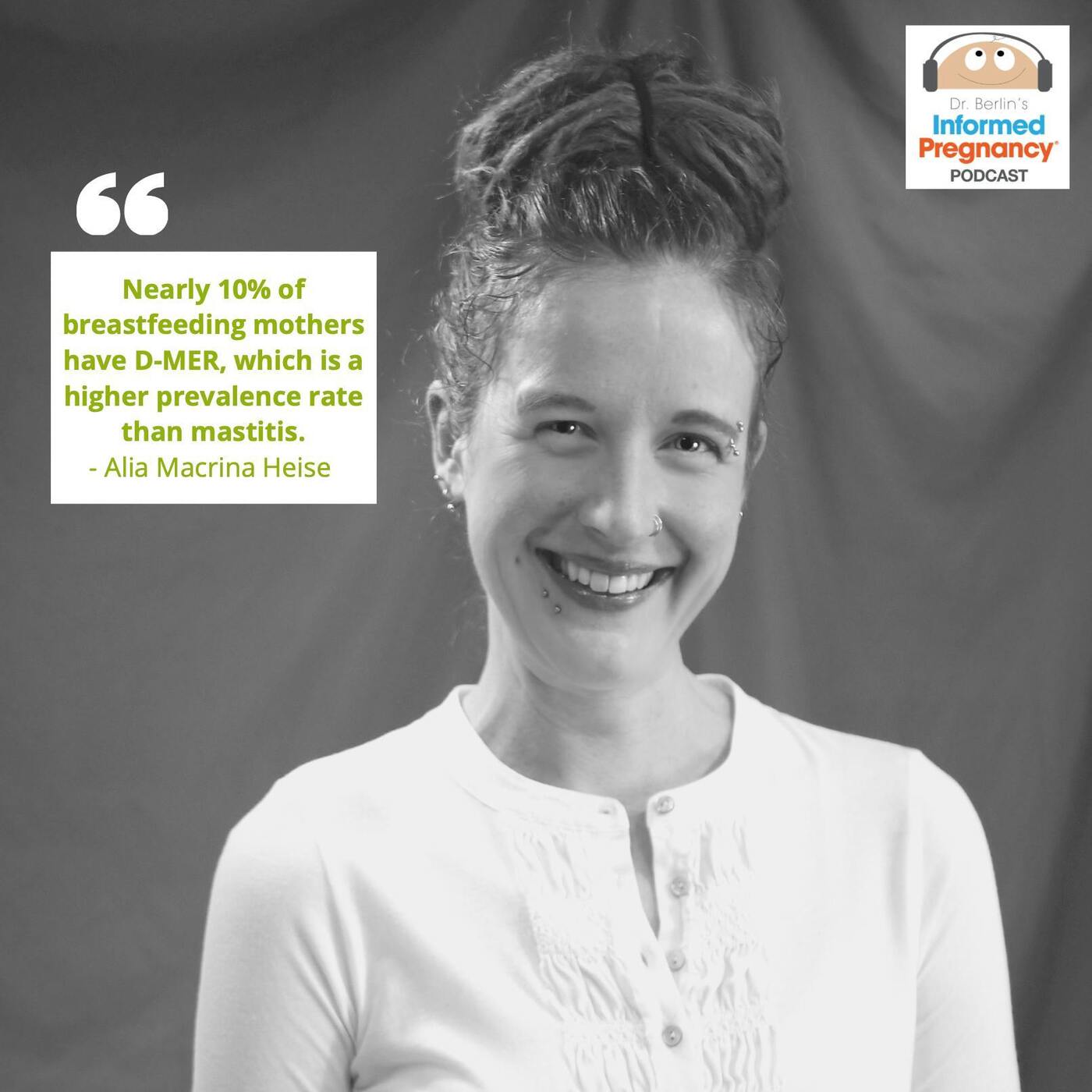
“There was a prevalence study done that showed just under 10% of breastfeeding mothers have DMER, which in fact is a higher prevalence rate than mastitis. And yet most mothers who”
“And if a mother doesn't realize she's struggling with DMER, that means every time she hits this emotional low, she is looking around her trying to figure out what did I do wrong? And what do I need to do to fix it? Once she has the education and information about DMER, she realizes that she doesn't need to get curious about her emotional”
“So we're talking about the kind of reflex that you have when you hit your knee and your knee jumps. Your knee is not jumping because of some kind of repressed trauma or hidden psychological meaning. It's kicking because that's what the body does when you hit that reflex.”
“Dopamine lowers slightly to open the door. It's casually named prolactin's gatekeeper. Prolactin goes through that door and starts rising.”
“So yes, if I am working with a mom and baby and the mother feels that her mental is severely compromised or at risk because of the frequency and intensity of the dysphoric milk ejection reflex, then different feeding decisions sometimes do need to be made. The majority of cases, though, most mothers are able to breastfeed through it.”
Related episodes
- Ep. 295 Michele Maturo – After Birth
- Ep. 280 Kayleigh Harrigan – After Birth
- Ep. 277 Kelly Kilmartin – After Birth
- Ep. 286 Jen Lilley – After Birth (Again!)
Transcript
AI-generated transcript with speaker labels — may contain errors, especially names and medical terms. Dr. Elliot Berlin, DC appears in blue; Alia Macrina Heise in orange.
Download PDF of the Transcript
Dr. Elliot Berlin, DC [1:36] Welcome to the informed pregnancy and parenting podcast. I'm your host pregnancy focus chiropractor. Dr. Elliott Berlin This important episode is about a condition in which women who breastfeed develop short bursts of negative emotions That begin just before milk letdown. My guest today is a retired international board-certified lactation Consultant or I be CLC. She's a public speaker and author of the book before the letdown Dysphoric milk ejection reflex and the breastfeeding mother. She's also a mother of three. Oh, yeah, McCrena Heights Welcome to the podcast. Happy to be here. Thank you so much for reaching out goodness. My pleasure So very briefly told you how this episode came to be which is my wife is a perinatal psychologist
[2:21] We sometimes collaborate on patients together and one of them not that long ago a few months ago was struggling with Dysphoric milk ejection reflex. I hadn't really heard of it before that and then as We were talking about it and she was just lying to me I realized I have another patient that struggles with that and I don't really know that much about it I did a little research and one of the first things I found was your book before the letdown and You know, I figured it's a long shot Let me reach out and see if I can possibly get a hold of her and you're so generous to come on board And I'm very grateful
Alia Macrina Heise [2:57] Thank you. I am curious even if it doesn't end up being relevant to the episode this other patient that you realized you had after talking to your wife What tuned you into the fact that she was struggling with DMER? So she was struggling with a lot of postpartum
Dr. Elliot Berlin, DC [3:13] I would say mental health issues that are not characteristic of her in general But then very specifically and it has to do it, you know, it's a lot of stress and lack of support Typical like postpartum depression, but she was telling me her struggles with breastfeeding Mm-hmm how every time she would breastfeed it would just be such a struggle And then when I mentioned her the book I was reading as I would tell her more and more of the symptoms that you Describe in the book. She would be like I definitely have that
Alia Macrina Heise [3:46] Okay, so her language was very subtle, but it was enough that you were able to start putting it together and put it
Dr. Elliot Berlin, DC [3:53] In front of her. Yes based on the way that you describe in the book some of the things that are
Alia Macrina Heise [3:58] characteristic of DMER and things that are Well that shows very attentive care as a care provider I congratulate you. Well, thank you so much
Dr. Elliot Berlin, DC [4:08] Let's start at the beginning. Where are you from originally? Oh
Alia Macrina Heise [4:12] original Answer that question. I've bounced around a lot, but I have been huddled in the Finger Lakes region of New York State Which is basically Northwest area of New York State for well over a decade now grew up in Boulder, Colorado Was born in Pasadena, California graduated high school in Lennox, Massachusetts So a lot of moving around Wow
Dr. Elliot Berlin, DC [4:37] So for a well over a decade it seems like you've settled down
Alia Macrina Heise [4:40] I have settled having children will do that to you. They're hard to move around
Dr. Elliot Berlin, DC [4:45] Yes, I found out that as well We used to move every couple years and then once the kids came we planted our roots You were an IBCLC and I think there's probably some confusion over the different types of lactation helpers Can you describe the differences in what IBCLC is specifically?
Alia Macrina Heise [5:04] Yeah, IBCLC is kind of the pinnacle of lactation specification due to the requirements in order to qualify for the exam, as well as the difficulty of the exam itself. And I was registered as an IBCLC for 10 years, but my work in lactation now for almost that full decade has been exclusively with dysphoric milk ejection reflex. I'm not going into hospitals, I'm not working with moms who are struggling with latch problems or things like that. It's become very, very narrow, and I've been focused on speaking, writing, and educating at this point. And so continuing on the credential was something that kind of became a moot point, and they offer a new credential now
[5:53] that's retired IBCLC. So that's actually something that I chose recently.
Dr. Elliot Berlin, DC [5:58] Oh, I didn't know, so it was an official.
Alia Macrina Heise [6:00] It is, you actually have to pay for it.
Dr. Elliot Berlin, DC [6:03] Oh, okay, now that makes sense. What originally got you into lactation work?
Alia Macrina Heise [6:11] Let's see, so my first entrance into it was after the birth of my second son. We were in the suburbs of Philadelphia, and at that point, one of the nursing mothers support groups, they had something worked out with HIPAA where the hospital is actually able to give the nursing mother's advisory council the names of women who left the hospital breastfeeding, and I was contacted by them to see if I needed any help or support. And though I was doing pretty well at that point with my second child that I was breastfeeding, I became very interested in the idea of mother-to-mother support. So I started by taking a class through them and becoming a peer counselor,
[6:52] which I then applied when we relocated to New York, and I worked as a peer counselor with the Women and Infants and Children program, and through them, I got my certified lactation counselor credential, which then started getting me the experience and hours I needed to work towards my IV CLC. So when I had my third child and experienced DMER for the first time myself, before it even had a name, I was a CLC and had been working in the field of lactation. And once I connected it to breastfeeding, I kind of dug in my heels over the fact that I may be special, but I am not so special that I'm going to be the only one who experiences this anomaly of the breastfeeding
[7:37] of the milk ejection reflex. And it became very important to me to figure out what's going on and to find other mothers who are experiencing and struggling with the same thing and to try to offer some kind of understanding and support to them.
Dr. Elliot Berlin, DC [7:52] Well, so in the next segment, we're gonna talk very specifically about what DMER means and what it is and what it isn't, but you didn't have those symptoms with your first two at all?
Alia Macrina Heise [8:04] No, no, not at all. And that seems to be the trend, which to me points to some kind of biological breakdown that could or may not be able to be corrected. I expect that if we could, if we're ever able to actually find an evidence based for what the mechanism is that we could move in the direction of correction, but maybe half of mothers will have it with their first and the rest will just have it with a subsequent, but once you have it with one, the odds are overwhelming that you will have it with all subsequent babies afterwards. So you may not have it with your first, your second, your third, but if you have it with your third or your fourth,
[8:42] you're gonna have it moving forward.
Dr. Elliot Berlin, DC [8:44] That's really interesting. And you had been doing lactation work before you experienced this yourself.
Alia Macrina Heise [8:51] Yeah, about three and a half years.
Dr. Elliot Berlin, DC [8:54] In retrospect, are there clients that you worked with
Alia Macrina Heise [8:57] that now you realize were having this? Not that I have personally been able to think of myself, but I have definitely in my years of teaching and working with other lactation consultants that I'm educating about DMER, I have been approached after conferences by LCs who have come up to me with light bulb moments and say, you know, I remember specifically and I didn't know what to tell this mother and I had no idea what was going on with her. So I've spoken to others who have had those light bulb moments.
Dr. Elliot Berlin, DC [9:28] And when you first started experiencing, you said didn't have a name.
Alia Macrina Heise [9:32] Correct.
Dr. Elliot Berlin, DC [9:32] And you're in the lactation community. I mean, did other people have clients with this type of symptom, even though it didn't have a name? Was there anything being talked about around it?
Alia Macrina Heise [9:44] In my digging, I went to one of the listservs, which, you know, was a thing back in the early aughts for lactation professionals and started poking around. And I did, I found a couple handfuls at least of messages of like. lactation consultants posting, describing all of the signs and the buzzwords that come with DMER. And that's actually how I met my co-author because every message that the lactation consultants posted describing the anomaly that I was experiencing didn't get any replies except from this one lactation consultant, Diane Wiesinger, who engaged with at least curiosity. She supposed about it and she wondered about it and she engaged
[10:34] with it. And so for me, that was like, okay, here's somebody who actually cares, who recognizes that lactation is a new science, that we don't know everything about it, that there is to know that there is more to learn and seems interested in learning. And I reached out and she and I have been working together ever since.
Dr. Elliot Berlin, DC [10:54] Okay, well, I am definitely interested in learning and our audiences too. Let's take a quick break and when we come back, we'll get much deeper into understanding what DMER is, how to identify it, and perhaps what to do. If you have it, we'll be right back.

Dr. Elliot Berlin, DC [12:30] four times and brand D, four times. Welcome back to the Informed Pregnancy Podcast. We're talking to Aliyah McCrena-Heist, who is a retired IBCLC. That's a real thing. Okay. Just to recap, you are breastfeeding your third child. You're already in the world of lactation and you start to experience symptoms that are different and you are very special, but you realize, I cannot be so special that I'm the only one. And then you start researching. So let's first break it down. It's D-M-E-R, dysphoric milk ejection reflex. Let's break down the words. What is dysphoria
Alia Macrina Heise [13:12] and what is the milk ejection reflex? Sure. So dysphoria is a word that we don't hear as often as its counterpart, which is euphoria. Dysphoria is better known in the medical community because it can be described as a symptom or a side effect of various things, but we don't use it in our everyday language, but it is the opposite of euphoria. So any general negative emotional state or sensation that somebody has can be considered dysphoria. And when we coined the term dysphoric milk ejection reflex, we picked that because D-M-E-R can fall into three different emotional spectrums and a mother with D-M-E-R won't bounce around between these three spectrums. She'll experience it on the same spectrum, but either
[13:58] the way that emotions manifest or because of her predetermined emotion concepts, the way that she interprets her emotional sensation is going to be either in the depressive spectrum, the anxious spectrum or the agitation spectrum. So the word dysphoria covers all of our bases there. And then the milk ejection reflex is the broad term for all of the various things that happen inside the body when the body is signaled to release milk for the baby or the pump or because of an over fullness of the breasts or whatever may be going on in order to trigger a milk ejection reflex. And there are a lot of different hormones and chemicals. We generally focus on prolactin, which makes milk and
[14:45] oxytocin, which moves milk, but there are other things that get involved. And it seems that in all lactating mammals, that includes dopamine. And with dysphoric milk ejection reflex, it looks like we have… something going wrong with how dopamine is reacting during the milk ejection reflex.
Dr. Elliot Berlin, DC [15:06] As you talk, it just boggles my mind that you started with no information whatsoever, and you've kind of realized there's different forms of it, there's different variations, and how the patterns will even work within the same person versus different people. It just has to be an enormous amount of research and compiling and analyzing data.
Alia Macrina Heise [15:30] Yeah, well, 15 years. It was about 15 years ago that I gave birth to my third child and started experiencing it, and I've engaged and collected informal data from over 3,000 mothers with DMER, so I have had my head in the game for a while.
Dr. Elliot Berlin, DC [15:44] Right, but even to find 3,000 people with DMER is one month.
Alia Macrina Heise [15:49] Well, these mothers are desperate to be found and to find each other, because if you have such a disruptive experience so many times a day, so a mother with severe DMER is going to experience dysphoria with every letdown she has, and a mother releases milk during a feeding more than just once. So if she has severe DMER, that means during a feeding alone, she may experience this roller coaster of dysphoria and feeling better two to five times. And then if you add in how many times she's feeding in 24-hour period, as well as spontaneous letdowns, and let's say she's a mother with severe despondent DMER, this means that she feels like her life is coming to an end and that
[16:41] there's nothing worth living for 12 to 15 times a day before she regains her equilibrium and everything seems fine again. Wow.
Dr. Elliot Berlin, DC [16:50] So outside of that, she feels totally fine.
Alia Macrina Heise [16:54] Yes. Yes, absolutely. So she has about two minutes right before she feels the milk releasing from her breasts. There are mothers who say that if it's spontaneous release, they can trust this emotional sensation as a sign that they need to make sure they have dry breast pads. And that's how reliable it is. And if a mother doesn't understand that she's experiencing DMER, it is an experience that causes you to question whatever's in front of you because emotional distress is no different than physical distress. We feel physical pain so that we know we need to do something. We need to move our hand away from the hot burner. We need to get off our broken ankle. It's a sign that
[17:39] something needs to change. And emotional distress is the same thing. Something is wrong, fix it, pay attention to it, figure out what it is and take action steps to create emotional safety. And if a mother doesn't realize she's struggling with DMER, that means every time she hits this emotional low, she is looking around her trying to figure out what did I do wrong? And what do I need to do to fix it? Once she has the education and information about DMER, she realizes that she doesn't need to get curious about her emotional experience. There's nothing to change, nothing to correct. She doesn't need to email her mother in law back and say, I'm so sorry. I feel like I offended you in that email I sent 30 seconds ago
[18:25] that she's not going to worry about as soon as the dysphoria is over. So that's why the education about DMER is the most important point so that mothers can stop projecting around the experience of it. Okay. So you already mentioned this, but I
Dr. Elliot Berlin, DC [18:40] definitely need a refresher. Yeah. It was a couple of minutes ago. It seems like there are three different categories of dysphoria, like what they're going to feel and different levels of intensity. Yes. So can you review those one more time? I sure will. So the
Alia Macrina Heise [18:58] spectrum is how the emotions are going to manifest, what kinds of feelings the mother's going to feel. And then the intensity or the severity, I should say is how strongly she feels those emotions. And the severity is also generally indicative of how long she will have DMER because generally it will self-correct, especially if it's of a mild severity. So a mother can have despondency DMER, which includes feelings such as wistfulness or sadness, if it's mild, or as extreme as hopelessness and despondency, if it's severe. And then there is anxiety DMER, which generally you don't see mild cases of it. That's going to be moderate or severe severity. And she may feel general unease if it's just
[19:50] moderate anxiety DMER or as extreme as panic. And then agitation DMER is the least common of the three. It's almost always severe. year when it comes to intensity and comes with feelings such as anger and rage and things inside that kind of feeling wheelhouse. Yes.
Dr. Elliot Berlin, DC [20:13] Are the severe cases, do they become dangerous?
Alia Macrina Heise [20:18] I mean, you know, as a lactation consultant, it's a fine line to walk because you know, we're known for promoting breastfeeding no matter what, but this isn't something that is easily corrected like a baby's latch in order to ease the mom's pain of sore nipples. This is something that is hard to treat and manage. And so far, we've only found some tricks and perhaps supplements that can take the edge off. So yes, if I am working with a mom and baby and the mother feels that her mental is severely compromised or at risk because of the frequency and intensity of the dysphoric milk ejection reflex, then different feeding decisions sometimes do need to be made.
[21:05] The majority of cases, though, most mothers are able to breastfeed through it. But everybody's life circumstances are different, too. And the thing about DMER is no matter how low you are, it will take you lower. So if a mother is in a situation where her family life is stressful, she doesn't have a lot of support. She is also working and taking care of older children or perhaps in the middle of a global pandemic to boot. Then all of these stressors are going to cause her DMER to feel that much worse.
Dr. Elliot Berlin, DC [21:40] OK, so we said it's very different than typical anxiety, then the mental health struggles that sometimes people have after giving birth. But can you both?
Alia Macrina Heise [21:52] Yes, postpartum depression and postpartum mood disorders can go along with DMER. And when you talk to mothers who do have both, they can very distinctly describe and delineate the difference between the two. Same thing with the other phenomenon of breastfeeding aversion, which sometimes comes later in lactation with an older nursing child, which can come with negative emotional sensations when breastfeeding, but that's experienced upon nipple contact versus DMER has absolutely nothing to do with nipple contact. Even with spontaneous letdowns will trigger DMER. And if you talk to moms who have experienced both DMER and breastfeeding aversion, again, their ability to describe the differences between the two is
[22:39] quite significant. And there was actually a study done that described the differences between DMER and breastfeeding aversion. We haven't had the same for postpartum depression. But again, the similarities between their ability to explain their awareness of how postpartum depression affects them versus their awareness of DMER is quite significant.
Dr. Elliot Berlin, DC [23:02] And you said that with more severe cases, it happens every single letdown.
Alia Macrina Heise [23:07] Yeah.
Dr. Elliot Berlin, DC [23:08] So on the other side of the spectrum, the least severe cases, is it very sporadic or once a feeding?
Alia Macrina Heise [23:15] Generally, in a mild case of DMER, they will experience it when their breasts are fullest and the letdown is strongest. So it seems that the strength of the letdown is correlated to the strength of DMER. So if there's a spontaneous letdown because of overfilled breasts, that's going to be a pretty strong letdown, as well as the first letdown upon pumping or feeding. And generally mothers with mild DMER, it will be those that they feel and the other ones won't be as noticed.
Dr. Elliot Berlin, DC [23:45] Okay. But milk letdown can just happen spontaneously also, right? Like from hearing other babies cry or just any place.
Alia Macrina Heise [23:54] It can. Generally, that's going to be more likely if the breasts are overfilled. So again, that correlation between the strength of the letdown and DMER in mild cases, well, even in severe cases is connected with a mother with severe DMER. The worst ones are going to be the ones where the milk release is the strongest. So it's going to depend on all the factors that a milk release depends on. A lot of that has to do with quantity of milk in the breasts.
Dr. Elliot Berlin, DC [24:22] Before we go to break, I'm curious because you didn't have it with your first two, but you had it with your third. Does somebody get it sometimes not right away when they start feeding and then it'll come leaving with the same baby?
Alia Macrina Heise [24:37] I haven't seen any consistency in that. I have had a couple. And so we're talking about a very small subset out of a lot of mothers show up around maybe three or four months saying that they just had it. The timing in regards to when mothers notice it, I think is very much dependent on what else is going on in her life in order for her. to be able to be aware enough to make the connection, because we used to think that it started with lactogenesis II, which is when the milk production starts coming in, it's known as the milk coming in. So after birth, where you switch from colostrum to a full milk supply, because in the beginning we were hearing from mothers that they first noticed their symptoms
[25:22] within the first two weeks. So that's kind of enough time for your milk supply to come in and things to calm down a little bit when it comes to latching and getting your bearings. But now that the education about DMER has been around for 15 years, I'm hearing from mothers who are having subsequent babies after having DMER, and they're noticing it in their third trimester of pregnancy when they start producing colostrum. And it's definitely milder than when the milk volume increases after birth, but it does seem to be that it is early on, either late pregnancy or after the baby is born, and the older the baby gets, the more stable the milk supply gets, or the lower the milk supply gets, the better DMER gets.
Dr. Elliot Berlin, DC [26:10] Okay, I notice because I hear people refer to it as DMER. Yeah, but you never do. The internet does what the internet does. Yeah. Are there other names for somebody listening to
Alia Macrina Heise [26:24] be like, oh, that's what they're talking about? Mostly I just hear DMER or DMER, which is what I've always called it. The first time I heard it called DMER is when I was living in New York. I went to an acupuncturist to see if that would perhaps help it. And I didn't even have a website yet. I had a blog and I had a little handout that described what we knew about it that I put into my patient intake form. And I saw him go into his office and then he came out and I said, so I'm dealing with something you've probably never heard of before. And he said, DMER, I know all about DMER. He went and he read my blog and he had this thick Texan accent, which you would never hear usually
[27:05] in this part of New York state. And it was the first time I heard DMER and I just, I can't un-hear it now. But both are correct. I say DMER. I think I've heard a couple people on YouTube when they're talking about their own experience, call it DMER. Yeah, put all the same thing, dysphoric milk ejection reflex.
Dr. Elliot Berlin, DC [27:23] Perfect. All right. When we come back, we'll get a little more into the details. We'll be right back with Alia Macrina-Heiss. Welcome back to the Informed Pregnancy Podcast. We're talking about DMER, dysphoric milk ejection reflex with Alia Macrina-Heiss. Okay. So you've learned a lot. Are there risk factors, people who are more or less likely to get DMER?
Alia Macrina Heise [27:54] No, we have yet to find any correlation. It's something that mothers look for a lot. So I moderate a support group page for mothers with DMER on Facebook. And we have close to 4,000 mothers there now. And one of the most frequent things is a mother who will post saying, I had pitocin during labor and delivery. Is that why I have DMER? Or I found out that I have postpartum thyroid issues. Is that why I have DMER? My vitamin D levels are low. And so far, we have not seen a single correlation between any mothers. Yes, you can find some mothers who have blood sugar problems and DMER, but then you can find so many more that don't, et cetera, et cetera. So no, at this point, we can't find
[28:42] anything that puts a mother at risk, nor connects the mothers that do experience DMER. There was a prevalence study done that showed just under 10% of breastfeeding mothers have DMER, which in fact is a higher prevalence rate than mastitis. And yet most mothers who begin to breastfeed have never heard of DMER, but have heard of mastitis, which shows how under-educated we all still are. Not for long, if you have your way with your… Yes. And there's so much more information than when I started that you can now Google, I feel sad when breastfeeding and find the information, which was something that
Dr. Elliot Berlin, DC [29:23] wasn't available to me at the time. Right. That's huge since education is the most powerful tool we have right now. It's kind of interesting because you said you didn't have it with your first two, but you had it with your third. And that's a pretty common event where somebody won't have it, but once they start getting it, they'll have it in subsequent pregnancies. So your brain sort of goes to what changed.
Alia Macrina Heise [29:44] Yeah. Yeah. That's why I wonder about some kind of biological breakdown in the body. And then didn't change back. Right.
Dr. Elliot Berlin, DC [29:51] And it's sort of interesting in your book to kind of feel you go through all these different things with no data, but also you rolled out things like… like physical or emotional or sexual abuse?
Alia Macrina Heise [30:04] Yeah, well, what was helpful in the beginning for that is the fact that, you know, me as like, you know, patient zero, guinea pig, the fact that I didn't have it with my first two. So if I had some kind of repressed trauma, then I would have experienced it with all three lactations. And then the other thing that, you know, seems glaringly obvious is that it doesn't happen with nipple contact. This has nothing to do with contact with the baby or a bare breast or contact with the breast. You could be standing in your kitchen, making dinner and have a spontaneous letdown and it's gonna happen. So we're talking about the kind of reflex that you have when you hit your knee and your knee jumps.
[30:47] Your knee is not jumping because of some kind of repressed trauma or hidden psychological meaning. It's kicking because that's what the body does when you hit that reflex. The dysphoric milk ejection reflex, it's part of that reflex. There's just something sideways going on with the neurotransmitters and hormones and that reflex that is destabilizing to the mood.
Dr. Elliot Berlin, DC [31:12] So far, everything that you've put together sort of points in the direction of dopamine.
Alia Macrina Heise [31:18] Yes.
Dr. Elliot Berlin, DC [31:19] Okay, what is dopamine? What does it normally do in the body?
Alia Macrina Heise [31:23] Well, dopamine has a whole lot of jobs. So I'm gonna just bring this way down. So across humankind, inside the human body, dopamine is considered a prolactin inhibiting factor. So prolactin and dopamine have a relationship inside the body. Dopamine goes off and does some of its own things sometimes without prolactin. But if prolactin levels need to rise, dopamine basically has to give it permission. Prolactin has to knock on its door. And as we know, prolactin is the hormone that makes the milk in the body. So if you need more milk, prolactin's gotta do it. So when a milk release is triggered, you have a couple of things happen. You have a very fast and quick spike of oxytocin,
[32:09] which is gonna move the milk quickly. The milk is already there. So prolactin doesn't have to move in a hurry, but it is being signaled and told that milk's leaving the body. So we need to replace it. We need to make more milk. So the levels are going to slowly start rising for the next time that it's needed. And in order to do that, dopamine has to get out of its way. So it knocks on the door and dopamine levels lower slightly. And this happens in all breastfeeding women. Well, it happens in breastfeeding sheep and rats. So we assume it's also happening in breastfeeding women of the humankind. Dopamine lowers slightly to open the door. It's casually named prolactin's gatekeeper.
[32:54] Prolactin goes through that door and starts rising. And once it's through the door, dopamine levels stabilize. And the majority of breastfeeding mothers never know that any of it happens. They'll feel the result of the oxytocin maybe with the feeling of the milk moving through their breasts. But prolactin and dopamine, there's nothing really there to feel. What we think is because it seems that gently supporting dopamine levels in a mother with dysphoric milk ejection reflex seems to improve her DMER to some extent. What we think is happening is that when prolactin knocks on that door and dopamine gets out of its way, it's either dropping too fast or too far or too wide.
[33:41] Something inappropriate, dopamine is a mood-stabilizing neurotransmitter. So theoretically, if it's behaving inappropriately, then it could be destabilizing the mother's mood inside that inappropriate activity. But once prolactin is through the door, dopamine stabilizes again. At the same time, a mother's mood stabilizes.
Dr. Elliot Berlin, DC [34:04] Wow. I don't know why in my head I see an airplane analogy where all of a sudden it just starts losing altitude.
Alia Macrina Heise [34:12] Oh, okay. I always see this little trap door. With maybe like a hinge broken or something and dopamine's just like flopping sideways.
Dr. Elliot Berlin, DC [34:22] Yeah, so that's like some stabilizer goes, the plane starts to lose altitude quickly and then all of a sudden it comes back up.
Alia Macrina Heise [34:28] Yep, yep, that one works too.
Dr. Elliot Berlin, DC [34:30] Wow, that's intense. And then so the oxytocin usually has more of an opposite effect. Does it not?
Alia Macrina Heise [34:38] Yeah, I mean, oxytocin is known as the bonding hormone and the cuddly hormone and the loving hormone. And especially for new mothers when their supplies are new and high and there's a lot of that going on, they sometimes will be able to feel relaxed and gooey and sleepy and mushy and we give credit to that, to oxytocin. And… DMER is strong enough that if there is any fuzzy oxytocin feelings going on, it overrides the experience because it's so derailing to feel so awful all of a sudden. Mothers with DMER tend to have an oversupply, which points to the possible broken relationship between prolactin and dopamine in mothers with DMER, but generally the oxytocin high isn't talked about with DMER
[35:30] mothers because they're so busy dealing with the DMER low. Oh yeah, the way you described it how
Dr. Elliot Berlin, DC [35:35] the oxytocin will trigger first and then the prolactin will need to kick in so the dopamine goes down. The contrast between whatever high the oxytocin gives you and whatever kind of low the drop in dopamine, okay so somebody who's listening and says wait a second,
Alia Macrina Heise [35:55] I think I have this. What's their next step? Support, so I keep all the resources that there are available on my website d-mer.org so that mothers can easily find it. There are links to like Google Scholar so that mothers can just click on that and print it out if they want to for a healthcare provider. That's where all of the studies are also linked if they ever feel like somebody is doubting the legitimacy and they want to be able to hold the scientific evidence base that we have thus far. It also links to the Facebook group, which holds again thousands of mothers that are very active and very kind. I never have to step in. It's a rare place where a lot of times on lactation support group online forums you have to separate
[36:44] the working mothers from the stay at home mothers and the formula feeding combination feeding mothers from the exclusive breastfeeding mothers and they all have to stay in their separate corners. This is not the case among mothers with DMER. There is some kind of amazing unity that no matter if they are talking about weaning or combination feeding or exclusively breastfeeding until one year or extended breastfeeding, they all show up and support each other because they all know that their emotional states are what they are and that taking care of each other is their number one priority. So that's been a great resource for moms in order to be able to share their experience and hear other people's
Dr. Elliot Berlin, DC [37:24] experiences. Wow that's so special especially in today's day and age when we just look for things to divide us. Exactly. And then in terms of there's no treatment as far as you know but you said you could sometimes help manage the symptoms. What kinds of things would
Alia Macrina Heise [37:41] you do? Yeah so you know working with the appropriate caregiver you know that can talk to you about supplementation or medication inside their scope of practice. There has been some success with some mothers with a low low dose of wellbutrin because that's not just an SSRI. It also targets dopamine but again that needs to be talked about with a physician. Also talking to a doctor about the appropriateness of supplementing with either or considering magnesium, vitamin D, probiotics and a B complex are kind of the four we've keyed in on as possibly being helpful. Interestingly enough, my co-author Diane and I have been working recently with a small group of mothers who have been willing
[38:28] to be informal test subjects to target things that may help improve DMER based on the information we've been hearing from moms over all these years and then trying to also connect it to research as to why it may be helpful to them. And drinking refrigerated water gulping it like half a cup quickly about 15 seconds before you latch the baby seems to be a pretty fail safe way to take the edge off DMER. And there is some research out there. Interestingly with researchers who research the effects of prolactin in athletes and the cooling mouth receptors in the mouth and we know if prolactin is involved then it's very possible that there's something going on with dopamine there but prolactin is easier
[39:18] to measure in scientific studies than dopamine is. So it's been very recent that we've been reaching out to those researchers to try to understand why our findings, how they might connect to their findings and we don't have any definitive answers but it's been successful enough that that's one of the things that I've been talking about and encouraging moms to try more is the refrigerated water right before letdown. Wow that means a resource that most people have available. Yes yes it's not necessarily always convenient when you're out and about or for those spontaneous letdowns but if we can zero in on the cooling mouth receptors then you know maybe there are other things that we can be looking
[39:59] at.
Dr. Elliot Berlin, DC [40:00] to in regards to menthol or ice chips and things like that. So. Wow. And then are there other ways to distract yourself?
Alia Macrina Heise [40:08] Yeah, distraction when you talk to moms over the idea of using mindfulness as a coping mechanism versus distraction, you're gonna have the overwhelming majority say distraction, because again, if you try to get curious about your emotional experience, you're most likely just gonna drive yourself crazy because it doesn't have anything to do with what you just said to your best friend before you hung up the phone and then had a let down or anything like that. There's nothing to read into. So, you know, a lot of moms find that it's very hard to focus on anything. I used to try tricks like doing my two times tables during DMER and I would get stuck at like four,
[40:46] like four times two, like it's that all encompassing. So when we were working with a small subset of moms and we were talking about trying distraction, we had moms tell us that they couldn't even scroll TikTok because they couldn't even pay attention to that. So generally binge watching on Netflix seems to be the thing.
Dr. Elliot Berlin, DC [41:06] Wow, okay. That's the go-to. Binge watching on Netflix and- Whatever brainless entertainment that doesn't take any brain power, yeah.
Alia Macrina Heise [41:14] Some very cold water.
Dr. Elliot Berlin, DC [41:16] Does it tend to self-resolve?
Alia Macrina Heise [41:19] Yes, depending on the severity. So the less severe, the more quickly it will self-correct. Those with mild DMER will often self-correct three to six months. Those severe DMER is probably gonna hang in there past one year. I had severe despondency DMER and it lasted about two and a half years. It got less intense as time went on, but it was still present up until about two and a half years. And then we had about six months of breastfeeding that wasn't emotionally disruptive of any kind until about age three when I started experiencing breastfeeding aversion and we were ready to quit at three and a half after DMER and breastfeeding aversion. That was good enough for me.
Dr. Elliot Berlin, DC [42:02] Yeah, I mean, what a superhero. But you're saying with a more mild case, it's possible you could wait it out.
Alia Macrina Heise [42:08] Yeah, yeah. And especially those moms, they'll use words like a pang or a sigh or wistfulness or a slight worry. So not only is it likely to self-correct more quickly, but the emotional experience is less disruptive. Those are the moms that once they understand what's going on, they're generally can get past the feeling almost altogether. It still happens, but instead of trying to figure out why, it's just like, oh yeah, okay, that will be over soon. The mothers who are experiencing suicidal ideation every time their milk lets down, that's a whole nother ball game.
Dr. Elliot Berlin, DC [42:46] Yeah. You have three kids and then you have this fourth baby called before the letdown, this fourth milk rejection reflex. I mean, writing a book is so-
Alia Macrina Heise [42:56] I'm slowly working on a revised edition because I self-published. So I really appreciate your care and gentleness when talking about it, because I know there are errors and typos. We're gonna work on that.
Dr. Elliot Berlin, DC [43:10] No, but you could just see how it comes from such a place of passion from wanting to help people.
Alia Macrina Heise [43:15] Oh, I really appreciate your take on that. I mean, I don't make a living from working with mothers with DMER. You know, I can have to keep the website up and ad free and to pay for some of my expenses when it comes to my work for educating. But yeah, it's been a passion project from the beginning.
Dr. Elliot Berlin, DC [43:32] And by now there must be more information,
Alia Macrina Heise [43:34] more data, more understanding. Yeah, significantly. Yeah, yeah. Which, you know, one of the things that helps keep me going is the fact that my co-author, Diane, she told me that I was the girl who kept talking until somebody listened and I don't think that I've stopped doing that.
Dr. Elliot Berlin, DC [43:51] Who uses the audience for the book?
Alia Macrina Heise [43:54] For the most part, mothers, though, you know, there's information in there that can be helpful for support people as well as care providers. There's been so much shame around the experience of DMER. We used to call it breastfeeding's best kept secret. And there are still mothers, despite the fact that there's, you know, scientific published information out there now, there are still mothers who haven't told their partners that they're experiencing this because the stigma and shame around women and their emotions, nevermind women and their postpartum emotions, is really intense. So everything that I can do to try to not necessarily normalize in the fact that what you're experiencing is normal,
[44:37] but to make it something that isn't shameful. Mothers come to me and say, I thought I was crazy. I thought I was a bad mother. I thought I was doing something wrong. I thought it was all my fault. Which if you think about the emotions of DMER, that's not a far jump to start blaming yourself. That's kind of what the feelings of DMER are almost telling you to do. So to try to remove the perceived stigma that these mothers are feeling and help them understand their experience and allow them to give it a name, my goal is to help mothers reach whatever their breastfeeding goal was before they started experiencing DMER. So if that was to just breastfeed till you go back to work, okay, that's fine. Can we get you through DMER so
[45:24] that you can meet that breastfeeding goal? And so if I can offer enough education and support camaraderie and understanding and hacks like cold water enough to help mothers be able to reach their original breastfeeding goal, then I consider my work a success.
Dr. Elliot Berlin, DC [45:41] Oh, okay. I mean, I have a million more questions, but I think we did cover a good amount.
Alia Macrina Heise [45:48] If you want to call me in your free time just to chat, then feel free.
Dr. Elliot Berlin, DC [45:51] I almost definitely will. Oh, yeah. I know you mentioned your website. If you don't mind
Alia Macrina Heise [45:57] retelling us your website and where else we can find you online. So d-mer.org. That hyphen is really important. If I can ever scoop up the website without it, I will. So d-mer.org. And that's kind of a one-stop shop. The only social media that I'm active on is Facebook, but the website links to that. So you can find all of the written materials. There are handouts there for mothers and support people and caregivers in several different languages, thanks to generous translators that can be downloaded for free, as well as information that can be taken to a doctor and lots of links out of the site that will take people to all things DMER across the internet. Amazing. Thank you again for,
Dr. Elliot Berlin, DC [46:45] first of all, your incredible work that you're doing and also for sharing it with us. I appreciate you. And I'm going to get the second edition.
Alia Macrina Heise [46:55] I'll send you an email and let you know when I finally get it done.
Dr. Elliot Berlin, DC [46:58] I would love it. I got it on Amazon and I strongly recommend it anybody who's interested in helping move this study along so we can learn more and be more helpful to people who experience it should definitely read the book. It's called Before the Letdown, Dysphoric Milk Ejection Reflex and the Breastfeeding Mother. At home, thanks for listening to the Informed Pregnancy podcast. If you would like to connect with us, you can visit us online at informedpregnancy.com.
Want more pregnancy + parenting? Start your FREE TRIAL of Informed Pregnancy+ and get access to all our curated pregnancy and parenting content — original series, iconic birth films like The Business of Being Born, prenatal workouts and more.