
April 28, 2022 · 31 minutes · Episode 279
About this episode
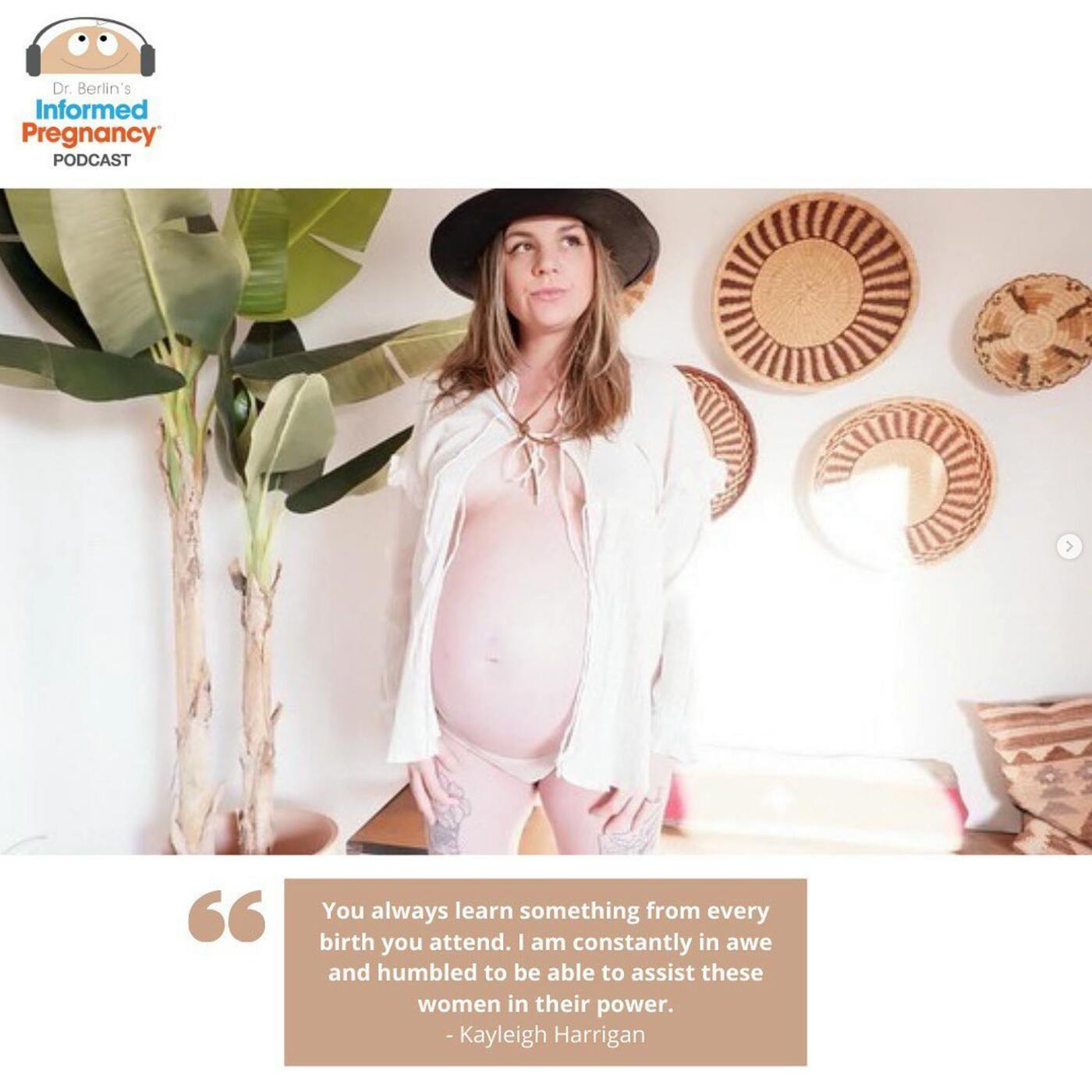
Professional birth & postpartum doula and founder of Mothership birth services Kayleigh Harrigan is 39 weeks pregnant with her first child. She joins the show to share her journey to becoming a doula and soon a midwife! As well as her plans for an unmedicated home birth.

This podcast has been brought to you in part by LMNT electrolyte drink mix. You can get a free sample pack with every order at drinklmnt.com/berlin .
Learn more about your ad choices. Visit megaphone.fm/adchoices
See Privacy Policy at https://art19.com/privacy and California Privacy Notice at https://art19.com/privacy#do-not-sell-my-info.
Key quotes
“A doula is a non-medical support person who was there to kind of help the client achieve the ideal birth that they're looking for. So I think there's sometimes like a misconception that doulas will only support unmedicated births or home births or things like that. Whereas in reality, they're just kind of there to provide the birth and person with the support that they're after.”
“Probably all of it, but I think most specifically the birth is what I'm least nervous about, I would say, whereas postpartum, I'm not concerned about postpartum, but it's relentless, whereas birth is hopefully one or two, one day out of your life, postpartum is forever.”
“Yeah, it's been very, very breezy. I'm kind of waiting for, you know, the other shoe to fall and to go off the rails, but it's been very lovely throughout, and I feel very, very grateful.”
“Well, YouTube yoga, I do YouTube yoga now too, I think is helpful. Community like support groups, pregnancy and postpartum groups, I think are super valuable. I've been participating in those as well. There's also a great organization here in LA called the Joint Birth and Birth Foundation. They support low income folks with birth or postpartum doulas. So that's a really wonderful resource that can pair people who might not have access to a”
“You know, I often tell clients we can influence birth, but we can't control it. So I'm trying to create a lot of space for the potential of having to transfer or not have things go according to kind of my ideal vision. But I also think that babies are wise and they know exactly how and when to be born as well. So I'm really trying to create a lot of space for those narratives and kind of surrendering to the process, because ultimately I'm not the one calling the shots.”
Related episodes
- Ep. 280 Kayleigh Harrigan – After Birth
- Ep. 277 Kelly Kilmartin – After Birth
- Ep. 296 Alessandra Torresani – Before Birth
- Ep. 283 Motherhood After Pregnancy Loss – Nikki Spicer
Transcript
AI-generated transcript with speaker labels — may contain errors, especially names and medical terms. Dr. Elliot Berlin, DC appears in blue; Kayleigh Harrigan in orange.
Download PDF of the Transcript
Dr. Elliot Berlin, DC [1:36] Welcome to the informed pregnancy and parenting podcast. I'm your host. Dr. Elliot Berlin today I am excited to speak with a birth and postpartum doula who is currently a student midwife and 39 weeks pregnant with her first baby She's planning a natural home birth and we're gonna hear all about the plans and the journey to becoming a midwife Katelyn Harrigan, welcome to the podcast Hello, thanks for having me our pleasure. I don't know. I said are it's really just me You make me nervous because you're from a foreign country. Yeah, Canada is a weird place Hey, and how long have you been here from Canada?
Kayleigh Harrigan [2:11] Um, just about four years now so long enough that I can hear my Canadian accent
Dr. Elliot Berlin, DC [2:17] Yeah, your English is very very good. No, see so thank you You're picking it up because you're from a little town in Ontario. What brought you to Los Angeles
Kayleigh Harrigan [2:27] My husband actually, so we met in Florida while I was still studying at the University of British Columbia And so I had to finish school and we could never kind of be together and also he lived in Florida So when he moved to California, then we eloped
Dr. Elliot Berlin, DC [2:48] Welcome aboard what were you studying?
Kayleigh Harrigan [2:51] Gender race sexuality and social justice, so it's kind of like a more inclusive way in which to kind of name women's studies
Dr. Elliot Berlin, DC [2:58] Oh, yeah, it takes up a lot more space on the degree Certainly, certainly Wow women's studies. So how did that come to be for you? What was your interest?
Kayleigh Harrigan [3:08] Well right out of high school I studied communication and worked in fashion and I found that that got kind of superficial pretty quickly So I decided to go back to school thinking I was going to do psych And then taking these grsj courses kind of gave me insight into why people Think and behave the way that they do and kind of like the the social constructivism of our world So there were definitely parallels to psych, but I found it a little bit more real-world and more tangible so I pivoted and
Dr. Elliot Berlin, DC [3:42] Pursued the gender race sexuality social justice degree. I mean, but it feels like you did it right before it became the thing
Kayleigh Harrigan [3:49] Yeah, right, so it was good timing even though well, you know It works well with midwifery and doula work for sure But as you know, I'm currently in school again for something related, but yes
Dr. Elliot Berlin, DC [4:03] No, but I mean it's kind of cool that it was Important to you and you saw the depth of it before, you know The world really came to see it as well. Thank you. You're a leader. Okay, so you came here How'd you come doula where
Kayleigh Harrigan [4:19] So basically when my friends started having babies the conversations that we would have we kind of saw Birth and pregnancy through different lenses a lot of the time and so there was a lot of you know, the kind of doom and gloom and dread and Misery that we kind of see portrayed in mainstream media that was coming up for a lot of my friends Whereas I grew up I'm the eldest of five children At least three of my siblings were born with midwives. One of my siblings was born at home So birth was really normalized and a big part of my life So there's kind of this like dichotomy between my friend's Outlooks on birth versus mine
Dr. Elliot Berlin, DC [4:59] I'm doing the math and three were born with when most one was born at home. What was your birth?
Kayleigh Harrigan [5:05] I was the first and I was with an OB in the hospital. Classic. But my mom did a good see there's a Canadian mom. But my mom actively sought out an OB who was kind of aligned with her preferences and was more hands off. So the seed had been planted very early on. Yeah. So doom and gloom stories. Yeah. So, so what one specific friend, Vanessa, when we were talking, I had just moved LA, I had just finished school. And she asked me if I could do a doula training and attend her birth. And, you know, being a doula was not this like lifelong goal or dream find, I hardly even really knew what a doula was. But it was this light bulb moment. And I did it and loved it
[5:51] and was immediately immersed into like the culture of birth. And unfortunately, I couldn't go back to Canada to attend her birth. But she definitely, you know,
Dr. Elliot Berlin, DC [6:02] prompted everything. So thank you, Vanessa. Wow. Okay. Way to do a favor for somebody. So was it in the training that it really pulled you in? Or was it when you started going to
Kayleigh Harrigan [6:13] birth? I think it probably started at school when I was kind of learning about like maternal mortality rates, or the fact that, like pregnancy, health care, especially in the American for profit system is not made available to everyone in the same way. So things like race very much so will influence outcomes, unfortunately. So, you know, I wanted to kind of enact change from the inside out. So it was always kind of there, I was always kind of interested in birth. And then it just kind of snowballed after
Dr. Elliot Berlin, DC [6:49] the training and I dove right in. Yeah. I mean, that is a little head scratchy, especially because outcomes according to race, trans and socioeconomic class. So it's not really like two different sets of health care. It's similar providers in similar hospitals don't lead to similar outcomes. Right. You said originally you didn't really know what a doula was. How would you define a doula now?
Kayleigh Harrigan [7:16] A doula is a non-medical support person who was there to kind of help the client achieve the ideal birth that they're looking for. So I think there's sometimes like a misconception that doulas will only support unmedicated births or home births or things like that. Whereas in reality, they're just kind of there to provide the birth and person with the support that they're after.
Dr. Elliot Berlin, DC [7:39] Correct me if I'm wrong, but sometimes the reason they go to a home birth is because they have amazing food. You're right. So that's the other reason we go to birth. Versus hospital food, right? Well, I don't know, the hospital food is like, you got to beg for the crackers. Okay. So now how does doula turn into a path towards midwifery, which is not a,
Kayleigh Harrigan [8:02] you know, it's not a small path. Yeah. So I was a birth doula for about two years. I started doing postpartum work. I started doing close sensor encapsulation. And the more out of hospital birth that I would attend, the more interested in midwifery I became because of the food. Yeah, absolutely. And then when COVID hit and doulas weren't allowed in the hospital for almost a year, that really kind of got the ball rolling. And unfortunately, it's difficult to work in the hospital as a doula. Like you can only advocate so much. You can never speak on someone's behalf, of course, but the obstetric culture, it can be tough. You know, there are exceptions to that and there
[8:50] are certainly wonderful providers, but I eventually started to feel complicit in the system that I was so up against that I wasn't aligned with at all. So, you know, witnessing things like coercion or fear-mongering pretty regularly made me want to get out of doula work entirely. And so COVID was a great time because I wasn't actually able to physically support clients. We were doing mostly virtual. That was a great time to kind of do a little bit of research and figure out, okay, how can I actually become a midwife and kind of take matters into my own hands a little bit more?
Dr. Elliot Berlin, DC [9:28] What's the process to become a midwife?
Kayleigh Harrigan [9:30] So I am going the certified professional midwife route. There's also a certified nurse midwife route. So that person would become a nurse first and then would go to midwifery school, whereas the route that I'm pursuing is direct entry. And so I attend a school online called the National Midwifery Institute. And that usually takes about two to three years of coursework. And then there's also a clinical component. I'm working on that right now here in LA. And so there are, you know, minimum requirements of observational birth, secondary births, and then eventually you'll shift into a primary role.
Dr. Elliot Berlin, DC [10:11] It's a secondary birth. Oh, you were at the birth as a secondary provider.
Kayleigh Harrigan [10:15] Yeah. Yeah. So kind of assisting but not super hands-on. You're not kind of like in the lead
Dr. Elliot Berlin, DC [10:20] role. Shouldn't it be secondary and tertiary? Yeah, we can call it that. Because the mom is like primary. Certainly. Absolutely. Observation, just a nuance. And so then eventually kind of where
Kayleigh Harrigan [10:34] I'm at now is I am leading and of course I have my clinical supervisor right beside me kind of guiding my hands, whispering into my ears, supporting me. And so basically you have to hit X numbers in each of those categories and then you'll sit for an exam.
Dr. Elliot Berlin, DC [10:52] Is it crazy cool? Is it crazy cool? Yeah. What part?
Kayleigh Harrigan [10:57] Guiding babies and helping in any way that someone who's giving birth asks for help. Yes. Understatement of the year. You know, you always learn something from every single birth that you attend and it never gets old. And I'm constantly in awe and, you know, humbled. And I can't believe that people give me money to, you know, witness them in all of
Dr. Elliot Berlin, DC [11:20] their power. You know, as I do that, I would say I don't know why and no matter how many births I would see be a part of when that baby comes out, no matter how they come out, I'm just like tears streaming down my face every time. And thank God I don't wear mascara. It would be a nightmare. I would look like I lost a bad boxing match. And also you did say something, look, the medical model and the midwifery model are completely different. They're both, you know, I think what they have in common is babies, but outside of that, it's a totally different approach. And, you know, sometimes fear-mongering is just really an expression of fear that the practitioner has themself. And I do have, I do have compassion,
Kayleigh Harrigan [12:05] like the obstetrical model kind of, it frames pregnancy and birth as something to be managed. Whereas the midwifery model is more so, okay, this is a normal season of a person's life and we only kind of interfere slash intervene if necessary. So if I was learning all day how dangerous birth was, my outlook would be completely different. So I do have some empathy and compassion for providers and I don't mean to blanket statement and say
Dr. Elliot Berlin, DC [12:32] that it's all wrong. You know, there's no, no, no, I didn't take it that way. I'm just thinking through with you. Also, there are definitely people in this world who love the home birth model and being independent and doing birth themselves with some people around them for support. And there are definitely people who love having every decision made for them and being told what to do, when to do it and how to do it and not having any responsibilities, so to speak. So there's something for everybody. And in terms of when you said you felt yourself becoming complicit, it kind of reminds me of a story where I was at a long birth. I was very exhausted afterwards coming home
[13:09] and on the way home, I was like, I'm exhausted, but I'm hungry. So I went into this place that was called Mexico sure. And I had an enormous burrito. I didn't realize when I ordered it until it came out that it's meant for two people, but I have this policy. I never take stuff home from restaurants. So I just ate it. I'm driving home and I'm sweaty from refried beans and chilies and whatever was in there and too much food. I'm having a hard time breathing. And I go into my house, walk upstairs and collapse into my bed and it's like the middle of the day. I just canceled patient. I just had to go to bed. I was probably asleep for a half an hour when I got a phone call from my next client,
[13:47] who's not due for a couple of weeks. And she's sort of like told me she was in labor, but it wasn't like, Hey, I'm not sure this might be this. Just stay near your front. She was like, I'm at Cedar center. I need you right now. I was like, oh, gee, I was like, this has to be a nightmare. I got up, got down to my car, drove over there against, I have a towel. I'm sweating so much. I don't know if I'm more exhausted or more digestively in trouble. And I got into that room and I just, I mean, she's the one who's supposed to have rectal pressure, maybe TMI. It was very uncomfortable and things seem like they were moving quickly. And eventually the nurse was like, Hey, you want me to check you might be ready to push.
[14:32] I'm like, yeah, check her, check her. And she was only like three centimeters and she was deflated. And I was thinking, maybe just have a C-section because I got to go. So I never said that. No, no, no, no. She actually, what ended up happening was she did not yet have an epidural. And this is definitely gonna be TMI. So once she got her epidural, they kicked us all out. And I was able to snag a spot in the waiting room restroom. And I had my B-section, my burrito, and she did not have a C-section. And for the record, I never told her to get a C-section, it was just what was going on in the voices in my head. Alright, we're gonna take a little break. When we come back, we're gonna find out about your pregnancy.
[15:15] Don't go anywhere!

Dr. Elliot Berlin, DC [17:37] Welcome back to the Informed Pregnancy Podcast. We're talking to communicator and women's gender studier, and also doula and midwife and 39-week pregnant, almost mom, Kaylee. Welcome back.
Kayleigh Harrigan [17:55] Hey.
Dr. Elliot Berlin, DC [17:56] All right. Is it weird having been to so many births in different roles, and now you're the one?
Kayleigh Harrigan [18:05] No, I don't think so. There's a familiarity that I kind of know what I'm getting myself into, and that is comforting.
Dr. Elliot Berlin, DC [18:14] In terms of the pregnancy, in terms of birth, in terms of motherhood, or all of it?
Kayleigh Harrigan [18:19] Probably all of it, but I think most specifically the birth is what I'm least nervous about, I would say, whereas postpartum, I'm not concerned about postpartum, but it's relentless, whereas birth is hopefully one or two, one day out of your life, postpartum is forever.
Dr. Elliot Berlin, DC [18:38] Have you guys decided if you're going to talk to the baby in American English or Canadian?
Kayleigh Harrigan [18:43] It'll be a hybrid.
Dr. Elliot Berlin, DC [18:45] Oh, that's so good. How has pregnancy been?
Kayleigh Harrigan [18:49] Suspiciously wonderful.
Dr. Elliot Berlin, DC [18:51] Ooh.
Kayleigh Harrigan [18:52] Yeah, it's been very, very breezy. I'm kind of waiting for, you know, the other shoe to fall and to go off the rails, but it's been very lovely throughout, and I feel very, very grateful.
Dr. Elliot Berlin, DC [19:03] I'm grateful for you. I'm so happy for you that that is the case, but that is generally not what people say at 39 weeks. Right?
Kayleigh Harrigan [19:11] Going back to my mom having five children, I think I know why she was onto something. Like pre-pregnancy, I had back pain and that's gone. Like that's unheard of.
Dr. Elliot Berlin, DC [19:22] Yeah, that's weird.
Kayleigh Harrigan [19:24] A little heartburn and sleeping well. Digestion is great.
Dr. Elliot Berlin, DC [19:28] I have so many more pregnancy symptoms than you do.
Kayleigh Harrigan [19:31] That's bizarre. Thank you for carrying the weight for us.
Dr. Elliot Berlin, DC [19:34] Literally.
Kayleigh Harrigan [19:35] Okay.
Dr. Elliot Berlin, DC [19:36] So what kind of things are you doing to take care of yourself during pregnancy?
Kayleigh Harrigan [19:41] So I think I want to acknowledge like privilege is a big part of this. I have access to wonderful chiropractic care, prenatal massage, midwifery care as well. And my midwife, Alex, who is also my mentor, she is big into nutrition. So there's a lot. of guidance in that regard, and I think that that really is part of the reason I'm feeling so well. You know, prenatal yoga, all of the things, spinning babies, trying to do it all, and it seems to be really helping. Were you doing these kind of things before? Before I was pregnant? Yeah. I was doing some of the things. I was doing chiropractic care, yoga here and there, but massage, not so much, spinning babies, no, because that wouldn't really make any sense
[20:31] other than supporting people and clients. So a lot of it is new. The nutrition stuff, I've been doing that for a little while and just hearing Alex kind of constantly talk about it and share that information with clients. So have you ever heard of Weston Price or like nourishing traditions? Yeah. Yeah. So it's basically kind of like a more ancestral diet. So like a lot of like slow cooked foods, lots of fermented foods, lots of eggs, like pasture raised, grass-fed meats, things like that. So I kind of adopted that lifestyle a little bit more before I was pregnant, but then also really ramped it up when the baby came.
Dr. Elliot Berlin, DC [21:10] Random question. Yeah. Since you'll be attending your birth, does it count for your checklist of how many births? Oh, I don't think so. First time you'll be primary. I know. I just thought I'd ask. Okay. You mentioned privilege, like how these things are available to you. I do have this question. So like what kind of things would you do if you
Kayleigh Harrigan [21:37] didn't have access? Yeah. So kind of like where my priorities, like if I could only choose some
Dr. Elliot Berlin, DC [21:44] or- Yeah, or if you wanted to keep your mind and body happy, but had limited resources.
Kayleigh Harrigan [21:52] Well, YouTube yoga, I do YouTube yoga now too, I think is helpful. Community like support groups, pregnancy and postpartum groups, I think are super valuable. I've been participating in those as well. There's also a great organization here in LA called the Joint Birth and Birth Foundation. They support low income folks with birth or postpartum doulas. So that's a really wonderful resource that can pair people who might not have access to a
Dr. Elliot Berlin, DC [22:22] doula with one. Yeah. I think that there are a lot of things that you can do without spending a lot of money. And truthfully, if you go back to the ancestral diet, they were doing things with, you know, where they didn't even have YouTube yoga, you know, right? They would get up, they'd go for a walk. There's lots of different ways that you can exercise and hydrate, you know, water's not expensive, it's plain old water. Unless you buy that heroin. It can be, all these things can be expensive. But there's also ways to do them just with nature. And it's a little different, you know, it's not exactly the same. In some ways, it's probably better. And in some ways, it's not as good. But you know, maybe I'll
[23:05] put together an episode on just taking care of yourself. By the way, even just people with more money, but don't live in a city where these kinds of things are available. So what do you do without them? And there's a lot, there's a lot you can do without them. So that's a good idea. All right. I'm glad you came on or I never would have thought of it. All right. I really want to find out your plans for birth. You know, I know it's going to be a home birth, but I have so many more questions than that. Let's take a little break and we're going to come back and chat about that. Welcome back to the informed pregnancy podcast. We're talking to student midwife, Kaylee. All right. Here's the thing,
[23:54] Kaylee. You gave me a great idea. I forgot that I also use YouTube to do my high intensity interval trainings. Okay. I just watch them. I find them to be very easy to do that way. Right. You're having a baby like very soon. Maybe now. I mean, I keep dreaming that that would happen during the labor while you're, while you're padding. Yeah. It's happened on the massage table before, but never in. Okay. Yeah. Okay. So you're breezing through pregnancy. You're feeling pretty good. You're doing a lot of things to take care of yourself. And like in your mind, it's like I grow baby. I get a baby out. Yeah. And who is going to be midwife, Alex, who else is going to be on the team?
Kayleigh Harrigan [24:43] Um, one of my, another mentor in my life, Jennifer Huddleston, she is a physician's assistant and former doula. And she's actually transitioning into midwifery right now. Um, she is going to be assisting Alex. And then I have a fabulous doula. slash photographer, Stacey Blackwell of Modern LA Dula. I know you know face. And then my wonderful partner, Michael, and two out of four of our dogs.
Dr. Elliot Berlin, DC [25:12] Why not the other two?
Kayleigh Harrigan [25:14] The two big ones are a little bit nervous. So I don't want to kind of protect the energy and don't need anyone else pacing around sweating.
Dr. Elliot Berlin, DC [25:23] Yeah, I think I've talked about on here before, but I was at one home birth where they literally had to put the dog on a treadmill. And I'm not even kidding. He was on the treadmill for well over an hour. And he was just walking, walking, walking, walking and burning off nervous energy. And I was like, at least give him Netflix or something. Maybe the hit videos he could have watched. The hit videos, yeah. We could both feel good about ourselves after that. So you have your midwife, your midwife assistant who's becoming a midwife, your photographer, Dula, Stacey. You're gonna be there. Yeah. And El Partenero. Yeah. What's his role in your mind?
Kayleigh Harrigan [26:04] I think it's gonna be pretty hands-on. That's kind of what we've talked about. I don't want him to feel excluded. Not that the team would make him feel excluded, but I know that he knows everyone in the room is a little bit more familiar with birth.
Dr. Elliot Berlin, DC [26:21] Oh, but nobody in the room is more familiar with Kaylee.
Kayleigh Harrigan [26:25] Right, right. So I hope that he can keep that in mind. I know that the team is there to support him and help guide him as well and make suggestions for how he can kind of show up for me. So my hope is that he is okay with being vulnerable, especially because it's a group of people that he already knows, right? But I'm confident that he will be amazing.
Dr. Elliot Berlin, DC [26:48] Are there things that you're going to have besides people for comfort?
Kayleigh Harrigan [26:54] Definitely the birth pool, probably shower. So I'm envisioning a lot of hydrotherapy. Dogs, the dogs make me really happy. So yeah, some snuggles with them too. We've got a great backyard. So we'll see how I'm feeling and what time of the day it is, but it would be nice to kind of, at least for the earlier labor stages to spend some time outside or in nature as well.
Dr. Elliot Berlin, DC [27:21] At 39 weeks now, do you feel like you're almost, because like you've been in the zone already for labor for a couple of weeks now.
Kayleigh Harrigan [27:31] I don't think so. I imagine that there's like this shift that will happen, but it hasn't shifted yet, I don't think. But what do I know? Maybe it'll just kind of occur.
Dr. Elliot Berlin, DC [27:43] I think you know a lot, not just as a midwife, but I think even as a mommy, like you know what's going on.
Kayleigh Harrigan [27:50] There were some things on my to-do list that I was asking the baby to please hold off on and they're all done now. So they are welcome to come. Although I'm really enjoying this like maternity leave season that I'm having right now as well.
Dr. Elliot Berlin, DC [28:04] Sounds dreamy. Yeah, yeah. Do you know the sex?
Kayleigh Harrigan [28:09] I don't.
Dr. Elliot Berlin, DC [28:10] Okay, I think girl.
Kayleigh Harrigan [28:12] You think girl?
Dr. Elliot Berlin, DC [28:13] Yeah.
Kayleigh Harrigan [28:13] About three people in the world who think girl. One of which is my mother though, and she's not usually wrong, but like strangers, people come out of the woodwork to let me know that this child is a boy. And in the beginning I really thought that they were a boy, but then I wasn't sure if it was because everyone around me was telling me that it was the boy. And interestingly, every dream that my husband has, it's a girl. So we've got to keep things in check. Yeah. And every dream that I have, I never know the sex, but I've had several reoccurring dreams where there's this little ragamuffin girl. I don't know who she is, but she's there. So all that to say I have no idea.
Dr. Elliot Berlin, DC [28:57] Well, you guys have fantastic dreams. I also wonder if you have a premonition about these two things, size, like weight or length, and where in relation to your estimated due date you think you'll deliver.
Kayleigh Harrigan [29:14] We tend to have pretty big babies in my family. So my sister Avery was 10 pounds, 14 ounces.
Dr. Elliot Berlin, DC [29:22] Whoa, healthy.
Kayleigh Harrigan [29:24] Yeah, she was my mom's fourth babe. So I'm imagining that they're going to be at least eight and a half.
Dr. Elliot Berlin, DC [29:31] I was thinking eight and a half. I was just thinking eight and a half.
Kayleigh Harrigan [29:35] Okay, so we'll go with that eight and a half. Probably long, my husband's pretty tall. And then I don't know when they're coming. Again, kind of the pattern in my family is that babies tend to kind of come on time, air quotes, whatever that means, because they're so giant. So I think that they don't need to cook that long because they're already right for the plucking. So.
Dr. Elliot Berlin, DC [30:00] I am predicting girl, okay, eight and a half pounds in about six, seven days from now.
Kayleigh Harrigan [30:08] Okay. I'll keep you posted.
Dr. Elliot Berlin, DC [30:10] But you are predicting question mark on the sex on the date, question mark on the date. Well, you know, it's going to be eight and a half pounds or more. Yeah. Okay. Do you check yourself when you want to know what's going on?
Kayleigh Harrigan [30:30] It's hard to reach, hard to reach. Yeah. So potentially in labor, it might be easier as the cervix kind of becomes more interior, but it is not available to me right now. Okay.
Dr. Elliot Berlin, DC [30:43] Do you do checks before you go into labor?
Kayleigh Harrigan [30:49] So maybe if I'm like around 41 weeks or something, I'm sure, you know, in California, you can only give birth at home between 37 and 42 weeks.
Dr. Elliot Berlin, DC [30:58] Only partially true at home with a midwife.
Kayleigh Harrigan [31:02] Touche, thank you. So maybe around 41 weeks, it might be a good idea to kind of do a cervical check to kind of see what's happening. Is the cervix starting to change at all? And depending on what's going on, kind of enact some potentially more aggressive isn't the right word, but start introducing some measures to encourage the baby to be born.
Dr. Elliot Berlin, DC [31:23] That's really beautifully spoken.
Kayleigh Harrigan [31:25] Thank you.
Dr. Elliot Berlin, DC [31:27] You're real.
Kayleigh Harrigan [31:29] Thanks.
Dr. Elliot Berlin, DC [31:30] And I hope you have the birth that you're dreaming of.
Kayleigh Harrigan [31:35] Thank you.
Dr. Elliot Berlin, DC [31:36] However, it is that you're dreaming of it. Sometimes in birth, things go a little bit off the path from the dream. How are you, if at all, preparing for that?
Kayleigh Harrigan [31:47] Yeah, that's a really good question. You know, I often tell clients we can influence birth, but we can't control it. So I'm trying to create a lot of space for the potential of having to transfer or not have things go according to kind of my ideal vision. But I also think that babies are wise and they know exactly how and when to be born as well. So I'm really trying to create a lot of space for those narratives and kind of surrendering to the process, because ultimately I'm not the one calling the shots. But I am grateful that I've really kind of set myself up for success and I have, you know, a great team and doing all the things. But who knows?
Dr. Elliot Berlin, DC [32:32] I'm sure considering your car, you'll be fine.
Kayleigh Harrigan [32:36] You're absolutely right. Yeah.
Dr. Elliot Berlin, DC [32:38] Haley, do you have any final thoughts before we close this pre birth episode of your birth journey story?
Kayleigh Harrigan [32:45] I don't think so.
Dr. Elliot Berlin, DC [32:47] OK. I've put a lot of ground. Yeah. Well, I'm super excited. I'm never right about guessing gender sex. I am right about 20 percent of the time. So I feel bad for your mom, but it's probably going the other way. But I'm still holding my thing. But I'm really excited for you to have a baby so I can find out how off I was.
Kayleigh Harrigan [33:08] I can't wait to share that info with you.
Dr. Elliot Berlin, DC [33:10] All right, Kaley, where can we find you online?
Kayleigh Harrigan [33:13] You can find me on Instagram. My handle is at mothership underscore birth at mothership underscore birth.
Dr. Elliot Berlin, DC [33:21] I have to ask where did it come from?
Kayleigh Harrigan [33:24] Yeah. My brain. That was the bane of my existence was trying to figure out a name for my business. You know, I put the M in parentheses to be more inclusive because not everyone who has a baby identifies as a mother. So that was something that was important to me. But it just sounds cool.
Dr. Elliot Berlin, DC [33:44] Oh, so it's either mothership or othershipped. Yeah. OK. Wethership underscore birth at Instagram. And we're on Instagram, too, at Dr. Berlin. It's D.O.C. T.O.R. B.E.R. L.I.N. We will see you again shortly for the after episode of this podcast. Have a wonderful birth. Thank you.
Want more pregnancy + parenting? Start your FREE TRIAL of Informed Pregnancy+ and get access to all our curated pregnancy and parenting content — original series, iconic birth films like The Business of Being Born, prenatal workouts and more.
