
November 17, 2022 · 40 minutes · Episode 311
About this episode
Writer, actress, and producer Virginia Rand DeWitt is pregnant with her first child. In this episode, she candidly shares about her experience with drugs and alcohol during her early life and her career as an actor, her harrowing journey to sobriety, and plans for her upcoming home birth.

Learn more about your ad choices. Visit megaphone.fm/adchoices
See Privacy Policy at https://art19.com/privacy and California Privacy Notice at https://art19.com/privacy#do-not-sell-my-info.
Key quotes
“But the principle of sobriety that I have come across is that honesty and feeling connected to just something that's bigger than you.”
“And I said, yeah, I am. So I went back the next day and I've been sober ever since.”
“When I act as if I am a part of more, my life is better.”
“But from my experience, I just really want to at least try to not escape my body whatsoever. I spent so long trying to do that.”
“And I think coming into the world at home, in the same room where you were created, you know, out of the love between two people, you know, there's something really beautiful in that.”
Related episodes
- Ep. 379 Bonnie Wright: Before Birth
- Ep. 291 Jenna Ushkowitz – Before Birth
- Ep. 166 Gillian Shure: Before Birth
- Ep. 353 Madison Young: Before Birth
Transcript
AI-generated transcript with speaker labels — may contain errors, especially names and medical terms. Dr. Elliot Berlin, DC appears in blue; Virginia Rand DeWitt in orange.
Download PDF of the Transcript
Dr. Elliot Berlin, DC [1:36] Welcome to the informed pregnancy and parenting podcast. I'm your host pregnancy focus car factor. Dr. Elliott Berlin My guest today is an actor and producer who is seven years clean and sober Currently pregnant with her first child and is planning an unmedicated home birth Virginia Rand DeWitt welcome to the podcast. Hi. Thank you. I do want to amend
Virginia Rand DeWitt [1:57] I've been in recovery for seven years, but I've been clean currently four and a half years
Dr. Elliot Berlin, DC [2:02] Oh clean four and a half years. Okay Let's start at the very beginning where you're from originally
Virginia Rand DeWitt [2:07] So my parents were two pretty Traumatized people so I was born in Louisiana where my dad's from but then grew up in Washington DC where my very waspy mother's from her parents met at a brand new organization The 50s called the CIA She proceeded to grow up in war zones Basically when her dad was transferred to the State Department And I think that she stops being able to recognize the difference between a foreign war zone and a domestic war zone So that is a I think decent summary of my childhood
Dr. Elliot Berlin, DC [2:46] Okay, how did that translate into life for you?
Virginia Rand DeWitt [2:49] It was a lot of moving around which is why the where are you from question isn't easy You know, I was born in Louisiana But I left when I was three moved to Virginia moved to DC moved to Rhode Island To Maryland and then when I was 13, I said, you know enough of this send me to boarding school So two months after I turned 14, I shipped out to England and stayed there for five years
Dr. Elliot Berlin, DC [3:14] What did you choose England?
Virginia Rand DeWitt [3:17] They spoke English and had a very lax drinking age
Dr. Elliot Berlin, DC [3:21] Okay Was that your pitch to your parents?
Virginia Rand DeWitt [3:24] My pitch to my parents was that academically you get to specialize at a younger age So I was good at the righty Cerebral language you stuff but the math science stuff not so much
Dr. Elliot Berlin, DC [3:39] What did you want to specialize in?
Virginia Rand DeWitt [3:42] Well, I wanted to be an actor pretty early I went to this school called Beatles that you know, Daniel Day Lewis went to and Laurence Olivia went to and Very quickly it became clear that my accent was going to be the subject of ridicule So I quit and I started studying philosophy and I studied that for five years before Getting the bug and I was at Bristol University in the United Kingdom studying philosophy and I transferred to NYU Where the wheels really started falling off in lower Manhattan. Well, you were in England
Dr. Elliot Berlin, DC [4:19] Part of your rationale was lax drinking age, but you moved there 14. We're already drinking at 14. Yeah When did you start?
Virginia Rand DeWitt [4:27] The first time I got drunk and went to a nightclub was when I was 12 in Paris Because you could do stuff like that in Paris back in the day. I mean, I'm only 29, but it's interesting the world is very different now than it was even when I was a teenager and You know me too did not exist yet so whatever happened was your fault and The school I went to is also exposed to you know, the English elite There's a lot of drugs amongst rich teenagers you're drinking kind of opened up into a drug habit yeah in the early 2000s ketamine was pretty popular in London and then eventually you know cocaine ecstasy I know it's crazy because I look at a 15 year old now
[5:19] and I think that looks like a child that doesn't look like someone who should be out you know taking drugs and engaging in sexual activity I mean you mentioned me too wasn't around did you have me two issues oh yeah yeah a lot of the experiences you know gray areas of consent and then as I got older and the drugs got darker there were you know instances of you know saying outright I'm scared and I want you to stop and being told to shut up and you know dealers expecting to get paid for you or is there any road to getting out of that do any effort at the time the thing about alcoholism and addiction is that it's all denial and the catch-22 of it is that continuing to engage
[6:10] in the drugs and alcohol helps you forget all the reasons that the drugs and alcohol aren't working it also runs in my family my dad's an alcoholic a pretty scary loud sometimes physically aggressive alcoholic so I didn't know what normal looks like and his dad was an alcoholic his dad died in a mysterious fire set in a southern jail that ultimately killed him and they don't know if he said it or if it was foul play so yeah a lot of darkness around that my brother and sister have also struggled with substance abuse so tradition yeah it's family yeah and my mom's brother was a heroin addict at one point their father who was the ambassador of Thailand at
[6:57] the time had to come and drag him out of a Thai prison with his diplomatic immunity for heroin possession when he was a teenager so you eventually get out of it when I was 21 I got 86 from a bar in the nicest way and the bartender said honey I've been doing this a long time and I know when someone's pretending to have fun and you're clearly miserable and you should go home and the wheels had been really falling off for a while I'd been living such a double life because you know I'm still vain and also still ambitious so I had you know my studies at NYU I interned at the Colbert report I did a summer internship in DC on Capitol Hill I intern at the mayor's office and I was always able to hide the
[7:43] external behavior and eventually I couldn't so having a stranger call me out was such a blessing and I went to rehab a few days later and little did I know I wouldn't be allowed back to New York City and that no one would buy me a plane ticket and that's how I ended up here and study Los Angeles the rehab was in Utah but to get out of rehab I had to agree to go to a sober living program and that's what brought me here and then my driver's license expired so I ended up with a California license and it was the first time my ID ever matched up with where I was living the one piece I understand is why you couldn't get back to New York oh my mother who was
[8:29] paying for the rehab was like I'm not buying you a plane ticket back to New York you can go to sober living in California or you can stay in rehab okay so was your mother also a victim to alcohol and drugs or she the one she's what you call a good old-fashioned codependent and so her craziness you know and poor thing god bless her she has so much guilt around this but the craziness of my dad was always being matched by her denial and you know coming also from a family like that where you always put on a brave face and you don't address what's going on I mean you know her parents were military intelligence she had US military level being able to
[9:16] deny what was really happening and her mother also later joined like est and got into a whole bunch of Eastern stuff so she was very much of the you know just accept what's happening just accept what's happening don't be a victim which isn't great mentality for parenting we can get into that now but she now understands that children cannot regulate their emotional responses but at the time her go-to to dealing with being unhappy or having upset feelings was like you know you really get to choose your own experience which I can't imagine saying to a seven-year-old at this point but a traumatized seven-year-old wheels So, you know, she also lived before pop psychology being readily available on Instagram.
[10:05] So she didn't understand that telling any traumatized person that they were choosing their own experience was a big no, no.
Dr. Elliot Berlin, DC [10:11] Was rehab and sober living facility, were they effective for you?
Virginia Rand DeWitt [10:18] For a couple of years. Yeah. Maybe even just out of spite. The thing is that sobriety was actually fun for me at first. I spent my first few years in California hanging around a bunch of like graffiti artists and old punk rockers, which I think raised the eyebrows of my WASPy family back East. But the principle of sobriety that I have come across is that honesty and feeling connected to just something that's bigger than you. You know, it can be God, it can be the universe, it can be the sense of humanity that you relate to, but your life can't just be about you. And, you know, I got into an isolating relationship, started to feel too effing special to relate to anyone else.
[11:07] And a joint came my way once and I started smoking it. And I smoked pot for a while because pot was never my thing. And green and sober is just so popular here in California. So that did eventually lead me back to drinking, which very quickly led me back to drugs. I got sober a second time, no rehab, no sober living, just going into what we call the runes, 12 step program.
Dr. Elliot Berlin, DC [11:35] Oh, I see.
Virginia Rand DeWitt [11:36] Yeah. And, you know, I don't represent that community at all. I can just say that they helped me as is standard with an anonymous program. But the thing that got me sober again, like it wasn't any of the dark, horrible things, like a lot of dark, horrible things happen. You know, the first time it was a stranger being compassionate and the second time it was a stranger being compassionate, I was hired as an actor on a job and I showed up late and still drunk and apparently I knew my lines, but I was saying them in an English accent, which is very much my Emma as soon as I started drinking and one of the producers had to pull me aside and say, I can't put you on camera like this.
[12:18] I'm going to send you home. And I know you used to be sober and I think you should do that again because you're probably better than this. And I said, yeah, I am. So I went back the next day and I've been sober ever since. And I am quite glad for that experience because, you know, I spent my 22nd birthday in rehab. I was so young and I'm sure somewhere down the line, when the stakes were much higher, I would have wondered, you know, was I just depressed? Was it because my childhood was traumatic? Like, you know, maybe I can give this another shot. So I'm glad I did it when I was 24. And the damage I caused, I mean, I can't say it didn't affect
[12:58] other people because that's such a common excuse for alcoholism and addiction to say, well, what I'm doing is only hurting me. And it's not true, but I didn't have anyone relying on me the way I will in the next two weeks.
Dr. Elliot Berlin, DC [13:12] Yes. Things are changing for you big time. Do you have any specific episodic regrets?
Virginia Rand DeWitt [13:22] You know, there are some things that happened that I probably would be better off without having happened. But we say that we do not regret the past nor wish to shut the door on it. Like what happened happened. And I understand that it's all symptomatic of this spiritual psychological ism that I have that my dad had and his dad had. And, you know, I was able to stop it and I have no desire to drink and my partner who was there when I came back who saw me, you know, still drunk when I was ready to get sober again, which is incredibly humbling moments. And he's been clean for 21 years.
Dr. Elliot Berlin, DC [14:08] Well, together you are due to have a baby. You're in the zone for delivery could happen any moment. Let's take a little break and find out how you guys met and how the relationship developed. We'll be right back.

Dr. Elliot Berlin, DC [16:46] Welcome back to the podcast. We are talking to Virginia Rand DeWitt. Okay Virginia a dark chapter for you that you put behind yourself once and then again a few years later and then you said you met your partner. How'd you guys meet? Well
Virginia Rand DeWitt [17:03] we'd known each other in my previous sobriety and he is older and has been sober a lot more time and was not interested in a younger woman. So he was you know polite at arm's length and I didn't know too much about him. He has this really wild job and street wear and music merchandise and visual arts and painting and I don't know anything about fashion. So you know basically he happened to be at the meeting I was at when I came back and was like whoa okay you definitely have what I have. You know just saw like the raw darkness in my eyes and was like oh yeah she's for sure like me and we didn't really become friends we were just friendly and then when I had almost
[17:58] two years sober I did this low residency master's through NYU and creative writing because being an actor in LA waiting around for other people's nightmare so I went to grad school and the program actually ran out of their campus in Paris so I was in Paris doing my final workshop and senior presentation and he was there for something I'd never heard of called men's fashion week and we started hanging out and oh god it's so cringe because it's Paris but you know after walking around for a while we were like oh no we're totally screwed aren't we they're coming back from this and then the pandemic hit which kind of accelerated things so by the time the pandemic hit you guys were already a thing it was you know we
[18:50] were sniffing each other out you know we had very fast feelings very quickly there were you know various complications I don't want to get into my age being 20 years younger than him I think also made him pause and he wanted to make sure that he wasn't following an old pattern of jumping into something that wasn't going to be sustainable and so as frustrated as I was at the time I appreciate that he broke his 30-something year pattern of relationships and took things slowly and did some work on himself but then you know once things really took off you know we were discussing marriage and a baby and it was I guess over a year into our relationship I booked a
[19:34] job for three weeks in Montana and we hadn't been apart for that long and of course we thought he'd be able to visit which was so naive because there was still a lot of COVID going around and when I came back we started traveling together because the world had opened up I met his parents we got along great and it was at his parents house that he said where do you see us in five years like I think we're probably gonna end up married and I said okay cool he said this isn't a proposal I'm gonna get down on one knee and all that and then it was last summer sounds like a little pre-proposal it was you know he kept threatening to get down on one knee and but also a pre-acceptance yeah I think
[20:19] the whole popping the question out of nowhere is really romantic and there's something prudent and you know also in today's age where relationships can look so different from the traditional mold I think it is important to talk to your partner about what their opinion is on marriage and kids maybe sooner rather than later oh so we're also talking about kids at that point um when we first had the conversation of this is gonna be a serious relationship like we're together you know there's no one else this is what it is he goes I would be surprised we had a baby girlfriend for like 10 minutes but he loves kids and he'd always wanted them and it was just one of those things that like it just never lined up he
[21:08] actually has a history of child care back in the early 90s when he was still strung out he was Kurt Cobain and Courtney loves nanny up in Seattle and he was a manny so he was their primary caregiver which gives me relief because he's changed a lot of diapers you know and it was you know bananas because he was so young and so out of it but even in that state he
Dr. Elliot Berlin, DC [21:35] was able to keep a child alive yeah I mean now you're four years sober is it something I have no idea because I don't have experience with it at all but is it something that is still out there beneath the surface that you
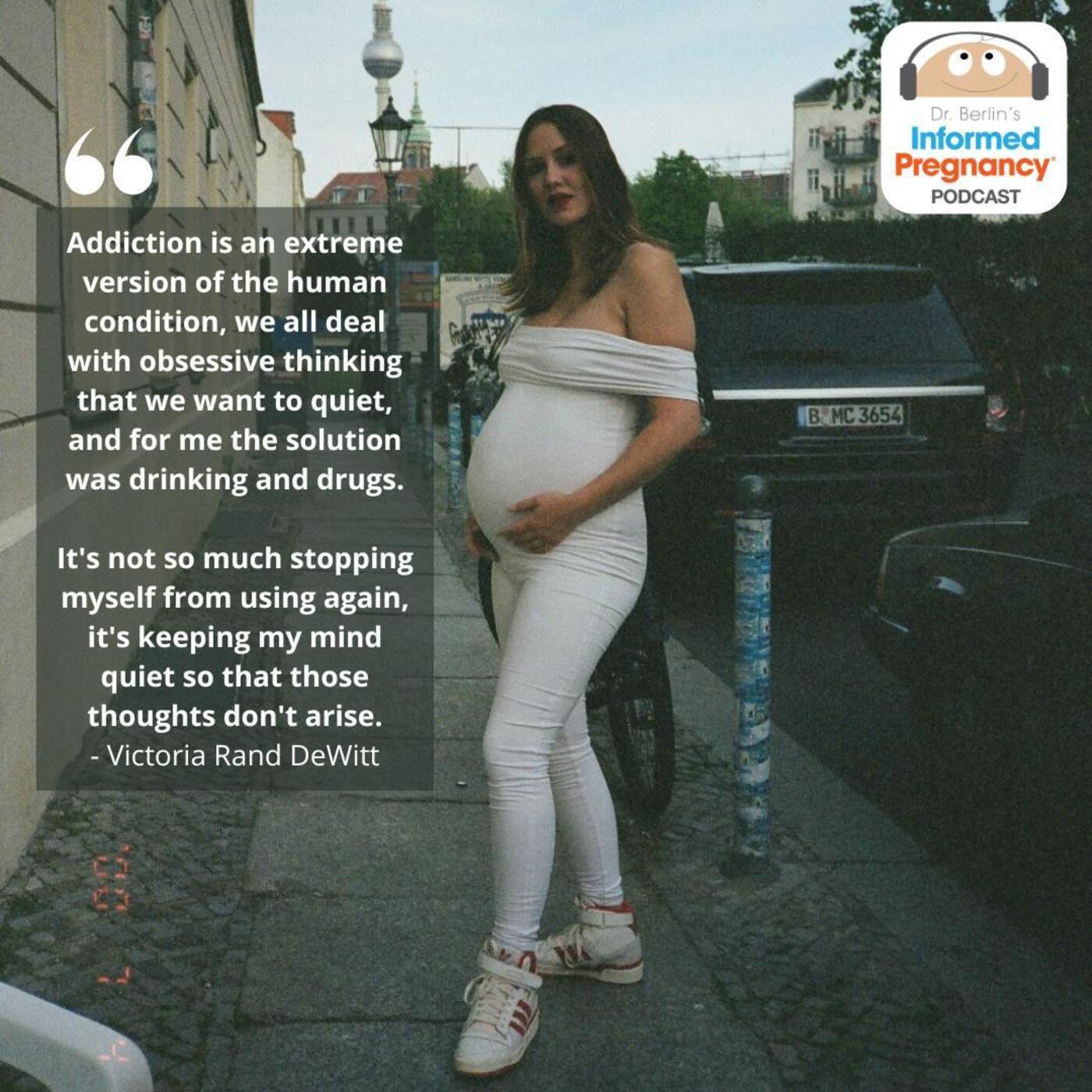
Virginia Rand DeWitt [21:50] have to think about and fight off um I wouldn't say that the urge to drink or use drugs is something that's actively in my conscious I think of addiction as being kind of an extreme version of the human condition which is we all deal with obsessive thinking that we want to quiet and that in my understanding is really the root of it that my mind can get very loud and very scary and there's a whole lot of external reasons for that I'm sure some of it is also in my nature other than like the weird PTSD stuff so the solution to quiet all that down was drinking and using drugs so you take that away and I still have a loud obsessive scary mind with cravings
[22:36] and aversions as the Buddhists talk about some people become workaholics or sex addicts or get really into shopping or weird hobbies or just compartmentalize and bottle everything until they have a midlife crisis my thing is if I let it get out of hands you know there's probably a bottle or a bag in my future so it's not so much making sure that I don't want to drink again it's to make sure that my mind stays quiet and healthy before those thoughts even arise what kind of things to do on a regular basis to keep your mind quieter and healthier no we talked about conscious contact and that can take so many forms be it working with other people who've
[23:22] struggled or are struggling isolation is notoriously a big aspect of having a drinking or drug problem and so being able to find commonality with other people because you know even addressing like the first part of my story like I was still a little shit like I thought I was too special and you know this thing that works for you guys isn't gonna work for me because I have had all these you know unique experiences and I had to cut it out I had to cut out this whole I'm different learn that I am different and special but it's not for all the things that make me tragic and I'm so grateful for that because I think we live in a society today where we're
[24:05] really pushed to use our tragedies as commodity sadly you mentioned earlier
Dr. Elliot Berlin, DC [24:14] that part of sobriety is attaching yourself to something bigger than you
Virginia Rand DeWitt [24:19] what is that for you um I really had an aversion to the word God when I came in you know I'd studied philosophy and thought I might even make my career arguing for materialism and against dualism but I realized there is a sort of vanity in that like looking around seeing human intellect human consciousness and saying well that's it and I'm no longer averse to the word God because I just changed my definition of it and I thought there's something really arrogant and being a white girl in America who grew up in the Episcopalian Church and all of a sudden I know what God means for everyone ever across the world and When I act as if I am a part of more,
[25:05] my life is better. You know, I don't sneer so much as people who have, you know, more of the sky daddy type of God. You know, I'm still skeptical of the effect that Christianity can have in this country. But again, like that's getting into organized religion. And I think when you get too far into that, you can get away from spirituality and just understanding that, you know, my body and my brain and my being here is incredible. And these cells in my body have been here for millions of years and will continue to be here way after the earth has turned to dust. I can't deny that I'm a part of something. And, you know, I grew up idolizing all of these skeptics and atheists,
[25:51] but even George Carlin, one of the most anti religious of them all would say, there is the great electron. Like there is some kind of interdimensional thing. You know, even having this experience of like growing a baby in my body, like how did I know how to do that? You know? And like I looked into Buddhist philosophy. I looked into Jewish theology, which I also really enjoyed. And correct me if I'm wrong, I always felt like the biggest difference between Christianity and Judaism, other than the whole Jesus thing, is that, you know, very generally, and I don't want to offend any Christians, but I find in America, there's this Christian idea of like, well, God's going to do this
[26:39] or God's going to do that. I mean, God's going to smite you and I know what God's going to do. And Jews are like, I don't know what God's going to do. God's done all sorts of crazy s**t. Who am I to say what God's going to do?
Dr. Elliot Berlin, DC [26:51] I remember reading that in the Bible. Yeah, also the spelling is quite different, Christianity and Judaism. Yeah. So there's that. I mean, I think the bigger religions all have a lot in common. And I think that individuals, spirituals also have a lot of commonality with the organized religions, but also some differences. And, you know, spirituality can be what you want it to be, what you make of it. I always picture this world as a temporary world and the world to come as a more permanent world. And it's a big mountain to climb while you're here. And there's a lot of different paths to the top. And so I respect people finding their path and taking it.
[27:29] Doesn't have to be my path. As they say, there's many roads lead to Rome. Yes, but only a few airlines nonstop. I found out from Los Angeles. Okay, let's take another little break. Now that you're having a kid, things are changing. I'd love to know what your plans are for birth. We'll be right back. Welcome back. We're talking to Virginia Rand DeWitt. And as we mentioned, you're due any minute now and you and your partner after your pre-proposal and pre-acceptance must have chosen to make things official.
Virginia Rand DeWitt [29:12] We got married during a pandemic while I was pregnant. Do not recommend.
Dr. Elliot Berlin, DC [29:17] Which part?
Virginia Rand DeWitt [29:19] Getting married in the pandemic whilst pregnant. One or the other, I think is fine. But the combination of two, the magnification, what is that wedding like? It basically meant there was a lot of people we couldn't invite and a lot of people were hurt. And it was like, what do you want me to do? Like I'm five months pregnant and Omicron is out there.
Dr. Elliot Berlin, DC [29:43] What kind of wedding did you have?
Virginia Rand DeWitt [29:45] We got married in an old theater in West Adams that had a big outdoor area for eating so that people could be outside and kind of distanced.
Dr. Elliot Berlin, DC [29:54] I'm sort of hurt that I wasn't invited.
Virginia Rand DeWitt [29:57] Get in line.
Dr. Elliot Berlin, DC [30:01] Yeah. I mean, was the baby planned?
Virginia Rand DeWitt [30:04] Yeah. Super plans. You know, we talked about it last summer and I went off birth control. And after my cycle regulated, it was this very like, feral cave woman response to once I decided I wanted to be pregnant, it was like, it must happen. It only took three cycles and it felt like forever. And like the last menstrual cycle I had, I remember like lying in bed with my partner and we were just, you know, so sad. And so it really made me admire the strength of women who try for like an actual long time. It's a very difficult rollercoaster.
Dr. Elliot Berlin, DC [30:41] When you were finally pregnant, did you know before testing?
Virginia Rand DeWitt [30:45] Um, well, I was so convinced the cycle before that I was pregnant that I really tried to be kind of like loose. I don't know the answer, like, you know, will of God, will of the universe. We did notice immediately that my boobs were really big. We were like, Oh, that's interesting.
Dr. Elliot Berlin, DC [31:06] You both noticed.
Virginia Rand DeWitt [31:07] We both noticed. Maybe he noticed before I did, but, um,
Dr. Elliot Berlin, DC [31:12] is a different vantage point.
Virginia Rand DeWitt [31:14] Yeah. But, you know, I'd been tracking my ovulation on the little P sticks and all of a sudden I know I said I was bad at maths earlier, but all of a sudden I got really good at math. You know, I told myself not to test the first day, but I did. And the line was so faint that I called like my one sciencey friend and was like, what does this mean? And then she said, well, there's pretty much no way you can have a false positive. Like a line is a line. Like if that's stuffs in your P, it's the sciencey term for human growth, hormone, whatever it is. BG. I don't know. Yeah. You know, it's there and I had to get my hair cut. So I went to cut my hair and then I got one of those digital tests
[32:01] that just said pregnant or not pregnant. And I said, you know, I'm going to do this rather than just a little faint line. And if it says pregnant, then I'll tell my partner. And, and it said pregnant, but of course I was at a friend's house in Venice, we live in silver Lake. So I immediately got my car and started driving home and hit the worst traffic.
Dr. Elliot Berlin, DC [32:21] How'd you tell him?
Virginia Rand DeWitt [32:22] I just put the test in his hands and started crying.
Dr. Elliot Berlin, DC [32:26] Oh, that says it all.
Virginia Rand DeWitt [32:28] Like a happy crying and he was so excited. And then he brought up again, you know, we'd been planning on getting married, but when we were trying to get pregnant, we felt very, you know, lackadaisical about it. But as soon as we found out I was pregnant, all of a sudden for us, for whatever reason we wanted to be married, which I would never suggest for anyone else. I don't know why. You know, it all of a sudden became so important. So that was the other aspect of the pandemic. Pregnant wedding was that it was planned in like two months.
Dr. Elliot Berlin, DC [33:00] Yeah. I mean, were you lackadaisical partially because you're waiting for the pandemic to clear up?
Virginia Rand DeWitt [33:06] Maybe. And you know, before we actually knew I was pregnant, like it just didn't seem like it was necessary to be married. And you know, having a kid out of wedlock is like not even really a discussion anymore. It's still a word. I know like it's so archaic, but for whatever reason, you know, we wanted to be, you know, bonded together for life. You know, it felt important. So we did it.
Dr. Elliot Berlin, DC [33:33] How would you characterize the three trimesters in a nutshell?
Virginia Rand DeWitt [33:37] First trimester was like being hungover or car sick. The second trimester is totally fervent. Get done now. You know, I got married in my second trimester and then we went to Mexico and then we went to Berlin because he had an art show and then you came to Berlin and then I came to Berlin, some chiropractic care, some chiropractic care. Wait, insert that in there. And then we went to Japan and flew back from Japan the last day that I could have traveled, like the last day of my second trimester. So it was just pure madness. And then third trimester is, you know, I'm filled groin to gills with the whole entire baby and nesting is real. All of a sudden having coasters seemed really important.
[34:31] You know, one of like the funny little blessings of being domesticated after, you know, being like the cocaine addict who'd stay up for days at a time is it's so quaint to all of a sudden love having drawers that close and in-house laundry and even being a little bit of a germaphobe. It's so different on the other side. And, you know, we watch a movie and we go to bed at 10. 30 p.m. It's wonderful.
Dr. Elliot Berlin, DC [35:03] The finer things.
Virginia Rand DeWitt [35:04] Yeah.
Dr. Elliot Berlin, DC [35:05] You have a birth plan.
Virginia Rand DeWitt [35:07] Yeah.
Dr. Elliot Berlin, DC [35:08] You've ditched the hospital for your plan A. Home birth.
Virginia Rand DeWitt [35:12] Home birth. Yeah. So I'd always been kind of interested in that. You know, my mom also didn't have a great time with us. She got really peer pressured into the epidural. It was Louisiana in the 90s and I'd also just felt like I've worked so hard to feel present in my body. You know, that was the real challenge with me being sober as a young woman was it felt really scary and unsafe. Like the first time I tried meditating, I had a panic attack. You know, because I had just always been on guard ever since I was a little kid. And there was a frightening alcoholic man screaming and slamming doors, you know. And then of course, all of my unfortunate moments where I had, you know, a lot
[35:57] of bad judgment and were around a lot of really stupid and selfish boys, men, whatever you call them. You know, in order to be able to stay sober, I had to deal with all of that and learn how to be in my body and feel safe and comfortable in it. And it was hard. And it took a lot of weird, intense self-reflection and patience and, you know, diving through layers of the psyche. So for something as important as birthing a child, like I didn't want to, I mean, I don't want to suggest that, you know, if you do end up taking medication that you're not present for it, you know, birth is birth and it's always beautiful and magical. But from my experience, I just really want to at least try to not escape my body
[36:45] whatsoever. I spent so long trying to do that.
Dr. Elliot Berlin, DC [36:49] You want to feel the physical intensity.
Virginia Rand DeWitt [36:52] Yeah. I say that now. I'll just check in in a few weeks.
Dr. Elliot Berlin, DC [36:56] Well, sure. You never know how it's going to go until you get there. But your desire at this moment, it sounds like you're saying you know it's intense. You know that there's probably pain involved and other intense feelings physically and emotionally. And at this moment, you don't want to numb yourself to them.
Virginia Rand DeWitt [37:13] Yeah. I have a lot of friends who are like, oh, you want to do home birth? Like, I didn't know you were that person, you know, but you were rational. But yeah, I want to be there for it.
Dr. Elliot Berlin, DC [37:23] One would ask, why not unmedicated at a hospital?
Virginia Rand DeWitt [37:28] The midwives we liked don't really do that. And you know, it's August in LA, if I can avoid driving through MacArthur Park in the middle of summer, because we're registered at Good Samaritan as a backup.
Dr. Elliot Berlin, DC [37:42] Oh, so you have a backup hospital in case you just said you don't need to go?
Virginia Rand DeWitt [37:47] Definitely. And I've been seeing an OBGYN along with the midwives. But like, I've just also known, like, I remember finding out that my friend Gina Miller was born at home. And this was one of my friends in the UK. And it was the craziest thing I've ever heard. You know, it was like finding out that her parents still drove a horse and carriage. Like, what, people still do that? And there was just something really well adjusted about her as a person. And I think coming into the world at home, in the same room where you were created, you know, out of the love between two people, you know, there's something really beautiful in that. I think that if you're playing on a hospital berth, you might as well at least conceive
[38:31] in the hospital as well. You know, I also know it's not very original to dislike hospitals, but you know, I don't like the smells and hospitals are such a peculiar place. They're like airports. There's always people coming and leaving, you know, even between the worlds, like there's people dying. There's people arriving.
Dr. Elliot Berlin, DC [38:52] Yeah, that's true.
Virginia Rand DeWitt [38:53] And the snacks are really expensive, just like an airport. Oh, I mean, honestly, being able to eat the food at my own house was an amazing thing.
Dr. Elliot Berlin, DC [39:02] Who's coming to your berth?
Virginia Rand DeWitt [39:04] Just my husband's invited. No, he wants to be there. He's really present with me and present for this. So it's just him. Kelly and Shaunie, the midwives, who are incredible. You know, they've been doing this for before I was born. Yes, since before my husband was born, you know, and he's in his late forties. So I have a lot of faith in them. And then if she can make it on time from the East Coast, my mom, because a lot of, you know, my reasoning was also I think that this is something she wished that she'd done. And she has a lot of remorse about my childhood, which I hope that she heals because I understand that she was just doing what she thought would empower us.
[39:50] And, you know, she just didn't know better. And I think that she's really present in my life today and she's really looking forward to being a grandparent.
Dr. Elliot Berlin, DC [40:00] first grandchild. Wow, that's sweet. I think parenting, even for me, I have like essentially four teenagers is a heck of a lot easier in retrospect. And in the moment, everybody wants to do the best for their kids. It's just, you know, some people are better or worse at it. Some people get lucky. Some people have more clarity in the moment or ask the right questions from other people. And there's not always a right or wrong in your parenting style. So you could look back easily and say, Oh, I should have done this or I would have liked to have done that. But, you know, we do the best we can. And you turned out fantastic. So I hope looks at you
[40:38] and feels very proud. Yeah. You know, it's, don't we do that in life? And yeah, there does also seem to be something spiritually relevant about having the person who birthed you
Virginia Rand DeWitt [40:49] witnessing your birth. Yeah, maternal, generational connection. You were at her birth. I was. Yeah. Well, that I remember also really tripping me out, finding out that as our first cells were in our mothers, when they were in their mothers, were born with all of our eggs already inside of us. That was so crazy because I never met my grandmother. She died in the 80s. And my mom was in college. And she seemed like a real trip. Like I said, she worked for the CIA. And then she and my grandfather divorced because she got into that, you know, 70s, 80s, new age spirituality, you know, for better or for worse and died. I remember she was living at an ashram at the time. And it was a bit of a controversy
[41:36] because you're not allowed to be born or die at an ashram. That is not the place for that inner world travel. And, you know, and so she had to leave. So.
Dr. Elliot Berlin, DC [41:48] Well, it sounds like you're very close and you have a solid plan for your birth, starting with a plan A, unmedicated home birth surrounded by spiritual midwives and also your partner and maybe your mom. Yeah. And you also have a flow chart of backup plans in case you want to or need to have some of the more modern interventions, it sounds very level headed. And I wish you the greatest of luck for a wonderful experience.
Virginia Rand DeWitt [42:17] Thank you so much. I'm looking forward to it. I'm also really excited to not be 45 pounds.
Dr. Elliot Berlin, DC [42:27] I'm grateful for everything you shared today. And also that you're going to come back and share your birth story with us. Next time we hear you, you'll be holding a little baby in your arms. Between now and then, if we're curious, where can we find you online?
Virginia Rand DeWitt [42:42] Instagram. I'm Virginia.Rand.Dwit. And that's it. I'm not really on Twitter
Dr. Elliot Berlin, DC [42:47] or anywhere else. Me either. Instagram's my jam. I will see you at Virginia.Rand.Dwit and I'll be following along from at Dr. Berlindy, O-C-T-O-R-B-E-R-L-A-N, way to you hear this podcast I did with my friend, Virginia. Thank you so much. All right. At home, if you'd like to check it out, we have an amazing blog now at informedpregnancy.com. You can check it out right there at informedpregnancy.com.
Want more pregnancy + parenting? Start your FREE TRIAL of Informed Pregnancy+ and get access to all our curated pregnancy and parenting content — original series, iconic birth films like The Business of Being Born, prenatal workouts and more.
