
November 10, 2022 · 46 minutes · Episode 310
About this episode
Pharmacologist and Ayurvedic counselor Dr. Amaris Rodriquez was planning for an all natural home birth. Join us as she shares her postpartum journey of navigating the many challenges of her first birth.

Learn more about your ad choices. Visit megaphone.fm/adchoices
See Privacy Policy at https://art19.com/privacy and California Privacy Notice at https://art19.com/privacy#do-not-sell-my-info.
Key quotes
“She said that's an alarming amount of blood. That's not normal.”
“The emotion was, I was disappointed.”
“I knew that I needed to fuel my body in order to push a baby out.”
“And I was only one centimeter dilated”
“My husband was the fiercest protector throughout this.”
Related episodes
- Ep. 309 Amaris Rodriguez – Before Birth
- Ep. 61 Marisa Ringe – Before Birth
- Ep. 438 Postpartum Preeclampsia with Dr. Jamie Barstein and Dr. Nathan Fox
- Ep. 421 Sheridan Hathaway: After Birth
Transcript
AI-generated transcript with speaker labels — may contain errors, especially names and medical terms. Dr. Elliot Berlin, DC appears in blue; Amaris Rodriguez in orange.
Download PDF of the Transcript
Dr. Elliot Berlin, DC [1:36] Welcome to the important pregnancy and parenting podcast. I'm your host pregnancy focus car factor. Dr. Elliott Berlin today You have joined the after segment of a before-and-after birth story. My guest today is Amaris Rodriguez a new mama Congratulations and welcome back to the podcast
Amaris Rodriguez [1:54] Thank you so much. Dr. Berlin. Yeah, I'm happy to be here and I'm happy to Be able to share my after birth story
Dr. Elliot Berlin, DC [2:04] Yeah, last time we talked to you were uh prego very prego And you were planning to have a kid and you were from a pharmaceutical and science background But your comfort zone when it comes to your own health is more on the natural side So, uh, you're planning a fairly uninterrupted birth not even including gasoline to get to the hospital. So So You know, I think like anybody you had some concerns worries fears anxieties that come up Around that period and you had some things that you were doing to work through them now. It's all happened So walk us through it. How was the last bits of your pregnancy?
Amaris Rodriguez [2:43] Yeah, um, well, I feel like I spoke to you a few days before giving birth
Dr. Elliot Berlin, DC [2:48] Yeah, I think we did The baby came before the due date damn. Yeah, so you lost that one We made predictions i'm waiting to see at the end, but just so you know prediction number one I said three days after the due date And uh, i'm already said before you hit your due date. Yeah You win. Yeah, one doctor be zero Yeah, so the baby came before the due date how far before exactly when I turned 39 weeks Wow
Amaris Rodriguez [3:19] Yeah, exactly when I turned 39 weeks and I I actually worked up until the day I gave birth Which is not what I wanted to do. I wanted to have a little bit of time
Dr. Elliot Berlin, DC [3:30] But you know, i'm thinking that there's obviously you guys miscalculated and your due date was off by 10 days and I was right I don't think so. Oh, well
Amaris Rodriguez [3:40] The baby was just ready. The baby was ready to make his debut and uh, yeah, we had a baby boy a beautiful baby boy
Dr. Elliot Berlin, DC [3:49] Sweet, wait a second. So you worked right up until your birth. Yeah, not the due date until I gave birth Yeah, no, I think you said to give birth and I screwed it up Okay Moving back to you and your story. So how did labor start?
Amaris Rodriguez [4:03] Oh man, so I remember Day one I was having Like cramps it felt like period cramps and it happened all day. I thought it was just you know, maybe brax and hicks But I also had a strong feeling that the baby was going to be coming So I remember over the weekend. I was having those cramps and then the following day No, not even the following day that same night at midnight. I started bleeding. So I figured I was having my bloody show
Dr. Elliot Berlin, DC [4:34] Wait, were you having those cramps at work?
Amaris Rodriguez [4:37] No, it was a saturday It was a saturday. I was dead tired I was actually in bed all day and I was just having some basic cramps I would not call them contractions because I didn't feel like they were strong enough to be contractions It's like, oh, maybe this is just some practice for the baby for you know for labor day And then that same night exactly at midnight. I got up to use the bathroom and then, whoosh, like all this blood came out. And I was like, Oh, this is my bloody show. No big deal. They was going to be coming soon. And, um, I was having contractions. That's when the contractions like started. I woke up my husband.
Dr. Elliot Berlin, DC [5:16] Wait. So now you're calling them contractions.
Amaris Rodriguez [5:19] Yeah. Yeah.
Dr. Elliot Berlin, DC [5:20] So they were intense.
Amaris Rodriguez [5:21] Yeah. That's when I started feeling them and more than you thought. Oh yeah.
Dr. Elliot Berlin, DC [5:27] Okay.
Amaris Rodriguez [5:29] Yeah. So I woke up my husband. I was like, I think I just had my bloody show. I'm not too sure how much blood is a bloody show, but I think I just had the bloody show. So, man, I'm like backtracking in my head, trying to think of all the details. So we were super excited. I was having contractions, but they were very like mild and maybe about 15 to 17 minutes apart, variable, but I'm confused.
Dr. Elliot Berlin, DC [5:54] Cause you said they were more than you expected, but then you said they were mild.
Amaris Rodriguez [5:58] Okay. So Saturday I had cramping then that night at midnight, I had the bloody show, and then that's when I actually felt contractions. Oh, okay. But they weren't overwhelming.
Dr. Elliot Berlin, DC [6:08] No, they were not overwhelming.
Amaris Rodriguez [6:10] They're on the mild side. Yeah, definitely.
Dr. Elliot Berlin, DC [6:12] Cool.
Amaris Rodriguez [6:13] Yep.
Dr. Elliot Berlin, DC [6:15] All right. So you're contracting and now it's after midnight.
Amaris Rodriguez [6:18] Oh yeah. It's after midnight. My husband actually had to drive to Bakersfield. My stepdaughter was here with her cousin spending the weekend with us. And we had to take the kids to Bakersfield, which is about an hour and a half away. We had to do that because I was going into labor and in the event, I needed to go to the hospital. We didn't have anybody to watch the kids.
Dr. Elliot Berlin, DC [6:47] Oh, wow.
Amaris Rodriguez [6:47] So now in the middle of the night, he's taking them to Bakersfield, which is about how far from you? An hour and a half.
Dr. Elliot Berlin, DC [6:56] And you're home?
Amaris Rodriguez [6:57] Yeah. So we wake up the kids at 1 a.m. They came running into their bedroom. They were so excited that I was in labor and about to have the baby.
Dr. Elliot Berlin, DC [7:08] How old are they?
Amaris Rodriguez [7:09] One of them is six and the other one is nine. Yeah. The cousin is six years old, so they were super excited. And despite it being one o'clock in the morning, they were such good troopers about it. So my husband drives all the way out there and comes back. Mind you, this is like three hour round trip in the middle of the night to come back to a woman who's laboring, but he makes it back in time, uh, the contractions were still like, you know, mild, moderate, still 15 minutes apart. He comes back and he's laboring with me. He's helping me get through the contractions. Okay. Okay.
Dr. Elliot Berlin, DC [7:52] Slow down. What were you doing while he was away?
Amaris Rodriguez [7:55] Oh, I was really excited, anxious, nervous, walking around and trying to figure out what last minute things I need to do.
Dr. Elliot Berlin, DC [8:05] Oh, you're like nesting.
Amaris Rodriguez [8:07] Yeah. You know, mind you, this entire pregnancy, I feel like I have not nested people, women talk about this nesting thing. I don't think that ever happened.
Dr. Elliot Berlin, DC [8:16] Okay. Did you do anything to, well, first of all, did you reach out to anybody? Or you just kept your little secret?
Amaris Rodriguez [8:24] Um, actually I did. I think around 3 a.m. I reached out to my family on the East coast because I knew it was 6 a.m. over there on a Sunday. Yeah. Yeah. So I reached out to my East coast family. I didn't reach out to anybody here because I'm like, it's 3 a.m. people are asleep and I'm not going to, you know, reach out to anybody over here, but I woke my mom and my sister up to let them know that I was like, I think I had my bloody show.
Dr. Elliot Berlin, DC [8:51] I think I'm in labor and you guys are all about family. Like that's your thing. That's your culture.
Amaris Rodriguez [8:56] Yeah. Yeah, absolutely. So I woke my mom, my sister up and my mom couldn't believe it because it was, you know, before the due date.
Dr. Elliot Berlin, DC [9:06] Oh, she was in my camp.
Amaris Rodriguez [9:10] She didn't think the baby was going to come for like another two weeks.
Dr. Elliot Berlin, DC [9:13] Okay. You showed us.
Amaris Rodriguez [9:15] So she started looking for flights to fly on demand.
Dr. Elliot Berlin, DC [9:21] Wow. Was that the plan?
Amaris Rodriguez [9:23] Yeah. I mean, she was not packed. I don't think that was in her plans to fly on the man, but she started looking for flights and she actually found a flight to fly out. I told her, I was like, if you, you know, if you don't make it, it's okay. And I didn't put the pressure on her anyway. So it was your preference that she would make it. Yeah, definitely. Absolutely. So she finds a flight. She books it. I'm sure she started packing. And like I said, my husband came back from three hours of driving, middle of the night, no sleep. Me, I'm just. like looking around, trying to figure out what I need to get done before the baby comes. I'm staring at this pool in the living room that has not been set up.
[10:08] We didn't even have like all the pool parts. We needed a, like a connector and adapted for the faucet. Yeah. Yeah. Crap. So, no. So when my husband came back, I was like, you gotta go to the hardware store.
Dr. Elliot Berlin, DC [10:20] Who's open at the morning.
Amaris Rodriguez [10:24] So he said I'll go when they open. So I was nervous that we weren't going to have a pool. Oh no. Do you have a tub separate from the birth pool? Yeah, we do have a tub, but there's like glass, like permanent. Yeah.
Dr. Elliot Berlin, DC [10:37] Yeah. One of those sliding doors that yeah, not the comfiest and avoid. So did you need to do anything? Did he need to do anything to help you with, you know, the building momentum and flavor? What do you mean? Like, uh, did you need comfort measures? And if you needed them, what kind of measures were there? Yeah.
Amaris Rodriguez [10:56] He was massaging my back. My back was in a lot of pain. My lower back. Yup. My lower back. So every time I had a contraction, he would press down on my back, the sacrum. He would breathe through the contractions with me and remind me to breathe. Were you making noise? Yeah, I was. I was. So when he got back here, he definitely was helping me through that. Eventually. I called my midwife when it was at a more decent hour. I want to say around 6 a.m. 7 a.m. is when I called my midwife and I told her that I'm in labor. And at that point I had a lot of blood coming out. I was collecting maxi pads of blood and I told her over the phone. I was like, you know, I'm bleeding a lot.
[11:54] I'm not too sure if this is normal or not. And she asked me to send her a photo of the maxi pads. Hello, Instagram. So I sent her a photo. It was a lot of blood. She said that's an alarming amount of blood. That's not normal. That's definitely more than a bloody show. Even though he described it at midnight. Yeah. Yeah. I think he said, whoosh. Yeah. Yeah. There was a lot of blood that came out, but I think the problem is, is that it was a continuous bleed. It was like, it was a lot of blood. You know what?
Dr. Elliot Berlin, DC [12:30] I'm very curious where this goes, but we're going to have to take a little break before we find out. We'll be right back.

Dr. Elliot Berlin, DC [15:02] Welcome back to the informed pregnancy podcast. We're talking to God's gift. That is the meaning of your name. Yes. Yes. You remembered. You remember. Yes. I remember something. Yeah. Your blood started at midnight and you kept whooshing and the graphic images you were
Amaris Rodriguez [15:25] sending to your midwife were a bit alarming. What happened next? Yeah. I also sent the images to my god sister because home girl had five babies and she's a child birth educator. She knows a lot of stuff and she was awake at three a.m. this time. I was sending her stuff as well and she's on the east coast. She's on the east coast. Yeah. So she was one of the people that I reached out to pretty early as well. And she said that it looked like a lot of blood. She brought up placental abruption and she was like, you know, I'm not there to check you, but that's a lot of blood. And she said, you can look up online placental abruption. But you weren't the researcher. Exactly. She was concerned. She was concerned about
[16:09] it. And she was like, definitely tell your midwife. And she was like, you might need to go to the hospital. And in my head, I'm like, no, this is probably, you know, just part of the bloody show. You know, my bloody show is a little bit bigger. It's not a bloody movie. So an appearance. So the midwife knows Bryson's with me. He's helping me through contractions. Midwife says, let's monitor for a little bit longer. See if you can get some rest because you and Bryson have both been awake since midnight. Bryson has been running around wild, going to the hardware store, dropping the kids off three, three hour round trip. Yeah. So I lay down, I was able to sleep for a little bit, maybe an hour. I was able to
[16:53] sleep. And while I was sleeping, Bryson went to the grocery store to get some food for the home birth. I was like, you know, while I sleep, maybe you can go grab some sandwiches and things.
Dr. Elliot Berlin, DC [17:05] You don't like postmates or anything. Bryson, Bryson.com.
Amaris Rodriguez [17:12] Listen, the man is reliable. He went he stocked up on a variety of sandwiches, a variety of juices and snacks and all this stuff. He brought it back. It was great. I wake up from my nap, I check, you know, to see how much I'm bleeding again. Nothing has subsided. I'm still bleeding a lot. And the midwife, she said you should go to the hospital. And I was pretty reluctant. I was reluctant because nobody was here to like check me. You know, it's like I kind of wanted somebody to physically be here and say, Hey, you know, like, you got to go to the hospital. You know, is that an option? Like for someone to come over? Yeah. I mean, the midwives could have came over, but ask for them. But the thing is,
[18:01] she saw enough. Oh, like in her mind, nothing to come over for. Right. Go find out what's happening. Right. She was like, I've seen enough blood already. It's time for you to go to the hospital. I was a little reluctant about it because I know once you step foot into that hospital, you lose all autonomy. Yes. That is what you told me once. Absolutely. Absolutely. So I started packing a bag with my husband. And I was like, babe, you want to pack like some pajamas or something. He was like, I'm not packing anything. He was like, we're going to go to the hospital, get checked and we're coming back home. How far is the hospital from you? Well, that's another thing. There were two hospitals.
[18:43] The one where my obstetrician was, was a little bit further out. We decided to go to the hospital down the street, which is a four minute, five minute drive. So first of all, are you still having contractions this whole thing? Oh yeah. So having contractions, but I'm still, you know, talking and Bryson's, you know, breathing through them with me. And we were able to pack a bag together. I was telling him what
Dr. Elliot Berlin, DC [19:07] to put into the bag. So it's interesting. You never packed a bag because I know you had a backup doctor and a backup hospital, but you never packed a bag just in case, or did I screw you up and you thought the baby wasn't coming for a little while?
Amaris Rodriguez [19:20] No, I was on the fence about packing a hospital bag. One of my friends had a baby two weeks before me and her husband actually was like, uh, you know, Amaris, you should probably pack a hospital bag because you know, Bryson can pack the bag for you, but Bryson is going to be by your side, helping you through contractions. He's not going to want to, he's like, he's not going to want to pack the bag for you. So just pack the bag, just have it just in case. And then you said, and I was like, you know, that's a good idea. So I actually got the duffel bag and I think I put but one or two things in the duffel bag. I did not pack the bag fully, but it was in the plan to have a bag.
[20:06] I wasn't expecting this baby.
Dr. Elliot Berlin, DC [20:09] Well, you were, I wasn't, but I mean, the phone charger, is that like the most important thing?
Amaris Rodriguez [20:15] Bryson grabbed the phone charger for me. He grabbed toothpaste and toothbrush, super basic stuff, some underwear, you know.
Dr. Elliot Berlin, DC [20:23] Yeah, all right, so you pack all your stuff and what's going through your head at this point? Because like you said, you do not love hospital. You do like autonomy. You don't feel like you get it at the hospital. I mean, and you wanted your baby at home. You wanted it all natural, no interventions. And is there fear? Because you also said you're not a fearful person, but that sometimes fear, you know, even for non-fearful people, fear is there. But you know, it's supposed to, it's like a protective mechanism. So I guess my question for you is, is there fear because of like all the blood that people are not excited about? Is there fear of going to the hospital?
[21:04] Is there, you know, feelings of let down or are you like curious? Like what's the emotion?
Amaris Rodriguez [21:10] The emotion was, I was disappointed. I definitely was fearful of going to the hospital and having things out of my control.
Dr. Elliot Berlin, DC [21:22] So your fear is not medical fear. Like maybe something's wrong. Your fear is more like, am I gonna have a say in what happens next?
Amaris Rodriguez [21:29] Yeah, I just fear that there was gonna be unnecessary medical intervention.
Dr. Elliot Berlin, DC [21:35] Okay.
Amaris Rodriguez [21:36] That's what I feared that there's gonna be some unnecessary medical intervention going on once I stepped into that hospital. And that was my biggest fear at that moment.
Dr. Elliot Berlin, DC [21:45] And disappointed at the change of plan?
Amaris Rodriguez [21:48] Disappointed at the change of plans, yep. Because I was so confident in being able to, you know, stay home. And, you know, I just.
Dr. Elliot Berlin, DC [21:57] You didn't even have like your team come over.
Amaris Rodriguez [22:00] Yeah, nobody. I mean, Bryson was the team at that.
Dr. Elliot Berlin, DC [22:03] No, but I'm just saying like, even if you picture like sometimes Homeworth goes on for a long time and maybe you run out of steam or something comes up along the way, but like you're still home. Like then nobody's come to you and you're already leaving.
Amaris Rodriguez [22:16] Exactly, exactly, exactly.
Dr. Elliot Berlin, DC [22:19] And I'm like, we didn't even get to set up the pool. After Bryson went out and got the adapter, right when the Homeworth store opened, you have all these sandwiches and who's gonna eat them.
Amaris Rodriguez [22:31] Exactly.
Dr. Elliot Berlin, DC [22:31] I see the disappointment. Yeah, yeah. Okay, so you go to the hospital.
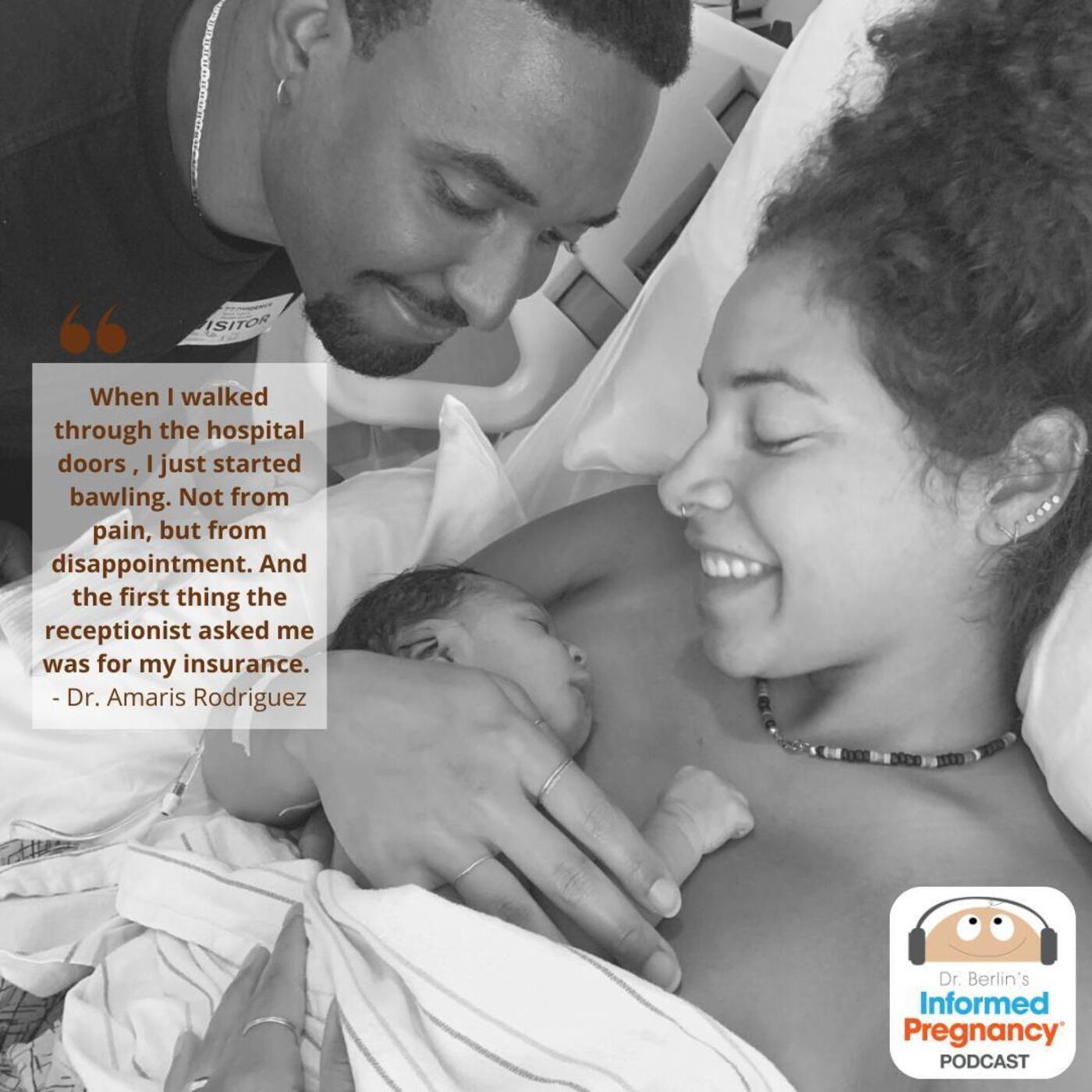
Amaris Rodriguez [22:37] Yeah, we go to the hospital, which is four minutes away, which was beautiful. It was a short drive. Go to the emergency. And right when I walk in through that door, I started sobbing. I was crying so much. Dr. Berlin, oh my gosh, I walked up to the little desk and she asked for the first thing was insurance. And I just was crying and I was like upset that I had to be at the hospital. You know, like I said, it was just disappointment. And it wasn't even the pain from contractions or anything like that. I was just really disappointed that I was in the hospital. And I was like, this is not how I wanted childbirth to go down. I was like, I do not wanna be here
[23:19] because I already know what they're gonna do. So, you know, they take me to the room and the first thing that they do, put me to an IV.
Dr. Elliot Berlin, DC [23:29] Have they checked anything yet by this point?
Amaris Rodriguez [23:32] No, I go to the room, I lay down in the bed and they knew the reason why I was admitted is because I was bleeding and I'm pregnant. So the first thing that they do is IV, the fetal monitor.
Dr. Elliot Berlin, DC [23:46] Yeah, the fetal monitor and like a contraction monitor. Two belts.
Amaris Rodriguez [23:51] Yes, I had two belts on and I didn't want that because I wanted to be mobile in a hospital. I wanted to be able to walk around and, you know, walk through contractions and all that stuff.
Dr. Elliot Berlin, DC [24:02] First of all, the IV, was that not a conversation? Like, hey, we're planning to start an IV.
Amaris Rodriguez [24:07] I mean, they didn't ask me.
Dr. Elliot Berlin, DC [24:10] Did you ask for no IV?
Amaris Rodriguez [24:13] I didn't know I had the autonomy.
Dr. Elliot Berlin, DC [24:17] Oh yeah. Well, yeah, right. They don't make it obvious, but I mean, by law, you have autonomy.
Amaris Rodriguez [24:23] Yeah, so I let them put the IV and also Dr. Berland, the other part of it is that this is the first time I go through labor. This is my first baby and I don't know, like, am I supposed to have an IV because I'm bleeding so much? Like, I don't know what the appropriate thing is. You kind of just let the healthcare professionals just kind of do their thing. Yeah, you just let them do their thing. So I was letting them do their thing. So the obstetrician walks in and, you know, he was explaining. the process and he said that we're going to monitor you. He was very empathetic towards the situation.
Dr. Elliot Berlin, DC [25:06] And does that feel nice?
Amaris Rodriguez [25:07] Oh man. He was amazing.
Dr. Elliot Berlin, DC [25:09] Okay. Great. And it's not even your OB. It's just who the hospital is, who happens to be there.
Amaris Rodriguez [25:14] Yeah. It was a random obstetrician. Or in dope. Yeah. I don't know the guy. He was in my backup. You know, I just hear my teenagers sometimes say Rando. So I went with it. And, um, he walked in and he was very comforting and empathetic towards my situation. And he said, I understand that this is not in your plans to be here. So let's monitor you for a few hours and see how the bleeding goes and monitor your baby. And hopefully you can go back home. So the plans.
Dr. Elliot Berlin, DC [25:47] Wow. That's cool.
Amaris Rodriguez [25:48] Yeah. So I was so hopeful when he said that. And I was really happy that he was on my team, like on my page, like let's get her back home so she can have the baby at home.
Dr. Elliot Berlin, DC [26:00] Okay. So that sounds like a wonderful plan.
Amaris Rodriguez [26:03] Yes. So I'm being monitored. Bryson is there with me and the heart rate monitor was showing that the baby's, you know, heart rate was dipping pretty low. There's apparently three categories, category one, two, and three category three is emergency category. Two is we got to keep a close eye. So my baby's heart rate was the category two. So every time I was having a contraction right after the contraction, the baby's heart rate would, would, yeah, would dip pretty low. So I was having that going on plus the bleeding. They kept changing out the pads. I had the bleeding going on.
Dr. Elliot Berlin, DC [26:41] Still at least to get your money's worth on the pounds. So your category, let's keep a close eye on the baby. Yeah. Not category go home.
Amaris Rodriguez [26:52] Not yet, not yet. And I remember I was sitting in certain positions. I kept shifting into certain positions to see if the baby's heart rate would do better, like if I'm on my left side or if I'm on my right side, and there were some changes, I believe when I was on my right side, the baby's heart rate was doing way better, but then once I moved again, it would dip down low and the doctor was like, no, we can't send you home yet.
Dr. Elliot Berlin, DC [27:19] All right. Well, how long does that go on for?
Amaris Rodriguez [27:22] For a long time. The contractions became more intense. And that's when I called my doula to come to the hospital because they didn't release me to go home. The contractions were getting really, really, really, really intense. And Bryson kept working on my lower back and I just felt so much pain in my lower back. That's where all the pain was back labor.
Dr. Elliot Berlin, DC [27:44] Yeah, that's not ideal. So at this point, still nobody check you.
Amaris Rodriguez [27:48] So, yes, I'm sorry. I was checked. I was one fingertip dilated.
Dr. Elliot Berlin, DC [27:55] Oh, like almost there. Wow. One fingertip only nine and a little bit to go. Yeah. Yep. Is that what you got in to the hospital?
Amaris Rodriguez [28:05] Yes. That's when I got into the hospital. Sorry. I didn't say that in the beginning. I was one fingertip dilated and hours passed by ended up calling the doula doula came and she helped so much working through those contractions and once Bryson saw like what she was doing, they both had their hands on me to work through contractions and teamwork. Oh man. Dream team. Let me tell you, I mean, Bryson was running on very little sleep, running around and the doula was with us for, I don't know how many, I want to say she was with us for maybe for 16 hours in the hospital.
Dr. Elliot Berlin, DC [28:51] This means that we're not almost done with the story.
Amaris Rodriguez [28:54] No.
Dr. Elliot Berlin, DC [28:56] Okay. So no epidural for you at this point. You're still on.
Amaris Rodriguez [28:59] No, nothing. I didn't want anything. No drop. Still hoping to go home soon. Yes, absolutely going home. No, I didn't go home. I did not go home. I stayed in the hospital and once more time passed by, I was like, okay, let's just aim to have a vaginal delivery. You know, let's just focus on, all right, you're here. Let's get this baby out. Let's work through these contractions and just have the baby here.
Dr. Elliot Berlin, DC [29:29] Two questions. Are you in touch with the midwife at all during this time? And are you being checked? Sounds like labor's pretty intense and a lot of back labor. Are there signs of progress?
Amaris Rodriguez [29:40] So with me being in touch with anybody, I wasn't on my phone at all. My husband was in touch with my family and I believe my husband was in touch with my midwife as well, letting her know how things have been progressing.
Dr. Elliot Berlin, DC [29:57] Was there ever a thought like someone should go get all the same?
Amaris Rodriguez [30:00] which is the hospital told me I couldn't eat. I know. Yeah.
Dr. Elliot Berlin, DC [30:06] What were you saying about it?
Amaris Rodriguez [30:09] Man, they said ice chips. Like I wanted to eat because, you know, I knew that I needed to fuel my body in order to push a baby out.
Dr. Elliot Berlin, DC [30:18] Yeah, that's a weird one to me.
Amaris Rodriguez [30:20] I needed to feel my body. My husband knew like I love my husband for somehow knowing exactly what I needed at certain moments. He snuck a sandwich in. He was like, here, take a couple of bites real quick before the nurse comes. For a guy from Instagram. Yeah, he was sneaking some food in for me, which I totally appreciate because listen, I was in labor for 29 hours. I was having contractions for such a long time. And, you know, like I said, Bryson and the doula, like Bryson was there with me and like looking at me in my eyes when I needed assurance and breathing with me and walking me to the bathroom and seeing things come out of, you know, both ends.
[31:12] Only two? No, three. You know, and the contractions were so intense, like I was shaking, I was quivering, like I was shaking so much.
Dr. Elliot Berlin, DC [31:23] Sometimes people look like they're having a seizure from those big hormone changes and all that intensity. I need to know how the story ends right after this break. Welcome back to the Informed Pregnancy Podcast. We're talking to Amaris and the situation has changed from the original vision. The idea was home birth with birth tub and a doula and mom, which I have a question where mom's still at this point because you gave her plenty of time to get there. So a lot of bleeding during the very early stages of labor, midwife says go to the hospital, check it out. Hospital's like, yeah, let's monitor and send you home. But now you're in category two, must watch closely.
[32:14] Now you have an IV, but you don't have any pain meds at this point. And your vision changes like let's aim for vaginal birth is the next plan. Habi and doula are doing a great job keeping you calm. You have an empathetic rando doctor that you never met prior to this, but a good doctor and you're feeling your autonomy taken away from you, which is what you didn't like in the sense that it sounds like not a whole lot of discussion. Like we would like to start an IV and this is why we'd like to start an IV. Would you like to or not like to just sort of like routine that we're doing this and no eating, but your superstar husband sneaks you in a sandwich
[32:52] or throwing him onto the bus here. They must know that everyone eats. So where is mom? Does she catch a flight?
Amaris Rodriguez [33:01] She has a flight. She's in route. She's in route to LA from Philadelphia.
Dr. Elliot Berlin, DC [33:06] Okay. So she's in there. She's in route. Yep. And you got stuff coming out of all the ends.
Amaris Rodriguez [33:11] Yeah. Also, my husband gave me M and M's too.
Dr. Elliot Berlin, DC [33:17] Sponsored by. Okay. Yeah. So are there signs that you're progressing?
Amaris Rodriguez [33:24] So, man, after like going through so many hours and so much pain, I remember one of the nurses came in. It was in the middle of the night. The nurse came in and she was like, do you want me to check you to see how far along you are? And at first I said, no, I don't know why, but I said, no.
Dr. Elliot Berlin, DC [33:46] I mean, it makes sense. You just wanted to do it.
Amaris Rodriguez [33:49] Yeah. I was like, you know, my body's progressing. I know I'm progressed by the intensity of the contractions. I know I've progressed. And then she comes back an hour later and she sees me really going through it with the contractions and Bryson needs helping and the doula. And the doula was actually putting me in different positions to make them more productive.
Dr. Elliot Berlin, DC [34:13] Yeah. Productive. That's the perfect word for it.
Amaris Rodriguez [34:16] And man, oh man, she was good at that. They felt productive. So she definitely made them more productive. And after doing that for about an hour, the nurse came back in and was like, I can check you now if you want. So I said, go ahead and check me. She checks me. I'm one centimeter dilated. And when she took her finger out and she was like one centimeter, I started crying. I was crying. I couldn't believe all this excruciating pain that I was going through. And I was only one centimeter dilated and I could not understand why I was not dilating. I don't know why I was bleeding so much. And I had so many emotions. like running through me still running through you what are you feeling I'm very
[35:08] grateful he's me but you know going through all that for what's coming up for you though just how I try to control so much it is a lot of me trying to control and you know if you even listen back to our conversation from before how anti-medical intervention I was I think about that and I'm so
Dr. Elliot Berlin, DC [35:39] grateful for you know I needed it I never got the sense from you that you were against medical intervention I got the sense from you that you were against medical intervention that's being sort of pushed on people who don't want it and don't need it which is a lot different than being against medical intervention like medical intervention like I think that tracheotomy is an amazing thing we pop a hole in someone's trachea and they can breathe but I wouldn't do it to somebody who didn't need it right I'd be against doing it to somebody who didn't need it because we'd be doing more harm than good there's no reason for it and I had lots of conversations with you and
[36:21] I never heard you say I wish we never had the option to numb people from pregnancy or to do a cesarean birth or whatever right it was just like I don't want it if I don't need it I don't want to push on me I want to be able to be part of the decision-making process and that's a lot different than
Amaris Rodriguez [36:36] being against intervention absolutely absolutely just like thinking about everything that happened and the support I was getting from my husband like he knew exactly what was like running through my mind like he knew that I didn't want this and he knew what my wishes were and he was just so supportive helping me cope through all the changes that were happening you know hour by hour by hour and just reassuring me that I was doing the best that I could everything that I could and kind of just having to surrender and as much as I thought I was ready to surrender like I was reading books there's a book I have called birthing from within and you do a lot of like journal exercises and writing exercises like writing down
[37:24] what your fears are of birthing and you know writing down fears and facing like shadows and things like that I thought I was like ready to maybe surrender but come Labor Day I was not you know I definitely did not surrender as graciously as I thought I would but isn't surrender like the
Dr. Elliot Berlin, DC [37:48] real I kind of feel like they say when you have your first baby there's two births at once right the birth of the mother and the birth of the baby isn't surrender like literally the birth of the mother that's that transformation it's something that's very very hard to do for someone who likes to be in control especially cautious people but are there things from your past that kind of messed with your autonomy that make you sort of grab on to that control more firmly you know that's a great question for me to dig deeper into yeah a discussion for another time but either way that was hard for you and looks like it's still kind of hard for you like it's still processing yeah absolutely there's like no way to
[38:38] reach out and give you a big old hug through the zoom that we're on right now but I don't know my heart is there with you thanks Dr. Berlin yeah yeah so there's a lot of big stuff coming up for you here so one centimeter does that mean in your mind like I'm gonna need more help uh yes
Amaris Rodriguez [38:59] because at that point we're over 20 hours of labor it was intense and I
Dr. Elliot Berlin, DC [39:06] don't know if this is comforting for you at all but one of your predictions was that labor would go over 24 hours yeah right again yeah over 24 hours and under five days hopefully I know one over 24 days I ended up getting
Amaris Rodriguez [39:26] an epidural they gave me pitocin after that epidural I knocked out like a baby I slept and my husband slept with me right by my side oh yep and that was like so much needed sleep that we both needed we were both super exhausted and we slept we woke up the doctor came in the same doctor and he gave us a synopsis of what was going on 29 hours have passed baby's heart rate is getting worse and the bleeding was still going on I had a all this bleeding, he did not know why. He couldn't tell why there was so much blood. You know, he brought up C-section. He was like, I want you guys to talk about it. He explained to us why he wants to do it. And he said that he would prefer to do it now
[40:14] rather than waiting when our hair is on fire. And we have to work quickly to do a C-section to get the baby out.
Dr. Elliot Berlin, DC [40:21] I heard the doctors hate doing C-sections when your hair is on fire.
Amaris Rodriguez [40:25] Yeah, yeah, he didn't want to do that. He said, if we plan for it, you know, I can call my partner to drive in. And he said, also, this is my last day. I'm retiring today.
Dr. Elliot Berlin, DC [40:36] Whoa, no way.
Amaris Rodriguez [40:37] Yeah, it was his last day he was retiring. He said, I would really love to deliver your baby for you. And it turns out this guy is like one of the best obstetricians in the country. He told us that it was his last day. And me and Bryson loved the doctor. He was so great with us. He did an amazing job. So my husband and I spoke about the C-section. We both decided it would be the best thing considering everything that was happening. So my mom's flight landed in LAX when we decided to go through with the C-section. My cousin that lives in LA went to go pick her up and drove her straight to the hospital. My mom gets to the hospital right in time when they roll me into the operating room.
[41:24] She's good with the timing. Bryson brings her into the hospital and onto the floor. She wasn't allowed in the room. Bryson was in the operating room with me. My mom got there just in the nick of time. And the team of doctors did their thing.
Dr. Elliot Berlin, DC [41:39] Did you have to lie about the sandwich? Right. That's why they don't want you to eat just in case
Amaris Rodriguez [41:45] they had to do a C-section. But the C-section turned out fine. They did have to cut me a little bit more. They said the baby's shoulders were really broad. Apparently, my baby has really broad shoulders.
Dr. Elliot Berlin, DC [42:00] Oh, well, obviously. Thanks to Bryson, right?
Amaris Rodriguez [42:03] Football player baby. So they did do that. And they used the vacuum as well.
Dr. Elliot Berlin, DC [42:09] Oh, even during the cesarean. So this is curious. Did you get any intel on where the bleeding was coming from? Was it the broad shoulders that were preventing the baby from coming down?
Amaris Rodriguez [42:19] I don't know. I remember I was laying there and I said, did I have placental abruption? I still don't know what all the blood was for, where that came from. I don't know.
Dr. Elliot Berlin, DC [42:31] Because it wasn't important at that moment? And so it was just never a discussion or because they don't know?
Amaris Rodriguez [42:39] I think that they don't know. I asked, how's the placenta? Do you see anything, any issues with the placenta? They didn't see any issues with the placenta. So I actually got the placenta encapsulated. So I was able to take the placenta home. But I still don't know. The doctor said that I was hemorrhaging and I was big old question mark.
Dr. Elliot Berlin, DC [43:00] How big was the baby?
Amaris Rodriguez [43:01] Six pounds, even. Wait, I was right on one. I said six pounds.
Dr. Elliot Berlin, DC [43:07] Six pound baby.
Amaris Rodriguez [43:10] I get a point.
Dr. Elliot Berlin, DC [43:11] Yeah, six pound baby and 19 inches long. No, I was wrong. You said six pounds. Crap, three zero. I said 7.5.
Amaris Rodriguez [43:25] Yeah, I was six pounds even. And the umbilical cord was wrapped around his neck. That was the other thing. Bryson cut the cord and the baby came out and it was just, you know, beautiful moment. Beautiful. I was happy that the baby was fine. I was so happy to hear the baby crying. I was so happy that they put the baby on me, on my face.
Dr. Elliot Berlin, DC [43:50] On your face?
Amaris Rodriguez [43:51] Yeah.
Dr. Elliot Berlin, DC [43:52] Okay. Yeah. For one thing, how was your physical recovery?
Amaris Rodriguez [43:59] It was rough. It was rough. They offered me narcotics. They offered me oxycodone, but I did not take it. And I just kinda powered through the pain. And I would say the first week was pretty excruciating. I had a really hard time walking, getting to the bathroom. My mom was here. And I mean, I was in hospital for five days. And then when I came home, it's when my mom and Bryson really were like, dream team again and helping me with everything. They helped me so much and their support is invaluable. And just, you know, it was painful for me, but the amount of support and love that I was receiving just helps you get through those challenging times.
[44:45] And I cannot, you know, thank my family and my husband. Oh my gosh. My husband was the fiercest protector throughout this. You know, he was protecting me and his son. And at one point he did have to kick. one of the nurses out of the room.
Dr. Elliot Berlin, DC [45:03] What was she doing?
Amaris Rodriguez [45:04] My doula noticed that the IV drip wasn't on and she pointed it out to the nurse and the nurse just ignored it. And then the nurse also had a hard time with putting the IV like she was doing something on my arm with the IV and she wasn't able to do it. And then strike three, she did something else and Bryson was like, yeah, she's got to go. But you know, my husband is the fiercest protector.
Dr. Elliot Berlin, DC [45:30] Oh, that's great.
Amaris Rodriguez [45:31] Me and his son. So yeah, I'm grateful, although like it was challenging and I had to surrender that entire process and just let go, it was a beautiful experience. And I'm happy to have my husband by my side to go through that with me. I think it definitely bonded us and it prepared us, you know, one of those steps into parenthood, you know, because childbirth is a one day event or maybe, maybe two days, right? Not five. And parenthood is a lifetime.
Dr. Elliot Berlin, DC [46:03] Yes, it sure is. Wow. I feel you. Yeah. I feel you. Yeah. I feel like I'm going to start doing like, uh, you know, where are they now episodes down the road is you're clearly just starting to process everything and you know, it's a lot, it's important to give yourself that space to feel sadness, disappointment. Sometimes people feel grief. It doesn't take away from how happy you are and grateful you are both for the healthy baby and for the fierce protector and for the medical system and all the things that it was able to offer you that you benefited from. Even though that wasn't your plan. Yeah. You know, it's interesting. I'm really curious how things will move forward, how you'll process
[46:56] and eventually what you'll decide to do. Should you have another linebacker in?
Amaris Rodriguez [47:03] My baby has some big hands and feet. He's got wide receiver hands.
Dr. Elliot Berlin, DC [47:07] I wonder if you get your op report. I'm just curious if there's any clues in there about what was going on.
Amaris Rodriguez [47:12] Yeah, I don't know, but I just know that when I heard that baby cry, I was like, okay, that's what I wanted to hear. You know, I wanted to hear the baby's healthy, chubby cheeks and good to go.
Dr. Elliot Berlin, DC [47:25] Amaris, I appreciate you and all the courageous women like you who come share your story, especially before and after when you share what you're aiming for without having an idea how it will go and coming back afterwards, even though it didn't go how you planned for, but it's just real. And you learned a lot from your experience and you came here and shared it so that we could learn from your experience as well. And I appreciate you.
Amaris Rodriguez [47:49] Yeah, definitely. I appreciate you too. And thank you for having me on here to share this with other women. And it's been a pleasure speaking with you and I will be seeing you for this back pain.
Dr. Elliot Berlin, DC [48:02] I cannot wait to give my big hands and give you some new mama TLC. Give back to those who give to life, to all of us. Thank you. Thank you. There's so much coming out right now from the informed pregnancy project. And if you want to catch it all, visit us on Instagram at Dr. Berlin D O C T O R B E R L N or at drberlin.com.
Want more pregnancy + parenting? Start your FREE TRIAL of Informed Pregnancy+ and get access to all our curated pregnancy and parenting content — original series, iconic birth films like The Business of Being Born, prenatal workouts and more.
