
December 15, 2022 · 51 minutes · Episode 316
About this episode
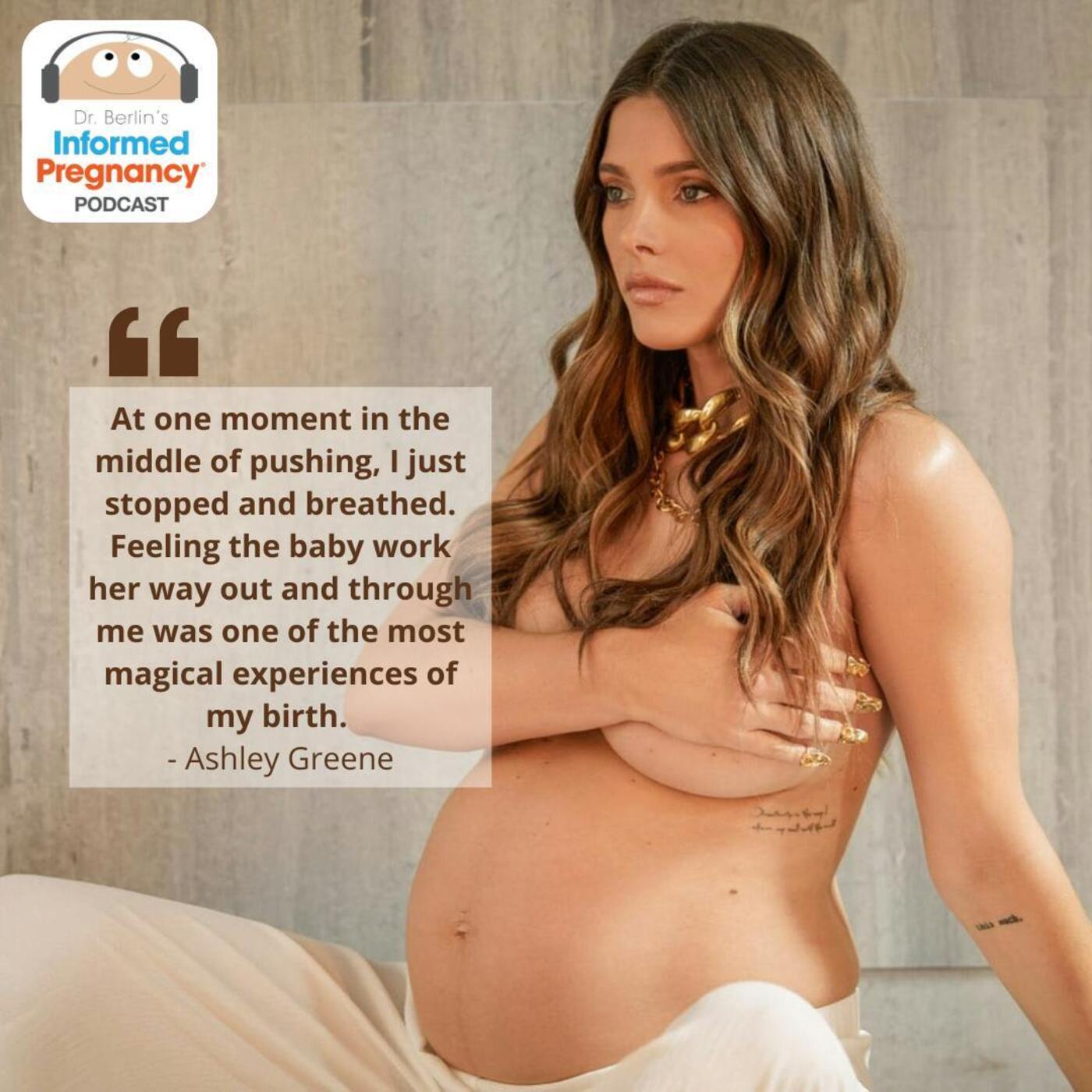
Ashley Greene, actress and creator of Hummingway soothing period patches, just welcomed her first baby last month. In this episode, she shares about her pregnancy and home birth journey, postpartum, and how to take control of your monthly cycle.

Learn more about your ad choices. Visit megaphone.fm/adchoices
See Privacy Policy at https://art19.com/privacy and California Privacy Notice at https://art19.com/privacy#do-not-sell-my-info.
Key quotes
“but I think giving yourself that grace is one of the most important things you can do, and it feels nearly impossible sometimes, but I think I can do with a little bit more of that.”
“And then I think asking for help sooner rather than at the breaking point, I think is something that I'll take into my next pregnancy for sure.”
“really unfortunate. And I think it's important for people to understand that it's hard, no matter which way you kind of flip”
“become your own health advocate because no one else is going to do it for you and no one else is going to really know your body better than you do. And so that's kind of how it started for us and it just became something that I felt, you almost don't have a choice at that point where I was”
“And like the more we talk about it, the less long people feel on the more normal it will become for everyone. And then trust me, like when people started opening up to just not feel alone and to just not feel like it was my fault was huge.”
Related episodes
- Ep. 188 Joanna Bavero – Birth Story
- Ep. 182 Randi Wood – Birth Story
- Ep. 310 Amaris Rodriguez: After Birth
- Ep. 502: Three Different Births with Emilia Davis
Transcript
AI-generated transcript with speaker labels — may contain errors, especially names and medical terms. Dr. Elliot Berlin, DC appears in blue; Ashley Greene in orange.
Download PDF of the Transcript
Dr. Elliot Berlin, DC [1:36] Welcome to the important pregnancy and parenting podcast. I'm your host pregnancy focus chiropractor. Dr. Elliot Berlin Born in Jacksonville, Florida with modeling aspirations My guest today graduated high school early and moved to Los Angeles at age 17 to pursue acting Shortly thereafter she caught a breakout role in one of the original and most popular vampire film series of all time The Twilight Saga She cemented her a-list status with starring roles in the five film series and the rest is history Inspired by her personal experience of coming off hormonal birth control and a conversation with her sister-in-law She recently expanded her creative pursuits as co-founder of hummingway a company aimed at generating awareness and supporting women with whole
[2:22] Cycle wellness tips and tools including period pain relief products She and her husband welcomed their first child just last month I'm ecstatic to have her as my guest as we discuss career activism pregnancy and childbirth Ashley green welcome to the podcast. Hi. Thank you for having me. Oh my goodness. Congratulations
Ashley Greene [2:43] It is crazy six weeks ago. My life is completely different. Yeah, mine was about the same
Dr. Elliot Berlin, DC [2:49] Well, yours is always exciting though. It hasn't changed that much but actually working with you was pretty exciting. You're strong Energetic very inspiring just one of those people that like I'm like, I don't think I need my Starbucks today. Oh
Ashley Greene [3:04] Thank you That makes me feel really good, especially right now the lack of sleep is a real thing. It's the real deal Yeah, I always wondered like this is probably don't say but like on all this reality TV shows I'm like, why are they so emotional and why are they so crazy? Why do they make decisions like this and then I had a child and realize what sleep deprivation is and what it does to you I thought it just shits everything and all of a sudden, you know, I like still breast milk the other day and actually cried about it
Dr. Elliot Berlin, DC [3:41] Also actually my son spilled milk and I cried over it because it was the last little bit of milk There was enough for both of us to have cereal in our bowl and he put milk in his cereal and the whole thing spilled Out and there's no milk for my cereal and not the same but I was ready to cry Especially in the morning. That's all that you want and we had no Instacart. Yeah at that time. It was a whole hassle Not really actually it's like, you know life has changed. Okay, let's get to you you grew up in Florida How was that?
Ashley Greene [4:15] Cooper Florida. I had a really great childhood my teen years were spent in Jacksonville But when I was much younger, I was in Middleburg and we grew up on like a dirt road and my dad built our house And it was just a very wholesome upbringing like literally built your house Yeah, you did. So needless to say now anytime he comes to California. I'm like, so this is everything that needs to be fixed in my home but yeah, they really focused on allowing us to be kids and We You know didn't have the most money in the world wouldn't have known it But our parents really focused on giving us the attention that we needed and I have a whole new appreciation of that now
[4:53] I mean I appreciated that before but now I see how invaluable that is
Dr. Elliot Berlin, DC [4:58] Hmm. I think my kids are embarrassed is I can't even really build stuff from Ikea. Well, to be fair, my dad struggles with that.
Ashley Greene [5:05] Okay. I think everybody struggles with Ikea because it's just ridiculous. I feel like there's like hidden cameras and they do it on purpose.
Dr. Elliot Berlin, DC [5:12] I do feel like I'm on punked. Good call. Acting and modeling, how did you get into that? How did you get interested in it? And then go for it.
Ashley Greene [5:21] My mom put me in some classes because I was painfully shy and she wanted me to gain confidence and come out of my shell. So she put me in this kind of like modeling etiquette class. I was also a very big tomboy. And through those classes, I ended up taking a commercial class versus just straight modeling and really, really enjoyed it. And then the same person that taught that commercial class taught an intensive acting class. And so I ended up going into that and kind of ditched modeling and decided that acting was something that I really, really loved. And it kind of changed the trajectory of my life.
Dr. Elliot Berlin, DC [5:56] When you were pretty early, when you moved to LA,
Ashley Greene [5:59] yeah, in looking back now, I understand why my dad had such an issue with it because initially I went to him and said, I want to move to LA. I had plans originally staying in Florida and going into criminal law or psychology. And then as soon as I took this acting classes, like, nevermind, I want to move to LA and get an actor. So you can see how I think that would be a little upsetting to any parent. And it's all the way across the country because we're Florida based and this is California. But I kind of put all the building blocks into place and everything they asked of me I did. And I got all my credits and I graduated early and I found a manager before I moved to LA
[6:37] and got an agent and kind of, all the obstacles that he put in my way to hopefully determine me from going didn't really work. And once those things were complete, he was like, well, we can't not allow you to follow your dreams when that's what we've told you to do your entire life. And so he gave me a year and said, you can go because you graduated early. This is like your travel abroad. And if you can't support yourself after that year, then you need to move back home. So, you know, he let me go, but it was very clear that I had to put in a lot of work really quickly because if I didn't or I messed around, I was going to be right back home.
Dr. Elliot Berlin, DC [7:10] Well, I mean, it sounds like you put in a lot of work before you even came out to LA.
Ashley Greene [7:15] Yeah, definitely. I feel like there was something youth was on my side, certainly, because there was no barrier for me. I was just kind of like, this is what I want to do and I'm going to make it happen. A bit of naivety, though, that worked in my favor.
Dr. Elliot Berlin, DC [7:29] Okay, that kind of makes sense a little bit because you were just saying how like you were shy and like to move out to the other side of the country on your own and start having to talk to people and put yourself out there in auditions and things like that, that doesn't sound like a shy person.
Ashley Greene [7:45] Well, I think there's, you know, it's something different when you're on set or when you're auditioning or when you're playing a character than when you are yourself and it's just actually walking into a room. And it's still today, I'm not the most outgoing person by nature. It takes a little bit of effort for me and I'm definitely a bit more, I need a recharge. But when I go to a work event or I'm on set, there's something that just kind of snaps in and all of a sudden, I'm a different version of myself, I guess.
Dr. Elliot Berlin, DC [8:16] Yeah, I can understand that, but I'm still impressed with the 17 year old you coming out here.
Ashley Greene [8:21] Thanks, I am now at this point. It just kind of made sense to me and I was gonna go do it, but you know, it was a big adventure. But now I don't know how, God bless my parents because that's terrifying
Dr. Elliot Berlin, DC [8:33] as a parent. Oh yeah. I'm terrified when my kids go to 7-Eleven around the corner.
Ashley Greene [8:38] Well, things have changed for sure. True.
Dr. Elliot Berlin, DC [8:40] How'd you snag Twilight?
Ashley Greene [8:44] I auditioned and I auditioned for it a couple of different times, but it came through to my management team and they kind of said, you know, this one's important, so pay attention to it. I got it and it was very big, the breakdown, and they mentioned that there was actually a book that could give me more insight if I wanted to read it. So I went out, got the book, read it before the audition. And then part of it, you know, I'm sure a lot of people said this, but in my mind I said, I am Alice Bond and I need to get this part and I'm going to get this part. And it happened to be that I also looked like what Stephanie Meyer had in her head when she wrote the book.
Dr. Elliot Berlin, DC [9:19] That's hopeful.
Ashley Greene [9:20] Yeah. So, I mean, I definitely don't take that for granted that I happened to look like Alice and what a lot of people had of Alice in their head, because the fan response was really positive and it was tying towards me and my character. But, you know, it was like any other audition and I just happened to get lucky.
Dr. Elliot Berlin, DC [9:38] Oh, or maybe you deserve it. Where did you meet your husband?
Ashley Greene [9:42] I met Paul. He ended up moving in with one of my very good friends. So I was part of this, it's basically all guys and me, this friend group that still is, I mean, they're like my family at this point, but we always hung out and did everything together and Paul ended up moving in with one of my best friends. them. And so he kind of became a part of that crew. So Paul and I were very, very good friends for five years before we started dating and got to kind of develop this really great foundation that worked very well into a romantic relationship. But for five years, we were just friends and nothing more. And neither of us really thought about anything
[10:20] other than that. And so he came to my house, I bought my house, went through this terrible escrow process. It was the longest escrow process ever. So when I got the keys, I was like, everyone has to come over. And so people came through kind of intermittently. And it was the first time that Paul and I, I think we're really ever alone because we were always out with a group. And he and I talked for two or three hours and it just like something kind of clicked for me, not for him. And I kind of said, I think I want to date him and then decided that he needed to date me too. And so I kind of pursued that for a couple of weeks until he agreed. And then we didn't
[10:58] tell anyone for months to make sure it was really hard to hide. You know, it's yes and no. It was also exciting. I think there's something really fun about that. We're the only ones in on the secret, but we knew that our friends would freak out when we told them and we were right when we told them they were not happy about it. Why? Everyone was, they basically said what happens when you break up? Oh, it's going to ruin the whole group. Yeah. People are going to have to pick sides. Yeah. My thing was that both of us are good people and we wouldn't destroy our friendship. Like I didn't think either of us would do anything that was going to be super negative.
[11:36] Either it just wouldn't work or it wouldn't work. It wouldn't be something that was tumultuous and they were not happy at first. And then they realized it was a real deal.
Dr. Elliot Berlin, DC [11:44] And then we got married and now we have a kid. Okay. So that's it. Finish high school early, move across the country, get a job, find a guy, get married, have a kid. Okay. Thanks for joining the podcast. Did you guys talk about kids early on? No, we knew we were going to get married pretty quickly, but we always knew that we wanted them. Like we had a lot of things out of the way before we got engaged and before we got married.
Ashley Greene [12:06] Discussion wise. Yeah. Okay. Yeah. We discussed a lot of the harder topics that I feel like some people just kind of feel like are going to work out once they get married. And our parents are both still married and both sides, I think gave us the same piece of advice was that we need to talk about the hard topics, you know, before we move forward. And so we did. So we kind of knew where we stood with kids and religion and politics and all the things. I don't even know where I stand on those things. Well, it's getting a little muddy
Dr. Elliot Berlin, DC [12:36] these days. All right. So if you got those hard things out of the way, where did you land on kids?
Ashley Greene [12:45] We knew that we both wanted to have kids and we knew that we wanted to three max. And then we talked about kind of how we would like to both raise our children to make sure that we weren't super far off in parenting styles. And then after that we did the hard too much on it. Just knowing that we both wanted a couple was good enough.
Dr. Elliot Berlin, DC [13:06] Okay. And so was there a moment where you're like, okay, we're ready now?
Ashley Greene [13:10] Yeah, he was ready before I was because of my career. It's a little bit more difficult because I'm on screen most of the time. So pregnancy affects me a little bit differently than the majority. And I kind of had to be ready to wrap my head around that. And so I think probably two or three years before we got pregnant with Kingsley, he said, okay, I want to have a kid. I want to have a kid. When do you think you'll be ready? He wasn't pushy or anything, but it was definitely known that if I was ready, he would be ready. And then finally, I don't know, it was like something just clicked and I said, I think I'm ready. And he was like, okay, great. And we kind of looked at each other
[13:45] and said, should we do this? Should we try and decided to, and then I got pregnant on the first try. So there was no, yeah, there was no kind of buffer. And the first baby though, that we got pregnant with Ines Carey and then waited two months, I think, and then tried again and immediately got pregnant and then ended up having Kingsley. So it all ended up working out, but it was a pretty quick process, which I know how lucky we are to be in that position. Were you nervous with the second pregnancy? Yeah. And it was a really mental battle to try and put that out of my head. Paul and I would have these conversations about how stress affects pregnancies. And that was
[14:30] the last thing that I kind of needed going into this. And so trying not to worry about or being too fragile around this pregnancy was a bit of a challenge for me for sure, because I think, you know, I'm only human and you can't help but think, could I change something? And so finally kind of letting that go was really big for me of kind of understanding that, you know, this is something that's extremely common. More people have started to talk about it, but it was mind blowing. to know how many people around me had experienced once I said something they had experienced in this carriage also and so understanding that it was you know likely not something that I did
[15:12] was helpful to kind of not worry quite as much going into the second one.
Dr. Elliot Berlin, DC [15:16] Yeah I mean it's never an enjoyable experience and it's so under talked about that people don't realize how common it is and like almost just a part of parenting is that your body's gonna take some of these conceptions give them a shot and realize they're no good and reject them and start again to get some a baby that's really healthy and compatible.
Ashley Greene [15:35] Yeah ours was pretty early on and now I can look back at it and understand how lucky I was with that also that there are some people who go so much later in a pregnancy and realize that it's not viable and so for me what is painful and emotionally you know it was terrible for a while at least I didn't have to make a decision down the line I made it for me.
Dr. Elliot Berlin, DC [15:58] Did it for you totally all right let's take a little break and find out about your

Dr. Elliot Berlin, DC [18:29] Welcome back, we're talking to Ashley Green. Okay, so you get pregnant pretty quickly and after that miscarriage pregnant pretty quickly. Again, how would you label if you had to each trimester in a word or two? I think the first trimester I would label it as more fragile. The second trimester was, it was vibrant. Okay, that's descriptive. Yeah, and then the third trimester, but I was impatient. Interesting. Okay, so did you from the beginning
Ashley Greene [18:59] have a thought on a birth plan or birth intentions where you wanted to give birth and what type of provider? It's interesting because I didn't think too much about pregnancy until we started talking about kids, but I immediately knew that I was going to have a natural birth. There was never any other thought in my head. Because when I told people I wanted to do a natural birth and say in the epidural, people kind of questioned like what made me make that decision. And for me, it just was something in me that said, this is the way that it's going to be done. And I kind of went into my healthcare provider and said, this is what I want and this is how I want it to align. And I wanted everything to be as natural as possible.
[19:44] And initially decided to go to the hospital because I allowed myself to kind of feed into that year of 35 years old. Maybe it's safer to be in a hospital. And the further along I progressed in my pregnancy, the only thing that gave me anxiety was the thought of going to the hospital. Everything else, I was very chill around this whole pregnancy, which I thought I would be the opposite. But I just kind of began to really trust myself and understand that my body knew what it was supposed to do. And so I just got to a point where I said, you know, this is silly. Why am I going to the hospital? And this is the one thing that's giving me anxiety. And so I ended up switching from my provider. She couldn't do
[20:25] a home birth. And so reached out to a group of friends, found my midwife, her name's Abby, that it can, and then started kind of transitioning everything over to what it would look like to birth manually at home. And as soon as I talked to her, I felt this like weight lifted off my chest and kind of knew this is what I was supposed to do. So for me, I'm really grateful that it just whatever it is inside of me, it spoke very clearly of this is what I want to do and everything's going to be okay. And it's going to work out.
Dr. Elliot Berlin, DC [20:56] I mean, was your husband excited about that option?
Ashley Greene [20:59] He was actually very in line with it, which was very helpful. He and his family are very holistic. And she went to a birthing center with both her kids and my mom went to hospital but did everything natural at the hospital. And so I was surrounded by people that were very supportive of the decision. My mom was a little uneasy because I'm her only daughter and the idea of something going wrong, I think was in the back of her head, but ended up being really supportive because I'm very close to Cedars. I had a backup doctor. My pregnancy was very healthy. It was very happy. And so they all kind of made sense and everyone supported my decision. Who was going to be on your birth team? Who did you plan to have with you?
[21:44] We went back and forth on this, but ended up deciding that it would be a midwife for her partner. And then ended up last minute deciding to do a photographer and then my husband Paul. And that was it. My mom wanted to be there and in the room. And I actually felt really bad about telling her that that wasn't going to happen because I went back and forth. But at the end of the day, I think you really in these situations have to listen to your instincts. And I knew that Paul and I had a very strong, very calm energy. And the way that we interact in our everyday life was really conducive to him being the perfect partner in this process. So we ended up not doing a doula either. And I have doulas need this, but he kind of stepped
[22:26] into that position and was really incredible. I mean, honestly, like if you talk to the photographer and you talk to the midwife, they were like, this was an incredible worth. And the energy was amazing. And he was really this kind of rock for me. And we even went back and forth of doing hypnotherapy courses. And we ended up not finishing it because everything already aligned with what we were learning in these classes. And I don't know, we were just kind of like, I think we've got this and there's something to be said about not overthinking it. And so we kind of decided to do the research we needed to do with them, let my body and the baby do what they needed to do also.
Dr. Elliot Berlin, DC [23:02] I think you're being pretty reasonable, meaning it's different for everybody. What everybody wants or needs is different. If you look at the animals, many of them do it on their own. Even they separate from the pack, go give birth and then come back. They don't have anybody around them, not even a partner. And some people do well with more people in the room. Some people don't. Some partners are much more bonded and intuitive and hands-on and in this case from a holistic background and some are faint at the sight of
Ashley Greene [23:27] any type of fluid. He didn't come down the local board because he doesn't love blood, but I say we joke that he's my life coach or he could be an informational speaker. So he stepped into that role really fantastically.
Dr. Elliot Berlin, DC [23:39] That's amazing. Okay. So I know you were impatient towards the end. You wanted the baby to come out. Where in relation to your week count did your labor start?
Ashley Greene [23:49] It was 40 weeks and three days. Did that frustrate you? Sure did. You know what it did and then when the last two days, even though we were doing everything we could to induce labor naturally, the thoughts started going in the back of my head like, oh, but that means this is actually going to happen. Like there was a little bit of anxiety that happened at the very end and I had to kind of keep pushing that out of my head, but it's such a big event and one that I hadn't experienced before. And so I was just like, what am I up against and what am I going to experience here? But yeah, I mean, I saw you, I did acupuncture, I did the salad dressing. The day that I went into labor, I went on a
[24:32] full-fledged hike. And people were like, you're insane.
Dr. Elliot Berlin, DC [24:35] Well, I don't think you're insane. I just feel bad about myself. About yourself?
Ashley Greene [24:40] Yeah. Cause you went hiking 40 weeks in one day pregnant and I can't drag my butt to the canyon, you know, not pregnant. That is one of the harder things that I think I had to deal with with this pregnancy was not being able to be in the gym or be physical the same way. I'm postpartum because from it is very mental. I say that physical fitness is like my antidepressant or any anxiety and not being able to do that. It's been a little challenging for me.
Dr. Elliot Berlin, DC [25:10] Yeah, you're very, very active normally. Okay, how'd your labor start?
Ashley Greene [25:15] So I think that it started at the Grove, technically, I was having a lot of raps and takes, but I kind of was in the back of my head that that might feel different. They were kind of just a lot more consistent. And then I got home and then ended up kind of going back into my lair and didn't say anything to my husband, didn't say anything to my family and just kind of felt it out. And the further along it came, I kind of pulled all back and I was like, I think that I might be going to labor. I don't want to jump the gun here, but I feel like this is different, but it was severely different. Like I feel like some people have this story of how they, they absolutely know this is different, but they
[25:54] weren't extremely painful. They were just longer. And then they kept getting closer and closer together. And for me, like instantly, almost like by the time I got back to my bedroom, they were like six minutes apart. And then they got very close, very quickly. And in my head, I'm going, okay, everything I've read, all the literature says, you're about five minutes apart. You should probably call your midwife. And I texted her and said, you know, again, don't jump the gun, but this is what's happening. And her response really surprised me because she said, okay, um, I'll check on you in a couple of hours. And in my mind was like, what, what, what happens if like I go into
[26:33] labor, like these are super close together. What does that mean? And of course she knew that there's no way you don't just jump into five minute apart contractions. Generally your body is working around something if that happens. And so I was in labor for quite a long time, longer than I would have liked to, because my baby had her hand up by her head. Um, and so that, and that's how she came out. And so that's why I started having all these contractions so close together, but I wasn't dilating. And so I was like, I'll just chill out. And you know, they kept getting more and more painful. And then by the middle of the night was probably the most frustrating for me because it couldn't
[27:15] sleep. I was exhausted and was trying, you know, everything you see says, try and get sleep in between to be ready for the big kind of bra. And then probably five in the morning or six in the morning, I texted her and said, this is extremely frustrating. What is going on? And she said, you know, let me bring you a peanut pillow so that at least you can try and get some sleep, but have as the same intensity with your contractions or have them progress you forward as much as if you were standing. Because every time I laid down, they would space apart. And I was just ready for this to happen already. And so I was like, all right, fine. So I remember I put on
[27:54] some Elvis movie because I knew it was three hours long. And so during my labor, I was going to N and L watching Elvis. And then finally she came over. I think she got to the house around eight and it was like clockwork right before she walked in the door. I had my bloody show and was like, I think I researched a lot of things, but I didn't realize that it was like as intense and was like, if she hadn't been there, I would have thought that I maybe was dying. You're saying the intensity of the
Dr. Elliot Berlin, DC [28:23] contractions? No, just said the bloody show. Like, oh, how much blood?
Ashley Greene [28:27] Yeah. And I was like, whoa, I was not expecting that. And so basically right when she got there, that happened. And so she decided she was not in fact leaving because once that happened,
Dr. Elliot Berlin, DC [28:39] everything went into hyper speed. Oh, maybe I'll pause for one second and give three definitions. One is Cedars is a local hospital that delivers a lot of babies. Two is the Grove is a trendy outdoor mall here in Los Angeles. And three is the peanut pillow is almost like an exercise ball, but it has like a waistband in the middle. So it looks like a peanut and you can wrap your legs around it to keep your pelvis open when you're laying down. That's part A. Part B is during that whole time, before your midwife came, what were the things that you did for comfort, either physical or emotional comfort? I showered and that was really helpful,
Ashley Greene [29:20] just the hot water and the shower. And I think being in an enclosed space, I think it reminded me of being an animal. Honestly, having that dark kind of closed in space. I did that when my husband was sleeping. I didn't want to wake him because I knew, you know, it wasn't so terrible that I wanted to let him get some sleep. And then after that, he woke up and he massaged his forehands off probably and did a lot of counter pressure for me. And then I did a lot of bouncing on a yoga ball and moving around and he did the cloth that like you pull. Oh, the hrebozo. Yeah, where he pulled up on my hips to kind of release some of that pressure. So there was a lot of that being done.
Dr. Elliot Berlin, DC [30:02] Was your birth photographer somebody who does birth?
Ashley Greene [30:06] Yes.
Dr. Elliot Berlin, DC [30:06] Regularly? OK, so that's also sort of like having another doula in the room, potentially.
Ashley Greene [30:11] You know what's funny? So Abby gets there. She says, you know what, you should get into the bathtub. She called it an aquadoral. It works similarly, where it relieves some of your pain. And it did. It was great. But once I got in the bathtub, things really started getting real. That was kind of the transition point. And I remember just thinking, do I even want the photographer to come? Because by nature, I think, I don't know, I like my space and my people. And so when I was in that head space, kind of do I want another person to come into the space? I trust to know Abby so well. I trust to know my husband so well. And the photographer, while she was wonderful,
[30:49] I had her come to the house once to meet her before. And so thankfully, my husband was talking to her and made the decision and had her come. And she took beautiful photos.
Dr. Elliot Berlin, DC [30:58] Did you get one with a hand by the face?
Ashley Greene [31:02] I have to look back through. And that's how she was in all of her ultrasound, so it makes sense.
Dr. Elliot Berlin, DC [31:07] Oh, wow. So you saw it coming. Interesting. Yeah, but so sometimes they have a doula-like presence, because they're so used to being around birth and birthing people.
Ashley Greene [31:15] Honestly, I barely saw her, and she got the most incredible photos.
Dr. Elliot Berlin, DC [31:19] Fly on the wall. They love to fly on the wall. They know exactly how to shoot without being a presence.
Ashley Greene [31:24] It's like knowing how to make someone not look like a monster while they're in the middle of this birthing process is such a talent, because they're beautiful photos. They turn out wonderful.
Dr. Elliot Berlin, DC [31:33] It's a special skill. OK, so once you're in the water, it does help you feel better, but things pick up.
Ashley Greene [31:40] Things pick up. At one point, Abby left the room because Paul and I were kind of so locked in, and he was coaching me through this, that she felt like, again, knowing me that just having him there was more comforting. So she hung out for a little while in the living room until she started hearing. She's attuned to the sounds and the levels, and you're starting to sound a little pushy. And I was like, yeah, I think you're right. And so we have the birthing pool blown up and moved me over. Oh, you were in your regular tub? I was in my regular bathtub.
Dr. Elliot Berlin, DC [32:17] OK, so as soon as you got up to get out of the thing?
Ashley Greene [32:20] My tub, we went to the birthing pool that was set up in the bedroom and got in in, I think was in and out in 45 minutes.
Dr. Elliot Berlin, DC [32:28] With the baby?
Ashley Greene [32:29] Mm-hmm.
Dr. Elliot Berlin, DC [32:30] Wow.
Ashley Greene [32:31] Yeah, it was really quick. As soon as I pushed, I felt that burning. I was afraid of the ring of fire that everyone speaks about and didn't have that experience. It was uncomfortable. But that part was one of the most daunting things to me and actually turned out not to be so bad. But immediately felt, I was like, this is not a progression where she's moving down. She's there. And pushed a couple of times. And then she was out and her head came out. And then one of the most wonderful things I think they did is had me stop pushing at a moment and breathe to loosen everything up and then continued pushing and her head came out. And then we just kind of sat there
[33:13] for a couple of minutes because there wasn't another kind of surge for me. And my husband was looking at the midwife and her partner, Johanna, and Johanna's going, 20 seconds or 60 seconds, we're at two minutes and Paul's like, can she breathe? I can't even hold my breath for that long. What's going on? And of course they said, she's totally fine. She actually hasn't taken her first breath yet. And she was in a pool of water for a very long time. But then she kind of, I felt her shimmy of shoulders which was really one of the coolest moments I think of the birthing process for me was feeling her kind of work her way out. Cause you hear that they, you know, they'll work with you
[33:54] and they know what to do. And then her shoulders came out and then she was in my arms. Super alert, but like super calm, wasn't crying.
Dr. Elliot Berlin, DC [34:03] That's how our water baby was too. Just looking around like, oh, so you're my dad. All right. Yeah, okay, what's up? Cool. Wow, dreamy. That's so dreamy.
Ashley Greene [34:13] Honestly, I haven't really spoken about it. Like people are gonna love me or hate me because it was really this wonderful, beautiful experience and everything that I could have hoped that it would have been. I mean, listen, a little bit longer than I could have hoped for, but.
Dr. Elliot Berlin, DC [34:28] What was the total start to finish from the grove to the snuggle?
Ashley Greene [34:31] I wanna say it was 14 hours.
Dr. Elliot Berlin, DC [34:34] That's pretty good for your first baby.
Ashley Greene [34:36] Yeah, of course I'm like, but if she hadn't had her hand up, how much quicker would that process have been?
Dr. Elliot Berlin, DC [34:42] Yeah, who knows?
Ashley Greene [34:44] I just remember getting frustrated. I was just like, okay, listen, I can handle this. Never once did I think I want a drug, but I do remember thinking like, all right, listen, I've got this, but I don't know if I got this for two days. It's like, when is this gonna?
Dr. Elliot Berlin, DC [35:00] I think that's pretty common. Like when your rational mind kicks in, like in the moment, this moment, I feel like I can tolerate what's happening, but how much longer and will I be able to tolerate it? And what if it gets more intense? Like those are all the what ifs that when your conscious mind shuts off, hopefully go away.
Ashley Greene [35:18] Yeah. I definitely have one point said, I don't want to do this anymore. I didn't say I can't do this, but I was just like, I don't want to do this. My husband was like, you've got it. We're going to meet or maybe all the things that I had a vision board of like all the things that I would like someone to say if I needed it. And he said all the right things. But yeah, there's a couple of hairy moments where I was just like, this is a lot.
Dr. Elliot Berlin, DC [35:40] Would you do anything different in the future?
Ashley Greene [35:43] No, I don't think that I would.
Dr. Elliot Berlin, DC [35:46] Great. That's a wonderful testament to, you know, it sounds like the vision that you have and the birth that you had were not too dissimilar. Yeah. All right. Let's take a little break. When we come back, we'll talk about postpartum. And anyway, we'll be right back with Ashley Green. Welcome back. We're talking to Ashley Green, new mommy. All right. So baby comes out and then there's that afterbirth stuff. Did that go well for you?
Ashley Greene [36:23] Pregnancy was great. Delivery was great. Postpartum sucks. Um, thankfully had someone who was a week ahead of me, and we have very, very similar pregnancies. And we always can pride it in each other because you almost feel bad if you have a really good pregnancy. Like I didn't want to have a discussion with someone who was perhaps having a little more difficult at the time. And so with her name is Lily, it was really helpful. And so thankfully, we had each other to kind of ping back and forth and go, are you experiencing this? And we both kind of kind of felt like we went through the ringer a little bit for postpartum, because it's just not really spoken about. I know people are starting to be a
[37:00] little bit more open, but there's still this stigma around talking about it. And there is, I find that anytime I share, especially in the beginning that I was having a difficult time, people instantly were just like, Oh my God, are you okay? And it made me not want to share, because I was like, Oh my God, are you okay? And it made me not want to share, because they instantly go to like, Oh, well, if you're not saying everything is beautiful and wonderful, and you have this immense love for your child, and that's all that matters, then like something must be wrong, and you must be depressed. And like, it almost, I feel like makes you want to not share, which is
[37:37] really unfortunate. And I think it's important for people to understand that it's hard, no matter which way you kind of flip it postpartum. For me, it was more difficult than the labor. It's
Dr. Elliot Berlin, DC [37:48] one way, first of all, I'm around pregnancy and postpartum, all day long, 10 hours a day. And rarely do people say, Oh, postpartum is a breeze. Even people have a lot of help, by the way. It's a very difficult, I love what you're saying, because it's so true. And I sort of giggled about it when you're like, this was great, this was great, and postpartum sucked, just because you're delivering on pun intended. But it's hard. It's a really difficult transition for a lot of people. And that doesn't make it a bad thing, right? It just makes it a hard thing. So in what ways was it a struggle for you?
Ashley Greene [38:22] Listen, my midwife ended up telling me that on day three, I believe you have the steepest hormonal decline that you will ever experience in your life. So that alone is just the difficult thing to go through. I mean, you think of when you're on your period, and you're pre menstrual, the kind of waves and ups and downs, you go there, and then you just intensify that times 100. At least that was my experience. And I would have these moments where I struggled with breastfeeding, I was exhausted, I was trying to figure out what my baby needed and wanted, I was healing so I couldn't do anything for myself. And then I had these hormones that were kind of surging through my body. And
[39:00] so sometimes I would just start sobbing. And I was like, I'm not even sad, but I don't know, but I'm crying. And I had to kind of release this emotion. And you know, hats off to my poor husband for kind of, you know, walking me back from the ledge, but it was just a really difficult time for me, because in my life, in my world, I work really hard to be able to plan and control and pride myself on not being fazed by a lot of things. And in this setting, I felt like I had no control. And so that was really difficult. And I love my baby to pieces. But in the very beginning, you know, it was like, do you have to wake me up every hour, every two hours, and
[39:42] you know, you want them to stop crying, and then you feel guilty for that. And so, I don't know, it was just a lot to take on at once. And then as things progress, you know, I think me being able to walk around me being healed and being able to actually do a couple of things for myself was helpful. And in setting a teensy bit of a routine for myself was helpful, but just having no control is never fun for anyone.
Dr. Elliot Berlin, DC [40:06] I might suggest also that for you in particular, who is very active, very athletic, and who you sort of self-described as that's almost like your drug, to have that taken away from you, even without everything else going on, would probably not have the greatest effect.
Ashley Greene [40:24] My husband always says like 10 days without working out usually is like the mark where he's like, you need to go to the gym. I feel different, and there's like a haze, and I'm like, why don't I feel in a funk? And then I go work out, and then I'm totally fine. So yeah, it was definitely compounded things a little bit for me.
Dr. Elliot Berlin, DC [40:41] If you could go back, because we do this with pregnancy all the time, birth in particular, you had a birth, you wouldn't necessarily change anything from the plan if you had another baby. A lot of people learn things from the birth that they didn't realize, they couldn't have predicted, they couldn't have really known until they went through it. Now that you're in postpartum, but you've been through hopefully the thick of it, if you could go back and tell pre-birth Ashley a couple of things, what would you tell her?
Ashley Greene [41:14] I still don't know if I could, I don't know if it's gonna change in the second baby, but I think giving yourself that grace is one of the most important things you can do, and it feels nearly impossible sometimes, but I think I can do with a little bit more of that. And then I think asking for help sooner rather than at the breaking point, I think is something that I'll take into my next pregnancy for sure.
Dr. Elliot Berlin, DC [41:39] Did you do anything specific to plan for postpartum before you got there?
Ashley Greene [41:44] So I ended up creating a program where there's a company called the DB Method that I started working with who are really helpful for pelvic floor therapy. I started working with a lot of people pre-birth, I did body work with you, I did origin to do pelvic floor therapy, and so I wanted to kind of keep that going afterwards, and so I worked with the DB Methods fitness operator to create something that would allow me to start feeling like myself again without doing any damage to my body. So I created a layered system of ways to kind of engage and reactivate your pelvic floor and your abdominals and your glutes. They're layers versus weekly, but I kind of progress generally naturally week by week.
[42:26] That was something that was really helpful for me to be able to do for sure, and then continuing to try and give myself, even if it's 30 minutes to center myself and meditate, that's extremely helpful.
Dr. Elliot Berlin, DC [42:39] But I just want in terms of also on top of that, while you were pregnant or before you got pregnant, did you sort of, people put a lot of resources into and thought into birth, did you really kind of try to vision what postpartum would be like or do anything to kind of prepare that landscape? Or did it just totally take you by surprise?
Ashley Greene [43:02] I think you put a lot of focus on the baby's birth, and I wish that I had spent a little bit more time on sleep schedules, or I just learned what waking hours were and understanding how to properly fit a flange for breastfeeding, like all of those things I now know, which I wish that I had put into postpartum. I tried to set myself up for understanding that I wasn't gonna be able to completely be myself and do everything and mentally prepare myself for giving up that control. But at this point, I understand that I didn't do nearly enough. I mean, some of it, I think you just kind of have to roll with the punches. You know, I'm curious on your opinion
[43:42] of what are some things that are helpful, because for me, there's not much I can do about that. That steep hormonal drop, there's not much I can do about healing.
Dr. Elliot Berlin, DC [43:51] No, I think you're right about that. But what I do find is that knowing about them ahead of time, knowing that this might happen, and even just knowing that that's a normal thing, then when you're going through it, you don't feel like what is happening to me, right? And also preparing for it with your partner, just like you did for birth, which is challenging and just really nice to have support to have both of you really understand post-birth and what kind of support would be helpful for you there. My wife, who's a perinatal psychologist, she has a program called the After Birth Plan. And her biggest mission and desire in life is to make postpartum better for people,
[44:32] a smoother transition. And a lot of that is sort of like being able to look at the postpartum landscape as if it was a map with pitfalls and how you just kind of fall into some of these pitfalls, like everybody falls into the similar pitfalls. And if you could see them, you'd know where they are and how to navigate around them, realize when you're starting to fall in, pull yourself out, realize if you're in too deep, it needs some help to come out. And all of that is what the After Birth Plan is. And it's hard because during pregnancy, you feel fine. You feel great. You said the second trimester was amazing. And then the third one, you were just impatient because you wanted your baby to come.
[45:09] But it's hard at that point to say you should probably put some effort into what's going to happen on the other side. Why fix a problem you don't have? And it's been hard to sort of make that pitch to people. And then when you're in it, it's a little bit hard because, you know, you're in it.
Ashley Greene [45:27] And it's also not a great time to start reading a manual, you know, what do I do here? Yeah, I found to your point that it is during the first couple of weeks, I wanted to be able to make use of my time that I couldn't really do much and wanted to be able to read. But I felt like my brain was so foggy that I couldn't focus the things that I wanted to read. So I'll be using this plan before my next birth because like, I think a lot of things around postpartum seem negative. And so you don't want to like, put yourself in that head space, but being able to look at it from like a structured way, like you said, like a map of going, all right, we're going to kind of plan for these things and be
[46:01] ready for these things and know what you're up against would be extremely helpful.
Dr. Elliot Berlin, DC [46:05] Yeah. I mean, the great thing is during the pandemic, she made an after birth program that can be done online and anybody can do it from anywhere. It's broken down into modules. It's great to do with a partner and, you know, it's not negative. It's just realistic and having a little preparation can go a long way. And also just lots of ideas on how to build support for yourself before you get there where you need it.
Ashley Greene [46:30] I remember listening to your podcast and hearing your wife came out for an episode and thinking, I should have done this, but I was so far in. I think I had a week until I was due that I was like, well, I missed that boat, but if I had known about it, you know, and heard her speak about it earlier, I'd certainly would have done it.
Dr. Elliot Berlin, DC [46:50] Well, hopefully through your openness and sharing and courageously so, cause like you said, a lot of people don't talk about it and a lot of people are judgy about it for reasons I can't fully understand, but hopefully you'll help other people also have a smithered transition.
Ashley Greene [47:06] People just don't understand a lot of postpartum and for some reason fear it. And I know where the judgment comes from, but it's like it shouldn't be spoken about. Yeah.
Dr. Elliot Berlin, DC [47:15] Like miscarriage also, like I don't get it. Yeah. Those are two things that we should be speaking about and you hit both of them. So thank you.
Ashley Greene [47:24] Yeah. Of course. Everyone's happened. It's so crazy. And like the more we talk about it, the less long people feel on the more normal it will become for everyone. And then trust me, like when people started opening up to just not feel alone and to just not feel like it was my fault was huge. Yeah.
Dr. Elliot Berlin, DC [47:39] We're going to get a lot of that feedback. All right. Talk about hormones shooting all over the place. Tell me about hummingway.
Ashley Greene [47:46] Yeah. So hummingway came about because I got off the hormonal birth control. This was kind of part of the discussion of like three years ago, maybe longer down going, we know we want to have kids in the future and I want to start preparing my body for that process. I want to be as much of a kind of temple as possible and just set myself up for the best kind of potential. And so decided, you know, I really want to get off every prescription that I've ever been put on and that included hormonal birth control. And when I got off of it, I kind of all of a sudden started experiencing all of these symptoms that had been suppressed by birth control, which by
[48:24] the way, were not fixed by it and just kind of lost control of my body in my thirties and was wildly frustrated at the kind of responses and answers that I was getting as far as trying to understand what was happening to my body and the answers you get, or you can go back on hormonal birth control or you can try this other drug for this symptom. There's never insight into why our bodies are experiencing this and how we actually fix it. There's always just kind of a bandaid that's offered no fault of your doctor. That's just kind of what the system is set up as, and I don't feel they really have the resources to be able to kind of fully holistically look at
[48:57] you and start to break down and understand why you're experiencing each symptom. And so, you know, ended up talking to my sister-in-law about this. She had her own experience was finally diagnosed with PNDD, which is premenstrual dysphoric disorder. And both of us were just kind of going, you know, this is not right. Why is there not a better option out there for us, both educationally and product wise and solution wise. And so she and I decided that if it wasn't out there, we would try and do it ourselves. And initially what started as being kind of solution for the two of us quickly became a solution for a much larger audience, because we realized
[49:36] that most everyone we spoke to had some sort of story of feeling alone, not understanding their body, not getting the diagnosis that they needed or not getting the solutions that they needed. And so I said, you know, we're going to create a company that gives you non-toxic solutions for menstrual cycle symptoms, and that gives you an educational platform so you can start really learning about your body and be able to go into your doctor's office armed with the information you need. become your own health advocate because no one else is going to do it for you and no one else is going to really know your body better than you do. And so that's kind of how it started for us and
[50:09] it just became something that I felt, you almost don't have a choice at that point where I was like, this just has to be done and we're going to be the ones to do it. Wow. And the product that you have, it's a cycle soother. How is it administered? So it's called the cycle soother patch. It is a transdermal patch. So you put it on all the ingredients in the patch, go directly into your bloodstream. So you bypass your digestive tract. So the reason we decided to do it that way is that we wanted something that had the most bioavailability, meaning that whatever ingredients we put in that patch was going to go directly into your bloodstream and you were going to get the biggest impact from those ingredients. We also like the fact
[50:48] that people are taking a lot of supplements, a lot of pills. And so we thought it would be nice to create something that was a bit innovative and that you could just kind of stick on and get that impact relatively quickly. And so we did some research on different, my mom uses transdermal patches for back pain. And we just started kind of taking around, reaching out, figuring out who made the best transdermal patch and happened to find someone who was fantastic that also has a passion for reproductive health. And it was this really beautiful marriage. Wow. That sounds great. So where can we learn more about the product and how to use it or where to get it? Yeah. So our social tag is our Hummingway. Same thing with our website,
[51:31] www.ourhummingway.com. And the product is all D to C, so you can go on and get it shipped directly to you. Yeah, we'd love people to try it. We've gotten a really great response, which has been one of the most fulfilling things to date is knowing that something we created is actually really helping people in their day to day life.
Dr. Elliot Berlin, DC [51:48] That sounds fantastic. Where's the name from Hummingway?
Ashley Greene [51:52] Well, we have a really special attachment to hummingbirds. They're all over the yard and we loved the fact that this humming was kind of this like soothing factor and the fact that hummingbirds can go up, down, back, forwards. And we kind of felt like that's how we wanted to approach reproductive health and the menstrual cycle to really kind of create this explosion of information because it's such an underdeveloped space. And so I decided
Dr. Elliot Berlin, DC [52:15] how many might sound great and resonated with us. Yeah, it's descriptive. It really creates an image. Yeah. Well, I could talk to you forever, but I know you have a kid to get to. She's acting like a champion. I love it. This is so good to me. All right. First of all, where can we find you online? My Instagram is Ashley Green. That's pretty easy to remember. I have a Twitter, but I don't use it very often. So find me on Instagram. Instagram, we'll find you over there. Ashley, I'm so, so glad and grateful for you to join us and share so openly on the podcast. Congratulations on your birth. I send you a lot of strength and energy and positive juju through the rest of your postpartum phase. And
[52:59] we're going to visit you on Instagram at Ashley Green. Oh, and we're on there too, at Dr. Berland, D-O-C-T-O-R-B-E-R-L-I-N. But we have this all new exciting streaming platform called Informed Pregnancy Plus. And it's at informedpregnancy.tv. And one of the things that's on there is the afterbirth plan. We'll see you there.
Want more pregnancy + parenting? Start your FREE TRIAL of Informed Pregnancy+ and get access to all our curated pregnancy and parenting content — original series, iconic birth films like The Business of Being Born, prenatal workouts and more.
