
March 23, 2023 · 50 minutes · Episode 336
About this episode
Just three weeks after the birth of her first child, actress Natalie Dreyfuss is back to tell her raw and touching birth story and share about the ups and downs of the early weeks of postpartum.

Connect with Natalie online: https://www.instagram.com/nataliedreyfuss/
Keep up with Dr. Berlin and the Informed Pregnancy Project online!
www.instagram.com/doctorberlin/
www.facebook.com/InformedPregnancy
Learn more about your ad choices. Visit megaphone.fm/adchoices
See Privacy Policy at https://art19.com/privacy and California Privacy Notice at https://art19.com/privacy#do-not-sell-my-info.
Key quotes
“experience with parenthood so far is just wanting to prepare perfectly. It's just a hilarious lesson I keep bumping into over and over and over again, like I had my hospital bag packed, but I had like five hospital bags that were all different.”
“like, there's a difference between like pain and suffering. I was like, I'm not suffering this hurts for sure. It's not fun, but I'm not suffering. And I was really prepared to like work my ass off. And oh, I did. I worked my ass off. Yeah, I really labored hard.”
“And I guess that's like the thing I remember the most about the entire labor experience was it being challenging but I felt so supported.”
“And that was just like my first experience of parenting is just like, oh, cute. You can't prepare for the unpreparable. That was the big lesson.”
“I get to skip the hard parts but that really hasn't been the case yeah I've had a really frustrating and rewarding and amazing and horrible three weeks it's just like everything at once”
Related episodes
- Ep. 424 Leedia Riman: After Birth
- Ep. 414 Aly Michalka: After Birth
- Ep. 380 Bonnie Wright: After Birth
- Ep. 377 Traci Burk: Before Birth
Transcript
AI-generated transcript with speaker labels — may contain errors, especially names and medical terms. Dr. Elliot Berlin, DC appears in blue; Natalie Dreyfuss in orange.
Download PDF of the Transcript
Dr. Elliot Berlin, DC [1:13] Welcome to the informed pregnancy podcast. I'm your host pregnancy focus car. Practor. Dr. Elliott Berlin You have tuned into the after episode of a before and after birth story And I have no idea how things went, but we're all gonna find out together Natalie Dreyfus, welcome back to the podcast Thanks for having me. So last time we talked to you. You were pretty prego and Now you're not congratulations Thank you. My daughter was born on her booted her due date. Really? How often does that happen less than 5%? Yeah
Natalie Dreyfuss [2:10] It was the only day that I was positive. She wasn't coming. Well, I guess that's motherhood in a nutshell. I
Dr. Elliot Berlin, DC [2:18] Wish there was a study of babies born on their due date to see what they turn out like if there's anything different about
Natalie Dreyfuss [2:25] punctual
Dr. Elliot Berlin, DC [2:27] Punctual at birth. I'm punctual. So maybe it's honest. It's an honest trait Okay, you have an interesting pregnancy and life and then as you got closer You found out your baby was breach and you did a whole bunch of things to try to help and the baby turned
Natalie Dreyfuss [2:46] She sure did. Yeah, I mean I came in and saw you one time and then she turned the next day
Dr. Elliot Berlin, DC [2:51] I don't know how many things I really did. I don't know you said make you this video of you guys finding out the baby was
Natalie Dreyfuss [2:56] Head down. I know I was so excited. Yeah, it was great and She was in a great position for the rest of the pregnancy My labor was challenging for sure I guess because when she did turn I think she was like a little crooked still just in the pelvis So that like corkscrew out that's not super easy for her So not super easy for me either
Dr. Elliot Berlin, DC [3:22] Well, let's start with the final days of pregnancy What were you doing? And how did you feel going into birth? mind-body spirit
Natalie Dreyfuss [3:32] Yeah, it's funny. It's been three weeks Yesterday three Wednesdays and it just feels like a crazy lifetime ago. It's the weirdest experience but from what I remember I Had been contracting a ton and I'd had like a lot of Braxton Hicks and mine were really intense I had heard that like, you know you have these Braxton Hicks that you may or may not feel beforehand, but I was like Unable to talk through some of them or like walk through some of them and I was kind of feeling gyps I was like why am I in so much pain before I even go into labor? But then how far was that before your due date? I would say like week 38 maybe Okay, 30 39 had a lot of contractions not long after the baby turned. Yeah. No not long
[4:19] I felt like she dropped like within a few days She was real low and then my contractions already were like gearing up I kept thinking she was gonna come early and then when the real contractions hit I was like there's no way She's gonna come on her due date. I was so sure we had all taken bets on like when she was gonna show up and That was the only day I was positive It wasn't gonna be so I had a bunch of friends over that night. It was Tuesday night and Her due date was February 1st So this was Tuesday the 31st or whatever and I had a bunch of friends over for dinner And I kept saying like I think this is it like I actually really feel like I'm going into labor right now
[4:59] so we all like, we should pack your hospital back. He did, but has been like, honestly, the theme of my experience with parenthood so far is just wanting to prepare perfectly. It's just a hilarious lesson I keep bumping into over and over and over again, like I had my hospital bag packed, but I had like five hospital bags that were all different. And I was embarrassed that I wanted to bring so much stuff to the hospital. And I didn't want the nurses to judge me because I'd read a million different blogs about like what you might need. And that was like, maybe I'll need this perennial donut pillow. Like, we don't know, like maybe my perineum is gonna need a pillow. And like, I don't want
[5:41] to bring this big pillow if I don't need it. So like, maybe I'll put it in like the car bag so that the car bag stays in the car, but it's prepped with all things that would be like, what was she moving into the hospital? Like, why is she having suitcases? You know, I was embarrassed. So I had sort of packed it and also just like, was not deciding to actually take one bag. And so my girlfriends were like, Yeah, we should go finish that. And we all came upstairs and were like giggling and watching me have these big contractions. I knew it was labor. They started like 230 in the afternoon, but I knew it was labor by like five by 30 at night, I was like, okay, I'm so pumped
[6:19] with adrenaline right now. I was like, I could lift cars like I was like, I'm having a baby.
Dr. Elliot Berlin, DC [6:26] I'm curious, because you said they were intense, your Braxton Hicks, a couple of days before that, what did those feel like? Like, where did you feel them? Were they pain pressure? What kind of intensity? And then also, how did it change to make you feel like, Whoa, this is labor?
Natalie Dreyfuss [6:42] Yeah, when I worked with Berta, actually, she helped me to understand like, the different kinds of contractions with like a balloon and a ping pong ball. And so she had just blow up a balloon and I put a ping pong ball in it. And it was to show like what a face meant meant. And also just like what contractions that were actually pushing down would look like, versus like a tightening. So when you push the balloon and that ping pong ball wouldn't move down, but you have to like really push it from the top to get that ping pong ball like moving through the balloon. So that image really stuck with me when I was having these Jackson Hicks, because I would see my stomach tightening, and
[7:23] it would be really, really tight. But it just didn't feel like it was like productive. That makes sense. Like it didn't feel like it was pushing anything downward. It just felt painful. So to me, it was intense, but it didn't feel like a downward radiating pressure. And then when the real contractions started, I was like, Oh, I have endometriosis. So I know these pains really well. And they felt to me very similar to my period pains those couple days a month where I really can't move. It was very similar to that. And at first I was like, Oh, good, I know this pain. And I'll get breaks because during my period, I don't get any breaks. It's just like a constant stream of
[8:00] pain for 48 hours. So I thought, Oh, this is gonna be great. I'll have like minutes in between. And I'll be able to catch my breath and then go back into this kind of pain that I already sort of recognize. And I was like, great, that's gonna be awesome. None of that was true. But that's what I thought when they first show it up. I was like, Okay, I know what this is. And I was able to handle it really well. I also was trained well by my doula and Britta as well just to go to sleep as soon as I felt my labor pains. So that was like the main goal as soon as I felt like I was in labor. I was like, go to sleep. Because I knew I needed sleep.
Dr. Elliot Berlin, DC [8:34] Yeah, just to clarify, Britta Bushnell, who's a childbirth educator. She's a PhD in mythology. She's everything really. And her book is called transformed by birth. And there's a lot of wisdom in there. So were the things that you were doing once your surges started similar to things that you had done to cope with endometriosis?
Natalie Dreyfuss [8:58] Um, yes and no. I was sort of just like in awe and really deciding like, is this actually happening? Do I want to get excited? I listened to enough of your podcast to know like from all the other stories that like don't necessarily get excited. If you feel like you're going to labor, because sometimes it's not. So I was really like suppressing this feeling of excitement. But once I realized that my adrenaline was pumping the way that it was, I was like, I've never felt this before. This is just a new sensation in my body. And it made it different to deal with the pain because I felt like I could like go do a major workout or something like I was like amped,
[9:37] even though I was like being stopped with pain every few minutes, I started timing them because they were pretty close together. But I also knew that didn't really matter. And that it didn't really mean much like you got to kind of pace it out. I've never given birth before. So I was like, really trying to like pace myself like don't get too excited. It might just go away. I was told like drink a ton of water because hydration can make you think you're in labor. So my doula was like nine times out of 10 when I get a call from a client, I tell them to go to drink a bunch of water and then call me back. So before I even called her, I was like, I want to drink a ton of water. So
[10:12] I drank like hydration packs and a bunch of water. My contractions were really steady and they didn't improve with like getting in the bath or the shower or laying down. So I was like, all right, this is real. This is happening. And then the goal became I was like, how am I going to sleep? And my doula had recommended like having a glass of wine or a Benadryl, like go to bed. But that seemed insane to me because I was like, I'm going to be so tired if I take a Benadryl right now or I don't really drink. So having a glass of wine sounded awful.
Dr. Elliot Berlin, DC [10:44] What a contrast from how you're describing like you just had a Red Bull.
Natalie Dreyfuss [10:48] Exactly. I was like, I am ready to run. So I love Nate Bregazzi, the comedian, his special came out that night. So I put Nate's special on, turned off all the other lights and was just like, let's get quiet. Let's watch this. He is so uniquely hilarious. Isn't he just the most likable, lovely, it just like brings me so much joy to watch his specials. And I was so excited that his new one was out the night I was giving birth. I was like, yes, what a perfect way to do this. So I turned it on and couldn't watch a minute of it because I was distracted by these labor pains that would take me to this like other planet. And I would miss half the joke, come back
[11:27] and like my partner and my mom were here with me were laughing. And I was like, I missed it. I was in the contract. So I asked them if we could turn it off. And then we all tried to go to sleep. It was like nine o'clock and they fell asleep like little babies. And I was just wide awake, just like in and out of the tucuzzi and the shower and laboring, laboring, laboring. And eventually I woke my mom up at like four in the morning or three in the morning. I was like, okay, can you labor with me?
Dr. Elliot Berlin, DC [11:56] Well, that's a long time nine to four or nine to three, whatever it is. Did you feel lonely at that time? Were you able to get yourself comfortable?
Natalie Dreyfuss [12:06] Yeah, I was real uncomfortable. I was bummed I couldn't sleep. I wasn't able to be like still so I went out of my bedroom with my partner so he could sleep. And I went downstairs and just sort of watched this happen. Like I was so excited for this whole process to unfold. And I just couldn't wait to see what it was going to teach me. I knew it was going to teach me something. I was like this labor is going to teach me some deep things and this rite of passage the way that Berta would put it. It's not going to be easy. And I'm just like so excited to see what it's like. And I think also your podcast like really got me excited to have my own experience
[12:42] because when people come on here and talk about their experience, like, there was just something about listening to everybody's stories that I was like, I want my story. I want to know what mine's gonna be. I was in awe of the whole experience, you know, just sitting back and watching it happen, even though it's painful. But I had you in my head to just thinking like, there's a difference between like pain and suffering. I was like, I'm not suffering this hurts for sure. It's not fun, but I'm not suffering. And I was really prepared to like work my ass off. And oh, I did. I worked my ass off. Yeah, I really labored hard.
Dr. Elliot Berlin, DC [13:14] When your mom woke up to labor with you, what did she do? How was that helpful to you?
Natalie Dreyfuss [13:18] It was really fun. We ended up like, I got in her bed with her. And we FaceTimed my cousin who lives in New York. She's like sister to me. And I knew she'd be awake for work. Because she works super early. So her and I were like chatting while I was laboring. And she was really excited for me. And then they started to get more and more intense. And I thought I should talk to my doula. And I got in the shower. I knew not to get in the bath necessarily, because I didn't want to slow anything down. So I got in the shower. I was standing a lot and like letting gravity do its thing, trying to get on the ball. And eventually I was just like, this is intense.
Dr. Elliot Berlin, DC [13:57] Were you trying to get on the ball in the shower?
Natalie Dreyfuss [14:00] No, I was in and out of the shower.
Dr. Elliot Berlin, DC [14:02] Was the warm water comforting to you?
Natalie Dreyfuss [14:04] Yeah, the water was great. The most helpful was the jacuzzi. I had the jacuzzi going all night. So I was in and out outside. And early morning, I labored in the jacuzzi for a long time. I turned it to like a reasonable temperature. I called Joni and my doula and unfortunately, like she had an emergency with another client. And so she was like, I don't think I'm gonna make it. I have someone great I can send. And I was like, you know what, honestly, I feel okay. I really do want my mom in the delivery room with me at the hospital. So really, I was just looking for her to be at the house with me. I was going to try to get to like transition before I got to the hospital. Like I wanted to go as long as
[14:43] I could at home. And it worked out in the end, she was like, well, if that's the case, you just want me at the house, like, I'll just come now. And when my other client needs me, I'll go from your house. And I was like, okay, great. So she came in the early morning sat outside with me. She took a lot of photos and videos. And she was so encouraging and so proud of me and really proud of my partner. He did every single contraction with me once he woke up and we had done like a labor together yoga workshop. Shout out to Juliet.
Dr. Elliot Berlin, DC [15:11] Oh, Juliet.
Natalie Dreyfuss [15:13] Yeah. She's the best. So we're like yoga. That's so really good. Okay. I did all my free notary yoga there and then she did a work job with partners. So we had like all these labor positions that we knew how to do. And Joni was just sort of like watching us and cracking up that like we had prepped so much for this experience together. And he was amazing and super just like regulated throughout the entire experience, just stayed really calm. And we were ready to get intense. We were just like, we know it's going to be intense. We didn't know long. It was like very, very long.
Dr. Elliot Berlin, DC [15:48] What time is it now?
Natalie Dreyfuss [15:50] Yeah. Like in the early morning, it was like six, seven AM when my contractions started to get on top of each other. So there was like no more breathing in between.
Dr. Elliot Berlin, DC [16:02] 12 hours early into your labor or something like that.
Natalie Dreyfuss [16:05] Yeah, at least because I had felt my contractions at like two 30 in the afternoon on Tuesday. This is Wednesday morning at like six or seven. And I really wanted my doula there just to tell me when it was time to go to the hospital. Like I just really didn't trust myself being a first time mom that I just knew I would go to early. And so she looked at me on some point and I was deep, deep in labor land, like on another planet, like not a person. And she said, you know, I think if we wait any longer, the car ride to the hospital and the walk in and the getting settled is going to be nearly impossible if they're right on top of each other and long, they were
[16:46] like 90 seconds or more.
Dr. Elliot Berlin, DC [16:49] What time was that?
Natalie Dreyfuss [16:50] This was at like eight 30. A 30 in the morning.
Dr. Elliot Berlin, DC [16:52] All right. It sounds like we're about to enter a new phase of this journey. So let's take a little break and we'll be right back.

Dr. Elliot Berlin, DC [18:36] Welcome back. We are talking to Natalie Dreyfus and here's how close your labor starts in the afternoon with a whole house full of people. You pack your bag, try to go to sleep. Only the other people can sleep. And then you labor with your mom. Then your partner wakes up and then your doula comes over and by eight something in the morning, your contractions are right on top of each other and you decide to check out to the hospital. Had you been in touch with your doctor yet by this point?
Natalie Dreyfuss [19:08] Yes, my doctor's an angel from heaven. I am obsessed with her. So I actually talked to her the night before, just letting her know that I felt like I was in labor, but I was being really patient. I was doing everything I was supposed to do. And she called me right away. She was like, Oh, I had a feeling that she was going to be right on time. And I was like, there's no way he's coming on her due date.
Dr. Elliot Berlin, DC [19:26] Still, you're holding that line.
Natalie Dreyfuss [19:28] Yeah. I was like, that's crazy. And she was like, yep, we're doing it. And she was super encouraging.
Dr. Elliot Berlin, DC [19:33] And you had only met her a couple of months before, right?
Natalie Dreyfuss [19:36] Yeah. I had switched late in my pregnancy. So I met her when I was like maybe 33 weeks and built like a whole relationship with her so beautifully and so quickly. And I saw her today and I just like fell into our arms. I was like, I have the greatest photo of us during this labor, just like me staring into her eyes. It's so cute. I said to her and I was like, Hey, my love for you is real. very apparent. Yeah. She's a different kind of OB than typical. She was more like a OB midwife BFF sort of a hybrid. Yeah. She genuinely cares. It's crazy. So yeah, she knew that I had been laboring for a while and she talked to Joni, I guess during my contractions.
[20:21] I wasn't at all conscious of this, but they had decided together it was time for me to go to the hospital because they didn't want me to wait too long and not be able to handle the car ride and stuff. It was a little bit far. It was like 30 minutes. Okay. So how was the car ride? Honestly, horrific. Like, Oh, wow. That is morning traffic when you're in labor is so frustrating. I was not doing well by the time I was in the car. And by the time I got to the hospital, I've really had like, then started to move into a different feeling of like suffering. Like I felt like I was really, you know, starting to move into a place that didn't feel healthy for me mentally, physically. And I had told
[21:02] myself, like, if I got to a place like that, I was going to ask for help. Say like, I want to do an epidural or I want to do whatever other options there are in the pre birth interview. Yeah. And the truth was what I really wanted out of the experience was to know that I had worked my butt off and I really did labor like crazy and did so many hours of contractions. And then when I got to the hospital, I was only about four centimeters. You say only because you felt like you were further along. Yeah, for sure. Because my contractions were so intense, so long, so close together, they were right on top of each other. So, you know, I knew that that could mean more dilation or
[21:46] less dilation. It's not necessarily an indicator of anything can happen quickly or slowly or whatever. But I did feel disappointed when they said that I was only four centimeters. And I think I was like 90 something percent effaced or whatever. So I was in it. But at that point, I knew I needed to ask for help. And so I did. And I looked at my mom. And she was like, anytime you want to get help, I think you should do it. You've been working so hard. And you also haven't slept because I hadn't slept since 7am Tuesday morning. And now this is, yeah, and this is now, you know, the following morning at 10 or 11. I got settled. And then I think around noon, I
[22:27] said, Okay, I'm really suffering. I'm like, this isn't good for me. So I want to do an epidural. And they're like, Oh, we're so sorry. No, anesthesiologist is in the C section. Oh, my goodness. Yeah. And so my heart just like dropped. And they were like, maybe an hour, maybe two, hopefully you can squeeze you in between C sections.
Dr. Elliot Berlin, DC [22:48] You're not getting breaks.
Natalie Dreyfuss [22:50] No. And I had, you know, been in tears. And I was really suffering. And I was like, I need a break. I need a breath. Like, this is really crazy at this point. And I was nervous, I wouldn't have the energy to push, you know, after that many hours without sleep, I just needed some sleep. And they were like, Yeah, if you could just hold on. And I was like, What are the options? Talk to me about options. Like tell me what else we got. And they were like, well, we can put something in your IV. It's not really going to help the pain, but like, you'll care less. And I was like, put it in the, whatever
Dr. Elliot Berlin, DC [23:23] it is, you can sleep on that.
Natalie Dreyfuss [23:27] Yeah. And I did always be able to sleep. They were right. It didn't really help with the pain, but my brain was like tripping balls. It was really weird. They like put it in and then my brain would be like, Oh, meatballs. Weird, like, I was like, gatter billers. I was like, what's happening? I'm just like tripping.
Dr. Elliot Berlin, DC [23:45] Did they give you fentanyl?
Natalie Dreyfuss [23:47] No, it wasn't fentanyl. I don't remember what it was called. It wasn't like a narcotic that I've heard of, but it didn't take the edge off. It just really made you sleep and like made you start to go into such a dream state that you were just like, and I guess I'm dreaming. And I got like maybe 40 minutes of sleep. And then the adorable, sweet anesthesiologist came in and was like, I'm in between C sections. I'm going to do this for you. And it was so lovely and caretaking. By that point, I was like, I don't care what's going on. Just like, help me.
Dr. Elliot Berlin, DC [24:18] So they woke you up to do it?
Natalie Dreyfuss [24:21] Yeah. So they woke me up. And I had my doctor like right in front of me, like holding my face and I had the sweet anesthesiologist, like he was kind of like holding my head. And then I had like, my partner, James and my mom and everyone was just like holding on to me and like so gently like supporting me and really concerned about the epidural process. I hadn't really learned about the process of epidural because I didn't plan on doing it. I also just didn't really want to know. So they explained all the things that can kind of maybe not go so well or if I felt anything bad I need to say or might have to try a few times or whatever. It went totally smoothly. And I just
[24:58] remember feeling so supported. Like everyone in this room was just so caring and so loving. And I guess that's like the thing I remember the most about the entire labor experience was it being challenging but I felt so supported. And then the epidural kicked in. I remember another episode that I listened to on your podcast, I believe it was Alicia's who I know and love. She was saying, I think that the epidural felt a little bit like traumatizing because the just being so out of control and like vulnerable. And I had a really similar experience. I was really frustrated. Once I was numb, I was like, give me the pain back. I hate it. I was like really angry at that.
[25:39] I hated having like cadaver legs and having everyone have to like move me. And oh, I was just like so frustrated as like a dancer and someone so connected to my body. I was like, I hate this feeling. Then it was definitely better than drowning and contractions. And I was able to get an hour and 45 minutes of sleep which was gold. And before I started pushing and that was amazing.
Dr. Elliot Berlin, DC [26:03] Do you know how many centimeters you were when they gave you the epidural?
Natalie Dreyfuss [26:07] I don't remember, but I remember after I got it I thought, oh, great. My contractions are gonna slow down. They're gonna need to do pitocin. Like I had read up on all the reasons to not do an epidural. So I was like, here we go. But I actually kept progressing. I remember them saying eight centimeters, nine, 10. And I don't believe that they gave me pitocin at that point, but I was continuing to progress. And I was like, great, then I can sleep. I'm just gonna take this time to sleep. And I woke up and I kept asking like really specific questions. I was like, what's the station? Like, is she dropping? Like, should I be moving my hips like this?
[26:42] Like, should I be in this position? And they were like, girl, you're numb. You're not moving anywhere. I was like, but I trained for this. And they were like, no. So once I got to like the pushing stage, I just felt really frustrated. I was just feeling real out of control. Did not like that. Didn't like being so vulnerable. Having everyone have to do everything for me.
Dr. Elliot Berlin, DC [27:05] Oh, you didn't like not having control of your body.
Natalie Dreyfuss [27:08] Yeah, I hated that. I just didn't feel ready to push. My contractions felt like they were just too weak. I'd had these big contractions all morning. And then they just felt teeny when I was trying to push. And I was like, give me one good one. And I can do it, you know? I was like, turn that pectoral down. I hate it. Give me pitocin. But it's still like my contractions just were not as big. And I asked for a pitocin to like amp it up because I wanted to be able to like move her. And she didn't handle the pitocin well at all. Like her heart rate started to drop. So we couldn't do that. And it was just like problem solving, you know? Like, okay, can't do that.
[27:46] Okay, gotta do this. Can't do that. Don't like this. Okay, next, next. And I was really communicating with the provider and really communicating with the nurses. Like, okay, I don't like this. I need this. I need that. And I looked over at my mom at some point and she was just crying. And I was like, are you okay? And she was like, I'm just so proud of you for asking for what you need in such a clear way. It's not your forte. And I was like, it's really not. I hate this. And she was like, you're doing it though. Like you were asking for your needs to be met. I was like, yeah, okay. But at some point, yeah. At some point I looked at my doctor and I was just like, I can do better.
[28:23] I was so mad. I was like, I know I can do better than this. And she was like, oh, honey, this is so not the case. It's not about doing better. And I was like, okay, so is this the lesson? And she was like, I think this is the lesson that you've been like waiting to see. Like, what's this baby gonna teach you? And it was really that feeling of like, I had to get out of my own way and just learn to be patient. I was like, is it patience? Is that what it is? And she was like, I think it's patience. I was like, okay, okay. Because I wanted to participate and I was ready to like use my training and all this prep that I'd done and every Instagram account I follow
[29:05] and every book I'd read. And that was just like my first experience of parenting is just like, oh, cute. You can't prepare for the unpreparable. That was the big lesson. Yeah, it was hard. It was really long. She got stuck. I was not able to push her out. I pushed for, I think it was like two and a half hours. It was really hard. That part was really scary. And then it looked like C-section time at some point. And my heart just sank after so many hours of like such hard work to end up in a C-section when I could have done this from the beginning. I was just like, no.
Dr. Elliot Berlin, DC [29:41] When you said it looked like C-section time, were they suggesting that at that time where you just felt like how long can you push for?
Natalie Dreyfuss [29:50] Well, it was about protecting her. I wanted to make sure she was safe and make sure she was tolerating being in labor for this long and me pushing for this long. And I knew that I needed bigger contractions to actually get her out, but the Pitocin was harmful for her. So whatever I needed to do to have her safely, that's what I was going to do, but basically my doctor was like, okay, we have a few options at this point. And one of them is a C-section. I don't think that that's where we're going to go with it, but the other is me using a vacuum and helping you out and you can push and I'll pull. I learned enough about V-backs and I was like, oh no, I don't really know what the risk benefit
[30:32] reward system is with this. And at that point it was just like, you know, this is what we got to do and I have to just trust in my doctor that it's okay and it's going to be safe and it's going to be fine. I remember thinking like, oh great, I'm going to tear like crazy because I was pretty sure that people tear a lot with those. I thought I'd heard something like that. So at this point, I'd been laboring for so many hours. I was like, well, bye vagina, whatever, I was like, here we go, just whatever we got to do, man.
Dr. Elliot Berlin, DC [31:02] I'm glad you had that talk.
Natalie Dreyfuss [31:05] Yeah. I was like, it was nice to know you, but we are no longer friends, but yeah, we ended up doing the vacuum and we were able to do one big push, one big pull and get her out. And I was shocked at how hard you had to pull. I thought it was going to be like kind of pulling and it was like, I saw her hand like shaking, like it's hard. You have to pull real hard.
Dr. Elliot Berlin, DC [31:27] But it is designed, you know, the vacuum is a suction cup and it's designed to like, it only has a certain amount of pressure that it will pull before it just pops off to protect the baby.
Natalie Dreyfuss [31:39] Yeah.
Dr. Elliot Berlin, DC [31:40] And yeah, it's a lot of guiding also, like trying to guide the baby's head and shoulders through as you push, especially if they're not quite lined up with the runway.
Natalie Dreyfuss [31:50] Yeah, that's, I guess what happened, you know, when she turned, I think she was just like a little bit crooked and I took a break and when I was pushing, like I pushed for maybe two hours and then my doctor was like, you need a break, we're taking a break. And she rolled me on my side and I think at that point, the baby actually turned herself in a better position because when I came to like back into not labor land and my doctor was like, your baby ran this show, like she is so cool. And she like knew what she needed to do and she took control of this. And I was like, what? Okay. But I think that's what she meant was that during that break, the baby was
[32:28] able to actually like adjust herself and then she was able to like guide her out. Okay.
Dr. Elliot Berlin, DC [32:33] That went well. Congratulations on that part.
Natalie Dreyfuss [32:37] Yeah.
Dr. Elliot Berlin, DC [32:38] So that was amazing. Um, let's take a little break. When we come back, we're going to find out what happened immediately after that and how your golden hour and postpartum are going. We'll be right back. Welcome back to the podcast. We're talking to Natalie Dreyfus. Wow. So you made the call for the vacuum. You parted ways with your vagina, so to speak, and one push, one big giant push. I mean, if they turned down the epidural, did you feel her coming out of you through your body?
Natalie Dreyfuss [33:19] No, I felt really numb, but I knew that like, I wanted to push the way that I wanted to push. I don't want to do this. Like bearing down, like purple pushing or whatever it's called. I wanted to breathe this baby down. I wanted to like breathe her out. So even though I was numb, like I had enough body awareness to know that I was doing that. And even though like the nurse might have told me to do one thing and my partner saw me do another thing or whatever, I knew what I wanted to do. They were like, hold onto your legs. And I was like, no, I hate that feeling. I want to hold onto these bars. Like, no, like sit me up more. Like, no, I need to be able to connect as much as I can feel.
[33:56] And so I felt like I did connect to my breath and to like the way that I was pushing. I, yeah, it was just such a blur, but it was so much focused. Like I just remember like such focused attention on like exactly how I wanted to maneuver and I moved a lot, like an animal. Like I let myself just like undulate and squirm and move. Like I was never sitting still. Like I was working my ass off. A big part of Frida's book says that it's like motion is lotion. Just like the movement is really important. I never stopped moving even in between contractions or when anyone was telling me to eventually they let me just sort of run the show more because they were like, you push when you want to push.
[34:36] They would say like, okay, push now and push for this many seconds. And I was like, Nope. Like I'm only going to do that when I feel like it's the right time. And eventually they were like, yeah, you know, you're right. We're watching it on the monitors and you are much more connected to it than we could ever be. So go ahead.
Dr. Elliot Berlin, DC [34:51] A lot of sensors in there.
Natalie Dreyfuss [34:53] Yeah.
Dr. Elliot Berlin, DC [34:53] But first of all, 350 episodes of this podcast, and I'm pretty sure that's the first time anyone said undulate. So that is a milestone for us.
Natalie Dreyfuss [35:02] I win some sort of award. I win the undulation award.
Dr. Elliot Berlin, DC [35:06] That's right. The golden undulate. But I mean, like in that final push where you're pushing the big push and she's pulling, are you still numb at that point or do you feel the baby moving through?
Natalie Dreyfuss [35:19] Yeah, I was numb. I had been crowning for like a while. Everyone kept saying we can see she has hair. Great. Get out. I couldn't feel that really. I was pretty numb. Yeah. My legs were really not mine. It just felt really strange. I did not love the feeling of being so disconnected from my lower half.
Dr. Elliot Berlin, DC [35:39] Did you tear?
Natalie Dreyfuss [35:40] No, I actually had one tiny stitch.
Dr. Elliot Berlin, DC [35:43] Wow. So that's great.
Natalie Dreyfuss [35:45] Yeah, it was amazing. I really had such minimal damage to any of my parts, all the parts. I really like was shocked at how well that went. I mean, mostly that has to do with my doctor being so careful with that stuff and like really making sure that she did as much as she could to help me with that. I mean, I guess like the biggest thing I'm leaving out right now is just like how involved my partner was in this whole process. He was so involved and so in it. And yeah, that's such a big part of the experience for me too was just the vulnerability of like just having him right there, like with the doctor, like up in every aspect of me and this process and just having him so steady and calm and excited and wanting
[36:35] to help, wanting to be a part of everything. And we had spoken about like a birth plan and in that birth plan, if it was available for him to pull her out, we had discussed like, you know, whether I would want to pull her out myself or let him do it. And his eyes just like lit up at the idea of being able to pull her out. And so I just knew that would be really special for him. So when her head came out, they were like, look, her head's here. Like, you can see her head. And I was just like, so focused. I was like, I don't care. Keep moving here. Like I am like in the middle of like being a full lion, like tiger, like animal right now. I'm undulating, leave me alone.
[37:15] So when her shoulders came through, I looked at him and I was like, go ahead. And my doctor looked at me. She's like, are you sure you don't want to pull her out? And I looked and I was like, no, this is his thing. And he was so excited. So he was able to pull her out and put her on my chest, which was so cool. Yeah. And he really like was, I think, prepped really well for the intensity of the moments that were coming and just was not thrown by any of it and was such a steady, calm force. I wasn't sure if I would like want to be intimate or touched or kissed or have like his breath near me or like hug him or anything during something so challenging, but every time he was near me, I felt comfort every time he
[37:57] like came to give me a kiss or hold me or he was right there. Like he never left my side. He was with me every single contraction, breathing with me, doing the exercises with me. I didn't do like hypno training kind of thing, but I did my own version of that. And so much of that had to do with us doing it together, which was a nice feeling to not be in it alone. And I was waiting to see whether I would hate that, but I actually felt like what a bonding experience the whole labor was just to have someone like me who's very independent and tends to like be like, I love you. Go away. I felt really open to the support of him. And I really trusted him to be down there and like inspecting everything.
[38:39] He was like, okay, so this part of the vagina is doing this. Okay. And here's what the poop is doing. Okay. Great. I'm in it and like, he was like moving bed stuff. And he's like, oh, this needs to be plugged down. I'm going to do that. And the nurses were just like laughing. Like it's like, he's just on it, like doing everything. And when he lifted her out and put it on me, like I just saw him change completely in that moment. Yeah. It was like, I'm like emotional thinking about it, but he just became a dad that second, his heart just like welled up and we had talked about like, you know, if I had to have a C-section and they had to like take the baby, I couldn't go with the baby, would I want him to stay with
[39:16] me and be with me or what I want him to go and take care of her. And we both agreed like, go be with the baby. I'll be fine. So as soon as she came out, he was just like such a Papa tiger, just like, this is my child. And they left her with us for that golden hour. But as soon as they went to like do any measurements or put her by the warmer or anything, he was right there just in the way, like driving the nurses insane, like just on her and like kissing her and touching her and holding her and he was like, what are we doing now? Okay. We turn this light on. Okay. Great. Um, do you want me to measure her? Do you want me to, and they were like, sir, please move away.
[39:55] And he was like, no, this is my child. No. And I was just kind of sitting back watching. that happen because my exhaustion level and like my connection and everything I knew that would take time for me to like really feel like my baby you know so to watch that happen for him was so sweet and special and when did that happen for you I would say I'm still working on it you know even three weeks later yeah I still feel like surprised by the amount of time it's taking me to really feel like she's mine because I love kids so much and I love babies so much I feel connection to all baby like anyone's child I'm like I would love this for the rest of my life
[40:37] like I feel immediate connection to kids in general so with my own I just feel a bit tripped out by it still like I'm like it just feels like someone handed me this amazing baby to go play with and I get to like play house with it but it's not like mine like it's still taking me time to feel that and he feels the opposite the second he lifted her out he felt that which I think is really special to watch and witness and I'd heard this from other moms too so I'd not like judging myself on it but I am surprised I just felt like knowing me I would feel this intense connection immediately and it is taking time for me to like really build these moments with her and our thing and I am a little bit afraid of when it like hits
[41:23] full force because I can only imagine like how crazy intense that is so maybe like there's a little bit of like a protective mechanism happening how is postpartum going otherwise postpartum is I mean holy mother of god it is so intense but really how do you feel postpartum yeah like let's don't hold back no I mean I knew it would be intense I thought I prepped for that I thought I prepped for everything that's like my main jam is like I am going to beat the odds and you know if I could just learn enough about postpartum then I get to skip the hard parts but that really hasn't been the case yeah I've had a really frustrating and rewarding and amazing and horrible three weeks it's just like everything at once
[42:14] and I think the second week was much harder for me than the first week first week it was kind of adrenaline filled we had so much fun in the hospital the first couple nights with her was like the best it was groundhog day because it was February 2nd by the time like we had the baby on February 1st at like 8 30 at night but then by February 2nd groundhog day was just on all the TVs all day like the movie just on repeat so we just like had this bill murray movie on and like we ordered sushi and like had this new baby and we were so adrenaline filled and had so much fun in the hospital and I couldn't wait to get the baby home and like play with her and get her in her new room and I was like so excited
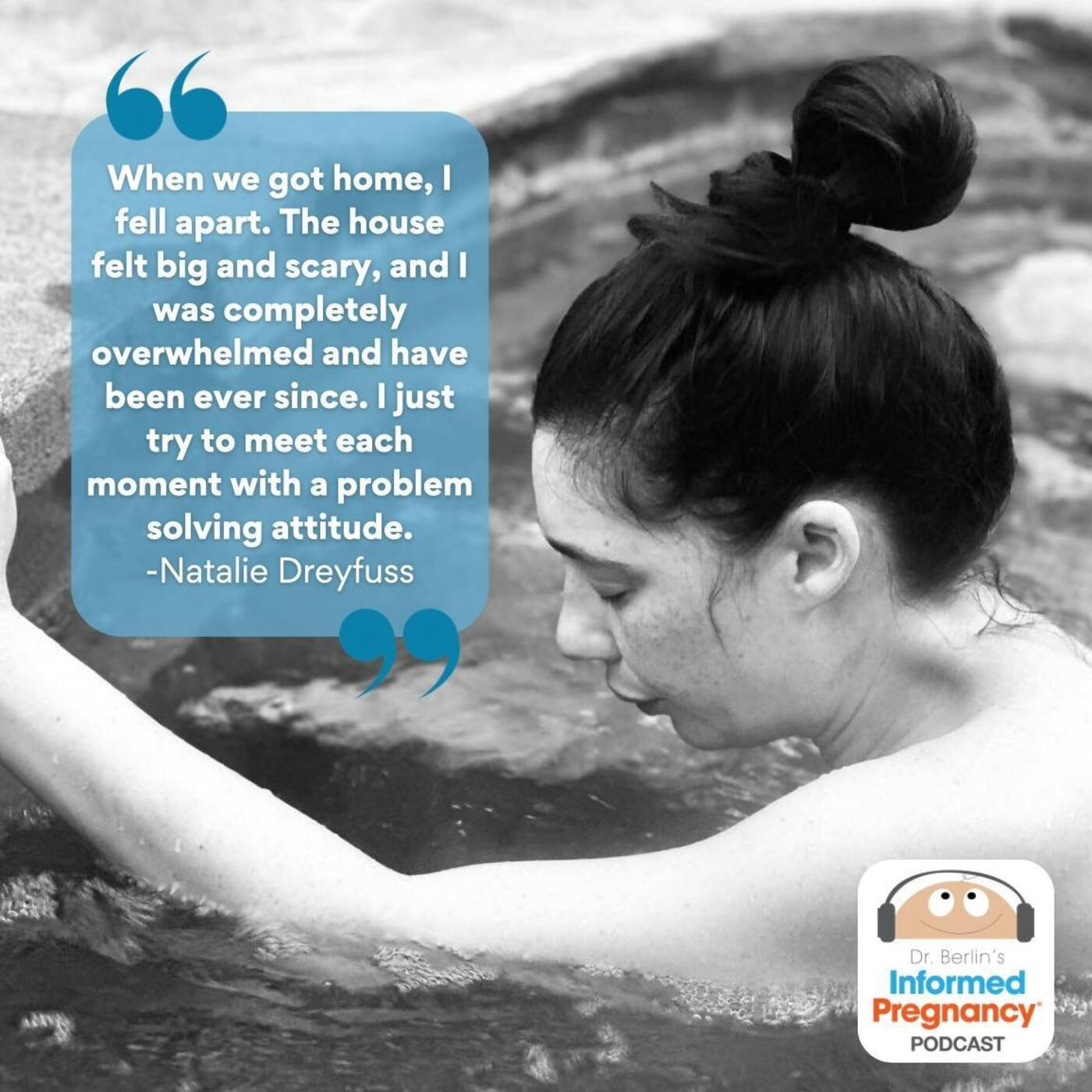
[42:55] about it and we got home and I fell apart I was like I missed the hospital like I missed the people there I missed having help I missed like knowing like that there's like options if I run into problems like the house felt really big and scary and our little room felt so safe in the hospital and I just was completely overwhelmed when I got home and kind of have been ever since um how do you deal with that I think I just meet each moment with like this problem-solving attitude you know I am frustrated by the problems I'm running into breastfeeding has been really challenging and I've had to ask for help a lot and I've had to talk to people that I didn't feel like were super helpful and then find people that were
[43:38] helpful I have to figure out like just dressing a newborn is so challenging I'm like why are newborn clothes like this where I have to like torment my child to put like these stupid pants on her like I hate all the clothes everyone's like get zippers it's great I'm like cool I have all the zippers I'm like what is this this is horrible I can't get anything on this child it's so annoying and so I'm like you know constantly trying to figure out the snoo and figure out the sleeping situation I figure out the clothing and figure out feeding and is it okay to use formula and she has like a dairy allergy and it's like so much
Dr. Elliot Berlin, DC [44:14] learning curve it's so much learning curve and the learning curve is happening while your body's in flux your hormones and emotions are in flux your sleep is in flux it's a lot like it has all the chemicals for being terrible all the ingredients for being terrible and also
Natalie Dreyfuss [44:31] sometimes amazing at the same time yeah I mean the second week for me my hormones dipped and I really fell apart I was just like I know depression and I was like hey girl good to see you I was like there you are I know you I have gone through bouts of this before so I knew it was chemical I knew you know to ask for help I called my doctor I was like hi things got really dark and she was like great let's get you meds, let's help you out. And I tried to do some SSRIs and got violently ill, just so sick for me. It's, I just couldn't tolerate any sort of serotonin shift. I just had so much nausea, so much diarrhea. I had chills and vomiting and that was really sick and so dehydrated
[45:20] because I couldn't keep anything down. I still am having a hard time eating, but I only took the meds for like maybe three days before I started to get that sick and then I couldn't care for the child. I couldn't stay up all night anymore because I was so sick and it made me so much more depressed that by the time I stopped taking the meds, I was like, I'm not depressed anymore. It's the best antidepressant of all time because it got me so much sicker that I was like, Oh, I thought it was bad before. This is infinitely worse. As long as I'm not puking, I am not depressed. I'm great. So I've tried that route. It wasn't for me. And I felt like the hormones leveled out a little bit.
[46:01] I'm still having a hard time with eating. Now I have this crazy diet because she has like a horrible dairy allergy. And so her whole face is like crusted over and like swollen shut. And I was like, Oh God, I'm accidentally poisoning my baby. I have to cut dairy. It's the worst. All I want is milk and yogurt and I just want beat foot. So I have to switch my whole diet around and hers as well. I have had to supplement with formula and then do like goat formula and all that stuff. So, like I said, lots of problem solving here and there, but I would say the last like four days, the clouds have started to part a little bit as she got really chunky this week.
[46:42] And I love it so much. Like she's like, Oh, she's like substantial at this point. Like she's a big girl. She gained like 14 ounces this week. And so she's so squishy and it's starting to feel different. It's starting to feel like I can see that they're not quite like babies yet. You know, like the newborn phase is a strange one. It really is that fourth trimester. Yeah.
Dr. Elliot Berlin, DC [47:07] They don't even realize that their arms and legs are attached. So when they move by, they startle themselves. And it's just a very unstable. The second they get hungry, they're screaming their heads off, you know, like survival, like, will I get a meal or will I not? I think like every three weeks to me, there's like a huge change to the next chapter and you're just getting into your first past, your first three weeks. So I think that, you know, soon they will realize their arms and legs are attached and they realize that when they're hungry and make a low noise, they will get something to eat. And then, you know, the next three weeks after that, the little
[47:43] interactions, the smiles and the coos and the tracking with their eyes and things like that. And then just, of course you find your rhythm with the sleep and with how to get those little pants on without torturing them and everything else, you know, starts to fall into place.
Natalie Dreyfuss [47:59] So, yeah, I agree. I can see how it's starting to change in the past few days. And it is what everyone does say. You know, I guess I just thought I could be the exception. Like I had these stealthy expectations as Brene Brown would say, like these expectations you don't even know are living in you. And they show up and you're disappointed somehow that you're not special. You know, you don't get to like bypass postpartum because you learned enough about it or because you thought you bought the right things or had the right amount of support or the right amount of, you know, help. Or, I don't know. I just thought that I could prep enough and that just doesn't exist.
[48:42] And that's the lesson for me. I guess it's just that this is what nailing it looks like.
Dr. Elliot Berlin, DC [48:48] Well, I mean, look, it's different for everybody. And life is a roller coaster. There are ups and downs and you're a hard worker and you did put a tremendous amount of work into it. And who knows what it would have been like if you hadn't put that kind of work into it. But, you know, flatline is death, not life. There are struggles. You conquer them. There's victory. Then there's more struggles. There's dips, there's valleys and peaks, you know, that's life. And with such a big transition, you would expect bigger ups and downs and they're happening.
Natalie Dreyfuss [49:19] Yeah. I think yesterday I was looking through my phone and I've just got like just enough distance from the labor to look back on like the photos and stuff, and I got really emotional about it. I was like, wow, I just enough space from it to really appreciate it. So it was cool that I like, I think I was about to text you because I just felt like I had just enough space from this to be able to like talk about it and I pulled up your name and you texted me. And I was like, whoa. And I was like, look at this. I literally was about to text him and say, Hey, I'd love to podcast while it's still fresh. And you were like, are you ready to podcast? I was like, what?
[49:59] Cause we had spoken since before the birth. And I was like, that's so weird. Yeah. Well, now we did it. Yeah. I'm so grateful for this because it feels like a cool time capsule. And I don't know what story I'll tell myself about what happened in the birth or this first three weeks or, you know, rewrite that history. So it's kind of cool that while I'm in it, just to have you, you know, give people the opportunity to really like vent it out and process it. Honestly, as a person, I'm told this story. So I'm like processing it as we're talking about it as well. But yeah, I just think it's such a cool thing that you do. And I feel really happy that you
Dr. Elliot Berlin, DC [50:34] included me. Thank you. I'm so honored that you came to join and to share your excellent storyteller. I mean, it's part of what you do in life, but also just to let yourself be so open and just, you know, while you're processing, take us along for the ride. I really appreciate that. What's next for Natalie Dreyfus? Do you have projects coming up?
Natalie Dreyfuss [50:58] Just raising this baby. That's a big project. That is the role of a lifetime. Yeah, I really feel like this is what I've been waiting for always. So career stuff, it's just really not on my mind. And the next phase is just like, bringing together families and stuff. My partner's family is all in Montreal, my family is on the East Coast. So over the next few months, once I feel like it's safe, I want to introduce the baby to her peeps and spend time traveling with her and just, you know, I really experienced being a mom. This is what I've always wanted. So the career part was always like, it means don't end for me. I was like, let's make sure that I'll be able to have what I really dream of having,
[51:41] which is a little baby. Amazing. Congratulations. Yeah. I can't wait for you to meet her. I'll come bring her in.
Dr. Elliot Berlin, DC [51:48] I cannot wait to meet her and I can't wait to give you some postnatal TLC for you. And to our listeners, thanks for listening and visit us online at informedpregnancy.com.
Want more pregnancy + parenting? Start your FREE TRIAL of Informed Pregnancy+ and get access to all our curated pregnancy and parenting content — original series, iconic birth films like The Business of Being Born, prenatal workouts and more.
