
March 27, 2023 · 46 minutes · Episode 337
About this episode
Documentary producer Lyndal Redman joins the show to talk about her personal and raw story of loss, grief, and hope which led to the creation of her award-winning documentary “You Are Not Alone”. The film takes a look at miscarriage as told by men and women, reminding everyone: you are not alone.

- Start your FREE Informed Pregnancy+ subscription and watch the film series here: https://www.informedpregnancy.tv/you-are-not-alone
- Connect with Lyndal online: www.instagram.com/youarenotalonedocumentary
Keep up with Dr. Berlin and the Informed Pregnancy Project online!
www.instagram.com/doctorberlin/
www.facebook.com/InformedPregnancy
Learn more about your ad choices. Visit megaphone.fm/adchoices
See Privacy Policy at https://art19.com/privacy and California Privacy Notice at https://art19.com/privacy#do-not-sell-my-info.
Key quotes
“You know, you've got to tell the story in a minute and a half. And when you're filming stuff, you're having to try and tell that story as quickly as possible. So it doesn't matter whether you're in news or whether you're in actual documentary making, you're still creating stories and it's all about storytelling.”
“It is, but it's something we still don't talk about. Like, you know, I always say to people, you know, that child was loved. Like, it doesn't matter that you never gave birth to that child. That moment that you find that positive pregnancy test and the moment you hold that and you're already thinking nine months down the track because you wanted that, you wanted that baby, you know, it's yours and it doesn't matter how far along it is.”
“Yeah, and that's where the documentary started. I was searching for content in some way to understand about miscarriage and about what I was going through. And I didn't want to read like endless streams of like a medical jargon. I just wanted to understand that what I was feeling at the time was okay. It was okay to be how I was feeling because other people had gone through the same things.”
“It was probably hard being on both sides of the camera because I was feeling their pain when they were talking about their own miscarriage, remembering my miscarriages. So every interview we did, like I was sobbing behind the cameras and also heart warmed that these people would share their stories with us to be able to tell them to the wider community.”
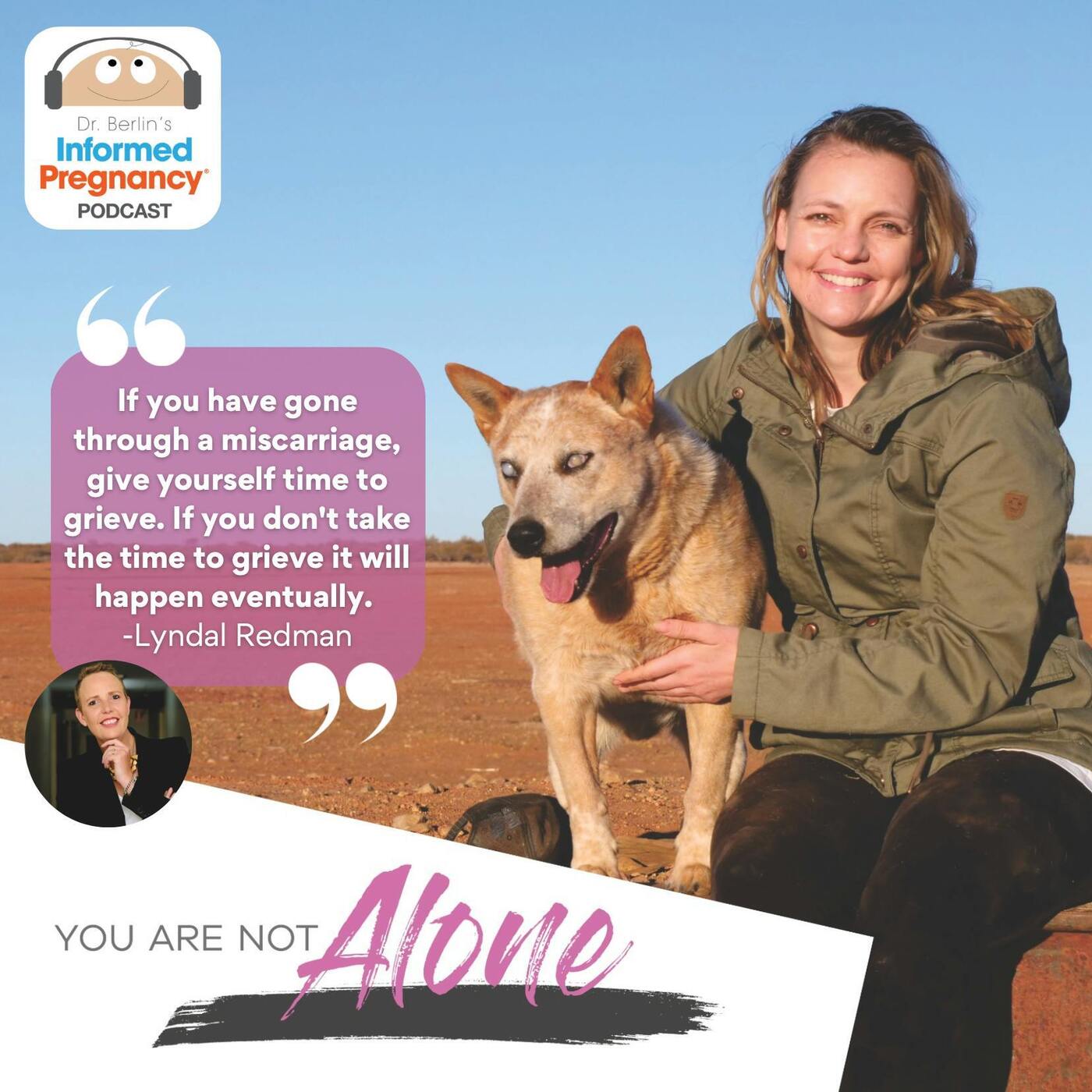
“give yourself the time to grieve. I didn't, and it really hit me probably a few months afterwards, because I literally threw myself into work and went, right, if I just work hard enough and long enough, I will just forget about it. You don't.”
Related episodes
- Ep. 396 First Baby After 40 with Rachel Gerrol
- Ep. 362 Filmmaker Rani Khanna: More Than Blood
- Ep. 395 Birth and Advocacy with Dawn Thompson
- Ep. 394 Radical Love with Alexis Jones
Transcript
AI-generated transcript with speaker labels — may contain errors, especially names and medical terms. Dr. Elliot Berlin, DC appears in blue; Lyndal Redman in orange.
Download PDF of the Transcript
Dr. Elliot Berlin, DC [1:13] Welcome to the informed pregnancy and parenting podcast. I'm your host pregnancy focus car factor. Dr. Elliott Berlin My guest today is a former news camera operator. She's a documentary producer and a mother She produced a deeply personal documentary series called you are not alone now available to stream on informed pregnancy plus Lindell Redmond, welcome to the podcast. Thank you for having me Oh, I'm gonna have a million. Thank yous for you over this episode But I'll start with thank you for being here. Let's get to the beginning. Where are you from originally?
Lyndal Redman [2:08] I'm actually from a little country town in South Australia We had a very small primary school and a very small town So much so that you didn't even have to slow down to 60 to go through our town So I grew up a little cut. Yeah a little country town in South Australia
Dr. Elliot Berlin, DC [2:26] I thought that's how about all those little towns made their money people just blow through
Lyndal Redman [2:33] Yeah, they used to hide behind the school shelters
Dr. Elliot Berlin, DC [2:37] So what does that mean like a lot of space and land and farming stuff where um
Lyndal Redman [2:42] Well, mom and dad had a little block of land, but I grew up in a cray fishing I think you call them lobster so cray fishing family So yeah, I was very lucky to grow up in the country. Wow. Okay, very cool
Dr. Elliot Berlin, DC [2:56] And then flash forward. Where are you now?
Lyndal Redman [2:59] I'm now living in Adelaide in South Australia after moving around a lot in my early career But I've settled back in South Australia in Adelaide, which is the largest city in our state
Dr. Elliot Berlin, DC [3:10] Oh amazing and no more cray fishing for you
Lyndal Redman [3:15] No, no mom and dad still own the business and my brother still go so get a crayfish every now and again
Dr. Elliot Berlin, DC [3:21] Oh amazing freshers can be and what are you doing now for work? We mentioned in the opening that you were doing camera operating for news and then Tell me about that progression
Lyndal Redman [3:34] So I was a news cameraman for Channel 9 Adelaide I was the only female news cameraman in Adelaide and have been there's actually no other female news cameraman here And I still say cameraman which is kind of funny But that's what it was always referred to and I didn't feel the need change it
Dr. Elliot Berlin, DC [3:53] Female camera man, yeah, yeah Yeah, but the way you say it actually cameraman the end of it could be man or woman seemingly or yeah You know, yeah, you could go with either It's that Australian accent of just roll it all in together Doing camera operating in the field or in the studio
Lyndal Redman [4:15] Yeah, no, I was in the field So I am a show a lot of what I call death and destruction because let's be honest That's what a lot of news is so, you know, we're looking for Yeah fatalities You know floods fires Yeah, I saw it all it was quite a I don't know a journal and rush to be honest And I didn't injury to my shoulder while I was on the job and so I ended up having to step back from camera with as a News camera operator because the cameras were quite big and so yes I had to sort of change what I was going to do and after that I got a job working in a paper and I used to actually create my own videos. So I used to do the interviews, you know, pieces to camera and shot it all and packaged it all up
[5:04] and told my own stories through there. Yeah. And that was going back quite a few years ago now. So eventually I decided after a job in public relations, doing video content that I'd go out on my own, which allowed me to work with the clients that I wanted to work with, but also create documentaries.
Dr. Elliot Berlin, DC [5:21] Wow. That's quite the chain of events. So first of all, before you did camera operating, before you could shoot everything on like an iPhone.
Lyndal Redman [5:30] Oh, definitely. Yeah. So you're talking though, the massive, what they call an XD cam. So the big ones that you see people carrying around on their shoulders.
Dr. Elliot Berlin, DC [5:38] I miss those. Those were great for chiropractors.
Lyndal Redman [5:41] Well, they still use them here in Australia. So hence the reason I'm not shooting news anymore.
Dr. Elliot Berlin, DC [5:46] Maybe I can open them off as well. But really from that point, you were already knee deep in sort of documentary making. It sounds like each segment is sort of like it's own little mini duck.
Lyndal Redman [5:57] Absolutely. You know, you've got to tell the story in a minute and a half. And when you're filming stuff, you're having to try and tell that story as quickly as possible. So it doesn't matter whether you're in news or whether you're in actual documentary making, you're still creating stories and it's all about storytelling.
Dr. Elliot Berlin, DC [6:12] I feel like that's how it is. Want to go to the doctor here in the US. I have about a minute and a half to tell my whole story. And then they go, here's your script.
Lyndal Redman [6:21] Yeah.
Dr. Elliot Berlin, DC [6:22] So just out of curiosity, is there a highlight moment from when you're out in the field shooting these news dramas?
Lyndal Redman [6:29] Oh, there's a couple that stand out. Actually there's three. One was some quite nasty flooding in the mid-north and we had to fly in in a chopper to get the footage of the towns flooding and the roads flooding and stuff like that. Um, a fire on kangaroo Island, you know, summer in Australia, there's a lot of bushfires and that was pretty harrowing because there was a gentleman that was killed in a truck that I had to cover, hence death and destruction. And I'd say that lightly because I've had to film it and you have everything come into your body and in your brain and it consumes you. And the third one would be I covered a gentleman who'd murdered his
[7:11] partner and they finally found him holed up in a little country town. And yeah, there's a lot of things that I've covered and I still drive down streets and I look at places and I think, you know, I filmed a car going into a shop there. I, you know, filmed my first fatal or, you know, there's moments where I still drive around town and I can still visualize me being there and filming stuff and this is 10 years on.
Dr. Elliot Berlin, DC [7:37] So when you sort of moved into documentary, what was the first thing that you worked on?
Lyndal Redman [7:42] So I've actually worked with a company in the UK called first look TV and they actually produce a lot of crime series. So I worked on a few of those. One was the Peter Falconio murder that happened in Northern territory quite a few years ago. He was a backpacker from the UK. I've subsequently worked on like nurses who kill evil up close and inside the mind of a serial killer for them, and that really got me hooked on documentaries and that longer form storytelling. Yeah. More than a minute and a half. Yeah, much more than a minute and a half. And it really got me because I'd just been a camera creator at channel nine and you know, you've spent so much time with the journalists.
[8:24] It allowed me to hone my interview skills because I was always just behind the camera. And even when I was doing the little short form ones, you're still just behind the camera, but having those really in depth and sit down interviews is just a whole nother ball game. Yeah.
Dr. Elliot Berlin, DC [8:40] And I imagine you sort of learn as you go.
Lyndal Redman [8:44] Yeah, absolutely. I'm a big one for training on the job. I think it's handy because, you know, you pick up different things from different people. And even when I was doing just camera work, just watching some of the guys that have been shooting news for 20 years and you'd get to a job and you watch what they're doing and then you go, Oh, I'll get that shot next time I come out. So, and then you'd be the one that like got that shot and then be sort of the juniors that are coming in and then you turn around and they're getting the same shot that you've just shot because they're watching you because you've been in the industry a little bit longer.
[9:14] So it's just a great way to learn and to be a fly on the wall like that, you know, it gives you such a solid background,
Dr. Elliot Berlin, DC [9:20] switching gears for a moment. How did you meet your partner?
Lyndal Redman [9:24] So, yeah, my now husband, Jamie, he actually sent me an RSVP. So it wasn't Tinder. There was no swiping. It was kind of like a kiss. I think they used to call it in RSVP lands and he popped up and I was just shy of my 33rd birthday and he popped up and I was like, he looks all right. So I was very much like, right. I'm just going to get straight to the point. I sent him an email and I was like, right, let's go for a drink. Cause I was like, I'm not doing the backwards and forwards things. If I meet you and you're nice and we get on really well then and we'll go for another date.
Dr. Elliot Berlin, DC [10:01] So it's practical exactly.
Lyndal Redman [10:04] I don't want to waste my time. You know, at that stage, I was 30, kind of closing into 33. I was like, all right, this is, you know, taking me a lot longer to meet someone. And we went on a first date and we sat down for a drink. And then we ended up having dinner and four hours later, we said, see you. And yeah, that's kind of the start. And it was actually 11 years ago yesterday.
Dr. Elliot Berlin, DC [10:25] Wow. Okay. Happy, uh, date of nursery.
Lyndal Redman [10:29] Yeah, almost.
Dr. Elliot Berlin, DC [10:32] So, I mean, I guess you're under second date.
Lyndal Redman [10:35] Yeah. Second date. Yeah. He actually rang me the next night, I think, and said, Hey, would you like to go on a second date? I was like, sure. Okay. It took him a long time to ask me, but I was like, uh, and when you know him, it takes him a long time to work up the courage to do some stuff. So yeah, eventually asked me on a second date and we went out and you know, I'd found out that he had kids from a previous relationship. So yeah, that was our journey. I think, you know, we sort of went on that date and then he disappeared for a month away for work. And I was like, Oh, well, we'll just wait and see. And while he was away, he sent me an email and said, Oh, how
[11:10] do you feel about catching up? And I was like, yeah, I suppose we could do something. I was very like, no, I wasn't like, I think he was hoping there was going to be like, yes, let's catch up. But I was like, yeah, we can do something, you know, see what happens.
Dr. Elliot Berlin, DC [11:23] Sure.
Lyndal Redman [11:25] And then he started developing into a little bit of friend zoning. So I was like, right, I've just got to amp this up. So, um, yeah. And we've been together ever since.
Dr. Elliot Berlin, DC [11:34] Uh, that's sweet at the time. How old were his kids?
Lyndal Redman [11:38] Oh God, his kids were quite young. They're 21 and 20 now.
Dr. Elliot Berlin, DC [11:43] And with, so yeah, nine and 10, was that something you had considered previously, or how did that impact the development of your relationship together?
Lyndal Redman [11:52] Uh, I think, uh, the older you get, the more you go, you know, you're going to meet someone that's going to have baggage, or you're going to meet someone that's going to have kids. So I was always just like, you know, if they've got kids, that's fine by me. Yeah. Cause you know, you are, you're getting older. So you sort of take what, so you take what you get, but you know, you kind of go, well, if that's what they've got, that's the baggage that I've got. You work through it. So yeah, it's kind of like, you know, instant family, instant family. Yeah. Kind of, he didn't spend a lot of time with his children because he used to travel away. He was a FIFO worker.
[12:29] So he would spend like five, six weeks away at a time. So he didn't really have his children. It's not like he had them 50, 50 or anything like that. It was a little bit more ad hoc. So it never felt like family. Like it never felt like an instant family.
Dr. Elliot Berlin, DC [12:46] Okay. Not like you immediately became full-time mom.
Lyndal Redman [12:50] No, no, no, no, no.
Dr. Elliot Berlin, DC [12:53] Linda, let's take a break. When we come back, we're going to talk about the beginning of your starting a family together, but we'll be right back.

Dr. Elliot Berlin, DC [14:37] Welcome back to the Informed Pregnancy podcast. We're talking to Lindell Redmond. Okay. So you meet your partner, has two kids, and you know, eventually you guys work it out. You decide to move forward with the relationship. When did the conversation of you guys having kids come up?
Lyndal Redman [14:53] It was kind of like the elephant in the room for a very long time. Jamie was never. like a straight, no, I don't want any more children. There was always sort of this maybe, maybe not. In my head, I was like, you know, it'd be nice to try. I've got lots of nieces and nephews. So it would be nice to have a child of my own. And, you know, we'd been together a few years and it kept coming up about having children. Occasionally he'd be like, oh, this is why I don't want any more children. If something was going on. But eventually, you know, talked him around to it a little bit. And funnily enough, we actually got married. And shortly after our wedding, I was like, right,
[15:37] it's now or never. I was like, right, I'm going off the pill. You're going to have to suck it up. Cause he was always like, oh, you know, when I'm ready, I'm like, when is that going to be? Like, let's be honest, when can that be? So like, I wasn't doing it to trap him. I literally said, I'm going off the pill. So, you know, this is, yeah.
Dr. Elliot Berlin, DC [15:57] Did that change the relationship? Was he nervous about it?
Lyndal Redman [16:01] Oh, totally nervous about it. Yeah, totally nervous. You know, cause he had split up with his ex-wife when his kids were one and two. So he didn't really have the opportunity to be a full-time dad to his kids that he'd already had. And I think he was kind of worried that if we went down this path and something was to happen and I was to leave, that he didn't really know how he would cope with that. So there was a lot of discussion around about having children again. And yeah, it was the elephant in the room and yeah, I persuaded him.
Dr. Elliot Berlin, DC [16:35] I mean, you're getting off the pill though. I mean, you sort of, if you understand the cycle at all, I mean, that ovulation time of month, I don't know. It seems like he might be like, I'm sleeping over here tonight.
Lyndal Redman [16:49] Yeah, yeah, there was a little bit of that. I'll be honest, there was a bit of that. I mean, everyone's probably been through it. I was just like, ooh, do I really want this to happen? So.
Dr. Elliot Berlin, DC [17:00] Because you kind of sort of painted it as I'm getting off the pill, you know, let's see what happens. But it seems like either at some point you must've got him wasted or he just totally.
Lyndal Redman [17:12] Ground him down. I just ground him down.
Dr. Elliot Berlin, DC [17:15] You got him on board.
Lyndal Redman [17:17] I could see how much of a good father he could be. So I wanted him to have the opportunity to have that. And I wanted the opportunity to see if we could have a baby naturally.
Dr. Elliot Berlin, DC [17:26] So. That's really sweet. Okay. And why would you think not?
Lyndal Redman [17:30] Not as far as having a baby naturally. Yeah. Oh, well, I was about 38 at the time. I previously had thyroid cancer as well. So I just wasn't really sure. And you know, you've been on the pill a long time, getting older, cancer, you know, it was kind of like, we'll see what happens. And I didn't want to go down the path of IVF because I knew that would put a huge strain on our relationship. Plus I'd kind of got it into my head that I would be okay. Like if we couldn't get pregnant naturally, I was okay with that.
Dr. Elliot Berlin, DC [18:06] So you wanted to try.
Lyndal Redman [18:07] I just wanted to try.
Dr. Elliot Berlin, DC [18:09] And how did that go?
Lyndal Redman [18:10] So we started trying. Jamie was actually still FIFO. So he was away for four weeks at a time.
Dr. Elliot Berlin, DC [18:19] That makes it a little more challenging.
Lyndal Redman [18:22] A little challenging because there'd be some months where I'd be like, damn, he's away for those five or, you know, six days or whatever it is. You know, I was like, is this ever going to happen? But we managed to get pregnant pretty quickly, which was amazing. Like I was actually quite shocked. You know, yeah, I was like, okay, it's happening. We're pregnant. Great. You know, taking that first test and the pregnant sign came up and I was like, oh my gosh, it's all happening.
Dr. Elliot Berlin, DC [18:50] Wow.
Lyndal Redman [18:50] You know, my boobs got sore. You know, I started having pregnancy symptoms really early on. So it was really exciting time.
Dr. Elliot Berlin, DC [18:59] Is that what prompted the tests?
Lyndal Redman [19:02] Yeah, yeah. You know, I was like, oh, you know, yeah. You know, boobs are sore. I was starting to feel a little bit different and I was a few days late. So I just took the test and yeah, came back positive, which was amazing.
Dr. Elliot Berlin, DC [19:16] And how was Jamie's reaction?
Lyndal Redman [19:18] Um, he was apprehensive. He was very apprehensive, but I think slightly excited about it as well. So I went to the GP and got another test and made sure that it was all happening. And they sent me for a blood test and they said, yep, your pregnancy is done. It's all good. Levels are going up. Yeah, it's all go.
Dr. Elliot Berlin, DC [19:39] And as those things happened, was that making Jamie more apprehensive or was he starting to come around?
Lyndal Redman [19:46] I think it was quietly coming. Well, I'd like to think it was quietly coming around at that point. No, I think he was, but it was so early on in the pace that, you know, I think, and he will say it, he found it hard to. had that connection already because he's not in my body. And it was just sort of like, you know, it wasn't like we were showing it that stage or anything like that. So I know he was a little bit more, you know, standoffish about the pregnancy at that point.
Dr. Elliot Berlin, DC [20:15] Yeah. I mean, I think even though you guys have symptoms, sometimes that by itself is not really a connection. I mean, you feel like something's happening in your body and you know logically that you're pregnant, but even for the pregnant person, sometimes it's hard to relate to that. Certainly for the partner, even harder, less to go on, but you were excited.
Lyndal Redman [20:37] Oh, absolutely. Yeah. I was excited. I was like, wow, it happened. That was quick. I was like, wow, that's fast. Like, you know, we didn't have to try too many times. We didn't have to try and, you know, navigate him being away, just all sort of happened.
Dr. Elliot Berlin, DC [20:49] So what happened?
Lyndal Redman [20:52] So I saw the GP and the GP said to me, Oh, listen, you know, it's all looking great, so you probably won't need a scan until you're about 20 weeks. And I was like, okay, that's fine. You know, I mean, my sister had been pregnant. Like I said, I've got lots of nieces and nephews. So I just assumed we'd have to have a scan earlier than that. And I, you know, went along my merry way, felt pregnant. I got to about nine weeks, I reckon. And I had a bit of a funny moment and then I didn't think anything of it. And I was just like, Oh, that must have just been something that's passed very quickly. And it sort of closed into sort of about 10 week mark.
[21:32] And I thought, Oh, I might just organize a 12 week scan because I hadn't organized one than the GP I was seeing at the time hadn't organized one. So I was just like, I'm not just booking for one because it'd be nice to sort of see our baby. And at that stage, like Jamie and I had started, you know, he got quite excited, we were starting to think about names and we were thinking about the future. So yeah, I booked him for this scan and he happened to be, I made sure that he was going to be home from his FIFO work and we were driving there. It took about 30 minutes to get to the place where we were having the scan. We're actually really excited.
[22:06] We were talking about, Oh, you know, it's great. We're going to be able to see our baby today and how amazing is this. And then we pulled up out the front and we were all really excited. And we went inside and got the call up to come in and have the scan. And the lady started doing the scan and I don't know whether I just female intuition, but like, you know, she's scanning away and I was like, Oh, you know, couldn't hear a heartbeat or anything. And she's scanning away and she's like, um, how far along are you? And I said, Oh, 12 weeks. And she's like, Oh, okay. And she's scanning a little bit further. And I was like, something's not quite right.
[22:49] She asked me to go to the toilet and come back and she was going to have to do an internal, and I remember coming out and going back into the room and Jamie had gone for a walk for some reason, and I don't think he really had an idea of what I think in my head, I was like, something's not right, but obviously he didn't have that same thought. So he'd sort of gone for a walk. And I remember just laying back on the bed and I said, where's Jamie? And the lady was like, Oh, I'll go and get in for you. And so she disappeared and came back with him. And she started the internal scan and she said to me, um, I'm really sorry, um, it's a non-viable pregnancy.
[23:27] And that was the moment where my whole world fell apart because I was so excited to see this baby and, and there was nothing there, like it was heartbreaking and it's something that I think will stick with me for the rest of my life.
Dr. Elliot Berlin, DC [23:41] So, I'm so sorry. It's also kind of interesting. Cause when you set out on the journey, you were like, if it is, it is, and if it isn't, it isn't, but it's different when it is, and then it isn't.
Lyndal Redman [23:53] Absolutely. Like, you know, like I said, if we could get pregnant naturally, amazing, if we couldn't, I was fine with it, but that moment where you have all the thoughts of being pregnant and having the family and starting that journey and having that future and then having that completely torn away from you in that one moment, it was, and for many other people who have gone through and not sure whether I'm allowed to swear, so if you have to cut this, but it's a pretty fucked moment, it's not nice. It's not nice hearing those words at all.
Dr. Elliot Berlin, DC [24:28] I mean, the whole experience, my wife and I, unfortunately struggled with a bit of infertility and a couple of miscarriages and, uh, we were young and I felt strong, healthy, invincible. And when that scan is going and nobody's saying anything, you don't really see anything. You know, you're just like, no, this isn't happening. This can't be happening. This is not happening. And then they tell you, and I just remember like getting kicked in the solar plexus and that's me. You know, my wife. life even more so because the baby was inside her and just these rush of feelings of, you know, disbelief, anger, guilt, fear, you know. I don't know how what you just described
[25:13] sounds to somebody who hasn't experienced it, but to somebody who sort of experienced it, I could just relate a thousand percent. At that time, had you known anybody who had a miscarriage or who had talked about it?
Lyndal Redman [25:27] Yeah, well, I knew one person. One of my friends had gone through a miscarriage. And I actually still remember the phone call I had with her when I found out, like I rang her. It was close to her birthday. And I said, oh, happy birthday. And, you know, how's the pregnancy going? Because she told me she was pregnant. She goes, oh, we've lost the baby. And I just remember going, what the hell do you say to someone? Like in my head, I remember thinking that's s***. But she was the only person I'd ever known that had happened to. Like, as far as I knew, like none of my family had been through one. She was one person. So I didn't realize exactly how many people
[26:03] and how many families and, you know, partners and wives and how many people had actually gone through it. Like I had no idea up until that point.
Dr. Elliot Berlin, DC [26:12] Almost like it's a normal part of having kids.
Lyndal Redman [26:15] It is, but it's something we still don't talk about. Like, you know, I always say to people, you know, that child was loved. Like, it doesn't matter that you never gave birth to that child. That moment that you find that positive pregnancy test and the moment you hold that and you're already thinking nine months down the track because you wanted that, you wanted that baby, you know, it's yours and it doesn't matter how far along it is.
Dr. Elliot Berlin, DC [26:41] No, I mean, I always wonder this at a birth as a doula at a birth when this baby comes out. And especially if I'd seen that person during the whole pregnancy, you know, and symptoms come up and the sciatica and the difficulty eating and the heartburn moving around. And then you're in labor and this kid is like, you know, pushing its way through your body and all sorts of it. And they come out and you just love them so much. Like, why? You know, you're a little monster. I hate you. But the truth is from the second that you feel that life and you connect with that life, it's like that. It's this incredible just natural bond that you have. And so
[27:14] for it to be taken away even early on, it can be very, very painful. And for a myriad of reasons, it's not talked about that much. And so you assume I'm broken. There's something wrong with me. Like, why did this happen to me? The one person who it happens to happens to be me, but it's really not like that.
Lyndal Redman [27:30] Yeah. Well, I remember working like a five day straight job, not long beforehand. And I kept thinking, oh, it must have been me. I must have worked too hard. Yeah. I had so much guilt and so much thought that there was something I'd done wrong. And I now still remember, you know, two o'clock in the morning, penning a text message to all of my friends, because I was also of the opinion, like, I'll tell people early because I think I was kind of like, if something was to happen, even though I didn't know a lot about miscarriage, I'd want people to know. And so I told quite a few of my friends that we were pregnant. So at two o'clock in the morning,
[28:06] I pinned because I couldn't sleep because I was devastated. And, you know, I just couldn't sleep and I just needed to get it out. And so I pinned this text message and I woke up in the morning and I just shot it to all of my friends. And I said, this is what's happened. Please don't contact me. I know you love me. I'll be in touch, you know, because I was like, oh, going to work the next day. So this was a Tuesday and had a full day booked on the Wednesday. And I had to front up to clients and be, you know, happy and chirpy and try not to let it get to me, even though I spent the whole day going, you know, I don't have this pregnancy, all the pregnancy
[28:44] hormones, but there's nothing there. And yeah, it was a pretty horror day actually. I can't even imagine how it doesn't fully consume you. Yeah. I couldn't believe I actually got up and went to work. And it was quite interesting though, that day I had to make a lot of phone calls. I had to obviously get into obstetricians. And that's like another story, which you can ask me about, but I remember, you know, having to do all those things. And I remember actually talking to one of my clients and I just said, we're going to have to move something. And she's like, oh, why? And I'm like, oh, we just found out she'd miscarried. And she was like, oh, I had one like a month ago. And I
[29:20] was like, oh, okay. I mean, at what point did you decide to make a film about it? I was fairly consumed about my own thing for, you know, obviously I had to book in for a DNC, had to get all that sort of stuff. And I was very structured about all that. And then the following Tuesday, so literally a week after, I miscarried another very good friend of mine, who's a filmmaker as well. She had told me that she was pregnant. We were nine weeks, same time. So within a week of each other. And she contacted me and she said, oh, it's happened to me. I've just had a miscarriage. And I was like, far out. Because by this stage, I'd spoken to so many other people
[30:05] and like, oh yeah, you know, you would get stories of like, oh yeah, my wife had five. And I was just like, why don't we talk about this? Like, why is it still something that we either sweep under the rugs and I can understand why there's some women out there that don't want to talk about it because it is bloody hard to talk about. But I was just like, why is it still this sort of to be subjective? You know, you don't want to discuss it. You don't want to talk about it. Almost like, you know, move on. And I just couldn't move on. And I think I just couldn't understand why we still didn't talk about it.
Dr. Elliot Berlin, DC [30:37] All right, let's take another little break. And when we come back, we'll find out how both your journey and the film, You're Not Alone, unfolded. Welcome back to the Informed Pregnancy podcast. We're talking to Lindell Redmond. Okay, so you had your unfortunate first pregnancy and miscarriage at around nine or 10 weeks. And after realizing that you're not alone, you kind of whisper to get the conversation going so that other people realize that they're not alone.
Lyndal Redman [31:20] Yeah, and that's where the documentary started. I was searching for content in some way to understand about miscarriage and about what I was going through. And I didn't want to read like endless streams of like a medical jargon. I just wanted to understand that what I was feeling at the time was okay. It was okay to be how I was feeling because other people had gone through the same things. And I know everyone has different relationships with their miscarriage, but I just wanted something to help me. And so I was like, well, how can I do that to help other people? And I thought, well, why not use the skills that I have and do a documentary and try and tell other people's stories about miscarriage
[32:02] and have people watch it and go, you know what? It's okay to feel crap and it's okay to be crying and it's okay to have all these emotions. So yeah, it's where the documentary came from.
Dr. Elliot Berlin, DC [32:13] During that time, did you guys talk about trying again?
Lyndal Redman [32:18] We did, and that was another conversation because obviously we'd had that really high of, yes, we're pregnant and we're gonna have a child. And then that extreme low of, you know, it wasn't meant to be. And Jamie was back doing FIFO again. And every time within my cycle, he was away. And in the end, I just went, you need to get another job because I didn't want to have to sit around and wait for him and see every month go past. You have a calendar go by. But also not pressure him into it, not pressure him to have sex all the time when he came back, because I didn't want him to feel that pressure. But there was pressure and it was just this constant
[33:03] because as much as I was like, oh, you know, if it happens, it happens. If it doesn't, doesn't. When it's happened once and you have that glimmer of hope, you want that again. So you wanna be able to keep trying. You wanna see if it's gonna happen again.
Dr. Elliot Berlin, DC [33:17] Did it?
Lyndal Redman [33:18] It did. So eventually we got pregnant a second time. Once again, boobs were sore, had all those feelings. You know, I knew my cycle. I think I was not promoting any app, but I was on an app that told me when I was cycles and when everything was happening. So I took a test the day I should have had my period and it came back positive. And I was like, okay, great. It's happened again. Little bit of trepidation, but excitement. And I took a photo of the pregnancy. I sent it to my husband while he was at work. At this stage, he'd changed jobs. And he was like, oh, okay. We're on again. Yeah, so I went and had my tests and had a blood test done. And then I had to go away for work.
[34:01] And I was on an iron ore barge about four hours north of Adelaide, in the middle of an ocean. On the hottest day on record, I think it was something like 48 or 49 degrees. So I don't know what that is in Fahrenheit.
Dr. Elliot Berlin, DC [34:16] Well, that's almost 120 degrees Fahrenheit.
Lyndal Redman [34:21] Yeah, so it was bloody hot. And I was in full PPE on this barge working. And I had to ring the doctor to get confirmation that we were definitely pregnant. It was all happening. And I remember ringing the GP clinic and they were like, oh, yeah. It's all come back. You're positive. You know, it's all pregnant. But the levels are a little bit low. And I was like, oh, well, it's super early. So no worries. Had a little bit of spotting. And I was like, oh, you know, I've got a little bit of spotting. And she's like, oh, that's normal that early on. So I didn't sort of think too much of it. Worked the rest of the day. Probably had heat stroke. It was ridiculous.
[34:55] And I got up the next morning and it was more than spotting.
Dr. Elliot Berlin, DC [35:00] Okay.
Lyndal Redman [35:01] So as much as it was like literally a week, I still remember just sitting in the hotel room going, it's happened again, like we missed Carrie again. And while I didn't have the amount of time to get connected, you know, still had that joy of being pregnant and then that low of not being pregnant. And so I got my phone out and I recorded myself in that moment of, yeah, it was pretty tough. And it was kind of like, if I'm going to get other people to tell their stories about their own miscarriage, I need to tell mine. And as much as I was always like, I'm just behind the camera. I knew in that moment that our story was going to have to be quite solidly through
[35:44] the series. So I was like, I have to capture this moment.
Dr. Elliot Berlin, DC [35:48] Wow. I mean, that moment in that first episode is so powerful. And I was actually wondering to myself, why would you film that? And now I have a better understanding of the things that led up to that. And like you said, it's one idea to go through it, feel it and want to help other people who may go through it and feel it. But to do it by sharing your own personal stories was very different than making a film about other people.
Lyndal Redman [36:16] Yeah, it was a tough decision, but there was no one else that was going to have those moments that we could capture at that time. I remember talking to my producers and they were on the journey with me the whole way. And we'd sort of said, listen, you know, if it happens, you've got to record it. And I was like, OK, so that was in my head is like, I didn't care what I looked like on camera. And my sister would say I'm an ugly crier, but I was like, I have to capture that moment because that's the moment that's real and you can't fake that. You can't reshoot that. It's that moment that so many other men and women have gone through.
Dr. Elliot Berlin, DC [36:50] Yeah. Why did you decide to do it as a series as opposed to like a lot of future like that?
Lyndal Redman [36:58] I explored a lot of different opportunities and then I went to a documentary conference in Melbourne because I really wanted to get it up and I really wanted this story to be told. And I met with the Screen Australia, the funding body, national funding body, and that were the ones that actually drove it towards being a series rather than being a broadcast, you know, half hour or hour or anything like that. So they were the ones that sort of said, hey, have you thought about doing a series and putting it online? And I was like, I don't know why I haven't because most of my other content was online content. So, yeah, so that was sort of the driving force behind the series.
[37:37] And once we sort of decided that, then it was a matter of finding people that were willing to share their stories too.
Dr. Elliot Berlin, DC [37:43] And all the while during the pandemic.
Lyndal Redman [37:46] Well, it started before the pandemic. So just after the documentary conference, like literally just after the documentary conference, I'd said to Jamie, I'm like, right, I'm away for this conference. There is no way we're getting pregnant this month. And I was about to celebrate my 40th birthday and I was like, nah, we're not getting pregnant this month. So good. Yeah. Hilariously, I was away five days and either before or after that, we got pregnant like, yes. And I think because I've taken that kind of like, it was literally, I took the stress away. I was like, no, it's not going to happen this month, but it did. And yeah, I had to celebrate my 40th birthday with no alcohol.
Dr. Elliot Berlin, DC [38:26] That's devastated. So was that still pre COVID?
Lyndal Redman [38:30] That was pre COVID. Yeah. Yep. Yep. So we didn't actually start shooting most of it until, yeah, I got pregnant and had my little boy.
Dr. Elliot Berlin, DC [38:40] Oh, wow.
Lyndal Redman [38:42] So we shot some of, we shot some of my journey. Yes. I was filming little elements of my journey as we went. So, you know, those moments where I had cramps or a little bit of spotting, I was filming all those bits and pieces. And then I remember saying to the hospital, I rang the hospital, cause we had to have a C-section and I rang the hospital. I said, Oh, I want to film my birth. And they were like, Oh, Oh, we don't really normally do that. But I'd clued my obstetrician in and he was like, yeah, no, it'd be fine. Yeah. So that were the only bits that we sort of had filmed prior to the pandemic and then of course, yeah, the pandemic happened and I had to
[39:21] try and film everything in isolation, which was kind of fun.
Dr. Elliot Berlin, DC [39:26] So crazy. I love how you just were like, yeah, then I got pregnant and had my baby and I'm like bawling over here. But you're just like a matter of fact about it for one thing. Congratulations.
Lyndal Redman [39:39] Thank you.
Dr. Elliot Berlin, DC [39:40] Now, how old is your little guy?
Lyndal Redman [39:43] My little guy is now three. So yeah, he's a bundle of energy, actually.
Dr. Elliot Berlin, DC [39:52] Apple tree situation. So a couple of questions. I mean, during your pregnancy with him was Was there a point, you know, the first trimester must have been nerve wracking. Was there a point where things started to feel like more settled? Like, okay, this is going to work out.
Lyndal Redman [40:11] I think I wasn't settled until we had 20 weeks scanned. I wasn't settled until we had a 20 week scan because I was like, right, I'm going to make sure this thing is working. I remember going, right, I want a seven week scan. And I remember them having to do an internal for that one. I had my sister come because Jamie was away for work. And I remember them having to do an internal for that one. I was like, oh, she, as soon as she said, I'm doing an internal, I went, this is going to happen again. Like, you know, uh, and then she came back on note. There it is. There's your heartbeat. And I was like, okay. Didn't have that before. I was like, okay.
Dr. Elliot Berlin, DC [40:50] Cause it's surprising. What do you mean? I'm not used to this. Good news.
Lyndal Redman [40:55] Yeah. And then I think about a week or two later, I had some spotting and so I was stressing out again. And so I ended up at the hospital and they did another scan and they're like, no, no, it's all good. And I was like, okay. And I remember sitting in there and there's actually some shots in the doco of Jamie sort of sitting on a chair because I had to ring him. I was like, you've got to come to the women's and children's blah, blah, blah, and he came and you know, and we heard the heartbeat and he could see a bit and he's like, Oh, okay. This is actually happening now. You know, and that was the first time that he'd actually seen it when he heard it.
[41:29] So that was kind of cool. Yeah. And then we had a 12 week scan because I was like, right, keep going, just making sure it's there. And that was, you know, even better to see because you could see a bit more and yeah, just hearing the heartbeat, you just sort of go that white because you start with the scan, you hear the heartbeat and you see the image and you go, Oh, that's all good. That one's all good. And then we got to the 20 week scan and you could really say, and he was very active and yeah, it was great. And I was like, okay, this is great. It's all happening. So, yeah. And then they were like, Oh, by the way, you might have to have a C
[42:10] section and I was like, great.
Dr. Elliot Berlin, DC [42:12] Why did you almost have to have a cesarean birth?
Lyndal Redman [42:16] Yeah. So the first time I think the sack was a little bit too low. So they weren't sort of sure whether that was going to move. And then about 30 or 32 weeks, we went in for another scan and Lincoln had done a few somersaults and turned around and got the cord wrapped around him twice, not once, but twice, but he was also in the pike position. So he had bum down, head up, and I was like, this is great. Cause then I at least knew when it was all happening, I could wind up work cause I worked for myself. So I was kind of like, Oh, this is good. I'm quite okay with having a C section because I could plan. So I didn't have to worry about going, Oh no, we're in labor.
Dr. Elliot Berlin, DC [42:59] Oh wait, did that happen?
Lyndal Redman [43:01] No. Oh God. No, there was a few moments where I was like, Oh, please don't go into labor. I didn't want to go into it, but no, no, that didn't happen. I never had contractions or anything like that. We literally had a lovely dinner out the night before he was born. And then, uh, got up in the morning and went, right. We're having a baby today and we're all very excited. You know, had the nursery kind of set and it was like, yep. Okay. It's all happening. Walked in there. Yeah. Oh, we're having a baby. Yeah. It was very kind of chilled really. Yeah.
Dr. Elliot Berlin, DC [43:33] They're definitely upsides and downsides. So the different modes of delivery. I have a few questions for you to round this down here. Number one, you also captured other people's stories and it must be just interesting to be on both sides of the camera.
Lyndal Redman [43:50] It was probably hard being on both sides of the camera because I was feeling their pain when they were talking about their own miscarriage, remembering my miscarriages. So every interview we did, like I was sobbing behind the cameras and also heart warmed that these people would share their stories with us to be able to tell them to the wider community.
Dr. Elliot Berlin, DC [44:11] And after that whole journey, your personal journey and your journey, making you are not alone. Do you have any advice either way for someone who's had, or is having a miscarriage, but then also for the people around them, is there any right thing to say or not say to do or not do, you know, it's going to be different from person to person, but just from your experiences.
Lyndal Redman [44:39] From my experiences for someone who's gone or going through a miscarriage, give yourself the time to grieve. I didn't, and it really hit me probably a few months afterwards, because I literally threw myself into work and went, right, if I just work hard enough and long enough, I will just forget about it. You don't. And for people that… you know, the wider family network, you know, it's okay to go, you know, well, that's just because we don't want your sympathy. We don't want you to go, Oh, but it's okay. Cause you could get pregnant. We don't want to hear, you know, you can always just try again, you know, you don't want to hear any of that. You just want to literally have someone
[45:19] go, that's just, you know, I shouldn't probably swear, but it is, it's a terrible group of people that you've bonded to because no one ever wants to go through it and no one wants to experience it. But unfortunately there's so many people that do and we don't want to hear all the, you know, Oh, that's great. You can get pregnant naturally. We don't want to hear them. Thanks. Yeah. We just want to hear it's.
Dr. Elliot Berlin, DC [45:43] Yeah. Yeah. You know, based on what you've told me, I'm going to write a series of cards.
Lyndal Redman [45:51] Yeah.
Dr. Elliot Berlin, DC [45:52] Lindell it's a very powerful docu-series that you made and it's raw and real it's from your heart and soul and also the other people that you've brought into it. And I deeply appreciate you making it and I deeply appreciate you sharing it with us at an informed pregnancy. And I just really wanted to thank you and Jamie for sharing your story and for making you are not alone and for sharing it with us on informed pregnancy plus, but also all the other men and women who share their story with you or through you with us.
Lyndal Redman [46:31] Yeah. It was amazing to be able to tell the stories of Christie and, and a lot of the others Libby and yeah, there is some amazing stories and it's well worth a watch whether you've been through miscarriage or know someone who's going through it.
Dr. Elliot Berlin, DC [46:45] Thank you again. And thank them for me. And then to our listeners, if you would like to see this film, you're not alone, which I recommend for anybody who knows anybody who has had children are going to have children or having children now. It's a conversation that needs to be had, not just among the club, the group of people who've experienced miscarriage. It needs to be a broader conversation that we all have. And yeah, I think you'll benefit a lot from watching it. You can see it at informedpregnancy.tv or on the apps on Android, Apple and Roku. And you can find all of our other programming at informedpregnancy.com.
Want more pregnancy + parenting? Start your FREE TRIAL of Informed Pregnancy+ and get access to all our curated pregnancy and parenting content — original series, iconic birth films like The Business of Being Born, prenatal workouts and more.
