
June 15, 2023 · 44 minutes · Episode 359
About this episode
CEO and Founder of HealthyGirl Kitchen Danielle Brown just had her first baby and is back to share her birth story!

- Connect with HealthyGirl Kitchen podcast: https://podcast.healthygirlkitchen.com/
- Check out HealthyGirl Kitchen online: www.instagram.com/healthygirlkitchen
- Learn more about The Bradley Method on the Informed Pregnancy Blog: https://www.informedpregnancy.com/single-post/all-about-the-bradley-method-susan-martin-aahcc-clec-ppne
- Interested in more birth stories? Start your FREE TRIAL of Informed Pregnancy+ and watch here: https://www.informedpregnancy.tv/you-are-not-alone
Keep up with Dr. Berlin and the Informed Pregnancy Project online!
www.instagram.com/doctorberlin/
www.facebook.com/InformedPregnancy
Learn more about your ad choices. Visit megaphone.fm/adchoices
See Privacy Policy at https://art19.com/privacy and California Privacy Notice at https://art19.com/privacy#do-not-sell-my-info.
Key quotes
“I wanted to eat my own food, watch TV, take a bath here if I wanted to.”
“And seriously, some of the worst pain I've ever felt in my life.”
“And I just like gave him a hug and I was like, it's going to be okay.”
“I honestly felt like I could go insane from not having slept.”
“I mean, I'm lucky if I get to shower.”
Related episodes
- Ep. 358 HealthyGirl Kitchen with Danielle Brown: Before Birth
- Ep. 354 Madison Young: After Birth
- Ep. 361 Rachel Mans: A Mother's Journey Through Pregnancy, Adoption, and Birth Work
- Ep. 350 Ciara Whaley: After Birth
Transcript
AI-generated transcript with speaker labels — may contain errors, especially names and medical terms. Dr. Elliot Berlin, DC appears in blue; Danielle Brown in orange.
Download PDF of the Transcript
Dr. Elliot Berlin, DC [0:36] Welcome to the Informed Pregnancy and Parenting podcast. I'm your host, pregnancy-focused chiropractor, Dr. Elliott Berlin. Today, I'm happy to be speaking with the CEO and founder of Healthy Girl Kitchen. She just had her first baby. Last we talked to her, she was getting ready for the birth. Danielle, congratulations. Thank you. And welcome back to the podcast.
Danielle Brown [0:57] Thanks for having me. I feel like I literally just talked to you, but I was 37 weeks pregnant, and now I'm six weeks postpartum. And I mean, I think the days and the nights are so slow, but it's true what they say that the weeks have gone by so quickly.
Dr. Elliot Berlin, DC [1:12] In just six weeks. But six weeks is a huge change. I always felt like six weeks with each of my kids was like they were a whole new person. And again, at 12 weeks.
Danielle Brown [1:21] I know everyone gets these newborn photo shoots, and I'm like, I don't need to worry about that right now. I can always do it later. I didn't realize how quickly they grow. Like he is 12 pounds. He's completely out of newborn clothes. We cannot do those cute newborn photo shoots where they're all swaddled up in a little ball. I have someone coming today. We're doing a family photo shoot, but I'm like, they grow so fast that, you know, I'm glad I booked it now because he's already getting so big.
Dr. Elliot Berlin, DC [1:46] It's crazy. I have a bar mitzvah coming up. So we're going through all the old pictures and just the montage. And when you just take two pictures from a year and it's like that, and they're little men, little women. I cry every single day about how he's growing up.
Danielle Brown [2:00] The postpartum hormones are so real and so intense. It's gone a little bit better, but originally I was sitting there every single night in the rocking chair, just balling my eyes out about just everything like him growing up so fast and how everything's overwhelming. And even just like looking at his little features would make me cry. So the postpartum hormones are really as intense as people.
Dr. Elliot Berlin, DC [2:22] Hormones in general, so powerful, but postpartum. Okay. So 37 weeks, you had some difficulties in your pregnancy. It was not smooth sailing for a large chunk of the time. How were the last few
Danielle Brown [2:32] weeks? The last few weeks of pregnancy, honestly, I felt better in my last few weeks of pregnancy than I did even halfway through. I think me going to a prenatal chiropractor, me having a physical therapy throughout my pregnancy, it really helps me. And I also just really accepted at the end of my pregnancy that the baby's going to come when the baby's ready. And I think a lot of the time women get so impatient and they send their baby an eviction notice and let them know that it's time to get out and they want to schedule an induction and they want things to move ahead. And they're so sick of being pregnant. And while I was very much done and I was excited to have the baby, I really just relaxed
[3:12] and kind of surrendered. And I even just like said to the baby, like you come whenever you're ready because I'm ready when you are. And I think that really helped me to have a peaceful and calm state of being in my last few weeks of pregnancy. And I actually think it contributed to him coming at 39 weeks because he did come at 39 weeks, which as you know, isn't quite typical for a first pregnancy. My doula was like, and I think you'll go at like 41 in a couple of days. So I was really ready for that. But I think just being relaxed and calm and telling my body, I'm ready. It allowed him to come a bit sooner.
Dr. Elliot Berlin, DC [3:49] And you were planning for a hospital birth with a doula, a relatively natural hospital birth with a doula at 39 weeks. How did your labor start?
Danielle Brown [3:58] So I guess I'll take it back a couple of days before my labor started. I went and got a foot massage, which as you know, like infamously kind of sparks labor. So at that point I was doing all the things, eating my dates and my red raspberry leaf tea and walking a lot and bouncing on my ball. And I said to my husband, Ari, I'm like, let's go get a foot massage. So we went for 45 minutes and they looked at me and they said, well, we can't do anything too intense because you're pregnant. And I was like, no, no, no, please make it intense. I'm ready for the baby to come. I'm full term right now. So you're welcome to just give me a full on foot massage. And
[4:36] they were like, you know, just for liability purposes, they were like, we can't do anything too crazy. Anyway, about a day later, I started showing signs of labor. So I think it might've been the foot massage that helped move things along, but it was the previous Sunday I started feeling like back pain in the middle of the night. And then Monday morning I woke up and started having contractions. It was about seven AM. And I messaged my doula and I told her, you know, I'm having some back pain and I think I might be having contractions. And she's like, eh, like you're probably, you know, I think the baby's going to come in a couple of weeks. Don't worry about it too much.
[5:11] I was like, no, no, no, I think this might be for real. And she's like, well, why don't you try timing about three to five of these contractions that you're talking about? And I said, well, they're coming about five minutes apart. She's like, oh, okay, I guess you are in early labor.
Dr. Elliot Berlin, DC [5:24] Just a quick question, because this feels different to everybody and your first time experiencing it. And two questions pop into my head. Number one, what did it feel like for you? And also, did you have back pain during the pregnancy? Was this different than that back pain? Where did you feel contractions? What did they feel like? And also you already kind of knew that this was something. So what was it that made you feel like, no, this is real?
Danielle Brown [5:50] Because I've been having some on and off back pain before these contractions, but this was different because I would have like a pain free kind of relaxed state. And then all of a sudden would feel like this tightening that was both in my back and my abdomen, but I was feeling it more in my back. So I was hoping that this wasn't back labor, because I've just heard horrible stories of people being in back labor. I can talk more about it, but I ended up being in back labor. He was sunny side up in the end.
Dr. Elliot Berlin, DC [6:20] So his face was upwards, but essentially his spine was against your spine. So when you would know better than me, well, somebody said up is saying instead of the baby's skull and spine being against the soft part of your belly there against your back. And so when there's contractions, you have this like hard against hard bone against bone, which pushes your sacrum back and makes it feel like it might break in half.
Danielle Brown [6:44] Yes. The pain intensified over the course of the day. At first, I really tried to incorporate everything I had learned in the birthing classes that I had been taking, my hypno birthing classes, everything I had talked about with my doula, just staying calm and breathing through everything, not tensing up my body. And keep in mind, I wanted to labor at home as long as possible. I wanted to be in my own space. I wanted to eat my own food, watch TV, take a bath here if I wanted to. And so that's what I did. I labored at home all day. And as the day went on, the contractions obviously intensified and got worse. At about one PM, my prenatal chiropractor, he wasn't even working that
[7:27] day. He told me to come into his office. He adjusted me the day of my birth. And I was like having contractions like all the way to the chiropractor. And when he told me to come in, I was like, I don't know if I can make it there. He's like, well, please just try. I think it'll really help you. But he said, after this adjustment, things will either speed up and, you know, it'll really kickstart everything or it'll slow things down, you know, not in a bad way, but in a way where you can get some rest. And he was right about 30 minutes after the adjustment thing started picking up, my contractions started to get a lot faster, which meant that they were a lot more painful.
[8:01] And seriously, some of the worst pain I've ever felt in my life. I really wanted to be one of those people where I was like birth was so amazing and labor was awesome. And I breathed through it. And I learned all these techniques that I learned in my birthing classes. You know, it was just pressure and no pain. Like I really, really tried to lean into that, but I think just the back labor, as you said, it was just bone against bone. Like every single one was so intense, but I labored at home until, so it started around 7 a.m., labored at home until 11 p.m. that night. And that's why I went to the hospital. Okay.
Dr. Elliot Berlin, DC [8:38] So a few things. What was the adjustment like? What kind of adjustment did you get?
Danielle Brown [8:43] Honestly, like it's a bit of a blur just because I was in so much pain. I wanted it to be over quickly, but you know, he adjusted my pelvis and he adjusted my ribs, my pubic bone. Like he just kind of made sure everything was optimal for a vaginal birth. Okay.
Dr. Elliot Berlin, DC [8:58] And then things picked up from there. Were there any things that gave you some relief, some level of comfort during that home labor?
Danielle Brown [9:07] An ice pack on my back. On your back on your like really low back by your sacrum. Exactly. By my sacrum, because it numbed the pain a little bit. I think the heat just intensified things. I don't know why. And I think if you're not having back labor, it feels really good for someone to be like holding your back and kind of pushing your lower back together for most of my labor that exacerbated things. It felt a little better towards the end, but I'm like, please, no one touch me. I'm in so much pain. I just like, don't want anyone to be touching my back. Yes. So in the evening, it was probably around 9 PM. My do look at sunset and was getting a bit antsy.
[9:49] I kept asking her, is it time to go to the hospital? Is it time to go to the hospital? Because for so long, my contractions were like five to three minutes apart. And in the movies and what you Google, everything says when you're contract. actions are that far apart, you should be rushing to the hospital. And she's like, trust me, Danielle, when it's time for you to go to the hospital, I will tell you you're not there yet. And she's like, if you want to labor at home as long as possible, hang tight, because you're fine. The baby's not just going to like all of a sudden come out. I promise you, you have some time here. So she's like, let me draw you a bath.
[10:20] And it was really, really nice. I should say that that actually ease the pain a lot as well, and just was really calming. And she was like a magnesium epsom salt bath. And she also put sage oil in the tub, which she said would speed up my contractions or make them more intense. And it definitely did. So the bath was relaxing. Okay. So the two things that were somewhat helpful to you, the bath and the ice, were you also feeling intensity in the front or was it just pale in comparison? I was feeling intensity in the front for some of my contractions, but it was really for the majority in my back.
Dr. Elliot Berlin, DC [10:58] Okay. Well, let's take a little break because it sounds like this is where you head to the hospital. We'll find out how that went when we come right back.

Dr. Elliot Berlin, DC [12:43] Welcome back. We're talking to Danielle Brown. Okay, so what made the decision like, oh, now's a good time to go to the hospital at 11 p.m.
Danielle Brown [12:51] I was at a point where the pain was so intense. And when that contraction would come, I just really have not in my life felt pain so intense in my life. And it just felt like with every one, it was something that I wouldn't make it through, but it's so crazy. It's like, once it's over, you could like go out to dinner and then once it's back, you're like, I'm going to kill someone. So because the pain was so intense, I had said to my doula, you know what, like, I need an epidural now. This is just beyond what I can handle. And I don't think I can go much longer. And I knew that I still had to make it to the hospital. I still had to register, get a room like I knew that it
[13:32] would be a long time. So let's just go. It's a process. It's not like you show up and they just, you know, stick a needle in your back and you have an epidural. It takes a while. So like, let's just go now because I needed an epidural 30 minutes ago.
Dr. Elliot Berlin, DC [13:44] And that was part of your plan from the beginning, that if you felt like it was overwhelming, you wanted to get an epidural.
Danielle Brown [13:50] Yes. Like I said, in part one, I really wasn't married to any kind of plan. I was going to see how I felt. I felt like I was in need of an epidural. So headed to the hospital. Luckily, we live five minutes away, so it wasn't too long of a drive. We live by a very popular hospital. Everyone wants to give birth there. So we had this fear of the hospital being booked up and being full. And they actually did end up being full. And so they had to put me in triage and they didn't let Ari up and they didn't let my doula up. I don't know why. So they send me alone. I'm literally doubled over in pain. I don't even know why they didn't give me a wheelchair.
[14:28] So I'm like doubled over in an elevator alone. Like they send me to the labor and delivery floor by myself. It was just kind of like a messed up situation, but they put me in triage and they assessed where I was. I was about four centimeters when I got to the hospital and I was 90% effaced.
Dr. Elliot Berlin, DC [14:45] What did that sound like to you? Did you have an expectation of where you might be?
Danielle Brown [14:50] My doula said she thought I'd be around five. So she set the expectation and she was like, honestly, I'm happy that you're 90% effaced. She's like, we've done like most of the work there. So things should progress pretty quickly. But because of where I was at in my labor, they gave me the last room that had just become available. I know. So that was that when we got to the hospital.
Dr. Elliot Berlin, DC [15:14] And then once you got into room, your husband do look and come join you.
Danielle Brown [15:19] Yes. First, they're like, okay, let the husband up. This is once I had been triaged and I was still there. And like 20 minutes later, they let him up. And then like once we were actually in the labor and delivery room, they let
Dr. Elliot Berlin, DC [15:29] my doula, did they even like an idea of how long it would be till you can get
Danielle Brown [15:34] that epidural? So because I was only at four centimeters, my doula was like Danielle, I really want you to try to wait till six to get the epidural because I don't want your labor to be slowed down after all the hard work you've done. I really like if you can try to get to six, it would be like really helpful for you. So I did, I was like, oh, what's another two centimeters? And what's another couple hours of going through this? And so I did. And honestly, like at home, I had been rating the pain over a 10. I was wrong. I had wished I could go back to that pain at home because in the hospital, like this is beyond. So after about a couple hours of
[16:15] laboring at the hospital, and at this point, it's like, they're putting ice on my back constantly. It was the only thing that helped at about one in the morning, my water broke. And then at that point, I was like, I need they didn't even check my cervix. I was just like, I need an epidural. Now I don't care where I'm at. I can't do this anymore. So they come, they do the epidural, obviously, the hardest part is staying still. But like, I had a fear at first about like a needle in my back. When you're in that much pain, you don't care. You don't even feel anything. I was just so looking forward to feeling relief. But there were two issues. One, the baby's legs were in my ribs. So obviously, like
[16:58] an epidural will numb below, but it's not going to numb up by your ribs. So I can't even describe it like his legs were literally like lodged in my rib cage. It was horrible pain. Honestly, almost as bad as the contractions. So I was dealing with that. And the epidural wasn't helping with that. And all I needed at this point was rest, I wanted to sleep. And this point, it was like two or three in the morning. And I said, if I'm going to push a baby out in a couple hours, I need to have some energy and I need to go to sleep. That was kind of my idea behind the epidural. But his legs were in my ribs. And then I was noticing that I was still feeling the contractions. And they were like, the epidural is
[17:39] in like, everything's good, you should not be feeling anything. And I said, Well, my legs are numb. But I still feel every sensation in my back. And so they had to call the anesthesiologist back and long story short, he had to redo the epidural. Oh, my goodness. I know after everything. So now it's like 435 in the morning. And like, I've been unmedicated from 7am the previous day. And the bed they had seen was like a little bit lopsided. Like apparently, this was like the best anesthesiologist in the hospital. Everyone knows him and he's really great. But they think that the bed was a little wonky and that it affected the needle. And so he had to redo it. Once he redid it,
[18:21] it worked. But I still was feeling that pain in my ribs. So I really wasn't fully alleviated from the pain I was feeling. And also at that point, you know, I'm like, great, I can get some rest. But the nurses want to switch you from side to side to one, they don't want labor to slow down. But also because the baby was sunny side up, they were trying to get the baby to flip over. So they were flipping me and I'm like, how am I going to be able to sleep if you're flipping me over every two seconds?
Dr. Elliot Berlin, DC [18:46] Yeah. Did you get enough relief that without that you would have been able to rest and get a little sleep?
Danielle Brown [18:53] I slept for about 45 minutes. And then they sprinted into my room with an oxygen mask, put it on my face told me to start breathing deeply, I had no clue was going on. I felt so drugged. I felt like someone had given me like a date rape drug or something. I just was so delirious from not having slept. And I had negative energy, there was nothing left in me. So I was just completely out of it when they come in with this oxygen mask. Like I'm hearing the baby's heart rate on the monitor. And it was really low, like I could hear the beat was really, really slow. And so they're putting this oxygen on me. I'm completely confused. Ari is in the middle of sleeping on the
[19:36] hospital couch. He's like, opening an eye wondering what's happening. And they just told me that the baby's heart had been dropping. And so they start moving me in all different positions, my left side, my right side on my back, and nothing was helping. And they're like, well, let's try to get her on all fours. So easier said than done when your legs are numb. And they're basically like bricks to the people trying to move you. Like literally they said, my legs felt like they were filled with lead when they were trying to put me on all fours. But once I was on all fours, his heart rate went back up. So they were like, Oh, okay. It's just a positional thing, but they're still having me breathe in the oxygen.
[20:16] And I was so out of it. I didn't even have time to be scared. I think normally someone in that situation would be really like shaken up and worried. I was just like really focused on what I had to do. And so I tried like with everything in me to stay up on all fours. Cause I'm only holding myself up with my arms.
Dr. Elliot Berlin, DC [20:33] That's what I was wondering. How do you even keep yourself clear?
Danielle Brown [20:35] I literally was like planking and had to use like every, cause I'm only holding myself up with my arms while trying to focus on getting enough oxygen where the baby can get more oxygen. So at that point, I don't know, it started to get scary though, because even though his heart rate went up when I went on all fours, they were obviously concerned.
Dr. Elliot Berlin, DC [20:57] You know, had you been checked again since triage?
Danielle Brown [21:01] So then at that point, they decided to check this was like seven, eight AM and I was about eight centimeters. So things had progressed nicely. And so they just kept flipping me and then they checked like a, not even like maybe 30 minutes later. And I was at 10 centimeters. And my doula was like, Danielle, we're going to have this baby right now. You're going to need to like put everything into this that you have, you have to give this your a hundred percent because the baby's heart rate has been unsteady for too long now. And you need to just push this baby out. So we're still having to be like on all fours or weird positions, or they get back to like, no, at this point, I'm still on all fours,
Dr. Elliot Berlin, DC [21:42] which as you might know, that's like not a good position to give birth. And it's like sending a baby uphill.
Danielle Brown [21:48] Yeah. I mean, if you can't bring yourself up. Right. So at that point I'm like, okay, like, let's do this. I asked them to please open the blinds. I'm like, I need some sunlight. Like I'm really tired. The room was so dark. I'm like, please open the shades. I'm like, let's take a selfie. Like I just needed to like make it more fun. So I have like these, I'll send them to you so you can post them there. I have these like really goofy selfies of like me with the nurses and I'm on all fours. And they said, okay, like we're going to do this. But the problem was at this point, my contractions had become irregular and slowed down. And as you know, you can only push on a contraction. So because on the monitor,
[22:26] they're looking, they had slowed down. And because I have an epidural, I don't know when I'm having a contraction, they're seeing irregular patterns. So that made it really difficult to push because one I'm on all fours, which is an ideal into my contractions are irregular. And I can't feel anything. So I'm pushing probably for a good 30 minutes and they're like, this isn't doing anything on all fours. He's still like pretty high up. So they're like, well, let's try again on your back. It's been a while. Maybe he's fine. Now I go on my back, his heart rate drops. I go on my side, his heart rate drops. That's not helping. They're like, we need to get your doctor here. My doctor got there.
[23:05] She was very, I appreciate her demeanor and she was very calm and really like supportive. And I could imagine maybe another doctor would be very, you know, I'm sure on the inside she was maybe panicking a little bit, but she didn't show it towards me, which I think helped keep me really calm.
Dr. Elliot Berlin, DC [23:22] And I mean, this is pretty intense. Yeah. Did you try to use your hypno birthing techniques? Were they helpful at keeping it calm or was it just beyond that at this point?
Danielle Brown [23:36] I honestly, just because I was so sleep deprived and felt like so drugged, I was just so out of it that I couldn't panic, but I knew I'm like, this baby is already in distress. And if I'm in distress personally, it's going to affect him. So I need to just breathe it out. I'm still like breathing into the oxygen mask when I'm not having a contraction. So I'm just focusing on breathing, focusing on pushing. But after I would push, they weren't really like telling me if it was working. So I'm like, was that productive? I'm like, was that helping? Because I've never done this before. So they're like, bear down, bear down, push. And I'm like, I don't,
[24:18] yeah. But I think it wasn't working and they didn't want to discourage me. So they weren't, you know, they're like, okay, like, you know, you'll get it on the next one. So I didn't really know if what I was doing was working, which was a bit frustrating.
Dr. Elliot Berlin, DC [24:29] You've never done before and you're totally numb. So it's not like, like your sensors aren't even telling you what's happening. If things are moving and also feel pressure from his head though.
Danielle Brown [24:39] More pressure with a push.
Dr. Elliot Berlin, DC [24:42] Just in general and probably with a push.
Danielle Brown [24:45] So that I think feeling him down there did help.
Dr. Elliot Berlin, DC [24:49] Where was that pressure?
Danielle Brown [24:51] I feel like everyone says it's in their butt. Like you're just like about to poop, but it didn't feel like that to me. I feel like it was more like vaginal.
Dr. Elliot Berlin, DC [24:58] More in the front. Okay. And then one more thing before we take a quick break is that I remember you saying you have health anxiety and you had a miscarriage early on, maybe it's tied into that or whatever. So two things are like buzzing in my head at the same time. Number one, this is a scary moment for anybody. If you have health anxiety, I would imagine magnified in that scary moment. But still, the way I hear you talking is like, I didn't have the capacity for fear because I had to go into mommy mode and take care of my baby. Which is like such an incredible thing. And, you know, mommies have it, I think a lot more than daddies. We have it in our own different way.
[25:38] But it's amazing that with everything going on, like your focus just became that and not even the fear. All right, things are getting a little heated. So let's take a quick break and we'll be right back. Welcome back. We're talking to healthy girl kitchen, Danielle Brown. By the way, this is an excellent time to say two things. Maybe it's a terrible time. But number one, ever since you were 37 weeks pregnant, I think the next week, I juiced for a week, which made me all vegan. And since then, I'm really a little fish, a little chicken, not every day, once in a while. And I've been mostly vegetarian. So I'm waiting for my copy of your cookbook to arrive.
[27:31] I'm very excited about it. And my daughter is vegetarian, not vegan, but vegetarian. And it's the hardest thing to find her things that she'll eat. She's a picky vegetarian. And I showed her some of your Instagram recipes and she's excited. We're excited to get it and be more vegetarian eaters together.
Danielle Brown [27:49] I love that. Good for you.
Dr. Elliot Berlin, DC [27:51] Anyway, back to our story. So you are in the hospital. You've been laboring for a long time. You get to 10 centimeters. You're numb. The baby's heart rate is variable. You keep getting dips that without positional help aren't going away. And your doctor comes, thankfully, with a nice demeanor. What happens next?
Danielle Brown [28:10] My doctor, again, she stayed very calm and she just saw how his heart rate was just going up and then down and up and then down. And it wasn't steady. And the pushing wasn't helping because the only way for his heart to be happy was with me on all fours, which was not ideal for pushing. So she just said to me like, look, Danielle, I'm really torn. You've worked so hard. You labored on medicated for over 20 hours. She goes, I know how much you wanted to have a vaginal delivery. I know the one thing you told me was just, please help me avoid a C-section. And she's like, I'm torn. Like you've worked really hard and I want this birth to be what you want.
[28:47] So she's like, you know, we have a couple options. One, I can try using the vacuum or the kiwi as they call it. Or we can go into a C-section. But she's like, I can try the vacuum first if you still are like very married to the vaginal delivery idea. But she's like two issues. One, that could cause a fourth degree tear. Two, it could not work and you would still need a C-section. And three, she's like, you know, because the baby's still pretty high up, it could cause more trauma to him. And so she's like, it's really though up to you what you want to do. And I think at that point, I was still calm because I knew that I needed to be for the baby.
[29:30] My husband, on the other hand, which was really interesting, like I could tell he was really scared and very emotional. And he like got very emotional to me. And I just like gave him a hug and I was like, it's going to be okay. I'm like, I'm okay. I think he was just scared for my health. He was overwhelmed. He was scared about the baby and the baby's wellbeing. And, you know, he's not drugged and, you know, he was a little bit sleep deprived, but he was like completely with it.
Dr. Elliot Berlin, DC [29:57] So interestingly, you guys almost switch roles. because he's usually mellow, calm, and you run a little bit more anxious.
Danielle Brown [30:04] He's the one who calms me down, but at this point, he was the one who was really, really overwhelmed and emotional. I could tell he was really scared, but I'm like, I'm okay. I'm like, I'm fine.
Dr. Elliot Berlin, DC [30:15] So crazy that you had the capacity to be there for your baby and be there for your husband as the calming force.
Danielle Brown [30:21] I'm like, I'm okay, so don't cry over me and don't be upset over me. I'm like, I'm going to be fine and the baby's going to be fine. We just have to right now make an important decision. And I'm like, it's okay. You don't need to break down. Everything's going to be fine. He was like, do you want like everyone to leave? And we can talk about the decision together. I'm like, we don't have time for that. We need to make a decision right now. And I honestly didn't even really think about the vacuum or consider it. I knew that a c-section at this point was the only way to move things along in a safe way and to get the baby out as quickly as possible.
[30:57] I knew that once I said, I want to see section, the OR would be prepped in five minutes and I would be in there and the baby would be delivered in 10 to 15, where I could sense that the vacuum would be a much longer traumatic process. And while a c-section is traumatic in and of itself for a baby, I just felt like because he was so high up and because of his heart issue, I had this gut feeling that that wasn't the right choice for him or for me. And I just wanted to be done. So for the baby, I thought it was the best. And for me, I'm like, I need this labor to be over and I need the baby to come out now. And I had this anxious feeling that he was in distress for too long.
[31:32] So I'm like, let's just do a c-section and get him out. I wasn't like, but my vaginal delivery, who cares? It's fine. I think there are a lot of women who are like, no matter what, it's like they will refuse a c-section and would do anything to not go there. But I'm like, it doesn't matter at this point because I know it's the safest way.
Dr. Elliot Berlin, DC [31:54] Also, I mean, the feeling I got from you at the very beginning in the pre-episode was I'm not married to anything. I would like to have a vaginal birth. I would like things to be on the more natural side, but I'm not married to anything. I know it can go one way or the other, and I'll do what I have to do to get this baby out healthy.
Danielle Brown [32:12] 100%. All I cared about and still care about in the end, I just wanted my baby to be safe and healthy and for me to be safe and healthy and all the other details didn't matter.
Dr. Elliot Berlin, DC [32:24] So OR prepped in five?
Danielle Brown [32:26] OR prepped in five. They threw scrubs at Ari. I already had the spinal situation from the epidural, so it was easy for them to prep me for the c-section. It didn't take very long. And I also, I had all my birth preferences, like all the delayed cord clamping and the skin to skin and all of these things that were just thrown out the window because of the situation. So my doula had suggested to write a list of c-section preferences just in case. I think now what they can do is when the baby actually comes out, they lower the curtain or they make it see through so that you can actually see the baby coming out. I would have really liked that, but obviously I didn't have anything written out. So the doctors just kind
[33:08] of did their normal protocol and what they usually do, which is fine. But yeah, they threw the scrubs at Ari and wheeled me in. I've been telling everyone and their mother about this anesthesiologist. He was the nicest guy in the world. He provided me a lot of comfort during the c-section because the doctors, they're focused on the surgery itself and they're behind the curtain and the only other person is Ari next to me, but he wasn't allowed in right away. I had to be fully prepped and ready for them to let him into the room. So the anesthesiologist, it's just like me chilling with the anesthesiologist and he's like, Hey, you might start to feel nauseous from these meds. Don't worry. It's really common
[33:48] and really normal. And I'm like, what's one more thing, you know? No selfies with the anesthesiologist. I should have gotten one. We were besties by the end, but he was the one kind of explaining everything. He's like, you're going to feel pressure, but no pain. And he was the one walking me through everything. And he's like, okay, you know, at this point, you know, do you feel this? Do you feel this? I'm like, Nope, I don't feel anything. He's like, okay, then you're numb. And then at one point I was like, when are they going to start? And he's like, Oh, they're already started the surgery. They already made the incision. They're in there. I'm like, Oh, okay. I really like, I didn't feel anything. And then like two minutes
[34:24] later, I'm like, I'm nauseous. And he's like, okay. So he grabs a bag, tilts my head to the side and I start throwing up into the bag. Like poor guy. He's like, I'm like, I'm throwing up all over him. Totally used to it. I'm sure. I'm sure he's used to it. And he's like calming down. He's like, it's okay. Don't even worry. And the next day I was like feeling my hair and I'm like, what's in my hair? And there's, there's like crusted throw up in my hair the next day. And Ari's next to me. Honestly, like he was just, I don't even remember him being there. He's just behind me and holding my hand, but I'm glad he was there. And really it went by so fast.
[35:00] fast. All I really felt was a slight bit of pressure. I know a lot of women say it feels like they're breaking their ribs or they're like moving organs around. I really, really didn't feel anything except a tiny bit of pressure. I felt when they pulled the baby out because I just felt like a watermelon was taken out of me. It was so bizarre. It was almost like a relief. Like I could just feel like all the heaviness kind of go away almost. And about 10 seconds later heard him cry. And both Ari and I were just like sobbing. We're like, thank God. Like it's just like the best sound and such a relief after like everything we had been through. And they're like, okay, dad,
[35:37] like come over here. And they're rushing Ari over. They're like, okay, like, you know, you want to cut the cord? So I was just happy that like he was able to be with him in his first moments, because obviously I wanted to like hold him and I had written on my birth preferences. I didn't want him to be weighed or measured or like have anything done. I just wanted to be skin to skin for like at least an hour before they medically intervened. And so I was just really happy that he was able to have some moments with Ari and that Ari was able to like, I have video actually where Ari is like holding his hands and like telling him it's okay and kind of talking to him while
[36:11] they're like measuring him and doing tests on him. So meanwhile, behind the curtain, it was just bringing me comfort that like Ari could be there for him. And I was like kind of joking with the anesthesiologist. I'm like, this is so unfair. I'm like, Ari's getting to see him for the first time without me. And like, he's getting to hang out with him without me. And so then Ari came back around. And the first thing I asked him, like, is he cute? And Ari's like, he's so cute. And then they were like, Okay, okay, dad, like, come back here. And you know, you can do skin to skin with him back in the room. I'm like, you guys are leaving me. I'm like,
[36:43] I'm going to be alone in here. But I again, I was just happy that he was able to do skin to skin with him. He wasn't able to put the baby on you in the or they brought the baby over to me and kind of like put his cheek against me so I could meet him and say hi to him. And it was sweet. He was crying. And then I was like, Hi, it's your mom. And he stopped crying. It was really sweet. And then they're like, let's get him like if you really want that, like let's get him with Ari. So Ari can like actually like take his shirt off and sit with him. And again, I was like left along with the anesthesiologist to just like chat with him. But I was buddy, my
[37:17] buddy, the anesthesiologist, I know, but I was still like I felt because the doctors are focused on stitching me up. And meanwhile, I'm like, my baby was just taken away. I haven't even gotten to spend time with him. And I'm just left with the anesthesiologist. So I was just feeling, I don't know, like a separation, a strange separation and like an anxiety. As my baby was in a different room than me. And I was like, to the anesthesiologist, I'm like, can you hold my hand? He said, sure. So I'm just holding hands with the anesthesiologist, whatever. He was the nicest guy, but I was in there for like 1015 more minutes. And then they brought me back into the
[37:51] labor and delivery room. And the second I got in there, they're like, do you want to hold him? And I'm like, I think I would drop him. I'm like, I'm so tired right now and so drugged from all the medication that's in me right now that I would literally drop him to the floor if you let me hold him. So I just kind of watched Ari hold him for a little bit. And about 20 minutes later, a lot of the drugs had worn off. So then I was able to hold him. And I just like couldn't comprehend that he was mine and that he came out of me and that I grew him and all his little features are just so perfect. And then they're like, okay, time to feed him. I'm like, what? I'm like, I have
[38:29] to feed him already. I'm like, he just, I just went through all this. And now I have to learn how to breastfeed. And it was funny, the lactation consultant comes in and she's talking a mile a minute. She stands there for a good half an hour telling me how to breastfeed. And I said straight to her face, I'm like, I'm not comprehending a single word you're saying, because I just had surgery and I haven't slept in two days. So what you're saying is going in one ear and out the other. And she just kept talking. I don't think she really cared, but well, now you're six weeks in six weeks in, but but
Dr. Elliot Berlin, DC [38:58] yeah, in the end, like, he's beautiful and perfect and healthy. And he was seven pounds, 14 ounces. So pretty size baby, any indication why the heart rate was dropping during labor?
Danielle Brown [39:09] That's a good question. There was zero indication. So they thought that there would be a cord wrapped around his neck. They thought that maybe, I don't know, they would find some kind of issue. They didn't see anything. They thought maybe afterwards, when they did tests, they would find something like off with his heart, literally nothing. They just like kept joking that he was just like a difficult baby. And he was the one in control and that he was calling all the shots and he was completely fine. Every test came back normal. His oxygen was great. He was breathing fine. He cried right away. There was nothing wrong and a side note, the anesthesiologist told
[39:43] me he's like, by the way, he's like, never in the history of me being in on the C section. He's like, I've been in on a lot of these. He said, you had the least amount of bleeding I've ever seen. I thought that was interesting. So I don't know if that was like the red raspberry leaf tea or like me being or the state of my uterus, I really don't know, but he's like, it was a really like, it couldn't have gone better and you barely bled at all.
Dr. Elliot Berlin, DC [40:07] That's interesting. I mean, in a nutshell, how was your recovery?
Danielle Brown [40:15] It wasn't as bad as I thought it was going to be. It was hard, I think, in the hospital because Ari had to change his first number because I couldn't stand and the recovery for the first few days was really hard, honestly, because I was so sleep deprived. I honestly felt like I could go insane from not having slept. And the hospital, they don't allow you to rest there, let me tell you. I mean, they come into your room a thousand times. There's machines beeping and people talking. And I just think the combination of the adrenaline from birth and the chaotic nature of the hospital where I couldn't fall asleep. And I was so exhausted. I thought like after birth, I was like, I need to sleep at this point.
[41:04] And I just couldn't sleep all day. And I probably couldn't sleep to like the middle of the next night just because of how chaotic it was and how many times they came in. And I just think the adrenaline, like I just could not fall asleep.
Dr. Elliot Berlin, DC [41:18] Hmm. It's hard. I mean, no matter how you give birth, that piece is hard. Six weeks later, do you feel recovered?
Danielle Brown [41:26] Mostly my body doesn't feel like my own. Like I look down, I see stretch marks. I have like that fat pouch that hangs over the incision. I feel so much better in terms of like I can walk without pain and the heaviness is just like I said, in part one of this podcast, it's just so cumbersome to be pregnant. I'm again, like I'm five, two, I'm pretty petite. And I carried all in the front. And it was literally like carrying a watermelon towards the end. So being able to walk, I just feel so light and free. And it just feels so good to be able to roll over in bed and get up without someone helping me to be able to tie my shoes. All those little things that you take for granted.
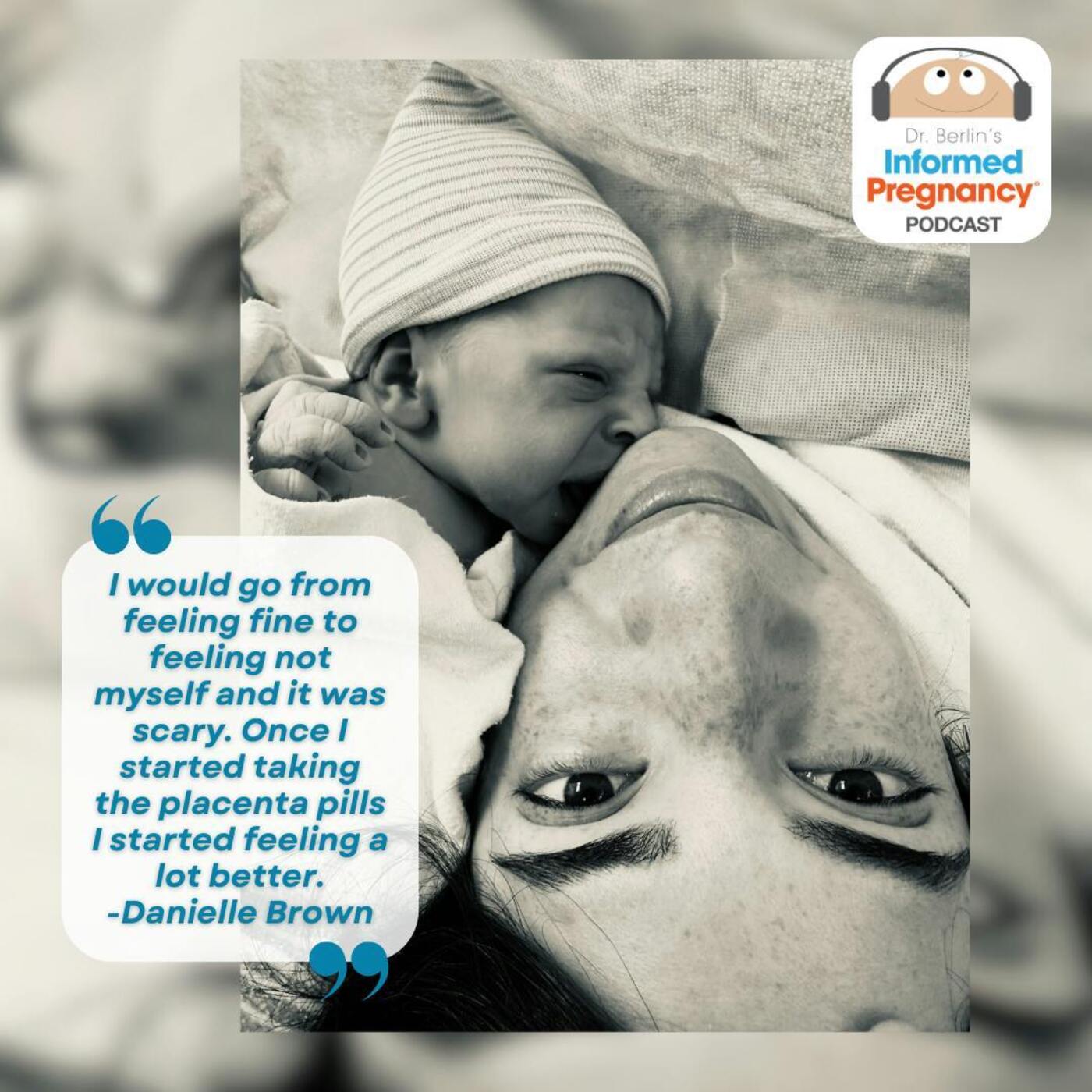
[42:11] And then once you're pregnant and, you know, you've kind of lost the ability to do those things. You really realize like how many of those small things you're so thankful to be able to get them back and kind of gain your independence back in a way. So from that standpoint, I feel really good. I did end up encapsulating my placenta, which I'm glad that that worked out on my birth preferences. And I think those really helped with my moodiness and my like postpartum hormone dip, because in the couple of days I was waiting for them to be made, I just felt psycho. I felt so sleep deprived and so moody. And I was just crying 10 times a day. I would go from feeling like fine to feeling like really like, honestly,
[42:59] I can't even put a feeling or a word to describe how I felt. And I felt like not myself. And it was scary because, again, I couldn't really put words to how I was feeling. And then once I started taking the placenta pills, I started feeling a lot better. And that moodiness was kind of mitigated.
Dr. Elliot Berlin, DC [43:17] Well, it sounds like you're on your path to a full recovery at six weeks. I'm sure you're just only now able to start doing some of the things that you want to do to take care of yourself. And those will make a big difference. And like we said at the beginning of this podcast, that six weeks is like a whole new human, you know, they become a lot more stable, secure, and they realize that their arms and legs are attached to them and things like that. They stop startling themselves the same way. And, you know, I think every stage is interesting. Every stage is challenging and rewarding at the same time. And as your mind and body continue to heal,
[43:52] you'll be able to really fully be present and enjoy it. Danielle, thank you very much for joining me and for sharing your story with us, inspiring on so many levels. All these stories are. You can never know what it's going to be like till you get there. But one takeaway for me and I'm still mind blown over is how anxious you normally are about medical things. And then the heat, really the heat of the furnace, you were able to stay focused and not be overcome by fear or panic. And I don't know. I wonder if that leaves you feeling, you know, in a certain way, stronger with your anxiety, just knowing that, you know, there's literally nothing you can't do.
Danielle Brown [44:33] A hundred percent. And I think that for a while I was just like, I don't know how the love for my child is going to feel. Everyone says you will never know unconditional love until you have kids. You know, like I feel like the love for my husband is so strong, but it is true. Like once you have a child, you can't even explain the level of like protection you feel over them, the level of selflessness you feel. I mean, I'm lucky if I get to shower. during the day, but at this point, and I think starting with the birth, I just feel like this level of selflessness that like he just comes first and I want him to be good and his needs come before mine.
Dr. Elliot Berlin, DC [45:13] And that's where some of those hormones come in handy on the positive. I wish you tremendous joy and success at every different stage. And thank you again for coming in and joining us. Where can we find you online?
Danielle Brown [45:28] Thank you so much for having me. This was amazing. And everyone can find me at Healthy Girl Kitchen. I'm at Healthy Girl Kitchen on pretty much all social platforms. And my website is healthygirlkitchen.com. And you can now also buy my cookbook, which is now on the New York Times bestsellers list, which is so proud to say. So if you want like healthy recipes for like motherhood to feel amazing, whether you're pregnant, postpartum, just in general, you wanna like start eating healthier and taking care of yourself. I have really easy plant-based recipes. So you can get my cookbook, which is also Healthy Girl Kitchen.
Dr. Elliot Berlin, DC [46:03] Healthy Girl Kitchen. I can't wait to start making them. And to our listeners, thanks for tuning in. If you'd like to find us online, visit us at informedpregnancy.com.
Want more pregnancy + parenting? Start your FREE TRIAL of Informed Pregnancy+ and get access to all our curated pregnancy and parenting content — original series, iconic birth films like The Business of Being Born, prenatal workouts and more.
