
August 3, 2023 · 42 minutes · Episode 366
About this episode
Clinical psychologist and mother Dr. Erica Rozmid, PhD shares her very personal experience with microcephaly, a condition where a baby’s head is much smaller than expected. Dr. Erica shares her very raw and emotional journey through pregnancy loss, medical abortion, and the birth of her living child.

Content Warning:
This episode discusses a mother’s personal recounting of the discovery of a devastating fetal medical condition mid pregnancy and the subsequent termination of the pregnancy for medical reasons. Listener discretion is advised.
- Connect with Dr. Erica online: https://www.tfmrpsychologist.com/ and https://claritycbt.com/
- Follow Erica Rozmid: https://www.instagram.com/tfmrpsychologist/
- Check out the Informed Pregnancy Blog post about life long mental health here: https://www.informedpregnancy.com/single-post/nurturing-touch-in-the-first-three-years-promotes-lifelong-mental-wellness-greer-kirshenbaum-phd
Keep up with Dr. Berlin and the Informed Pregnancy Project online!
www.instagram.com/doctorberlin/
www.facebook.com/InformedPregnancy
Learn more about your ad choices. Visit megaphone.fm/adchoices
See Privacy Policy at https://art19.com/privacy and California Privacy Notice at https://art19.com/privacy#do-not-sell-my-info.
Key quotes
“Yeah, I actually decided when I was in high school that I would be a psychologist, and I think most people who get into the field either struggle with mental health themselves or they know someone who does. And I think for me it was, I saw a lot of people around me who struggled with their mental health and didn't get adequate treatment.”
“We say either the therapist or the treatment fails, not the patient.”
“Well, now I've realized I only tell people early on for the people who I need there for the loss, and that's what I found out. Actually, my parents, they're a good support because they get me, but I'll tell you in a little bit about my other pregnancies, but I really only told people who I felt comfortable knowing about all the hard parts too.”
“Yeah, I realized that mindfulness is really helpful when it came to this pregnancy. And also in DBT, as a therapist, we talk about being radically genuine and finding meaning in life, and so I was able to use all of the skills on myself.”
“I had had nine scans by 12 weeks. That's how dangerous I was.”
Related episodes
- Ep. 352 Prenatal Memory with Dr. Akira Ikegawa and Yuko Igarashi
- Ep. 336 Natalie Dreyfuss: After Birth
- Ep. 353 Madison Young: Before Birth
- Ep. 335 Natalie Dreyfuss: Before Birth
Transcript
AI-generated transcript with speaker labels — may contain errors, especially names and medical terms. Dr. Elliot Berlin, DC appears in blue; Dr. Erica Rozmid in orange.
Download PDF of the Transcript
Dr. Elliot Berlin, DC [0:36] Welcome to the Informed Pregnancy and Parenting Podcast. I'm your host, pregnancy focused chiropractor, Dr. Elliot Berlin. My guest today is a clinical psychologist, mother and bereaved mother. Today we'll be talking about her personal experience with pregnancy, microcephaly, and a heart-wrenching decision that no parent wants to have to make. This episode includes discussion on medical abortion with a focus on one woman's personal experience. Dr. Erica Rasmead, welcome to the podcast.
Dr. Erica Rozmid [1:07] Thank you. I'm excited to be here.
Dr. Elliot Berlin, DC [1:09] Thank you for joining. And I know it's a very personal story and I know why you're sharing it to help other people, and I appreciate you for that.
Dr. Erica Rozmid [1:15] Yep.
Dr. Elliot Berlin, DC [1:16] Let's start at the beginning. Where are you from originally?
Dr. Erica Rozmid [1:19] So born and raised in Los Angeles. I'm technically a valley girl,
Dr. Elliot Berlin, DC [1:24] Although – 818.
Dr. Erica Rozmid [1:25] Yeah. Although now I'm a west side girl.
Dr. Elliot Berlin, DC [1:27] You talk more like a west side girl than a valley girl. That's good.
Dr. Erica Rozmid [1:30] I'll take that as a compliment.
Dr. Elliot Berlin, DC [1:31] Stereotype. Yeah, like laterally.
Dr. Erica Rozmid [1:34] Yep.
Dr. Elliot Berlin, DC [1:35] And what do you do?
Dr. Erica Rozmid [1:37] So I am a clinical psychologist. I started out in graduate school getting my PhD with a focus on working with children, youth, young adults using cognitive behavioral therapy – CBT. Yep. And DBT, another acronym to use evidence-based treatment to help youth overcome anxiety, depression, suicidality, and self-harm.
Dr. Elliot Berlin, DC [2:03] Oh, you don't want to do something more meaningful?
Dr. Erica Rozmid [2:05] No, I guess not. That's what
Dr. Elliot Berlin, DC [2:08] I came up with. Okay. CBT and DBT. Well, before we get into what those are, is psychology something that was on your radar early on?
Dr. Erica Rozmid [2:16] Yeah, I actually decided when I was in high school that I would be a psychologist, and I think most people who get into the field either struggle with mental health themselves or they know someone who does. And I think for me it was, I saw a lot of people around me who struggled with their mental health and didn't get adequate treatment. And I love science, but not the hard sciences. So that's together found psychology to feel like a good mesh of the two.
Dr. Elliot Berlin, DC [2:45] Yeah, it sounds like a perfect match for you. And you're so easy to talk to, so I imagine it's helpful for people who need to open up, but have a hard time expressing what they're feeling. You're just a very, I don't know, calming force.
Dr. Erica Rozmid [2:57] Thank you. Sometimes I'm a little more direct and confrontational and I need to be…
Dr. Elliot Berlin, DC [3:02] In life or in therapy?
Dr. Erica Rozmid [3:04] In therapy. More in therapy than in life.
Dr. Elliot Berlin, DC [3:07] It seems like you could do that once the faucet is flowing.
Dr. Erica Rozmid [3:11] Exactly.
Dr. Elliot Berlin, DC [3:12] Yep. CBT and DBT, can you give a brief description of what they are, those modalities?
Dr. Erica Rozmid [3:18] Yeah. So CBT is really looking at the way someone thinks, feels, and behaves. And for example, for anxiety, a lot of people who have severe anxiety end up avoiding. It's like they have this big fear and they want to run away from the fear. So I work with people by overcoming their fears to face them. And so I use virtual reality. We do exposure therapy. I go out with my patients in the real world to help them overcome their fears, and that's where they can come up with new thoughts and perceptions about the world through these behavioral experiments.
Dr. Elliot Berlin, DC [3:53] That sounds like a reality TV show.
Dr. Erica Rozmid [3:55] I am out there making them order things and sending it back and doing –
Dr. Elliot Berlin, DC [4:00] Oh my gosh.
Dr. Erica Rozmid [4:01] Things that if they can do that, then they can do so many other important tasks in life. And then DBT is really for more emotionally dysregulated folks. So they're the ones who I usually get from the psych ER or inpatient and they're suicidal, self-harming, and that's just a more comprehensive treatment. And it uses CBT, but it's a little bit different and has a lot of skills to teach them how to overcome and make sure they're not doing ineffective or dangerous behaviors.
Dr. Elliot Berlin, DC [4:35] Is it frustrating sometimes if you can't make success?
Dr. Erica Rozmid [4:39] Yes. I like to have people in at treatment at different times. If I started with everyone at the same point, I would feel pretty depressed, but the treatment does work. It just takes some time. It doesn't work for everyone, and that's the really frustrating part. We say either the therapist or the treatment fails, not the patient.
Dr. Elliot Berlin, DC [5:02] Interesting. Yeah.
Dr. Erica Rozmid [5:03] So it's hard because nothing in life is a hundred percent, and obviously I love all of my patients. I care about them and it's awful when they're not getting better.
Dr. Elliot Berlin, DC [5:13] I love that you care. And also there's both, I think with modalities, within psychology, these are two modalities, but there's many others.
Dr. Erica Rozmid [5:23] There are.
Dr. Elliot Berlin, DC [5:24] Some are a great fit for one person and some are a great fit for somebody else. And the same with all of us practitioners. I could be amazing for one patient and the next one would hate me. So you got to find the right matches. Speaking of which, where'd you meet your partner?
Dr. Erica Rozmid [5:38] So I met my husband in college in Colorado, even though we grew up only 15 miles away from each other in Los Angeles.
Dr. Elliot Berlin, DC [5:47] In Colorado. What were you guys doing there?
Dr. Erica Rozmid [5:49] We were at Boulder studying… Well, I was studying psychology and he was studying engineering, so it's funny how we met because we're pretty opposite.
Dr. Elliot Berlin, DC [5:57] Oh yeah. Well, I guess, I don't know, human engineering.
Dr. Erica Rozmid [6:02] Yeah, definitely mechanical engineering.
Dr. Elliot Berlin, DC [6:04] For him?
Dr. Erica Rozmid [6:05] For him. Human engineering for me.
Dr. Elliot Berlin, DC [6:08] Yeah, so there's some sort of connection. Yeah. Was it love at first sight?
Dr. Erica Rozmid [6:13] Actually, yes, which is so wild. We met at breakfast and I was so amazed that he was cutting his pancakes so perfectly into squares before taking one bite. I thought he was insane because I was just hacking away at mine. I was so intrigued by him and I texted my friend saying, "I think he's cute." And at the same time, he asked my friend if I was single, and from there we've been together 10 years.
Dr. Elliot Berlin, DC [6:41] Oh, wow. That's amazing. And you moved back to LA?
Dr. Erica Rozmid [6:45] Yes. I was able to force him to come back to LA since both of our families are here, but we did move for my PhD to Northern California, New York, and back in LA.
Dr. Elliot Berlin, DC [6:57] Oh, you guys have been around. I mean, you've been together ever since. Did you marry quickly?
Dr. Erica Rozmid [7:03] We married about five years into dating, so not too quickly, but after we got married, we started trying for a baby a year after that.
Dr. Elliot Berlin, DC [7:16] And was that something you discussed before marriage?
Dr. Erica Rozmid [7:19] Yeah, we always knew when we wanted to have kids, and I wanted to make sure I was done with my graduate training. It was something that we talked a lot about. We even went to my OB for a family planning appointment ahead of time to make sure we were doing all of the things we needed to do. And my OB joked and said, "Pregnancy's not a disease. You don't need to worry too much about all of this," which is funny in hindsight, but I took it very seriously around our planning process.
Dr. Elliot Berlin, DC [7:52] Early on, and I don't know if you want to say, how old were you guys when you started?
Dr. Erica Rozmid [7:57] I was 27 when we started trying.
Dr. Elliot Berlin, DC [8:00] So on the young side compared to most in this town anyway. All right. And then you had sort of a winding journey. Let's take a little break and when we come back, we'll get into that. Don't go anywhere. We'll be right back.

Dr. Elliot Berlin, DC [9:48] Welcome back. We're talking to Erica Rasmid. Okay, so you're in Boulder, Colorado. You see the guy eating squirk pancakes. Fast-forward five years, you're married, planning to have a kid, and pregnancy is not a disease, you are told. How was your first go around for getting pregnant?
Dr. Erica Rozmid [10:09] I found out pretty quickly that I'm fertile. It's just everything that happens after. I had two chemical pregnancies, very early miscarriages. I got the positive pregnancy test for a week, and then as I was going in for the appointment, I miscarried. And so I went to see my OB and he told me, "Have a lot of sex. You'll get pregnant. The pregnancy test these days, they can just pick up so much more HCG early on that this is probably happening all over the place and women don't know." So he had no concerns about my fertility journey upfront, but that was my introduction was two times I tried, didn't work out very well for me.
Dr. Elliot Berlin, DC [10:58] Okay, so you got pregnant quickly, and then you do pregnancy tests and they're positive.
Dr. Erica Rozmid [11:02] Yeah.
Dr. Elliot Berlin, DC [11:03] And then I assume you're excited because you were wanting that pregnancy, so then it must be a big blow when it ends even in an early miscarriage.
Dr. Erica Rozmid [11:13] Yeah, it was. The first time I was confused, I saw a line, but it was funny because I was like, "Well, it's not strong," so I didn't know it was positive. The second time I walked into my parents' house and my sister just said, "Are you pregnant?" She knew. So I ended up sharing the news with my family, and then four days later I miscarried, which was really sad because my parents got so excited to be grandparents, and I felt like I crushed their dreams a little bit too.
Dr. Elliot Berlin, DC [11:47] I guess that's sometimes why people don't say early on. I don't know. Before you said that about you're crushing your parents' dreams, in my head I was wondering, were you happier to have people have known so they could be there to support you a little bit, or was it extra hard because they knew?
Dr. Erica Rozmid [12:05] Yeah. Well, now I've realized I only tell people early on for the people who I need there for the loss, and that's what I found out. Actually, my parents, they're a good support because they get me, but I'll tell you in a little bit about my other pregnancies, but I really only told people who I felt comfortable knowing about all the hard parts too.
Dr. Elliot Berlin, DC [12:29] When you tried again, I know your doctor was sort of dismissive, like, "Don't worry, this is not a problem," but I would imagine after two even early miscarriages, it's kind of more nerve-wracking.
Dr. Erica Rozmid [12:41] Yes. So that's what really hurt me the third time was I was so anxious because I just thought this is never going to work out for me, and I was spotting early in my pregnancy, so I just though, "This isn't going well. This is how the last two went." I also had a subchorionic hematoma and completely bled out and texted all my friends saying I had a miscarriage because I didn't know any better.
Dr. Elliot Berlin, DC [13:13] Is this with your third pregnancy?
Dr. Erica Rozmid [13:14] It's with my third pregnancy.
Dr. Elliot Berlin, DC [13:16] Oh, boy. Okay. I mean, that's what you knew at that point as you get pregnant and have a miscarriage. But subchorionic hematomas are pretty common.
Dr. Erica Rozmid [13:27] Yes, they're pretty common. It would've been nice to have been told, "You have this, expect bleeding," but I had the bleeding first, and when I went to the doctor to prove my miscarriage, they showed me a heartbeat, which was so confusing.
Dr. Elliot Berlin, DC [13:46] Yeah, confusing. What emotions?
Dr. Erica Rozmid [13:49] Oh, I told my doctor I had a miscarriage last night and I was in disbelief, and I also felt, strangely, this doom and gloom feeling like this wasn't going to end well. I immediately did not feel good about this pregnancy.
Dr. Elliot Berlin, DC [14:05] But then that's before you saw the heartbeat?
Dr. Erica Rozmid [14:09] No, that was after I saw the heartbeat.
Dr. Elliot Berlin, DC [14:10] Oh, so not excited?
Dr. Erica Rozmid [14:12] No.
Dr. Elliot Berlin, DC [14:14] Okay. But he says everything was good.
Dr. Erica Rozmid [14:17] Yeah, but then I had a pretty large hematoma, and so I was told, "Well, this could be okay. This could be normal. I'll do as many scans as you want." And sure enough, I bled out again the following week and got confirmation all is good, there's a heartbeat, but I was wearing adult diapers for a while because it was more blood than I knew what to do with. And I was in session one time, thankfully over Zoom, but I just felt like this could happen at any time and I won't know what to do.
Dr. Elliot Berlin, DC [14:56] My God, I was just wondering that if through all these trials you were working and how you focus on somebody else and what they need and be able to give to them while you're really suffering with these things.
Dr. Erica Rozmid [15:09] Yeah, I realized that mindfulness is really helpful when it came to this pregnancy. And also in DBT, as a therapist, we talk about being radically genuine and finding meaning in life, and so I was able to use all of the skills on myself.
Dr. Elliot Berlin, DC [15:27] Wow. Who knew that all that training was going to come in handy for you as well?
Dr. Erica Rozmid [15:32] Right.
Dr. Elliot Berlin, DC [15:33] Okay, so there is a heartbeat and you bleed out again, and then what happens?
Dr. Erica Rozmid [15:38] And then it goes away around 12, 13 weeks.
Dr. Elliot Berlin, DC [15:43] The bleeding goes away.
Dr. Erica Rozmid [15:45] Bleeding goes away, the hematoma gets small, looks like it's gone away. My NIPT results come back looking great. I'm having a girl, and I just saw another high risk doctor at the same time because I just wanted confirmation that things were looking okay, and she told me, "You're having a perfectly healthy girl." It was two days before New Year's and said, "You can celebrate that this is going to be a great new year."
Dr. Elliot Berlin, DC [16:18] And then are you feeling better about it at that point?
Dr. Erica Rozmid [16:21] At that point, I started feeling a little bit better.
Dr. Elliot Berlin, DC [16:24] Like, "Okay, we got this."
Dr. Erica Rozmid [16:25] We got this. I had had nine scans by 12 weeks. That's how dangerous I was.
Dr. Elliot Berlin, DC [16:32] That's the most paparazzi baby ever.
Dr. Erica Rozmid [16:36] That's me.
Dr. Elliot Berlin, DC [16:37] Welcome to Los Angeles.
Dr. Erica Rozmid [16:38] Yeah.
Dr. Elliot Berlin, DC [16:39] Okay. And then did you tell everybody?
Dr. Erica Rozmid [16:42] So then I told people, then I felt pretty good. I got this doctor telling me I'm having a perfectly healthy girl, everything looks great. So now I'm feeling excited, but I still didn't want to plan. And it was fast-forward right before the anatomy scan, my husband was talking about wanting to get a crib. It was during COVID where all of the shipping delays were taking place, and we were told a crib would take five months to get, and he wanted to order a crib. I remember breaking down the night before just saying, "I don't want to buy anything. I'm not feeling good about this." I can't explain it, but the next day, my entire life changed.
Dr. Elliot Berlin, DC [17:31] What happened?
Dr. Erica Rozmid [17:33] At the anatomy scan, it was just me. My husband couldn't come because of the pandemic, and they did the scan and they said, "Are you sure your dates are right? She's measuring really small." They didn't tell me so much information, but I was referred to a maternal fetal medicine clinic the following week.
Dr. Elliot Berlin, DC [17:55] That's not who was doing your scan?
Dr. Erica Rozmid [17:57] It was a specialist in the clinic, and then they wanted me to go to a different maternal fetal medicine.
Dr. Elliot Berlin, DC [18:05] Okay. No, hold on a second. While you're in there, I know your husband's not there because of the pandemic, but is he on FaceTime or something or just you and the doctor?
Dr. Erica Rozmid [18:15] Just me and the doctor.
Dr. Elliot Berlin, DC [18:17] And your dates, meaning was the baby measuring small?
Dr. Erica Rozmid [18:21] Yes. They thought that she was very small, and there were a few other findings. I had a marginal cord insertion, so they thought maybe she wasn't getting enough nutrients to the placenta. That was one concern, but that's pretty common. It's not so abnormal to have that. And they said that there wasn't enough flow through the cord.
Dr. Elliot Berlin, DC [18:49] Okay. So not getting enough nutrition, so growing small. Okay. Just as a side point, because there's a lot of story here left to go, so instead of getting into the details about the cord and the placenta, we have an episode all about the cord and all about the placenta where we discussed normal anatomy and some of the variations or complications like marginal cord insertion for anybody who wants more information. Okay, so then you go to a specialist.
Dr. Erica Rozmid [19:18] Then I go to a specialist, and at that appointment, everything that I had originally been told was no longer something they were talking about. Now they were focused on the brain. There were some other markers, like a few bright spots, still the marginal cord insertion and other concerns of not getting enough nutrients, but the brain was in the third percentile at 21 weeks and had not grown from the week prior.
Dr. Elliot Berlin, DC [19:50] Not a great sign.
Dr. Erica Rozmid [19:51] Not a great sign.
Dr. Elliot Berlin, DC [19:53] Are you alone again?
Dr. Erica Rozmid [19:54] At this point, thankfully I had my husband because they had changed the requirements the day prior.
Dr. Elliot Berlin, DC [20:02] Oh, wow.
Dr. Erica Rozmid [20:03] Okay. So thankfully now he's able to come with me to all appointments. And after that appointment, I then got referred to another maternal fetal medicine doctor who's the top doc in LA, and he specializes actually in researching small brain and microcephaly.
Dr. Elliot Berlin, DC [20:23] And how long in between that visit and the specialist?
Dr. Erica Rozmid [20:28] That was four days because I called Brian hysterically because I wasn't sure what was happening at this point, but as a clinical psychologist, I have some ideas. And so when I called, they got me in immediately, and he's my best friend, nicest doctor ever, who was able to see me multiple times to check the status of what was going on with my daughter's brain.
Dr. Elliot Berlin, DC [20:56] I can't even imagine what's going through your mind.
Dr. Erica Rozmid [20:59] At this point, I was in denial. Can you do surgery on the brain? Can you make the brain grow bigger? They have so many advancements these days. What can we do to fix this? That's the one organ that you can't make something grow. So because you can't actually do any intervention to make a brain grow, we just had to watch what was happening week by week, and her brain didn't grow from 19 weeks, and the statistics just looked more grim every single week. And there's the brain saving idea that all the nutrients should go to the brain first, and that just wasn't happening.
Dr. Elliot Berlin, DC [21:41] Wow. I mean, it must be such a horrible thing. There's nothing you can do.
Dr. Erica Rozmid [21:47] There's nothing you can do, and it's also hard. Nothing is a hundred percent. No one can tell you with a hundred percent certainty, but I increased my medical team to 14 doctors. I got my birth records. I wanted to see what was my head size. I started taking a measuring tape, measuring the head size of everyone in my family, everyone in my husband's family trying to make sense of this. But ultimately, it looks like her brain would never sustain her to be able to walk, talk, feed anything that I think about when I think of life. And if she had been born into this world, I would love her with every part of me, but having the decision to prevent her from suffering was the decision I was grappling with.
Dr. Elliot Berlin, DC [22:42] So did the doctor, that top specialist, do they give you recommendations?
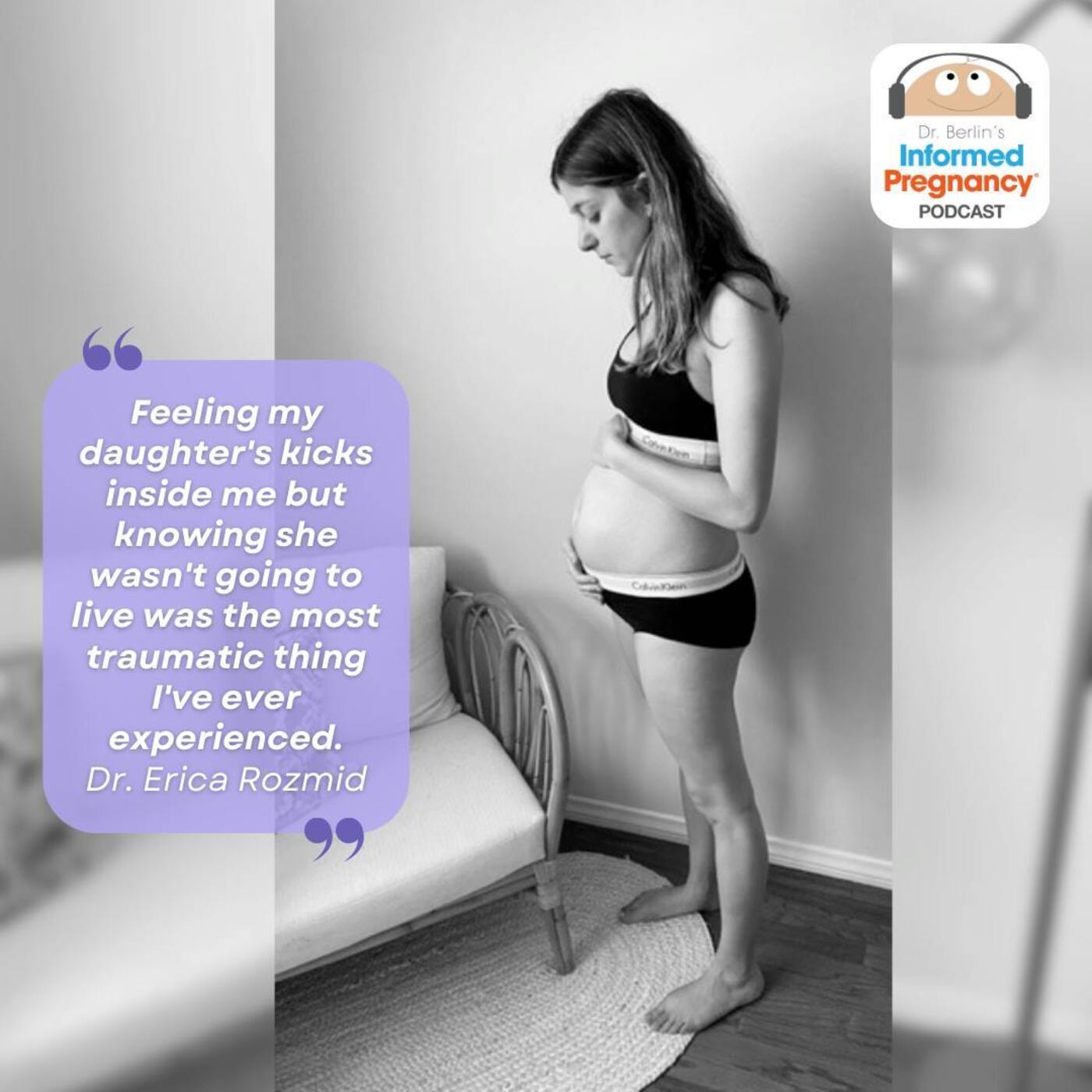
Dr. Erica Rozmid [22:48] Yeah. So I ended up getting a genetic test to see is any of this genetic? And my OB told me, "These are the things that I think you should do. No one can really tell you, you should make X decision that's not really allowed, but I had asked if this was your own daughter, what would you tell them to do?" And it was pretty clear what that was, and that was the most heartbreaking thing in the world, feeling my daughter's kicks, which once brought me so much joy was the most traumatic thing ever. I can feel it now, and knowing that she's not going to live, that it's my decision and I feel her inside of me is just an unbelievable feeling.
Dr. Elliot Berlin, DC [23:36] So that's a pretty powerful statement from a specialist if you're like, "What would you do if it was your daughter?"
Dr. Erica Rozmid [23:43] Yeah.
Dr. Elliot Berlin, DC [23:45] What else did you do or what were the discussions like with your partner or anybody else you talked to about how to make such a hard decision?
Dr. Erica Rozmid [23:54] I joined Microcephaly support groups. I reached out to Microcephaly parents. I reached out to my pediatrician. I had consultations with multiple doctors and pediatricians to understand what this looked like. We had a talk about… We were always pro-choice, but you never think it's going to be you. So we were already in that mindset of being pro-choice, but this was a really wanted, pray for, loved for daughter that we didn't want this to happen, but it was so hard of how will this affect her? How will this affect us? How will this affect every single part of our life? And I think for me, it was harder because it's in my own body. I'm the one signing off the paperwork and I'm the one releasing my child.
[24:47] It was much harder for me than for my husband, I think.
Dr. Elliot Berlin, DC [24:52] But it's also on the heels of two early miscarriages.
Dr. Erica Rozmid [24:57] Yes, right.
Dr. Elliot Berlin, DC [24:58] And you've been on such a journey already at that point.
Dr. Erica Rozmid [25:02] Yeah.
Dr. Elliot Berlin, DC [25:04] It's the impossible decision.
Dr. Erica Rozmid [25:06] You think about too, what it means for the future, and could I ever have a child if this is my only chance? I think I just came back to the place of if we have the opportunity to intervene, there were parents in the microcephaly groups who were signing DNRs who were opting for comfort care and not doing hospital interventions. And I though, well, I'm basically doing that just in the womb. Early on. That felt like for me. I was making a pretty similar decision to these other parents. It just looked different for me.
Dr. Elliot Berlin, DC [25:44] How many weeks were you when you made your decision?
Dr. Erica Rozmid [25:47] 24 weeks.
Dr. Elliot Berlin, DC [25:48] Wow. I mean, was it a moment where you're like, "This is what I'm going to do?"
Dr. Erica Rozmid [25:54] I mean, no. I thought when I was in the OR that the doctor was going to run to me and say, "This is all a joke." I had gone to the doctor to do multiple, I think two or three different consults because I couldn't get myself to do it. I couldn't drive myself or have my husband drive me to the hospital that day. They had to give me meds to calm me down, and I was like, "Oh my gosh, what's happening to my baby? Is my baby okay?" I thought of her every single moment until I went under, and I just said, "I hope her soul can now be free," because that's what it felt like I was doing.
Dr. Elliot Berlin, DC [26:32] It just feels like such a hard decision, and I don't know if it made you feel stronger. You seem strong to me.
Dr. Erica Rozmid [26:41] I felt stronger in a way of the things that were trivial in life were no longer important to me. I think I just focused on what's important in life, and it was really hard to integrate back into the world afterward, but I feel stronger. I know what's important in life, and I've changed my practice to help women in similar situations, so in that way, I feel strong.
Dr. Elliot Berlin, DC [27:05] Yeah. I mean, that sign of strength when you get knocked down, not only do you stand back up and brush yourself off, but you help other people not get knocked down or help them get up as well. All right, let's take another little break, and when we come back, we'll find out what happened after. We'll be right back. Welcome back to the podcast. We're talking to Erica Rasmeed. All right, so you were under for the… Did you have a D&E?
Dr. Erica Rozmid [27:42] I had a D&E. I had the choice of labor and delivery or D&E, but being on a labor floor with other women who are going home with babies seemed too much for me.
Dr. Elliot Berlin, DC [27:54] I mean, my wife and I had some miscarriages, and we lost the twins before we had any kids towards the end of the first trimester, and just being in the OB office with people coming in with bouncing babies or big bumps or happiness, just the contrast.
Dr. Erica Rozmid [28:11] So triggering, and no one knows the internal experience of loss in those moments.
Dr. Elliot Berlin, DC [28:17] Right. How was recovery like mind and body when you woke up?
Dr. Erica Rozmid [28:22] Oh, it was okay when I woke up, but when I got home, I hemorrhaged and I had to be rushed to the emergency room, and I thought I was going to die. I almost needed a blood transfusion, but didn't. And my doctor, she rushed back to the ER and gave me emergency procedure to stop the bleeding, and that was very difficult on top of everything else because people didn't read my chart, they didn't know why I was there. Some of the nurses were the angels that I needed, and other people weren't the best in that scenario, and that was really hard to be hemorrhaging out afterwards.
Dr. Elliot Berlin, DC [29:08] Is that a common complication?
Dr. Erica Rozmid [29:11] No, it's very rare, actually.
Dr. Elliot Berlin, DC [29:13] It's just you get all the rare stuff.
Dr. Erica Rozmid [29:16] I get all the rare stuff. That's why statistics, sadly, don't mean so much to me anymore.
Dr. Elliot Berlin, DC [29:21] Right. I mean, I always say in informed consent, you always say that, "Well, there's a one and a half percent of this, the rows need one and a half percent."
Dr. Erica Rozmid [29:29] Exactly. It was one or less than 1% when I was told all of the potential complications.
Dr. Elliot Berlin, DC [29:37] Wow. I mean, after that, was the physical recovery better?
Dr. Erica Rozmid [29:43] It was okay. I fled to Hawaii. I think everyone should be allowed an allowance to flee to whatever place they want in the world because I thought if I'm grieving, I'm not grieving in Hawaii, and my parents wanted to support me, and I said, "Well, if you want to support me and see me, meet me in Hawaii," and they did.
Dr. Elliot Berlin, DC [30:03] Oh, nice. I think that should be covered by insurance.
Dr. Erica Rozmid [30:06] It should. Unfortunately, I didn't think through. I couldn't go in water. That's okay. I was in Hawaii. I was able to hike. I was able to use my body again, but looking pregnant, oh, my milk came in postpartum, fully postpartum. And so that was hard. Looking pregnant, feeling pregnant, milk coming in, that was the mind stuff that my husband could not approach those triggers, but I couldn't avoid them.
Dr. Elliot Berlin, DC [30:35] Yeah, so I mean, that must be straining on the relationship.
Dr. Erica Rozmid [30:39] Yeah, he was very supportive, but I'm a talker, so it helped me out that I would talk about things all the time and he always responds. He just wouldn't initiate as much, but it was hard for him. It's still hard for him. When people ask how many kids we have, when people talk about their pregnancy journeys, when people share they're pregnant at six weeks excitedly, it's just a completely different journey for us. So he's supportive in so many other ways.
Dr. Elliot Berlin, DC [31:09] Did you name her?
Dr. Erica Rozmid [31:12] I did. Her name is Shayla Brooklyn, and that was the name that my husband wanted to give her. And we talk about Shayla. She actually exists in every part of our house. I have a living child now, and Shayla's friends sit on the dresser of my living child, and we named her living child after her too.
Dr. Elliot Berlin, DC [31:36] Oh, wow. Well, I guess you were able to try again.
Dr. Erica Rozmid [31:41] We were able to try again. You can imagine what pregnancy after loss is like the fourth time. And I didn't tell anyone I was pregnant until they saw me in person and I was a walking disclosure, but I am so blessed and grateful for my daughter.
Dr. Elliot Berlin, DC [32:00] Well, one thing that at least works in your favor is that you're fertile.
Dr. Erica Rozmid [32:04] Yes.
Dr. Elliot Berlin, DC [32:05] Because sometimes people lose and wait another year to try to be able to get pregnant again. So was it a conscious choice to try again?
Dr. Erica Rozmid [32:13] Very conscious. And again, got pregnant first try. And so I'm really grateful we didn't have fertility challenges, but because a genetic condition was never found, it was honestly a wait and see the entire pregnancy to see if this baby would have a similar diagnosis. And that was so terrifying.
Dr. Elliot Berlin, DC [32:35] I mean, less terrifying because it's not genetic or more terrifying because it wasn't genetic?
Dr. Erica Rozmid [32:40] I was told that –
Dr. Elliot Berlin, DC [32:41] It was a developmental fluke, essentially.
Dr. Erica Rozmid [32:44] It could be, but there's also so many genetic conditions we don't know about, and so it could be something really rare. So I was told less than one to 25% chance.
Dr. Elliot Berlin, DC [32:54] That's a big range.
Dr. Erica Rozmid [32:55] Big range.
Dr. Elliot Berlin, DC [32:56] And even if it's less than one, that's the Resmind less than 1%. Yep,
Dr. Erica Rozmid [33:00] Exactly.
Dr. Elliot Berlin, DC [33:01] So no comfort for you.
Dr. Erica Rozmid [33:02] No comfort.
Dr. Elliot Berlin, DC [33:04] At what point did you start to feel comfortable with the pregnancy?
Dr. Erica Rozmid [33:08] When she was placed alive on my chest.
Dr. Elliot Berlin, DC [33:11] That's what I thought you were going to say.
Dr. Erica Rozmid [33:12] Yeah.
Dr. Elliot Berlin, DC [33:13] So very anxious during the pregnancy, nervous?
Dr. Erica Rozmid [33:16] Very anxious. I always said if, not when. I just never knew that it was a guarantee. I even put on my labor door, "Please read this before you walk inside. We have one other child. Her name is Shayla Brooklyn. I've experienced loss." I gave them all these disclaimers. They asked me for a birth plan. I said, "Living child." We put things into perspective around what was important for me. And I'm so grateful for my living child now. Everything she does is the most amazing thing to me because none of this was ever guaranteed.
Dr. Elliot Berlin, DC [33:54] How old is she now?
Dr. Erica Rozmid [33:56] She is a year and four months.
Dr. Elliot Berlin, DC [33:59] Wow. Congratulations.
Dr. Erica Rozmid [34:01] Thank you.
Dr. Elliot Berlin, DC [34:03] Since the nervousness didn't go away, I wonder as you got to the different benchmarks, the anatomy scan, 24 weeks, 28 weeks, for most people those are comforting benchmarks, but then on the other hand, I guess there's more to lose. So were those comforting to you or did they make you even more nervous?
Dr. Erica Rozmid [34:26] It's hard to say. I mean, I always said
Dr. Elliot Berlin, DC [34:29] A
Dr. Erica Rozmid [34:29] Brain can stop growing at any point. So it's not like with other conditions or your spine is there, your organs are there. For mine, it felt like anything wrong can happen at any point. Once I got to 34 weeks, I thought, okay, maybe this could be okay. And my maternal fetal medicine doctor graduated me at 35 weeks, so I though, okay, well, I guess I won't find out if there's any other information because he just graduated me. So at that point, maybe at 35, 36, I felt comforted. It was always just moments of relief. I asked them, I don't want to see the scan. I don't want to see measurements. I really had to protect my heart along the way.
Dr. Elliot Berlin, DC [35:16] And I know you said that your birth plan was living baby. Were there any thoughts about do you want to have a vaginal birth, cesarean birth, more natural, more removed?
Dr. Erica Rozmid [35:28] I didn't really think about it until I was there. She was vacuumed out of me, and so that was obviously not part of the plan. But when I was told I might need a C-section, I said, "Pull her out of my throat if you need to, get her out of me." So at that point, I was willing to do whatever was needed. I had patients scheduled for that day, so I actually needed an epidural to text all my patients that I wouldn't be seeing them.
Dr. Elliot Berlin, DC [35:55] To slow it down a little bit. Yeah.
Dr. Erica Rozmid [35:57] Yeah. So my epidural allowed me to cancel all my sessions, and my husband had a really important presentation that day, so it also allowed him to finish his work. But my actual birthing experience was really easy in a lot of ways, and I was able to fully surrender to whatever happened, and I just felt really one with my body throughout the labor process.
Dr. Elliot Berlin, DC [36:25] Connected to the baby?
Dr. Erica Rozmid [36:27] Connected to the baby and my body. And in that moment I said, "Whatever is happening, this baby is being birthed out of me no matter what." And that just really helped me get through. I knew she needed to come out of me somehow, some way.
Dr. Elliot Berlin, DC [36:42] When she was finally out, did it catch up with you emotionally?
Dr. Erica Rozmid [36:47] Oh yeah.
Dr. Elliot Berlin, DC [36:48] What did you feel?
Dr. Erica Rozmid [36:50] I was in love immediately, and I think I just released everything that I had been holding. I will say anxiety still stuck around, still measuring her head, telling doctors about my concerns. She was a smaller one too, so it's like my concerns weren't completely… I wish she had a hundred percent head size. I feel like that would make me feel a lot better. But I had anxiety for a bit, but I felt instantly connected to her and loved her, and I'm so grateful for that experience too.
Dr. Elliot Berlin, DC [37:23] Wow. I'm grateful for you to have that experience also after everything you've been through. Do you think it changes you as a parent?
Dr. Erica Rozmid [37:31] Yes. Yes.
Dr. Elliot Berlin, DC [37:33] How?
Dr. Erica Rozmid [37:33] I think when milestones, especially, because I never take anything for granted, I just think everything she does is wonderful. And when she's having a hard time, I feel like I'm just so much more present because I don't take any of it for granted that I'm able to be a more present parent and really just feel so blessed. I don't know. I think that sounds so cliche, but I feel like it has changed me in that way and just focusing on what's important, how I want to be as a parent is always how I thought I would be. I feel like I'm really in tuned with that. And my husband and I are the same in that way. We just always knew how we would be and that's how we are.
[38:12] And I don't know, I think that's how it's changed me, is just more present focused.
Dr. Elliot Berlin, DC [38:18] How about as a partner?
Dr. Erica Rozmid [38:22] Yeah, as a partner too, I mean, I always am checking in with him because I'm still impacted by talk about Sheila. And when it was the anniversary date, I taught my one-year-old about death because she's a part of our family too. And with my husband, we are more connected through that experience than I think we could ever be. So I know he's got my better what and that we can get through some really hard stuff together.
Dr. Elliot Berlin, DC [38:52] I ask a couple more questions. Is there anything, having come through the other side, is there anything you would tell yourself before you had to make the choice or right after you did make the choice now that you have a little more perspective?
Dr. Erica Rozmid [39:11] I think a few things that I constantly remind other parents is that, and myself, I made the best decision that I could with all the information I had at the time, and I'm making the decision as a mother, and those are the two things that I just feel are so true for me.
Dr. Elliot Berlin, DC [39:32] Yeah. And you still live with it. I mean, it seems like a tattoo on the soul. It's always going to be there, but do you think about future kids?
Dr. Erica Rozmid [39:43] Yeah, I do think about future kids and one more maybe. So kid, but my fertility journey has been rough, and so I don't think it's going to necessarily be easy, but now my brain has learned that pregnancy can result in a living healthy child. My brain had never learned that before, so that's why it was really hard the first time that I had my living daughter. So I think the next time around it won't be as challenging because my brain has learned that new pathway.
Dr. Elliot Berlin, DC [40:17] Yeah. Are you anxious to try again?
Dr. Erica Rozmid [40:21] My husband would like to try again minus eight months ago. I think my body has been through so much that I'm nervous for just my body. I feel like it's taken on so many things, but I feel like I could be ready to do it again. I needed some time. I was pregnant for 15 months and now I've been not pregnant for 15 months.
Dr. Elliot Berlin, DC [40:48] Oh yes, I hear you.
Dr. Erica Rozmid [40:49] I feel like maybe I could start thinking about it soon.
Dr. Elliot Berlin, DC [40:52] Okay. Yeah, I didn't mean anxious. Are you at the bit ready to go again? I just meant on the other side, are you a little bit hesitant because…
Dr. Erica Rozmid [41:02] Yeah, I'm always hesitant. I think that's my default is hesitant. My default is, well, we have one living child, why try again and potentially go into something that could be really awful and more loss? But my husband is a grounding force for me and we have a cap of how much I'm willing to put my body through. So I'm willing to put my body through more again, but not four more losses.
Dr. Elliot Berlin, DC [41:34] Yeah. Again, the strong person gets up, dusts themself off and helps other people along the way. And I know you're doing that here with the podcast, but I also know that you do that in your life work every day. So Erica, thank you again so much for joining us and for sharing your powerful, personal, difficult story. I appreciate you, and I know the audience does too. Where can we find you online?
Dr. Erica Rozmid [41:59] So you can find me at tfmrpsychologist. com, which stands for termination for medical reasons. In our community of those who go through medical abortions, we call it TFMR. That's just the term we use. And I actually have a directory of therapists who are, as I call TFMR affirmative across the country. So if anyone has gone through this in their own life, they can access that directory and find a therapist. And you can also find me on Instagram at tfmrpsychologist.
Dr. Elliot Berlin, DC [42:38] Sounds like a great resource. Thank you so much. And at home, thanks for listening to the Informed Pregnancy Podcast. For more pregnancy and parenting information, visit informedpregnancy. com.
Want more pregnancy + parenting? Start your FREE TRIAL of Informed Pregnancy+ and get access to all our curated pregnancy and parenting content — original series, iconic birth films like The Business of Being Born, prenatal workouts and more.
