
August 31, 2023 · 49 minutes · Episode 370
About this episode
Jennie Monness joins the podcast to chat about her challenging fertility journey, the birth of her two daughters, and creating Union Square Play, a play space and resource center for parents and caregivers of any kind to connect, learn, and cultivate community.

- Connect with Jennie online: https://www.instagram.com/jenniemonness/?hl=en
- Check out ‘Union Square Play”: https://www.instagram.com/unionsquareplay/?hl=en
- Visit MoMommies: https://momommies.com/
- Read the recent blog post on how ‘Homeopathy can help with morning sickness’ on Informed Pregnancy Blog: https://www.informedpregnancy.com/single-post/suffering-from-morning-sickness-and-nausea-homeopathy-can-help-shelly-fenig-dchm
Keep up with Dr. Berlin and the Informed Pregnancy Project online!
www.instagram.com/doctorberlin/
www.facebook.com/InformedPregnancy
Learn more about your ad choices. Visit megaphone.fm/adchoices
See Privacy Policy at https://art19.com/privacy and California Privacy Notice at https://art19.com/privacy#do-not-sell-my-info.
Key quotes
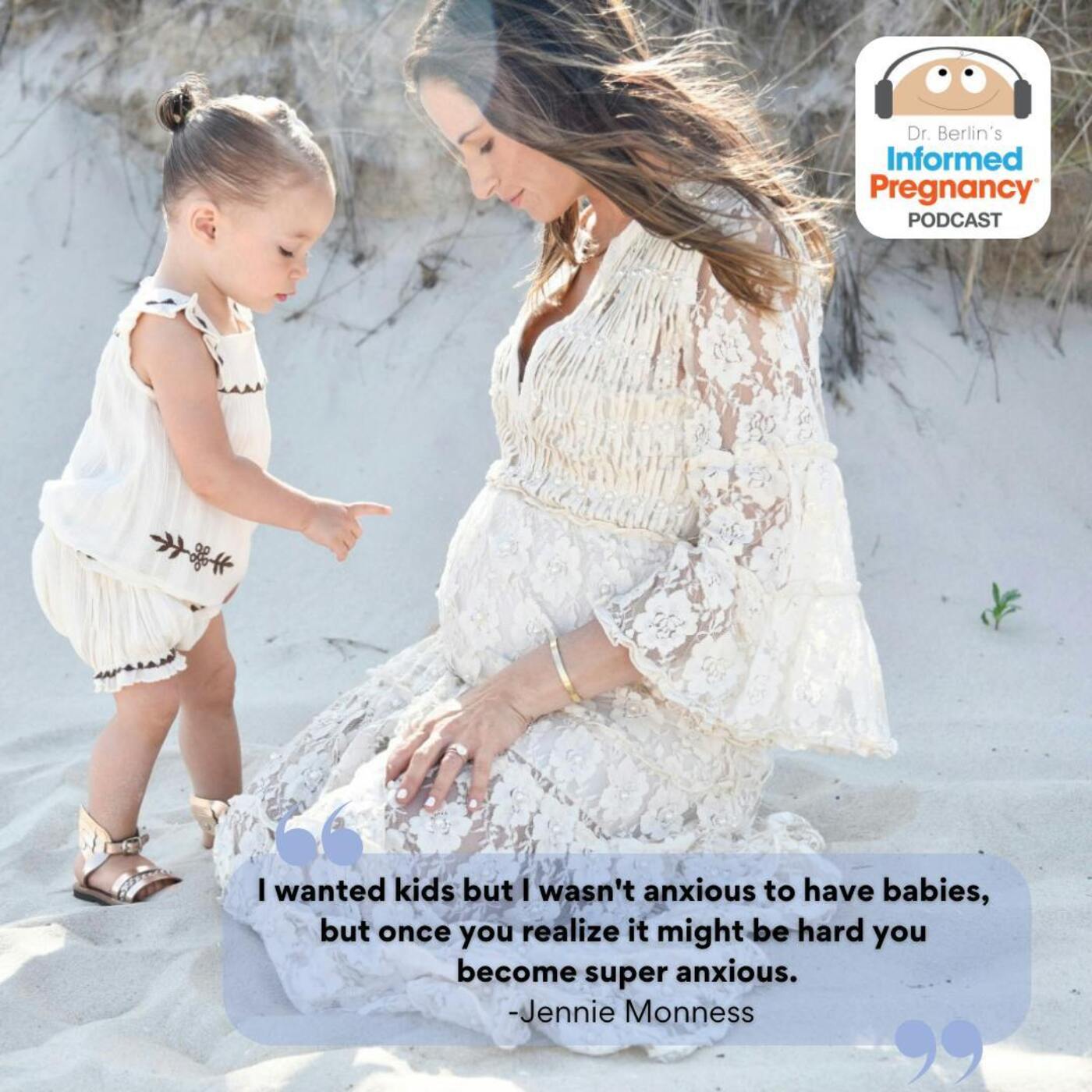
“I wasn't so anxious to have babies. But then once you realize that it might be hard, you go to a hundred and you're super anxious to have babies. At least I was.”
“And so if anyone's listening to this, the reason I'm focusing on this is that like, you really need to like follow up and advocate and make sure that what's sent is sent.”
“A saline sonogram is a very simple thing to do before you do IVF, just to make sure that your uterus is smooth sailing for implantation. If you're going to go that route.”
“Oh my God. It was like just so rough because I had never had like a pregnancy scare my whole life. And so I was like, am I going to be able to get pregnant? It's like, yeah, it was really rough. A really crappy feeling.”
“I just really want to help parents and share my realness and vulnerabilities as a parent and hope that it makes people feel less alone”
Related episodes
- Ep. 369 Jill Magoffin: Plus Size Birth and Doula Insight
- Ep. 350 Ciara Whaley: After Birth
- Ep. 362 Filmmaker Rani Khanna: More Than Blood
- Ep. 329 Valentina Trentini: After Birth
Transcript
AI-generated transcript with speaker labels — may contain errors, especially names and medical terms. Dr. Elliot Berlin, DC appears in blue; Jennie Monness in orange.
Download PDF of the Transcript
Dr. Elliot Berlin, DC [0:12] Welcome to the Inborn Pregnancy and Parenting podcast. I'm your host, pregnancy-focused chiropractor, Dr. Elliott Berlin. My guest today runs a play space and community resource center for parents in New York City. Among other topics, we'll discuss her challenging fertility journey and the eventual arrival of her two daughters and some of what she learned along the way. Jenny Moniz, welcome to the podcast.
Jennie Monness [1:00] Thank you so much. So, so thrilled to be here.
Dr. Elliot Berlin, DC [1:04] It's mutual. All right. We have so much to learn from you and things that you learned about yourself that you came to share and help other people with. Let's start at the beginning though. Where are you from originally?
Jennie Monness [1:15] I'm from New Jersey, Jersey Shore. And yeah, I met my husband in college in D.C. and now I live in New York City.
Dr. Elliot Berlin, DC [1:25] Is the Jersey Shore represented accurately?
Jennie Monness [1:29] No, they represent a small, small portion of it, which is so much fun, but there's definitely more to it. It can be quite charming too.
Dr. Elliot Berlin, DC [1:41] The sequel. And then New York City, when did you head over to New York?
Jennie Monness [1:48] I graduated in 2005 and yeah, I've been in New York City, I'd say since then.
Dr. Elliot Berlin, DC [1:56] What did you study?
Jennie Monness [1:57] I studied psychology in undergrad, didn't know where it would take me, and then continued on to graduate school in New York City at Columbia and found my calling working with young children relating to psychology and early childhood and developmental psychology.
Dr. Elliot Berlin, DC [2:17] It was a graduate program in psychology?
Jennie Monness [2:19] Yes, psychology and education.
Dr. Elliot Berlin, DC [2:22] OK, oh, double double. Yeah. What first got you attracted to psychology, even in undergrad?
Jennie Monness [2:29] It's so interesting because I didn't go to college really knowing. I mean, I guess that's what a lot of people do. You know, you're not sure what you're going to do and you take these general classes to kind of fulfill your requirements. And I fell in love with psychology, just entered a psychology class and then kept taking more and more of those classes. I guess it's like the quintessential college story of, you know, finding what interests you and then pursuing that. So that's really what did it. I hadn't had any prior inkling that that's what I would do. And similarly, I didn't know that I'd work with kids. I just knew that I loved them. And upon graduating and I'm sure we'll get into that, I just was like,
[3:12] I really love young children and let's see where it takes me. So, yeah, I just loved the content and the coursework.
Dr. Elliot Berlin, DC [3:21] And did you have experiences with psychology prior to college, personal experiences?
Jennie Monness [3:28] Yes. So maybe that's like what contributed to, you know, me finding it so interesting. I'd say, you know, I had experiences with anxiety in a really sort of I can't figure this out way, you know, it's genetic. My mom has some anxiety. And when I had it in high school, I just couldn't kick it. It's like I couldn't figure it out. And so I definitely was, I think, interested in it from a personal perspective of why we're wired in the way we are and how the brain works and just the whole chemical, you know, scientific background of what makes us tick. So, yeah, I did definitely have like personal experience and family experience and, yeah, became really intrigued with all of it.
Dr. Elliot Berlin, DC [4:22] Are you the person that friends would go to to talk and say everything? You seem like a great listener and just maybe anxious on the inside, but mellow, you know, to be around.
Jennie Monness [4:34] I think the voice is a little bit deceiving, you know, I don't hear it, but everyone says that I have this like calming voice sort of like monotone voice. But yes, I feel like I'm the sage of my family. I'm the middle of three girls. And, yeah, I definitely played the role of kind of sounding board, advice giver, all of that to family and friends for years and years. It's one of the things I struggled with once becoming a mom that I couldn't. be like the therapist I always was to everybody in the same way.
Dr. Elliot Berlin, DC [5:05] Yeah. My wife is a psychologist, so I could relate. Sometimes I would put out some mashed potatoes and I was afraid to eat them because I thought she was going to Rorschach me like, okay, don't look at my potatoes and then kids like you're the middle of three. So does the middle seems like they wouldn't necessarily love kids.
Jennie Monness [5:27] It's also so interesting, you know, now that I'm in psychology and early childhood and when I hear about birth order and that the middle feels like they don't really have a place and that they feel kind of looked over. I didn't feel that way, and I definitely feel like it would be unusual for me to love kids. I definitely love taking care of my younger sister and taking care of everybody and felt like I had an important role, like being the closest to my older sister and the closest to my younger sister. So I don't feel like the connector. Yeah, I really felt that way. I'm sure in other ways I felt middle child, but yeah, I always loved kids. I never like babysat or anything, but always loved taking care of people.
Dr. Elliot Berlin, DC [6:11] I'd say so it sounds like a strong maternal instinct. Yeah. Okay. And then at what point did you meet your partner?
Jennie Monness [6:19] I was a senior in college and he was a freshman, and we lived in the same building and we'd bump into each other and we became friends and I'd only had interest in older guys or guys my age. And so I was definitely confused by it and didn't realize that I had kind of this romantic interest. And even once we became romantically involved, I thought, you know, I'm graduating soon. And then upon graduating, my best friend is like, I think you're in love with this freshman. That's what we named him. And I was. So, yeah, it makes sense in hindsight, knowing the struggles I had becoming a real person in society after college that I kind of chose this person that was still in college.
[7:09] But besides that, just him and who he is. Matt, I, you know, deeply in love with him. But it just was like the cherry on top. So kind of the struggles I had upon graduating and being like, OK, now I'm supposed to be a real person was that I also was in love with this person who was still starting his college journey. But yeah, we met then.
Dr. Elliot Berlin, DC [7:32] And you're still together.
Jennie Monness [7:33] Yes. He's my husband.
Dr. Elliot Berlin, DC [7:35] So everything worked out. And you had some kids along the way, but it wasn't the easiest journey. Why don't we take a little break and we come back. We'll learn more. We'll be right back.

Dr. Elliot Berlin, DC [9:22] Welcome back. We're talking to Jenny Monas. OK, so you are the psychologist among your family and friends as a child. Do you have the instinct to take care of your younger sister and to just give and take care of people in general? And then you, as you're graduating college in your psychology degree, you meet a freshman and fall in love. And then you go to graduate school and study psychology and education. And I want to get into the work that you do. But first, I want to get into the work that you did. You had kids. So you and Matt married. Was kids something that you talked about early on?
Jennie Monness [10:03] I mean, we talked about that we'd have them, but it wasn't such a focus. I think a lot of commitment talk wasn't so much a focus because he was younger. And at that time I wasn't the best at like asserting my, you know, needs. I was like, you know, I know he's younger if we're going to make it. Like I got to let him, you know, get to his maturity on his own. So we didn't talk so much about it. We didn't talk so much about, you know, getting engaged and married until like, it was like, okay, eight years.
Dr. Elliot Berlin, DC [10:39] Oh, okay. So was there a moment when it was like, oh, now we're both ready.
Jennie Monness [10:46] No, I worked with children. So it actually, believe it or not, you kind of like know what you're getting into. And I always knew I wanted to be a mom, but I wasn't like in such a rush to get there. I was one of like the later ones of my friends because I had a younger husband, but also because I knew what it would be. Obviously you don't know until you know, but I kind of had an idea. I had worked with parents and children for at that point a while, but there was a point where I started to get nervous about my age and the feeling that maybe it would be hard for me. I think at that time, you know, 2015, 16, more and more people I was hearing about
[11:27] having struggles for having struggles before that to get pregnant, but more and more people that I knew personally, I had heard about it. So I started to just kind of worry. So that's really what did it was more out of like, I'm 33 and I'm worried. Let's just see if we can or let's just like check everything out. And then I would have maybe waited longer, but yeah, it was more out of like fear that it would be hard that we kind of started that journey. And of course, we always wanted to be parents, but I'd say it was more about making sure that we'd be all good conceiving.
Dr. Elliot Berlin, DC [12:06] Okay. So did you go for checkups or did you try to conceive?
Jennie Monness [12:11] First went for checkups, believe it or not. I was like, if I'm all good and you're all good, I won't be so nervous and kind of pushy in this process and I'll let it feel like more organic. And in hindsight, you're always going to find something, I guess. So we did on both sides.
Dr. Elliot Berlin, DC [12:32] What did you find?
Jennie Monness [12:34] On my end, my cycle was off. So I went off of birth control and realized that cycles were long or I wasn't getting my period. And then on my husband's end, the numbers weren't great.
Dr. Elliot Berlin, DC [12:47] You weren't getting periods or they were just very irregular?
Jennie Monness [12:51] At first, I wasn't getting them. And then they were very long. I started to take my temperature. And this is like mind blowing to think about that. It was before I even like had an issue potentially, but yeah, I was like measuring opulation, taking temperature and things were just not the way that they should be.
Dr. Elliot Berlin, DC [13:08] How long were you in the pill?
Jennie Monness [13:11] Yeah, I was on the pill since I was, I'd say 17. So like 15 years.
Dr. Elliot Berlin, DC [13:16] Okay. Before you started the pill, were your cycles regular?
Jennie Monness [13:20] Yeah.
Dr. Elliot Berlin, DC [13:21] Okay. So after you stopped, they were no longer regular.
Jennie Monness [13:25] Right.
Dr. Elliot Berlin, DC [13:25] Okay. And his semen analysis came back with some concerns.
Jennie Monness [13:30] Yes.
Dr. Elliot Berlin, DC [13:31] Okay. So the idea was you were going to get checked out and if everything looked good, take a deep breath and relax. And if not, then not take a deep breath and relax. So what did you do?
Jennie Monness [13:43] I mean, I've said this many times, but it goes from zero to a hundred. I wasn't so anxious to have babies. But then once you realize that it might be hard, you go to a hundred and you're super anxious to have babies. At least I was. So I started to really contemplate the fact like, should I be already making appointments for potential? At the time it was ART, artificial reproductive technology. Yeah. I don't even know people use that term anymore. So should I start like exploring then? Everyone had talked about this specific doctor at NYU. And so I called to make an appointment thinking I probably won't get an appointment for months from now. Hopefully I'll be pregnant by then,
[14:28] but why don't I just make that appointment? And I remember the appointment when I called in like April was for like end of June, which was going to be my 34th birthday time period. So I was like, let me just make it. And sure enough, like, you know, we didn't get pregnant by that time. And I went and the doctor was like, let's just try some IU eyes. Let's try one and see what happens. And that it, yeah, it just.
Dr. Elliot Berlin, DC [14:54] Are you with no medicines?
Jennie Monness [14:56] Right.
Dr. Elliot Berlin, DC [14:57] Okay. Maybe to overcome the semen issues.
Jennie Monness [15:00] Yeah.
Dr. Elliot Berlin, DC [15:01] Okay. And so I, you, I, I don't know if everybody knows, but as intra uterine insemination, essentially taking semen sample, cleaning it up and then using a catheter to sort of bring the semen right to where the egg would be waiting.
Jennie Monness [15:18] Yeah, exactly. And when they talked about it, it felt like almost a sure thing. Like we'll take a bunch of semen, you know, and it'll get there. We'll time it when you're ovulating, which at the time, you know, Oh, it was with Clomid.
Dr. Elliot Berlin, DC [15:34] Ah, okay. So you took Clomid to tighten up your cycle and maybe kick out an extra egg or two.
Jennie Monness [15:40] Right.
Dr. Elliot Berlin, DC [15:41] Okay.
Jennie Monness [15:42] So we did two of those and I became really, really like, it was my full-time job really like researching everything. I did a lot of acupuncture at, you know, I don't even know if it still exists, but it was an acupuncture clinic in New York City that was really renowned for helping with reproductive issues. And, you know, my diet change, it really became all encompassing. And I really got deep into like who qualifies for doing IVF and realize that it can take up to like six IUIs before you qualify, depending on what the male's numbers are.
Dr. Elliot Berlin, DC [16:26] Are you talking about insurance qualification?
Jennie Monness [16:28] Yeah.
Dr. Elliot Berlin, DC [16:29] Ah, okay. Otherwise you have to pay for it out of pocket.
Jennie Monness [16:32] You could do it, but you could do it, but it wasn't even just about the money, which was the real thing too. It was also about like feeling like that was what I should be doing. And I felt like if insurance, if I qualified, it meant that's what I should be doing. And I would not read that into insurance. I did, of course we got denied and found out that, you know, so the IUIs didn't work and then we got denied for IVF and I found out that they hadn't gotten the full records of my husband's numbers. And so if anyone's listening to this, the reason I'm focusing on this is that like, you really need to like follow up and advocate and make sure that what's sent is sent.
Dr. Elliot Berlin, DC [17:13] I would say Jenny, that's a great point for every type of healthcare today. Yeah, there's just so many moving parts. And if you don't take somewhat of an active role, then you could easily get lost in the system.
Jennie Monness [17:25] Absolutely. And it was kind of mind blowing that this was such a complicated system, even with like, let's not even focus on insurance, but just the whole process of obtaining, you know, records and just all of it, medication, things like that. The other big thing was that I was like, if we're going to go into IVF, a friend of mine had said, you know, you really should get a saline sonogram at the time. I had no idea what that was. I was like, I'm with a really great doctor. I'm sure he'll do that. And once the IUI didn't work, I was like, can we do a saline sonogram? Have we done that? What is that? And he's like, sure. I mean, I have no reason to think that you would need that.
[18:05] You haven't had any miscarriages or anything. And so through his responses, I learned really what it was. And it's just to check your uterine lining and to make sure that, you know, there's no tissue buildup or, or just that it's like primed for implantation. And so we do that. I thought it would be like nothing. And I found out I had a septate uterus. I had never had any miscarriage. I had never been pregnant. So I really wanted to do that before we were going to go into IVF to just make sure if I'm going to do IVF, I don't want to have an issue and then miscarry.
Dr. Elliot Berlin, DC [18:41] And so your septate uterus being sort of like a little wall coming down.
Jennie Monness [18:45] Yeah.
Dr. Elliot Berlin, DC [18:45] Like a heart at the top and yeah. Carving it into like the cartoon heart shape.
Jennie Monness [18:51] Yeah.
Dr. Elliot Berlin, DC [18:51] Oh, so did you have that repaired?
Jennie Monness [18:54] Yeah. So that delays everything. Cause I got a hysteroscopy to remove that all of this, like, again, is like just the most major takeaway was like advocating that. Imagine I hadn't done that and like got, you know, you never know what could happen, but maybe I did IVF and then maybe it implanted and then I miscarried. So these were all delays, but really blessings in disguise that like a friend happened to be like, you should ask for that. And so I hope this helps someone like to just, I think it should be done everywhere. A saline sonogram is a very simple thing to do before you do IVF, just to make sure that your uterus is smooth sailing for implantation.
[19:37] If you're going to go that route. So yes, I did the hysteroscopy. He showed me the before and after pictures. The septate was removed and we were ready for IVF. And then of course, a friend was like, you know, you should also a different friend just go to this reproductive immunologist. I know you said your dad has had lupus and you've had some like immunologist stuff in your family and just see what he finds. But I think everyone has some inflammation somewhere, you know, some immune issues somewhere, you know, no one's like perfect in that way. And that's what they say about going to these doctors. A lot of regular OBGYNs like kind of scoff at it. But I went and he suggested a protocol. Yeah, so it kind of upped the ante.
Dr. Elliot Berlin, DC [20:35] What kind of protocol? Prednisone and blood thinners and intralipids. During the pregnancy, during the IVF or before? Before and during. Okay, so then you do IVF, just two parts, stimulating some eggs. Yes. And retrieving them and then making embryos and then putting them back in.
Jennie Monness [21:01] Yes. So how was that for you? The egg retrieval was, I don't want to say great, but great results. I got 23 eggs. Of course, it's not the most fun. You're super bloated. The more eggs you get, the more follicles you're going to fill up with fluid after and the more bloated
Dr. Elliot Berlin, DC [21:21] you're going to feel. So you took a medication stimulant injection to make yourself stimulate a lot of follicles to grow with the eggs inside and you got 23. Okay, that's almost two dozen eggs. That's a lot of stimulations because now you have two options, right? Once you have embryos, you could either do a fresh IVF or for reason and do the IVF later.
Jennie Monness [21:46] Yeah. And through all this, like, I mean, I'm a patient mom. It's anyone who listens to this who follows me, it's going to be like, she's going to say she's impatient. I'm a very patient mom, but very impatient in life. And so this was like really radical for me because we tested them. We did, I don't even remember what it's called. PGS. PGT. PGT testing. I wanted to just like literally cover every base possible. I just felt, especially at the time, that like, if I'm doing all this to my body, if we're going through all this, I want it to be like a sure thing. So I really wanted to test all the embryos. We also did ICSI. Interceptor Plasmic Sperm Injection.
Dr. Elliot Berlin, DC [22:26] Yeah. To ensure that the right sperm was going directly to the egg.
Jennie Monness [22:33] Right. They inject it, literally inject the sperm into an egg rather than just letting them all swim around in a petri dish and see who gets together. Yeah. We, I didn't want to do that after we kind of did that internally with the IUIs. We got 16 embryos and we didn't want to test all of them. We were like, we're not going to have 16 kids and it's all really expensive. So we tested 10.
Dr. Elliot Berlin, DC [23:03] Still sounds like a lot. Okay. So you do the stimulation. You grab about 23 eggs. You do ICSI. So you're not doing a fresh cycle. You're going to wait to do a frozen transfer. You inject sperm into all the eggs and then you have a bunch of eggs that took, that fertilized into embryos. And now you can take off a cell from as many embryos as you want to and do PGT pre-implantation genetic testing. Make sure you have a healthy baby before you put the embryo in your body. So you decide to do 10 PGT. Yes. And what comes back from 10? Six. Six. Okay. That's still a lot of money for college. Okay. So six. And did you have a mix of boys and girls?
Jennie Monness [23:50] Yes. I don't remember even like looking at the gender at that point. I was just like, so focused on the amount. It gender came into play later, but yeah, six. And I did have both genders. It ended up in, now I could say it was three and three.
Dr. Elliot Berlin, DC [24:07] Okay. And then how do you decide who's going first? And I don't know if this is still the
Jennie Monness [24:15] time when they were heavily putting in two embryos. No, my doctor at NYU was like very
Dr. Elliot Berlin, DC [24:22] anti that and I wasn't there yet either. So I just had to put in the best one. Okay. Yeah. And you did a frozen cycle. So medicated. Did you match your cycle up medically?
Jennie Monness [24:35] Yes. In addition to the, you know, progesterone, the lipids, yeah, the progesterone,
Dr. Elliot Berlin, DC [24:42] the steroid and yeah, all of that. Sounds dreamy. Okay. And then you have
Jennie Monness [24:50] that dreaded two week wait. Yes. Between the time that I let it go to voicemail.
Dr. Elliot Berlin, DC [24:55] You look at a voicemail when it came in. Yeah. Okay. So hold on. So you have the dreaded two-week wait between the time that you do your frozen embryo transfer. So they take the embryo, the best one of the six, let it thaw out. And then when your cycle's at the right point for implantation, essentially, we use a catheter to put that embryo back into your uterus. And now you have to wait two weeks to see did it take or did it not take. You get the phone call and you let it go to voicemail on purpose. I don't know if I could even do that.
Jennie Monness [25:27] On purpose. Yeah. I was like, I don't want to speak to a live person. Yeah.
Dr. Elliot Berlin, DC [25:32] Did you listen together with your husband? No. Oh, just you?
Jennie Monness [25:37] Yeah. It didn't work. And it didn't work.
Dr. Elliot Berlin, DC [25:40] Oh, the best one didn't work. How did that feel?
Jennie Monness [25:45] Oh my God. It was like just so rough because I had never had like a pregnancy scare my whole life. And so I was like, am I going to be able to get pregnant? It's like, yeah, it was really rough. A really crappy feeling.
Dr. Elliot Berlin, DC [26:00] Yeah. Especially, I don't know if you have this or not, but you know, mom would lead you to believe that one wrong move and you're pregnant.
Jennie Monness [26:09] I know. And then you start trying.
Dr. Elliot Berlin, DC [26:11] Exactly. Not as it was advertised. Right. But you have five more embryos.
Jennie Monness [26:18] I had five more embryos. That was November. Like the hystereoscopy was October. That was November. And I'm sorry, I'm backtracking a little. This is when I was like, before I do another one. This is when I'm going to go visit that reproductive immunologist. I'm not going to just keep doing this. I'm going to now is when I was like, let me take that extra step. So you didn't do it with the first one. I just realized, no, it was a medical cycle, but I didn't do those extra steps. Got it. That's when you found out. Maybe you should. Right. And there's blackout periods. I don't know if this is everywhere, but like, you can't do a transfer in December and because of the holiday schedule.
[27:02] Okay. So that's going to think about, I guess, like, and no IVF person can conceive in
Dr. Elliot Berlin, DC [27:08] December. Right. As I'm saying with all the assisted reproductive technology that we do now, it's going to really shift the birthday schedule. Okay. So the first one that you put in pre doing your protocol, your immunology protocol, do you remember the gender of that embryo? I asked after it was a boy. It was a boy. And what did you put in the second time? A girl. Was there a thought of putting two
Jennie Monness [27:32] at this point? No, but there was a thought of putting in a girl. There was both. I don't think I've ever told this. There was both a boy and girl that was like equal quality. And I chose the girl. Okay. That's my daughter. Why did you choose the girl? I don't know. And I didn't choose for the first one. I think I was just like, at that point, like I had always wanted a daughter and I was just like, maybe since the first one was a boy and it didn't work that like the girl will work. I don't know. So then you have another two week wait. Yes. Do you answer the call or do you let it go to voicemail? I answered the call. Oh, it's different. I know. Where were you?
[28:16] I was at work. I want to say that before that, I'm like, I never want people to do this, but like on day eight, you can take a pregnancy test and potentially see a faint line. And I did that and saw like the faintest line. So that's why I picked up the phone. I didn't do that with the first one. I didn't take it. I think it's like day eight. There's some sort of like day that like you could potentially start to see something. And I see a faint line. So you were expecting good news. Right. And it was good news. Yes. How did you tell your husband? I just called him immediately and was just like, it worked. It's such an amazingly beautiful feeling to just know that. And it was my
[29:05] best friend's wedding. And I told her, I'll either be dancing on the tables because I'm miserable that it didn't work or because I'm so happy that it works. And she's like, what kind of dancing are you doing? I wasn't dancing on the tables, but like, what kind of dancing? I'm like, it works. Happy dancing. We were so happy.
Dr. Elliot Berlin, DC [29:23] Okay. In a nutshell, if you could sum up your pregnancy in just a moment or two, once you were finally pregnant, how would you describe each trimester?
Jennie Monness [29:33] The first was really rough. And I really believe that because I had wanted it so bad, and it wasn't a surprise that like, it's what got me through it, like tons of nausea. I had that with both my girls. And then it was like beyond blissful. You like really truly wake up and you're like, wait, I'm not nauseous, or at least if you have that type of pregnancy that I had. So first trimester was rough, although really euphoric and like that pregnant. Second, I was in my groove. The golden trimester. Yeah, truly felt that. And then third, I just wanted to stay pregnant forever. I was like, I never wanted to, like, of course I wanted to meet her, but I was that type of pregnant person the first time where I could have just
[30:18] stayed pregnant. And I went to 41 weeks, but yeah, I loved it. Was there a plan for birth? No. And that's like another hindsight thing. I wish I had planned a little bit more, taken some like classes or something. I was just like, you know, my body will know what to do. Like, but you went to 41 weeks. Yeah. And so I had to be induced. Yeah. I feel like even knowing the fact that like you can, in your mind, think of like opening up and all of that, they like literally said I had a cervix of steel. I just was not dilating. Four docs. Yeah. And I do think that part of that is mental. Like I wanted to stay pregnant and like, you know, now I know I work with women and pregnant women and support them. Like
[31:06] your mind matters, you know, and I didn't- In a huge way. Well, actually there's a couple
Dr. Elliot Berlin, DC [31:10] of thoughts I have here. Did you ever have anything done to your cervix? Like an abnormal pap or anything like that? No. A biopsy. A biopsy in your cervix, but no leap. They didn't freeze any layers off or anything like that. No. Okay. Sometimes I see that leaves a scar on the cervix that doesn't dilate well. I have noticed with IVF that there's less natural going into labor. And I asked a reproductive endocrinologist about it. He told me he thinks there is something to that. Nothing that he could put his finger on. But the idea is essentially that during conception, something starts the 40-week timer and it may or may not happen during ART, but they don't know what it is. So they can't know
[31:59] for sure if it's happening. And seemingly sometimes it does, sometimes it doesn't. So perhaps, again, this is all anecdotal, but perhaps maybe that timer is not counting down and at the end, nothing tells your body, hey, now's the time to do it. I don't know. It's just a thought. Okay. So you get induced and then your cervix won't open.
Jennie Monness [32:19] No, they had to, you know, the pitocin, it fell out. I was like so nervous.
Dr. Elliot Berlin, DC [32:26] The pitocin fell out or did you do cervodil first? Cervodil first. And then pitocin, right? That's the second one. Yeah. Cervodil kind of get things soft and ripen.
Jennie Monness [32:36] Right. So we did that. And then the pitocin, I was so nervous about, you know, when they say you give birth that you might have a bowel movement. The night before I was like, so anyway, it came out and they were like, you had a few hours left, but like, it's not worth putting back in. The cervodil came out. Whatever the one is.
Dr. Elliot Berlin, DC [32:59] That's the insert it and leave it. Okay. Yeah. And then they normally pull it out. Yeah. So they're like, let's start the
Jennie Monness [33:05] pitocin. Exactly. Okay. And, you know, it was like, no epidural, like I got this and it became so unbearable, the pain that my husband like was like, you got to get them in here. Like I cannot see her like this. And they came in, they're like, there's no downside. Like, do you want to be out of your pain? And, you know, I was like, okay, even though my OB was just like, you know, your body needs to kind of feel things. I was just very like, I didn't know which way to go. And again, I wished I had like kind of done my research. So I got the epidural and was not progressing. So they manually broke my water, which is the most excruciating pain. That's when I got the epidural,
[33:53] they broke my water and then it went from like zero to a hundred. And I got the epidural. Then I got fever because I was so exposed, you know, at that point and nothing was happening. And then my doctor switched shifts and the new doctor's like, I don't know what you're waiting for. Like we should do a C-section. It was like, I'm just waiting for someone to tell me what to do. So this was like 11 hours later. Yeah. After like the pitocin, 24 hours after I was brought into the hospital. And so I had a C-section and she had been struggling so much. She was so much bigger than we had ever been told or expected.
Dr. Elliot Berlin, DC [34:32] Ooh, how big was she?
Jennie Monness [34:34] Eight pounds, seven ounces. We thought she was like six. Everyone thought she was six.
Dr. Elliot Berlin, DC [34:39] Wow. And the, when they took her out there,
Jennie Monness [34:41] like she's really been struggling. I don't know. She was so miserable and she had to be on an antibiotic because my fever, it was just really rough.
Dr. Elliot Berlin, DC [34:51] Was she able to skin to skin with you? Or did they take her to NICU?
Jennie Monness [34:55] We did skin to skin. I was like shaking from all of the. medication. Some people like shake from that. And I had that. I also had this like droopy eye thing from the medication. I almost like was refusing skin to skin there. They put her on anyway. And that's like so unheard of for me that like, I just was like, I can't even hold her. So we did skin to skin. And then she went to the NICU.
Dr. Elliot Berlin, DC [35:21] Oh, that must be so hard. Yeah, especially with everything it took to get there. Yeah. I'm sorry. Well, congratulations. Let's take another break. I want to find out more about the work that you do. And also you have another child, which must be its own story. We'll be right back. Welcome back. We're talking to Jenny Monass, who I'm now inspired forever by. I mean, moms in general, like even when everything goes easy, is just such a sacrifice you guys make. And when there's challenge after challenge and you still do it and, you know, don't give up. It's very inspiring. So that's why everybody wants their mommy when they're struggling. And it's why everyone appreciates you that you
[36:18] recognize that. Thank you. It's my little supporting role in your giant epic journeys. So let's talk about this. You have another kid. Yes. And you I know had, let's see, you started with six, five, four. I know you had four in the freezer. Yeah. So believe it or not, she was a surprise. The good kind. Yeah. So you weren't trying? No. How soon after your first did you get
Jennie Monness [36:52] pregnant? My first test was 16 months when I thought I had the flu. And the baby flu. Did you get your cycle back? Yes, I did. But we really thought that it would be too hard because of Matt. Like we really didn't use protection because we were like, you know, utility. Yeah. Okay. So you weren't worried at all? Zero. Oh, okay. And did you get a normal cycle back? Yeah, I had it every month. I know it seems like so crazy to think about. But I genuinely thought it wasn't possible because of his end. Yeah, I got it back and I was regular. Never knew when I was ovulating. But it was so far from like a possibility. Truly. Had you talked about maybe we'll do this again one day. Yeah, we thought maybe
[37:48] one day but not that that husband's an only child. So once we found this out, I realized I was like, Oh, you only wanted one. Yeah, I can say it like when we found out she gave us like a couple's counselor card.
Dr. Elliot Berlin, DC [38:08] Wow. So you were feeling like nauseous and you just thought you
Jennie Monness [38:12] were sick. Yeah, thought I was sick. We were staying at our friend's house that weekend in the Hamptons. I was like laying down, we went to the diner, I started to feel a little better. We had gone out the night before dinner, but like nothing crazy. So it's like maybe like I drank too much wine or something. And then when we got back to the city, I started to feel like really, my mom was the one that pushed me to get a pregnancy test. She's like, have you gotten your period? I was like, No. And she's like, Oh, my goodness, you must not be taking care of yourself like you must be too stressed. And to kind of prove her wrong. I took a pregnancy test. She was like
[38:54] getting in my head like maybe you're not getting your period because you're stressed. Like it brought up this idea of like maybe like there's a possibility of pregnancy. And so my husband went out and I came out of the bathroom and was like, I'm pregnant. And we were both like, mouths open wide, like it was so shocking. He had a really hard time with it. And I was kind of like, you know, maybe it won't be like, let's just wait and see. They don't even really see you until seven weeks. Let me just confirm with blood work. And we'll see. I knew of course that if it was there, like it was there. But I knew he needed to kind of absorb that he's an only child. He
[39:40] knew I wanted more kids, but we hadn't really like ever fully talked about it. And then I was like, should I go and do the, you know, protocol again, I was on blood thinners throughout my whole pregnancy with the first one, I just didn't know what to do. So I was like, let's just wait till like that seven week mark. So I did and there was a heartbeat. And that's And she was like, okay, you guys need to like be on the same page. And we got there, but I didn't do any of the protocol. I said, if my body did this, like, I'm going to trust my body.
Dr. Elliot Berlin, DC [40:11] Wow. Okay. And everything was healthy.
Jennie Monness [40:15] Yeah.
Dr. Elliot Berlin, DC [40:16] I mean, anytime you have a cesarean with your first, you sort of have options with your second, well, at least the option for repeat cesarean and now in many places, the option for a trial of labor after cesarean to see if you can have a vaginal birth after cesarean. Did you give those options thought?
Jennie Monness [40:35] I did. And another thing that I wouldn't say regret, and I also don't say that I'm done completely with kids, even though I'm 40, but I just assumed I never even like heard of a V back then, I just assumed like that the safest thing to do was to be to have a C-section. The other thing that really was why I did it was how worried I was during my first like labor process that throughout that time of not dilating and, you know, with tests, there were many times her heart rate dropped and they would rush in. There were many of those scares with my first labor that I was like, I really can't stomach that again. I just want like the safest bet, you know, is what I thought,
[41:13] you know, to do the second. I just was like, I'm not going to even try. I can't bear to have like the heart rate drop situation again. And it was like, of course, if I go into labor before we'll see. So I had another C-section.
Dr. Elliot Berlin, DC [41:27] I mean, assuming it was a scheduled cesarean,
Jennie Monness [41:30] was that a more peaceful experience? It was. There was a little bit of risk situation with me. There was like excessive bleeding or something during the operation. The doctor was like a little bit, you know, stressed. And she was like, it's cut. We like they had to stitch me up super quick. So that was the only thing that nothing after. It was just like kind of a medical scared while I was on the operating table. Not full scare, but she was very nervous at one point. Yeah. And then that was it. And then it was smooth sailing from there, so to speak.
Dr. Elliot Berlin, DC [42:08] Yeah. Wow. So I guess the pendulum swings sometimes the other way. Like you put in your time and this one just came to you. Now that you know you could get pregnant, do you keep that in mind? Because it sounds like you're not 100 percent done and like that's 100 percent done.
Jennie Monness [42:30] How did you know that? And this is a really interesting aspect of it. So after that, I went back on birth control, but I hated the way I felt on it. And so I was like, you know what, I'm going to go off birth control. I'm going to explore an IUD. So this was like a year after Nell was born. My second, I went for an IUD. And when I went for the IUD, they put it in and I said, you know, should we have checked if, you know, I had a light period. And they're like, wait, wait, wait. Like, are you saying there's a chance you could be pregnant? I was like, no, I'm just saying, like, is it weird that my period was a little bit late? And they're like, let's just give you a pregnancy test.
[43:11] And the IUD was in me now for five minutes, probably. I peed and brought the urine and he put in the test and then he went to talk to someone and I looked and I said, oh, my God, I have the chills thinking about it in the office and I was pregnant a third time. Oh, my gosh. And I was like, oh, my God. He was like, oh, my God, I'll never share his name because I think it's not the right protocol, but we took it out. He's like, take Thanksgiving weekend. It was Thanksgiving and see what you decide. I remember it was my first daughter's third birthday. We did her birthday party and I started to be like, oh, my God, I'm pregnant again and got really excited.
[43:54] I ended up miscarrying at like eight weeks. It was like devastating. And it was probably because of the IUD, they told me. I don't blame anyone. So, yes, since then, I'm not on any birth control, but I am a monitor queen. That was two and a half years ago. So we've had no scare since then. I'm 40 and I come from three and I feel like there's something about like what you come from that like makes you want it. I don't think I would be upset if I don't have more, but I'm also not completely done. So we'll see.
Dr. Elliot Berlin, DC [44:32] I mean, if you decided together to have another,
Jennie Monness [44:36] would you try naturally or take someone from the freezer? Yes, I would do natural. I don't think I say this. I don't think I'd ever use my embryos, although every year I'm like, I'm not getting rid of them. So I still have them. But, yeah, I think I would only try naturally.
Dr. Elliot Berlin, DC [44:55] OK, very powerful journey. And, you know, do you speak so? openly from the heart, thank you. Before we wrap it up, tell me about the work that you're doing now.
Jennie Monness [45:05] Oh, boy. So throughout all this was working with young kids and it made it even harder when I couldn't get pregnant to become a mother finally, to like join this like calling of all these people I was supporting. So many parents were like, we can't wait for you to become a mom. Like you just are so supportive. And then it was a struggle to not be able to become one as easily as I thought. So that really had me thinking about what I wanted to do once I did become a mom with my first. And so I decided I wasn't gonna be an education director at a preschool anymore. That's what I had been doing. I was like, I wanna just see where this takes me. I wanna really kind of bridge the gap
[45:46] between what we're doing in these like amazing early childhood centers and parents. Like they take their kids here, but I want them to know what they could do at home and empower them. And so like October before Tess was born in November, I launched what was Mo Mommy's. My last name is Mo and everyone called me Jenny Mo. So I named it Mo Mommy's my Instagram account where I was just sharing like how to play with your young babies, all the things I was gonna be doing. I was like, this will be like a play account, a respectful parenting account. And then when I gave birth, I was like, oh my God, I cannot believe what we do. This is heroic. I like wanna be raw and real
[46:27] and like hug every mom out there. And I started to really be open and vulnerable about all of it at a time when I feel like that really wasn't out there on Instagram. It was like all just like beautiful photos. Look how amazing my life is. Yeah. And it was like super raw and real. And I felt like friends with all these people that were messaging me. I truly did. And it led to Union Square Play, which is a supportive community of parents and young children and caregivers in New York City. I have two business partners. One of whom I met when I started to lead mom groups. She was one of the moms in my group. She's like, let's partner, let's create a space.
[47:09] During COVID, we did virtual mom groups. I just really want to help parents and share my realness and vulnerabilities as a parent and hope that it makes people feel less alone and more supported and bring in my early childhood expertise to guide. And yeah, I just have so much to say and so much such that maternal instinct in me. And that's like what's led me to what I do now.
Dr. Elliot Berlin, DC [47:36] Do you have online components?
Jennie Monness [47:39] Yeah. So it's changed course a little bit during COVID. There was a lot of online components or now solely brick and mortar. But I'd say that my online component is my Instagram. And we'll probably go back to online components, maybe with like virtual mom groups again. I'm starting in-person mom groups for the first time in like a year. Cause when we reopened after COVID, we couldn't do both. It was just too much. And we're now hopefully gonna end up doing both again. You know, we're just three parents.
Dr. Elliot Berlin, DC [48:14] Just three parents. I mean, no such thing. Thank you. Thank you for joining me and for the work that you're doing. Tell us where we can find you online.
Jennie Monness [48:25] You can find me at Jenny Monass on Instagram, J-E-N-N-I-E-M-L-N-N-E-S-S or at Union Square Play. Both are really awesome resources on Instagram. And I answer as many DMs as I can. And if you're ever in New York City or Tenafly, come to one of our spaces right now in the Hamptons doing classes for parents and young kids. And even though we're not everywhere yet, I hope we will be, but I'm still very accessible.
Dr. Elliot Berlin, DC [49:00] Amazing. Thank you. You have all the doubles. You have the N-N-N-N-S-S.
Jennie Monness [49:06] Tess Monass is my first born.
Dr. Elliot Berlin, DC [49:09] Tess Monass. I'll tell you what, if I'm reading it correctly, it sounds like your last pregnancy might be twins.
Jennie Monness [49:16] Oh my God, really?
Dr. Elliot Berlin, DC [49:18] I don't know, all the doubles. Can you imagine? Identical twins.
Jennie Monness [49:21] Oh my gosh.
Dr. Elliot Berlin, DC [49:23] Good luck with that.
Jennie Monness [49:25] Thank you.
Dr. Elliot Berlin, DC [49:26] Thank you, thank you, Jenny. And at home, thanks for listening to the Informed Pregnancy podcast. If you'd like more pregnancy and parenting information like this, visit us at informedpregnancy.com.
Want more pregnancy + parenting? Start your FREE TRIAL of Informed Pregnancy+ and get access to all our curated pregnancy and parenting content — original series, iconic birth films like The Business of Being Born, prenatal workouts and more.
