
September 21, 2023 · 41 minutes · Episode 373
About this episode
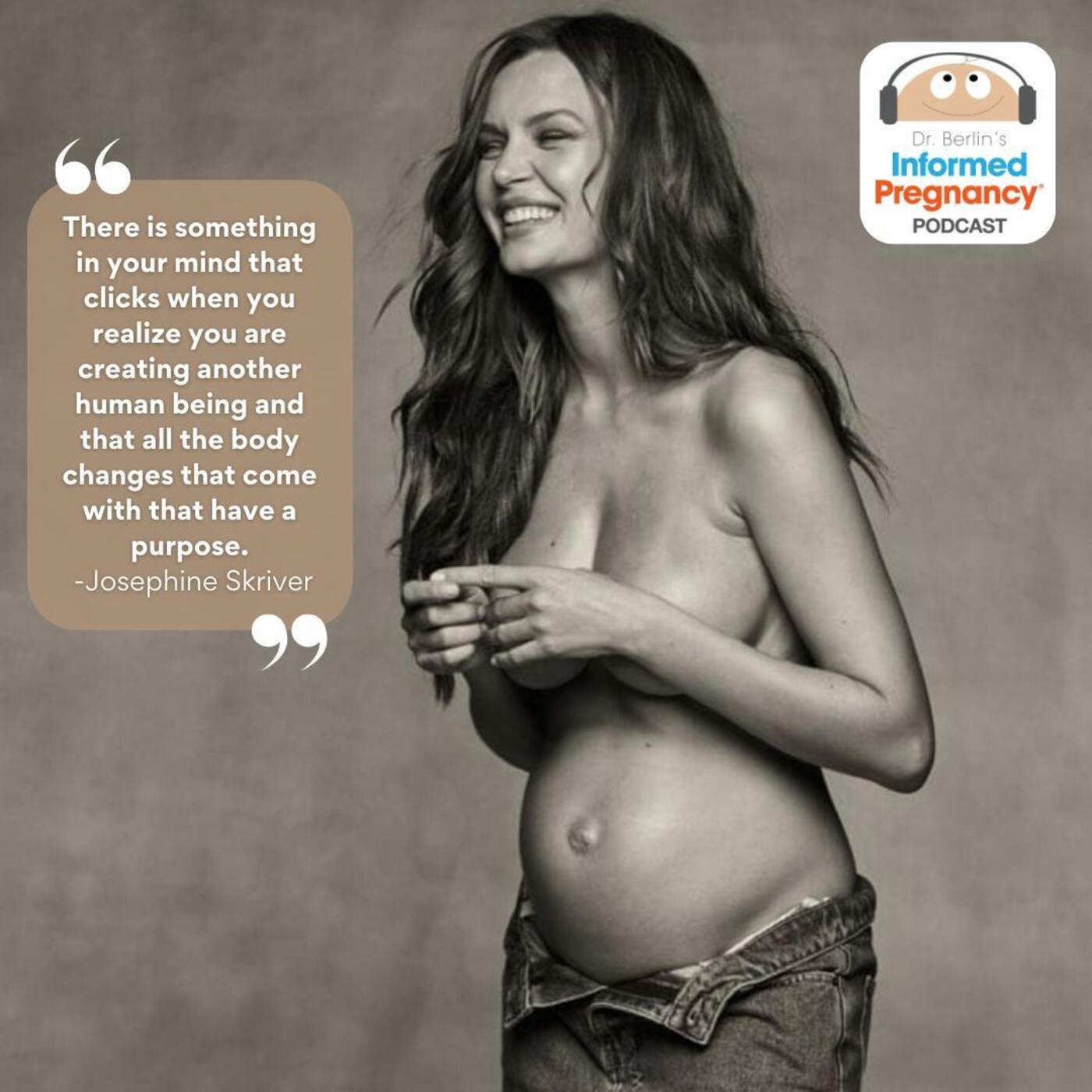
Victoria’s Secret Angel, international fashion model, and entrepreneur Josephine Skriver is just three days away from the due date of her first child. At 39 weeks along, she reminisces about her early career, meeting her husband, pregnancy thus far, and her upcoming birth plan.

Connect with the guest!
- Check out JoJa, Josephine’s premium activewear line: https://www.instagram.com/joja/
- Connect with Josephine: https://www.instagram.com/josephineskriver/
- Check out “Early Detection and Management of Pediatric Obstructive Sleep Apnea” on the Informed Pregnancy Blog: https://informedpregnancy.com/single-post/a-breath-of-fresh-air-early-detection-and-management-of-pediatric-obstructive-sleep-apnea/
Keep up with Dr. Berlin and the Informed Pregnancy Project online!
- www.informedpregnancy.com
- www.instagram.com/doctorberlin/
- www.facebook.com/InformedPregnancy
- www.twitter.com/doctorberlin
Learn more about your ad choices. Visit megaphone.fm/adchoices
See Privacy Policy at https://art19.com/privacy and California Privacy Notice at https://art19.com/privacy#do-not-sell-my-info.
Key quotes
“You are outdoor in a whole different kind of way because we don't believe in bad weather, just in bad clothing.”
“You just got to find the client that works for you.”
“It sounds weird, but we kind of put each other second for the first many years.”
“I walked in and still am hoping for full natural birth. I would like the least amount of intervention, but obviously I also want my baby to be safe.”
“If you start that week where you think you're good, you're usually not. So give yourself that extra time.”
Related episodes
- Ep. 374 Josephine Skriver: After Birth
- Ep. 349 Ciara Whaley: Before Birth
- Ep. 336 Natalie Dreyfuss: After Birth
- Ep. 377 Traci Burk: Before Birth
Transcript
AI-generated transcript with speaker labels — may contain errors, especially names and medical terms. Dr. Elliot Berlin, DC appears in blue; Josephine Skriver in orange.
Download PDF of the Transcript
Dr. Elliot Berlin, DC [0:12] Welcome to the Informed Pregnancy and Parenting Podcast. I'm your host, pregnancy-focused chiropractor Dr. Elliott Berlin. My guest today is an international fashion model as well as a fitness and clothing entrepreneur who hails from Denmark. She's currently 39 weeks pregnant with her first child. Josephine Scriver, welcome to the podcast.
Josephine Skriver [0:54] Thank you. Thank you.
Dr. Elliot Berlin, DC [0:56] Okay. So many weird things going on here. First of all, there's like a hurricane coming into Los Angeles today, and maybe the first in 80 years or something like that.
Josephine Skriver [1:04] Yeah, I'm slowly starting to see it outside my house. We're getting a little drizzle and it's getting pretty dark.
Dr. Elliot Berlin, DC [1:09] And I would just think right before you give birth is kind of an interesting time anyway. Does this add to the excitement?
Josephine Skriver [1:15] Of course. I mean, I technically am in the window of quick go into labor at any moment. I'm three days away from my due date. So let's see. Maybe she wants to come out in an exciting way.
Dr. Elliot Berlin, DC [1:26] It could be, you know, in Judaism rain is a blessing, water is a blessing. So, I think it'll be a very blessed birth. But it's also kind of weird because the reports keep coming in and just like, okay, so it's going to be medium rain from this window to that window, then heavy, then insane rain and winds and flooding. And maybe it's just your water going to break.
Josephine Skriver [1:45] Exactly. I'm just adding to it right now.
Dr. Elliot Berlin, DC [1:49] You're on little two drops. Okay. Let's start at the beginning. Where are you
Josephine Skriver [1:51] from originally? I grew up in Copenhagen, Denmark, but moved to America about 12, 13 years
Dr. Elliot Berlin, DC [1:57] ago now. Okay. So Denmark to America. Am I the only one who sounds Americanly confused about Denmark being Danish and the Netherlands being Dutch and not being the same thing?
Josephine Skriver [2:11] No, it's honestly the most common misconception I get over here. Everybody thinks Denmark is like the capital Netherlands or Holland, or we speak Dutch. So we get confused a lot.
Dr. Elliot Berlin, DC [2:21] And then all the questions about Amsterdam, which has nothing to do with you, but it sounds like a cool place to hang out. What do you speak in Denmark growing up?
Josephine Skriver [2:30] We speak Danish. It's a very small country. We have just around six million people. So living over here, it feels like I know something like a secret code language.
Dr. Elliot Berlin, DC [2:39] And do you also speak English?
Josephine Skriver [2:42] No, I'm just communicating.
Dr. Elliot Berlin, DC [2:43] No, but I'm saying your English is kind of amazing.
Josephine Skriver [2:45] Oh, you're talking about my country. I thought you asked. We do get taught really early in school. So the second you start school, they have like an hour a week. It's a huge part of the culture. I would say my generation is a lot better in the now future. But yeah, it's a pretty international country in that we don't speak with very many people. So we kind of have to adapt in that sense. So for us, yeah, you would come to Denmark and you would be completely fine if you speak English, like anyone would switch over.
Dr. Elliot Berlin, DC [3:15] Invitation accepted. Exactly. And just in general, I don't know much about the culture. What was it like for you growing up in Copenhagen?
Josephine Skriver [3:24] Copenhagen was great. It's such a safe, easy city. I thought it was such a city girl before I moved to New York. But no, it's dark. It's cold. So you got to be used to that. So it's a lot of hibernating in the winter. But then summers are so incredibly amazing because you get two months of light for the first time after nine months of darkness. But it's fun. It's like a super safe place. You just hop on your bike. You are outdoor in a whole different kind of way because we don't believe in bad weather, just in bad clothing. So it doesn't matter if it's rain or wind. They still put you to school. I don't think I ever got a snow day because you just start walking.
Dr. Elliot Berlin, DC [4:00] Well, in Los Angeles, we probably won't get them either. But maybe there'll be a hurricane day this week.
Josephine Skriver [4:05] Exactly.
Dr. Elliot Berlin, DC [4:06] So then you moved to New York. And what were you thinking in that move?
Josephine Skriver [4:10] I mean, I started out going to New York when I was 17, trying out modeling. Didn't think more of it than at the time I was actually just cleaning offices after school just to get some pocket money. And at first I was like, oh, this might be a more fun way to work. Tried it out one summer break, did a few jobs. And then after I was in high school at the time. So for me, it was like trying to navigate that with school was a little bit complicated, but I took two weeks off to try out Fashion Week. Was supposed to be back. And then seven weeks later, I'm back in school because it just took off that quick. So for me, it was very much like I had to decide really quickly
[4:50] where to go and I decided to finish high school. But after that, it was like, let's just try this out. So I took a little suitcase, moved into a model apartment in New York. very big city, very far from home. And I would try and stay there for months at the time. And when the homesickness got too much, my mom would either fly out, I would come home for a little bit and then kind of took off. I thought I was gonna do this for a few years, but 13 years later, I'm now married, about to have a kid, live in Los Angeles. So America has become more permanent for me.
Dr. Elliot Berlin, DC [5:21] I mean, it's a cool progression. Did you do any modeling originally in Denmark?
Josephine Skriver [5:25] Yeah, I was actually discovered when I was 14. So I could stop in a street and tried a little bit on a weekend. Again, my mom wouldn't let me work if it wasn't something that they would interfere with school, which I completely agree with. So it was a fun little part-time job. And Copenhagen is such a tiny market. So it was a very safe place to get comfortable in front of a camera, just doing some youth lines and some small things. So I was a little bit more prepared once I got into the international market.
Dr. Elliot Berlin, DC [5:52] New York doesn't sound like the safest place to do anything. Were there difficult periods in adapting?
Josephine Skriver [6:01] I mean, yeah, big time. As much as I speak English now, it was still fairly broken when you moved somewhere at 17 and you've only learned by the school books. It's a whole different world actually getting out there. But I had a really good agency. I had the rules with my mom. It was very much like we're there for work. We're not there for necessarily fun. So for me, it was like not about going out. It was not about all the different things. What's scary about modeling in New York is all the things that are offered around it, not the job itself. The job itself is go to set with very professional people, great photographers. Your agent shows up.
[6:37] In the beginning, you're not really like, especially because I was not 18 yet, nothing was really done alone. But there's a ton of people around like, oh, promoters that want you to like, cute girls come to their dinners or go out or stay by tables. And as she says in the whole night life that I was so not ready for either. So I think just sticking to work and keeping my head down and just focusing on that kept me super safe and sane.
Dr. Elliot Berlin, DC [7:02] It seems like you have to have a lot of confidence to do the kind of modeling that you have done. Is that something that you just always had inherently or did you have to work on it?
Josephine Skriver [7:15] Both. I would say I wasn't necessarily confident or not before modeling because for me, I thought about playing soccer. I was kind of a tomboy. I didn't care what I dressed like. I'd never really worn makeup or like worn heels before. So my looks were never something I had fully paid attention to until it became something I could work for that I could use as like get pavement for a living, which was crazy. So it almost came with a sense of confusion in the beginning and a feeling a little bit like fraudulent because I'm like, why am I here? Or like, this makes no sense. I'm just me from Copenhagen.
Dr. Elliot Berlin, DC [7:53] Imposter syndrome?
Josephine Skriver [7:55] Yeah, honestly a little bit. And then they just kept booking me and I'm like, somebody is gonna figure out this is not all they bought or booked. And then I think you also all of a sudden get very aware like the industry is very specifically about, I mean, you are going for your looks. So not taking that personal at 17 definitely messes with your brain a little bit. My mom was very straightforward and very like just matter of fact. And she was like, well, your product, like she never understood fashion either. So we always compared it to athletes or sport because then we could speak. And she was like, well, there are certain criteria you have to be to be a part of a soccer team
[8:30] or to be at a certain league. There's a certain amount of training. There's a certain amount of things. And same thing when you were actually really walking down the supermarket aisle and we were buying shampoo and she goes, look, look at this product. Doesn't mean this shampoo is any worse just because it's for colored hair. This one over here is more foamy. This one over here is great for straight or fizzy. You just got to find the client that works for you. So she was very much like always made me think of myself as a product. And I think that put a little bit of a distance to either if you got to know or criticism because technically it's your looks that are criticizing
[9:07] or don't want or don't fit. But that doesn't mean it's just it wasn't the right fit for that client. And really walking in and said I was very much in the beginning shampoo, I'm a shampoo and if you don't have the right hairstyle for me. So it definitely helped having that distance a little bit because if you start taking it personal, I think that's when it can really mess us with you.
Dr. Elliot Berlin, DC [9:26] I could see one of those online quizzes, which shampoo are you? But I think that could be a really healthy idea because for you it was professional but it's that way in life in general. If I'm a shampoo and I want to get this job or into this relationship or meet this person or do a business deal and the answer is no, it could just be on the wrong shampoo.
Josephine Skriver [9:47] Exactly. Maybe you're trying to date someone but just had their hair bleached and your shampoo is just not good for that.
Dr. Elliot Berlin, DC [9:54] I'm not good for bleached. And then you progressed, you see this in. You see this in all careers where there's some people get into it and they can make a living at it and some people rise to the top. You rose. How did that progression take place?
Josephine Skriver [10:09] I started very much in high fashion. I was walking every fashion show around the globe and it was a great way before social media and before all that to get to the whole industry gets your face. So when I started like over a decade ago, runways were everything. It was the way you could promote yourself and the way the industry would get to notice you for campaigns, magazines. So I walked over 300 shows for all the big companies and I slowly that just got noticed by people. I got on covers and then already at 18, Victoria's Secret started making notice for me. But I was very green at the time and I think I was still immature. And I mean, I had puberty so late.
[10:49] So for me, it's like they kind of kept following me and keeping an eye on me. I would go in for casting yearly, but it wasn't until I was like 20, 21, I really started working with them. And then at 23, I became an angel after kind of like going to castings for five years straight. And that collided right in 2015, 2016, right. The social media was having its major push and we were just having fun with it. But we got to show the behind the scenes of Victoria's Secret. And as much as I realized people know fashion, it still was so niche compared to getting put on the map of someone like Victoria's Secret walking the runway show, wearing the angel wings.
[11:28] I'd never realized how big of an audience they have. And it almost felt overnight from like, oh, yeah, I can go here and be like secretly known, except for people who really are into fashion. My face would be recognized. But it was until the mass of America got you like on that big screen and you realize, oh, 700 million people watching the show yearly and they're following. It's almost like a cult following they had back then. And then with the access of social media and the combination of that, I think it just exploded.
Dr. Elliot Berlin, DC [11:57] I mean, at some point, there's a shampoo that everybody wants.
Josephine Skriver [12:02] Exactly. There's certain brand names that everybody recognizes.
Dr. Elliot Berlin, DC [12:06] Was that hard for you just going around and not being able to be anonymous anymore?
Josephine Skriver [12:11] Definitely confusing at times. And again, I think that a little bit of that imposter syndrome came back because it's not like you feel that different, but all of a sudden the world see you so different and you've been put on this major spotlight. And it's so glamorous to be part of the angels status. I mean, the way that you get treated, the whole transformation of like talk about like not really wearing a lot of makeup. I mean, you sit in that hair and makeup chair for like two, two and a half hours and get a full transformation of hair and glam. And like, it's incredible. And it's so much fun. But yeah, it was definitely like a very new thing, but it was super
[12:46] fascinating. I'm so grateful for fans around the world because if it wasn't for that and it wasn't a following and that fan base, I mean, yeah, it wouldn't be where I am.
Dr. Elliot Berlin, DC [12:55] Wow. It couldn't happen to a nicer person, which is also refreshing. Cause when you see people in magazine covers and whatnot, you have no idea what they're like on the inside and you're just such a lovely, beautiful person on the inside. It's sort of like when you see a really nice cake in and it tastes bad, but that's not you. Uh, let's take a little break and we come back. We'll find out about how you got into this whole pregnancy situation. Don't go anywhere. We'll be right back.

Dr. Elliot Berlin, DC [15:00] Welcome back. We're talking to yes, she's still pregnant Josephine driver. Okay, so now you're pregnant. Where'd you meet your partner?
Josephine Skriver [15:08] Ooh, we actually almost 10 years ago met on Twitter, which is kind of a weird story. But yeah, the few fans I had back then, I was tweeting out I had a long flight that I wanted the music recommendations. And just scroll through the replies I got and I found a band I'd never heard of called the cab and I stopped and I listened to the album. And listen to the whole plane and actually really, really liked it. So once I landed, I shout out the fan and I was like, thank you so much for recommending this album. This was so cool. I was so excited to hear it. And of course, when you tweet people are added to it. So he sees that I'm starting to talk about him.
[15:43] And he starts tweeting me back and I'm like freaking out like, oh my god, I was listening to this guy's voice for like 10 hours. And now he's like fully like tweeting me. So I was definitely having a little bit of a fan moment. But I think he was just trying to be nice. And then we started DMing and that led into texting and he was living in LA at the time and I was in New York. And when I started getting jobs out there, we would hang out. And it was really friendly at first. I think he did friend so me a little bit. But the more we have, and slowly that led to more
Dr. Elliot Berlin, DC [16:11] So long distance relationship.
Josephine Skriver [16:13] Yeah, we were long distance for a good year. And then he decided to move to New York, his lease was kind of up. My lease was up three months later. So we're like, okay, at least let's give us an hour. Okay, at least let's give us an out within three months if this is not working. Oh, smart. But it worked. And he stayed in New York with me. The last five, six years I was in New York and then now we moved back to LA together.
Dr. Elliot Berlin, DC [16:38] And you're still modeling and he's still making music.
Josephine Skriver [16:41] Yeah, still in the same career path. His stage name. I like bones bones. It's my whole life. Exactly.
Dr. Elliot Berlin, DC [16:52] We have so much in common. And also, he's a very sweet guy. So, okay. Now, that means that you met when you were still pretty young. Yeah, I was right before I turned 21. Not that you're not pretty young now, but that was even younger. I mean, people might ask what's the secret to success in a long term relationship.
Josephine Skriver [17:12] I think for us, it's been freedom. Like, we were both very career minded and had so much life to do. And just having someone that was always a cheerleader instead of holding you back. Someone who was like, yeah, if you need to go on tour or yeah, we've been on the road for seven weeks, but you need to do this job. It sounds weird, but we kind of put each other second for the first many years. And that was a very early on conversation. I was like, I didn't move to America this far from my family to give it all up for a boy. I don't think any of us thought it was going to necessarily lead to marriage and kids down the line, but we were just having fun.
[17:52] And just finding someone who quickly becomes one of your best friends and who's always there to support. I think because we both worked in different kind of industries, but very similar, we understood if I had to shoot memoirs. I understood when he had to work with females in music videos. There's very much of an understanding how professional sets are and how upfront you just have to be. There was no jealousy where if you don't understand the industry, maybe that can seem very confusing. But it's just honesty and respect and just giving space. And we're both very, very like needing to do our own thing and needing space. And we've just always been able to give each other that.
Dr. Elliot Berlin, DC [18:31] I'm just hold on writing down Josephine's secret to successful marriage. Put your spouse second.
Josephine Skriver [18:39] I mean, that's a little different laid on, but very much that in the beginning.
Dr. Elliot Berlin, DC [18:44] No, I get it. And especially in those kind of industries where you need to really be flexible, be available to travel for longer periods of time. And also you started off with a long distance relationship. So you clearly know how to navigate that when necessary.
Josephine Skriver [19:00] So to an extent, almost everybody in my life, because I'm always on a plane or around, has become long distance.
Dr. Elliot Berlin, DC [19:07] A long distance relationship, at least with the modern technology that's not as far as it once was.
Josephine Skriver [19:14] Oh, thank God. I could not imagine having gone through all this and not being able to FaceTime home or be able to be part of social media or be part of just connecting. I hear about all the models where they're like, oh yeah, we would send a mail and two weeks later you would get a postcard from home. Wow. Yeah. And before that, a pigeon.
Dr. Elliot Berlin, DC [19:36] So you guys got serious at some point. And as your relationship was heating up, did you talk about family and kids?
Josephine Skriver [19:44] Yeah, I mean, I think once you get serious, it's big questions because long term, if one doesn't want kids and the other one does, that's a huge potential conflict in your relationship. If you're very open about both. really wanting kids at some point. I think he would have really had them earlier. But being that I am my own product and I physically have to show up with a certain kind of body to work, I just wasn't ready for a long time. I needed to really just like squeeze as much out I could of the industry. But then when COVID hits, I think things just changed a little bit and life slowed down. And I think priorities are what you want out of things. I had my first kind of baby in the
[20:25] sense of I started a fitness company. I started my own brand during COVID. And that's also slowed down modeling a little bit for me because I had some different kind of priorities. I now have to be at factory meetings. I now have to be at different kind of where my CEO had and really take care of this company. And I think starting to have that routine and a little bit more stability that we now have a house in LA. We actually got a home. I have a steady place. All of a sudden, I think your mind is a lot more open to like, oh, I can fit a kid into this because I don't think I was ready to be on a plane 24 seven with a kid and not be able to be the mom I wanted to be. I can't even picture how that works. No,
Dr. Elliot Berlin, DC [21:04] I don't know how people do it. When you decided it was go time, did it come easy for you?
Josephine Skriver [21:11] I would say yes and no. We very much did that whole we're not trying, trying thing. You know, when you tell yourself you're not trying, so you try not to be nervous about it. But I would say it still took a good six, seven months to get pregnant.
Dr. Elliot Berlin, DC [21:25] When you were actually not trying, what were you using to prevent pregnancy?
Josephine Skriver [21:31] Birth control, something called the newer ring.
Dr. Elliot Berlin, DC [21:33] Oh, use the ring. Okay. So from the time you stopped the ring,
Josephine Skriver [21:36] was that concerning to you that several months went by or were you just in your mind not, not trying? No, not at all. I think for me, it's like I have had a ton of girlfriends who were trying different things and it wasn't uncommon. And back home with my doctors that I know growing up or even here, they don't feel like there's anything concerning until a year into it, especially because your hormone level kind of have to get back on track after being in birth control for so long. And my period was out of whack. Like I had a very irregular period going off of birth control. So I was kind of like, oh, when you started researching how small the window to get pregnant is and you can't really track it because your period
[22:17] is somewhere between 26 to 36 days apart every time. It was hard to find the window and we were still traveling and doing things. I'm like, we're also just not in the same city enough to really get this done.
Dr. Elliot Berlin, DC [22:29] Right. I hear that can be an issue. Right. You kind of have the same room for things to happen. Because we do a lot of fertility work in the clinic too. Sometimes I'll get a couple that are both career oriented and travel for work. And they're like, yeah, I don't know what's going on. I'm like, you need to be in the same city for at least one night over the month. I'm not the greatest detective, but okay. So how has pregnancy been through the trimesters for
Josephine Skriver [22:55] you? For me, the first trimester was surprisingly like easier than I thought. I didn't get any of the nausea, none of that, that a lot of people deal with, but I was tired. I mean, I was tired like I've never been tired. I feel like somebody gave me like a sleeping pill daily, never slept so good. So trying to get out of bed or even sometime I had to pull over the car because I'm like, I'm just too tired today. Were you also working during that time? Oh yeah. I wasn't telling the world I was pregnant so I couldn't hide it anymore. So I was working up until like
Dr. Elliot Berlin, DC [23:28] five, five and a half months. Wow. That must be hard on camera, super tired.
Josephine Skriver [23:33] Oh yeah. It was definitely. And normally I'm a huge caffeine addict. I love my feet and that smell, I couldn't do it the first few months. Even though they say you can have a little bit of cup of coffee, it felt so wrong, which was so crazy. And I think one of my friends guessed it because she's like, why not drink coffee? I'm like, no, I'm just trying to get off. So yeah, I wasn't telling anyone for a long time, even though my boobs, I think it gave it away before most things. But yeah, I really just popped overnight. I went from not having a belly till I feel like I woke up and all of a sudden it was there. When was that? How many weeks? That was about, I would say like it cut
[24:10] heart for me to hide it around. I started noticing it 21, but I was able to not tell
Dr. Elliot Berlin, DC [24:16] the world till I was about 26 or 27 almost. Wow. Okay. That's pretty foreign to your pregnancy. I think maybe a combination of first baby, fairly tall and also the stronger your abdominal muscles are, the longer it takes to pop. So I think you had three things going.
Josephine Skriver [24:35] Yeah, I was pretty fit prior to pregnancy. So that definitely helped.
Dr. Elliot Berlin, DC [24:38] I wonder though, I mean, I've heard people say it's harder to connect with the baby when
Josephine Skriver [24:42] you're trying to hide it from the world. A little bit. I think it was like, because you're hiding it from the world, you're not like in your pregnancy. It's been a lot more nice to connect to her now that I'm like, oh, it's out and open. Also, like now I feel her, well, I really feel her. My belly is really in the way, but no. for me, that definitely helped a lot. And I think I enjoyed my pregnancy a lot more when you don't walk around trying to like hide it from the world and not telling anyone.
Dr. Elliot Berlin, DC [25:07] Have you done modeling in the third trimester pregnancy model?
Josephine Skriver [25:10] Uh, not so much. I've done a little bit, but doing it in the summer, I'm like, not in season, so most people have been gone the last few months, which has kind of been nice, it's been just nice to be home and enjoy it. And since we just got a new house, we have renovated this house down to the deadline. I mean, our contract is left last Tuesday, so
Dr. Elliot Berlin, DC [25:29] Oh, wow. Everything's falling into place at the last second. Hopefully they did a good job on the roof based on what's about to happen here in Los Angeles. So if your body and your look are your product and pregnancy makes your body look quite different, how has that experience been for you just even mentally?
Josephine Skriver [25:47] Yeah, there was definitely some mentally thing that changed. I think for me was again, that like 50 50 wanting to enjoy your pregnancy and just let go. And on the other hand, trying to still model and like figure it out. So again, like everything came a lot more enjoyable once you announced it and you're out, because if not, it was like, okay, try and dress to hide, do certain things, but I thought it was going to be a little bit more difficult for me just because I've been so body focused and then I think there's something that clicks in when you're like producing a whole human being and how amazing is my body that can do all this. Like, yeah, a lot of things are changing.
[26:22] Like my nipples are getting bigger and darker, but then you read why, then you read why your belly is doing what it's doing. The line you get, like, it's so fascinating that nature is doing this for the baby to find because it can't see in the beginning. Like, it's just wild to me when you start like really researching everything, but yeah, I'm curious to see how it's going to feel going back into shape because I think the hardest part for me was honestly that the doctor in the beginning of my pregnancy told me that my placenta was sitting pretty low, a little nervous about me moving too much. So I basically got told all the way till 28 weeks that I shouldn't really work out.
[26:59] That was probably the hardest part for me because I realized workout for me is so much more than just staying fit. It's such a like mental space for me. It's such a good place for me to go like sweat out, get things out. So when I had frustration or I want to do something and being told you can't because you're not pregnant enough to feel like an Oompa Loompa yet. So it's like, you don't feel like anything has really changed. And because I was nauseous, yes, I was tired, but because I didn't feel pregnancy as much, it was weird being told you weren't capable.
Dr. Elliot Berlin, DC [27:30] You know, we say all the time that if you have two pressure cookers and one of them has a valve that lets off excess steam and one of them doesn't, then even with the same heat under them, one's going to cook dinner and one's going to explode. And for a lot of people that work out is the vent that siphons off the pressure inside. And when you take that away, aside from the physical aspects, it does have a big emotional impact and it's hard to replace with something else.
Josephine Skriver [27:59] So the change in my pregnancy too, was before my body change, I started feeling weaker just because I wasn't working out and I haven't felt that like the lack of muscle or the lack of certain things. So that was different. Yeah.
Dr. Elliot Berlin, DC [28:11] Did you talk to any other people in your industry about postpartum and at a sort of balance wanting to be around your baby and focus on that and also sort of take care of your own mind and body?
Josephine Skriver [28:26] I mean, most of my friends who've been pregnant in this industry have been annoyingly just lost it. Like a lot of them are like getting back into shape in the sense of like the gym and like getting tight and toned and like strong again, that takes the time, but breastfeeding for most of them have just made them drop weights. I'm hoping I'm going to fall in that category, but I'm really trying not to stress too much about it because I know the process after and how important it is to eat and keep everything up if you want to breastfeed, which I really would like to do for a little while. I'm probably not going to be able to breastfeed for a full year
[28:57] wanting to get back to work, but it would be nice to at least be able to do it for a few first months and maybe like lucky enough if I am able to store some breast milk and I just would like to get like at least four months in.
Dr. Elliot Berlin, DC [29:08] You know, you can freeze dry it now.
Josephine Skriver [29:11] I heard that.
Dr. Elliot Berlin, DC [29:11] You could turn your breast milk into formula, essentially like human your formula. So there's a lot of options available nowadays, but I'll tell you what, I've had pretty intense modeling clients in the past who thought they were not going to be able to breastfeed past whatever period of time, six months, nine months, but they figured it out. Some of them.
Josephine Skriver [29:30] So there's a possibility. And then I think that I've learned with pregnancy as much as I love control and I love to have a schedule. I've also been taught that you kind of let things go with the flow. And that's very much what I think motherhood would be too. I've never tried it before. I don't know what it's like. I'm lucky enough. My mom was going to move in the first month with me.
Dr. Elliot Berlin, DC [29:51] Oh, that's nice to have the support to see what's going to happen.
Josephine Skriver [29:55] And then most people say you figure it out. So it seems like the world is still going.
Dr. Elliot Berlin, DC [30:00] What language do you speak to your mom in?
Josephine Skriver [30:02] We would speak Danish. I'm going to really try and be good about speaking Danish around the kid. She speaks English, but prefers Danish.
Dr. Elliot Berlin, DC [30:10] Oh, lovely. All right. Since you're going to give birth in a minute, we're going to take a little break and come back and talk about what you have done to sort of learn more about the birthing experience and what you have in mind. We'll be right back. Welcome back. We're talking to Josephine Scriver, and you're about to have a baby. Sort of running out of when, so before you tell your feeling right now, what kind of things have you done during your pregnancy to sort of research the options or learn about the different possibilities on birth choice?
Josephine Skriver [30:52] Well, you walk in with a certain idea of what pregnancy and birth is, and luckily been in this time where half my girlfriends now have had babies. So I'm kind of in the middle of the friend groups. I've heard different stories, but yeah, listened to a ton of podcasts, read as many books as I can. My stepmom is a midwife, so I've gotten some different options. And just being from Denmark, it's like a whole different system over here. But what's been very surprising to me is like entering the medical field of America. I'm very much like less is more. For me, I walked in and still am hoping for full natural birth. I would like the least amount of
[31:32] intervention, but obviously I also want my baby to be safe. And that's very much the approach my culture has as well. Like most of the time, you only get one midwife. If you need a epidural, they will give you what America called Princess epidural. Like even the doses of pain meds is so low unless you ask for more. And they really don't encourage you to do anything unless it's needed. So that was very much the approach I came in with and found a very conservative doctor that's been like with my other girlfriends, they've had great success with her. I have had some scary stories around me lately. There has been sadly not the easiest birth for some of my girlfriends. And I think
[32:12] being overseas, it was very important for me to have the safety of medical in case. But on the side, I've also done a lot of hypno birth classes. I work with a great girl called Nina Falon that's really took me and my husband through some like amazing exercises. And I think it even changed his perspective on a lot of things. Because as much as you can feel as a woman, I think researchers as a dude, it's like a whole different story. So having someone who can sit in front of you and like tell you what you're reading is either kind of bullshit or real. It's not as scary as might seem, has both really helped us not have any fear about birth. But I
[32:47] also think we're both very much like this is the first time I still feel safe for doing it at hospital.
Dr. Elliot Berlin, DC [32:51] Are you working with a doula?
Josephine Skriver [32:54] Yeah, my ob y n has a doula that they work really closely with. Her name is Miranda, and a few of my other girlfriends used as well. And she's been really great so far.
Dr. Elliot Berlin, DC [33:03] So if you're aiming for a less interactive more natural birth, what do you see as the role for your doula and for your husband?
Josephine Skriver [33:13] I mean, I think there's huge roles in that because I'm going to need more support than just being, you know, hooked up to pain meds. So for me, hopefully, like, I mean, the exercises and the mental space I'm doing with my husband, you know, we're doing these hypno exercises, he has tools, if I get into, you know, help me pain management of like getting out of my own head, and just being an advocate for me and the same with my doula, they're very much on board with my birth schedule, so I don't have to be too worried. So I can just more focus on me and getting through it with my girl, instead of, you know, too worried about everything that's going on, because that is probably the most nerve wracking
[33:53] is the hospital aspect. Because you always nervous that they're just going to overrule you in too much pain to say yes or no. But having people on your team that can kind of advocate for you in that process is super comforting.
Dr. Elliot Berlin, DC [34:05] Do you know, or think about yourself? What kind of things at this point you think could be comforting to you for either things that you do for yourself or other people do for you?
Josephine Skriver [34:17] It's funny, because like a lot of the hypno includes like potentially body touch and certain things. And for me, I'm like, usually when I'm in pain, I'm like, get away from me. So I'm curious to see if that's going to feel nice. I'm usually somebody who, if I'm sick or in pain or anything, I like to just like close the door and be my myself. It's also been part of my process of the exercises in hypnobirthing is including my husband in these things and being allowed to ask for help or reach out and not having to toughen it all up. I really worked with like some good playlists. For me, it's like super comforting music. I'm all about candles. We bought
[34:51] all these like fake candles we can put in a room. I think lights and just keeping it as calm as possible. Yeah, I've had a birthing ball. I've got a peanut ball. different things, I bought a little comb ready with ice water, if I need to put my hands in there.
Dr. Elliot Berlin, DC [35:04] So all the little, exactly all the little tricks. Cool. And have you thought about postpartum, either in terms of parenting or how the postpartum experience might affect you in terms of, I don't know, hormonal changes emotionally, relationship, things like that?
Josephine Skriver [35:24] I mean, we've had many talks about like, what is possible. I had a girlfriend who went into postpartum depression. I don't think I've had anyone who didn't have some sort of baby blues right after, but it's been different degrees. And I think it's just open communication, knowing that it's something to look out for, but also knowing that, I mean, you are having it completely come down after giving birth of hormone drops, being aware of that and just being upfront about your feelings. And then I think all of September, we're really locking ourselves in the house and just not really moving from the bed of blood and just really trying to listen to my body
[35:59] to just take the time to recover because I'm sure I would love to start getting out into the world as soon as possible, knowing me, I don't sit still really well, but making sure like, Hey, maybe give yourself five more days when you feel like you can move kind of like when I've been injured during sports. If you start that week where you think you're good, you're usually not. So give yourself that extra time.
Dr. Elliot Berlin, DC [36:20] Yeah, that sounds wise. Okay. You are 39 weeks and there's traditionally 40 weeks up to 42, I suppose. Are you feeling any changes towards labor starting?
Josephine Skriver [36:34] I lost my muscus plume. I definitely feel her very, very low. There's a ton of pressure. I mean, I pee every 30 minutes. I make sure to not even drink before this meeting because I was like, I'm just going to have to run to the bathroom. Don't sleep very well. My acid has gotten crazy. So when they sleep before the-
Dr. Elliot Berlin, DC [36:50] Did the tape help at all?
Josephine Skriver [36:52] It didn't. Not really.
Dr. Elliot Berlin, DC [36:54] Okay.
Josephine Skriver [36:55] No, but for me it's, yeah, I've definitely feel a lot more tightness. There's like a discomfort and kind of like a restlessness in my body that's happened the last few days. So hopefully that means he's coming here soon, but it could also just be the tropical storm that's coming in.
Dr. Elliot Berlin, DC [37:08] Any like uterine activity, cramping or tightening of the uterus?
Josephine Skriver [37:14] No, I mean, because she's measuring, it's a little bit small. I've been put on like non-stress test. I go to twice a week and that machine tells me I'm having Brexit and Hicks, but I'm not feeling them.
Dr. Elliot Berlin, DC [37:26] You don't feel it. Okay. So there's some activity, but it's not strong enough for you to feel it yet. Do you feel it with your hand? Like when it says that you're having a contraction, if you touch your stomach?
Josephine Skriver [37:35] Yeah, I can tell my stomach goes really tight. Yeah. So now I'm like, oh, I think I'm having one because all of a sudden my stomach just goes tight. And then it goes back to squishy.
Dr. Elliot Berlin, DC [37:44] Whoa. I could relate to squishy, but not. Anyway. Back to you. Okay. So this is a very exciting time and actually you're one of the people that I think would be great. I know we're going to come back after you have your baby to discuss how your birth was, but I think you're one of the people that would be great to come back three or four months after that and see how your postpartum was because I don't know. I like the way you kind of think. And also a lot of people don't even think at all about postpartum until they're there and you've already given it thought and tried to plan for it, brace for it, if you will. I think it'd be great to see how you experience it in those first few months of
[38:20] motherhood. Well, before we go, you mentioned briefly that you started a company. Tell me what motivated that and about your product.
Josephine Skriver [38:29] I mean, one of my biggest passion in life has always been fitness, whatever it was playing sports in high school or it was just staying fit. I mean, now that I model for me, just like that head space and one of my best friends in an industry called Jasmine Tooks, her and I just had this love of fitness and have been faces for a ton of different fitness brands and yoga brands and was predominantly the face for VS Sport as well. So we've always just like, oh, people just could change this a little bit about the pants or if I could just make it different and really missing something that like spoke to us. And in 2016, we just started sharing our love of fitness online at an
[39:07] account called Joja, J-O-J-A. And it started this amazing little community of like-minded girls who also just wanted to do fitness. But it's always so hard when you don't have someone else, it can be intimidating for girls to go to the gym by themselves. And so creating that community was amazing. And then slowly that just came in with ideas and we're like, well, we have this whole community, we have all these things and they constantly ask us what we're wearing. We constantly want better things. So in 19, we set out to really do it and we're like, you know what, let's make a brand out of this. And then 2020 hit and put a stop to things a little bit.
[39:40] So that took us a little longer. But in 2022, we finally, after a ton of factory delays and everything, found an amazing factory here in LA that's helping us out. And we're doing everything ourselves from the ground up. We're still a tiny, tiny team. We're only for direct-to-consumer. So you can only find us on Jodi.com for now, but yeah, we're slowly hoping we will take… over the fitness industry.
Dr. Elliot Berlin, DC [40:01] Jojo.com, J-O-J-A.com?
Josephine Skriver [40:04] Correct.
Dr. Elliot Berlin, DC [40:05] Okay, and so what we see there now, which is already impressive, you're saying it's really just the very beginning.
Josephine Skriver [40:10] Oh yeah, just the beginning. You should see our mood boards, but we're trying to one step at a time. Yeah, and also she had a baby. Yeah, so it's been an interesting journey. She had a baby six months ago.
Dr. Elliot Berlin, DC [40:23] Wow.
Josephine Skriver [40:23] So we're both in this journey together.
Dr. Elliot Berlin, DC [40:24] So one baby for each of you and one together.
Josephine Skriver [40:27] Exactly.
Dr. Elliot Berlin, DC [40:28] Jojo.com. I can't wait to see where that goes. My girls were perusing through the website and they're very impressed, my two teenage girls.
Josephine Skriver [40:36] Thank you, I appreciate that.
Dr. Elliot Berlin, DC [40:37] And one of them just, I would say maybe six months ago,
Josephine Skriver [40:41] became very fitness oriented. Yep, a fun journey to jump on.
Dr. Elliot Berlin, DC [40:44] For her health, yeah, she's really enjoying it. I think it's incredible what it's doing for her mind and also she's happy with what it's doing for her body. So there's a lot of benefit there. Maybe I'll pray and succumb and start exercising too. Yeah, okay, I'll try.
Josephine Skriver [41:01] Obviously you guys can do for fun together.
Dr. Elliot Berlin, DC [41:03] Yeah, seriously, I did when my kids were younger, I used to hike, run in Canyon with them all the time and it was so amazing, just great bonding. I gotta get back there. All right, thank you Josephine for sharing sending the most positive birthy vibes for you over the next couple of days.
Josephine Skriver [41:22] I'll keep you updated. Thank you.
Dr. Elliot Berlin, DC [41:24] And we look forward to seeing you on the other side. Before we go, tell me all the places we can find you online.
Josephine Skriver [41:29] You can find me on Josephine Scriver on all the social media platforms, on TikTok, Instagram and yeah, our group.com.
Dr. Elliot Berlin, DC [41:37] Oh yeah, it's called X now, not Twitter, right?
Josephine Skriver [41:39] Yeah, well, whatever, for now until there's another one. And threats and all the different things. But yeah, it's just Josephine Scriver and all the apps basically on all the platforms.
Dr. Elliot Berlin, DC [41:48] Amazing. And then if you wanna find more pregnancy and parenting information, visit us at informedpregnancy.com.
Want more pregnancy + parenting? Start your FREE TRIAL of Informed Pregnancy+ and get access to all our curated pregnancy and parenting content — original series, iconic birth films like The Business of Being Born, prenatal workouts and more.
