
December 21, 2023 · 35 minutes · Episode 386
About this episode
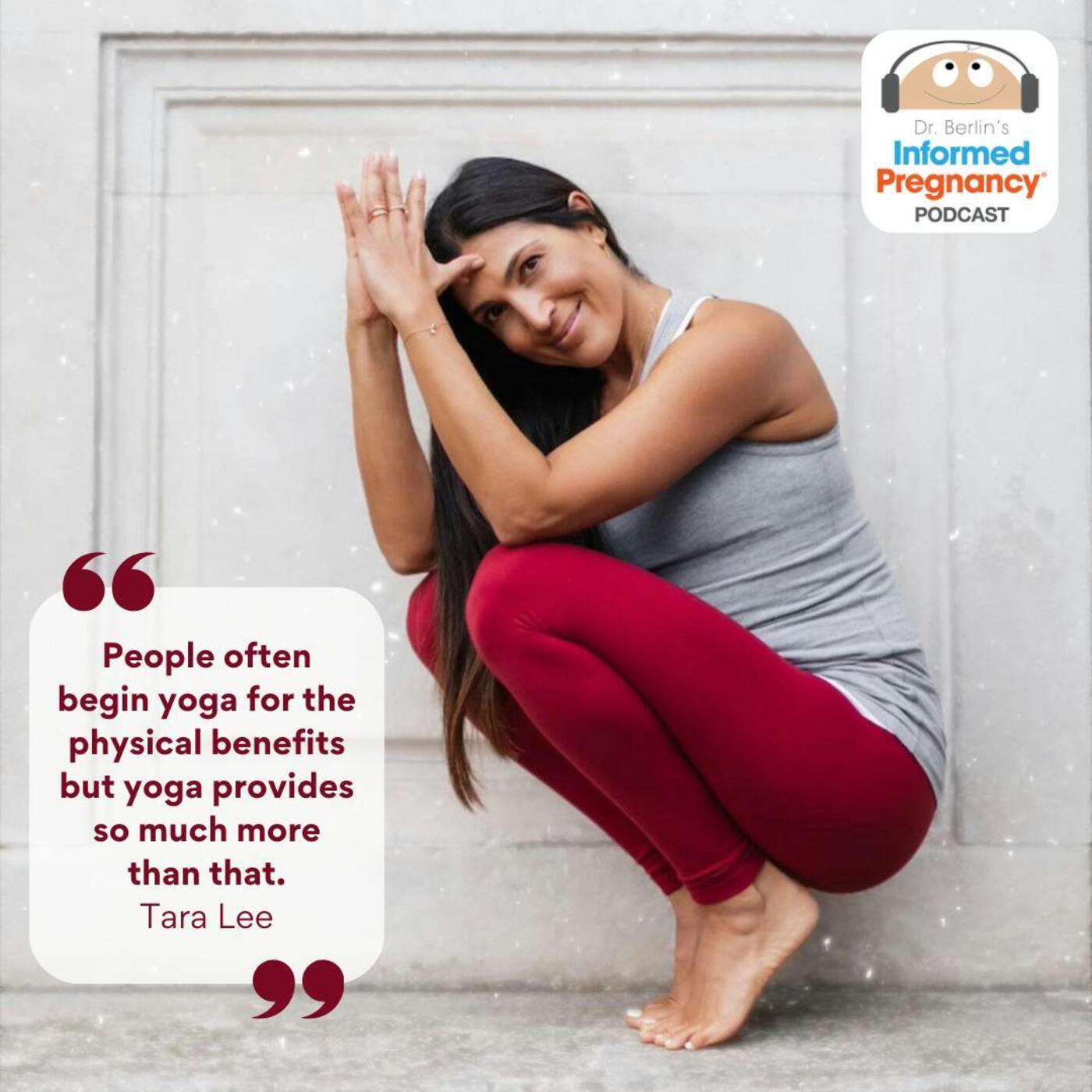
UK-based pregnancy and postnatal yoga teacher, Informed Pregnancy Plus contributor, and certified nutritional therapist Tara Lee talks about how her own birth journeys shaped her yoga practice.

Connect with Tara online: https://www.instagram.com/taraleeyoga/ and https://www.taraleeyoga.com/
Start your FREE Informed Pregnancy+ subscription and try a virtual yoga class with Tara: https://www.informedpregnancy.tv/videos/prenatal-yoga-with-tara-lee
Keep up with Dr. Berlin and the Informed Pregnancy Project online!
www.instagram.com/doctorberlin/
www.facebook.com/InformedPregnancy
Learn more about your ad choices. Visit megaphone.fm/adchoices
See Privacy Policy at https://art19.com/privacy and California Privacy Notice at https://art19.com/privacy#do-not-sell-my-info.
Key quotes
“I thought actually the great thing about yoga is you do it for yourself and that you are then in charge and you're empowered.”
“you realize that yoga can make a massive, massive difference to pregnancy and just to coping with the pregnancy and avoiding the aches and pains that a lot of women think are inevitable. But you realize when you do yoga that they're not part of the pregnancy at all.”
“I think I probably was still doing a good job, but there was a kind of doubt in my head, can you be a good pregnancy teacher if you haven't been pregnant yourself?”
“I never wanted to promote a natural birth as a better birth than a caesarean birth.”
“what I also realized, which I thought was really lovely was that it's not necessarily about the birth that you have on paper. It's about your perception and it's about your mindset. And I've had women who I've received emails from saying I had the most fantastic”
Related episodes
- Ep. 422 Pregnancy & Yoga with Caroline Bagga
- Ep. 425 Mia Rigden: Before Birth
- Ep. 419 In Conversation with Trainer Natalie
- Ep. 410 Milk Factory with Corinne Botz
Transcript
AI-generated transcript with speaker labels — may contain errors, especially names and medical terms. Dr. Elliot Berlin, DC appears in blue; Tara Lee in orange.
Download PDF of the Transcript
Dr. Elliot Berlin, DC [0:36] Welcome to the Informed Pregnancy and Parenting podcast. I'm your host, pregnancy-focused chiropractor, Dr. Elliot Berlin. My guest today is a UK-based yoga teacher and an Informed Pregnancy Plus content contributor who specializes in vinyasa flow, pregnancy and postnatal yoga, who is also a qualified nutritional therapist and a mother of two. We'll talk about her own birth experiences, how they altered her yoga teaching and her practice, and we'll get some great tips for postpartum yoga and wellness. Tara Lee, welcome to the podcast.
Tara Lee [1:10] Thank you, Dr. Berlin. Thank you for having me.
Dr. Elliot Berlin, DC [1:12] I'm really excited to have you on. You have this incredible energy. I think a lot of yoga teachers do, but yours is like, I can't imagine what your face looks like without a smile, because that's the only way I've ever seen it. You have this energy that seems infectious, like anybody who sees it would wanna try to get there too. And I know you're gonna give us some tips on how you've arrived and how we can follow behind. Let's start at the beginning. Where are you from originally?
Tara Lee [1:38] I'm from England. I was born here, raised here. My parents are both English and I live in London at the moment.
Dr. Elliot Berlin, DC [1:46] I was gonna say your English is very good.
Tara Lee [1:48] Yes. Yeah, I've lived in London. Well, I've lived in the UK. I grew up in the countryside and I've been living in London my adult life.
Dr. Elliot Berlin, DC [1:58] Which do you prefer?
Tara Lee [1:59] I'm quite lucky actually, because I get to spend a lot of weekends in the countryside because my mother lives in the countryside. And so I quite like having both of them. I like having time in the city where it's kind of buzzing and thriving and great for work. And then I like escaping to the countryside for weekends and days.
Dr. Elliot Berlin, DC [2:17] The best of both worlds.
Tara Lee [2:18] Yeah, yeah, it's great.
Dr. Elliot Berlin, DC [2:21] Okay, so right now you're fitness, I almost say guru, but when you were in your formative years, is that always how you projected what you'd be doing?
Tara Lee [2:31] Yes. Well, I never realized, it wasn't a plan of mine to become a yoga teacher. I discovered yoga when I was at university, aged about 19, and fell in love with it quite quickly. But it was never my plan to teach yoga or become a yoga teacher. It was just something that I loved doing. I actually thought that I wanted to do something more to do with film and documentary making. That was my plan. And I started off working in the documentary film world and I wanted to make travel documentaries and I worked for a travel documentary company for a while. And I've always been very interested in photography and filmmaking. So I wanted to go down that route.
[3:11] And then I just started teaching. Well, I started going to more and more yoga classes and seeing the benefit, feeling the benefit. And then friends started asking me to share my tools and my practice to teach them. And then my mother wanted me to teach her and her friends and it kind of just spiraled. And then eventually I thought, well, I really should do a teacher training. And again, I thought maybe I'll just do it for fun on the side. And I'd also always wanted to do something to do with healing. That was also something that I was always drawn towards. And I studied shiatsu for three years and Chinese medicine. And I thought maybe I'll do shiatsu
[3:50] and that will be something as well that I want to be able to offer just to be able to help people. And then I kind of was thinking, well, they would come to me that rather than them just be lying down and me helping them and then thinking that they needed to hand over their health to someone else. I thought actually the great thing about yoga is you do it for yourself and that you are then in charge and you're empowered. I do love shiatsu and I do love massage treatments and anything like that. But I wanted to be able to offer people something that they could then use for themselves rather than feel like they needed me to help them. And so, yes, yoga has always been in the background
[4:29] and it became then more in the foreground. And I ended up doing a teacher training course so that I could learn more for myself and learn more to help other people. And it just ended up being one of these things that just kind of organically happened. I fell into it. It was never part of my plan, but it was kind of inevitable somehow that people wanted to learn and I wanted to teach them and it just spiraled that way.
Dr. Elliot Berlin, DC [4:52] When you were 19 and you started yoga, your own first yoga class, I'm curious how you came to take it. Was it something you sought out or? something that presented itself to you, and also what those initial benefits that you were feeling were for yourself that really drew you deeper in?
Tara Lee [5:09] Yeah, good question. Because in those days, which was 1990s, yoga wasn't nearly as popular as it was now, and there weren't very many yoga classes around. And I was just at university, and there was one yoga studio that wasn't even a yoga studio, but it offered some yoga. It was more of a meditation center. And a friend of mine said, do you want to come with me? Because her mother had been into yoga, and so she was kind of introduced to it through her mother, and I just went along for the experience. And yeah, so completely fell into it. And the benefits that I found, what kept me going back, was that I think especially at a time when I was doing a lot of studying,
[5:52] and it's quite a stressful time when you're doing your final exams at university, and you've got so much information, obviously, going into your head, and quite a lot of pressure from all your studies and exams and assignments. And I just found that it helped keep me much calmer. I think the mental benefits were probably very apparent quite quickly. And also physically, I think if you're sitting down a lot and you're studying and you're at a computer, well, actually, we weren't even on computers so much when we were handwriting. We did have computers in the library, but sitting down a lot, I always felt the need to move my body. I'm one of these people who's always been very active.
[6:32] I love doing sports at school. My mother used to do Jane Fonda workouts at home, which I would join in with. And I've always really felt the benefits and always been a person who's wanted to exercise just because, yeah, I think the mental health benefits as much as anything else. And I've always been drawn to movement. I don't like sitting down for too long in one go. And yes, I think it just really helped to clear my head and it helped me to deal with stress better. It helped me to feel more energized. It definitely gave me energy and it made me feel better in my body. And I think also it can be quite good for confidence. I think when you're kind of late teens, early twenties,
[7:12] if you feel a bit self-conscious awkward, it can make you feel a bit more comfortable in your own skin as well.
Dr. Elliot Berlin, DC [7:17] Those are, I mean, incredible benefits. And even just sitting here, listening to you talk about them, you make the case quite well and make it seem very appealing. I don't know who doesn't have physical stress, emotional stress, couldn't use a little confidence boost. Those are all, you know, and how at least here in the US, we largely medicate to try to achieve those goals. And it's not doing us a whole lot of good.
Tara Lee [7:44] Yes, and I think what you first go to yoga for, you don't actually realize that the benefits are so much deeper. So when you're in your early twenties, you might be going thinking, oh, well that might make me look good. Or, you know, I think a lot of people are quite drawn to the physical aspect when they're first arriving. But then quite quickly you realize that the mental benefits are so much more rewarding and important. And there are so many other benefits. And at pregnancy, which I'm sure we're gonna get onto, it's even more astounding, I think, and postnatally. Because you notice it in general life, but when you're pregnant, because you've got so many more potential issues
[8:24] and, you know, your body's having to cope with so much more than it does normally, you realize that yoga can make a massive, massive difference to pregnancy and just to coping with the pregnancy and avoiding the aches and pains that a lot of women think are inevitable. But you realize when you do yoga that they're not part of the pregnancy at all. And actually you can get through the pregnancy without having these aches and pains. And I think also maybe, you know, in your 20s, you're less likely to have those aches and pains. But as you get older, if you're somebody who does regular yoga or even maybe stretching has got a lot of the benefits physically,
[9:04] you can avoid the aches and pains that often appear, you know, in the later years.
Dr. Elliot Berlin, DC [9:09] Again, very appealing, great pitch. The spokesperson for yoga could be you. We're gonna transition into pregnancy. I think now's a great time to do it, starting with your own experiences with pregnancy, childbirth and postpartum. Let's take a quick break and we'll be right back.

Dr. Elliot Berlin, DC [10:57] four times. Welcome back. We're talking to Tara Lee, yoga, and in particularly pregnancy and postpartum yoga. Before we get into some benefits, but also tips on how yoga could be used to improve the experience. Let's start with your pregnancy and birth experiences. You have two children, right? I've got two children. I've got a 19-year-old daughter and
Tara Lee [11:26] a 17-year-old son. Wow. So we're going back a minute.
Dr. Elliot Berlin, DC [11:30] Going back quite a bit. Yeah, we are. Remember all the details. Yes. I'm going to try to draw them out of you. So at the time of your first pregnancy,
Tara Lee [11:38] had you already been teaching yoga? Yes, I'd already been teaching yoga. For some reason, I was very interested in pregnancy and pregnancy yoga. Even before I came pregnant, it was an area that I was really drawn towards. And I started training as a pregnancy yoga teacher before I'd become pregnant myself. And I started teaching a few pregnant women before I became pregnant myself. And I was excited to experience it myself because I knew that it was something that I was interested in kind of working with pregnant women. So I had a bit of an experience already, but I didn't feel like I had the confidence before I'd actually been through it myself in the same way that I had in teaching pregnant women after I'd been through it.
Dr. Elliot Berlin, DC [12:24] Is that something you realized beforehand? Did you become more confident after you went
Tara Lee [12:30] through it personally or did you realize even beforehand? I realized beforehand that I didn't feel 100% confident teaching pregnant women because I hadn't been pregnant. But actually, I think I probably was still doing a good job, but there was a kind of doubt in my head, can you be a good pregnancy teacher if you haven't been pregnant yourself? And afterwards, I felt very confident because I'd been pregnant myself, but actually, I should have just had the confidence before because I did know, but it was almost just me doubting myself. And I've just been teaching a group of yoga teachers who are interested in teaching pregnant women on a teacher training course. And one of the women in the group said
[13:10] to me that she was interested in specializing in pregnancy yoga because I teach the pregnancy module on the teacher training. And she's 52. And she said, do you think I can still teach pregnant women yoga even though I'm not going to have children myself? And I said, absolutely, even though you don't necessarily think that you are qualified because you haven't had the experience of being pregnant, you absolutely can. Wow, that's beautiful. Your first pregnancy, then, had you been taking pregnancy yoga classes? Yes, I'd been teaching general yoga probably for about five years, I think. And I've been teaching pregnant women for maybe one or two years. Okay. So for your pregnancy, did you already have ideas on how to incorporate
[13:55] yoga? And what did you expect from pregnancy? And what was it like in relation to what you expected? I didn't really know what to expect, but I had this idea that you would end up with aches and pains because I think maybe the media and, you know, like people that you talk to, you kind of hear a lot of women who talk about pregnancy back pain, and I just thought it was maybe part of the package. So I was amazed that when I got to the end of my pregnancy, like 38, 39 weeks, that I hadn't really had any problems. I think I had one or two days when my back felt a bit uncomfortable, but I was literally astounded that actually it felt like quite an easy journey for me. And I thought, well, it's got to be down to the yoga because
[14:43] what else am I doing that's different to other people? And I've realized since that it definitely makes a huge difference because I get women coming to my class who arrive when they're on maternity leave and they might just have four weeks left and they're 36 weeks pregnant. you know, around. And I'll say, you know, how are you doing? And they'll say, well, I've got hip pain, I've got lower back pain, I've got pelvic girdle pain, I've got shoulder pain. You know, there's a list of things that are quite common, or I've got, you know, edema, whatever it is. And then I get women who have come from quite early on, and they'll be in the class at 40
[15:19] weeks or even 41 weeks. And, you know, they're doing everything. And they look like they're just breezing through, just sailing through it without many issues. And I'm sure there's a lot of research already on it. And I found papers that the effects not just physically, but also mentally and in terms of preparing for birth. And there are a lot of great studies on yoga and outcomes for pregnancy. But I see it firsthand in my classes. I mean, it's just incredible what a difference that it can make. And it can make a difference on so many different levels. It can make a difference, obviously, physically, in terms of reducing aches and pains and preventing
[15:55] aches and pains. But it can make such a difference emotionally. It can help prepare women for birth psychologically and physically. And, yeah, in terms of how they seem to just cope with the pregnancy. So it's one of the reasons that I wanted to teach pregnant women after I'd been pregnant even more so, because I just dabbled in it a little bit before. But afterwards, I just felt like this is really incredible. I need to share this with more women. And this was 20 years ago, when there was no pregnancy yoga teacher training, and there weren't that many pregnancy yoga classes. And the pregnancy yoga classes that I had found were very gentle. And I felt like almost as if they were treating pregnant women differently,
[16:39] as if pregnancy was a disability. And I wanted to provide a pregnancy yoga class, which was obviously safe. But I wanted for pregnant women to feel strong and fit and to prepare them for labor in terms of having more strength, and not treat them too kind of delicately. So I wanted to introduce a form of pregnancy yoga, which was slightly different than all the forms that I had discovered. And I wanted to come up with a different style of pregnancy yoga, which was a little bit more dynamic and strong, which I think I did.
Dr. Elliot Berlin, DC [17:11] So for you, pregnancy was physically comfortable, all the way through the end,
Tara Lee [17:16] for the most part. Did you have a vision for your birth? Yes. And this was a great lesson for me, actually. I think we often have these great lessons in life. And my lesson was, which at the time, obviously, I thought was terrible, was that as a yoga teacher, I was really hoping to have a natural birth. I wanted to have, you know, a birthing pool. I wanted it to be as natural as possible. And I prepared for a natural birth. I'd done hypnobirthing, birth preparation classes. I'd done everything that I possibly could. I'd gone through this whole program with this incredible doctor in London, who's a medical doctor, but also a holistic doctor. And, you know, I was really on the
[18:02] path of the natural birth. And obviously, the universe had different plans. And my baby was Breach, my first baby. And no matter what I did, she wouldn't turn. She had decided that it was, you know, a better way around coming out. And so I ended up having a, you know, caesarean that wasn't my choice. But in retrospect, I think it was a fantastic lesson for me as a pregnancy yoga teacher. So that when other pregnant women came to my classes, and they were finding out that they had to have caesareans, it gave them so much. I think a lot of them said to me that it was very comforting to know that if I had had a caesarean, because I'd had a Breach baby, that it made them feel like it was nothing
[18:53] that they'd done that had made them kind of in that situation, because they assumed, you know, not necessarily correctly, but they assumed that I would have done everything that would have, you know, ensured that I could have had the best chances of a natural birth. And therefore it made them feel better that they were going to have a caesarean. And I also felt like I could just give really good advice coming from a different place. And it made me very open, which I think I probably would have been anyway, but it made me particularly, I never wanted to promote a natural birth as a better birth than a caesarean birth. And hopefully I would have been like that anyway. But I just think it was a really
[19:31] excellent lesson for me to help other women who were then on a similar path, because, you know, a lot of women will have caesareans and it's not to say that one birth is better than another, but at the time in the UK, I don't know if it was the same in the US, in the yoga world especially, there was definitely a lot of value. People would glorify a natural birth and they almost, you know, it was like a kind of badge of honor. And if you had a caesarean… and all had to have pain relief, people would look at you and are slightly like, you know, you haven't quite achieved the birth that you could have achieved. Yeah, I think it was good for me to be able to maybe slightly switch the narrative and change because I really felt it at
[20:14] that time in London and in the UK. Whereas, you know, going forward, I think now it's definitely changed and hopefully I was kind of part of that kind of transition because I've seen thousands of pregnant women since the last 20 years in my classes and, you know, I think you can definitely make a difference to what people are valuing.
Dr. Elliot Berlin, DC [20:35] Is there then or now, was there not really support for breech births vaginally?
Tara Lee [20:43] No, no, not at all and not at all. There wasn't even an option. Maybe now a little bit more, but I know they allow it, but I don't think they still allow it in the UK.
Dr. Elliot Berlin, DC [20:54] Interesting. I mean, you don't even have a chance to get out of the gate.
Tara Lee [20:59] Yeah. I mean, you know, I think it was a great learning experience to have to let go of my ideal lessons for birth generally, I think, no matter what your birth experience. At the beginning of my classes, I have, you know, 15, 20 women in a class who are pregnant and I always at the beginning go around with each woman asking her how many weeks pregnant she is, how she's feeling, whether she's got any aches or pains or anything I should know about, you know, asking the usual questions, positioning of baby. And I'll often say, do you have any tips to share with the other women in the class? And if you've had a baby before, we'd love to know what your tips are. And I'd say that the most common one that
[21:40] women will say is that your birth very rarely goes how you're expecting it to go or how you want it to go, or, you know, make sure that you keep an open mind because whatever plan you've got, it's not going to happen. And I think it's a lesson for us generally, you know, we're used to wanting to have things in our control to know what the outcome is. And it's great to learn to just let go and just go with the flow and just ride the wave. Yeah, you know,
Dr. Elliot Berlin, DC [22:09] I've been working prenatal care for a long time. And I usually try to encourage our clients to think of their birth plans as a flow chart. And on page one of the flow chart is the most natural birth you picture yourself wanting to experience or try to experience. And then there's all sorts of things. But if this happens or that happens, this would be my choice or that would be my choice. And of course, at the end of every flow chart, there is the caesarean birth. For some people, it's the beginning of the flow chart. But if that's going to be the safe, healthy way to deliver your baby, then that's what pretty much everyone would want to do. So
[22:51] it's still part of the plan. You've gone through the whole plan. Yes. And actually,
Tara Lee [22:57] what I also realized, which I thought was really lovely was that it's not necessarily about the birth that you have on paper. It's about your perception and it's about your mindset. And I've had women who I've received emails from saying I had the most fantastic birth. And I'm reading through it thinking, you know, I'm expecting to read, oh, you know, I had the baby in a birthing pool or I had the baby at home or whatever. And they say, you know, I had a caesarean. And so much of it is mindset. Somebody else might say, you know, the birth was a disaster. And actually, on paper, it might be the most perfect birth that, you know, somebody else might say, well, that looks perfect compared to my one. And
[23:40] actually, it's so much as the mindset and the perception of the person who's going through it. So there's no such thing as a perfect birth because it's just dependent on how you perceive it, in which case you can turn everything around. And if you're thinking in your head, oh, it's a disaster, I'm going to have to have this birth and I wanted that birth, then, you know, that's what it's going to be. And in the end, it's about how you frame it. So one of the things that I often will say in the classes is that even if somebody has an idea of the birth that they're on track to have, and they're assuming that they're going to have, it's always a good idea to consider that a completely different outcome might occur in terms
[24:24] of, let's just say that you have nothing in your medical history to indicate that you might be having a cesarean, but just to consider that it could happen and that it might happen, just to get your head around it and psychologically prepare for different outcomes so that it's not such a shock, because I think a lot of women can be a little bit traumatized if they're not expecting it at all and then it ends up happening. And as we know, anything can happen. And it's just, I think, a really important point for women just to maybe be reminded that.
Dr. Elliot Berlin, DC [24:57] I think that's really powerful and while it most Lee, I see it happen that way. Sometimes it happens the other way too. Someone who's planning for a cesarean birth and has a surprise vaginal birth because the baby comes before the scheduled date and things move quickly. So, it's really, I think, important to try to prepare for any eventuality. And then, however it goes, you're not unprepared. That's a great point, Tara. Let's take a little break. When we come back, we'll talk about your second pregnancy and birth and see how things went there. Welcome back. We're talking to Tara Lee. And okay, I want to get into some of the things that you're doing now, the programs that
[25:44] you have available now to anybody, anywhere. But before we get there, how was your second pregnancy and the birth? You now have an option, I suppose, to either go for a repeat cesarean as the first page of your flow chart or a trial of labor after cesarean, a vaginal birth
Tara Lee [26:02] after cesarean. What did you choose? So, in the UK at the time, we weren't recommended to have a VBAC for during a birth after a cesarean. We were recommended that if we'd had a cesarean that we should have another cesarean. And I had to fight quite hard for the VBAC because I really wanted to experience labor. I knew that it was quite an important part of my, I think because I was on a journey teaching so many pregnant women, I just really wanted to experience labor so that I could understand a little bit more about it and feel like I could help them more having gone through it myself rather than just theoretically. And so I managed to persuade my obstetrician to let me go for a VBAC.
[26:51] My children were born two years apart. Well, they were two years, two months, and they did have a rule that if it was under two years, then you couldn't have a VBAC. But I managed to persuade them because it was two years, two months, even though they weren't that keen. And again, I think part of my learning, another lesson came along. And I managed to have a very fast, very straightforward, oh, well, first of all, the pregnancy again was very straightforward. He was a very large baby. And when I went into labor, oh, first, sorry, first of all, I was told that if I didn't go into labor within 10 days of my due date, then I'd have to have a caesarean.
[27:32] And on the 10th day, he luckily started to make his way and the labor started, thankfully, because otherwise I would have had to have had a caesarean and I really was desperately wanting to try and have a natural labor. Were you doing things to try to get the ball rolling? Yes. So luckily it happened naturally. I'd been in for a sweep. I'd had two sweeps and the second sweep got things going. I'd had acupuncture, reflexology. I tried everything. And whatever I did, something hopefully worked, or maybe he was just ready. And it all happened quite quickly. And I got to almost 10 centimeters, but unfortunately, there was some sort of scar tissue rupture. And the thing that they worry about with having
[28:22] a vagina birth after a caesarean, it seemed that those things were starting to happen. And so the baby's heart rate went very low. I had a lot of bleeding, hemorrhaging, and it became suddenly an emergency situation. I'd only been in labor for a few hours and I was already 10 centimeters dilated. And I had to be rushed to the operating theater. And they were going to have to do a very, very quick caesarean to try and get the baby out. But because I was 10 centimeters dilated, they realized that they could get him out more quickly with four seps. And so I had to be anesthetized and basically didn't really know what was going on. And I woke up 20 minutes later and I'd had the baby without even knowing
[29:09] that I'd had the baby. And I hadn't really heard about anyone having that experience. So it was quite alien to me, but again, an interesting experience. And I mean, afterwards, I was very happy that I had an experience of labor. I was obviously relieved that we were both okay, both myself and the baby. And I think it was another lesson for me as a yoga teacher, as a pregnancy yoga teacher, because I think if I'd had a very easy, straightforward, everything had gone completely smoothly. I get a lot of women coming to my class asking me what my opinion is if they've had a caesarean and whether they should go for a natural birth the next time. And obviously I would never say to them, you should do this
[29:56] or you should do that. But they're wanting to know my experience. to know what I think. And I think it was a great learning experience for me to be a little bit cautious. I think if it had been too perfect, I probably would have just said, well, you know, I think I might have been much more encouraging and now I'm a bit more like, well, you've got to make the decision yourself and just make sure you do the research. And I think it probably made me slightly more cautious in terms of my conversations with women who'd had caesareans because afterwards in the UK it became much easier to have a VBAC within a few years of that. They were encouraging it a lot. And a lot of my students would say, I've been given the
[30:39] choice and what do you think I should do? And I think maybe I would have been a little bit more, I never try and tell someone to do something. I always try and get them to make the decision, but maybe I would have been a bit more influenced by having had, you know, a perfect second birth as a VBAC. And it just made me a little bit more cautious.
Dr. Elliot Berlin, DC [30:59] I think in that way, perhaps, having gone through those experiences really gave you a first-person feel or I guess lesson, like you said. I don't see how you could have really taken that to heart the same way without having experienced it. And it's a gift, I think, for all the people around you who are preparing for their own experiences.
Tara Lee [31:24] I agree. I agree. And I hear other people who are, you know, if you're working in a quite a holistic environment with yoga, reflexology, acupuncture, whatever it is, massage, you know, I hear a lot of the people who are kind of, you know, seen by the people who they're helping as the expert and really wanting their opinion. And a lot of these experts obviously are trying to promote as natural a birth as possible, but it just gave me that slight kind of extra caution with the recommendation and to tell people just to weigh everything up and that it's not so black and white. Yeah. It's a tough lesson, but it's reality. Let's talk about the things that you're doing
[32:08] now, both locally and virtually. Yes. So, I teach pregnancy yoga classes in London, in West London, in Notting Hill Gate. And I've been at the same studio for 20 years now. And I also teach post-natal women yoga. I was teaching a mother and baby class for a long, long time, for about 15 years, but we stopped teaching it during lockdown and I haven't started teaching it again. But I did teach mother and baby yoga for a long time. I teach yoga teacher training for yoga teachers who want to specialise in pregnancy yoga. It's a four-day course and some of it's online, some of it's in person. And I also do post-natal yoga teacher training for yoga teachers who want to specialise in helping women after they've
[33:01] had their babies as well, how to care for them post-natally using yoga. And I also use my nutritional therapy to help women through pregnancy and post-natally to use diet and nutrition and lifestyle to help them to, you know, to feel their best during those times and to help with their recovery after having a baby as well. What's available virtually? So, online I have classes for pregnant women. I have courses for pregnant women online and the courses have yoga classes with meditation, with deep relaxation, with information on ways that you might be able to use yoga and lifestyle to help with different symptoms. There are different courses and I have general yoga classes online and I'm
[33:54] actually just about to launch a new subscription service to my website as well.
Dr. Elliot Berlin, DC [34:00] Oh, incredible. I mean, you're a wealth of information. You have such an interesting background. I'm sort of waiting for you to bring together your two passions and do like yoga around the world.
Tara Lee [34:14] Yes, I do run retreats. I do run yoga retreats. I'm actually going to Morocco next week. I went to Greece last month. I'm teaching on a lot of retreats, but that's not really pregnancy related. That's just general yoga. But I am planning on trying to do a little bit more of combining the pregnancy yoga with the pregnancy nutrition and developing some packages for that.
Dr. Elliot Berlin, DC [34:37] I almost see like a coffee table book of yoga against some of the most iconic.
Tara Lee [34:42] I do have a pregnancy yoga book, which is available on Amazon as well.
Dr. Elliot Berlin, DC [34:47] What's it called?
Tara Lee [34:49] It's called Pregnancy Yoga with Tara Lee.
Dr. Elliot Berlin, DC [34:51] Oh, that's a brilliant name.
Tara Lee [34:52] I have some Amazon, I have pregnancy and postnatal videos to download on Amazon as well.
Dr. Elliot Berlin, DC [35:00] Wow, incredible. Well, Tara Lee, I have learned a lot from you all the way across the pond. Thank you. And I'm grateful to you for sharing your personal experiences and some of your professional knowledge and insights that will surely help anybody who's trying to navigate the complex map of how to get from point A to point B, healthy and pregnant to healthy and postpartum. For both mother and baby, you've offered a world of insight. Where can we find you online?
Tara Lee [35:34] So I've got a website, which is just TaraLeeYoga.com, and I'm on Instagram at TaraLeeYoga. Those are my two main platforms, I'd say.
Dr. Elliot Berlin, DC [35:45] Amazing. Thank you again, Tara, for joining me. And at home, thanks for listening to the Informed Pregnancy podcast for more pregnancy and parenting information, including our blog, our podcast library and all the streaming service Informed Pregnancy Plus. Visit InformedPregnancy.com.
Want more pregnancy + parenting? Start your FREE TRIAL of Informed Pregnancy+ and get access to all our curated pregnancy and parenting content — original series, iconic birth films like The Business of Being Born, prenatal workouts and more.
