
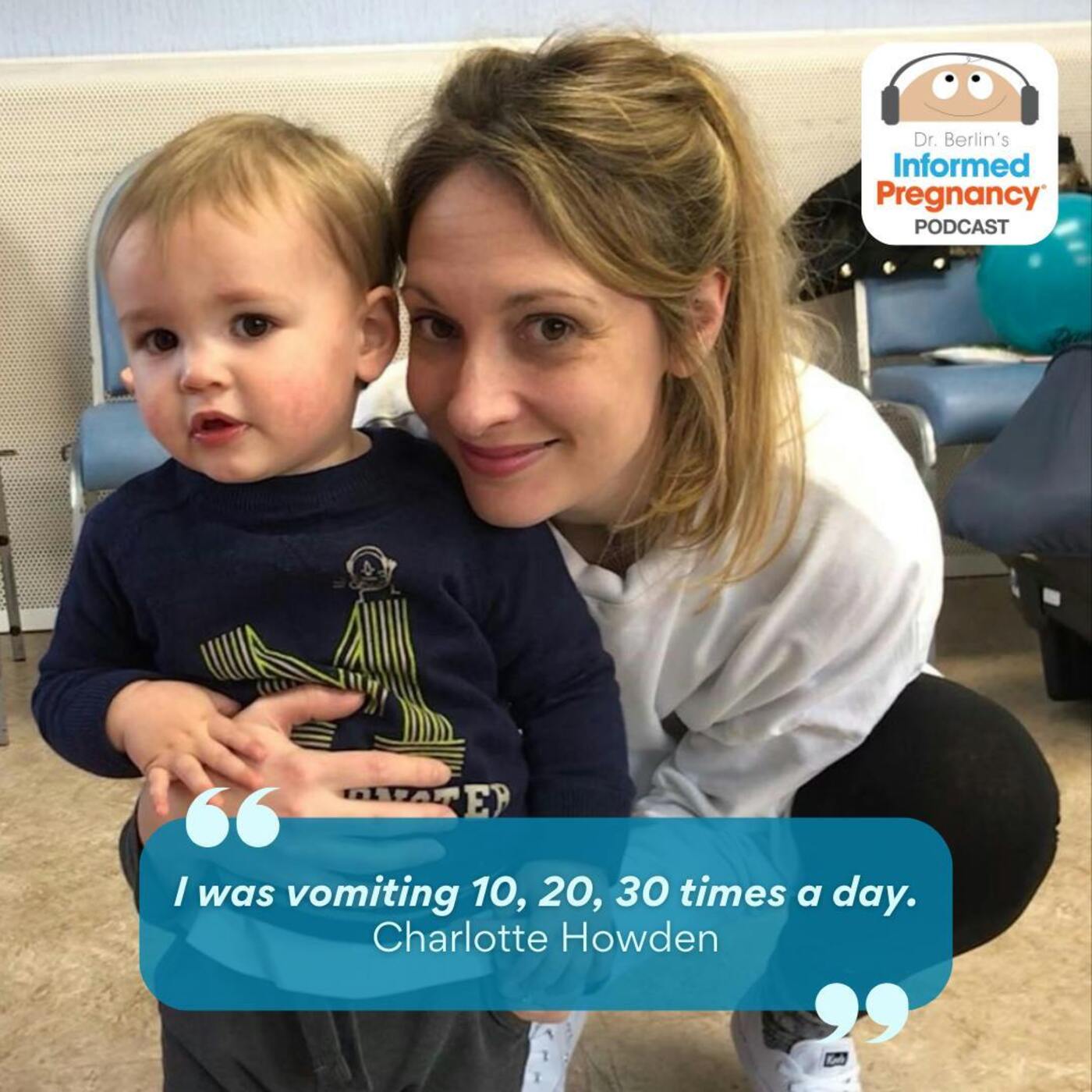
December 7, 2023 · 42 minutes · Episode 384
About this episode
Documentary filmmaker and Charlotte Howden struggled with severe hyperemesis during pregnancy and turned her story into a film. Sick – The Battle Against HG is the untold story of women experiencing Hyperemesis Gravidarum (HG), a severe sickness affecting 3 million pregnant women which has led to thousands of abortions of wanted children and 9 months of hell. HG campaigner Charlotte challenges the medical profession and explores women’s politics, secrets, and loss, and reveals new scientific breakthroughs in HG research.

Watch Charlotte’s film Sick for FREE on Informed Pregnancy+ from now until January 31, 2024! https://www.informedpregnancy.tv/sick-the-battle-against-hg
Connect with Charlotte online: https://www.instagram.com/the_sick_film/
Learn more about Charlotte’s films: https://bio.link/brushedofffilms/
Keep up with Dr. Berlin and the Informed Pregnancy Project online!
www.instagram.com/doctorberlin/
www.facebook.com/InformedPregnancy
Learn more about your ad choices. Visit megaphone.fm/adchoices
See Privacy Policy at https://art19.com/privacy and California Privacy Notice at https://art19.com/privacy#do-not-sell-my-info.
Key quotes
“this is just continuous and a rapid onset that like there was no real build up to it. It was just suddenly there. And it was just part of my life.”
“So it really affects your mental health because on one side, it's like you know that this is right, but everyone is telling you that it's normal. And how do you put those two conflicting things together and come up with a solution that enables you to survive? It's impossible.”
“it comes back to this view of pregnant women a lot of the time are seen as a vessel for this human life and whilst I appreciate that, the vessel for that human life has to survive”
“And I think it still is the go-to film, really, for sufferers, researchers, healthcare professionals. You know, it's out there. It's on your platform now. It's just incredible. Like, it's accessible. Please just go and watch it and understand more about this condition.”
“Listen to your body. Don't be put off by media narratives, medical professionals.”
Related episodes
- Ep. 447 Navigating Hyperemesis Gravidarum with Dr. Arielle Mitton
- Ep. 337 Filmmaker Lyndal Redman: 'You Are Not Alone'
- Ep. 329 Valentina Trentini: After Birth
- Ep. 350 Ciara Whaley: After Birth
Transcript
AI-generated transcript with speaker labels — may contain errors, especially names and medical terms. Dr. Elliot Berlin, DC appears in blue; Charlotte Howden in orange.
Download PDF of the Transcript
Dr. Elliot Berlin, DC [0:12] Welcome to the Informed Pregnancy and Parenting Podcast. I'm your host, pregnancy-focused chiropractor, Dr. Elliot Berlin. My guest today is a marketing professional, documentary filmmaker, and a mom. And we're going to talk about her experience with severe hyperemesis gravidarum, and her decision to create a film about it to help others know that they're not alone. Charlotte Howden, welcome to the podcast.
Charlotte Howden [0:58] Thank you for having me.
Dr. Elliot Berlin, DC [1:00] I could not be more honored. I want to talk a lot about the condition and about the film and your experiences and what is being done and what can be done to help others. Let's start at the beginning. Where are you from?
Charlotte Howden [1:12] I'm from Hampshire in the UK, in England, to be precise, from a small kind of rural county. So not a state like you have where you are, but similar, I suppose, a lot smaller. So yeah, south coast of south coast of England.
Dr. Elliot Berlin, DC [1:27] Is that where you're from originally?
Charlotte Howden [1:29] No, I was actually born in Lancashire, which is up north. So I'm living in the south, but was born up north. But I very much call myself a southerner now. I've been here since I was about five. So the northern accent's gone.
Dr. Elliot Berlin, DC [1:41] I'll go with it. You're a southerner in my book. Okay. And what kind of work do you do?
Charlotte Howden [1:46] Oh gosh. So my career mostly has been in business and marketing. Early part of my career was performing and being very creative. So kind of all led me to where I am today, really, especially with what you've already mentioned in terms of producing documentaries. And a little update, I'm now the chief executive officer of a charity in the UK called Pregnancy Sickness Support, which is a very recent appointment.
Dr. Elliot Berlin, DC [2:10] Oh, wow. Congratulations.
Charlotte Howden [2:11] Thank you.
Dr. Elliot Berlin, DC [2:12] It sounds like an appropriate match.
Charlotte Howden [2:15] It does. Yeah, I hope so. Yeah.
Dr. Elliot Berlin, DC [2:18] Used to perform, what kind of performing?
Charlotte Howden [2:22] Oh, started as most, I suppose, young girls did in those days with dance. So ballet, tap, dancing, modern, moved into acting and then moved into singing and musicals. So yeah, pretty much always on the stage from a very young age.
Dr. Elliot Berlin, DC [2:37] And why did you leave that?
Charlotte Howden [2:39] Good question. So I've always had two passions really, performing, but I had a very legal and business mind. So I actually went to university to study law. I think there was a perception at the time that creative arts meant that you would be forever poor and you should go and get yourself, you know, a real degree, as it were. Luckily, I think those times have changed. But yeah, when I was embarking on further education, that was kind of the route I took. And I thoroughly enjoyed studying law, but there's a difference between studying it and practicing it.
Dr. Elliot Berlin, DC [3:12] So you didn't like practicing it.
Charlotte Howden [3:15] No, I went to kind of go into that route and I thought, you know what, there's so many different areas of law and the legal system in the UK is that you're either quite generic or you're very specialized. And the specialisms, kind of family law conveyancing, business law, they were static for me. I wanted more of a variety. So after I finished university, I actually went back to my performance routes and worked on cruise ships.
Dr. Elliot Berlin, DC [3:40] Okay. I got to pick your brain for some secrets to fighting seasickness at another time, at another time. So performing cruise ships, it's such an interesting journey, because I think your people, I'm in Los Angeles in particular, people in aspiring entertainment careers do have like a little backup job, but usually it's waiting tables or doing massage. They don't usually go to law school.
Charlotte Howden [4:04] No, that's true.
Dr. Elliot Berlin, DC [4:06] And then you became a lawyer and went back to performing.
Charlotte Howden [4:09] And then I did, yeah.
Dr. Elliot Berlin, DC [4:11] How did that progress to where you are now career wise?
Charlotte Howden [4:15] Yeah. So I think for me, part of the performance and the legal minded brain and business, et cetera, there was also underlying the fact that I wanted to have a family. And I think the life and environment of traveling the world when you're in your early twenties isn't necessarily geared up for family life. So I absolutely adore traveling, I think, and I would recommend to anyone, if you can get paid to travel as a job, it's like the best thing in the world. Literally I went on world cruises. There's not many countries I haven't visited. So it gives you that extra dimension of when you go out into the world, that you've actually experienced cultures.
[4:52] You've met people from different walks of life, which I think gives anyone a really great kind of basis to go off into the world. So, yeah, but I also… been left when I realized, like I said, I wasn't going to be able to have a family whilst traveling on cruise ships and settled back in London, and that's where my marketing and business career started.
Dr. Elliot Berlin, DC [5:12] In terms of family, how did you meet your partner?
Charlotte Howden [5:16] After all that traveling, I met my husband in a bar in Southampton. For anyone who's watched the wonderful film with Kate Winslet and Leonardo DiCaprio, the film starts where the ship's leaving Southampton, and there's a bar. You can see a building in the film that says White Star, and we met in the bar called the White Star, which is where the film, yeah, so.
Dr. Elliot Berlin, DC [5:39] Even meeting your partner kind of went back to entertainment.
Charlotte Howden [5:42] Absolutely, yeah. You can't get away from it. Can't get away from it, and it was, I suppose, nowadays, the traditional way of meeting someone, just in a pub, in a bar.
Dr. Elliot Berlin, DC [5:51] Is that the current way, or is it? No, I think that's the- Oh, the older days. The older days.
Charlotte Howden [5:57] Yeah, not to date you. But yeah, everything's online now. Yeah, everything's online, so. Without a pint. Yeah, the kind of old-fashioned way. Yeah, yeah, with a glass of wine and a pint of beer at the bar.
Dr. Elliot Berlin, DC [6:10] And then did you guys move into a more committed relationship quickly?
Charlotte Howden [6:16] We did, actually, yeah. So I wasn't exactly old. I was 27, but I suppose for some people that might be a later time of life to meet someone, and he was early to mid-30s. So yeah, it did go quite quickly, but he was, at the time, he was a professional sailor, so ex-Olympian, so he was really traveling still.
Dr. Elliot Berlin, DC [6:36] Oh, wow. Around the world with sailing,
Charlotte Howden [6:38] and I was a little bit with my work with marketing and events and stuff. So yeah, it did move quite quickly, probably because absence makes the heart grow fronder, I think, when people are away.
Dr. Elliot Berlin, DC [6:49] It's so interesting. Okay, so the entertainment piece from meeting in that bar, and then back to the boats. Back to the boats. I mean, there's so many connection points here. Okay, and then children, was that a discussion that you had early on? Was there a plan for, like, let's do this?
Charlotte Howden [7:06] Yeah, it was quite interesting, actually. My partner then, at the time, probably, again, because he was well-traveled, was very kind of anti-having children. He was very pessimistic of the outlook of our wonderful planet, climate change and political pressures and that kind of thing. So he was kind of against bringing anything into it, but it didn't take me long to change his mind.
Dr. Elliot Berlin, DC [7:31] How'd you go about doing that?
Charlotte Howden [7:33] Well, I said, he has to.
Dr. Elliot Berlin, DC [7:37] Works for me. All right, let's take a little break. When we come back, we'll talk about your pregnancy and your experiences that led you to make the film sick about hyperemesis. We'll be right back.

Dr. Elliot Berlin, DC [9:25] Welcome back, we're talking with Charlotte Houdon. Okay, so you had a very persuasive argument. I guess that law school background came into handiness when you said, yes, we are gonna have kids. Okay, so you got them on board and how was the fertility process for you?
Charlotte Howden [9:43] So not so good actually. I think a combination of, and possibly an interesting point to make to your viewers. So as a young woman, most women, I was born in the 80s, so I grew up in the 90s and noughties. The best thing you do is you go on contraception because what you absolutely don't want to do is have. any children. It's not pushed on you or forced, but it's just the done thing. I've been on contraception for a very, very long time, 10, 15 years. Funnily enough, when you've been telling your body not to do something, when you then want it to, it doesn't play ball. That's effectively what happened with us. It took a long time for things to get back
[10:23] to normal for my fertility. My partner obviously was away quite a lot. Again, conception isn't how perhaps the media portrays it. It doesn't just happen. You do have to plan things and there are certain times when that works best. It took us a year and a half to conceive, which I know actually from your background, you'll be able to confirm this. That's not unusual. However, I think when your peer group are all falling pregnant within the first two months of trying and you're not, it does take quite a heavy toll on that experience and it certainly did for me because I then went through tests just to make sure and everything was fine. It just wasn't happening.
Dr. Elliot Berlin, DC [11:03] I mean, were you on the pill?
Charlotte Howden [11:06] Yeah, so I was on the contraceptive pill, yeah.
Dr. Elliot Berlin, DC [11:08] So after stopping the pill, did you go back to normal cycles?
Charlotte Howden [11:12] No, it took a very long time.
Dr. Elliot Berlin, DC [11:14] Okay, so the combination maybe of not having normal cycles and having to work around an Olympic sailing schedule. Okay, but then the tests show everything's okay. Out of curiosity, were your cycles normal before you started the pill?
Charlotte Howden [11:29] Yeah, absolutely. So I think that very prolonged time and also there's different types of contraception. So there's contraception, which you take a break on. There's contraception that effectively stops you from ovulating and I had never taken a break and I didn't have periods for 15 years. So I think my expectation was quite high of how quickly it would all fall into place and that's not the reality, but I didn't really think about it.
Dr. Elliot Berlin, DC [11:55] It could be a whole new documentary. In fact, there is one, The Business of Birth Control. But let's move past that for now. So once you finally got pregnant, I'm trying to picture the reaction to finding out that you had conceived.
Charlotte Howden [12:11] Do you know what? It was actually quite a strange one because I don't think either of us believed it. And it's a bit of a funny story because I had been testing for so long and expecting to be pregnant. I'd actually run out of pregnancy tests.
Dr. Elliot Berlin, DC [12:24] That's really funny because usually people have like 12.
Charlotte Howden [12:28] Yeah. So I was like, oh, I'm not going to get any more because I'm always disappointed. But I had ovulation tests left over and I don't know if some people won't know this, but ovulation tests don't obviously show you when they're pregnant, but they will pick up a hormone and change color. So I was like, oh my gosh, it's saying I'm ovulating. I can't be ovulating because it's the wrong time of my cycle, but it was picking up the HCG hormone. So I thought, this is really strange. I was starting to get really upset thinking, this isn't the right time. How can I be ovulating? Anyway, I bought a test and it was very, very faint and my husband was like, no, I'm not believing it.
[13:04] And I was like, no, I don't believe it. And then the next test was a lot darker. So yeah, it wasn't the big excitement. I think when you've been trying to conceive for a while, you try not to get your expectations high. And then when it happens, it can be a bit of an anticlimax, but then not long after that, obviously we were both incredibly elated and excited.
Dr. Elliot Berlin, DC [13:25] And what were the first things you felt like outside of the testing in terms of pregnancy symptoms?
Charlotte Howden [13:33] So this is the irony really. So I didn't actually have any, which was concerning, especially because it had taken us so long. Wasn't feeling any nausea, you know, didn't have any sickness. Just felt really, really normal. And it was almost like I was setting myself up for a fall by thinking everything was going to be normal, because then it quite quickly was not.
Dr. Elliot Berlin, DC [13:58] What happened? What changed?
Charlotte Howden [14:00] So about six, seven weeks pregnant, very, very quickly, the onset of nausea arrived, which was a welcome thing, because obviously I was concerned, because again, we're told that if you don't experience some kind of nausea or sickness, then perhaps the pregnancy isn't a viable one. So as soon as those feelings came, I was obviously happy about that. But then that quickly turned quite sinister where the nausea and the nausea was 24 hours a day, seven days a week. And the onset of sickness was quite rapid to the point where I was being sick, you know, more than I don't actually have a record because you stop counting for obvious reasons. But I was, you know, 10, 20, 30 times a day.
Dr. Elliot Berlin, DC [14:43] Firing up?
Charlotte Howden [14:44] Firing up, yeah.
Dr. Elliot Berlin, DC [14:45] Oh, my goodness. I can't even imagine that, like, twice.
Charlotte Howden [14:50] Yeah.
Dr. Elliot Berlin, DC [14:51] Seems overwhelming.
Charlotte Howden [14:53] It is overwhelming, and it's so unusual, and it's not something that anyone's really experienced, even with something like food poisoning, a gem. really goes after, you know, let's say 48 hours, perhaps a bit longer than that. And this is just continuous and a rapid onset that like there was no real build up to it. It was just suddenly there. And it was just part of my life.
Dr. Elliot Berlin, DC [15:13] When you say about six weeks, which counting are you talking about? Are you talking about from the last normal period or are you talking about four weeks after conception?
Charlotte Howden [15:22] Yeah. So yeah, four weeks after conception, six weeks since the first date of my last
Dr. Elliot Berlin, DC [15:27] period. Yeah. Wow. OK. And you weren't expecting that. I mean, does that automatically register as this is not typical for pregnancy? This is not normal. Or do you have the sense, oh, oh, good, I'm throwing up. I'm nauseous. I must have a healthy pregnancy.
Charlotte Howden [15:44] I think it's the latter until it gets so excessive where I was vomiting, you know, those 10, 20, 30 times a day. But when it's your first pregnancy, you don't really know what is normal and what isn't, if that makes sense, because you've never experienced it before. And the general narrative and rhetoric around pregnancy sickness is that it will happen and it is normal and it will go at 12 weeks. And so you just kind of feel like you have to get on with it because that's the explanation and that's what everybody knows. And no one says any different. But it's not normal to
Dr. Elliot Berlin, DC [16:18] be sick that many times a day. A million questions shooting off in my head right now. At what point do you try to seek medical help? How are you surviving every day? I mean, almost luckily, you don't have any kids yet to take care of. But still, there's you and there's whatever work you were doing at that time. How do you just even survive the day?
Charlotte Howden [16:41] A really great question. I don't think anyone does survive the day. I think we have no option but to get on with it because it's not a case of I'm doing this for no reason. You're continuing on in this way because you know that you're pregnant and you were trying to, you know, bring a life into this world. Day to day is pure horror. I used to wake up quite a lot of the time hoping that I wouldn't wake up because it would just be easier to have gone to sleep and not woken up and experience everything again. And then the distance. Yeah. And it was really difficult to explain because in hindsight now, it's so silly to think that I thought that this was
[17:17] normal, but it's literally what everyone tells you. Everyone has pregnancy sickness or morning sickness, which is the terrible term because it's not just in the morning. There's no help. There's no one saying any difference. So it really affects your mental health because on one side, it's like you know that this is right, but everyone is telling you that it's normal. And how do you put those two conflicting things together and come up with a solution that enables you to survive? It's impossible.
Dr. Elliot Berlin, DC [17:46] There's so many times now still today where I'll meet someone in her first trimester and she'll not have heard of Hyper-MSS. But just by the way that she looks and describes like what's going on, you know, I would put her in touch right away with the Hyper-MSS Foundation and let them know about the app. And now your film like makes everything so clear for them. And one recurring theme is people telling like I feel like I'm either they say I feel like I'm crazy. Like why can't I do this? Like everybody does this. Or people tell them you're crazy. Like get up and go to work. Get up and take care of whatever. It's just very misunderstood, under-diagnosed,
[18:28] I think, and misunderstood. So for you, this is about seven years ago now.
Charlotte Howden [18:34] Yeah, so my son turns eight next year. So yeah, seven, eight years
Dr. Elliot Berlin, DC [18:38] Whatever data and knowledge and information there is now, I hear people talk about gluten-free from the very beginning, when they were told you have to go on a gluten-free diet and there was nothing gluten-free and now everything happens on gluten-free. There even seems to be gluten-free gluten. So it's a different world now. How do you get help? How did you get help?
Charlotte Howden [18:56] So I count myself as very lucky if I'm on it. And depending on where your listeners are from, every health care system is different. But in the UK, maternity is still looked after by GPs, which is what we call primary care. But GPs, general practitioners, have to have general knowledge about everything, as you can imagine. And this condition is very specific. It's obviously very specific to pregnancy and is very misunderstood, etc, etc. So I had no luck with the GPs at all. It was a constant battle. Then you have the whole conversation of medication and pregnancy, which is still a huge stigma around getting access to anti-sickness medication was near impossible. Some medication
[19:37] was offered to me, but it was what we would call first line medication. So, you know, kind of antihistamine based, which effectively just knocks you out. So whilst you might not be sick, you are effectively a zombie. So you still don't have any life. Yeah, you still have no life. You still have no ability to go to work, to sit down with your partner to watch TV or anything like that. So that does work. Many trips to hospital, many trips to early pregnancy unit, A&E to have fluids and then finally a gynaecologist saw me in an early pregnancy unit and I begged her and I hope, I don't know if you have to trigger warning for this, but I was asking for a termination because I was like,
[20:18] I can't do this anymore. I'm dying. Like every time I see a medical professional, they dismiss me, they might send me home with some kind of medication, but it's not doing anything and I'm just in this cycle of hope and disappointment and hope and disappointment and
Dr. Elliot Berlin, DC [20:34] it's just not possible anymore. As intense as that is alone, I think when you combine that with the idea that you desperately tried to conceive for a year and a half and experience frustration after frustration, not being pregnant, how much more powerful that statement is and the feelings that were driving it. Yeah, absolutely. And I think, you know,
Charlotte Howden [20:56] it comes back to this view of pregnant women a lot of the time are seen as a vessel for this human life and whilst I appreciate that, the vessel for that human life has to survive for that human life to continue to survive. So we're often overlooked as just someone that just has to get on with it. And luckily that day in the hospital ward, this gynaecologist said, look, just give me 24 hours to see if I can help you. And she did and she got me onto the right medication. Still a lot of toing and throwing as to whether I should be allowed that medication and so on and so forth. But eventually when that was prescribed to be long term, my pregnancy turned around. Tell me the extent of improvement.
[21:40] I mean, this particular medication it's called on Danstron in the UK, within 12 hours, I'd stop being sick. You know, which is for someone who's been sick, I was 12 weeks pregnant at this point, you know, every day for that period of time, 12 hours is nothing. You know, that's a second in what I'd experienced. And I was able to eat as long as I took my medication on time, took the dosage I had been prescribed, which I then became very OCD about, by the way, it was very traumatizing. I was concerned that if I took this medication one minute later than I usually did, then the sickness was going to return, you know. So from a physical point of view, I was definitely better. But from a mental health point of view,
[22:22] I was still very much suffering.
Dr. Elliot Berlin, DC [22:25] And it's even lucky that it worked for you because that's Zofram, right? In the US, yeah. So I mean, patients with hyperemesis that take Zofram don't have that much of an improvement.
Charlotte Howden [22:38] Yeah, absolutely. And I think that's another really good point as well, because on downstream work for me, I was also on metopromide and the two worked together really well. And there are prescribers out there who will say, okay, we will give you Zofram, for example, and it doesn't work. And then they go, oh, well, there's nothing else. Actually, you have to keep combining with other medications and try different combinations to see what will and won't work. And in the UK, for us, really, that last line is steroids. Women do find that that can really help when everything else hasn't. But again, there's women that are allergic to steroids. You know, every woman is going to be different.
Dr. Elliot Berlin, DC [23:18] I could talk to you for hours. I just want to know like every detail. I mean, you hear people talk about hyperemesis, sort of sufferers as like, recovered victims, really, survivors. And you can hear why, talking to you as openly as you are, you can hear why the mental, physical and spiritual toll that was taking on you. Let's take another break and find out how your birth went. And then also about the film. We'll be right back. Welcome back. We are talking to Charlotte Hounen. An inside look, you know, I did an episode with Amy Schumer about her hyperemesis, and I just couldn't believe it. And I really had very little exposure to it then. I have a lot more now. And even with all the exposure I have,
[24:19] I can't imagine like a day in the shoes. And with all that being pregnant and, you know, your instinct to take care of and to nurture and want to eat all the things that are going to help your baby thrive and grow. I can go on for a long time. Let's move forward to your plan for birth. Did you have any thoughts or ideas on how to get this child through your
Charlotte Howden [24:41] body into the world? In all honesty, it was just when can I get him out? Like even though I was medicated and physically I was feeling better, but you know, there are side effects of this medication, like extreme constipation. I mean, extreme constipation, which is horrifically painful. And at the time… made years ago for me, the doctors weren't prescribing me anything to help with that. So I was just having to deal with that. So physically there was still some, yeah, still some issues, but mentally I was just absolutely beaten. So I remember probably around 30 weeks pregnant, like Googling, how early can a baby come and it be okay? Because I was done.
[25:22] I was like done. And that's not usual. Like the majority of women who I know had a good or a usual pregnancy, they understand that full term is best. And for lots of different reasons, the plan, it doesn't always go that way. But for me, I was like, when can I get him out? Like as soon as possible, because the trauma of being pregnant was just heavily on my shoulders. So I was a little bit ignorant to it. I was just like, when he comes, he comes and then we're going to get him out. And then probably around 34, 36 weeks, I started thinking, you know, you start to pack the bag, but I was definitely going to hospital. I wasn't doing a home birth. I wasn't exploring doulas or anything else. It was like, I want to be in hospital.
[26:03] I need this baby out. And to me, that was the best place to be. And yeah, my thought process was I just need to get him out as soon as possible.
Dr. Elliot Berlin, DC [26:11] And is your care even in the hospital still primarily overseen by midwives or?
Charlotte Howden [26:17] Correct. Yeah. Yeah. So there's midwives in my local hospital. So, you know, we've done the usual thing. We toured the hospital. I did elect for a water birth. I'm not sure why, but it did. I thought, okay, well, maybe I've been through so much. A nice big warm bath whilst going through this would be great. And that was honestly, as much as I thought about it, I was really just concentrating on not being pregnant anymore. Get this thing out of me. Yeah. Two questions. Did you gain weight during the pregnancy? Really good question. So obviously the first, I would say up to 16 weeks pregnancy, I lost about 5% of my body weight and I wasn't underweight before pregnancy, but I would say I
[27:03] was very slim. So I definitely couldn't afford to lose that amount. And what's interesting for some high premises women is that once I then have the ability to eat again, I went the other way. I was binge eating because I was convinced that anytime this ability to stomach and eat anything could be taken away from me. So it was almost like I have to eat everything. Eat while you can. Yeah. So I probably gained about 20, 25 kilos, which for me personally was a lot and added a bit more to my trauma of, you know, I don't normally eat in that way. I've never looked at food and had to eat everything on my plate and, you know, binge in that way. So yeah, to answer your question in the
[27:45] second and third trimester definitely. Is that from your starting weight or is that from after
Dr. Elliot Berlin, DC [27:50] you lost 5% of your body weight? Yeah, that's probably from after I'd lost 5%. Yeah. So then you gained about 55 pounds. Yeah. Which more than average, but maybe a decent sign that you were able to at least hold on to food and nutrition. Yep. And then do you remember
Charlotte Howden [28:13] before you were medicated, did you have dreams of eating food? No, you know, I didn't. I don't really remember being asleep. I don't actually think I dreamt of anything. In fact, more when I was awake, I would have hallucinations from being so dehydrated, which were very dark, kind of dark figure like hallucinations, which actually I now know could be part of the dehydration, but also the lack of vitamins. So things like Simon and other vitamins that can actually have a really negative effect on your brain, but no one was asking about hallucinations or anything. So I feel really lucky that I was not long after those kind of episodes was then medicated and rehydrated continuously that I didn't have those again.
Dr. Elliot Berlin, DC [28:59] Were you taking baths during the pregnancy? Was it taking baths? Yeah.
Charlotte Howden [29:05] Hmm, no, actually, I think again, a bit of trauma. So having a shower when you have hyperemesis is almost impossible because one, you're too weak to stand up. You would be too weak to climb into a bath. Water makes you feel sick. The smell of water makes you feel sick. The feeling of water on your body makes you feel sick. So it's something that doesn't get spoken about a lot, but personal hygiene for women with hyperemesis is really, it's just not something you can keep up with. So no, I didn't really have baths. I had showers, but it was just going back to normal, I suppose. Right. Certainly not relieving.
Dr. Elliot Berlin, DC [29:42] But then, yeah, I'm also curious why you chose water birth.
Charlotte Howden [29:47] I don't know. How did your birth turn out? Do you know what? The entire process, there was one scary moment with it, but I went into labor. My son was, I was 41. and a half weeks. So not only did he not come when I wanted him to, he was then later, shall we say, which was also traumatic. So I labored for about four or five hours without even realizing I was in labor. Because I was like, he's just not coming. And this is the Friday night on the Monday after a very tearful phone call with my midwife, where I begged, I was like, please, please, please, please just like, okay, I will put you on the an induction. And that was planned for the Monday. So I just had it in my head that Monday
[30:33] was the day I labored for about four or five hours at home and just thought it was Braxton Hicks or I was just a bit uncomfortable. And then my contractions started to get quite close together and rang my hospital and they said, yeah, you should probably come in. And I was five, six centimeters when I got to the hospital.
Dr. Elliot Berlin, DC [30:50] Oh, wow. That's finally something that we do on the same metric.
Charlotte Howden [30:54] Yes, there you go. So I'm quite proud of myself. I think my mental capacity, again, just think, no, it's not going to go the way I want it to. This whole pregnancy hasn't and he's still not here. I can't possibly be in labor. And yet I was. So progress is normal really. Contractions were getting to the point where they were insanely intense and close together. And I think I lasted an hour in the pool, in the water birthing pool and then scream to get me out of this, because it's really hot for anyone who's had water birth. It's not cool. And it's really warm. And it's actually hospitals are very warm anyway, for obvious reasons. So I didn't actually enjoy that experience at all.
Dr. Elliot Berlin, DC [31:39] Yeah, I've seen it be too hot and I've seen it be too cold. Here we have like food delivery services. I just remember one time they heated the birth pool too hot, you know, through a hose from the sink. And then they had to order like, I don't know, bags of ice from convenience store to just cool it down a little bit because she was overheating in there. Yeah, it's hard to regulate that. Okay, so then what happened after you came out?
Charlotte Howden [32:04] Yeah, so I came out and I was absolutely adamant that I was ready to push and the midwife was like, no, you're only at, you know, seven, eight centimeters. But my contractions were incredibly intense and close together. So I elected then for an epidural, which I then received. Sadly, the anesthetist at the time had just clocked off of his shift. And the new one coming on was having an early lunch, I suppose. So I had to wait quite a while. And I think between you and I and the listeners by the time the anesthetist arrived, it was probably too late, but they did do it because they could see I was done. I was just, you know, I'd done too much. It was too intense.
[32:48] So once I had that, I had a bit of a break. My husband got to go and get some food. And that was probably about 10 o'clock in the morning and he arrived at 1.36 in the afternoon. So yeah, a bit of a scary moment. His heart rate was dropping and he realized the cord was around his neck. And so every time I was contracting, it was obviously. Yeah. So there was a bit of a scary moment where people rushed in and they literally said to me, Charlotte, you have to get him out now. But I was so relaxed at this point because I was like, okay. And they're like, no, you have to get him out now. I was like, okay. I managed to push. I think they were trying to prevent me from having to have an
[33:27] emergency. C-section wanted to see if I could do it, which I thankfully did. So yeah.
Dr. Elliot Berlin, DC [33:34] It feels like it was just yesterday to me. Yeah, right. I mean, the details are so fresh. Okay. We don't have endless time, sadly, but I want to talk a little bit about your film Sick the Battle Against Hyperamesis Gravidarum. Well, seemingly this is what prompted you to make the film. How did you go about making it? What kind of hurdles did you have to overcome as all documentary filmmakers do? Yeah. And how has it been received?
Charlotte Howden [34:02] So I think initially the reason this all came together was my conviction to do something. And this was when my son was around two and a half years old. And I realized that the joy of him, but the experience that I had experienced, I hadn't had any closure on it. And I was still suffering from hyperamesis that, you know, two and a half years later mentally, there was definite signs of postnatal anxiety, probably some postnatal depression. And I just thought, I need to do something. And I'm really good at creating things. I used to present on cruise ships. I'd done some TV stuff and I just kind of put it all together and said, this is what I'm going to do. I had no money, no connections, no production team, nothing.
[34:43] And was really incredibly lucky to just find this guy called Lorne Guy from Good Guy's Productions. And I pitched it to him and I said, I've got nothing. I can't offer you anything. And he just bought into it. And he said, this is a story that has to be told. I did my research. There had not been any other documentaries made. There were some clips on YouTube of women talking, but no one had put this together as a package to explain the story. And so we embarked on the journey together that took two years. We did it for no money. We had no funds from anywhere. We tried. I don't know how it is in the US, but for certain commissioning funds or to get grant funding, there's a
[35:24] very big mental health pot for obvious reasons. And then there's the kind of women's health pot. But High Premises really spans all of those. We just didn't tick all the right boxes for certain pots. So we just did it ourselves, didn't pay ourselves anything, went on the road. That was the first time I linked in with the Pregnancy Sickness Support Charity, which is the UK equivalent of the Her Foundation in the US. They gave us a little bit of money to kind of help. And we just went out with a camera, interviewed women, interviewed researchers, professionals, did it globally via, you know, Teams and Zoom. So I wasn't able to afford to fly out and speak to these people.
[36:05] But yeah, we just honestly, I was like, we're going to do this. I don't know what it's going to look like. I don't know what effect it's going to have, but we have to do this. And then COVID hit. So didn't scupper everything, but we had big release plans. You know, we wanted to release the film in, you know, local cinemas and get a really big following. And suddenly that wasn't possible. So it was all released online, all word of mouth, social media, and we just pushed it out there. And then we managed to have the documentary available on Amazon Prime, which was great. Tried Netflix, but that was a bit harder. So we kind of ignored that. Translated it into five different languages.
[36:47] It just kind of took on, you know, its own journey by itself. And we decided to get opportunities, which we didn't say no to, and media attention in the UK. So yeah, it was incredibly well received. And I think it still is the go-to film, really, for sufferers, researchers, healthcare professionals. You know, it's out there. It's on your platform now. It's just incredible. Like, it's accessible. Please just go and watch it and understand more about this condition.
Dr. Elliot Berlin, DC [37:15] Yeah, I made a couple of films in the birth space. And one of the things that really bothered me was people saying, wow, I saw your film and it's really great. I wish I had seen it before I had my baby. And I'm like, no, I made it so you could see it before you had your baby. So I know that frustration and your film, Sick, The Battle Against HG is very well done. Nobody would ever guess you had no budget for it. And it was all a volunteer project, essentially. It's very well crafted and powerful and necessary. The whole conversation is necessary. And the film is a great catalyst for that. I think everybody should watch it. Not if you are a woman who thinks you have HG.
[37:59] Yes, of course, you're the bullseye, but everybody, everybody who knows somebody who will have a pregnancy is pregnant. Healthcare providers should watch it and this should drive the conversation forward and find more fun, more research, find more. I mean, we know more now than we did about what might be behind it, but we don't know enough and we don't have the proper remedies yet. And so there's a lot of work to be done and your film is definitely an enzyme pushing that forward. So thank you for that. I do have one question actually in just scooting back a little bit. After you had the baby, how quickly did the hyperemesis go away?
Charlotte Howden [38:41] Great question from a medication point of view. I didn't stop taking my medication and at no point did anyone. Yeah. No one ever said to me that I shouldn't be on it. I think they were probably a bit too scared. Cause once I got my gumption back and I was, you know, mentally and physically as weak as I had been like, you dare take this away from me and there will be a real fight. So I didn't stop taking it. And I think again, that goes back to the trauma. It would have caused me to come off it and be petrified of going back to that place again. So I will never know. I did come down on dosage probably around 30 weeks and started to feel some nausea coming back.
[39:18] So I very quickly was like, nope, I need to go back up to where I was because I was just so scared.
Dr. Elliot Berlin, DC [39:24] Do you have any go-to tip, one or two things for someone who either is suffering with hyperemesis or things they might be?
Charlotte Howden [39:33] Yeah, I mean, I think, you know, if you're suffering with something which isn't usual, so please top tip, listen to yourself. Listen to your body. Don't be put off by media narratives, medical professionals. You are going to have to be your own kind of, you're going to hate me for saying this because I know doctors hate people self-diagnosing, but in this environment where it's so misunderstood and you're up against a lot, you might have to do that. And on the same thread of that, if you can find an advocate, it doesn't have to be your partner because sometimes they're so involved in it that they too find it difficult to fight and stand up and say something. So a friend, a colleague, your mother, your sister, someone who will go
[40:15] to these appointments with you and say, no, that is not right. It's not usual. They need some help. And with things like food and nutrition, it's really difficult because every woman's different. I know some women who survived off of Coca-Cola. I know some women who can even smell that would make them sick. So it is about finding what works for you and not being afraid to continue to have that just because it might not be the norm to live off Coca-Cola in pregnancy. At least there is a little bit of something in that that's going to help you. I mean, it's not great, but it's still something. So yeah.
Dr. Elliot Berlin, DC [40:52] But it is the battle. And in battle times, things are different.
Charlotte Howden [40:57] Yeah, exactly.
Dr. Elliot Berlin, DC [40:59] In normal times. Charlotte, thank you so much for all the work you've done and for joining and for sharing. Again, I think everyone should see the film right now. It's streaming on our platform Informed Pregnancy Plus and several other platforms. Where can we find you online?
Charlotte Howden [41:15] Mm hmm. So if you're in the UK, I'm now the CEO of Pregnancy Sickness Support. So if you want to support women's health or you are currently pregnant and think you might be suffering, you'll find me there. But I also have the Sick Film platforms as well on social media, on Instagram. So you'll be able to find me there. Just type in Charlotte Howden, sick. And I tend to come up. I'm kind of known now as the sick lady, which is not really the best way to be known. But I'll take it. If it helps, if it attracts someone in that needs some support and they put my name in and the word sick and they find me, then
Dr. Elliot Berlin, DC [41:51] that's absolutely fine. I mean, you're an excellent candidate and spokesperson for that role. Thank you. Taking something so dark and heavy and sharing the message and shining some positivity on it and hope for the future. Thank you again. Thank you so much. And at home, thanks for listening to the Informed Pregnancy Podcast. For more pregnancy and parenting information, visit informedpregnancy.com. Or for streaming films like Sick and others, visit informedpregnancy.tv. Or find the Informed Pregnancy Plus app on Apple, Android, and Roku.
Want more pregnancy + parenting? Start your FREE TRIAL of Informed Pregnancy+ and get access to all our curated pregnancy and parenting content — original series, iconic birth films like The Business of Being Born, prenatal workouts and more.
