
March 7, 2024 · 33 minutes · Episode 397
About this episode
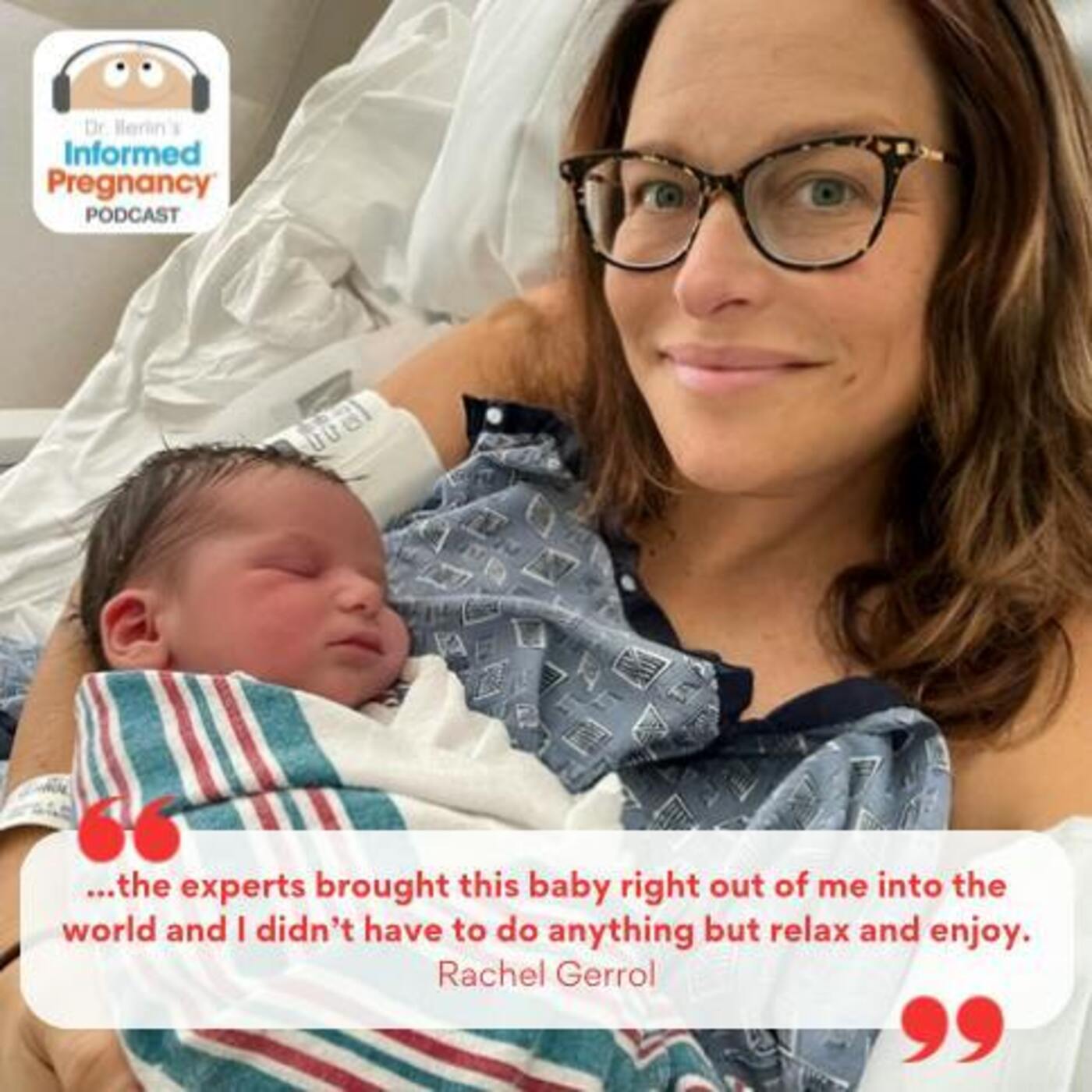
Co-founder and CEO of NEXUS Rachel Gerrol returns to the podcast to talk about her new baby and giving birth for the first time at age 45.

NEXUS is a premier international community of young investors and social entrepreneurs who collaborate to use their wealth to accelerate social, political, and environmental justice and change.
Connect with Rachel online: @rachelgerrol
Learn more about NEXUS: nexusglobal.org
Key quotes
“I think we can't decide what happens in our life, but we can decide how we react to it.”
“I couldn't believe how huge he was. And instantly I felt like I was so rude because the night before I was having dinner with all my family around the table and he's clearly fully baked and like huge. And I just let him sit inside my belly and miss out on everything. I felt like it was just inconsiderate that I didn't bring him out earlier to play.”
“Every week is more delicious than the week before and I really mean it.”
“I just feel like now I have two report cards that I get to grade myself on at the end of the day, my mom report card and my work report card. And because I'm only spending delicious intentional time at each, it's like I get to be winning in two games instead of just one now.”
“Every morning I wake up and I say, this is the year of presence. I am an A-plus student of today. I'm really modeling presence in every moment I'm in.”
Related episodes
- Ep. 405 Birth Stories with Valia Skiani
- Ep. 408 Michelle Christensen: After Birth
- Ep. 399 All About VBACs with Meagan Heaton
- Ep. 401 A Birth Story with Stephanie Devlin
Transcript
AI-generated transcript with speaker labels — may contain errors, especially names and medical terms. Dr. Elliot Berlin, DC appears in blue; Rachel Gerrol in orange.
Download PDF of the Transcript
Dr. Elliot Berlin, DC [0:12] Welcome to the Informed Pregnancy and Parenting Podcast. I'm your host, pregnancy-focused chiropractor, Dr. Elliot Berland. My guest today was super pregnant. Last time we talked to her, she was going to have her first baby at age 45 and had the energy of two nuclear submarines. And what a great interview and what a great person. Rachel Jarrell, welcome back to the podcast.
Rachel Gerrol [0:57] Thank you. Thank you. It's great to be back. I now have a new family member I can brag about.
Dr. Elliot Berlin, DC [1:02] I know. First of all, it's crazy how pregnancy didn't slow you down at all. You almost seem to have more energy. And then, you know, now that you have a kid and most of us, we have a kid and we're like tired and sleepy and low energy. I don't know. What is your secret?
Rachel Gerrol [1:19] Gratitude and happiness every day.
Dr. Elliot Berlin, DC [1:22] What is happiness? OK, both of those sound lovely.
Rachel Gerrol [1:26] I wish them for everyone. The good news is we can all make them for ourselves. Gratitude and happiness are things we can find every morning and then make sure we keep in our days. We don't have to go seek it elsewhere, which is the best thing. And money can't buy it.
Dr. Elliot Berlin, DC [1:40] It's true. Although Daniel Tosh once said money can't buy happiness, but money can buy a wave runner. And have you ever seen anybody on a wave runner look unhappy?
Rachel Gerrol [1:52] Fair point.
Dr. Elliot Berlin, DC [1:54] Thank you, Daniel Tosh. OK, so moving forward, last time I spoke to you, you were at the end of the pregnancy. You were up in the air about the birth plan. I think Plan A, if I remember correctly, was going to be the vaginal birth, but very flexible as to what was needed and what was recommended. And at the end, your doctor recommended a cesarean birth.
Rachel Gerrol [2:15] That's right. Which took all the pressure and stress off of me because the expert got to deal with all the birth things and I got to lay back on a beautiful morning. It was a Saturday. I got to smell the smell of lemon essence around my face. And the experts brought this baby right out of me into the world. And I didn't have to do anything but relax and enjoy.
Dr. Elliot Berlin, DC [2:38] That's the most lofty description of a cesarean birth I've ever heard. But I'm glad that was your experience. First of all, what was the source of the lemon essence?
Rachel Gerrol [2:48] Well, I said as I was laying there, does anyone smell something burning? Now I'm wondering what that was. But the wonderful anesthesiologist said, yes, I do. And I can fix that for you. Do you like lemon? And I said, I like lemon more than the smell of something burning. And then he spread some on some gauze and held it to my nose. And there you go.
Dr. Elliot Berlin, DC [3:14] How peaceful. I mean, you sell it so well that I want to try.
Rachel Gerrol [3:19] I think we can't decide what happens in our life, but we can decide how we react to it. And so I decided to lean into that an expert was going to be handling every aspect of this. And I got to land my back, put my feet up. And I just surrendered to that and made it something beautiful.
Dr. Elliot Berlin, DC [3:35] I mean, I have a harder time when my wife makes me get a pedicure. I'm such a bad customer compared to you. So, OK, walk us through it. So the day of what do you do in the morning going in?
Rachel Gerrol [3:49] We had to be at the hospital, I think, at four forty five a.m. because hot tip, if you have a scheduled caesarean section, they may bump your time for the emergency sections, which makes total sense. So if you happen to decide to be scheduled at two p.m., you could be there till eight o'clock starving because you don't get to eat that day. So I took the first appointment in the day so that I wouldn't be starving. So we had to be there at four forty five a.m. So I don't remember much except arriving and getting on that table.
Dr. Elliot Berlin, DC [4:21] First of all, that is a hot tip. And I like how you use the word bump. They could bump you. Also, it's interesting. I mean, yeah, you know, you're not supposed to eat before any kind of surgery, as this section included. But oddly, there's one doctor who I know around here who tells his patients you either need to not eat or at least tell them that you didn't eat. OK, I don't know if that's a hot tip. Talk to your medical provider. OK, here we go. Then you get in there at four forty five in the morning. What's the process like? Are you doing all the registration papers like you're?
Rachel Gerrol [4:53] Oh, do you know registration in advance? We did it months in advance that you don't have to have any headaches. I would misspell my name at four forty five a.m. So I walked in and they said, first up, you're going to get an IV. And I said, great, I've done that before. Here's the one thing I'm going to say all day that I've done before.
Dr. Elliot Berlin, DC [5:13] So you don't have a issue with needles. You're comfortable with them.
Rachel Gerrol [5:16] Oh, I have a terrible issue with needles. But so does everybody just don't look and tell yourself that something amazing is going on on the other side of the room. But you can't see it or it won't come true. And the amazing thing is step one of having a baby. So step one is happening.
Dr. Elliot Berlin, DC [5:30] That's what I do, too. Like, if I smell that burn smell, I'm thinking s'mores.
Rachel Gerrol [5:33] Yeah, exactly.
Dr. Elliot Berlin, DC [5:36] I don't know if I want the lemon essence. There you go. All right. So get the IV. And now are they just putting fluid in there?
Rachel Gerrol [5:45] Yeah, a little bit of fluid and a little bit of, I think, some antibiotics. And then next up came the bit I was most terrified about. Shockingly, I wasn't most terrified of it being kind of open because I knew I'd be nice and numb for that. I was terrified of the epidural or the spinal.
Dr. Elliot Berlin, DC [6:01] Oh, interesting.
Rachel Gerrol [6:03] That's also a needle, a big one as a big needle. And I've had friends who caution me, that's scary and painful. And if they go one millimeter in the wrong direction, all sorts of hell opens. So that's what I was scared of.
Dr. Elliot Berlin, DC [6:16] Oh, that's great friends. Right. Before you go on an airplane and if one rivet comes out. OK, so are you sitting for that procedure?
Rachel Gerrol [6:28] So they walk you actually into the operating room and you lean over, hunch over your own belly. Like you're the hunchback of Notre Dame. And then they tell you, OK, this isn't going to hurt. And I said, yes, it is. I already know I'm prepared. I'm prepared for this to kill. It's the only part that's going to hurt because after this, I won't feel anything. Hot lava. Exactly. But the good news is they said to me, we've made you a special cocktail. And it has several different drugs in it that will not make you feel pain, but somewhere often four hours, somewhere often eight hours, somewhere often 12 hours, some in 18 hours. So if you get this, your life is going to be great for the next two to three days.
[7:14] And so they said, just breathe and relax into it. And I did. And the shocking part is I felt nothing. Interesting.
Dr. Elliot Berlin, DC [7:22] OK, so as a doula, I've watched people who had a fear of the epidural, fear of needles, or fear of the epidural in general, in particular, I should say. And what I noticed is that before they put that big needle in, which is kind of a wide diameter, it looks like a hole puncher. OK, maybe I'm exaggerating, but it's now and not before. I wouldn't have gone to the hospital that day. I'm exaggerating hole punchers seem like a funny thing to say. OK. So before they put in the bigger needle that goes deeper into your body, they put in a tiny little needle that is a numbing agent and they just put it beneath the surface. They put it in and you have a little bit of numbness.
[8:05] You can't feel anything. And then I've watched this several times. I go a little deeper and you don't feel it because you're on the border of where that numbing agent is. And they squirt a little bit more in there. And they keep doing that until the whole path from the surface of your back until however deep it needs to go is totally numb. So that when they put in that bigger needle, you don't feel anything or you feel almost nothing. And that pleasant surprise of how not a big deal it is really overwhelms people in a positive way.
Rachel Gerrol [8:35] It was euphoria. I was terrified. I can't imagine anything else I've been so afraid of in that epidural. When I felt nothing, I just started giggling uncontrollably. And I was like, oh, there's seven layers of me. This is going to be a breeze.
Dr. Elliot Berlin, DC [8:47] Oh, seven layers. I feel like there's something mystical about that. So then when you said you were hunched over and they put it in you, are you standing or sitting?
Rachel Gerrol [8:56] You're sitting with you. Well, I'm very small. So I was sitting with my legs dangling off the side of the table that I would eventually let down on hunched over in a ball. And I actually asked my doctor to come over so I could put my arms right over her shoulders and kind of hunch and hold her. And I think that was a little silly now that it didn't hurt. But going in, it made me feel really comforted. So don't be afraid to ask your doctors for anything. You need how silly it sounds. They want you to have a great experience just like you do.
Dr. Elliot Berlin, DC [9:21] Totally. And I don't really think silly at all. And, you know, yours was surprisingly not bad at all. But even on an emotional level, up until that moment, it was probably helpful to have that comfort from your doctor. Oh, yeah. All right. So it goes in, you go numb. Yeah. You feel the numbness moving through your legs.
Rachel Gerrol [9:44] Oh, yes. The worst part is I had an itch, but it scratched the edge on my thigh and I couldn't feel that relief of the scratch. Oh, it's the worst feeling ever. Just think I have an itch and it's going to be there for hours.
Dr. Elliot Berlin, DC [10:00] Oh, no. That's so weird. You could feel the itch, but not the scratch. Yes. Oh, my goodness. Oh, that does sound like a mind.
Rachel Gerrol [10:11] Spoiler alert, the baby came out. And for hours later, I just kept saying that itch is still there. It was not the thing you're meant to say in welcoming your baby and focus on for the next few hours.
Dr. Elliot Berlin, DC [10:22] And the baby's name is itchy.
Rachel Gerrol [10:24] Right. Exactly.
Dr. Elliot Berlin, DC [10:27] OK, so you're going numb, but you feel nothing but the itch. And then are they talking to you when they start doing things?
Rachel Gerrol [10:34] Yes. I was shocked to find out that you're not loopy. Kind of disappointed, to be honest, like dental surgery. You get to be a little loopy. Your doctor saying things, you kind of see them like a floating head over top of you. I was fully cognizant. So that's a disappointment. Sorry. But yeah, they said, do you want to know and have us give you a play by play? And I said, not necessary. But I imagine I want to see the baby when he comes out. So that's why I didn't know what the burning smell was, because I opted not to have a play by play.
Dr. Elliot Berlin, DC [11:06] I'd say a couple of other questions. Who's around you?
Rachel Gerrol [11:10] So we had a doctor and anesthesiologist and a second doctor. I knew both doctors. And then my husband was dressed up looking like a doctor, but definitely not a doctor.
Dr. Elliot Berlin, DC [11:19] OK. And then do you have that big drape that is in front of you, like between your face and your belly?
Rachel Gerrol [11:25] They had a two layer drape. So one is a see-through layer. And then one is a blackout curtain, essentially. So they keep the blackout curtain there until you hear the cry. The baby's out. And then they draw it back and present the baby through the see-through curtain. Oh, wow. A show. Mm hmm.
Dr. Elliot Berlin, DC [11:43] And are there sounds in there or are you listening to something in particular?
Rachel Gerrol [11:47] You know, they asked me if I wanted a particular song, and I said, whatever's going to make you do your best work. And so I don't even remember what the song was, but they did their best work.
Dr. Elliot Berlin, DC [11:57] Well, you are an interesting character, thoughtful, considerate and cheerful and happy and full of gratitude. And I'm going to let that marinate for a minute and take a little break. And when we come back, I want to find out how the rest of that birth went. We'll be right back.

Dr. Elliot Berlin, DC [13:45] Welcome back to the Informed Pregnancy Podcast. We're talking to Rachel Jarrell. Okay, so you're listening to whatever comforts your three doctors, your anesthesiologist and two OBGYNs, and your husband dressed up to look like a doctor. And do you remember what it was though?
Rachel Gerrol [14:07] No, no idea.
Dr. Elliot Berlin, DC [14:08] Okay.
Rachel Gerrol [14:09] Oh, but you know what I don't remember? There was this magical thing I was in. I was a little bit cold. So everyone should say they're cold on an operating table because they wrapped me in this amazing stay fluff marshmallow suit that's like a hospital gown, but they have hair dryers blowing into it and it puffs up all around you and makes you warm and feeling like you're in this amazing like hug of hot delicious air. And so I just am hearing the fan of these little like hair dryers blowing warm air all over this puffy suit I was in.
Dr. Elliot Berlin, DC [14:44] First of all, it's amazing because I assume after the baby comes out, you want to take pictures and now your hair's done.
Rachel Gerrol [14:51] There you go.
Dr. Elliot Berlin, DC [14:51] But also, I've never seen that before. Is that something they rigged up or is that like a real official?
Rachel Gerrol [14:56] No, it's a real official thing. It looks like a hospital gown, but with elastic at the wrists so that the air stays in. And then there's little places where they hook on the blowers to the suit. And then you just get hot and toasty, but you do hear this kind of white noise right around your face and your nets as it's keeping you warm.
Dr. Elliot Berlin, DC [15:15] Well, that's lovely. And did you feel anything? I mean, they're not telling you by your choice what's happening, but did you feel anything?
Rachel Gerrol [15:23] I felt nothing before they brought him out.
Dr. Elliot Berlin, DC [15:26] Nothing. You didn't feel any of the seven layers or pulling, tugging?
Rachel Gerrol [15:31] No.
Dr. Elliot Berlin, DC [15:32] Nothing.
Rachel Gerrol [15:33] Nothing. But after they brought him out, I was able to feel a little bit of tightness and tugging like I was being stitched.
Dr. Elliot Berlin, DC [15:40] Oh, okay. But not like needle poking?
Rachel Gerrol [15:44] No, no, just a little bit of tugging. You know what? It was like when your mom's lacing up your shoes when you're a kid and you feel the issue of getting tighter and tighter and tighter and a little bit of tightening and tugging on your poor little foot. That's what it feels like.
Dr. Elliot Berlin, DC [15:59] Oh, nostalgia.
Rachel Gerrol [16:01] Yeah.
Dr. Elliot Berlin, DC [16:01] As you became a mom.
Rachel Gerrol [16:04] Exactly.
Dr. Elliot Berlin, DC [16:05] Okay. When they present the baby, they open up the curtain, they present the baby. Are you able to do like contact?
Rachel Gerrol [16:12] No, up against this like plastic sheet and you see him in his naked glory for a second and a photo is snapped and then he gets whisked away to a little way station and heat lamp to hold hands with my husband.
Dr. Elliot Berlin, DC [16:27] Oh, sweet. In view where you could see them?
Rachel Gerrol [16:30] Yeah. Right over to the side of me.
Dr. Elliot Berlin, DC [16:33] And that's when you're getting your laces up?
Rachel Gerrol [16:36] Exactly.
Dr. Elliot Berlin, DC [16:37] Okay. What about your first contact? When did that happen?
Rachel Gerrol [16:41] So then they bring him over and held him right next to me kind of cheek to cheek.
Dr. Elliot Berlin, DC [16:47] Oh, well, now I want to know all the feels. You weren't loopy.
Rachel Gerrol [16:52] No.
Dr. Elliot Berlin, DC [16:52] So you're pretty present and conscious. What are the feels when you see your baby for the first time through the drape or when you feel your baby for the first time?
Rachel Gerrol [17:01] I couldn't believe how huge he was. And instantly I felt like I was so rude because the night before I was having dinner with all my family around the table and he's clearly fully baked and like huge. And I just let him sit inside my belly and miss out on everything. I felt like it was just inconsiderate that I didn't bring him out earlier to play.
Dr. Elliot Berlin, DC [17:25] Wait a second. I have a feeling it's really lovely inside.
Rachel Gerrol [17:28] Maybe, but he didn't look like a frail little bird. He looked like, you know, he was a real spring chicken. And then I think he might've just been wondering why I just kept him in there upside down for so long.
Dr. Elliot Berlin, DC [17:42] Oh, upside down too. Wow. You really get into what it must be like for them. But I have a different view. I sort of feel like it's the greatest hotel there ever was. And whoever calls and says, hi, can I check out early from this hotel? Nobody. Everybody wants to stay as long as they can. I'm like, what about two o'clock, two o'clock, three o'clock, four? They're like, sir, at four o'clock, you'll have to pay a half a day rate. I'm like, okay, three o'clock works. You know, that's how it works. So I think the baby, you know, yes, came out healthy and strong and big because of all the magic that happens in that little hotel room.
Rachel Gerrol [18:16] I was also shocked because I think they come out a little swollen. So his cheeks were so big, there was barely a face. It was just like a godfather, these huge, like huge cheeks that everyone just had to come up and kiss basically. And I don't know if I'm supposed to say this, but also he had a huge set of testicles too. That was unbelievable. They are not that huge anymore. The cheeks are the testicles. Initial thoughts of a new mom. I mean, I don't see a lot in my life, so it was kind of.
Dr. Elliot Berlin, DC [18:47] Oh, yeah, I hear you. I hear you. I remember one time being at a birth and it was a breech birth and the baby came out butt first, but before the bum came out, the testicles came out and had never seen that before either. And the doctor kind of got like, he's like, hey, you want to reach down and feel your baby? And she's like, what is that? You know, like, oh, okay. So all new things to observe and take in. And then after you left there, so then you go to like a PACU. Yeah, like a post-natal care center. And what was it like the sensations coming back?
Rachel Gerrol [19:20] Um, I was in a lot of IV meds, which made the sensations come back, I think very easily, very gradually, very gracefully. And I was just so enthralled with looking at this baby in my arms. I think I let my arms fall asleep and my arms were more tingly than my legs because you just hold this, you know, eight pound amazing human. But I haven't held eight pounds for two hours straight in a very long time. I have very weak little arms.
Dr. Elliot Berlin, DC [19:46] Oops, you did for a long time, but it was not with your arms.
Rachel Gerrol [19:49] True.
Dr. Elliot Berlin, DC [19:50] New posture, new posture. And then you're in the hospital for a few days.
Rachel Gerrol [19:55] Yeah. We did, I think, two nights.
Dr. Elliot Berlin, DC [19:59] And how was the rest of that hospital stay?
Rachel Gerrol [20:02] It was pretty easy on me because I laid flat on my back and relaxed. I didn't try to get up and do a whole lot. And nurses came in and took care of him. And my husband did everything under the sun. My brother and sister came and took care of this baby. And the only thing I had to do was smile because the people I love most were holding the other person I love most in their arms. But at some point, one of the nurses in the middle of the night came in and said, is everything okay in here? And she meant like, do you need saltines? Do you need a cup of water? You know, just kind of doing the rounds. My poor husband was up doing everything and he said, no, no, nothing's all right.
[20:40] Like, nothing's okay. And she was like, it gets better. It's okay. You want a snack. So I think that I would say that there's something really angelic and amazing about the partners of Folks Who Get T-Sections because they are going in and have many varsity players immediately. They don't get any support or any assists from the cesarean patients. So it's really a beautiful thing to watch. But also, yeah, they win the awards. Everybody does their part. Coming home, what was homecoming like? Coming home, we came home to a house that had nine family members and a dog staying with us because this was the first grandchild on one side of the family and the first boy grandchild on the other side.
[21:24] So coming home was like going on a cruise ship and I was the cruise director.
Dr. Elliot Berlin, DC [21:29] Oh, wow. That's a lot of work. Cruise director.
Rachel Gerrol [21:33] Yeah. I think that I would recommend other folks who have tons of family flying in to maybe invite them to stay at a nearby hotel. That would be really nice. It's a lot.
Dr. Elliot Berlin, DC [21:42] But this means you saw your parents, you know, meet their first grandchild.
Rachel Gerrol [21:48] Oh, my God. It was all so beautiful every single day. I wouldn't have dreamt how gorgeous it would be to look in the eyes of people holding their grandchild in their arms.
Dr. Elliot Berlin, DC [21:58] Yeah, actually, I'm getting a little emotional here. Does your energy come from them? Do they have similar like happiness and gratitude and positive energy? In a lot of ways, I'd say yes. You're a good diplomat over there at Nexis. But yeah, great. And what about feeding? How's feeding going?
Rachel Gerrol [22:16] Well, I'm a regular dairy. I'm just really blessed. Apparently, I was born to make milk. So I made so much milk in the beginning that I would have to put ice packs on my boobs, which was just to try to tell them slow down, slow down. But I was making so much milk. I was sure ice packs were just going to make me make ice cream. Like it would stop coming. So now we've toned it down a little bit. Now I'm making enough for one small army, not 10.
Dr. Elliot Berlin, DC [22:42] Oh, good.
Rachel Gerrol [22:43] I just need a lot of milk.
Dr. Elliot Berlin, DC [22:44] Apparently. Yeah. I mean, was the problem that you were uncomfortable? Were you like drowning the little guy or?
Rachel Gerrol [22:51] A little bit of both. He would choke a little because he was like, whoa, I didn't ask for a fire hose worth of milk in the morning in particular. And then, yeah, sometimes I'd wake up in the night and I think I had like, you know, torpedoes attached to me, not soft, lovely boobs that I had. I was used to. So we needed to regulate a little bit.
Dr. Elliot Berlin, DC [23:13] What about the schedule? Because again, like usually people are pretty worn down from being up at night feeding, feeding during the day, just constantly taking care of another person with a lot of new responsibilities.
Rachel Gerrol [23:27] I'm so blessed to be surrounded by friends and family and they bring you snacks. They bring you tea, breastfeeding in the middle of the night can be this super secret time that you stay up and whisper stories with each other. Like you're, you know, girls at summer camp sharing secrets and drinking tea and having, you know, lactation cookies. So it all just feels very like mischievous middle of the night stuff that is kind of sweet.
Dr. Elliot Berlin, DC [23:52] Before you mentioned saltines and lactation cookies and I'm not gonna lie, I'm getting hungry. Let's take a little break. We come back. We'll find out how the rest of new motherhood is going for you. Welcome back. We're talking to Rachel Jarrell. I mean, I said in the first episode with you before you had the baby, I was so eager and excited to have you on here because you have so much energy. You're 45, which is super young in life but on the older side for having a baby and women are just all the time. I think you get put into your head like, oh, I'm in trans maternal age. This is a geriatric pregnancy. I'm just walking into a whole bunch of problems.
[24:47] I'm high risk. This is gonna take me down and here you come along and just so much energy during your pregnancy. You felt great for most of your pregnancy. You had the cesarean birth. You were not attached to a particular birth plan. You wanted to do what was best for your baby and at the end that was the choice and you had a great cesarean experience it sounds like. And then postpartum, which also, you know, that's a tough gig for a lot of people and it just sounds like you had cruised right through it and I'm inspired by pretty much everyone who grows a kid and has a kid and raises a kid but extra inspired by you.
Rachel Gerrol [25:26] Oh, thank you. I mean, it's not a walk in the park but every day is an adventure that's so worth it that you just see everything through those rose-colored glasses of I'm a mom. Who would have thought it?
Dr. Elliot Berlin, DC [25:37] Yeah, I mean, now it's a few months out already. How's the progression over the few months? What's it like motherhood and the different stages of infanthood?
Rachel Gerrol [25:48] Every week is more delicious than the week before and I really mean it. I think it was about week three or maybe week four that he started making eye contact and I thought, oh my God, you're a person not just a little wobbly thing that I get to feed. You have a soul. I can look into your eyes. That was amazing. The first smile at about six weeks. I said, and you're a person who can be happy. My favorite thing. One of two.
Dr. Elliot Berlin, DC [26:20] Yeah, yeah, exactly. We're the same.
Rachel Gerrol [26:22] And then it just gets better. And now he's giggling starting in about 13 weeks. Giggles are all the time and big wide open mouth grins and we do our gratitudes together either in the morning or at night. And I tell him every day I'm grateful for how happy you are and I'm grateful for your smiles. And then he smiles as if I'm pushing a button and he knows just what to do. We sing our gratitude songs. So I can't even imagine what next week brings. It's really every week is better than the last.
Dr. Elliot Berlin, DC [26:54] I love that. And I remember it like it was not that long ago. My kids are all teenagers now but those stages and the smiles and the giggles and the coos I could just listen and look forever. But also, as you're saying that what really comes back into my mind is when we had our second baby and then our very sweet toddler two-year-old was great with her for a day or so and then just turned into a little devil and did an offer, get her out of the house. And it wasn't until she started, the newborn started to do those things to lock eyes, track, laugh, interact that he kind of did another full turnaround and just fell in love with her. And still today, you know, they're 19 and 17
[27:41] and they have a great relationship. But that was the moment where it changed back where he like was not only okay with her living with us but really started to want to spend a lot of time with her and entertain her and teach her everything he knew.
Rachel Gerrol [27:55] So I think it's different for everyone. My husband fell in love with the baby's second one and he's loved him exactly the same ever since. I think until we could really lock eyes me and my sweet son, I just saw him in the beginning. It's just an extension of me. It's like another appendage. Like I had a third leg that was really lovely and was always around on my lap. I'm like my other legs were crossed and then there was this baby leg but he didn't really have his own sense of self to me that I could connect with until we got the eye contact down. So that was a little bit of a slower progression.
Dr. Elliot Berlin, DC [28:27] Did you start back at work yet?
Rachel Gerrol [28:29] I did.
Dr. Elliot Berlin, DC [28:30] How was the juggle?
Rachel Gerrol [28:32] It's heaven.
Dr. Elliot Berlin, DC [28:34] Tell me more about that.
Rachel Gerrol [28:36] Absolute heaven. Being kind of an overachiever and a perfectionist, it was hard realizing that every day I'm going to try something new with my baby to get them to feed, to get them to sleep, to get him to want to play all the things and some things work and some things fail abysmally. By seven o'clock at night I've tried four different things to get him to go to sleep, four different ways to try to get him to nurse one minute longer. So it's a lot of micro failures and A-B testing. That's what early parenthood is, right? But now we have a nanny and I'm back at work in the house. So I get to nurse him in the morning and spend a little hour together
[29:15] and then I get on some calls and do some work and I'm inspired by my team. I'm inspired by who I'm talking to. I'm hopefully making some helpful suggestions to them at work. Then I dip back in with my son, feed him at 10, get some eye contact and some giggles, go back and do another meeting. And by the time five o'clock rolls around and I get to spend really consolidated time with him and I put him to bed, I just feel like now I have two report cards that I get to grade myself on at the end of the day, my mom report card and my work report card. And because I'm only spending delicious intentional time at each, it's like I get to be winning in two games
[29:51] instead of just one now.
Dr. Elliot Berlin, DC [29:52] Wow. That's such a great outlook. I'm glad that you're able to do it from home, that you're able to work from home because it's somewhat of a game changer versus having to not be around your baby all the time.
Rachel Gerrol [30:03] Huge, but there were a few days already where I only got to see him that morning before work and then the evening after. And the trick is to learn to just be hyper present in the moment you're in. Not to have work rolling in your head when you're staring in your baby's eyes and not to be staring at pictures of your babies and missing him when you're talking to someone for work. And if you can be hyper present in either one, you're winning and winning is the best feeling.
Dr. Elliot Berlin, DC [30:29] That's amazing. R.V. Carp, I think, wrote in Happy as toddler on the block this idea called feeding the meter. And you just kind of switch the perspective on that for me. He was saying it in the sense of if you have a child at home and you're trying to do child care, taking care of your child and at the same time do something else, your child, because you're not fully present, is not going to be satisfied with that time that you've spent with them. So he kind of uses this analogy of feeding the meter. Sit down and do whatever you're going to do with your child fully present. It's going to give them the satisfaction that they need from the interactions
[31:10] that they have with you. And then you could go do something else, whether it's something for yourself or something for work. And your baby's satisfied because you fed the meter. And then in a little while, they're going to need you to feed the meter again. But if you try to do those same two things at the same time, you don't do well on either one. So I think a lot of people come home and are like, oh, damn, the report cards. I failed at both. I wasn't good at either one. But the idea of being hyper present with whatever you're doing while you're doing it, it's not just for the baby. It's also for yourself. Like being able to have that full presence
[31:44] with your baby gives you the satisfaction you want from your interaction with the baby. And then being able to be fully present at work gives you that kind of satisfaction from work or productivity at work. And that's really smart. And if I could turn back time, I would learn from that myself, what you just brought up and how it clicked with what Harvey Karp has said. So thank you for sharing that. I can't turn back time, but maybe one day with the grandkids, I'll be hyper present.
Rachel Gerrol [32:11] I think you will.
Dr. Elliot Berlin, DC [32:13] Thank you. Okay, last thoughts here. Now that you've been through it, have you learned anything from the experience, pregnancy, birth, postpartum, that you really couldn't have without going through it before you went through it?
Rachel Gerrol [32:25] I think I've learned just so many things. One being how incredibly amazing the human body is. Both in watching myself balloon up to this wild size and feel kicks inside me to watching every day my son's brain just grow and his field of vision grow and his sense of hearing grow and his recognition of people grow. What an amazing experiment we all are. And then I think the other one is that gift of presence. Every morning I wake up and I say, this is the year of presence. I am an A-plus student of today. I'm really modeling presence in every moment I'm in. And I think I've always been a multitasker trying to do everything at once and tap dance while I drink milk
[33:08] while I write a thesis. Who knows? And there's actually way more importance that I think the world needs in being present in what you're doing. And I think we'll all actually be more fulfilled and more efficient.
Dr. Elliot Berlin, DC [33:22] Powerful, very powerful words. A great message for all of us. Thank you.
Rachel Gerrol [33:27] Sure.
Dr. Elliot Berlin, DC [33:28] Well, Rachel, thank you for joining us on the podcast. Congratulations on your amazing experience and your new chapter in life. I don't know. I feel like we'll check back in with you at some point and see what's going on. But like I said, you've really inspired me. And by now I'm sure you've inspired our audience as well.
Rachel Gerrol [33:47] Thank you.
Dr. Elliot Berlin, DC [33:48] Thank you.
Rachel Gerrol [33:48] This is a pleasure.
Dr. Elliot Berlin, DC [33:50] At home, thanks for listening to the Informed Pregnancy podcast for more pregnancy and parenting information. Visit informedpregnancy.com.
Want more pregnancy + parenting? Start your FREE TRIAL of Informed Pregnancy+ and get access to all our curated pregnancy and parenting content — original series, iconic birth films like The Business of Being Born, prenatal workouts and more.
