
December 5, 2024 · 42 minutes · Episode 436
About this episode
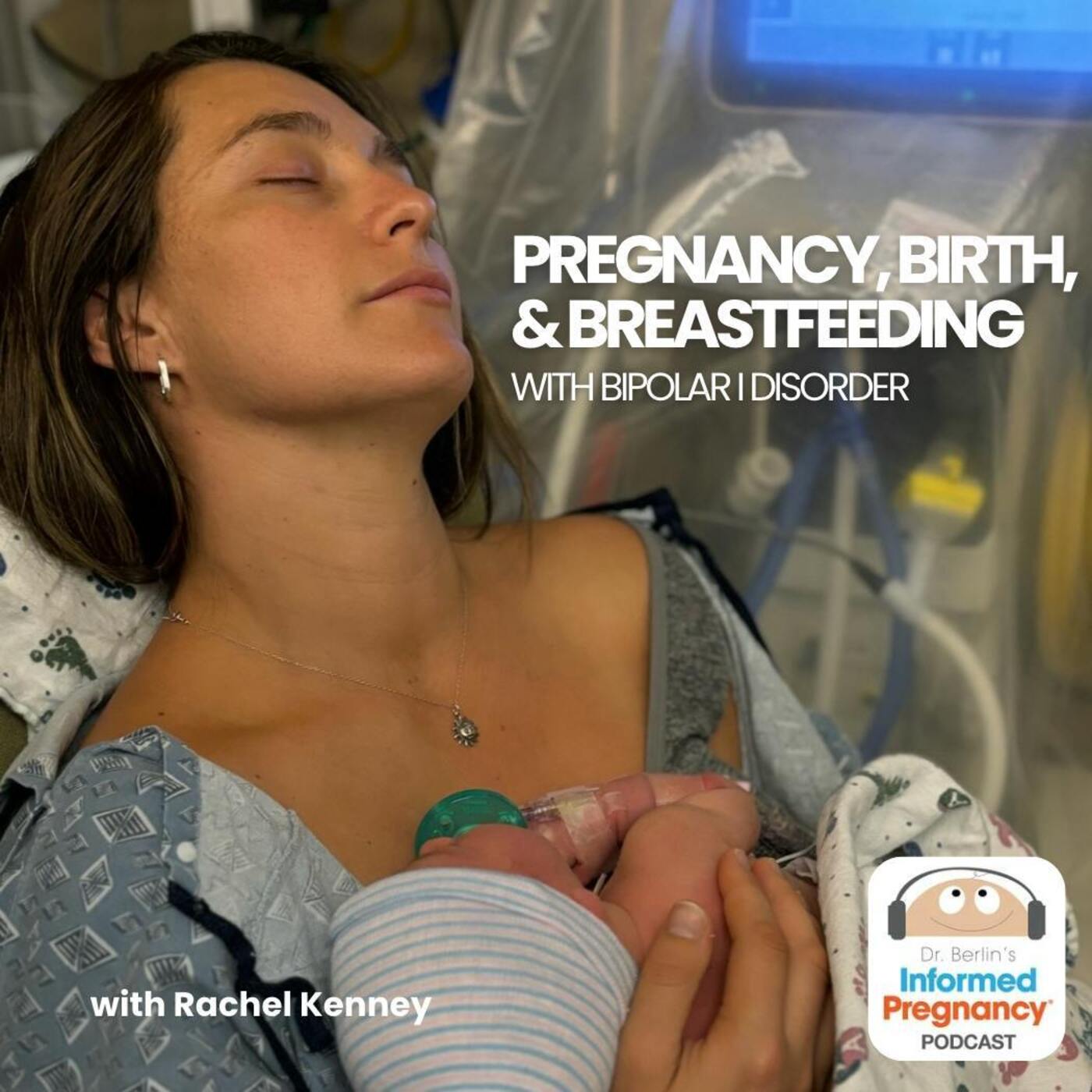
Aerospace engineer Rachel Kenney builds and tests space instruments at the NASA Jet Propulsion Laboratory – and she just had her first baby. As someone living with Bipolar I disorder, she discusses her pregnancy, birth, and postpartum period, including why she chose not to breastfeed at all because of her diagnosis.

Key quotes
“miraculously got to six to seven centimeters. It was groundbreaking. And we were able to say, hey, no C-section at this point,”
“okay, it's been three, four days now that she's been off of her meds. How are we going to do this? I felt strong and I was able to speak up for how I was doing”
“So I think I just knew I needed to take care of myself”
“I was able to have a full night's sleep as I was recovering, because that was deemed very important with bipolar one. And so with my family and with my husband, I've had really a village that has been able to support me.”
“Yeah, thank you so much. I hope it's not uncharted territory for others that they can have resources. I've been able to dig some up and hopefully it can help someone that's curious about it.”
Related episodes
- Ep. 435 Jackie Amézquita: After Birth
- Ep. 426 Mia Rigden: After Birth
- Ep. 443 Jessica Zadeh: After Birth
- Ep. 442 Jessica Zadeh: Before Birth
Transcript
AI-generated transcript with speaker labels — may contain errors, especially names and medical terms. Dr. Elliot Berlin, DC appears in blue; Rachel Kenney in orange.
Download PDF of the Transcript
Dr. Elliot Berlin, DC [0:12] Welcome to the Informed Pregnancy and Parenting Podcast. I'm your host, Pregnancy Focus Car Director, Dr. Elliot Berlind. My guest today is an aerospace engineer. She works at the NASA Jet Propulsion Laboratory, building and testing space instruments, and she also just had her first baby. She's here to talk about what it was like going through pregnancy, birth, and postpartum as someone living with bipolar type 1, and why she chose not to breastfeed at all because of her diagnosis. Rachel Kinney, welcome to the podcast. Well, it's nice to see you again.
Rachel Kenney [1:08] You too. The last time that I saw you, we were going through our chiropractic adjustments post birth. But I guess the first time I saw you was when I was breech.
Dr. Elliot Berlin, DC [1:19] Yes, the baby was head up. And now I assume the baby is still head up mostly.
Rachel Kenney [1:24] Mostly. And she was head down for birth, which was the goal, which was the goal indeed. So feeling really good about that part.
Dr. Elliot Berlin, DC [1:33] Yeah, I'm so glad that worked out for you. All right. There's so much to talk about with you. I want to jump right in. Just a little quick background on you. Where are you from? What do you do? And how did you get to do that?
Rachel Kenney [1:43] I'm from the East Coast. I'm from Manassas, Virginia. My own dad was a chiropractor as well. But Staten Island.
Dr. Elliot Berlin, DC [1:52] Yes. Yes. I'm a chiropractor from Staten Island.
Rachel Kenney [1:56] Yeah, it's wild how we have found each other. And he's the one that got me into space. He knew I was interested. And we went to Parent Child Space Academy together when I was nine years old.
Dr. Elliot Berlin, DC [2:09] So what is that like?
Rachel Kenney [2:11] It was incredible. I mean, flying spaceships together when I was nine and blasting off rockets and just doing that in Huntsville, Alabama, got me into liking space. And I think it was, you know, history from there. It was nice to have him support me in that.
Dr. Elliot Berlin, DC [2:30] Wow. It's cool that you kind of knew that you were interested in it. It was cool that your dad picked up on it and, you know, moved it forward for you, made that opportunity available to you. And it's cool that that's what you're doing now. It doesn't always happen that way. You know, some kids just have no clue what they like. And then some parents don't realize that the kids know what they like or don't have it in them to help them explore and develop in that way. That's really cool. I mean, rocket science.
Rachel Kenney [2:54] Yeah, I've been out here for about eight years. Like you said, building and testing space instruments. I still find it completely fascinating. Now that I'm off of maternity leave and back to work. I still really like what I do. But now as a mom, I have this whole other genre of life that I've learned a lot about. And it's been great to have this whole other part of me that's come from that.
Dr. Elliot Berlin, DC [3:21] Are you one of those people that love what you do at work and love what you do at home?
Rachel Kenney [3:25] I don't know. I mean, I might be early to say that, but I think that is a lovely goal.
Dr. Elliot Berlin, DC [3:32] Okay, great. Let's talk a little bit about bipolar because you're open about it, which is great, I think, because I was very curious in a lot of different ways as a parent in particular, because you were diagnosed on the younger side. So tell me about your history with it. How did you find out about it have manifest for you? And how do you treat it?
Rachel Kenney [3:52] So I found out my first semester at MIT for undergrad, there were no signs before that sort of like a golden child scenario. Even my mom was a psychologist, there weren't any indicators beforehand. But I had my first manic episode and was hospitalized that first semester, they say a lot of stress can bring it out. But from there, I was able to figure out the diagnosis and figure out medication that would work for me after about two years of titrating. Often on meds, I found lithium, which I'm still on today about a decade later, and stayed on throughout my pregnancy. So I think figuring out I was bipolar and being able to be a high functioning bipolar person at work and in my
[4:41] relationships, I wasn't sure if I'd be able to go through motherhood and become a parent. But with a lot of support, I've figured out how to do it so far. And so now about four months after birth, still bipolar and still okay. So I'm feeling really pleased that I can say that.
Dr. Elliot Berlin, DC [5:02] Is there something that one would look for in themselves or in their kids? Four clues? I know you didn't really have any. But now that you're more experienced with it,
Rachel Kenney [5:12] I think I would look for the genetic side of things, maybe seeing if anyone in the family had had it. There can be environmental factors that lead to it. Like a lot of stress can bring it out. For me, there weren't any family indicators or clear signs that I was likely to get it. So I would probably recommend looking at sleep. If there's issues with sleeping, that was a big leading sign that something wasn't okay with me. With mania, it's a lot of feeling euphoric or high if there's a lot of ups and downs that seem more extreme and more of a long duration, then it's just good to talk to a professional and see if there's something that could be
[5:58] done. My main phrase is, it doesn't have to be this hard. If things are feeling like a roller coaster, there are ways to make it feel more stable.
Dr. Elliot Berlin, DC [6:09] In terms of your experience, what does it feel like for you unmedicated like the experience of each of the phases of bipolar?
Rachel Kenney [6:18] When I was going through those initial two years of figuring out what meds would work well for me, I was feeling more depressed in the spring and more manic in the fall. And that's just the rhythm that I personally had. Sometimes people have it more on a weekly cycle or a monthly cycle. But for me, it was revolving around those seasons and just feeling more depressed. It's so hard to talk about when you're not in it. But feeling down for me just was not wanting to do things and just wanting to stay more in bed to a point where it was getting in the way of normal life. And so when I am on lithium, I am very stable. And it's sort of been this miracle of figuring
[7:11] out, hey, maybe my brain chemistry was off, and I need some help. And so when I am on it, I am feeling more normal, I get regular emotions. And I can tell if I need to up or lower the dose with my psychiatrist, but it is something that is very manageable. And I was able to do a lot of looking into what I could do to become a mom with it.
Dr. Elliot Berlin, DC [7:39] It's great that you're able to manage it. And it sounds like over time, you've really developed an understanding of how to keep it at bay.
Rachel Kenney [7:46] Definitely. I did figure out I would have to go off it. You mentioned unmedicated. The recommendation is to try and not be on it when I was going through labor. And so there were several days in my birth story that I was not on lithium, which led to just some interesting things with my family knowing that I wasn't on it. And how I looked and how I felt and what made that part of my birth story different when it came to my birth plan and what I actually told the doctors.
Dr. Elliot Berlin, DC [8:19] Interesting. Okay. Well, I'll tell you what, let's take a little break. When we come back, we'll talk about how you planned for the pregnancy or the research that you did on pregnancy with the condition with the medication. And same for postpartum and we'll get your actual birth story and find out where those elements come in. We'll be right back.

Dr. Elliot Berlin, DC [8:49] Welcome back. We're talking about Rachel, Kenny, new mom and aerospace engineer. Fascinating person. I do feel very lucky that I got to hang out with you a lot, at least for the end of your pregnancy. Let's talk about this. So in terms of planning for pregnancy, birth, postpartum, with bipolar, that's under control with lithium, there's a lot to think about what kind of information did you get? What went into your planning?
Rachel Kenney [9:18] A few years prior to deciding to have a kid or to try to have a kid. I talked to some professionals about what it would mean to be on lithium while pregnant. I had found out through some experimenting with my psychiatrist that I need to be on lithium to be stable. And so because of that, I found out that it was possible for a baby's heart to not be formed correctly if a mom is on lithium during pregnancy. And so because of that risk, I found out that if I were to try and have a baby, I would find out if the heart was viable during the pregnancy, maybe a little later than I would like. And so in that planning process, I found out that risk, that's the number one big risk. I worked with my
[10:18] partner, my husband to figure out if we even wanted to have kids, especially from a climate activism perspective. So going through all of the bipolar side of things and our relationship, we made the decision to try and have a kid.
Dr. Elliot Berlin, DC [10:36] Okay. And then was trying difficult to take one?
Rachel Kenney [10:41] No, I actually had a copper IUD for 10 years. I had the copper one because it doesn't have any hormones. So it wouldn't mess with my lithium. I took that out because it was around the expiration date. And then two months later, found out I was pregnant. I was in a state where I wasn't trying really hard with my partner, but also not trying not to. And so it was just really amazing to find out that I was pregnant. It was because I was working on my thyroid, which is just a separate issue for me. And my endocrinologist said, hmm, you know, you're five days late on your period. I don't think you can prove to me right now that you're not pregnant. And so I went home
[11:27] and took a test and it just lit up immediately.
Dr. Elliot Berlin, DC [11:30] Lo and behold. Right. So during the pregnancy, did you have to adjust the lithium?
Rachel Kenney [11:37] Yes, I was able to make it as low as possible for me. After that experiment that I mentioned, I figured out a certain amount of milligrams that was too low for me. So I kind of had a sweet spot that I figured out. And especially in the first trimester when all the organs are forming, that was when I wanted to have it the lowest. So I was able to kind of work through my medication, all while not knowing that the heart was okay. So I didn't actually figure that part out until 21 weeks. And so, you know, in the preparation, I was aware of that risk, and going through stuff with my thyroid, trying to figure things out. But honestly, mentally, I was really in a
[12:28] good place. So I was, you know, ready and stable relationship and just kind of had all the resources possible professionally to help me plan for it.
Dr. Elliot Berlin, DC [12:40] That must have been crazy nerve wracking 21 weeks.
Rachel Kenney [12:44] I know, right? I mean, that's like half of the pregnancy not knowing. I think I actually surprised myself with how calm I was because I was aware of the risks. And I knew that if something wasn't okay, we would be able to find it. I think that my worry was, what if there was something that I didn't find out until birth, I was under the impression that I'd be able to find out about the baby's heart at a good point, you know, before the possible termination time here in California. I mean, if the baby was not going to live 21 weeks is getting closer to pushing it. So I think, knowing that I lived in California, and being able to have all of the professionals guiding the process,
[13:31] especially because it's a high risk pregnancy, really helped ease my mind, just knowing that there would be a solution, even if it was a long wait.
Dr. Elliot Berlin, DC [13:42] Makes me nervous. But I already know the ending and thankful everything worked out. How was the different stages of pregnancy in your mind and body?
Rachel Kenney [13:52] In my mind and body, pregnancy was wonderful. I really was enjoying it. I was able to work out and still go to work and still feel like myself. I felt like, wow, I mean, I think that as a woman and deciding to have a kid, I feel so privileged to have a special healthy pregnancy. I feel like I could have decided not to try. But I feel like I personally would have been missing out. I liked the feeling of the first kicks and going through everything. By the end, I felt like I could keep going. So that was really nice for me. I mean, what a surprise. It could have gone anyway, but I felt really fortunate.
Dr. Elliot Berlin, DC [14:43] I'm glad that it worked out. I mean, the look in your eye, the glow, the glint, when you talk about it, you know, it kind of makes me feel like I want to try that.
Rachel Kenney [14:54] Right. And then getting to finding out what the word breach means and having an upside down baby and going through the spinning babies methods and just trying things. I mean, at that point in time, I was already knowing that I wanted to work with a doula Stephanie Enton in the preparation. And so my husband, Stephanie and I were a solid team and my dog, you know, the four of us were doing yoga and preparing and figuring out, you know, how to try and have this magical natural birth. And then the breach, you know, concept comes up that, hey, maybe there's going to be a C-section and how to grapple with that mentally when we've been working so hard towards a goal together. I
[15:44] think just all those little steps and milestones that we reached throughout the pregnancy. It's just nice to look back at them now. It does feel like a long time ago, even though it was not that long ago.
Dr. Elliot Berlin, DC [15:59] Yeah, I mean, so much changes right after the baby comes, the rear view mirror, things are closer than they appear. Right, right. Start to seem ages ago, even though it wasn't that long. What was the planning for birth like?
Rachel Kenney [16:14] We knew that and by we, I mean, you know, my husband and working with Stephanie, we knew that we wanted to try and labor as much as possible at home, but then have a hospital birth, it's possible to have lithium withdrawal symptoms in a baby that's been inside of a mom that's on lithium. And so that part felt really important to me to have the help of the hospital, even though the plan was to try and have as much of the labor at home. So that was the initial plan and what our birth plan was based off of.
Dr. Elliot Berlin, DC [16:53] So as natural as possible, but in the hospital in case the baby needed support for lithium withdrawal, what would that look like?
Rachel Kenney [17:02] It said that the baby might be lethargic or just show more signs that would appear within the first two days. So it wouldn't be something that the parents would have to worry about when they go home, but something that could be monitored by doctors there. So in that case, we already knew that the NICU team would be stationed in our room because of the nature of the high risk pregnancy and the fact that the mom's on lithium. And so there were just some documented signs that could be lessened by not taking lithium 24 to 48 hours before the birth. I knew that if it was this magical natural birth that we were planning for, I could take my lithium at 9 p.m. at
[17:50] night and then start labor at 10 p.m. at night. And that's something that the high risk perinatologist and my psychiatrist said, you know, don't worry about that. We're gonna just try the best we can to not have as much lithium in the system as the baby is being born. And so that was sort of what went into the planning.
Dr. Elliot Berlin, DC [18:12] Okay, so you mentioned earlier that once you went off the lithium, things got interesting.
Rachel Kenney [18:18] Yes, the birth plan kind of went out the window, which is so almost entertaining to hear people say that often that, you know, what were the well laid plans didn't come to fruition. I ended up having a planned lithium stoppage because I was getting closer to 42 weeks, very comfortable pregnant, not dilated at all, just a very hard zero centimeters for a while. And so weighing the risks, and especially with the high risk pregnancy, just trying to figure out what I wanted, I ended up going through acupuncture and all these sorts of things to try and help encourage the timeline along, but the baby had their plans. I don't know, do you have a phrase for that that
[19:12] you say like that the baby comes out when the baby wants to come out?
Dr. Elliot Berlin, DC [19:16] I mean, they're on their own timeline. And my guess my phrase for that is not all cookies bake in 24 minutes, and you want them fully big, not when 24 minutes go by. So right. I was just recalling the end of pregnancy for you in sort of stark contrast to most people, because usually around 3637 weeks, people just like put a fork in me, I'm done. You know, I'm ready to have this baby you look like you're gonna go play pickleball or, you know, a lot of energy or moving great. You look almost comfortable and super healthy. It was interesting. I remember making a note of that in my mind.
Rachel Kenney [19:53] Right. The joke was up, you know, she's got a long torso. So there's a lot of room going on in there. Yeah, yeah. I mean, it just feels like kind of wild to look back at that time and that feeling and that decision to go through induction at the hospital when it almost seemed like things were good. And there were no signs that mom or baby were needing an eviction. And so I think weighing the risks and having the high risk pregnancy allowed me to make that decision, even though it was really hard and wasn't what we had been planning. And so I think it did end up being the plan from the decision to do induction after planning to have all of this, you
[20:45] know, hard work with our doula at home. That was probably the toughest part, I think. But once I made that decision, I knew had to stick with it. And so not having lithium was a bonus to that. The induction process for first time moms is allegedly sometimes two to three days long. And that was pretty true for me. I was in there two to three days, I think it was about 44 hours from the first cervical softener pill that I took. Allegedly anymore. Right, right. It was confirmed. And I'm glad that someone told me that going in, because I would have been, you know, just absolutely blown away to find out that, you know, just taking these three cervical softener
[21:34] pills is 12 hours. And then at the end of it, I'm still pretty much zero centimeters, you know,
Dr. Elliot Berlin, DC [21:41] that you took by mouth or vaginal.
Rachel Kenney [21:43] I took the pills by mouth, the OB could have ordered the pills by mouth or vaginal. They happen to do the pills by mouth. That's their usual go to.
Dr. Elliot Berlin, DC [21:55] And then your cervix was not
Rachel Kenney [21:57] responsive. Right. And so I ended up being someone that the balloon was suggested for. Instead of layering on different methods, it was recommended to try the balloon first, and then pitocin later. So I did do the balloon. That was probably the most painful part of labor. You know, spoiler, there was an epidural later that I think allowed me to think that the balloon insertion was actually the most painful part for me. It was about 45 minutes. They said place the balloon. Yeah. They said it was the longest they'd ever seen it.
Dr. Elliot Berlin, DC [22:39] Wow. Is that because your cervix was so shut?
Rachel Kenney [22:42] Yes. They said it was like a fingertip dilated. But I think that they also said that's sort of a subjective term. You know, who's fingertip and what part of the fingertip, you know, big fingers, that might be three centimeters.
Dr. Elliot Berlin, DC [22:58] I know. I know. I know. That's
Rachel Kenney [23:00] the perfect example of why it's subjective. And so they said, you know, sometimes people are on morphine or fentanyl when they're doing the balloon insertion. But because I still had my birth plan that had originally been aiming for this natural birth, it had said, you know, no big drugs. Like, it's always better for me to do the epidural because it's localized, rather than putting other things through my whole system. And so it would have been potentially better to be on at that point. But it wasn't even a discussion because it was laid out clearly on the birth plan. But yeah, I had already advocated for myself against this.
Dr. Elliot Berlin, DC [23:44] I'm going to say that in my doula days, I definitely have witnessed the Foley balloon placement all over the map. Some people seem to not even know what's happening. Like it's effortless and almost painless. And for some people, it seems agonizing. And I don't know fully what causes the difference from one person to the next. But I've seen one in particular sticks out for me, a very, very strong, tough person with the same birth plan that you had. And for some reason, she was just incredibly sensitive to the placement of the balloon. So I don't know. But, you know, you are also an incredibly tough person. So if you had to describe it that way means to me that it
[24:25] was very, very intense. All right. So now I'm all in suspense, but we need to take a little break and we come back. We'll find out how the rest of induction and birth went in postpartum. Also, we'll be right back. We are back with Rachel Kinney and we had this excruciating balloon place to all of us. What happens next?
Rachel Kenney [24:56] Well, I will say that I would, you know, if I decide to go through birth again, I would consider a balloon again. If I knew if I was more dilated first, that would be my go-to. I was then able to start Pitocin and there were contractions being encouraged. At that point, the balloon was eventually removed, which caused my water to break.
Dr. Elliot Berlin, DC [25:23] Oh, wow. During the removal, because you hit four centimeters
Rachel Kenney [25:26] removed because it was the end of its time. It was it was like another 12 hours and the expectation was four centimeters, but I had noted down in my notes that at that time, when they removed the balloon, it was pretty disheartening because it was expected to be at least three to four centimeters dilated, but I was only one to two after.
Dr. Elliot Berlin, DC [25:54] Oh, really? After they took it out and your water broke.
Rachel Kenney [25:57] Yeah. So I think, you know, it was supposed to be, you know, it depends on how much they fill the balloon with how much CCs. And so it was filled to a point where it was expected to be three to four. It was only one to two. And at that point, the water broke and there were signs of meconium that had been passed in the womb from the baby. And so we essentially went through another half day of waiting around to get to that four centimeters. They guessed it was only a 25% chance of having a vaginal delivery.
Dr. Elliot Berlin, DC [26:33] Oh, wow.
Rachel Kenney [26:33] At this point, just because of how slowly it was going and the water was already broke and there was meconium. Like there were so many factors at this point that made it look like a low likelihood. And there was a time limit that I was given. Like, hey, you have two hours until we're going to do a C-section if you agree. And let's just see what you can do. So with the doula, I was able to do some different positions using gravity, you know, sitting up on top of the bed. And I just miraculously got to six to seven centimeters. It was groundbreaking. And we were able to say, hey, no C-section at this point, because of the meconium and the water breaking, some
[27:22] different variables were at play. I started a fever. So there were antibiotics. I think there were just a lot of moments that everyone and myself included thought there'd be a C- section. But after about those 44 hours, I got to 10 centimeters. So it was like, let's go. I had the epidural. I was preparing
Dr. Elliot Berlin, DC [27:45] to push super energizing, considering, you know, the odds were so stacked against you.
Rachel Kenney [27:51] Right. I was laying on the hospital bed, making a playlist for my C-section because I was just thinking that I wanted to be mentally prepared for that. But I got to 10 centimeters. This was actually on my birthday. So people were, you know, placing bets. Come on my birthday. It's actually a fourth of July. So, you know, they're talking about, yeah, the doctor came back from, you know, fourth of July party and I was already crowning. I was going. I mean, it was great. I had, you know, waves crashing in the background. I had a nice hypnobirthing playlist going and it was just really fast and effective and empowering. So, I mean, after 44 hours, I think pushing
[28:35] was approximately 20 minutes. It was just so liberating and I couldn't believe it was imaginal delivery at that point. But I think, you know, going back to lithium, I was several days off of my meds. So when figuring out if I was going to do a C section, you know, my mental health was part of the consideration. Like, okay, it's been three, four days now that she's been off of her meds. How are we going to do this? I felt strong and I was able to speak up for how I was doing mentally. And so at that point, the whole NICU team was in the room and there actually weren't any lithium withdrawal symptoms noted in the end, probably because of the lack of
[29:23] lithium in my system that helped. Yeah. And, you know, something separate from my lithium story, but, you know, crucial to the birth story, the baby was born and didn't cry. And so it turned out to be a, you know, a meconium plug and we needed the NICU team there for something completely unrelated to my lithium, but ended up being such a wonderful blessing that they were in the room because they went ahead and intubated her after being born. And so she's okay now and perfectly healthy. And we've gone through testing and she went through the NICU. But because of my lithium, we had the whole crew ready for something that didn't actually happen, but it was, you know,
[30:11] amazing to have something
Dr. Elliot Berlin, DC [30:13] else. Yeah. We have a word for it in Hebrew, but I don't know how you say it in English. We call it, uh, someone was looking out for you. Exactly. Okay. So you had the baby now getting back on lithium was an option to breastfeed while on lithium or is that not really an option? Was it a choice? I'd call
Rachel Kenney [30:34] it a choice. There's differing opinions that I've heard. I'd heard that, you know, for me with lithium, I do need to take blood tests. It's one of the few mental health meds that you take a blood test to see if your blood is in a certain therapeutic range and making sure that it's working for you. So it's possible that the baby would need to take blood tests and would be getting lithium through the breast milk. And apart from the lithium aspect, just the mental health for me with bipolar one sleep is critical. So waking up every few hours to either pump or breastfeed was considered by one of the lactation consultants. I talked to a bigger deal than the
[31:18] lithium itself. So making sure that I could have sleep and be able to recuperate during postpartum was a big consideration. So it was a choice not to breastfeed. And I never did. I never have.
Dr. Elliot Berlin, DC [31:35] Okay, so knowing that you weren't going to breastfeed, what kind of planning did you do? Because, you know, you give birth to your baby and your body starts making milk. What sort of plan did you do for yourself and also for the baby?
Rachel Kenney [31:49] I actually felt like there are more unknowns surrounding this than the birth itself for me, because so many people that I know or encounter have at least tried breastfeeding. And so this decision to not breastfeed from the get go was something I was able to find a little Reddit community of other people that for whatever reason, mental health or medications have decided not to. So I think looking at that community, it was helpful to see different posts. And I read up a lot on what you can do and talk to my OB. And so I knew that there was kind of a recipe that I would aim for and just see how it goes. For me, you know, that included wearing a tight sports
[32:35] bra. I had heard of binding, you know, tightly around the breast. I ended up trying that provided some relief, but a lactation consultant said it's no longer a recommended practice anymore.
Dr. Elliot Berlin, DC [32:49] Did they say why?
Rachel Kenney [32:51] I don't know. I'm not sure. I just sort of thought, okay, well, you know, it's kind of a pain to do. And I'm okay with just trying other things.
Dr. Elliot Berlin, DC [33:02] Well, instead of providing relief, relief from what were you getting engorged?
Rachel Kenney [33:07] So I was getting engorged. I'd say day five after pregnancy, I was the most engorged, like so, so, so, so, so full. I almost think I would have had a pretty decent supply or at least in that initial day because of how much I felt like I had, you know, there was also the recommendation used cold cabbage. So I just feel like my family would just find pieces of cabbage around because I was just leaving a trail of, you know, you're allegedly supposed to break the stems of the cabbage and that's supposed to release something. You know, it's like I make a list and even if it's a placebo effect, I still want to try it. I did tell you about the Cabo cream, the
[33:52] cabbage breast cream. I found that online. That was just me, you know, like lurking around looking for things and it felt good. And I think it was much easier than an actual cabbage. I wasn't leaving a trail behind me when I was putting this cabbage cream on, but yeah, it's, you know, Cabo cream. I would probably recommend that to other people that are trying to stop breastfeeding or trying to never start.
Dr. Elliot Berlin, DC [34:18] Yeah, yeah, wait. So you put it on, you feel some instant relief.
Rachel Kenney [34:22] Yeah, it felt cooling and you know online it had some good reviews from other people who felt the same. So I felt like I had kind of found this hack that was fun and wouldn't involve real cabbage. Same with ice packs though. Ice packs are recommended. I feel like I tried various sizes. I had some favorites like circular little gel ice packs and Sudafed is recommended and I think that's maybe more common. I've heard of that from other folks, but it was like every four hours Sudafed. They said no expressing and that's like in bold. I saw it in bold all caps on one of my sheets from my OB, like don't let the milk out, you know, don't stimulate don't stimulate more production.
[35:12] Right. And so eventually, you know, by day five time frame leaking actually provided relief and that I wasn't doing that. You know, I was just leaking on my own and I was like, you know, thank goodness because it's been trying to come out, you know, like mint and sage. Hot tea is also recommended.
Dr. Elliot Berlin, DC [35:32] Did you have the urge to express?
Rachel Kenney [35:35] Um, I had the urge to, I think, just instinctively. I feel like I wanted the pain to go away, so that just felt like a solution. The pain for me only lasted those few days, but it was so strong that it actually was overwhelming and got worse when I looked at my baby or touched my baby.
Dr. Elliot Berlin, DC [36:02] That's what I was wondering. Like usually that stimulates a let down. Right.
Rachel Kenney [36:06] Right. And so I kind of had a, I don't know, a set of real talks with my hair team, which in that point was my mom and my husband saying, Hey, you know, there is this brand new, beautiful baby and it really hurts to look at and touch her. Can you provide more skin to skin right now while I'm trying to handle myself? And I think like looking back, I'm kind of surprised that I wasn't feeling like a bad mom at that point because it's like, Oh, I'm not breastfeeding. I'm not even holding, you know, that day. Five was pretty much the one main day of intense engorgement and pain for me. And so I think I just didn't have the mental capacity to feel like a bad mom
[36:51] because there was just so much physical stimulation going on that I didn't have the bandwidth to feel like I was not, you know, doing my role as a parent well. So I think I just knew I needed to take care of myself and after that and to this day I haven't leaked. I haven't had any pain like I'm back to normal essentially with my breasts. And so it's really wild to look at the difference of how I felt then and now and just how quick it was. It was fleeting. I can hold her now all the time and I basically feel like I turned it off.
Dr. Elliot Berlin, DC [37:34] Did you think about different feeding options for the baby in addition to formula?
Rachel Kenney [37:40] Yeah, I think you have the option of getting breast milk other than formula. I think that we were really into a sustainable organic version of formula that would feel like we were giving her the best that we could find, like the best money could buy. And so it kind of felt like this is the route we're going to take. You know, in the NICU she was on formula and didn't have any problems with it. And so we ended up going that route and not looking back. So, you know, to this day almost four months old, she's only had formula.
Dr. Elliot Berlin, DC [38:20] Do you wish that there were other options available?
Rachel Kenney [38:23] I don't know. I think there's so much good in breast milk. I mean, that would be cool to look at other options like that and maybe, you know, consider them if I had more information about them. I think it was sort of like, oh, breastfeed or formula. Either I do it or I provide formula. And that kind of seemed like the two options that were there that we were even looking at.
Dr. Elliot Berlin, DC [38:52] Got it. What would you, I mean, outside of all those things, now you've had a few months postpartum and a few months of mothering. What's that experience been like?
Rachel Kenney [39:02] Really wonderful. I think that the scare of birth was again fleeting. Like it was a moment of trauma that were actually in this health and brain study that I had already opted to join out of the Children's Hospital of L.A. So I went when I was pregnant with our baby and then now have brought her back. So we've had multiple ways that she's been tested, like her brain function after being intubated. And so I currently don't feel like I'm harboring any guilt or pain or anxiety around that. So we've just really been able to enjoy things. I've kind of learned that having a partner that's fully on board is very important for many weeks. I was able to have
[39:54] a full night's sleep as I was recovering, because that was deemed very important with bipolar one. And so with my family and with my husband, I've had really a village that has been able to support me. You know, my mom, my aunt and my cousin helping with the night shifts was just incredible. And I feel like makes me feel tingly inside knowing that I have this team around me.
Dr. Elliot Berlin, DC [40:24] It's amazing that you have such great support. And I just wonder if that's also a large part of why pregnancy was so enjoyable for you and also now postpartum. It's really great. The whole journey is really interesting and fantastic. I really appreciate you coming on and sharing so openly about bipolar and your experience with it, about lithium and your experience with it. And, you know, I think that probably a lot of people wonder, can I have a pregnancy? Can I have a postpartum? And what would that look like? And you've painted the picture for us. And it's a really beautiful picture in your case. It may not be the same for everyone, but I really haven't
[41:06] had these discussions before, nor have I had a discussion with anyone about how to immediately, you know, stop your milk right after you give birth. So this has been really educational for me. And I'm sure for our audience as well.
Rachel Kenney [41:20] Yeah, thank you so much. I hope it's not uncharted territory for others that they can have resources. I've been able to dig some up and hopefully it can help someone that's curious about it.
Dr. Elliot Berlin, DC [41:33] Thanks, Rachel. And at home, thanks for listening to the Informed Pregnancy podcast. For more pregnancy and parenting information just like this, visit us online at informedpregnancy.com.
Want more pregnancy + parenting? Start your FREE TRIAL of Informed Pregnancy+ and get access to all our curated pregnancy and parenting content — original series, iconic birth films like The Business of Being Born, prenatal workouts and more.
