
February 6, 2025 · 34 minutes · Episode 445
About this episode
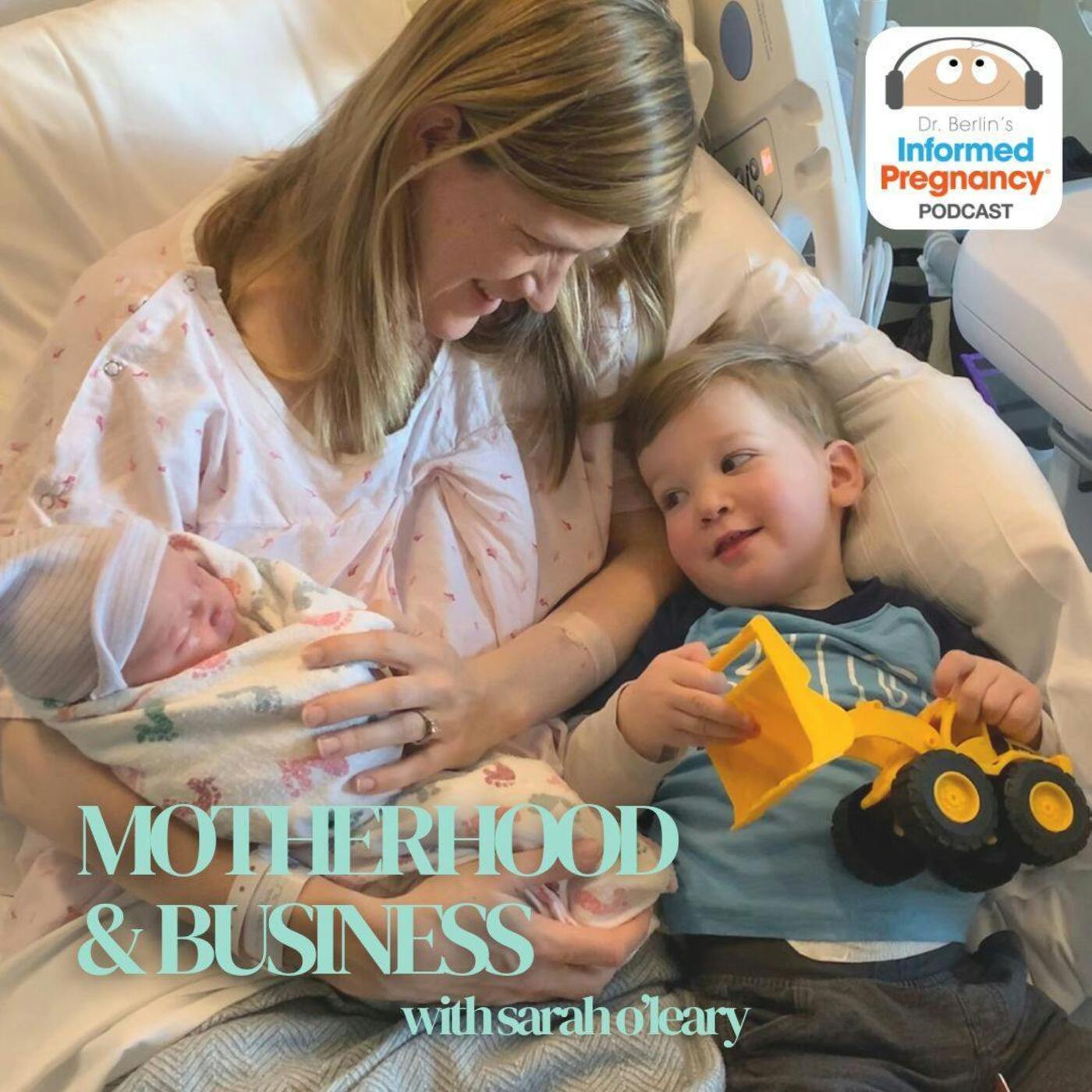
Sarah O’Leary is a mother of two and the CEO of the wearable breast pump company Willow Innovations. She joins Dr. B in conversation about life in motherhood and business, two worlds that can sometimes be a challenging mix.

Connect with the guest:
Key quotes
“pregnancy that actually went to term. So I had a couple of miscarriages. And I think that's also very, very common. And we don't talk about that enough. And it was a really emotional and”
“how did humans survive if breastfeeding is this hard? And her answer was, we used to do it in a community. And so you were taught, you were around breastfeeding, your mother understood how to help you, you know, your sisters, your cousins.”
“role right after I came back from maternity leave. So note to listeners, find companies that have values that you believe in because it makes a big difference when you're trying to navigate”
“And I reflect now on almost the instinct to say it was easy. Like it wasn't easy, you know, again, these things are not as straightforward as were led to believe, even if they work out in the end. And so, you know, kind of navigated”
“relates to business leadership is this idea that you need to be a steady and calm leader for your family, which is how you should be as a CEO to the sense that, you know, you need to kind of be the calm and the storm and riding along, you know, the ups and downs”
Related episodes
- Ep. 446 Perinatal Exercise with Sarah Zahab
- Ep. 435 Jackie Amézquita: After Birth
- Ep. 426 Mia Rigden: After Birth
- Ep. 444 Motherhood from 15 to 40 with Natalie Parlett
Transcript
AI-generated transcript with speaker labels — may contain errors, especially names and medical terms. Dr. Elliot Berlin, DC appears in blue; Sarah O'Leary in orange.
Download PDF of the Transcript
Dr. Elliot Berlin, DC [0:00] Today's guest paid a production fee to appear on the podcast, which helps us cover production costs and bring you quality content. Their views and opinions are entirely their own. Welcome to the Informed Pregnancy and Parenting podcast. I'm your host, pregnancy-focused chiropractor, Dr. Elliott Berlin. My guest today is a mother of two and CEO of the wearable breast pump company, Willow Innovations. Sarah O'Leary, welcome to the podcast. Thank you so much for having me. Thrilled to be here. I'm excited to have you here. I want to learn everything about you. You're an interesting person. I want to learn about your business life and your mother life, two things that are hard for people to put together
[1:14] sometimes. And I want to find out how you juggle them both. But let's start at the beginning. Where are you from originally? I grew up in Connecticut in the Northeast. Oh, trees and stuff. Yes. I grew up in New York. None of that. Okay. Wonderful. And then career-wise, what did you have in mind when you were starting to think about what you want to do with life?
Sarah O’Leary [1:34] Yeah. So I was an English major in college. I think had you asked me, would I be an executive in a business context then? I would have said, absolutely not. I'm going to read novels, maybe be a professor. And then things evolve. And so I ended up following a business track in my career. But I don't know that I would have told you that beforehand. I think I just didn't really know all the options that could be available as you start to think about what that means. Maybe we simplify these things when we're young. And I think I wasn't interested in being a business person. And yet here I am. Yeah. Well, also your English is very good. Thanks. Still love to read. So there's that.
Dr. Elliot Berlin, DC [2:15] That's wonderful. So at what point did you shift from English to sort of more of a business?
Sarah O’Leary [2:20] Yeah. So I think this is a pretty common story for people who go to college and do liberal arts educations. Started thinking about what my career was going to look like after I graduated and really didn't want to go back to school again. Thought about law school, sort of all the things that, you know, PhD programs. And I wanted to have a job. I wanted to work in the real world. And I was fortunate to be able to work at a strategy consulting firm that was sort of a practical education in business. But I thought I would try that on for size. And that's how I kind of got out of the academic world and into the business world and ended up really loving the dynamic aspect of how businesses grow, how you kind of
[3:01] build a strategic plan. I got to work with mostly consumer products companies in that work. And I found I actually really loved thinking about why do people buy what they buy and how do you build great brands? And it actually was very organic to the kinds of things I had been interested in in school. And that was really kind of the beginning of my career journey. I'm just even curious what the role was for that company. Like what were they looking for in you and what were you looking for in them? Yeah. So, you know, these consulting firms, the firm I worked for was called the Parthenon Group, but similar to McKinsey or some of those other firms, they're really looking for people to work hard right out of college
[3:38] with a well-rounded academic background. And so they taught a lot of the depth of what you needed in terms of business strategy, but really were looking for people who had kind of a well-rounded approach to strategic thinking. And that was kind of the entry point into that job. But it was almost like an apprenticeship, I think, is how I would describe it. A chance to be on teams, do research, do analytical work, build financial models in Excel and learn that alongside people at the firm who had been doing this for a long time. I got a ton of exposure to our clients who were business leaders across lots of different industries. And it really was almost like an apprenticeship program is probably the best way
Dr. Elliot Berlin, DC [4:17] I would describe it. I generally find that when I hire people who love to read, they bring a lot of asset to the team. And you struck me that way too, like you could probably walk into any setting and everything that you've read sort of comes up as a lot of tools in your tool belt in terms of discussion and thought and kind of building plans and ideas to draw from.
Sarah O’Leary [4:39] Well, thank you. You know, I think people who like to read are often people who connect the dots. You know, I'm looking for the themes all the time. And at the end of the day, I think a lot of business is finding the themes and, you know, building those into strategies. And I think a lot of brand building is also storytelling, right? And so much of what we do is telling stories, understanding stories and figuring out how to do that in ways that move the world forward. So an interesting way, I've almost had to build confidence during my career that the things I did learn in school and that I was interested in actually are very applicable, even if they don't necessarily sound like
[5:16] the skills that you would necessarily put on a curriculum to end up as a CEO.
Dr. Elliot Berlin, DC [5:21] Totally. But to me, the scary part is you've sort of gone from, you know, reader to author.
Sarah O’Leary [5:27] Yeah, I guess that's true.
Dr. Elliot Berlin, DC [5:28] And it's not just pen and paper, it's real world interaction. So there's a lot weighing on it. Geographically, when did you leave Connecticut?
Sarah O’Leary [5:36] Yeah, so I went to college in Massachusetts. I lived in Boston for a couple years after college. That's where that first role was. I ended up going to graduate school in California, which is when I did go to business school in the end and kind of get the credential.
Dr. Elliot Berlin, DC [5:49] You went against your number one role.
Sarah O’Leary [5:52] I did kind of rubber stamp it there. And then I essentially have not left California since that time. I spent a short stint in New York for a job, but have been a California girl ever since. And here I am.
Dr. Elliot Berlin, DC [6:05] OK, and then family, let's see your perspective on what you want to do with life change. Did you have thoughts early on on family life and motherhood? And did it change once you got into the corporate world? Yeah, that's a great question.
Sarah O’Leary [6:19] You know, I grew up in a very kind of classic nuclear family. My mom and dad are still extremely close to me and I have a brother, so it was the four of us. I think in some ways I always had the assumption that I would also have a family that looked something like that and that I would one day be a mom. I would not say that I took a lot of active approaches the way I did with my career to figuring out how motherhood would fit in during my 20s. I got married kind of right around when I was 30 and met my husband at work, actually. And we, yeah, I know we don't work together anymore, but we did for a brief period of time. And, you know, I think it was almost
[7:00] this sort of assumption that motherhood would be a part of my journey, but not something that I had really built out a plan of how it would come to be. I think I very much believed that I could have it all, you know, that I could handle it and I would be a mom and a career person. And I am now, although I think the way that has actually played out is not as simple as it may seem when you're, you know, just sort of crafting out how you describe
Dr. Elliot Berlin, DC [7:22] your life in 10 years from now. Well, it sounds like there's a bit of a story there. Why don't we take a break? When we come back, we'll find out how your journey

Dr. Elliot Berlin, DC [7:30] to motherhood unfolded. We'll be right back. Welcome back. We're talking to Sarah O'Leary and, okay, motherhood, you got married to the guy from work. That worked out. And then did you guys talk about having kids early on? It sounds like you're both career oriented.
Sarah O’Leary [7:57] Yeah, we were career oriented, but, you know, we did get married, I guess, on the later side of the grand scheme of things, or it felt that way to me at the time. Now I feel like we were still pretty young. And so we did pretty soon say, yeah, let's figure out having a baby. And it was something we both wanted. And, you know, we were enthused about. And I would say that was the last point where that seemed so straightforward. In that, I don't know what I really thought. I guess I just thought you'd try to get pregnant, you get pregnant, and there you'd be off to the races. And that was definitely not how it went for us. And happy to share more as the conversation. Yeah. I mean,
Dr. Elliot Berlin, DC [8:30] I think a lot of people are actually taught, even if you don't try to get pregnant,
Sarah O’Leary [8:33] yes, you're totally right. It's almost like you spend so much time avoiding getting pregnant that it's almost this looming thing that like definitely will happen unless you are super careful. And then you go and try and you're like, it's not happening. This is not the way
Dr. Elliot Berlin, DC [8:50] it works. I mean, if you're comfortable talking about what were you doing to prevent
Sarah O’Leary [8:54] pregnancy before you started trying? And then what happened once you started trying? Yeah, I was on birth control pills, I think, like many women and had kind of been on that program for a long time and essentially just stopped taking them and figured, you know, that would be it. And here we would go. It took a while before I ever got a positive pregnancy test. And then it took a while from getting a positive pregnancy test to have a pregnancy that actually went to term. So I had a couple of miscarriages. And I think that's also very, very common. And we don't talk about that enough. And it was a really emotional and really challenging chapter of life that I think, you know, what was off script,
Dr. Elliot Berlin, DC [9:36] it wasn't what you expect. And it was hard. I'm really sorry. You know, we had miscarriages also, my wife and I before we had our first baby. And you're right, nobody talks about it. Not nearly enough people talk about it. Maybe a little more than it used to be. But we thought why us, you know, we're the only ones and this is what's wrong. And my wife, her body was broken and all sorts of horrible things that just elevated the pressure in the pressure cooker trying to have babies so high that our nervous systems were probably like, oh my God, there's an emergency. We can't have a baby now. Along those lines, we have a streaming platform called Inform Pregnancy Plus. And one of the series that
[10:12] we have on there is called You Are Not Alone, which really elevates the conversation about miscarriage, especially early miscarriage or pregnancy loss in general. Okay. So after multiple miscarriages, were you doing interventions? Were you doing testing and
Sarah O’Leary [10:27] monitoring and interventions? Yeah. So we had just started that journey. I had essentially three miscarriages, one of which was like a potential eptopic pregnancy. So I had to go through this whole medical thing. I was fine. It was not an emergency, but I was taking medication for that. So it was a long journey. We then went and we did see a fertility specialist who did some tests, got some good news, which was like nothing inherently seems to be wrong in terms of hormones and in terms of sort of the functioning of our systems, I guess. But we were right on that borderline of I think three miscarriages sort of the level before they start to say, yeah, this is an ongoing thing that we're going to have to
[11:07] address. I was about to start IUI and actually did get pregnant naturally and that one worked out. So I was right on the precipice of going down the full road of fertility treatments, but actually did not go down that road. Wow. I mean, yeah, you just dodged that by hair.
Dr. Elliot Berlin, DC [11:25] Literally by hair. Yeah. And how was pregnancy once you got there?
Sarah O’Leary [11:30] Yeah. So, you know, with my son, pregnancy was actually okay for me. I avoided morning sickness. I felt pretty strong and healthy. I was pretty enamored with it. You know, I had waited a long time for this. I was anxious. You know, I think kick counts and all that. You know, I kept waiting for the other shoe to drop, I think was that sense of I'd been down the path of it not working out that sort of, you know, it almost felt like that was the baseline. So that definitely was in the background. But from a physical experience perspective, I had a pretty straightforward pregnancy when all was said and done. I don't think we believed that we were having a baby, actually having a baby.
[12:10] About three months after we had him, because for defense reasons, or
Dr. Elliot Berlin, DC [12:15] Yes, exactly. You're kind of protect yourself, right? Like that I'm not going to get too attached. You're just used to it not working out. And it's like, okay, she's bigger, we're closer, you know, all these benchmarks are happening. And your mind just doesn't want to believe it. You're a little numb to it. Yeah. So I can relate to that. Where are you in your career at this time during this pregnancy?
Sarah O’Leary [12:35] Yeah, so I had been working at a really wonderful children's apparel company, running their e commerce and marketing operations, and had been there for about five years when I ultimately did get pregnant with my son. It was a very supportive environment. So I did have some co workers who knew what I had been going through from a fertility perspective. And, you know, it was kind of a mom and baby company, right. And so, you know, definitely felt very supported in terms of the pregnancy journey stocked up a lot on really cute baby clothes, you know, which is a perk of the job.
Dr. Elliot Berlin, DC [13:06] Yeah, I was thinking that at the beginning when you said that.
Sarah O’Leary [13:08] Yeah. But I also was at an interesting place in my career in that I had been just starting to think about, you know, maybe I was ready for something next or something new after about five years at the same company, company that I love very much, but it maybe reached some, you know, personal growth plateaus. And so that was kind of my mindset. So I really was still working hard doing the right things for my company cared a lot about that role and my work. But I think very much focusing on the personal piece of the journey at that time
Dr. Elliot Berlin, DC [13:39] and on pregnancy. When you, you know, obviously pregnant. And even if you're a little detached from it, you know, the baby's coming. Did you have a specific vision for birth plan for birth? And how was reality compared to the
Sarah O’Leary [13:54] planning? Yeah. So I am a row medical birth person, like I'm a very sort of by the book person, I guess. I had zero worries. I knew I was going to get an epidural. Like that was me. I was like, whatever the doctor says, what I'm going to do. And so, you know, in some sense, that was my plan. And a lot of that went according to plan. I ended up being induced, which was totally fine with me. I know there's people who really kind of don't want to go down that road. I was 37 when I was having my son and so that advanced maternal age. So I was kind of just following the recommendations. And they said, you know, you're past your due date. Let's schedule an induction. It went quite smoothly. I was,
[14:35] you know, pretty comfortable with how it all was going. I did then get a fever during labor. And so even though birth went fine and, you know, baby was born healthy, my experience was okay. We did have a stint in the NICU because I had to get IV antibiotics and my son had to get antibiotics because they didn't know what had caused the fever. And so there was some concern about infection. So that was definitely a little bit of an unexpected twist in the journey, which I had never been through it. So I maybe in retrospect realized just how different that experience of baby being whisked off to the NICU shortly after birth actually was. But in the moment, I was just so happy he was born and sort of so
[15:17] overwhelmed by all of it that I don't know if I even realized what a diversion that was.
Dr. Elliot Berlin, DC [15:22] Yeah, postpartum is an interesting transition for everyone. I think a little bit more interesting when they take the baby away and you don't just go home the next day together. Why don't we take a little break and we'll come back and find out your postpartum story. We'll be right back. Welcome back. We are talking to Sarah O'Leary and okay, in your storyline here where the first baby is born and postpartum happens, starting with a NICU stay, how was postpartum for you? And also did you have a plan for
Sarah O’Leary [16:00] feeding? Yeah, so very grateful that our NICU stay was very brief. So, you know, I know there's many families that go through that for an extended period of time. We were in the NICU for a couple of days, so it was a little bit disruptive, but it wasn't a total disruption to the expectation to go home pretty soon after giving birth. I was committed to breastfeeding again. It was the right thing to do. It was the recommendation, so I was going to do it. What that did mean very early on at the hospital was I was kind of, I wasn't with my son, so I was kind of setting an alarm and wheeling over to the NICU to do, you know, every two or three hours to breastfeed and try and get my milk supply
[16:37] established. I did go home with the hospital rental pump because my milk hadn't come in, kind of got it all kicked off that way. And essentially, I think my plan was, of course, I'm going to breastfeed. And what I didn't know was that's not so obvious or easy as it sounds. I think, you know, you maybe sort of think, well, this is how you feed babies. It must be just an eight. It didn't feel that way at all. It almost sounds like getting pregnant. Yeah. You know, it's true, right? And I think to some extent, I don't know how to fully prepare you for this experience of your body is going to do something it's never done before, even though you've been on this earth now for, you know, 37 years. So there's some
[17:18] learning that's just going to happen because you have to go through it. But I definitely really felt like the world had also failed to inform me of what I would go through, what kinds of things I should be thinking about, what was normal, what wasn't normal, like how much pain is normal. You know, you sort of go through it and you just assume, I guess this is what it is. And so, you know, for a month, I'm going to have this horrific, painful nursing experience. It probably wasn't right, right? And it worked out. I got through it. I did breastfeed my son until he was about seven or eight months. And I was really proud of that, but it wasn't a seamless journey. That's for sure.
Dr. Elliot Berlin, DC [17:59] Well, what I've learned over 20 years working with the population here is that all of those stages, whether it's getting pregnant, the various stages of pregnancy, labor, delivery, breastfeeding, postpartum, you know, for some people, elements come super easy and natural. And for other people, there's a bit of a learning curve and sometimes a bigger learning curve or obstacles that you have to overcome. And that's really the whole reason we put together the whole informed pregnancy media platform along those lines. We do have an episode called Breastfeeding 101, which is really just a primer for basic things to expect, what's normal, what's not normal,
[18:35] like literally to fill in the answers to the questions that you didn't have when you went there for the first time. And in some of it is, you know, just instinct. I mean, you look at the other animals in nature and they don't have a podcast or a platform and they figure it out. But on the one hand, they do have a lot of peer support, which we've lost some of that village and community.
Sarah O’Leary [18:58] Absolutely. And I actually would love to just quickly jump in there. Subsequently, when I had my daughter, when I know we'll probably get there, we had a wonderful lactation consultant on staff at Willow, which is where I was at the time. Then I asked her, how did humans survive if breastfeeding is this hard? And her answer was, we used to do it in a community. And so you were taught, you were around breastfeeding, your mother understood how to help you, you know, your sisters, your cousins. And if it didn't go well, someone else stepped in and helped feed the baby. And it was such an eye-opening kind of real as like, of course, that makes sense.
[19:34] But, you know, even my own mom, she formula fed me. She didn't even know how to breastfeed, so she was there. She was helping me postpartum, but she didn't know how to help. And I think that lack of the peer support, the community support is really glaring during that time when you're trying to navigate this stuff alone. And obviously resources like this podcast are so important in that vacuum. Thank you. And the resources that you provide
Dr. Elliot Berlin, DC [19:59] are invaluable too, and we'll get there soon. I also think another advantage that perhaps the animals have over us is they're much more in tune with their innate intelligence and body. We have all these loud voices and billboards and other things pulling you in one direction or the other. And also to some degree medical interventions that they don't have that kind of break the connection between yourself and your inner voice and inner workings. And sometimes we need to get into the conscious mind to overcome what's in there that's pulling us away from our unconscious mind. So I totally agree with that. A lot of things at play. When you had your first baby and you were going back to work because you somehow masterfully
[20:39] combine these two things, did you have a plan on when you were going to go back to work? How long you'd be out? And did you go back to that company or did you make a switch?
Sarah O’Leary [20:47] Yeah, so I did. I had a very good maternity leave coverage. So I took four months of paid leave and then I actually took an extra two months. So I was out for a total of six months, took those two unpaid because I'd had such a challenging experience to get pregnant. I didn't know maybe this would be the only time I did this. I was going to really live in the moment. And so very grateful for that. I did go back to the same company and was there for about half a year before some of the same feelings I'd had about whether I was still growing in my career there kind of started to come up for me. And it sort of really escalated in that I was now making the trade off of, you know, if I'm going to be
[21:24] working, I'm not going to be with my baby. And so I really want to know that how I'm spending my time is driving me forward and, you know, sort of is the right thing for me. And I very coincidentally had outreach from a recruiter to join Willow at that time. And it was one of those moments where it felt like the stars kind of aligned that, you know, I had started thinking about what a next step would be. I had just gone through this postpartum period, the breastfeeding experience and the chance to take everything I knew in my career and join a company that was working to reinvent pumping and make life better for new moms. It was sort of like, yes, that's it. I'm going to go do that.
Dr. Elliot Berlin, DC [22:06] How did the connection come about?
Sarah O’Leary [22:08] Yeah. So Willow had launched about a year and a half prior to when I got the call and came out of a medical device incubator, really deep research and development experience, medical device experience. But the company was selling their products through a website, sort of a direct to consumer website. And really no one at the company had that experience. And so they were looking for somebody to come in who had consumer e-commerce and marketing sales experience. And that was what my background was. So actually looking for someone who had come out of, you know, kind of consumer products, direct to consumer space. And I joined the company to actually run our e-commerce business in its very early days.
[22:47] And it was just sort of, again, sort of a stars aligned moment where my background was the right fit for what the company needed. And the mission was the right fit for me.
Dr. Elliot Berlin, DC [22:56] Yeah. I mean, direct to consumer, you are the consumer.
Sarah O’Leary [22:59] Yes, exactly. It was like, you know, amazingly, I actually had seen a former colleague from a long time ago had posted in a Facebook mom's group, like, everybody needs to know about this product Willow. I just got it, it's changing my life. And it was around that same time. And, you know, as a person who's worked with great brands, you don't hear like this product changed my life that often. So it was, you know, sort of, again, sort of a sign, I think, from the universe that this was a chance that I had to take to try to grow this brand and business and help get our technology out to more moms.
Dr. Elliot Berlin, DC [23:29] How did you progress from that entry to CEO?
Sarah O’Leary [23:33] Again, a little unexpectedly. You know, if you had said to me when I joined, do you think you're going to be CEO in six years? I would have been like, what, you know, but essentially as the company grew, my role at Willow expanded. So started out, we only sold through our e-commerce site. And that's what I ran. And then as we added retail sales, we sold through Bye Bye Baby and Target. I hired our sales team and kind of ran that piece. And then ultimately was working as our chief commercial officer running marketing and sales efforts across the company, which was my background. And so kind of as the company grew, so did I. And then had the opportunity. We had a wonderful CEO who, for personal
[24:12] reasons, left the company a year ago. She moved her family back to Australia and they were looking for her successor and said, you know, we'd like you to do it. Our board asked if I would do it. And again, it was one of those moments where, you know, I wasn't the founder of Willow, but by that point, I really felt like this was my baby. And, you know, I was up for the challenge and up for the responsibility. And it's been a really fun and exciting year working to craft, you know, where we go from here as the leader of the company.
Dr. Elliot Berlin, DC [24:39] Wow. That's a huge honor for them to come to you and put you at the top. And it seems like they made an excellent choice. Well, thanks. So Willow is sort of your second baby.
Sarah O’Leary [24:51] Where in there did you have the next baby? Yeah. So about a year after I joined Willow, I had my daughter and that pregnancy happened quite fast. My husband and I sort of said, well, I think maybe, you know, we have one baby, let's try for two and it will probably take a super long time. Like it did the first time and we got pregnant almost immediately. So we're like, okay, we're going to do this. They're going to be like two years apart, almost exactly. And I just started a new job and they were like, okay, here we go. But thankfully I worked for a company that obviously supported and understood new moms. And so it was not at all a problem to say, hey, guess what? I'm going to be going on
[25:28] maternity leave pretty soon here. I was promoted actually into the chief commercial officer role right after I came back from maternity leave. So note to listeners, find companies that have values that you believe in because it makes a big difference when you're trying to navigate
Dr. Elliot Berlin, DC [25:42] career and family. Yeah. Okay. So the pregnancy came easy. How was the pregnancy,
Sarah O’Leary [25:50] birth and postpartum, second time around? So, you know, it's funny. I still describe pregnancy as easy and that I think I've heard so many stories of things that have been so much worse that I'm like, Oh, I had it easy. It was fine. That said, with my daughter, I had a couple of challenges. I had some bleeding right around, I think, 14 weeks. And because I had gone through this, this carriage experience at the time, I was like, well, that's it. This is over. You know, I literally took an Uber to the hospital because my husband had to stay home with my toddler son and kind of expected that that would be the end of the road. In the end, it was a hematoma that was fine and she was fine.
[26:27] But it was a weird night that I spent in the hospital that time. And then I also was diagnosed with gestational diabetes, no history of diabetes. So total surprise. I kind of blame I was eating a lot of Reese's peanut butter cups right around Halloween when that happened. I know that's not how medically it works, but I still sort of feel like those peanut butter cups pushed me over the edge. So, you know, I did have some challenges, even though I felt pretty good kind of managing through that pregnancy. And I reflect now on almost the instinct to say it was easy. Like it wasn't easy, you know, again, these things are not as straightforward as were led to believe,
[27:02] even if they work out in the end. And so, you know, kind of navigated all kinds of different forks in the road.
Dr. Elliot Berlin, DC [27:09] Did you use a different breast pump?
Sarah O’Leary [27:11] I did. I used Willow the second time around. I did not know of Willow in time to use a wearable pump the first time around. I will say I had this aspiration that I was going to be traveling and going on date nights and, you know, at the office. And it was going to be amazing. My daughter was born just before COVID lockdown. So I was using Willow. But what it totally did for me was actually allow me to pump when I had a newborn and a toddler at home. And we were selling our groceries and all that. Right. And so I don't think I would have pumped actually at all. I don't think my husband would have given my daughter a bottle during that period of time if I hadn't had
[27:50] Willow where I could actually multitask and do all the things I needed to do and also pump. So in some ways, it was maybe even more valuable than I had imagined, but in a different way than the glamorous life I was going to have pumping when I envisioned it.
Dr. Elliot Berlin, DC [28:04] Right. And I can imagine that the option to do hands-free pumping is just incredibly helpful to different people in different ways. So it's a great product. Does the company add any things in the future that you can give away?
Sarah O’Leary [28:18] Yeah. So there's a couple of key themes. One is that we are very proud of the technology we've built. Willow's pumps not only are wearable, but they're incredibly effective. We came out of a medical device incubator. We have focused on building products that work like a traditional pump, that you're not sacrificing milk output to be able to have that convenience. And we're continuing always to push on that technology. But importantly, working to make it as affordable as possible, as much insurance coverage as possible so that all moms can access great technology. I have a tremendous amount of passion that affordability shouldn't be what blocks women from having access to great products that work
[28:58] for them and make postpartum easier. The other thing that we're working on at Willow is really expanding the scope of our impact for postpartum moms to be a support system and a support network through this chapter of life. Our pumps are app-connected, which means that we are actually chatting with and interfacing with moms while they're pumping up to an hour a day. They're checking in with their Willow app, and we have started to build out services like lactation consulting, mental health resources, and so on, in addition to breastfeeding and pumping support to really take that responsibility of that time we're spending with moms as seriously as we can to make an impact in the broader postpartum journey.
[29:41] Those are a couple of the themes of what you'll see from Willow as we continue forward in our
Dr. Elliot Berlin, DC [29:45] product development. That's great to see a successful company with a great product go the extra mile and really cater to the needs of the consumer. In this case, a very valuable consumer, really, too, for each device. That sounds like great work ahead. I'm really grateful for you to come on and share your personal story and your career story and to learn a little bit more about Willow. My final question for you is one I've never really asked before, but curious for a reader, has there been a book that stands out for you that has been helpful, impactful, one for personal, especially related to motherhood,
Sarah O’Leary [30:29] and one for business? That's a great question. So I think they're interconnected. So I'm going to have a somewhat controversial answer on the sort of literary book, which is an amazing book called A Life's Work by Rachel Cusk. It is not for everybody. It is very raw about the disorientation of postpartum. And I think when it came out, there was people who were like, did this woman even want to be a mother? Like, why did she write this mean book about becoming a mother? I thought it was tremendously impactful to understand that it's not always natural to go through this experience. It is this emotional transformation of a mother to become a mother.
[31:11] So that's one that kind of stands out for me personally. And I hope anyone who reads it doesn't judge me and say, did you not want to be a mother?
Dr. Elliot Berlin, DC [31:17] Oh, this platform is not about that.
Sarah O’Leary [31:20] Exactly. I think it really captured the disorientation and ambivalence and strangeness of that period in a way that was really beautiful. I bet many, many, many listeners will relate to that. Yes. And then, you know, I'm sure you're familiar with Dr. Becky and her book Good Inside. One of the things that I love about that book for parenting that also relates to business leadership is this idea that you need to be a steady and calm leader for your family, which is how you should be as a CEO to the sense that, you know, you need to kind of be the calm and the storm and riding along, you know, the ups and downs doesn't help anybody feel anchored, which doesn't mean you can't process your own
[32:03] emotions and be honest. But, you know, how do you kind of bring your authentic self to your family as kind of a leader of your family at the same time as how you do that at work? And I have actually found that that integration of thinking about being a leader in all of my life doesn't have to be two different personalities, but, you know, sort of some of the same lessons learned has been really eye-opening for me.
Dr. Elliot Berlin, DC [32:27] Thank you. We will link both of those books in the show notes. All right. Before we go, where can we find out more about Willow online? You piqued the curiosity.
Sarah O’Leary [32:37] Yeah. So you can follow us on Instagram. It's at Willow Pump on Instagram, and our website is onewillow.com. And I would love for people to learn more and get involved in our community, which is helpful whether you're in the midst of pumping with Willow or just entering this chapter of life to learn and get educated on all of what's ahead.
Dr. Elliot Berlin, DC [32:58] Sarah O'Leary, thank you again for joining me, for sharing your story, and for introducing us to Willow. At home, thanks for listening to the Informed Pregnancy Podcast. For more pregnancy and parenting information just like this, visit us online at informedpregnancy.com.
Want more pregnancy + parenting? Start your FREE TRIAL of Informed Pregnancy+ and get access to all our curated pregnancy and parenting content — original series, iconic birth films like The Business of Being Born, prenatal workouts and more.
