
December 31, 2025 · 35 minutes · Episode 492
About this episode
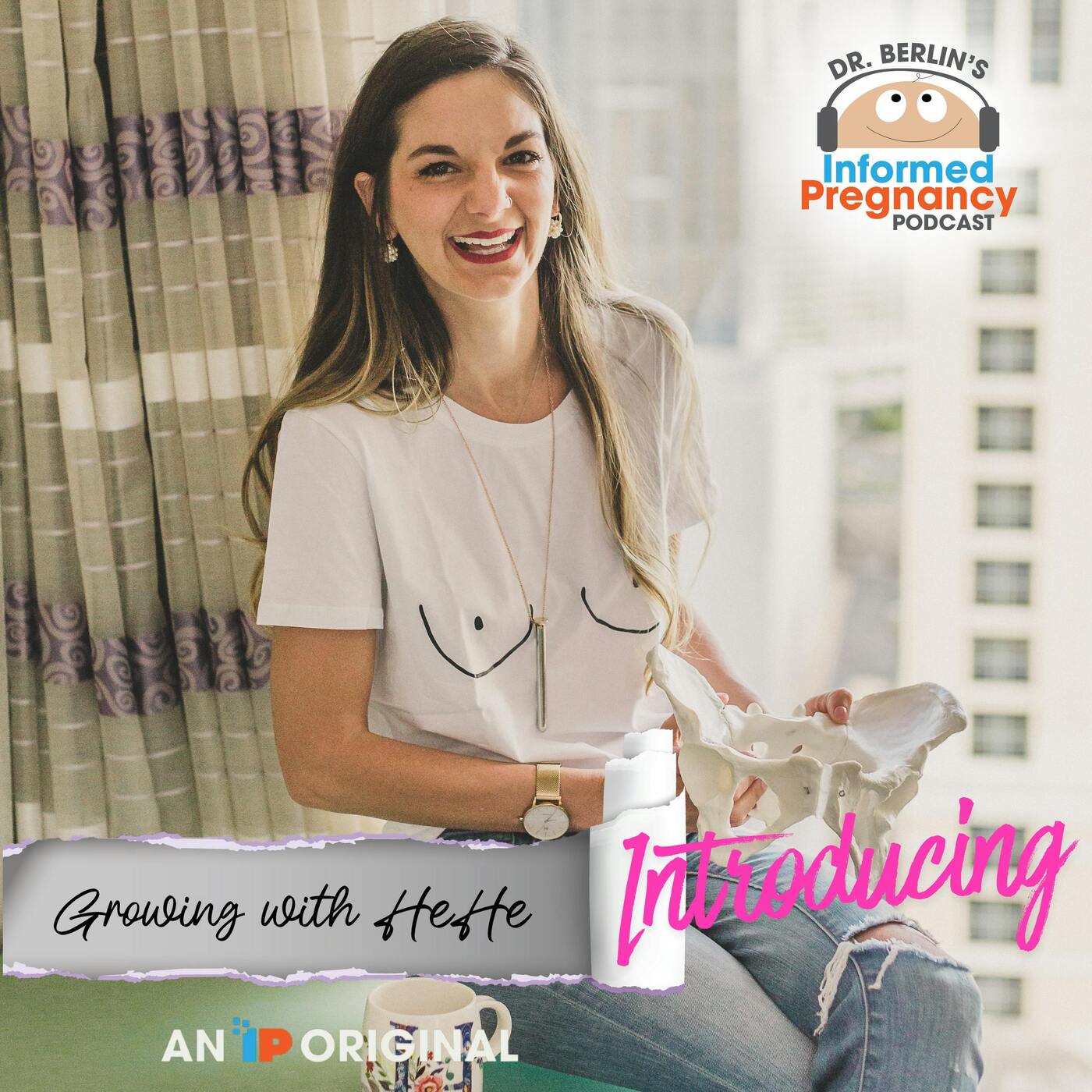
We have a brand new addition to the Informed Pregnancy family! This week on the podcast we have a special holiday audio preview of the first 3 episodes of Growing with HeHe. Or check out the full visual series here!
Growing with HeHe is an intimate short-form video series following HeHe Stewart’s real-time first pregnancy journey. You may know her as a doula, educator, and advocate for trauma-informed birth but this time, she’s turning the spotlight inward.
From her roots in a small Mississippi town to founding The Birth Lounge, HeHe has spent years empowering others with calm strength and fierce clarity. Now, she invites us to follow her own path, sharing week by week the emotional highs, physical shifts, and vulnerable truths of her first pregnancy. Through honest reflection and intimate storytelling, we meet HeHe, her husband Nick, and the circle of people who shape her journey.
Connect with HeHe:
Keep up with Dr. Berlin and Informed Pregnancy Media online!
Learn more about your ad choices. Visit megaphone.fm/adchoices
See Privacy Policy at https://art19.com/privacy and California Privacy Notice at https://art19.com/privacy#do-not-sell-my-info.
Key quotes
“I do a lot of encouraging people that you are doing enough and you are enough and your love just the way that you are.”
“my authority comes from the parents that hire me. I answer to them, they are my boss and I am loyal to them.”
“I don't need a piece of paper that says I'm a good doula. I know I'm a good doula.”
“thank you so much for sharing that. I appreciate your perspective. I wanted to let you know that I'm going to be declining this for X, Y, and Z reasons, and I feel really confident in that.”
“We didn't judge cows by how they had their babies. We didn't judge ducks when they laid their eggs”
Related episodes
- Ep. 491 Introducing Growing with Garrett
- Ep. 510 Preparation Matters with Nina Spears
- Ep. 493 In Conversation with Esther Friedman Schwartz
- Ep. 514 Before Baby #4 with Kara Sutton
Transcript
AI-generated transcript with speaker labels — may contain errors, especially names and medical terms. Dr. Elliot Berlin, DC appears in blue; HeHe Stewart in orange.
Dr. Elliot Berlin, DC [0:00] Hi, I'm pregnancy-focused chiropractor Dr. Elliott Berlin, and welcome to our second holiday hiatus episode in our very first Informed Pregnancy podcast episode of 2026. As we ease into the new year, I'm excited to bring you another special feature from our Informed Pregnancy Plus streaming channel. This time, we're diving into Growing with Hihi, a real-time pregnancy series following Hihi Stewart, doula, educator, and founder of Tranquility by Hihi. After years of guiding parents through pregnancy and birth, Hihi now turns the lens inward, inviting us to experience her own pregnancy through both her professional expertise and her personal, vulnerable day-to-day reality.
[0:47] Even with her deep knowledge, Hihi approaches each stage with curiosity, intention, and a refreshing willingness to discover things as she goes. In our Zoom conversations, we explore how her body is changing, how her mindset around birth is evolving, the decisions she's weighing, and the surprising ways her professional experience both supports and challenges her as she moves through the journey herself. The video series pairs these conversations with personal photos and clips from her life, creating an intimate, real-time portrait of a birth professional navigating pregnancy from the inside out. What you're about to hear is a special audio-only cut featuring a three-episode
[1:29] arc of Growing with Hihi. To watch the full series and explore more pregnancy and postpartum programming, visit Informed Pregnancy Plus at informedpregnancy.tv. I now present Growing with Hihi. Welcome to Growing with Hihi, a new series from Informed Pregnancy Media where we follow beloved doula educator and fierce birth advocate Hihi Stewart through her first pregnancy week-by-week. If you've heard episode 454 of the Informed Pregnancy podcast, you've heard Hihi talk about birth from the outside. This time, she's taking us inside. It's her first pregnancy and she's documenting it all, honestly, bravely, and with nothing to hide. Hihi grew up in a tiny town in Mississippi, just about a thousand people.
[2:42] Her home was full of love, discipline, and high expectations. The parenting style leaned authoritarian. Her parents worked hard, often multiple jobs, and they expected the same drive and dedication from their daughters. Even as a kid, Hihi was drawn to babies. She started babysitting at age 12 and became known for her uncanny ability to soothe even the fussiest newborns. That instinct eventually led her to earn a master's degree in human development and family studies, with a focus on child development and trauma-informed care. Nearly a decade ago, Hihi took her first doula training and immediately felt like something was missing. The training was too shallow, too impersonal.
[3:28] So she built something deeper. She founded the BirthLounge, a trauma-informed, data-driven support system for expectant parents who want more than just birth prep. They want real tools to protect their autonomy and reduce trauma. For years, Hihi has been the calm in the storm, the voice of reason, the person holding space for others. Now, the story is hers. In this series, we'll follow Hihi in real time through her first pregnancy and birth. Each episode, we'll hear directly from her, raw, unfiltered, and fully open about what she's experiencing in her mind, body, and spirit. From time to time, we'll also hear from her husband, Nick, and others in her world,
[4:13] adding layers to the story and new perspectives on this transformational journey. The first few episodes will introduce you to who Hihi is, the life she's built, and the fire that drives her. Then we'll catch up to present day and follow along week by week, all the way to birth and beyond. This is Growing with Hihi. Join us for the next episode, where Hihi herself takes the mic, brings us into her world, and starts from the very beginning. Welcome to Growing with Hihi, episode 2. Now that you've heard a bit about Hihi's journey from the outside, it's time to bring her in. This series is all about her, her voice, her story, and her experience. So let's rewind to the beginning and get to know Hihi in her own words.
[5:19] Not the pregnant mama, not the doula or educator, at least not yet. Just a good girl from Mississippi who wasn't even told where babies come from, and who somehow still grew up with a fire to change the way families are born. Hihi Stewart, welcome to Growing with Hihi.
HeHe Stewart [5:36] Thank you so much. I'm so excited to be here.
Dr. Elliot Berlin, DC [5:39] I'm excited to have you. Let's get to know you. You grew up in Mississippi in a tiny town. What was that like day to day?
HeHe Stewart [5:45] Well, at the time, it was all that I knew. And it was lovely, I thought. It was great. Our neighbors were right down the street, which also meant my parents and their friends were so close. We always had people around us. And we lived what today people would call a crunchy life. Our food came from our backyard. And we slaughtered the cows that my dad raised for meat. And our neighbor gave us eggs when we traded them meat. And our veggies came from our neighbors. And the teachers that taught me in high school were also my dad's teachers. And so growing up, it was great. I didn't know any different. I loved being from a small town.
Dr. Elliot Berlin, DC [6:25] Wow, no Instacart. No Instacart, no Instagram. Yeah, no Instagram, Insta-slaughter. Okay, so I mean, does that give you a little insight into birth? I mean, if you had the animals around you, were you exposed to birth in that way?
HeHe Stewart [6:41] Every day, all day. And I think that's actually why it was so normal for me is because when cows were born on the farm, nobody delivered them. They delivered themselves. And my dad would be there observing and watching to make sure things went well. But a lot of times, cows would have their babies overnight. And so we would wake up to new babies. Every now and then, we would have a cow that went missing, and we knew she was pregnant, and we'd go searching for her. And something was, in fact, wrong. I learned that cows do have C-sections. And so from cows to pigs to horses to ducks to chickens, I learned about birth in a very normal and natural way.
[7:21] And it was very normalized. It was just a part of life.
Dr. Elliot Berlin, DC [7:25] It's very cool. I once met, when I was doing doula work, an Ogudjuin who was towards the end of his career. And he had grown up on a farm, and he was so gentle and so calm and so patient with his patients. And I one day asked him about it. I'm like, how and why? It's just not the norm. He stands out from the norm in that way. And he's like, well, I just grew up with it on the farm. We'd go, let's just be there. And if they needed a little help in hand, we would just get in there and give them a helping hand. Otherwise, we would just stand by and watch. Now you make me think, I didn't realize cows have C-sections. I'm surprised nobody has marketed it as Caesarian beef.
[8:02] I don't know what the benefit would be one way or the other, but there's always people looking to find an angle. How about growing up? You're one of two kids.
HeHe Stewart [8:12] I am, yeah. I have a little sister. She's five years younger than me. And growing up, we were really close. But then as we got older, five years is a lot. So 15 and 10, very different ages. 20 and 15, 25 and 20, those are really, really different ages. And so during our teen years, we kind of got a little bit more distant just because our lives were in such different places. She was in high school when I was deep into college. And now that we're adults again and we're both, well, she's almost in her 30s. She would die if I said, we're both in our 30s. She'd be like, I am not. But now that I am in my 30s and she's nearing her 30s, we are starting to get close again
[8:52] because our lives are back into the same place. And I not only love having a sister, but I love being an older sister. And it is one of the titles in my life that I hold to a high esteem. I really take a lot of pride in being an older sister. And I think for me having this first baby, it's also very important that we have other children because I know what it's like to be a first born and have other siblings. And it has definitely shaped me and who I wanna be as a mom.
Dr. Elliot Berlin, DC [9:23] You have described yourself as a rule follower. How does that affect your relationship with your parents?
HeHe Stewart [9:29] Yeah, my parents and I have a very interesting relationship. I was a big rule follower as a child. I grew up being a really good kid, if you will. I didn't sneak out as a teenager. I didn't lie because I was always afraid of getting in trouble. My parents though, growing up in a really strict conservative household, it did sometimes feel like no matter how good I was or how well I followed the rules, I couldn't do enough. I couldn't be enough for them. And that has definitely impacted me as an adult as well. And I think it has impacted the work I do as a doula. I do a lot of encouraging people that you are doing enough and you are enough and your love just the way that you are.
Dr. Elliot Berlin, DC [10:15] It's such an interesting mix you put together
HeHe Stewart [10:18] because it's sort of like conservative hippie. Yeah, I think that when you live 35, 40 minutes from your nearest grocery store, you're not a hippie because you want to live on a commune. You live on a commune because your nearest grocery store to get milk is three, five minutes away, you know?
Dr. Elliot Berlin, DC [10:36] Right. But I mean, it seems like you've moved to the other side, liberal hippie.
HeHe Stewart [10:41] Yeah.
Dr. Elliot Berlin, DC [10:44] And also, okay, age 12, you're babysitting and they call you the baby whisperer. So you obviously had a knack for kids from an early age.
HeHe Stewart [10:53] Earlyest age. And so I could put any baby to sleep and I still can. My parents, I mean, obviously you can't drive at 12 and my parents used to drop me off and I would babysit. And sometimes I would have multiple children at a really young age, at 12, 13, 14. And these parents were just blown away. And I used to say, well, I'm gonna be a professional babysitter which I thought would translate to being a nanny. Which I'm grateful now that I'm a doula and I get to help people for much longer than a nanny. And I get to be part of the birth experience too which a nanny doesn't get. But yeah, I've always been kind of this baby savant, if you will. I feel very connected to them and I can walk
[11:35] into a room and babies are very drawn to me. And I don't know, I can be around a baby and they just settle and I don't know. It's just an energy I have.
Dr. Elliot Berlin, DC [11:45] Like you said, sister, five years younger is not exactly the same cohort. So was that sort of a babysitting 101 for you?
HeHe Stewart [11:54] Yeah, I think so. Obviously at five, my parents didn't have me babysitting her, but I always had a little tag along. And so for my entire life, for what I can remember, I was always having to think about, oh, and we've got to accommodate it for her and oh, but she can't do this. So maybe we choose something different or oh, I don't think I'm gonna play that game because my little sister can't play either. And so it's just, you know, it was a natural way to kind of think about younger children and get used to life with younger children and learn how to care for something and someone that was younger than me.
Dr. Elliot Berlin, DC [12:32] You studied human development and family studies.
HeHe Stewart [12:34] What drew you to that field? Yeah, so at the time I actually thought that I would work with families on the autism spectrum. So families that had children that had autism spectrum disorder, it was a big passion of mine. And I knew that I needed something in addition to my psychology undergrad degree. And I chose human development and family studies because human development, I feel, is pretty obvious. But the family studies piece came from me really understanding and being able to observe how ASD impacts family dynamics. And I knew that I wanted to get into families and make their life easier. It's kind of funny because after I got my master's,
[13:17] I moved to Boston and I did try to get into the ASD community and doors were just shut in my face and the universe was just like, nope, nope, nope, nope. I couldn't get emails back. I couldn't get my foot in the door. I couldn't, there were no openings in organizations I was trying to join. And it ultimately pushed me into early childhood education which ultimately led me to be in a doula.
Dr. Elliot Berlin, DC [13:40] The universe clearly wanted you there because there was such a need in the autism community for great energetic people like you. So the fact that the universe was artificially closing doors for you made you kind of go where you needed to be. I wonder what college was like. Growing up in a super conservative family, we kind of said in the intro, no even talk about sex. How did like getting into college sort of, I'm curious what walking into that tunnel feels like.
HeHe Stewart [14:10] Well, I think it's probably no surprise that I had a lot of firsts in college, including sex. I went to the first late night taco bell run in college and drank alcohol for the first time in college. And there were so many firsts where people around me had already experienced these things in high school and I just didn't. Not only did I not have that freedom but growing up in a super small town, I didn't really have the access to a lot of it either. And yeah, so for me, for college, the first year was a little wild. I'm sure everybody can kind of predict that. But after that I settled down and I really kind of settled into who I was and I started to find my voice
[14:55] and I started to really find that maturity that I think a lot of people pick up in college. And it wasn't until my second semester of my senior year of college that I decided to go to grad school. So I actually decided to go to grad school just weeks before I needed to apply.
Dr. Elliot Berlin, DC [15:13] Was it hard to shake the sort of guilt
HeHe Stewart [15:15] that you must have had as a kid with all those firsts? Oh, I didn't have any guilt over any of those firsts. I actually had a period of time where I was really resentful to my parents for not letting me have more of a fun high school experience. And so college showed me that I wanted to be a little bit different as a parent. And so I think it has shaped who I wanna be as a parent. And my husband and I talk about this a lot is what kind of freedoms will we give our kids in high school? Because he grew up with a lot of freedom and he did not have that experience freshman year. He had a very easy transition into college and not one that was mirroring Bourbon Street.

Dr. Elliot Berlin, DC [16:02] Well, we're just at the beginning of the journey and there'll be a lot to talk about. Hihi's story is powerful and we're just getting started. In our next episode, we'll explore how she stepped into the birth world, what she saw missing from traditional doula trainings and how she created something entirely her own. Every pregnancy is a story. This one belongs to Hihi. Share us with a friend and be sure to come back next time as the journey continues. Previously on Growing With Hihi, we explored Hihi's upbringing, family life and the early academic journey that gave her a deeper understanding of childhood and families. Today we pick up with the moment that changed everything
[17:10] when Hihi found her calling it birth work. From her very first doula training to the creation of the birth lounge, this is the story of how she built something that didn't exist and why. Hihi, welcome back.
HeHe Stewart [17:23] Hi, I'm excited to be here.
Dr. Elliot Berlin, DC [17:25] All right, so what first introduced you
HeHe Stewart [17:27] to the world of birth work? Well, I was working in early childhood education and I realized that when parents brought their children to childcare for the first time as a newborn, this is right as your maternity leave is ending. You're a fresh parent, your baby is a fresh newborn and you're having to kind of go through this transition of going back to work and handing over your baby to what seems like strangers, people that yes, you have met and interviewed and you feel comfortable with the facility, but they are essentially strangers. I just found like parents had so much angst. There was a lot of energy there. They were a little bit excited to get back to normal life and have routine.
[18:09] They were a little bit nervous about handing over their baby. They were a little bit sad to have to be going to work and I just thought there has to be a better way to this. I don't know why this is so hard. I'm not sure, I was very young. I did not have children at the time and the more I looked into it, I realized, hmm, actually I think that we've got to intercept these people way down the line, way before this because the more birth stories I heard, the more traumatic birth stories and to me at the time it was normal. I was like, wow, birth is horrible. This is terrible and I realized that if we could actually help people prepare for birth that their transition back to work
[18:54] would not be filled with as many or as intense of emotions as what I had seen in the classroom. So that's kind of what drove me to explore birth work.
Dr. Elliot Berlin, DC [19:03] That was really powerful insight from someone 10 years before having your first kid and also being really young.
HeHe Stewart [19:12] I think having a master's in human development and family studies helped. I really understand the family dynamics. I really understand the inner workings of human interaction and human relationships and at the time I was fresh out of my master's and not only was I really passionate about it but it was in the forefront of my brain. And so I was really, really committed to helping families have a smoother and easier time and I think I did that in the classroom but my impact as a doula has just been tenfold from what I could and was able to do in the classroom.
Dr. Elliot Berlin, DC [19:48] How did you learn about doula work?
HeHe Stewart [19:51] So I had a coworker actually who had shared with me like you'd be a really great doula and I thought, what is a doula? And she said, well, it's kind of like a birth coach. Like you work alongside midwives and OB-GYNs and you coach people in having babies. Well, growing up in Mississippi, we are the state that has the highest teen pregnancy, right? So I had already had it.
Dr. Elliot Berlin, DC [20:10] Congratulations.
HeHe Stewart [20:11] Thank you very much. I'm not sure that's an award we wanna win but we've got it year after year.
Dr. Elliot Berlin, DC [20:15] You're the best at something.
HeHe Stewart [20:17] Yeah. And so I had friends that had had babies before and I thought like, oh yeah, I've already kind of done this in some regard, not obviously in the role of a doula but kinda and so I took a course and I was actually very, at the time I was really excited because it was only a weekend course and I thought, yes, I'm gonna be a doula after a weekend.
Dr. Elliot Berlin, DC [20:42] That's how I became a bank writer. Exactly. For your weekend course.
HeHe Stewart [20:47] Exactly. And then I got into the weekend course and I was really disappointed and I was actually a little bit, I don't know, I might even say like light devastation because I just could not believe, disbelief is another great word. Like I could not believe that the training was so shallow and remember I already had a master's at this point in human development and family studies and so when they talked about the development of pregnancy, it was like an hour. Why? I just studied that for years and then when we talked about postpartum struggles, we talked about it for maybe two or three hours and I was just blown away. I really was blown away and I was really, really sad
[21:33] and also concerned with the lack of mentorship that came from the training afterwards. After the weekend course, you get a certificate that says, congratulations, you're a doula and then they send you out into the world and you start being a doula and there's no mentorship. Now of course, this was 10 years ago and so there are other programs now that probably incorporate more mentorship but who knows if it's a requirement. I certainly don't but it wasn't even incorporated in the program that I took 10 years ago and like I say, that was my first really kind of hit in the face where I was like, woo, what a wake up call. We are having people go out to call themselves doula
[22:12] and support people in this very pivotal time in life like pregnancy and birth and we are training them for just 16 to 20 hours.
Dr. Elliot Berlin, DC [22:22] My brain is exploding with ideas right now. First of all, I think that your training as a doula came much earlier. I think that doula was always a thing in smaller towns and people were always surrounded by the village and you just learned on the job naturally and now it's a professional trade because we don't live in the village anymore. We don't have all the people around us. So I think you got the OG doula training which probably by contrast showed you how much was lacking in the more traditional training. That's explosion number one in my mind. Number two is I did doula training. My wife did doula training and I thought it went two different ways.
[23:08] I was impressed at how much they packed into that three or four days on the one hand if it was only gonna be three or four days but we also had a training where there was strong encouragement for mentorship afterwards. So I sort of looked like, I looked at it like getting a driver's permit. It was like, hey, okay, now you can get behind the wheel and we're pretty sure you're not gonna harm anybody but you don't know how to drive yet. Now you have to go learn how to drive and you do that with other people who are very good at it and teach you from all their experience how to drive. That's kind of how I saw the doula certificate but I wonder for you
[23:41] because you kind of had real world birth experience already both on the farm and with all those teens where you grew up, if the contrast of that just few days really and then all your college and graduate training made it feel very skimpy.
HeHe Stewart [23:59] Well, I also didn't know about a ton of programs. Like I say, this was 10 years ago. I just did a simple Google search and there were only two programs at the time that really popped up as the main ones. And so I took the one that came to me first in Boston in the Boston area. And so, I gotta be honest, I didn't really do too much due diligence into the training that I did. I didn't realize that I should and I do think 10 years ago, the access to the many types of trainings that we have now just was not available.
Dr. Elliot Berlin, DC [24:32] You decided not to certify.
HeHe Stewart [24:35] I did, I've never been certified and God be willing, I probably never will. I have a real problem with doulas being certified because it typically means that you answer to that organization. That organization has some sort of not ownership, but they do have some sort of authority over you. And the way that I view a doula's role is my authority comes from the parents that hire me. I answer to them, they are my boss and I am loyal to them. I don't take insurance money because of that. I don't work for hospitals because of that. I work for the people who hire me. I am their cheerleader, I am their person. And so for me, it was a conflict of interest
[25:22] to become certified. Now that wasn't my original thought. I didn't become certified because at the time it felt like a money grab. They made you pay for the booklet and they made you pay for the test and they made you pay for this and they made you pay to print out your certification and they made you pay for that. And for me, it felt very, in all honesty, it felt very pyramid schemey where I thought, I don't like this at all. And I don't need a piece of paper that says I'm a good doula. I know I'm a good doula. I have two other pieces of paper from universities telling me that I am qualified for this position. And so, yeah, I didn't. And now just over the years,
[26:02] I've seen how certifications, not always, but they can definitely interfere sometimes with patient care and compromise that in certain ways.
Dr. Elliot Berlin, DC [26:12] A zillion questions, but I have to really harp on one thing that you said. You don't take insurance money and what comes along with that? I think we all want to go to providers who take our insurance, which is one of the things that's wrong with the system. Insurance is really in my mind there for when there's disease, when there's something wrong and you need to write it, not for all the health and wellness things that we do. My gym doesn't take my insurance. I can choose whatever gym I want to. My trainer's not told which exercises they're allowed to do with me and which exercises they're not allowed to do with me. And I think we don't realize
[26:45] how much of that control we give up when we put ourselves in the insurance arena. Very strong point. Also, I wonder what it was like to attend your first birth that really is a professional doula.
HeHe Stewart [26:59] Yeah, so as for the insurance question, I do take HSA and FSA dollars and I will give people a super bill that they can then submit to their insurance to get reimbursed and we do have a lot of clients who are successful in that. For me, I envision a world where our nation gives a stipend to families and they are allowed to use that stipend in whichever way that they want and hire whoever they want for their birth, regardless of that person's training or certification or education background. That family will be able to use that stipend, that money to hire their doula.
Dr. Elliot Berlin, DC [27:35] Is it too soon to start calling you Madam President?
HeHe Stewart [27:38] Oh, I don't know if I want that responsibility.
Dr. Elliot Berlin, DC [27:42] I bet you don't. Nobody who would be good at it wants it, but I really do love that approach.
HeHe Stewart [27:46] I do think that it's a very equitable way to get doula care into the hands of people and it leaves your doulas as a neutral third party and they are not obligated to anyone except that family, which is essential in the doula role. When doulas start answering to insurances or hospital systems, then it really does compromise that role almost 100% in my mind. As for attending my first birth, it was really great. So this was a second time mom and we're still friends today. She actually is, I love her so much and we stay connected and that baby is almost 10 and I cannot believe it. Oh my goodness, it goes so fast. That is wild. And I get pictures every year
[28:28] when that child goes to school for a new grade and it's just so much fun. But yeah, she had a lot of trauma. She had a very traumatic first birth and it was actually the birth that led me to realize, oh, I cannot just meet with someone once or twice and then be at their birth. We have so much education to do. We have so much to talk about. I have so much to learn about this mom and this family and her relationship with her partner and the goals that she wants to achieve and any past births that she has. And it's really funny, I'll give you a little snippet, but we had this plan that we did not want a certain provider because that provider had caused her trauma in her first birth.
[29:14] She did decide to go with the same hospital, but we had a plan. We had practice advocating. We had practice asking for a new provider. We had practice saying, no, thank you. I don't consent to this provider being part of my birth. And wouldn't you know that when we showed up in labor, we were pretty far along and the only provider that was available was the one that we didn't want. And we did say, no, thank you. I don't consent to this provider. And they said, well, she's the only one. And we said, okay, we'll just wait for the next provider. And he said, they are in the OR and it's going to be a while and this baby is coming. And so we did practice and we did use the things
[29:53] that we had practiced and we did advocate. And it still turned out in a way that we didn't want, but looking back, and this mom will tell you the same thing, that was very healing. It was not about not having that provider. It was about finding her voice to know that she could stand up to that provider and advocate even if that provider was there. And that changed my whole look as a doula. And so now I don't teach people just to say yes or no to things. I teach you how to interact and engage with the hospital system, no matter who shows up to your birth. Yes, your doctor may be on call, but they may not be either. And I still want you to have the same amount
[30:35] of confidence that you would with your provider with a provider that you've never met before.
Dr. Elliot Berlin, DC [30:41] Wow, that's so powerful. And you've switched from doing one-on-one doula support and you built something bigger, the BirthLounge. Tell me about that.
HeHe Stewart [30:49] I did, the BirthLounge is an online platform. It provides comprehensive childbirth education that is designed to help people avoid birth trauma. So it is trauma-informed patient-centered care from start to finish. And it teaches women how to engage and interact with the hospital system in a way that centers them and de-centers the hospital. It is respectful care. So it teaches you how to respectfully communicate, which I think is lost in a lot of advocacy. A lot of times, advocacy looks like, no, I'm not gonna do this, or I absolutely will not follow your rules. And that's not what we teach in the BirthLounge. The BirthLounge is more like, thank you so much for sharing that.
[31:28] I appreciate your perspective. I wanted to let you know that I'm going to be declining this for X, Y, and Z reasons, and I feel really confident in that. I am so thankful that you're gonna be respectful of that. And I'll let you know if anything changes. And please come to me if anything changes on your end. And so you can see where it's collaborative care between patients and providers, but it's still very much centers that birthing person and their partner and their goals.
Dr. Elliot Berlin, DC [31:57] How do you think your background, both personally that we've talked about, and also in child development, has sort of uniquely shaped the way that you educate and support the families that you work with?
HeHe Stewart [32:09] Well, in two ways. I think that my confidence is impenetrable because just growing up in a small town and on a farm, you have no choice but to be confident. There are so many things in a small town and on a farm that you just have to be confident, and we have to do this, and you've got to get up at 6 a.m., and this is what today looks like, and you just have to do it. I guess that kind of goes back to grit and hard work as well. My work ethic is, I think, very different than a lot of people's as well, and then the second thing is, there is no judgment. We didn't judge cows by how they had their babies. We didn't judge ducks when they laid their eggs,
[32:49] and again, going back to the small town, you're with those people your whole life, so the same people that are in your preschool class, you're with them forever. It is the only thousand people that are around you, and so you have to learn how to be nonjudgmental because it's just the way of life. If you judge that person, then now you've got someone in your very small circle that you don't get along with, and that doesn't serve anybody, and when you are in kind of a smaller village versus where I live now in Boston, if I didn't like somebody, I could just turn to the left and meet 10 more people. That doesn't happen in a small town, and so you have to learn how to get along with people.
[33:30] You have to learn how to work together with people, and when natural disasters strike, especially down in Mississippi, we are affected by hurricanes. Our little town was taken out by Hurricane Katrina, and we are affected by tornadoes. Just recently in 2024, the spring of 24, my parents lost their entire home. It was completely demolished by a tornado, and it is those thousand people that are around you that rally around you and help you clear your land. They come and cut the trees off your house. They come and help you gather up your belongings that have been strode for miles and miles, and so I think that this idea of we're all in this together
[34:13] and we love each other no matter what was really instilled in me from a really young time in life, and I really do carry pretty much no judgment for people in life. I just want you to choose what you choose and be happy and more so be confident in that.
Dr. Elliot Berlin, DC [34:31] Super refreshing. After we talked about you growing up in the town of a thousand people on Informed Pregnancy Podcast episode number 454, a great episode, I was standing in the supermarket looking around and assuming there's about a thousand people in here and I'm like, what if this was the entire community I grew up with? This is hee-hee's whole town right here. This is hee-hee's whole town. It was a crazy revelation. Next time we'll learn about Nick, the EMT turned healthcare administrator who won hee-hee's heart. Every pregnancy's a story. This one belongs to hee-hee. Share us with a friend and be sure to come back next time as the journey continues.
Want more pregnancy + parenting? Start your FREE TRIAL of Informed Pregnancy+ and get access to all our curated pregnancy and parenting content — original series, iconic birth films like The Business of Being Born, prenatal workouts and more.

0 Comments