
November 9, 2023 · 49 minutes · Episode 380
About this episode
Multi-hyphenate actress and new mother Bonnie Wright, famous for her role as Ginny Weasley in the Harry Potter film series, is back to tell us all the details of the birth of her first child.

Connect with the guest!
- Follow Bonnie: https://www.instagram.com/thisisbwright/
- Follow Go Gently: https://www.instagram.com/gogently.earth/
- Check out Go Gently online: https://www.gogently.earth/
Keep up with Dr. Berlin and the Informed Pregnancy Project online!
- Read about essential oils and birth on the blog: https://informedpregnancy.com/single-post/essential-oils-during-birth-quick-and-easy-tidbits-for-practical-and-safe-use
- www.informedpregnancy.com
- www.instagram.com/doctorberlin/
- www.facebook.com/InformedPregnancy
- www.twitter.com/doctorberlin
Learn more about your ad choices. Visit megaphone.fm/adchoices
See Privacy Policy at https://art19.com/privacy and California Privacy Notice at https://art19.com/privacy#do-not-sell-my-info.
Key quotes
“So I feel like the whole birth itself was just a massive like softening and trying to like, kind of go through the pain and not fight against it, which I felt like took a lot of like mental coaching in your own way.”
“I ever felt any doubt in my ability to do it, I felt like I never said it out loud. I think that was one time when I was like, how long is this gonna be? What's changing here? Nothing's changing. And that was the only time that I ever voiced any sense of like doubt.”
“And every time I thought about it, I decided not to ask because weirdly the not knowing was what helped me, which is funny because I'm definitely someone who likes to ask questions and know everything, so it was interesting.”
“Yeah, I feel like there's just the ups and downs of it. Like you could have a couple feeds and you're like, that was great. And then you have a couple that are not great and you're like, oh my God, I can't do this. This is so hard.”
“And yeah, I feel like the biggest takeaway was just realizing at the end, my body knew what to do. Nature did its thing.”
Related episodes
- Ep. 379 Bonnie Wright: Before Birth
- Ep. 350 Ciara Whaley: After Birth
- Ep. 374 Josephine Skriver: After Birth
- Ep. 336 Natalie Dreyfuss: After Birth
Transcript
AI-generated transcript with speaker labels — may contain errors, especially names and medical terms. Dr. Elliot Berlin, DC appears in blue; Bonnie Wright in orange.
Download PDF of the Transcript
Dr. Elliot Berlin, DC [0:12] Welcome to the Informed Pregnancy and Parenting Podcast. I am your host, pregnancy-focused chiropractor, Dr. Elliott Berlin. You have tuned into the after-episode of a before-and-after birth story with my guest, who is a writer, producer, and actor, and environmentalist, and now a mom. Congratulations, Bonnie Wright. Welcome back to the podcast.
Bonnie Wright [0:56] Yes, thank you. A new title I have now, Mom. It's good.
Dr. Elliot Berlin, DC [1:00] Yeah, it's going to be hard to fit everything on one card.
Bonnie Wright [1:03] I know, yeah.
Dr. Elliot Berlin, DC [1:05] Last time we talked to you, you were very pregnant. You were a little bit uncomfortable and not sleeping. How was the end bit of your pregnancy?
Bonnie Wright [1:14] Still uncomfortable and not much sleep. Although, actually, I got very good at resting, which I'm not that good at as a person. There were two times, like I shared in the last episode, that there were these kind of false starts of feeling like labor was coming on, which they both like really tied me out, the experience. So I made a very conscious effort to really rest. So I watched a lot of television and made close friends with my couch. And I feel like it really helped me when it came to birth. I felt like I actually had had some rest. Oh, that's wonderful. Myself as one of my better friends, very comforting.
Dr. Elliot Berlin, DC [1:50] To recap, the plan ultimately was to labor at home, birth at home. You have these twin sister midwives who had been pals of yours from before pregnancy. And if I remember correctly, pre-pregnancy Bonnie wasn't even sure if she wanted kids. At some point, then it became a yes and then no birth plan. And then in the pregnancies, when you sort of formulated this vision of giving birth at home with an open mind to whatever is needed.
Bonnie Wright [2:21] Yeah, exactly. Yeah, I feel like I wasn't really informed, became more so. And I guess maybe just got more in touch with like how and what I saw pregnancy as. And for me, yeah, it was something that I really wanted to fully experience in all its glory. And also, yeah, just be somewhere that I felt very comfortable, which really in the end felt like home when I really kind of tuned into trying to imagine the experience as much as we can try to imagine it. But yeah, always staying open, knowing that you just want to be where is safe as things unfold.
Dr. Elliot Berlin, DC [2:55] Totally. That makes sense to me. How and when did things start?
Bonnie Wright [3:00] Yeah. So I started getting contractions at like 4 a.m. on the Tuesday and his due date was the Wednesday. So he came a day early and or perfectly on time, two hours before midnight in the end. Yes, I started getting contractions at 4 a.m. because I'd had those kind of two full start kind of feelings. I kind of felt like, OK, this is familiar, these sort of contraction type feelings. But very, very quickly, they became quite long and quite consistent and not in a way that I thought I was just thought that the kind of early labor could sort of like they could just come and go or the contractions could be quite far apart or not have much rhythm to them and slowly get rhythm over a couple
[3:40] of hours. But sort of by about 530 from 4 a.m., I was already texting Tiffany and Taylor, my midwives and Patti Ardula. So it kind of went quite quickly in terms of the regularity. The contractions were already kind of like a minute in length. And my husband, Andrew, was like quickly downloading an app to like count the contractions on. And the app was already like, OK, start getting your stuff ready. You know, had the hospital like what it's based on your pattern, meaning how long they are,
Dr. Elliot Berlin, DC [4:11] how the frequency and things like that. Yeah, that was like, OK, you know, get ready.
Bonnie Wright [4:18] They need to make one for home birth. Yeah, exactly. Start calling the midwives. Yeah. So I saw that as my time to take a shower and get up and try to have something to eat before I didn't want anything to eat. So, yeah, it kind of happened quite quickly. But also it was kind of nice. Like, I guess the contractions themselves were manageable. They weren't like, you know, at that point, sort of difficult to ride. So I was just trying to sort of like the two of us, Andrew and I just kind of ride them together and like get up and try and have a shower and have a snack. And time kind of went quickly. And then by the time we spoke to Patti Ardula on the phone, I was already getting
[5:00] to the point where I'd be on the phone and I'd be in a contraction, I'd just be like unable to speak for a minute. She's like, oh, okay, you're like already beginning to sort of check out kind of
Dr. Elliot Berlin, DC [5:09] happening. So it seems like in a short period of time, you realized even though you had two false starts, quote unquote, that this was different. Yeah, for sure. And was it the length or the intensity that made them feel different or the frequency or a little of everything?
Bonnie Wright [5:26] I think all of it. I think the intensity as that grew and then just how like rhythmically similar they were and the length of them. And then I think it was really when I started to kind of like naturally bend over or get into positions as they came. That's when I kind of felt as though you kind of begin to get that feeling of, yeah, I guess that kind of checking out or that kind of going to this other sort of place that obviously active labor will kind of bring on more. But I think before when I'd experienced the early, I was totally like conscious and able to like chat through the contraction, but this was like speechless already.
Dr. Elliot Berlin, DC [6:04] For these in that earlier part, like just before, during and after the shower,
Bonnie Wright [6:09] where did you feel the intensity? I guess it was more in my front. Like I never really felt like intense back kind of pain during the contractions. It was just sort of in my front. And I guess sometimes, yeah, like my pelvis or sometimes kind of my insides of my legs, I guess, because I don't know whether that was the strength of my legs kind of holding myself up. I feel like that was the strongest thing throughout labor. I was like, wow, my legs are like doing all the work to support me. I feel like they were the most tired in the days afterwards. But yeah, I don't know. It was like hard to explain them, but I feel like they were just these kind of waltz focused in the pelvis. They were kind of those consuming
[6:51] type of like contractions where you just felt like a little overwhelmed in that moment.
Dr. Elliot Berlin, DC [6:56] Yeah. So during those times, were there any particular things that you found comforting?
Bonnie Wright [7:03] I guess what I didn't find comforting was any type of like communication in those moments. Like even if I was asked a question, I guess at that point, it was still just Andrew and I, I would just be like, I can't give you an answer until come and go. And then I'd be like, okay, yeah, but I felt like totally unable to sort of communicate or even like look up. Like I felt very kind of like down and that kind of continued throughout the labor. I was like a lot quieter than I thought throughout the whole thing. Oh, you didn't make a lot of noise. Is that what you're saying? I mean, I guess I made noise, but there was so much going through my head that was like I was having
[7:40] a conversation with everyone in the room, but I wasn't actually able to like say a lot of things. And I feel like the beauty of it, everyone was very connected to like know what I needed, but I felt like there was this internal conversation with me going on with everyone, but I was unable to find the words or energy to say them, which is not something I usually struggle with. I like to talk. So was that shower just a last chance for bathing before the big event or was it meant to soothe your body? I think I took it as both really as soothed. That was kind of Patti's suggestion too, when we called her about seven or eight AM and she was like, okay, we'll have a shower and you know, that will soothe you for a bit and a last chance
[8:23] to have a shower. So that was very soothing and kind of felt like I wanted to stay in it forever. I was like, I can just stay in here and got out. And then I guess Patti must have come by about just before 10 AM. Okay. So this is around five hours or so into it. Yeah. Okay.
Dr. Elliot Berlin, DC [8:41] We'll take a quick break, but before we go there, the most important question is what did you eat?
Bonnie Wright [8:46] I ate a piece of toast with peanut butter. That was the last thing I ate till 11 PM.
Dr. Elliot Berlin, DC [8:52] You glutton. All right, let's take a little break and we'll be right back. We are back with new mum, Bonnie Wright. Okay, so labor starts. You realize fairly quickly, this is different than the fall starts. You call your midwives, you call your doula. You hop in the shower and have toast with peanut butter. And five hours into it, Patty comes your doula.
Bonnie Wright [10:50] Yeah, so she arrives and I guess she immediately is just checking in seeing where I'm at. But I obviously already was kind of at that point, kind of in my own sort of space. But basically, we just kind of went through some stuff that we'd like worked on as kind of ideas between my husband and I just kind of like, you know, leaning on him sort of getting into certain positions that weren't too intense at that point, but just sort of small ways to kind of like stretch and sort of sit into them kind of like squats kind of holding his arms kind of being supported by him. We had one of those using the piece of fabric that people do the robozo on, but
[11:27] just hanging it in the door frame so I could just hang from it. And that felt really good sort of like being just very weighted and down in my pelvis. And so while I was doing that, they were beginning to set everything up because it's like, okay, well, we better get the tub out, we better get all the stuff on the floor to protect the bed and the wood floors and all those things. So they were kind of like doing that while I was still sort of able to just ride the contractions while that was happening.
Dr. Elliot Berlin, DC [11:53] Are the midwives there at this point?
Bonnie Wright [11:55] So they arrived at, I guess it must've been about 12 they arrived.
Dr. Elliot Berlin, DC [12:00] Okay. And in that time from when Patty came until the midwives came, did
Bonnie Wright [12:06] things continue to pick up pace? It just like picked up. I feel like already from almost at that point, even just like a bit before the midwives came, I felt like, I don't know, in my mind, I had just assumed that there'd be a while where like between the contractions, there would be a tiny sense of relief, but they felt so close together that I felt like literally until that baby was born, that there was not a break. You know, it felt pretty like active to me, who knows what, when that transition kind of happens, but they were getting much, much more intense, the contractions or like in, to the extent that when my midwives arrived, I was already kind of in my own kind of world
[12:47] by the time they arrived in your own world, to the extent that you
Dr. Elliot Berlin, DC [12:51] recall, can you describe feelings like mental, physical, spiritual feelings?
Bonnie Wright [12:57] Yeah, sure. I guess to me, you know, I was sort of trying to tap into that kind of, whilst you're feeling that pain, kind of attempting to soften too, because I feel like the more you kind of clutched onto that pain, the harder the contractions felt. So I feel like the whole birth itself was just a massive like softening and trying to like, kind of go through the pain and not fight against it, which I felt like took a lot of like mental coaching in your own way. I guess spiritually, I feel like the internalness of it all felt very like I was kind of checking out and going to some like other place, which got more intense as the labor went on.
Dr. Elliot Berlin, DC [13:38] And is that a comfortable thing, like getting out of your mind or is it just a thing?
Bonnie Wright [13:44] I mean, yeah, definitely the whole thing was the hardest thing I've ever done for sure, both physically, mentally, just to really like go there, I guess, as the contractions got heavier and obviously you're constantly like trying to find new positions and not staying in one position for too long, even if it did feel good, because I felt I could get kind of like stuck there and not sort of progress, but essentially from like that time until about six or 7pm, like nothing really changed and those contractions stayed pretty intense for those hours and was using all different tools of kind of pain management of positions and different things. And yeah, I don't know, it was just any time I've
[14:25] I ever felt any doubt in my ability to do it, I felt like I never said it out loud. I think that was one time when I was like, how long is this gonna be? What's changing here? Nothing's changing. And that was the only time that I ever voiced any sense of like doubt. And even when I said it, I kind of was like, I'm okay, it's fine. And I felt like I didn't want to like put that out into the open because it kind of then I kind of believed it. So I felt like any sense of doubt I had, I kind of just internally kind of absorbed to kind of have the confidence, I guess.
Dr. Elliot Berlin, DC [15:00] going. What was around you? Did you have particular sounds or sense or lighting?
Bonnie Wright [15:08] Yeah, I guess what was unusual was a lot of it was in the brightness of the day, which I guess in my mind, maybe I just assumed that a lot of labor happens through the night, but this was very much through the brightness of the day, which I am a day person, but I think maybe that's why I had my head down most of the time. But yeah, we had different kind of music on. We obviously had the tub that I did go in at two points, but in the end, I didn't actually feel as kind of soothed in there as I thought I would. I felt it very like too watery. I preferred to have a very hard surfaces underneath me and feel more stable. I felt the water quite like I kind of got a bit too lightheaded almost.
Dr. Elliot Berlin, DC [15:47] Was there plenty of labor in there, delivering there or both or just?
Bonnie Wright [15:51] I guess I had no idea. Yeah, just to have it there as an option. And I ran very hot throughout the whole labor, like I was very warm. So just the slight warmth of the tub that wasn't even that warm was like, this is too much for me. Yeah. Okay. And then were there things that
Dr. Elliot Berlin, DC [16:08] during these hours where things were kind of intense and not much of a let up in between surges, it sounds like. Were there any things that were particularly comforting to either touch or things that people said or pressure or sense or anything like that?
Bonnie Wright [16:26] Yeah. A couple of things. I felt like I was gripping onto like a lot of things, whether that was Andrew, whether that was Patty, whether I felt like I was going to crush people's hands that was holding or any body part, legs, knees that I was kind of clutching onto of theirs. And like I said, I found very comforted by like quite hard and steady positions. Like I was pretty much most of the time sort of squatted on my knees. And like we did at one point kind of try on my back or sideline, but that didn't feel good. We also tried at one point kind of laboring on the toilet. That didn't feel good for me. I was using those like combs that you sort of like hold onto. And I was honestly surprised
[17:03] that I didn't have like bleeding hands. I was like squeezing them so tight. So I like those. We also sort of used yoga blocks, the peanut ball, yoga ball, like just to help kind of support get into different positions. And like I said, that kind of hanging robozo thing. And then in terms of talking and coaching of that sort of support, I think what I really liked is that naturally as people have to give themselves breaks, because it was quite long, it was nice when like someone left the room and then like came back in, it was felt like that helped mix up the energy a bit. Or if we moved just a little bit into another position, that always seemed to help me because it wasn't really moving or changing the sort of change in
[17:43] people in the room or position we're in was the only thing helping me to be like, okay, this is moving somewhere. Did you have a thought at any point, go outside or change the scenery for reals? No, I think because it was the brightness of the day, I felt like I would have been like a bit too stimulated by going outside. I felt anything very quiet and like not stimulating was helping the most. Like I said, I was thinking and feeling a lot of things, but I wasn't articulating. And it was like interesting, the kind of things and thoughts that go through your head. And there were moments, not that I ever felt like I needed the assistance of transferring to help move things
[18:23] along. When it came to a hospital, I honestly thought the opposite. I was like, I couldn't imagine moving right now. Like I couldn't imagine moving even from one side of the house that we ended up in. I couldn't even imagine like moving to another side of the house. Like I was that sort of set in my little cocoon.
Dr. Elliot Berlin, DC [18:40] Were you throughout this process, did you feel connected to the baby? Like you were doing it together or more of a you giving birth to the baby?
Bonnie Wright [18:49] I feel like the connection really happened when my water actually broke at about 6 or 7 PM. I think because it suddenly shifted the energy and I was like, okay, something's completely different now happening. But it actually felt like something had just made as closer literally as that kind of fluid had kind of gone. There was some, I think closeness of it being closer, the meeting and also just suddenly I was just feeling a lot more, I guess, as he kind of dropped down. But I guess there was always a partnership in the sense that as I was moving the positions, it was also him and his position that I could feel help in the movements. Like it wasn't me, I was moving, but it was more his movements that I was
[19:34] trying to kind of like understand. Do you feel like there's a degree of that connection that is comforting? Yeah, I think it's scary too, obviously, because you can't see them. And obviously, we were continually, you know, kind of getting the Doppler out and checking his heart rate and everything. And luckily, there was never a moment where it changed. Like he was very, very stable throughout the whole thing, which made it so. comforting to me because I feel like if that had been different that could have spiked my you know anxiety or something that's the peanut butter so yeah that was always helpful but there was never any abnormality in digging a little bit
[20:16] deeper into the feeling to the extent that there's consciousness do you remember feeling excitement worry other feelings during the process yeah there's that kind of like worry or doubt like am I capable of this like can I go to the place where I need to go to sort of bring my baby here like there's definitely that mental physical threshold that you get to which I don't know if you ever really like cross confidently or you're just constantly feeling that until you kind of get to pushing almost but I think the excitement that it was happening and even though you know those kind of waves of like the adrenaline I guess that was and the hormones that were rushing through my body to sort of
[21:03] like know what to do I think that was also another thing just like my body knew what to do like it always whilst I was suggested positions that felt like this kind of like knowledge of sort of knowing my body and knowing what felt good but I guess helped a lot in that kind of fear yeah I didn't think I would tap out as much as I did that kind of like place you go to whether it's a kind of visuals that you have of like it's just getting through that pain was something that I don't know that now I think like any other pain that comes my way I'm just gonna be like I've got this this is fine I did that you won't even need the comes exactly
Dr. Elliot Berlin, DC [21:42] yeah a couple more questions before you want to break so that's on the more sort of mental side in terms of the physical sensations was the intensity always just pain were there other physical sensations with that was there pressure was there any sense like as your oxytocin kicked in of any kind of pleasurable feeling or was it all just like intensity in the
Bonnie Wright [22:06] form of pain I definitely wouldn't say there was any sort of like pleasurable feelings as people have described feeling in during birth I wonder if that's like the whole thing was too long I think to feel like any sense of that yeah I mean it was all very kind of focused like the epicenter of you know where the baby was kind of moving through I didn't ever feel much pain anywhere else in my body and I didn't get any other I mean one symptom I had a lot with I was shaking quite a lot not just at the end and after birth but like actually quite a lot through the birth and yeah the contractions were there but the pain there was a lot of other pain I guess sometimes in my body because of the positions I found
[22:47] myself in for a very long time so I was like grateful for the strength of my body like elsewhere in terms of legs or arms or different things that like had the stamina but yeah I'd luckily never had any kind of back pain and it was all very similar like the whole time every contraction kind of was like the same as the last one well I mean that sort of seems good predictable yeah predictable I mean that would be the odd one that was a bit more intense but it was kind of like I knew at least what was coming each time but I was for sure like I said in that moment the only time where I was like and I think too because every question you have during
[23:28] pregnancy and birth you know what when you're asking it that there isn't a specific straight answer to it like when's my baby gonna come how long am I gonna labor for is it gonna be you know this isn't this there's all so much ambiguity in pregnancy in birth so like I guess I already knew that so there were a lot of questions I didn't ask because I knew like no one could give me the answer to them so I kind of was just like riding on the
Dr. Elliot Berlin, DC [23:54] openness of the unknown you gave birth at home so you could essentially wear anything you want to did you select ahead of time this is what I want to wear when I'm in labor or when I'm delivering no I wasn't that
Bonnie Wright [24:07] organized I guess also I didn't think I'd be so hot like I was so hot that I literally was just in like a kind of like comfortable bra and like at times underwear and then at some point no underwear so I was just so warm that I didn't even like think about clothes we're using like cool washcloths and things to yeah we had a lot of yeah they're like my head my neck that was definitely very helpful and just you know as they were everyone was so good at making sure I kept hydrating and drinking because I wouldn't have drunk if I hadn't been so like routinely okay have just a little sip or I have a spoonful of honey or something and then at one point I think it was suggested like okay what about some like broth or
[24:51] soup or something and I could hear them talking about it as like that sounds terror I like bring it to me and I'm like, absolutely not. I can't drink that. No, uh, no, I didn't throw up and I didn't ever feel like nauseous, but just, I tried to have a sip of this broth and I was like, no.
Dr. Elliot Berlin, DC [25:11] All right. Last question before we go to break. Did they check your cervix at all?
Bonnie Wright [25:16] Uh, you know, so no, we didn't do any checking and that was like an interesting thing for me because at times I was like, do I want to know? Or again, was it this thing where I like, didn't want to ask the questions because I didn't want the answer. Like I never asked the time. Like the only reason why I knew the time was because the sun set and I was like, oh, that's what time it is. It's 7 PM. So yeah, there are a lot of things that I really thought about internally. Like, do I want cervix checks? Do I want to know the time? Do I want to ask how long is this going to go on for? Can I do this? And every time I thought about it, I decided not to ask because
[25:55] weirdly the not knowing was what helped me, which is funny because I'm definitely someone who likes to ask questions and know everything, so it was interesting. Yeah.
Dr. Elliot Berlin, DC [26:04] I mean, it's a lot easier to be in the moment without, you know, thinking through all those different details. Like what time is it at how far along are we here and questions that we can't answer, like how much longer is there to go? All right. Well, it sounds like at this point in the story, things are humming along. Let's take a break. When we come back, we'll find out the rest.

Dr. Elliot Berlin, DC [27:30] Welcome back. We're knee deep into Bonnie Wright's birth story. Okay. So things are seemingly intense. Your mind is moving from conscious to the unconscious part of your mind. And you're hot, you're hydrated, but not having that broth and things are picking up. What happens next?
Bonnie Wright [27:51] So yeah, the sun starts to go down, which again, was my only knowing of time. I was like, okay, well, we've been doing this for a long time.
Dr. Elliot Berlin, DC [27:58] Yeah, because it's sort of around 5 AM, right? So then the sunset at that time would have been around seven.
Bonnie Wright [28:04] Yeah, it was around seven.
Dr. Elliot Berlin, DC [28:06] So then 14 hours into it.
Bonnie Wright [28:08] Yeah. So then my water broke and it just gave me this rush of energy. Cause it was just this, okay, something's changing. Something's happening here. And that felt like really good.
Dr. Elliot Berlin, DC [28:19] Was it a gush?
Bonnie Wright [28:20] It was a, yeah, gosh, I'm trying to think if there were any senses before that that's what was happening, I guess I definitely in that moment felt like in a really good, comfortable position that felt like things were kind of moving along, kind of squatted down. I remember I was like squeezing Patty's hand at that point. I was like, I'm going to crush her tiny hand. And then yeah, water broke and I was just like, oh, okay. And I didn't know why, but in my mind, I was like, okay, when it like, it's like an hour, like maybe it's going to be good, must be close. Like, we're just going to, cause then the feeling of pushing then began to kind of come like very naturally quickly after that.
[29:00] Yeah. Kind of quite quickly, you know, maybe 20 minutes after that or less than. So then I was like, oh, cool. Like surely you can't push that long, but obviously you can. And that must've been, yeah, about 7 PM and then like three hours of pushing continued.
Dr. Elliot Berlin, DC [29:16] Oh my goodness. Okay. What position were you in when your water broke?
Bonnie Wright [29:21] I was like on my knees and my hands were like leaning on like a yoga block. So like my head was lower than my hips.
Dr. Elliot Berlin, DC [29:29] Did the sensations of the surges change after?
Bonnie Wright [29:34] Not really. No, they were still pretty intense and they were still pretty similar.
Dr. Elliot Berlin, DC [29:39] Oh yeah. I mean, what happens for a lot of people is they get more intense.
Bonnie Wright [29:43] Um, well, yeah, I guess true. Yeah. They would have got more intense. Yeah.
Dr. Elliot Berlin, DC [29:48] And you have pets. What pets do you have?
Bonnie Wright [29:52] We have six. We have four cats and two dogs.
Dr. Elliot Berlin, DC [29:55] Were they around?
Bonnie Wright [29:57] They were. It was pretty funny. They'd all like found. their place for the day. And they just were there sleeping. The only animal that came up to me was one of our dogs who's like she's younger, she's only one. And every so often she would come and check in on me and kind of like, you know, give me a kiss and like check I was okay. And then she would sort of leave me. And then my older dog Billy, he only came right at the end. Like I think he felt some sort of like something's happening here, like is she okay, kind of thing. But most of the time they were all very close. Well, the dogs more so the cats are very independent. They're off on their own, but the dogs were like close, but they weren't
[30:36] sort of like in my face too much.
Dr. Elliot Berlin, DC [30:38] What breeds?
Bonnie Wright [30:39] They're both dogs. I've never really found out their breeds. They're both adopted, but they're kind of mixes between huskies and Australian cattle dogs.
Dr. Elliot Berlin, DC [30:48] Oh, wow. Do they bark with an accent? Okay. Okay, so that's the pets. That sounds like the little almost puppy dog was the one who was most doula like.
Bonnie Wright [31:00] Yeah, she was. Yeah, she was trying Ruby was coming in thinking that I needed some love and touch, which is true.
Dr. Elliot Berlin, DC [31:07] Now you expected pushing would go on for not that long. When you felt the urge to start pushing, do you just naturally start pushing or wait for any kind of guidance?
Bonnie Wright [31:19] No, I didn't really feel any guidance. It was just like kind of pushing sensation, but like I can only describe as like the sensation, you know, when you sit on the toilet to push to go to the toilet, it's as like instinctual and normal as that. And I think I wasn't really coached. I guess the only thing I was coached in the pushing towards the end was sometimes to give some of the pushes a bit of a break and not go so hard to not kind of give too much stress to maybe that was obviously getting closer, which was helpful to do, I think, because it was also exhausting. I found that like the most tiring thing. So it's good sometimes to kind of pull back on some of the pushes, because
[31:57] it went on for so long. Where are you for pushing? So we kind of moved, again, multiple times, we at one point even tried like kind of being on my back on the bed, because we felt like maybe we were thinking like he was a bit tucked up on my pelvis or something. This was like kind of towards the end. And then that was the only time actually the midwives sort of like check me and check him to see if he was maybe, but he wasn't he was totally fine and clear of anything. And my back and the bed did not feel good. So once we tried that for one contraction, I was like, let's move again. So yeah, the whole time we were basically going between like my bedroom and like the hallway to the
[32:37] bathroom was like the only places we ended up in our house. And so yeah, moving around again, a lot of squats kind of being in very sturdy positions, you know, held up by things. I remember I right at the end in the final, I guess our position was like holding on to the side of the birthing pool, like the handle to it. And I was like, I'm going to break this pool and the water is going to like go everywhere. I was like, well, I guess not. This thing must have been designed to be really tight. Yes, labored. So I used more of the outside of the pool than the inside of it.
Dr. Elliot Berlin, DC [33:12] Did you have a thought during all that pushing ever to get in there?
Bonnie Wright [33:16] No, I didn't really. Again, I feel uncomfortable. Yeah, I felt like the slight inflation of the ground of the pool, like too wobbly, like I felt. Unsupported. Yeah. So in the end, like the final position I was in, I was actually like sat on two yoga blocks, like either side of my like hips, basically.
Dr. Elliot Berlin, DC [33:35] Oh, okay. I wonder what did pushing feel like to you?
Bonnie Wright [33:40] Um, like a relief because it was better than kind of the surge or the contraction, but also, like sometimes towards the end, because I think you so wanted one of those pushes to make that big progression you want, I could feel a little nervous in them because I was like, is this going to be the one that brings baby through and then it wouldn't be so it'd be like, oh my gosh, okay. So it'd be this kind of, you know, four steps forward, three steps back sometimes. So anytime that pushing sensation and that round of pushing didn't kind of bring on any change, it was like, okay, well, I got to do this all, all again, kind of thing. It was a lot of stamina, I think.
[34:18] And I think those sort of surge and contraction in those pushing moments were the ones where I had to like, go so deep into my mind of like, softening through the pain. And I found too, if I started pushing too soon, it was like really painful. So like letting the surge and the contraction happen before switching to the pushing. And if I did that too soon, it was like, that wasn't good. Like it hurt.
Dr. Elliot Berlin, DC [34:45] Yeah, it seems really contradictory in your mind, like to surrender and let go and then push with some force and vigor. But that makes sense. Like, if you push before the contraction really kicks in.
Bonnie Wright [34:56] Yeah, then you're like, yeah, it's like, you're just pushing too fast. forces, like it's too much. But I feel like that was in those moments too. I feel like the most connected I felt to my son just in the sense that like to soften like that and to go into that like dark space to get through the pain was kind of like worth it because I felt connected to him and I was doing it for him and he was so close at that point. So yeah, I feel like in those last few hours was definitely the most connective relationship that you're beginning to have. Was there any point where you either reached him and felt his head or looked with a mirror to see him? So yeah, that was like offered
[35:39] and they were like do you want to get a mirror and we can get a mirror and you can see and I was like oh uh I was like no like I don't I was like because I was again worried that I would get the mirror and I'd be like he's not even once you took him out like I can't see anything and I would feel like he's not close and then I didn't feel until like they must have been already asking like you could you know put your hand down and feel and and again I was like oh I'm worried I'll put my hand down and feel nothing and then I'll be like oh my god this is gonna be hours more but then I did finally and I was like oh whoa okay yeah that's his head. And did that give you an even deeper connection or more
[36:15] of a surge of energy? I think it gave me a surge of energy because it's just like whoa that's wild kind of just like okay you know it's on type of thing. I felt like the connection was already there like I don't think that really helped more to connect I think it was just like this is wild like the whole thing is just absolutely wild as an experienced birth so I think that was my main takeaway in the days afterwards just that kind of days you're in of like whoa what was that? You pushed for about three hours was there a moment where you had that breakthrough that you were looking for? Yeah I guess I didn't feel like it was you know each contraction or pushing might not be the one you know and then it finally is the
[36:59] one and sort of like head pops out and then you're like okay and that was just like the biggest relief and I think rush of adrenaline even before he was fully kind of out and I think too I remember my midwives kept being like just visualize him just like you know coming falling through your legs like just coming right I was like I am this I am like they were all helpful but I was like trust me I am visualizing and I'm still here so when he finally did it's just like the most bizarre feeling like suddenly there's a baby. Yeah two things did you have what people call the ring of fire? I don't know honestly I can't remember I don't think I did specifically have like a specific kind of it kind of just felt
[37:43] just pressure more pressure but it didn't feel like particularly different to the pressure I'd
Dr. Elliot Berlin, DC [37:48] and did his head come out and his body right after during the same push or no it was his
Bonnie Wright [37:55] head and then like another push was the body. Who caught him? I think my midwives did because I was like holding so tightly on everything else I didn't think I could have helped put my hands without falling down so yeah my midwives Tiffany and Taylor would have caught him and then it was like straight up into my arms and then it was just like yeah unexplainable high. Oh yeah like tell me about that. Well I think also there's just so much fluids and everything that he had a lot like quite a lot of vernix still on his skin and you're just looking and he had a full head of like dark hair and it was just like you kind of think like and also because we hadn't found out the sex you know we decided through pregnancy
[38:35] to not find out if it was a boy or a girl and we like there was a couple minutes went by and we were like oh wait what is it and so yeah it was just this kind of like I think just immediately you see me just want to like there was just this immediate like urge just like hold him so close and just you know have him on your skin and we sort of sat there for a second and then we kind of moved to the bed and at that point oh I guess we moved to the bed at that point I hadn't birthed my presenter at that point yet and then I mean he took a minute I guess to have that first sort of cry and breather there but it didn't take too long but there was the minute obviously where it was kind of waiting to that to happen before
[39:12] we moved to the bed but yeah I don't know I think I was just like stunned and felt like I'd just come off of the wildest trip and yeah. Was breathing unpleasant to you? I really I felt like I was like I still feel so bizarre I think that I felt really like I want this out kind of thing and I remember at one point one of my midwives was like okay well I could sort of see if I can help guide it out and say okay no I it's still let's just wait a second and then I would just get those kind of feelings like oh it feels like I'm having a bit of a contraction here maybe this will kind of help it and then it kind of easily sort of came out and the minute that happened I felt a big kind of full relief of everything
[39:53] and yeah I feel like the most special thing obviously was holding it myself but also just having when Andrew held him for the first time like that just felt really special. And he like immediately stopped crying and just obviously heard his voice that he recognized because he would have heard it so long during pregnancy. So that was really special.
Dr. Elliot Berlin, DC [40:09] So sweet. How was your recovery physically?
Bonnie Wright [40:14] Yeah, I felt like the few days afterwards, you're in sort of emotional days and sort of like sort of recounting the birth and just like, wow, I have this human being here. And there's a lot of kind of like, I think also your center, I felt like my center as it's still just suddenly empty. You know, you're almost sort of like, you don't have a center anymore. I mean, your center is your son and he's moving around a little bit more. But I found that like very, like I would be a little bit off balance or just a bit sort of like airy and in my kind of like thoughts. But I guess really last minute, like a couple of days before he was born, we decided to get, you know,
[40:51] more sort of postpartum doula support, which was a great sort of last minute decision. And that was really good. Yeah, I felt like no need to go anywhere or have anyone immediately come over. Like we very much just wanted to be in our own sort of bubble. Yeah, I think it's challenging too, because you're wanting to heal and you wanna sit down and not be on your feet too much because that would obviously make things harder, but you've also got like a newborn baby that needs your attention all the time. So it's this push pull of, you know, being a mother and a caregiver and then also trying to like give that care to yourself too, is definitely challenging.
[41:26] And I felt like, you know, immediately supported the two of us just had it sort of down together and felt very much in our little team. And yeah, it still feels like I'm only just emerging from that now, which is like three weeks.
Dr. Elliot Berlin, DC [41:39] How old is he now?
Bonnie Wright [41:41] So he's three weeks and two days.
Dr. Elliot Berlin, DC [41:45] And I guess a couple of final questions. So feeding, has feeding gone well?
Bonnie Wright [41:52] So he had like a pretty extreme tongue tie that our midwives saw in like the first hour of his birth, like it was that intense, like that prominent. So I kind of was like, oh, okay, like definitely heard a lot about tongue ties and the ties and different experiences from people. So yeah, the latch for breastfeeding was like because of that tongue tie and then later we realized a bit of a lip tie, the latch was like very tight and he really couldn't open his mouth that wide. So like when he was three days old, we were already like going to the dentist to have that basically like looked at. So we ended up having like his lip tie released on that day three of his life.
[42:29] And then like five days later, his tongue tie released. So it was quite like a lot to deal with. Like I didn't think I would be leaving the house three days into postpartum time.
Dr. Elliot Berlin, DC [42:39] Yeah, especially for a procedure.
Bonnie Wright [42:41] Exactly. So that was like quite an emotional thing to go through even though it felt right to do. And we like loved the person and dentists we like found. And we also had like a lactation consultant come over to the house like before we decided to go do that. And she very much like agreed with that and just sort of explained how that would help. And that really, really helps, I think, just give me some confidence just generally having a lactation consultant kind of that we'd already had a phone call with before the birth and sort of like plan to have her come no matter what, even if there was no struggle just to kind of feel a bit more confident
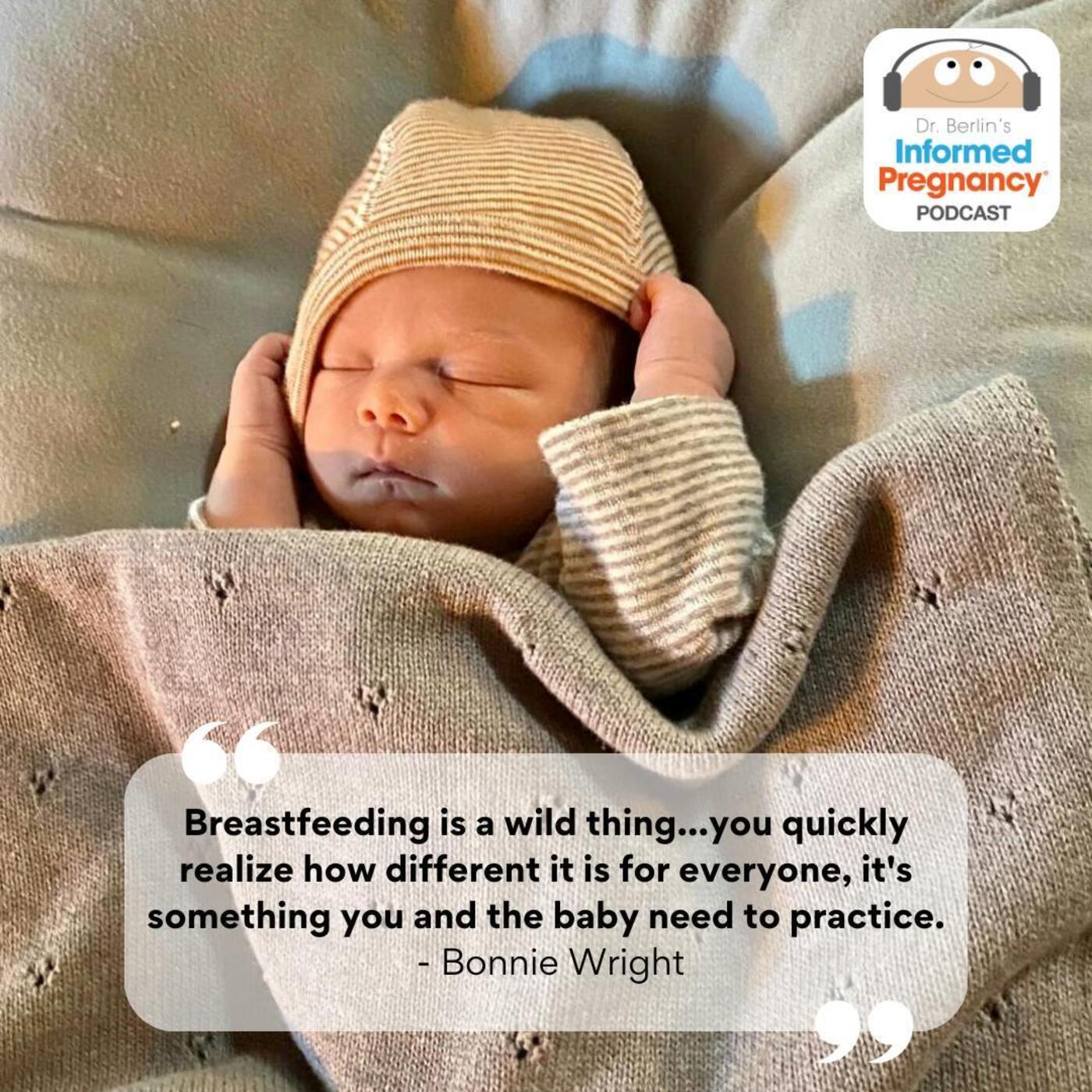
[43:18] in this whole new thing you're doing as a full-time job. And yeah, so it's been challenging even since those procedures. It took him like a good week or more to sort of heal from them and really get to a good place with that. So yeah, I mean, breastfeeding is a wild thing. As much as I knew I really wanted to do that, you realize how different it can be for everyone. And it's not something that immediately just happens. And it's such a thing that you're practicing essentially as they are too.
Dr. Elliot Berlin, DC [43:45] There's a learning curve.
Bonnie Wright [43:46] Yeah, I feel like there's just the ups and downs of it. Like you could have a couple feeds and you're like, that was great. And then you have a couple that are not great and you're like, oh my God, I can't do this. This is so hard. And it is really hard. And I think it was definitely really helpful to have the support during that time between the lactation consultant, the dentist, the postpartum doula, our midwives, like to know we had people to text and check in with definitely helped to kind of feel supported and confident because I do feel like, yeah, that postpartum time, you don't want like the only support to be Googling.
Dr. Elliot Berlin, DC [44:19] To be Google. For sure. I mean, so many people say that they were 100% sure they were gonna quit twice before it felt like, okay, I got this. Looking at the whole story in retrospect, a few final questions. One, is there anything in your planning that you did for birth that you felt was particularly helpful?
Bonnie Wright [44:43] Yeah, everything really. I think what was also helpful was like, I remember like a month before my due date, like this feeling of just like putting all the books and all the things away. Like I think I'd been curious obviously during the nine months to become more informed, but then I felt like I really urged. to sort of like put all of the sort of thinking stuff away and just kind of connect with my confidence that like I'm gonna know what to do. So I felt that helpful just to like put the rationale of the stories away. And I guess, yeah, all the like the yoga and the stretching and the different sort of like things I did really helped me when I came to birth.
[45:21] Like I very much like used a lot of those positions that I had been using during pregnancy. And I was very like in the days before, maybe like the two weeks before I gave birth, every day I was giving a good like hour to stretching and kind of doing all those positions that I felt were really, really helpful. And I feel like genuinely probably helped create more space for him to kind of come down. Yeah, the stretching, the kind of like putting the books away was kind of the main things and just really connecting to, yeah, my confidence and ability to know what to do and to have just an open dialogue with Andrew of like what it's gonna be like and how we're kind of gonna be there for each other.
Dr. Elliot Berlin, DC [46:04] Was there anything that took you by surprise that you didn't expect?
Bonnie Wright [46:11] Well, I guess I didn't expect to push the treehouse. That's what I thought you were gonna say. I was like, oh my gosh, okay. I guess I thought early labor would be longer. Like it felt like it went from sort of like early labor for like two hours to full in. Like it definitely happened much faster than I expected, but obviously every one is different. So that was quite a kind of call on my stamina, I think, but I got through it.
Dr. Elliot Berlin, DC [46:37] Was there anything in particular that your husband, Andrew, anything that he did or said that you found most helpful?
Bonnie Wright [46:45] I mean, as I said, like people would come and go in the room to kind of mix things up, but I guess he pretty much was the person who was there most of the time and didn't really like leave my side too much. But I felt like he could tell that I wasn't in a like talkative mood. So I think like anything he gave to me was just physical kind of presence and being strong rather than kind of coaching me too much. Like I felt like he probably like allowed the midwives, Taylor and Tiffany and Patty to more kind of coach through the talking as they had that kind of experience, but it felt like he was just this like steady, unwavering kind of person that was there.
[47:22] I know that he probably was struggling to sort of see me in pain or to sort of not have any fears and he very much like kept those inside. So I think that was the best thing. Like he didn't project any of his fears or worries onto me and just kept very steady and strong.
Dr. Elliot Berlin, DC [47:39] Here's the big question.
Bonnie Wright [47:41] Yeah.
Dr. Elliot Berlin, DC [47:42] If you decide to have another and do it again, is there anything that you would do differently?
Bonnie Wright [47:48] I do remember during pregnancy being like, how can anyone do this twice? I was like, yep, our biology is like taught to forget this probably. Would I do anything differently? No, not really. I mean, I would just hope that it wasn't an 18 hour label, however long it was. I guess I would just kind of like pray that it would just move a bit faster, but I wouldn't make any different choices with who I had there, where we had it and-
Dr. Elliot Berlin, DC [48:15] Maybe overnight.
Bonnie Wright [48:17] Yeah, maybe overnight. During the bright, sunny days, yeah. But maybe that was reflective of my personality of loving the daytime, who knows.
Dr. Elliot Berlin, DC [48:29] Yeah, it totally could be. I do think that one of the reasons people tend to go into labor at nighttime is because it's their calm time, you know? When the nervous system feels calm, it's go time. I guess at least there wasn't another sunrise. I feel like that would have been hard. That's the present, yeah. Well, Bonnie, thank you so much for coming in for sharing your story, your pregnancy, your plans for birth and how your birth and postpartum went. Sounds like you had a lovely experience and you worked hard for it. You prepared in a lot of different ways and you took care of your body and your body took care of you. I'm really happy for you.
Bonnie Wright [49:06] Thank you, yeah. I feel like I shared in the previous one, I've listened to so many of these kind of before and afters that you've done and I would listen to the before and listen to the after and be like, I will be in the after at some point, and that kind of time feels like it's gonna be forever away, but we're during that long pregnancy. Yeah, it gave me a lot of hope to know that I'll have my story to tell. And yeah, I feel like the biggest takeaway was just realizing at the end, my body knew what to do. Nature did its thing.
Dr. Elliot Berlin, DC [49:34] Beautiful. Where can we find you online?
Bonnie Wright [49:37] Yeah, I have a website for my book and the stuff I do with that. That's gogently.earth. And then that's the same name as my Instagram for that. And then my personal one is, this is the right on Instagram.
Dr. Elliot Berlin, DC [49:50] I hope that you'll do some kind of book or production or something about pregnancy, birth, and parenting.
Bonnie Wright [49:57] Yeah, I feel like it'd be interesting. There's so many things that. navigate as a parent, the choices that you make in terms of how it like connects to my interests when it comes to, you know, environmental stuff and sustainability, lots of things to navigate. Suddenly you have this new life and there's like 101 things that you need or you don't need. So yeah, it's definitely something that I'm interested to explore and
Dr. Elliot Berlin, DC [50:17] share. I'll be the first to read it. Okay. Thanks again, Bonnie. And at home, thanks for listening to Informed Pregnancy. And for more pregnancy and parenting resources, visit us online at informedpregnancy.com.
Want more pregnancy + parenting? Start your FREE TRIAL of Informed Pregnancy+ and get access to all our curated pregnancy and parenting content — original series, iconic birth films like The Business of Being Born, prenatal workouts and more.
