by Dr. Alyssa Berlin | Oct 25, 2022 | Family and Relationships, Mental Health
“Let’s all agree that unilaterally, parents typically mean well and truly have your best interests at heart. That being said, after having a baby, chances are that your parents fit into one of two categories: there is the “I love you…you are amazing…I could not have done it without you” (we will call that category A), and then there is the “I love you, but you are making me crazy, and if you don’t get out of my face and give me some space I am going to scream” (category B). ”
The old saying: “You can’t live with ’em, you can’t live without ’em” must have been referring to parents/in-laws. Nothing challenges your relationship with your parents more than joining the ranks and becoming parents! Yikes! I am one of them.
Having a child often shines a spotlight on both the positive and negative experiences and feelings that you have towards your own parents. Becoming a parent can serve as catalyst for bonding with your parents in a new way, or it can serve as a direct reminder of the ways that mom and dad may have neglected to be the parent you were wanting.
The postpartum period, however, is not a good time to remind mom and dad about all the ways they may have failed you and how you are going to do better with your child. So if you are noticing some of those feelings come to the surface, pregnancy is a wonderful time to explore and work through those experiences before your baby arrives.
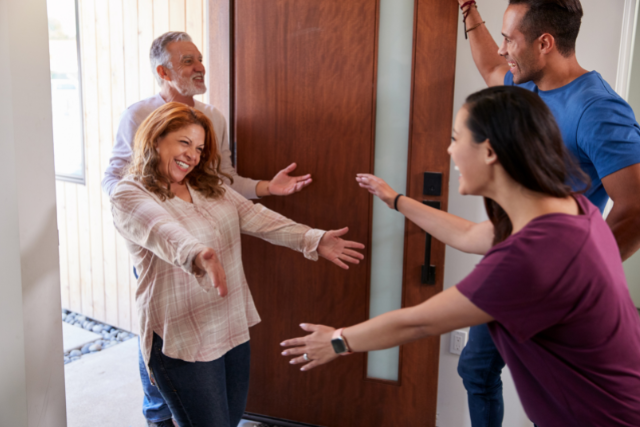
Let’s all agree that unilaterally, parents typically mean well and truly have your best interests at heart. That being said, after having a baby, chances are that your parents fit into one of two categories: there is the “I love you…you are amazing…I could not have done it without you” (we will call that category A), and then there is the “I love you, but you are making me crazy, and if you don’t get out of my face and give me some space I am going to scream” (category B).

The problem is that oftentimes you will not know which category your parents belong to until after your baby is born. Then it might be too late – you already committed yourself to having your mom move in with you, sleep on the couch, and be there 24/7 for the first 6 weeks of your baby’s life. (Insert scream here).
When you find yourself with category A parents – you are in luck. Embrace them and revel in the support they can offer you as you adjust to motherhood. Remember that there is nothing wrong with accepting help. In my opinion, it is the strong women that can utilize help from others, recognize that they are a part of a village, and do not have to do it all alone. There is not a special award given out to women who feel a need to prove that one day post delivery they can be superwoman. It doesn’t exist, so relax and enjoy the helping hands around you.
There are usually clues along the way that you may have a category B parent on your hands. I want you to remember that right after you have a baby, you are feeling vulnerable and emotional. You will likely not be feeling your best or in the mood to entertain any high maintenance, not self-sufficient guests. You will probably be looking to surround yourself with safe people who won’t take your mood changes, pointed comments, or emotional moments personally and will be empathic of your need to recover from birth and appreciate the emotional magnitude of your journey to parenthood.
Follow Dr. Alyssa Berlin, PsyD on Instagram!
So, if your parents are typically high maintenance, needy people who like to be catered to, chances are they are going to fall in the latter category and might not be an optimal choice to play a major role on your postpartum care team. Situations tend to get more stressful after having a baby, not less. So, if under the best of situations, an evening out with the folks usually results in you needing a stiff drink and an ice pack, then….you guessed it – great contenders for category B and an awful contender for a long-term post birth houseguest.
That doesn’t mean that mom and dad don’t have a role in the process. It simply means you want to think about the situation more strategically and please, I am begging you, don’t have them sleep on your couch or in a second bedroom in your house. There are wonderful hotels/motels or awesome friends that would be happy to host your parents so that you can enjoy the best of both worlds: quiet time alone as well as nice visits with mom and dad.
They may, however, make great people to run errands, do the food shopping, pick up dry cleaning, and other valuable contributions to your postpartum experience in a less hands-on way. As you envision your postpartum experience, it is advisable to think about everyone’s strengths and how they will be most helpful to you during this special time. Yup, you guessed it; this time is all about you and what you need in the moment to ensure that you have the best possible start to motherhood.

If one parent has a particular skill in cooking, assign them to cooking duty. If another parent enjoys shopping, they get shopping duty and everyone can pick straws for cleaning duty. Sit down with your partner while you are still pregnant and jot down a list of daily activities/errands that have to get done as well as some of your favorite recipes. You can disseminate the various tasks to different people or leave the list on the refrigerator. And in the absence of parents or in-laws, there are other wonderful people: doulas, nurses and professional services, drop off and delivery services, and cleaning services around you that will be happy to be a part of your village and postpartum team.
One last note: if during the pregnancy, you already have strong thoughts regarding what you may or may not want from your parents or what role you may or may not want them to play, I strongly recommend you share it with them before the baby’s birth. This will alleviate a lot of stress on you after the birth and will likely give them a better chance to honor your requests.
You have a plan for birth, now make sure you plan for what comes after. Click for more info!

Dr. Alyssa Berlin is a clinical psychologist specializing in pregnancy, postpartum, and parenting. She offers private counseling for women individually and with their partners. Dr. Berlin is the creator of The AfterBirth Plan™, a program that prepares couples for what to expect after a baby is born. The workshop teaches couples how to prepare for a healthy postpartum transition for the baby, for each partner, and for the evolving relationship. She combines her psychological background and her doula training to help women and their partners feel empowered and comfortable in the labor and delivery process, both on a physical and emotional level. Dr. Berlin has specific expertise addressing fear and anxiety that may arise before, during, or after birth.
Dr. Berlin is on the Board of Advisors for the International Cesarean Awareness Network (ICAN) and is a faculty member of Maternal Mental Health NOW Training Institute. She conducts live pregnancy and parenting workshops throughout Southern California and online. You can read Dr. Alyssa’s blogs on the Huffington Post where she contributes to PBS’s ‘This Emotional Life” project. Dr. Berlin received her doctorate degree at Argosy University in Atlanta, GA and went on to become a certified Gottman educator. She is a member of the American Psychological Association. She and her husband, prenatal chiropractor Dr. Elliot Berlin, live in Los Angeles and are the proud parents of four amazing children.

by Melissa Teigue | Sep 21, 2022 | Infant Care and Breastfeeding, Parenting and Child Development
“I always tell parents “if your child can roll, crawl or walk to a water source they need to know how to save themselves.”
Prioritizing Water Safety
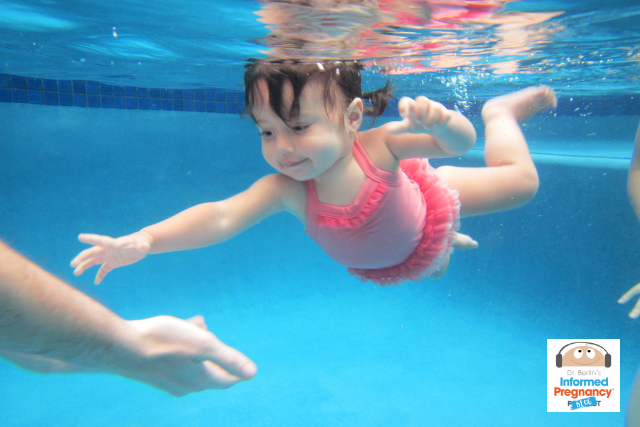 We often think of the safety of our children and the first things that come to mind are childproof locks, child gates and the safest car seat(s) we can buy. Water safety does come to mind but not everyone prioritizes it, especially when your child is just an infant. I always tell parents “if your child can roll, crawl or walk to a water source they need to know how to save themselves.” We tend to believe kids need to be older to learn how to swim or survive in water. This is not the case.
Drowning is the number one cause of accidental death in children under 4. And it is silent. It also doesn’t always look how you may expect drowning to look. The child could be bopping up and down vertically in the water. Or struggling to catch their breath with their head barely above the water. It could also be just a quiet “slip” into the pool.
What Can You Do?
There are many things we as parents can do to help prevent this from happening to our families. The following multiple layers of protection when done in conjunction with infant swim lessons can help prevent drownings.
-Locks and alarms on doors and windows that surround the pool
-Installing a fence around the perimeter of the pool with the proper latch and lock
-Cover for the pool that has no entry point for a child to slip through
-An alarm in the pool
-US Coast Guard approved life jackets if around the pool with a child that doesn’t know how to swim
-CPR certification
-A Water Watcher which is someone who is assigned to solely watch the water with no distractions and for no more than 30 minutes at a time.
Puddle Jumpers, Arm Bands, and Noodles
In speaking about water safety for kids and babies, I would be remiss to not mention the “go to” method that many parents use to keep their children “safe.” Flotation devices. These include puddle jumpers, arm bands, noodles, etc. They do not in fact keep your child safe at all. In actuality, they put your child in a drowning position-vertical in the water, and create a false sense of security. I have firsthand proof of this because it’s the reason my niece had her non-fatal drowning. Charlotte only knew swimming in water with a puddle jumper on. When she took it off to have dinner by the pool at a family birthday party it was then she thought she could swim and went off the step only to slip under the water quietly. We don’t know how long she was under but we pulled her out, immediately performed CPR and she started to gain consciousness as the paramedics arrived. After hearing so many stories that did not end like this I realize how fortunate we are to still have her with us.
Help Them Succeed
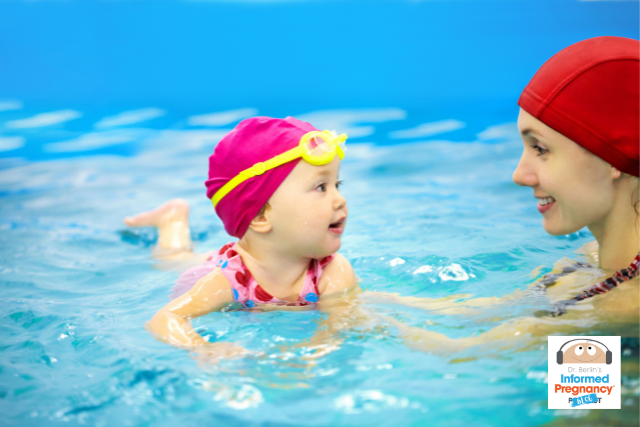 Drowning is preventable. Infant swim lessons help make it more preventable. ISR instructors teach infants as young as 6 months old how to self-rescue should they reach the water alone. At 6 months of age a baby can learn how to roll to their back, float and sustain that float until someone finds them. Starting at 12 months and older-or when a child can walk, they will learn the swim-float-swim sequence that they use to get to the side of the pool and get themselves out. Not only do they gain skills to survive but they also gain confidence in other aspects of their lives.
As parents we want to give our children every opportunity in life to help them succeed. Shouldn’t that apply to the water as well?
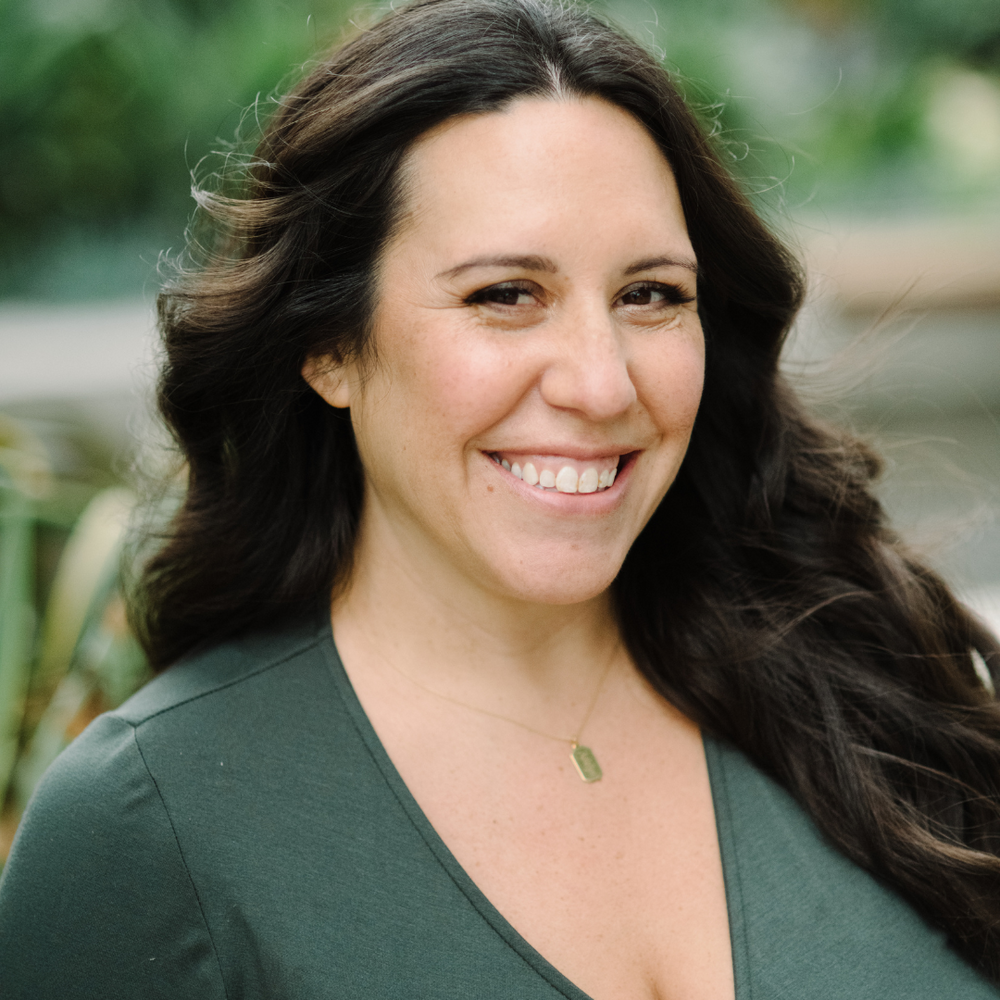
Melissa Teigue: I am a Certified Infant Swimming Resource (ISR) Instructor and have been teaching babies and kids as young as 6 months old for over 3 years.
In 2014 after giving birth to my first daughter I looked into ISR. At the time the commitment and
financial aspect didn’t seem like the right fit. However, July that same year I witnessed my 4 year old niece being pulled out of a pool and the use of CPR to resuscitate her. We were so fortunate that it was a non-fatal drowning but after that incident we knew we would pay and do anything to not have that happen to our daughter. I have been an advocate of ISR ever since and thought that one day I could see myself being an instructor.
In 2018 our life was forever changed. Our second daughter passed away from a rare disease which was the catalyst for me leaving my corporate job of 10+ years. I turned to ISR because I knew it would be fulfilling.
I believed that if I couldn’t save my own child at least I can save other children and save parents from the heartache I endure. I want nothing more than to prevent as many drownings as humanly possible.

by Julie Thomas | Sep 14, 2022 | Family and Relationships, Mental Health
*This is a sponsored post.
“As much as I wanted to hide out forever, I responded to a tug in my heart and attended a women’s event at my church. Sitting in a room of 400 women, I still felt alone and unable to fully embrace the positive atmosphere or laughter of others. Yet, it was a first step outside of my darkness that ultimately led to another step, and another.”

With the birth of my second son came a new version of myself that I didn’t expect or recognize. I developed a deep sadness, heaviness and confusion that I couldn’t seem to shake off. What began as postpartum depression grew with intensity and dragged on for six years.
I never expected to suffer in this way. I wanted to be a good mom and I wanted to be happy. I was living in a nightmare that I couldn’t wake up from. I tried to hide as much as I could, avoiding eye contact with people, creating social boundaries and closing every drape in the house. The burden of my depression stole my joy, purpose and hope for the future. Darkness took over my life.
Postpartum depression is one of the worst-kept secrets. For most new mothers, the first several days after having a baby is an emotional roller coaster ride. Moments of happiness and bliss are abruptly interrupted by a hormonal, exhausted plunge into depressive symptoms like crying, anger and anxiety. Often referred to as “baby blues,” these emotions can emerge within the first two to five days after delivery, and for most women, go away as quickly as they came.
Except sometimes they don’t go away. For some women like myself, the depression continues for months and becomes so overwhelming, you’re only a shadow of the person you were before. It’s lonely and frightening.
The darkness in my life began to dissipate when I realized I had to fight for myself. That’s not easy for most women to do, because we naturally put our kids’ needs above our own. But I was desperate. I couldn’t live this way anymore. Although my journey to complete healing wasn’t quick or simple, I took a few brave steps in the right direction that ultimately served as a meaningful starting point.
Need more podcast in your life? Click to hear a related episode of the Informed Pregnancy Podcast!
I sought community
As much as I wanted to hide out forever, I responded to a tug in my heart and attended a women’s event at my church. Sitting in a room of 400 women, I still felt alone and unable to fully embrace the positive atmosphere or laughter of others. Yet, it was a first step outside of my darkness that ultimately led to another step, and another.
Humans are relational beings and crave connection with others. Pursuing positive social interactions and emotional support may help to reduce the overwhelming feelings of depression.
I talked about it
Although I was very reluctant at first, sharing my experience with others helped me feel less alone. Many women with postpartum depression are ashamed of their symptoms and the social stigma associated with the diagnosis. Maybe it’s because we think we should be stronger than this, or we’re bad moms for feeling anything other than pure joy about motherhood. Postpartum depression affects around 1 in 7 women, yet 1 in 5 women keep quiet about their symptoms. Not only can talking about it provide a much-needed release and diminish feelings of shame, but I discovered that I wasn’t alone. Many other people in my life had experienced or were currently experiencing some form of depression too.
I let the light back into my life
As I began to connect with others and share my story, a new light in my life began to take over the darkness. I felt a renewed sense of purpose in encouraging others that they weren’t alone. I discovered that I could – and would – make it through this. Naturally, life still throws tough stuff at me occasionally, but when I feel that familiar twinge of depression trying to come at me again, I’m prepared to seek support, be open and honest about it and remember that I’m not alone.
Fellow moms, distinguishing the “baby blues” from more serious conditions such as postpartum depression and postpartum psychosis can be difficult, but recognizing the signs early is important. You don’t have to pretend you’re okay or live in shame. Consult a healthcare provider to discuss treatment options that may include peer support, clinical counseling or antidepressant medications. You’re not alone, and you’re worth fighting for.
Let a psychologist help you minimize the chances of perinatal mood disorders before baby arrives!

Julie Thomas is a wife, mother of two, life coach and author. After the birth of her second son, Thomas battled a severe case of postpartum depression. With the release of her novel, HOPE Inside Out, and her willingness to be open and transparent, Thomas was able to find healing for herself and help others do the same. Thomas was recently featured in I Am Second’s series of short films, sharing her raw and emotional journey from depression to healing.
by Dr. Alyssa Berlin | Sep 6, 2022 | Family and Relationships, Mental Health
**This is a repost of a classic Informed Pregnancy Project article.
“I find that moms in particular often view caring for themselves as a shameful experience; as if they should be above needing time for themselves. Just yesterday, I had a friend ask me what I was doing this morning and when I mentioned that my husband took the kids out so I could have some quiet time, her reply was, “What…really? You need that too?”

I want to share some principles for happy parents and effective parenting. But before I do, I want you to know that I am a firm believer that your ability to care for others, be it a partner or a child, stems from nurturing yourself. If you are completely depleted then you have nothing to give to others.
I find that moms in particular often view caring for themselves as a shameful experience; as if they should be above needing time for themselves. Just yesterday, I had a friend ask me what I was doing this morning and when I mentioned that my husband took the kids out so I could have some quiet time, her reply was, “What…really? You need that too?” The answer is yes, without exception we all need to charge our batteries from time to time, and right here and now I am giving you permission to take care of yourself. Your partner and kids will thank you.
Now that we got that covered, here are my 5 Key Principles for Happy Parents and Effective Parenting:
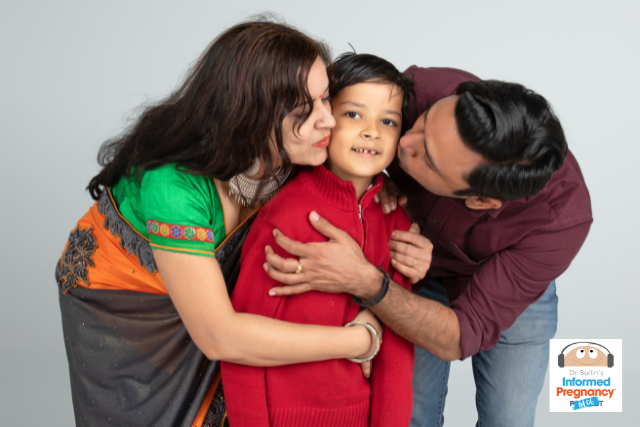
- There is no such thing as too much love and affection (emotional and/or physical), so bring it on! Affection is the basis for developing an emotional connection with your children. The numbers to live by are 4:1. You want to aim to have a minimum of 4 positive moments of emotional connectedness for every 1 negative interaction you have with your child. Because physical affection is so important to your children’s development, you want to strive for 2 moments of daily physical connection. Keep in mind that there are more natural opportunities for physical closeness when they are young, as they will likely come to you and seek out that hug or snuggle. But as your kids get older, you may have to find more creative ways to connect. We always want to be sensitive to how/when our kids want to be affectionate, so those days of kissing your child goodbye in the carpool line may disappear, to be replaced with a “high five” or my personal favorite, “mommy, bump it.”
- Firmness and consistency wins the race. There are tons of wonderful approaches to parenting out there, all taking a slightly different slant on the topic. No matter the approach that you pick, it’s the firmness and consistency with which you implement that method that will likely determine your success. I caution you to not project your feelings on to your kids. Unlike adults who may feel put upon by structure, it actually helps kids to thrive by developing an environment of safety and stability. When you give in to your child’s demands, you are sending a message that your own rules aren’t really important. That being said, make sure the rules you establish are there for a reason, and be open to tweaking and amending them when necessary. With a consistent and predictable environment, you will notice increased rule compliance (but yes, kids will still test limits). Your words will take on greater meaning, and you will be taking an important step toward minimizing tantrums.
Want more Informed Pregnancy? Click for a popular podcast episode!
- Equal does not mean fair. This is a very challenging concept for kids to digest, and is sometimes challenging for parents to wrap their heads around the concept as well. Many parents believe that if “I buy X for one kid, isn’t it only fair to buy X for all my kids?” Let’s think about this concept slightly differently. If a child needed eye drops because of an eye infection, are you going to line up the rest of your kids and give them eye drops as well? Of course not. So equal and fair are not synonymous. Rather, a common saying in our household is “everyone gets what they need.”

- Sound byte your way to effective parenting. No one likes a lecture. Especially kids and especially if whatever lesson or nugget of wisdom you might want to impart is likely pointed or focused on something your child did wrong. Instead, try to model the public service announcement approach, and at quiet, uneventful times offer a sound byte of something you want to instill in them. For example, “It’s important to brush your teeth twice a day” or “Equal does not mean fair.” Let’s be honest: we all listen better when we feel like the lesson is not aimed at showcasing our flaws. So think of a rule or principle that is important to you and find ways to nonchalantly pepper that concept into your daily interactions with your kids. (This may work for partners also!)
- Don’t parent to public opinion. Interactions with our kids typically feel more stressful and anxiety provoking when there is an audience around to witness the moment. However, it is imperative that we give our children consistent messages regarding what is or is not acceptable and not alter parenting practices because of that watchful eye. Chances are that any seemingly disapproving onlooker is probably just identifying with us, because they have been in our shoes. If we imagine them trying to subliminally offer support instead of judgment, it will remove the intensity from the moment, freeing us up to address the problematic behavior at hand.
Baby on the way? Click to safeguard your relationship before things get crazy!

Dr. Alyssa Berlin is a clinical psychologist specializing in pregnancy, postpartum, and parenting. She offers private counseling for women individually and with their partners. Dr. Berlin is the creator of The AfterBirth Plan™, a program that prepares couples for what to expect after a baby is born. The workshop teaches couples how to prepare for a healthy postpartum transition for the baby, for each partner, and for the evolving relationship. She combines her psychological background and her doula training to help women and their partners feel empowered and comfortable in the labor and delivery process, both on a physical and emotional level. Dr. Berlin has specific expertise addressing fear and anxiety that may arise before, during, or after birth.
Dr. Berlin is on the Board of Advisors for the International Cesarean Awareness Network (ICAN) and is a faculty member of Maternal Mental Health NOW Training Institute. She conducts live pregnancy and parenting workshops throughout Southern California and online. You can read Dr. Alyssa’s blogs on the Huffington Post where she contributes to PBS’s ‘This Emotional Life” project. Dr. Berlin received her doctorate degree at Argosy University in Atlanta, GA and went on to become a certified Gottman educator. She is a member of the American Psychological Association. She and her husband, prenatal chiropractor Dr. Elliot Berlin, live in Los Angeles and are the proud parents of four amazing children