
by Jenna Pastuszek | Oct 12, 2022 | Family and Relationships, Infant Care and Breastfeeding, Mental Health
” I assumed that since my body had chosen when to eject its womb occupant, it would also do its job to produce milk on time. You know what they say about assuming.”
I’ve never liked my boobs.
I remember learning about breasts in sixth-grade health class, hearing that as soon as a girl got her period, she’d get boobs to go with it. Yes, you now have bloody underwear once a month, but in exchange, you get nice round melons! Sounded like a good trade to me!
When I eventually got my period two years later, no boobs came with it. The bloody gift continued to show up, but my melons never got round. They looked more like pointy pyramids wearing mosquito bite hats.
In college, I did everything I could to make it seem like I had bigger boobs. I wore push up bras. I wore two bras at once. I even wore these giant silicone inserts that my roommates and I lovingly referred to as “the chicken cutlets” until one night I got too drunk, went home with the captain of the swim team, and woke up to see the chicken cutlets prominently displayed in broad daylight. That was the last time for me and him AND for me and the chicken cutlets.
Need more info? Listen to The Informed Pregnancy Podcast here!
In my 20s, I learned to cope with the hand (boob) I’d been given. I accepted that I’d always need to have clothes tailored to adjust for my unproportioned mounds. I found sticky circular cups to peel on underneath bralettes to give my body a more feminine silhouette while foregoing underwire. I even learned to laugh at how small they were alongside other people, like the time I was doing a musical and the sexagenarian male artistic director presented me with a giant pink push up bra to wear under my costume. “Don’t worry, Jenna. My wife tried this on for me last night, and it’ll help you get into character.” Fantastic.
These are not mine
Before getting pregnant, I found it easier to simply pretend that they weren’t there. I felt so ashamed of their pathetic presence that I even told my husband to stop asking me to take my shirt off when we had sex. It didn’t matter to me that he thought they were nice. To cope, I had written them off as dead.
When I got pregnant, one of the first symptoms I had was rapid breast growth. The skin pulled painfully taught and tingled and was sensitive to the touch. My nipples were so itchy, and when I looked down at my chest, I was convinced that I was staring at someone else’s areolas. Who’s missing a pair of boobs, I thought, because these are not mine.

Nursing wasn’t something I was super enthusiastic about given my lifelong breast trauma, but I was set to do it for the added health benefits for me and my baby. So I was disappointed when at 35-weeks, my OBGYN told me that my baby was Frank breech, and if he or she did not flip, I was going to have a c-section. I was nervous that scheduling the arrival of my child would affect breastfeeding if my milk didn’t come in quickly enough. After trying everything to get the baby to flip (spoiler alert- he didn’t…#Leo), I accepted my fate and scheduled my operation. As luck would have it, I went into labor spontaneously four days prior at 39w1d. I assumed that since my body had chosen when to eject its womb occupant, it would also do its job to produce milk on time. You know what they say about assuming.
Squishy and unreliable
My boobs continued to betray me into postpartum. My milk didn’t come in fast enough to prevent my son from losing over 10% of his birth weight in the hospital, so on day 3, we had to supplement with formula. It turned out that he was born with an upper lip and a posterior tongue tie, so latching was a frustrating experience for all: he, because he was working too hard to get the meager sustenance that was there, and me because he was gnawing like a weasel at my sore cracked nipples.

By the time we got the ties and latch sorted out, my child had made up his mind:
Why go back to something soft and squishy with unreliable output when a plentiful plastic bottle is an option?! He even faked falling asleep to get out of breastfeeding! Multiple times! Whether it was the hormones or not, this was the most painful rejection I had ever experienced- even worse than my sixth-grade crush Jason Miran rejecting me and my mosquito bites at the school dance.
Befriending my boobs
On the drive home from the hospital, I realized I had to befriend my boobs. It was as if they were on strike because of my reluctance to accept them for what they are. I sat down at my breast pump and decided that unlike middle school, I refused to let my son’s rejection define me. My breasts are a [small] part of my motherhood experience, but they are not all of it. Whether round or pointy, on display or hidden, elastic or inverted, over full or empty, I will still be a good mother. A good mother with a great set of tits.
Follow Dr. Berlin (on Instagram, not in real life…) for all the latest Informed Pregnancy content!

Jenna Pastuszek (she/her)is a professional actor, singer, voice over artist, musical theatre educator, and voice teacher. Jenna has performed in theatres across America in a variety of mediums, including her acclaimed solo shows GET HAPPY! and ME,MYSELF & BARBRA. She is a voiceover artist, voicing household brands like Starbucks Cafe, Pepsi, Amazon, KIND Bar, Target, IKEA, Crest, Toyota and more. She is the Co-Founder of Innovative Voice Studio, where she trains Broadway performers and works with leaders across industries through Innovative Performance. Previous faculty positions include The University of the Arts, New York University, The American Academy of Dramatic Arts, The American Musical Theatre Academy, and Musical Theater College Auditions. Pastuszek received her Masters in Teaching in Elementary Education and a BA in History and minor in French from the University of Virginia and her Masters in Vocal Performance and Advanced Certificate of Vocal Pedagogy from NYU Steinhardt. She is an Estill Voice International Master Trainer and a graduate of Seth Godin’s altMBA. Learn more at www.jennap.com.
by Kim Walls | Sep 20, 2022 | Pregnancy
**This is a repost of a classic Informed Pregnancy Project article.
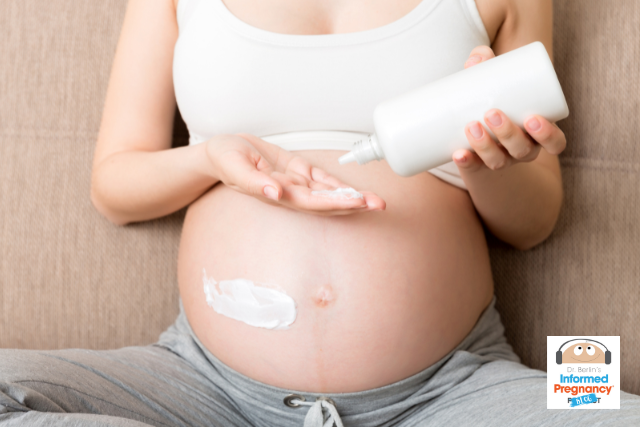
“Treating new stretch marks usually leads to better results than treating older stretch marks, but preventing them from occurring in the first place is obviously even better.”
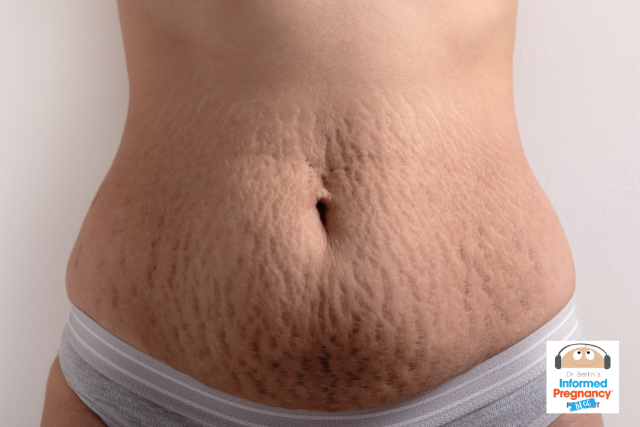 One of the most common changes in a woman’s body during pregnancy is the emergence of stretch marks, clinically known as striae. If you are feeling self conscious about your stretch marks, it might help you to know that as many as 90% of women develop at least some stretch marks during pregnancy. These tiny tears in the skin usually appear on the tummy, breasts, hips and thighs, and result from the skin failing to ‘keep up’ with the rapid growth of your body during pregnancy. Surprisingly, you can even develop stretch marks after your baby is born, possibly as a result of the rapid downsizing of your belly immediately after giving birth. The good news? Your stretch marks will probably be one of the first signs of pregnancy to diminish after your baby is born. The bad news? They may never disappear altogether.
The severity and longevity of stretch marks are determined by a combination of factors that are mostly out of your control, including your genetic code and fluctuations in the levels of the hormones estrogen and relaxin during your pregnancy. Treating new stretch marks usually leads to better results than treating older stretch marks, but preventing them from occurring in the first place is obviously even better. Well hydrated and moisturized skin is thought to be key in preventing the breakdown of collagen — the supportive elastic tissue beneath the skin — which causes the depressed ridges that characterize stretch marks.
Stretched skin also tends to be itchy. The best defense against both itching and striae is to gently massage the skin and keep it well-hydrated at all times. Massaging your growing body parts with a probiotic-rich moisturizer that soothes and softens stressed skin and contains a full spectrum of vitamins and minerals to nourish and foster skin repair can help prevent dryness and act as a natural mood booster. With massage and great products, you can soothe your skin and your mood at the same time!
An added benefit of using moisturizers chocked-full of probiotics on your growing belly is that you can transfer this healthy microflora (‘good’ bacteria) to your baby by maximizing early skin-to-skin contact. Your baby can start to benefit from the healthy colonization of beneficial microflora on your skin within moments of birth, playing an important role in helping to optimize your newborn’s immune system. Stretch marks usually diminish 6-12 months after childbirth. The pigmentation fades and the marks usually become lighter than the surrounding skin. The right skincare products can potentially help minimize stretch marks and reduce healing time.
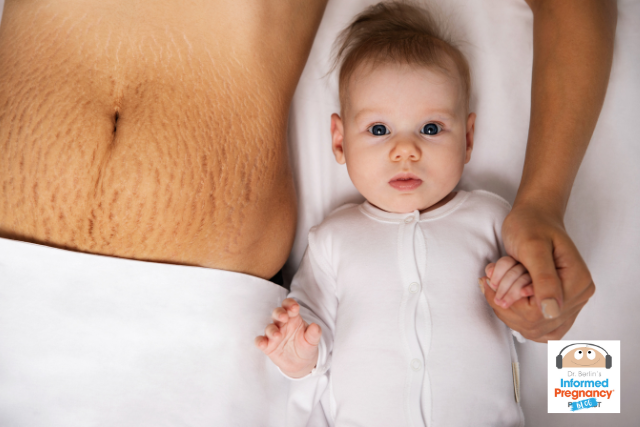
Choose a natural moisturizing serum that is designed with nutrient-rich fruit oils to help increase skin’s elasticity, lock in moisture and help increase collagen production, all of which could help minimize the discoloration and appearance of stretch marks over time. The most important thing to remember about stretch marks is that you should never feel embarrassed or ashamed by them – they’re just a small reminder of the amazing feat your body performed in growing and nurturing a new life. Focus on the connection between yourself and your baby, and love the skin you’re in!

Kim Walls is an internationally recognized skincare expert focused on optimizing health through skincare. Leading child health advocacy groups and national media rely on Kim’s clinical expertise to help parents navigate the often confusing world of natural skincare. You can read more about her here.
by Ana Paula Markel | Sep 13, 2022 | Labor and Delivery, Pregnancy
**This is a repost of a classic Informed Pregnancy Project article.
“Doulas are not only for mothers planning an all-natural birth, but for mothers planning or investigating all kinds of birth choices. The doula movement is all about options, information and nonjudgmental support. Doulas are hired for all scenarios, including scheduled cesareans.”

In the days before modern medicine and hospitals, laboring women would often be supported by other ‘wise women’ in their communities, who held and passed along the knowledge needed for the next generation to assist women during the process of labor and birth. These women were among the earliest ‘doulas’ – women whose sole role was to provide comfort, encouragement and wisdom during a woman’s labor and birth. The idea of the modern doula began to gain popularity from the studies of Dr. Marshall Klaus and John Kennel during the 1980s, which clearly showed the benefits of the presence of a doula during the labor process. DONA International was founded in 1992, and the role of the doula became a legitimate profession, with prospective doulas required to complete extensive training and assist in multiple births before becoming certified. In the past 20 years, one birth at a time, doulas have secured their role as an instrumental component in the birth team. People commonly think of doulas and midwives as having similar tasks, when in reality the midwife is a licensed care provider in charge of the mother and baby’s health while the doula’s focus is on supporting and promoting an environment of calmness and confidence in the mother.
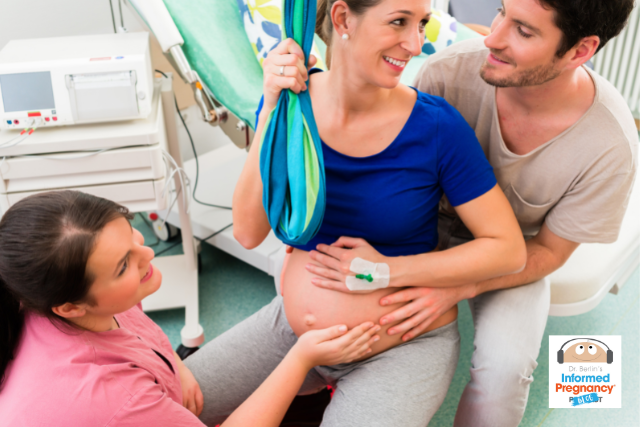
As reported in many studies, the presence of a doula has many health benefits (less medical interventions, faster labors, easier breastfeeding) and the presence of a doula also highly increases birth satisfaction for the new mother. Doulas are not only for mothers planning an all-natural birth, but for mothers planning or investigating all kinds of birth choices. The doula movement is all about options, information and nonjudgmental support. Doulas are hired for all scenarios, including scheduled cesareans. In current maternity care, women often feel rushed during OB visits and sometimes are too self-conscious to share concerns, questions or fears with medical personnel. This is one of the gaps that doulas can fill.
One of the greatest benefits of hiring a doula is that doulas are well-read, informed and trained in medical terms, and understand routine hospital protocols along with the risks and benefits of various medical interventions. Doulas do NOT make medical decisions for their clients, but they do help clients to make informed decisions. In all up-to-date facilities across the country, doctors and nurses welcome the presence of a calming and professional doula. There is no role confusion; doulas are not there to take over the care of the woman, but to add to it. Doulas and nurses complement each other. During the process of hiring a doula, mothers should not feel shy to interview as many doulas as they feel they need to find their ‘match.’ An interview should be free of charge and commitment and usually last around one hour.
Some of the important points for a family to consider in hiring a doula are:
- How much experience does she have?
- How many births has she attended?
- Is she a mother herself?
- How many births does the doula take a month?
The answers to these questions may mean different things to different mothers-to-be. A mother may feel comfortable with a newer doula based on a personality match, and hiring the most experienced doula is not always the best fit for all families. The last question in the list is a very important one. Obviously, a doula willing to “book” 8 births in a typical month is much more likely to need to send a back-up doula to your birth than a doula who only schedules 3 births. A busy schedule may also affect when the doula joins a laboring woman, or how tired your doula is when she joins you for your birth.
- Is the doula certified?
- If so, by what organization?
DONA International is not the largest, but is by far the most respected doula organization worldwide. DONA has been training and certifying doulas for the past 22 years in 23 countries. If a doula is not certified, ask her to read and practice according to the DONA code of ethics and scope of practice, easily found at www.dona.org.
• How many prenatal visits will the doula provide prior to the birth? And after the birth? Not all doulas have a set schedule of visits, but the majority will do two prenatal meetings that last around 2 hours each, and one postpartum visit that lasts around 1 hour. The prenatal meetings can often substitute for a public birthing class.
Need more Informed Pregnancy? Click to listen to a popular podcast episode!
• When does the doula join the labor? Some doulas come when mothers first call; others come when labor is more established. Mothers should think about what they want and the doula should be willing to adjust to that, not the other way around.
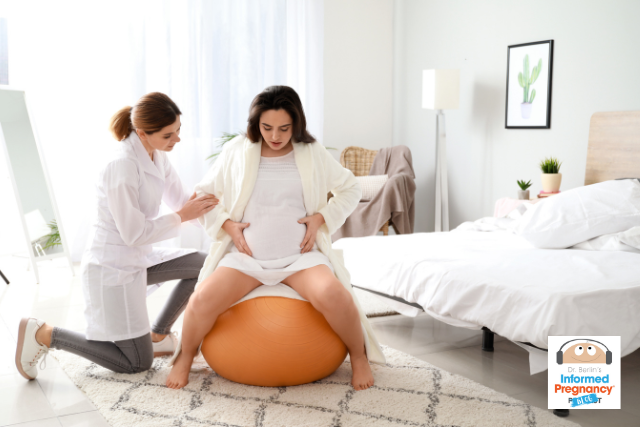
• How much does a doula charge? This is a difficult question, as prices vary a lot. A more experienced doula will usually charge more, as will a doula with more services to provide (for example, prenatal yoga, nutrition help, or postpartum doula services – like doing laundry, watching the baby while you nap, or helping you and your newborn perfect your ‘latch’ for nursing.) In Los Angeles, doulas can charge anywhere between $500 and $3000. Some doulas work on a sliding scale, and most of the national organizations will help women to find doulas at no cost or low cost. The idea is that every woman that wants a doula should have one. Insurance companies are also starting to reimburse for doula services, so ask your insurance provider if a doula’s services are covered by your plan.
To find a doula in your area, please go to www.binibirth.com.
Need more guidance? Check out these workshops available through Berlin Wellness!

Ana Paula Markel is a childbirth educator, doula trainer, practicing doula and volunteer in international birth organizations. She is also the mother of four children. In 2008 Ana founded BINI Birth, a center in Los Angeles dedicated to the childbirth education field, doula training, parenting classes and green pregnancy retail.
by Nousha Salimi | Sep 7, 2022 | Pregnancy
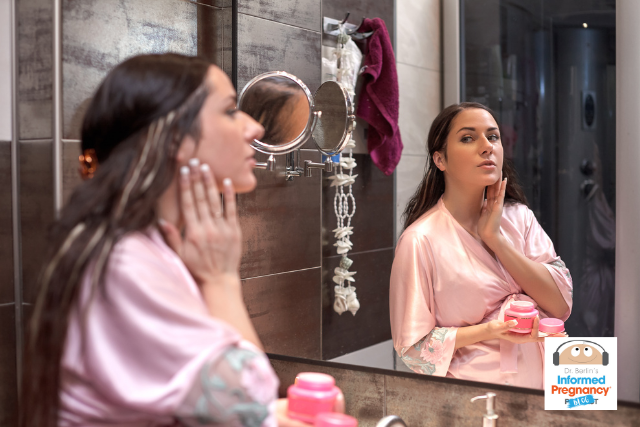
“Some ingredients are not safe during pregnancy like retinol. You want to keep your routine really simple and sweet, and not use a lot of products with active ingredients because we never really know how our skin is going to react while pregnant.”
Changes to skin during pregnancy

Hormones can change your skin during pregnancy. There is one hormone that we release when we are pregnant to help loosen up the ligaments and joints called elastin. When there is a lot of elastin in the body, I find that the skin elasticity in the face tends to feel more loose and it stretches and people get a little bit of that pregnancy bloating in their face. So, that’s you know, one of the biggest things that changes when we get pregnant. The other thing is the fact that with sun exposure we become super likely to have pigmentation issues. A huge percentage of women will get the pregnancy melasma, which luckily goes away a lot of time after pregnancy, but there’s still a chance that it can give residual effects post pregnancy.
Hormonal acne can come up along the jawline while pregnant and I often tell people to keep their pregnancy skincare routine really simple. A lot of exfoliation to help cleanse the skin I think is great. I often will recommend the Obaji product line or the Kora Organics turmeric scrub for use one to two times a week which will help reduce the chance of having any blemishes. I also suggest a cleanser by IS clinical which is really clean, easy to use and helps remove any dirt and residual things that are left on the skin that can exacerbate hormonal acne. Then you can use a bit of CBD oil, which I used throughout my pregnancy. I feel like it is safe and the one I used has rose, arnica, and bromelain, all things that help bring down inflammation which is something that is super common while you’re pregnant.
Some ingredients are not safe during pregnancy like retinol. You want to keep your routine really simple and sweet, and not use a lot of products with active ingredients because we never really know how our skin is going to react while pregnant.
What can you do about it?
I love the brand Bao Laboratory to hydrate stretch marks which helps prevent them from getting worse. You can also get a CO2 laser treatment to help take down the pigmentation issues from the stretch mark but only after you have had the baby. Usually you want to wait a year after breastfeeding to use a laser because they are actually super effective.
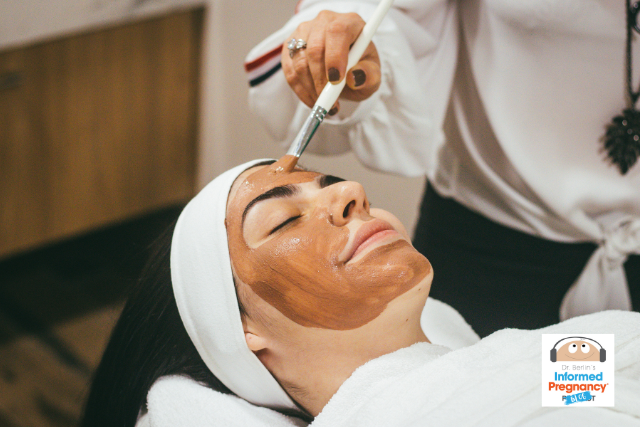
Deep peels are not appropriate during pregnancy because we don’t know if there’s an issue with the blood barrier that would potentially cross into the placenta, and because the skin is more hormonally sensitive so you can have issues like hyperpigmentation and brown spots that come up. Getting a facial while pregnant is totally safe. Many places customize facials specifically to be pregnancy safe. Microneedling is also safe while pregnant just to give a nice little glow, exfoliate, and shrink the pores. You can also safely get a really light microneedling session, with a customized formula using Aquagold and I recommend hyaluronic acid because a lot of times when we are pregnant or breastfeeding we are dehydrated and the skin shows it. So, I like to replace that with hyaluronic acid.

Nurse Nousha Salimi has been New York’s secret skincare weapon for well over a decade. Having collaborated with some of the most elite faces of the fashion, finance, society and art communities, she has become a master in her craft whilst working alongside top New York facial plastic surgeons.
Today, she sees patients at her Los Angeles office alongside world renowned plastic surgeons Dr. John C. Lake and Dr. Paymon J. Danielpour. To connect with Nousha check out www.rejuvenatewithnousha.com