Guatemalan born Jackie Amézquita is a talented multidisciplinary artist who’s work merges pre-Colombian cultural elements with contemporary community engagement. With past exhibits at The Hammer and The Museum of Art and Design in New York, she joins the podcast to discuss her pregnancy journey and life as an artist in this before birth story.
“And then she used to send us letters every Friday. So every weekend, I was like spending some time writing a letter back to her to send it on Monday so she could have it on Friday. So we have this like letter communication.”
“And once a week, my grandma used to go to the meal and grind the corn and then make what we call tamalitos, which are like this like small little masa wrap. It's like pretty much like your hand, like the size of your hand and they're wrapped in like corn husk.”
“you know, dream it. My mom, my grandma, and like all these generation of women in my family had natural births without medication. So it was also part of like my dream to have like a home birth.”
“I think my idea will be in water, like is going to be a cancer baby. So I want her to be born in water. And I also know the benefits of being given birth in water and how this will be more organically in my body. And I don't want to say the word easier because I don't know. I don't know until I'm there, but I will feel it out in those moments. And”
“the women in my family, to my great grandmother. And I think that's something that fuels me and, you know, helps me just this anxiety of like, everything's going to be OK. You just have to like connect with your body and it's pain with intention, right? And that's the key of like, OK, my baby's coming. I'm about to meet her and I've been waiting for”
AI-generated transcript with speaker labels — may contain errors, especially names and medical terms. Dr. Elliot Berlin, DC appears in blue; Jackie Amézquita in orange.
Dr. Elliot Berlin, DC[0:12] Welcome to the Informed Pregnancy and Parenting Podcast. I'm your host, pregnancy-focused chiropractor, Dr. Elliot Berlin. My guest today is a talented artist with a multidisciplinary practice that merges pre-Columbian cultural elements with contemporary community engagement. Originally from Quetzaltenangal, Guatemala, she now resides and works in Los Angeles. She has exhibited her work in prestigious venues, such as the Hammer Museum and the Museum of Art and Design in New York. Her personal journey through pregnancy, combined with her cultural heritage and artistic practice, promises to be an inspiring story. Jackie M. Mezquita, welcome to the podcast.
Jackie Amézquita[1:15] Thanks for inviting me, Dr. V.
Dr. Elliot Berlin, DC[1:17] You and your little bump.
Jackie Amézquita[1:19] Yes, two of us.
Dr. Elliot Berlin, DC[1:21] The two of you. We're going to get into the bump pretty soon, but let's start with your artwork and your origin. You're from Guatemala. When did you come to the US and why?
Jackie Amézquita[1:29] I moved to the US in 2003, so it's been like more than half of my life living in Los Angeles.
Dr. Elliot Berlin, DC[1:38] What brought you this way?
Jackie Amézquita[1:40] My mom was already here. She moved to the US in the 80s. And then, yeah, I wanted to just reunite with my mom and be with her after like 16 years without living without her.
Dr. Elliot Berlin, DC[1:53] Wow, that must be incredibly hard.
Jackie Amézquita[1:55] Yeah, I was raised by my grandmother and my dad in Quetzaltenango. So I always had like this motherly figure through my grandma.
Dr. Elliot Berlin, DC[2:04] What was your interaction with your mom before you moved?
Jackie Amézquita[2:08] So my mom used to visit us in Guatemala like every two or three years, and she used to call then. Before, like in the 90s, we didn't have in Quetzaltenango, we didn't have like a telephone at home. So there was like this, you know, telephone booth where she used to call us every Sunday and we used to call her. Yeah, yeah. And then she used to send us letters every Friday. So every weekend, I was like spending some time writing a letter back to her to send it on Monday so she could have it on Friday. So we have this like letter communication.
Dr. Elliot Berlin, DC[2:44] Wow, that seems like such a different world from today, like FaceTime, everything, you know, instant, automatic, full engagement.
Jackie Amézquita[2:52] Right, right. It was like very exciting, right, to be waiting for to see what my mom was going to reply back to me. And yeah, just like trying to think about stuff that was happening during my week so I could share with my mom in that letter.
Dr. Elliot Berlin, DC[3:08] What was it like when you moved?
Jackie Amézquita[3:11] It was very difficult, I think, to start integrating myself into Los Angeles, like with a different culture, language, a huge city, very different than Quetzaltenango. It's a very small town and you usually like walk from one place to another and here you had to commute, right, in order to go to one place. It takes an hour, right, to drive four miles sometimes, depending on traffic.
Dr. Elliot Berlin, DC[3:43] Yeah, yeah. So you came here and started high school?
Jackie Amézquita[3:47] No, I actually turned 18 years old when I moved in here, so I couldn't start high school. So I just started like going to like ESL, like learning English, a second language. And then I actually worked, my mom had a daker during that time, so I worked with my mom in the daker and then I became a nanny.
Dr. Elliot Berlin, DC[4:08] Oh, wow. Okay.
Jackie Amézquita[4:09] Yeah.
Dr. Elliot Berlin, DC[4:10] You got some on-the-job training and then became like a private nanny.
Jackie Amézquita[4:14] Yes, so and then I was going to school at night and then I was working as a nanny and that's how I started. Like when I finished my ESL, I started going to college, community college, then I transferred to the four-year university and then I, you know, transferred to get my master's.
Dr. Elliot Berlin, DC[4:31] What were you studying?
Jackie Amézquita[4:33] I was studying fine arts.
Dr. Elliot Berlin, DC[4:35] Okay, and you produced some fine art.
Jackie Amézquita[4:38] Yes, yes.
Dr. Elliot Berlin, DC[4:39] And it's very unique. Tell me about your artwork.
Jackie Amézquita[4:42] Yeah, so I work with like organic materials, especially soil is one of them. I make this mixture of masa, which is the binder that helps me keep together the soil. And then I make drawings on top of this like soil slabs.
Dr. Elliot Berlin, DC[5:00] And is this something that you've seen elsewhere or something that you created on your own? What's the inspiration for it?
Jackie Amézquita[5:08] I think there's like culturally in Guatemala, remembering my childhood and my background. And once a week, my grandma used to go to the meal and grind the corn and then make what we call tamalitos, which are like this like small little masa wrap. It's like pretty much like your hand, like the size of your hand and they're wrapped in like corn husk. And then you cook them with water. And sometimes, you know, like little bits of masa used to drop on the floor and be mixed with soil. And then as a kid, I started like experimenting with that. And that came to me while I was doing some research of like pre-Columbial indigenous foods and all this background
[5:56] that the corn has in like Mesoamerica. And I was like connecting the dots. And that's where I decided to try it out and see if I can make a mixture of like masa with soil and then bake it and see if I can make this other material out of it. And it took me some time. It took me some time.
Dr. Elliot Berlin, DC[6:17] Some trial and error?
Jackie Amézquita[6:19] Yes, a lot like about two years.
Dr. Elliot Berlin, DC[6:22] But it's so unique and it's your own discovery. It's your own creation.
Jackie Amézquita[6:26] Yeah. And then, you know, I add some salt in there and like water to the mixture and limestone to make a better consistency. Yeah.
Dr. Elliot Berlin, DC[6:37] How has the reception been and how has the trajectory of your career advanced?
Jackie Amézquita[6:45] I graduated from UCLA in 2022. And after that, I got a group exhibition at the Hammer Museum for this biennial called Made in LA. And I think from university to group shows and exhibitions and being like exposed to different cultural backgrounds in Los Angeles, my work has like grown and like developed in what it is right now. And thinking about like all this like history so that Los Angeles has culturally and historically inspires a lot of like the work that I've been making lately.
Dr. Elliot Berlin, DC[7:30] Are there plans to expand?
Jackie Amézquita[7:34] Yes. I will say that for right now, I just have like a solo show and I was able to create like a new body of work which uses like spices as pigments. And a lot of my work has to do with this like cross-pollination of like people and using like the spices to talk about how like humans have migrated like in involving like different parts of the world. By the use of spices, I think it's something that I'm like really interested right now. And I am looking forward probably, you know, after the baby to continue like exploring this interest that I have in these new organic materials.
Dr. Elliot Berlin, DC[8:22] It's such a uniquely interesting way to tell stories. And I'm excited to see where it goes. And at the end of this podcast, we're going to talk about where listeners can go to see what we're talking about. Right now, let's take a little break and when we come back, we're going to talk about your pregnancy. We'll be right back.
Dr. Elliot Berlin, DC[10:17] Welcome back. We're talking to Jackie Amesquita. And we talked about your bump. You are like literally 39 weeks, is that right?
Jackie Amézquita[10:26] 39 weeks and four days.
Dr. Elliot Berlin, DC[10:28] 39 weeks and four days. You're having your first baby. How has pregnancy been for you?
Jackie Amézquita[10:35] I will say that it's been great. I think I will share that at the first trimester. You know, like a lot of like women have, you know, all this like nausea and like morning sickness that lasted for like days. But I think so far physically so good. Like I started acupuncture in my second trimester. I started also seeing you. So I had like a team, like a good birth team, I will say. But like at the beginning of my first trimester, I find out that I had a cyst and fibroids. And I think that whole, you know, finding out that I had this fibroids and the cysts like changed my whole idea of, you know, what birth was for me. I was planning on having a home birth, but then I decided to go through the hospital route.
Dr. Elliot Berlin, DC[11:31] Okay. Let's talk about that. So where's the cyst?
Jackie Amézquita[11:35] So the cyst was located in my left ovary and it was about four centimeters. So it was kind of big. And then I have like fibroids inside my uterus and they were about two centimeters, which is about like an inch. And they were not compromising any of the birth canal or the placenta. But my doctor was concerned about, you know, bleeding during labor. And they talked to us about like the different scenarios that we could possible go through. And it was kind of sad for me that I will have to have a birth in a hospital and not like at home like as I ever, you know, dream it. My mom, my grandma, and like all these generation of women in my family had
[12:28] natural births without medication. So it was also part of like my dream to have like a home birth.
Dr. Elliot Berlin, DC[12:35] So you were born at home?
Jackie Amézquita[12:37] I was not born in home. I was actually the first generation that was born in a hospital, but I was born without medication.
Dr. Elliot Berlin, DC[12:45] Medication. But your initial plan was not just not medication, but also to have a home birth?
Jackie Amézquita[12:51] Yes.
Dr. Elliot Berlin, DC[12:52] Okay. And then because of the concerns about the cyst and the ovary and the fibroids in your uterus, then you thought maybe better off to have the baby at the hospital. Did the doctors still say you can do unmedicated birth?
Jackie Amézquita[13:06] Yeah, they told me I could still do a medicated birth. So we followed through all the exams, the different ultrasounds at different points in my pregnancy. So I continued following that up and, you know, doing the gestational diabetes test, making sure like I didn't have like preeclampsia or any other concerns that can happen during pregnancy. And so everything was like negative. So during my second trimester, I had like a really good boost of energy, which allowed me to make my solo exhibition here in Los Angeles. So that was great. Like I was working crazy hours, like 14 hours a day, almost like seven days a week, but I also have support in the studio. So I will say that so far, like I had a very like
[14:00] exciting pregnancy, but I was still into this part of like, oh, like I don't want to give birth at the hospital and hoping that if I was going to be doing like yoga and exercising and eating good and going to acupuncture and like helping my body, like things can like switch and getting informed, right? Like educating ourselves about what kind of fibroids I have, which are like just water fibroids and how those during pregnancy can disappear. And so doing all these different things to hope that at the end, things were going to be clear, but you know, have a better birth at the hospital.
Dr. Elliot Berlin, DC[14:45] Also, your hospital had midwives as well.
Jackie Amézquita[14:48] Yeah, our hospital have midwives. So we were seeing the midwives and we were seeing my OB. And I think that's something that influenced to kind of make a U-turn in our, you know, pregnancy. And like at week 38, we met with this wonderful midwife that, you know, we share with her our birth plan and all these different things that my partner and I had ambition to have during our labor. And a few of those things like delaying umbilical cord clamping was something that was not recommended, but we could always decide, you know, to delay cord clamping, vitamin K and all these different things that we wanted to do, but a little different than what the hospital policy is.
[15:38] And I was like, ah, like I really want to have a home birth. But now that we know that the cyst was gone when we have our 34 week ultrasound, they were not able to find the cyst anymore. So it disappeared. So it was like, oh, great. Like this is, you know, wonderful news. And then they told me that the fibers were like five millimeters, like very tiny and small, and they were not going to affect having a natural birth. And I was like, whoa, like, okay, maybe we should hire a doula. And I talked to my partner about getting a doula and we had a friend in undergrad who I'd been talking to during my pregnancy. And then we hired her to be our doula. And so we were like in this like communication. And at the end,
[16:28] like she pretty much encouraged us, hey friend, like if everything's good and like the midwife, you know, at the hospital things that you can have a natural birth and that there's not going to be like complications. And this is more about your age because now there were concerns about me being like 38 and not about anything that has to do with like cysts or fibroids or preeclampsia or diabetes. Like, why don't you consider, you know, going through a home birth? And I was like, friend, I don't think I can do that. Like I'm like 38 weeks. How am I going to just, you know, turn around and make a U-turn and where I'm going to find a midwife right now at this point in my pregnancy that is going to, you know, be able to take me.
[17:14] And she's like, let me do a little research. And, you know, I shared that with my partner. We got out of the hospital. We were on our way home. And then I told her, you know what, like you do your research. Let me process this. I'll talk to my partner. So we went to grab dinner and then I put my phone away, you know, just to try to like, you know, what will this look like? Just so close to giving birth, finding someone that we can connect with that understands the plan that we want to have and that can take me in. And then when we finished dinner, I grabbed my phone and then the person that my friend had suggested was available for July because she closed that month because she had some patients that decided to be transferred.
[17:59] It was closed that month. So she was available and I was like, Oh,
Dr. Elliot Berlin, DC[18:03] Wow. So you traded places with somebody who was going to have a home birth.
Jackie Amézquita[18:07] Yeah, I think that's, you know, how kind of it worked out. And we jump on the phone the next day. We have a conversation. I share with her, like we're plan the following day, my partner and I like visited her in her office and things started flowing in that direction.
Dr. Elliot Berlin, DC[18:26] And now we are having a home birth. Wow. Just for perspective. So the home birth was your original desire. Hospital birth became your plan because of concerns about an ovarian cyst and uterine fibroids. But at 34 weeks, the cyst was gone, the fibroids shrank and somewhere around 35 weeks or so you hire a doula, not till 38 weeks, you switch to midwifery care at home. Yes. Okay. Very interesting, especially since 37 weeks is term. You know, that's the point where you're no longer preemie. That's the point where the normal birth window starts to happen. So you're a week into that when you change gears altogether. What I'd love to do is take one more break and we come back,
[19:14] find out, you know, how you're quickly getting ready for this home birth. We'll be right back. Welcome back. We're talking to Jackie and Mezquita. And okay. So first of all, you mentioned 38 and without getting into it too deeply, we do have a podcast about pregnancy over 35 with Dr. Emiliana Chavira. And it's a great episode. If you're over 35 and wondering about how that is treated by the medical community, I strongly recommend listening to that episode. Okay. So you're switching a home birth and first of all, have you watched any of the birth documentaries? Yes, I have. What have you seen? I can remember from the top
Jackie Amézquita[20:04] of my head right now. I'm really bad with names usually, but now with this pregnancy, yeah. I think before home birth or natural birth in general, one that people like to watch is orgasmic birth. And another one is called These Are My Hours.
Dr. Elliot Berlin, DC[20:19] Oh, I have to watch this one. I know you recommend me These Are My Hours. So I have to look at that one. Yes. And a lot of people who consider home birth have watched The Business of Being Born, which is very popular. All three of those and more are stream edit and form pregnancy plus right now. But I think These Are My Hours and orgasmic birth are pretty empowering right before you have a home birth. So the plan is to take your birth at home. You found a midwife. She was able to take you in. Yes. And you have a doula, who's also a friend. Yes. And your partner will be there. Is there anybody else coming?
Jackie Amézquita[20:54] Like depending on when the baby decides to arrive, my mom might be around. And then we haven't shared with our friends yet or switch our plan with some of our family members in Guatemala know what's happening, which are like, oh, this is, you know, great that you get to, you know, go to your first initial idea. And like they have been supportive. My mom too, she's like, okay, great. This is what you wanted to do. But also, I know, like some of my friends are going to be like, oh, my God, it's crazy that you are having a home birth and not going to the hospital. So we're just, you know, trying to keep it minimal yet, like
Dr. Elliot Berlin, DC[21:33] to close friends and family. But out of all the people, so your mom might come, which is, wow, so different from the beginning, postcards and phone calls on a phone booth. Yeah. Yeah. Yeah. Yeah. To being present with you at your birth. Yeah. Yeah. Yeah. Yeah.
Jackie Amézquita[21:48] My mom lives now in Atlanta, Georgia. So she's going to come out. Yeah. She's coming
Dr. Elliot Berlin, DC[21:54] tomorrow. Oh, very nice. So what are your thoughts on how things will go? Are you more of a give birth on land, more of a give birth in water, wait and see what happens?
Jackie Amézquita[22:05] I think my idea will be in water, like is going to be a cancer baby. So I want her to be born in water. And I also know the benefits of being given birth in water and how this will be more organically in my body. And I don't want to say the word easier because I don't know. I don't know until I'm there, but I will feel it out in those moments. And I think decide what is that it feels better for me, but I'm open. I'm really open to the experience. I've been creating my playlist of songs, getting snacks ready, talking to friends that have like home birds and my partner and I had a class, like a birthing class. That's where we learn a lot too about, you know, the hospital system
[22:56] and like the difference between having a home birth and a hospital birth. And yeah, we're exciting. We're exciting. I can see it and hear it, the excitement.
Dr. Elliot Berlin, DC[23:06] And I'm excited for you. Is there anything that you are nervous about or anxious about?
Jackie Amézquita[23:12] No, I think it's more excitement. I think that, you know, the ideas that I have at the beginning of what a home birth will look like are just like flourishing and, you know, falling together. And I think I had like an amazing like team during my pregnancy and I feel very comfortable with the people that will be around. And I need to continue feeding my levels of oxytocin and just remembering, you know, like walking into this experience as like an empowered one that was the one that I wanted to have at the beginning or is surrounded by people who I love and that I have been part of my life and or dogs will be somewhere around the house. I'll be home. And yeah, it just feels more
[24:10] like in power. Of course, like there's still that little part of like, oh, like age, right? This seed that was like kind of fed to me through the hospital setting, but at the same time, just remembering that, you know, I was born natural without medication. My mom to all the women in my family, to my great grandmother. And I think that's something that fuels me and, you know, helps me just this anxiety of like, everything's going to be OK. You just have to like connect with your body and it's pain with intention, right? And that's the key of like, OK, my baby's coming. I'm about to meet her and I've been waiting for
Dr. Elliot Berlin, DC[24:53] this. Yeah. Yeah. Connecting with your body and that ancestral power is really for a lot of women fuel that drives you through the whole experience. You mentioned oxytocin and your playlist and your snacks, which could be oxytocin inducing. Do you have other plans
Jackie Amézquita[25:12] for bringing out the oxytocin? Dancing, dancing. You know, you just remind me of your belly dancing episode. And I've been doing that. I've been doing that at nights. I've been trying to connect through my body with like music too, which is something fun and reminds me a lot of like my childhood. I spent a lot of time as a child in Guatemala, like dancing and enjoying myself in my room. So I feel like I'm also at home, you know, connecting with this little self as me and with my daughter and like dancing and just bringing out that like
Dr. Elliot Berlin, DC[25:50] oxytocin with the things that I really like to do. What role do you see your partner is having?
Jackie Amézquita[25:57] My partner has been very involved during the pregnancy and we have talked about wars of like encorachment during these moments. We have also talked about that I might be mean Oh, because I might be going through pain, but that he will be there to support me physically. We did the birthing classes together. So he had learned like techniques of reboso and how to massage me. He couldn't believe my playlist because it has a lot of like reggaeton and merengue and all these like popping. And we are very excited about meeting the baby. And yeah, I think it's just going to flow. The love is there. So he will try to also see my body and see where I am in those moments and try to support me with the things that we have talked
[26:58] about like music, food, like the environment, like lining. And when is the moment to call her
Dr. Elliot Berlin, DC[27:05] doula so she can come and support us? Well, I hear the excitement I see and feel the passion and it sounds like you're on the cusp of doing something amazing. You switched at the last minute from a hospital plan to a home plan. Sometimes during home birth things come up that are even just like a little pink flag, something that we wouldn't want to stay home and wait and see where that goes. Are you comfortable? Do you have a plan for if you end up needing to switch back to hospital? What you would do and are you comfortable with that? Well,
Jackie Amézquita[27:40] we're talking about a word, you know, that we will use for him to know that, you know, he's being too much for me. If I have to go to the hospital, I still have a diaper bag ready. I have my bag ready just in case, you know, that is something that I'm doing at the end. We were planning also in like doing all the early labor at home and not going until I was in to the hospital until I was in active labor. So we kept like the majority of things already in the back. We have that ready. And, you know, I purchase like the mommy diapers and like all the natural birth things. But I also knew that if I needed to be induced, because that's something that we, you know, was talked in our last visit at the hospital,
[28:26] that I didn't want to go through this like cascade of interventions. Yeah. Interventions that I wanted to just go straight into a C-section because I didn't want my body to go through all of that and just make it less traumatic for my body and just be like, okay, you know, the doctors, this is their expertise and they know what is supposed to be happening during a C-section. So I can just have like music in the background and just relax and knowing, you know, that I will go into that. I've been preparing more mentally for like these different kinds of scenarios and I don't know, you know, this is my first baby. She is head down, you know. You know, there's still that possibility that I might go to the
[29:14] hospital, but like it's kind of like very far away from me for my thoughts and what's going
Dr. Elliot Berlin, DC[29:21] on right now. Yeah, it's far from plan A at this point. Yeah. I have just a few more questions for you. Do you have any specific cultural practices or traditions that you're
Jackie Amézquita[29:32] planning to include in the birth? I think we will be planting part of our placenta. I plan on encapsulating part of my placenta and then making a tincture, but we're going to try to get like the, we call it the mushi, like the end, you know, that is connected to the umbilical cord and plant that in a ceiba, which is like Guatemala's national tree. And it's also believed that is the tree of life that connects our ancestors with the outside world and plant that in our home. That's beautiful. Yeah. Let's see. My
Dr. Elliot Berlin, DC[30:12] next question is, have you decided on the word? No. Oh, not yet. Not yet. Not yet, but I think it's going to be something just funny. So that way, like, it doesn't feel that intense. And yeah, that's a good idea. I'm going to have to ask you what the word was when we come back for the afterbirth episode. Hopefully you will not have used it, but my mind is racing with possibilities. Finally, we talked about your beautiful artwork and your unique artwork that you've created. Where can we find it online? Where can people see it?
Jackie Amézquita[30:48] I have a website where the majority of my work is shown. And that is at Jackie, I'm Eskita J a C K I E and my last name a M E Z Q U I T a.com, or also like in Instagram, which is the easier Jackie and Mesquita and Instagram. Yeah.
Dr. Elliot Berlin, DC[31:09] Well, Jackie, it's been an exciting third trimester.
Jackie Amézquita[31:13] Yes.
Dr. Elliot Berlin, DC[31:14] Really just ninth month for you. And you're obviously very close. I appreciate you for coming on and sharing your story. And I look forward to connecting with you afterwards to get the rest of the story. And I'm just sending you endless amounts of positive energy and love. And I'm excited for you to have an amazing birth.
Jackie Amézquita[31:36] Thank you, Dr. Berlin.
Dr. Elliot Berlin, DC[31:38] My pleasure at home. Thanks for listening to the informed pregnancy podcast for more pregnancy and parenting information. Visit us online at informedpregnancy.com
Want more pregnancy + parenting? Start your FREE TRIAL of Informed Pregnancy+ and get access to all our curated pregnancy and parenting content — original series, iconic birth films like The Business of Being Born, prenatal workouts and more.
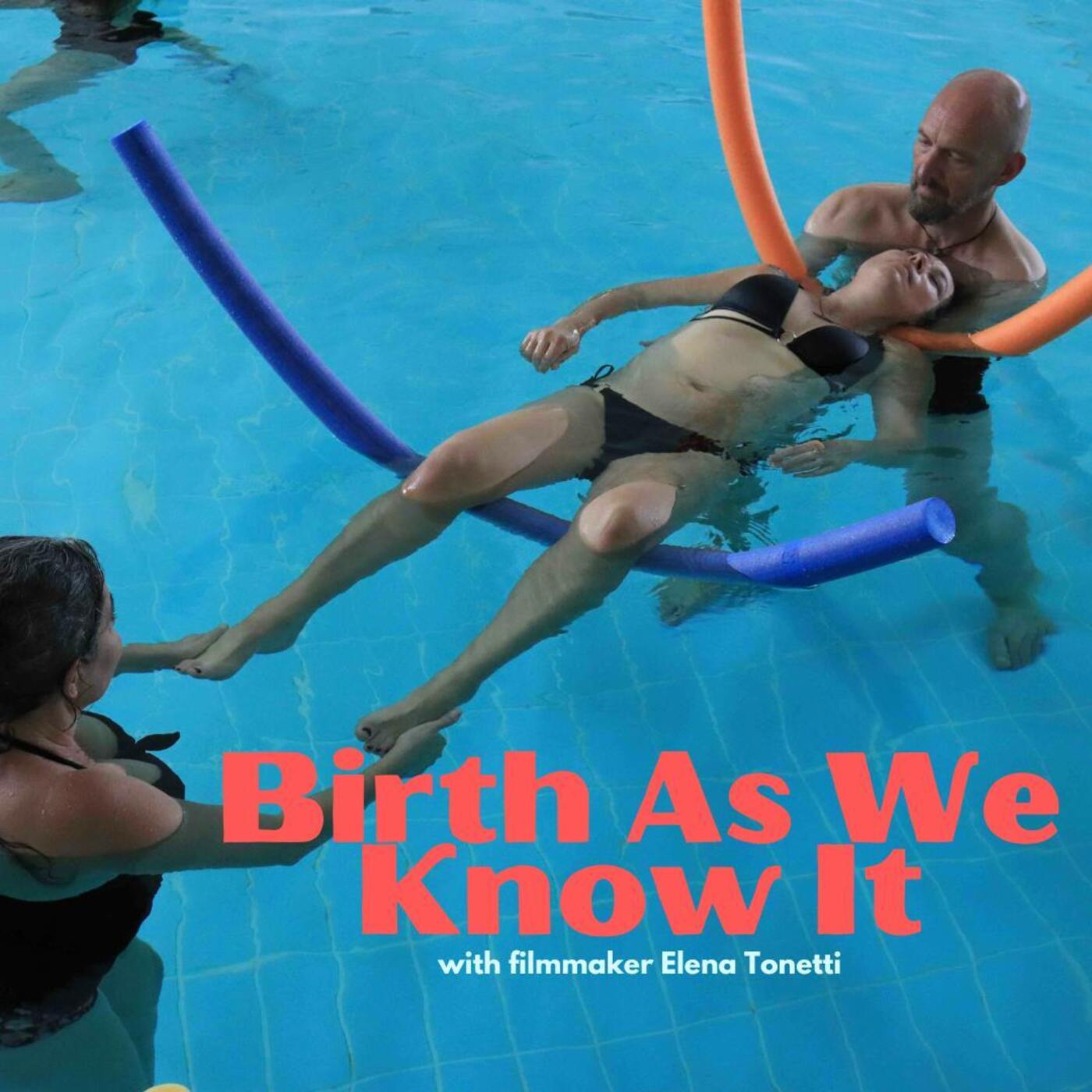
Siberian-born author, filmmaker, and creator of the Birth Into Being movement Elena Tonetti discusses her classic film Birth As We Know It, now streaming exclusively on Informed Pregnancy+.
Birth Into Being, as a community of seekers and healers, is dedicated to conscious evolution and the creation of a thriving social structure based on love, compassion and common sense.
“Let me say it again. Five days would pass before the mother would see the child that she gave birth to.”
“So women were willing to give birth anywhere in the middle of nowhere, the Black Sea, okay, at home in the bathtub, okay, I'll do anything on the back seat of the cab. I'll do anything to find a way of not going into that institution.”
“The main message that I am here to deliver is that we never needed a plan B. That's the thing.”
“95% of all complications are preventable because they are based on the emotional, sexual, psychological trauma. And that is what we're actually able to do something with.”
“you need to really kind of understand that I am not what happened to me. I can tell my story of my gross and beginning but it's not retraumatizing me anymore because I've done so much of my own medicine.”
AI-generated transcript with speaker labels — may contain errors, especially names and medical terms. Dr. Elliot Berlin, DC appears in blue; Elena Tonetti in orange.
Dr. Elliot Berlin, DC[0:36] Welcome to the Informed Pregnancy and Parenting podcast. I'm your host, pregnancy-focused chiropractor, Dr. Elliot Berlin. My guest today is a speaker, author, and filmmaker of the classic birth film, Birth As We Know It, now streaming on Informed Pregnancy Plus. She's also the creator of the Birth into Being movement, Elena Tenetive-Vladimirova. Welcome to the podcast.
Elena Tonetti[0:59] Thank you.
Dr. Elliot Berlin, DC[1:01] It's my pleasure. It's an honor to meet you and to talk with you, and I want to spend every minute we have learning from you. So I'll jump in from the beginning. Where are you from originally?
Elena Tonetti[1:13] Siberia, as in Siberia.
Dr. Elliot Berlin, DC[1:17] Ah, as in the Siberia.
Elena Tonetti[1:19] Yeah, which is a good place to be from. And not a good place to be in. Well, especially when I was born in the 50s, it was definitely a place you wanted to be far away from.
Dr. Elliot Berlin, DC[1:34] What was growing up there like?
Elena Tonetti[1:37] Well, first of all, the way people were born, the way I was born, was basically as bad as it gets. When I start telling people about the situation with birth houses there, I could see their eyes enlarge. And it's like, really? Why? Why would anybody want to do that? But that was the way things were done. And questioning it was not safe, because the environment was very abusive, harsh, life-threatening, and the staff was literally mean to women. And the whole experience was absolutely terrifying for both women and babies, because babies were taken away from the mothers for five days. Let me say it again. Five days would pass before the mother would see
[2:30] the child that she gave birth to.
Dr. Elliot Berlin, DC[2:32] Why?
Elena Tonetti[2:33] Exactly. And all this time, the babies were stored and hundreds of them on the floor altogether, given sugary water with tranquilizers to keep them quiet. Basically, what I know now about correlation between the way we make people and the quality of life that is being called for us by them when they grow up, it's basically all the mess we're in is due to that experience during the formative period.
Dr. Elliot Berlin, DC[3:08] And that's how you entered the world.
Elena Tonetti[3:10] Yep. That's how I showed up too. I was breastfed, because by the time the mother is finally holding the baby in her arms, her breasts are sore, inflamed with mastitis, the milk gone sour. It's just hard to look at those breasts, nevermind trying to feed from them. So it's pathetic. It's stupid, weird. I don't know. Don't get me started on that. But that was actually the reason why conscious birth, water birth, pre-birth had such a powerful beginning in Russia, because women heard from each other that this is what to expect in the state maternity ward. So women were willing to give birth anywhere in the middle of nowhere, the Black Sea, okay, at home in the bathtub,
[4:08] okay, I'll do anything on the back seat of the cab. I'll do anything to find a way of not going into that institution. I mean, my mom for the rest of her life was avoiding that street where the birth house was. She would just, you know, go out of her way to not walk that street.
Dr. Elliot Berlin, DC[4:29] Wow. Yeah, quite a story. You're not there anymore.
Elena Tonetti[4:33] I am not there anymore.
Dr. Elliot Berlin, DC[4:35] Where are you now?
Elena Tonetti[4:36] I am in Oregon, South Oregon.
Dr. Elliot Berlin, DC[4:39] Okay, and what do you do now? I mentioned it a little bit in the intro, tell me more about the work you do.
Elena Tonetti[4:44] I am happily retired since 22, which marked, well, I retired two months short of 40 years of serving the birthing field. And since that time in 22, I've been just taking care of my two grandchildren and my elderly mom who is 91 and is doing great and dancing basically every day, all kinds of dancing, just loving life, hiking. But in May, all of a sudden something kicked in. I heard myself saying, I think I'm gonna do another workshop and one is coming up in a couple of weeks. I don't know, that was kind of in a spur of the moment and I had a full group gathered before I had a chance to change.
Dr. Elliot Berlin, DC[5:36] Oh, wow.
Elena Tonetti[5:39] Coming up in October. So yeah, I'm doing another workshop. I did not plan that. I did not think it would happen, but here it is. Surprise. And the group assembled so quickly and effortlessly before I even had a thought of how am I gonna promote it or organize it. So that tells me that I was just obeying some higher order. The whole birthing field works that way. When you really step into life as a shamanic journey, shamanic journey, every turn kind of reveals itself as you go and it's a matter of making a choice. Which turn do I take? And there is no right or wrong choice, whichever choice you make is the right one. So I'm making this choice and I don't know if it's gonna be another one.
[6:38] I'm very excited about this one.
Dr. Elliot Berlin, DC[6:41] So I wanna find out more about your workshops and about the film. But 40 years in birth work is massive. How did you get involved in birth work?
Elena Tonetti[6:51] I was very much part of the group of young passionate adults in Moscow. I left Siberia in the last 10 years of my life in Russia, I lived in Moscow where I met the most amazing people that were gathered from all over the country by their drive, their passion to figure things out. Like what works, what doesn't work, how to make the quality of life for themselves better. And as we were at it, how to make it better for everybody around us. And I was part of the team of my late husband's team who was doing this very amazing brainstorming technique. He was calling it games. There was nothing like a child playing those games but they were games more like adult business games
[7:46] with big organizations. It's like minimum required amount was 300 people and it lasted for seven days. So it was a big production. And at some point I was asked to meet with this strange man, Igor Cherkovsky who was running with this crazy idea of placing laboring women in water. And he was viewed as a crazy, strange like mad professor type because he was very hard to understand. He was a true Siberian shaman as a true seer and healer very like large charismatic personality but he was not very socially adept. Like he was always socially awkward and kind of saying very strange things. I met with him because somebody I really respected asked me for it.
[8:40] And I gave him 20 minutes. Four hours later, I dropped everything and became like his right-hand supporter like his translator into everybody else's Russian. And for some reason I was able to understand what he was saying. And what he was saying was that we can't clean the mess we're creating fast enough because the way we were born we grow up and make a bigger mess at every turn. So in order for us to figure out where our civilization is going we need to change the way we make people. Basically that's the message from that seer, healer, crazy person. And he had the ticket. He was saying that we can actually give birth the way nature intended us to give birth
[9:38] like any cat is able to give birth because the basic machinery is the same that the reproductive system is not very different between us and a cat or a chimpanzee or a wild elephant. We are supposed to be able to procreate because whatever power created the whole scenario did not just, oops, forgot to install that program in our heart. Humans? Right, that every species knows how to procreate, right? And with humans, no, I think I'll skip that part. Yeah, that's not really how it works in nature. So he was calling for that, claiming our natural right for grace, for ease, for knowing how to deliver. And basically he was saying that what makes delivery problematic
[10:40] is the stress level. And it could be a stress level of the woman herself or it could be the stress level of anybody present in the room of her, the father of the baby, of her mother, of her sister, of her midwife, of her doctor, of the cumulative effect of the presence in the room because the birthing field, that's the term he coined, that every birth of a new something that did not exist before is kind of a vortex of energy grounded in that particular time-space continuum. And for that vortex to exist, to bring in something new, that it actually uses the present cocktail of energies to start moving and spinning. Maybe sounds too woo-woo for you,
[11:37] but I had so many visceral, kinesthetic, first-hand experiences of that vortex in all my years of working with that energy. And I felt like I was becoming that vortex. It was starting spinning everywhere I turn, everywhere I go. It was like really magical. And that energy really has a highly self-organizing intelligence. It's very, very intelligent while still being mystical because we don't really know much about how does it really happen that I was not and suddenly I'm in.
Dr. Elliot Berlin, DC[12:20] Right. It's more innate intelligence, not so much educated intelligence.
Elena Tonetti[12:25] No, you can read all your books on birth and still not being able to give birth. Actually, there is statistics that female doctors, obstetricians, gynecologists have the worst time giving birth because knowing about what it looks like at every stage doesn't make up for understanding that mystery and working with navigating your surrender, your opening, your capacity for becoming a portal to let this happen, like to get your bloodstream flooded with oxytocin, which will make the tissues elastic and soft and open and let the baby out. That's what happens. You actually need the opposite of knowing too much because our medical schools contaminate the consciousness
[13:25] with pictures of pathology. At every turn, there is so much that can go wrong and they're not really teaching about how it's supposed to go right.
Dr. Elliot Berlin, DC[13:37] And you can't, unless you have the ability for your conscious mind to stop thinking about all those details, it's hard to surrender to the innate wisdom that knows exactly what to do and when and how to do it.
Elena Tonetti[13:53] It's a completely different level of understanding that deep stillness in the core view being that allows you to do anything, give birth, write a poem, make dinner or make love. That's from that place that you can be creative and allow the sexual energy flow, which is also a big aspect of giving birth. It has to do with sexuality, how comfortable a woman is with being a woman, with actually being comfortable with her very existence because literally it comes down to that. If a woman never came to terms with being alive, which is in my observation, the great majority of people like deep down, is there alignment with that original impulse of that speck of consciousness?
[14:58] If there are alignment with that decision to walk this earth right now at this time in that place. So if there was never a place of agreement, like deep core agreement, if there is still that place of confusion and it's like, why did I do that? Like, what was I thinking? If that was the case, it's very hard to make a baby from that place. It's hard to call for some complications because there is this quintessential conflict in the system. And hard to make dinner.
Dr. Elliot Berlin, DC[15:40] Right. Or anything.
Elena Tonetti[15:42] Yeah. Vibrant, feel alive, feel your emotions and feel like know what's right, what's wrong for you. There were experiments that revealed that the majority of people have to be told what's good, what's not good because their own- Inner voice. Yeah, is broken. It was never activated. See, it's innate that inner voice is there as part of the package. But if it was not only not activated, but conditioned into deactivating. Buried and rebel. Exactly. By all the rules and regulations and restrictions and most of which are traditional religious school norms, parental norms. We're bombarded by so much trauma responses of our caregivers that we're just trying to survive.
[16:39] And when you are in that survival mode, it's not really possible to learn to be creative and sexual and alive. You're just trying not to get ran over by the train.
Dr. Elliot Berlin, DC[16:55] You're just trying to stay alive. Let's take a little break. When I come back, I wanna find out more about your work and in particular, your film, Birth As We Know It. We'll be right back.
Dr. Elliot Berlin, DC[18:43] Welcome back. We're talking to Elena Tonetti-Vladimirova and let's talk about the film, Birth As We Know It. Tell me the background of the film, how it came to be.
Elena Tonetti[18:52] Well, the idea of the film was born in 82, but then it took a long time because none of us knew how to make a film. Nobody even knew anybody who had a camera. Nobody had money for that, but there was this intention to create the film. So finally, in 92, the Russian film was created that was called Novy Svit, which is new light in translation, which was the name of the village next to which we had our birth camp at the Black Sea. But also it's the literally new light. We felt like we were bringing the new light with all this newborn babies that were born with wild dolphins in the middle of nowhere. It was really significant. So that film from 92 was an hour long documentary
[19:48] that had a lot of stuff that only Russian auditorium could relate to. So when there was an idea in 99 to create English-speaking version, we had to kind of cut it down. And the cut version was only half an hour long, and it was called Birth into Being. So that was just the cleared out from the Russianisms version of Novy Svit. But then there was a lot of things that went wrong with narration that film that kind of was a runaway bunny. It had a kind of a life of its own for seven years when we didn't have a say. The narration didn't really say anything that needed to be said in that film. Like the actual information, we can show what it looks like,
[20:42] but the main message of the film was that it's not enough just to put a laboring woman in the water, that by itself the water doesn't have the capacity to make everything nice and smooth and easy. There's a lot of other things that are at play, the other possible reasons, possible complications during the delivery. So none of that information was in the narration that Birth into Being carried. So I was still pregnant with the project that needed to have all of that information. And it took me a while to gather the resources and the room in my head and the space and the expertise. I needed to learn to speak English because when I got kind of catapulted like Dorothy
[21:37] into American soil, I didn't speak English. I did not see it coming. I had no expectations of being stuck here in 89, but that's what happens. I learned English and by 2006, I was able to write the narration that I was really needing to write. So having said that, I was grateful that Birth into Being movie was out, affect influencing millions of people on this planet because it turns out millions of people watched it and I didn't have the capacity to reach that audience. So it was kind of good that it was a runaway bunny, but I still needed to say, like I was still carrying all the information and the actual DVD of Birth as We Know, it had four hours of footage
[22:36] that 75 minute feature film and the rest of it was in bonus features. But then in 2018, my house got burnt in Paradise, California with all the stock of DVDs.
Dr. Elliot Berlin, DC[22:52] Oh, that was a big fire.
Elena Tonetti[22:54] Yeah, thousands of copies. And I never had it in me to replicate the hard copy DVD partially because nobody wanted DVDs by then. Everybody just wanted to download. So now the director's commentary is in the project of me writing my book. So all of that information would be in writing because the bulk of the information is actually in the bonus features because the film itself, I wanted it to be the poetic magical transmission of the actual bursting field mystery. So it had to be like every sentence is coded and it's a direct transmission. I did not want to include any technical stuff, any like how tos and this is what you need to do. So all of that was in director's commentaries
[23:51] and the script of Birth as We Know, it was basically there was no script. It was my journey of making that film. I was just recording what I was going through, giving birth to that baby because all hell broke loose. I gave up six times.
Dr. Elliot Berlin, DC[24:11] Oh, wow.
Elena Tonetti[24:12] I said, this cannot be done. It's just so much came up. I felt like I was rounding the new birthing paradigm through myself because every obstacle just arose. Like my editor quit, then my other editor when he saw the footage of circumcision, the raw footage is 28 minutes and it was in the middle of editing. And when he saw what it actually looks like, the baby boy being circumcised, he lost it. I couldn't find him for three months and I thought that I will never see him again. He went on the binge and all my stuff was there. I couldn't get a hold of him or anything and I had no idea if we can ever get back to making it and then it took another three months for him to come back.
[25:05] He was so traumatized by looking at that footage.
Dr. Elliot Berlin, DC[25:09] Can you tell me more about the birth camps?
Elena Tonetti[25:13] Okay. The birth camps were on the bank of the Black Sea. It was a different location every year in the beginning and then every year there were more locations. So there would be like different lagoons would have the whole other support crew and different participants. And while working on the film, one of the other organizers, Tatiana Sargonas, we were on the phone for a good hour trying to figure out how many babies were born there. Let's try to figure out how many babies were born there. And the thing is nobody was doing a head count ever. It was never part of our understanding. It was before computers, before internet. It was all kind of a spontaneous movement.
[26:07] Nobody was trained in business or in midwifery. There was no doctors, no midwives. It was just women who gave birth themselves and got the deep, intimate kinesthetic experience of how it works. And of course it was not a normal hospital with like come on everybody where anybody who walks in the door can participate. That was by invitation only for the people who went through the whole program of preparation during fall, winter, summer, whenever they joined the classes. And it was only those who felt confident enough and strong enough and physically, emotionally, mentally to go in the middle of nowhere. It's literally in the middle of nowhere because for the birth camp,
[27:03] you need warm, clean, shallow water with no traffic, no tourists. It needs to be very private, of course, for obvious reasons. And those places were in the middle of nowhere. So it was a Russian birthing Olympics of a sort. And whoever came to those camps was literally taking full responsibility for the outcome, for their health, for their baby's health because there was no plan B. Like when I came to America first time and started looking for a place to replicate that, I had absolutely no clue about rules, regulations, restrictions, insurances, void, complete void. I was innocent to a fault in that regard. There was absolutely no information about any of that
[28:04] in our crazy experience, you know? And after I learned all of that, I looked back and I was like, oh my God, what have we done? That was my contamination with pictures of pathology. Suddenly I realized that that was pretty bad ass what we're doing. The main message that I am here to deliver is that we never needed a plan B. That's the thing. There was never a need in even as much as a stitch. It was absolutely beautiful, perfect, magical, fantastic, high. I mean, the high that the whole camp would go into, there was no drugs. There was absolutely no substances. That was like rule number one, no substances. Even the dads who were smokers, they had to go like climb the cliff to smoke out there.
[29:08] So there was absolutely nothing involved. It was the nature's medicine. One woman can provide oxytocin on contact high for the whole camp. It's like you can't get that high on any LSD, ecstasy. I mean, it's just incredible.
Dr. Elliot Berlin, DC[29:32] I do sometimes when you hear people talk about unmedicated birth, in my head it just seems like, well, it's always medicated. It's just whether it's the stuff we give you or the stuff you make yourself. And the stuff you make yourself is a lot more powerful and cool than the stuff we can give you.
Elena Tonetti[29:49] The brain has the capacity to produce enough oxytocin to go in full blow orgasm during the birth. Actually in my film, you can actually see it. There is only one birth that shows it, but that isn't unknown. Well, that's the whole other subject of interview. And yeah, do you have any specific questions?
Dr. Elliot Berlin, DC[30:14] I do, but I think let's take one more break and then we come back. I'll fire my next round of questions at you. Don't go anywhere. We'll be right back. Welcome back. We are talking to Elena Tonetti-Vladimirova and you've got a 40 year career of birth work behind you and you've identified some of the issues that make birth complicated, not empowering and a poor entry into the world for new life and the ripple effects that has on the new life and the community and society as a whole. What do we do with that? Where do we go? How do we make it better?
Elena Tonetti[31:10] There is actually the whole field of psychology is called pre and perinatal psychology. And there is enormous body of research in the last 45 years that is published, documented, studied with control groups in the proper regiment that should be, I believe all of the findings should be in the high school because people need to know about all of that.
Dr. Elliot Berlin, DC[31:37] Agreed.
Elena Tonetti[31:37] It's still not in the medical textbooks within the mandatory curriculum. It's a mystery to me what's taking them so long, but it shows a very clear correlation between the way we're born and the way our behavioral and emotional patterns are formed and being recapitulated throughout our life. So having said that, the possible complications in birth sometimes are not even rooted in the woman's own maybe history of sexual trauma, history of emotional abuse in her formative period in the, with mechanical damages from like car accidents, it's really like, it's a whole different story. We're not looking at it. But in my understanding, 95% of all complications are preventable
[32:31] because they are based on the emotional, sexual, psychological trauma. And that is what we're actually able to do something with. It gets complex because sometimes it's not even a woman's trauma, but it's her mother's and her grandmother's and her great-grandmother's because women are like matryoshka doll, the nesting dolls that are…
Dr. Elliot Berlin, DC[32:59] Yes, ancestral.
Elena Tonetti[33:03] Right, the egg that became me was inside my mother when she was still inside her mother because it forms the whole amount of eggs is formed halfway through pregnancy of the baby girl fetus, which means that we are literally absorbing that amniotic cocktail from the grandmother and looking back, it goes like thousands of years back. And if we look at it, like what was happening in that bloody history of ours, there was so much violence and famine and plagues and disrespect of women that were literally not seen as people. They were traded, they were sold, they were beaten, they were starved, they were neglected, they were traded into another village
[34:02] for the rank or for the money. We don't really have historically nurturing, comforting background to sustain a blissful delivery because bad habit of agony at birth was acquired thousands of years ago. It literally is just a bad habit that could be dealt with as any bad habit. Consistency, attention, and understanding how it works. And then understanding how it works is just starting to watch like what kinds of patterns am I running in life? And most sure that those patterns are somehow connected with the patterns of interaction between parents during pregnancy. Turns out that the biggest source of, well, it's hard to quantify like what is the biggest source.
[34:59] Sexual trauma is a very big one if a woman was raped. But if parents during pregnancy were not on the same page, if the mother was crying, if she was in distress about this pregnancy, that's what baby is absorbing. That's what the body is being saturated with, that level of stress hormones from the mother's fluids. And dealing with it is very, very complex because you can't talk your way out of it. It all happened before our cognitive function was even built because we're talking with the cortex and the cortex was not in at the moment of absorbing all the information on the cellular level. So you see the predicament, you can go to therapy for 20 years,
[35:58] but how do you talk yourself out of being uncertain about the rightness of arrival onto this planet? If say the father was yelling, I don't want that baby, or the mother was overwhelmed and stressed and hungry and scared, or just caring for another four babies already, and she was not ready physically, her body was depleted, she literally did not have any room in her nervous system for another baby, and here it is, she's pregnant because her husband refused to use any kind of birth control. So unfortunately, in my estimation, 98% of people walking the Earth right now were traumatized severely during gestational births. It's a pretty high number,
[36:56] but there is a difference between severe and extremely severe when there was C-section. C-section is extreme severity because of the drugs, because of, don't get me started. Well, maybe you do want to get me started. It's a very, very big trauma for the baby to be denied the right to be born because being born, that moment of going through the birth canal activates all the systems in the body, respiratory, digestive, muscular, all the skeletal, it all needs to start pumping and contracting and expanding, and there is a lot of systems that activates only during actual births. So if the baby's born by C-section, that activation never happened. So there we have the digestive and respiratory
[37:58] and muscular problems, but I'm generalizing, okay? Because there are C-sections that are imprint as the way to survive because they come in the real emergency when I not just scheduled the first information about pregnancy. She knows when she got pregnant and she schedules herself a C-section. That's trauma. When a woman is trying to give birth and it's literally a rescue situation, then the imprint is help comes when I need it. It's actually a positive experience. So nothing really about birth is like, this is the way it is carved in stone because we are not just physiology, there is emotions, there is spiritual reasons for our arrival into the body.
[38:58] I'm not religious, but I'm very acutely, kinesthetically connected with that which made this all happen.
Dr. Elliot Berlin, DC[39:07] Oh, spiritual.
Elena Tonetti[39:09] Right, my whole life is the story of manifesting all kinds of proofs that there is some supreme intelligence behind all of this. So I can't help it, but know the connection with that source energy. And it's very, very important to find that place. It's almost irrelevant whether your brand of intimate connection with the source is satisfying for anybody else. It's like, as soon as you have it in your heart and in your mind and in your body, then you become unstoppable and you don't really care much about what other people think. So this is where I am. I say what I want to say, take it or leave it.
Dr. Elliot Berlin, DC[40:03] But Eben, you mentioned ancestral trauma, the picture in those nesting dolls. What does someone today, what does someone do to address that?
Elena Tonetti[40:15] Well, first of all, look around and find somebody who is available in your area to support some kind of birth trauma healing or somatic therapy. Just look around, I'm sure every place on earth now has some kind of healer that can help with it. It is very important that it's not just the talk therapy or not just the yoga, dancing or physical exercising because any therapy that addresses only one part of the big picture is gonna be insufficient and will take a very long time because we are physiology, we're emotions and we're our mental and spiritual aspect, right? So if you just talk, that's gonna engage that part of the brain, the cortex. If you're just exercising and doing yoga,
[41:16] it engages the reptilian brain part and the one that governs physiology and it leaves you fragmented with everything else kind of off the boat. And if it's just emotional work, then the body is left out. So it needs to be some kind of practice that engages equally at the same time with the same intensity, all three areas when you are physically, emotionally and mentally are engaged with this intention for healing. So that kind of practice. And then it's very efficient and doesn't really take much because that place is not very far. Our innate state is health and wellbeing. When we really understand this deeply, there is just, I don't know, I don't want to just promote my work
[42:25] because my work is limited availability but I am sure there is a lot of other modalities that offer some sort of jumpstart in that direction.
Dr. Elliot Berlin, DC[42:38] Well, as a place to start, let's talk about your work. You have created a movement, Birth into Being and your movement does have community around it now and people can access it. Tell me a little bit about Birth into Being.
Elena Tonetti[42:55] Well, the Birth into Being method consists of 40 very different processes and exercises that kind of are designed not to leave any rocks unturned because there is so many layers and levels of parts of us where we're habitually holding ourselves contracted and small and each process is very different but they all address those ways we are holding ourselves down in a different way. There are some processes that we do as a group all together like guided meditation. Some of them are one-on-one with the facilitator. Some of them are in small groups of three people or four people or seven people. So they're all very different. What is common between them that they all are done
[43:49] in a slightly altered state that allows us to go into that space beyond the story because the story has a lot of hold on our psyche. We tell our story so many times to so many people that we enforce it every time we tell the horrors of our beginning and to be free from it you need to really kind of understand that I am not what happened to me. I can tell my story of my gross and beginning but it's not retraumatizing me anymore because I've done so much of my own medicine. So that slightly altered state is achieved with very specific type of breathing alternated with very specific type of movement then different type of breathing then different type of movement
[44:44] and it's like the few steps and all of a sudden the whole group is becoming like this one pulsating field that field in the room is propelling every person to where they want to go. I don't know where they want to go, where they need to go. It's like they know. So my task as a facilitator to offer them the frame the container so they could get into that state when they would be able to access their own answers. So it's not up to me, it's not up to any of my assistants or other facilitators. It's a moment of getting in touch with that which was there the whole time just kind of paved over.
Dr. Elliot Berlin, DC[45:33] I think that you've really touched on some very interesting points. I think that your 40 year evolution of learning and teaching has really just left me able to get a very small taste of the information that you have and both from the sort of troubleshooting and assessment side of things and from the remedy and therapeutic side of things. But what we can leave our audience with is where to find more. So we do have the film currently streaming on informed pregnancy plus birth as we know it but where can they connect with the birth into being method and movement?
Elena Tonetti[46:21] On my site, birth into being.com and yeah, I am retired. I'm only doing this one training in October.
Dr. Elliot Berlin, DC[46:28] Yeah, for now until you get another impulse. We never know.
Elena Tonetti[46:32] Perhaps. I'm not rolling it out. It was just, they called me and I answered but my graduates are offering their courses and very grateful for that amazing people, amazing women. All of them are women and they are actually poster babies for my work. They were already magnificent when they stumbled upon me. I'm deeply honored to have their attention and to have them calling my mentors because every time I talk to them now, it's like I should be taking your workshop. Oh, that's really the newer gadgets. They're newer models they're actually living in. They have their babies beautifully born with their husbands. They live in communities in the tropical paradise.
[47:27] I mean, just amazing, powerful, very intelligent, educated women that I'm just so blessed to have.
Dr. Elliot Berlin, DC[47:36] And infused with your magic. Elena, thank you so much for joining me on the podcast and for sharing some of your wisdom with me and with our audience and for sharing your resources with us. I really appreciate you spending the time with me.
Elena Tonetti[47:51] Thank you so much.
Dr. Elliot Berlin, DC[47:52] At home, thanks for listening to the informed pregnancy podcast for more pregnancy and parenting information just like this. Visit us online at informedpregnancy.com.
Want more pregnancy + parenting? Start your FREE TRIAL of Informed Pregnancy+ and get access to all our curated pregnancy and parenting content — original series, iconic birth films like The Business of Being Born, prenatal workouts and more.
Dr. Kirsten Thompson, MD is a former Wall Street analyst turned surgeon turned board certified psychiatrist. She is the founder of Remedy Psychiatry and Thompson Psychiatry and is a former Clinical Instructor at UCLA. She joins the podcast to discuss PMDD or premenstrual dysphoric disorder, including symptoms and treatments dhee to try.
“But on top of that, PMDD is really a truly severe disorder. And for some women, it's really dramatic and it's nothing they can control. Again, it's chemical, so they deserve to not suffer.”
“In fact, I had one patient that said to me, look, I'm honestly suicidal every month for a week. And every month I feel like I need to check myself into the hospital”
“And in short, it's a very genetically driven disorder. So 70% of women whose mothers had PMDD also have it.”
“I really just felt kind of normal this month. It was incredible.”
“I want you to just give me a warm hug and say like, let's make you some tea and go to bed.”
AI-generated transcript with speaker labels — may contain errors, especially names and medical terms. Dr. Elliot Berlin, DC appears in blue; Dr. Kirsten Thompson in orange.
Dr. Elliot Berlin, DC[0:12] Welcome to the Informed Pregnancy and Parenting Podcast. I'm your host, pregnancy-focused chiropractor Dr. Elliott Berlin. My guest today is a former Wall Street analyst turned surgeon turned psychiatrist who founded a telehealth-based mental health care company focused on medication management. She's here to discuss premenstrual dysphoric disorder, or PMDD. We'll talk about the symptoms, how it can be differentiated from other types of disorder, and what treatments are available. Dr. Kirsten Thompson, welcome to the podcast.
Dr. Kirsten Thompson[1:07] Thank you. It's good to be back.
Dr. Elliot Berlin, DC[1:09] It's welcome back to the podcast. It's great to see you again. And you know what, I've just in my own office been seeing it feels like more and more cases of PMDD, or maybe just more people talking about it. I didn't really know what it was. And now it seems like also, the more it is talked about, the more people start to wonder if they have it. So this is going to be a great topic with a lot of information. Before we jump into PMDD, let's talk about you. Where are you from originally, and what do you do?
Dr. Kirsten Thompson[1:38] I am from upstate New York, Rochester, New York, and spent 10 years in New York City, and now in Los Angeles. And I'm a psychiatrist here. I have a private practice, and then I have a telehealth company called Remedy Psychiatry, where we see children, adolescents, adults for psychiatric medication management, and we take insurance. And we see a lot of PMDD there and treat a lot of women's mental health issues, in addition to men, though.
Dr. Elliot Berlin, DC[2:06] Yes, men without PMDD. You caught me off guard when you said we take insurance, because I have insurance, and as far as I can tell, nobody takes it. That's fantastic.
Dr. Kirsten Thompson[2:16] Yeah, it's taking more and more plans, but right now we take most major plans in California, which is really rare. As somebody who has insurance and also finds it really difficult to have it accepted because of the sort of medical insurance behemoth complex and how difficult it is, yeah, it's one of my goals to really create affordable care, but also take people's insurance, because that's what everybody wants. That's why we have insurance, right?
Dr. Elliot Berlin, DC[2:40] Kudos to you. That must be a very difficult balancing act. You know, in recent years, a lot of the health insurance companies have been offering coverage for lactation support, and I realize that they don't cover my therapist, but they do cover lactation, so I'm going to just start going to a lactation consultant, see if I can help that way. So obviously quite a journey, because as I mentioned in the introduction, Wall Street analyst, to surgeon, to psychiatrist, and I think we talked about that evolution a bit when you were on last time, but it sounds like you've found your thing.
Dr. Kirsten Thompson[3:13] Yes, yes. My thing is sort of bringing access to great personalized mental health care now to more and more people by my work at Remedy Psychiatry, and I own the whole company and have a team of really amazing psychiatric nurse practitioners who see patients. We all love caring for patients. We all love learning, learning the latest things, including about PMDD, and we prescribe medication, but we kind of believe in this holistic model. We support diet, lifestyle, therapy, and we provide therapy referrals, but we also even start people on supplements. So I just heard feedback from a therapist recently who said, I sent my patient to Remedy and they weren't ready for prescribed
[3:49] medication, but they were started on a supplement regimen. It really created a sense of treating the whole person, and so that's where our goal is. It's not just to prescribe medication. It's really to kind of bring people to a better place of mental health in their life through whatever means it takes.
Dr. Elliot Berlin, DC[4:05] Out of the box again in another way, and not a moment too soon. I think there's so much need for mental health care and access to mental health care and also holistic mental health care. The combination, really fantastic that you offer that. Let's talk about PMDD, premenstrual dysphoric disorder. If we can break that down, premenstrual before the period starts, dysphoric. Dysphoria is just, how would you describe it, a sense of just negative horribleness, or is there a more clinical term for that?
Dr. Kirsten Thompson[4:38] Well, if you think of euphoric or euphoria as feeling amazing, right? Dysphoria is the opposite, feeling terrible, low, bad. And that's in premenstrual, you said it's usually before menstruation in the cycle, so it's a certain part of each women's cycle. Which means that if their cycle is monthly, this happens every single month with regularity, which makes it a recurrent suffering for most women. And it's a syndrome, meaning it's not just one thing, but it's sort of a series of symptoms, and each woman may experience it differently. But there's some definite classic symptoms and signs that a lot of women have.
Dr. Elliot Berlin, DC[5:14] No, I know for a lot of people it's going to sound like, oh, isn't that PMS?
Dr. Kirsten Thompson[5:18] Right, so PMS, or premenstrual syndrome, is more of just like a term used around women's mental health when there are some symptoms of mood changes around the menstrual cycle. And the menstrual cycle really, it has physical symptoms, right, of obviously getting a period, but it's really driven by significant hormone shifts in the body, and hormones are chemicals. So really we as women each month are subjected to sort of this really incredible injection from our own body of hormones or chemicals that thrive mood and body changes each month. And so if when I was thinking, maybe I have something more than textbook sort of PMS symptoms, what would that look like?
[5:58] Yeah, so the discrepancy between PMS, which is pretty common, depending on the study, like 40 to 80% of women can experience PMS, which is most of us, which means that's, you know, I talk to women all day long and I say it's actually normal to have hormone changes causing mood changes. We're not doing anything wrong. It's just part of our bodies. So PMS is when there are some mood shifts, like maybe feeling a little bit more sad or down or a little bit more irritable, but not a whole combination of symptoms. And most importantly, PMS is not disabling and it doesn't impact life significantly, whereas on the contrary, PMDD or premenstrual dysphoric disorder is a disorder, meaning, you know, it sort of
[6:38] creates chaos in your life and it's really impairing. So for some of my patients, and we can get into this more, but, you know, it really can be impairing to life, meaning, you know, some people have to not go to school that day or they have to call in to work sick or they cancel plans with friends or family or things they want to do because of a combination of the physical and mental health symptoms of PMDD. So it's pretty severe. And whereas a lot of women, you know, that 40 to 80% have PMS, PMDD is thought to be less common. So 2 to 10% of what the research shows, but I completely agree with what you started out saying. I really do think it's far more than that.
[7:19] I think our research is very behind on women's mental health in general. I'm guessing you probably agree with that, but I think it's much more common than 2 to 10% because when I start seeing my female patients, often over time, it will become clear to them as they learn more about their mental health and what is their health and what is a state of not being healthy for them. That a lot more women suffer from PMDD than I think the 2 to 10% of women.
Dr. Elliot Berlin, DC[7:45] Yes, I definitely agree with that. And it kind of strikes me a little bit like the difference between nausea and vomiting of pregnancy and hyper-MSS, you know, people start to throw up during their pregnancy and hyper-MSS is different. And it's much more intense, but they are told or being to feel like, oh, it's just morning sickness, get over it. I have to imagine similar things happen when people are feeling dysphoric and they're just like, oh, it's your period. Just, you know, move on, come to work, do whatever you're supposed to be doing, you know, stop slacking.
Dr. Kirsten Thompson[8:15] Yeah, completely. I mean, it's almost like a societal joke, right, about women. Oh, she's PMS saying like any time a woman is sort of irritable or has a reaction even to something, it's like, let's disregard. In other words, it might be synonymous with ignore her. Right. That's PMS. And it's really quite the opposite. I mean, even PMS rate is driven by hormonal changes. And there's probably an evolutionary advantage to that, which is why, you know, 40 to 80 percent of us still have those hormonal changes. But on top of that, PMDD is really a truly severe disorder. And for some women, it's really dramatic and it's nothing they can control. Again, it's chemical, so they deserve to not suffer.
[8:54] And it can be really impairing to life. It's not a choice, in other words.
Dr. Elliot Berlin, DC[8:58] All right. Well, when we come back, we're going to find out more about what specifically it is to experience PMDD. And what it's like, how people could recognize that maybe they have it or that loved ones around them or a co-worker is experiencing PMDD and also how we can help them. We're going to take a quick break. We'll be right back.
Dr. Elliot Berlin, DC[11:56] Welcome back. We're talking to Dr. Kirsten Thompson and we're talking about PMDD. So now to get a better sense of somebody's listening and says, wait a second, maybe I don't have PMS, maybe I have PMDD. You mentioned the dysphoria and I'm curious what that might feel like, but how else does someone with PMDD feel? What is the experience like?
Dr. Kirsten Thompson[12:16] Yeah. So the dysphoria kind of is an umbrella term for a lot of the symptoms and then, which I'll sort of delineate, but the impact of this disorder is that it really impacts functioning and day-to-day life. So for some people that might be that they can't go to class, they can't go to work or they cancel plans with their life. It's really impacting their life. It's also, people can know that they have it because it's cyclical. So it comes with each menstrual cycle, which for most women is around 30 days and obviously that varies. And it's typically in the luteal phase, which just means before menstruation and it can vary. So I have some patients that have two really bad days right before their
[13:00] period and maybe even one day into their period. And for some women it's full two weeks long. So half the month they're suffering. Yeah. And that can be, you know, most women, the sort of way to kind of diagnose that most properly is to have a woman track their mood for about two months. Now, obviously I don't want any of my patients to suffer two months just to track it. So we'll usually treat it just by a good history. But for women who want to see for themselves, how many days is it? Is it two days or is it nine days for me? Tracking mood quite simply is really helpful. You know, there are a million apps on the phone, but it often can be overwhelming.
[13:36] Tracking one's mood can be as simple as taking a piece of paper, writing one through 30 for the month and writing a second number for mood. Meaning today I'm a three. It's a great day. Or today I'm a one. It's a low day. And then you can just look at two months of data and see, oh, look at this right before my period for five days, I'm a one. That means I have five days of PMDD and I had to cancel plans. And that's kind of a good way of figuring out how many days, which can sort of inform treatment, which we'll talk about. But long story short, every woman is really different. And as a result of that, every woman kind of needs to be treated differently, or at least in a personalized way, the symptoms.
[14:16] So we talked about dysphoria and that's kind of this umbrella term. And it's not just feeling sad. So women with PMDD have a number of these, technically five symptoms. One is feeling labile. So mood swings, feeling like suddenly sad or tearful, or feeling a lot more sensitive to rejection. So, you know, my patients will say things like I picked a fight with my partner and I knew it was, you know, totally irrational, but I just couldn't help myself, right? Feeling really irritable or angry is another symptom. Feeling sad, hopeless or low about oneself. In fact, I had one patient that said to me, look, I'm honestly suicidal every month for a week.
[15:02] And every month I feel like I need to check myself into the hospital because I almost feel like I'm not safer on my kids, but that's how severe it can be in the other three weeks of the month, she felt completely fine and normal. So that's a more extreme case, but that feeling of depressed mood can be very sudden each month. Another symptom is anxiety or feeling tension, not wanting to do things you normally want to do for fun. I'm not being able to concentrate. So there's some overlap here with other symptoms, like things like ADHD, feeling lethargic, really tired, easily can have changes in appetite, including overeating and carb sort of craving, sleep changes
[15:44] for sure. So a lot of women, when they track their sleep, for example, they'll realize like, wow, for a week before my period, I'm only getting six hours of sleep, which kind of adds to not feeling well. Feeling overwhelmed or out of control. And then of course, the sort of classic physical symptoms like breast tenderness, swelling, even joint pain, feeling bloated and sort of weight gainy. So in other words, a couple or five of those symptoms, but most importantly, the defining characteristic is that it really is kind of a disorder and it's really impairing life and causing suffering.
Dr. Elliot Berlin, DC[16:17] If somebody is listening and says, maybe I have that, what would be a first step for them to take?
Dr. Kirsten Thompson[16:24] So I think the very first thing to do that day would be to start tracking one's mood, you know, even with the simple way I mentioned earlier with a piece of paper or on an app. And that's really just to start getting details about each woman's individual body because they do differ. And so the more personalized we can be in healthcare, the better. And then the second step I think would be to reach out to, you know, someone who can help. And there are a couple of people that can help, you know, for sure there are types of talk therapy around those symptoms during that time of the month that can be helpful. But if someone's kind of either already doing therapy or they
[16:59] want to sort of go the next route of treatment, there are both some supplements that have been shown in the research to be effective for symptoms of PMDD and some prescribed medications. So in order to go that route and just even it can be educational. So no one who gets an assessment or an evaluation needs to start medication, but they can get educated on their options. And that can be through an OB GYN. So a lot of, you know, OB GYNs do prescribed medication for PMDD and or a primary care physician and or a psychiatrist. And so making that appointment specifically to talk about PMDD is a good next step.
Dr. Elliot Berlin, DC[17:36] Great. And then in our third segment, I want to talk about what specifically those treatments look like before we get there. A few things. Number one, is it something that starts with the onset of menses for a young girl or can it develop over time?
Dr. Kirsten Thompson[17:51] Well, so it affects women of reproductive age. So, yes, starting at menses, you know, which varies now and is younger, but whether that's like eight to 16 generally, and then goes all the way up until perimenopause and menopause, which is a whole, you know, bag of treats, so to speak, when it comes to changes for another day, maybe. So in the reproductive years, but it certainly can evolve and for sure, I actually see that for many women, the PMDD worsens as they age. So often in the thirties and forties is what I'll see. And this is a combination of PMDD, but also sort of the foray into perimenopause and menopause, because our hormones do start changing as women towards that, even in
[18:35] our late thirties and forties. And I often see a significant increase in women's irritability is the kind of predominant symptom around the premenstrual period. Really, really common. So I just always want to validate that for women. You know, a lot of them are overwhelmed and it's like, is it kids? Is it the stage of life? Is it my partner's annoying me? Well, it's also hormones that just drive irritability. And that's important because it can allow us to be more compassionate with ourselves.
Dr. Elliot Berlin, DC[19:01] True. But as a parent with girls, so when they're going through puberty, then it's something that you could look out for. I mean, if you start to notice something like this, then seemingly the earlier you get help, the better controlled it will be over your lifetime. The other question is, are certain people at risk for it?
Dr. Kirsten Thompson[19:22] Yes. And in short, it's a very genetically driven disorder. So 70% of women whose mothers had PMDD also have it. And there's even twin studies show that between monozygotic or identical twins, 93% of them will have it. So it's very much a genetically driven disorder that is kind of in our genes from before birth, even though it's related to hormones. So talking to one's family members, like you just mentioned, daughters, right? Mothers and grandmothers talking to their daughters and granddaughters about this in a very candid way is really helpful and can help avoid suffering in future generations. Just saying something like, Hey, you know, I really struggled in my premenstrual period and,
[20:10] you know, I had PMDD and it's very genetic and you might have it too. Let's get ahead of the game and really get you a good OBGYN and or a psychiatrist so that you don't have to be suffering for a couple of days or weeks every single month.
Dr. Elliot Berlin, DC[20:25] When a lot of our listeners are pregnant or postpartum during the pregnancy, typically no period. So does it go away?
Dr. Kirsten Thompson[20:33] So that would be a whole other topic too, about, you know, intrapartum mood disorders and perimenopausal. So the short answer is during pregnancy, the hormones are so vastly different that women often feel a whole range of new sort of experiences when it comes to mood. I just saw a woman, I think two days ago, who has a really severe OCD and anxiety, and she felt like pregnancy was literally the most relaxed and anxiety free period of her life. And I've had other patients on the other end of the spectrum entirely where their anxiety or depression really gets worse during pregnancy. And so this is why there's no easy answer when it comes to women.
[21:15] I think there's a broad range and every woman needs to be treated individually and also know that they're sort of entitled to that treatment because their experience may be very different than others.
Dr. Elliot Berlin, DC[21:24] Oh, sure. I'm asking specifically about PMDD because it seemed like it was connected to the luteal phase. So someone who is struggling with this disorder, when they get pregnant, do they typically get a little bit of a break?
Dr. Kirsten Thompson[21:40] That's a good question. And I don't think there's like a blanket answer either in the research or that I've seen uniformly. You know, I guess my best answer is still every woman kind of needs to be charting or charted by her physician, their own path.
Dr. Elliot Berlin, DC[21:55] And then I also don't know if there's an answer to this, but I wonder, does it set you up for a more difficult postpartum as those hormones flux?
Dr. Kirsten Thompson[22:04] So it's definitely a warning sign and we don't think there's anything wrong. I should say with someone's brain, right? This is a very genetically driven disorder and it's really just a way that the brain responds to the hormone changes and creates this dysphoria or these symptoms, that there's nothing wrong with the person per se. So for women who have PMDD, it's clear that those hormonal changes are driving significant mood changes. And it just means that their brain is sensitive to those hormonal changes. It is therefore concerning during pregnancy and the postpartum, when there are also significant hormonal changes. And often I do see that women who
[22:45] have PMDD are just frankly more sensitive to hormonal changes and therefore are more likely to be anxious or depressed in the postpartum too. So in other words, if someone has PMDD, it doesn't mean they're definitely going to have postpartum depression or definitely going to have postpartum anxiety, but it does mean, okay, you know what? My brain responds significantly to hormonal changes and that happens a lot during pregnancy and the postpartum. So I want to take care of myself and make sure I'm watched very closely and I can try to avoid having significant postpartum depression or anxiety. It's a good thing to be aware of, in other words.
Dr. Elliot Berlin, DC[23:22] We did an episode on dysphoric milk ejection reflex. Any connection there?
Dr. Kirsten Thompson[23:28] That's interesting. I'm not aware of any in the research. I mean, I've looked up that on its own and there seems to be so little on it to begin with, but I definitely had a couple of patients with it. I'm obviously seeing most of them in the postpartum. So I will say, yes, I've seen women with both the dysphoric milk ejection reflex and postpartum depression or postpartum anxiety. As far as its correlation to PMDD, I'm not sure, but I think in general, all of these are sort of factors that are pointing to this idea of, okay, this person's brain is very sensitive to hormonal changes. We need to treat them with extra care in essence.
Dr. Elliot Berlin, DC[24:05] Yeah. That seems to be the underlying message. Okay. I want to take another break when we come back to the extent that on a basic level, we can understand what is happening in the body when these symptoms come about and what the different treatment approaches are both in terms of self-therapies, holistic or supplementation medication, and even just practically speaking, I mean, the way you talk about it, yeah, what about a mom with little kids that she has to care for? And then these types of symptoms kick in. How do you work with that? Let's take a little break and we'll be right back. Welcome back. We're talking to Dr. Kirsten Thompson and primarily we're talking
[26:54] about PMDD. So give me an idea just of what's going on in the body when these very intense feelings come on.
Dr. Kirsten Thompson[27:03] So we don't know the real cause of this. In other words, obviously some women have it and some women don't. We know it's a genetic predisposition though, and we think it has something to do with the female hormones causing changes in serotonin. And so that areas of the brain that need serotonin to feel good don't have enough. In essence, there's a deficiency in areas of the brain. That doesn't mean that you can then take serotonin supplements into your stomach and you'll be fine. That's kind of a misconception. It means that there's just irregularities in serotonin levels, but we don't really know much more than that. But because of that, you know, there are
[27:39] sort of a bunch of things that we can do that are supported in improving serotonin levels in the brain and just general mental health that are supported for treatment of PMDD. And again, it really varies per woman. So for someone with very mild symptoms, they might want to start with some of the easier kind of lifestyle modifications I'll talk about. But for those people like my one patient who said I feel suicidal every month for a week and I need to check myself into the hospital. Obviously, if the symptoms are that severe, I wouldn't be wasting time with going on supplements for a couple of months because it honestly could be life threatening.
[28:12] And that would be a reason to go to the hospital if it was that day and there was truly a suicidal plan or really just seeking medical help. But it's a lot of suffering. And so women really deserve to feel better. And it creates a lot of disability impairment, having to take days off of work and cancel plans. So it's worth getting treatment because it's also treatable. So some women feel like if they don't know this, they maybe haven't heard this podcast. And I've had patients come in and said, Oh, my gosh, I think I have this and my whole life. You know, I thought I just had to suffer through this and take days off of work. And there are a lot
[28:45] of treatments that have now been kind of supported in their research. So things that can be done. Some of them are sort of things that everyone sort of should be doing for our mental health in our bodies all the time. So aerobic exercise. Yes, frustrating that we all know this, but it truly has been shown in the research to help symptoms of PMDD to a certain degree. I mentioned therapy, so specifically cognitive behavioral therapy, which is looking at the thoughts. And we have a lot of negative thoughts like I'm terrible, I'm worthless that then drive us to feel more depressed. And so this type of therapy is kind of looking at those thoughts to create a new roadmap.
Dr. Elliot Berlin, DC[29:20] When you say aerobic exercise, is that in the moment when you're Oh, my cycles coming on, I'm going to feel that way. Let me start exercising now. Or is that, you know, just throughout life? Do you need to have it on a regular basis to have the therapeutic effect?
Dr. Kirsten Thompson[29:33] That's a good question. I'd have to, you know, pull the study to know the exact answer. But my assumption in kind of reviewing the data overall is that it's sort of a regular exercise. I think the other thing is that fatigue, for example, is a big part of PMDD for many women. So rather than, you know, forcing oneself to get up and go for a run. I mean, if it's truly helpful, right, that's the data in and of itself. So if a woman feels better, if she goes for a run, even though she's exhausted in the middle of PMDD, then great, go for it. I think the body and brain's own response is the one that should be driving us the most. But in general, these are sort of interventions
[30:10] that are best done for the days of PMDD and kind of for all of us in general, right? Aerobic exercise is good for all of us. CBT and then dietary changes, so reducing caffeine can reduce anxiety and irritability. And again, that's another one can be true for everyone, can be true for people with anxiety, but also applies specifically to PMDD. Reducing salt intake can reduce bloating and those physical symptoms of discomfort. And then there are kind of a number of supplements that are shown in the research that can be effective in reducing symptoms of PMDD. So there are a whole bunch and maybe we could add these to the notes along with some resources
[30:53] for information as well. One of them that actually came from a patient of mine and I've now used this and she found it incredibly helpful, had severe PMDD is saffron. So this is the herb that's used in a lot of food and saffron 15 milligrams twice a day is shown in a study to reduce the symptoms of PMDD. So that's one. Another one, and you know, these are specific dosages, but again, hopefully we can maybe put them in the notes and it's worth always talking about with your doctor, obviously, in case you're on another medication that may interact with one of these. But vitamins B6 and E have some research associated with reducing PMDD symptoms,
[31:32] as does calcium. So calcium carbonate like 12 to 1600 milligrams per day.
Dr. Elliot Berlin, DC[31:38] Is that Tums?
Dr. Kirsten Thompson[31:39] Yeah, yeah, yeah. And magnesium. So magnesium, which also can really help for sleep. I like magnesium glycinate 400 milligrams up to 500 per day, even tryptophan up to six grams per day. Evening primrose oil and then taste tree berry, which I've never used, but in the research shows some improvement along with some omega three fatty acids like one to two grams per day, which also have other mood benefits. So there's a whole bunch of things for women to try if they wanted to sort of first start supplements. And some of these, again, maybe we can give it in the notes. Some of these are just like the evening primrose oil is kind of in days 17 to 20 through the cycle.
[32:23] Some of these are a little bit easier to sort of add in. So, for example, when I recommend a supplement with my patients, it becomes easily overwhelming. So I usually have them start with one supplement, for example, saffron, 15 milligrams twice a day and then have them do that just for a month and see, OK, did things improve? And if it didn't, you know, adding in a second one or switching to a second one can be helpful. So these are more for your mild symptoms where someone realizes, OK, I have some significant PMS or PMDD and I don't want to do medication yet, although they can be used in combination with medication, I should say, too.
Dr. Elliot Berlin, DC[33:00] OK, so we have lifestyle changes, we have dietary changes, supplements and then medication,
Dr. Kirsten Thompson[33:08] prescribed medication. So the pharmacologic interventions are several. The first line treatment for PMDD, because we think it has to do with serotonin, are the SSRIs or selective serotonin reuptake inhibitors. And those are the ones most people have heard of, like Prozac and Zoloft and Celexa. And there are six of them. They've now been around for decades and decades. And there's actually there are two ways to use them. So some women are perfectly fine the rest of the month. They have no symptoms of anxiety or depression. And we can actually just use a very low dose of these medications in a pulsatile way, meaning we just pulse it to them for two days
[33:52] of the month, or if their period or their PMDD is, you know, nine days, we only give them the medication for nine days. And even though these medications do not typically work like that, when it comes to PMDD, they do, which is pretty incredible and also illustrates how vastly different our brains are as women because of the hormonal changes. So that pulsatile treatment is great in that women typically aren't taking medication the rest of the month. And if they are have a regular period so they know when they can take the medication, it's really effective and it's a minimal dose. Now, if someone has a very irregular period, like maybe they have PCOS
[34:33] or they're just not regular pulsing is not as good of an option because they may not know when to take the medication. Yeah. So in those cases, we may do continuous treatment and that, you know, is probably the best option to cover most of their days. And then in some cases, when a woman comes in and she says, you know, I've had anxiety for 20 years or depression, I'm already on Prozac, but I'm noticing that I still have these significant PMDD symptoms. We'll continue them on one dose most days and then just pulse up the dose during their PMDD days. So maybe that's Prozac 20 most days of the month, but she's still realizing, you know, I have to call
[35:11] and sick to work two days a month. So we'll go up to 30 milligrams on those two days. And really, the benefits are almost immediately effective and visible or known by most women. So they'll sort of say, like, I really just felt kind of normal this month. It was incredible. And so we look for that dose that allows them to feel back to their normal. So those are the SSRIs. We also now use kind of the sibling medication of the SNRIs, which work on serotonin and norepinephrine. And then there are other treatment modalities that are usually kind of used either in conjunction with or sort of as second line, including hormonal treatment. Taking things like birth control
[35:50] can help some women. For other women, they feel terrible and actually more moody and bad on it. And then there are sort of some stronger medications called the GNRH agonists. And these are medications that are really kind of cutting off hormone production or cutting off a woman's production of FSH and LH, which kind of stops ovulation. So I've had patients go on those for more severe PMDD and then for really severe PMDD, even surgery is considered and doing, you know, like basically ovarectomy, hysterectomy type surgery to remove basically like a menopause scenario. So that's reserved for most severe cases. And I had a patient who is entertaining it,
[36:33] but still is sort of managing the PMDD through medications before turning to that.
Dr. Elliot Berlin, DC[36:39] Wow. So really something that has a whole host of options for improvement from natural to medical combination of both and even surgical. And I think that, you know, at first you hear this exists, PMDD, and you start to wonder if you have it. If, you know, in my mind, I'm always like, no, I probably don't have that because you don't want to have it. And it's scary to have something that is described like this. But on the relieving side, it seems like there's a lot you can do to manage it and live, you know, and a life around it. Along those lines, I just wonder for people around the person who suffers with PMDD, whether it's a partner or a parent or
[37:20] again, an employer, what kind of things can we do to create an environment that is supportive and helpful?
Dr. Kirsten Thompson[37:27] So I think really understanding the science behind it is the first step, meaning this is not a choice. And I think that's true for mental health in general, right? People kind of assume that because it has to do with our brain that we're choosing to have a panic attack or we're choosing to be moody or choosing to be irritable. And if we kind of create a boundary and realize, OK, this irritability, this tearfulness, this crying, these are all symptoms of something going on chemically and we need to treat this person, you know, first of all, how they want to be treated. But second of all, potentially, like they're kind of sick right now. We need to make sure
[38:01] we're tending to them and being compassionate with our care. So for many people, that includes and it's all based on comfort level, I should say. So for some women, they do want to let their partner know like, hey, this is my PMDD week. We're not going to make any big decisions. We're not going to have any huge conversations. And if I start crying or screaming at you, you know, I don't want you to say back to me like you're just PMSing or what's wrong with you. I want you to just give me a warm hug and say like, let's make you some tea and go to bed. And for some people, that really works. For other people, you know, really having alone time and making sure they kind of
[38:40] get the self care they need is really important. And so I think it's really up to the woman to kind of figure out, A, what feels best and what treats the symptoms and then B, to kind of put that emotion with the people around her so that she feels supported.
Dr. Elliot Berlin, DC[38:54] I've learned a lot here and there's more to learn. So a couple of things. One, are there any great PMDD resources that you recommend for people to seek out for more information?
Dr. Kirsten Thompson[39:05] Yes. So I think the best one right now is the International Association for Premenstrual Disorders, which is IAPMD.org. So that's an organization that has referrals and a lot of educational information, including some of the newer treatments that are just coming out and currently being tested. So even though we talked about a lot today, there's ongoing research, thankfully around this, and hopefully even more and better treatments will be to come.
Dr. Elliot Berlin, DC[39:31] So then finally, so much wonderful information for you and you're a great resource in general, but also you do so much work with women's health and with pregnancy and postpartum when people are extra sensitive about their mental health. Where can we find you online?
Dr. Kirsten Thompson[39:49] Yeah. So my company is Remedy Psychiatry. So it's remedypsychiatry.com and you can reach out to us there. You can email us, call us, book an appointment, come see us over telehealth. So not in person, but all over the state of California right now to see patients.
Dr. Elliot Berlin, DC[40:05] That's 44 million people.
Dr. Kirsten Thompson[40:07] Yes, we're trying to help them all
Dr. Elliot Berlin, DC[40:10] or those who need it at least. Well, thank you. Thanks for joining me. And at home, thanks for listening to the Informed Pregnancy podcast. For more pregnancy and parenting information just like this, visit us online at informedpregnancy.com.
Want more pregnancy + parenting? Start your FREE TRIAL of Informed Pregnancy+ and get access to all our curated pregnancy and parenting content — original series, iconic birth films like The Business of Being Born, prenatal workouts and more.