
November 21, 2024 · 31 minutes · Episode 434
About this episode
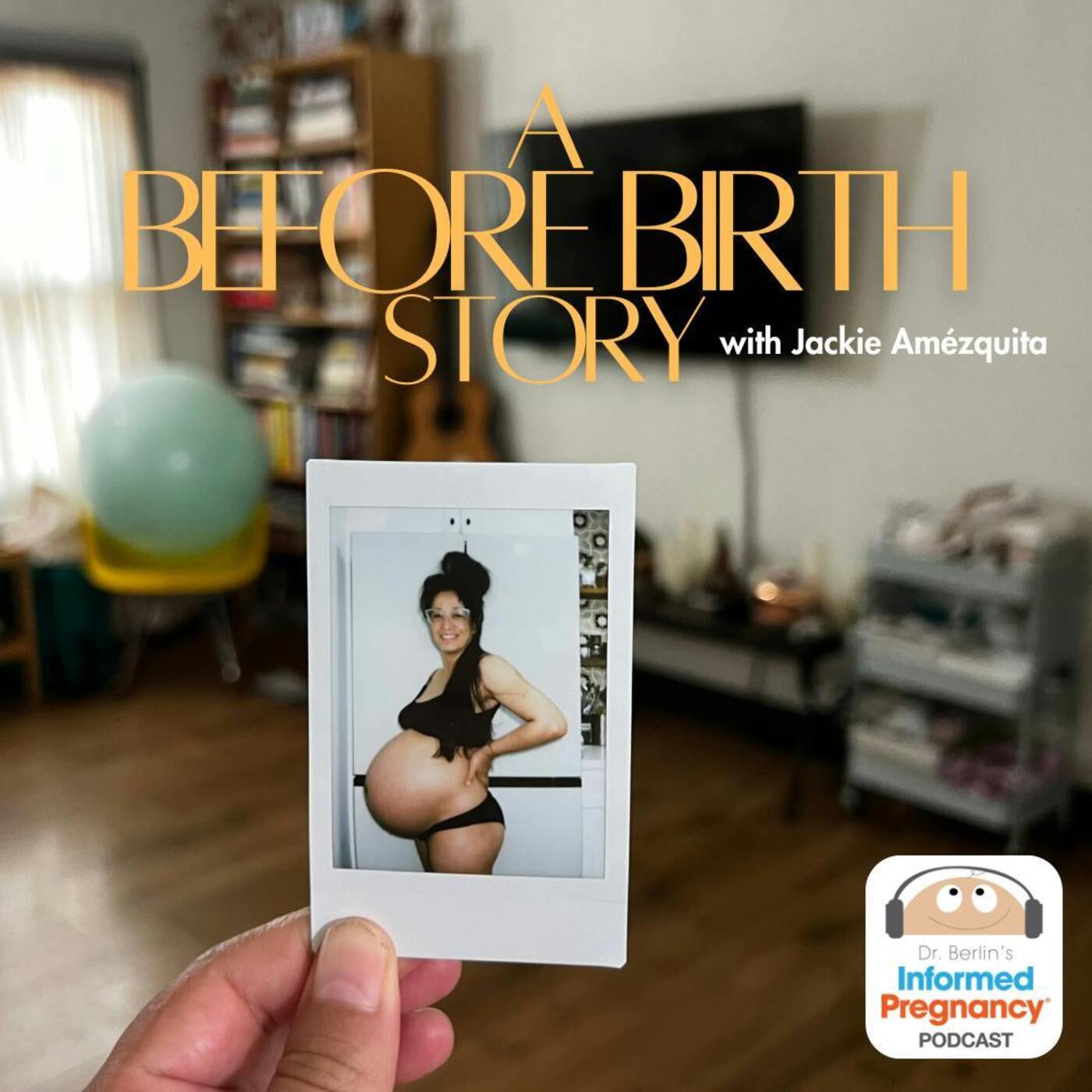
Guatemalan born Jackie Amézquita is a talented multidisciplinary artist who’s work merges pre-Colombian cultural elements with contemporary community engagement. With past exhibits at The Hammer and The Museum of Art and Design in New York, she joins the podcast to discuss her pregnancy journey and life as an artist in this before birth story.

Connect with Jackie: jackieamezquita.com and @jackieamezquita
Key quotes
“And then she used to send us letters every Friday. So every weekend, I was like spending some time writing a letter back to her to send it on Monday so she could have it on Friday. So we have this like letter communication.”
“And once a week, my grandma used to go to the meal and grind the corn and then make what we call tamalitos, which are like this like small little masa wrap. It's like pretty much like your hand, like the size of your hand and they're wrapped in like corn husk.”
“you know, dream it. My mom, my grandma, and like all these generation of women in my family had natural births without medication. So it was also part of like my dream to have like a home birth.”
“I think my idea will be in water, like is going to be a cancer baby. So I want her to be born in water. And I also know the benefits of being given birth in water and how this will be more organically in my body. And I don't want to say the word easier because I don't know. I don't know until I'm there, but I will feel it out in those moments. And”
“the women in my family, to my great grandmother. And I think that's something that fuels me and, you know, helps me just this anxiety of like, everything's going to be OK. You just have to like connect with your body and it's pain with intention, right? And that's the key of like, OK, my baby's coming. I'm about to meet her and I've been waiting for”
Related episodes
- Ep. 435 Jackie Amézquita: After Birth
- Ep. 442 Jessica Zadeh: Before Birth
- Ep. 426 Mia Rigden: After Birth
- Ep. 446 Perinatal Exercise with Sarah Zahab
Transcript
AI-generated transcript with speaker labels — may contain errors, especially names and medical terms. Dr. Elliot Berlin, DC appears in blue; Jackie Amézquita in orange.
Download PDF of the Transcript
Dr. Elliot Berlin, DC [0:12] Welcome to the Informed Pregnancy and Parenting Podcast. I'm your host, pregnancy-focused chiropractor, Dr. Elliot Berlin. My guest today is a talented artist with a multidisciplinary practice that merges pre-Columbian cultural elements with contemporary community engagement. Originally from Quetzaltenangal, Guatemala, she now resides and works in Los Angeles. She has exhibited her work in prestigious venues, such as the Hammer Museum and the Museum of Art and Design in New York. Her personal journey through pregnancy, combined with her cultural heritage and artistic practice, promises to be an inspiring story. Jackie M. Mezquita, welcome to the podcast.
Jackie Amézquita [1:15] Thanks for inviting me, Dr. V.
Dr. Elliot Berlin, DC [1:17] You and your little bump.
Jackie Amézquita [1:19] Yes, two of us.
Dr. Elliot Berlin, DC [1:21] The two of you. We're going to get into the bump pretty soon, but let's start with your artwork and your origin. You're from Guatemala. When did you come to the US and why?
Jackie Amézquita [1:29] I moved to the US in 2003, so it's been like more than half of my life living in Los Angeles.
Dr. Elliot Berlin, DC [1:38] What brought you this way?
Jackie Amézquita [1:40] My mom was already here. She moved to the US in the 80s. And then, yeah, I wanted to just reunite with my mom and be with her after like 16 years without living without her.
Dr. Elliot Berlin, DC [1:53] Wow, that must be incredibly hard.
Jackie Amézquita [1:55] Yeah, I was raised by my grandmother and my dad in Quetzaltenango. So I always had like this motherly figure through my grandma.
Dr. Elliot Berlin, DC [2:04] What was your interaction with your mom before you moved?
Jackie Amézquita [2:08] So my mom used to visit us in Guatemala like every two or three years, and she used to call then. Before, like in the 90s, we didn't have in Quetzaltenango, we didn't have like a telephone at home. So there was like this, you know, telephone booth where she used to call us every Sunday and we used to call her. Yeah, yeah. And then she used to send us letters every Friday. So every weekend, I was like spending some time writing a letter back to her to send it on Monday so she could have it on Friday. So we have this like letter communication.
Dr. Elliot Berlin, DC [2:44] Wow, that seems like such a different world from today, like FaceTime, everything, you know, instant, automatic, full engagement.
Jackie Amézquita [2:52] Right, right. It was like very exciting, right, to be waiting for to see what my mom was going to reply back to me. And yeah, just like trying to think about stuff that was happening during my week so I could share with my mom in that letter.
Dr. Elliot Berlin, DC [3:08] What was it like when you moved?
Jackie Amézquita [3:11] It was very difficult, I think, to start integrating myself into Los Angeles, like with a different culture, language, a huge city, very different than Quetzaltenango. It's a very small town and you usually like walk from one place to another and here you had to commute, right, in order to go to one place. It takes an hour, right, to drive four miles sometimes, depending on traffic.
Dr. Elliot Berlin, DC [3:43] Yeah, yeah. So you came here and started high school?
Jackie Amézquita [3:47] No, I actually turned 18 years old when I moved in here, so I couldn't start high school. So I just started like going to like ESL, like learning English, a second language. And then I actually worked, my mom had a daker during that time, so I worked with my mom in the daker and then I became a nanny.
Dr. Elliot Berlin, DC [4:08] Oh, wow. Okay.
Jackie Amézquita [4:09] Yeah.
Dr. Elliot Berlin, DC [4:10] You got some on-the-job training and then became like a private nanny.
Jackie Amézquita [4:14] Yes, so and then I was going to school at night and then I was working as a nanny and that's how I started. Like when I finished my ESL, I started going to college, community college, then I transferred to the four-year university and then I, you know, transferred to get my master's.
Dr. Elliot Berlin, DC [4:31] What were you studying?
Jackie Amézquita [4:33] I was studying fine arts.
Dr. Elliot Berlin, DC [4:35] Okay, and you produced some fine art.
Jackie Amézquita [4:38] Yes, yes.
Dr. Elliot Berlin, DC [4:39] And it's very unique. Tell me about your artwork.
Jackie Amézquita [4:42] Yeah, so I work with like organic materials, especially soil is one of them. I make this mixture of masa, which is the binder that helps me keep together the soil. And then I make drawings on top of this like soil slabs.
Dr. Elliot Berlin, DC [5:00] And is this something that you've seen elsewhere or something that you created on your own? What's the inspiration for it?
Jackie Amézquita [5:08] I think there's like culturally in Guatemala, remembering my childhood and my background. And once a week, my grandma used to go to the meal and grind the corn and then make what we call tamalitos, which are like this like small little masa wrap. It's like pretty much like your hand, like the size of your hand and they're wrapped in like corn husk. And then you cook them with water. And sometimes, you know, like little bits of masa used to drop on the floor and be mixed with soil. And then as a kid, I started like experimenting with that. And that came to me while I was doing some research of like pre-Columbial indigenous foods and all this background
[5:56] that the corn has in like Mesoamerica. And I was like connecting the dots. And that's where I decided to try it out and see if I can make a mixture of like masa with soil and then bake it and see if I can make this other material out of it. And it took me some time. It took me some time.
Dr. Elliot Berlin, DC [6:17] Some trial and error?
Jackie Amézquita [6:19] Yes, a lot like about two years.
Dr. Elliot Berlin, DC [6:22] But it's so unique and it's your own discovery. It's your own creation.
Jackie Amézquita [6:26] Yeah. And then, you know, I add some salt in there and like water to the mixture and limestone to make a better consistency. Yeah.
Dr. Elliot Berlin, DC [6:37] How has the reception been and how has the trajectory of your career advanced?
Jackie Amézquita [6:45] I graduated from UCLA in 2022. And after that, I got a group exhibition at the Hammer Museum for this biennial called Made in LA. And I think from university to group shows and exhibitions and being like exposed to different cultural backgrounds in Los Angeles, my work has like grown and like developed in what it is right now. And thinking about like all this like history so that Los Angeles has culturally and historically inspires a lot of like the work that I've been making lately.
Dr. Elliot Berlin, DC [7:30] Are there plans to expand?
Jackie Amézquita [7:34] Yes. I will say that for right now, I just have like a solo show and I was able to create like a new body of work which uses like spices as pigments. And a lot of my work has to do with this like cross-pollination of like people and using like the spices to talk about how like humans have migrated like in involving like different parts of the world. By the use of spices, I think it's something that I'm like really interested right now. And I am looking forward probably, you know, after the baby to continue like exploring this interest that I have in these new organic materials.
Dr. Elliot Berlin, DC [8:22] It's such a uniquely interesting way to tell stories. And I'm excited to see where it goes. And at the end of this podcast, we're going to talk about where listeners can go to see what we're talking about. Right now, let's take a little break and when we come back, we're going to talk about your pregnancy. We'll be right back.

Dr. Elliot Berlin, DC [10:17] Welcome back. We're talking to Jackie Amesquita. And we talked about your bump. You are like literally 39 weeks, is that right?
Jackie Amézquita [10:26] 39 weeks and four days.
Dr. Elliot Berlin, DC [10:28] 39 weeks and four days. You're having your first baby. How has pregnancy been for you?
Jackie Amézquita [10:35] I will say that it's been great. I think I will share that at the first trimester. You know, like a lot of like women have, you know, all this like nausea and like morning sickness that lasted for like days. But I think so far physically so good. Like I started acupuncture in my second trimester. I started also seeing you. So I had like a team, like a good birth team, I will say. But like at the beginning of my first trimester, I find out that I had a cyst and fibroids. And I think that whole, you know, finding out that I had this fibroids and the cysts like changed my whole idea of, you know, what birth was for me. I was planning on having a home birth, but then I decided to go through the hospital route.
Dr. Elliot Berlin, DC [11:31] Okay. Let's talk about that. So where's the cyst?
Jackie Amézquita [11:35] So the cyst was located in my left ovary and it was about four centimeters. So it was kind of big. And then I have like fibroids inside my uterus and they were about two centimeters, which is about like an inch. And they were not compromising any of the birth canal or the placenta. But my doctor was concerned about, you know, bleeding during labor. And they talked to us about like the different scenarios that we could possible go through. And it was kind of sad for me that I will have to have a birth in a hospital and not like at home like as I ever, you know, dream it. My mom, my grandma, and like all these generation of women in my family had
[12:28] natural births without medication. So it was also part of like my dream to have like a home birth.
Dr. Elliot Berlin, DC [12:35] So you were born at home?
Jackie Amézquita [12:37] I was not born in home. I was actually the first generation that was born in a hospital, but I was born without medication.
Dr. Elliot Berlin, DC [12:45] Medication. But your initial plan was not just not medication, but also to have a home birth?
Jackie Amézquita [12:51] Yes.
Dr. Elliot Berlin, DC [12:52] Okay. And then because of the concerns about the cyst and the ovary and the fibroids in your uterus, then you thought maybe better off to have the baby at the hospital. Did the doctors still say you can do unmedicated birth?
Jackie Amézquita [13:06] Yeah, they told me I could still do a medicated birth. So we followed through all the exams, the different ultrasounds at different points in my pregnancy. So I continued following that up and, you know, doing the gestational diabetes test, making sure like I didn't have like preeclampsia or any other concerns that can happen during pregnancy. And so everything was like negative. So during my second trimester, I had like a really good boost of energy, which allowed me to make my solo exhibition here in Los Angeles. So that was great. Like I was working crazy hours, like 14 hours a day, almost like seven days a week, but I also have support in the studio. So I will say that so far, like I had a very like
[14:00] exciting pregnancy, but I was still into this part of like, oh, like I don't want to give birth at the hospital and hoping that if I was going to be doing like yoga and exercising and eating good and going to acupuncture and like helping my body, like things can like switch and getting informed, right? Like educating ourselves about what kind of fibroids I have, which are like just water fibroids and how those during pregnancy can disappear. And so doing all these different things to hope that at the end, things were going to be clear, but you know, have a better birth at the hospital.
Dr. Elliot Berlin, DC [14:45] Also, your hospital had midwives as well.
Jackie Amézquita [14:48] Yeah, our hospital have midwives. So we were seeing the midwives and we were seeing my OB. And I think that's something that influenced to kind of make a U-turn in our, you know, pregnancy. And like at week 38, we met with this wonderful midwife that, you know, we share with her our birth plan and all these different things that my partner and I had ambition to have during our labor. And a few of those things like delaying umbilical cord clamping was something that was not recommended, but we could always decide, you know, to delay cord clamping, vitamin K and all these different things that we wanted to do, but a little different than what the hospital policy is.
[15:38] And I was like, ah, like I really want to have a home birth. But now that we know that the cyst was gone when we have our 34 week ultrasound, they were not able to find the cyst anymore. So it disappeared. So it was like, oh, great. Like this is, you know, wonderful news. And then they told me that the fibers were like five millimeters, like very tiny and small, and they were not going to affect having a natural birth. And I was like, whoa, like, okay, maybe we should hire a doula. And I talked to my partner about getting a doula and we had a friend in undergrad who I'd been talking to during my pregnancy. And then we hired her to be our doula. And so we were like in this like communication. And at the end,
[16:28] like she pretty much encouraged us, hey friend, like if everything's good and like the midwife, you know, at the hospital things that you can have a natural birth and that there's not going to be like complications. And this is more about your age because now there were concerns about me being like 38 and not about anything that has to do with like cysts or fibroids or preeclampsia or diabetes. Like, why don't you consider, you know, going through a home birth? And I was like, friend, I don't think I can do that. Like I'm like 38 weeks. How am I going to just, you know, turn around and make a U-turn and where I'm going to find a midwife right now at this point in my pregnancy that is going to, you know, be able to take me.
[17:14] And she's like, let me do a little research. And, you know, I shared that with my partner. We got out of the hospital. We were on our way home. And then I told her, you know what, like you do your research. Let me process this. I'll talk to my partner. So we went to grab dinner and then I put my phone away, you know, just to try to like, you know, what will this look like? Just so close to giving birth, finding someone that we can connect with that understands the plan that we want to have and that can take me in. And then when we finished dinner, I grabbed my phone and then the person that my friend had suggested was available for July because she closed that month because she had some patients that decided to be transferred.
[17:59] It was closed that month. So she was available and I was like, Oh,
Dr. Elliot Berlin, DC [18:03] Wow. So you traded places with somebody who was going to have a home birth.
Jackie Amézquita [18:07] Yeah, I think that's, you know, how kind of it worked out. And we jump on the phone the next day. We have a conversation. I share with her, like we're plan the following day, my partner and I like visited her in her office and things started flowing in that direction.
Dr. Elliot Berlin, DC [18:26] And now we are having a home birth. Wow. Just for perspective. So the home birth was your original desire. Hospital birth became your plan because of concerns about an ovarian cyst and uterine fibroids. But at 34 weeks, the cyst was gone, the fibroids shrank and somewhere around 35 weeks or so you hire a doula, not till 38 weeks, you switch to midwifery care at home. Yes. Okay. Very interesting, especially since 37 weeks is term. You know, that's the point where you're no longer preemie. That's the point where the normal birth window starts to happen. So you're a week into that when you change gears altogether. What I'd love to do is take one more break and we come back,
[19:14] find out, you know, how you're quickly getting ready for this home birth. We'll be right back. Welcome back. We're talking to Jackie and Mezquita. And okay. So first of all, you mentioned 38 and without getting into it too deeply, we do have a podcast about pregnancy over 35 with Dr. Emiliana Chavira. And it's a great episode. If you're over 35 and wondering about how that is treated by the medical community, I strongly recommend listening to that episode. Okay. So you're switching a home birth and first of all, have you watched any of the birth documentaries? Yes, I have. What have you seen? I can remember from the top
Jackie Amézquita [20:04] of my head right now. I'm really bad with names usually, but now with this pregnancy, yeah. I think before home birth or natural birth in general, one that people like to watch is orgasmic birth. And another one is called These Are My Hours.
Dr. Elliot Berlin, DC [20:19] Oh, I have to watch this one. I know you recommend me These Are My Hours. So I have to look at that one. Yes. And a lot of people who consider home birth have watched The Business of Being Born, which is very popular. All three of those and more are stream edit and form pregnancy plus right now. But I think These Are My Hours and orgasmic birth are pretty empowering right before you have a home birth. So the plan is to take your birth at home. You found a midwife. She was able to take you in. Yes. And you have a doula, who's also a friend. Yes. And your partner will be there. Is there anybody else coming?
Jackie Amézquita [20:54] Like depending on when the baby decides to arrive, my mom might be around. And then we haven't shared with our friends yet or switch our plan with some of our family members in Guatemala know what's happening, which are like, oh, this is, you know, great that you get to, you know, go to your first initial idea. And like they have been supportive. My mom too, she's like, okay, great. This is what you wanted to do. But also, I know, like some of my friends are going to be like, oh, my God, it's crazy that you are having a home birth and not going to the hospital. So we're just, you know, trying to keep it minimal yet, like
Dr. Elliot Berlin, DC [21:33] to close friends and family. But out of all the people, so your mom might come, which is, wow, so different from the beginning, postcards and phone calls on a phone booth. Yeah. Yeah. Yeah. Yeah. To being present with you at your birth. Yeah. Yeah. Yeah. Yeah.
Jackie Amézquita [21:48] My mom lives now in Atlanta, Georgia. So she's going to come out. Yeah. She's coming
Dr. Elliot Berlin, DC [21:54] tomorrow. Oh, very nice. So what are your thoughts on how things will go? Are you more of a give birth on land, more of a give birth in water, wait and see what happens?
Jackie Amézquita [22:05] I think my idea will be in water, like is going to be a cancer baby. So I want her to be born in water. And I also know the benefits of being given birth in water and how this will be more organically in my body. And I don't want to say the word easier because I don't know. I don't know until I'm there, but I will feel it out in those moments. And I think decide what is that it feels better for me, but I'm open. I'm really open to the experience. I've been creating my playlist of songs, getting snacks ready, talking to friends that have like home birds and my partner and I had a class, like a birthing class. That's where we learn a lot too about, you know, the hospital system
[22:56] and like the difference between having a home birth and a hospital birth. And yeah, we're exciting. We're exciting. I can see it and hear it, the excitement.
Dr. Elliot Berlin, DC [23:06] And I'm excited for you. Is there anything that you are nervous about or anxious about?
Jackie Amézquita [23:12] No, I think it's more excitement. I think that, you know, the ideas that I have at the beginning of what a home birth will look like are just like flourishing and, you know, falling together. And I think I had like an amazing like team during my pregnancy and I feel very comfortable with the people that will be around. And I need to continue feeding my levels of oxytocin and just remembering, you know, like walking into this experience as like an empowered one that was the one that I wanted to have at the beginning or is surrounded by people who I love and that I have been part of my life and or dogs will be somewhere around the house. I'll be home. And yeah, it just feels more
[24:10] like in power. Of course, like there's still that little part of like, oh, like age, right? This seed that was like kind of fed to me through the hospital setting, but at the same time, just remembering that, you know, I was born natural without medication. My mom to all the women in my family, to my great grandmother. And I think that's something that fuels me and, you know, helps me just this anxiety of like, everything's going to be OK. You just have to like connect with your body and it's pain with intention, right? And that's the key of like, OK, my baby's coming. I'm about to meet her and I've been waiting for
Dr. Elliot Berlin, DC [24:53] this. Yeah. Yeah. Connecting with your body and that ancestral power is really for a lot of women fuel that drives you through the whole experience. You mentioned oxytocin and your playlist and your snacks, which could be oxytocin inducing. Do you have other plans
Jackie Amézquita [25:12] for bringing out the oxytocin? Dancing, dancing. You know, you just remind me of your belly dancing episode. And I've been doing that. I've been doing that at nights. I've been trying to connect through my body with like music too, which is something fun and reminds me a lot of like my childhood. I spent a lot of time as a child in Guatemala, like dancing and enjoying myself in my room. So I feel like I'm also at home, you know, connecting with this little self as me and with my daughter and like dancing and just bringing out that like
Dr. Elliot Berlin, DC [25:50] oxytocin with the things that I really like to do. What role do you see your partner is having?
Jackie Amézquita [25:57] My partner has been very involved during the pregnancy and we have talked about wars of like encorachment during these moments. We have also talked about that I might be mean Oh, because I might be going through pain, but that he will be there to support me physically. We did the birthing classes together. So he had learned like techniques of reboso and how to massage me. He couldn't believe my playlist because it has a lot of like reggaeton and merengue and all these like popping. And we are very excited about meeting the baby. And yeah, I think it's just going to flow. The love is there. So he will try to also see my body and see where I am in those moments and try to support me with the things that we have talked
[26:58] about like music, food, like the environment, like lining. And when is the moment to call her
Dr. Elliot Berlin, DC [27:05] doula so she can come and support us? Well, I hear the excitement I see and feel the passion and it sounds like you're on the cusp of doing something amazing. You switched at the last minute from a hospital plan to a home plan. Sometimes during home birth things come up that are even just like a little pink flag, something that we wouldn't want to stay home and wait and see where that goes. Are you comfortable? Do you have a plan for if you end up needing to switch back to hospital? What you would do and are you comfortable with that? Well,
Jackie Amézquita [27:40] we're talking about a word, you know, that we will use for him to know that, you know, he's being too much for me. If I have to go to the hospital, I still have a diaper bag ready. I have my bag ready just in case, you know, that is something that I'm doing at the end. We were planning also in like doing all the early labor at home and not going until I was in to the hospital until I was in active labor. So we kept like the majority of things already in the back. We have that ready. And, you know, I purchase like the mommy diapers and like all the natural birth things. But I also knew that if I needed to be induced, because that's something that we, you know, was talked in our last visit at the hospital,
[28:26] that I didn't want to go through this like cascade of interventions. Yeah. Interventions that I wanted to just go straight into a C-section because I didn't want my body to go through all of that and just make it less traumatic for my body and just be like, okay, you know, the doctors, this is their expertise and they know what is supposed to be happening during a C-section. So I can just have like music in the background and just relax and knowing, you know, that I will go into that. I've been preparing more mentally for like these different kinds of scenarios and I don't know, you know, this is my first baby. She is head down, you know. You know, there's still that possibility that I might go to the
[29:14] hospital, but like it's kind of like very far away from me for my thoughts and what's going
Dr. Elliot Berlin, DC [29:21] on right now. Yeah, it's far from plan A at this point. Yeah. I have just a few more questions for you. Do you have any specific cultural practices or traditions that you're
Jackie Amézquita [29:32] planning to include in the birth? I think we will be planting part of our placenta. I plan on encapsulating part of my placenta and then making a tincture, but we're going to try to get like the, we call it the mushi, like the end, you know, that is connected to the umbilical cord and plant that in a ceiba, which is like Guatemala's national tree. And it's also believed that is the tree of life that connects our ancestors with the outside world and plant that in our home. That's beautiful. Yeah. Let's see. My
Dr. Elliot Berlin, DC [30:12] next question is, have you decided on the word? No. Oh, not yet. Not yet. Not yet, but I think it's going to be something just funny. So that way, like, it doesn't feel that intense. And yeah, that's a good idea. I'm going to have to ask you what the word was when we come back for the afterbirth episode. Hopefully you will not have used it, but my mind is racing with possibilities. Finally, we talked about your beautiful artwork and your unique artwork that you've created. Where can we find it online? Where can people see it?
Jackie Amézquita [30:48] I have a website where the majority of my work is shown. And that is at Jackie, I'm Eskita J a C K I E and my last name a M E Z Q U I T a.com, or also like in Instagram, which is the easier Jackie and Mesquita and Instagram. Yeah.
Dr. Elliot Berlin, DC [31:09] Well, Jackie, it's been an exciting third trimester.
Jackie Amézquita [31:13] Yes.
Dr. Elliot Berlin, DC [31:14] Really just ninth month for you. And you're obviously very close. I appreciate you for coming on and sharing your story. And I look forward to connecting with you afterwards to get the rest of the story. And I'm just sending you endless amounts of positive energy and love. And I'm excited for you to have an amazing birth.
Jackie Amézquita [31:36] Thank you, Dr. Berlin.
Dr. Elliot Berlin, DC [31:38] My pleasure at home. Thanks for listening to the informed pregnancy podcast for more pregnancy and parenting information. Visit us online at informedpregnancy.com
Want more pregnancy + parenting? Start your FREE TRIAL of Informed Pregnancy+ and get access to all our curated pregnancy and parenting content — original series, iconic birth films like The Business of Being Born, prenatal workouts and more.
