
November 14, 2024 · 47 minutes · Episode 433
About this episode
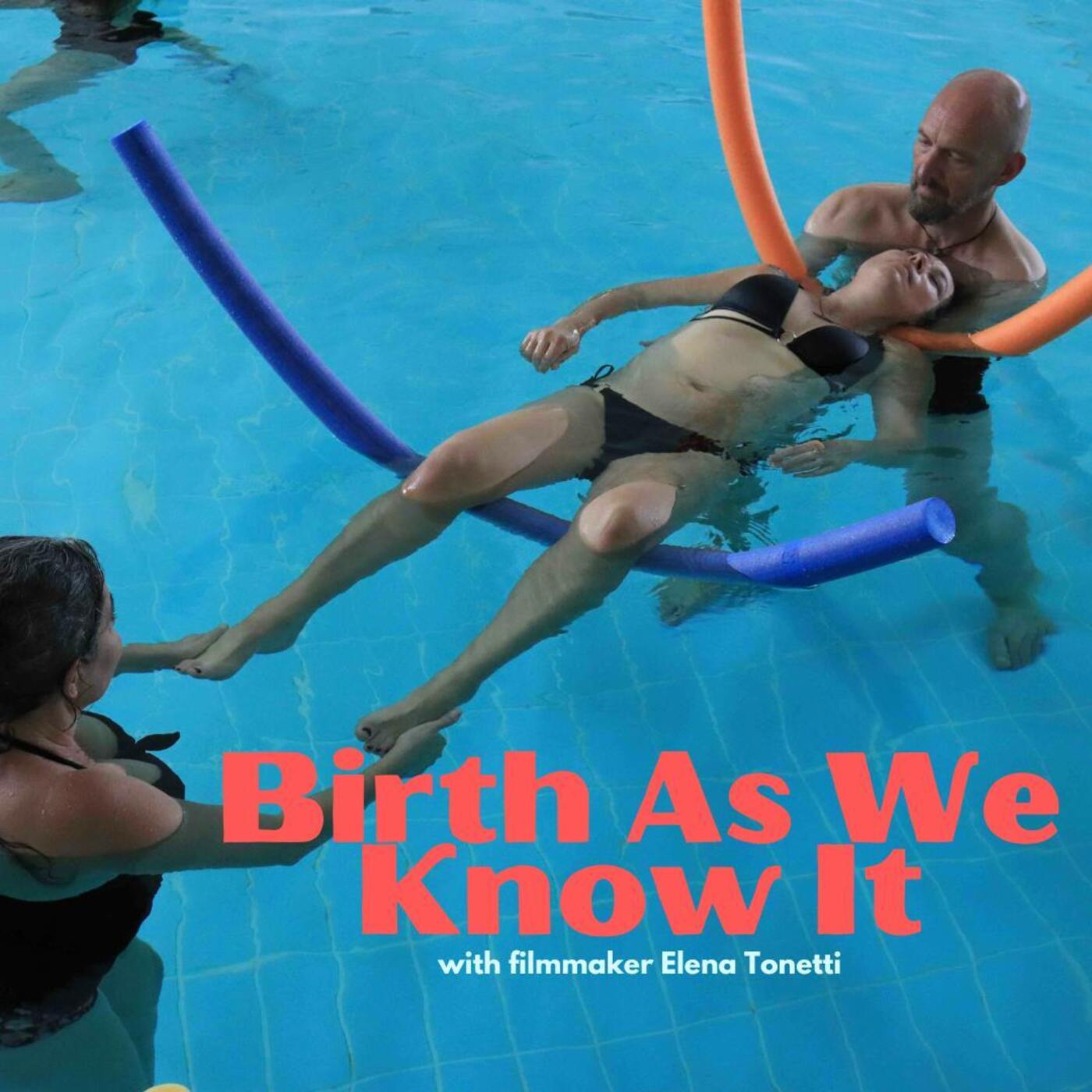
Siberian-born author, filmmaker, and creator of the Birth Into Being movement Elena Tonetti discusses her classic film Birth As We Know It, now streaming exclusively on Informed Pregnancy+.

Birth Into Being, as a community of seekers and healers, is dedicated to conscious evolution and the creation of a thriving social structure based on love, compassion and common sense.
Connect with Elena on Facebook
Watch Birth As We Know It on IP+
Key quotes
“Let me say it again. Five days would pass before the mother would see the child that she gave birth to.”
“So women were willing to give birth anywhere in the middle of nowhere, the Black Sea, okay, at home in the bathtub, okay, I'll do anything on the back seat of the cab. I'll do anything to find a way of not going into that institution.”
“The main message that I am here to deliver is that we never needed a plan B. That's the thing.”
“95% of all complications are preventable because they are based on the emotional, sexual, psychological trauma. And that is what we're actually able to do something with.”
“you need to really kind of understand that I am not what happened to me. I can tell my story of my gross and beginning but it's not retraumatizing me anymore because I've done so much of my own medicine.”
Related episodes
- Ep. 435 Jackie Amézquita: After Birth
- Ep. 426 Mia Rigden: After Birth
- Ep. 443 Jessica Zadeh: After Birth
- Ep. 446 Perinatal Exercise with Sarah Zahab
Transcript
AI-generated transcript with speaker labels — may contain errors, especially names and medical terms. Dr. Elliot Berlin, DC appears in blue; Elena Tonetti in orange.
Download PDF of the Transcript
Dr. Elliot Berlin, DC [0:36] Welcome to the Informed Pregnancy and Parenting podcast. I'm your host, pregnancy-focused chiropractor, Dr. Elliot Berlin. My guest today is a speaker, author, and filmmaker of the classic birth film, Birth As We Know It, now streaming on Informed Pregnancy Plus. She's also the creator of the Birth into Being movement, Elena Tenetive-Vladimirova. Welcome to the podcast.
Elena Tonetti [0:59] Thank you.
Dr. Elliot Berlin, DC [1:01] It's my pleasure. It's an honor to meet you and to talk with you, and I want to spend every minute we have learning from you. So I'll jump in from the beginning. Where are you from originally?
Elena Tonetti [1:13] Siberia, as in Siberia.
Dr. Elliot Berlin, DC [1:17] Ah, as in the Siberia.
Elena Tonetti [1:19] Yeah, which is a good place to be from. And not a good place to be in. Well, especially when I was born in the 50s, it was definitely a place you wanted to be far away from.
Dr. Elliot Berlin, DC [1:34] What was growing up there like?
Elena Tonetti [1:37] Well, first of all, the way people were born, the way I was born, was basically as bad as it gets. When I start telling people about the situation with birth houses there, I could see their eyes enlarge. And it's like, really? Why? Why would anybody want to do that? But that was the way things were done. And questioning it was not safe, because the environment was very abusive, harsh, life-threatening, and the staff was literally mean to women. And the whole experience was absolutely terrifying for both women and babies, because babies were taken away from the mothers for five days. Let me say it again. Five days would pass before the mother would see
[2:30] the child that she gave birth to.
Dr. Elliot Berlin, DC [2:32] Why?
Elena Tonetti [2:33] Exactly. And all this time, the babies were stored and hundreds of them on the floor altogether, given sugary water with tranquilizers to keep them quiet. Basically, what I know now about correlation between the way we make people and the quality of life that is being called for us by them when they grow up, it's basically all the mess we're in is due to that experience during the formative period.
Dr. Elliot Berlin, DC [3:08] And that's how you entered the world.
Elena Tonetti [3:10] Yep. That's how I showed up too. I was breastfed, because by the time the mother is finally holding the baby in her arms, her breasts are sore, inflamed with mastitis, the milk gone sour. It's just hard to look at those breasts, nevermind trying to feed from them. So it's pathetic. It's stupid, weird. I don't know. Don't get me started on that. But that was actually the reason why conscious birth, water birth, pre-birth had such a powerful beginning in Russia, because women heard from each other that this is what to expect in the state maternity ward. So women were willing to give birth anywhere in the middle of nowhere, the Black Sea, okay, at home in the bathtub,
[4:08] okay, I'll do anything on the back seat of the cab. I'll do anything to find a way of not going into that institution. I mean, my mom for the rest of her life was avoiding that street where the birth house was. She would just, you know, go out of her way to not walk that street.
Dr. Elliot Berlin, DC [4:29] Wow. Yeah, quite a story. You're not there anymore.
Elena Tonetti [4:33] I am not there anymore.
Dr. Elliot Berlin, DC [4:35] Where are you now?
Elena Tonetti [4:36] I am in Oregon, South Oregon.
Dr. Elliot Berlin, DC [4:39] Okay, and what do you do now? I mentioned it a little bit in the intro, tell me more about the work you do.
Elena Tonetti [4:44] I am happily retired since 22, which marked, well, I retired two months short of 40 years of serving the birthing field. And since that time in 22, I've been just taking care of my two grandchildren and my elderly mom who is 91 and is doing great and dancing basically every day, all kinds of dancing, just loving life, hiking. But in May, all of a sudden something kicked in. I heard myself saying, I think I'm gonna do another workshop and one is coming up in a couple of weeks. I don't know, that was kind of in a spur of the moment and I had a full group gathered before I had a chance to change.
Dr. Elliot Berlin, DC [5:36] Oh, wow.
Elena Tonetti [5:39] Coming up in October. So yeah, I'm doing another workshop. I did not plan that. I did not think it would happen, but here it is. Surprise. And the group assembled so quickly and effortlessly before I even had a thought of how am I gonna promote it or organize it. So that tells me that I was just obeying some higher order. The whole birthing field works that way. When you really step into life as a shamanic journey, shamanic journey, every turn kind of reveals itself as you go and it's a matter of making a choice. Which turn do I take? And there is no right or wrong choice, whichever choice you make is the right one. So I'm making this choice and I don't know if it's gonna be another one.
[6:38] I'm very excited about this one.
Dr. Elliot Berlin, DC [6:41] So I wanna find out more about your workshops and about the film. But 40 years in birth work is massive. How did you get involved in birth work?
Elena Tonetti [6:51] I was very much part of the group of young passionate adults in Moscow. I left Siberia in the last 10 years of my life in Russia, I lived in Moscow where I met the most amazing people that were gathered from all over the country by their drive, their passion to figure things out. Like what works, what doesn't work, how to make the quality of life for themselves better. And as we were at it, how to make it better for everybody around us. And I was part of the team of my late husband's team who was doing this very amazing brainstorming technique. He was calling it games. There was nothing like a child playing those games but they were games more like adult business games
[7:46] with big organizations. It's like minimum required amount was 300 people and it lasted for seven days. So it was a big production. And at some point I was asked to meet with this strange man, Igor Cherkovsky who was running with this crazy idea of placing laboring women in water. And he was viewed as a crazy, strange like mad professor type because he was very hard to understand. He was a true Siberian shaman as a true seer and healer very like large charismatic personality but he was not very socially adept. Like he was always socially awkward and kind of saying very strange things. I met with him because somebody I really respected asked me for it.
[8:40] And I gave him 20 minutes. Four hours later, I dropped everything and became like his right-hand supporter like his translator into everybody else's Russian. And for some reason I was able to understand what he was saying. And what he was saying was that we can't clean the mess we're creating fast enough because the way we were born we grow up and make a bigger mess at every turn. So in order for us to figure out where our civilization is going we need to change the way we make people. Basically that's the message from that seer, healer, crazy person. And he had the ticket. He was saying that we can actually give birth the way nature intended us to give birth
[9:38] like any cat is able to give birth because the basic machinery is the same that the reproductive system is not very different between us and a cat or a chimpanzee or a wild elephant. We are supposed to be able to procreate because whatever power created the whole scenario did not just, oops, forgot to install that program in our heart. Humans? Right, that every species knows how to procreate, right? And with humans, no, I think I'll skip that part. Yeah, that's not really how it works in nature. So he was calling for that, claiming our natural right for grace, for ease, for knowing how to deliver. And basically he was saying that what makes delivery problematic
[10:40] is the stress level. And it could be a stress level of the woman herself or it could be the stress level of anybody present in the room of her, the father of the baby, of her mother, of her sister, of her midwife, of her doctor, of the cumulative effect of the presence in the room because the birthing field, that's the term he coined, that every birth of a new something that did not exist before is kind of a vortex of energy grounded in that particular time-space continuum. And for that vortex to exist, to bring in something new, that it actually uses the present cocktail of energies to start moving and spinning. Maybe sounds too woo-woo for you,
[11:37] but I had so many visceral, kinesthetic, first-hand experiences of that vortex in all my years of working with that energy. And I felt like I was becoming that vortex. It was starting spinning everywhere I turn, everywhere I go. It was like really magical. And that energy really has a highly self-organizing intelligence. It's very, very intelligent while still being mystical because we don't really know much about how does it really happen that I was not and suddenly I'm in.
Dr. Elliot Berlin, DC [12:20] Right. It's more innate intelligence, not so much educated intelligence.
Elena Tonetti [12:25] No, you can read all your books on birth and still not being able to give birth. Actually, there is statistics that female doctors, obstetricians, gynecologists have the worst time giving birth because knowing about what it looks like at every stage doesn't make up for understanding that mystery and working with navigating your surrender, your opening, your capacity for becoming a portal to let this happen, like to get your bloodstream flooded with oxytocin, which will make the tissues elastic and soft and open and let the baby out. That's what happens. You actually need the opposite of knowing too much because our medical schools contaminate the consciousness
[13:25] with pictures of pathology. At every turn, there is so much that can go wrong and they're not really teaching about how it's supposed to go right.
Dr. Elliot Berlin, DC [13:37] And you can't, unless you have the ability for your conscious mind to stop thinking about all those details, it's hard to surrender to the innate wisdom that knows exactly what to do and when and how to do it.
Elena Tonetti [13:53] It's a completely different level of understanding that deep stillness in the core view being that allows you to do anything, give birth, write a poem, make dinner or make love. That's from that place that you can be creative and allow the sexual energy flow, which is also a big aspect of giving birth. It has to do with sexuality, how comfortable a woman is with being a woman, with actually being comfortable with her very existence because literally it comes down to that. If a woman never came to terms with being alive, which is in my observation, the great majority of people like deep down, is there alignment with that original impulse of that speck of consciousness?
[14:58] If there are alignment with that decision to walk this earth right now at this time in that place. So if there was never a place of agreement, like deep core agreement, if there is still that place of confusion and it's like, why did I do that? Like, what was I thinking? If that was the case, it's very hard to make a baby from that place. It's hard to call for some complications because there is this quintessential conflict in the system. And hard to make dinner.
Dr. Elliot Berlin, DC [15:40] Right. Or anything.
Elena Tonetti [15:42] Yeah. Vibrant, feel alive, feel your emotions and feel like know what's right, what's wrong for you. There were experiments that revealed that the majority of people have to be told what's good, what's not good because their own- Inner voice. Yeah, is broken. It was never activated. See, it's innate that inner voice is there as part of the package. But if it was not only not activated, but conditioned into deactivating. Buried and rebel. Exactly. By all the rules and regulations and restrictions and most of which are traditional religious school norms, parental norms. We're bombarded by so much trauma responses of our caregivers that we're just trying to survive.
[16:39] And when you are in that survival mode, it's not really possible to learn to be creative and sexual and alive. You're just trying not to get ran over by the train.
Dr. Elliot Berlin, DC [16:55] You're just trying to stay alive. Let's take a little break. When I come back, I wanna find out more about your work and in particular, your film, Birth As We Know It. We'll be right back.

Dr. Elliot Berlin, DC [18:43] Welcome back. We're talking to Elena Tonetti-Vladimirova and let's talk about the film, Birth As We Know It. Tell me the background of the film, how it came to be.
Elena Tonetti [18:52] Well, the idea of the film was born in 82, but then it took a long time because none of us knew how to make a film. Nobody even knew anybody who had a camera. Nobody had money for that, but there was this intention to create the film. So finally, in 92, the Russian film was created that was called Novy Svit, which is new light in translation, which was the name of the village next to which we had our birth camp at the Black Sea. But also it's the literally new light. We felt like we were bringing the new light with all this newborn babies that were born with wild dolphins in the middle of nowhere. It was really significant. So that film from 92 was an hour long documentary
[19:48] that had a lot of stuff that only Russian auditorium could relate to. So when there was an idea in 99 to create English-speaking version, we had to kind of cut it down. And the cut version was only half an hour long, and it was called Birth into Being. So that was just the cleared out from the Russianisms version of Novy Svit. But then there was a lot of things that went wrong with narration that film that kind of was a runaway bunny. It had a kind of a life of its own for seven years when we didn't have a say. The narration didn't really say anything that needed to be said in that film. Like the actual information, we can show what it looks like,
[20:42] but the main message of the film was that it's not enough just to put a laboring woman in the water, that by itself the water doesn't have the capacity to make everything nice and smooth and easy. There's a lot of other things that are at play, the other possible reasons, possible complications during the delivery. So none of that information was in the narration that Birth into Being carried. So I was still pregnant with the project that needed to have all of that information. And it took me a while to gather the resources and the room in my head and the space and the expertise. I needed to learn to speak English because when I got kind of catapulted like Dorothy
[21:37] into American soil, I didn't speak English. I did not see it coming. I had no expectations of being stuck here in 89, but that's what happens. I learned English and by 2006, I was able to write the narration that I was really needing to write. So having said that, I was grateful that Birth into Being movie was out, affect influencing millions of people on this planet because it turns out millions of people watched it and I didn't have the capacity to reach that audience. So it was kind of good that it was a runaway bunny, but I still needed to say, like I was still carrying all the information and the actual DVD of Birth as We Know, it had four hours of footage
[22:36] that 75 minute feature film and the rest of it was in bonus features. But then in 2018, my house got burnt in Paradise, California with all the stock of DVDs.
Dr. Elliot Berlin, DC [22:52] Oh, that was a big fire.
Elena Tonetti [22:54] Yeah, thousands of copies. And I never had it in me to replicate the hard copy DVD partially because nobody wanted DVDs by then. Everybody just wanted to download. So now the director's commentary is in the project of me writing my book. So all of that information would be in writing because the bulk of the information is actually in the bonus features because the film itself, I wanted it to be the poetic magical transmission of the actual bursting field mystery. So it had to be like every sentence is coded and it's a direct transmission. I did not want to include any technical stuff, any like how tos and this is what you need to do. So all of that was in director's commentaries
[23:51] and the script of Birth as We Know, it was basically there was no script. It was my journey of making that film. I was just recording what I was going through, giving birth to that baby because all hell broke loose. I gave up six times.
Dr. Elliot Berlin, DC [24:11] Oh, wow.
Elena Tonetti [24:12] I said, this cannot be done. It's just so much came up. I felt like I was rounding the new birthing paradigm through myself because every obstacle just arose. Like my editor quit, then my other editor when he saw the footage of circumcision, the raw footage is 28 minutes and it was in the middle of editing. And when he saw what it actually looks like, the baby boy being circumcised, he lost it. I couldn't find him for three months and I thought that I will never see him again. He went on the binge and all my stuff was there. I couldn't get a hold of him or anything and I had no idea if we can ever get back to making it and then it took another three months for him to come back.
[25:05] He was so traumatized by looking at that footage.
Dr. Elliot Berlin, DC [25:09] Can you tell me more about the birth camps?
Elena Tonetti [25:13] Okay. The birth camps were on the bank of the Black Sea. It was a different location every year in the beginning and then every year there were more locations. So there would be like different lagoons would have the whole other support crew and different participants. And while working on the film, one of the other organizers, Tatiana Sargonas, we were on the phone for a good hour trying to figure out how many babies were born there. Let's try to figure out how many babies were born there. And the thing is nobody was doing a head count ever. It was never part of our understanding. It was before computers, before internet. It was all kind of a spontaneous movement.
[26:07] Nobody was trained in business or in midwifery. There was no doctors, no midwives. It was just women who gave birth themselves and got the deep, intimate kinesthetic experience of how it works. And of course it was not a normal hospital with like come on everybody where anybody who walks in the door can participate. That was by invitation only for the people who went through the whole program of preparation during fall, winter, summer, whenever they joined the classes. And it was only those who felt confident enough and strong enough and physically, emotionally, mentally to go in the middle of nowhere. It's literally in the middle of nowhere because for the birth camp,
[27:03] you need warm, clean, shallow water with no traffic, no tourists. It needs to be very private, of course, for obvious reasons. And those places were in the middle of nowhere. So it was a Russian birthing Olympics of a sort. And whoever came to those camps was literally taking full responsibility for the outcome, for their health, for their baby's health because there was no plan B. Like when I came to America first time and started looking for a place to replicate that, I had absolutely no clue about rules, regulations, restrictions, insurances, void, complete void. I was innocent to a fault in that regard. There was absolutely no information about any of that
[28:04] in our crazy experience, you know? And after I learned all of that, I looked back and I was like, oh my God, what have we done? That was my contamination with pictures of pathology. Suddenly I realized that that was pretty bad ass what we're doing. The main message that I am here to deliver is that we never needed a plan B. That's the thing. There was never a need in even as much as a stitch. It was absolutely beautiful, perfect, magical, fantastic, high. I mean, the high that the whole camp would go into, there was no drugs. There was absolutely no substances. That was like rule number one, no substances. Even the dads who were smokers, they had to go like climb the cliff to smoke out there.
[29:08] So there was absolutely nothing involved. It was the nature's medicine. One woman can provide oxytocin on contact high for the whole camp. It's like you can't get that high on any LSD, ecstasy. I mean, it's just incredible.
Dr. Elliot Berlin, DC [29:32] I do sometimes when you hear people talk about unmedicated birth, in my head it just seems like, well, it's always medicated. It's just whether it's the stuff we give you or the stuff you make yourself. And the stuff you make yourself is a lot more powerful and cool than the stuff we can give you.
Elena Tonetti [29:49] The brain has the capacity to produce enough oxytocin to go in full blow orgasm during the birth. Actually in my film, you can actually see it. There is only one birth that shows it, but that isn't unknown. Well, that's the whole other subject of interview. And yeah, do you have any specific questions?
Dr. Elliot Berlin, DC [30:14] I do, but I think let's take one more break and then we come back. I'll fire my next round of questions at you. Don't go anywhere. We'll be right back. Welcome back. We are talking to Elena Tonetti-Vladimirova and you've got a 40 year career of birth work behind you and you've identified some of the issues that make birth complicated, not empowering and a poor entry into the world for new life and the ripple effects that has on the new life and the community and society as a whole. What do we do with that? Where do we go? How do we make it better?
Elena Tonetti [31:10] There is actually the whole field of psychology is called pre and perinatal psychology. And there is enormous body of research in the last 45 years that is published, documented, studied with control groups in the proper regiment that should be, I believe all of the findings should be in the high school because people need to know about all of that.
Dr. Elliot Berlin, DC [31:37] Agreed.
Elena Tonetti [31:37] It's still not in the medical textbooks within the mandatory curriculum. It's a mystery to me what's taking them so long, but it shows a very clear correlation between the way we're born and the way our behavioral and emotional patterns are formed and being recapitulated throughout our life. So having said that, the possible complications in birth sometimes are not even rooted in the woman's own maybe history of sexual trauma, history of emotional abuse in her formative period in the, with mechanical damages from like car accidents, it's really like, it's a whole different story. We're not looking at it. But in my understanding, 95% of all complications are preventable
[32:31] because they are based on the emotional, sexual, psychological trauma. And that is what we're actually able to do something with. It gets complex because sometimes it's not even a woman's trauma, but it's her mother's and her grandmother's and her great-grandmother's because women are like matryoshka doll, the nesting dolls that are…
Dr. Elliot Berlin, DC [32:59] Yes, ancestral.
Elena Tonetti [33:03] Right, the egg that became me was inside my mother when she was still inside her mother because it forms the whole amount of eggs is formed halfway through pregnancy of the baby girl fetus, which means that we are literally absorbing that amniotic cocktail from the grandmother and looking back, it goes like thousands of years back. And if we look at it, like what was happening in that bloody history of ours, there was so much violence and famine and plagues and disrespect of women that were literally not seen as people. They were traded, they were sold, they were beaten, they were starved, they were neglected, they were traded into another village
[34:02] for the rank or for the money. We don't really have historically nurturing, comforting background to sustain a blissful delivery because bad habit of agony at birth was acquired thousands of years ago. It literally is just a bad habit that could be dealt with as any bad habit. Consistency, attention, and understanding how it works. And then understanding how it works is just starting to watch like what kinds of patterns am I running in life? And most sure that those patterns are somehow connected with the patterns of interaction between parents during pregnancy. Turns out that the biggest source of, well, it's hard to quantify like what is the biggest source.
[34:59] Sexual trauma is a very big one if a woman was raped. But if parents during pregnancy were not on the same page, if the mother was crying, if she was in distress about this pregnancy, that's what baby is absorbing. That's what the body is being saturated with, that level of stress hormones from the mother's fluids. And dealing with it is very, very complex because you can't talk your way out of it. It all happened before our cognitive function was even built because we're talking with the cortex and the cortex was not in at the moment of absorbing all the information on the cellular level. So you see the predicament, you can go to therapy for 20 years,
[35:58] but how do you talk yourself out of being uncertain about the rightness of arrival onto this planet? If say the father was yelling, I don't want that baby, or the mother was overwhelmed and stressed and hungry and scared, or just caring for another four babies already, and she was not ready physically, her body was depleted, she literally did not have any room in her nervous system for another baby, and here it is, she's pregnant because her husband refused to use any kind of birth control. So unfortunately, in my estimation, 98% of people walking the Earth right now were traumatized severely during gestational births. It's a pretty high number,
[36:56] but there is a difference between severe and extremely severe when there was C-section. C-section is extreme severity because of the drugs, because of, don't get me started. Well, maybe you do want to get me started. It's a very, very big trauma for the baby to be denied the right to be born because being born, that moment of going through the birth canal activates all the systems in the body, respiratory, digestive, muscular, all the skeletal, it all needs to start pumping and contracting and expanding, and there is a lot of systems that activates only during actual births. So if the baby's born by C-section, that activation never happened. So there we have the digestive and respiratory
[37:58] and muscular problems, but I'm generalizing, okay? Because there are C-sections that are imprint as the way to survive because they come in the real emergency when I not just scheduled the first information about pregnancy. She knows when she got pregnant and she schedules herself a C-section. That's trauma. When a woman is trying to give birth and it's literally a rescue situation, then the imprint is help comes when I need it. It's actually a positive experience. So nothing really about birth is like, this is the way it is carved in stone because we are not just physiology, there is emotions, there is spiritual reasons for our arrival into the body.
[38:58] I'm not religious, but I'm very acutely, kinesthetically connected with that which made this all happen.
Dr. Elliot Berlin, DC [39:07] Oh, spiritual.
Elena Tonetti [39:09] Right, my whole life is the story of manifesting all kinds of proofs that there is some supreme intelligence behind all of this. So I can't help it, but know the connection with that source energy. And it's very, very important to find that place. It's almost irrelevant whether your brand of intimate connection with the source is satisfying for anybody else. It's like, as soon as you have it in your heart and in your mind and in your body, then you become unstoppable and you don't really care much about what other people think. So this is where I am. I say what I want to say, take it or leave it.
Dr. Elliot Berlin, DC [40:03] But Eben, you mentioned ancestral trauma, the picture in those nesting dolls. What does someone today, what does someone do to address that?
Elena Tonetti [40:15] Well, first of all, look around and find somebody who is available in your area to support some kind of birth trauma healing or somatic therapy. Just look around, I'm sure every place on earth now has some kind of healer that can help with it. It is very important that it's not just the talk therapy or not just the yoga, dancing or physical exercising because any therapy that addresses only one part of the big picture is gonna be insufficient and will take a very long time because we are physiology, we're emotions and we're our mental and spiritual aspect, right? So if you just talk, that's gonna engage that part of the brain, the cortex. If you're just exercising and doing yoga,
[41:16] it engages the reptilian brain part and the one that governs physiology and it leaves you fragmented with everything else kind of off the boat. And if it's just emotional work, then the body is left out. So it needs to be some kind of practice that engages equally at the same time with the same intensity, all three areas when you are physically, emotionally and mentally are engaged with this intention for healing. So that kind of practice. And then it's very efficient and doesn't really take much because that place is not very far. Our innate state is health and wellbeing. When we really understand this deeply, there is just, I don't know, I don't want to just promote my work
[42:25] because my work is limited availability but I am sure there is a lot of other modalities that offer some sort of jumpstart in that direction.
Dr. Elliot Berlin, DC [42:38] Well, as a place to start, let's talk about your work. You have created a movement, Birth into Being and your movement does have community around it now and people can access it. Tell me a little bit about Birth into Being.
Elena Tonetti [42:55] Well, the Birth into Being method consists of 40 very different processes and exercises that kind of are designed not to leave any rocks unturned because there is so many layers and levels of parts of us where we're habitually holding ourselves contracted and small and each process is very different but they all address those ways we are holding ourselves down in a different way. There are some processes that we do as a group all together like guided meditation. Some of them are one-on-one with the facilitator. Some of them are in small groups of three people or four people or seven people. So they're all very different. What is common between them that they all are done
[43:49] in a slightly altered state that allows us to go into that space beyond the story because the story has a lot of hold on our psyche. We tell our story so many times to so many people that we enforce it every time we tell the horrors of our beginning and to be free from it you need to really kind of understand that I am not what happened to me. I can tell my story of my gross and beginning but it's not retraumatizing me anymore because I've done so much of my own medicine. So that slightly altered state is achieved with very specific type of breathing alternated with very specific type of movement then different type of breathing then different type of movement
[44:44] and it's like the few steps and all of a sudden the whole group is becoming like this one pulsating field that field in the room is propelling every person to where they want to go. I don't know where they want to go, where they need to go. It's like they know. So my task as a facilitator to offer them the frame the container so they could get into that state when they would be able to access their own answers. So it's not up to me, it's not up to any of my assistants or other facilitators. It's a moment of getting in touch with that which was there the whole time just kind of paved over.
Dr. Elliot Berlin, DC [45:33] I think that you've really touched on some very interesting points. I think that your 40 year evolution of learning and teaching has really just left me able to get a very small taste of the information that you have and both from the sort of troubleshooting and assessment side of things and from the remedy and therapeutic side of things. But what we can leave our audience with is where to find more. So we do have the film currently streaming on informed pregnancy plus birth as we know it but where can they connect with the birth into being method and movement?
Elena Tonetti [46:21] On my site, birth into being.com and yeah, I am retired. I'm only doing this one training in October.
Dr. Elliot Berlin, DC [46:28] Yeah, for now until you get another impulse. We never know.
Elena Tonetti [46:32] Perhaps. I'm not rolling it out. It was just, they called me and I answered but my graduates are offering their courses and very grateful for that amazing people, amazing women. All of them are women and they are actually poster babies for my work. They were already magnificent when they stumbled upon me. I'm deeply honored to have their attention and to have them calling my mentors because every time I talk to them now, it's like I should be taking your workshop. Oh, that's really the newer gadgets. They're newer models they're actually living in. They have their babies beautifully born with their husbands. They live in communities in the tropical paradise.
[47:27] I mean, just amazing, powerful, very intelligent, educated women that I'm just so blessed to have.
Dr. Elliot Berlin, DC [47:36] And infused with your magic. Elena, thank you so much for joining me on the podcast and for sharing some of your wisdom with me and with our audience and for sharing your resources with us. I really appreciate you spending the time with me.
Elena Tonetti [47:51] Thank you so much.
Dr. Elliot Berlin, DC [47:52] At home, thanks for listening to the informed pregnancy podcast for more pregnancy and parenting information just like this. Visit us online at informedpregnancy.com.
Want more pregnancy + parenting? Start your FREE TRIAL of Informed Pregnancy+ and get access to all our curated pregnancy and parenting content — original series, iconic birth films like The Business of Being Born, prenatal workouts and more.
