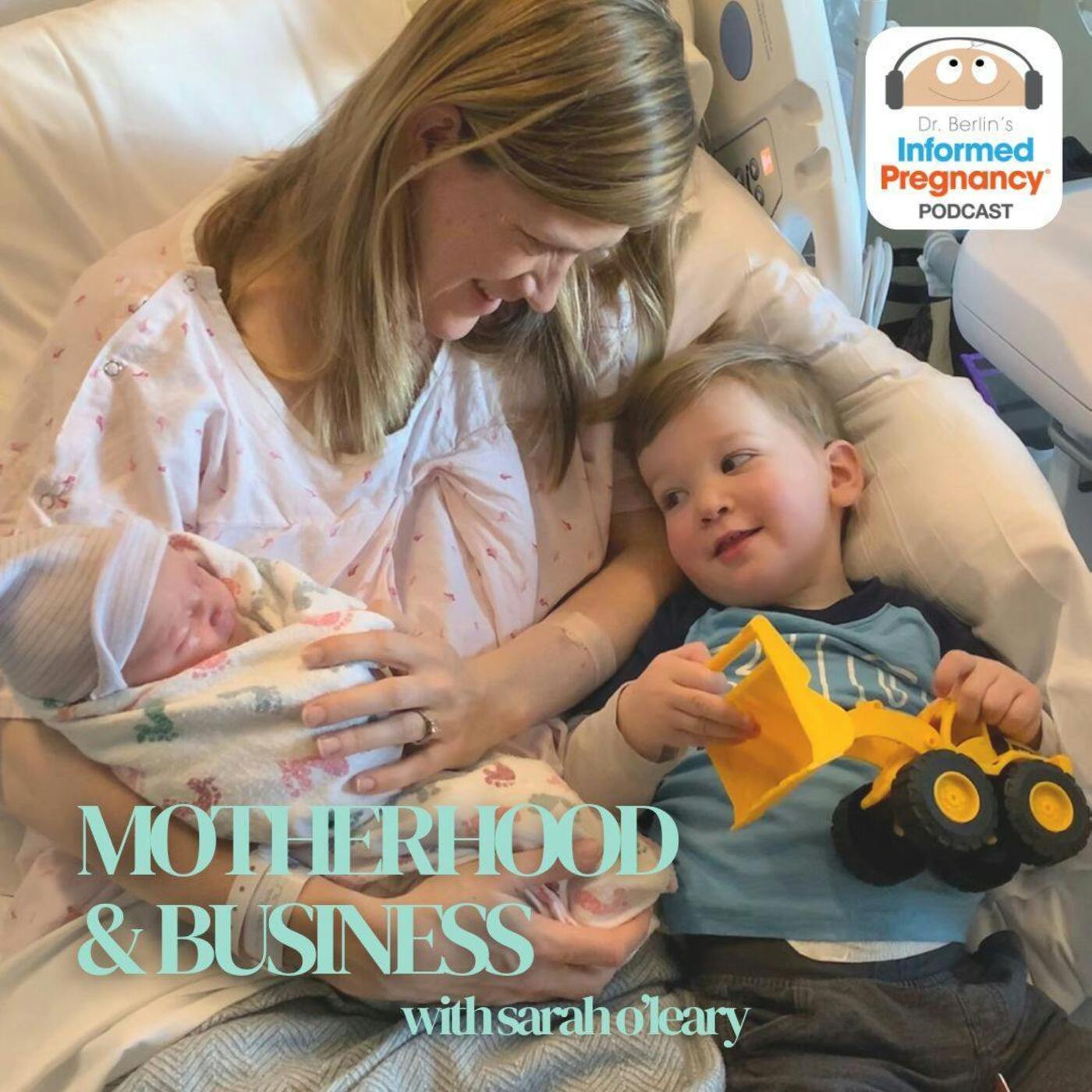
Creative director and product designer Isabelle Kosciusko discusses her recent pregnancy and birth when, despite aiming for a VBAC (vaginal birth after cesarean), her baby wouldn’t stop doing somersaults.
Ohm Mama: Dr. B’s birth meditation as mentioned by Isabelle
Key quotes
“What I wanted was a healthy baby. So after two days of fetal decels and all that, I was just like, if that's what it takes, that's what it takes.”
“Page one is that birth that you dreamed of and envisioned and the last page probably is the one that you got. But it's still part of the plan.”
“This is just an exercise in resilience. I need to just let go of whatever I'm attached to.”
“I really wanna walk in there feeling supported by my medical team. Like I don't wanna walk in there feeling like not only do I need to deal with childbirth, but I also need to navigate your anxieties as a doctor.”
“At a certain point, it was letting go and believing that you can do it and just trying to do all the little steps that you can to make it happen your way. And then after that point, you just have to let it go and let it happen how it's gonna happen.”
AI-generated transcript with speaker labels — may contain errors, especially names and medical terms. Dr. Elliot Berlin, DC appears in blue; Isabelle Kosciusko in orange.
Dr. Elliot Berlin, DC[0:12] Welcome to the Informed Pregnancy and Parenting Podcast. I'm your host, Pregnancy Focus Car Director, Dr. Elliott Berlin. My guest today is a creative director and product designer. Today we're going to talk about her recent pregnancy where the baby would just not stop doing some results while she was trying to have a vaginal birth after cesarean. Isabel Koziuszko, welcome to the podcast.
Isabelle Kosciusko[0:57] Hi there. Thank you so much for having me.
Dr. Elliot Berlin, DC[1:00] My pleasure. Great to see you again. Well, for everybody else to hear you for the first time, but congratulations, you have your baby.
Isabelle Kosciusko[1:07] Thank you. Yes, it's been seven weeks today.
Dr. Elliot Berlin, DC[1:10] Wow. Happy birthday.
Isabelle Kosciusko[1:11] Something of a birth? Yeah.
Dr. Elliot Berlin, DC[1:12] Wonderful.
Isabelle Kosciusko[1:13] I haven't got the candles out just yet, but yeah.
Dr. Elliot Berlin, DC[1:16] This was not a simple story. So if we go back a little bit just to get an idea of who you are, where are you from and what do you do?
Isabelle Kosciusko[1:24] Yeah. So my mom's American, but I'm French. I grew up in France until I was about 18. Then I moved to England for 18 years, met my current husband. We moved over just before COVID. And yeah, here we are in Los Angeles now. We've been here since 2019. We started trying to have a baby pretty much very soon into our relationship. And I've got a toddler who's two and a half and a newborn of seven weeks.
Dr. Elliot Berlin, DC[1:51] Seven weeks wasn't the easiest journey for you, I would say, along the way you hit some.
Isabelle Kosciusko[1:56] Yeah. I definitely feel like my friend was saying like, oh, yeah, this card stacked against you a little bit, especially in this last pregnancy with having a vaginal birth. So we started pretty much immediately trying to have a baby, but we weren't really paying too much attention. And then about a year and a half into our relationship, I had an atopic pregnancy. I found out I was pregnant. It's kind of a long story, but I'll shorten it. I found out I was pregnant at my, I had the seven week, eight week visit the day after I got insurance in the U.S. So found out it was an atopic pregnancy and was advised to go straight to the emergency. And yeah, so that was that.
[2:33] That happens. A couple of months later, had an HSG, found out I had a hydrosalpings on the side that wasn't the atopic, actually. And so my doctor recommended that I get my tubes removed. So at least one, if not both. So I ended up doing that in December that year. And then obviously without tubes, you know, needed to do IVF. So I did two rounds of IVF and was very lucky. Actually, that was very, you know, a fairly as straightforward as IVF can be, I suppose, journey. And then I got pregnant in late 2021 with my first born daughter.
Dr. Elliot Berlin, DC[3:08] First of all, why two rounds of IVF?
Isabelle Kosciusko[3:10] Two rounds, because we kind of thought we wanted two kids and I had one embryo. Yeah, I did the genetic testing just because I was 38 at the time. So I kept being told advanced maternal age, advanced maternal age. So, yeah, I just figured it would save me some heartache. And yeah, I did two rounds, got three PGS tested embryos, figured that was enough and I could always just go back and do more if needed after. But, you know, they both took and, you know, so have two kids from two embryos.
Dr. Elliot Berlin, DC[3:42] All right. So then the next step is getting pregnant.
Isabelle Kosciusko[3:45] Yeah. So the next step, I gave myself the summer off, actually. And there's another thing. So just after I had my second round of IVF, I had a checkup with my IVF doctor, who is really amazing, Dr. Brower. And she said, actually, you need to get a myomectomy just to be on the super safe side. So that happened. And I gave myself the summer off. I just wanted to go out. I feel like I'd been so sort of like IVF, it takes over everything in your life. And I was like, you know what, I need a breather. I just need to go and have some fun and just like, you know, do whatever I feel like for a couple of months. I was also going back to Europe to see my friends and family.
[4:25] So I came back and did the first, you know, got pregnant basically in October that year. So that was 2021. That came fairly easy. Yeah. Obviously, IVF is a whole crazy journey. But I was very lucky in terms of how many healthy embryos I got from each round. And also the pregnancy happens, you know, straight away. Like it didn't take multiple takes for it to land. And I had a pretty healthy, easy pregnancy, I'd say both times for the majority of the duration, but especially my first one. Honestly, I was ecstatic to be pregnant. I was really embracing it. I was reading all the books. I was doing all the research into baby brains and like what they
[5:09] feel and think in the womb and just all these things. I really embraced it, honestly, in a way that I wouldn't have had my journey been easier. So in a way, I am not just in a way grateful with how it happened. You know, if I'd got pregnant after a month of trying, I wouldn't have the appreciation that I have for everything. And I wouldn't have embraced pregnancy the way I did.
Dr. Elliot Berlin, DC[5:31] From the books that you read or the other research that you did, does anything stand out as being particularly helpful?
Isabelle Kosciusko[5:37] I mean, there was a book that I particularly remember. I think it was a guy called David Chamberlain. I might be wrong, but it was a book written in the 70s about how babies can feel and hear what you feel and, you know, the music you play and things like that in the womb.
Dr. Elliot Berlin, DC[5:55] I'll find it. We can put it in the show notes. I'm not sure which book that is, but along those lines, we have a film streaming on Informed Pregnancy Plus called Prenatal Memory, which is a doctor from Japan who, you know, kind of realized that he is an OB from Japan. He realized while he's talking to people about their care, about the pregnancy, about the baby, that the baby's also listening and kind of shifted to also address the baby.
Isabelle Kosciusko[6:19] Yeah, I watched that in my second pregnancy, actually, because I think you recommended it to me. And I watched it. It's so fascinating. I'm always just curious about, you know, what happens in their minds, what happens to them in the womb. And that was really insightful. You see all these little children who have all these prenatal memories. It's pretty magical.
Dr. Elliot Berlin, DC[6:37] Yeah, so that was helpful for you. What was your plan going into your first birth after you did all that research?
Isabelle Kosciusko[6:43] Yes, so I hired a doula. I did hypnobirthing. I really wanted to have a vaginal birth. So I did also Brenda Bushnell's birth course in person. I read that for a transformed by birth book. And yeah, I did hypnobabies birth course. I was doing hypnobabies with our doula, who was a hypnobirthing specialist, quote unquote. And yeah, that was my prep. I really wanted a vaginal birth. I just felt like because I was 39 at the time, I was just being pressured. And because of my journey, I felt just pressured into having a birth at hospital. Yeah, so that was my idea. I'm going to have a hospital birth, but it's going to be as intervention less as I can make it.
[7:27] Yeah, just not rely on, you know, not taking epidural, not have obviously not have a C-section, not have an induction, just avoid any of those hospital interventions as much as possible.
Dr. Elliot Berlin, DC[7:39] Well, how did things start off?
Isabelle Kosciusko[7:42] I was just containing my laughter. I would have said that because obviously that's not how it happened.
Dr. Elliot Berlin, DC[7:47] Well, we already spilled the beans that you went for a V-bex.
Isabelle Kosciusko[7:51] Yeah, that's true. Yeah, well, fate did not want that for me. So yeah, what happened is I was getting pressured by my doctor, who I would say is a very traditional doctor. She's on the slightly younger side. She's probably younger than I am. So she was saying, well, as a lot of doctors do, saying you need to get induced at 39 weeks, which I pushed back. I was saying, you know, 40 weeks. And then I said, look, I'll be comfortable getting induced at 40 plus five, thinking that'll give me plenty of time. What happened is at 40 plus two, I went in and also they were giving me a lot of fetal monitoring. And that was kind of my way of keeping them at bay.
[8:29] You know, I was just like, okay, cool, I'll come in and I'll have a checkup and you can put me on the fetal monitor and fine. You know? So like, if you're doing on stress tests, essentially they'll buy a few days of confidence. I was just like, yeah, like not even for me, it was more for them. I was doing it because I could hear that in here. Yeah. And I was just, you know, walking very confidently into the office. What happened is, and it's actually funny, my husband was all for it. By the time I was 40 weeks, his work, we're saying like, yeah, don't come in because we don't really want you here. We'll just get you replaced. I was still working because I was just like, whatever,
[9:06] you know, this baby's gonna come when she wants to come. It was a girl. And yeah, I went in at 40 plus two, literally left my lunch. I was still on my laptop, left my lunch on the table. My husband drove me to hospital and I was like, okay, see you in five minutes or you know, half an hour or whatever. And then I go on the heart monitoring machine and then my doctor came in and she said, oh, so you've got fetal decels actually. So yeah, she looked at me, she didn't look very happy and she was saying like, normally we induce people at this point, which was not what I wanted to hear, not what I expected to hear. I didn't really know how to deal with that
[9:45] because no one had really told me about fetal decels before. So I called my doula who was kind of not really helpful. And then I just decided I wasn't gonna be very comfortable going home when I've been told that my baby's in danger. And I was like, well, I could wait three more days and get induced in three days, but am I gonna sleep at this point? And I was like, no, I'm not gonna be able to rest. I'm not gonna be able to relax and put my feet up and watch TV, right? When you're like, well, maybe my baby's in distress in there, but I don't really know. So I decided to get induced with a balloon. Yeah, just a balloon at that point, which didn't really go well, it didn't really happen.
Dr. Elliot Berlin, DC[10:30] Meaning it didn't create any dilation or?
Isabelle Kosciusko[10:33] It didn't create any dilation. I told them to put it up to the max. She was like, normally people put it at 65%. And I was just so trying to be a hero. I was like, it's fine, carry on. And she was like, wow, 80%. Like, you know, you're, you guys sound pain pretty well. And my husband said he walked in the room and he was like, are you okay? And he could see me like gripping the sides of the bed. And I was like, but anyway, yeah, it didn't really do anything. The baby was still in distress, like intermittently in distress and nothing, no dilation, nothing. And I was also really choosing not to have an epidural. That was quite important to me. So I did that for about 12 hours,
[11:15] got admitted to labor and delivery. So I was in there for about 12 hours. And then at three in the morning, I remember just being in agony and going like, I need to have an epidural. So got that done during the night. The next day, still no progress. Nothing was happening, which was quite disheartening every time, you know, they come in and they tell you, no, still like maybe one centimeter or two centimeters, maybe three. My doctor came in about 24 hours later and said, look, if you want, I can break your waters, which we did. And then just carried on. And again, they just kept coming in and turning me over and telling me the baby was in distress
[11:54] that they had to turn me over. I was trying to do my hypno-babies course at this point, my hypno-birthing course. Oh, the other thing is my doula, when I messaged her to say I was going to labor and delivery, she told me, okay, I'm going for a nap, keep me posted. Which at the time I was kind of wondering like, why like surely now is the time that you should be showing up. But I didn't, I had so much going on that I didn't really pay attention. You know, I was just like, okay, I guess she knows what she's doing. Yeah, so fast forward to the next day. She hasn't come. The nurses kept asking me, where's your doula? Where's your doula? And I was like, I don't know.
[12:29] She's supposed to come, but she's not here. My husband was dealing with her. So I was just trying to focus on, you know, breathing and trying to work through this. Yeah, and no progress. Even after the waters broke, it was getting a little bit better. It was going up to maybe like three or four, but it was kind of like maybe 36 hours at that point. It was so stressful. It was, yeah. I'm feeling stressed. It was disheartening more than anything. It was just disheartening. It was so far from the experience. I think I thought I was also really flexible because everything I'd been told before was, you know, prepare for the unexpected. Like you think you're gonna be prepared, but you're not.
[13:08] So just be flexible and resilient. And I thought I was, but I really wasn't. I think I was very attached to what I wanted, which was a vaginal birth and hospital with no, you know, medication or anything.
Dr. Elliot Berlin, DC[13:20] Well, here we are at 36 hours into it. You are in the hospital, but you're getting all sorts of interventions and medications and things are still not moving all that quickly. Why don't we take a little break when we come back? We'll find out what happened at the end of that birth. We'll be right back.
Dr. Elliot Berlin, DC[13:47] Welcome back. We're talking to Isabelle, cause you scoop and guess what? We're 36 hours into what's supposed to be an unmedicated birth and a vaginal birth at the hospital. But it just started with some fetal decelerations during monitoring that concerned the doctor and then concerned the mother because the doctor was concerned and then landed in the hospital and tried a few different induction things. Nothing really seems to be creating a lot of progress or sounds a little bit like your uterus is in neutral, contracting a lot, but not really driving forward.
Isabelle Kosciusko[14:23] I was getting contractions and I was on the potassium at that point too, but it just wasn't progressing. And that was disheartening. I just kept getting fetal decels, but I was still thinking it might happen. The doula still wasn't there. Just all-
Dr. Elliot Berlin, DC[14:39] The doula after 36 hours.
Isabelle Kosciusko[14:42] Yeah, and it's kind of funny, one of the nurses, I think this is before actually, I took the epidural when the nurses, I was just in so much pain and when the nurses was saying, you know, picture your happy place. And like, I was on this birth ball and I was bouncing up and down. And she was like, where's your happy place? And I was like, on a beach in Mexico, on a beach in- And she was like making me bounce up and down, like going on a beach in- Which I think that, yeah, to an outsider would have been like pretty funny to see. But yeah, so fast forward to 36 hours, it's still not happening, still fetal decels during the night, I will say, because I was getting checked through the night.
[15:16] One of the nurses came in, this is like maybe at 6 a.m. the second night, so maybe about 40 hours into this. She checked me and she was like, oh, you're almost there, you're at eight centimeters. And I was like, oh my God, all of a sudden, I just had this moment of like, I didn't go through all this for nothing. But I felt also quite a lot of pain from one of the visits during the night that night. I started feeling pain again and I was like, okay, maybe it's just the intensity of the contractions because I've progressed more. So I just took it on board, but it was very painful. And she was telling me I was eight centimeters and I was super happy and just thinking,
[15:54] this is it, this is it, like 42 hours in, it's fine, it's gonna work out my way. And then the doctor came in at 9 a.m. to check me and she's like, you're not at eight centimeters, you're at like four or five.
Dr. Elliot Berlin, DC[16:07] Yeah, I guess it's possible that you were tracked, but it was like, I don't know what she's on, but she did not tell you the right figure. And also, what is this wire hanging out?
Isabelle Kosciusko[16:16] And it turned out one of the nurses had accidentally unplugged my epidural, which was like, oh, that explains why all of a sudden I started feeling pain.
Dr. Elliot Berlin, DC[16:24] Oh my gosh, but I mean, it's I guess a little funny, but not funny funny, it's just like a comedy of errors and still where's your doula?
Isabelle Kosciusko[16:35] Yeah, my doula showed up at 9 a.m. that morning as I was being told by the doctor like, you need to consider a cesarean at this point because it has been almost 48 hours and 24 hours since your water's broke. And honestly, I was just defeated at that point. My doula came in, I just wanted to cry. I just felt so defeated and exhausted. And I asked for a little moment on my own and the doula was saying, look, let's do some spinning babies exercises. But honestly, having her there actually was more triggering than anything else. I just wanted her to leave because I was angry with her for not coming earlier. It took me months to speak to her and ask her what happened.
[17:12] But regardless, I just felt like at that point I didn't really have a choice. Yeah, so I just took a moment to myself and spent like an hour or half an hour just crying basically on my own in the room because I'd asked everyone to get out. And yeah, just decided to say, okay, I just felt like that was all I could do. And also, to be fair, what I wanted was a healthy baby. So after two days of fetal decels and all that, I was just like, if that's what it takes, that's what it takes. I think I was particularly attached to a vaginal birth in retrospect because of doing IVF. I felt like I really wanted one thing that had less medical intervention.
Dr. Elliot Berlin, DC[17:52] I hear that a lot.
Isabelle Kosciusko[17:53] I think that was an important component for me. But it didn't happen. I was slightly traumatized after. I think people I know have very happy C-sections. Honestly, I felt like someone was pounding really hard on my chest. My husband said it was funny because he was there and he was holding my hand. It was just crazy because they pulled the baby out and then they were like, do you wanna cut the cord? Do you wanna take a photo? And he was like, look, I feel like my wife is about to die. There was a lot of blood. He was a little bit traumatized and they were so used to it that they were just treating it very matter of fact, in a good sense, probably a good thing
[18:32] because it means they're so used to it that they do it very well. But yeah, for us, it was very like, what is going on? It just felt completely crazy.
Dr. Elliot Berlin, DC[18:41] Sorry, I had such a challenging experience. It takes a lot of strength sometimes to let go of your dream and do even though you want that healthy baby, it's hard to let go and to even accept that that's what's healthiest for your baby. Sounds like you didn't have a lot of support that you had planned for. And then also just sometimes, even right out of the gate, you don't get the experience you want and it's a flow chart. I say this on the podcast all the time. Page one is that birth that you dreamed of and envisioned and the last page probably is the one that you got. But it's still part of the plan. The plan is if your baby needs to or you need to have a necessary birth
[19:22] then of course you're gonna do it. Doesn't mean it's a great experience. So after that birth experience, how soon till you decided to have a second?
Isabelle Kosciusko[19:33] Yeah, so after that, we waited about a year and a half. In fact, exactly a year and a half. And at the beginning of last year, I was thinking, look, I don't wanna wait until I'm too much older. Like I'm 42 or I was 41. I don't really wanna have kids too late because I still wanna have more energy, et cetera. And I thought, is this year or nothing? Should I do it? Should I not? Also it felt like a year where as much as having a toddler is tiring, it felt manageable to have another kid and I didn't wanna leave too much age difference between them. So early last year, I started thinking about it again and yeah, got pregnant in April. So we waited a couple of months and then yeah, just-
Dr. Elliot Berlin, DC[20:16] Embryo did its thing?
Isabelle Kosciusko[20:18] Yeah, exactly. The embryo did its thing and got pregnant in April. And different pregnancy in that the first trimester, I felt extremely nauseous, very tired. I felt like the first pregnancy was a little easier to manage the first trimester. But besides that, I still swam a lot. I was obviously very happy. I was very much less focused as I'm sure everyone is in their second pregnancy because you're dealing with a child already. I would find myself, where's my first pregnancy? I was like, I'm 12 weeks and three days. And knowing every week what size my baby was, this pregnancy, I was kind of like, what week am I again? Just trying to keep track.
[20:58] So it was very different in that sense. But besides that, very happy, healthy pregnancy, just less time to focus on it, I suppose.
Dr. Elliot Berlin, DC[21:08] I mean, after you have a cesarean birth, you have, I guess, two options to plan for a repeat cesarean or vaginal birth after cesarean. Had you put thought into that?
Isabelle Kosciusko[21:17] Yes, so ignorance is bliss. I didn't know VBACs are such a big deal. I just thought that's what everyone does. You just opt for a vaginal birth and then if it doesn't work out, you have a cesarean, which I thought is what the majority of people do. I didn't really realize it was a thing. I think my doctor asked me, so do you want another C-section or do you want a VBAC? And I was like, oh, of course, yeah, I want a VBAC. And then I think at 32 weeks, I came to see you just because I swam a lot and I felt like my joints were quite stiff. My back was very tense. So I came to see you for a chiropractic visit. And at that point, the baby was breached,
[21:55] but I wasn't concerned because it was just 32 weeks. I felt like more and more people go, okay, you want a VBAC. I remember you told me about episodes to listen to and how to prep and I was just kind of like, do you need to prep for this? Is there such a thing as, do you need to read up about it? Why is this a big deal? And the more I looked into it, the more I realized looking at the figures was quite alarming. I think it's like one in 10, can't remember what it is, but it's a very low rate of people who go for VBACs.
Dr. Elliot Berlin, DC[22:27] It's interesting. It's a low rate of people who go for it and a high success rate among those who do.
Isabelle Kosciusko[22:32] Right. And I was just really confused and honestly quite shocked and all of a sudden I kind of went down this rabbit hole of like, why is this such a big deal? And then my doctor also increasingly started talking to me about the risks and everything that could go wrong. And basically every time I would go for a visit from about 31 weeks onwards, I feel like I would get told, which was from every four weeks to every week at a certain point, you get told about risk of uterine rupture and all the various other things, but mainly that one where I ended up feeling the way it was being talked about was like, you've got a 1% chance of dying. And if this happens and she told me,
[23:15] one of my friends had this happen to her and it very nearly killed her. Which is obviously not what you wanna hear.
Dr. Elliot Berlin, DC[23:22] Yeah.
Isabelle Kosciusko[23:23] I was trying to mitigate like feeling anxious about it whilst trying to inform myself for the best possible birth. But every time I would read more about it, I would get more figures that are, you know, not heartwarming or yeah, just confusing.
Dr. Elliot Berlin, DC[23:39] Now at 32 weeks, breach is not a huge deal, but it's definitely a time to start tracking it, you know, put your finger on the pulse of it. Even from that perspective, how did things go?
Isabelle Kosciusko[23:50] So yes, that's the next thing. I was thinking based on my previous birth where I felt like I did everything I could and then got an outcome that was very medically heavy. I thought, you know what, this pregnancy, I'm not gonna do anything, I'm not gonna study anything. So when I realized that VBACs were kind of a big deal and you need to be a little bit ready and prepare yourself and your mind, and if anything, you know, know how to deflect, you know, doctors and anyone in the medical establishment who tries to dissuade you. So you need to be informed in that sense. I then was dealing with, the baby was head up at 32 weeks and then I went for my next visit
[24:31] and he was head down and I was like, great, I can focus on all this VBAC information so that I can be informed and, you know, walk in confident. And then the next visit, I went in and the ultrasound tech was like, oh, he's breached. And I got really, I was like, wait, what? He was head down a week ago. And she was like, no, he's frank breach, very matter of fact, went into the doctors confused and she was saying, yeah, he's breached so you need to start thinking about scheduling a C-section, which I was not happy about and also confused about, but he was head down two weeks or a week ago. And that happened. So I felt like that took me away from being able to focus on the VBAC and feel relaxed.
[25:17] You know, I think a lot of big component of this is feeling relaxed enough that you're able to just go with the flow and let the baby come when he wants to come and all those things. So not only would detracting me from being able to focus on the VBAC, but it was also just every time that would happen, I would have to think about how I'm not gonna have a C-section because very few practitioners in LA want to give a breach birth, right? It's not really-
Dr. Elliot Berlin, DC[25:47] Almost none.
Isabelle Kosciusko[25:48] Yeah, there was just one practitioner that my friend used, but I believe he's no longer practicing. And yeah, my impression was that it just wasn't an option. So I wasn't able to focus on the VBAC. I had to focus on getting him back to being head down. So that happened a couple of times. I wanna say every week between 34 and 39, he was moving around, right? So one week it was breach, one week it was head up, one week it was transverse. There was a lot of transverse. I was coming to see you every week, trying to get help to bring him head down. Then I'd go to my doctor's and he'd be head up or he'd be head down again, usually after our visits, he'd be head down, but then he'd move back.
[26:33] Also, I feel like it confused my confidence in what I felt because I thought I could feel his head a certain way, or then I thought I'd feel contractions. And I remember going to the doctor's and she was like, oh, that wasn't contractions. That was probably him moving back to being head up. So I lost a lot of the confidence I had in my body and my connection to him at that point, which obviously is a big deal when you're pregnant and trying to connect with your baby and trying to be intuitive about how things are going. So that was going on. And then it's 37 weeks. I think the previous week he was head down. I came in for a visit at 37 weeks and he was back to being head up
[27:15] and she again insisted on, I think it was like 37 and four days or something for my visit. And she said, look, you need to schedule the C-section, like, you know, workout when. And I asked her if I could do an ECV, which previously every visit that I'd have where he was head up, I would ask for an ECV and she said, no, I don't really do those for V-backs, which I guess she was afraid of opening the scar, which I remember talking to you about and you were saying, really something, and I spoke to another-
Dr. Elliot Berlin, DC[27:46] Well, just so many OBs in town don't consider that a contraindication.
Isabelle Kosciusko[27:51] Yeah.
Dr. Elliot Berlin, DC[27:52] Especially when your baby's flip-flopping all over the place by itself.
Isabelle Kosciusko[27:56] Right. And one of the reasons we established he was flipping so much is because I had very high levels of fluids. I was like between about 23 to 25, which is the very utmost part of the frame.
Dr. Elliot Berlin, DC[28:08] Yeah, the top of the frame.
Isabelle Kosciusko[28:10] Because, I mean, I have a sweet tooth anyway, but I had a really bad sweet tooth during pregnancy. So they told me, well, one of the ways you can try and get your baby to stay head down is cutting sugar, which did not go down well for me.
Dr. Elliot Berlin, DC[28:24] It's not your favorite.
Isabelle Kosciusko[28:25] I was like, I can't drink. I can't drink cut. I can't do all these things. This is all I have left, but okay. But at that point I was like, this matters more than my chocolate habit. So, okay, I'll do what it takes through gritted teeth. Especially like between Thanksgiving and Christmas when you're like at your most-
Dr. Elliot Berlin, DC[28:46] Everyone's eatings.
Isabelle Kosciusko[28:47] Exactly.
Dr. Elliot Berlin, DC[28:48] And you want to too.
Isabelle Kosciusko[28:50] Yeah, going to these Christmas parties, not that I had that many, but yeah, going to like Thanksgiving celebrations and just going no, no to the desserts, which yeah, but anyway, I told myself like it's just for a month.
Dr. Elliot Berlin, DC[29:03] Yeah. And then your doctor kind of came around to doing an ACV, right?
Isabelle Kosciusko[29:07] She did, yeah. So when I asked her for an ACV at 37 and a half weeks, she was like, you know what? He's transverse and his head is towards the bottom. So, okay, let's come in tomorrow. Do an ACV tomorrow. I wouldn't do it past 38 weeks, but because it's 37 plus five, which kind of makes no sense in my mind, but yeah, okay. So I think I came in for a treatment with you that morning and then went for the ACV, which for people who haven't had an ACV, it's like you have to go to the hospital at 7.30 a.m. You have to pack your hospital bag. You get told like, this could be the day this happens. If the ACV doesn't work, your baby might actually get delivered today.
[29:44] So that's already a huge shift in your mind. Well, in my mindset anyway, I was packing my hospital bag, thinking, well, this could be it, which is kind of crazy because at 37 and a half weeks, I didn't feel like it was gonna be the moment, but I go in, they put you on a drip. They do all these things as if you're going through surgery. So you have to get there two hours ahead and you're getting all prepped. And then the doctor came in and she did the ultrasounds ahead of the ACV and she's like, oh, his head's down. But I came in yesterday. But anyway, I was excited. I was super happy at that point, obviously, because I was like, yay, I don't need to do an intervention.
Dr. Elliot Berlin, DC[30:23] And back on track for your VBAC.
Isabelle Kosciusko[30:26] Exactly, and back on track for my VBAC. I was thinking I can finally focus on this VBAC now. Yeah, and lo and behold, the following week, I go in and again, he's had a transverse, by that point he was more transverse. And at that point I was just like, you know what? This is just an exercise in resilience. I need to just let go of whatever I'm attached to. And I just felt again, kind of defeated and kind of over just trying to make things happen my way. And then at the next ultrasound, so I agreed to schedule a C-section and at the next ultrasound after that, he was head down again, so yeah.
Dr. Elliot Berlin, DC[31:03] What an insane mental roller coaster.
Isabelle Kosciusko[31:05] It really was, and also I felt a little bit unsupported with the VBAC just to wind back a little bit from my doctor. And I feel like I ended up almost like not having an argument with her, but kind of one day when he was actually head down and she was like, okay, we can focus on this, but are you sure you wanna have a VBAC? And I ended up just kind of being angry with her and telling her, look, you know, I feel like all my energy isn't spent on navigating, like VBACs is spent on navigating your requirements and what you're comfortable with and not comfortable with. And, you know, I really wanna walk in there feeling supported by my medical team.
[31:43] Like I don't wanna walk in there feeling like not only do I need to deal with childbirth, but I also need to navigate your anxieties as a doctor.
Dr. Elliot Berlin, DC[31:53] Right, because she seemed almost more anxious than me about the VBAC.
Isabelle Kosciusko[31:56] And I think from that point onwards, I think that was probably around 36 weeks. She apologized and she was really nice about it. And she said, okay, actually, I'm really sorry. This isn't at all the impression I wanna give you. I want you to understand that my priority number one is your health and your baby's health. And, you know, we're in this together. But from that point onwards, our relationship did shift a little bit. But then having said that, again, the baby was still flipping. I got a second opinion from Dr. Chavira and he seemed really experienced in VBACs and a lot of the boxes I take, which is advanced maternal age, quote unquote,
[32:34] VBACs, you know, breach babies. So I contacted him, had a consult with him and he was saying, okay, at this point, first he completely put me back in confidence because at a certain point with my doctor, I started thinking, do I even wanna VBAC? Like she was really scaremongering. And he really put me back in a good mental space with it. And the other thing is he told me when I contacted him at 38 weeks, saying, oh, my baby's head up again, he said, okay, well, after 39 weeks, if he is found to be head down, I would just induce then so that he-
Dr. Elliot Berlin, DC[33:10] Yeah, that's not uncommon, you know, with the flip-flopping.
Isabelle Kosciusko[33:14] Yeah. And I was like, okay, this is what we're gonna do. Having said that, at 39 weeks when he was head down, I tried to get a membrane sweep because I was like, okay, let's get things moving. And the doctor tried and she was like, he's so high up, you can't even do a membrane sweep. So there's no point.
Dr. Elliot Berlin, DC[33:30] That's also something that happens with a large, generous swimming pool, a lot of fluid.
Isabelle Kosciusko[33:36] Really? Yeah, cause I brought my fluids down a little bit from not having sugar down to about 2022, but there was still a lot in there. So yeah.
Dr. Elliot Berlin, DC[33:47] Still a generous swimming pool.
Isabelle Kosciusko[33:49] Exactly. One of the best on the block.
Dr. Elliot Berlin, DC[33:53] Well, all right, but I mean, look, at least with a head down baby, that close.
Isabelle Kosciusko[34:00] Yeah.
Dr. Elliot Berlin, DC[34:01] You have a shot again. And it sounds like with Dr. Shavira in your pocket, you have confidence again.
Isabelle Kosciusko[34:05] Yeah.
Dr. Elliot Berlin, DC[34:06] So potential seems to be building.
Isabelle Kosciusko[34:08] Yeah, totally. I felt more confident, although at that point I felt like case-a-rosse-a, you know, that I couldn't control anything. And I felt like even if he was head down, the next appointment, I'd been through it so many times at that point. I was like, I don't know what's gonna happen in the next appointment. So let's not get too excited either way.
Dr. Elliot Berlin, DC[34:26] For me, it was a roller coaster of emotions and I was just there to support you. But you know, we were texting and emailing you like, yeah, head up, head down, head up, head down. You'd come in, your baby would swim head down and you know, you'd leave it on blank. Okay, she's good. And then all of a sudden, you know, head up, you know, a day later. For me, it was intense. And you know, you're a lovely person. I really feel honored to work with you and I want things to go great for you. But as much as I want that for you, like I cannot begin to imagine, I was actually very, very impressed by how overall level headed you stayed with everything, you know,
[35:03] spiking the peaks and valleys that you went through. I do wanna take one more break and then we come back. We'll find out how this birth actually went down. Welcome back. Well, if you enjoy roller coasters then you're enjoying Isabel's birth story. And at the end, the baby is head down. You try to get a membrane sweep. They can't even reach your cervix. So what happens next?
Isabelle Kosciusko[35:34] Right. So at that point I went home. That was a Friday. This is a Friday before Christmas. And I thought, okay. And at that point I was doing everything I could. I was walking like maybe 15,000 steps a day, just doing all the exercises that I had, like, yeah, everything that I could to keep him head down and to try and induce him naturally. Because I was like, okay, he's head down now. Let's just try and, you know, get things moving. And then I had another appointment on the Monday for just a fetal monitoring appointment again. And just to see where he was at that point because who knows? And so I went in, but I also thought I might get induced
[36:17] based on what Dr. Shavira had said. I thought, well, you know, I'm like 39 plus four at that point. So as Dr. Shavira said, if he's head down, I should just get induced. But I was really trying to tug myself into it. I was not really ready for him to come mentally. I was obviously ready, but I just didn't feel like that was the moment. But I was just trying to go like, yeah, this is it. You know, this is the day, yay.
Dr. Elliot Berlin, DC[36:45] You weren't feeling it.
Isabelle Kosciusko[36:46] Yeah, I wasn't feeling it. But go to hospital, get checked and try and get a membrane sweep. And again, the doctor's like, I can't do a membrane sweep, he's too high. He's lower, but he's still too high. This is not gonna go how you want it to go if we do this. So I can't even touch it anyway. So there's no point in getting induced. And so she sent me home and I got really weirdly, even though that's not what I wanted, I got really emotional about it. I got home. My husband sent our toddler away with her granddad and her grandma to Long Beach where they live. So it was just the two of us and I just couldn't stop crying. I was really upset that I hadn't been induced,
[37:29] even though that's not what I wanted. I just had this huge surge of emotion. Don't get me wrong, I'd been emotional for a lot of this. You know, you were talking about being level-headed. Like I did not feel level-headed at all. I felt completely all over the place for the last two months, but you know, I just got on with it, I guess. But yeah, I just felt like it was like a huge release of emotion. And I was just really upset. I don't know why that I hadn't been induced because I think I just tried to pressure myself to mentally be ready for it. And then when it didn't happen, I was like, oh my God, another week. And also I just felt so huge from, you know,
[38:03] like you feel like your last week's a pregnancy and having all that fluid. So yeah, got really upset, didn't sleep. And the next day was Christmas Eve, went to pick up our toddler in Long Beach, had like a kind of mini Christmas dinner with my husband's family. And I just felt during the day, I kept feeling contractions, but because I completely lost, not completely, but I feel like I'd lost confidence in my ability to read my body because I kept telling my doctor, oh, she was asking me all this all along if you had contractions. And I was telling her, I feel contractions, but they last like five to 10 minutes. And she was saying, well, that's not a contraction then.
[38:42] That's probably something else. So I felt these things that day in particular, I was walking around with my husband, we did a really, really long walk, like maybe 10 miles along the beach to the point I was completely exhausted. But I was just feeling all these things, but then I was like, well, I don't know what it is. Who knows, you know, at that point, I don't really know. And then that night at this dinner, again, I just felt really strong contractions. But then I was like, again, I don't know, maybe this is a good sign, but what do I know? Almost, you know, came back with our toddler and put her to bed and we're watching television and at that point I was just feeling
[39:21] like really intense contractions. And I was on my birth ball kind of furiously trying to relax. And I was just like, okay, well, we just brought our toddler back from Long Beach because we didn't think it was gonna happen anytime soon. So I can't go to hospital now, even though I really felt like I probably should. And I was like, well, also I was at the doctor's yesterday and she told me it wasn't gonna happen, you know, because she couldn't even sweep my membranes. Like this isn't gonna happen now. So I just need to calm down and I'm gonna go to bed. And if I keep feeling like this, I'll just drive to hospital tomorrow, but I can't go now because we just picked our toddler up
[39:56] and, you know, I can't have my father-in-law drive all the way back to pick her up again, two days in a row. So I'm bouncing on the birth ball and my husband is sitting there with me and all of a sudden at 9.30, my water's broke. I just felt like a huge gush and oh my God, oh my God. And Christmas Eve and I stand up and there's just like so much fluid that comes out and also some bloods, which was very disconcerting to me because I did not know that in your amniotic fluids can have blood. So that immediately was quite scary.
Dr. Elliot Berlin, DC[40:32] Nervous.
Isabelle Kosciusko[40:33] Yeah, it was quite scary because I didn't know that piece of information that sometimes, I don't know if it's all the time, but it can be a thing, but I got really scared. Also, I was thinking, well, it's Christmas Eve. I could call my doctor, but I know that the switchboard goes, if it's an emergency call 911 and then based on experience after that, it sends you through to the doctor who's on call, but it takes like five minutes on the switchboards to get you to the doctor on call. And I was like, I don't have five minutes right now. I'm like gushing out blood and water and yeah, I didn't feel confident waiting. So I called 911 and the fire department came over
[41:11] within about five minutes.
Dr. Elliot Berlin, DC[41:12] Well, you don't know how to just have a baby without drama.
Isabelle Kosciusko[41:16] It was very dramatic and it was Christmas Eve and it was just crazy. They all arrived and they were like, checking me, checking the baby's not crowning, luckily not. And then they said, well, you need to go to hospital now. And yeah, so it was kind of funny actually because when they arrived, I was like, yeah, my water's broken. There was lots of blood and they said, where? And my husband, bless him, he didn't really know how to deal with it. So he took the mop out and he was furiously mopping under me. So there was nothing there except what was still coming out and gushes. And yeah, they got a little confused, but we're like, no, it was there,
[41:53] but it's just been mopped up. And he was mopping as I talked. So it was kind of a funny scene. But yeah, everything was fine. I got to the hospital, everything was fine. Got admitted to labor and delivery and spent the night there. And yeah, I got told I was one and a half. When I arrived, got an epidural because it was getting increasingly painful. And initially I thought, I'm not gonna take any medication again. But I'd spoken to a friend who'd gotten induced and she told me, I took an epidural because it really helped me sleep. And at that point I was so exhausted because I hadn't slept the night before. I was like, you know what? It's not gonna come in my favor if I don't do this.
[42:33] If I try and be a hero and not take an epidural and try and deal with this throughout the night, I just feel so tired already and I'm only one and a half centimeters. It's just not gonna work in my favor. So I got an epidural and I was able to just really relax and sleep and listening to meditations. In fact, I listened to your birth meditation like throughout the night, like about 50 times. And I was listening to sounds of the ocean and just going in and out. And it was actually amazing. It was really beautiful. It was like a psychedelic journey. I wanna describe it for me, that part of labor. I really, really just loved it. Being like half awake, half asleep
[43:13] and just feeling my baby, working through it together. It was really amazing. And the other amazing thing that happened, a doctor called Dr. Fabi, who's like a kind of holistic. Yeah, very sort of like a midwife OB. So she was like my dream doctor, but I wasn't able to get her. But I'd heard a lot about her and I always thought I was very much aligned with her principles of natural birth. Like, you know, just her principles. And I'd never met her. I tried to have a consult with her when the baby was flip-flopping, but I was too far down and I think she has quite a long wait list. And lo and behold, in the middle of the night, when I get checked once,
[43:55] they said you need to get a UPCI or a PCI.
Dr. Elliot Berlin, DC[43:58] Oh yeah, to monitor the pressure, look at the internal.
Isabelle Kosciusko[44:01] Right, yeah, exactly. At about 6 a.m., they said, okay, you haven't really dilated much, so you need to get a pitocin and we need to put one of these in. And I was kind of like in my head going, oh, like intervention, intervention. And I was like, no, just calm down. Like, okay, let's just do this. It's fine, I've got it. You know, I've got it under, it's fine. So I said, okay. And lo and behold, Dr. Fabby walks in and she's like, hi, I'm Dr. Fabby.
Dr. Elliot Berlin, DC[44:27] Oh, so she came to your birth anyway.
Isabelle Kosciusko[44:29] I had no idea that she worked at the hospital where I gave birth and I was so ecstatic. I was just like, oh my God. Like, I feel like I probably scared her away. I was like, oh my God, I love you. I know you. And she was a bit like, oh, hi. Anyway, she was amazing. She was really, all the doctors I will say that I saw during that birth were really wonderful because there were the doctors on call because it was Christmas. Yeah, and then she was like, oh, you're already three centimeters. Like, you're totally gonna do this. It's totally fine, you've got it. And fitted the little instrument and just left. And I was just texting my friend at that moment
[45:07] who's one of her clients. And I was just, this is unreal. I was texting her a minute before she walked in and I was like, oh my God, Dr. Fabby just walked in. And that just said, yeah. I felt like it was also just another magical moment for me, carried on. And then I was just progressing really well. Like every time they'd check me, they were like, okay, you're five, you're six. Just carry on, relax. And I would just carry on and relax. And then at about midday, I guess like around one or two, finally the nurse came in and I was, the last check they'd given me was about eight or nine. And I was like, you know, I just feel different. Like, can you check me?
[45:48] And she said, well, we're not supposed to check you for another half hour, but I can if you want. And I said, yes, please do. Cause I feel different. And she checked and she said, oh, you're complete. You know, we can start the pushing.
Dr. Elliot Berlin, DC[45:59] Oh my goodness.
Isabelle Kosciusko[46:01] Yeah, I was so happy. It was really just an amazing experience, that labor.
Dr. Elliot Berlin, DC[46:06] How did the pushing go?
Isabelle Kosciusko[46:08] It went fine. It was an hour, you know, it was my favorite part, but yeah, we got through it. And then the baby came out and he was healthy. I think like eight pounds, 10 or something like that. Yeah, that's the other thing is all along, they kept telling me all through the pregnancy, oh, he's in the 99th percentile. He's like a huge baby. He's gonna be, you know, 10 pounds, whatever. And he was eight pounds, 10. Even one of the nurses who was actually amazing, but she was like, okay, let's get this giant baby out. Like, can you not say that? Like, but yeah, he was healthy. He was just fine. I mean, he was beautiful. Everything was great, so.
Dr. Elliot Berlin, DC[46:49] Okay, well now there was a big payoff cause now I have all sorts of tingles going through my body. I mean, what was that moment like when you were with the baby out and held your baby?
Isabelle Kosciusko[46:58] It was so special. It was really amazing. And yeah, I just kind of felt also like, oh, was that it? You know, I felt like, I don't know. I just felt like after like my experience with the first one, it had become such a huge thing that I just thought there was all this like huge amount of pain involved and then overwhelming. And then I just thought actually once it was done, I felt like the pushing phase was actually pretty short, not short, but not too long. And I was just proud and happy.
Dr. Elliot Berlin, DC[47:26] Yeah. I'm so happy for you.
Isabelle Kosciusko[47:28] Thank you.
Dr. Elliot Berlin, DC[47:29] As we're winding down, like what's your takeaway from your experiences?
Isabelle Kosciusko[47:33] I mean, my takeaway is if you want something to just carry on trucking through for a V-bag, just carry on like inform yourself and also just carry on believing, you know, because I feel like I had a lot of the flip-flopping and being advanced maternal age and having a doctor that wasn't really holistically minded and all these things felt like a little bit stacked against me. But you know, if you think you can do it, it's not gonna work every time. I'm not under any illusion, but at the same time, I feel like at a certain point, it was letting go and believing that you can do it and just trying to do all the little steps that you can to make it happen your way.
[48:16] And then after that point, you just have to let it go and let it happen how it's gonna happen.
Dr. Elliot Berlin, DC[48:21] Well said. I feel honored to have been a part of your journey.
Isabelle Kosciusko[48:25] Thank you so much. Thank you for your help.
Dr. Elliot Berlin, DC[48:27] My pleasure. And thank you for joining us and sharing your story, you know, the ups and downs and the persistances. It's inspiring. And I think a lot of elements of your story will relate to people who listen to the podcast and your takeaway message to get informed is also wonderful. I wish there was some kind of podcast that could help with that. I don't know, I'm thinking about you. Thank you again.
Isabelle Kosciusko[48:52] Thank you so much for having me.
Dr. Elliot Berlin, DC[48:53] My pleasure. At home, thanks for listening to the Informed Pregnancy podcast for more pregnancy and parenting information. Just like this, visit us online at informedpregnancy.com.
Want more pregnancy + parenting? Start your FREE TRIAL of Informed Pregnancy+ and get access to all our curated pregnancy and parenting content — original series, iconic birth films like The Business of Being Born, prenatal workouts and more.
Dr. Arielle Mitton is an internal medicine physician and board member of The HER Foundation (Hyperemesis Education and Research). She discusses the unexpected hurdles in her own pregnancy, including secondary infertility, which led her to a deep desire help others navigate hyperemesis gravidarum.
The untold story of women experiencing Hyperemesis Gravidarum (HG), a terrible pregnancy sickness that affects 3 million women leading to thousands of abortions of wanted children and 9 months of hell. HG campaigner Charlotte Howden challenges the medical profession and explores women’s politics, secrets, loss, and reveals new scientific breakthroughs in HG research.
Key quotes
“That's exactly what I said. I said, I can't believe this is happening, you know, currently in America treatment wise for hyperemesis and this is just not right.”
“I mean, I think if it was in a different situation, like if, you know, it was before modern medicine, I probably would have died.”
“And he said to me, well, do you want to have a baby or do you want to be pregnant? Like, that was his question to me.”
“But I also think that your mind has proven capable to do what a lot of other people's minds can't do. Which is what? Power through, find a way.”
“And she said, I don't think you failed. She said, you're a survivor. You've already done two, you've completed two and you know, now you're not giving up. You know, you're having a baby despite all the hurdles coming your way.”
AI-generated transcript with speaker labels — may contain errors, especially names and medical terms. Dr. Elliot Berlin, DC appears in blue; Dr. Arielle Mitton in orange.
Dr. Elliot Berlin, DC[0:36] Welcome to the Informed Pregnancy and Parenting podcast. I'm your host, pregnancy-focused chiropractor Dr. Elliott Berlin. My guest today is someone with an incredible story and unique perspective on pregnancy and parenting. She's an internal medicine physician and board member of the Her Foundation, Hyperemesis Education and Research. She's dedicated to helping others navigate the challenges of this pregnancy condition, Hyperemesis Gravidarum. From dreaming of becoming a doctor when she was just three years old, to balancing a demanding medical career with her own deeply personal parenting journey, her experiences span the joys and complexities of growing a family.
[1:13] Along the way, she's faced unexpected hurdles, including severe nausea and complications with her pregnancy and secondary infertility, leading to transformative decisions and lessons about care advocacy and resilience. Dr. Ariel Mitten, welcome back to the podcast.
Dr. Arielle Mitton[1:29] Thank you for having me again. Nice to see you after so many years.
Dr. Elliot Berlin, DC[1:33] Yes, we had you originally because this is how it all went down. I interviewed Amy Schumer together with my wife in episode 154, and we promised her we would do some investigating about hyperemesis. She had a terrible case of hyperemesis, and you kindly came onto the podcast with two other doctors from the Her Foundation and really shared a lot of information about what we know about hyperemesis and unfortunately what we don't know about hyperemesis and some of the ways to mitigate a pregnancy with hyperemesis, to realize that you even have it, to support people around you that have it, and like the others on that podcast, you had it as well. So you guys came on, that was episode 168, and then on episode 384, we had Charlotte
[2:20] Howden, who is the documentarian who made the film Sick! The Battle Against Hyperemesis Gravidarum, which is also streaming on Informed Pregnancy Plus. So it's been quite some time since I saw you last.
Dr. Arielle Mitton[2:32] And there have been advances, actually, from one of the two other people that was on the show with me, she's done a lot of research that have actually advanced the field of hyperemesis.
Dr. Elliot Berlin, DC[2:41] Yeah, so that's my first question, what's the latest?
Dr. Arielle Mitton[2:44] So Marlena Fezzo discovered the GDF15 gene as the likely main cause, so basically in pregnancy a rise in this GDF15 level is what is thought to cause the severe hyperemesis that some people get, so just like their body's not used to the level and it goes up rapidly, so there is some thought, now this is not, like I'm not saying people should go out and do this yet until there's more research, but there is some thought that if you increase your GDF15 level before pregnancy, if you know you have a history of hyperemesis, it maybe could help. So for example, metformin is thought to increase GDF15 level, so some people are thinking, oh, what if we pre-treat with a medication like metformin?
[3:24] So I think we're on a pathway, you know, I don't know what the ultimate results will be.
Dr. Elliot Berlin, DC[3:27] Is the issue that it goes down?
Dr. Arielle Mitton[3:30] No, that it goes up.
Dr. Elliot Berlin, DC[3:31] It goes up, so if you pre-raise it, then you're sort of conditioning the body?
Dr. Arielle Mitton[3:36] Yeah, exactly, like your body's not shocked by the major increase that you have.
Dr. Elliot Berlin, DC[3:40] Is that a satiety related?
Dr. Arielle Mitton[3:42] Yeah, I mean, it can cause sort of like the picture that you get in hyperemesis, just, you know, like low appetite, yeah, kikexia. Yeah, and your body just doesn't want anything else. Yeah.
Dr. Elliot Berlin, DC[3:53] OK, tell me about you and the work that you do.
Dr. Arielle Mitton[3:56] You mean my professional work or my hyperemesis foundation work?
Dr. Elliot Berlin, DC[3:59] Both.
Dr. Arielle Mitton[4:00] OK, so professionally, I'm trained in internal medicine. I did a fellowship in geriatrics and then I had my first child in residency and my second one in fellowship. So I decided after everything was done schedule wise to work in urgent care because I liked the schedule better having kids at home. So I was doing urgent care when we last spoke. Now I'm actually working remotely telemedicine from home. So I found a way to make my physician world fit with my goal of parenting right now. Yeah, so it's been working out really well. And then I was also at the time I spoke to you, I was a board member of the Hyperemesis Foundation because I was hit with really hard hyperemesis,
[4:38] very severe with my second and third pregnancies, so debilitating that I couldn't get out of the bed to go pee. I lost over 20 pounds. I like to start. I weigh 120. So I was, you know, it was probably 700 pounds during pregnancies. Well, I just felt like I was dying, you know, up until 24 weeks. It was pretty hard. I would say almost impossible that I can't believe I made it through those. But I had a really great care team for those ones. It kind of made me decide to look around what was out there. And when I saw Hyperemesis Foundation, I said, well, I have to reach out and see what I can do to help. So that's how I became involved with them.
Dr. Elliot Berlin, DC[5:11] I would just say for listeners who think that they may have hyperemesis or want to learn more about it. What does the foundation offer?
Dr. Arielle Mitton[5:17] Oh, the Hyperemesis Foundation offers resources for both practitioners and patients, people that are experiencing hyperemesis and family caregivers. So when you go onto our website, hyperemesis.org, you can find a plethora of resources. So if you're looking for yourself, there's treatment protocols that you can print out and take to your doctor to share with them. There's support groups for doctors. There's resources about how to treat properly, since it's not something that's well taught in medical school or residency, even OB-GYN residency.
Dr. Elliot Berlin, DC[5:45] Right. So I have patients who went to the resources of the Herve Foundation and then brought that to their doctor to be like, I don't think this is nausea and vomiting or pregnancy. This is something else. And that's how they were able to educate their doctor on what's going on.
Dr. Arielle Mitton[5:59] Yes, that's true. And, you know, personally, I was very lucky with my first two hyperemesis pregnancies that my doctor was, you know, aggressive and supportive and all the things that a doctor should be, you know, when dealing with a hyperemesis patient. But I learned the hard way that not all doctors are like that. And, you know, I have a very sad story about what happened with my attempt to have a fourth and final pregnancy, which would have been my third hyperemesis pregnancy. And I was at a different hospital system and did not have a doctor who believed in hyperemesis and just didn't want to treat me and ended up in a very terrible situation because of that.
Dr. Elliot Berlin, DC[6:32] And that's crazy because you are a doctor.
Dr. Arielle Mitton[6:35] Yeah.
Dr. Elliot Berlin, DC[6:35] Right. But if you have that problem, how does the rest of us get by?
Dr. Arielle Mitton[6:39] That's exactly what I said. I said, I can't believe this is happening, you know, currently in America treatment wise for hyperemesis and this is just not right.
Dr. Elliot Berlin, DC[6:46] But to recap your first few pregnancies, you didn't have hyperemesis on the first one.
Dr. Arielle Mitton[6:52] I had what I would call severe nausea, vomiting of pregnancy. So I lost about six pounds. There were limited foods I could eat and I was still able to go to work. But, you know, to me, it was starkly different than my second one where like it hit me like a train and I couldn't get out of bed. I couldn't eat anything. Like I take one bite of yogurt or one sip of apple juice and a vomit 30 times afterwards and just had no, like you just have no energy because you can't take anything in. And so I couldn't stand up. I was weak. Yeah, everything was terrible.
Dr. Elliot Berlin, DC[7:19] Which is also just an important take home lesson because you don't have it as bad in one pregnancy doesn't mean that you're not going to have full blown hyperemesis in another pregnancy.
Dr. Arielle Mitton[7:28] And for me, it seems to get worse each pregnancy.
Dr. Elliot Berlin, DC[7:31] Right. So that your second pregnancy, did it kick in early?
Dr. Arielle Mitton[7:36] Six weeks.
Dr. Elliot Berlin, DC[7:37] Wow.
Dr. Arielle Mitton[7:38] That's like how I knew I was pregnant. Oh, I started vomiting and I can't get out of bed. I'm pregnant.
Dr. Elliot Berlin, DC[7:43] Wow. And how did you treat it along the way? How did you care for it?
Dr. Arielle Mitton[7:47] So, um, home health, IV fluids, I was doing daily, like, you know, I know some guidelines will say, you know, every or three times a week, but I was having to do at least two liters daily because I really was having no PO intake. So we were doing D five half normal saline and then doing, you know, IV multivitamins. So I would get my thymine and my folate and all those things that I was missing by not eating. I mean, I avoided getting a pick line with that one. I just, you know, had peripheral IVs that we would change all the time. But with my subsequent pregnancy, I ended up doing a catheter, like indwelling catheter just because it was too much to change.
Dr. Elliot Berlin, DC[8:21] That's a lot of poking.
Dr. Arielle Mitton[8:23] Yeah.
Dr. Elliot Berlin, DC[8:23] Exactly. Yeah. So with that, it sounds like you're still miserable, but getting enough nutrition to sustain the pregnancy.
Dr. Arielle Mitton[8:32] Yeah. The babies were healthy when they were born. I was surprised. They came out at nine pounds. I was not expecting that, but you know, I was down to, like I said, like seven hundred pounds and I looked like a skeleton. So.
Dr. Elliot Berlin, DC[8:43] Wow. But it's incredible that your body was able to give them the nutrition to be that.
Dr. Arielle Mitton[8:49] I mean, I think if it was in a different situation, like if, you know, it was before modern medicine, I probably would have died. I mean, you know, there were points where my potassium was, you know, 2.7, like before I started the IV treatment and you know, that can cause cardiac arrhythmias, you know, heart problems. So I, you know, I do think that it's only because of modern medicine that people can make it through, you know, otherwise I think it's a deadly condition.
Dr. Elliot Berlin, DC[9:10] Right. For either you or the baby.
Dr. Arielle Mitton[9:13] Right.
Dr. Elliot Berlin, DC[9:13] Potentially both.
Dr. Arielle Mitton[9:15] Exactly.
Dr. Elliot Berlin, DC[9:16] In your third pregnancy, you had it again.
Dr. Arielle Mitton[9:18] Yes. And I knew what to do this time and I had the same insurance. And so, you know, we knew how to treat it basically.
Dr. Elliot Berlin, DC[9:25] Was it a planned pregnancy? Was it hard to say I'm going to do this again?
Dr. Arielle Mitton[9:29] No. Like I knew how much I suffered, but I also had a strong maternal desire, which was stronger than my suffering remembrance, if that makes sense.
Dr. Elliot Berlin, DC[9:39] No, it makes sense, but it's again, it's incredible is the only thing that comes to mind. Like how strong really women are. I mean, when everything goes great, it's such a task, you know, it's such a commitment. It's almost a sacrifice that you make to bring babies into the world when everything's just fine. Yeah. And then when something like this happens, it's magnified many times over.
Dr. Arielle Mitton[10:03] And then in addition to just the medical treatment, something else I will say for somebody who is known to have hyperemesis and is, you know, considering another pregnancy, just as important is just like family or external support, because like I had two kids at the time and I knew I couldn't get out of bed.
Dr. Elliot Berlin, DC[10:18] Right.
Dr. Arielle Mitton[10:18] So beforehand, like I had my plan for like my mother-in-law, my mom, babysitter, you know, we had all those plans for like different time periods that people would be with the kids. So I think that's also something to consider too. It's not just the medical treatment. It's just, you know, support for your life too.
Dr. Elliot Berlin, DC[10:33] All right, let's take a little break. When we come back, we'll find out what happened after the third pregnancy and how things really changed for the fourth. We'll be right back.
Dr. Elliot Berlin, DC[10:54] Welcome back. We're talking to Dr. Ariel Mitten. Okay. So third baby, a little complication at the end.
Dr. Arielle Mitton[11:01] Yes, at delivery. Yeah.
Dr. Elliot Berlin, DC[11:03] What happened?
Dr. Arielle Mitton[11:04] So I had, I had adherent placenta in my second pregnancy or my first hyperemesis one where the doctors had to reach in and remove the placenta, but it came out fine when they did that. But then with my next pregnancy, same thing happened, but, you know, it didn't come out after 30 minutes. So they were going to remove it manually. Started coming out in pieces and I was losing a lot of blood. And over the course of that day and the next day in the hospital, I had had to receive six units of blood total. So I had lost, you know, over half of my blood volume.
Dr. Elliot Berlin, DC[11:33] Wow.
Dr. Arielle Mitton[11:33] I don't even remember what my blood pressure was, but my hemoglobin was, you know, like around six or just less than six. And so I think it was scarier for my husband than me because he actually saw what was going on where I was sort of out of it. And then on the third day they had to do a DNC just to remove everything, make sure everything was gone.
Dr. Elliot Berlin, DC[11:49] Wow. So not a lot of bonding with your baby at that time, I imagine.
Dr. Arielle Mitton[11:53] I actually still did. I mean, it happened so quickly, I will say. So I probably don't remember the times that I wasn't with her.
Dr. Elliot Berlin, DC[12:00] Well, that's for the best.
Dr. Arielle Mitton[12:01] Yeah.
Dr. Elliot Berlin, DC[12:02] And is that something that you think is connected to hyperemesis or totally separate?
Dr. Arielle Mitton[12:07] I wonder. That's the same question I have. I mean, there's no real data for that, but in both my pregnancies where the placenta didn't come out, those were the two hyperemesis pregnancies and the one where it did come out was just my normal kind of nausea, vomiting pregnancy. So I have to assume there's a connection for me personally, but I don't know if that would be across the board for everyone.
Dr. Elliot Berlin, DC[12:26] After a pregnancy like that and a delivery like that, how long does it take you to recover?
Dr. Arielle Mitton[12:31] Yeah, it took me probably about two years, honestly, to feel fully strong again, where I could go for runs. I mean, I was recovering slowly every day. I would say with my pregnancy where I didn't lose blood, I was up and walking the next day, walking around the neighborhood by day three. But with this one, I remember like being in bed for the first two weeks, just kind of feeling a little bit weak from all the blood loss.
Dr. Elliot Berlin, DC[12:53] But yet you decided maybe we should do this again, a fourth day.
Dr. Arielle Mitton[12:57] Yeah, I told you, I think I have too strong of a maternal dose or whatever hormone it is causing me to feel that way.
Dr. Elliot Berlin, DC[13:04] And so what happened when you started trying for your fourth?
Dr. Arielle Mitton[13:08] Well, first I consulted with my trusted doctor and then an MFM specialist just because of my delivery history. You know, I had said I don't want to do this if I'm going to die. Like I did have some reason, I guess, reasonable thoughts there. But the MFM did clear me and gave me specific instructions for what I would do during pregnancy to monitor and during delivery. Should the monitoring show the placenta was the same way again? You know, and the worst case scenario, what they said would have been a C hysterectomy, so C-section with a hysterectomy, which I know is not easy. So it's also can be a difficult surgery. But they made me feel confident enough
[13:42] that I didn't feel like I was being stupid getting pregnant and risking my life. So they said, you know, we can handle this. You know, we're a special center for this. We do this all the time. And then I tried to get pregnant and I didn't get pregnant for about a year. And it turned out I had adhesions from my DNC after delivery. So I had to have those removed and then I got pregnant about two months later.
Dr. Elliot Berlin, DC[14:00] Is that the first time you struggled to get pregnant?
Dr. Arielle Mitton[14:02] Yes, like usually it would take me one month, two months.
Dr. Elliot Berlin, DC[14:06] And then after the adhesions were removed,
Dr. Arielle Mitton[14:08] it came fairly quick. Yeah, it came pretty quickly, but we had changed jobs in between all this time. And so I had different insurance. And when I tried to make an appointment and told the nurse on the phone about my history and I need an early appointment, they said, OK, you can have an appointment with the doctor at 12 weeks.
Dr. Elliot Berlin, DC[14:25] Oh, you were already having the hyperemesis symptoms?
Dr. Arielle Mitton[14:28] Well, not yet, but I knew my history. So that's why I was trying to be proactive, right?
Dr. Elliot Berlin, DC[14:33] Yeah.
Dr. Arielle Mitton[14:33] And then their standard in that system is 12 weeks. Yeah, it was an HMO system. They just, you know, I guess didn't have the same staffing or something, but they said 12 weeks will get you in. I said, oh, that's not going to work for me.
Dr. Elliot Berlin, DC[14:44] Wow. And so what happened?
Dr. Arielle Mitton[14:46] So I got predictably sick around six weeks and just kept getting sicker. And I had to go to their walk-in clinic, OBGYN walk-in clinic. I went there and unfortunately, the doctor I saw that they didn't really believe I was as sick as I said I was like, I don't know. They didn't believe in hyperemesis or they thought I was faking it or something like that, because it was me arguing with the doctor. I remember calling Kimber from the Hyperemesis Foundation on the phone, you know, crying on the phone because this doctor wasn't believing me.
Dr. Elliot Berlin, DC[15:13] Wow. And this is recent.
Dr. Arielle Mitton[15:15] End of 2021.
Dr. Elliot Berlin, DC[15:16] Yeah, beginning of 2022.
Dr. Arielle Mitton[15:17] Exactly.
Dr. Elliot Berlin, DC[15:18] When we already have a lot of information about it and have been publicizing and publishing data. That's crazy.
Dr. Arielle Mitton[15:25] Yeah. I mean, you have to be specifically looking for the hyperemesis data. I think it's not widely taught, you know.
Dr. Elliot Berlin, DC[15:31] Right. But again, when you walk in and you're a medical doctor and you're saying I have this condition and a medical doctor on the other side doesn't listen to you. It's kind of mind boggling. What I said at the beginning of the podcast is how does someone who's not a medical person get listened to? If you can't. And so.
Dr. Arielle Mitton[15:51] Well, I ended up going to the ER that time, which I never had to do with my other pregnancies because I was so supported and treated. I ended up going to their ER.
Dr. Elliot Berlin, DC[15:58] And did they treat you there?
Dr. Arielle Mitton[16:00] They did. They did treat me there. And actually I got steroids there, which I was nervous about because I know you're not supposed to give before 10 weeks, you know. And I mean, it probably would have been fine, but I felt great from the steroids. But then the problem was when I got discharged, I went back to the care of that doctor and I didn't continue the steroids and I hit rock bottom quickly again after the steroids wore off.
Dr. Elliot Berlin, DC[16:19] And then what happened after that?
Dr. Arielle Mitton[16:22] So I was afraid of dying, right? Because like I wasn't getting my weekly labs, I wasn't getting, you know, the treatment I was supposed to get. And talking to that doctor, I ended up doing a termination. So I was scared I was going to leave my other kids motherless. I wasn't feeling supported, you know, by my medical team. And I chose that route, I guess, because out of desperation, when I look back at it.
Dr. Elliot Berlin, DC[16:43] I guess two questions. First of all, it's not hypothetical. People die from hyperemesis.
Dr. Arielle Mitton[16:49] Yes.
Dr. Elliot Berlin, DC[16:49] Mothers and babies die from hyperemesis when it's untreated, especially. And so for you to have that feeling, seemingly both your neocortex, where you have all this training and your old limbic system telling you this is not going to end well and pushing you, despite your incredible maternal drive, to have babies.
Dr. Arielle Mitton[17:12] I mean, I think because of that maternal drive, like the day after, I just mentally broke down.
Dr. Elliot Berlin, DC[17:16] How did that manifest?
Dr. Arielle Mitton[17:18] Luckily, never experienced, you know, depression in my life. But I think this was the first time I did. I was like, I couldn't get out of this. And, you know, once I was physically getting better, it was like I wasn't connected. I felt like disconnected for my life. I felt disconnected from my kids. I just felt guilty about what had happened, even though, you know, it was, you know, not my fault. I was blaming myself for it. It took a lot of time to feel better.
Dr. Elliot Berlin, DC[17:42] How many weeks were you when you terminated?
Dr. Arielle Mitton[17:45] I think about eight weeks.
Dr. Elliot Berlin, DC[17:47] So you already saw a heartbeat.
Dr. Arielle Mitton[17:49] Yeah. It's really hard.
Dr. Elliot Berlin, DC[17:51] Yeah, it was really hard. Yeah. After your termination, it sounds like you weren't done having kids yet. So where do you go from there?
Dr. Arielle Mitton[17:59] Exactly. So, I mean, in my head, I envision like that pregnancy was going to be my completing pregnancy, like my final one. You know, I kind of envision my family with the four kids and that was it. And so I think because of that, it made the termination extra hard on me, you know, because I wasn't able to get to my goal, you know, and I'm a driven person, right? Like I'm a goal oriented person. So we actually ended up leaving Los Angeles at that time. You know, it wasn't because of what happened, but that was probably a factor. We had other reasons to leave that we had been talking about for a few years. So maybe it was like the final straw type of thing.
[18:34] So we moved up to Washington State. And so I said, OK, now we're in a new location. You know, let's research. Let's find really good doctors. And maybe we can, you know, do this and complete our family and just make sure we have really good care before we get pregnant, you know, since we learned a hard way from our experience. So I took my time. I like met with some OBGYNs, found some that I really trusted and liked. And I said, OK, let's do this. And then again, you know, wasn't getting pregnant, which wasn't unexpected because after my termination, I had unexplained uterine fluid. And when I was still in California, we were trying to work it up,
[19:05] but we couldn't figure out the cause of it. So I wasn't surprised that I wasn't getting pregnant when I started trying. And so then I continued the work up here in Washington for this unexplained fluid and found a couple of things. I found that I had new adenomyosis, which we think happened from the DNC. And then I had adhesions again.
Dr. Elliot Berlin, DC[19:26] What is adenomyosis?
Dr. Arielle Mitton[19:28] So adenomyosis, they say it's like the sister of endometriosis. But instead of having growths, endometrial tissue outside of the uterus, you have it in your myometrium. So it just kind of invades deeper into the uterus.
Dr. Elliot Berlin, DC[19:40] So does that prevent implantation?
Dr. Arielle Mitton[19:43] It can. It's one of those things that if you ask a fertility doctor, they'll say it might, it might not. Like a lot is not known about it, but it can.
Dr. Elliot Berlin, DC[19:51] OK. And is that from previous uterine trauma?
Dr. Arielle Mitton[19:55] We think so, in my case. That's what we think it's from. You know, some women can have it just from having babies in the past, too. They usually have more mild cases, those women.
Dr. Elliot Berlin, DC[20:03] Got it. OK. So is there a treatment to try to overcome it?
Dr. Arielle Mitton[20:08] So I did do lots of treatments. So I mean, I had a hysteroscopy, laparoscopy to remove adhesions and just look for signs of endometriosis, which was not there. And then I had this really difficult medical treatment called Lupron. So basically it just suppresses the estrogen because it's thought that adenomyosis and endometriosis feed off of estrogen. So estrogen worsens the disease and then makes it harder to get pregnant. So the idea is you suppress estrogen and then it's supposed to suppress the disease, like shrink the disease.
Dr. Elliot Berlin, DC[20:37] OK. Is that similar to the injections people do for IVF?
Dr. Arielle Mitton[20:41] Well, it's an injection. It's a monthly injection.
Dr. Elliot Berlin, DC[20:44] OK. A monthly injection.
Dr. Arielle Mitton[20:46] But it's horrible side effects. It's like you're going through menopause. You get night sweats. You get bone pain, joint pain, headaches, insomnia.
Dr. Elliot Berlin, DC[20:55] Why do bad things happen to good people? Keeps running through my mind as you share your story.
Dr. Arielle Mitton[21:01] Yeah. So it was definitely an interesting journey, I will say. Yeah. So my doctor asked me at one point. So I ended up seeing an REI doctor because my OB-GYN and my minimally invasive surgeon said, I think you should see a REI doctor at this point.
Dr. Elliot Berlin, DC[21:15] That's a reproductive endocrinologist.
Dr. Arielle Mitton[21:17] Exactly. OK.
Dr. Elliot Berlin, DC[21:19] A specialist, a fertility specialist.
Dr. Arielle Mitton[21:21] Yeah. Well, it was good. He was really caring and I felt listened to and heard. And he said to me, well, do you want to have a baby or do you want to be pregnant? Like, that was his question to me. Well, so it was a great question now that I look back. I think at the time I was shocked. But I mean, I said, well, obviously, I just want to complete my family with a baby. Like, you know, why are you asking me this question type of thing? You know, type of answer.
Dr. Elliot Berlin, DC[21:45] Yeah. So what was his recommendation?
Dr. Arielle Mitton[21:48] Well, he recommended that I start looking into surrogacy. So, you know, he didn't want to force it on me. Like, you have to do surrogacy. But he was like, look, you have severe infertility, uterine factor infertility. You have severe hyperemesis, right? He's like, that alone is enough to just qualify you for surrogacy. You know, you don't need to have all these other things, you know. And, you know, you have a postpartum hemorrhage. So he's like, you have three reasons that you should consider a surrogate.
Dr. Elliot Berlin, DC[22:12] Sure. And one of them to the point where you kind of had to terminate the pregnancy. So who knows, like, if you were able to get pregnant again, how that would go. Exactly.
Dr. Arielle Mitton[22:21] So we did one round of making embryos and I luckily got seven good embryos. So I did while I was looking for a surrogate, because that's a long, long process to find a surrogate. I did try to transfer, I think, two of them on myself without success.
Dr. Elliot Berlin, DC[22:35] OK. I mean, so far to this point, crazy journey. Yeah. And I bet you're one of those people who just when you see your kids and when they're screaming in the middle of the night, you're just super happy to hear those little screams and voices.
Dr. Arielle Mitton[22:49] Yes, it's true. And even more so now. Yes. Yeah.
Dr. Elliot Berlin, DC[22:53] So let's take a little break. When we come back, we will talk about what it was like to have your fourth baby by surrogate. We'll be right back. Welcome back. We're talking to my new hero, Dr. Ariel Mitten. Incredible. You know, I say this sometimes that I did not appreciate either my mother or my wife nearly as much as I needed to until I started working with the pregnancy clientele.
Dr. Arielle Mitton[23:28] It's never too late.
Dr. Elliot Berlin, DC[23:30] Yeah, I'm trying to make up for it. But again, that's just like with regular pregnancy, watching what women do. And when I talk to someone like you, you know, who never gives up, despite the intense pressure against you, you know, resistance. I find it inspiring. So thank you. Last segment, we're going to talk about your fourth pregnancy. All has failed. You decided to have your fourth baby via surrogate. What's the process like of finding a surrogate?
Dr. Arielle Mitton[23:56] Yeah. So, I mean, the first was just us opening our minds to it, which maybe took a year or a year and a half, I think, to like fully. And then once we started it, there's different ways you can find a surrogate. You can either pay an agency and like you're stuck to that agency and they find you your surrogate, but you pay them up front of deposit. There's other agencies where it's like you don't pay us anything until we match you as somebody. So you can look at multiple agencies like that at the same time. Or you can, you know, use social media and word of mouth to have your friends, you know, through their friends for you. And there's also like Facebook meeting groups
[24:29] where surrogate and intended parents can meet each other.
Dr. Elliot Berlin, DC[24:32] What did you do?
Dr. Arielle Mitton[24:33] I did a combination of two and three. So I would peruse the Facebook meeting groups. And I also reached out to some of those agencies where they don't charge anything up front, because I think we were still on the fence about it. You know, we weren't like sure enough to like pay a deposit for it.
Dr. Elliot Berlin, DC[24:48] How did you find your surrogate?
Dr. Arielle Mitton[24:50] Well, before I found her, this is part of the story about finding her. I was presented with about six or seven other surrogates from those agencies. And I did zoom interviews with them. And there was just either, you know, something with their medical history or we didn't have that connection. I didn't know if I could trust them. So we didn't move forward with any of those people. And we kind of felt like we're about ready. So this was, you know, maybe December 2023. We're like, I don't know if we should continue. I don't know. But then kind of took a break from it for a month or two. And then in end of November, I was just going to bed one night
[25:21] said, I'm just going to look one more time on that Facebook group to see what happens. So I was scrolling it and I go, oh, this ad looks interesting for this surrogate. It was posted by an agency about her. I said, I'm going to message them. I didn't hear back for two weeks. And then I got a response. So I said, oh, she's probably taken. She looked too good. And then I got a response saying, oh, she's available still. Do you want to talk to her on Zoom? Sorry. You know, we were out of town and we missed your message. I said, yes, yes, I would. So we know the dates of December 3rd, 2023. We get on Zoom and, you know, she's where you are right now
[25:49] on the top portion. I'm on the bottom. But we just look at each other. And our first response is we just start laughing like both of us. At the same time, we must start laughing. It's because we look like sisters. I don't know. We had this like weird connection right away. And then we talked for three hours straight nonstop.
Dr. Elliot Berlin, DC[26:03] Had she ever done it before?
Dr. Arielle Mitton[26:04] No. She had thought about it for years and never done it.
Dr. Elliot Berlin, DC[26:08] Well, and you know, we've talked about this. We're going to tell the story quickly. Yeah. And it's going to leave me for sure thirsty for more details and probably the audience as well. But we're going to bring both of you back and do a much more in-depth episode about what it was like for both of you. That will be the best story to tell. I guess from the time you met, there's a lot of details to work out even once you decide to do it. How long did it take to like work out the details and start the process?
Dr. Arielle Mitton[26:37] I think we were blessed in the fact that we're both open communicators. She also was in her early 40s, which I think, you know, a lot of people overlooked her because of that. But she had a really clean OB history. And I think that maturity just, you know, helped also move things along. But for us, I think it was probably quicker than most surrogate and independent parents. But we talked for three hours that first time and worked a lot of details out. And then over the month of December, we worked a lot more out. And I think we started to do our contract and we both knew what we wanted. We telling the lawyers, this is what we want. And so we went through it pretty quickly.
[27:11] So I think maybe if the lawyers are fast, you can do it in two weeks. But maybe most lawyers probably do it in like four to six weeks.
Dr. Elliot Berlin, DC[27:18] And when you move forward with it, was it with an embryo you had already made?
Dr. Arielle Mitton[27:23] Yes. So it is safer for all parties to make sure the intended parents have embryos first, right? Otherwise, it could waste people's time. Because what if you can't make embryos, right? Then you're paying someone and then you can't do anything. So, yeah, we had embryos frozen first.
Dr. Elliot Berlin, DC[27:38] And did the first one take?
Dr. Arielle Mitton[27:40] Yeah, we were very lucky.
Dr. Elliot Berlin, DC[27:42] OK, that's the first sigh of relief, I suppose.
Dr. Arielle Mitton[27:45] Yeah, I mean, you're always nervous the whole time. And she's nervous because it's not her baby and she wants everything to be perfect. But we had to, you know, calm ourselves, calm each other and just keep going forward.
Dr. Elliot Berlin, DC[27:53] What kind of involvement did you have through the pregnancy?
Dr. Arielle Mitton[27:57] Like, she's not in the same state as me. She's in Indiana. I'm in Washington state. But despite that, like we either texted or phone called or FaceTimed every day. So, you know, she wanted me to be as connected as I could. Every appointment she had, I was on FaceTime. And so I knew the doctor when I went to Indiana to delivery. Like, you know, I felt like I knew him and he knew me already. So she made me feel really connected.
Dr. Elliot Berlin, DC[28:19] What was it like sort of growing a baby not inside you?
Dr. Arielle Mitton[28:24] So there's positives and negatives, and I'll go into more details next time we talk. But in a weird way, it helped me heal from all the trauma of what happened with my attempted fourth pregnancy and the loss that I had. It made me realize how much suffering I had done for my other babies that I had hyperemesis with and then the scariness for my husband of delivery. And the fact that this time I was able to actually enjoy it and not, you know, be in bed for six months and miss out on life for six months. And when I was going into the delivery room, my husband wasn't worried that it was the last time he was going to see me. So when I realized these things, it actually brought a lot of peace and
[29:02] helped me, I think, move forward.
Dr. Elliot Berlin, DC[29:04] For delivery, did she come to you or did you go to her?
Dr. Arielle Mitton[29:07] I went to her. And it's usually done that way, you know, because you're not supposed to travel when you're that pregnant.
Dr. Elliot Berlin, DC[29:12] Towards the end, yeah. Did your husband go too?
Dr. Arielle Mitton[29:15] So we'll touch on this in the other episode, but we had a unique situation during our surrogacy journey where escrow stole our money, which is unheard of. But because of that, we tried to keep costs low because we're having to do double payments now to the bank and to her. And so I went by myself and he stayed with our other kids.
Dr. Elliot Berlin, DC[29:33] Wow. OK. And then delivery.
Dr. Arielle Mitton[29:37] Delivery. Yes. It was like textbook perfect. I mean, this was her fifth delivery. She has four kids of her own. She's one of the four kids club. Yes. Yeah. So it was amazing. It was magical. I caught my baby because the doctor didn't make it in time. So the nurse and I caught the baby together.
Dr. Elliot Berlin, DC[29:53] Oh, wow. That's sweet.
Dr. Arielle Mitton[29:56] Her friend was taking photos. So I have really great documentation of me holding my baby, like just coming out of, you know, the uterus and just really special moments. Did you breastfeed your other kids? I did.
Dr. Elliot Berlin, DC[30:08] Were you able to produce milk for the fourth?
Dr. Arielle Mitton[30:10] I'm glad you asked me. So right before Joy and I was here with my med box, taking my Dom Peridone and my other herbs and things. So I'm trying and I'm making a little bit right now. Like there's something called an SNS where you like put a tube. Yeah, so I've been feeding her through there and then I'll be pumping also when she's not feeding. And so I don't know exactly how much I make because I know she's getting some when I feed, but when I pump, I'm only getting about one ounce right now on each side. So I'm making a little and I'm hoping it will increase.
Dr. Elliot Berlin, DC[30:36] So with the SNS, you're able to latch though. Yes. And get all the benefits for both of you of latching and you're making some milk, we know.
Dr. Arielle Mitton[30:44] So I'm hoping it will increase, but we'll see.
Dr. Elliot Berlin, DC[30:46] She could be getting more from you than the pump does.
Dr. Arielle Mitton[30:48] Exactly. Exactly.
Dr. Elliot Berlin, DC[30:50] How old is the baby now?
Dr. Arielle Mitton[30:51] Four weeks. She was born December 17th.
Dr. Elliot Berlin, DC[30:53] Wow. Congratulations. Thank you. It's a powerful story. It feels like a happy ending. Yes. To me. Does your family feel complete now?
Dr. Arielle Mitton[31:04] It does. I mean, she was definitely a missing piece. I think I'll always have some sadness over the fact that my body can't do what other people's bodies do and just have a normal pregnancy. You know, it's sad to know that I suffer so much during pregnancy and it kind of takes away choices from me. I think that's the hardest part to deal with.
Dr. Elliot Berlin, DC[31:24] I totally hear that. But I also think that your mind has proven capable to do what a lot of other people's minds can't do. Which is what? Power through, find a way. And again, even just the second hyperemesis pregnancy and going for a third hyperemesis pregnancy and then moving over to switch gears for the surrogacy. It's a lot of mental resilience and stamina.
Dr. Arielle Mitton[31:50] And I think we're always harder on ourselves than we need to be because I remember a discussion with a friend who also did some work with the Hyperemesis Foundation and I was saying, well, I failed. You know, I failed myself. I didn't make it through that one. And she said, I don't think you failed. She said, you're a survivor. You've already done two, you've completed two and you know, now you're not giving up. You know, you're having a baby despite all the hurdles coming your way. So she said, I don't think you're a failure.
Dr. Elliot Berlin, DC[32:13] I couldn't agree more. Doc, we've talked about your work, not just your experience, but your work with the Hyperemesis Foundation, the Her Foundation. Where can we find that online?
Dr. Arielle Mitton[32:22] Yeah, so just go to hyperemesis.org and that's where you can find all the resources and contact us there.
Dr. Elliot Berlin, DC[32:28] I appreciate you joining me again and sharing your deeply personal and very inspiring story. And I look forward to having you back and digging really deep into what surrogacy was like, both for you and your surrogate in the coming episodes.
Dr. Arielle Mitton[32:45] I can't wait for that and I'll leave you guys with one little tidbit here about that. So we were told by the nurses that they've never seen a surrogate and intended parent so close after delivery.
Dr. Elliot Berlin, DC[32:55] Wow, there's a teaser.
Dr. Arielle Mitton[32:57] Exactly.
Dr. Elliot Berlin, DC[32:59] At home, thanks for listening to the Informed Pregnancy Podcast for more pregnancy and parenting information. Just like this, visit us online at informedpregnancy.com.
Want more pregnancy + parenting? Start your FREE TRIAL of Informed Pregnancy+ and get access to all our curated pregnancy and parenting content — original series, iconic birth films like The Business of Being Born, prenatal workouts and more.
Registered kinesiologist, clinical exercise physiologist, and mother of two Sarah Zahab joins the podcast to talk exercise, motherhood, and her postnatal strength workouts, now streaming on Informed Pregnancy Plus.
“I wasn't eating well. I was over-exercising. I was missing a lot of menstrual cycles and it was just like an overall sort of unhealthy obsession.”
“We got to the hospital around 6.30, and she was born shortly after 11, so things kind of progressed very quickly, and I was fortunate that everything went smoothly and I had that unmedicated birth that I had wanted,”
“You really have to sort of give in and surrender to the process and realize that it's not all about… You can sort of take a different path, and that's okay.”
“Certainly from a pelvic floor perspective we want to be focusing on more release and relaxation especially towards the later stages of third trimester. Strong but supple.”
“more on like how you're feeling are you healthy are you active because you want to be able to run after your kids and be there for your great”
AI-generated transcript with speaker labels — may contain errors, especially names and medical terms. Dr. Elliot Berlin, DC appears in blue; Sarah Zahab in orange.
Dr. Elliot Berlin, DC[0:12] Welcome to the Informed Pregnancy and Parenting Podcast. I'm your host, Pregnancy Focus Chiropractor Dr. Elliott Berlin. My guest today is a registered kinesiologist and clinical exercise physiologist, as well as a mother of two and the creator of postnatal strength workout and prenatal strength workout, now streaming on Informed Pregnancy Plus. Sarah Zahab, welcome to the podcast.
Sarah Zahab[0:59] Thank you for having me.
Dr. Elliot Berlin, DC[1:00] I'm going to say for a foreigner, your English is very good.
Sarah Zahab[1:03] Why, thank you.
Dr. Elliot Berlin, DC[1:04] All the way over in Canada. Ottawa?
Sarah Zahab[1:07] Ottawa, Canada, yes.
Dr. Elliot Berlin, DC[1:08] Ottawa, Canada. Great to talk to you. You're an inspiring person and everybody who's listening will see why in just a moment. But why don't we start with what you do now? All this work, your career, tell me about it.
Sarah Zahab[1:20] Oh, well, I am a registered kinesiologist and a clinical exercise physiologist with 25 years of experience. I own a multidisciplinary clinic here in Ottawa, Canada. I've created the prenatal and postnatal strength workout videos that are available to your subscribers. And I've recently co-created a women's wellness specialist fitness and coaching certification that's available to fitness and health professionals who coach women. This was our launch year.
Dr. Elliot Berlin, DC[1:50] Wow, it sounds like you've been just laying around doing nothing. Lazy. And you have kids.
Sarah Zahab[1:57] I have two amazing kids.
Dr. Elliot Berlin, DC[1:59] Wow, they have an amazing mom. When you say I've been doing this for 25 years, it sounds like you started when you were one, because you seem like you're 26 years old.
Sarah Zahab[2:08] We started at the beginning, but that's just because you live what you preach.
Dr. Elliot Berlin, DC[2:12] So how did it all get started, fitness?
Sarah Zahab[2:15] Yeah, I mean, I was born with dislocated hips and the doctors encouraged my mom to put me in dance at a very young age. So I started dance when I was three and continued throughout my youth and adolescent and adulthood and fell in love with dance. A little bit of everything, mostly ballet, but I also did, you know, all the things as dancers do when they compete and sort of are in the life, ballet, jazz, tap, hip hop. And I did about 15 years of Middle Eastern dance as well. Yes. And then that transitioned to fitness competitions. And when it came time to sort of dive into a career, I just knew that, you know, studying kinesiology and the human body,
[3:03] it just seemed like a very natural progression and transition.
Dr. Elliot Berlin, DC[3:06] So you were a competitive dancer?
Sarah Zahab[3:08] I was a competitive dancer in my youth, and then I transitioned to fitness competitions later on.
Dr. Elliot Berlin, DC[3:15] Outside of dance, because it seems to me like a lot of people who are in dance,
Sarah Zahab[3:19] like dance is their form of fitness. Were you like separately working out? So I was teaching a lot of dance when I turned 16. I taught dance and I also became a group fitness instructor when I was 16 or 17. So I was teaching a lot of fitness classes at the same time.
Dr. Elliot Berlin, DC[3:35] OK, is Middle Eastern dance like belly dance or am I making that up?
Sarah Zahab[3:39] It's maybe a fusion between that and folklore. It's a beautiful mix.
Dr. Elliot Berlin, DC[3:43] I mean, it also just sounds like you have a wide range within dance. And in terms of fitness, what kind of fitness were you teaching? What was your focus of attention?
Sarah Zahab[3:52] Well, I was teaching group fitness classes at the time. We were running around in gymnasiums doing pilo and step classes. And then that sort of transitioned to various other forms of group fitness. There was boxing and dance based fitness classes and strength based fitness classes.
Dr. Elliot Berlin, DC[4:11] So you literally grew up moving in a very active way.
Sarah Zahab[4:14] Exactly.
Dr. Elliot Berlin, DC[4:15] And just expanded from there. Took that activity in lots of different directions. And then kinesiology. Can you explain what kinesiology is? For some people it's just a board on the scrabble board.
Sarah Zahab[4:25] Yeah, it's funny because when I first started this career in kinesiology, I spent the first 10 years of my career explaining what a kinesiologist was. No one would say I'm a kinesiologist. No one would really know what it was. But of late there seems to be a little more awareness. Kinesiologists are specialists in human movement. We coach human movement. We just have a deep understanding of the human body and physiology. And can help people improve their overall strength and endurance. Yes, we can help people move better and feel better.
Dr. Elliot Berlin, DC[4:57] In terms of training, I mean, your training physically, it seems to me like kinesiology is the more didactic part of exercise. Learning on the theories and the concepts between why we do certain things and how we do certain things and how you can use them to your advantage physically, therapeutically. Does that seem right?
Sarah Zahab[5:19] Yes.
Dr. Elliot Berlin, DC[5:21] And also, when you did fitness competitions, what are those like?
Sarah Zahab[5:25] Well, this would have been almost 20 years ago. They are an interesting blend between dance and bodybuilding perhaps. You're judged on your physique and then you're also judged on a fitness routine that includes various dance and strength elements, one-arm push-ups and gymnastics elements perhaps. Yes, it's a two-minute routine that you're judged on and you're also judged on your physique. So the goal was to get lean and fit and be judged.
Dr. Elliot Berlin, DC[5:56] Are you a very competitive person in general? You seem familiar. You seem like you'd be like, hey, you know what? My daughter played basketball and she's such a nice person. If two people are going for the ball at the same time, she's like, you know what? You take it.
Sarah Zahab[6:11] That's very interesting. Because I think at the time in my early 20s, I was very competitive. I was sort of in this fitness realm where fitness was sort of all-consuming for me in perhaps a very unhealthy setting. I wasn't eating well. I was over-exercising. I was missing a lot of menstrual cycles and it was just like an overall sort of unhealthy obsession. But I've learned over the years to find balance and I think with children you learn to change the lifestyle a little bit. So I would not describe myself as competitive right now, just enjoying life and finding that balance.
Dr. Elliot Berlin, DC[6:53] Okay, but I'd be remiss to not mention that you competed in Miss Fitness World four times.
Sarah Zahab[6:59] Yes, I did. In a previous life, yes.
Dr. Elliot Berlin, DC[7:03] Yeah. Well, look, I have never competed in Miss Fitness World. So you have me beat many times over. But one of the things that you said that's kind of interesting to me is that you learned from like over-focusing on certain elements of that. Like anything else, generally fitness is a good thing, but it could also be too much of a good thing could be harmful or detrimental and it's kind of neat that at least if you have that experience, you're able to bring it to the work that you do with other people as you guide them through fitness. I would say especially on pregnancy and postpartum where people tend to either overdo it or underdo it or just not be sure what they can do
[7:39] and having an expert like you is an incredible resource. So what I'd love to do is take a break and then come back and find out more about your pregnancy and birth experiences. And then the third segment, bring it all together and get some practical advice for people currently pregnant or who recently had a baby and ideas on how they can manage a healthy balance of fitness. We'll be right back.
Dr. Elliot Berlin, DC[8:04] Welcome back. We're talking to Sarah Zahab, who already made me feel bad about myself.
Sarah Zahab[8:19] No.
Dr. Elliot Berlin, DC[8:20] Well, I don't exercise and I should. And you know, the truth is when I talk to people like you, who are just lifelong exercisers and like it, I'm always like a little bit like, why don't I like it? Like I like Krispy Kreme.
Sarah Zahab[8:35] Do you move? Like, do you walk? Do you play with your children? Like, do you move? It doesn't have to be.
Dr. Elliot Berlin, DC[8:40] If people could see you right now, even the way you say do you move, your whole body is like moving and lit up and grooving and some kind of rhythm. And I'm like, no, not like that. I don't move like that. I need to. And actually, when I do these interviews, it generally motivates me a little bit to, I'm going to see if maybe I get started and then build up a little more and build up a little more. Maybe I could compete in the Mr. Old Guy World Competition. But I'll come to you for training.
Sarah Zahab[9:06] Please, yes.
Dr. Elliot Berlin, DC[9:07] OK, back to you. You have kids. And I was also curious what pregnancy and childbirth is like for people who are on the more fit side. Sometimes it seems to work for you. Sometimes it seems to work against you. Pros and cons to everything. What was your experience like?
Sarah Zahab[9:23] Well, yes, I think like the pregnancies in general were good. You know, I did experience some nausea and difficulty just sort of like gaining weight because I was at the time instructing a lot of fitness classes.
Dr. Elliot Berlin, DC[9:36] Oh wow, while you were pregnant. Was that hard to get nausea?
Sarah Zahab[9:40] I mean, it was OK. I really can't complain.
Dr. Elliot Berlin, DC[9:43] As a competitor who's judged on physique,
Sarah Zahab[9:46] what's it like to start developing like bumps and things? I think for many sort of competitive athletes, pregnancy can be a bit of a mental challenge where we're sort of identifying as one sort of person and then as our bodies change and we transition through the pregnancy and our identities kind of shift a little bit. So it can be sort of challenging. I really enjoyed the pregnancy and was able to remain active and felt comfortable and confident being able to continue doing my work. So I was very fortunate in that sense.
Dr. Elliot Berlin, DC[10:23] Did it take a long time for you to start showing?
Sarah Zahab[10:26] For the first pregnancy, yes, I believe so.
Dr. Elliot Berlin, DC[10:30] Because the baby's got to move through all that strength.
Sarah Zahab[10:34] Yes, I was more of like a square shape for my first pregnancy.
Dr. Elliot Berlin, DC[10:38] SpongeBob, you had a sponge baby.
Sarah Zahab[10:40] Yeah.
Dr. Elliot Berlin, DC[10:41] All right, so you taught all the way through the end of your pregnancy, fitness?
Sarah Zahab[10:45] I did, and I actually thought I was going to teach on the day I gave birth. I was getting ready to teach a class at 6 p.m. I was fairly certain I was going to teach this class. It was like 5 p.m. and I was going to teach this class at 6 p.m. and it was like 5.45 and I told my husband I'm not teaching this class. Even though throughout he's like, are you sure, are you sure? I'm like, yeah, I'm going to do it. And then it was just no. So the delivery with the first, it was a unique experience. I had lost my dad suddenly two weeks before my daughter was born.
Dr. Elliot Berlin, DC[11:18] Oh, wow.
Sarah Zahab[11:19] He died of a heart attack.
Dr. Elliot Berlin, DC[11:20] Oh, no.
Sarah Zahab[11:21] It was devastating. It was just awful. We were all just sort of reeling from it. So I gave birth.
Dr. Elliot Berlin, DC[11:29] Wow, so you were like in there 35, 36 weeks or so?
Sarah Zahab[11:32] I was 36 weeks, and so my daughter was born at 38 weeks, and I didn't really have a chance to sort of process any of it. I was just sort of living through days. It's very difficult to explain, but when we got to the hospital and the labor was progressing, people sort of talk about how giving birth can be like an out-of-body experience. That delivery was really an out-of-body experience for me. Mentally, I was really sort of shut down. I wasn't ready for it. I mean, I was in complete denial. I was going to teach this class at 6 p.m. because this was not happening, and I was not ready.
Dr. Elliot Berlin, DC[12:14] Not ready because it wasn't 40 weeks yet, or not ready because you were just getting over like drama over the news of your dad?
Sarah Zahab[12:20] Exactly. I was traumatized. I was grieving. I was in just such deep grief and despair. He was 57, and there was no warning, and this was going to be the first grandchild, and we were very close, and it was just all just devastatingly, terribly heartbreaking.
Dr. Elliot Berlin, DC[12:37] For me, that's not even my dad. Yeah. I lost my dad pretty young. I was 19. He was 48, and it was also a sudden heart attack. Was he athletic-y like you?
Sarah Zahab[12:48] I mean, he walked a dog. He lived a garden. He wasn't super athletic, but you know.
Dr. Elliot Berlin, DC[12:54] Yeah, my father just died out of nowhere, and the shock and trauma of it at the time, just being a 19-year-old kid was really heavy, and he had just a total vacuum out of nowhere and a void, and I can't imagine what that's like, not just pregnant, but at the very end of a pregnancy, right on the precipice of this transition and maybe already seeing the vision and feeling the joy of celebrating this as a family and making it a grandpa.
Sarah Zahab[13:26] Yeah, yeah.
Dr. Elliot Berlin, DC[13:28] Wow, I can feel it. I'm sorry. I'm sorry for your loss.
Sarah Zahab[13:32] No, thank you.
Dr. Elliot Berlin, DC[13:33] So the birth, partially because of that, you were just checked out in your mind.
Sarah Zahab[13:38] Yeah, my body, I guess, took over because I just was not in the right head space for this whole thing to happen. I remember putting in my birth plan, wanting an unmedicated, natural birth, but open to all possibilities, of course, wanting a healthy baby, and fortunately, it was sort of fast. We got to the hospital around 6.30, and she was born shortly after 11, so things kind of progressed very quickly, and I was fortunate that everything went smoothly and I had that unmedicated birth that I had wanted, or wanted to at least try for, but it was difficult.
Dr. Elliot Berlin, DC[14:15] How did it progress?
Sarah Zahab[14:17] So I remember when we arrived at the hospital, I had gotten checked, and I was at the four-centimeter mark, so we had gotten checked in, and I knew I wanted to get into the tub right away because it was something that I wanted to try, and I just remember that feeling of getting a little bit of comfort and a little bit of flavor a little bit in the tub, and it just sort of transitioned to things getting a little more intense. We ended up moving out of the tub, and my water broke, and things progressed quickly from there, and I think the pushing stage was maybe about 40, 45 minutes. There are a lot of details that I don't remember. They're just kind of foggy.
Dr. Elliot Berlin, DC[14:55] You weren't quite there.
Sarah Zahab[14:57] I wasn't quite there. I remember feeling my pelvis shake inside my body at one point, and hearing this, like, scream, like this awful scream, and I thought, oh, my gosh, and then realizing that it was me, you know, but, like, later, and, like, a nurse came in at one point, and she said, the woman next door opted to get the epidural after she heard you scream. Like, I guess, you know, it was just this… I didn't even realize it was coming out of my body. It was just…
Dr. Elliot Berlin, DC[15:27] Yeah, just kind of a surreal. It's kind of just primal. It doesn't seem like it's necessarily because you're in so much pain that you're screaming from pain, just like these primal noises come through because something very primal is happening,
Sarah Zahab[15:41] big and primal. Yeah, and so it was interesting because in the second delivery, we used a midwife, and I got in the tub right away, and it very much were, like, in my body. It felt more painful and more…
Dr. Elliot Berlin, DC[15:55] Do you think because you were more in touch?
Sarah Zahab[15:57] I do think so, exactly, yes.
Dr. Elliot Berlin, DC[15:59] Wow, okay. In between there, you had a postpartum, and, you know, your first opportunity to take your body from pregnancy and birth, which is a big physical thing, and to kind of… I don't know if the word recover is the best word, but it's really what happens, to recover from that. Is that when you got involved in doing postnatal and prenatal fitness specifically?
Sarah Zahab[16:23] Well, it's interesting because when I was pregnant with my first, I remember doing a lot of, like, research and looking for workout videos, and at the time, and this was, like, 2008, all I could really find was prenatal yoga, prenatal stretching, maybe prenatal cardio, but I had a very difficult time finding anything prenatal strength-related, and we know how important strength training is for a mom, you know, throughout the delivery and pregnancy and postpartum, and so that's really what sort of prompted me to create those prenatal and postnatal strength workouts. I felt like there was a gap that needed to be found.
Dr. Elliot Berlin, DC[17:03] While you were pregnant, you were doing it?
Sarah Zahab[17:05] Yes, I filmed the prenatal strength workout while I was pregnant with my first, and then the postnatal strength workout is a workout that can be done with your baby, so my youngest is… Yeah.
Dr. Elliot Berlin, DC[17:17] That's great. Okay, so I jumped around a little bit. It sounds like the second pregnancy you had was with a midwife.
Sarah Zahab[17:25] Yes, so I think the whole experience, I mean, you know, things went really well, but we really opted early on to sort of change our sort of pre and postnatal care, and I really felt strongly about trying midwifery. You know, just the care was a little bit different, and it was, you know, maybe because of the trauma, I wanted to try something a little bit different, so we were very fortunate to get a midwife early on, and really enjoyed
Dr. Elliot Berlin, DC[17:51] the whole process. Are you saying because of the emotional
Sarah Zahab[17:53] trauma? I think the emotional trauma and the care felt quite rushed. For me, personally, it felt rushed, and our postnatal sort of stay in the hospital, like the care was just kind of not what we had envisioned, and so, yeah, we wanted to try something a little bit different. Now,
Dr. Elliot Berlin, DC[18:13] is the midwifery, or, if I'm going to speak the language, midwifery care, in your area, is that in a hospital, but with midwives, or is that in, like, an external birth center or a home?
Sarah Zahab[18:25] There are options, so with the midwife, you can deliver in hospital, you can deliver at home, or in a birth center, so we had opted to deliver in a hospital with the midwife. And how
Dr. Elliot Berlin, DC[18:37] was that experience for you?
Sarah Zahab[18:39] It was wonderful. The prenatal appointments were just so much more relaxed and thorough and comfortable. We really connected with our midwife. We really enjoyed the whole experience. The care was just sort of top notch. It was incredible.
Dr. Elliot Berlin, DC[18:53] Great. I want to ask you everything I can to give the people listening good, valuable, useful information about things they can do during these important stages of life. But before we go to that break, are there things that you learned from being pregnant and giving birth that you hadn't known before, or maybe couldn't have known without going through it?
Sarah Zahab[19:17] Yes, I think there's definitely an element of letting go and sort of trusting the people around you. As a competitor and as a fitness athlete, everything was just so planned out and structured. My food was being weighed and calculated. Every minute of exercise was sort of planned out. And that really doesn't apply with labor, delivery, going through the whole process, pregnancy. You really have to sort of give in and surrender to the process and realize that it's not all about… You can sort of take a different path, and that's okay.
Dr. Elliot Berlin, DC[19:59] I love that. I would almost want to go to commercial playing Let It Go, Let It Go, but we can't afford to license it. So, we'll be right back. Welcome back. We are talking to Sarah Zahab, a lovely guest. You're a wonderful guest. Thank you. Thank you for being here with me. I want to pick your brain from the life you've lived and from the training that you've done, physical training, educational training, didactic training, and the resources that you've put together, and the work that you still do in kinesiology. And find out. I agree with you. I think that when it comes to still today, finding helpful information about working out, taking care of your body, physically,
[20:51] in all the different ways, nutritionally, in terms of exercise and movement, there's not the greatest information that makes people feel super comfortable. And then there's different kinds of people. There are people who are exercising their whole life and now want to continue to exercise in pregnancy, but aren't quite sure what to do and not do. There are people who have not really been very physically fit, and then they get pregnant, and all of a sudden it's like, oh my gosh, maybe now is a good time, but is it? And then what do you do? So, in general, let's start with pre-pregnancy. If you're trying to get your body ready for pregnancy, what kind of things
[21:21] can someone do to roll out the red carpet?
Sarah Zahab[21:23] I love that. And yes, you're right. There's so much information out there that can become very confusing and overwhelming for people. They don't know where to start. And also, the research that we've seen over the years has changed. There was a time where we were telling people not to exercise with their heart rate over 140 beats per minute, and we know that that's sort of obsolete, not really being used anymore. And then in the diastasis world, the pendulum has shifted so much where we were telling people not to do any abdominal exercises, and now it's sort of landing in the middle. But there's been a lot of…
Dr. Elliot Berlin, DC[21:59] With the diastasis, are you talking about during pregnancy or
Sarah Zahab[22:01] after? During and after. But now we have a lot more research now to support sort of sound exercise principles, like preconception. We know that physical activity is important. We know that coming into a pregnancy, you know, being the healthiest that, you know, a possible state that you are, is helpful and important. Being able to carry the pregnancy, you know, we need to be strong. Our backs need to be strong. We need to have good posture. We need to have core stability and good integrity and tension through the abdominal wall. Our pelvic floors need to be strong and stable. You know, we need to have good cardiovascular endurance. We need to be able to withstand the rigors
[22:47] of pregnancy and delivery. And I think it just depends where you're at. Like, you don't have to be a competitive fitness athlete. You can increase your walking time by 10 minutes daily. You know, you can start where you start. Like, start where you're at and work to build up to a routine that feels comfortable and reasonable and supportive.
Dr. Elliot Berlin, DC[23:11] It's kind of amazing to watch in practice people who are generally fit but don't have injuries from however they got fit. A lot of them kind of skate through the pregnancy without the benchmark signs of, you know, the new grunting. You know, they just move even though they got bigger, sometimes a lot bigger because, you know, if you're 105 pounds and you gain 35 pounds, it's a lot more percentage than if you're 200 pounds and you gain 35 pounds. So it's a big strain on the body physically that the body's meant to handle. And sometimes you just watch people who are fit. I love this also because I have patients who are in their 40s, pregnant for the first time, but they're really fit. And
[23:51] you know, they kind of get labeled as geriatric pregnancy or, you know, lovely terms like that. And sort of everybody's nervous about them. But they have sometimes the healthiest, most incredible pregnancies because they're in good shape. They've eaten well, they've exercised well, they get a lot of movement, good blood flow. They have strength. You said strong and supple about the pelvic floor, which is, I think, a brilliant way to put the goal. In fact, if I ever start a band, it might be strong and supple. Good name. Thank you. You came up with it. I just applied it. And so you see that and you realize, and then that's just for mom, you know, herself, her own
[24:27] experience with pregnancy. But then the baby that's growing in that factory, I sometimes, you know, you kind of picture like you go to hotels.com and saying, OK, I don't think I can afford that one. But, you know, and then like myself, I would be like a one-star motel, like, you know, youth hostel. But you can do things pre-pregnancy to improve your standing and your rating and make yourself a better, you know, environment for a baby to grow.
Sarah Zahab[24:51] That's it. And we always want that progression to be, you know, slow and steady and, you know, progressive. And we know that babies born to exercising mothers have healthier hearts. At birth and 30 days later, these babies are still showing signs of improved heart rate variability and heart, overall heart health. And that's just from having, you know, a mom who exercised throughout the pregnancy. Yeah.
Dr. Elliot Berlin, DC[25:21] And it makes sense that it would, you know, during those critical stages of development. Right. So then once pregnancy has arrived, are there different ideas for the different trimesters and what's good to do? Well, the
Sarah Zahab[25:33] standards for Canadian and American guidelines for exercise during pregnancy are quite similar. It's 150 minutes of moderate exercise per week. And I remember when the recommendations came in for strength training, you know, two strength sessions per week as well. Being mindful of pelvic floor. We know that in the third trimester, you know, a recent study found that 100% of women will experience diastasis in their third trimester. This is a normal response to pregnancy. The abdominal tissue is going to change and adapt.
Dr. Elliot Berlin, DC[26:09] I think not everybody knows what diastasis is. We're talking about the theoretical six-pack area, how there's a right and left muscle there, right, this abdominal muscle, connected on the inside by a connective tissue that's called the white line, the linea alba. And that line is designed, that connective tissue is designed to stretch as you grow and allow the right and left side abdominal muscles to kind of move apart from each other. Doesn't mean that they tore or there's something terribly wrong. Then after you have the baby, the idea is for them to kind of come back together and then they're lined up well. And then if they don't, you know, then
[26:47] is when you kind of have something that you need to take care of. If there's a gap.
Sarah Zahab[26:51] Well, it's interesting because, so that interecti distance, the space between the two front abdominal muscles, those recti muscles, you know, our definition of diastasis is a separation or a spacing or an interecti distance of 2.5 centimeters or more. So we don't know often what someone's interecti distance is coming into the pregnancy. What is the gap when they're starting the pregnancy or before the pregnancy? So my kids know what their interecti distance is, but most people don't know what their interecti distance is coming into a pregnancy. And we know that that spacing between the two ab muscles can vary. Some people have wider spacing, some people have
[27:31] narrower spacing. So we for many years have used the spacing as a barometer of do we have diastasis if there's a separation of the midline, right, of the abdominal musculature. But we're really starting to shift away from the actual spacing and taking a closer look at the integrity or depth of that interecti, the linea alba of the tissue, of the abdominal sort of wall. When we're palpating and we're poking and feeling in that space between the two recti muscles, is there a shallow groove? Is it quite deep? What is the integrity through that abdominal wall like? And so we're taking a closer look not just at the spacing, but at the depth, integrity,
[28:15] and tension that can be generated
Dr. Elliot Berlin, DC[28:17] in that space. I think it's incredible how much we've learned about both the pelvic floor and the core in just even the past decade alone and the research continues to go and as we continue to learn we'll be better able to help people understand the physiology and what's working and what needs help and how to help them. Okay, so that's diastasis. In the third trimester as you get close to birth, are there things that you recommend specifically to do or not to?
Sarah Zahab[28:45] It's really sort of mom dependent. Like what did they do pre-pregnancy? What did they do in their first and second trimesters? What is going to make them feel supported? What are they experiencing? Are they experiencing some SI sciatic discomfort? Do they have any pubic symphysis pain? For some moms it's really just chilling out for that last trimester and for others they're ready to sort of continue and depending on like isn't their first pregnancy their second pregnancy, we're really needing to be adaptive and not really set rigid sort of guidelines around you need to get your strength and your cardio in. We really need to be adaptable in this phase.
Dr. Elliot Berlin, DC[29:25] Is there any kind of general philosophy as you advance towards home plate? Are you wanting to strengthen or stretch or just move? Like get your heart rate up?
Sarah Zahab[29:39] Definitely continuing with cardiovascular activity can be important. Strength training helpful if that feels it is finding the right dose at that time that helps you feel that it's helpful, it's supportive, it's comfortable, it's doable, it's safe. But for many like over stretching might not be helpful because we still have that relaxing that could be circulating and affecting the tissues. Certainly from a pelvic floor perspective we want to be focusing on more release and relaxation especially towards the later stages of third trimester. Strong but supple. So that's where we want to focus on the supple stage and you know really not from an exercise standpoint in the last few
[30:25] like four to eight weeks I don't think you're going to make or break this. It's really just let's make you feel really comfortable and just honor
Dr. Elliot Berlin, DC[30:33] where you're at. Okay what about on the other side baby comes I see a lot of moms itching to get back into the shape they were beforehand literally the shape and also clothing. Sometimes it seems like they just rush it too quickly and sometimes you know it's time but they have a hard time getting their momentum back.
Sarah Zahab[30:55] Yes and I think it can be very different and this anticipatory care I mean we're having these conversations in the first trimester like we can't rush things we have to honor where you're at tissues need time to heal it's gone through a lot of trauma you know I'm really encouraging moms to take time postpartum to just rest recover we know that you know if someone has a diastasis within that first eight weeks they're likely to have diastasis one year postpartum so that first eight weeks you know for me a really critical part a time for new moms to focus on just gentle core and pelvic floor activation recruitment walking like there's so many questions
[31:39] we have to ask are you sleeping are you eating what was the birth like did you have a c-section what was the delivery like everyone is going to have a different experience and baby to baby birth to birth is going to be different as well those postpartum periods are going to be very specific to many different variables and factors.
Dr. Elliot Berlin, DC[31:59] I mean I'm generally a big believer in the voice inside that if you can clear the noise and listen the voice inside will tell you hey I'm ready to start you know getting going again and even sort of guide you into how intense or what kind of exercises are going to feel right or feel wrong to what extent do you kind of listen to that voice and you know when you hear that voice saying hey okay let's get going are there just general things people can do at home like the first one or two steps that are helpful to get the ball rolling.
Sarah Zahab[32:29] Yeah I mean it's interesting you talk about the voice I think for some women that can be like there's a lot of the external voices from social media and our sort of lived experiences that sort of impact you know what we're thinking what we're doing so for some they may feel they're ready but they may need more time they may think that they have to sort of get into it because they've hit their six week mark you know we know that the six week mark isn't just this magic green light for us to jump right back into everything we've done before it's an opportunity to have a conversation with your healthcare team and sort of assess where you're at but we really still want
[33:09] to continue to be progressive throughout that entire fourth trimester through 12 weeks and beyond but certainly walking that ambulatory movement I think could be very healing very important getting outside walking with baby just getting the fresh air getting the motion some low impact gentle activity to kind of move flush things out can be very very helpful some gentle sort of pelvic floor activations and some transverse abdominis sort of activations as well through deep breathing relaxing on inhalation and exhaling to think of a gentle sort of drawing in corseting belt tightening sensation but then always finishing that with a letting go we don't want to be
[33:55] walking around with like gripped I mean women are just like we're gripping everything we're gripping our cores our glutes or jaws or pelvic floors like we want to engage muscles need to relax in order to contract so we want to focus on the letting go element as
Dr. Elliot Berlin, DC[34:11] well yeah it's a theme that runs all the way through from fertility through postpartum
Sarah Zahab[34:17] I mean as someone who's been doing this for a long time and we now have a pattern for you know always holding your core in it's called hourglass syndrome and we know that over time this drawing in and this tightening through the core can lead to downward pressures onto the pelvic floor so I'm you know seeing women later on with these potential prolapses or pelvic floor dysfunction because of our constant need to grip our abs.
Dr. Elliot Berlin, DC[34:47] Also putting a lot of pressure on the saccharine scar if there is one. This is super helpful and also you know very helpful taking all of your expertise and putting it into something that people can access and utilize at home or your incredible videos on pregnancy training strength and postpartum strength training that just brings it all together in a very easy to follow away and we're honored and blessed that you have them streaming on informed pregnancy plus you're also working on a book tell me about the book.
Sarah Zahab[35:21] Oh yes so I just finished the writing stage of the book and we're now in full editing that's huge yeah it's really exciting and so it's with publishers human kinetics based out of Chicago area so the book is set to be released in August of 2025 and the book is on walking the benefits and the how to's and the walking programs and yes just all about walking. Good for everyone.
Dr. Elliot Berlin, DC[35:49] Good for everyone yes exactly. Incredible I could talk to you for another two hours but I really appreciate everything that you've contributed here from your background and experience I guess I do have one closing question because I get this question a lot and I don't quite know the answer you're somebody who is very fit who is you know again very focused on your physique like each line made a difference after having two kids do you feel like you were able to bring your body back there I don't know if you wanted to but if you did were you able to have like a postpartum body that was similar to your pre-pregnancy body and that's something people ask all the time will I ever be the same
[36:27] as I was and it seems like not the same but great.
Sarah Zahab[36:31] I mean I realized and learned that my pre-pregnancy shape during competition especially was very unhealthy I wasn't menstruating my hormones were out of whack I paid dearly for that intense stage of my life I still am paying for it and so
Dr. Elliot Berlin, DC[36:49] work all the time with people who are not that you know not that level of intensity but just people who are normal fit whatever that means can they get back to normal fit afterwards?
Sarah Zahab[37:01] I think so totally I just but do you want to like I think you can yes and no I mean I think it just depends like I just don't think that the aesthetic part of things is that critical I think getting your health back feeling healthy being healthy finding maybe different outcome measures versus the scale or how you close fit can be hugely impactful for people moving away from that you know can be beneficial and just focusing more on like how you're feeling are you healthy are you active because you want to be able to run after your kids and be there for your great grandchildren I think maybe shifting the conversation a little bit and that's taking me
[37:39] a while to sort of get to
Dr. Elliot Berlin, DC[37:41] I think that's also for some people you could tell like I do have patients that are very active and then for some reason during pregnancy actually become a lot less active and then afterwards they kind of feel like everything get undone but there's this analogy that pops into my head sometimes I'm like you know when you go skiing and the mountain has let's say 20 foot base of snow and then there's fresh powder on top like you might lose the fresh powder but that base is always going to be there and so with a little bit of effort you can really get back to similar shape that you were in and it's not all gone even though you don't feel it on the surface but the other thing is we
[38:21] have a friend who had six babies and she was healthy but she was not a fitness person and then after six babies started to get into bodybuilding and became a competitor and she wins in her class
Sarah Zahab[38:33] wow that's amazing and so that is yeah and I guess it is and I think just for me and the clients that I'm working with you know I do a lot of like helping identify imbalances and compensatory patterns and for me it's really about just like moving well can you move well are you moving cleanly do we have good patterns yeah but certainly for some people that's important and absolutely I think that's attainable
Dr. Elliot Berlin, DC[38:57] thank you where can we find you
Sarah Zahab[38:59] online so our website is continuumfitness.ca and I'm on Instagram at continuumfit and for the women's wellness for those who are maybe interested in those who potentially coach women we can find the information at activatefit.ca
Dr. Elliot Berlin, DC[39:19] I love all the work that you're doing I hope that you continue to help many people and I know that you will and as you continue to create and generate more materials based on the latest research hopefully we'll have you back thank you so much thank you for having me my pleasure Sarah and thanks for at home listening to our podcast for more pregnancy and parenting information just like this visit us online at informpregnancy.com
Want more pregnancy + parenting? Start your FREE TRIAL of Informed Pregnancy+ and get access to all our curated pregnancy and parenting content — original series, iconic birth films like The Business of Being Born, prenatal workouts and more.
Sarah O’Leary is a mother of two and the CEO of the wearable breast pump company Willow Innovations. She joins Dr. B in conversation about life in motherhood and business, two worlds that can sometimes be a challenging mix.
“pregnancy that actually went to term. So I had a couple of miscarriages. And I think that's also very, very common. And we don't talk about that enough. And it was a really emotional and”
“how did humans survive if breastfeeding is this hard? And her answer was, we used to do it in a community. And so you were taught, you were around breastfeeding, your mother understood how to help you, you know, your sisters, your cousins.”
“role right after I came back from maternity leave. So note to listeners, find companies that have values that you believe in because it makes a big difference when you're trying to navigate”
“And I reflect now on almost the instinct to say it was easy. Like it wasn't easy, you know, again, these things are not as straightforward as were led to believe, even if they work out in the end. And so, you know, kind of navigated”
“relates to business leadership is this idea that you need to be a steady and calm leader for your family, which is how you should be as a CEO to the sense that, you know, you need to kind of be the calm and the storm and riding along, you know, the ups and downs”
AI-generated transcript with speaker labels — may contain errors, especially names and medical terms. Dr. Elliot Berlin, DC appears in blue; Sarah O'Leary in orange.
Dr. Elliot Berlin, DC[0:00] Today's guest paid a production fee to appear on the podcast, which helps us cover production costs and bring you quality content. Their views and opinions are entirely their own. Welcome to the Informed Pregnancy and Parenting podcast. I'm your host, pregnancy-focused chiropractor, Dr. Elliott Berlin. My guest today is a mother of two and CEO of the wearable breast pump company, Willow Innovations. Sarah O'Leary, welcome to the podcast. Thank you so much for having me. Thrilled to be here. I'm excited to have you here. I want to learn everything about you. You're an interesting person. I want to learn about your business life and your mother life, two things that are hard for people to put together
[1:14] sometimes. And I want to find out how you juggle them both. But let's start at the beginning. Where are you from originally? I grew up in Connecticut in the Northeast. Oh, trees and stuff. Yes. I grew up in New York. None of that. Okay. Wonderful. And then career-wise, what did you have in mind when you were starting to think about what you want to do with life?
Sarah O’Leary[1:34] Yeah. So I was an English major in college. I think had you asked me, would I be an executive in a business context then? I would have said, absolutely not. I'm going to read novels, maybe be a professor. And then things evolve. And so I ended up following a business track in my career. But I don't know that I would have told you that beforehand. I think I just didn't really know all the options that could be available as you start to think about what that means. Maybe we simplify these things when we're young. And I think I wasn't interested in being a business person. And yet here I am. Yeah. Well, also your English is very good. Thanks. Still love to read. So there's that.
Dr. Elliot Berlin, DC[2:15] That's wonderful. So at what point did you shift from English to sort of more of a business?
Sarah O’Leary[2:20] Yeah. So I think this is a pretty common story for people who go to college and do liberal arts educations. Started thinking about what my career was going to look like after I graduated and really didn't want to go back to school again. Thought about law school, sort of all the things that, you know, PhD programs. And I wanted to have a job. I wanted to work in the real world. And I was fortunate to be able to work at a strategy consulting firm that was sort of a practical education in business. But I thought I would try that on for size. And that's how I kind of got out of the academic world and into the business world and ended up really loving the dynamic aspect of how businesses grow, how you kind of
[3:01] build a strategic plan. I got to work with mostly consumer products companies in that work. And I found I actually really loved thinking about why do people buy what they buy and how do you build great brands? And it actually was very organic to the kinds of things I had been interested in in school. And that was really kind of the beginning of my career journey. I'm just even curious what the role was for that company. Like what were they looking for in you and what were you looking for in them? Yeah. So, you know, these consulting firms, the firm I worked for was called the Parthenon Group, but similar to McKinsey or some of those other firms, they're really looking for people to work hard right out of college
[3:38] with a well-rounded academic background. And so they taught a lot of the depth of what you needed in terms of business strategy, but really were looking for people who had kind of a well-rounded approach to strategic thinking. And that was kind of the entry point into that job. But it was almost like an apprenticeship, I think, is how I would describe it. A chance to be on teams, do research, do analytical work, build financial models in Excel and learn that alongside people at the firm who had been doing this for a long time. I got a ton of exposure to our clients who were business leaders across lots of different industries. And it really was almost like an apprenticeship program is probably the best way
Dr. Elliot Berlin, DC[4:17] I would describe it. I generally find that when I hire people who love to read, they bring a lot of asset to the team. And you struck me that way too, like you could probably walk into any setting and everything that you've read sort of comes up as a lot of tools in your tool belt in terms of discussion and thought and kind of building plans and ideas to draw from.
Sarah O’Leary[4:39] Well, thank you. You know, I think people who like to read are often people who connect the dots. You know, I'm looking for the themes all the time. And at the end of the day, I think a lot of business is finding the themes and, you know, building those into strategies. And I think a lot of brand building is also storytelling, right? And so much of what we do is telling stories, understanding stories and figuring out how to do that in ways that move the world forward. So an interesting way, I've almost had to build confidence during my career that the things I did learn in school and that I was interested in actually are very applicable, even if they don't necessarily sound like
[5:16] the skills that you would necessarily put on a curriculum to end up as a CEO.
Dr. Elliot Berlin, DC[5:21] Totally. But to me, the scary part is you've sort of gone from, you know, reader to author.
Sarah O’Leary[5:27] Yeah, I guess that's true.
Dr. Elliot Berlin, DC[5:28] And it's not just pen and paper, it's real world interaction. So there's a lot weighing on it. Geographically, when did you leave Connecticut?
Sarah O’Leary[5:36] Yeah, so I went to college in Massachusetts. I lived in Boston for a couple years after college. That's where that first role was. I ended up going to graduate school in California, which is when I did go to business school in the end and kind of get the credential.
Dr. Elliot Berlin, DC[5:49] You went against your number one role.
Sarah O’Leary[5:52] I did kind of rubber stamp it there. And then I essentially have not left California since that time. I spent a short stint in New York for a job, but have been a California girl ever since. And here I am.
Dr. Elliot Berlin, DC[6:05] OK, and then family, let's see your perspective on what you want to do with life change. Did you have thoughts early on on family life and motherhood? And did it change once you got into the corporate world? Yeah, that's a great question.
Sarah O’Leary[6:19] You know, I grew up in a very kind of classic nuclear family. My mom and dad are still extremely close to me and I have a brother, so it was the four of us. I think in some ways I always had the assumption that I would also have a family that looked something like that and that I would one day be a mom. I would not say that I took a lot of active approaches the way I did with my career to figuring out how motherhood would fit in during my 20s. I got married kind of right around when I was 30 and met my husband at work, actually. And we, yeah, I know we don't work together anymore, but we did for a brief period of time. And, you know, I think it was almost
[7:00] this sort of assumption that motherhood would be a part of my journey, but not something that I had really built out a plan of how it would come to be. I think I very much believed that I could have it all, you know, that I could handle it and I would be a mom and a career person. And I am now, although I think the way that has actually played out is not as simple as it may seem when you're, you know, just sort of crafting out how you describe
Dr. Elliot Berlin, DC[7:22] your life in 10 years from now. Well, it sounds like there's a bit of a story there. Why don't we take a break? When we come back, we'll find out how your journey
Dr. Elliot Berlin, DC[7:30] to motherhood unfolded. We'll be right back. Welcome back. We're talking to Sarah O'Leary and, okay, motherhood, you got married to the guy from work. That worked out. And then did you guys talk about having kids early on? It sounds like you're both career oriented.
Sarah O’Leary[7:57] Yeah, we were career oriented, but, you know, we did get married, I guess, on the later side of the grand scheme of things, or it felt that way to me at the time. Now I feel like we were still pretty young. And so we did pretty soon say, yeah, let's figure out having a baby. And it was something we both wanted. And, you know, we were enthused about. And I would say that was the last point where that seemed so straightforward. In that, I don't know what I really thought. I guess I just thought you'd try to get pregnant, you get pregnant, and there you'd be off to the races. And that was definitely not how it went for us. And happy to share more as the conversation. Yeah. I mean,
Dr. Elliot Berlin, DC[8:30] I think a lot of people are actually taught, even if you don't try to get pregnant,
Sarah O’Leary[8:33] yes, you're totally right. It's almost like you spend so much time avoiding getting pregnant that it's almost this looming thing that like definitely will happen unless you are super careful. And then you go and try and you're like, it's not happening. This is not the way
Dr. Elliot Berlin, DC[8:50] it works. I mean, if you're comfortable talking about what were you doing to prevent
Sarah O’Leary[8:54] pregnancy before you started trying? And then what happened once you started trying? Yeah, I was on birth control pills, I think, like many women and had kind of been on that program for a long time and essentially just stopped taking them and figured, you know, that would be it. And here we would go. It took a while before I ever got a positive pregnancy test. And then it took a while from getting a positive pregnancy test to have a pregnancy that actually went to term. So I had a couple of miscarriages. And I think that's also very, very common. And we don't talk about that enough. And it was a really emotional and really challenging chapter of life that I think, you know, what was off script,
Dr. Elliot Berlin, DC[9:36] it wasn't what you expect. And it was hard. I'm really sorry. You know, we had miscarriages also, my wife and I before we had our first baby. And you're right, nobody talks about it. Not nearly enough people talk about it. Maybe a little more than it used to be. But we thought why us, you know, we're the only ones and this is what's wrong. And my wife, her body was broken and all sorts of horrible things that just elevated the pressure in the pressure cooker trying to have babies so high that our nervous systems were probably like, oh my God, there's an emergency. We can't have a baby now. Along those lines, we have a streaming platform called Inform Pregnancy Plus. And one of the series that
[10:12] we have on there is called You Are Not Alone, which really elevates the conversation about miscarriage, especially early miscarriage or pregnancy loss in general. Okay. So after multiple miscarriages, were you doing interventions? Were you doing testing and
Sarah O’Leary[10:27] monitoring and interventions? Yeah. So we had just started that journey. I had essentially three miscarriages, one of which was like a potential eptopic pregnancy. So I had to go through this whole medical thing. I was fine. It was not an emergency, but I was taking medication for that. So it was a long journey. We then went and we did see a fertility specialist who did some tests, got some good news, which was like nothing inherently seems to be wrong in terms of hormones and in terms of sort of the functioning of our systems, I guess. But we were right on that borderline of I think three miscarriages sort of the level before they start to say, yeah, this is an ongoing thing that we're going to have to
[11:07] address. I was about to start IUI and actually did get pregnant naturally and that one worked out. So I was right on the precipice of going down the full road of fertility treatments, but actually did not go down that road. Wow. I mean, yeah, you just dodged that by hair.
Dr. Elliot Berlin, DC[11:25] Literally by hair. Yeah. And how was pregnancy once you got there?
Sarah O’Leary[11:30] Yeah. So, you know, with my son, pregnancy was actually okay for me. I avoided morning sickness. I felt pretty strong and healthy. I was pretty enamored with it. You know, I had waited a long time for this. I was anxious. You know, I think kick counts and all that. You know, I kept waiting for the other shoe to drop, I think was that sense of I'd been down the path of it not working out that sort of, you know, it almost felt like that was the baseline. So that definitely was in the background. But from a physical experience perspective, I had a pretty straightforward pregnancy when all was said and done. I don't think we believed that we were having a baby, actually having a baby.
[12:10] About three months after we had him, because for defense reasons, or
Dr. Elliot Berlin, DC[12:15] Yes, exactly. You're kind of protect yourself, right? Like that I'm not going to get too attached. You're just used to it not working out. And it's like, okay, she's bigger, we're closer, you know, all these benchmarks are happening. And your mind just doesn't want to believe it. You're a little numb to it. Yeah. So I can relate to that. Where are you in your career at this time during this pregnancy?
Sarah O’Leary[12:35] Yeah, so I had been working at a really wonderful children's apparel company, running their e commerce and marketing operations, and had been there for about five years when I ultimately did get pregnant with my son. It was a very supportive environment. So I did have some co workers who knew what I had been going through from a fertility perspective. And, you know, it was kind of a mom and baby company, right. And so, you know, definitely felt very supported in terms of the pregnancy journey stocked up a lot on really cute baby clothes, you know, which is a perk of the job.
Dr. Elliot Berlin, DC[13:06] Yeah, I was thinking that at the beginning when you said that.
Sarah O’Leary[13:08] Yeah. But I also was at an interesting place in my career in that I had been just starting to think about, you know, maybe I was ready for something next or something new after about five years at the same company, company that I love very much, but it maybe reached some, you know, personal growth plateaus. And so that was kind of my mindset. So I really was still working hard doing the right things for my company cared a lot about that role and my work. But I think very much focusing on the personal piece of the journey at that time
Dr. Elliot Berlin, DC[13:39] and on pregnancy. When you, you know, obviously pregnant. And even if you're a little detached from it, you know, the baby's coming. Did you have a specific vision for birth plan for birth? And how was reality compared to the
Sarah O’Leary[13:54] planning? Yeah. So I am a row medical birth person, like I'm a very sort of by the book person, I guess. I had zero worries. I knew I was going to get an epidural. Like that was me. I was like, whatever the doctor says, what I'm going to do. And so, you know, in some sense, that was my plan. And a lot of that went according to plan. I ended up being induced, which was totally fine with me. I know there's people who really kind of don't want to go down that road. I was 37 when I was having my son and so that advanced maternal age. So I was kind of just following the recommendations. And they said, you know, you're past your due date. Let's schedule an induction. It went quite smoothly. I was,
[14:35] you know, pretty comfortable with how it all was going. I did then get a fever during labor. And so even though birth went fine and, you know, baby was born healthy, my experience was okay. We did have a stint in the NICU because I had to get IV antibiotics and my son had to get antibiotics because they didn't know what had caused the fever. And so there was some concern about infection. So that was definitely a little bit of an unexpected twist in the journey, which I had never been through it. So I maybe in retrospect realized just how different that experience of baby being whisked off to the NICU shortly after birth actually was. But in the moment, I was just so happy he was born and sort of so
[15:17] overwhelmed by all of it that I don't know if I even realized what a diversion that was.
Dr. Elliot Berlin, DC[15:22] Yeah, postpartum is an interesting transition for everyone. I think a little bit more interesting when they take the baby away and you don't just go home the next day together. Why don't we take a little break and we'll come back and find out your postpartum story. We'll be right back. Welcome back. We are talking to Sarah O'Leary and okay, in your storyline here where the first baby is born and postpartum happens, starting with a NICU stay, how was postpartum for you? And also did you have a plan for
Sarah O’Leary[16:00] feeding? Yeah, so very grateful that our NICU stay was very brief. So, you know, I know there's many families that go through that for an extended period of time. We were in the NICU for a couple of days, so it was a little bit disruptive, but it wasn't a total disruption to the expectation to go home pretty soon after giving birth. I was committed to breastfeeding again. It was the right thing to do. It was the recommendation, so I was going to do it. What that did mean very early on at the hospital was I was kind of, I wasn't with my son, so I was kind of setting an alarm and wheeling over to the NICU to do, you know, every two or three hours to breastfeed and try and get my milk supply
[16:37] established. I did go home with the hospital rental pump because my milk hadn't come in, kind of got it all kicked off that way. And essentially, I think my plan was, of course, I'm going to breastfeed. And what I didn't know was that's not so obvious or easy as it sounds. I think, you know, you maybe sort of think, well, this is how you feed babies. It must be just an eight. It didn't feel that way at all. It almost sounds like getting pregnant. Yeah. You know, it's true, right? And I think to some extent, I don't know how to fully prepare you for this experience of your body is going to do something it's never done before, even though you've been on this earth now for, you know, 37 years. So there's some
[17:18] learning that's just going to happen because you have to go through it. But I definitely really felt like the world had also failed to inform me of what I would go through, what kinds of things I should be thinking about, what was normal, what wasn't normal, like how much pain is normal. You know, you sort of go through it and you just assume, I guess this is what it is. And so, you know, for a month, I'm going to have this horrific, painful nursing experience. It probably wasn't right, right? And it worked out. I got through it. I did breastfeed my son until he was about seven or eight months. And I was really proud of that, but it wasn't a seamless journey. That's for sure.
Dr. Elliot Berlin, DC[17:59] Well, what I've learned over 20 years working with the population here is that all of those stages, whether it's getting pregnant, the various stages of pregnancy, labor, delivery, breastfeeding, postpartum, you know, for some people, elements come super easy and natural. And for other people, there's a bit of a learning curve and sometimes a bigger learning curve or obstacles that you have to overcome. And that's really the whole reason we put together the whole informed pregnancy media platform along those lines. We do have an episode called Breastfeeding 101, which is really just a primer for basic things to expect, what's normal, what's not normal,
[18:35] like literally to fill in the answers to the questions that you didn't have when you went there for the first time. And in some of it is, you know, just instinct. I mean, you look at the other animals in nature and they don't have a podcast or a platform and they figure it out. But on the one hand, they do have a lot of peer support, which we've lost some of that village and community.
Sarah O’Leary[18:58] Absolutely. And I actually would love to just quickly jump in there. Subsequently, when I had my daughter, when I know we'll probably get there, we had a wonderful lactation consultant on staff at Willow, which is where I was at the time. Then I asked her, how did humans survive if breastfeeding is this hard? And her answer was, we used to do it in a community. And so you were taught, you were around breastfeeding, your mother understood how to help you, you know, your sisters, your cousins. And if it didn't go well, someone else stepped in and helped feed the baby. And it was such an eye-opening kind of real as like, of course, that makes sense.
[19:34] But, you know, even my own mom, she formula fed me. She didn't even know how to breastfeed, so she was there. She was helping me postpartum, but she didn't know how to help. And I think that lack of the peer support, the community support is really glaring during that time when you're trying to navigate this stuff alone. And obviously resources like this podcast are so important in that vacuum. Thank you. And the resources that you provide
Dr. Elliot Berlin, DC[19:59] are invaluable too, and we'll get there soon. I also think another advantage that perhaps the animals have over us is they're much more in tune with their innate intelligence and body. We have all these loud voices and billboards and other things pulling you in one direction or the other. And also to some degree medical interventions that they don't have that kind of break the connection between yourself and your inner voice and inner workings. And sometimes we need to get into the conscious mind to overcome what's in there that's pulling us away from our unconscious mind. So I totally agree with that. A lot of things at play. When you had your first baby and you were going back to work because you somehow masterfully
[20:39] combine these two things, did you have a plan on when you were going to go back to work? How long you'd be out? And did you go back to that company or did you make a switch?
Sarah O’Leary[20:47] Yeah, so I did. I had a very good maternity leave coverage. So I took four months of paid leave and then I actually took an extra two months. So I was out for a total of six months, took those two unpaid because I'd had such a challenging experience to get pregnant. I didn't know maybe this would be the only time I did this. I was going to really live in the moment. And so very grateful for that. I did go back to the same company and was there for about half a year before some of the same feelings I'd had about whether I was still growing in my career there kind of started to come up for me. And it sort of really escalated in that I was now making the trade off of, you know, if I'm going to be
[21:24] working, I'm not going to be with my baby. And so I really want to know that how I'm spending my time is driving me forward and, you know, sort of is the right thing for me. And I very coincidentally had outreach from a recruiter to join Willow at that time. And it was one of those moments where it felt like the stars kind of aligned that, you know, I had started thinking about what a next step would be. I had just gone through this postpartum period, the breastfeeding experience and the chance to take everything I knew in my career and join a company that was working to reinvent pumping and make life better for new moms. It was sort of like, yes, that's it. I'm going to go do that.
Dr. Elliot Berlin, DC[22:06] How did the connection come about?
Sarah O’Leary[22:08] Yeah. So Willow had launched about a year and a half prior to when I got the call and came out of a medical device incubator, really deep research and development experience, medical device experience. But the company was selling their products through a website, sort of a direct to consumer website. And really no one at the company had that experience. And so they were looking for somebody to come in who had consumer e-commerce and marketing sales experience. And that was what my background was. So actually looking for someone who had come out of, you know, kind of consumer products, direct to consumer space. And I joined the company to actually run our e-commerce business in its very early days.
[22:47] And it was just sort of, again, sort of a stars aligned moment where my background was the right fit for what the company needed. And the mission was the right fit for me.
Dr. Elliot Berlin, DC[22:56] Yeah. I mean, direct to consumer, you are the consumer.
Sarah O’Leary[22:59] Yes, exactly. It was like, you know, amazingly, I actually had seen a former colleague from a long time ago had posted in a Facebook mom's group, like, everybody needs to know about this product Willow. I just got it, it's changing my life. And it was around that same time. And, you know, as a person who's worked with great brands, you don't hear like this product changed my life that often. So it was, you know, sort of, again, sort of a sign, I think, from the universe that this was a chance that I had to take to try to grow this brand and business and help get our technology out to more moms.
Dr. Elliot Berlin, DC[23:29] How did you progress from that entry to CEO?
Sarah O’Leary[23:33] Again, a little unexpectedly. You know, if you had said to me when I joined, do you think you're going to be CEO in six years? I would have been like, what, you know, but essentially as the company grew, my role at Willow expanded. So started out, we only sold through our e-commerce site. And that's what I ran. And then as we added retail sales, we sold through Bye Bye Baby and Target. I hired our sales team and kind of ran that piece. And then ultimately was working as our chief commercial officer running marketing and sales efforts across the company, which was my background. And so kind of as the company grew, so did I. And then had the opportunity. We had a wonderful CEO who, for personal
[24:12] reasons, left the company a year ago. She moved her family back to Australia and they were looking for her successor and said, you know, we'd like you to do it. Our board asked if I would do it. And again, it was one of those moments where, you know, I wasn't the founder of Willow, but by that point, I really felt like this was my baby. And, you know, I was up for the challenge and up for the responsibility. And it's been a really fun and exciting year working to craft, you know, where we go from here as the leader of the company.
Dr. Elliot Berlin, DC[24:39] Wow. That's a huge honor for them to come to you and put you at the top. And it seems like they made an excellent choice. Well, thanks. So Willow is sort of your second baby.
Sarah O’Leary[24:51] Where in there did you have the next baby? Yeah. So about a year after I joined Willow, I had my daughter and that pregnancy happened quite fast. My husband and I sort of said, well, I think maybe, you know, we have one baby, let's try for two and it will probably take a super long time. Like it did the first time and we got pregnant almost immediately. So we're like, okay, we're going to do this. They're going to be like two years apart, almost exactly. And I just started a new job and they were like, okay, here we go. But thankfully I worked for a company that obviously supported and understood new moms. And so it was not at all a problem to say, hey, guess what? I'm going to be going on
[25:28] maternity leave pretty soon here. I was promoted actually into the chief commercial officer role right after I came back from maternity leave. So note to listeners, find companies that have values that you believe in because it makes a big difference when you're trying to navigate
Dr. Elliot Berlin, DC[25:42] career and family. Yeah. Okay. So the pregnancy came easy. How was the pregnancy,
Sarah O’Leary[25:50] birth and postpartum, second time around? So, you know, it's funny. I still describe pregnancy as easy and that I think I've heard so many stories of things that have been so much worse that I'm like, Oh, I had it easy. It was fine. That said, with my daughter, I had a couple of challenges. I had some bleeding right around, I think, 14 weeks. And because I had gone through this, this carriage experience at the time, I was like, well, that's it. This is over. You know, I literally took an Uber to the hospital because my husband had to stay home with my toddler son and kind of expected that that would be the end of the road. In the end, it was a hematoma that was fine and she was fine.
[26:27] But it was a weird night that I spent in the hospital that time. And then I also was diagnosed with gestational diabetes, no history of diabetes. So total surprise. I kind of blame I was eating a lot of Reese's peanut butter cups right around Halloween when that happened. I know that's not how medically it works, but I still sort of feel like those peanut butter cups pushed me over the edge. So, you know, I did have some challenges, even though I felt pretty good kind of managing through that pregnancy. And I reflect now on almost the instinct to say it was easy. Like it wasn't easy, you know, again, these things are not as straightforward as were led to believe,
[27:02] even if they work out in the end. And so, you know, kind of navigated all kinds of different forks in the road.
Dr. Elliot Berlin, DC[27:09] Did you use a different breast pump?
Sarah O’Leary[27:11] I did. I used Willow the second time around. I did not know of Willow in time to use a wearable pump the first time around. I will say I had this aspiration that I was going to be traveling and going on date nights and, you know, at the office. And it was going to be amazing. My daughter was born just before COVID lockdown. So I was using Willow. But what it totally did for me was actually allow me to pump when I had a newborn and a toddler at home. And we were selling our groceries and all that. Right. And so I don't think I would have pumped actually at all. I don't think my husband would have given my daughter a bottle during that period of time if I hadn't had
[27:50] Willow where I could actually multitask and do all the things I needed to do and also pump. So in some ways, it was maybe even more valuable than I had imagined, but in a different way than the glamorous life I was going to have pumping when I envisioned it.
Dr. Elliot Berlin, DC[28:04] Right. And I can imagine that the option to do hands-free pumping is just incredibly helpful to different people in different ways. So it's a great product. Does the company add any things in the future that you can give away?
Sarah O’Leary[28:18] Yeah. So there's a couple of key themes. One is that we are very proud of the technology we've built. Willow's pumps not only are wearable, but they're incredibly effective. We came out of a medical device incubator. We have focused on building products that work like a traditional pump, that you're not sacrificing milk output to be able to have that convenience. And we're continuing always to push on that technology. But importantly, working to make it as affordable as possible, as much insurance coverage as possible so that all moms can access great technology. I have a tremendous amount of passion that affordability shouldn't be what blocks women from having access to great products that work
[28:58] for them and make postpartum easier. The other thing that we're working on at Willow is really expanding the scope of our impact for postpartum moms to be a support system and a support network through this chapter of life. Our pumps are app-connected, which means that we are actually chatting with and interfacing with moms while they're pumping up to an hour a day. They're checking in with their Willow app, and we have started to build out services like lactation consulting, mental health resources, and so on, in addition to breastfeeding and pumping support to really take that responsibility of that time we're spending with moms as seriously as we can to make an impact in the broader postpartum journey.
[29:41] Those are a couple of the themes of what you'll see from Willow as we continue forward in our
Dr. Elliot Berlin, DC[29:45] product development. That's great to see a successful company with a great product go the extra mile and really cater to the needs of the consumer. In this case, a very valuable consumer, really, too, for each device. That sounds like great work ahead. I'm really grateful for you to come on and share your personal story and your career story and to learn a little bit more about Willow. My final question for you is one I've never really asked before, but curious for a reader, has there been a book that stands out for you that has been helpful, impactful, one for personal, especially related to motherhood,
Sarah O’Leary[30:29] and one for business? That's a great question. So I think they're interconnected. So I'm going to have a somewhat controversial answer on the sort of literary book, which is an amazing book called A Life's Work by Rachel Cusk. It is not for everybody. It is very raw about the disorientation of postpartum. And I think when it came out, there was people who were like, did this woman even want to be a mother? Like, why did she write this mean book about becoming a mother? I thought it was tremendously impactful to understand that it's not always natural to go through this experience. It is this emotional transformation of a mother to become a mother.
[31:11] So that's one that kind of stands out for me personally. And I hope anyone who reads it doesn't judge me and say, did you not want to be a mother?
Dr. Elliot Berlin, DC[31:17] Oh, this platform is not about that.
Sarah O’Leary[31:20] Exactly. I think it really captured the disorientation and ambivalence and strangeness of that period in a way that was really beautiful. I bet many, many, many listeners will relate to that. Yes. And then, you know, I'm sure you're familiar with Dr. Becky and her book Good Inside. One of the things that I love about that book for parenting that also relates to business leadership is this idea that you need to be a steady and calm leader for your family, which is how you should be as a CEO to the sense that, you know, you need to kind of be the calm and the storm and riding along, you know, the ups and downs doesn't help anybody feel anchored, which doesn't mean you can't process your own
[32:03] emotions and be honest. But, you know, how do you kind of bring your authentic self to your family as kind of a leader of your family at the same time as how you do that at work? And I have actually found that that integration of thinking about being a leader in all of my life doesn't have to be two different personalities, but, you know, sort of some of the same lessons learned has been really eye-opening for me.
Dr. Elliot Berlin, DC[32:27] Thank you. We will link both of those books in the show notes. All right. Before we go, where can we find out more about Willow online? You piqued the curiosity.
Sarah O’Leary[32:37] Yeah. So you can follow us on Instagram. It's at Willow Pump on Instagram, and our website is onewillow.com. And I would love for people to learn more and get involved in our community, which is helpful whether you're in the midst of pumping with Willow or just entering this chapter of life to learn and get educated on all of what's ahead.
Dr. Elliot Berlin, DC[32:58] Sarah O'Leary, thank you again for joining me, for sharing your story, and for introducing us to Willow. At home, thanks for listening to the Informed Pregnancy Podcast. For more pregnancy and parenting information just like this, visit us online at informedpregnancy.com.
Want more pregnancy + parenting? Start your FREE TRIAL of Informed Pregnancy+ and get access to all our curated pregnancy and parenting content — original series, iconic birth films like The Business of Being Born, prenatal workouts and more.