
March 21, 2024 · 42 minutes · Episode 399
About this episode
VBAC doula, childbirth educator, and host of The VBAC Link podcast Meagan Heaton shares her own personal birth stories and discusses the path to her work today.

Connect with Meagan online: @thevbaclink
Learn more about The VBAC Link podcast here: TheVBACLink.com
Key quotes
“And then I learned the importance of education, truly being informed, no pun intended, but having an informed pregnancy truly is important. It's important. And honestly, I wish that my husband had learned more too because he didn't know either.”
“This is another important thing that I can't stress enough to any listener, whether you've had a C-section or not, if you are feeling like you are maybe not in the right place with your provider, it is okay to switch. You do not owe them anything.”
“And it made me realize that in that moment I realized C-section doesn't have to be scary. C-section doesn't have to be traumatic. It doesn't have to be so impersonal. It can be more than it was the first time.”
“And anyway, I was just nursing my baby in the pitch black dark Googling how to become a doula, and that is where the fire was lit.”
“Yeah, the cesarean rate is through the roof right now. We're almost at 32%. We need to lower that and that starts with us first time mamas. Let's learn how to avoid these unnecessary C-sections from the get-go.”
Related episodes
- Ep. 403 BellydanceBirth® with Maha al Musa
- Ep. 405 Birth Stories with Valia Skiani
- Ep. 402 Perinatal Mental Health with Dr. Jill Garrett
- Ep. 400 Ina May Gaskin on Midwifery
Transcript
AI-generated transcript with speaker labels — may contain errors, especially names and medical terms. Dr. Elliot Berlin, DC appears in blue; Meagan Heaton in orange.
Download PDF of the Transcript
Dr. Elliot Berlin, DC [0:36] Welcome to the Informed Pregnancy and Parenting Podcast. I'm your host, pregnancy focused chiropractor, Dr. Elliot Berlin. I'm extremely honored to have our guest today. She is a VBAC Everything, a doula, childbirth educator, podcaster of the VBAC link, and she's a mom as well, and it's her own personal pregnancy and birth stories that led to the work that followed. Megan Heaton, welcome to the podcast.
Meagan Heaton [1:01] Thank you so much. It's really an honor to be here on your podcast, truly.
Dr. Elliot Berlin, DC [1:07] I don't know if I'm using it right, but I would say mutual because you're an incredible burst of energy and fresh air for anybody who's having a baby, whether you're thinking about having a baby, pregnant with your first, already had one, thinking about your next. There's so much for all of us to learn from you, from your experiences and from your work, so let's jump right in. Where are you from originally and what did you think you were going to do with your career life?
Meagan Heaton [1:31] Yeah, so born and raised in Salt Lake City, Utah. Super boring, never left. Just have stayed here my whole life. So yeah, born and raised here. And yeah, I actually wanted to be an owner of a dance studio. Were you a dancer? I was a dancer. Yep. So I was a dancer and a judge for dancing, judging competitions. And I really, really, really wanted to be a dance studio instructor and owner. And my mom ended up getting a job at a hospital doing material stuff, so loading the departments. And everything changed when I went to help her one day and I was in the labor and delivery unit in the postpartum unit, and I was helping my mom stock this postpartum unit.
[2:17] And I just looked across and there were babies all over in these little bassinets and I was like, "I want to do this. This is what I want to do." And so everything shifted and I just wanted to be with babies. I just loved babies, always loved babies. So yeah, so I ended up actually teaching at a dance studio, but then I got pregnant and had my first and that birth took a turn that I didn't really want. And that's kind of what opened the door to this new journey.
Dr. Elliot Berlin, DC [2:49] Well, it sounds also like your third aha moment, first being part of the dance world and wanting that. And then I love those aha moments when you see babies in the nursery and you're just like, "Oh my goodness," or in postpartum. And you're like, "Okay, that's me, that's my life." And then end somatically jumping into that with your personal experience, let's talk about your first pregnancy and birth. What did you know? What were you hoping for or planning for and what happened?
Meagan Heaton [3:13] Well, I knew what to expect was telling me weekly. I knew that my baby was the size of a fruit of whatever kind, and I knew that I might be sick during this week, and that's how my education kind of went. That's what I knew. I knew that I was going to have a baby and that my app was telling me what was going on. And honestly, outside of that, I didn't really educate myself further than that.
Dr. Elliot Berlin, DC [3:39] Did you have any trouble getting pregnant?
Meagan Heaton [3:41] So I didn't, thank goodness. We decided to start having a baby and I got pregnant the second month, which I was shocked because my mom has PCOS and it took a really, really long time with both her and me and my sister. And she told me, "You might not ever get pregnant." She kept telling me that. And so I figured we were in for a long haul, but I was very grateful to not have much trouble.
Dr. Elliot Berlin, DC [4:07] So before that, had you seen pregnancy and birth in family or friends? Had you thought about what choices may be available and which ones you'd opt for or just went straight for the app?
Meagan Heaton [4:18] Well, so I was the first of my family and my friends. I got married when I was a baby. I was 19 and I had a baby when I was a baby at 21. And so I was the first. And even my OB didn't say like, "Hey, you should try and get some education in this place," or nothing. I mean, I just Googled it and it was like, "Oh, there's this app and this Facebook forum. That sounds good." And so I just joined that. And I was young and I was naive and I didn't really think I needed more. I knew that I wanted a vaginal birth. My mom had had two C-sections and was told that she would probably never be able to have a vaginal birth after me. And so I knew that I didn't want that.
[5:01] That was something I knew I didn't want.
Dr. Elliot Berlin, DC [5:04] Do you know why she had her first cesarean?
Meagan Heaton [5:07] Yeah. So she was induced at 39 weeks. Weirdly enough, she was having some pretty good swelling, signs of preeclampsia, but nothing was showing up on the lab. So they were trying to catch it early, I guess, figuring that it was going to go. So she got induced and made it to eight centimeters and then kind of stalled for a little bit. And they kept saying that I was probably too big, and then she made it to 10 and pushed for about an hour. And the provider said, "I think your pelvis is too small. We got to get your baby out." And so I had a C-section and oddly enough –
Dr. Elliot Berlin, DC [5:40] Well, you both had a C-section on that one.
Meagan Heaton [5:42] Yeah, exactly. Yes.
Dr. Elliot Berlin, DC [5:45] Yeah. How big were you?
Meagan Heaton [5:47] It was seven pounds, 10 ounces.
Dr. Elliot Berlin, DC [5:49] Ginormous. Okay.
Meagan Heaton [5:50] So ginormous. Do you want to know the craziest thing though? My first baby, seven pounds, 10 ounces.
Dr. Elliot Berlin, DC [5:57] Wow. Yep.
Meagan Heaton [5:58] Wow.
Dr. Elliot Berlin, DC [5:59] Okay. Interesting. They do say it repeats itself. So you went to the vaginal birth, but in the hospital?
Meagan Heaton [6:05] Yeah. Insurance made it feel convenient. We were a newer, married, worked really not great jobs. And so financially we were like, "Yeah, hospital seems like it's a great option."
Dr. Elliot Berlin, DC [6:18] It's the option that almost everybody goes for.
Meagan Heaton [6:21] Honestly, because insurance does make it convenient, right? Why would we not turn to something that's convenient or free even? Some insurances, babies can come for free.
Dr. Elliot Berlin, DC [6:31] Yeah. I mean, our first two had a $500 copay.
Meagan Heaton [6:35] Yeah, that's practically free, especially these days.
Dr. Elliot Berlin, DC [6:39] Right. And then compared to midwifery, which wasn't covered for us, it would've been 10 times more, and that was 20 years ago. Okay, so labor, did your labor start spontaneously?
Meagan Heaton [6:50] Yeah, so had a really great pregnancy. Also, like my mom, very swollen, no sense of preeclampsia really other than crazy swelling. So I was miserable, doing everything I could to get this baby out because I was being impatient and nothing was working. But then one night at 39 weeks, five days, water broke, went spontaneously and started contracting and everyone says, "Rush to the hospital." And again, I was uneducated, so I just did that, got there. They immediately wanted to start Pitocin, intervening, all the things at three centimeters. 12 hours later, they were like, "Your body can't do this. You have to have a C-section."
Dr. Elliot Berlin, DC [7:29] You were still at three centimeters?
Meagan Heaton [7:31] Yeah, I was at three centimeters. So from water breaking to when I went in, it was 12 hours and 10 minutes total, and I had made it to three centimeters. When I walked in, I was a half a centimeter or a centimeter. It was barely, like they said, a fingertip. Why not go
Dr. Elliot Berlin, DC [7:48] Home?
Meagan Heaton [7:49] Exactly. Well, because my water had broken, so they're like, "Oh, your risk of infection's so high."
Dr. Elliot Berlin, DC [7:53] But how long prior?
Meagan Heaton [7:56] No, it had been broken for an hour, maybe. We literally went straight in.
Dr. Elliot Berlin, DC [8:02] Wow.
Meagan Heaton [8:02] Yeah.
Dr. Elliot Berlin, DC [8:03] The app didn't warn you about that.
Meagan Heaton [8:05] No, didn't warn me about that at all. It didn't give me the education I needed. And looking back, it's really hard to see the lack of education that I gave myself, but at the same time, I took it as a learning experience. It wasn't what I wanted. It wasn't what I thought I would have, but it happened. And so I had to try to pull the positive out of it and say, "What can I do better next time? How can I do better next time?"
Dr. Elliot Berlin, DC [8:34] Salt Lake City filled with positive people like you?
Meagan Heaton [8:37] I hope.
Dr. Elliot Berlin, DC [8:38] You just have such a great energy and attitude and outlook and approach to what didn't really go well for you. Before we move on to what can you learn from it, in the moment, did you feel like, "Hey, I want more time, I want to try," or just didn't know enough to realize there's an option?
Meagan Heaton [8:56] I mean, a little bit of all of it. I kept saying, "Really? Do I have to?" And I had gotten an epidural. I was so unprepared. It's really quite bad. I was clinging to the bed, begging my husband, "Do something. This is a lot." At three centimeters, I was dying because I was not prepared for labor. Anyway, so I had gotten an epidural and I was like, "Well, can't we just give myself some time? I just got an epidural. Maybe my relaxation will help my labor." And they were like, "Oh yeah, we can give you a little bit of time." I think it was a couple hours. And then he had already came in and he was like, "Here's the consent form. We have to have a C-section."
[9:33] So I mean, I kind of asked for more time, but I didn't really get a ton. Definitely nothing to get myself into adequate labor by any means.
Dr. Elliot Berlin, DC [9:42] Just take this opportunity to beg anybody who's listening and expecting your first baby to just do some research, do some homework, ask around, listen to these podcasts and read a little bit and just find out what the options are. I have zero agenda as to what option you pick as long as you know what the options are that are available and that you set yourself up with providers who are going to give you the choices that you're looking for to the extent possible. And if you don't have those choices, then to sort of go in and demand it. Let's take a little break. When we come back, we're going to find out what you learned and we'll learn with you.
[10:24] We'll be right back.

Dr. Elliot Berlin, DC [11:56] Welcome back. We're talking to Megan Heaton from the VBAC Link podcast. So you were eight months old when you gave birth for the first time or something like that.
Meagan Heaton [12:06] Exactly. I was a little baby.
Dr. Elliot Berlin, DC [12:08] You're young and it's hard to be the first, the first of your family, the first of your friends, not really having your village around you. What did you learn from the experience and what'd you do about it?
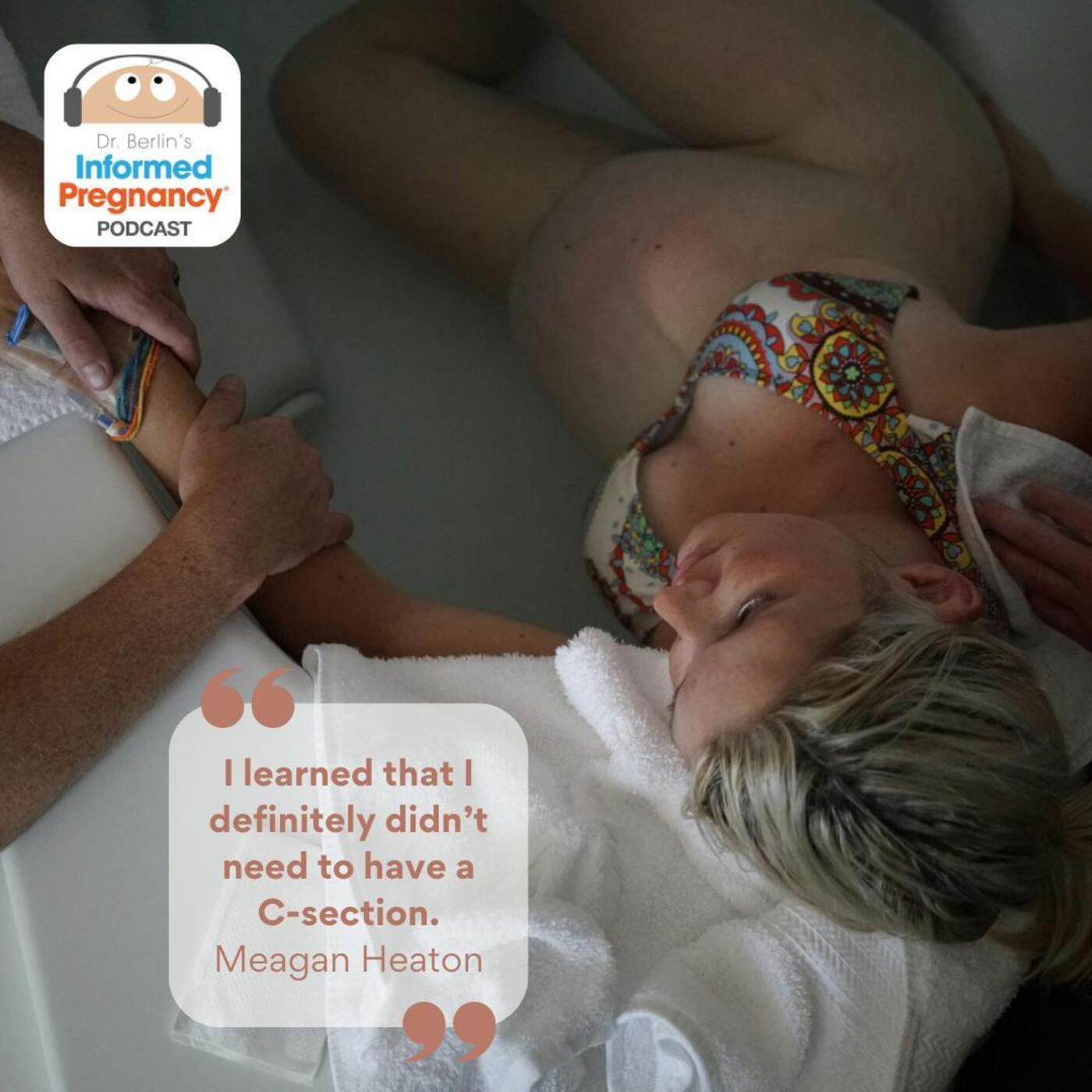
Meagan Heaton [12:17] Well, I learned a lot of things that brought me a lot of frustration, but I had to allow that because I walked into it. So I learned that I definitely didn't need to have a C-section just because I was three centimeters and my water had been broken for 12 hours. And I confirmed that later on with actually getting my op reports, which I encourage anybody who's had a C-section to always obtain their op reports because you never know what you're going to learn in there because sometimes I'll tell you one thing and it can be documented differently, but I went through and it did confirm really there was no reason for my C-section at that time. So I learned that it wasn't necessary, which gave me comfort because I was told my pelvis was too small.
[13:03] Yeah. So when I think that –
Dr. Elliot Berlin, DC [13:05] For a seven pound baby.
Meagan Heaton [13:06] Yeah, seven pound, 10 ounce baby. It's hard because when you hear that, you take it to heart usually, and then we have this place of doubt. And so I had doubted my body, but then when I started learning that actually it's really rare for a pelvis to really be too small, and I saw that was the reason that they gave me versus my water had been broken and my baby was at risk or anything like that, it gave me a lot of comfort. And then I learned the importance of education, truly being informed, no pun intended, but having an informed pregnancy truly is important. It's important. And honestly, I wish that my husband had learned more too because he didn't know either.
[13:48] And so we were like, "Okay, whatever, we trust the doctor." And I don't ever want to encourage anyone to not trust a doctor, but do your research, learn so you know, okay, this may not be right. Let's have a conversation about this.
Dr. Elliot Berlin, DC [14:03] What were your sources of information as you were learning these things?
Meagan Heaton [14:06] So I actually, back then there was VBAC facts. So there was another VBAC company, and then there was a big group on Facebook, a big VBAC group. So I was on there and they were posting things from evidence-based things like really good studies where I was like, "Okay, these don't make sense. These don't match up." So I was looking in those places, but there wasn't a ton, honestly, about VBAC. There just wasn't.
Dr. Elliot Berlin, DC [14:34] Yeah, right. VBAC FACS, I mean, she also was a mom, but excellent researcher and put together a lot of evidence-based data that made people think twice because I assume you heard, like everybody else hears, once a cesarean always is cesarean.
Meagan Heaton [14:49] Always, yes.
Dr. Elliot Berlin, DC [14:50] And she really got into that early on and brought up the research to say no. And although some of the guidelines have changed on the ground, options haven't really reacted that much. And so there's still giant swaths of the country where it's very hard to find support for feedback. Okay, so you're getting great information and you're learning, and what do you do with that?
Meagan Heaton [15:16] So I applied it. So I got pregnant again and I was like, okay, now that I know that one, that there is this possibility to have a vaginal birth after cesarean, we're going to tackle that. And I also learned a lot about nutrition and fueling our body and making sure that we're healthy because I needed to be healthy and we can have people that are less healthy quotes and still go on and have a vaginal birth. But in my head I was like, I learned that nutrition is really important, physical activity is important. So I started running and I started doing yoga and I started making sure that I was taking the supplements and that I was doing important things to fuel my body to try to be as strong as I possibly could when it came down to birth.
[16:00] I kind of veered off of the teaching dance path as much and I started teaching a bar class, so I started doing stuff like that. And through pregnancy, I was having just a really, really amazing healthy pregnancy. And then it came, I think it was 37 weeks, maybe 36 weeks, and I learned about a doula. And I don't know why it took that long for me to learn about doulas. So this is where I was questioning. I'm like, "Have I really been researching all that I could because I'm just finding out about a doula?" So I was like, "I want to hire a doula." And my husband was not happy about it. He was like, "No, we're not."
Dr. Elliot Berlin, DC [16:38] From which perspective? Is it the money perspective? Is it have somebody else in the room perspective?
Meagan Heaton [16:43] Kind of all. He was like, "I don't want to be replaced." So that kind of was his biggest thing. And he's like, "Why do we want to pay so much?" Which by the way, at the time it was like $500, which was nothing.
Dr. Elliot Berlin, DC [16:53] I'll take 10.
Meagan Heaton [16:55] But like you were saying, your deductible is $500 as pretty much a free doula, right? And he was just like, "No, not about it." And it was really hard. And I wish even then I would've fought back a little bit more, but I was like, "Okay, cool. I'll just have my cousin. It'll be fine." So my water broke again spontaneously. Waiver took its time. I didn't rush into the hospital this time, kind of hung out, chilled, monitored my symptoms, but all was well. And then it was 18 hours and everyone was like, "You have to go," just putting a lot of pressure on me. And finally I was like, "Whatever." And I just threw my arms up and walked in, and pretty much he was like, "This isn't going to happen for you."
Dr. Elliot Berlin, DC [17:37] Is this the same doctor?
Meagan Heaton [17:38] Same doctor. And I also had a feeling that I should switch. This is another important thing that I can't stress enough to any listener, whether you've had a C-section or not, if you are feeling like you are maybe not in the right place with your provider, it is okay to switch. You do not owe them anything. I felt like, oh, I've been with him this whole time. He helped me with my first baby. I felt like I was in some relationship with him or something. It was this weirdest thing where I felt like I couldn't leave.
Dr. Elliot Berlin, DC [18:11] Well, again, I don't know if that's just you or Salt Lake Syndrome, but you have this energy about caring about other people around you, so you become a people pleaser in certain ways. I don't mean that as a negative. I think it's wonderful that you are considerate, so you become considerate for your doctor's feelings. But I agree with you. To me, the number one thing about having a great outcome, great experience, whatever you want that experience to be like, is having providers that are on the same page as you and that really get you and respect you and are comfortable, at least somewhat comfortable, providing that experience for you because you also don't want to pull them out of their comfort zone.
[18:48] I mean, the idea is not that doctors are bad hospitals or bad medicine is bad. They're all wonderful, but there's a lot of different approaches to all of these things. And if you have an approach that you want and a philosophy and an experience that you want, and that's just not what they do, then you bought a ticket for the wrong ride and you can't change that ride once you're on it. It's very difficult to change that ride. So I wondered, so a little bit of a people pleaser, this is definitely not the time to people please. No. And especially if it's something like a VBAC or a breach or something that your provider's not comfortable with, then it's sort of like, I don't dislike my provider.
[19:24] It's like going to a general practitioner and all of a sudden you have a lung thing that needs to get checked out. So I'm going to go to that pulmonologist specialist. And that's how I kind of see the providers who are very comfortable with VBEC and do them regularly or breach birth or any of the other things that twins, they become the specialist. So you might even go back to your OB – GYN for gynecology afterwards if you really like them. But if they don't take that well, if they don't take that, "Hey, I'm switching for the birth because that's what I feel like is most important for me," well, then they probably weren't great provider for you to begin with.
Meagan Heaton [20:00] Yeah. And that's one of the things. And even to this day, I will say he is a wonderful man. He's a wonderful doctor. He's wonderful. He just wasn't the doc for me. And I wish I would've just accepted that for a little while. I wish I would've sat with that, but I did. I felt like I owed him. I felt like I owed him, and that's where it was so backwards. And so truly, I feel like even though with the first I was so uninformed, I was more informed with my second, but still very uninformed and uneducated.
Dr. Elliot Berlin, DC [20:35] How much time was there between babies?
Meagan Heaton [20:38] I was 26 months with the first set and then the second baby two and three.
Dr. Elliot Berlin, DC [20:45] The gaps between one and two and two and three are about two years each.
Meagan Heaton [20:49] About two years each,
Dr. Elliot Berlin, DC [20:50] Yeah. Okay. So now you're 23 with this pregnancy that we're talking about. Okay. So you throw your hands up, go to the hospital, and?
Meagan Heaton [21:00] Get there and they're like, "It's just not going to happen for you," because I was one centimeter. And I was like, "Well, what about Pitocin? What about Pitocin? Give me Pitocin." And they're like, "No, we can't give you Pitocin because you're a VBAC," which also not true. And I did know that, and I was like, "No, evidence shows that it's okay. We definitely have to treat it differently. We can't just ramp it up, but we can do this." And they're like, "No, we won't give it to you." So I was like, "Okay." And the first part of my labor there, I had a doula, she's a midwife, or not a midwife, a nurse, but she was a doula too. And so she was like, "I'll go talk to him.
[21:36] This is a really great idea." We were coming up with plans, and then she'd go and she's like, "Nope, he won't do it. Nope, he won't do it." She's like, "Let's try to move. Let's try to do…" So I was moving and grooving and trying to get infractions, and I was like, "Well, what about a breast pump?" And they're like, "Nope, no breast pumps." I was just getting shot down.
Dr. Elliot Berlin, DC [21:54] Because it was a VBAC?
Meagan Heaton [21:55] Yeah, because it was a VBAC. I couldn't have Pitocin. I couldn't have a Foley, because I was like, "What about a Foley, a Coke catheter?" And they're like, "Nope." I was like, "Well, what about breast stimulation with a pump?" They're like, "Nope." I'm like, "What about me walking?" They're like, "We don't want you walking far." And I was like, "Oh my gosh." So anyway, so I was just kind of stuck in this corner, and then my nurse left, and a new nurse came in, and she was just like, "You are not having a baby vaginally. You're going to have a C-section." The doctor came in, kind of cornered us. It was not this most pleasant experience. Again, great guy, just not right right there.
[22:29] He wasn't comfortable with V-Back and he was making that clear, but I didn't know –
Dr. Elliot Berlin, DC [22:34] But did he make that clear during the pregnancy?
Meagan Heaton [22:36] No.
Dr. Elliot Berlin, DC [22:37] No, here's the problem.
Meagan Heaton [22:38] No. They were like, "Yeah, we can V-Backs. It's fine." And I was like, "Okay, cool." So anyway, so ended up walking down to the OR with that one, bawling my eyes out as the nurse is squeezing the IV bag because I hadn't had an epidural. So they were squeezing, trying to get me fluids. I went back, they gave me a spinal, had a C-section, had skin to skin, watched my C-section in a mirror.
Dr. Elliot Berlin, DC [23:02] Are these things that you learned between the first and second and the choices that you made?
Meagan Heaton [23:08] Yeah. So I got that skin to skin. I was like, "Hey, if we're doing this, I want my baby on me." My husband was like, "Hey, she wants to watch this." He remembered. She wants to see it. She wants to be present with her birth. So he got a mirror for me. He had them playing music. So it was definitely a different experience. And honestly, it was my healing experience. It was my experience that I didn't want, but I made the best of it. And it made me realize that in that moment I realized C-section doesn't have to be scary. C-section doesn't have to be traumatic. It doesn't have to be so impersonal. It can be more than it was the first time. And so it was such an amazing feeling to have that.
[23:47] And then I went into the PACU, which is the post – Anesthesia. In post-op room. Yeah. So I was in there. And anyway, I was just nursing my baby in the pitch black dark Googling how to become a doula, and that is where the fire was lit. Wow.
Dr. Elliot Berlin, DC [24:03] Wow. Right then and there.
Meagan Heaton [24:05] Right
Dr. Elliot Berlin, DC [24:05] Then and there,
Meagan Heaton [24:06] Literally –
Dr. Elliot Berlin, DC [24:08] You have some really powerful aha moments.
Meagan Heaton [24:12] Yes. It was insane. You know when you're about to get pulled over and then you don't, and your heart's just pounding and you can feel the adrenaline going through your whole body and you're kind of clammy? That's how I was. I was in the pitch black nursing my baby, and maybe I was clammy because I was medicated, I don't know, but I got really clammy. My heart was just pounding and I was like, "This, this is what I want to do. This is it." Because I did learn in the past that I did maybe want to be a labor and delivery nurse because they're really smart with math and I'm not. So I was like, "I don't know if I want to do that." So that's why I was like, "I don't have to do math with being a doula.
[24:47] Let's do this."
Dr. Elliot Berlin, DC [24:48] There's so many tools to overcome math.
Meagan Heaton [24:51] I know, I know. Remember I was young. This was way a long time ago, and I still at this point was like labor and delivery. But then I started reading about doula, how to become a doula, what a doula does, the impacts on doulas. And I was like, "This, this is what I want to do." And so I couldn't stop talking about it. My husband's like, "We just had a newborn and you can't stop talking about becoming a doula. Can you just register for that class already?" So I did. Before I even left the hospital, I registered for my doula class.
Dr. Elliot Berlin, DC [25:17] Wow, that's incredible. It was so exciting. In a nutshell, I mean, it's incredible also because at this point you have a newborn and a toddler.
Meagan Heaton [25:27] Yes.
Dr. Elliot Berlin, DC [25:27] And being a doula is wacky enough with either grown kids or no kids, a newborn and a toddler. What was your training like and your rise to doulaship?
Meagan Heaton [25:38] Yeah, so I had my baby in March, September, then just a few months later I took my class and it was through DONA and it was just 40, it was 2D class, and it was a lot of learning about birth and a lot of aha moments of like, "Oh, I should have done that. Oh, I could have done that," along the way. But I walked out of there and was like, "Let's do this. I'm ready." I was a little intimidated since I hadn't had a vaginal birth before that maybe people wouldn't have confidence in me, but I was ready. I was ready to tackle it hard.
Dr. Elliot Berlin, DC [26:13] And are there key moments of your training that were like, "Ugh, if only somebody would've told me this?"
Meagan Heaton [26:21] Well, for sure. I was like, "I needed a doula." I needed someone to be there to help me not feel so cornered and say, "Let's break it down. Let's see what the evidence says." Because I wasn't in a space to remember what I read online, just having someone in my corner, because there were times in my birth where even though I knew that the people in the room didn't mean ill intent or have ill intent, they also had an agenda they were looking to meet. They were like, "Yeah, we're going to do this. Let's do this. It's just a matter of time. Can you just say yes?" Versus, "Let's break it down and let's look at all the evidence here." So that was my aha, is I needed a doula.
[27:00] So that's why I knew. Next baby, there were no if, ands, or buts about it. I didn't care. We were having one.
Dr. Elliot Berlin, DC [27:08] Okay. So then there's a next baby?
Meagan Heaton [27:10] Next baby, yep.
Dr. Elliot Berlin, DC [27:12] Okay. Between babies, were you doing doula work?
Meagan Heaton [27:15] Yes. So my baby was born in March, and my first birth was in October.
Dr. Elliot Berlin, DC [27:20] Wow. Okay. I don't know how you juggled that, but what was it like?
Meagan Heaton [27:24] It was a lot.
Dr. Elliot Berlin, DC [27:27] What was it like on the birth end attending somebody else's birth?
Meagan Heaton [27:31] So my first birth was an out of hospital birth, so it was a whole new world for me. It opened my eyes up to realize, oh, birth out of the hospital is safe and totally reasonable and possible, and you can still be surrounded by an amazing team and feel that safe and support. So attending it, it was insane. I drove an hour for this birth. I just didn't even care. I would go wherever, and I drove an hour for this birth. And I remember when I left, I was just singing as loud as I could in my car, so happy, couldn't believe what I had just seen, and was ready to support another person in a birth.
Dr. Elliot Berlin, DC [28:11] Was it totally positive for you or did you have personal mourning around it?
Meagan Heaton [28:16] Yeah, so a little bit of both. I was more positive and excited and had kind of put my birth aside, but I would be lying if I didn't say, "Whoa, it could have been like this." I was pumping. I had to step away because I was breastfeeding a baby, so I was pumping in this corner and I was just thinking like, "Wow, this is amazing. I would long for this."
Dr. Elliot Berlin, DC [28:43] I mean, just another level of your commitment, dedication and awesomeness. Aside from being a doula myself, I used to do body work at birth, which is the only reason really anybody wanted me as their doula, I think. So sometimes I would just go for a couple hours and do body work during the birth, and there was also a doula there, and I had the most insane fly on the wall education watching some of the greatest doulas do their work with some of the greatest moms giving birth. And sometimes I'd be on birth with a doula who's 10 weeks pregnant and just hasn't told anybody yet or had a baby recently and they know, the mom knows, but they have to go off and pump or a partner would bring a baby and they'd breastfeed the baby and then go back to doing the doula work.
[29:29] And I just remember one time with a mom in her first trimester who was the doula, the mom in labor started to gag and throw up a little bit, and the doula mom had just run out.
Meagan Heaton [29:40] Oh, no.
Dr. Elliot Berlin, DC [29:42] So the mental, emotional, and physical vigor that is required to be a supportive doula in general is mind-boggling. Nobody does it for the money. And then on top of that, these added circumstances, pressures and Juggles of actually being a mom to a newborn or being pregnant yourself. It's really, really intense and it just shows how deeply dedicated and passionate you are to what you do. Before we take a break and find out about your third birth, had you attended any VBACs between your second and third baby?
Meagan Heaton [30:18] I don't think I had. I'm trying to remember. Oh, I did. I did have a ton of VBAC. It was a VBAC that ended up getting HELP syndrome and ended up turning into a cesarean.
Dr. Elliot Berlin, DC [30:28] Okay. So it was a TOLAC.
Meagan Heaton [30:29] Yep. Yeah. So yes, it was someone going for a VBAC that ended in a repeat cesarean.
Dr. Elliot Berlin, DC [30:35] Yeah. Without throwing out terms and not describing TOLAC is trial of labor after cesarean, which is where the name of our film comes from. And then VBAC is vaginal birth after cesarean, essentially a TOLAC that ended how you wanted it to. Let's take a little break, come back and find out about your third baby. We'll be right back. Welcome back to the Informed Pregnancy Podcast. We're talking to VBAC link everything, Megan Heaton. Okay, so you have a third baby. Now you know a lot more. You know more from your own experiences, you know more from doing more research, and you know more from becoming a doula, which is a lot of information, the training, and then you've been to birth.
[31:23] So what's the plan with baby three?
Meagan Heaton [31:26] Yeah, so baby number three is for sure a VBAC. So I wanted to VBAC after two cesareans. And the plan was to find a supportive provider. It was to leave my provider. And so yeah, got my op reports from my doctor and he said, "Oh, good luck. No one's going to want you out there." And I was like, "Okay, good. That's just confirmation that I'm for sure needing to leave." So I went and I interviewed and I interviewed and I interviewed and I had a lot of people say, "Oh, you could try or oh sure, I think you could do it." But I did find a provider finally that was like, "There's no reason why you can't." And I was like, "That's what I want to hear."
[32:05] I wanted to hear, "Yes, there's no reason why I see you shouldn't be able to." So I was with the provider having a really healthy, happy pregnancy. Everything was going really well. And by 24 weeks, I went into my provider and we had developed a professional relationship through doula work because he was the VBAC king in Utah. And then I also had a personal, because I was now his patient. And I was talking to him and I left and something said, "You have to leave. You have to change." And in my head I was like, "No way. He's the guy. Everyone goes to him." But my alarms were going off and I didn't understand why. So I jumped on a Facebook group and was like, "This is what I'm thinking I want to do."
[32:50] And everyone was like, "No, you should never do that." And my plan was to maybe explore out of hospital birth this time. And so everyone was like, "No, no, no, no, no. That's the worst thing you could do."
Dr. Elliot Berlin, DC [33:04] Who is everyone?
Meagan Heaton [33:05] Everyone in this Facebook group.
Dr. Elliot Berlin, DC [33:06] Oh, they were all saying don't do out of hospital?
Meagan Heaton [33:08] They were all like, no. It was like a VBAC support group and everyone's like, no, don't. And I was like, I don't know. So it was Christmas Eve, I get called to a birth and it's this out of hospital, beautiful birth, Christmas Eve, it's snowing, just magical. And this is a birth where I was very much with this client, but at the same time, there was a little shadow of me over here very much observing this midwife. And I was like, I think she's my gal. I think that's her. And so after the birth, I said, "Is there any way I could come see you and you can just review things, see if I'm even a candidate for you?" She's like, "Yeah." So after the new year, I went and she was like, "Absolutely.
[33:48] This is fine."
Dr. Elliot Berlin, DC [33:49] I could feel the energy coming out of you right now as if you're in that moment, like this is my match. Sureness, certainty.
Meagan Heaton [34:00] I knew. I knew from every part of my body that that was my girl. She was my girl. I mean, I left and I just had all the tingles and was so motivated. I could conquer the world because I have this midwife. That's just how I felt. And I went home and my husband was like, "All right, cool. Whatever. Sounds good." And I was like, "And this person, this person, and this person, they're all going to be my doulas." So I didn't get any doula with the other ones. I'm getting three this time.
Dr. Elliot Berlin, DC [34:29] You had your team.
Meagan Heaton [34:31] The
Dr. Elliot Berlin, DC [34:31] Village.
Meagan Heaton [34:32] In the community and everyone's like, "I want to be at your birth. I want to be your birth." So anyway, so we were ready. And once again, my water breaks and I go into spontaneous labor and nothing's really happening. And I'm throwing fit in my driveway. My arms are flying and I'm like, "Why? Why did my water have to break? This didn't need to happen again. It's not going to happen for me." I mean, I was just throwing a fit and I think I needed to do that. I think I needed to do that for my labor to start. I needed to get it off my chest, throw my little fit. And labor started and it went and it went and it went and we just kept working. I had a posterior baby.
[35:11] And in the end, I gave birth on a bathroom floor on a stool, pushed my baby out, surrounded by this amazing team, my husband holding me behind me and my midwife's words of, "Megan, reach down and grab your baby will never leave my mind."
Dr. Elliot Berlin, DC [35:26] I'm crying.
Meagan Heaton [35:27] I reached down and I felt his little squishy head and I went all the way down and I could feel his shoulders coming out. And she said, "Pull him out." And I pulled him out and I put him on my chest and I just screamed, I did it over and over again in everybody in their room, everyone was crying. It was just an aha, amazing, beautiful. It was just incredible. So then recovery was a little rough. I had kind of a harder recovery, but –
Dr. Elliot Berlin, DC [35:56] Wait, explain that.
Meagan Heaton [35:58] So I had anemia that we maybe didn't know I had before. I don't know, maybe long labor. We don't really know, but I was ghost why and I was kind of getting ringing in my ears. And so we got labs and I had half my body's blood was missing, but we couldn't find it. I wasn't bleeding externally. I wasn't bleeding internally. It was weird. Wow.
Dr. Elliot Berlin, DC [36:23] Okay. Right?
Meagan Heaton [36:24] Yeah. It's a humdinger still to this day. We just did a whole episode on this on the podcast called Radical Acceptance. Sometimes we just will never know why and we have to move on. We can't let it consume us. But yeah, I don't know. So recovery was a little weird at first because I just was really anemic, but I was a little holistic and totally did placenta encapsulation. And weirdly enough, at my six-week postpartum, all my hemoglobin and hematocrit levels were above normal, which they told me would never happen if I didn't get… Well, I shouldn't say never happen. It should take a long time unless I got blood and something was weird. I didn't want blood, so I never got blood just in a placenta.
Dr. Elliot Berlin, DC [37:08] Oh, no iron infusions or anything like that?
Meagan Heaton [37:10] I didn't. They said I needed two transfusions and two bags each transfusion, but I was weird. I don't know. I just was like, "That's a lot of blood," and it just freaked me out. So I would've felt better faster. I would've had a better recovery, but it was a choice I made, so had to roll with it.
Dr. Elliot Berlin, DC [37:27] Okay. Now that you made me cry like a baby, I'm going to listen to this podcast over and over again when I need inspiration supporting people through VBAC. So now you've had that experience and you have all these products and services that you have that come from the same place as your doula passion to help people specifically with VBAC. Tell me what you have, what's going on.
Meagan Heaton [37:53] Yeah. So from all of that, now there is a podcast with stories filled with people all over the world sharing their stories and their journeys and educating. Because I think through each story we learn, we can take little nuggets from every story and apply it to our own desires. So we have people sharing their VBAC stories, their C-section stories, their C-back stories, because again, like I said earlier, C-section doesn't have to be traumatic. It can be beautiful. It doesn't have to be scary. So we have the –
Dr. Elliot Berlin, DC [38:27] Even sometimes CBAV.
Meagan Heaton [38:30] CBAV?
Dr. Elliot Berlin, DC [38:31] Cesarean birth after vaginal sometimes.
Meagan Heaton [38:33] Oh, yes. Yes. I don't even know if I've ever even said that, CBAV, but yes.
Dr. Elliot Berlin, DC [38:39] The one I find weird is HVAC, which is technically what you did.
Meagan Heaton [38:43] Right,
Dr. Elliot Berlin, DC [38:43] But it's not like the house gave birth. It's still a.
Meagan Heaton [38:47] I know. I know. It's kind of funny. Yeah, a home vaginal birth after cesarean. Yeah. Or mine was a birth center, right? A BVAC birth set.
Dr. Elliot Berlin, DC [38:59] Wow.
Meagan Heaton [39:01] Or BCVAC, I don't know.
Dr. Elliot Berlin, DC [39:02] We're going to have to release a little dictionary.
Meagan Heaton [39:05] So anyway, so we wanted to create more because like I said, through my journeys, there were resources and they were incredible resources, but there were some lacks in some of the extra additional resources like this. And I think this is why we started it. We wanted to have things that we wanted back then or that we wish we could have had. So we created that and then there's a course. And the course was something that we created because even though these resources were so amazing, it was kind of hard to sometimes decipher those reports and the evidence and turn things into English. And so we wanted to break it down to something that you can understand a little easier.
[39:49] It's A Little softer. And So we Created A Self-paced course.
Dr. Elliot Berlin, DC [39:54] Oh, that's amazing. Where would somebody find that course?
Meagan Heaton [39:58] Yeah, so just the vbacklink. com. We have courses for both parents and actually birth workers or doulas who are wanting to understand more of what parents who are going through a VBAC are up against and how to support them on a deeper level. And then we also certify those doulas and put them on our website. So parents all over the world, literally internationally and the US, we have a directory. So if you're looking for a doula and you want a VBAC doula, someone that understands VBAC on a deeper level and has that certification, we have that registry. So you can go and find a doula.
Dr. Elliot Berlin, DC [40:33] It's all at the vbaclink. com. All at thevacklink. com,
Meagan Heaton [40:37] Yep. And then we have Instagram and Facebook, and we also have a private group on Facebook called the VBAC link community. And that was created because we wanted a space where it could always be positive, even if sometimes people aren't agreeing. I mentioned in my story, I was commenting in this group about maybe leaving my provider and going out of hospital, but then when I actually was like, "You guys, I found this provider. I was so excited. She's amazing." Then I even got more attacked. I started getting private messages telling me that I was going to kill my baby and that I was a murderer. I mean, really, really deep, scary, hurtful things.
[41:15] So we wanted to create a space that we could monitor and make sure that abuse like that wasn't happening.
Dr. Elliot Berlin, DC [41:22] Well, God bless you for doing it. I know that your journey is unfortunately not a path seldom traveled, and ideally the information gets to people no matter how old or young they are, before the first pregnancy or certainly before the first birth. But if someone feels like they had a birth that didn't go how they planned or weren't in the driver's seat and the decision making had interventions that were pressed on them that they didn't feel like they wanted or needed, resources like yours are invaluable. So I recommend everybody, even if you haven't had a kid yet, I recommend going to the VBEC link and learning from other people's experiences.
Meagan Heaton [42:01] I was just going to say that. Yeah, the cesarean rate is through the roof right now. We're almost at 32%. We need to lower that and that starts with us first time mamas. Let's learn how to avoid these unnecessary C-sections from the get-go.
Dr. Elliot Berlin, DC [42:14] And that's when we released the Trial of Labor, some of the moms who shared their very, very personal stories on camera, they said, "We're doing it to try to help other people have their second birth experience the first time around." And you're definitely a teammate in that goal. Megan, thank you so much for joining me today and for sharing your personal stories and your passion and your energy. And I know for sure inspiring a bunch of our listeners, many of our listeners, and also making some sales for Kleenex because you certainly got me.
Meagan Heaton [42:48] Well, thank you so much for having us. And at the VBEC link, we love everyone and we always want to encourage people to come and ask us questions and be in our community because it's really what we love to do.
Dr. Elliot Berlin, DC [43:00] Amazing. Thank you again for joining me and at home, thanks for listening to Informed Pregnancy. For more pregnancy and parenting information, visit us online at informedpregnancy. com.
Want more pregnancy + parenting? Start your FREE TRIAL of Informed Pregnancy+ and get access to all our curated pregnancy and parenting content — original series, iconic birth films like The Business of Being Born, prenatal workouts and more.
