
November 7, 2024 · 36 minutes · Episode 432
About this episode
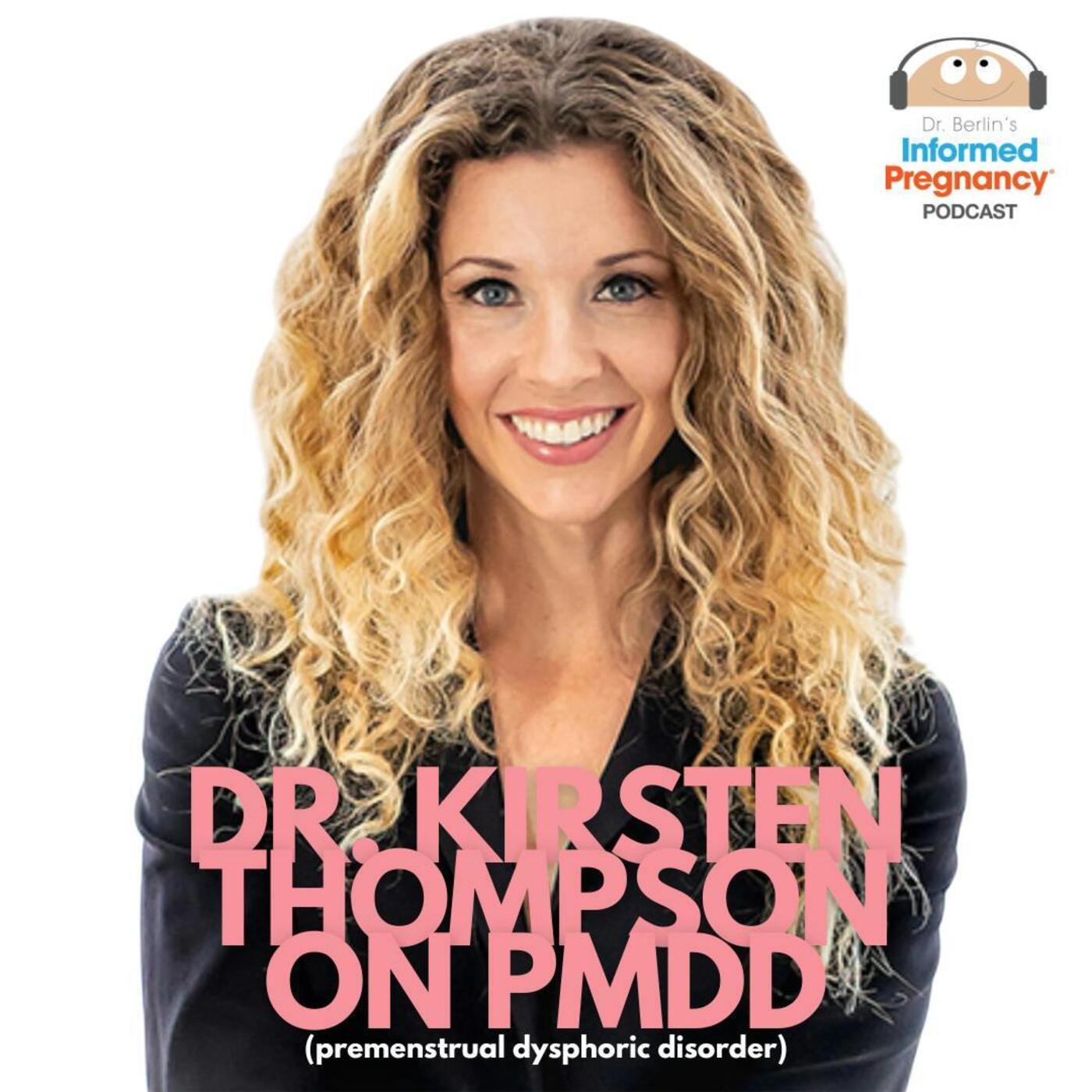
Dr. Kirsten Thompson, MD is a former Wall Street analyst turned surgeon turned board certified psychiatrist. She is the founder of Remedy Psychiatry and Thompson Psychiatry and is a former Clinical Instructor at UCLA. She joins the podcast to discuss PMDD or premenstrual dysphoric disorder, including symptoms and treatments dhee to try.

Connect with Dr. Thompson: @remedypsychiatry and remedypsychiatry.com
Key quotes
“But on top of that, PMDD is really a truly severe disorder. And for some women, it's really dramatic and it's nothing they can control. Again, it's chemical, so they deserve to not suffer.”
“In fact, I had one patient that said to me, look, I'm honestly suicidal every month for a week. And every month I feel like I need to check myself into the hospital”
“And in short, it's a very genetically driven disorder. So 70% of women whose mothers had PMDD also have it.”
“I really just felt kind of normal this month. It was incredible.”
“I want you to just give me a warm hug and say like, let's make you some tea and go to bed.”
Related episodes
- Ep. 435 Jackie Amézquita: After Birth
- Ep. 446 Perinatal Exercise with Sarah Zahab
- Ep. 442 Jessica Zadeh: Before Birth
- Ep. 426 Mia Rigden: After Birth
Transcript
AI-generated transcript with speaker labels — may contain errors, especially names and medical terms. Dr. Elliot Berlin, DC appears in blue; Dr. Kirsten Thompson in orange.
Download PDF of the Transcript
Dr. Elliot Berlin, DC [0:12] Welcome to the Informed Pregnancy and Parenting Podcast. I'm your host, pregnancy-focused chiropractor Dr. Elliott Berlin. My guest today is a former Wall Street analyst turned surgeon turned psychiatrist who founded a telehealth-based mental health care company focused on medication management. She's here to discuss premenstrual dysphoric disorder, or PMDD. We'll talk about the symptoms, how it can be differentiated from other types of disorder, and what treatments are available. Dr. Kirsten Thompson, welcome to the podcast.
Dr. Kirsten Thompson [1:07] Thank you. It's good to be back.
Dr. Elliot Berlin, DC [1:09] It's welcome back to the podcast. It's great to see you again. And you know what, I've just in my own office been seeing it feels like more and more cases of PMDD, or maybe just more people talking about it. I didn't really know what it was. And now it seems like also, the more it is talked about, the more people start to wonder if they have it. So this is going to be a great topic with a lot of information. Before we jump into PMDD, let's talk about you. Where are you from originally, and what do you do?
Dr. Kirsten Thompson [1:38] I am from upstate New York, Rochester, New York, and spent 10 years in New York City, and now in Los Angeles. And I'm a psychiatrist here. I have a private practice, and then I have a telehealth company called Remedy Psychiatry, where we see children, adolescents, adults for psychiatric medication management, and we take insurance. And we see a lot of PMDD there and treat a lot of women's mental health issues, in addition to men, though.
Dr. Elliot Berlin, DC [2:06] Yes, men without PMDD. You caught me off guard when you said we take insurance, because I have insurance, and as far as I can tell, nobody takes it. That's fantastic.
Dr. Kirsten Thompson [2:16] Yeah, it's taking more and more plans, but right now we take most major plans in California, which is really rare. As somebody who has insurance and also finds it really difficult to have it accepted because of the sort of medical insurance behemoth complex and how difficult it is, yeah, it's one of my goals to really create affordable care, but also take people's insurance, because that's what everybody wants. That's why we have insurance, right?
Dr. Elliot Berlin, DC [2:40] Kudos to you. That must be a very difficult balancing act. You know, in recent years, a lot of the health insurance companies have been offering coverage for lactation support, and I realize that they don't cover my therapist, but they do cover lactation, so I'm going to just start going to a lactation consultant, see if I can help that way. So obviously quite a journey, because as I mentioned in the introduction, Wall Street analyst, to surgeon, to psychiatrist, and I think we talked about that evolution a bit when you were on last time, but it sounds like you've found your thing.
Dr. Kirsten Thompson [3:13] Yes, yes. My thing is sort of bringing access to great personalized mental health care now to more and more people by my work at Remedy Psychiatry, and I own the whole company and have a team of really amazing psychiatric nurse practitioners who see patients. We all love caring for patients. We all love learning, learning the latest things, including about PMDD, and we prescribe medication, but we kind of believe in this holistic model. We support diet, lifestyle, therapy, and we provide therapy referrals, but we also even start people on supplements. So I just heard feedback from a therapist recently who said, I sent my patient to Remedy and they weren't ready for prescribed
[3:49] medication, but they were started on a supplement regimen. It really created a sense of treating the whole person, and so that's where our goal is. It's not just to prescribe medication. It's really to kind of bring people to a better place of mental health in their life through whatever means it takes.
Dr. Elliot Berlin, DC [4:05] Out of the box again in another way, and not a moment too soon. I think there's so much need for mental health care and access to mental health care and also holistic mental health care. The combination, really fantastic that you offer that. Let's talk about PMDD, premenstrual dysphoric disorder. If we can break that down, premenstrual before the period starts, dysphoric. Dysphoria is just, how would you describe it, a sense of just negative horribleness, or is there a more clinical term for that?
Dr. Kirsten Thompson [4:38] Well, if you think of euphoric or euphoria as feeling amazing, right? Dysphoria is the opposite, feeling terrible, low, bad. And that's in premenstrual, you said it's usually before menstruation in the cycle, so it's a certain part of each women's cycle. Which means that if their cycle is monthly, this happens every single month with regularity, which makes it a recurrent suffering for most women. And it's a syndrome, meaning it's not just one thing, but it's sort of a series of symptoms, and each woman may experience it differently. But there's some definite classic symptoms and signs that a lot of women have.
Dr. Elliot Berlin, DC [5:14] No, I know for a lot of people it's going to sound like, oh, isn't that PMS?
Dr. Kirsten Thompson [5:18] Right, so PMS, or premenstrual syndrome, is more of just like a term used around women's mental health when there are some symptoms of mood changes around the menstrual cycle. And the menstrual cycle really, it has physical symptoms, right, of obviously getting a period, but it's really driven by significant hormone shifts in the body, and hormones are chemicals. So really we as women each month are subjected to sort of this really incredible injection from our own body of hormones or chemicals that thrive mood and body changes each month. And so if when I was thinking, maybe I have something more than textbook sort of PMS symptoms, what would that look like?
[5:58] Yeah, so the discrepancy between PMS, which is pretty common, depending on the study, like 40 to 80% of women can experience PMS, which is most of us, which means that's, you know, I talk to women all day long and I say it's actually normal to have hormone changes causing mood changes. We're not doing anything wrong. It's just part of our bodies. So PMS is when there are some mood shifts, like maybe feeling a little bit more sad or down or a little bit more irritable, but not a whole combination of symptoms. And most importantly, PMS is not disabling and it doesn't impact life significantly, whereas on the contrary, PMDD or premenstrual dysphoric disorder is a disorder, meaning, you know, it sort of
[6:38] creates chaos in your life and it's really impairing. So for some of my patients, and we can get into this more, but, you know, it really can be impairing to life, meaning, you know, some people have to not go to school that day or they have to call in to work sick or they cancel plans with friends or family or things they want to do because of a combination of the physical and mental health symptoms of PMDD. So it's pretty severe. And whereas a lot of women, you know, that 40 to 80% have PMS, PMDD is thought to be less common. So 2 to 10% of what the research shows, but I completely agree with what you started out saying. I really do think it's far more than that.
[7:19] I think our research is very behind on women's mental health in general. I'm guessing you probably agree with that, but I think it's much more common than 2 to 10% because when I start seeing my female patients, often over time, it will become clear to them as they learn more about their mental health and what is their health and what is a state of not being healthy for them. That a lot more women suffer from PMDD than I think the 2 to 10% of women.
Dr. Elliot Berlin, DC [7:45] Yes, I definitely agree with that. And it kind of strikes me a little bit like the difference between nausea and vomiting of pregnancy and hyper-MSS, you know, people start to throw up during their pregnancy and hyper-MSS is different. And it's much more intense, but they are told or being to feel like, oh, it's just morning sickness, get over it. I have to imagine similar things happen when people are feeling dysphoric and they're just like, oh, it's your period. Just, you know, move on, come to work, do whatever you're supposed to be doing, you know, stop slacking.
Dr. Kirsten Thompson [8:15] Yeah, completely. I mean, it's almost like a societal joke, right, about women. Oh, she's PMS saying like any time a woman is sort of irritable or has a reaction even to something, it's like, let's disregard. In other words, it might be synonymous with ignore her. Right. That's PMS. And it's really quite the opposite. I mean, even PMS rate is driven by hormonal changes. And there's probably an evolutionary advantage to that, which is why, you know, 40 to 80 percent of us still have those hormonal changes. But on top of that, PMDD is really a truly severe disorder. And for some women, it's really dramatic and it's nothing they can control. Again, it's chemical, so they deserve to not suffer.
[8:54] And it can be really impairing to life. It's not a choice, in other words.
Dr. Elliot Berlin, DC [8:58] All right. Well, when we come back, we're going to find out more about what specifically it is to experience PMDD. And what it's like, how people could recognize that maybe they have it or that loved ones around them or a co-worker is experiencing PMDD and also how we can help them. We're going to take a quick break. We'll be right back.

Dr. Elliot Berlin, DC [11:56] Welcome back. We're talking to Dr. Kirsten Thompson and we're talking about PMDD. So now to get a better sense of somebody's listening and says, wait a second, maybe I don't have PMS, maybe I have PMDD. You mentioned the dysphoria and I'm curious what that might feel like, but how else does someone with PMDD feel? What is the experience like?
Dr. Kirsten Thompson [12:16] Yeah. So the dysphoria kind of is an umbrella term for a lot of the symptoms and then, which I'll sort of delineate, but the impact of this disorder is that it really impacts functioning and day-to-day life. So for some people that might be that they can't go to class, they can't go to work or they cancel plans with their life. It's really impacting their life. It's also, people can know that they have it because it's cyclical. So it comes with each menstrual cycle, which for most women is around 30 days and obviously that varies. And it's typically in the luteal phase, which just means before menstruation and it can vary. So I have some patients that have two really bad days right before their
[13:00] period and maybe even one day into their period. And for some women it's full two weeks long. So half the month they're suffering. Yeah. And that can be, you know, most women, the sort of way to kind of diagnose that most properly is to have a woman track their mood for about two months. Now, obviously I don't want any of my patients to suffer two months just to track it. So we'll usually treat it just by a good history. But for women who want to see for themselves, how many days is it? Is it two days or is it nine days for me? Tracking mood quite simply is really helpful. You know, there are a million apps on the phone, but it often can be overwhelming.
[13:36] Tracking one's mood can be as simple as taking a piece of paper, writing one through 30 for the month and writing a second number for mood. Meaning today I'm a three. It's a great day. Or today I'm a one. It's a low day. And then you can just look at two months of data and see, oh, look at this right before my period for five days, I'm a one. That means I have five days of PMDD and I had to cancel plans. And that's kind of a good way of figuring out how many days, which can sort of inform treatment, which we'll talk about. But long story short, every woman is really different. And as a result of that, every woman kind of needs to be treated differently, or at least in a personalized way, the symptoms.
[14:16] So we talked about dysphoria and that's kind of this umbrella term. And it's not just feeling sad. So women with PMDD have a number of these, technically five symptoms. One is feeling labile. So mood swings, feeling like suddenly sad or tearful, or feeling a lot more sensitive to rejection. So, you know, my patients will say things like I picked a fight with my partner and I knew it was, you know, totally irrational, but I just couldn't help myself, right? Feeling really irritable or angry is another symptom. Feeling sad, hopeless or low about oneself. In fact, I had one patient that said to me, look, I'm honestly suicidal every month for a week.
[15:02] And every month I feel like I need to check myself into the hospital because I almost feel like I'm not safer on my kids, but that's how severe it can be in the other three weeks of the month, she felt completely fine and normal. So that's a more extreme case, but that feeling of depressed mood can be very sudden each month. Another symptom is anxiety or feeling tension, not wanting to do things you normally want to do for fun. I'm not being able to concentrate. So there's some overlap here with other symptoms, like things like ADHD, feeling lethargic, really tired, easily can have changes in appetite, including overeating and carb sort of craving, sleep changes
[15:44] for sure. So a lot of women, when they track their sleep, for example, they'll realize like, wow, for a week before my period, I'm only getting six hours of sleep, which kind of adds to not feeling well. Feeling overwhelmed or out of control. And then of course, the sort of classic physical symptoms like breast tenderness, swelling, even joint pain, feeling bloated and sort of weight gainy. So in other words, a couple or five of those symptoms, but most importantly, the defining characteristic is that it really is kind of a disorder and it's really impairing life and causing suffering.
Dr. Elliot Berlin, DC [16:17] If somebody is listening and says, maybe I have that, what would be a first step for them to take?
Dr. Kirsten Thompson [16:24] So I think the very first thing to do that day would be to start tracking one's mood, you know, even with the simple way I mentioned earlier with a piece of paper or on an app. And that's really just to start getting details about each woman's individual body because they do differ. And so the more personalized we can be in healthcare, the better. And then the second step I think would be to reach out to, you know, someone who can help. And there are a couple of people that can help, you know, for sure there are types of talk therapy around those symptoms during that time of the month that can be helpful. But if someone's kind of either already doing therapy or they
[16:59] want to sort of go the next route of treatment, there are both some supplements that have been shown in the research to be effective for symptoms of PMDD and some prescribed medications. So in order to go that route and just even it can be educational. So no one who gets an assessment or an evaluation needs to start medication, but they can get educated on their options. And that can be through an OB GYN. So a lot of, you know, OB GYNs do prescribed medication for PMDD and or a primary care physician and or a psychiatrist. And so making that appointment specifically to talk about PMDD is a good next step.
Dr. Elliot Berlin, DC [17:36] Great. And then in our third segment, I want to talk about what specifically those treatments look like before we get there. A few things. Number one, is it something that starts with the onset of menses for a young girl or can it develop over time?
Dr. Kirsten Thompson [17:51] Well, so it affects women of reproductive age. So, yes, starting at menses, you know, which varies now and is younger, but whether that's like eight to 16 generally, and then goes all the way up until perimenopause and menopause, which is a whole, you know, bag of treats, so to speak, when it comes to changes for another day, maybe. So in the reproductive years, but it certainly can evolve and for sure, I actually see that for many women, the PMDD worsens as they age. So often in the thirties and forties is what I'll see. And this is a combination of PMDD, but also sort of the foray into perimenopause and menopause, because our hormones do start changing as women towards that, even in
[18:35] our late thirties and forties. And I often see a significant increase in women's irritability is the kind of predominant symptom around the premenstrual period. Really, really common. So I just always want to validate that for women. You know, a lot of them are overwhelmed and it's like, is it kids? Is it the stage of life? Is it my partner's annoying me? Well, it's also hormones that just drive irritability. And that's important because it can allow us to be more compassionate with ourselves.
Dr. Elliot Berlin, DC [19:01] True. But as a parent with girls, so when they're going through puberty, then it's something that you could look out for. I mean, if you start to notice something like this, then seemingly the earlier you get help, the better controlled it will be over your lifetime. The other question is, are certain people at risk for it?
Dr. Kirsten Thompson [19:22] Yes. And in short, it's a very genetically driven disorder. So 70% of women whose mothers had PMDD also have it. And there's even twin studies show that between monozygotic or identical twins, 93% of them will have it. So it's very much a genetically driven disorder that is kind of in our genes from before birth, even though it's related to hormones. So talking to one's family members, like you just mentioned, daughters, right? Mothers and grandmothers talking to their daughters and granddaughters about this in a very candid way is really helpful and can help avoid suffering in future generations. Just saying something like, Hey, you know, I really struggled in my premenstrual period and,
[20:10] you know, I had PMDD and it's very genetic and you might have it too. Let's get ahead of the game and really get you a good OBGYN and or a psychiatrist so that you don't have to be suffering for a couple of days or weeks every single month.
Dr. Elliot Berlin, DC [20:25] When a lot of our listeners are pregnant or postpartum during the pregnancy, typically no period. So does it go away?
Dr. Kirsten Thompson [20:33] So that would be a whole other topic too, about, you know, intrapartum mood disorders and perimenopausal. So the short answer is during pregnancy, the hormones are so vastly different that women often feel a whole range of new sort of experiences when it comes to mood. I just saw a woman, I think two days ago, who has a really severe OCD and anxiety, and she felt like pregnancy was literally the most relaxed and anxiety free period of her life. And I've had other patients on the other end of the spectrum entirely where their anxiety or depression really gets worse during pregnancy. And so this is why there's no easy answer when it comes to women.
[21:15] I think there's a broad range and every woman needs to be treated individually and also know that they're sort of entitled to that treatment because their experience may be very different than others.
Dr. Elliot Berlin, DC [21:24] Oh, sure. I'm asking specifically about PMDD because it seemed like it was connected to the luteal phase. So someone who is struggling with this disorder, when they get pregnant, do they typically get a little bit of a break?
Dr. Kirsten Thompson [21:40] That's a good question. And I don't think there's like a blanket answer either in the research or that I've seen uniformly. You know, I guess my best answer is still every woman kind of needs to be charting or charted by her physician, their own path.
Dr. Elliot Berlin, DC [21:55] And then I also don't know if there's an answer to this, but I wonder, does it set you up for a more difficult postpartum as those hormones flux?
Dr. Kirsten Thompson [22:04] So it's definitely a warning sign and we don't think there's anything wrong. I should say with someone's brain, right? This is a very genetically driven disorder and it's really just a way that the brain responds to the hormone changes and creates this dysphoria or these symptoms, that there's nothing wrong with the person per se. So for women who have PMDD, it's clear that those hormonal changes are driving significant mood changes. And it just means that their brain is sensitive to those hormonal changes. It is therefore concerning during pregnancy and the postpartum, when there are also significant hormonal changes. And often I do see that women who
[22:45] have PMDD are just frankly more sensitive to hormonal changes and therefore are more likely to be anxious or depressed in the postpartum too. So in other words, if someone has PMDD, it doesn't mean they're definitely going to have postpartum depression or definitely going to have postpartum anxiety, but it does mean, okay, you know what? My brain responds significantly to hormonal changes and that happens a lot during pregnancy and the postpartum. So I want to take care of myself and make sure I'm watched very closely and I can try to avoid having significant postpartum depression or anxiety. It's a good thing to be aware of, in other words.
Dr. Elliot Berlin, DC [23:22] We did an episode on dysphoric milk ejection reflex. Any connection there?
Dr. Kirsten Thompson [23:28] That's interesting. I'm not aware of any in the research. I mean, I've looked up that on its own and there seems to be so little on it to begin with, but I definitely had a couple of patients with it. I'm obviously seeing most of them in the postpartum. So I will say, yes, I've seen women with both the dysphoric milk ejection reflex and postpartum depression or postpartum anxiety. As far as its correlation to PMDD, I'm not sure, but I think in general, all of these are sort of factors that are pointing to this idea of, okay, this person's brain is very sensitive to hormonal changes. We need to treat them with extra care in essence.
Dr. Elliot Berlin, DC [24:05] Yeah. That seems to be the underlying message. Okay. I want to take another break when we come back to the extent that on a basic level, we can understand what is happening in the body when these symptoms come about and what the different treatment approaches are both in terms of self-therapies, holistic or supplementation medication, and even just practically speaking, I mean, the way you talk about it, yeah, what about a mom with little kids that she has to care for? And then these types of symptoms kick in. How do you work with that? Let's take a little break and we'll be right back. Welcome back. We're talking to Dr. Kirsten Thompson and primarily we're talking
[26:54] about PMDD. So give me an idea just of what's going on in the body when these very intense feelings come on.
Dr. Kirsten Thompson [27:03] So we don't know the real cause of this. In other words, obviously some women have it and some women don't. We know it's a genetic predisposition though, and we think it has something to do with the female hormones causing changes in serotonin. And so that areas of the brain that need serotonin to feel good don't have enough. In essence, there's a deficiency in areas of the brain. That doesn't mean that you can then take serotonin supplements into your stomach and you'll be fine. That's kind of a misconception. It means that there's just irregularities in serotonin levels, but we don't really know much more than that. But because of that, you know, there are
[27:39] sort of a bunch of things that we can do that are supported in improving serotonin levels in the brain and just general mental health that are supported for treatment of PMDD. And again, it really varies per woman. So for someone with very mild symptoms, they might want to start with some of the easier kind of lifestyle modifications I'll talk about. But for those people like my one patient who said I feel suicidal every month for a week and I need to check myself into the hospital. Obviously, if the symptoms are that severe, I wouldn't be wasting time with going on supplements for a couple of months because it honestly could be life threatening.
[28:12] And that would be a reason to go to the hospital if it was that day and there was truly a suicidal plan or really just seeking medical help. But it's a lot of suffering. And so women really deserve to feel better. And it creates a lot of disability impairment, having to take days off of work and cancel plans. So it's worth getting treatment because it's also treatable. So some women feel like if they don't know this, they maybe haven't heard this podcast. And I've had patients come in and said, Oh, my gosh, I think I have this and my whole life. You know, I thought I just had to suffer through this and take days off of work. And there are a lot
[28:45] of treatments that have now been kind of supported in their research. So things that can be done. Some of them are sort of things that everyone sort of should be doing for our mental health in our bodies all the time. So aerobic exercise. Yes, frustrating that we all know this, but it truly has been shown in the research to help symptoms of PMDD to a certain degree. I mentioned therapy, so specifically cognitive behavioral therapy, which is looking at the thoughts. And we have a lot of negative thoughts like I'm terrible, I'm worthless that then drive us to feel more depressed. And so this type of therapy is kind of looking at those thoughts to create a new roadmap.
Dr. Elliot Berlin, DC [29:20] When you say aerobic exercise, is that in the moment when you're Oh, my cycles coming on, I'm going to feel that way. Let me start exercising now. Or is that, you know, just throughout life? Do you need to have it on a regular basis to have the therapeutic effect?
Dr. Kirsten Thompson [29:33] That's a good question. I'd have to, you know, pull the study to know the exact answer. But my assumption in kind of reviewing the data overall is that it's sort of a regular exercise. I think the other thing is that fatigue, for example, is a big part of PMDD for many women. So rather than, you know, forcing oneself to get up and go for a run. I mean, if it's truly helpful, right, that's the data in and of itself. So if a woman feels better, if she goes for a run, even though she's exhausted in the middle of PMDD, then great, go for it. I think the body and brain's own response is the one that should be driving us the most. But in general, these are sort of interventions
[30:10] that are best done for the days of PMDD and kind of for all of us in general, right? Aerobic exercise is good for all of us. CBT and then dietary changes, so reducing caffeine can reduce anxiety and irritability. And again, that's another one can be true for everyone, can be true for people with anxiety, but also applies specifically to PMDD. Reducing salt intake can reduce bloating and those physical symptoms of discomfort. And then there are kind of a number of supplements that are shown in the research that can be effective in reducing symptoms of PMDD. So there are a whole bunch and maybe we could add these to the notes along with some resources
[30:53] for information as well. One of them that actually came from a patient of mine and I've now used this and she found it incredibly helpful, had severe PMDD is saffron. So this is the herb that's used in a lot of food and saffron 15 milligrams twice a day is shown in a study to reduce the symptoms of PMDD. So that's one. Another one, and you know, these are specific dosages, but again, hopefully we can maybe put them in the notes and it's worth always talking about with your doctor, obviously, in case you're on another medication that may interact with one of these. But vitamins B6 and E have some research associated with reducing PMDD symptoms,
[31:32] as does calcium. So calcium carbonate like 12 to 1600 milligrams per day.
Dr. Elliot Berlin, DC [31:38] Is that Tums?
Dr. Kirsten Thompson [31:39] Yeah, yeah, yeah. And magnesium. So magnesium, which also can really help for sleep. I like magnesium glycinate 400 milligrams up to 500 per day, even tryptophan up to six grams per day. Evening primrose oil and then taste tree berry, which I've never used, but in the research shows some improvement along with some omega three fatty acids like one to two grams per day, which also have other mood benefits. So there's a whole bunch of things for women to try if they wanted to sort of first start supplements. And some of these, again, maybe we can give it in the notes. Some of these are just like the evening primrose oil is kind of in days 17 to 20 through the cycle.
[32:23] Some of these are a little bit easier to sort of add in. So, for example, when I recommend a supplement with my patients, it becomes easily overwhelming. So I usually have them start with one supplement, for example, saffron, 15 milligrams twice a day and then have them do that just for a month and see, OK, did things improve? And if it didn't, you know, adding in a second one or switching to a second one can be helpful. So these are more for your mild symptoms where someone realizes, OK, I have some significant PMS or PMDD and I don't want to do medication yet, although they can be used in combination with medication, I should say, too.
Dr. Elliot Berlin, DC [33:00] OK, so we have lifestyle changes, we have dietary changes, supplements and then medication,
Dr. Kirsten Thompson [33:08] prescribed medication. So the pharmacologic interventions are several. The first line treatment for PMDD, because we think it has to do with serotonin, are the SSRIs or selective serotonin reuptake inhibitors. And those are the ones most people have heard of, like Prozac and Zoloft and Celexa. And there are six of them. They've now been around for decades and decades. And there's actually there are two ways to use them. So some women are perfectly fine the rest of the month. They have no symptoms of anxiety or depression. And we can actually just use a very low dose of these medications in a pulsatile way, meaning we just pulse it to them for two days
[33:52] of the month, or if their period or their PMDD is, you know, nine days, we only give them the medication for nine days. And even though these medications do not typically work like that, when it comes to PMDD, they do, which is pretty incredible and also illustrates how vastly different our brains are as women because of the hormonal changes. So that pulsatile treatment is great in that women typically aren't taking medication the rest of the month. And if they are have a regular period so they know when they can take the medication, it's really effective and it's a minimal dose. Now, if someone has a very irregular period, like maybe they have PCOS
[34:33] or they're just not regular pulsing is not as good of an option because they may not know when to take the medication. Yeah. So in those cases, we may do continuous treatment and that, you know, is probably the best option to cover most of their days. And then in some cases, when a woman comes in and she says, you know, I've had anxiety for 20 years or depression, I'm already on Prozac, but I'm noticing that I still have these significant PMDD symptoms. We'll continue them on one dose most days and then just pulse up the dose during their PMDD days. So maybe that's Prozac 20 most days of the month, but she's still realizing, you know, I have to call
[35:11] and sick to work two days a month. So we'll go up to 30 milligrams on those two days. And really, the benefits are almost immediately effective and visible or known by most women. So they'll sort of say, like, I really just felt kind of normal this month. It was incredible. And so we look for that dose that allows them to feel back to their normal. So those are the SSRIs. We also now use kind of the sibling medication of the SNRIs, which work on serotonin and norepinephrine. And then there are other treatment modalities that are usually kind of used either in conjunction with or sort of as second line, including hormonal treatment. Taking things like birth control
[35:50] can help some women. For other women, they feel terrible and actually more moody and bad on it. And then there are sort of some stronger medications called the GNRH agonists. And these are medications that are really kind of cutting off hormone production or cutting off a woman's production of FSH and LH, which kind of stops ovulation. So I've had patients go on those for more severe PMDD and then for really severe PMDD, even surgery is considered and doing, you know, like basically ovarectomy, hysterectomy type surgery to remove basically like a menopause scenario. So that's reserved for most severe cases. And I had a patient who is entertaining it,
[36:33] but still is sort of managing the PMDD through medications before turning to that.
Dr. Elliot Berlin, DC [36:39] Wow. So really something that has a whole host of options for improvement from natural to medical combination of both and even surgical. And I think that, you know, at first you hear this exists, PMDD, and you start to wonder if you have it. If, you know, in my mind, I'm always like, no, I probably don't have that because you don't want to have it. And it's scary to have something that is described like this. But on the relieving side, it seems like there's a lot you can do to manage it and live, you know, and a life around it. Along those lines, I just wonder for people around the person who suffers with PMDD, whether it's a partner or a parent or
[37:20] again, an employer, what kind of things can we do to create an environment that is supportive and helpful?
Dr. Kirsten Thompson [37:27] So I think really understanding the science behind it is the first step, meaning this is not a choice. And I think that's true for mental health in general, right? People kind of assume that because it has to do with our brain that we're choosing to have a panic attack or we're choosing to be moody or choosing to be irritable. And if we kind of create a boundary and realize, OK, this irritability, this tearfulness, this crying, these are all symptoms of something going on chemically and we need to treat this person, you know, first of all, how they want to be treated. But second of all, potentially, like they're kind of sick right now. We need to make sure
[38:01] we're tending to them and being compassionate with our care. So for many people, that includes and it's all based on comfort level, I should say. So for some women, they do want to let their partner know like, hey, this is my PMDD week. We're not going to make any big decisions. We're not going to have any huge conversations. And if I start crying or screaming at you, you know, I don't want you to say back to me like you're just PMSing or what's wrong with you. I want you to just give me a warm hug and say like, let's make you some tea and go to bed. And for some people, that really works. For other people, you know, really having alone time and making sure they kind of
[38:40] get the self care they need is really important. And so I think it's really up to the woman to kind of figure out, A, what feels best and what treats the symptoms and then B, to kind of put that emotion with the people around her so that she feels supported.
Dr. Elliot Berlin, DC [38:54] I've learned a lot here and there's more to learn. So a couple of things. One, are there any great PMDD resources that you recommend for people to seek out for more information?
Dr. Kirsten Thompson [39:05] Yes. So I think the best one right now is the International Association for Premenstrual Disorders, which is IAPMD.org. So that's an organization that has referrals and a lot of educational information, including some of the newer treatments that are just coming out and currently being tested. So even though we talked about a lot today, there's ongoing research, thankfully around this, and hopefully even more and better treatments will be to come.
Dr. Elliot Berlin, DC [39:31] So then finally, so much wonderful information for you and you're a great resource in general, but also you do so much work with women's health and with pregnancy and postpartum when people are extra sensitive about their mental health. Where can we find you online?
Dr. Kirsten Thompson [39:49] Yeah. So my company is Remedy Psychiatry. So it's remedypsychiatry.com and you can reach out to us there. You can email us, call us, book an appointment, come see us over telehealth. So not in person, but all over the state of California right now to see patients.
Dr. Elliot Berlin, DC [40:05] That's 44 million people.
Dr. Kirsten Thompson [40:07] Yes, we're trying to help them all
Dr. Elliot Berlin, DC [40:10] or those who need it at least. Well, thank you. Thanks for joining me. And at home, thanks for listening to the Informed Pregnancy podcast. For more pregnancy and parenting information just like this, visit us online at informedpregnancy.com.
Want more pregnancy + parenting? Start your FREE TRIAL of Informed Pregnancy+ and get access to all our curated pregnancy and parenting content — original series, iconic birth films like The Business of Being Born, prenatal workouts and more.
