August 10, 2023 · 50 minutes · Episode 367
About this episode
Pelvic floor physiotherapist, podcaster, and mother of three Laura Callea discusses her personal birth experiences, pelvic floor physiology, and The Pregnancy Posse, a new online health program helping pregnant women give themselves the best chance of experiencing a wonderful pregnancy journey.

- Follow Laura here: https://www.instagram.com/physiolaura/
- Check out the Pregnancy with Physio Laura podcast: https://podcasts.apple.com/us/podcast/pregnancy-with-physio-laura/id1543672102
- Learn more about The Pregnancy Posse: https://thepregnancyposse.com/pp-join/
- Check out our recent post about gestational diabetes on the Informed Pregnancy Blog: https://www.informedpregnancy.com/single-post/gestational-diabetes-part-i-jessica-zadeh-ms-chc-hnc
Keep up with Dr. Berlin and the Informed Pregnancy Project online!
www.instagram.com/doctorberlin/
www.facebook.com/InformedPregnancy
Learn more about your ad choices. Visit megaphone.fm/adchoices
See Privacy Policy at https://art19.com/privacy and California Privacy Notice at https://art19.com/privacy#do-not-sell-my-info.
Key quotes
“It's always up to the patient what they feel comfortable with and what they consent to doing.”
“But a lot of time it's actually about first learning to let go of that muscle, first learning to fully relax it before we switch it on.”
“So I like to reassure women that at the end of pregnancy, 100% of women will have a separation in their midline of their belly because we need that to happen.”
“is not what we want. We want relaxation. So I would encourage women, feet on a stool and moo to poo.”
“So I actually feel like, yeah, I'm neither a home birth advocate nor am I a C-section advocate. I'm like an advocate for the individual and an advocate for you picking what feels absolutely best for you and providing you with all the information that I have, but then turning it around on you, if that makes sense.”
Related episodes
- Ep. 350 Ciara Whaley: After Birth
- Ep. 348 Dr. Carrie Pagliano: Pelvic Floor Health for Active Moms
- Ep. 366 Dr. Erica Rozmid: A Personal Experience with Microcephaly
- Ep. 369 Jill Magoffin: Plus Size Birth and Doula Insight
Transcript
AI-generated transcript with speaker labels — may contain errors, especially names and medical terms. Dr. Elliot Berlin, DC appears in blue; Laura Callea in orange.
Download PDF of the Transcript
Dr. Elliot Berlin, DC [0:12] Welcome to The Important Pregnancy and Parenting Podcast. I'm your host, pregnancy-focused chiropractor Dr. Elliot Berlin. My guest today is a women's health physiotherapist, podcast host, and mother of three. We're going to discuss her birth experiences and how she got into the work that she does, the podcast that she has, and a very interesting online platform, Laura Kalia. Welcome to the podcast.
Laura Callea [1:00] Thank you so much for having me. I'm excited to chat.
Dr. Elliot Berlin, DC [1:04] All the way from Ozzy Ozzy Ozzy. All right, let's get to the beginning. Where are you from originally?
Laura Callea [1:10] So I grew up in Victoria in Australia. So I live on the surf coast now. So we live in the beach lifestyle and yeah, it's wonderful. So born and bred Australian.
Dr. Elliot Berlin, DC [1:22] And what kind of work do you do?
Laura Callea [1:24] So I'm a women's health physiotherapist or a pelvic floor physiotherapist. Essentially I deal with women in the pre postnatal stages of life predominantly and anything to do with I kind of describe it as below the breast and above the bottom. So anything in that sort of abdominal pelvic region is my jam. So pelvic floor, diastasis recti, low back pain, anything to do with bowel and bladder habits and sexual function and anything in that abdominal pelvic region is what I work with.
Dr. Elliot Berlin, DC [1:58] In Australia, is that a separate training for regular physiotherapy?
Laura Callea [2:03] Yeah, so you become a general physiotherapist and then after a few years, you can choose to go and study your postgraduate in lots of different areas. So I studied it in pelvic floor physiotherapy and exercise in women, which covers things like pre postnatal exercise. So, yeah, it is a specialty area that you do need to do more training for.
Dr. Elliot Berlin, DC [2:23] When you started down the physiotherapy path, were you always thinking about this specialty?
Laura Callea [2:31] Yeah, I always thought I wanted to be either a midwife or a physiotherapist when I left school. And so I always had in the back of my mind that I really loved the idea of working with babies and women in this life stage of growing and nurturing children. And when I was working as a general physiotherapist, I got involved in the aqua mom's class, which is where women who were pregnant would work out in the water and we do exercise and I loved it so much. And I love chatting to these women and hearing about how they were going and their preparation for birth. And I think it just tickled my interest straight away. So as soon as I could, I specialized because I knew that that was the area I really loved.
Dr. Elliot Berlin, DC [3:08] And how much extra time is that specialty?
Laura Callea [3:11] It wasn't too bad, to be honest. It was another couple of years.
Dr. Elliot Berlin, DC [3:16] Well, that's a lot. I mean, yeah. Is it a specialty in Australia that's catching on?
Laura Callea [3:23] 100%. Yeah, it's so much more available now to be able to access women's health physiotherapy services. I feel like when I trained, which was, oh gosh, like probably closer to 10 years ago now, which is crazy, but I didn't feel like there was very many available. It was a very niche area to work in. Whereas now it's amazing that women can access these services pretty readily. So there's a lot more women training up in this
Dr. Elliot Berlin, DC [3:48] area, which is great. Yeah. And there's more training here too, but I still think not accessible as it needs to be, especially depending on where you are. And I know you put together an online platform, which we're going to get to soon, that perhaps can remedy that problem for many people. I know you talked about the regions that you work on and some of the conditions that you work on. What would a typical visit be like an initial assessment for someone who was coming in for pelvic floor physiotherapy? So when it comes to pelvic floor
Laura Callea [4:20] physiotherapy, there's a whole host of different symptoms that someone might present with. So it might be incontinence, might be prolapse. It might be pain. It might be troubles emptying their bowels on the toilet. It might be anal fissures. It might be abdominal pain. It might be pain when they're having sex. It might be pain with menstruation. There's a whole heap of different symptoms or some women might actually just come in when they're pregnant or postnatal because they want to check. They want to get in touch with what their pelvic floor muscles are up to and how everything's going in that region. Because often we're not really taught how to tune in with that area. And a lot of
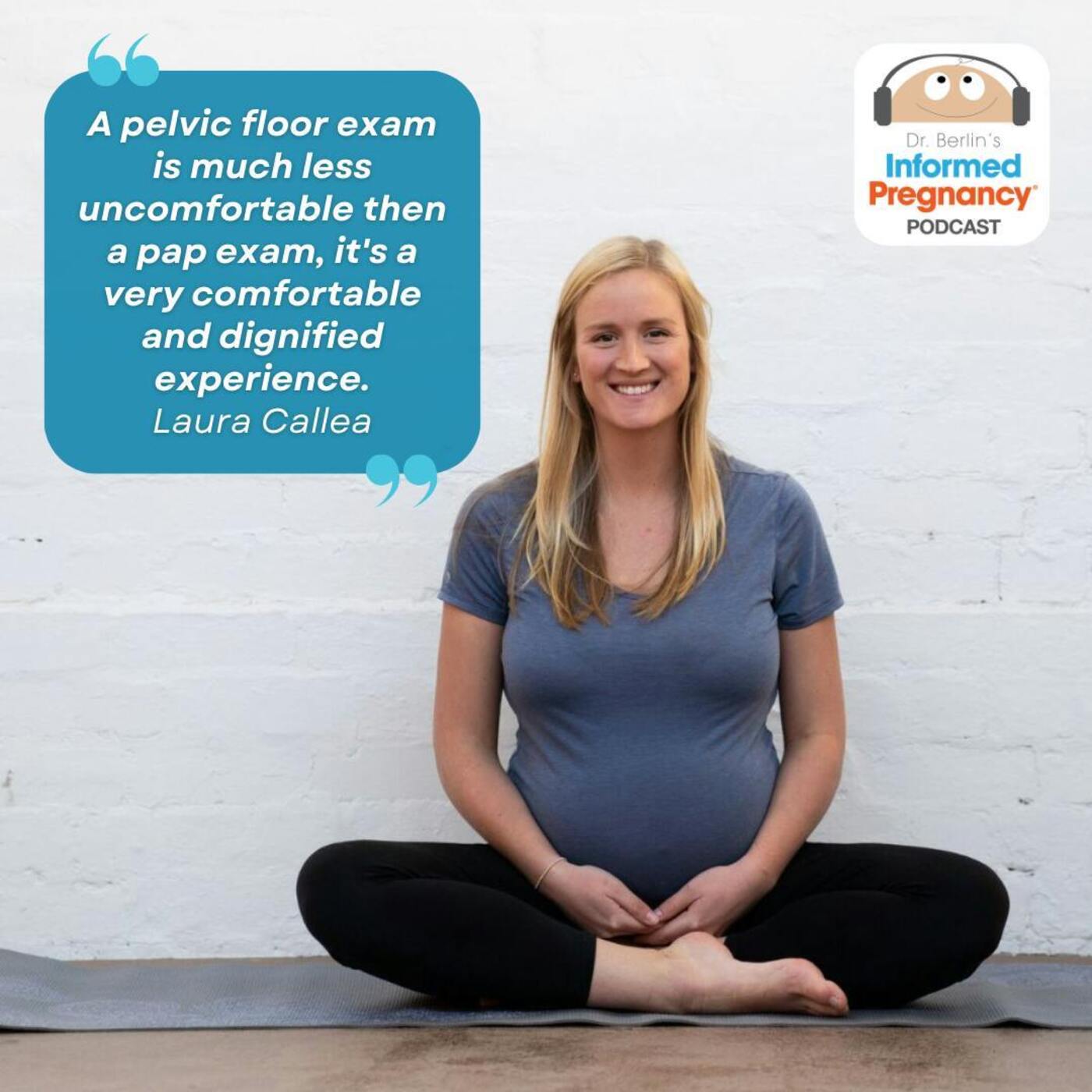
[4:52] women don't actually know where their pelvic floor is or what that muscle does. And so it's often just like an educational session, but There's so many ways we can check it. Some women get really nervous for their first appointment because they think it has to be an internal vaginal examination, which it does not have to be. It's always up to the patient what they feel comfortable with and what they consent to doing. But we can check pelvic floor movement and we can check pelvic floor function via something as simple as an ultrasound over the lower abdominals. That gives us a really good read of general movement of the pelvic floor. It doesn't give us the full picture,
[5:26] but it gives us a good read. We can check by just viewing the perineum and having a look at how the perineum contracts and relaxes when we ask someone to do a pelvic floor contraction. Or the most thorough way is to do an internal vaginal examination. And we can check so many things when we're doing that. We can check for movement in the vaginal walls to see if anyone has prolapse. We can check for the attachments of the pelvic floor to make sure there's no avulsions after birth or any issues like that. We can check for trigger points. We can check for pain spots, neural sensitivity. And there's so much more we can check when we do internal vaginal examinations.
[5:58] But there is a whole spectrum of ways that we can check depending on someone's comfort level.
Dr. Elliot Berlin, DC [6:04] So two more questions along those lines. One is what would you tell somebody, because we send referrals for women's health physiotherapy. And sometimes that's the question. Ooh, I don't know about internal work. What would you tell somebody to sort of help them get a better sense of what the experience will be like from their perspective or to help calm their concerns about that?
Laura Callea [6:25] So if anyone's ever had a pap smear, which a lot of people have, I tell them that it's like 10% of the discomfort of a pap smear, because pap smears can be quite uncomfortable for many women. And the difference with what we're doing is it's a one or a two finger examination. There's no instruments involved. There's not a lot of stretch or like pull on the vaginal walls or the perineum. So it's actually very gentle. And a lot of women go, oh, that wasn't as bad as I expected. Everyone's fully covered up. You're very dignified. It's a very comfortable environment for many women, even those who are really, really nervous. But I do always assure women that,
[7:03] again, if you don't feel comfortable, that's totally fine. Because there's a million other things that we can do before we even get to pelvic floor examination. For example, so many women that we see actually can't tune in with that muscle or engage with that muscle. And when we ask them to contract, they're just turning on their abdominal muscles, their glute muscles, and their whole body switches on. So sometimes a lot of what we do is that we just place our hands on someone's abdomen and we get them to learn how to actually breathe properly first and really learn the dynamics of how to allow their diaphragm to move properly and relax their chest.
[7:34] And it's very hard to engage your pelvic floor if your abdominals and your breathing techniques are not perfect first anyway. So a lot of the time we can start somewhere like that. And then when someone gets the basics happening, then we can move on to pelvic floor later down the track.
Dr. Elliot Berlin, DC [7:48] Okay, and then my second part of that question is once you know, once you sort of reap the data from those exams, what kind of remedies are there within the work that you do?
Laura Callea [8:01] Yes, so many things, but from the very basics like pelvic floor retraining, a lot of women think that that is all about stronger, longer, more. But a lot of time it's actually about first learning to let go of that muscle, first learning to fully relax it before we switch it on. Because a lot of pelvic floors are not as weak as we actually think. They're often, like I said, actually quite overactive. So just getting women to tune in with that. So it will involve some sort of pelvic floor retraining program, some sort of core and abdominal and lumbopelvic exercises and stability exercises for home. There may be bladder and bowel retraining habits
[8:36] that we do. A lot of women have issues with how they go the toilet. So it might be education on toileting posture and how to actually poo properly. Like that's a really common problem for a lot of women with pelvic floor dysfunction is that they're really constipated or they're straining a lot on the toilet. So a lot of it is education around how to keep our bowels and our bladders happy. A lot of education on how to exercise safely during pregnancy and after birth. A lot of education on how to manage prolapse via rest and bracing mechanisms and different breathing patterns and things like that. And Pilates, Pilates is a huge one we use as physiotherapists
[9:11] or some sort of stability training. So often women will definitely go home with at least one or two exercises to do at home.
Dr. Elliot Berlin, DC [9:19] When it comes to pregnancy specifically, if somebody has no symptoms, is there benefit in doing physiotherapy checkup?
Laura Callea [9:29] Yeah, I recommend it to women if they can afford it and if there's someone close to them. Because I think if you can get the basic education during pregnancy, it can be really, really helpful. We know that if you're in tune with your pelvic floor and you've got a really strong, healthy, functional pelvic floor, it can improve incontinence symptoms after birth. It can improve labor outcomes and reduce the second stage of labor. So there's some really great evidence to suggest that strong, healthy, functional pelvic floor is a really good thing during this pre-postnatal period. So I do encourage women if… they can to get a baseline measurement as well so that post birth they can reassess and go,
[10:05] ah, this is where I was during pregnancy and this is where I am at now. So they know what their baseline is as well. So they can compare that after they've had their baby and see where they're at. And I think, like I said, it's just really, really good for women to understand, ah, this is where these muscles are. This is how I can let go of them properly. This is how I can switch them on properly so that they're ahead of the game when it comes to any sort of
Dr. Elliot Berlin, DC [10:24] pelvic floor dysfunction that might pop its head up. After the baby comes, I think is oftentimes when people hear about women's health physical therapy in the first place, what are some of the things that come up after pregnancy or after birth, whether vaginal or cesarean, and when is the right time to start addressing them? Great question. So I would say the most
Laura Callea [10:48] common symptoms we see after birth are to do with incontinence and to do with prolapse. So the current stats in Australia, at least anyway, is that one in three women who have ever had a baby will experience incontinence and one in two women who have ever had a baby will experience prolapse. So it's enormously common, but it's still very, you know, shunned and taboo and not spoken about. So a lot of women feel like, oh my gosh, what has happened to me? I've never heard about this. I'm very embarrassed by this. It can be a huge emotional rollercoaster for women. So yeah, before we jump further than that, does that regardless of mode of delivery? No. So for prolapse, there's much, much, much lower chance after a cesarean section.
[11:28] Incontinence is actually, interestingly though, fairly similar statistics. I don't remember off the top of my head, but pregnancy is quite a big risk factor for incontinence in and of itself, regardless of mode of delivery. So incontinence is still prevalent after cesarean sections, but prolapse is, yeah, is much, much lower. And then not everybody understands what prolapse says. Can you describe what that is? Yeah. So if you imagine like very basic, a front and a back wall of the vagina and your bladder is at the front pressing onto that front wall and your bowels are at the back pressing onto that back wall. Now during pregnancy and during vaginal delivery, there's a lot of pressure on your pelvic organs. There's a
[12:05] lot of stretch. There's a lot of strain. And what can happen for some women is those ligaments that hold up, say your bladder and your bowel, they get really stretched or sometimes they can actually get damaged. And what this means is that your organs sit a bit lower than they usually do. So imagine then that if your bladder is sitting a bit lower or your bowel is sitting a bit lower, it can bulge into those vagina walls. And so you can get this bulge in either the front or the back of the vagina. This has been very simplistic. There's a million other variations of prolapse, but very simplistic. This is the most common variation. So women may experience things like a sensation of bulge or a sensation of dragging
[12:40] or a sensation of a lump in the vaginal area after birth or this really uncomfortable heaviness in that area. And so they may also experience things like incontinence or pain or abdominal heaviness associated with that too. But often it's the lump drag bulge sensation in the vagina that they'll feel because those walls are quite literally sagging down compared to how they used to sit. Okay. And then the right time to sort of check these things out. Yeah, we say from six weeks onwards because we really would do an internal examination before six weeks and we get the most information out of pelvic floor assessment if we can have the option of doing an internal examination. And also there's an amount of natural healing that
[13:22] we really need to accommodate for because if I check someone at one day post birth, I expect to see movement in the vagina walls if they've had a vaginal delivery. So it's really hard to make an assessment of is that a prolapse or is that just a normal part of healing? Because those vagina walls have stretched enormously to allow this baby to come out into the world. So we really need to allow time for those ligaments and the fascia to all heal and regain like its tensile strength and then reassess at six weeks to actually get a bit more of an accurate picture of is this now something that we're concerned about or is
Dr. Elliot Berlin, DC [13:58] this actually healed up really, really well? Amazing. This is very valuable information, certainly to all women, but anybody who's going to have a baby or recently had a baby, I am going to take a little break. When I come back with you, I'm going to ask you the number one postpartum question I get regarding women's health, physical therapy, and we're going to talk a little bit about your pregnancy and birth experiences. Don't go anywhere. We'll be

Dr. Elliot Berlin, DC [15:56] Welcome back. We are talking to Laura Kalia, women's health physiotherapist. And the question I teased at the beginning for the number one postpartum question I get about women's health physical therapy is diastasis recti, the separation of the ab muscles. What do we need to know?
Laura Callea [16:20] Yes. Great question. First of all, I think there is a lot of fear around diastasis recti. So I like to start there. I don't know if you get this too, but the most common question I get is, oh my God, Laura, I've got a one centimeter separation. What does this mean? You know, like, am I falling apart? Do I need surgery? And women just go down this spiral of, oh my gosh, I've got a separation. So I like to just remind women what it actually is. It's your six pack muscles and they meet in the middle and there's a fascia that joins them called the linear alba. There is naturally meant to be a separation there because it's the meeting of two areas.
[16:56] When you're pregnant, if that area didn't separate, you wouldn't be able to grow your belly to accommodate your baby. It needs to stretch. That's a really normal functional part of pregnancy. So I like to reassure women that at the end of pregnancy, 100% of women will have a separation in their midline of their belly because we need that to happen. Like I said, to allow our bellies to grow, to allow our babies to stretch and grow and develop. It's so normal because a lot of women think that the goal is to have zero centimetres of separation their entire pregnancy and then after birth. And I'd be very concerned if that's what was happening because then our
[17:31] bellies aren't stretching. So I think it's really important to know that first of all.
Dr. Elliot Berlin, DC [17:35] That's an excellent point.
Laura Callea [17:36] Yeah. And then after birth, what we're looking for again, like I was saying in the previous episode about pelvic floor checks, we tend to wait six weeks because there's a lot of natural healing that will occur as the tummy is smaller and it comes back in together and that linear elbow gets to heal and bring those two sides of the six pack muscles together. So we don't check it day one. So if anyone says to me, my midwife checked me the first day after birth and she told me I had this amount of separation. I say, don't worry about it. Let's just wait to see where you're at a month or two after birth because your belly has literally just stretched the day before.
[18:10] It was huge and now it's smaller. Let's give it six weeks to see what happens. I do encourage women to wear some sort of abdominal compression for the first six weeks. There's some really good evidence to show that that really does help to reduce the gap. So I do encourage that. And then we would assess someone at six weeks. And so what we're looking for at six weeks is a couple of different things. Women are very hung up on the width of the separation because we're always talking about that. Is it one fingers at two fingers at three? We are assessing that. That is important. How far apart are those six pack muscles? But we're also looking at the depth.
[18:41] That's really important, too. So how far into that gap can I press? And we're also looking at the function of the core. So can you do a sit up? Can you get out of bed without your belly doming? And by doming, you'll know this if you have one. It's when you go to, say, do a sit up or do anything that's got high abdominal load and you get this peeking, you know, like a triangular shape through the middle of your belly. And essentially, that's like all the pressure kind of pushing out through that gap rather than being contained in the abdominal canister. So we're looking at three things with depth and function of your core. There's three really important factors.
[19:15] It's not just about the width. And so depending on what we find there, we'll often then give women some sort of core abdominal rehab program, even if you don't have a separation. It's so important to actually do abdominal and core rehab. So it's not just for those women who have abdominal separation. It is for everyone, but specifically for those women who do have like a wider than what we call normal separation. And I hate putting numbers on this, but the evidence does say what we are calling wider than normal is anything that's greater than two centimeters. So it's a pretty narrow band because most women I see have a separation that is bigger than that.
[19:51] But that is what the textbooks are calling greater than normal. So we're trying to bring that separation in by doing core rehab exercises, which have actually been proven.
Dr. Elliot Berlin, DC [20:00] be very, very effective, which is great. I like that you put it in centimeters instead of fingers because I check people for diastasis all the time, but I have these enormous hands. So nobody ever has more than one finger and they're always super happy. But yeah, I guess everybody has different finger sizes. So centimeters is a bit more specific. Yeah. Again, I think the main
Laura Callea [20:21] thing is the fear for me. I'm always just really trying to just calm everyone's reaction down to their abdominal separation. I always use me as an example. So postpartum, my separation never went back beyond three centimeters, which is considered bigger than normal, but my depth was good and I had full core function. I had no pain, no back pain, no doming in my abdomen, great pelvic floor function. I could play football. I could run around. I could do all the things that I needed to do. So even though my width was technically bigger than it should have been, all the other boxes were ticked. So I think it's just really important to think about it as the full picture, not just the number, that it's wide. That's really powerful
Dr. Elliot Berlin, DC [21:05] and helpful. Do you look at the length at all? Like sometimes you see them just around the umbilicus and sometimes you see them almost all the way up to the xiford or down
Laura Callea [21:13] to the pubic bone. So the most common area to have the widest separation is just above the belly button, but we do check at three points. So just below your ribs, just above your belly button and just below your belly button, just to get an idea of like how far it's separated at each of those three points. And then we just use those same measurements as we go along with your rehab and your progress to check how everything is recovering.
Dr. Elliot Berlin, DC [21:36] Is there anything, because this is a question I get too, is there anything you can do
Laura Callea [21:40] during pregnancy to sort of protect that? That's a good question and I do get that one often as well. I tell all women, regardless of whether they're concerned about diastasis or not, that we should just be mindful of abdominal load. So if you're, say, lifting weights or lifting a child or whatever it is, maybe you've got really heavy physical manual work. If you're having to lift that and really hold your breath and bear down and you can feel like that enormous pressure in your belly, it's probably not amazing. I tell women that you should be able to lift weights, but be able to breathe normally. So that's a bit of a guideline I give women on
[22:17] how high that abdominal load really should be during pregnancy. I do encourage women to wear some sort of abdominal compression, but only if they've got symptoms. So things like back pain, a feeling of really strong weakness in their core, rib pain, things like that. I don't get them to wear tubie grip as a preventative measure for diastasis recta. And there's no evidence to suggest that that is helpful either. I just get them to wear it if they're finding they've got symptoms of, like I said, back pain, weak core, things like that. And then just being mindful of other ways that we overload our abdominals. So like, are you still trying at 38 weeks to do a big sit up to get out of bed rather than
[22:53] rolling to your side and then pushing yourself up? Are you constipated and really straining on the toilet again? So that's a big one during pregnancy. A lot of people get constipated.
Dr. Elliot Berlin, DC [23:03] I mean, just treating the constipation. Is there a way to not harm yourself while you're
Laura Callea [23:09] struggling with constipation? Yes. There's lots of ways that you can change your stool. So I talk just very generally fluid fiber exercise, very good principles to keep your stools nice and soft. So we're aiming for a slippery sausage sort of stool. So if your stool is like little hard pallets, they're really hard to get out of your rectum. So it's really important that we have like a soft stool so that we don't have to push so hard to get it out. So hydration, good fiber and movement, really helpful for that. But then when it comes to actually going to the toilet, so many of us don't know how to poo properly. We've never been taught. We have really strange postures. We sit all
[23:44] day in Western culture and we just have really odd ways of doing things. So I teach women to use a foot stool. And the reason I do that is because if you put your feet on a foot stool, then your knees become higher than your hips. And what happens with your rectum when this happens is that rectum is naturally a little bit kinked. So if you're trying to push a fairly hard stool, because maybe you are a bit constipated out of a kink, you're going to have to put a lot more pressure and effort into that, which is going to see you straining. If you put your knees a little bit higher than your hips, you actually start to straighten your rectum up. So whatever's in there, even if it is a little bit of a
[24:20] harder stool, has an easier passage to get out. So there's less strain involved. So I get women to use a foot stool. That's a really easy one. And then women love this one, but I talk about the mood to poo. So the idea is if you're straining on the toilet, you're often going purple in the face, you're contracting your pelvic floor in your tummy and you're really just like pushing with all your might. And you're kind of working against resistance and it's really not effective. Whereas I get women to say moo as they poo. And I tell you what, it's game changing. Like the amount of feedback I get from women is, oh my gosh, I can't believe I didn't know to moo to poo. And when I get women to do is
[24:56] put their hands on their tummy and just release their abdominals as they're doing. doing it, rather than contract their abs. So you want your belly to be moving outwards in a really gentle way. And what that does is it allows a little bit of pressure to get your bowels moving, but without the strain on the pelvic floor, because you're allowing the pelvic floor to relax rather than tensing everything up against this movement, which is not what we want. We want relaxation. So I would encourage women, feet on a stool and moo to poo.
Dr. Elliot Berlin, DC [25:23] Excellent. I've learned a lot here today. Let's talk about your experiences, your pathway to parenthood. How was pregnancy and childbirth for you?
Laura Callea [25:35] Oh, I'll keep this short because it's quite a long story. I've had three children. They're now five, almost four and two and a half.
Dr. Elliot Berlin, DC [25:41] Oh, wow.
Laura Callea [25:42] Yeah, I wanted kids close together, so I've definitely achieved that. My pregnancies in all three have been fantastic. I'm very fortunate. I have very straightforward, minimal nausea, no medical conditions. I just get a really big belly. Everyone asks me if I'm having twins. And for the most part, it's really quite OK for me. So I'm really fortunate in that regard. So with my first two pregnancies, I went through the private obstetric model of care with the same obstetrician and everything was straightforward. You know, like cruising along with my first baby, I got to about thirty something weeks and we started to have the big baby chat. Like I said, I was huge. I've always carried big.
[26:26] I'm definitely not a petite pregnant woman. And so we started getting extra scans and I just didn't know any different. I was actually very back then, even though I was a women's health physio and I taught active birth, I didn't really understand interventions. I didn't understand the system. I was just very positively optimistic and thought it's all going to turn out fine without really turning the mirror inwards and going, oh, there's some self-responsibility that needs to happen here. So I ended up being induced because baby was measuring big at 38 weeks and my body was like, no way, I am not ready to have this baby. So nothing happened. I didn't dilate my cervix, didn't change at all.
[27:07] And long story short, we went in to have a caesarean section because that was proposed as the best option for me, given that I was growing big. If we let this go any longer, that baby might struggle to get out. And therefore we're here. We've tried 24 hours of induction. Let's maybe get this baby out now. Had a big emotional meltdown before or after before the surgery. It was like, I was the only woman who had cried before a C-section. I was like, surely other women, they were like, are you okay? No, I'm not.
Dr. Elliot Berlin, DC [27:43] Had you ever had surgery before that?
Laura Callea [27:46] Um, I'd broken a finger once, so I'd had one. Nothing like this. No.
Dr. Elliot Berlin, DC [27:52] And then how was it just physically and emotionally going through the caesarean birth for you?
Laura Callea [27:58] Um, it was very emotional. I couldn't really label what my emotions were. I think it was a whole mixed bag of grief for what I thought was going to happen. Now it was different. It was like enormous anticipation. Cause all of a sudden I was meeting my baby and it was happening right now, and there was no other lead up a warning, you know, like physically for the most part, there's a lot of pressure and you know, it felt weird. That's for sure. It's weird to have someone pulling around your tummy while you're awake, but otherwise it was fine. And I recovered really well afterwards. We had a great breastfeeding journey and you know, all of the things that can sometimes be problems for women's with caesarean
[28:35] sections, I was fortunate to skip all of that. And we had a really beautiful postpartum period. So I was really, really happy about that.
Dr. Elliot Berlin, DC [28:43] Great. Then you had another baby like two years later.
Laura Callea [28:47] Yeah. So 10 months later, I fell pregnant. And even though I think I'm a really optimistic person. So I had turned that first C-section into, I was almost like an ambassador for positive C-sections and like, you can make your birth experience great. And I truly believe that. And I still do. It's just that now I have different perspective and I look back and I think, ah, that was the birth I needed at that time for sure. But that's not the birth I would choose now. That's for sure. But I was really like, yeah, that was a great experience, but there was something inside of me that knew I obviously wanted different because straight away I wanted a V-back.
[29:20] There was no question about whether I wanted another caesarean section. I really wanted to try for a V-back. So I had the same obstetrician and we were both on board with a V-back and we were like, yep, I'm a great candidate, let's do this. And so the thing is I didn't really do much different. So I just, again, thought that this would just turn out perfectly. And you know, like I was so optimistic that I just didn't really do the work. And so the only thing I did differently this time was I did some hypnobirthing education. I read some books on that and I was pretty adamant that I didn't want to be induced early. Like I wanted to let my body go into labor on its own, give myself more time.
[29:58] I felt like 38 weeks was far. too premature for me, so everything was tracking fine. I had a great pregnancy. Exactly the same as the first one.
Dr. Elliot Berlin, DC [30:06] How big was your first in the end?
Laura Callea [30:08] Four kilos.
Dr. Elliot Berlin, DC [30:10] What is that?
Laura Callea [30:11] Maybe nine pound.
Dr. Elliot Berlin, DC [30:12] Oh, that's a big baby.
Laura Callea [30:14] Yeah.
Dr. Elliot Berlin, DC [30:15] It depends on who you talk to, right?
Laura Callea [30:16] Like I'm saying 38 weeks. All right. 38 weeks. Yeah. Yeah. But you know what? I've gone into have 42 weaker who was 4.1. So I just feel like my body doesn't make babies that are probably much smaller than that. So I've just come to accept that that's the size of baby that I make. Yeah.
Dr. Elliot Berlin, DC [30:34] What I'm saying is on their calculations, on their ultrasound, however, they came up with that weight, they weren't off, whether or not that means induction's a great idea. 38 weeks is a whole separate issue, but they were right that you were tracking a baby on the larger side.
Laura Callea [30:50] Yes. Yeah, correct.
Dr. Elliot Berlin, DC [30:52] Okay. And then, so for the second one, you're like, I
Laura Callea [30:54] don't want to get induced at, would they induce feedbacks even? They do in Australia, but my obstetrician was pretty adamant. He wouldn't do any sort of chemical induction. He wasn't a big fan of that with a scar. And to be honest, I probably wasn't really vibing an induction. I wanted my body to either do it on its own or have a caesarean section was my vibe. And so we got to 40 plus nine, I think nothing had happened. And I think I just surrendered by that stage to, I thought I'd tried all I could and therefore we booked a plan Caesar. However, my daughter, and now that I know her personality, this makes so much sense. 24 hours before this plan, Caesar decided to put me into pre-labor.
[31:36] So I'd never labored before. I'd never felt this sensation. And my husband and I had booked this last hurrah, you know, movie and a dinner and, and I was like, I'm contracting, I'm having a contraction. And this went on for 24 hours and they were every probably five minutes and they, I could sit through dinner. I was uncomfortable. I didn't sleep that night though. And I think that was a mix of, I was a chronic people pleaser back then. I cared so much about, you know, making sure that I didn't put people out. So my main concern the night before this plan, Caesar was I have to make a decision now because there's going to be 10 people in that operating theater and I don't want to inconvenience them if an
[32:15] hour before the surgery, I call it off. So it's crazy. Like I think about that now I'm like, that's not your concern, Laura. But at the time that was just where my head was at. I was like, I need to make this call. So all through the night, I lost my mucus plug. I was like, oh my God, this is finally happening. Oh my God, what does this mean? I was excited, but I was apprehensive to get too excited because what if this all just amounted to nothing. So I eventually got onto my obstetrician and I said, look, this is what's happening. I was like, please tell me after this long contracting again, like I could still speak through contractions, but I was really uncomfortable.
[32:49] Please tell me something has changed in my cervix. And this means like we've got the green light to keep moving. He was like, yep, Laura can't guarantee, but yes, this sounds really positive. So I was like, yes. So we drove 10 minutes into the city. I could not stand the car ride. I was so uncomfortable. And we got there and I was so excited and nothing. My cervix was zero centimeters tight, closed high. And I was just so deflated. I was like, I started straight away just disconnecting from my body. I was like, my body's broken. It doesn't know what to do. It doesn't know how to give birth. You know, it's confused. It wasn't designed to do this.
[33:24] Obviously I'm just not meant to have babies, how other women have babies. It ended up being a plan C section. Cause we went with the original scheduled day, just with this last minute spanner in the works. And so that brought about an interesting mix of emotions. I think there was a lot of grief because it was like, you know, this last minute whirlwind, there was also a lot of relief because I found the VBAC journey to be really time consuming and mentally consuming. Am I going to do this? Am I not? What do I need to do to prepare? And there was something about, you know what, I don't need to do this again. I've had two C-sections. So therefore I'm just going to be a C-section mama from now on.
[34:00] And I was adamant because I knew I wanted a third baby that I'm going to become the maternal assisted C-section mama, I'm going to pull my baby out next time and I'm going to have some control. And that was where my mindset was at great postpartum recovery, great breastfeeding journey, all of the same, and then I fell pregnant again at 10 months.
Dr. Elliot Berlin, DC [34:17] That's your thing.
Laura Callea [34:19] It's my thing. And that's where it all changed. So I was on track to be maternal assisted C-section. I am going to pull this baby out. I'm going to fly the flag for other women to have these amazing empowered C-section experiences. And I went to see a new obstetrician cause we'd moved by that stage. And I just had this funny gut feeling. I couldn't really work out what it was, but something just was off. Didn't feel right. And just one night before bed, I was like, Oh, I might just express this to my husband. I was so close to not saying anything and just going to bed and suppressing it. And I just said to him, look, this just doesn't feel right.
[34:59] Like I'm a healthy. young fit woman, I do pregnancy so well, have no complications and it just doesn't feel right to walk into a surgery and have my baby. Like it just doesn't sit right. And then my husband just like exploded. He was like, Oh my God, I didn't want to say anything, but I fully support you. Like this doesn't feel right for me either. I think we should explore other options. And he wasn't going to say anything because he didn't want to change my experience or make me feel like I should do something I didn't want to do. And that just opened up an entirely different wild journey. I never would have expected I'd go on and I'll keep it short because it is, you know,
[35:37] hours long, but essentially I decided, no, I really want to do this. And I had to do a lot of inner work because like I remember my husband saying, we can move house if we need to. If you can't find a provider down here, let's move. And I was like, whoa, this man is more willing to fight for what I want than I am. Like I'm so willing to just throw my hands up and be like, Oh, it's too hard. No one's going to support me. Like I'll just have a C-section. And I was like, wow, that says a lot about where my mind was at. I was like, do I really want this? Yes. Well, then you know what? I need to do the hard work. I need to actually build the confidence and advocate for myself and have hard
[36:14] conversations. And it just really turned the mirror around on me and made me go, wow, I really need to step into myself here and stop being so passive and actually really advocate for like authentically what I want, which means actually acknowledging what I want as well. And so I went through a whole there's it's really challenging. I'm sure it's the same in the US, but to have a vaginal birth after two C's is not exactly easy. A lot of people don't want to support that. And I was pretty adamant by that stage as well, that I wanted to have a home birth. So I knew that where I felt safest was outside of the hospital system. And I knew that I either wanted to have a C-section in the hospital or a vaginal
[36:58] birth at home. I did not want to attempt a vaginal birth in the hospital. And I did speak to obstetricians at the hospital. I found a private midwife and that was part of sort of the criteria of making sure that we checked all the right legal boxes and whatnot. And you know, if I were to give birth in the hospital, it was under a lot of conditions. And I understand from their point of view, I was a ticking time bomb. You know, I was high risk. They had to have me on continuous monitoring. They had to have me doing all these things. And I knew that that wasn't the experience that I wanted. So I kept advocating for this home birth. And I'll skip that whole middle bit, because why not? I got to 42 weeks
[37:35] and I had a three day long labor, which was the most physically exhausting, mentally challenging thing I've ever done in my entire life. And I gave birth to my daughter at home and it was the most incredible, life-changing, amazing thing I've ever done and has literally changed who I am as a person, how I show up professionally, how I show up as a mother. It's been the most profound thing I ever did. Not broken.
Dr. Elliot Berlin, DC [38:04] Yeah, congratulations. Thank you. I'd love to do a whole episode just on that birth experience. Maybe we will one day. Powerful. So did that experience change your interactions with moms? I mean, you were going to be the advocate for the sort of mother led caesarian birth, which is also a great area that needs support. But did how you sort of talk to people change?
Laura Callea [38:37] 100%. Yeah. So the biggest changes I've felt in how I interact with the women inside my programs, how I interact with people in my podcast, social media is that, and it's very humbling to say this, but I feel like I was probably put myself on a pedestal of I'm the physio, I'm teaching you the things, I'm educating you on the things. I feel like I've got a much more horizontal relationship with the women I work with now rather than a vertical relationship in that I feel like there's a lot of education that I can provide and there's a lot of really powerful information that these women don't have. But at the end of the day, I always turn it around to what feels right for you. And you need to decide what is the right thing
[39:17] for you, as opposed to me telling you, this is what you should do. This is the right way to move forward. Because I've had this profound experience of where it didn't make sense to anybody else around me what I was doing, but it made so much sense to me. And I'm going to die a happy woman knowing that I peeked to the path that was truly right for me. And I know how amazing that feels. That's what I flip around to women now is that here's all the information that I have to give you. And here's all the advice I can give you. But at the end of the day, this needs to feel right for you. This needs to feel right in your body. And you need to make the best decision for you, not from a place of fear, not from a place of people
[39:53] pleasing, but from a place of truly what feels right for you. And so what that's also meant, because you mentioned, you know, I was the C-section mama and a lot of people thought I was going to become the home birth mama. And don't get me wrong, I am such a big advocate of home birth. It was an amazing experience, but where I'm at now is that I think it matters less about how you give birth and more about how you feel about how you give birth. And so if you had a traumatic experience with a vaginal birth and you've had a prolapse or you've had pelvic floor dysfunction, I can 100% understand why a C-section next birth is going to feel like the safest, best option for you.
[40:33] And I really feel for those mamas who have to then fight on the other side of the spectrum, fight their way to a C-section, particularly in the public system, where you don't have as much choice and that the thought of a vaginal birth terrifies them. And that makes them feel really unsafe. And I am all for that mama having a C-section if it's coming from that authentic place of this is what feels right for me. So I actually feel like, yeah, I'm neither a home birth advocate nor am I a C-section advocate. I'm like an advocate for the individual and an advocate for you picking what feels absolutely best for you and providing you with all the information that I have,
[41:10] but then turning it around on you, if that makes sense.
Dr. Elliot Berlin, DC [41:12] Totally. We could not be more on the same page. I sometimes get labeled as sort of anti-cisare, in which I'm not at all. But that's just because, at least here, if you want to have a vaginal birth, there's sometimes such an uphill battle to be able to get one. And if you want to have a cesarean birth, there is not an uphill battle to get one. So I'm just helping advocate for people who don't have access to what they're wanting. I also, a few years back now, had a client who was super healthy, very fit, first baby, great candidate for an uncomplicated vaginal birth, but her mom had a complicated vaginal birth that left her with lifelong issues.
[41:52] And because of that, my client was very distraught about the idea of having a vaginal birth. And her doctor actually was just, no, you don't need to do a C-section. We're going to do great. But at some point, it's like you said, it's her choice. And that's what, you know, I kind of went to advocate with her and for her to be able to have that elective cesarean. That's powerful. You have multiple platforms by which you do provide the information that you provide. Let's take a quick break, and when we come back, we'll learn more about those. Welcome back. We're talking to Laura Kaliap. And okay, we said you have all these platforms. It would be obviously amazing for someone to be able to live near you, come see you,
[42:44] and reap the benefits of all that you have to offer. But not everybody is so lucky. Where else can we tap into your wisdom?
Laura Callea [42:53] Yes, thank you. So I run an online pregnancy membership program. So this is for women, as soon as they find out they're pregnant, all the way through to 40 weeks or 40 plus weeks, really. It's called the Pregnancy Posse. And it was born out of this desire to help more women. So as you would understand, I was booked out weeks in advance in the clinic, and I could only see so many women before I was physically capped out. And only so many women could afford to come and see me as well, or who lived close by and who could come and see me. And I just thought this information really needs to get far and wide. And what I found is that from an educational point of view,
[43:32] 80% of what I was telling women was the exact same thing. I was like on repeat, 20% was absolutely unique and tailored to the individual. But the 80% was like the basic education on pelvic floor, how your body changes in pregnancy, how we can move safely and effectively, how we can prepare for birth mentally and physically, all of that. I need to stop repeating this and record it and send it to the masses. This is such a better leverage way of me getting this message out. And so that's where the idea of the Pregnancy Posse was formed, is this desire to reach more women. And I'm so proud because this has been out in the world for five years now,
[44:10] and thousands of women have gone through this program. And I get women from like regional Australia, like outback Australia, where they're four hours from any sort of clinical or medical service, who have no way of accessing that any other way except by the internet. And they're so grateful. I had a woman doing her Pregnancy Posse workouts next to her tractor and there's cows in the background. I felt so lucky that I was able to help someone like that because that's exactly what it was born from. And I've had women from overseas in countries where women's health physiotherapy is really not on the map yet. And it's really hard to access. And these women are able to then touch base with my program
[44:48] and be nurtured their whole pregnancy. I designed specific workouts for every stage of pregnancy because I know that so many women freak out about what can I do in the first trimester and the second trimester? And so I've just taken all the guest work out of it and designed workouts for each stage of pregnancy. There's a million resources on pelvic floor, preparing for birth, managing rib pain, pelvic pain, SIJ pain, pubic pain, all the pains that come up in pregnancy. There's a wonderful community forums that other women can connect with each other. And essentially what I'm trying to allow women is a safe space to nurture themselves physically and mentally and to avoid Googling and
[45:25] going down that Google rabbit hole at 3am and getting confused by all the information that's out there. So I wanted to provide just a one-stop shop for women to go, ah, okay, I can just ask all my questions in here. And if Laura doesn't have the answer, she'll direct me in the right direction. I just don't have to worry about all the other thousand voices that are trying to compete for my attention.
Dr. Elliot Berlin, DC [45:47] I love that. The fact that you're able to bring the information, the tools, the community to anybody, anywhere, as long as they have a device and a connection. Yeah, it's amazing. So you also have a podcast. Yeah. And it's pregnancy with physio Laura. What do you talk about on the podcast?
Laura Callea [46:09] So the podcast is just an extension of everything that I have inside the program, but in more detail, bringing more voices to the table as well. So the podcast was born out of this desire to again educate, but in a different way. I'm an avid listener of podcasts. I love podcasts. I think it's such a beautiful way to learn. I think for the busy mum, chucking headphones in and listening to a 20 minute episode is such a perfect way. I don't know about anyone listening, but I struggle to read a book with my children around. Like it's virtually impossible, but I can actually find time where I can put my headphones in and listen. And I wanted to be able to connect with all these epic people in the birth
[46:49] and pregnancy space and be able to bring their voices to my audience and just have this really beautiful network and connection. And so the podcast was born a few years ago. And even though we are actually changing the name soon to be more representative because it isn't just for pregnancy, it really does encompass anyone who's going through their motherhood journey. So it's not just for pregnant women, but we cover everything. We cover birth preparation for birth. We cover all the sorts of variations of birth. You know, you've got an amazing one coming up on my podcast soon, all about breach birth, which is going to be epic. And we cover women's cycles and being in
[47:26] tune with the seasons and all of the more spiritual woo woo concepts that again, we don't often hear about. We cover baby development. We cover my own birth stories. It's just, there's so much in there. There's been 150 episodes. And it's honestly the thing that brings me so much joy. It doesn't feel like work for me. It feels like I get to talk to epic people and bring these epic conversations to people. And I just love hearing from women who are walking their dog and going, oh my God, I can't believe I didn't know this about birth. I can't believe I didn't know this about matressence and, you know, what it's like to shift your identity to a mother. And
[48:02] it just really resonates with women. And yeah, it's one of my proudest pieces of work is being able to bring the podcast to everyone. So yeah, I love it.
Dr. Elliot Berlin, DC [48:11] I mean, I told you during the break, but it's true. I could talk to you for hours. You just have a really wonderful way of packaging information together and delivering it in a very easy to digest way. And so, so positive. And then that's even through your birth stories. You see that when, of course, it was a letdown when you had your first cesarean, it was unexpected. There was a mourning of a loss, but still, like, I'm going to be super positive about this birth. And with your second cesarean again, just like, I'm going to help whoever needs to have a cesarean, have a great cesarean birth. And then your third birth, sort of broadening those horizons and
[48:47] realizing it's whoever is having a baby needs to be in the driver's seat, and I'm going to help them get the information and support which route they want to take. So positive. And so your podcast is going to be an incredible resource for so many people. Do you know what the new name is going to be?
Laura Callea [49:06] Yeah, I might share it just in case by the time this publishes, it's going to be called Mama, you got this. Sorry. Mama, you got this. Yeah. And do you know what the most beautiful message came through? I haven't rebranded publicly yet. But this lady said to me, Laura, I just had the most incredible birth. And I wanted to tell you about it. She said I was in the middle of transition. And I just drew on you from your podcast and your program and in my head, and I've never shared this to anyone. She said, I just could hear you saying to me, Mama, you got this. And I was like, Oh, my gosh, that's the perfect name. Then that's exactly how I want women to feel is like, yeah, regardless of what it
[49:46] is, whether you're struggling with your baby or pregnancies hard or birth was challenging, like, you've got this.
Dr. Elliot Berlin, DC [49:52] Mama, you've got this. Amazing. Thank you, Laura so much for joining me on the podcast and sharing so much value. people information with us, where can we find you online?
Laura Callea [50:06] So you can find me at physio Laura, Facebook and Instagram, or yeah, the pregnancy with physio Laura or mommy, you got this podcast depending on when this comes out and the pregnancy posse.com if you're pregnant and you want to try the membership.
Dr. Elliot Berlin, DC [50:20] Amazing. And at home, thanks for listening to informed pregnancy podcast. If you would like more pregnancy and parenting resources like these visits informedpregnancy.com
Want more pregnancy + parenting? Start your FREE TRIAL of Informed Pregnancy+ and get access to all our curated pregnancy and parenting content — original series, iconic birth films like The Business of Being Born, prenatal workouts and more.