
February 24, 2022 · 63 minutes · Episode 270
About this episode
Hair and makeup artists turned meditation teacher Kelsey Zahn Melton met her husband at an IHOP during a blizzard at the age of 17. After clearing hurdles like double sided SCFE (tune in for details), amenorrhea, and toxic mold exposure, Kelsey discusses her path to wellness, fertility, pregnancy, and her planned low intervention hospital birth experience.

Learn more about your ad choices. Visit megaphone.fm/adchoices
See Privacy Policy at https://art19.com/privacy and California Privacy Notice at https://art19.com/privacy#do-not-sell-my-info.
Key quotes
“Intimacy didn't feel safe unless I could control it.”
“And she goes, you hold the world at arm's length. And I was like, no one has ever defined me more accurately at that time.”
“this can look a thousand different ways and all of them are beautiful and all of them are wonderful and you get a baby out of it.”
“And I was like, cool, no, thank you. I don't wanna try.”
“The mind takes hold of fear and likes to run rampant with it. And so I very quickly, like I let the emotions come.”
Related episodes
- Ep. 188 Joanna Bavero – Birth Story
- Ep. 268 Anastasiya Rul – After Birth
- Ep. 50 The Real Midwives – Megan B. Post-Birth Journey
- Ep. 251 Tasha Gonsalves – A Birth Story
Transcript
AI-generated transcript with speaker labels — may contain errors, especially names and medical terms. Dr. Elliot Berlin, DC appears in blue; Kelsey Zahn Melton in orange.
Download PDF of the Transcript
Dr. Elliot Berlin, DC [1:13] Welcome to the informed pregnancy and parenting podcast. I'm your host dr. Elliott Berlin today I'm excited to chat with a longtime hair and makeup artist who more recently turned a meditation teacher and even more recently became a Brand new mom in this episode. We will talk about fertility pregnancy and her plans for a low Intervention hospital birth Kelsey is on mountain. Welcome to the podcast. Thank you for having me. I'm delighted to be here Oh, you're not the only one I say this about everyone but it's so true. You're an amazing. I think the Zahn in your name is more like Zen
Kelsey Zahn Melton [2:11] Oh, I'll take that
Dr. Elliot Berlin, DC [2:15] You're just I don't know you got it all together. Let's start to begin. Where'd you come from?
Kelsey Zahn Melton [2:19] I am originally from Kalamazoo, Michigan a little town in the Midwest
Dr. Elliot Berlin, DC [2:25] What was it like growing up in Kalamazoo? Don't people say Kalamazoo just to be like
Kelsey Zahn Melton [2:31] Kalamazoo no place. Yeah, pretty much
Dr. Elliot Berlin, DC [2:33] There's also a line dancing song about Kalamazoo comes. Oh, really? Or about a line-dancing bar in Kalamazoo something. Anyways, it doesn't find a stance in that button. Yeah, you should Oh, you really should it'd be funny. What was it like growing up in Kalamazoo? That's an excellent question
Kelsey Zahn Melton [2:50] I also will caveat what I'm about to say in that I was also homeschooled So my experience growing up was different than a lot of people's probably in that I grew up in a rural Little town actually called Cooper Township inside of Kalamazoo and I grew up on four acres with dogs and I played outside a lot and rode my bike a lot and rollerbladed And rode my friend's horses
Dr. Elliot Berlin, DC [3:13] Wow Yeah, and it doesn't even let me borrow their bike when I was growing up. I know horses
Kelsey Zahn Melton [3:21] But we also lived 30 minutes from Lake Michigan. So we'd go to the beach in the summer. Oh
Dr. Elliot Berlin, DC [3:26] Really? Does it freeze in the winter? Yeah
Kelsey Zahn Melton [3:29] Freshwater lake that looks like the ocean and so you ice skate on it You could it's a little too rough. You have to ice skate on inland lakes Because Lake Michigan unless you have somebody dedicated to like making you an ice rink. That's smooth It's smoothing it over. What about ice fishing? People definitely ice fish. No, but does Kelsey ice fish? Definitely not. I don't like the cold. Oh, okay. There you go
Dr. Elliot Berlin, DC [3:55] All right, so you grew up in something township Kalamazoo, Michigan was it Stewart?
Kelsey Zahn Melton [4:01] Cooper Cooper Township and do you have siblings? I do I have an older brother and a younger brother Wow
Dr. Elliot Berlin, DC [4:07] You're like the middle of the Oreo Mm-hmm. Why homeschool?
Kelsey Zahn Melton [4:13] So my dad was an undercover cop And well cats out of the bag. Oh, it's fine. He's retired. He's long retired It wasn't particularly like not that it would have been dangerous for me to go to public school But it wouldn't have been particularly safe for me to go to public schools. I understand
Dr. Elliot Berlin, DC [4:30] So yeah, I'm probably not a whole lot of peace of mind Correct. Did you like home schooling?
Kelsey Zahn Melton [4:35] I Liked that I had time to myself to do whatever I wanted and a lot of my friends were also homeschooled So it'd be like I'm done for school by noon Can I call Renee and see if she's done with school too and we can go ride bikes like? That kind of thing. So there was a lot of freedom And I mean crafty so I spent a lot of time doing that kind of stuff
Dr. Elliot Berlin, DC [4:56] I don't know if you know this but we homeschooled our kids for a couple of years
Kelsey Zahn Melton [5:00] Did you?
Dr. Elliot Berlin, DC [5:01] Yeah. I'm an undercover chiropractor.
Kelsey Zahn Melton [5:03] Oh, fair.
Dr. Elliot Berlin, DC [5:04] You never know.
Kelsey Zahn Melton [5:05] High risk.
Dr. Elliot Berlin, DC [5:06] But it's true. We did homeschool our kids for a couple of years. And what was amazing to me about homeschool was that I started to look at institutional school like a incandescent light bulb. Like you put in 100% energy and 90% of it becomes heat and only 10% light. And I just realized by the time you get 22 kids to get their books, sit down, open to the right place, quiet down and start reading, and if they're learning to read, my kid will pay attention while he or she is reading. And then while the other 21 kids are reading, they're like counting the ceiling tiles or wondering what else you could stuff into an M&M or something like that. Oh, what else could you put in M&M?
Kelsey Zahn Melton [5:47] I mean, that could be a whole podcast, really.
Dr. Elliot Berlin, DC [5:48] It really could. And so we were done with school oftentimes. I mean, we, my wife is incredible. My mother is incredible. They homeschooled our kids. They were done with school by like 11 o'clock, you know, 12 o'clock, like you're saying. And that's when my son did things like teach himself how to do 3D animation, you know, by watching a video series and other very cool things like that and 3D printing. Okay, moving on. It's more efficient of your time.
Kelsey Zahn Melton [6:15] Yes.
Dr. Elliot Berlin, DC [6:16] It's like one of those CFL light bulbs.
Kelsey Zahn Melton [6:18] I don't know what that is, but I will take your word for it.
Dr. Elliot Berlin, DC [6:23] Fluorescent light bulbs, the ones that you have to get now that are energy efficient. Okay. I was telling you earlier, like, Hey, we can't get off topic. And now I have not even gotten on topic.
Kelsey Zahn Melton [6:34] Rabbit trails will happen.
Dr. Elliot Berlin, DC [6:35] It's okay. Yes. All right. So how'd you meet your partner?
Kelsey Zahn Melton [6:39] So my husband and I met as you know, Midwestern kids do at midnight during a blizzard at IHOP.
Dr. Elliot Berlin, DC [6:45] Oh, wow. Wait, during a blizzard? How old were you?
Kelsey Zahn Melton [6:49] We met when we were 16 or 17 timelines, a little fuzzy on that one, but then we proceeded to date and break up three times before we got married.
Dr. Elliot Berlin, DC [7:00] Is that like a Cooper township thing that you have to do for superstitious reasons?
Kelsey Zahn Melton [7:04] No, I was just a commit a phobe.
Dr. Elliot Berlin, DC [7:07] Oh, it was you.
Kelsey Zahn Melton [7:09] It was me.
Dr. Elliot Berlin, DC [7:10] Wow. Okay. I mean, look, gender roles are all over the place.
Kelsey Zahn Melton [7:14] No, but I have trauma in my past. And so I would get like panicky and uncomfortable when people got too close.
Dr. Elliot Berlin, DC [7:24] Trauma from before you were 16?
Kelsey Zahn Melton [7:26] Oh, yeah.
Dr. Elliot Berlin, DC [7:27] Trauma you wanted to share?
Kelsey Zahn Melton [7:30] I was sexually abused when I was little.
Dr. Elliot Berlin, DC [7:32] Oh, wow. I'm sorry.
Kelsey Zahn Melton [7:34] Intimacy didn't feel safe unless I could control it. And so I would control how close people got to me at one time when Drew and I were actually married. This was the most California thing I will probably say on this podcast. Maybe not, but maybe. We had our auras photographed. Okay. So they transmit the energy in your body into color in like a Polaroid. It's very cool. And mine, the outside circle around my head was like purple and blue and speckled with white. And then there was like red over my body. And then there was a hole of like black in the corner. Oh. And I thought it was just misprinted. And she goes, okay, so this upper region is like, you're very like creative and you're
[8:19] very spiritual and very close with the divine. And then the red is that your external you project a very grounded, rooted together persona. Like that's how you project and how you engage with the world. But see this hole in the corner. And I was like, yeah. And she goes, you hold the world at arm's length. And I was like, no one has ever defined me more accurately at that time. I've done a lot of work since. But at that time, it was very accurate. Wow.
Dr. Elliot Berlin, DC [8:45] And that's what led you to start overcoming your phobia of getting close to people?
Kelsey Zahn Melton [8:53] No, that was a long time before that. I think it's the grace of God that allowed me to like end up married because I was still afraid of it. I remember when after we got married, I was 20. I mean, we also got married when we were babies. We were 24 years old when we got married. And we moved to California far away from everyone. We knew like literally two days after we got married, we moved and he was already living out here, but we road tripped out together and I officially moved out. And I remember like a couple months in just sitting on the edge of our bed, like weeping because I was like, I don't think I know what love is. Like I think you made a mistake in marrying me.
[9:31] Like I don't know. Wow. Yeah. So I had to do a lot of work.
Dr. Elliot Berlin, DC [9:35] Yeah. But how? Like what kind of where do you even start?
Kelsey Zahn Melton [9:40] Therapy is a great place to start. But for me, it was a lot of going inward. And I think that's why meditation is such a big thing for me is that it is part of the reason that I am who I am now, that I can like feel things because I was so shut down. It's like the Brene Brown thing of like, you can't numb one in the most. emotion, you numb them all. And I was really shut down for a long time.
Dr. Elliot Berlin, DC [10:03] Wow. That's intense. I mean, I know you now. And you're so in touch with everything. It's almost like the opposite of what you're describing. And so approachable and easy to connect with. And not only do you seem mellow, I feel like you calm people around you. So that's what it meant about the Zanzen situation. It's incredible how you got from there to there. You know, kudos to you. And I hope in terms of your trajectory of work, what brought you to LA?
Kelsey Zahn Melton [10:36] So what brought me to LA was Drew, my husband, when we got together, he was at the time, a illustrator and a letterer. So he did graphic design, he created logos, he did typography. So he designed fonts, he was like, really good with lettering design. And he got really popular in that world. And a company in California saw his work and wanted to hire him to design their t shirts. And so he moved out to do that. When we were dating, and then we got engaged and did our engagement long distance, and then we got married and I moved out. So when I moved, I went from being in salon in Michigan, I worked behind a chair in a salon for many years. And I was really burned out from that dynamic, because I'm not
[11:25] super high drama and salon land can be super high drama.
Dr. Elliot Berlin, DC [11:30] Oh, is it like massage therapy, where it's not just massage, but also therapy?
Kelsey Zahn Melton [11:34] Yes, 1000%. But I mostly met with co workers. It's high drama. And so when I moved, I just started freelancing and doing hair and makeup on sets for photo shoots instead of being behind the chair.
Dr. Elliot Berlin, DC [11:49] Oh, cool. So that's what you were doing in LA. Yes. And then you don't really do that anymore.
Kelsey Zahn Melton [11:57] Currently, no, that may come back into play at some point. When COVID hit, I was still doing hair and makeup. And obviously, I couldn't do my job. Because you weren't allowed to touch people. I mean, you can't really do someone's hair or makeup if you're six feet away from them. Unless it's very hard. Yeah, resume is very difficult. However, we during COVID moved into a house that had toxic mold. And my husband and I both got really sick. And we had to move out of that house. And we basically got rid of everything we owned. And my kit is all still currently in storage. Because my doctor didn't want me around chemicals. And she didn't want me going on set where you're in warehouses that probably have mold
[12:40] as she's trying to get me well. And then five months after that, I was pregnant.
Dr. Elliot Berlin, DC [12:47] Wow. Okay, was that a conscious choice?
Kelsey Zahn Melton [12:50] No, it wasn't. She's a little miracle surprise baby. Why is that? So I didn't have a period for seven years. And from one to one, like eight or worse. Yeah, I was 24 until 3233.
Dr. Elliot Berlin, DC [13:07] So as a teenager, you had regular periods.
Kelsey Zahn Melton [13:10] I did completely normal. And then the summer before I got married, it started going away. And I thought it was because I was working out like a psychopath because I was getting married. And I was working full time and coming out to California to see Drew and planning a wedding all at the same time. So I was like, Oh, it's just stress. Like, that's what I thought. And then it just never came back.
Dr. Elliot Berlin, DC [13:35] Oh, I mean, medically, did you look into it?
Kelsey Zahn Melton [13:38] Oh, 1000% I have had every test done on the planet. And every traditional medical doctor would be like, we don't know what's wrong with you. Like, we have no idea. Like, everything seems to be fine. We don't know what's wrong with you. And then it got to the point, though, where after several years, I basically didn't have hormones anymore. And so they were like, Well, that's a problem. So you should go on synthetic hormones, which those just made me feel awful and like turned me into a tiny rage monster. And so I stopped taking them because I was like, that's not worth it. And so I started seeing holistic practitioners, and doing more naturopathic work.
Dr. Elliot Berlin, DC [14:17] Like what kind of things?
Kelsey Zahn Melton [14:19] So it was actually a kinesiologist slash my old chiropractor, who was the first one, she also does natural medicine. And she was the first one to look at my labs and go, did you know, and I had seen several other naturopathic practitioners before this. And that's part of why I started doing the emotional work, actually, to get my mind and my body and my spirit functional. So this is a two part answer, actually, because Dr. Santelli is her name. And she was the first one to look at my labs and go your thyroid and your pituitary aren't speaking to each other. Like these two markers tell me that they're not talking. And so we started doing work, like supplements, she started doing
[15:03] specific things in my adjustments to help my body, essentially. But at the same time as that was happening, I was having a come back to faith moment in my life, where I was getting my heart and my mind back to a healthy place. And I read really fun books like Feelings Buried Alive Never Die. I highly recommend it. And the Anatomy of the Spirit and all these different books and just really becoming aware of the fact that, and I think I've said this to you in an appointment before, right? Like, in the Christian faith tradition, they say that we are made in the image of God. And in the Christian faith tradition, God is a triune being. He's Father, Son, Holy Spirit. And we are body
[15:50] mind and soul, we are not separate. And in that way, those three things are like, it's like how they say like the Trinity is one. It's three parts, but it's one. And we're body, mind, soul, we are three parts, but we are one. And when one thing is off, it affects the other. And I think with my period going away, it wasn't just physical, it was definitely emotional from that trauma part of my past, I think my body was like, really afraid of being intimate with somebody. It should also be noted that I was a virgin when I got married. Because of that. I mean, not just because of that, there was a lot of religious guilt in my upbringing as well. And some of that is some of that, but to work through all
[16:31] of those things, as an adult and to actually do the inner work and to practice self love as cheesy as that sounds and to get in tune with my body and to like, apologize to it for like shutting it down, because I definitely did that, you know, subconsciously, I shut myself down. And so to like bring things back online, I think that's where my body finally felt safe enough. And all of that plus with the supplementation and all that to actually have a period again, and it came back, let's see, it would have been March of 2019 is when my period finally came back, and it had stopped in like May of 2012.
Dr. Elliot Berlin, DC [17:13] Wow, that's really powerful. Okay, but then you see miracle baby, but you already had your cycle.
Kelsey Zahn Melton [17:20] I did. But because of the mold exposure, and because I didn't have a period for so long, a lot of doctors were like, you may not be able to have kids.
Dr. Elliot Berlin, DC [17:30] Ever?
Kelsey Zahn Melton [17:31] Yeah, they were just like, we don't know, like your body was so out of whack. They weren't saying that like a for sure thing. They were just expecting me to have fertility issues. Let's put it that way. It wasn't that they said like, no kids ever. It was like, we just don't know what this is gonna look like for you. Like, it's probably gonna be really hard is what they were anticipating, especially because I'm in my 30s. I'm not 25. You know, whatever. But literally, it's like, God has hilarious humor, because it was like the one time ever that she could have come into the world. And here she is.
Dr. Elliot Berlin, DC [18:03] Oh, wow. Okay. Maybe God just has mercy on the world. We need more nice people. Yeah. All right. I would love to talk about your pregnancy, your plans for birth and how birth went, but we need to take a break. We'll be right back.

Dr. Elliot Berlin, DC [20:37] Welcome back to the Informed Pregnancy podcast. We are talking to Kelsey, and she's pregnant with a miracle baby, not now, but in our story. How'd you find out?
Kelsey Zahn Melton [20:51] Oh my gosh, this is actually fantastic. So as I said, we weren't expecting to have a baby because we were detoxing from the mold. So when I didn't have my period, I was like, oh, I'm just having like detox stuff. You know, like that's just what I assumed. I literally didn't think anything of it. And then my little brother and his wife were out visiting. And while they were in town, it was over a weekend and on the Saturday, I just was like, man, I don't feel very good. We were out getting coffee and I was just like, I don't feel great. Like when we went home, we were playing a game and I went in the bathroom and I checked my temperature because like, I just felt horrible.
[21:32] And I had a low grade fever and I had a headache and I was just like, maybe I'm just like detoxing. Everything came down to detoxing. I was like, maybe I'm just having a like bad detox reaction to that new supplement I'm on or whatever.
Dr. Elliot Berlin, DC [21:43] Were you concerned that it might be COVID?
Kelsey Zahn Melton [21:45] No, because I think I had just gotten tested like at the beginning of all that. For my brother and his wife coming out, you know, like, granted, it was a long time ago, so I could have just lied to you. I don't know. I love it. I love being like, why do I hope that is a great song though. Anyways. So basically though, the morning they left, they left on the Sunday and I still wasn't feeling very good. And Drew and I were hanging out and I was just like, you know, I'm going to go have a bath and Drew was like, yeah, we have a sauna blanket. And he was like, I'm going to go get in the sauna blanket. Let's just take a few to like reset, you know, so I'm
[22:21] in the bathroom, I'm drawing a bath and I just go, you know, I did miss my period. Maybe I should, and I had pregnancy tests in the drawer and I don't know why I had them. They were like so old. And I was like, maybe I should just take a pregnancy test. Maybe like, I don't think that's possible, but like, maybe I should. And lo and behold, when it came back, that little plus mark, I just sat there in shock and I was like, I'm still going to have my bath and then I'll tell Drew. And then I just was like, I can't do that. I can't just have a bath. I'll be sitting in here ruminating about it. So I go and Drew's laying in the sauna blanket on our bed, scrolling
[22:55] on his phone, and I go, um, Hey babe. Uh, so I have something to tell you. And he was like, yeah, does not move the phone. Still in front of his face. Still scrolling. I go, so I think I'm pregnant. And he just goes, what? And I was like, I think I'm pregnant. And he slowly lowers the phone and looks at me and he goes, I, I think I need to get out of the sauna. I, you're wow. Okay. Like, and it just turned into a cry fest from there.
Dr. Elliot Berlin, DC [23:26] Wow. I mean, I know you said it was like a little miracle, but were you trying to have kids? Were you planning on?
Kelsey Zahn Melton [23:33] We were planning on starting to try like end of 2021 because when the pregnancy test came back positive, I immediately emailed my doctor because I wanted to know if she was going to be affected at all by the toxins that were still in my body. I was like, is she okay? Like I didn't know it was a she at the time, but like, is the baby going to be fine? Like, will there be any negative repercussions? Like I've been taking hot baths, like, oh my gosh, what did I do? And she literally was like, you're fine. She was amazing. She was like, I have patients that are way worse than you that have had completely healthy babies. And she goes, don't even worry about the best.
[24:10] I had a patient recently who had a perfectly healthy baby. And when she got pregnant, she called me panicked because she had just been in Mexico doing a bunch of cocaine and drinking a lot. So I was like, cool.
Dr. Elliot Berlin, DC [24:23] Yeah. She probably needed a bath. Yeah. Great. You're pregnant. Surprise. By the time you found out.
Kelsey Zahn Melton [24:29] I think it was five or six weeks. I was pretty early that I found out.
Dr. Elliot Berlin, DC [24:33] I mean, it's pretty early, but like sometimes people check like 10 days after they try somethings. I don't know. Okay. When it came to planning for birth, what were your thoughts?
Kelsey Zahn Melton [24:45] For birth. So number one, I will be said that I loved being pregnant. The first trimester was savage, but the rest of it, I really enjoyed. And so my whole approach to both being pregnant and to birth was like, I wanted to do it as holistically as possible and what I mean by of that is just like, I wanted to feel in my body. I wanted a good team. I wanted as little intervention medically as possible. And you know, I had all the things like I had, you know, my Twinkly lights and I brought my essential oils and like, you know, those sorts of things. But really I will actually thank you because your podcast when I was pregnant, I of course did the thing that all pregnant people do
[25:25] and are like, I need information. I need to know all the things because I know nothing. And so I listened to a lot of episodes just of a lot of the after stories of people's births, more than even the before. It was the after stories that were so helpful to me because through listening to them, it became so clear to me that like anything can happen in birth, absolutely anything. And it doesn't make your birth not valid. And I think that a lot of women feel that if their birth didn't go how they wanted it to, that they've failed somehow, or that a C-section is somehow less than a vaginal birth or that if they have to have an epidural or if they want to have an epidural
[26:07] that that's somehow lesser than. And I think listening to your podcast was so helpful because I was like, this can look a thousand different ways and all of them are beautiful and all of them are wonderful and you get a baby out of it. So that's great. Like my thing became as long as she's healthy and I'm healthy, we're good.
Dr. Elliot Berlin, DC [26:24] Yeah, we get a baby, but I mean, either way, you grew a baby from nothing and you brought a baby into the world through your body one way or another. And it's amazing. But you were leaning towards a more natural but in the hospital.
Kelsey Zahn Melton [26:37] Well, when we first found out we were pregnant, again, when you first found out, maybe this is not all people, but I was like, okay, let's plan. Let's plan all the things. Right away. Yeah, I was like, okay, what birth centers are in LA? Which ones are good? Like they're all doing Zoom, like informational sessions. Let's get on those. So literally I was on Zoom sessions within like two weeks of finding out I was pregnant.
Dr. Elliot Berlin, DC [26:59] So like you're seven, eight weeks pregnant.
Kelsey Zahn Melton [27:02] Yeah, talking to like midwives. I was like, okay, so tell me how this would go. Like, what is a home birth like? Cause I've had friends who've done all the things, right? So I was like, okay, I don't think I'm ready for a home birth. So let's look at a birth center. And I asked one of the midwives and this is where I decided this is not for me. I asked one of the midwives, I have screws in both of my hips from surgeries that I had when I was little. And so I asked her, what does that do to birth? Like, do you know? Like, will that be an issue? Like, I know that my hips can only go so far. Do you see this being a problem? And she goes, well, you would be what we call a trial birth.
[27:42] So what does that mean? And she goes, we just try it out and see what happens. And I was like, cool, no, thank you. I don't wanna try. And so my thought was like, I don't wanna labor at home, go to a birth center, labor there, and then have to go to a hospital if something goes wrong.
Dr. Elliot Berlin, DC [27:58] Although in my mind, every birth is a trial birth, every home birth.
Kelsey Zahn Melton [28:01] It probably is a thousand percent, but I just didn't wanna have to transfer twice.
Dr. Elliot Berlin, DC [28:06] Right, it just sounds like you would be more of a trial. But why birth center versus home for you?
Kelsey Zahn Melton [28:11] Truthfully, I didn't wanna have to clean anything up or have anyone else cleaning anything up.
Dr. Elliot Berlin, DC [28:17] Okay, that's fair. I mean, that's why I go out to eat all the time.
Kelsey Zahn Melton [28:21] Yeah, it was like, I don't-
Dr. Elliot Berlin, DC [28:22] All the time.
Kelsey Zahn Melton [28:23] I know there's a lot of people who are like, it's a beautiful experience to have it in your home. I do not doubt it. It was a wonderful experience for me not to have to worry about anything in my home.
Dr. Elliot Berlin, DC [28:33] Absolutely, that makes sense to me. Before we gloss over the fact that you have hip screws, let's talk about what happened there. Cause it was when you were more of an adolescent.
Kelsey Zahn Melton [28:43] Yeah, so the first surgery was when I was 10 and the second one was when I was 11.
Dr. Elliot Berlin, DC [28:49] Okay, which is typically when it happened. You have Skiffy, slipped, capital femoral apophysis, which I mean, happens maybe to like one in 15,000 kids.
Kelsey Zahn Melton [28:59] It's more than that. Maybe for one, but for two, it's like one in a million.
Dr. Elliot Berlin, DC [29:04] Oh, I'm just saying Skiffy at all. Yeah. It happens to usually people between like 10, 15 years old. And it's not that common to have one. But if you do have one, it's a bit more common to have the other one. I think like, yeah. I thought it was the opposite of that.
Kelsey Zahn Melton [29:20] What does that mean? I haven't looked at the information since I was a small child. So yeah. I'm pretty sure if you have one, there's like a 30% increase chance or something like that, that you'll have the other one.
Dr. Elliot Berlin, DC [29:32] Yeah. So what happened that made you realize something was wrong?
Kelsey Zahn Melton [29:36] For the hip surgery? Yeah, for the first one, 10 years old. Oh man, it just hurt. So I had a lot of health things as a child. And again, back to the whole like body being connected thing, I can now see it being emotions manifesting as disease in the body. And when I look back at my childhood, I'm like, oh, that's what was going on. My body was trying to protect me from something. or it was trying to get love, or it was trying to do these things for me. But with the hip issue, because I had so many times where like health stuff came up, my parents were basically like, is this real or is it just something like you pull the muscle, you know? Cause I would be like, I'd be like,
[30:19] I wanna go play with my friends. And I'd be fine. And then my mom would be like, cool, you need to go clean your room. And I'd be like, oh, my leg, I can't.
Dr. Elliot Berlin, DC [30:24] The girl who cried wolf.
Kelsey Zahn Melton [30:26] Yeah, that's what they kind of thought. Basically it got to the point though, where they're like, okay, we'll just go check it out. Because my dad worked for the city. So we had Epic insurance. So it cost them like $10 for me to have an x-ray, you know what I mean? I would get them all the time. Right? So they took me in, the doctor literally looked at the x-ray and he was like, yeah, I think it's just growing pains. Take some Tylenol, put a heating pad on it. But just in case I'll send it off to the radiology, like just in case. So we go home.
Dr. Elliot Berlin, DC [30:56] Excuse me, it's kind of an emergency. So you're not wrong.
Kelsey Zahn Melton [31:00] So my mom flew to Texas the next morning for a conference. And we were like, literally had left the house 15 minutes before someone called. And this is in the day of answering machines, not cell phones. And so we get home from the, dropping my mom at the airport. And there's a message like, excuse me, Mr. and Mrs. Buffenbarger, you need to bring your daughter back in right away. We need to talk to you. And so we go back in that afternoon and my dad looks at the x-ray. My dad, who is not medical at all. He goes, why is there a gap right there? And the doctor was like, oh yeah. So it turns out that the growth plate came off and your daughter needs to go in for emergency surgery.
[31:45] Wow. To go to a orthopedic surgeon's office right now.
Dr. Elliot Berlin, DC [31:49] Yeah, like right away. The longer you delay, the more irreversible damage can become.
Kelsey Zahn Melton [31:54] So I knew everyone at the orthopedic office cause my mom was an x-ray tech, turns out. So we went to her office. So I was like jumping up and down when we got there and I was like, hey Alice, like, how's it going? And she was like, why is she walking? Get her in a wheelchair. What is she doing? Like she can't be walking right now.
Dr. Elliot Berlin, DC [32:10] Yeah. I mean, if you're at home wondering what the heck this is all about, your femur bone, the big bone coming down the upper leg has a ball and socket attachment on top of it. And the ball sits on the shaft of the femur. And in Skippy, it just kind of slides off the top like an ice cream scoop falling off the cone. And the remedy is quick surgery to put it back in and then bolt it down with a screw that generally stays in for the rest of your life. And then you had to repeat a year later. Wow.
Kelsey Zahn Melton [32:44] As soon as there was anything on the other side they were like x-rays immediately. And so they cut that one quicker.
Dr. Elliot Berlin, DC [32:50] Yeah. Wow. That's a lot of recovery.
Kelsey Zahn Melton [32:53] About a year total.
Dr. Elliot Berlin, DC [32:54] Wow. That's intense. Okay. So now you have two screws, one in each hip. And because of that, your range of motion is a bit different. Do you still have discomfort from it?
Kelsey Zahn Melton [33:04] Yes. All the time. Again, this is where meditation is really helpful. You don't identify with the pain as much anymore.
Dr. Elliot Berlin, DC [33:10] Oh, I see it's there, but you can look past it. Okay. But because of that, your midwives are like, we don't know if your hips are gonna open enough for vaginal birth and you don't want a messy house. You don't want someone else cleaning your house. So you don't want to do a home birth, but then you don't want to do a birth center because you want to travel to the birth center and then have to travel to a hospital. So you're gonna aim for a hospital birth with very little intervention or none.
Kelsey Zahn Melton [33:33] Yes. And I feel very fortunate that I had an amazing doula. Rebecca Benanati was a lifesaver, not just for me, but for my husband. That is like the thing I will tell everybody to do is to have birth support people. Like, I don't care if your mom has, you know, delivered six children, like, that's great, but having a trained professional there for your delivery, it makes a massive difference, I think.
Dr. Elliot Berlin, DC [33:57] A personal question that if you're comfortable answering, fine, if not, well, you won't move past it, but based on your previous trauma, your sexual trauma, so I know that sometimes people get really anxious about birth because you had a hard time getting close to your husband, but here there's generally a bunch of people in the room with you and at a very different time, but a very intimate time.
Kelsey Zahn Melton [34:22] Yeah, I think because of the work I had done mentally and emotionally, I felt really good. I think if I hadn't done that, I would have been very uncomfortable. But because I had, like I used to be so uncomfortable going to like my gynecologist, like I hated it. And then this was a completely different experience where I felt really embodied. I felt very in control of my body. Like I felt like I could ask for things. I felt like I could advocate for my own body. And that I think is what made a huge difference because I could be like, no, I don't want you to check me right now. Or like, yeah, I'm totally fine with that. It made a difference for.
[35:00] me. And I think, again, this is where your podcast is so helpful for people is to hear, like, you can advocate for yourself in birth. And I don't think a lot of women know that for some reason. Like they think like doctors know best, and I just have to do everything they say. And sometimes that is true. And sometimes it's not true, like where you're like, ask a question, even if you're in labor, like, is that actually necessary? Like, do you need to do that? Or, you know, whatever the thing is.
Dr. Elliot Berlin, DC [35:29] Right. So that's why we call it informed pregnancy, but really informed choice in anything with your body is what makes sense to me for myself. Like if I go to a doctor or any kind of medical either evaluation or treatment, you know, it's sometimes hard to remember that you are the one in charge. I mean, the system was not really set up that way. It was set up much more paternalistic. Like they get a lab coat and a formal tie and things like that. And you're in a flimsy thing that doesn't feel empowering, a paper gown on sitting on deli paper on a table. So that's how it's set up. Like you just trust them. But also I think it was a simpler time where they only had one goal,
[36:12] which was to figure out what's going on, fix it. And now there's so much pull in so many different directions. Well, insurance covered that it was that too much liability for me. Like how much time will that take? It's a lot harder and there are a lot more choices. So it makes sense for you to become informed about what choices you have and pros and cons and together make a decision, but you're the lead decision maker.
Kelsey Zahn Melton [36:34] Yeah. And that's actually why I switched OBs midway through my pregnancy is because I didn't have one here in Los Angeles. And so I had to find one when I got pregnant. You know, my spidey senses were going off. Like at first I was like, yeah, she seems great. But there was always like a little bit of hesitancy for me where I was like, something just isn't landing right. And then on one of our appointments, I asked her about Pitocin and she got really intense with me. And I was like, oh, she's going to be a bully. Like she is going to be a bully when I'm in labor and want it to go faster if it's not going fast enough. And so when I was interviewing doulas, I asked a couple of them if they knew of
[37:18] a good OB office and they recommended my OB doctor to goods office. And they were incredible. Like I liked that you got to meet all of the doctors so that no matter if your primary care couldn't deliver your baby. It's a great practice. Yeah. So you've met the person
Dr. Elliot Berlin, DC [37:34] who's going to deliver your baby, which is nice. I will say this. There are definitely people who don't want the responsibility of making decisions, medical decisions, in general decisions during pregnancy or birth where there's a baby involved. There's definitely a group of people who are like, okay, you're the expert. You did all the training, you have all the experience. You tell me what to do, when to do it, and I'll do it. And those doctors, like kind of it sounds like the one you were talking about, are oftentimes a great fit for those patients. But I think for you, it would not have been too good. So I switched to Dr. Too good. Look at us.
[38:16] That was one thing. The other thing is I just love like, that's why it's hard for me to picture younger Kelsey, because you do exude so much confidence and you do, you're very sharp about picking things up very quickly. And then, you know, just saying what's on your mind. Like I see that sometimes in relationships too. There are couples where one or both partners, something bothers them and they just say, oh, no, don't do that. And I'm jealous of that. Okay. Well, we're all working on it, but you are light years ahead of me, I think, because I'll, it's something I'll bother me and I'll just not know like, exactly how to say it or whatever. And then I hold back and then becomes a much
[38:54] bigger issue than it had to be. So I love your confidence.
Kelsey Zahn Melton [38:57] You just have to practice saying it poorly. And then-
Dr. Elliot Berlin, DC [39:00] Poorly.
Kelsey Zahn Melton [39:01] Yeah, you do it poorly. And then eventually you learn how to do it well. Oh, all the time when I'm talking to people, I'll be like, I'm going to say this poorly because I don't know how to say it. Well, here's the thing.
Dr. Elliot Berlin, DC [39:11] That's really cool. I mean, I think that's a great tip skill way to move forward. Keep it in your pocket. Yeah. And also as a practitioner, it's hard because if somebody feels something or wants something different than what you're doing or what you think is a good plan, but they don't say it, then all of a sudden you're not on the same page anymore. Yeah. And it's hard, you know? Okay. So I just want to learn from you. I love being around you. And I want to learn from you just the ability like you could say what you want. And then if your spidey sense says, okay, you're not the one for me, then there's other fishies in the sea. Go find, you know, B who is perfect for you
[39:49] or a midwife who's perfect for you. Okay. Well, we got to take another break. When we come back, we're going to find out how this splendid birth plan turned out. We're talking to Kelsey and she is pregnant with two screws, one in each hip, and she decides to have the baby at a hospital, albeit on the more natural side is the plan. Spidey senses the first OB is not a good match, so she finds one who's a great match and meets all the doctors. And they're all on board with your plan?
Kelsey Zahn Melton [40:28] Yeah, all of them are on board.
Dr. Elliot Berlin, DC [40:30] Push back at all?
Kelsey Zahn Melton [40:32] No, my doula had an amazing, this was the best because I was like, I don't know what to put on my actual birth plan. You know, the thing you print out and give to the doctors. And she was like, oh, I have this beautiful template. Let me send it to you and then you can customize it. I was like, great. So I just was able to customize some things on it. And there was a couple of things where they were like, cool. You know, this is if everything is going fine, you don't have to have an IV. If everything's going fine, you don't have to be on a monitor. We can intermittent monitor you. And they were like, oh, well, we have like walking monitors that are wireless, blah, blah, blah.
[41:04] That's an option if you want that. So there's just like a couple of technical things that they basically edited. But everything that I wanted, they were like, yeah, no problem. Like, that's great. Like none of this is unreasonable. So editing, you know, adding the part where it says, if you are fine. Yeah. They're like, it's basically like, if you are healthy and fine, this is all OK.
Dr. Elliot Berlin, DC [41:26] But I imagine that you really meant that anyway. What if I am healthy and fine and I don't want this, but if I need it.
Kelsey Zahn Melton [41:35] Yes, absolutely. That was because I was like, I completely understand the fact that there are times where certain things are needed. How did your labor start? So actually, I came to see you on a Wednesday morning and I went immediately from seeing you. I was at that point. I think it was three days overdue by my due date standards, by my estimated due date standard. And I saw you and I went to my doctors and we were doing the non-stress test just to make sure the baby was healthy and that I was good and all of that. And they were like, you're actually contracting like pretty decently. Like they were really light, but they were like, it's really like consistent. So my doctor and I talked and she was like, the
[42:15] baby is super healthy. She has a great heartbeat. Do you want me to sweep your membranes? And I was like, sure, let's go for it. So she swept my membranes. I went home. That was probably at one or so in the afternoon. And I went home and by five or so that night, I was definitely like, Oh, I am having contractions. Okay. Here you can feel now. Yeah. Oh yeah. Like definitely could feel like to the point where you're like breathing through it. It's all good. So that night I went to bed, but by two in the morning I woke up and this is where I say like, I count that as when my labor started because I couldn't sleep anymore. You know, where it's like strong enough where I couldn't sleep.
[43:02] They were definitely not painful, but very like intense. So I got up and sat on my birth ball and it was pre-Christmas. So I had my Christmas tree on my birth ball.
Dr. Elliot Berlin, DC [43:15] What a scene. Okay. Questions. Number one, did you view membrane sweep as an intervention?
Kelsey Zahn Melton [43:23] No, because to me, I was already a little bit dilated and already pretty decently effaced at that point. And so to me, I was like, this is just helping the process. It didn't feel invasive at all to me. Okay. There was no drugs involved. So I was like, cool. Okay. Definitely not. Pharmaceutical invasive.
Dr. Elliot Berlin, DC [43:43] Did it feel different than a regular exam?
Kelsey Zahn Melton [43:46] No, it wasn't that big of a deal to me.
Dr. Elliot Berlin, DC [43:50] Okay. Great. And then you can't sleep anymore. Where are you feeling the contractions?
Kelsey Zahn Melton [43:55] So my labor became pretty painful because of the screws in my hips. So I was feeling it in my back, my abdomen and in my hips.
Dr. Elliot Berlin, DC [44:06] Ooh. So like every time you had a surge, it would like move into your hips, like where the screws are. Wow. I didn't see that coming.
Kelsey Zahn Melton [44:15] And I think for me, like that was something that I wondered if that would happen. And so like that's where like the whole being at a birth center thing, I was like, I don't know how much pain I'm going to be in. And even though the plan was to do this as naturally as possible, I was like, I just want to be an environment where if something were to go wrong, they can do whatever is needed.
Dr. Elliot Berlin, DC [44:38] Yeah. I mean, is it possible? I don't want to put words in your mouth. There's a possible to say that if something was needed, it would be available. Yes. Cause I mean, nothing has to go wrong or not just needed, but wanted. Like you might want something that's not available out of the hospital and have to go through the craziness of getting there to get it. Okay. Okay, so you're living at home, it's in here everywhere. Is there anything that gives you relief?
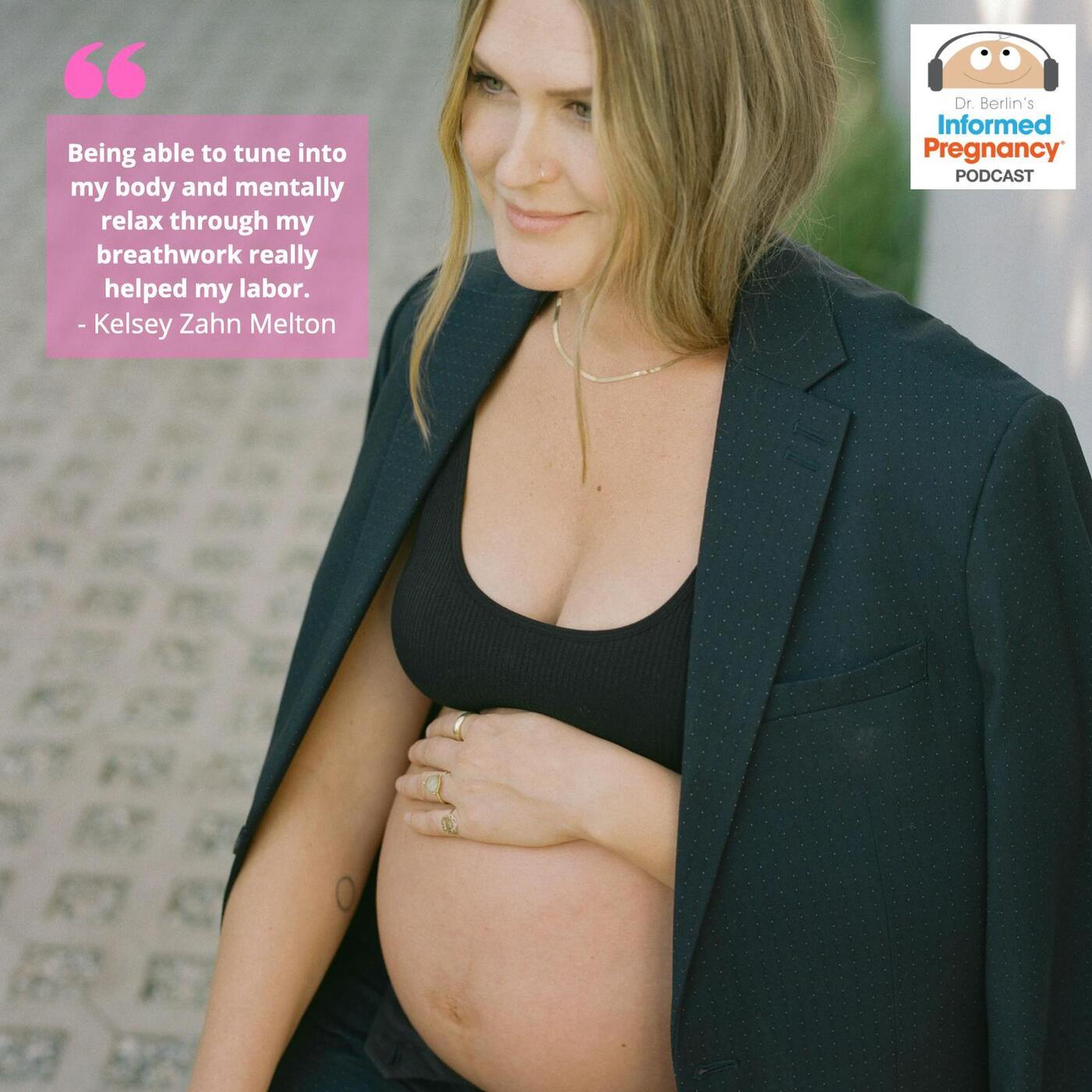
Kelsey Zahn Melton [45:06] So I actually in the middle of the night meditated for probably two or three hours, and that really helped. I've meditated for a very long time. So being able to tune into my body and consciously relax it really helped. And the breath work that I've worked on, like breath and tuning into my body really, really helped, especially at first, early on. Yeah. So that helped.
Dr. Elliot Berlin, DC [45:29] Did you plan for your doula to come to the house?
Kelsey Zahn Melton [45:32] So we kind of talked to her about it and she is a doula who comes during like not active labor as in centimeters wise active labor, but like when things are picking up. So she was texting with me and Drew, but then she and my husband Drew also had like their own like back channel happening where she's like getting the like actual details from him. Yeah. So yeah.
Dr. Elliot Berlin, DC [45:58] Okay. So was there a point where she felt like things are picking up and I should go over there?
Kelsey Zahn Melton [46:05] So she didn't end up coming until so I labored at home and you know, it's like the type of labor where like we went on a walk with our dog and we went and got coffee and ate breakfast and you know, that whole thing.
Dr. Elliot Berlin, DC [46:19] Did your dog act funny?
Kelsey Zahn Melton [46:20] I don't know that he was acting that weird. He's just kind of a weird dog in general. Okay. We had friends who were going to come watch him for us, which was really great. So he was just at the house with us and he was honestly, he was fine. He was just being himself and it got to the point though where drew was like, okay, this is probably like 11 in the morning. He's like, I'm going to shower and I'm going to do yoga and I'm going to shower and I was like, cool. I'll just sit on my birth ball and bounce and after probably 30 minutes I stood up and I don't know if she moved or what happened, but when I stood up everything just got more intense and it was like, you know, they always say like you should
[46:59] go to the hospital when you can't really talk through your contractions. And that's where I was at. I was like, like came out to be a lot more. And so that was the point I called my dual issue was like, sounds like you should probably head to the hospital. We're like, okay, cool. So we packed up the car. We went to the hospital, which is like, it's also 40 minutes from my house.
Dr. Elliot Berlin, DC [47:19] So that, okay. So you have to take that into account. Yeah.
Kelsey Zahn Melton [47:24] So we get to the hospital and get put into triage like you do. And unfortunately they were like, cool. You're a hundred percent of faced, but you're only like one and a half, maybe two centimeters dilated. So we're going to send you home, but I had a fever so they couldn't send me home and I had to stay and be tested for COVID and the flu and all the things. And it very quickly became everything. I didn't want like in terms of like, I had to be put on an IV because they wanted to give me fluids and antibiotics. Cause they were like, we think you're just dehydrated, but we have to test you for all of the things, just in case what does the hunter give you a
[48:11] fever? I don't know, but for me, it actually made sense to me that I would have a fever when I was little kid. If I didn't sleep, I would get a fever a lot when I would go to slumber parties and didn't sleep. I would often have a fever the next day. Interesting.
Dr. Elliot Berlin, DC [48:25] Okay. At this point in the pandemic where test results quick, they said
Kelsey Zahn Melton [48:30] it was going to be quick. It ended up being like four hours.
Dr. Elliot Berlin, DC [48:33] Oh, wow.
Kelsey Zahn Melton [48:34] So it was PCR. Yeah. But in that time I started feeling a lot better because they had also given me some Motrin, they had given me fluids and I was on a monitor. Basically though, when they told me I had to stay and wait for that test and it had to be tested and I was on an IV and I was on a monitor and I'm so tired already. I've been up for 12 hours at this point and hadn't really slept. And that sounds like not a big deal, but when you wake up at two in the morning, you're very tired. So it's not natural. Yeah, it's not right. It's not a time of day that anybody should wake up. And I hadn't eaten in a while. And so I was just really at this point where when they were telling me and the
[49:15] nurses in triage were lovely, but they were making it sound much scarier to me as a first time birthing woman. And so I just had this moment where I was like, my doula is not here. I don't know what's going on. I don't know if I'm sick, you know, like all these things. That's what the mind likes to do. The mind takes hold of fear and likes to run rampant with it. And so I very quickly, like I let the emotions come. I felt the feelings. I let the tears come. And I knew in that moment, I was like, I have to choose. Like I have to choose what I said before, which is that no matter how this happens, like all I care about is that I come out of it healthy
[49:59] and she comes out of it. healthy. And if I go down this path, it's not going to go well for me. So I just chose to like be present to what was happening, chose to check back into my body chose to like, listen to her little heartbeat on the monitor and go like, she's healthy, I can hear her heartbeat, we're good. And within a little while, I started feeling better. They let me bounce on my birth ball, which was great. So I wasn't just in that little gurney of a bed in triage. And that's when things started to pick up. So then my mucus plug came out, I was like, great, we've got movement, things are happening. But they had to admit me because they were like, you
[50:36] spiked a fever once we need to admit you now you're like technically more high risk. So we got admitted to our room probably at like five or six in the afternoon. So we were in triage for a really long time. No, and it's well, very tiny little room. Yeah, no
Dr. Elliot Berlin, DC [50:51] windows. Or did you have a window?
Kelsey Zahn Melton [50:52] No, we did have a window.
Dr. Elliot Berlin, DC [50:53] Oh, that's nice. At least.
Kelsey Zahn Melton [50:55] Yeah. But so we got to our room, Drew was finally able to you know, it's like all the things like he was finally able to get food and like all the stuff that you just don't do because you don't know when you're going to get admitted, or if you're gonna have to leave or whatever the thing is. So all that to say we like hung out in a room we cuddled in the timely little delivery bed watching the
Dr. Elliot Berlin, DC [51:17] movie soul. Have you seen that movie? Oh, yeah, I did see it. That's so psychedelic. Okay.
Kelsey Zahn Melton [51:22] Love it. But so I was trying to rest and trying to nap as best I could. And then, thankfully, just as things and mind you, I was in a lot of pain at this point, every time I was having contraction and my contractions were really regular, like they were consistent, we were trucking along, we were doing great. But then they started to pick up even more, and they got stronger, and more painful. And that was probably around 10 at night. And that's when my doula came. And it was perfect timing, because that's when Drew was so tired, he needed a break. I was in so much pain. And so she does massage, and she's a yogi. So she knew how to like have me move. She knew where to put the counter pressure. And it
[52:03] was just so helpful to have skilled hands in the room. Like Drew said, I was in the bathroom when she got there. And he was like, when she got there, I gave her a hug. And I just cried, like to have support for him so that he didn't feel like,
Dr. Elliot Berlin, DC [52:17] Oh, he gave her a hug and cry. Oh, okay. I thought it was gonna curl up and saw in the blanket.
Kelsey Zahn Melton [52:23] Right? We thought about bringing it to the hospital firm. But yeah, so she got there at 10. I still wasn't like progressing as well as they had hoped. But I never had to have pitocin. My contractions were amazing the entire time. Like I just had epic contractions. I also had an epic playlist going my friend Courtney made me a playlist and it's incredible. It is so good. So we had that going and we had twinkly lights and I had my essential oils and I had my little like, on my packing list for the hospital. My doula had recommended to bring like something to look at that will like help you through the hard contractions or whatever. So I had a photo of one of our daughter's 3d ultrasound.
[53:07] And then I also had a monkey and I named him Howard. He's a monkey that my uncle had at his advertising agency when I was little, and I loved him. And my aunt as part of my baby shower gift gave him to me.
Dr. Elliot Berlin, DC [53:20] Your uncle's monkey. Yeah, I'll be a monkey's uncle.
Kelsey Zahn Melton [53:24] So he was there. So it's just like we had like the vibe happening in the room, you know, and then it just proceeded to be a lot of pain for a very, very long time. And at some point in the middle of the night, again, the mental piece of all things, but the mental piece of birth is so huge, right. And somewhere in the middle of the night, probably at two or three in the morning at that point, I've been laboring for 24 hours, or like having strong contractions for over 24 hours at this point. And I, in my mind, the thought passed through of like, I would really love my doctor to come in and tell me I need an emergency section. I would love that.
Dr. Elliot Berlin, DC [54:02] But you're still not on pain meds. Correct.
Kelsey Zahn Melton [54:06] Okay, I am laboring totally medicated free.
Dr. Elliot Berlin, DC [54:11] So there's no like in between in your mind, it's like this or just in that moment, I just want to just a fleeting thought. Okay.
Kelsey Zahn Melton [54:18] I wanted it to be done. But again, I saw that thought go through my mind. And I was like, nope, we can't go down that road. Because again, I'll just be miserable. So in that moment, I was like, I can make it till 7am when the shift changes, I can do that. Because there's new nurses coming in, there's new doctors coming in, I can do that.
Dr. Elliot Berlin, DC [54:37] Did you make it to the shift change?
Kelsey Zahn Melton [54:39] I did. I made it until Dr. Meister came in. And she checked me and she was like, cool, you're at four centimeters. And I was like, okay, great. We've had some progress, you know, like, I was just like, gotta think on the positive side. And the new day nurse that came in was incredible. So I just felt like, like the right team had come on, you know, and my doctor was like, I have to go do a procedure, but I'll check you when I'm done. And if you've progressed enough and you want to, we can break your water and like, see if that progresses things. And I was like, cool. Good to know. So she came back at nine and I had progressed to six centimeters.
[55:23] She was like, would you like me to break your water? And at that point I'm so tired and in so much pain, I was really leaning on my doula for advice, just because I was like, you've been through 400 plus births. What does wisdom say? And she was like, I would recommend you break your water. And I was like, cool, let's do it. So she broke my water and the pain went from a hundred to a thousand and like, I was like, I thought instantly the next contraction yet was the next contraction hit. It was like lightning ripping through my body. And so I labored with my waters broken for about 45 minutes. And I mean, I was just screaming the word out, but that was the only thing that could
[56:08] come out of my mouth was just the word out. And I asked my doula after 45 minutes, I was like, how much longer? How much longer do I have to be in this much pain? And she was like, honestly, four hours. And I looked at her and I looked at my husband and Drew goes, this is your ride, babe. And I was like, okay. And I went through another contraction and I just go, I would like an epidural, please. And at that point, you could have walked in the room and given me an epidural. I did not care.
Dr. Elliot Berlin, DC [56:41] You don't care who it is.
Kelsey Zahn Melton [56:42] I was like, I want it right now. I'm done. The thing of it is, is I think a lot of people feel like they're giving up and it was a completely empowered decision of it was no longer compassionate for me to be in the state I was in. I couldn't stand anymore. My legs were giving out. I was completely exhausted. And I knew that if I got to the point where I needed to push in that state, it would have been miserable. Yeah. And to give my body a break so that I could push her out and like be present to it, I knew that's what I needed to do. And it was the best decision I've ever made. I have photos of like laboring without pain medication. And then I have a photo of me after that our doula took and it is like Zenzon came
[57:30] out. We all had a nap. It was incredible. And then I could feel her head and they were like, you're at 10 centimeters in an hour. Like I went from six centimeters to 10 centimeters in an hour because my body relaxed enough. And they were a little bit high. So are you okay to wait to push? And I was like, yeah, that's fine by me. I feel great. I feel like I could do anything at this point.
Dr. Elliot Berlin, DC [57:54] And did the epidural also get your hip pain?
Kelsey Zahn Melton [57:56] Oh my gosh. It was the best. Everything I could still feel. I just couldn't feel pain. Okay. So I still had sensation. Like I could still sense the contraction. I could still feel when people were holding my legs, but it didn't hurt anymore.
Dr. Elliot Berlin, DC [58:14] You could feel, you said the baby's head coming down, so it couldn't be pulling them.
Kelsey Zahn Melton [58:18] So they sat me up at that point, just so she would drop more.
Dr. Elliot Berlin, DC [58:22] So 10, did you have any urge to push? At that point?
Kelsey Zahn Melton [58:27] I really didn't. I was like, I could, like I could see where the urge to push would come from, but it wasn't strong at that point. Let's put it that way. It was like, okay, we're getting there. It's how I felt. And so they sat me up and our doula, we put our playlist back on and our doula led us in a beautiful, like blessing of parenthood meditation. We all fell back asleep. Drew had a shower. And then at that point, probably an hour and a half later, maybe two hours later, I was like, okay, now I'm ready to push.
Dr. Elliot Berlin, DC [58:57] Oh, that's so cool.
Kelsey Zahn Melton [58:59] And we did know I was pushing honestly because it didn't hurt. It was so fun.
Dr. Elliot Berlin, DC [59:06] Oh, that's very nice.
Kelsey Zahn Melton [59:08] It didn't hurt.
Dr. Elliot Berlin, DC [59:09] But again, you could kind of feel what's happening. How long did you push?
Kelsey Zahn Melton [59:14] I pushed for probably an hour and a half or two hours. Because at that point, through my whole labor, I was trying not to watch the clock as much as possible because I just wanted to A, be present to what was happening and B, I didn't want to feel like things were going slow. You know what I mean? And so I was just like, I want to not look at a clock as much as possible. Yes.
Dr. Elliot Berlin, DC [59:37] I remember a midwife at a birth put a sign on the clocks that said the time is now.
Kelsey Zahn Melton [59:44] Yeah, that's good. And then I was like, wow, this is like a casino. You don't have any idea what time it is.
Dr. Elliot Berlin, DC [59:50] That's real. So you're pushing, were you able to, with the editor, were you able to get into different positions?
Kelsey Zahn Melton [59:59] They did have me. on my back, which was a little bit of a bummer, but at the same time, again, I had kind of just surrendered to this is what needs to happen in order to get her out. And as long as she's healthy, and as long as I'm healthy, that became my thing. If this is how I need to be, this is how I need to be. It's not how I wanted to do it, but that's fine.
Dr. Elliot Berlin, DC [60:18] Yeah. So it's not like your mind was like, Hey, we got to get up and move around.
Kelsey Zahn Melton [60:23] No. And they wheeled in a mirror, which was really cool so that I could see, like if I could actually like visualize what was going on.
Dr. Elliot Berlin, DC [60:32] Is that crazy?
Kelsey Zahn Melton [60:33] It's wild. Like seeing a baby literally starting to emerge from your body. So cool. Like I said, the nurse was amazing. We had a really cool residents that came in that were just so great that were helping while my doctor was like in her other procedure before she could come back and be there to help with our delivery. And the funniest though was, so we had two anesthesiologists, right? To do the epidural. One was like two cool for school, like in a cool scrub cap, cool sneakers, like very handsome young man. The other one was the most socially awkward human being I've ever met in my life. And whilst I'm pushing socially awkward man, number two comes in, peeks his head around the corner of the
[61:16] curtain, you know, and just goes, Oh, pushing, turned around, walked out of the room and never came back. Wow. Okay. It was hilarious. And we all just burst out laughing. It was the best.
Dr. Elliot Berlin, DC [61:29] I'm pretty sure I know who you're talking about. That's what's extra funny for me. An amazing anesthesiologist, by the way.
Kelsey Zahn Melton [61:37] Oh, incredible. Those two, I thank God for them daily because it was a game changer. Well, not what I thought I wanted, but what was absolutely necessary.
Dr. Elliot Berlin, DC [61:49] I mean, it sounds like the whole thing was pretty empowered. Like anything that happened is what you really wanted to happen. Unless as you wrote on the birth plan, something wasn't going exactly as planned, like a fever, then you had pre-agreed that, okay, then I'll do an IV. And just so it kind of followed your plan. And I love also that when you felt like this is not pain anymore, this is suffering. I don't want to suffer in childbirth. And you with conscious decision and, you know, no regret, you go get that epidural and then you love that. That was the choice that you made at that time. Looking back at the whole experience, is there anything that you would do different? Anything you
[62:32] learned from it that you would take into a future birth?
Kelsey Zahn Melton [62:36] I think honestly, I would get an epidural sooner, only because I feel like it allowed my body to relax. Like it allowed my body to open quite literally, so that I could birth my baby. And I think that that is just something going forward. I'd be like, cool, my friend of mine had a nurse tell her once, she was looking for a reason not to get an epidural. And the nurse said to her, some women look at a mountain and say, oh, that's a really beautiful mountain. And some women look at a mountain and think I want to climb that mountain. And she was basically saying like, if you get an epidural, you're not climbing the mountain, you just think it's beautiful. And
[63:15] for me, what I said is like people climb Everest and need oxygen. I just needed oxygen.
Dr. Elliot Berlin, DC [63:22] That makes sense. Well, congratulations.
Kelsey Zahn Melton [63:25] Thank you.
Dr. Elliot Berlin, DC [63:26] You kind of in your current career, just to bring it full circle, not only do meditation for yourself, but you teach meditation.
Kelsey Zahn Melton [63:37] Correct.
Dr. Elliot Berlin, DC [63:38] And is that virtual?
Kelsey Zahn Melton [63:40] It is. I teach on Zoom.
Dr. Elliot Berlin, DC [63:42] So your audience is practically any place in the world that has an internet connection.
Kelsey Zahn Melton [63:48] Correct.
Dr. Elliot Berlin, DC [63:49] And is it specific types of things that people seek out your talents for?
Kelsey Zahn Melton [63:54] I do mostly mindfulness practices, which have to do with being in present moment awareness. I teach a lot of different things. But one of the things I teach a lot is mindfulness because it's so useful. And within that, there's so many different types of practices. So you can do rain or compassion practices or forgiveness practices. And there's all these tools for your toolbelt that just help you live daily life.
Dr. Elliot Berlin, DC [64:25] I have a question for you. Where can we find you online?
Kelsey Zahn Melton [64:29] You can find me my website is currently being renovated, which may take some time because I now have a tiny human on Instagram. And my handle is at Kelsey Zahn.
Dr. Elliot Berlin, DC [64:41] Z-A-H-N.
Kelsey Zahn Melton [64:42] Correct.
Dr. Elliot Berlin, DC [64:43] Actually, is there a bunch of spellings for Kelsey too?
Kelsey Zahn Melton [64:46] It's K-E-L-S-E-Y-Z-A-H-N is how it's spelled.
Dr. Elliot Berlin, DC [64:49] Beautiful. Kelsey Zahn. I'm going to go over there and connect with you because I need some mindfulness.
Kelsey Zahn Melton [64:54] And I'll be back to teaching probably. At the time of this recording, I am not back to teaching yet, but I will be soon.
Dr. Elliot Berlin, DC [65:00] Okay, Kelsey, Xan, Zen, thank you for coming on, for sharing your awesomeness and sharing your personal story so others can benefit from it.
Kelsey Zahn Melton [65:09] Thank you so much for having me.
Dr. Elliot Berlin, DC [65:11] Oh my goodness. I knew this was going to be an extra long episode before we even thought about recording it because there's so many interesting things to talk about. And I didn't even know some of them just came up along the way. I feel like we could do the full Joe Rook in three hours. Gosh.
Kelsey Zahn Melton [65:27] No.
Dr. Elliot Berlin, DC [65:28] That's a long time.
Kelsey Zahn Melton [65:29] I don't know how he does it, but with a guest like you, I could totally get it. It's very kind.
Dr. Elliot Berlin, DC [65:34] If you want to connect with us, we're on Instagram as well at drberlin, D-O-C-T-O-R-B-E-R-L-I-N.
Want more pregnancy + parenting? Start your FREE TRIAL of Informed Pregnancy+ and get access to all our curated pregnancy and parenting content — original series, iconic birth films like The Business of Being Born, prenatal workouts and more.
