
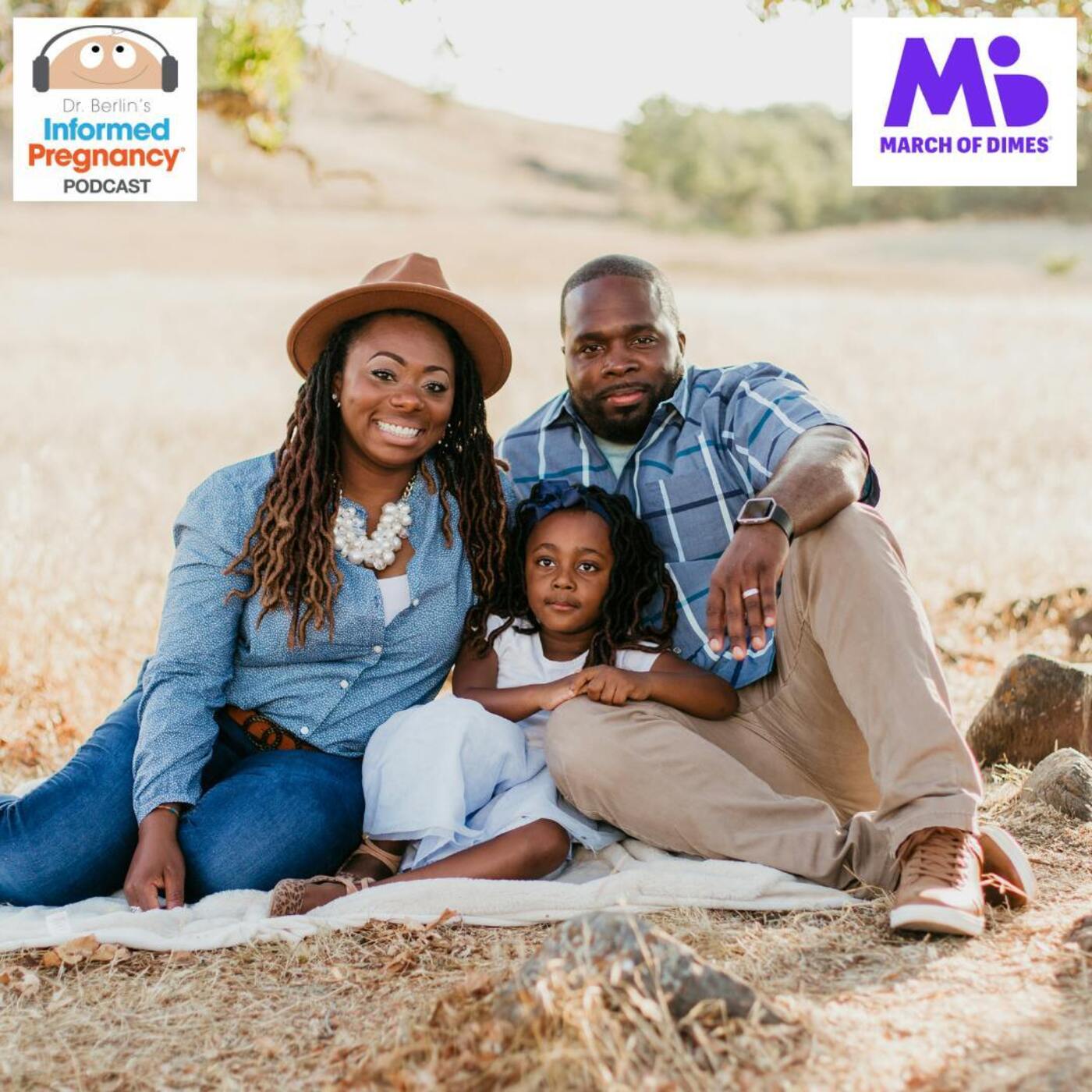
January 21, 2021 · 45 minutes · Episode 210
About this episode
San Francisco Paster, Mother, and March of Dimes ambassador Dani Kilgore shares her moving ‘faith journey’ to motherhood. We discuss some of March of Dimes simple, effective steps for promoting healthy pregnancy and childbirth.

Learn more about your ad choices. Visit megaphone.fm/adchoices
See Privacy Policy at https://art19.com/privacy and California Privacy Notice at https://art19.com/privacy#do-not-sell-my-info.
Key quotes
“My mother taught me really early on to pay attention to the signs that my body gives me that your body will tell you when something isn't right.”
“it's when your children die, that's the thing that you're not prepared for. That's not the perceived natural order of things.”
“They turn these stories of sorrow and suffering into stories of courage, bravery, and hope. And they celebrate these stories.”
“No one seemed to see me as a concerned mother-to-be who is telling you that something's not right.”
“you see me as a human. You see me as a person”
Related episodes
- Ep. 190 Julie Sawaya – After Birth
- Ep. 351 Katelyn Fusco: 'Happy Homebirth Fix'
- Ep. 188 Joanna Bavero – Birth Story
- Ep. 182 Randi Wood – Birth Story
Transcript
AI-generated transcript with speaker labels — may contain errors, especially names and medical terms. Dr. Elliot Berlin, DC appears in blue; Dani Kilgore in orange.
Download PDF of the Transcript
Dr. Elliot Berlin, DC [1:13] Welcome to the informed pregnancy and parenting podcast. I'm your host. Dr. Elliott Berlin My guest today is a San Francisco area pastor who's joining us to share her pathway to parenthood or what? She calls her faith journey about becoming a mother She is a ministry mentor and a wife and the mother of a five-year-old girl She's an ambassador for the March of Dimes the sponsor of today's podcast Danny Kilgore. Welcome to the podcast
Dani Kilgore [2:02] Thank you so much. Thank you so much for inviting me. Dr. Berlin. My pleasure
Dr. Elliot Berlin, DC [2:06] It's an honor to have you I've been working with March of Dimes for years now I'm really supportive of what they do grateful for what they do and it's incredible work And it's really had a positive impact on so many babies and families I would love to start with you at the beginning. Where are you from originally?
Dani Kilgore [2:23] So I am a southern girl. I was born in Texas spent some time in Arkansas and I just recently moved as a two and a half years ago from Atlanta, Georgia So I am southern girl at heart through through and now you're here in California Yep, I just moved two and a half years ago to the Bay Area of California. So right outside of San Francisco I live in Marin County Yeah, thanks Yeah, I am a pastor at a church there is that what you move for Uh-huh. Yep. I was a teacher for ten years prior to and Got called into a full-time ministry to be the associate pastor of outreach and missions at a church here in Marin County
Dr. Elliot Berlin, DC [3:09] Amazing. So I've only gotten to know you for a few minutes before the podcast, but you have such a positive energy Just anybody who gets to benefit from that and seems really lucky So you have a five-year-old girl?
Dani Kilgore [3:25] My husband and I have a five-year-old girl I've been married for 11 years Thank you, it'll be 12 years this year I mean November of 2021 will be 12 years been together 13 will be married for 12 this year So yeah, we just counting them years down
Dr. Elliot Berlin, DC [3:47] I'm headed into 25. Wow, that's a quarter of a century right there. What's the good news is I'm Starting to get the hang of it I know where to shop when I messed up That's awesome, you know in a shop and where to place it so she can see it immediately Center on social media Look where I am baby look where I am So you have been married for 11 years and when you got together with your husband Did you think about family right away?
Dani Kilgore [4:26] So yeah, so it's interesting You know, I have an older sister who's nine years older than me and I have a half-brother who's 17 years younger than me And so, you know, I pretty much was raised as an only child But my husband comes from an extremely large family. He has seven siblings all together So that was one of the first things we had a conversation about when we started dating Interesting first question. It's like just so we are clear. I am not able to give you seven children, that's not what I, that is not in my heart's desire. And little did I know how much I was speaking into that. So, but yeah, we made the decision that we knew we wanted children.
[5:13] We knew we wanted to have a family together and yeah, that was a part of our life's goal or life's desires as we connected when we got married, that we would have children together.
Dr. Elliot Berlin, DC [5:26] And when you started to try and have the things go for you.
Dani Kilgore [5:29] So like I said, my husband and I have been married for 11 years. We got married in November of 2009 and it was shortly after that. I discovered I was pregnant. So I found out I was pregnant in February of 2010. And so we were very new in our marriage when I found out. So we weren't necessarily trying. And so I wasn't all the way thrilled because I was like, no, what happened to our, you know, time of just us and now we're pregnant. But my husband, like I said, coming from a huge family was extremely excited. And so, you know, we were getting excited about it. And then, um, I had a miscarriage. I had an early miscarriage at around six, maybe seven weeks.
[6:12] I miscarried for the first time.
Dr. Elliot Berlin, DC [6:15] Wow. What a mix of emotions, not really being ready for pregnancy and being ready. Did you wrap your mind around it in that time?
Dani Kilgore [6:22] Like, yeah, yeah, it's interesting because, you know, I was not completely excited about it. Like, oh no, this is not the way I had wrote my plan of life out. You know, I written out my plan of how things were going to go, what month things were going to happen, what year, and that completely like went to the different direction. That's why, you know, I was a little disappointed at first. But then as I, you know, started going to the different doctor's appointments and, you know, looking at baby clothes, I was like, Oh, well, you know, I'm actually excited about this. This is going to be so much fun. I'm going to be a mom. And then I miscarried.
[6:58] And so then I'm all devastated and disappointed and hurt. And I had to have a DNC because my body didn't fully let the pregnancy go. It was still there. And so my doctor could see that it wasn't growing anymore. And so I had to have a DNC. And so even that process, it was hard. It was devastating because not only am I no longer pregnant, I have to go and have a procedure to make sure I'm not pregnant. That was hard. Dealing with that was hard.
Dr. Elliot Berlin, DC [7:29] Had you known other people to have miscarriages?
Dani Kilgore [7:32] No, I didn't. I didn't know anyone. And it wasn't until after mine happened that, you know, someone shared. One of my friends from college, her mom shared with me, she didn't say she had a miscarriage, she said she had a still birth. And I remember being at her house and seeing her first son's picture being on the mantle. And I remember asking my friend, who is that? And she said, oh, that would have been my older brother because she was the oldest at that time of three. And her brother Michael would have been born, was born before her. So yeah, so that was the first person who ever shared with me their experience of losing a child. And she helped me a lot.
[8:09] She comforted me. And I remember one thing she told me, she said, you know, I pray this never happens to you and I pray that you don't miscarry again. And she said, but if it does know that, you know, it's not something you ever get over, you just take it day by day. And some days are better than others and some days will be stronger than others. She said, even after 26 years, you know, I still sometimes look at that picture and get sad. That was the first time someone had ever shared anything like that with me. That's not something you fathom, you think about. I don't even think I remember even hearing about miscarriages. The most I'd ever heard about was like abortions.
[8:48] That was the closest thing to ending a pregnancy or a pregnancy ending that I had any recollection of. So miscarriages and things like that wasn't talked about. Yeah.
Dr. Elliot Berlin, DC [8:59] And I think it just makes it that much harder. And especially for those early ones, which are super common and, you know, seemingly part of the selection or rejection of babies that are going to be compatible with life and going to be healthy or not healthy. And in that context, it's almost somewhat relieving when the pregnancy doesn't thrive very early on without any of that exposure or information or thinking you're the only one or what's wrong with me. It's very hard. So, you know, I think when people are courageous enough to talk about it, it helps people down the road who get to hear and listen to other people share their experiences and realize there's nothing wrong with you.
[9:37] And, and it's never comfortable, you know, but it's a natural part of life. I generally find that people who have multiple kids somewhere along the way had an early miscarriage. When did you go for another try?
Dani Kilgore [9:52] So after that happened, my husband and I decided that we wanted to take our time a little more. enjoy marriage, the marriage life with just he and I. And so we decided to stop, we decided not to try and to do things and try contraceptives that would keep you from getting pregnant. So I got an IUD after that procedure was done. And so that gave us opportunity to kind of get deeper into our careers. He was new at his job. He's a media director and I was new at teaching. And so I got some more time under my belt. In 2013, we felt like, okay, let's try it again. And so in 2013, we decided to try, we got pregnant, found out it was a boy. I was in my twenties.
[10:40] Like I said, I was a teacher. I was also a soccer coach. So I was in pretty good health. I mean, I was a healthy 20-year-old outside of the first miscarriage, like you said. My doctor told me it happens more often than not. And so there's no reason to think that there was something wrong or anything like that. It's like, ah, it happens more often than you think. And so 2013, I found out I was pregnant. When I was like 20 weeks, I started spotting and having some bleeding. And I had started to have headaches here and there. And I remember telling my doctor and they ran some tests and took some samples and things like that. And they all came back
[11:18] and they couldn't tell if there was anything wrong. Nothing came up. And so at that point, they just said, well, you know, we'll just keep watch. And they left it alone. That was at like 20 weeks. Within that 23 weeks, I remember for like a week straight, I had like these severe headaches again. I was feeling faint and dizzy. I remember them asking me, calling the nurse line and they asked me to go to like Walgreens or to the fire department and get my blood pressure checked. And so I remember going to Walgreens, checking my blood pressure and it was really high. And I remember telling them, they said to try lying down. Maybe you have an inner ear issue.
[11:57] It was all of those different things. And then one day I woke up and I felt like my head was about to explode. My heart felt like it was racing. I didn't know what was going on. And so I went into the doctor's office. My husband and I went and I shared with them what was happening. And they wanted to send me back home with this urine test that I was gonna take over a course of days and bring it back and they would test it. And I was really adamant about not going home because I felt like something wasn't right. Like I felt like something wasn't right. My mother taught me really early on to pay attention to the signs that my body gives me that your body will tell you when something isn't right.
[12:40] Pay attention, does your body normally do this? Do you normally do that? If not, just keep an eye out on it. And so in this case, in my pregnancy, having these severe headaches and feeling dizzy and feeling my heart beating out of my chest, I was like, something's not right. And my doctor, my OB wasn't there the day that I was there. And so that was something that they kept saying like, well, your doctor's not here, your doctor's not here. And it took me being very persistent, almost aggressively persistent. The nurses chatted for a little bit and finally a doctor said, okay, it's fine. Bring her back. Really nonchalant like. And when he brought me back, he took my blood pressure.
[13:21] Well, the nurse took my blood pressure first. And I remember she said, oh, I'll be right back. I'm gonna go get the doctor. And then the doctor came in and he took the blood pressure. And then he says, okay, we're gonna go ahead. Well, actually he said, I'll be back. And then he came back maybe five minutes later and he said, okay, I need you to go to the hospital. I've already called the head. I need you to go straight there. Do not go back home. Do not do anything, go straight there. And then when we got to the hospital, we got checked in into a room and he came back and he said, yeah, we believe you have preeclampsia and we want you to stay in the hospital
[13:57] until you get to full term. And like I said, I was 23 weeks at that time. And so I'm like doing the math, like I'm gonna be in the hospital for a long time.
Dr. Elliot Berlin, DC [14:06] Several months, yeah.
Dani Kilgore [14:07] Yeah, and it was hard to imagine that that was going to be my life, like this room and this bed. And I mean, I had very nice high-risk nurses. They were really nice on that floor, but it wasn't a happy time because I knew that I was there because they said I had preeclampsia and that they had to watch me because if they're not careful, it could quickly or easily turn into eclampsia, which is fatal. Yeah. And so I was there and at 28 weeks, I remember it was at night, the nurse woke me up and she says, I need you to wake up because I need to check something. And so she checked something. She's looking at the monitors and then she calls the doctor.
[14:51] And the doctor comes in, he's looking at the monitor. No one's telling me anything. And then they take me and they go to take me downstairs to a room, do some ultrasound. And at that time they discovered that my placenta had completely stopped working. That the placenta was no longer sending blood to the baby and that his heart rate had dropped significantly to the point to where they needed to do an emergency C-section. And so at that point they took me back upstairs, got me prepped for surgery and I had a classical cesarean. They said that they needed to do that because of his heart rate, my blood pressure and because of his size.
Dr. Elliot Berlin, DC [15:31] So by that you mean the incision was up and down instead of the more modern.
Dani Kilgore [15:36] Correct. Yeah, correct. Yeah. And unbeknownst to me, by having that type of C-section, that now restricts me to having that type of C-section anytime I have a child. Because they said the option for V back off the table. Right. I mean, my son was born on September 19th, 2013, five days after my birthday. And he's born one ounce less than a pound.
Dr. Elliot Berlin, DC [16:06] Oh my goodness. At 28 weeks?
Dani Kilgore [16:09] At 28 weeks. Yeah. He was extremely small.
Dr. Elliot Berlin, DC [16:15] In through my head, I'm going through all the things that weigh more than pound in my life. Like a can of Coke, you know, weighs more than a pound.
Dani Kilgore [16:25] Yeah. He was so small. Like you put your hand up to the diapers and it was like half our hand was his size of his diapers and those had to be folded over. They had to be folded over. And so from that point he was in the NICU and I was pumping milk like nonstop. Like I was like a milk factory because they wanted milk for him to try to strengthen him. They said that because he's premature, you know, the type of milk that I produce would help him be stronger. And so we were doing everything we were told to do. We live about 45 minutes away from the hospital as well. So we were taking a pretty long commute every day. I stopped teaching so that I could spend more time there with him.
[17:10] And so at that time, my husband was the sole breadwinner. So financially it was a little tough, but we were committed to being there with our son. His lungs was the part that was the hardest because his lungs were extremely underdeveloped. But, you know, as the days progressed, he was gaining weight. He was getting bigger. You know, at one point he was even taken off of the breathing machine and he was breathing on his own. And then October 31st of 2013, he got pneumonia and them trying to clear that infection up and things like that. It caused his lungs to collapse and they had to resuscitate him. And from that point, he never recovered everything that they did, antibiotics,
[17:56] you know, breathing treatments with the oscillator. I think that's what it was called. They tried everything and he just could not recover. And so on November 8th, 2013, his heart rate dropped and they were trying to resuscitate him again and they couldn't bring him back. And he passed away after 50 days of life. Yeah, that was a tough time. So he was born five days after my birthday. And then he passed away four days before my husband and I's anniversary. So it was definitely, yeah, it was a hard time. It really was. It was very hard.
Dr. Elliot Berlin, DC [18:38] So, so sorry. I know that you have a child now. That means you eventually got back to the drawing board. But yeah, I can't imagine what that's like to go through. And I was just saying earlier how positive you are and, you know, how you taking steps to heal and to recover from that. So I'm going to take a quick break and then we'll be right back with Danny Kilgore.

Dr. Elliot Berlin, DC [20:11] Welcome back to the Informed Pregnancy Podcast. We're talking to Danny Kilgore. So, Danny, after such a difficult loss and traumatic experience, where do you go to find comfort and strength and to pick up the pieces and move forward?
Dani Kilgore [20:31] Yeah. So, like I said, that was a really hard time for me and my husband. It was devastating, you know, for a while, it felt surreal. I don't even think I realized the type of trauma that I had experienced. I hadn't completely connected that it happened. You know that one day your parents will pass away. You know that one day your grandparents will pass away. And if you're married, you know that one day you or your spouse will pass away before one or the other. But it's when your children die, that's the thing that you're not prepared for. That's not the perceived natural order of things. And so it's hard to figure out what to do with that because you can never prepare for
[21:18] anyone's death, right? But the death of a child, the loss of a child, the loss of a pregnancy, loss of a birth, you don't know what to do with that. It's hard to comprehend. And, you know, I am a pastor and my faith is a strong part of who I am. My spirituality is what brings me hope and faith and things like that. But it would be unrealistic for me to say that that wasn't a turning point for me because a lot of questions came up for me. Why has this happened? What's wrong with me? Kind of sort of like what you were saying earlier. Why is this like this? Is there something wrong with me? Am I broken on the inside? You know, historically and still kind of today, you know, the value of a woman
[22:02] is based off of whether or not she can have children. You know, how many children can she have? Can she have a vaginal birth? You know, there's so much emphasis placed on those women. And when you're not that story, you start to feel at a loss. You feel hopeless. You feel a lot of grief. It was only because of me being able to have a husband who was there. We supported each other when he was down. I was there for him when I was down. He was there for me. You know, a lot of marriages tend to fall apart and break away when things like this happen. But ours remained faithful. And matter of fact, it strengthened our church family was extremely helpful. Our family and friends were there nonstop making
[22:48] sure I mean, I think I didn't have to cook for like, at least four months straight. I didn't have to cook. I came home from the hospital, the whole house was clean. Had a new TV from my husband's aunt. I was like, Wow, they really Yeah. They really jumped in. You had some community there. Right. I had a big community and it helped, you know, and I also had therapy. Like I went through therapy, I had a therapist, my husband, I did group counseling. And those two things really were helpful. Because when you're in a group with others who have a shared story like yours, the support and the comfort that you receive from hearing someone else's story that's like you is
[23:29] like none other. And the interesting thing is one of my friends asked if she could post this online on my social media because she shared my story and she put it out so people could pray and things like that. And I said, Okay, that's fine. But when that happened, all of these different people from in my life from high school to college to my adulthood started to reach out to me and tell me that this happened to them. Like, oh, I had one of my college roommates, she shared with me that it had happened as recent as five months prior. Well, she had a stillborn at eight months. And I was so confused, I think but the connecting factor and the most alarming thing for me was that all of these women were
[24:11] African American. And that's when I started to ask questions. I wanted to know why was this happening to African American women? Why so many African American women have this story of miscarriages, premature births, stillbirths, or babies that died in the NICU? Why is that the case? And so I started to Google I started to do research and then that's how I found March of Dimes. And March of Dimes was a wealth of knowledge. I mean, articles upon articles upon statistics, and I just started to research and find information. And it was about Mother's Day of 2014 that I got connected with March of Dimes. And I started a team and we walked in the name of our
[25:00] son who passed away and the miscarriage that we had had. And we called it Team Kilgore. And you know, that race or that walk gave me a cinch of like, wow, I have a strength that I didn't know. Like I have hope. They turn these stories of sorrow and suffering into stories of courage, bravery, and hope. And they celebrate these stories. They celebrate this time. They celebrate these seasons and they also then allow you space to mourn and to grieve and remember. And that was really, really helpful in my healing because I didn't have those spaces, you know, after a while, as the months went by, as the years went by people forget, but it's still a part of my life.
[25:48] It's still a part of my husband's life. But my friends and my family, they move on because it's not something to talk about on a regular basis. And it's not something that is brought to the forefront. And so my husband and I decided that he would always be a part of our family. He would not be forgotten. And neither would our child that we never got to meet at that point. And so, but yeah, friends, family, therapy, group therapy and the March of Dimes race really helped bring healing to my soul. And it gave me an opportunity to dig deeper and find answers and to get information so that my son's passing was not in vain.
Dr. Elliot Berlin, DC [26:33] Did you find the answers specifically to why African-American women, at least in your circle, were having seemingly more of these outcomes?
Dani Kilgore [26:45] Yeah, so, you know, one of the things that I found out was just the disparities in people of color, specifically African-Americans, and accessing healthcare and having access to prenatal care. But that wasn't my case. Like I had health insurance. I had access to, you know, really good doctors. So I believed. What I did experience was what seemed to be discrimination and what seemed to be, you know, a labeling of, oh, this is just another angry black woman coming in and there's really nothing happening because that doctor's office with my son didn't take me seriously. They were trying everything they could to get me out of the doctor's office. No one seemed to see me as a concerned mother-to-be
[27:35] who is telling you that something's not right. And, you know, what I found is a lot of women, a lot of African-American women have this same story, how they didn't know their rights, how they didn't know that they could access certain questions and could ask their doctors to explain what is this. I didn't know what a classical cesarean was. I didn't know the implications of that. It wasn't told to me. And had I known, had I been more educated or had I had access to that education or that knowledge, I mean, I could have advocated for myself in other ways. You know, I didn't know those things. And a lot of women of color don't know because one, they don't have access to proper healthcare.
[28:20] And two, in those that do, they're not always taken seriously when things go wrong.
Dr. Elliot Berlin, DC [28:25] Yeah. I mean, both of those are grossly unfortunate. And the hope is today, at least, that measures are being taken to reverse that. But you're right. It can't be just access to healthcare because those disparities run all the way up the socioeconomic levels. And you have access to healthcare and women who have access to the same exact healthcare still have disparity in their outcomes. On the flip side, I would say, my experience working in pregnancy for about 20 years now is that women in general are not typically aware of options that they have all throughout the process of pregnancy, childbirth, postpartum, and some of the things that you were saying
[29:04] about the classical incision and other things like that. Those are things that people generally don't know about. And that's the whole reason we started to inform pregnancy, to be able to try to compile those types of information and deliver them to anybody in a free podcast and make them accessible to anybody who has any type of podcast app. And you're kind of one of those people who courageously stands up, brushes yourself off, and takes your pain and makes sure that you're gonna do things to help other people not experience that kind of pain. And I don't know if your son's situation could have ended another way, if it was preventable or not.
[29:46] But many of them are. And still people don't know how they can take measures to prevent those things from happening. But through you and through March of Dimes, there's a lot of information that can be extremely helpful. And we'll get to that in just a moment. But first, you did get pregnant again.
Dani Kilgore [30:03] Yep, I did. In 2014, I got pregnant again and miscarried again.
Dr. Elliot Berlin, DC [30:08] Oh my goodness.
Dani Kilgore [30:09] And yeah, I think at that point, my husband and I were like, okay, let's reevaluate our family situation. And maybe we look at, hey, what would it look like if it's just you and I? Because this is starting to become really heavy on our hearts, on our spirit, on your body. He couldn't take me crying, seeing me go through this again. It was breaking him. It was breaking me too. And so we had decided after the miscarriage in 2014 that, okay, maybe let's just it be you and I. And we're gonna see what family looks like, explore what that looks like for it just being you and me and enjoying just the married life without children and things like that.
[30:49] And so we took a trip in 2015. We took a vacation to Las Vegas. And there's a saying, everything that happens in Vegas stays in Vegas, but that's not true. So some things actually come back with you. And so I found out that I was pregnant and I was like, oh, okay, all right. And there was a lot of anxiety around this pregnancy. I'm even anxious at this point for that pregnancy. Yeah, it was a lot of anxiety around that. But prior to that, I was in a private doctor's office when I had my son. And when I had the miscarriage after that. At this point, I'm at a different school in a different school system. And the health insurance that was provided for us
[31:37] was Kaiser. And I had like this plethora of doctors that I could just choose from. And so I found a doctor, a doctor of color. And I'd never experienced type of care like I experienced. She immediately said, okay, we're gonna get you with a high risk pregnancy doctor, the highest pregnancy doctor. He was an older Caucasian man, but he was so kind, so gracious. And the one thing that happened in every doctor's office I went, they didn't start by giving me all the facts and things like that. They started off by saying, as I'm looking at your chart, I see you've experienced some losses. I'm so sorry for that. I'm so sorry for these losses. I will do the best I can to care for you during this time.
[32:29] And at that point, it's like, wow, you see me as a human. You see me as a person and not another person on your service or your records or whatever.
Dr. Elliot Berlin, DC [32:40] Like a chart number, yeah.
Dani Kilgore [32:42] You didn't see me like that. You see me as a human being who has gone through some devastating things up until this point. I was at the doctor's office at least every single day. I mean, every single week. I was at some doctor's appointment every week. It's just little things that they started to implement. And I don't know if it did this as a result of what happened in the past with my son and the miscarriages, or if they said, you know what? We're gonna do this. Or if this was just their practice of care. But at a certain number of weeks, they said, we're gonna start you on baby aspirin. And we want you to start taking this type of prenatal vitamins specific because X, Y, and Z.
[33:20] And it was all of these different things that they were suggesting that was never recommended before. No one ever said any of these things before. And so my daughter was born at 35 weeks. She was born prematurely still.
Dr. Elliot Berlin, DC [33:36] So did your water break?
Dani Kilgore [33:37] No, so I was at my high risk doctor, high risk pregnancy doctor. And he was doing his check. He was doing like a check where he puts this thing on my belly and he hits it to see how my daughter would respond. And he said that that gave him idea of her heart rate and things like that. And he did it at a test or something like that. And I guess her response was a little slower than it had been. And in his mind, and in his opinion, my body or my placenta was at the early stages of where it was with my son. And he said, well, you're at 35 weeks. You're at a really good stage. And he said, she might still be in the NICU, but it will be because of her weight and there are,
[34:24] and I just want to share with you that should we take her out now? These are some things that could happen. And he told me all of the risks, like the birth effects and losses and things like she can be blind, she could have a hearing loss and all these different things. And he said, but in my opinion, I think it's worth it. And he said, but I'll let you and your husband decide. That option was not given to me before. No one has sat down and shared different options and risks. And if they shared it, they gave me a piece of paper and told me to read it. And then they came back and said, okay, you want to sign here or something like that. And so-
Dr. Elliot Berlin, DC [34:55] With probably a tiny little print, you know.
Dani Kilgore [34:57] Right, right. And so my husband and I- decided, okay, we're going to do it. And so the doctor came back. He said, okay, well then it's a great day to have a baby. And then he sent us to, we're like, oh, it's going to happen. Like right now, like, what? Okay. All right. So we go to the hospital and we get prepped up and, um, I gave birth via cesarean again to my daughter and even that doctor there, she was a doctor of color, she was a middle Eastern doctor. She was so kind and talking me through it. And you're going to feel pressure and you're doing great. Are you okay? It wasn't like that with my son. And I know it was an emergency situation then, but still, and so
[35:39] my daughter was born at four pounds and then she lost the ounce the next day. But then after, you know, she started eating and things like that, she gained it back, but she was never on a breathing system or anything. She was able to breathe on her own. She was able to eat with a bottle. She was just in the NICU to get fattened up. And so my mother-in-law was like, so you need to eat some cornbread and some grits so you can thicken up that breast milk. So I could think of her up a little bit, but she was born prematurely. As a result of her being born prematurely, she does have a hearing loss. So my daughter has sensorineural hearing loss and she
[36:17] wears bilateral hearing aids. But outside of that, my daughter is five years old. She's healthy. She has language skills. She speaks well. She's in kindergarten right now and you know, she's reading and she loves all things pink and princess and loves to sing and dance. You know, she is a blessing. What we call our faith journey to becoming a parent, my faith journey to becoming a mother. You know, she for us represents a miracle, a live miracle in our face. Every time I see my daughter, it's like, wow, you are a miracle. She has no idea what we went through to get her here. The faith that it took the tenacity, the resilience it took to stay the
[37:05] course and to give birth to her.
Dr. Elliot Berlin, DC [37:07] And so, and a couple of nights in Las Vegas, I could literally sit here and listen to you talk forever. You're just so inspiring to me. Sometimes when I do this podcast in general and people talk about their experiences with healthcare providers, I've learned a lot over the years, who I was day one and you know, coming out of clinic to today, I learned a lot. And I just learned so much when you openly and honestly share, like this was my experience here and I thought that was normal and then I had this experience and people were explaining things to me and asking me for my input and do you consent to this? And that's the way it's supposed to be always, right.
[37:52] But it's not always like that. And I know for sure that other practitioners that listen to this podcast also learn from you sharing that way. So when you have a person who's going to be a potential patient and you have this positive effect on them by empowering them with this type of information, you're helping a person. But when you help a provider better understand the patient experience and how it's perceived and how it's received. You know, you can help an infinite number of people because they're going to be seeing patients all day every day. So I really appreciate you in so many ways. We're going to wind down, but I really want to learn about March of Dimes.
[38:28] I mean, I know personally a lot of the things that they do and stand for and their goal really is to minimize birth defects for everyone. And with all the research that they've done and all the expertise that they have, they have some simple tips that people can take to try to minimize a child being born with birth defects. What, what are they?
Dani Kilgore [38:50] Yeah. So January, this month is actually birth defects awareness month and prevention month. And so the CDC and March of Dimes came together. They collaborated to create a website with wealth of knowledge on ways that mothers to be can prevent birth defects, things that you can do. And I know like within my case, my daughter, her birth defect wasn't preventable because she's born prematurely, but there are some birth defects that you can prevent. And we have six tips that they say that you can use. And the first one is, you know, we live in some really interesting and crazy times right now because of the pandemic and the COVID-19 virus was really devastating for a lot of people in the world actually.
[39:37] And so if you're a pregnant mom, or if you're wanting to become pregnant, the first tip that they offer is you protecting yourself from COVID-19 and doing all of the things that the CDC recommends and they recommend you washing your hands thoroughly with soap and water. If there's no soap and water available, making sure that you use hand sanitizer, making sure that you're wearing masks. and things like that, limiting the time you spend in public settings and in large groups and things like that. And so that's the first tip that they are offering. And that's one that is current to where we are today right now. And the second thing is if you're a mother-to-be
[40:18] or if you're wanting to get pregnant, you're trying to get pregnant, making sure you take 400 MCGs of folic acid every day. That's something that my OB here in California recommended, no one had told me that either. She told me that this year, just this year. Well, not this year, 2021, but 2020. She told me that because my husband and I have decided to try again. And she said, okay, well, what I want you to do is start taking prenatal vitamins now and folic acid now. No one told me that, I didn't know. And I'm like, take prenatal vitamins. And she's like, yes, what that does is that puts those vitamins and things like that in your body already.
[40:56] So once you get pregnant, it's already there. You're giving yourself a better chance. So those are things that I didn't know. And that's one of the things that the CDC and March of Dimes recommends. The third thing is making sure that you get those prenatal checkups, pre-pregnancy checkups and things like that. Now I know the third tip to me is a little hard depending on your community and your economic status, because like I talked about already, access to healthcare is not available to everyone. And so as much as you can, as often as you can, and those that can and do have access to good healthcare, they should make sure that they stay up to date
[41:35] on their checkups, as well as staying up to date on your vaccinations as well. That's tip number four. And then tip number five, before you get pregnant, you're supposed to try and reach a healthy weight. That's what you're supposed to do. Like in my case, we moved here from Atlanta, moved to California. I thought, oh, this is the world where all the vegans and everyone live. But in actuality, all this farm-to-table food and it's so good, and the next thing I know, I'm like, oh gosh, I've gained like 15 pounds. And then COVID-19 happened and I put on COVID-19 pounds and it's like, gee, like, yeesh, okay. And so I'm like, okay, I need to lose some weight
[42:18] before we try this again. So then, and as you get older, as in my case, you get over 30, 35 or whatever, it's not as easy. And so my doctor said, well, what we're gonna do is try to reach a healthy weight as possible, but you might have to do that along while you're trying to get pregnant. And so for those that can, the CDC recommends trying to reach a healthy weight.
Dr. Elliot Berlin, DC [42:43] Do pushaways instead of pushups. So. You know what happened is that we have four kids and after our first, my wife insisted on getting pregnant again before I lost all the weight from the first baby. And then I just gave up on myself.
Dani Kilgore [42:59] Well, you know, after 25 years of marriage, it's like, you know, you love me. Yeah. It's more to love. It's so much more to love. And then the last one, which is a very important tip is to avoid substances that could be harmful during a pregnancy. And that's like, you know, avoiding alcohol consumption, avoiding those recreational drugs, you know, making sure that you are very mindful of what you're putting into your body so that you could give you and your baby a fighting chance to be a healthy mom and a healthy baby. And so I know I've said a whole lot. And so if they want to learn more, they can go to marchofdimes.org, forward slash birth defects,
[43:44] and they can read everything that I said and so much more.
Dr. Elliot Berlin, DC [43:47] Tremendous amount of information on March of Dimes. Those six tips are pretty simple and straightforward, but yet pretty powerful at helping to ensure healthy pregnancies and healthy outcomes from birth. Danny Kilgore, I appreciate you. And it's been a rollercoaster of emotion, but overall I'm inspired by you in this conversation. And I rarely do this, but I'm going to go back and listen to the whole thing again when it goes live, because I know this conversation is like one of those books you read and then you read it again and you realize, wow, there was a lot more in there than I even realized the first time. And you get something new out of it every time, so.
Dani Kilgore [44:26] Praise God.
Dr. Elliot Berlin, DC [44:27] Thank you so much for being you and for sharing and for helping people have healthy babies. I send a little blessing to you and your partner that your womb becomes another sacred home for a little baby and that your baby has a safe, healthy pregnancy and you have another healthy birth and you come back on the podcast and tell us all about it.
Dani Kilgore [44:50] Oh yeah, well, thank you so much. I appreciate that. I hope so too, for sure. So thank you for that blessing and thank you Dr. Berlin for this platform and giving mothers like. me on the opportunity to share our story. You know, my hope is that, you know, like you said, people would hear and someone will hear this and say, you know what, I know how to do something about this and they would.
Dr. Elliot Berlin, DC [45:11] So absolutely it's teamwork around the same time. Yes. At home. Thanks for listening to our podcast, especially with an important episode like this one. Be sure to share it with your friends and family and other people who would benefit from the content. And if you have suggestions for topics you'd like to hear about, send us an email to info at informedpregnancy.com.
Want more pregnancy + parenting? Start your FREE TRIAL of Informed Pregnancy+ and get access to all our curated pregnancy and parenting content — original series, iconic birth films like The Business of Being Born, prenatal workouts and more.
