
August 6, 2020 · 38 minutes · Episode 187
About this episode
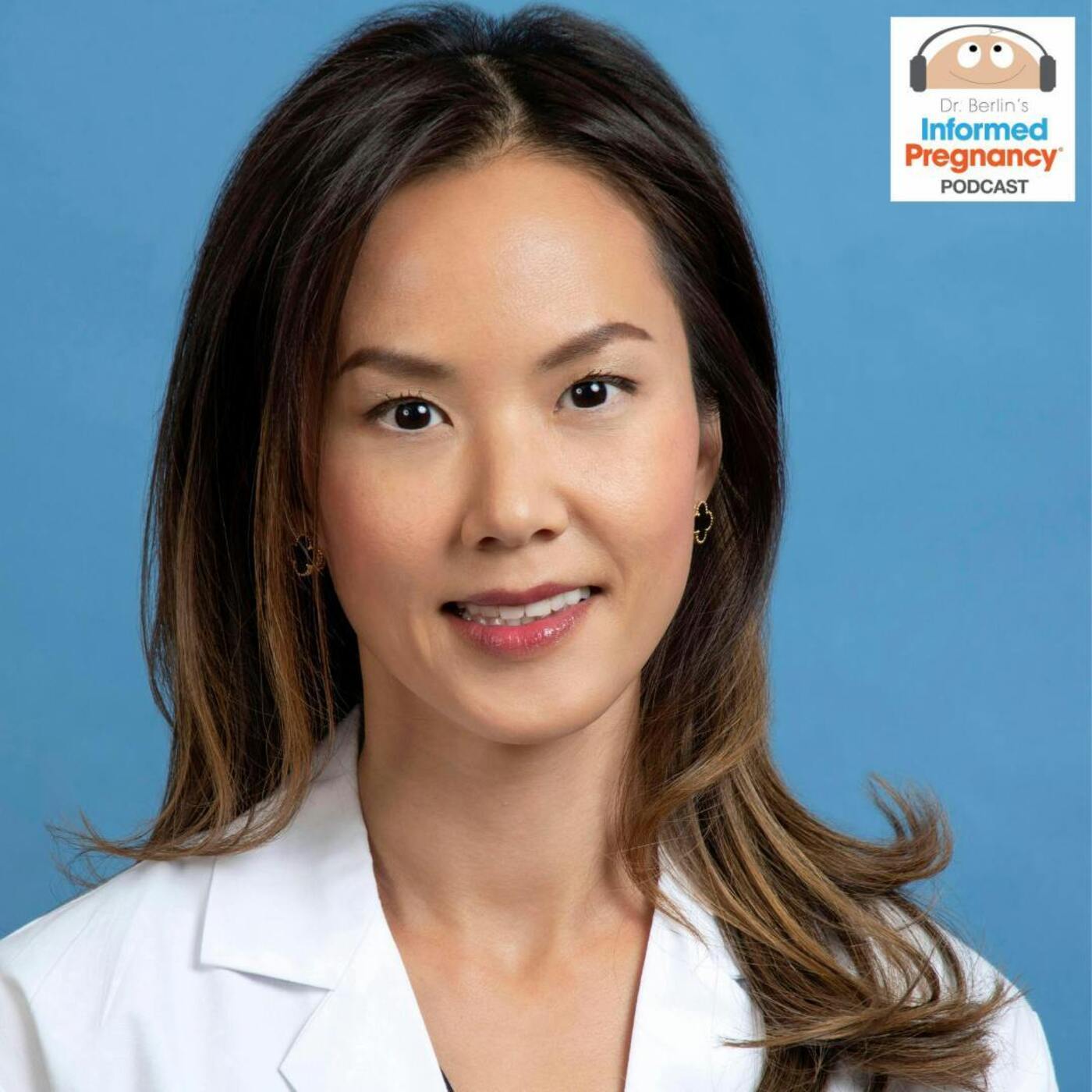
Dr. Michelle Tsai, OBGYN sheds light on HELLP syndrome, a little known yet serious pregnancy complication that affects the blood and liver. Dr. Tsai talks about the connection between preeclampsia and HELLP syndrome, symptoms, odds of recurrence, and potential treatments.

Learn more about your ad choices. Visit megaphone.fm/adchoices
See Privacy Policy at https://art19.com/privacy and California Privacy Notice at https://art19.com/privacy#do-not-sell-my-info.
Key quotes
“Yeah. So help syndrome, literally H-E-L-L-P, it actually stands for the criteria for diagnosis. It stands for hemolysis, which means your red blood cells are shredding, elevated liver enzymes, which signifies liver dysfunction, and low platelets. And platelets are the cells in your blood that assist your blood to clot after an injury.”
“people kind of present in both ways. So, you know, a very common way is folks are feeling great, they come into the office for a routine prenatal check, and the nurse takes their blood pressure and notice that it's elevated. And therefore, they get sent to labor and delivery, the triage unit, get some labs done, they end up being diagnosed with preeclampsia.”
“I tell my patients if you're not feeling well, you know something just feels not right, trust your gut because you know your body, you know your health the best. If something feels like it's off, please seek care.”
“people do well after the health syndrome is managed and the cure is delivery so once delivery occurs the placenta is delivered the hormones are out of the system the patients really tend to do quite well”
“And in terms of the recurrence, so, you know, and this is a very important discussion that I have with patients that, you know, have had help syndrome or have had preeclampsia because really there is a higher risk than baseline. And the number that we usually quote for help syndrome in terms of recurrence, anywhere between 7 to 10 percent.”
Related episodes
- Ep. 438 Postpartum Preeclampsia with Dr. Jamie Barstein and Dr. Nathan Fox
- Ep. 186 Kelly Potter – HELLP Syndrome Birth Story
- Ep. 190 Julie Sawaya – After Birth
- Ep. 85 Pregnancy Over 35 with Dr. Emiliano Chavira
Transcript
AI-generated transcript with speaker labels — may contain errors, especially names and medical terms. Dr. Elliot Berlin, DC appears in blue; Dr. Michelle Tsai in orange.
Download PDF of the Transcript
Dr. Elliot Berlin, DC [1:13] For pregnancy and parenting podcast I'm your host Dr. Elliot Berman on the previous episode of our podcast. We had a listener as a guest She wrote in because after reading an entire book on pregnancy and listening to many of our episodes She had never heard of a complication called help syndrome until she developed it 30 weeks into her pregnancy and had to act very quickly with little understanding of what was happening During that interview I promised to do a detailed expert driven episode on help syndrome My guest today is an awesome Los Angeles based OB-GYN She's just a warm compassionate and knowledgeable person who I was lucky enough to meet earlier this year
[2:18] She has experienced diagnosing and treating help syndrome and she's currently midway through her first pregnancy Dr. Michelle, sorry. Welcome to the podcast. Hi, dr. Berlin. Thanks so much for having me You know, I really enjoy our working relationship and I learned from you every time I see you and I'm happy to share you With our audience today. Let's go back to the beginning a little bit into your background What did you decide wanted to get into a medicine? Yeah, so I decided I wanted to go into medicine
Dr. Michelle Tsai [2:50] I would say kind of on the later side Unlike a lot of my colleagues who kind of grew up knowing they wanted to go into medicine I think I didn't really realize what I wanted to do until probably when I was an undergrad at UC Berkeley and at that time I had the pleasure of working with a lot of specialists at UCS staff and doing some public health outreach projects and at that time that was kind of when I was introduced to Women's health and then I decided to apply to medical school And even at that time I was kind of torn in terms of what I wanted to do I thought I wanted to do pediatrics, but you know after I delivered my first baby I realized how incredibly special the experience really is and the rest
[3:36] I guess you can say it's history and I decided to go into OB GYN
Dr. Elliot Berlin, DC [3:40] When you started undergrad, were you thinking health at all or not at all?
Dr. Michelle Tsai [3:46] And the funny thing is unlike a lot of my colleagues I really I don't have anybody in my family who's in medicine or health care So not really having too much exposure on that, you know kind of thought I was gonna go the business route But you know, it's funny how life works out
Dr. Elliot Berlin, DC [4:02] Yeah, I mean I kind of feel like the doctors kind of have to go the business route anyway, so kind of yeah
Dr. Michelle Tsai [4:10] Absolutely, that is so true and I think you know Nowhere is that more true than kind of the climate of medicine today where you know a lot of it really has to do with you know business in terms of no running your practice and Coordinating with insurance companies. I mean, there's definitely there's so much business aspect in medicine
Dr. Elliot Berlin, DC [4:30] And I feel like a lot of doctors are just givers that go into health care Because they like to take care of people and business is kind of the opposite Trying to figure out how to take care of your business and your income. So sure sure
Dr. Michelle Tsai [4:45] Absolutely, and I think you know There's something about the two that kind of intersects in terms of you know, taking care of yourself But also running a business and having kind of that self satisfaction in medical school
Dr. Elliot Berlin, DC [4:56] How far in do you have to decide your specialty?
Dr. Michelle Tsai [5:00] So luckily you actually don't have to decide until you're kind of well into your third year of medical school because the first two years are really more kind of didactic classroom textbooks. And then third year you start doing what's called your clerkships where you rotate throughout the hospital and you spend some time in every single specialty. And that's kind of how most people will decide what field they want to go into. And then the fourth year, the last year of medical school is kind of dedicated to additional rotations in the fields that you're interested in and then applying to residency, which is postgraduate training. And at that time, you know, you do have to make a decision in terms of applying and
[5:45] getting recommendation letters and etc. But by then most people will kind of know what they want to do.
Dr. Elliot Berlin, DC [5:51] So when you did all the different shifts, were there any that stuck out to you as like, I'm definitely not doing that one?
Dr. Michelle Tsai [5:57] Oh, absolutely. And the funny thing is I went in thinking, oh, pediatrics, maybe. And when I did my general surgery rotation, I realized how much I love, you know, kind of the hands on approach, the anatomy aspect of, you know, just your daily job. And also there's something about surgery that is it's like instant gratification where there's something wrong. There's a problem. You go in, you fix it. You're happy. The patient's happy. We're done. So with that being said, I think for me, you know, things are a little bit more you know, chronic in nature, things like neurology, internal medicine. I kind of knew that it was not for me, given that, you know, I'm an
[6:39] inpatient person, I see a problem, I want to fix it and, you know, not spend the next 20 years talking about it. So I think OB-GYN was, it was a little bit of a surprise that I liked it, given, you know, I knew I liked women's health, but I didn't think that I would like the obstetrical aspect of it and given that I really liked general surgery and then I ended up really liking the obstetrics part of OB-GYN, I kind of knew that that was the right specialty for me.
Dr. Elliot Berlin, DC [7:08] Some people have a surprise pregnancy and you have a surprise pregnancy career.
Dr. Michelle Tsai [7:12] Oh, absolutely. And you know, the kind of running joke in medical school is especially for something like OB-GYN, the specialty chooses you because there are few people that kind of go into medicine thinking, oh, I want the kind of lifestyle where you want to get up in the middle of the night to deliver babies and, you know, people try really hard not to like OB-GYN, but, you know, the specialty chooses you.
Dr. Elliot Berlin, DC [7:35] That's well said. A lot of people have told me that. So when you do your residency, by that point, it's all OB-GYN training?
Dr. Michelle Tsai [7:43] Yes, yes. And kind of depending on the program that you're at, and I trained at University of Hawaii in Honolulu, which is, you know, it was a lovely place to train and live and at that program, because we were the only program in the state of Hawaii, we were getting, you know, all these cases from outer islands, even, you know, as far out as American Samoa, Guam and, you know, just being at that program, you had the opportunity to see a lot of different pathology and you have the opportunity to kind of guide your own training in terms of your own interests. So some people know that they really like more of the obstetrical aspect of OB-GYN, so, you know, they can do some electives on more high-risk
[8:28] pregnancies, and then other folks know that they really like the gynecologic aspect and they can seek out more electives on surgical rotations, more experience in the operating room. So I feel like it was definitely a very well-rounded program.
Dr. Elliot Berlin, DC [8:44] What did you do after school's over? What do people traditionally do? Do you go work for another doctor or a hospital, start your own practice?
Dr. Michelle Tsai [8:53] Yeah, that's a great question. And the funny thing is, you know, now the kind of face of medicine is really, really transitioning where, you know, the previous generation, most people came out of residency, you know, going into hybrid practice and solo practice and kind of opening up their own businesses. And I think, you know, nowadays, especially with the lack of training in business that you get in medical school and residency, I think a lot of folks kind of come out and they opt to, you know, go work for a big company like Kaiser or go into academia, work for a university, depending on your, you know, kind of specific personal interest in,
[9:33] for example, research or business. I mean, the sky is the limit in terms of what you'd like to do after you're done.
Dr. Elliot Berlin, DC [9:39] Which route did you go?
Dr. Michelle Tsai [9:41] The route that I went is a little bit of a rarity nowadays. I went straight into hybrid practice. So after I finished at, in Hawaii, I actually moved to the San Francisco Bay area and I joined a hybrid practice exclusively of OBGYN physicians. The reason I say that it's a rarity is really nowadays, most graduates, they tend to shy away from private practice just because there's a lot of business aspect that we might not have a lot of experience in. And I think a lot of people when kind of faced with the decision of deciding what job to take, going kind of the more secure, safe route where you know that there's experts who are doing business, who are kind of taking care of everything,
[10:28] that tends to be the preferred route, but I decided to go into private practice.
Dr. Elliot Berlin, DC [10:33] Because you also have a business mind?
Dr. Michelle Tsai [10:35] You know, my parents would love to say yes. I think for me, it was kind of a, it felt like it was a good challenge to come out into, as a young graduate, as a young doctor practicing medicine. And I figured, if there's any time to face up to that challenge, it would be now. And it was a wonderful experience that I had for four years.
Dr. Elliot Berlin, DC [11:00] You say that there are no doctors in your family.
Dr. Michelle Tsai [11:04] There are no doctors in my family.
Dr. Elliot Berlin, DC [11:06] But then you got married.
Dr. Michelle Tsai [11:07] Yes, but then I got married. And of course, as luck and fate would have it, I married a wonderful pediatrician. And we actually met in Hawaii. And the funny thing is, we're actually both from San Gabriel Valley. So being both from LA and meeting in Hawaii, it was kind of, you know, it was a spark of fate. And we hit it off. And he unfortunately did not decide to go into OB-GYN, despite my persuasions. But he did end up going into pediatrics. So I ended up marrying a physician. And he's actually the reason that I moved down to UCLA to join the academic practice here as a clinical professor, because my husband is a pediatrician with UCLA.
Dr. Elliot Berlin, DC [11:50] Well, it's our luck. We certainly gained a tremendous benefit from it, from having you here. So do your deliveries become his patients?
Dr. Michelle Tsai [12:00] Yes, and funny that you mentioned that. And it's so lovely because, you know, the two of us really, we get to keep a lot of patients kind of within our family, if you will. So it's really been a wonderful experience taking care of patients throughout their pregnancy. And it's part of that just in their general gynecological care, and then taking care of their pregnancies and delivering their babies. Having my husband continue on care of their child, it's really been quite a pleasure and a privilege.
Dr. Elliot Berlin, DC [12:31] Maybe your child will go into geriatric care and keep the family business going.
Dr. Michelle Tsai [12:35] Well, I think we would be very proud if that happens, but whatever our child decides to do we'll definitely support her.
Dr. Elliot Berlin, DC [12:42] That's a very fascinating background and path that you took to get where you are. Our episode today is about help syndrome. And when we come back, we're going to talk not only about help syndrome, but about preeclampsia. Don't go anywhere. We'll be right back with Dr. Michelle. Say hi.

Dr. Elliot Berlin, DC [15:20] Welcome back to the Informed Pregnancy Podcast. We're talking to Dr. Michelle Tsai. All right, so this episode, we promised to talk about help syndrome. We had a listener right in, her name is Kelly Potter, and she had listened to the podcast. She had read books on pregnancy. She felt pretty confident and knowledgeable going into her pregnancy. And then partway through the pregnancy, she wasn't feeling quite right. Her doctor sent her to the hospital. She thought she'll just go in for some testing, and she even valet parked the car. Spoiler alert, it was something bigger than just a little bit of not feeling well. She was diagnosed with help syndrome.
[16:01] So I said, you know what? Let's do an episode with a knowledgeable, experienced OB-GYN and talk a little bit more about what help syndrome is so that other people aren't taken by surprise should it happen to them, even though it's not super common. You've said in the past that you can't really talk about help syndrome without talking about preeclampsia. What does that mean? Why is that so?
Dr. Michelle Tsai [16:23] Yeah, absolutely. So, you know, help syndrome is much more rare than the preeclampsia. However, the two are very likely kind of variants of a similar disease. Some people think of help syndrome as a more severe form of preeclampsia. It may have the same origin, but there are some very significant differences. For example, for preeclampsia, most pregnant women are very well aware of this disease and that it can entail basically having elevated blood pressures and protein leaking into the urine. And in terms of preeclampsia, the incidence, the percentage that we usually quote in terms of how many people get it, it's about four to five percent of pregnancies worldwide.
[17:07] But help syndrome is very different in that about 10 to 20 percent of patients actually don't have elevated blood pressures or protein in the urine. And it's also much more rare. Generally, we quote about point one to one percent of pregnant women can develop help syndrome. So, you know, while they might be kind of on the same spectrum in terms of a similar disease, they really present very, very differently.
Dr. Elliot Berlin, DC [17:36] What does help stand for?
Dr. Michelle Tsai [17:39] Yeah. So help syndrome, literally H-E-L-L-P, it actually stands for the criteria for diagnosis. It stands for hemolysis, which means your red blood cells are shredding, elevated liver enzymes, which signifies liver dysfunction, and low platelets. And platelets are the cells in your blood that assist your blood to clot after an injury. So you can imagine, you know, for folks that kind of present with these symptoms, the biggest kind of maternal complications that we think of is really kind of on the spectrum of bleeding.
Dr. Elliot Berlin, DC [18:14] So internal bleeding?
Dr. Michelle Tsai [18:16] Yes. And, you know, bleeding in terms of a presentation, you know, nosebleeds or bleeding from the gums after, you know, brushing their teeth, usually that tends to be kind of a later presentation. However, in terms of help syndrome, things progress very quickly. And generally, it's healthy patients who have not had any history of high blood pressure, and suddenly they start feeling unwell, they get diagnosed with help syndrome and, you know, progressively worsen quickly. So things do turn, you know, really at the drop of a hat. And in terms of, you know, bleeding symptoms that we can see kind of in the later stage of the disease, you know, I've seen patients come in,
[18:58] we have their IV put in and they're bleeding from the IV site. They're having nosebleeds, you know, their platelets are extremely low. And that's when, you know, the situation can really quickly become an emergency. So it is considered an obstetric emergency.
Dr. Elliot Berlin, DC [19:14] You said that health syndrome might be as little as 0.1 to 1%. Is preeclampsia significantly more common than that?
Dr. Michelle Tsai [19:23] Yeah. So preeclampsia really, it's much more common than that. And, you know, in terms of preeclampsia, it's really much better defined in terms of, you know, kind of the risk factors, things that we can do to prevent it. And health syndrome, unfortunately, just given the severity and kind of how elusive the disease is, it's less well defined. But, you know, in terms of the the rate of preeclampsia, usually we're quoted about five percent, but that's pregnancies worldwide. And, you know, because it's much more common in women who are older when they become pregnant, women. for having their first pregnancies. Really, in terms of looking at the incidence, if you
[20:05] look at different populations, that number is actually going to change.
Dr. Elliot Berlin, DC [20:09] I know you mentioned for preeclampsia, elevated blood pressure and protein in the urine, those are not things that you feel. Would somebody feel preeclampsia, signs of preeclampsia, or is it just you go for a routine checkup and…
Dr. Michelle Tsai [20:22] Yeah, that's a great question. And, you know, in terms of preeclampsia, people kind of present in both ways. So, you know, a very common way is folks are feeling great, they come into the office for a routine prenatal check, and the nurse takes their blood pressure and notice that it's elevated. And therefore, they get sent to labor and delivery, the triage unit, get some labs done, they end up being diagnosed with preeclampsia. However, preeclampsia does tend to present with some classic signs and symptoms that we ask patients to look out for. And sometimes, folks actually call in because they have been watching out for these symptoms, and they're feeling unwell, and they just want to run things
[21:03] by their doctor. And we're often very lucky that, you know, they're cognizant of these symptoms, and they're really watching out for them because preeclampsia, you know, can progress and become severe and potentially even become help syndrome. And the things that patients, we usually ask them to look out for for preeclampsia is, if you're, you know, having headaches that are unrelenting, you know, with hydration, rest, even taking a little Tylenol, not really going away, or blurry vision, spots in the vision, anything going on with your vision that, you know, it feels a little unusual. And then another sign we ask folks to look out for for preeclampsia is if they're
[21:42] having abdominal pain, and usually that pain tends to present kind of more on the right side, right upper quadrant, as we call it, that's where the liver is. And it's because preeclampsia really affects all of your organs, and that includes your liver, which is why sometimes people have pain in that area, your kidneys, which explains the protein in the urine. And unfortunately, the placenta, which is actually an organ, an end organ in this instance, which of course affects the baby. So these are all things that we ask folks to look out for. And of course, you know, swelling. Swelling is another thing that we generally have folks, you know, really watch out for, particularly in their lower extremities.
[22:22] And of course, you know, a lot of these symptoms can be nonspecific, and some people can normally have these symptoms during pregnancy. For example, in the third trimester, it's extremely common, especially right now we're, you know, in the Los Angeles heat, with, you know, a hot summer day, most pregnant women are swollen by the end of the day. So really, absolutely, the fee is kind of the, you know, the thing that people complain about. But most people kind of are aware of what's normal for them. So, you know, if you normally are swollen at the end of the day, you lay down, you put your feet up, and you notice, hmm, the swelling is really not going down. There's something that just seems odd. I always
[23:04] encourage my patients really, nothing beats peace of mind. If anything seems out of the norm,
Dr. Elliot Berlin, DC [23:09] it's best to touch base with your provider. That's great advice. When you're in the office, what would be a clue to you that this, first of all, preeclampsia sounds like there's a preface to something that's worse than preeclampsia. Is there something in between preeclampsia and help syndrome? Sure. And preeclampsia and help syndrome, they're
Dr. Michelle Tsai [23:31] actually all on a disease spectrum. And kind of something that's more mild would be gestational hypertension, which would be high blood pressure with new onset in pregnancy, or chronic hypertension. These patients generally have high blood pressure outside of pregnancy. So all of these, you know, diseases are kind of considered on, you know, they're different diseases on the same spectrum. So especially for people that start developing elevated blood pressures, even with all the swelling and the protein, the urine, something that we watch very, very closely because all these patients have the potential to have their high blood pressure develop into preeclampsia or help syndrome. Yeah. I guess preeclampsia, is it a pre-state
[24:16] to eclampsia? Yeah. So eclampsia, you know, it's kind of a little bit of an outdated term because now, you know, we say preeclampsia and preeclampsia with severe features, but eclampsia is basically severe preeclampsia, you know, that presents with seizures. So it presents with neurological deficits. So this, of course, is extremely serious. And, you know, nowadays, luckily, everybody, including the patients and the providers watch out for preeclampsia very closely. So in terms of eeclampsia, where the patient actually seizes from the disease, from the elevated blood pressure, you know, generally knock on wood, it happens a little bit.
Dr. Elliot Berlin, DC [25:00] more rarely. Because you catch it before that. Correct. Correct. I remember a couple of years ago somebody came into my office and she had a couple of the symptoms of preeclampsia but she also just looked and felt like she had an awful flu. Like she was literally greenish in color, Caucasian patient, she was greenish in color, looked really fatigued and just looked sick. And so I took her blood pressure and it was high and I sent her right to her doctor. Good catch. But I've seen people who even the same day will go to their doctor, they're lively and bubbly and energetic and they just happen to catch either the urine or the blood pressure. But she really looked sick and I don't know how common that is but.
Dr. Michelle Tsai [25:47] Yeah and it's a great catch on your part and you know generalized belays just you know generally not feeling well, feeling rundown, muscle aches, you feel like you know you're really exhausted. You know of course many people especially towards the end of pregnancy are tired, they're not sleeping well. So again kind of a non-specific symptoms but generally I tell my patients if you're not feeling well, you know something just feels not right, trust your gut because you know your body, you know your health the best. If something feels like it's off, please seek care.
Dr. Elliot Berlin, DC [26:22] We're going to take another little break and when we come back we'll talk more about health syndrome and when it happens what do you do about it? We'll be right back with Dr. Michelle Tsai. Welcome back to the Informed Pregnancy Podcast. We're talking about health syndrome with Dr. Michelle Tsai. Okay so now we talk a lot about preeclampsia and the spectrum of diseases including all the way up to health syndrome and what some of the symptoms might be and when to call your doctor. So when somebody is diagnosed with health syndrome, how significant is it in the moment and what are the remedies for
Dr. Michelle Tsai [27:08] you know what do you do about it? That's a great question. So in terms of diagnostic evaluation really health syndrome just given the name the acronym you know the hemolysis elevated liver enzymes low platelets really the way we diagnose it is you know we get some labs and we look for signs of all these things happening and of course at the same time we assess the mother the baby make sure everybody's stable and this is actually why it's quite important if there's potential for health syndrome or even severe preeclampsia there's a need for care at a center with appropriate levels of maternal and neonatal and kinds of care because many of these cases can be significant so sometimes I do see folks
[27:52] you know who seek care at a community care hospital and then they end up having to be transferred to another institution for a higher level of care and really you know many times people do well after the health syndrome is managed and the cure is delivery so once delivery occurs the placenta is delivered the hormones are out of the system the patients really tend to do quite well but you know there is a small chance depending on the hospital that you present to that you may have to be transferred for a higher level of care and in terms of the general assessment of course we want to make sure you know if there's elevated blood pressures you may need medication and that medication may be an intravenous and ivy medication
[28:37] an oral medication depending on you know how high or how quickly your provider can get you that medication and also another very important thing to think about in terms of the most significant neonatal the complications of the baby is really in terms of preterm delivery because many of help syndrome cases are in preterm deliveries so kind of to you know give you give you an idea for you know how early this happens 70% of patients with help syndrome they have it before delivery and what that means is 30% of folks can actually have postpartum presentation with help syndrome yes and you know why this happens is very unclear because as I mentioned the delivery of the placenta really resolves the disease in most
[29:24] patients but in the 70% of patients that happen you know have help syndrome before delivery 80% is before 37 weeks so great majority of these folks are preterm unlike preeclampsia generally it's less common before 34 weeks of gestation and in terms of you know the likelihood of preeclampsia most people are diagnosed with it kind of closer towards your full term so most people with help syndrome do present that when they're preterm and there's less than three percent of patients that actually have help syndrome between 17 to 20 weeks. So you can imagine how devastating that can be when you know you're that preterm. But in terms of you know preterm delivery of course we worry about the baby. So potentially there are
[30:14] interventions that we do to kind of help baby do well because again the cure is delivery. So generally we give a medication called magnesium sulfate. This is a medication given through the IV. It helps to prevent seizures, protect the baby's brain before 32 weeks of gestation. We usually give steroid shots for mom to help speed up the development of the baby's brain and the lungs. And then the steroids also prevents baby's brain in terms of bleeding and bleeding into the intestines. And of course we always consult with the neonatal intensive care unit doctors so that those doctors can come and talk to the patient and kind of give a general awareness of
[30:57] how early are we you know what potential complications can we see in the baby. And of course you know the million dollar question how long is my baby going to stay in the NICU after we're delivered. And in terms of stabilization of the mom at times they may need a blood transfusion especially if their platelets are extremely low. As I mentioned before you know sometimes we see patients you know who are bleeding out of the IV sites. In that case for delivery we want to give them you know a little bit of blood platelets just to bump up the count so that the bleeding the clinical bleeding is lessened. And one very important thing to emphasize is it is possible for patients with health syndrome to be delivered
[31:39] vaginally. And I think you know really depends on how severe the presentation is. If we catch it early the patient is relatively clinically stable potentially we can absolutely induce your labor to have a vaginal delivery because a vaginal delivery of course is preferred for both mom and baby. However if mom or baby extremely unstable at the end of the day really our goal is to have a healthy baby healthy mom and in that case a C
Dr. Elliot Berlin, DC [32:07] section may be indicated. So the things that you were saying earlier the magnesium sulfate the steroids those are before the baby is delivered to help the baby both right before and also to prepare for an earlier delivery to get things ready. Yes. What is the age because you mentioned about three percent are really early 17 to 20 weeks. What's the age of viability? At what point can we expect that the baby is going to live and you know recover and be healthy? How far along in the
Dr. Michelle Tsai [32:39] pregnancy? So generally and this is a little bit of a controversial question because you know many times when you ask neonatal intensive care unit doctors you know they'll say 24 weeks is kind of what we consider viability meaning the baby at that point is capable of surviving outside the womb. However you know a very important point to bring up is survival and quality of life are not the same. So you know in terms of the magnesium sulfate to protect the baby's brain the steroids to speed up development all those help baby survival and you know function after you know kiddos born and out of the womb and in an intensive care unit. However you know there are babies that survive earlier than 24
[33:23] weeks especially you know I would say in the last generation really we have started giving you know these intervention steroids magnesium a little bit earlier than 24 weeks. For example 23 weekers I have seen you know do well of course it's a very prolonged stay in the NICU. However you know the survival statistics really depends on each
Dr. Elliot Berlin, DC [33:47] individual child. Well it does not sound ideal far from ideal but it does sound like with some of the modern interventions that we have mother and baby can do well can be cared for and nursed to health. Absolutely. Absolutely. And much earlier than we used to be
Dr. Michelle Tsai [34:06] able to. Absolutely and that you know the technology especially you know in the NICUs is remarkable in terms of you know the survival rates I mean there's been such just the advancements that generally these patients and patient in terms of your mom and baby they really tend to do quite well and really the most important thing is kind of recognizing the disease process stabilizing both patients the mom and baby and then getting the baby delivered really that's the most important thing because that's the only cure we have. So two questions that come
Dr. Elliot Berlin, DC [34:39] to mind one is you know I would want to know if I was pregnant are there any things to do to try to avoid either preeclampsia and or help syndrome? Sure and for prevention so there's no evidence that there's
Dr. Michelle Tsai [34:54] really any sort of prevention that can prevent help syndrome unfortunately. But there are things we can do to reduce the risk of preeclampsia, interestingly. So some of our listeners may be on a baby aspirin. It's a low dose of an aspirin pill a day, and many reasons for giving this, but one of the biggest reasons is to help the placental blood flow decrease the risk of preeclampsia. However, in terms of help syndrome, really, there's no evidence that there's any intervention that can prevent this.
Dr. Elliot Berlin, DC [35:26] If somebody has it once, are they more likely to have it again in a subsequent pregnancy?
Dr. Michelle Tsai [35:32] Yes. And in terms of the recurrence, so, you know, and this is a very important discussion that I have with patients that, you know, have had help syndrome or have had preeclampsia because really there is a higher risk than baseline. And the number that we usually quote for help syndrome in terms of recurrence, anywhere between 7 to 10 percent. However, for preeclampsia and otherwise gestational hypertension, just the high blood pressure in pregnancy, a little bit of a higher risk. So somewhere between 15 to 20 percent. So luckily, help syndrome, it's a little less likely, but when it happens, it is very serious. So, you know, it's definitely a conversation that I have with patients, you know, very
[36:16] early on after the pregnancy in which they're affected.
Dr. Elliot Berlin, DC [36:20] But considering that it's only 0.1 to 1 percent that you'll get it in the first place, 7 to 10 percent seems significant in terms of the recurrence.
Dr. Michelle Tsai [36:28] Yes. Absolutely.
Dr. Elliot Berlin, DC [36:30] Thank you so much for sharing all that information. I know this is going to be helpful and, you know, hopefully anybody listening to this won't experience these conditions, but if you do, at least now you have a lot more information about it. Before we end, so you're pregnant with your first baby.
Dr. Michelle Tsai [36:47] Yes.
Dr. Elliot Berlin, DC [36:48] It must be really weird to be on the other side of that table.
Dr. Michelle Tsai [36:52] It's so strange because, you know, really from the very beginning, and this is coming from somebody who, you know, I see pregnant patients every day. I counsel folks on all types of pregnancy topics from preconception to prenatal vitamins to things to look out for in pregnancy. And, you know, experiencing everything on the other side has been quite eye I truly believe that it's really helped me appreciate how much moms go through in terms of what it takes to get pregnant and to go through the pregnancy and, you know, to retain any semblance of sanity. So I really, I applaud all the listeners out there. And, you know, in a sense, I am confident that this is making me a
[37:36] better doctor in terms of the things I counsel folks about. I'm really experiencing everything firsthand. So it's really been quite the learning experience.
Dr. Elliot Berlin, DC [37:45] It's kind of amazing. I mean, which other doctors really get to do that? You don't want to be a nephrologist and get all the kidney diseases, you know, but as an OB, you get to kind of really go through it.
Dr. Michelle Tsai [37:56] Yeah.
Dr. Elliot Berlin, DC [37:57] You know, I tried my best. One time I ate really bad takeout. It was leftover. I think it was spoiled. And I ate it at like late too, at 10 p.m. I woke up one o'clock in the morning and I was having contractions every three minutes, about a minute apart. And I was like, oh, I can maybe sort of relate a little bit to some of my clients.
Dr. Michelle Tsai [38:17] Yes. Now, for those of you who want their husbands to, you know, partners to experience contractions, now you know what to do. Go get some bad takeout.
Dr. Elliot Berlin, DC [38:24] Yeah, I'll give you some. Yeah. So how's pregnancy going for you?
Dr. Michelle Tsai [38:30] It started off a little bit rough. And the funny thing is, you know, just as an OB-GYN, you know, I'd always predicted that the day that I become pregnant, I'm going to experience every awful symptom I've ever counseled my patients about. And that prophecy, unfortunately, came true. So my first trimester was very rough. I had, you know, terrible nausea. I was very fatigued and, you know, just working, especially delivering babies in the hospital, it was a doozy. But, you know, luckily, because one of my symptoms, I actually got to meet Dr. Bolin and it's because I started having really bad sciatica, you know, back pain, hip pain, leg pain, starting very early on around eight to 10 weeks.
[39:15] So, you know, I consider that a silver lining because he has really helped me to get through my symptoms. And now that I'm 24 weeks, I really, I feel much better and I have much more confidence that I'm going to make it through the rest of this pregnancy, but it's definitely, it's been challenging.
Dr. Elliot Berlin, DC [39:33] Well, it's a huge silver lining for me. Cause as I mentioned at the beginning, I just, uh, we've seen each other's patients for a while, but getting to know you has been wonderful. And like I said, I learned something from you every time I see you. And now I was able to share your wonderful knowledge with our audience here on Informed Pregnancy. So I'm wishing you the greatest of luck and joy in the rest of your pregnancy, no more of the bad symptoms, just all the great things. that come with the golden trimester and and the third trimester and you know with your delivery and your chapter I wish you only blessings and smiles thank you so much it's
[40:10] been such a pleasure thank you so much for having me my pleasure and at home thanks for listening to the informed pregnancy podcast if you have a topic you'd like us to address just give us an email to info at informedpregnancy.com
Want more pregnancy + parenting? Start your FREE TRIAL of Informed Pregnancy+ and get access to all our curated pregnancy and parenting content — original series, iconic birth films like The Business of Being Born, prenatal workouts and more.
