
December 3, 2020 · 26 minutes · Episode 204
About this episode
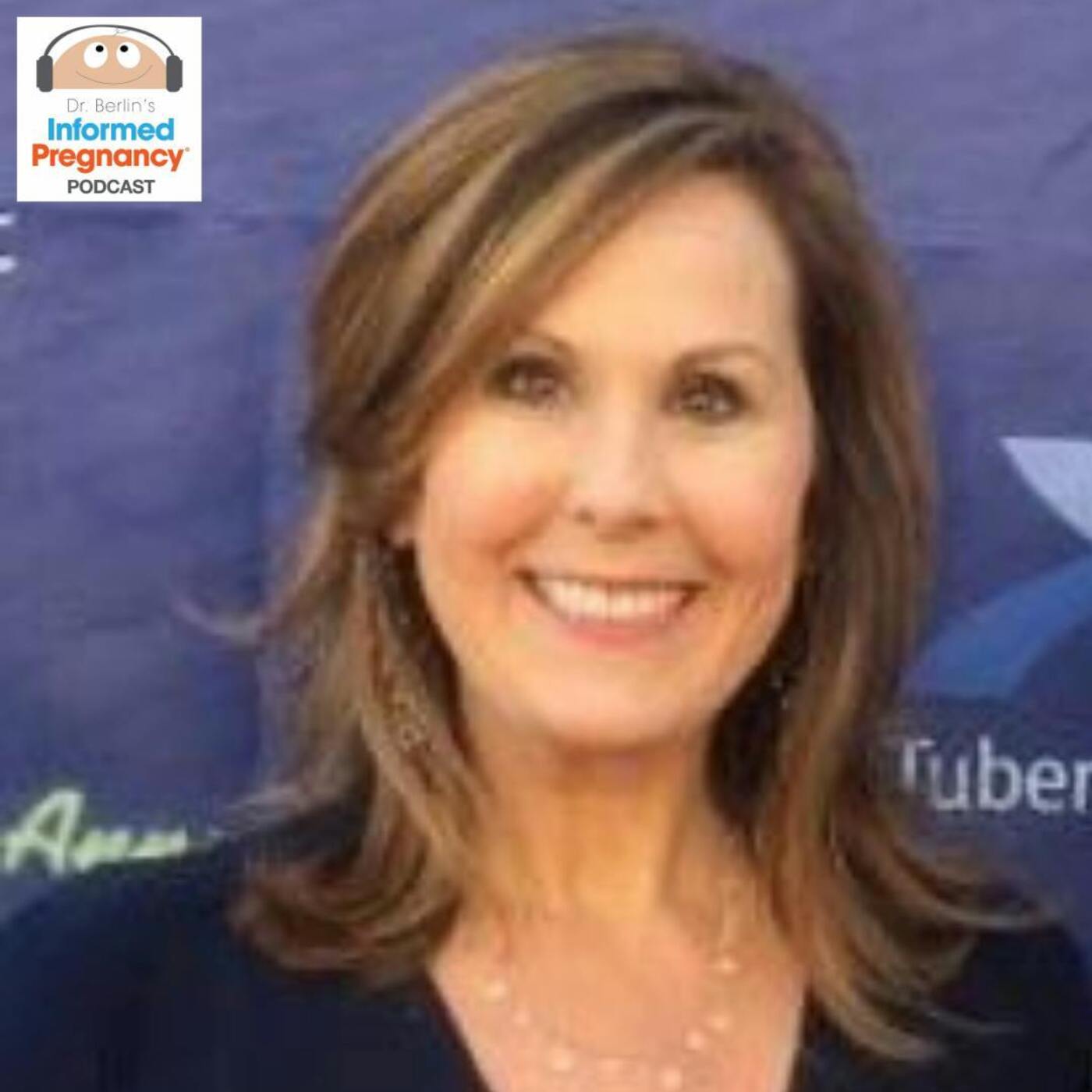
Kari Rosbeck, CEO of the Tuberous Sclerosis Alliance, discusses the importance of early diagnosis and treatment of the uncommon but serious conditions infantile spasms and Tuberous Sclerosis.

Enjoy special offers from our sponsors https://www.doctorberlin.com/sponsors .
Learn more about your ad choices. Visit megaphone.fm/adchoices
See Privacy Policy at https://art19.com/privacy and California Privacy Notice at https://art19.com/privacy#do-not-sell-my-info.
Key quotes
“Absolutely. And I've read some recent articles where young parents are starting to do tummy sleeping again. And to them I would just say it is a small thing to put a baby to sleep on their back and it can make a tremendous difference.”
“Infantile spasms are a catastrophic type of epilepsy. They happen in clusters, sometimes hundreds of times a day for some people. They look like really subtle movements like a head nod or a startle reflex or like acid reflux even. But the key is they happen in clusters over and over.”
“We have a mnemonic. It's called Stop IS. S is see the signs. T is take a video. O is obtain a diagnosis. And P is to prioritize treatment.”
“so what we know is the longer that seizures go undiagnosed and not treated, the poorer prognosis for the long term. So having infantile spasms that are not diagnosed and treated, and there are two FDA treatments that can be used immediately, means a greater chance of developmental disabilities, potentially autism, and a lifetime of refractory epilepsy.”
“So there are some genetic causes of infantile spasms. Tuberous sclerosis complex, the organization that I represent, is a leading symptomatic or known cause of infantile spasms. About a third of infants with TSC will develop infantile spasms.”
Related episodes
- Ep. 219 Mandy Moore – After Birth
- Ep. 220 Hilary Duff – BEFORE Baby #3
- Ep. 223 Anna Prager – After Birth
- Ep. 214 Richelle Monae – After Birth
Transcript
AI-generated transcript with speaker labels — may contain errors, especially names and medical terms. Dr. Elliot Berlin, DC appears in blue; Kari Rosbeck in orange.
Download PDF of the Transcript
Dr. Elliot Berlin, DC [1:13] Welcome to the informed pregnancy and parenting podcast. I'm your host dr. Elliott Berlin by request We've been focusing more episodes on early parenting today. We'll be discussing Infantile spasms, which is a seizure disorder in babies and an important topic for parents and other caregivers of babies to be aware of My guest is a board member of ISAM the infantiles spasm awareness network and president and CEO of the TS Alliance the tuberous sclerosis alliance Kari Ross back. Welcome to the podcast. Thank you so much for having me. Dr. Berlin I'm really honored that you reached out and you know agreed to be here some topics that we cover are fun and light and airy and exciting and other topics are just really important not that fun and
[2:24] This one in particular seems to be an issue that needs more awareness something that people don't really know to look for Thankfully doesn't affect a tremendous amount of people But for those who it does the sooner we figure it out and get treatment the better off we are so this is one of those episodes that's filled with really important information and Important to listen to and to share with other people who are having kids or who care for kids before we jump into that Let's get started with a little bit more about your background. Where are you from?
Kari Rosbeck [2:54] I'm originally from Illinois Charleston, Illinois Little rural town. That's where my parents grew up, but we moved all across the country My dad was in education and politics. And so we lived in Littleton, Colorado We lived in Knoxville, Illinois and we lived in upstate New York kind of all over the place
Dr. Elliot Berlin, DC [3:15] politics, okay But you know his career in terms of both education and politics Do they shape a bit of what you're doing now a hundred percent?
Kari Rosbeck [3:28] So he was a community college president always worked in the nonprofit field He believed that education lifted people up. He inspired me to want to Start a nonprofit when I was in my 20s, but also to really give back to others and nonprofit
Dr. Elliot Berlin, DC [3:48] specifically for what
Kari Rosbeck [3:50] So I have always worked in nonprofits whether it was theater or education for an organization called Junior Achievement or International health and development or now in health advocacy
Dr. Elliot Berlin, DC [4:02] I'm working on senior achievement Just for myself, it's my personal organization for me. It's never too late is my motto. That's right And how many kids do you have? I have five children and Did you have them all in Minneapolis had them all in?
Kari Rosbeck [4:22] Minneapolis actually a northern suburb. Yep a girl and four boys
Dr. Elliot Berlin, DC [4:27] Minnesotans That's right. And you have a personal experience with the loss of a child Which I'm so terribly sorry to hear about you had a baby passed from SIDS. Can you tell me more about that?
Kari Rosbeck [4:41] Absolutely. So our daughter Noel passed away in February of 1994 she was two months and eight days old that loss was so profound It was our first child and so when you're a brand new parent and you're worried about everything extremely difficult. However, it definitely shaped the rest of my life. It shaped the way that I have grown my career to help other families not experience what I had to experience, whether it's SIDS or another health condition where there are treatments or where my efforts can help create a better quality of life.
Dr. Elliot Berlin, DC [5:24] Did you know a lot about SIDS before it happened?
Kari Rosbeck [5:29] No. So all I knew about SIDS was what we learned in our pregnancy classes, right, our labor classes, where they definitely mentioned it. And when Noel passed away it was the year where they just started talking about the back-to-sleep campaign. And the year after my daughter died, because of the efforts of that awareness campaign, the rates in Minnesota dropped 50%.
Dr. Elliot Berlin, DC [5:54] The back-to-sleep meaning the effort to get babies to sleep on their back?
Kari Rosbeck [5:58] That's right. That is exactly right. Also just by having babies flip from sleeping on their belly to sleeping on their back, it made a dramatic decrease in SIDS. Absolutely. And I've read some recent articles where young parents are starting to do tummy sleeping again. And to them I would just say it is a small thing to put a baby to sleep on their back and it can make a tremendous difference. And I've lived that. I'm living proof. And I would just really encourage people to pay attention to that.
Dr. Elliot Berlin, DC [6:28] And now you literally spend your life. I mean, there's no way people listening would know this, but it's super early on a Sunday morning. And you're out and about, you know, helping our audience become aware of infantile spasms. So obviously you're very, very dedicated to your work and you're trying to help other people, not with SIDS, but with another infantile condition that can also be fatal. And you know, it's clear that your passion is also driven by your personal experience, not wanting other people to ever experience that horrible situation. So just another reason. I think that sometimes, you know, it's unimaginable what that experience is
[7:06] like. But for most of us, it probably knocks us down and quiets us down and puts us into a cave someplace. And the greatest respect for someone who stands up and says, no, I'm gonna make the world a place where this doesn't happen to other people. So I deeply appreciate you. Okay, you have experience with the American Committee and then Global Impact. Talk to me about those.
Kari Rosbeck [7:28] Sure. The American Refugee Committee that is based here in Minneapolis and international service agencies now known as Global Impact. Those are organizations that help with refugees, and those that are displaced by war. And Global Impact is kind of like a united way, but for the leading international relief and development organizations. And so with my degree in theater, I would go into workplaces and then about two minutes have to describe the impact of a gift of giving to Global Impact. In lots of places around the world, for instance, where we don't have wonderful physicians or doulas that help people through pregnancy, for instance, Save the Children had this great birthing
[8:13] kit. It was a bar of soap, a plastic sheet, a clean razor blade and a string. But that package helped save thousands of lives because the razor blade was sterile and you weren't cutting the umbilical cord with a dirty knife, a string to tie off the umbilical cord, a plastic sheeting to keep the birthing area clean. Of course, a bar of soap to wash your hands for the person that was delivering the baby. It's so small, and it costs nearly nothing. But again, in that instance, it made such a difference. So it just goes back to, you know, the commitment of my career and really helping raise awareness among people that had no idea.
Dr. Elliot Berlin, DC [8:55] It's a little crazy that you say that, first of all, the two minute pitch to really figure out how to get into somebody's brain and make them aware of a situation and care enough to want to take an action. Sounds like shark tank for doing good things. But the other thing is in my childbirth education class, I've been aware of several people who've had their baby here in first world country in the car. And it happened enough times that I started to incorporate a little segment on car birth or giving birth at home either before your midwife gets there before you leave to the hospital. And that kit is something that I have described several times when I just keep one of these in your
[9:35] car just in case and then you'll have it. I did not know it was out there saving babies. So almost feel like it could be a shark tank product here.
Kari Rosbeck [9:45] Yeah, absolutely. Maybe you should market that Dr. Berlin.
Dr. Elliot Berlin, DC [9:49] Look, there's another thing. But in the meantime, you can make your own at home if you're listening and about to have a baby. Kari, let's take a little break. When we come back, I want to find out more about infantiles. and tuberous sclerosis. Don't go anywhere. We will be right back.

Dr. Elliot Berlin, DC [12:30] Welcome back to the Informed Pregnancy Podcast. We're talking to Kari Rosbeck about infantile spasms. Okay, what are infantile spasms? Go with the basics.
Kari Rosbeck [12:41] Infantile spasms are a catastrophic type of epilepsy. They happen in clusters, sometimes hundreds of times a day for some people. They look like really subtle movements like a head nod or a startle reflex or like acid reflux even. But the key is they happen in clusters over and over. They are repetitive. So if a baby has a startle reflex, that might look normal if you see it once. But if it happens in clusters of five, then that might be something to be concerned about.
Dr. Elliot Berlin, DC [13:18] And when do they start?
Kari Rosbeck [13:20] Most typically infantile spasms happen between four and six months of age, but they can happen any time under the age of two.
Dr. Elliot Berlin, DC [13:30] Under the age of two. Okay. I mean, if you're not sure if you see your baby have this kind of startle reflex several times in a row, what do you do about it?
Kari Rosbeck [13:41] So first of all, always follow your mommy or daddy, because that intuition is very powerful. Everybody walks around with a smartphone that has a video camera on it. So our recommendation is to immediately grab a video of that episode. We have a mnemonic. It's called Stop IS. S is see the signs. T is take a video. O is obtain a diagnosis. And P is to prioritize treatment. So take that video, immediately get to your pediatrician, show them the video, and hopefully they will give a referral to a pediatric neurologist. If not, and the episodes continue, you should go immediately to the emergency room. Infantile spasms are a medical emergency.
Dr. Elliot Berlin, DC [14:31] How is the diagnosis made?
Kari Rosbeck [14:34] So to obtain a diagnosis, they usually use electrodes and they just put them on the baby's head. It doesn't hurt. They use a little bit of glue and they look for abnormal brain waves. Hips arrhythmia is what they look for. That's the abnormal pattern.
Dr. Elliot Berlin, DC [14:51] So is that abnormal pattern happening even when the spasms aren't happening?
Kari Rosbeck [14:57] Yeah, it happens with the spasms, but the other thing is, if they see the episodes, they can also diagnose sometimes with a clinical diagnosis. What we've learned in tuberous sclerosis complexes, sometimes they have an abnormal EEG, but it may not be that hypsarrhythmia pattern. So they'll just look for abnormalities in the brain waves. How many children does this affect? It affects one in two thousand children. So another way to think about it is about 200 children a month in the United States are diagnosed
Dr. Elliot Berlin, DC [15:32] with infantile spasms. Yeah, thankfully not a tremendous number. Thankfully most parents won't have to deal with infantile spasms, but it's enough that it's really important that everybody be aware of what it looks like and what to do if it happens. And that stop pneumonic is easy to remember and powerful to take advantage of because, like you said, just having it is not just something that you notice and wait to get to the doctor on Monday or Tuesday or the next appointment. It's a medical emergency. Why is it a medical
Kari Rosbeck [16:04] emergency? What can happen? Well, those little seizures that look innocuous like a head nod are an electrical current going through in a developing brain. And so what we know is the longer that seizures go undiagnosed and not treated, the poorer prognosis for the long term. So having infantile spasms that are not diagnosed and treated, and there are two FDA treatments that can be used immediately, means a greater chance of developmental disabilities, potentially autism, and a lifetime of refractory epilepsy. So it's really, really, really important, even in the age of COVID, to immediately seek treatment.
Dr. Elliot Berlin, DC [16:49] So if those FDA drugs are used early on, then the damage to the brain, is that what we're saying, is decreased?
Kari Rosbeck [16:57] The opportunity for damage to the brain would increase. That is correct.
Dr. Elliot Berlin, DC [17:03] Switching to the other side, are there specific things that put kids at risk for infantile spasms? Do we know why they happen?
Kari Rosbeck [17:10] So there are some genetic causes of infantile spasms. Tuberous sclerosis complex, the organization that I represent, is a leading symptomatic or known cause of infantile spasms. About a third of infants with TSC will develop infantile spasms. So that's a condition that we make our community aware of immediately when a child is diagnosed with TSC, if they haven't had seizures already.
Dr. Elliot Berlin, DC [17:38] So TSC is separate from infantile spasms, but they can lead to infantile spasms. What is TSC specifically?
Kari Rosbeck [17:45] Tuberous sclerosis complex is a leading genetic cause of epilepsy and autism. It causes tumors, generally non-cancerous, to form throughout the body, the brain, heart, kidney, liver, lungs, skin. It impacts about in 6,000 live births and about 50,000 people in the US and a million people worldwide.
Dr. Elliot Berlin, DC [18:08] How is that diagnosed? Because you're saying in babies, right? People are born with it already or develop it?
Kari Rosbeck [18:15] No, they are born with it. So it impacts the genes, TSC1 and TSC2, that usually happens in utero as a baby is forming. What we do know is that for some children, you can actually detect TSC in utero by the presence of two or more heart tumors. So if you're doing a routine ultrasound and you see two or more heart tumors, there's a 99% probability it's TSC. That gives us the ability to intervene quite early in TSC. There was a clinical trial that just closed, utilizing one of those FDA medications for infantile spasms called Vigavitrin that we tried preventatively to see if we could prevent seizures from ever developing, with the end point being greater cognitive outcomes. But even if we see
[19:06] the heart tumors in utero and you're not in a clinical trial, we know to watch that infant much more closely.
Dr. Elliot Berlin, DC [19:12] And sometimes they don't get infantile spasms, oftentimes they don't get infantile spasms, but what is their prognosis outside of that? Are there treatments for TSC specifically?
Kari Rosbeck [19:24] There are two FDA approved drugs specifically for TSC that would be effective a little bit later on. As it pertains to infantile spasms, one of the two FDA approved drugs Vigavitrin is a first line medication in the treatment of infantile spasms in tuberous sclerosis complex, often stopping those seizures after the first dose.
Dr. Elliot Berlin, DC [19:50] If you think that you're witnessing infantile spasms, is the right move to go to the pediatrician with it? I know you said take a video, but is the right move? the pediatrician or do you just go straight to the emergency room? The
Kari Rosbeck [20:04] important thing is to be seen within 24 hours so if you have a video and you can get into your pediatrician who knows you your family your baby try that route if not go straight to the emergency room absolutely and that video is hugely important just in case the infantile spasms aren't happening when you're there you can at least show the video so that the attending physician or your pediatrician can see exactly what's happening. Do they happen during sleep? They are very frequent upon arousal from sleep. Oh right when you
Dr. Elliot Berlin, DC [20:42] wake up. Oh so that's another thing also to kind of look for if it happens right after your baby wakes up but not so much during sleep. More frequent upon arousal. Okay I feel like some people now with the new baby monitors they have video of the baby sleeping and so I thought maybe that could be a way to catch video of them happening but it sounds like it's more of a wake time situation. Okay let's take a little break and we'll come back and learn more about the work you're doing and the goals that you have. We'll be right back with Kari Rosbeck. Welcome back to the informed pregnancy podcast we're talking about infantile spasms and tuberous sclerosis complex with
[21:33] Kari Rosbeck. What's the goal? So you work for the TS Alliance, the Tuberous Sclerosis Alliance. What's the goal of the Alliance? We're dedicated to finding
Kari Rosbeck [21:43] a cure for tuberous sclerosis complex while improving the lives of those affected. That's our mission statement and we do that by providing information and resources, support and help to anybody impacted by the disease. We also raise awareness of tuberous sclerosis complex in the general public but also among professional health care providers. Also with TSC to obtain an immediate diagnosis and appropriate treatment and third we fund and drive research so we really hit all of the aspects that will help improve the quality of life of anybody who's been diagnosed with
Dr. Elliot Berlin, DC [22:19] TSC. An Alliance suggests that there's a group of individuals or organizations who else is part of the Alliance? What falls under the Alliance? I'm so
Kari Rosbeck [22:30] glad you asked because we are an Alliance, an Alliance of those who have TSC, of parents and caregivers who help take care of those with TSC, of staff members, board members, clinicians, researchers and donors. That's our Alliance and that is what's gonna make a big difference to those living
Dr. Elliot Berlin, DC [22:50] with the disease. Wow, that's a rich diversity in there. That's right. You have sort of as a highlight and you're already doing this kind of work but you have a friend who had a child that was affected by infantile spasms.
Kari Rosbeck [23:05] Tell me what happened there. Sure, my friend Karen and I went to high school together in Knoxville High School in Knoxville, Illinois. Knoxville is a town of about 2,500 and we had a graduating class of just over a hundred people so we knew each other very very well. I got a call in April of 2008 that Karen had adopted this beautiful baby girl who'd been having these strange leg twitches and she didn't know what they were. You know she used her mommy gut to say it just didn't feel right so they were referred to a neurologist but before the neurologist would see them, the neurologist sent them for an EEG. It took a month and a half to get in to get the EEG and ten days after they were told it was abnormal but
[23:53] before the neurologist would see them, they asked them to get an MRI which took another month and a half to get in. I know it sounds crazy. This is the importance of raising awareness. So Karen had called me right after they'd gotten the MRI but before they'd gotten into the neurologist because Addie had some other skin manifestation signs that maybe she had tuberous sclerosis complex and so it was a late-night phone call. She'd seen a video we'd done on infantile spasms and she recognized that that might be what Addie has and so I was able to connect her with a TSC clinic in St. Louis and she got into the clinic within two days and after reading of the MRI, Addie was given Vagabatrin and her
[24:42] infantile spasms stopped after the first dose. But you can see that very very long delay to diagnosis. Addie is a beautiful 13 year old girl. She warms my heart and she's my inspiration but Addie because of that long delay delay of diagnosis of infantile spasms has gone on to struggle with seizure control and has been diagnosed with autism. So those are some of the outcomes of not getting that immediate diagnosis and treatment. Right, I mean it was several
Dr. Elliot Berlin, DC [25:16] years ago, but that's a delay that took place with a trained neurologist and so when you're saying just seeing a spasm, essentially a seizure, and a baby is a medical emergency and thinking about how many more spasms or seizures that he must have had before getting a diagnosis in that treatment and how effective that treatment was, it's really sort of mind-boggling how it couldn't happen so much faster. And so that I guess highlights the importance of the work that you're doing at the Alliance. I have a question, again this is something that's not going to affect most of us, but it'll affect somebody that we know or somebody who knows somebody that we
[25:58] know and by spreading awareness we can really improve lives, save lives. How do we get involved? How does the average person get involved and help out? Thank
Kari Rosbeck [26:07] you for that question. So Infantile Spasms Awareness Week happens December 1 through 7. You can go to infantilespasms.org and look at all the materials we have including the mnemonic Stop Infantile Spasms and share it on social media. Help us raise awareness of infantile spasms. It's a really easy thing somebody can do. If you suspect that a friend or somebody that you know has infantile spasms, you can have them contact the TS Alliance or me personally. So the TS Alliance website is TSAlliance.org. They can contact me at krosbeck.org and we can get them to
Dr. Elliot Berlin, DC [26:57] some immediate help. That sounds great. I wonder, do you have videos online of
Kari Rosbeck [27:02] what they look like, the infantile spasms? We do. At both infantilespasms.org there are several videos. We also have them under the Infantile Spasms segment at the TS Alliance website and I agree the best way to get an understanding of what you're seeing maybe an infantile spasm is to see what other people have experienced because there may be some similarities. Yeah
Dr. Elliot Berlin, DC [27:26] because it's hard to picture but seeing a few videos would help give somebody an idea I think and then be quicker to call, pull out the phone and call or take a video. I really appreciate you coming on here and sharing information about infantile spasms. Is there a reason why December 1st through December 7th became Infantile Spasms Awareness Week? Yes
Kari Rosbeck [27:47] actually it's usually in coordination with the American Epilepsy Society meeting. So these are the leading epileptologists from all over the world that come together. This year is a virtual conference but we knew that we would have them all together, all the professionals and all of our advocacy groups that are part of the Infantile Spasms Action Network. ISEN all attend that meeting as well. So it's a great way to build energy and tremendous awareness among the professional community during that week.
Dr. Elliot Berlin, DC [28:18] This is so much more important than National Pancake Day. Yes. Kari thank you so much for being here and just to repeat the two places online you can go for more information we have infantilespasms.org and tsalliance.org. At home thanks for listening to our podcast. If you would like to suggest a topic, guess what? We take all those suggestions very seriously and we're right now developing four or five episodes that are specifically in response to listener requests. You can find us online at informpregnancy.com or on Instagram at DrBerlin that's D-O-C-T-O-R-B-E-R-L-I-N.
Want more pregnancy + parenting? Start your FREE TRIAL of Informed Pregnancy+ and get access to all our curated pregnancy and parenting content — original series, iconic birth films like The Business of Being Born, prenatal workouts and more.
