
May 6, 2021 · 49 minutes · Episode 228
About this episode
Nathan S. Fox, board certified OBGYN with a subspecialty certification in Maternal Fetal Medicine, explains anemia (red blood cell issue) and thrombocytopenia (platelet issue) in general and specifically in relation to pregnancy and childbirth.

Learn more about your ad choices. Visit megaphone.fm/adchoices
See Privacy Policy at https://art19.com/privacy and California Privacy Notice at https://art19.com/privacy#do-not-sell-my-info.
Key quotes
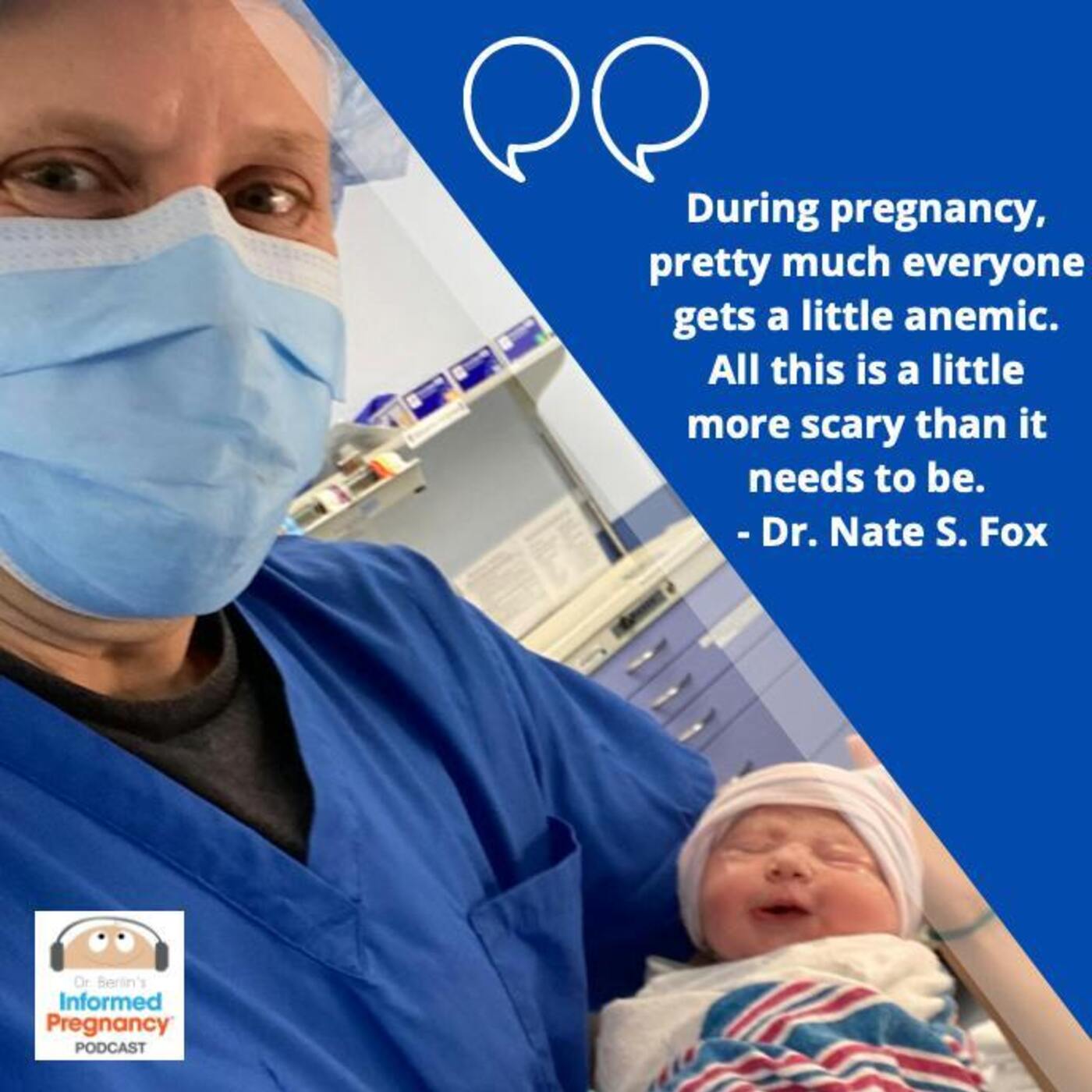
“Yeah, almost always it goes away. So what happens is during pregnancy, pretty much everybody gets somewhat more anemic than they were to begin with. Not everybody crosses the line into what we call anemia, right? We have sort of like cutoffs.”
“And I would say nutrition is probably the most underappreciated aspect of twin pregnancies.”
“Yeah, you're correct. And in most cases, it's not the end of the world. In most cases, you would never know.”
“Ultimately, it's one of these things where we know that there's a concept in medicine called the number needed to treat, which is how many people do we have to treat to help one person, right?”
“So there, there are plenty of options aside from epidural. The issue is they don't work as well and they tend to have side effects.”
Related episodes
- Ep. 206 Dr. Nate Fox – Prenatal Diagnostic Tests
- Ep. 325 Dr. Nate Fox: Thrombophilia
- Ep. 207 Dr. Nate Fox – Part II – Aneuploidy and Third Tri Testing
- Ep. 438 Postpartum Preeclampsia with Dr. Jamie Barstein and Dr. Nathan Fox
Transcript
AI-generated transcript with speaker labels — may contain errors, especially names and medical terms. Dr. Elliot Berlin, DC appears in blue; Dr. Nate Fox in orange.
Download PDF of the Transcript
Dr. Elliot Berlin, DC [1:36] Welcome to the informed pregnancy and parenting podcast I'm your host dr. Elliott Berlin and I am delighted to welcome back my guest for a discussion About particular blood conditions some that come up and affect pregnancy and some that come up because of pregnancy We want to know why they happen what they're caused by how they could be treated potentially and there's no better guest Than my guest today. He's a board-certified OB-GYN with a subspecialty in maternal fetal medicine He's a clinical professor at the Department of obstetrics and gynecology and reproductive science at the I can school of medicine at Mount Sinai He's an incredible guest a fan favorite and he's in private practice in New York City
[2:14] He also has his own awesome podcast that we'll talk about in just a little bit. Dr. Nate Fox. Welcome back to the podcast
Dr. Nate Fox [2:21] You so much. That's quite the introduction. I appreciate the obituary. I
Dr. Elliot Berlin, DC [2:26] Could have done better. Okay, here we go There's a whole bunch of blood conditions that can affect pregnancy and that come up during pregnancy really kind of force some changes during pregnancy and Sometimes people know they have them and have to kind of do pre-research to figure out what their options will be and how they Might have to do things differently than a typical pregnancy Sometimes they don't come up until you're already pregnant the two that we're gonna talk about today are thrombocytopenia and Anemia dealer's choice, which one you want to tackle first?
Dr. Nate Fox [2:55] Yeah, let's talk about anemia because it's more common. All right, let's define anemia. What is anemia? So anemia is essentially a low blood count, which that means is and everyone's blood right? Which is a liquid it's predominantly water and then the rest of it are things like red blood cells Which is what makes your blood red and that's what carries oxygen And then there's other things in there like platelets and white blood cells and various factors But the majority of your blood is water and red blood cells and if your red blood cell amount or percentage is low We call that anemia
Dr. Elliot Berlin, DC [3:34] Okay, so people can have anemia before going into pregnancy. There's nothing to do with pregnancy What are some of the causes of anemia?
Dr. Nate Fox [3:42] Right. I mean, there's definitely many causes for anemia and you know in medical school And you know in medical school you break it down in terms like you could have conditions where your red blood cells aren't being made Or you get conditions where your red blood cells are being broken down But for the majority of people who are getting pregnant, you know, we're talking young women Almost all of them if they're gonna have anemia It's gonna be something called iron deficiency anemia, which is basically if people don't have a lot of iron in their diet They're gonna have a decreased production of red blood cells because iron is one of the components
[4:18] That helps make up red blood cells and so blood counts a little bit low Most people who have it get it just because they get heavy periods Let's say so they're losing blood and they're losing iron that way There are other reasons some congenital reasons or family history reasons, but most people have it's gonna be very mild They'll probably have no symptoms. They probably won't know they have it and the only way they'll know is someone checks Blood tests and says hey, did you know you're a little anemic if they were to have a more
Dr. Elliot Berlin, DC [4:48] Advanced case. What would they feel?
Dr. Nate Fox [4:50] So people with severe anemia Basically, it depends if it comes on suddenly like if you lose a lot of blood you're anemic and that's sudden verse is chronic. People where it happens chronically sometimes don't have symptoms, but the symptoms one might have is you basically feel a little bit weak, right? Because since the red blood cells are what carries oxygen to all of your tissues, particularly your muscles, you might feel weak. You might feel tired. You could feel a little bit lightheaded or dizzy. People just don't feel well. But again, most people walking around with anemia, even those who come into the pregnancy, don't feel any of those because if you're healthy,
[5:29] you can compensate for a lot. It's much different, for example, if you're an 80-year-old man with heart disease. If you're a little bit anemic, you're going to feel it a lot more than if you're a 30-year-old woman who's healthy.
Dr. Elliot Berlin, DC [5:40] Meaning because the blood's not circulating very well. So if you have a combination of less circulation and less red blood cells, that's going to have a greater impact?
Dr. Nate Fox [5:49] It could be a function of circulation. It could be a function of things being a little more sensitive to change. It could be a function of muscles being weaker to begin with. Also, heart disease plays into this. So it could be a combination of many factors.
Dr. Elliot Berlin, DC [6:03] Okay. When you talk about how many red blood cells there are, is it how many red blood cells there are compared to the overall volume of blood?
Dr. Nate Fox [6:13] There's different ways we measure red blood cells when we do blood tests. The blood test we do is called a CBC, which stands for complete blood count. Essentially, it measures all of the components in your blood. And when we look at red blood cells, there's two ways to look at them. One of the common ways is called a hematocrit, which is essentially the percentage of your blood that is made up by red blood cells. So, for example, it's typically around, let's say, 40 percent or something like that. In pregnant women, it's a little bit lower, usually 35 percent or 34 percent. And once that percentage starts dropping, we call that anemia. There's other ways to look at the red blood cell concentration, which is related,
[6:58] but not exactly the same. And there's other indices of the red blood cells. Do they look big? Do they look small? And those help identify if you have anemia, what might be the cause of it. Again, when someone has iron deficiency anemia, which is the most common cause, the red blood cells look a little small. And the fancy term for that is microcytic.
Dr. Elliot Berlin, DC [7:20] I love fancy terms.
Dr. Nate Fox [7:22] Yeah, you know, it's fancy terms are, they're somewhat helpful for doctors. They're completely unhelpful for patients because they just make it sound more complicated than it is, make us seem smarter than we are.
Dr. Elliot Berlin, DC [7:35] I think by design.
Dr. Nate Fox [7:36] Absolutely.
Dr. Elliot Berlin, DC [7:37] Are more people anemic during pregnancy or do more people get diagnosed because we're monitoring so carefully during pregnancy or a combination of both?
Dr. Nate Fox [7:48] Um, it's probably a combination of both, but predominantly it's that women become more anemic when they're pregnant, meaning everyone who's pregnant when they walk into pregnancy is going to get blood testing done. And so, yes, there are many women who are diagnosed with anemia or a mild anemia at the beginning of pregnancy. And that's just because they were tested when, you know, they hadn't been in for the past two, three years, but the majority of women who are anemic and pregnant, it's because over the course of pregnancy, they do become more anemic. That's a normal change in pregnancy. And there's a couple of reasons for it. Number one is the body intentionally retains a lot of water and
[8:26] blood volume goes up. And since the blood volume goes up, it's hard for the body to sort of keep up with making all of the red blood cells needed. So if let's say your percentage of blood that was red blood cells at the beginning of pregnancy is 40%, if you dump a lot of water into your blood, it's now going to drop to 35%, 34%. So that's one reason. And the second reason, and there's an increased requirement for red blood cells, because you now have to oxygenate your muscles, which are working harder, your body, which has a higher metabolism and this growing being inside of you requires that as well. And so the babies take a lot of the iron from the mother also.
[9:08] And so for both of those reasons, women frequently become more anemic and whether they cross that line into what we call anemia, but their hermetic rate definitely drops when they're pregnant and it frequently crosses into the anemic range.
Dr. Elliot Berlin, DC [9:22] Okay. So a couple of things. That's why I asked at the beginning, like that's how we measure red blood counts because since it's a comparison of how many red blood cells compared to the overall volume and the volume goes up substantially during pregnancy, you could become anemic during pregnancy without having any fewer red blood cells.
Dr. Nate Fox [9:41] Right. Absolutely. But keep in mind, there's also a greater need. So the fact that you, you know, decrease your concentration with maintaining the same number of red blood cells, you're going to definitely be more anemic because you need more red blood cells in pregnancy. On top of that, there are other things you can measure. pregnancy like iron stores. We don't do it routinely because you don't have to, but those definitely go down. And the reason they go down is again, the baby is going to be taking iron from the mother, which is, you know, they're basically like a parasite for the entire pregnancy. They take things from the mother. So she has to replenish at a greater
[10:17] level than she normally would in her lifetime. That's important to remember that most women have this mild anemia in pregnancy. Again, they feel fine. It's not really the contributor to all the symptoms in pregnancy. When women are, you know, very commonly, they feel weak, they feel tired. Even a lot of pregnant women get dizzy in pregnancy. It's almost never because of the anemia. They usually don't feel it at all. The only reason we really care about the anemia in pregnancy is because when they come into delivery, they're going to lose blood, right? All deliveries involve blood loss, whether it's a vaginal delivery, cesarean delivery, there's going to be more blood loss. And the concern is that
[10:52] if they start out anemic and then they lose blood, they could enter into a situation where they're severely anemic and actually would require a blood transfusion or when they deliver, they're going to feel really anemic because they lost blood on top of starting out anemic.
Dr. Elliot Berlin, DC [11:08] So that mild anemia, first of all, thank you, because I think it's really helpful for people to understand. You know, sometimes these things come up during pregnancy, like anemia and gestational diabetes, and they're scary sounding, like what's wrong with my body? And the truth is, in this case, there's generally nothing wrong with your body. Like I said, baby's taken some of the iron which you need to make red blood cells. You're more volume in there of fluid that is not red blood cells. So by definition, your percentage of red blood cells per volume goes down. And there's a lot more work to do for those red blood cells as time goes on. But the other thing is, so when
[11:42] pregnancy's over, does this type of anemia generally go away?
Dr. Nate Fox [11:46] Yeah, almost always it goes away. So what happens is during pregnancy, pretty much everybody gets somewhat more anemic than they were to begin with. Not everybody crosses the line into what we call anemia, right? We have sort of like cutoffs. And I agree with what you said that a lot of this is definitely more scary than it needs to be. Part of the reason is we use the same terms in pregnancy that we use for like real disease. Like you said, gestational diabetes is not diabetes, right? It's a totally different implications. And anemia of pregnancy is totally different from the lifelong condition of anemia. But those were the terms they had. So those are the terms they used. So they
[12:24] definitely scare people more than they need to. But when we tell people about their anemia, we always reassure them saying, you're not ill, right? You're pregnant. And your blood count is low for a reason. And that's okay. And we just want to optimize everything for the time of delivery so that in the immediate period after delivery, you're well. And by you're well, we mean number one, you're going to feel okay, right? If someone is severely anemic after they deliver, they're going to feel miserable. And number two, to avoid the need for a blood transfusion, which isn't the end of the world, right? It's not like horribly dangerous to get a blood
[12:58] transfusion, but clearly people would like to avoid it if they can. And it's pretty unusual to need one. Everybody after they deliver when the bleeding stops, their blood count is going to start coming up on its own. The question is how fast will start coming up? Naturally, it's just going to come up at a certain pace. Some people after they deliver, we'll put them on some extra iron, for example, to make it go up a little bit quicker, but it will resolve after pregnancy for sure. Again, unless it had some sort of preexisting anemia, but that's the minority of people.
Dr. Elliot Berlin, DC [13:28] Amazing. And this is great information. Let's take a quick break. When we come back, we'll talk about treatments for anemia and then jump into our second category. Thrombocytopenia. We'll be right back.

Dr. Elliot Berlin, DC [15:59] Welcome back to the Informed Pregnancy Podcast. We are talking with Dr. Nate Fox and the topic is anemia. So how about a quick story? Have you ever heard of foot strike anemia? It's pretty rare. I think I know what you're talking about, but I don't think we call foot strike anemia. Well I had it and it drove me crazy. My doctor had no idea what it was. He identified the anemia and what happened to me was I did this major overhaul in my life and I lost 120 pounds and after I even just lost 20 I was like wow I could sort of see my feet let's use them and so I wanted to exercise and do all sorts of things. I started walking on the treadmill before you knew what I was
[16:41] jogging and next thing I know I'm running 5k's 10k's and all these things come up that I never heard of before and one of them was like really angry nipples after a run for example. Oh yeah I'm well aware of those. I was like thank God my wife was lactating. I'm like baby where do we keep the nipple butter? They make a thing called nip guards, little stickers you can put on there. It would have been nice to know you five years ago. Very nice, much more comfortable showers. Anyway so there's two guys on a podcast talking about nipples. Nipple and sore angry nipples. Poor us. Anyway the other thing is all of a sudden I was feeling better and better and
[17:19] better and then I would start running and after I'd run I'd feel so low energy I would sit down on the couch and literally pass out for an hour, two hours and just wake up and be like where am I? So he pretty quickly started to think anemia he wasn't sure why but he wanted me to start eating cereals and he wanted me to start taking iron and he wanted me to do an endoscopy and I was like okay we just met before we stick things inside me could we like brainstorm what might be cause because I never had this before I started exercising. He's like no we got to go in there and do it so I got a second opinion from the best worst doctor on the planet which is Dr. Google. I mean he's open 24 he she they open 24 hours a day
[18:03] speak 72 different languages great doctor in one sense but there's a lot of scary information from Dr. Google that may have nothing to do with you anyway Dr. Google helped me diagnose foot strike anemia which I just basically call fat Jew anemia because what seems to happen is every time you hit the ground with your foot you're crushing the red blood cells that are
Dr. Nate Fox [18:24] running through yeah yeah that used to be a condition that was first diagnosed in the people this is thousands of years ago people who would squash the grapes the great pressures they would get it and it breaks down their hemoglobin and they would become anemic because all they would do is all day you know he's on these stones with grapes in between yeah yeah definitely I didn't know it's called foot strike which is
Dr. Elliot Berlin, DC [18:46] ironic but yeah yeah so the heavier you are and the worse your sneakers are the more you're likely to get it so that's why I call it that I was wearing probably the worst running shoes they were cheap and I'm not ashamed to say that and then I was coming down from being insanely heavy and I was running and so I had to really give up running and take up swimming and other things to keep my exercise going anyway that's my little anemia story still whatever I've been through it's nothing compared I'm sure you see it all the time what women sacrifice to bring babies into the world if we had to bring babies into the world there would be no more babies
[19:21] and houses would be very cheap there would be no people supply and demand so back to the topic at hand I mean when you say most pregnancy anemia is iron deficiency so is it as simple as just adding more iron almost always
Dr. Nate Fox [19:34] it's really impressive the only issue with iron is that women have side effects from it because when you take iron pills they can be harsh on the intestines and the stomach and so a lot of prenatal vitamins have a little bit of iron in them but they don't put a lot in number one because iron takes up room you know people complain that prenatals are too big one of the reason they're big is iron another one is calcium those two take up the most room so they try to limit amount of calcium and iron. And so with some doctors routinely recommend oral iron supplements for pregnant women, I tend not to until they become anemic, because if they're lucky enough
[20:12] not to become anemic, why would I put them on something that might upset their stomach? And number two, you can really pretty quickly reverse it. For some women who can't tolerate the oral iron, and there's different forms, there's a ton of different ways, and there's liquids and different pills, and people can mix and match and try to find. You can actually get iron intravenously. When I was training, intravenous iron was gruesome. I mean, they'd have to get admitted to the hospital, and they would get intravenous iron, and they'd have horrible reactions to it. It was very painful. And so we only limited it to like the most severe cases. But now there's been new formulations of intravenous iron.
[20:50] It's like miraculous. There's almost no side effects. People get two or three infusions, and all their iron is restored. It's quite remarkable. Some obstetricians do it in their office. We don't, only because there's a lot of laws about what kind of setup you need to do infusions and states and all this stuff. So we just have people see a hematologist around the corner who does it. Most women will not need intravenous iron, but for those who either can't tolerate oral iron or they are taking it but it's not enough and it doesn't work. Intravenous iron is a really, really good option for them. And it works, if not all of the time, 99% of the time, basically all of the
[21:31] time. So there's a lot of options for them. And also just by food sources. If women eat red meat in their diets, they can usually maintain their iron. And the iron that's in foods does not tend to upset the stomach. And so if women are pretty anemic, we'll go into what do they eat and see how much iron content and try to increase it, particularly people who aren't vegetarian. If they increase their red meat intake or even something like liver or chopped liver, there's a ton of iron in liver. That's a good option for them as well. If they don't want to take supplements or head down the road of intravenous iron, other vegetarian sources. Yeah, I mean, there's a lot of vegetables that do have iron and
[22:08] people can sometimes keep up with it, but it's hard because the volume, you know, spinach, for example, you're gonna have to eat to get the same amount of iron that you get in meat or liver is hard. And some women, it's just not enough for them. And again, so they take supplements, but that's true for, you know, several vitamins, but vegetarian women may have a slightly higher risk of getting anemia, but it's not like they're all anemic and it's not like they can't maintain it with, you know, either a lot of care in their diet or with supplements. Yeah. So some of the
Dr. Elliot Berlin, DC [22:36] prenatal vitamins I noticed have multiple components to them and they very easily identify which ones are the iron as like a little black pill or something like that, so that if you don't need it, you can leave that one out. Or if you're particularly sensitive, you can leave that one out and have a prenatal vitamin without the side effects of iron. And then you could always add it in later. So I know a couple of companies that make a prenatal vitamin with no iron and they separately have an iron supplement that says they try to formulate it to be less harsh on your body. Also, you don't have to take it at the same exact time. You could take the other part of your supplements. Let your digestive
[23:12] system deal with that and, you know, six hours later, take your iron. So there are some options. I do have a patient that's coming back to me now. She's not the only one, but I've only seen this more recently where she is a very petite person. She probably was a hundred pounds before pregnancy and got pregnant with twins. And towards the end of her twin pregnancy, she also had, I don't know, I wouldn't necessarily say hyperemesis, but either mild hyperemesis or, you know, strong nausea and vomiting in pregnancy. And towards the end of her pregnancy, she was having to go to infusions two to three times a week. For iron?
Dr. Nate Fox [23:49] For iron. Yeah. Well, twins is obviously more taxing on a woman's body and nutritional stores than a singleton pregnancy. So twin pregnancies are generally ones where I'm more likely to start iron automatically because they'll almost all become iron deficient. And yeah, sometimes they end up in intravenous iron. Again, most don't. And if they do, it's more of an inconvenience than it is a danger. It's annoying to have to go get infusions of iron. And, you know, it takes a lot of time and whatever. And based on how much they have to get their cold pay is, it might be expensive, but it's not dangerous. It's just annoying. So with twins, we try to be a little bit more ahead of the game
[24:27] with a lot of these nutritional supplements.
Dr. Elliot Berlin, DC [24:30] Well, I mean, she seemed to have a lot of things working against her small body weight to begin with. You know, when you're 100 pounds and you put on 50 pounds, it's a serious increase. It's a challenge for the carb director as well. And then she was having a hard time getting foods down. So her ability to take iron was limited. And as often happens, the iron supplements made her awfully constipated. So yeah,
Dr. Nate Fox [24:55] with twins, we really go hard on the nutrition from the very early point in pregnancy. and nausea and vomiting is difficult, but we try to get very on top of that. And early nutritional counseling and supplements and a lot of innovations with diets and getting interesting and different types of foods into pregnant women with twins is really critical. And we see a lot of twins because we're a high-risk practice. And I would say nutrition is probably the most underappreciated aspect of twin pregnancies. With singleton pregnancies, it's probably similar, but it's not as critical. Meaning women who have twins, if they're not on top of their nutrition,
[25:36] it can become very difficult. For singletons, it's very important to be on top of nutrition, but for people who neglect it, usually there aren't a lot of consequences, fortunately.
Dr. Elliot Berlin, DC [25:45] Yeah, I mean, I had these two thoughts towards the beginning of this topic. Number one, you said that one of the sources of anemia is heavy menstrual bleeding. And these women generally go nine months without any menstrual bleeding. So you intuitively might have thought it goes the other way. But then also, because it is sort of a natural progression to have fewer blood cells, red blood cells, and more demand, and the body just always did that without us knowing that you were anemic or treating it historically, that in most cases, it seems like it wouldn't be the end of the world.
Dr. Nate Fox [26:19] Yeah, you're correct. And in most cases, it's not the end of the world. In most cases, you would never know. If we never check blood counts in pregnancy, yeah, most people, they get slightly more anemic than they deliver and then they recover and they're fine. But you have to remember, 100 years ago and earlier, women died after they delivered, a lot of them. And one of the main causes of death after delivery was from bleeding and severe anemia, right? If you bleed a certain amount, you're gonna become really, really sick because of it. And so nowadays, there's so many things we do to prevent that. The simplest is having them start out with the higher blood count when they come into delivery,
[26:58] all the other things we do at delivery to decrease the amount of bleeding if they bleed heavy afterwards to stop it, to treat it and whatnot. But yeah, for the majority of women, it doesn't matter what they do in pregnancy, right? The majority of women for the history of mankind were at home the whole time. They delivered at home, nothing ever happened. But remember that maternal mortality was a lot higher then than it is now. I mean, now if you hear of a woman dying after delivery, it's like, that should never happen. And it used to happen fairly routinely and it was horrible.
Dr. Elliot Berlin, DC [27:27] Yeah, absolutely. Extremely grateful for the advances we have in being able to detect and treat things that come up during pregnancy for both mother and baby or babies. But just observationally, it's somewhat natural for people to become slightly anemic during pregnancy.
Dr. Nate Fox [27:44] It's very natural, yeah. Ultimately, it's one of these things where we know that there's a concept in medicine called the number needed to treat, which is how many people do we have to treat to help one person, right? It's like that for a lot of things. When they're trying to decide, do you give someone antibiotics or something or do you not? The studies will frequently say, well, you have to give eight people antibiotics to prevent one person from getting septic shock, which is usually, that's a good ratio. We're happy to treat eight. Or appendicitis, you have to operate on two people to pick up one appendicitis. That's frequently a number. So for anemia, yeah, I mean,
[28:19] you have to screen and treat 100 women, let's say. I don't know what the number is, but it's a high number in order to really make a difference in one person.
Dr. Elliot Berlin, DC [28:26] For one, yeah.
Dr. Nate Fox [28:27] Yeah, and you have to decide. A lot of it depends on how annoying and painful is the things you're doing to the 100 people and how critical is the thing that would happen to the one. And you have to balance those out. And so since checking a blood count in pregnancy isn't such a big deal and giving someone a little bit of iron isn't such a big deal, we don't mind that we're sort of over-treating so many people to help one.
Dr. Elliot Berlin, DC [28:51] And also sometimes the treatment is just as simple as shifting your diet.
Dr. Nate Fox [28:55] Yeah, simple stuff, exactly. Which it mostly is. It's very unusual that this becomes a big deal in pregnancy. I mean, it's just in passing, oh, your blood count's a little low, let's do this, let's do that. And that's usually the whole thing for the whole pregnancy.
Dr. Elliot Berlin, DC [29:06] We'll have to do an episode on number needed to treat one day in relation to group E strep. But for now.
Dr. Nate Fox [29:12] Yeah, that's about 5,000.
Dr. Elliot Berlin, DC [29:13] Yeah. And also it's not like there's no downside to having those antibiotics during.
Dr. Nate Fox [29:20] Absolutely correct. That is a tough one. Everyone knows it's a tough one.
Dr. Elliot Berlin, DC [29:23] We'll come back to it one day. Any final thoughts before we leave anemia and go to thrombocytopenia?
Dr. Nate Fox [29:28] No, just that, again, pregnant women should not be worried about this anemia. Very common, not a big deal. You know, we adjust your diet, maybe give you some iron, and that's it.
Dr. Elliot Berlin, DC [29:38] What is thrombocytopenia? Let me give you a little background. I did an episode with Mandy Moore and she wanted to have a home birth. And when they did her blood count, they saw that she had thrombocytopenia. And because of that, she risked out of doing home birth. I think one of the things that makes home birth relatively safe is that we, you know, we do low. risk healthy pregnancies at home, and they're monitored pretty carefully. And if anything comes up that increases their risk, they're generally shifted over their plan to doing a hospital birth. And so that's what she did. And once she got to the hospital, her count was even lower, and there were other consequences as a result. But ever since
[30:20] we did that episode, I've gotten more than usual feedback and questions about thrombocytopenia. I had that too. I had similar struggles. I don't know much about my own condition. Please help. So let's start at the beginning. What is thrombocytopenia?
Dr. Nate Fox [30:38] Basically, thrombocytopenia is conceptually the same thing as anemia, but instead of the red blood cells we're counting, it's the platelet count. Platelets are a component of everyone's blood that are very, very tiny. And they're basically an important part of our blood clotting ability, meaning if someone gets, let's say, a cut or their nose is bleeding or their gums are bleeding or something like that, platelets are what our body uses to sort of plug those holes and either prevent bleeding from starting or stop bleeding once it starts. And so the fear is that if someone has a low platelet count, one of two things could happen. The first, which is more dangerous but less common, is that at the time of delivery,
[31:31] they will have bleeding that doesn't stop, and it'll become a situation that's life-threatening to the mother. That's problem number one. The second problem, which is much more common but much less dangerous, is that a pregnant woman, when she comes not for a home birth but onto the labor floor, will not be allowed to get an epidural because the anesthesiologist won't place an epidural in someone who they're afraid may have a bleeding issue, meaning they can't clot their blood because when they put that needle into her back, they can't see the tip of the needle if there's extra bleeding there, meaning if you're operating on someone's arm, you see what you're doing, they're putting it into a blind space. And
[32:10] so if there's bleeding that can't stop near their spine, they can become paralyzed. It's very rare, but one of the ways they prevent that is only putting epidurals in women who they're confident their blood will clot. So again, the first issue is more dangerous to the woman that she could have bleeding during delivery. And the second issue, which is more common, is that she'll come to the labor floor and will be denied the option of an
Dr. Elliot Berlin, DC [32:35] epidural. So I want to definitely get deeper into both of those two things. But just first by way of background, so having a low platelet count, is that something, again, that happens irregardless of pregnancy and then becomes an issue during pregnancy? Or is that generally something that is caused by the pregnancy?
Dr. Nate Fox [32:54] So again, both. It's not as common as anemia, meaning it's not that all pregnant women get low platelets in pregnancy because the platelets aren't used for the baby. The baby doesn't take up the mother's platelets like the baby takes the mother's iron, meaning the baby makes his or her own platelets. That's something that's made by the baby. So for most pregnant women, their platelets are going to be normal going into pregnancy and are going to be normal the entire pregnancy. Not an issue. They won't have to deal with this. That's the vast majority. There are some women who during pregnancy get a condition we call gestational thrombocytopenia. Thrombocytopenia is the fancy word for low platelets
[33:35] because thrombocytes are what we call platelets in fancy term and inia means low. And so gestational thrombocytopenia means because of pregnancy, their platelet count is a little bit low. And actually, what happens with that condition is usually it's just that the platelets during pregnancy get a little sticky and they clump together. And they're not truly low. But when the machine that counts the components of blood is looking for platelets, it's normally looking for these little tiny dots on the screen. So what happens is when someone gets a complete blood count, the blood goes to the lab, they take the blood, and they put it through a machine. And the machine looks at the blood. It's usually smeared
[34:18] onto a slide or whatever just in the tube. And the machine looks for various components based on size. So white blood cells are very big, so they count those. Red blood cells are medium, so they count those. And platelets are tiny, so they count those. But if the platelets all clump together into like a ball, they'll mistake that clump of platelets for a white blood cell. So they'll say there's one extra white blood cell, but we're down a thousand platelets when in fact they're there. And so that's one of the reasons women can get it. And that's easily ascertained by having a human being look at the slide and say, no, no, no, that's not one white blood cell. That's a thousand platelets. She's fine.
[34:54] Or sometimes women's platelet count actually goes down. It truly goes down. in pregnancy. But with gestational, it doesn't tend to go down to a level that's dangerous for her or to the point where she can't get an epidural. So most women with this gestational thrombocytopenia, it's usually fine. The count isn't too low or they're just clumped and everything is okay. That's one thing. Another condition is something called idiopathic thrombocytopenic purpura or ITP for short. ITP is a condition where the platelets start actually getting chewed up by the mother's body. They're like attacked by the mother's body and they really do drop. And they can drop to a point that she can't get an epidural or they can
[35:40] even drop to a point where it's dangerous for her. Most women who get that actually had it walking into pregnancy and either knew about it or didn't know about it because it was sort of mild, let's say going into pregnancy and it got worse during pregnancy. It's not common.
Dr. Elliot Berlin, DC [35:54] Most women do not have this at all, but some do. I have a million questions for you. You just unleashed a giant can, but let's take a quick break. And then when we come back, we're going to jump deep into all sorts of thrombocytopenia or just low platelet count. We'll be right back. Welcome back to the Informed Pregnancy Podcast. We're talking with Dr. Nate Fox about thrombocytopenia. So let's start with normals. What's a normal amount of
Dr. Nate Fox [36:34] thrombocytes? So we say anything above 150,000. Sometimes we'll just say 150 because we just throw out the thousands and that's a concentration. I think it's 150,000 per, I think, deciliter for something. I have to look that up, but that's the number generally. And most people are usually in the 200s or 300s. Once it starts going under 150, we think of them as low, but it's not even remotely clinically relevant until it starts dropping below 100,000 or below 100. So somebody does IDP before pregnancy.
Dr. Elliot Berlin, DC [37:11] When would they start to feel symptoms and what kind of symptoms might they notice?
Dr. Nate Fox [37:15] So it's interesting. So if your platelets are low coming into pregnancy because of an immune condition, usually you won't know about it at all unless you start bleeding. So for example, you can walk around with the platelet count of 20, which is very, very low, but people don't usually have like spontaneous bleeding because of it. Generally if they start to bleed, it won't stop. And most people don't bleed, right? And it's a little bit different. They don't tend to get heavy periods because the bleeding from periods doesn't stop because of platelets. It's a unique form of bleeding. So frequently what will happen is someone will go and they'll come into a doctor for some other reason or they're in an emergency room because
[37:55] of some other reason and someone checks their blood count and says, whoa, your platelet count is crazy low. Did you know that? They'd be like, no, I had no idea. And then they'll be sent to a hematologist. They'll figure out what it is and decide how to treat it. Or sometimes it will be noticed because they have heavy bleeding for some other reason. They bruise easily or their gums are bleeding all the time or they have surgery and they don't stop bleeding. Although with surgery, they'll check it beforehand, but something let's say they fall and they can't stop bleeding. Someone will diagnose it that way.
Dr. Elliot Berlin, DC [38:22] So something you might just see from a routine dental visit where you start to bleed.
Dr. Nate Fox [38:26] Yeah. So someone let's say they go to the dentist and their gums are bleeding and bleeding and bleeding. The dentist would be like, there's something off here. You should see your doctor and they'll do some blood tests and maybe they'll diagnose them that way. But it's not always predictable. I mean, some people with platelet counts that are low do bleed a lot. And some people with platelet counts that are low don't bleed a lot. There's a lot about this. We don't exactly understand why one person, one wood person wouldn't. So it's frequently picked up just on a routine blood test. I had a patient, she just delivered recently where she was diagnosed out of nowhere with a crazy low
[38:57] platelet count. Didn't know why it actually turned out it was a, um, which is unusual as a consequence of celiac disease. And then when she went on a gluten-free diet, her platelets totally normalized. That's unusual, but that does happen.
Dr. Elliot Berlin, DC [39:09] Yeah. So, I mean, that's the next question. Are there things in ITP, it sounds like you're saying the body is actually eating its own platelets. So is there some kind of treatment
Dr. Nate Fox [39:21] for that? So it's usually an auto-immune condition, which is your body attacks itself. And so many of the treatments are immune modulators. The oldest and simplest is steroids, which people can take. Steroids have a lot of side effects, so it's not great to be on them chronically, but it can help acutely. There's other immune medications. Some people actually get surgery to remove their spleen because the spleen is the organ that is frequently responsible for attacking and killing all these platelets. And so if someone gets their spleen removed, it can improve and maybe cure this condition. There's downsides to getting your spleen removed as well, but you know, if a decision is made.
[40:00] And overall, you're better off getting it removed than keeping it in. That is an option for people as well.
Dr. Elliot Berlin, DC [40:05] That's unusual. Okay. And then other people just, you're saying get it during pregnancy, either because it's misread or because it's actually lower during pregnancy. So when you get a low number, you happen to come across it during a CBC, right? So when you get a low number is the automatic next step to try to figure out, is this really low or are they just sticky and clumpy?
Dr. Nate Fox [40:29] Yeah, well, it depends on the number. Again, a lot of this just ends up being logistical, right? So someone in pregnancy, let's say is walking around and we find out their platelets are in the nineties. And so platelets in the nineties are definitely low, but they're not low enough that we're worried about her bleeding too much at delivery or if she needed a cesarean. And the question is, is she going to be able to get an epidural if she wants one, right? She doesn't want one. That's okay too. But also there's relevance if she ends up needing a cesarean and if they won't place an epidural, then she might need to be put to sleep. So we try to figure out and then if it's a number in the nineties,
[41:05] we'll usually just repeat it. And if it's sort of stable, it's not likely to be anything of concern. And we'll just watch it. If it starts dropping to the point where she would not be able to get an epidural and every hospital anesthesiologist is a little bit different with that. What is the cutoff, whether it's under 90, under 80, under 70, somewhere in that range is where anesthesiologists start to get uncomfortable placing epidurals. There aren't a lot of tests you can do to determine is it ITP? Is it gestational? Again, unless you just look at the slide and realize, oh, these are clumped. It's not really 90. It's really 120 or 150, in which case you're fine.
[41:44] And so you'll try to sort of empirically treat to get that number higher. It's not a concern about the mother bleeding until it starts dropping below 50. Again, these, and that's unusual. Most, you know, of all women who have the diagnosis of low platelets and pregnancy, fewer than 10% are going to be under 50, probably fewer than 5%.
Dr. Elliot Berlin, DC [42:06] Right. Uh, I mean, it becomes a distinction for people who want to do home birth or out of hospital birth.
Dr. Nate Fox [42:11] Yeah, I don't know what their cutoff is. Do you know?
Dr. Elliot Berlin, DC [42:13] I think they start to get uncomfortable under a hundred, but it's also a range, you know, different midwives and different backup obstetricians have different comfort zones. But, uh, for them, how difficult is it to reevaluate whether we're seeing clumpy cells or decreased in cells?
Dr. Nate Fox [42:32] So generally hematologists are trained to look at slides and count them. If I looked at a smear of someone's blood counts, I wouldn't be able to do that. That's not something I'm trained to do, but hematologists typically can. So seeing hematologists could help sort that out. Again, if someone's platelet count is 90 and you're confident that it's just either clumped platelets or platelets are a little bit low because of pregnancy, there's nothing specific that she's at risk for during delivery. Again, other than not getting an epidural, but if it's a home birth, she's not going to have an epidural. So that's not really a concern. It's possible that one of the concerns of the obstetricians or the
[43:10] midwives is that there are other reasons women's platelet counts can be low. Like if you found it for the first time around the time of delivery, for example, pre-clampsia is one reason why your platelets can be low. And so perhaps they're concerned, well, we're not going to have high confidence that it's really just one of these conditions because you need, you know, a thorough assessment to make sure that that's all it is. Maybe that's their concern with why they wouldn't allow a home birth. Not because specifically the platelets are low, but because they want to make sure that no one gets led into a home birth when they actually have some other condition that's lurking that wasn't picked up.
[43:46] I'm guessing maybe that's a reason.
Dr. Elliot Berlin, DC [43:48] So to your knowledge, is there anything, because what happens sometimes you notice it's a bit low, you keep your eye on it and it starts to slide a little bit, and then you start to get risks out of certain things, like, out of hospital birth or out of epidural. So to your knowledge, is there anything natural that can be done to try to prevent them from sliding or to boost them?
Dr. Nate Fox [44:08] Not that I know of that's reliable. I'm not aware of anything. If there is, I just don't know about it.
Dr. Elliot Berlin, DC [44:14] Okay. To finish off this conversation. So the two major things, the most common and probably is that getting risked out of that out of the hospital, right? But once you're in the hospital, having the epidural taken away from you as an option, what options does that leave somebody who wants to have a vaginal birth, but also wants to have some medicated pain relief?
Dr. Nate Fox [44:37] Yeah. So there, there are plenty of options aside from epidural. The issue is they don't work as well and they tend to have side effects. There is an option for people to get nitrous gas, laughing gas, basically in labor, which is a pretty good option because it does not tend to make people very sleepy women have control over it themselves. Cause they get to hold the. and when they have pain, they can take in the nitrous themselves. They can't really overdose because if they did, they would just sort of fall asleep and drop the mask and they would be okay. I mean, it's not strapped to their face. They hold it in their own hand. Interestingly, that option in our hospital was introduced a few years ago with great delight and then was taken
[45:19] away because of COVID, because of all the aerosolized gas that they had with COVID. So I don't know if and when it's going to come back, but we had a few women. We did a podcast actually about a woman who wasn't able to get an epidural for a different reason, but she was looking forward to nitrous and then she delivered during COVID and not only did she have to deliver alone because they didn't let her partner in, but she couldn't have the nitrous because they couldn't let those aerosolized gases. It was a disaster with that stuff, but hopefully that'll be back. There are intravenous narcotics people get like morphine or fentanyl, which are okay. They take the edge off a little, but they make people very
[45:54] sleepy and then it wears off and then you're in a lot of pain again. And then of course, all the other non-medicated options that were available to women forever to have labor doulas and Lamaze and Bradley and hypnobirth and all the techniques that are available to women that for each person have different effect, but clearly have been used for a long, long, long time. But in terms of medications, you're running out of options.
Dr. Elliot Berlin, DC [46:19] If she wanted or needed to have a caesarean birth at that time, then what's the option for medicating the caesarean?
Dr. Nate Fox [46:28] She would have to be put to sleep. Unfortunately, general anesthesia with the intubation and a tube in her throat. That's a real negative. I mean, so for women, for example, whose platelets are borderline, even those who don't want epidurals or choosing not to get them, which is fine. We're always trying to figure out if we can get her platelets to a point where at least if she were to need a caesarean, the anesthesiologist could give her a spinal or epidural because, you know, to be delivered by caesarean under general anesthesia, it's okay. I mean, she'll do well, the baby will do well, but number one, she's asleep for the birth. So she doesn't have that experience of her baby being born.
[47:03] Number two, there is an increased risk to her. It's less safe to be put to sleep. Number three, when she wakes up, she's going to be very groggy and she's going to have a sore throat. And number four, her pain management after caesarean is not going to be as good because when you get a spinal or epidural, they give you this 24 hour medication, which helps your pain relief the first day after surgery. So all things considered, if you need a caesarean, you're far better off having a spinal or epidural than being put to sleep. So even women who don't want labor, we try to get their platelets to a point where were they to need a caesarean, they could have that safely with an epidural or spinal.
Dr. Elliot Berlin, DC [47:40] Sure. And then of course, they completely miss the birth experience.
Dr. Nate Fox [47:44] Yeah. I mean, that's, it's terrible. They do. And also usually their partner does because for a caesarean, we let the woman's there, obviously. And then her partner is usually sitting with her, either her partner could be anybody, you know, or whoever her special person is. But when someone's asleep with a tube in their throat, almost never do we let someone sit in the operating room with them because it's very traumatic to watch. And so basically no one gets to see the birth other than, you know, us, the doctors, which is fun. But, you know, in terms of the family, they don't get that experience, which is, you know, it's a bummer.
Dr. Elliot Berlin, DC [48:14] It feels like this particular issue needs some innovation, better research to understand who's a greater risk or less risk from having the complications with the epidural and maybe other ideas on learning more about why platelet count goes down and ways we can boost it safely to avoid these issues. Or maybe even what goes off in my head is could the epidural be placed with one of those tiny little cameras so that they can get a better view at what they're doing?
Dr. Nate Fox [48:43] There are tests that they're developing to try to see which woman with low platelet count is actually at risk for bleeding and which woman is not at risk for bleeding. And so they are testing those and there are options. The issue is since the stakes are so high, right? When you're talking about it, the complication is a blood transfusion or the complication is a headache or the complication is a fever. Okay, like, you don't want those, but the stakes aren't as high when the complication is paralysis, right? You're talking about the anesthesiologist can't be 99% sure. They have to be 100.0% sure that it's safe. And it's very hard to design studies
[49:22] and systems that are going to bring someone's confidence that high because they don't want, you know, the one in 10,000 it's one in 10,000 paralysis is too high, right? And so they have to be exceedingly confident. And so it's going to be difficult to come up with something that's going to be 100%. That's the problem.
Dr. Elliot Berlin, DC [49:40] That makes sense. Any final thoughts on thrombocytopenia?
Dr. Nate Fox [49:45] No, again, for most women who get it, it's going to be mild. It's going to be what we call gestational. It won't inhibit their ability to get an epidural. It won't be a risk for them or their baby. Once it starts dropping lower, it could do one of those two. treatable, and we can get the platelets high enough, either to the point that it's not dangerous and hopefully to the point where they can get an epidural as well, it's just something that needs to be managed in pregnancy.
Dr. Elliot Berlin, DC [50:10] You're obviously one of the greatest guests of all time and you're a great host.
Dr. Nate Fox [50:14] Thank you.
Dr. Elliot Berlin, DC [50:14] Oh, thank you. If only there was some way people could hear you more regularly and about different topics.
Dr. Nate Fox [50:20] Oh, there is a way.
Dr. Elliot Berlin, DC [50:20] Tell me about your podcast.
Dr. Nate Fox [50:22] Thanks. So, um, we started, uh, our podcast called healthful woman, uh, this W O M A N in the singular, uh, a little bit over a year ago, it's been well received to go over topics like these, uh, topics related to pregnancy topics related to women's health topics related to wellness. We have guests on you with every single episode. It's been a lot of fun. We started a second podcast called high risk birth stories where women or parents doesn't have to be women men as well, uh, tell their own story about their birth experience, about their fertility journey, which has been unbelievable. For example, you know, we had on the woman who delivered during the pandemic.
[51:00] She had to deliver alone. She got to tell her whole story about that. Very moving, very interesting. And it's been a lot of fun. So yeah, please check it out. If you like this podcast, you'll probably like my podcast. I think there's a lot of overlap.
Dr. Elliot Berlin, DC [51:13] Hashtag truth. Um, where are you on social media? Where can we find you?
Dr. Nate Fox [51:17] So the easiest way to find me is probably at our website, which is healthful woman.com. That's one word H E a L T H F U L W O M a N.com. I think that's also our Instagram tag. And I think our Facebook thing, I'm, I'm not crazy up to all of the social media stuff, but I'm pretty sure those are our tags or whatever they're called.
Dr. Elliot Berlin, DC [51:38] Everybody has strengths and yours is clearly obstetrics and gynecology.
Dr. Nate Fox [51:43] Not social media.
Dr. Elliot Berlin, DC [51:46] Thanks again for being with me at home. Thanks for listening to the informed pregnancy podcast. If you'd like more pregnancy and parenting information like this, visit us online at informedpregnancy.com or on Instagram. My tag is at D O C T O R Berlin. It's Dr. Berlin. I look forward to seeing you there.
Want more pregnancy + parenting? Start your FREE TRIAL of Informed Pregnancy+ and get access to all our curated pregnancy and parenting content — original series, iconic birth films like The Business of Being Born, prenatal workouts and more.
