
May 13, 2021 · 41 minutes · Episode 229
About this episode
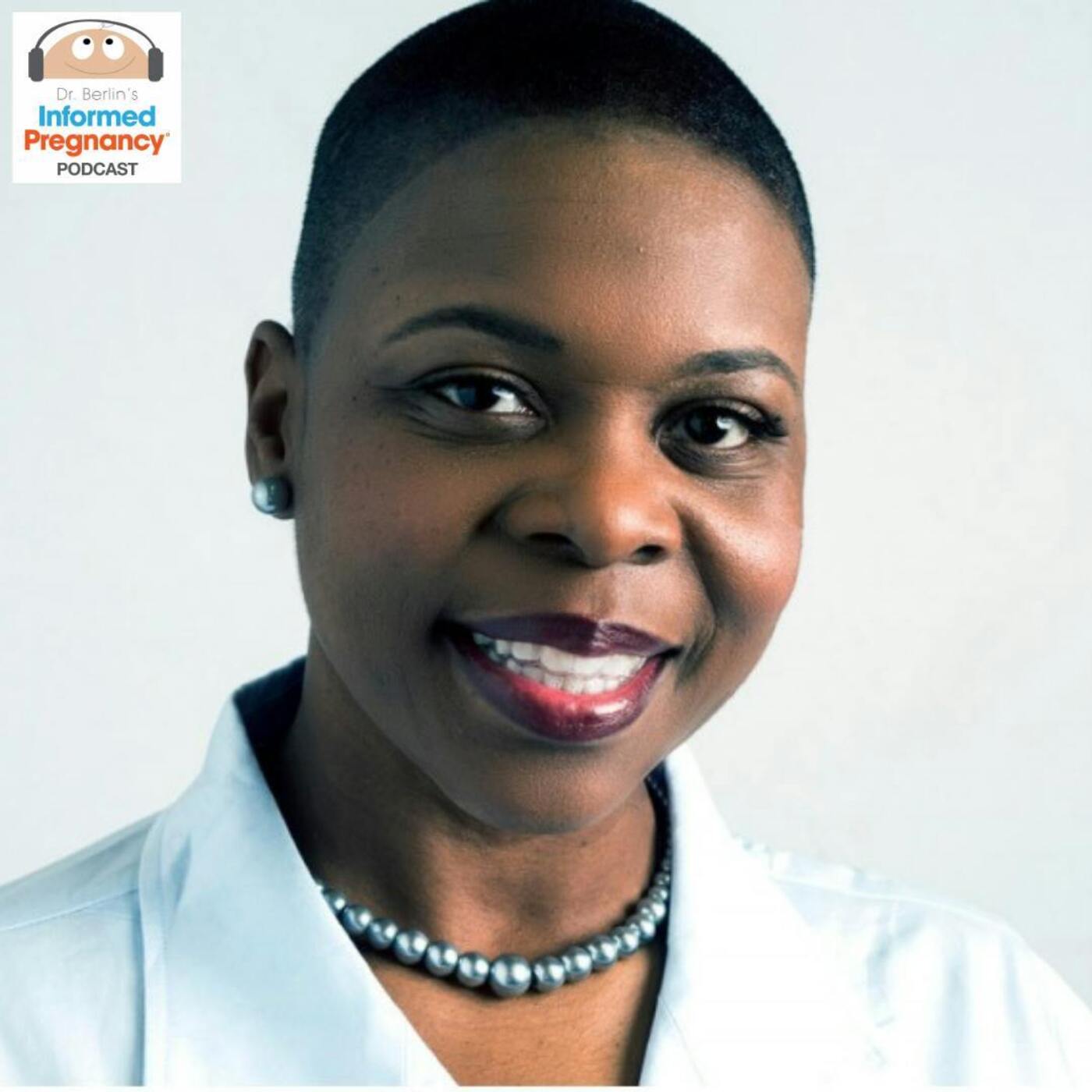
Certified professional doula, childbirth and lactation educator with over 25 years experience in the birthing world, Nikia Lawson is a wealth of information. We discuss the goals and importnace of childbirth education, birth planning and choosing birth providers and settings that will facilitate safe, dignified and healthy childbirth experiences for all.

Learn more about your ad choices. Visit megaphone.fm/adchoices
See Privacy Policy at https://art19.com/privacy and California Privacy Notice at https://art19.com/privacy#do-not-sell-my-info.
Key quotes
“Okay, so my theory behind childbirth education is pregnant with a pulse. If you are pregnant and you have a pulse, you need to take a childbirth class.”
“So we have to create healthy spaces for black bodies to birth in.”
“it's your fifth time, you're going to learn something new because it's new pregnancy. No two pregnancies are the same. No two experiences are the same and no two birth journeys are the same.”
“Okay, so a birth plan is a tool to facilitate communication between a pregnant individual or pregnant mom and her doctor, like literally, it's just a tool.”
“birth doesn't happen that fast. It doesn't happen that fast. It's a slow, longer process allowing the body to go through phases and stages of laboring and it's intense.”
Related episodes
- Ep. 96 Childbirth Education – Sarah Lavonne
- Ep. 449 Birthwork & Motherhood with Jennifer Campbell
- Ep. 382 Caitlin Wilder: Before Birth
- Ep. 254 Anastasiya Kukhtareva – After Birth
Transcript
AI-generated transcript with speaker labels — may contain errors, especially names and medical terms. Dr. Elliot Berlin, DC appears in blue; Nikia Lawson in orange.
Download PDF of the Transcript
Dr. Elliot Berlin, DC [1:13] Welcome to the informed pregnancy and parenting podcast. I am your host dr Elliott Berlin my guest today is a certified birth doula and a birth doula trainer and has been working the childbirth space for over 25 years in addition to doula training. She is a childbirth and lactation educator maternal health advocate coach and Founded her own non-profit with the aim of providing education and social services to reduce infant mortality rates And she's in the Dallas Fort Worth area Nikia Lawson. Welcome to the podcast
Nikia Lawson [2:10] Thank you so much for having me. Oh my goodness. What an honor
Dr. Elliot Berlin, DC [2:14] I mean you must have so much birth experience and birth fee energy and Just witnessed so many amazing things that Have We're gonna try to milk it for all we can get out of you And help our audience learn from your experiences. Let's just start at the beginning. Where are you from? I'm from Fort Worth, Texas
Nikia Lawson [2:35] We're outside of Dallas. So that is home I've been fortunate to live in other areas of the country But spent most of my birth and career serving in the Dallas Fort Worth community
Dr. Elliot Berlin, DC [2:46] So where did you do the training? How'd you get involved in birthday stuff? Wow
Nikia Lawson [2:51] So it's been 25 years in this industry for me and my very first first birth that I supported as a professional Was my sister she was giving birth to number four of her nine Birthed into the world beautiful and I was there for that when I was I was home from college and She went into labor on Christmas Day and I was able to be in the delivery room with her and I was studying engineering by the My whole my whole life from the time I was third grade until the time I graduated high school I was preparing to become an engineer and it just so happened that this situation along with a situation Prior to my sister giving birth just kind of led me toward birth work and there in her then her birth and the delivery
[3:35] Holding her hand and guiding her through it. My sister, you know looked at me and said this is what you're supposed to be doing So I didn't really know what she meant by that So I had to do some research and literally find out what it meant to be a doula Like what does it mean to be a doula? So I did some research and it was just so interesting to understand the concept behind Doula and researching and at the time there was really only one organization that had made, you know Some sort of impact and that was donor international and I was still working on my undergraduate degree And I was studying physics I wanted to be an engineer So I was studying physics and it wasn't the right timing for me to switch my major
[4:22] But I did I changed my major I gave up my academic scholarship and I went and pursued a degree in Social work because I wanted to work with teen moms I had had an experience with a young teen mom who was explaining the concept of terminating a pregnancy because she had Terminated one and she was terminating another one at 15 and so that just struck me and then being at my sister's birth struck me and I kind of felt like There's got to be something more to this life than being an engineer and it led me to birth work And I have been full steam ahead ever since I mean
Dr. Elliot Berlin, DC [5:00] a few things to note here. 25 years ago, doula work was not very popular. So you were in it before probably most people knew what a doula was or had even never heard the word.
Nikia Lawson [5:12] Right. And still to this day, it's still not quite mainstream, as people would think. But yeah, 25 years ago, it definitely wasn't. And it definitely wasn't mainstream in, you know, non-white circles because it just didn't appeal as anything outside of a luxury service to have this trained professional at your birth experience providing you this wonderful, you know, elated experience. And so it just seemed like a luxury. And we recognize now how necessary and ancillary that, you know, doulas are to this amazing experience that families need the support
Dr. Elliot Berlin, DC [5:53] to navigate. Yeah. And I just think that you go back not too far and women were always supported. People in labor were always supported by their families or their neighborhoods or their communities. The village. Yeah, the village. You saw people having babies. You saw people during pregnancy. You were exposed to it. Your exposure didn't come from television and movies, which are dramatized over the dramatized and not realistic most of the time. And then you just always had that doula support. It just wasn't called a doula. Then when we moved away from our families, then, you know, all of a sudden you're having a baby without that support. And as it turns out, that support is very, very helpful for most people.
[6:36] The other thing is I do have a question for you like this, because, you know, my background in college was in drama and theater and writing, but I never thought in a million years that would come in handy for me, helpful for me in my work as a chiropractor or, you know, the past 20 years being a prenatal chiropractor, all the work that I do and a birth work supporter, so a doula and a body worker. But that background did come in very handy for me, for example, for doing a podcast. You know, my background in theater and writing and acting and things like that has made me, I think, more comfortable scripting podcasts and recording and editing them.
[7:14] I ended up doing, we do a standup comedy show all about pregnancy, childbirth, and postpartum. I made a couple of documentaries. So my point is that college training that I thought, ah, I'm going to switch tracks here and never really go back to that. It turned out to be pretty helpful. Has physics become helpful for you in labor
Nikia Lawson [7:33] and like in the work that you do? No, I have not navigated the natural sciences at all, but the social sciences have, of course, degrees that I have that I typically would have used in traditional employment have certainly come in handy as a social worker, have socially come in handy in my master's degree in counseling psychology. I have definitely leaned on those skills 110% as a doula, but that's not technically the role
Dr. Elliot Berlin, DC [8:01] of a doula, even though it has been very, very beneficial. And you're a lot more than a doula. You have all these other services that you provide and certifications that you've earned. Are you still going? Are you still adding to the list? You have so many letters.
Nikia Lawson [8:16] Yeah, I have thought about it. My ultimate goal is to get a doctorate in naturopathy. So I have not aimed to go back and pursue it just yet. There are a few other things that are pressing right now in the birth space, especially as it relates to black maternal health that definitely require my attention rather than me taking a few years away from the industry to go and work on a doctorate. But yes, that is my ultimate goal is to have the doctorate in naturopathy and incorporate that into birth work.
Dr. Elliot Berlin, DC [8:50] Yeah. Let's talk a little bit more about black maternal health. So there's work that needs to be done. I know we did an episode back a few years ago, and even then it was clear that there was a big disparity between the experiences and the outcomes for black moms and babies and white, in particular, moms and babies. And I think a lot of work is underway. What's the situation and what kind of things can be done around the country to help
Nikia Lawson [9:20] out? So we're talking about mitigating black maternal health. A lot of it boils down to looking at how racism and bias impact birth, how preparation for families impacts birth, and then the support in the postpartum time, how that impacts birth. We're having more of a maternal morbidity situation when it comes to actual birth. We're having a maternal mortality situation when it comes to that immediate postpartum, that postpartum recovery period when right after the baby is born, whether it be hemorrhage or something related to the birth itself that led to the the demise, or within those first 40 days, before that even six-week checkup is covered by insurance
[10:07] to be received, we're losing babies and mamas, especially black mamas. And so we have to look at what role does what we see in society play in that. And we realize and recognize that the body definitely holds on to stress. And we know how stress manifests itself in a non-pregnant body. So imagine the stress of being black in America, where sons and daughters are murdered. Justice is slow and definitely not swift. Justice may be just, but inhumane. So there's a lot of factors that lead to what are called catecholamines, or stress hormones. And as the body produces one of the main catecholamines, which is cortisol, it creates a negative impact in the body.
[10:57] And so black women's bodies have always been known to have more cortisol as a stressor, just innately because we're navigating being black in America and the stress of racism. Then you couple that with pregnancy, and all of the bias that goes along with being black in a society that doesn't see color, or doesn't see color to the point where it makes a difference in microaggressive behaviors towards black people, whether it makes a difference in medical treatment, maternal health, the whole outcomes are impacted by how you relate to me because of the color of my skin, not because of the health of my situation, not because of even resources, because it's been proven that even African-American women
[11:42] with means and resources still fare worse than white women without education or employment. And so we realize and recognize that our bodies are harboring the stressors that make birthing and developing a baby a very, very unsafe space. So we have to create healthy spaces for black bodies to birth in. And sometimes those spaces don't look like hospitals. Sometimes those spaces look like birth centers. Sometimes those spaces look like home. And sometimes those spaces can be safe in a system that wasn't designed to take care of black bodies. So we have to look at that overall, and that's our overarching explanation. And then it goes to making sure
[12:26] the resources are accessible. So accessible resources that do exist in communities for individuals who are in need of preparing for a healthy mom, healthy baby outcome. And so that's a hard piece because when resources are already scarce in a community and then coupled with the care that the community receives and how accessible the care is, how affordable the care is, how adequate the care is, how culturally competent the care is, how inclusive and sensitive the care is, all of that makes a difference in how the body responds to growing a healthy baby.
Dr. Elliot Berlin, DC [13:02] Well, I mean, it's intense. I think that most people hold on to stress and it affects the pregnancy as a whole, it affects the childbirth and it certainly affects the postpartum, it affects the baby. And to add to that with so much more, it makes sense that it would contribute to less good experiences and worse outcomes. And like you said, it transcends socioeconomic class. It's not really a matter of having the resources. It's gotta be deeper than that.
Nikia Lawson [13:33] Definitely.
Dr. Elliot Berlin, DC [13:34] You have a nonprofit, tell me about that.
Nikia Lawson [13:37] I do, I do. I have an organization here in my local community that focuses on infant mortality. And again, looking at infant mortality from a factor of a baby being born and not seeing his first birthday under whatever circumstances there are, a little different than maternal mortality according to the CDC. If an individual has a baby and within one year of the birth of that child, there's a death that occurs to that individual outside of homicide, suicide, or a car accident or cancer, that's considered maternal mortality. Whereas if an infant dies under any circumstances it's considered a mortality. So looking at why do those babies who aren't in a situation where it's a car accident
[14:27] or they have a major health concern, what is that factor? And it's typically because babies come prematurely and a premature baby comes too small because it comes too soon. So being born early and being born with low birth weight are really factors that play into infant mortality. Along with maternal infection that leads to, again, prematurity. So those are some of the things that my program focuses on and we focus on that through education. advocacy and support and so the education comes by way of free community childbirth education available to all individuals but focusing on getting the word to more of the African-American community making sure that black people know that
[15:14] here's a resource in your community and online so I do it in person once a month on our fourth Saturdays and then I do it literally online every single month to make sure it's accessible yes yes yes yes I'm really grateful to have a team of other educators who support me through it as well and then the advocacy piece is making sure that families can connect with trained individuals who have the competency culturally as well as through sensitivity through a sensitivity and inclusivity lens to be able to provide some adequate guidance and navigating of birth and resources and understanding what it means to find your voice and use your voice what
[16:01] resources are accessible and then support by way of actual doula care and so part of what I provide literally is a resource for families to actually get doula care for their birth and all of that is through my organization making it accessible and affordable for families to navigate
Dr. Elliot Berlin, DC [16:23] birth I mean that's like God's work invaluable resources and you must be making huge life-altering changes for people in a positive way and your organization is called the natural way birthing project and before we go to
Nikia Lawson [16:39] break where can we find that online so we can find it at the natural way on Facebook right now and it's so interesting that we were in the process of regrouping the website and it kind of got crashed in the middle of cyberspace so I have a I have a web developer helping me redesign now as we speak so the website was up for a while somehow we had a situation got really hinky and the content was really muffled so we're having to literally start from scratch so I'm working with individuals to start from scratch on rebuilding our website so if you know any web designers hello well
Dr. Elliot Berlin, DC [17:24] yeah one well when that pops up we will promote that as well but for now
Nikia Lawson [17:28] we can find you on Facebook prime me on Facebook the natural way birthing project Fort Worth that is the name all of the information that I share for the birthing families can be found there people can find more information about me and my efforts in making this happen on my website and it's www.nikealawson.com
Dr. Elliot Berlin, DC [17:50] perfect let's take a quick break when we come back I'd love to pick your brain about childbirth education and then after that about birth plans we

Dr. Elliot Berlin, DC [20:29] Welcome back to the Informed Pregnancy podcast. We're talking to Nekia Lawson, who has an incredible wealth of knowledge and information about all things birth and postpartum. So we're going to talk about childbirth education. I think that some people are like, why do I need to take a childbirth education class? What happens to childbirth education class? If I have a partner, should they come to childbirth education classes with me? Where do we begin?
Nikia Lawson [20:53] Okay, so my theory behind childbirth education is pregnant with a pulse. If you are pregnant and you have a pulse, you need to take a childbirth class. That is my theory and I am sticking to it. So yes, I believe that everybody birthing should literally take a class. And I do believe that no matter how many pregnancies you have, you could benefit from taking a class. And I have had individuals within the same pregnancy, take the class multiple times. Because depending on where you are, when you find out you're pregnant, you're in one mind space. And so getting educated then it's just like, Oh, I'm soaking up all the information. I'm soaking it all up.
[21:34] I'm soaking it all up. But a lot of what you know, you learn may not apply. And so, you know, I tell them when people introduce themselves in my childbirth class, you know, some people say, Oh, I'm 12 weeks pregnant, or I'm 15 weeks, or I'm 20 weeks. And we just did a gender reveal. And it's like, Oh, so you peed on a stick. And here you are. You missed the period. And here you are. So kudos to you. But I promise you, it's going to benefit you if you come back a little bit later and you're pregnant. Because where you are right now in your pregnancy is going to be a whole lot different than where you are at 32 weeks in your pregnancy. Or once the baby starts to move during the pregnancy, or as you
[22:13] get closer to your estimated due date. So it's imperative that their families just get educated. And even those individuals who aren't pregnant, of course, getting educated, because like you were saying, just in the first segment, why I learned so much, because you just literally learn so much. And you're about to embark on something that you're not familiar with, that your body's not familiar with, that you have to prepare for, whether it's your first time or it's your fifth time, you're going to learn something new because it's new pregnancy. No two pregnancies are the same. No two experiences are the same and no two birth journeys are the same. People are different
[22:49] places when they deliver literally some people may deliver in a hospital setting and one birth and then decide they want to have an out of hospital experience the next birth. Some people have had that I've supported have had military experiences. And then they have civilian experiences. Some people have had experiences where they were having an out of hospital birth, it resulted in a hospital transfer. So getting educated to prepare mentally, emotionally, physically for the physiology of birth, like what happens when my body physically starts to change during this process? How do I navigate that? What about interventions? Do I want them? Do I understand how they're going to happen? You know, what is the
[23:29] benefit? What is the risks? Are there alternatives to these situations? How does that play out as a whole for my experience? And that's a piece that nobody seems to know is important.
Dr. Elliot Berlin, DC [23:43] Right. I'm with you. I think that it's alarming sometimes how close to the end of pregnancy people get and really don't have any idea about what's about to happen. Just the process and the options and the choices that they could be making if they had more information, the things they could be doing to prepare their mind, their body, their home, their relationship, if they knew more. And then the whole reason we started informed pregnancy was because I just got really sad of people going through whatever journey they were going to have and then coming back and saying, wow, I had no idea about this or about that. And I wish somebody would have told me
[24:29] earlier.
Nikia Lawson [24:31] Yeah, I get all that I wish I had known. I wish I had met you. I wish I had taken class, you know, during this or that, or I wish, you know, somebody I know just had a baby and they could have learned so much. And the reason why it's so different is because of these propagated messages. So the propagated messages, listen to your doctor, your doctor has the answers, then that's pretty much what you're going to do when doctors are there from the medical model of care to navigate the pathology of birth, not the natural aspect. of birth. So just in case something goes wrong, we're here. We're here to find something wrong and fix it. We want to make sure that medicine is in place and just in case, just in case.
[25:08] And so not really expecting someone's body to just do what it was designed to do and not be so like, Oh my God, her body just had a baby and there was no medication involved. Oh my God, this body just spit out a whole human being and we didn't have to do any surgical procedures to get it out. Oh my gosh, this person did it. And they didn't scream and shout and tear down the rafters. So there's not this natural understanding because it's a medical model of care in the hands of most OBGYNs. And so when the message has been propagated, that you have to listen to your doctor and your doctor's looking for something wrong because that's what they were taught. And now you're like, well, this isn't kind of what I was anticipating the
[25:50] birth experience to be like. And so to know through education that you do have options. And it's, you know, it's interesting because again, most people base their birth experience on what they see on TV. And we already know Hollywood got it wrong. They got it wrong from, you know, the screaming and the hollering, everybody's water breaks as a sign of labor. Then you get to the hospital rushing and screaming and trying to find keys and trying to find a car and trying to find a parking space and rushing through the door and water's running down your legs like a faucet. And, you know, you have all of these Hollywood sensationalism around birth. And then we cut to commercial and we come back
[26:28] and someone's holding a three month old. And it looks like it was born in two minutes and two seconds. And those of us who have been in the birth experience realize and recognize birth doesn't happen that fast. It doesn't happen that fast. It's a slow, longer process allowing the body to go through phases and stages of laboring and it's intense. And sometimes it's intense and it's beautiful and it's painful and it's euphoric and it's orgasmic and it's energy. When you couple all of that, you got a beautiful bird.
Dr. Elliot Berlin, DC [27:05] Yeah, I just, even today I had somebody in my office who I only met now for the first time postpartum and she had her baby a couple of weeks ago and I said, how was your birth? And she goes, it was really long. And I was like, oh wow, how long was it? And she said, nine hours. And it was her first baby and I was like, nobody told you. That's rock stars. You rock stars. She's like, really? That's quick. I'm like, yeah, for your first baby? Yeah. Exactly. So you mean start to finish. Nine hours? Are you kidding me? Come on. And so she thought that was really long. She thought you just go in and a few hours later, the baby's out. I practically know somebody who pushed for nine hours. It's just
[27:47] the lack of information. And it's kind of hard because on the other hand, right? You know, none of the other animals take a class and they don't listen to a podcast and they don't read a book or watch a documentary and they just sort of seem to know what they're doing. And so it's this weird wisdom. It's an innate wisdom. Like everybody, you know, that can carry a baby has that wisdom built inside it. And the problem is like, I know what to eat innately. I know what my body needs to eat, but every place I go, there's all this outside noise that says, come here and get fried chicken or come here and get some donuts. They're hot. They're just came out of the oil and I'm like, oh, there's so many signals
[28:28] around us that animals don't really have to deal with. And that's what you're saying about TV, how you see things on TV. My analogy for that is if you're 30 years old and you've never flown in an airplane before and you're about to fly an airplane for the first time, but all you've ever seen and know about airplanes is what's on TV and movies and newspaper headlines. You'd be just purely terrified to fly in an airplane because the assumption would be that every airplane either has engine failure and falls out of the sky or, you know, it's hijacked by terrorists or has snakes on it. Like the idea that a plane could just take off, have a great flight with a decent snack and land is unheard
[29:09] of. True, true. You're hilarious. I wish you were here because we do stand up comedy about having kids. It's called kidding, kidding comedy. And you'd be, when I'm in town, I will definitely have to put that on my schedule. Work that out. All right. I'm going to take a break with you. An important topic that we under discuss sadly on this podcast, but you can remedy is the old birth plan. We will be right back. Welcome back to the informed pregnancy podcast. We were having a blast with Nikia Lawson and now we're going to talk about birth plans. Uh, and again, so many questions. What is a birth? plan. Should somebody have a birth plan? What should go in the birth plan? Does anybody
[30:04] even care about the birth plan? Once it's written, where do we start?
Nikia Lawson [30:07] Okay, so a birth plan is a tool to facilitate communication between a pregnant individual or pregnant mom and her doctor, like literally, it's just a tool. It is an opportunity to have talking points right there in front of you to prepare you and guide you for the birth that you desire. Now, one thing that I tell all families when it comes to birth and plans, you got to be flexible because birth has so many unknowns. And if you have a plan and you're a type A personality, that's not going to work because somebody's going to feel some type of way when A is going one way and the body's going another way. The plan is just not lining up what the body's trying to do. And then that
[30:50] creates its own level of stress and anxiety. So not to be flexible, nimble and available to see the plan through, but then understand that the plans can change. But to have a plan, to be able to sit down with the provider that you choose, that you trust. And see, that's a part of what you learn in your birth plan. You just might have a doctor and I call them out just like all other situations. Your doctor might be a quack or a creeper. I mean, we have to kind of identify is your doctor a quack, a creeper or the infamous unicorn? There's a few out there who are like these mythical creatures that are beautiful and majestic. We know they exist, but they don't
[31:30] exist. But do they? Because we don't know because they're unicorns. That's kind of our way of identifying these doctors who are just amazing, who get it. These OBGYNs who are preparing their clients for beautiful, amazing birth experiences. And that's a part of the plan is finding the right provider who's going to offer you the birth that you desire. Part of the plan is finding the right location to have your baby so that you can make sure you feel safe and empowered because a safe birth is the priority. People always say, well, I'm just trying to make sure I don't have a C-section. I want to have a vaginal birth. No, no, no, no. Let's focus on having a safe, dignified
[32:11] birth experience first. And part of that is creating a plan. So you get educated, you learn all the things that you need to know. And then you sit down and you write a plan and you sit down with everybody who's going to be a part of this experience meeting this Munchkin Earth side. So if that's your mom, your dad, your best friend, your partner, your cousin, your grandmother on your dad's side and your grandmother on your mom's side. And it's going to be a couple of neighbors from around the way. All of them need to, one, get educated. And all of them need to be a part of the birth planning process because everybody's role is integral when it comes to getting ready to meet this baby. And so we create these plans
[32:50] with an idea and an ideology of how we want the birth to happen, but also with an understanding that there is sometimes a need for clinical intervention. There is sometimes a need for your doctor to do what medically is necessary to get the baby on this side of Earth safe. And so realizing what that is and what that looks like, that's where the education comes in and then putting it on the plan and talking to the provider to say, OK, so what is your protocol around this situation? So what are your thoughts about that situation? How have you navigated situations when this comes up? I'm dealing with this health issue in my pregnancy. What information can you share with me?
[33:30] Can you give me the benefits and the risk and the evidence based information? And so this is what having a plan in place provides a birthing family, not to mention every single birthing family needs to take a tour of the location in which they're going to have their baby, because there's a whole different set of questions you'll ask to the individuals who are facilitating the environment that you're going to be in. And so, yeah, you may have all the questions and answers from your doctor, but I tell them if you have a doctor with an XYZ philosophy and then they're birthing, they have privileges in an ABC environment, something's got to give you got to find
[34:06] somewhere in the middle of the athlete to have the birth of your choice. So you want to find if your doctor has an XYZ philosophy and you find a facility to have your baby that has an XYZ, you know, protocol, then that's a win. But you got to have it all line up. But you learn that when you put together a plan.
Dr. Elliot Berlin, DC [34:23] Yeah, I think you hit some really valuable notes here. Number one, I couldn't agree more that the setting and the provider, to the extent that you get to pick them, make a huge difference. And the earlier you start to inquire and try to understand what page you want to be on and what page that provider is on, the earlier you can really understand if you're going to be a good match or not. And even though you don't have a breech baby, maybe you could ask now what if I did have a breech baby, even if your baby's not measuring small or your placenta is not calcifying, what's your comfort? zone with that. So you might be the most wonderful doctor midwife for somebody else, but not
[35:04] a great match for me. So it's a little bit of a dating process really. And the location makes a huge deal too. You know, I love watching people who are comfortable and helping them who are comfortable giving birth at home, give birth at home, but somebody who's really uncomfortable giving birth at home, who's pushed into a home environment, probably not going to have a great time. And vice versa. I think people, some people super happy in a birth center or in a hospital. And that's probably where they should give birth. And you can mitigate the other things, right? Just, you know, if you're in a hospital and you like the medical safety blanket of being there, but don't like the clinical feeling,
[35:43] then there's a whole bunch of things you can do to kind of make it your environment. And so a lot of that got a plan for it. That's the plan. That's the birth plan. That's the plan. Makes a big difference. What's your experience with the reception? Like when you go to support someone in labor, do you bring copies of the plan? And when you hand them out, how do like nurses and practitioners respond generally to them?
Nikia Lawson [36:08] Well, you know, families definitely need to first discuss their birth plan with their provider. Whoever's going to catch your baby, they need to know your plan. So that's the first thing. And physically have a copy of it available for them to put in your records. And then when you show up at your birthing location, you need to have your plan in hand and discuss it with whoever the nurse is that's there for the day. And it's, you know, at this point it's talking points. So you're not going to sit down and go over it like you would with your doctor, but you're going to have those talking points. You know, this is how we want to labor. This is what we would like in the immediate
[36:39] postpartum, like right in the baby is out. This is how we would like to facilitate the postpartum recovery here in the hospital. This is what we would like for breastfeeding, you know, so those quick little bullet points, because if you're in the throes of labor and your birth plan is not in your file, somebody has got to relate this information so that you can get close to the birth of your choice as possible, get as ideal as you can. And so if you don't have time to sit down and say, this is what I want, you know, oh, I'm here and I'm being induced. So I'm here with plenty of time to kind of go over how I foresee this induction happening or,
[37:13] you know, I'm here and I'm breathing through the contractions and it's really going good. And you get checked in your five centimeters, you got some time to labor. So you have an opportunity to really take the time to go over what your desires are in the plan, especially if you have a team. So you have to have someone on the team to help support that. And part of having a doula on the team allows for when your pregnancy brain is kicked in, it allows for someone who is still level minded and professional to help you use your voice, to help you articulate what it is that you want to say, to help you navigate how it is you want this to happen and be OK with the outcome so that birthing families
[37:54] know that they have choice, that they can help make some of the decision that they're working in tandem with their provider and the environment in which they're delivering to have a healthy, safe birth outcome. And that's a part of how plans can be presented so that they are received because some nurses don't receive them very well because they think of, oh, you're going to come here and tell me how to do my job. It's like, no, but I'm going to tell you how to have my baby. You know, if your job lines up with how I want to have my baby, it's a win-win situation. However, if we're going to have a conflict, let's deal with that now so we can understand what are our alternatives or what else can be
[38:29] done if this is not an option based on the environment. I tell mamas, you want to have a water birth. Please don't go to an environment that doesn't offer water birth and try to fight for a water birth. Didn't happen that way. You have to find the location that has the ideals that match up with the birth you want. And that takes some time. It takes some research. And sometimes it takes some sacrifice. It may be the sacrifice that you have to drive across town. We have had clients who have literally had to go to the birth in around the area and get a hotel because you get to the yeah, yeah, you get to the birth and it's like, yeah, you're not quite ready yet. So go ahead and head home. Well,
[39:06] home is an hour and a half away. So don't necessarily go home. Let's just go ahead and get a hotel and we're prepared to stay for a couple of days because your labor is imminent, but it's just not imminent domain.
Dr. Elliot Berlin, DC [39:19] Yeah, when someone lives far from the hospital, I still love for them and they want to labor as long as possible out of the hospital. That's their plan, their choice, but they live far from the hospital. We've done hotel labor, many times, so many times that one of the guys at check-in once said, Hey, I think I know what you're doing. I'm like, what are you talking about? He's like, yeah, I think you come here and you labor with these very pregnant women. And then you leave in the middle of the night to go have the baby. And I was like, that's pretty brilliant of you because I always come in here with different people who are nine months pregnant, waddling along with fluid
[39:55] behind them. I'm carrying this giant birth ball. And then he said to me, me, you know, I just, so, you know, we don't mind that you do that. I was like, you don't mind that I like, why would you care? We're paying for a full night's room and for six hours. Sometimes you not only shouldn't your mind, you should offer this as a service. You should have ice chips and special foods and drinks and birth balls. And I have a name for it. I call it womb service.
Nikia Lawson [40:23] Yeah, I love it. Yeah. Thank you very much. That should be a thing. Uh huh. We got something going here. We got something. I thought it was something I was laboring a mom and we were supportive. We needed to change the scenery. So we went to the 24 hour fitness and we were on the treadmill and we were walking the track. Yes, that's cool. They thought it was the coolest thing. And they were like, is she okay? I was like, trust me, we're not going to have our baby in this 24 hour. I know it's time to leave, but right now we're going to
Dr. Elliot Berlin, DC [40:53] walk this baby down. It's really cool. Um, I'm sad that our time is coming to a close, but I want to ask you a surprise question here. You must know that you must have an item that people wouldn't think to put in their birth bag, but it's a great idea to have it in there. Let's see. Oh
Nikia Lawson [41:10] gosh, people have so many different little trinkets. I do not go anywhere without my speaker because I set the mood and I love the Spanish guitar. So I have my favorite Spanish guitar player piped out in the background, playing like he's right there and we're having a whole jam session. I do not go to any birth without my speaker. Yeah. For me, that's a must have. It could really change the environment a lot.
Dr. Elliot Berlin, DC [41:36] It does. Yeah. What you're listening to. Um, Nikia, you're amazing. I appreciate you. And I've learned a lot from you. I know our audience has too. Let's just say one more time. Where can we find you online?
Nikia Lawson [41:49] So yes, if you are looking for me on social media, I am on Facebook right now at the natural way birthing project. That is a wonderful way for you to find out when we have our free community childbirth classes. If you're in the local Dallas, Fort Worth area, we do have a free in-person childbirth class with comfort measures. Um, so it's been an amazing ride. And right now we're still doing our social distancing classes. So we're taking five to seven families. Unlike before we had much, much larger class time, but online we can register up to 300 families, up to 300 families. Yes. What's 299 cause I need a screen. We have room for 299 screens available. So yeah,
[42:32] registration is wide open for individuals who desire to learn more. And again, if they just go to the natural way birthing project, Facebook page under the events tab, you'll see an event for the virtual free community childbirth education class. If those who are interested in information about how individuals can become a doula, they can find me at www.nikealawson.com and frequently I'll run specials on tuition and registration fees. And I have promotions that I'm doing to make sure that becoming a doula is affordable and accessible.
Dr. Elliot Berlin, DC [43:06] Amazing person. Keep up the great work that you're doing and fulfill your promise that when you're in Los Angeles, you'll come do a comedy show with me.
Nikia Lawson [43:15] No doubt.
Dr. Elliot Berlin, DC [43:18] Thank you again. And at home, thanks for listening to the informed pregnancy podcast. If you have suggestions for topics you'd like to hear about, send us an email to info and informedpregnancy.com
Want more pregnancy + parenting? Start your FREE TRIAL of Informed Pregnancy+ and get access to all our curated pregnancy and parenting content — original series, iconic birth films like The Business of Being Born, prenatal workouts and more.
