
July 1, 2021 · 41 minutes · Episode 236
About this episode
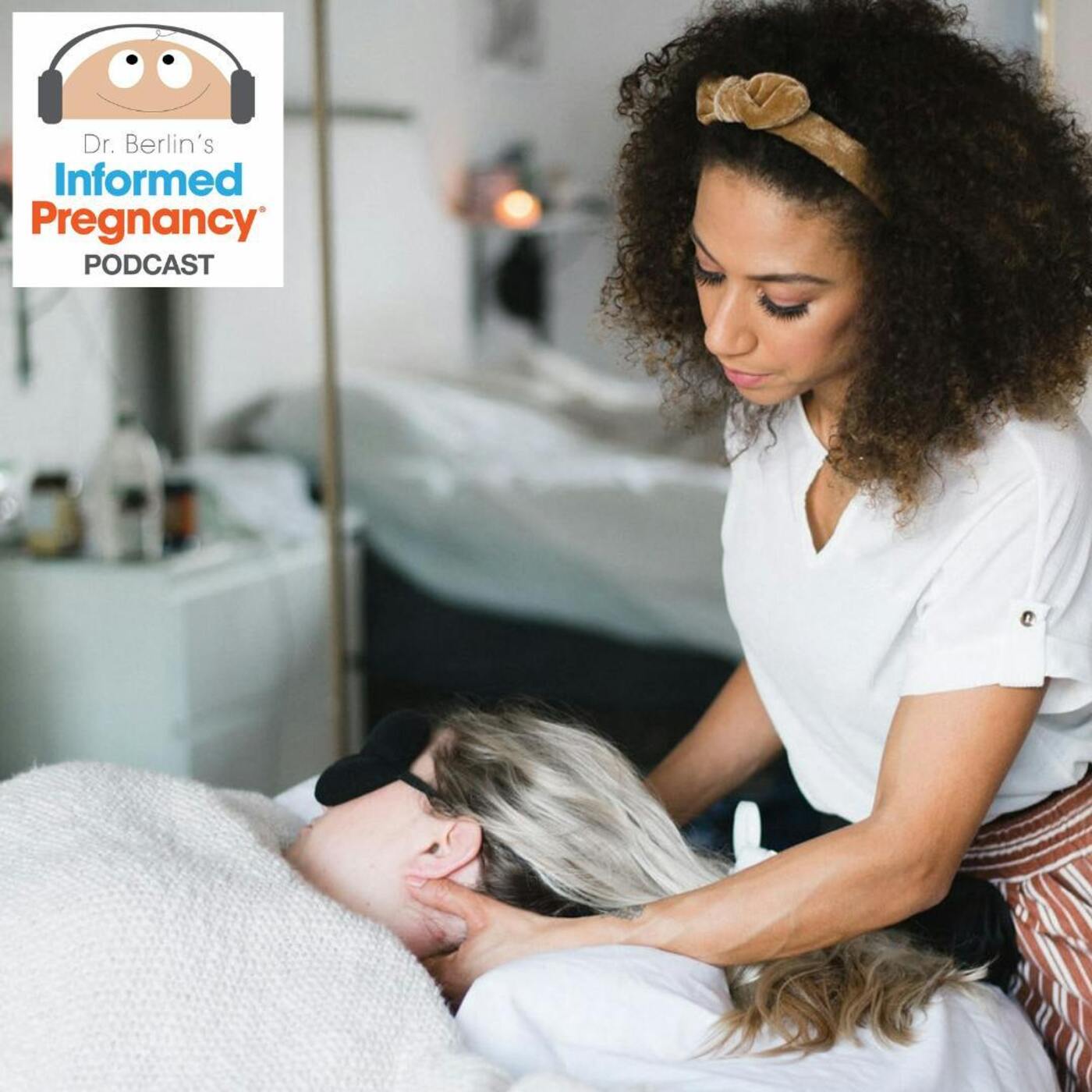
Doula and newborn care specialist Princess Estocia McKinney-Kirk founded ‘Bellibind’, providing physical and emotional postpartum support through the ancient art of belly binding.

Learn more about your ad choices. Visit megaphone.fm/adchoices
See Privacy Policy at https://art19.com/privacy and California Privacy Notice at https://art19.com/privacy#do-not-sell-my-info.
Key quotes
“And with belly binding, I often say what we do is more than just a wrap. Our belly bind experience is all about supporting the woman and making her feel ultra nurtured, ultra supported, ultra comfortable.”
“you know, we do a lot of breath work. in grounding work. And I feel like the belly bind in itself is also very grounding because it's bringing back that chi energy to the postpartum body. And so, we hit all those”
“And I just fell in love with the belly binding practice.”
“And no, belly binding enhances recovery after surgery. It helps with cinching the womb space”
“So we do talk about just that transformation in ways that you can reset, reclaim your body, and also to revive yourself into this new role of being a parent or a mother.”
Related episodes
- Ep. 512 The Fourth Trimester with Eboni Nash
- Ep. 516 Doing It All with Sarah Olin
- Ep. 510 Preparation Matters with Nina Spears
- Ep. 508 Oral Health During Pregnancy with Dr. Bernard Baseri
Transcript
AI-generated transcript with speaker labels — may contain errors, especially names and medical terms. Dr. Elliot Berlin, DC appears in blue; Princess McKinney-Kirk in orange.
Download PDF of the Transcript
Dr. Elliot Berlin, DC [1:13] Welcome to the informed pregnancy and parenting podcast. I'm your host dr Elliott Berlin my guest today started out as a doula and then expanded her professional experience By becoming a newborn care and early parenting educator in 2015 bellybind was born Bellybinding is an afterbirth practice which naturally supports postpartum women both physically and emotionally I have so many questions Princess McKinney. Welcome to the podcast
Princess McKinney-Kirk [2:02] Hi, thank you for having me. I've been trying to have you for a long time and do completely to my Over busyness. I have had to wait for this wonderful moment. Yes. Finally the stars have aligned
Dr. Elliot Berlin, DC [2:18] Destiny, you know The thing is you do something really unique and interesting and the people who've experienced it have said amazing things about it I don't fully understand it and I do get questions about it mostly from my patients at the office Sometimes through the podcast Correspondences and so I really want to learn everything I can from you in the time that we have But I would love to start at the beginning to find out how you even got into this work Where are you from and how did you get into birth work?
Princess McKinney-Kirk [2:46] Awesome three very wonderful questions that I could take on a long tangent, but I'll keep it Consolidated so born and raised from the Inland Empire. So I always am the princess from the Inland Empire But I come from an adoptive family Evangelist and a doting wonderful mother who also worked in the administrative world at Loma Linda Hospital So, you know nurturing I volunteered at the hospital from a young age. I was always with babies so as I navigated my way through college as a nanny and Also being a hairstylist. I actually had the honor and privilege of working with Ricky Lake as a event hairstylist for her and That was right around the time. She did the documentary of the business being born
[3:36] Which I was in my 20s. I wasn't thinking about children, even though I knew I always wanted them so I really took her documentary watched it absorbed it was like in awe as many many are of that documentary and Everything that is revealed in it and I just was like, well, I really feel called to birth work But it wasn't then that I shifted my career as a hairstylist into birth work It took me probably a good six years more and the passing of my own father my adoptive father Where it really caused me to soul search a little deeper and and really asked those questions of what is my passion? What is my purpose? So I'm passionate about here. But is it my purpose and
[4:22] You know, I had a wonderful boyfriend at the time Who's now my husband who was just like, yeah explore that more and in doing so I found my mentors I I reached out to Anna Paula and she'd that Juditha who really guided me into the dual world and was like well this resonates with you come do the training and see how That feels for you and providing this work. So that's how long story short I found my way into the birth world. This was back in 2012
Dr. Elliot Berlin, DC [4:54] So Ricky got another one. Yep I mean this guy how many lives have been affected directly by that film and then how many indirectly because, for example, the work that you do now and many other people do after they were, you know, affected by the business of being born. One thing that you said that I can't just leave dangling out there is the Inland Empire because I was once invited to give a talk in the Inland Empire and I was so honored because I'd never been to an empire. I drove out there and so excited, couldn't wait to see it. I thought they were going to be like, I don't know, giant golden gates and like a star. And I got there. I'm like, there's something's wrong.
[5:39] There's just like an RV dealership and nothing else here.
Princess McKinney-Kirk [5:43] Yeah, it's very much like has rural parts. Now it's even more of a suburbia. It's really developed a lot over the years. But when I was growing up, it was hills, rolling hills, horses, and plenty of orange orchards to climb trees in. So I loved growing up there as a kid.
Dr. Elliot Berlin, DC [6:03] I mean, it sounds like a pretty awesome upbringing. I just think they should change it not to Inland Empire. The expectations are too high. All right. So you become a doula. How do you like doula work?
Princess McKinney-Kirk [6:15] Love it. Yep. I really found a home in the doula community. And the sisterhood of that. And like I never had found before as a hair stylist, you know, it's very competitive and there's, you know, ways to connect with people. But still, when I found the doula community and Anna Paula, she's just amazing and has been such a great guide to me. Even the person who encouraged me to take that big step into becoming an educator. And, you know, I do so at Beanie Birth and I do so at another location in Los Angeles. But I wouldn't have even taken that leap had it not been for her mentorship and guidance. So she believed in me. She saw something in me that I didn't really see for myself.
[7:01] And now I'm going on five years of doing that. And again, just serving and nurturing and healing and connecting. That's what I'm really good at. And so it was a very easy transition into this service. Once I got the confidence of, you know, the information and the application of supporting birthing people through birth, which is where I kind of started. But then I also found the importance in postpartum care. And as I began to support my birth clients into postpartum, I started to see that void even more so like, wow, there's really not a lot of conversation about what's needed for the healing body postpartum, the physical and the spiritual side of it.
[7:52] So I found other trainings that helped to feed my quest for knowledge and information. And a lot of those trainings came from other cultures. And so I did one that brought a lot of the practices from Indonesia and Malay practices to the West. I was among the first practitioners to do these type of trainings. And I just fell in love with the belly binding practice. There was many things incorporated in these trainings, like healing soups and bodywork and herbs and things like that. But it was the belly binding for me that I saw that it could have the most impact for my recovering clients and for just postpartum women.
Dr. Elliot Berlin, DC [8:36] So we're going to spend a lot of time talking about what it is and how it works and a little bit more about the history of where it came from. But healing soups sound delicious. I want to start therapeutic pizza.
Princess McKinney-Kirk [8:47] Yeah, therapeutic pizza.
Dr. Elliot Berlin, DC [8:49] Yeah. It's really just pizza. I think it is therapeutic all by itself.
Princess McKinney-Kirk [8:53] It is. We just had some today. It was great. I did a veggie style one and my kids just enjoy cheese pizza. And yeah, it's good for the soul.
Dr. Elliot Berlin, DC [9:02] It's an old Italian remedy. When you first started to do the work, you had no kids. Now you have kids or your birth experiences.
Princess McKinney-Kirk [9:11] My birth experiences were unique.
Dr. Elliot Berlin, DC [9:15] Aren't they all though?
Princess McKinney-Kirk [9:16] Aren't they all unique, right? So with my daughter, I like to say I had all the birth experiences in one with her and yeah. And you know, as a doula, you think, okay, I'm going in really prepared. My husband felt confident. Like, you know, a lot of stuff, honey, and I'm just going to let you lead. And I would kind of coach them here and there, but I had three of my doula sisters who were going to come support me and just, you know, cultivated a really great birth tribe and was part of the tribe. And the plan was birth center birth Delmar birth center was my choice. And you know, labored at home for a good amount of time. I decided to transport.
[10:00] to my birth center and then hung there for a good 25 hours with not too much progress. Now what I did find out later was my daughter was asynclitic and then I had been laboring for a while and was presented the option to rupture my membranes early so I was torn between it but I was also like having this urge to push because she was asynclitic and in my hip and just putting that pressure and I had never one really learned about that as a doula what to do in that scenario so you can't really doula yourself anyways in labor but even still we didn't know baby was in that position at that moment. So I went ahead ruptured my membranes and when the next midwife came in a few hours
[10:46] later she was like dang like it's going to be really hard to get baby to move out of this position now that your water is ruptured so we ended up transporting to the hospital which I always had a plan B a plan C just knowing how birth can shift and turn quickly and so I had a good care team at the California hospital in Los Angeles went in spiked a fever after an epidural you know I did progress but my cervix had swollen so much from my pushing and that's why I got the epidural because it helped me to stop pushing that was just so hard to hold back on because of her positioning and so my cervical lip was just too swollen to get me past that nine and a half centimeters plus the spiked fever and at this point I was
[11:39] already a good 40 hours in to labor and I was just like all right I'm throwing in the towel I know I've done all that I could do I surrender let's just get her out and safe and let me just be able to rest and so we did we went into the C section and she came out very healthy and yeah that was my birth so plan C was
Dr. Elliot Berlin, DC [12:02] an unplanned see exactly that was clever oh thank you very much I have too much free time I would love to clarify a few things just in case people listening don't know a synclitic means that the baby's head is not quite lined up with mom's pelvis the birthing person's pelvic opening so sort of cocked to one side or the other so you feel this urge to push and you can't I mean you tell me it just seems like you can't really fight it it's just like a natural instinct right yeah and initially I thought oh
Princess McKinney-Kirk [12:35] wow okay yes my body's done it like I'm completely dilated I have this urge to push it must be time and so I was pushing for a good like hour maybe kind of making the grunting and then my midwives were like you know what it's not really happening let's check you because I was in the bath at the time so they checked me and they're like oh yeah let's not push anymore I was like what not push why like it's so strong the urge so yes
Dr. Elliot Berlin, DC [13:01] yeah it's really hard to do it's one of those times an epidural can shift into your favor because otherwise that swelling that you have you instead of going seven eight nine ten you go seven eight seven six five four as the door swells shut all right that's the whole idea is even when you do an out-of-hospital birth you have a plan for should you need to or want to transfer to the hospital and you have a plan should vaginal birth not be seeming like the safest option there and so yeah followed your plan all the way through the end let's take a little break when we come back we'll find out because then you have another baby I did and we can find out how that one but I promise you we're gonna be full-flowing with
[13:43] information about belly-biting you're just so interesting we'll be right back

Dr. Elliot Berlin, DC [16:14] Welcome back to the Informed Pregnancy Podcast. We're talking to Princess McKinney, and we're going to get all into belly bunny right after this one thing. Inquiry minds want to know about your second birth experience.
Princess McKinney-Kirk [16:25] Yeah, so after my first, I learned a lot. And also, I took a good year off just to be a mom and just to be immersed in that. But in 2018, that's when I got pregnant with my second, my son. And the plan was the back, even with the unplanned emergency C-section with my daughter, I had the head of the obstetrics at the hospital do my surgery. She was really good friends with my midwife. And so they even made sure they did the double sutures on my uterus. So all the steps that I knew would need to be taken so that I could try for my V-back. So that was the plan. And I got a midwifery team. I chose Beth Cannon and birthing rhythm midwifery practice. And they're amazing. And she always has wonderful
[17:15] student midwives working with her. And one of which was one of my doula sisters, who had then started her midwifery journey. So it was extra sweet to be able to also have her support along this second birthing journey. And sometimes gets a little confusing V-backs.
Dr. Elliot Berlin, DC [17:33] Things are vaginal birth after cesarean, which was the goal. The process of trying is tolac trial of labor after cesarean. And for some odd reason, they tend to call V-back at home H-back home birth after cesarean. But the baby doesn't come out of your house. It's like a home V-back.
Princess McKinney-Kirk [17:51] Yes, exactly. Just differentiating it. Right. It should be H-V-back. But anyway, so the next thing is why home? Because the
Dr. Elliot Berlin, DC [18:00] first time you were planning to do out of hospital, but at a birth center and now at home.
Princess McKinney-Kirk [18:05] Yeah. So with my first, my husband at the time had rented this obscenely big truck because his van had like kaput and we knew we needed a vehicle. So in transporting to the birth center, I firmly believed that that's what kind of cost her because I had to kind of hike up into the truck and it was like a 20 minute trek to the birth center. I felt like, you know what, she got in a weird position because of that because I was laboring great at home and she was in a good position at home. So we decided, all right, let's just nix the traveling to anywhere, a birth center or anywhere, and let's just birth at home where I was doing so great the first time.
Dr. Elliot Berlin, DC [18:42] Oh, that makes sense.
Princess McKinney-Kirk [18:44] Yeah. So that was what we did. And it was a nice thundery day in March. And I had just sent my husband off to the gymnastic play space with my daughter and boom, my labor, my contraction started hitting hard and like the ground shaking, bring me to the floor. So, okay. Yep. I'm deaf in labor. It's go time. And, you know, once my birth team had got there and all the troops, you know, sisters, child care for my daughter so I could have my husband fully present was very important to me. Then, you know, we just kind of rode the waves and we did that for a while. And, you know, time is not relevant to a birthing person. So I couldn't tell you even looking back what the timeline was. But I know at one point,
[19:34] Beth was checking me and she's like, you know, there's a little more blood clots than we'd like to see and more blood coming out. So I'm going to recommend that we transport. And yet again, I did have a plan B the whole time I was in midwifery care. I was also seeing an OB that was home birth friendly, that knew my plan was home birth. So we let her know we were headed in to the hospital. And she was maybe not as friendly to the midwives initially, kind of like, uh, I felt like this might be the case, but eventually she did warm up to them.
Dr. Elliot Berlin, DC [20:11] And we just had tons of patients from her.
Princess McKinney-Kirk [20:15] I just remember being so grateful for that because I knew things were starting to look a lot like my last. So at my house, I was having a little bit of an urge to push and they were just like, no, you're not ready. And I was like, again, again, so yeah, it was like making those decisions a lot sooner this time, knowing how my body was acting. So we transported because of the blood, but also because of the urge to push. And so then when we got in, I was like, yep, I'm not questioning it. I want the epidural cause I need to stop the urge to push a lot sooner. So then we did that and then it was just, I'm a waiting game. It was like, look, I know my body's going to do this.
[20:54] I just need patients. And my OB was telling me, well, as long as baby's doing well, and your vital signs are doing great, then I don't mind waiting. So I was like, okay, great.
Dr. Elliot Berlin, DC [21:04] You know, I always say what good's a doctor without patients.
Princess McKinney-Kirk [21:08] Yes.
Dr. Elliot Berlin, DC [21:10] Thank you very much.
Princess McKinney-Kirk [21:10] How have I never heard that one?
Dr. Elliot Berlin, DC [21:12] I don't know. I'll be here all night.
Princess McKinney-Kirk [21:17] You're going to get all the laughs for me. Humor is like therapy. I just love it.
Dr. Elliot Berlin, DC [21:22] I like it too.
Princess McKinney-Kirk [21:23] Yeah. So, you know, when we were waiting and waiting, my, my OB would come in. She'd just be like, so you're my last patient here and you were the first one in and I was like, oh, okay. She was like, uh, the nurse is going to let me know when you're ready. I'm just going to go ahead and sleep in the break room. I was like, you're so sweet. Thank you. She's like, yep, don't worry about it. You know, and I decided like a few of my sisters had loved and my best friend had just left and I decided, okay, I'm going to go to sleep. And I woke up. My husband was just staring at me and he's like, something's changed. Like you're having a contraction right now and it looks pretty big.
[22:07] I was like, oh yeah. It's like, I feel good. He's like, all right, well let's call the nurse in. And we called her in and I was fully dilated. It was go time and I was like, yes. Oh my gosh. Okay. And now I just have to push them out. So, you know, I got them pushed out in like five minutes.
Dr. Elliot Berlin, DC [22:24] Wow. Yeah. I mean, what was the feeling at that moment? Cause I mean, wow.
Princess McKinney-Kirk [22:31] It was just ecstatic. Like once she came in checking, it was like, yep, you're complete. It's time to push. It was like, oh my gosh. Like finally I made it to this point that I haven't gotten to in birth yet. And I was ready for it. I was still on the epidural. So I didn't get to feel the ring of fire and all that, which I don't know why, but I really want to experience that. It wasn't the pain for me that I needed the epidural. It was always just because I needed to stop the urge to push. Like my breath work, my coping tools were all very effective for me in that area.
Dr. Elliot Berlin, DC [23:05] Well, you did, you changed your toe back to a V-back.
Princess McKinney-Kirk [23:08] Yeah, I changed it.
Dr. Elliot Berlin, DC [23:10] Okay. I could talk to you forever about your history and birth stories, but I want to know everything there is to know about your postpartum work and especially belly binding. Where do we start?
Princess McKinney-Kirk [23:20] Yeah. Well, I think it was great that you got me to share about my birth because my postpartum experiences following those births really helped me cultivate this service to what it is now. And like you said, I was a doula first, so I was still practicing and offering belly binding support and postpartum support to my clients. But it wasn't until after I had my own experience through, you know, that transformation that I realized even more, how much nurturing a new mother needs to not just survive, but to truly survive through that. And with belly binding, I often say what we do is more than just a wrap. Our belly bind experience is all about supporting the woman and making
[24:09] her feel ultra nurtured, ultra supported, ultra comfortable. And we do that with loving touch and body work. We do that with, you know, promoting an environment that is relaxing and oftentimes creates a restful moment, an hour nap for the mom and wise woman connection with our team members, which I have, I can't believe it, but today I have 12 team members who provide these services. Yeah, all over the greater Los Angeles and just nationwide. And then just the nurturing part of it, the nourishment, right? We provide a lot of herbs and oils in the practice that nourish the body, not necessarily with food, but still elements of it and contact with nature that also goes hand in hand with that nourishment, but,
[24:58] you know, we do a lot of breath work. in grounding work. And I feel like the belly bind in itself is also very grounding because it's bringing back that chi energy to the postpartum body. And so, we hit all those five postpartum universal needs that is talked about in Kimberly Ann Johnson's wonderful book, The Fourth Trimester.
Dr. Elliot Berlin, DC [25:20] Well, because when you think about belly binding, you think about a piece of fabric going around your belly, but you just something much more immersive.
Princess McKinney-Kirk [25:28] Yes.
Dr. Elliot Berlin, DC [25:29] What sounds like deeply therapeutic in a mind-body therapy way.
Princess McKinney-Kirk [25:33] Thank you. Yeah.
Dr. Elliot Berlin, DC [25:35] So, when you go or one of your providers goes, I mean, do you do it in their home?
Princess McKinney-Kirk [25:42] Yeah. So, we go in home to all of our clients and that was important to me because I just don't see a newly birthed person leaving their home the first week to get a service done. Actually, I don't even really want them to do that if they, you don't have to. I would much prefer it. So, that's why we do that.
Dr. Elliot Berlin, DC [26:00] Especially if they have that giant truck that step up into the truck.
Princess McKinney-Kirk [26:03] Oh my gosh, yeah. They have to hike into that giant truck. Yeah, you absolutely don't want to have to leave. And just being a doula and working with moms, I know just getting into their car the first time after giving birth, usually three weeks to drive themselves is also very discombobulating. Like, what? Do I even know how to do this still? Because it takes you out of that primal mindset of just nurturing and to be nurtured. So, yeah, we do it in home, virtually or in person.
Dr. Elliot Berlin, DC [26:35] And then let's talk about the in person one first. How long would a session take approximately?
Princess McKinney-Kirk [26:42] Yeah. So, our in-home sessions are an hour to an hour and a half, depending on if you're getting the full body work. Because the body work we do, even though we're not trained masseuse, they all are trained in this method of body work that I've honed over the years. And it's a gentle, emphatic body work. So, you know, just stimulating the parasympathetic nervous system and really just that loving touch that a mother's body is just craving, you know, as they're being touched out and constantly pouring into their beautiful new baby. So, they get body work, breath work, oils? Yep. We use oils on their womb space. So, all of the body work also includes a womb rub. And that is so powerful because beyond just like helping with the
[27:34] organs going back into their pre-pregnancy place and gently helping the womb space to release the excess flatulence, that trapped air and excess fluids, helping to encourage the uterus to invalid back to its pre-pregnancy size and contract down. We are also bringing that mindset of gratitude to the womb space. And that perspective of looking at your body, yes, it feels soft and dough-like, and it doesn't feel firm anymore. It's not carrying a life anymore, but still bringing that love and affection to that belly. Because I tell my clients all the time, like, yeah, how many times have you rubbed your belly while pregnant? Probably over a thousand. I know I rubbed my belly so much when I
[28:27] was pregnant. All of my dresses had that beating to it from just like rubbing it too much. So, postpartum, I'm like, how many times have you rubbed your belly? And they're like, actually, I'm trying to avoid touching it because it feels weird. And I don't like how it looks. And I'm like, exactly. So, we're bringing that love and gratitude back to the womb space in the work we're doing too.
Dr. Elliot Berlin, DC [28:47] Do you think because of the sympathy symptoms that sometimes, for example, men have when their partners are pregnant, that we all- I don't know where you're going. I'm just saying we also, I think, could benefit from some womb care. Yeah, why not? Yeah, I think it could be helpful to our partners if we just sort of get some of that excess flatulence out and other things like that.
Princess McKinney-Kirk [29:14] Yeah, I wouldn't be doing it. I'll show them how to do it. I show our clients how to do the womb rub too so they can continue doing it after our time is over. And I'm like, do it on your babies. It's so great for fussy baby tummies too. Yeah, and also, that actually really helps get their excess flatulence out.
Dr. Elliot Berlin, DC [29:32] You just like saying flatulence. I mean, I like all those synonyms for it too. Anywho, let's take a break because I want to find out more about the actual binding when we come back. We will be right back with Princess McKinney from Bellybind. Welcome back to the informed pregnancy podcast. We are talking belly binding with Princess McKinney. Okay. Talk to me about the actual binding process. Yours is different. Like you see all these little garments and belts and things you can get online. Yours is a whole process and it's a giant garment.
Princess McKinney-Kirk [30:16] Educate me. Yes. So the wrap is a very long piece of fabric and the style that I really started learning was the Bangkok bellybind style. And that is the Malay Indonesian postpartum wrapping method that I just love the beauty of the twist knots that they do. But cultures all over the world have practiced womb wrapping or belly wrapping. And, you know, it usually includes a very long piece of fabric that they just wrap around the womb space. Sometimes it can be a robozo in Latin America or a fajas they also use, which is kind of like an ace bandage. But the style that we do are kind of uniquely our own, but it definitely stems from the Bangkok method, which includes that twist knot
[31:08] alignment in the front. And so we custom fit every womb to their wrap. And we wrap them and twist knot all the way up through the center. And the twist knots also, when aligned properly, are able to stimulate the body's meridian lines and promote that energetic healing as well. And that's where the traditional Chinese medicine mentality really comes into play, because we are helping to restore that chi energy in the womb space with the wrapping. Because with the many, many layers that are going around your womb space, we're bringing and creating a container of warmth. And it's completely 100% cotton fabric. So unlike the commercial garments that have, you know, synthetic fabric, nylon, spandex,
[32:08] and it can also kind of cause your body to sweat in ways that kind of trap it in and can cause you to overheat. This is a very breathable fabric. And then with the custom wrapping with our trained specialists, you're going to get that perfect fit every time to your changing postpartum body. I like to say we take the pinching and the cinching out of the postpartum garments, because there's no bulging areas. Everything is held and supported from top to bottom, meaning from your hips right underneath your bust line.
Dr. Elliot Berlin, DC [32:43] And how long does it take to do that?
Princess McKinney-Kirk [32:46] Not very long. When we're doing it, when our belly bind specialists are doing it, it takes us about 10 minutes or so. And in that time, we're also having conversation with our clients. That's that wise woman connection where we're connecting and talking about their birth story or what's normal postpartum lochia or bleeding, or are you having pelvic floor prolapse symptoms? Here's what those feel like. So we're able to do a lot of screening assessment in that time that we're wrapping. And we work closely with pelvic floor physical therapists. So we also do a lot of talking about deep diaphragmic breathing and how to engage your core without causing trauma to your diastasis recti if you have abdominal separation. So yeah,
[33:33] but it doesn't take us very long. And even on our virtual coaching sessions with clients, it may take them 20 minutes their first time to kind of get it down.
Dr. Elliot Berlin, DC [33:43] Do it to themselves?
Princess McKinney-Kirk [33:44] Yeah, we are really great at coaching you through the self wrapping process. Okay, once you're wrapped, how long do you leave it on? So always I go with when it no longer feels comfortable, take it off. But I do like to recommend, you know, at least 13 hours. And yeah, keep it on for 13 hours, because it is so comfortable. Yeah, you absolutely can sleep in it. Because again, it's a breathable fabric. It's not going to cause you to overheat. It's very comfortable. Now, some clients do take it off before sleeping, because that hormonal withdrawal is real, and your hormones are all over the place. So you might have night sweats, which will then be uncomfortable to have the wrap on. So you'll take it off.
Dr. Elliot Berlin, DC [34:29] And for what period of time after having the baby, do you do it?
Princess McKinney-Kirk [34:33] Yeah, so we see all of our clients, whether they're surgical birth or a vaginal birth, three to five days after delivery. And there wasn't a lot of research when I started this over nine years ago. Bellybind was formed in 2015. But I've been doing this ever since I was a doula, which has been nine years. And there wasn't a lot of research. It was very much just a traditional practice. We knew for centuries, many cultures had done this. But in doing it. in the homes of clients for that duration. I just saw the impact and the benefit. And then after my own surgical birth, I was like, oh my gosh, this hospital binder is not doing it for me. And I wrapped myself.
[35:14] And then I began to study and research more. Why do hospitals offer surgical birth clients these wraps? If in all the other information about belly binding, traditional belly binding, they say, oh, you have to wait two weeks. I was like, that's conflicting. And no, belly binding enhances recovery after surgery. It helps with cinching the womb space so that if you cough or you sneeze, it helps to decrease the intra-dominal pressure by having something external that it can be compressed against. And it also helps to support the excess flap of skin off the incisional area. So I can't tell you how many times I've helped surgical birth clients avoid an infection
[35:57] because during our time, I noticed that moisture buildup and I'm like, look, I'm gonna wrap you in this way to lift the skin off the incision so it can breathe. And then I tell the partners, make sure you're keeping an eye on this because she can't see down there. So yeah, three to five days, whether it's a surgical birth or a vaginal birth, it's so helpful and supportive.
Dr. Elliot Berlin, DC [36:18] For what duration of time, how long do they do it?
Princess McKinney-Kirk [36:23] So traditionally, cultures around the world have done it for the first 40 days. And I'm a big fan of that. However, to provide in-home service for 40 days would be so costly and time consuming that our packages actually span either a week, two weeks or three weeks of care. And each week you're getting three visits from us every other day that are for an hour or hour and a half duration. So we're taking care of you for the first 20 days if you get our ultimate package. And then we encourage our clients to continue self-wrapping for another 20 days. So it takes a little bit of that work off of them and it sets a foundation of self-care. And then in all of our sessions with them,
[37:10] we are gently teaching them, gradually teaching them because they're already learning a lot as a new parent from lactation to just healing their vaginal tears or trying to find sleep. So we don't like to overload them. We gradually start teaching them around like day two or three and onward.
Dr. Elliot Berlin, DC [37:31] Altogether, everything you're saying sounds amazing especially since postpartum is so under taking care of. People think about it too much before they get there then they get there and it's very bumpy. And there's a lot going on there, mind and body and relationship and responsibility.
Princess McKinney-Kirk [37:47] Absolutely.
Dr. Elliot Berlin, DC [37:48] And for the most part, you're on your own. So these services sound kind of amazing. I have two more questions. Number one, if somebody wanted to train to do what you do or to be a part of your team, how does the training work?
Princess McKinney-Kirk [38:02] Yeah, so right now we have our training opening up again in August. We have a new group going through it right now that I'm so proud of. They're really a great group of doulas who are passionate about postpartum. But you would go either to at bellybind on Instagram and just go to our link in the bio to apply. And that's probably the easiest way to do it. You could go to our website and go to the about us section and select join the team. But through our social is probably the easiest. And it's a six week training process. And once you complete it, then you get your kit that you purchased from us. That's everything you need to start going into the home
[38:47] and then doing these sessions. And then, yeah, you're taking your first clients the first week after you're graduated.
Dr. Elliot Berlin, DC [38:54] I forgot to ask before I had a question. When someone's getting binded, is that the right word? Bounded, bound. Bound, binded, bound. Anyway, when someone's getting ramped, are they standing up?
Princess McKinney-Kirk [39:07] Yes, so we do have them stand up. And again, they're not having to do it for very long. So like 10 minutes. And with the clients who are that type A personality or the go getter like, oh, like I just really need to do these tasks on my to do list. It also the bind really acts as a external reminder to take it easy. And oftentimes clients are like, oh, it's kind of shifting a little like, okay, well I wonder if maybe you're bending over a lot or maybe you're going up and down your stairs a lot. And if that's the case, like it's a good reminder to take it easy that you're still healing internally. So I do like to emphasize that part of it because so much of what we do
[39:56] is about honoring your growth and also like recent. setting your mindset in your body. And part of that reset is to slow down.
Dr. Elliot Berlin, DC [40:05] I want to put Bluetooth sensors in it and that sync up with the app. And then you'd be like, ah, and alarm goes off. You're doing too much. You're doing too much. On top of everything else that you have going on, you also wrote a book.
Princess McKinney-Kirk [40:17] Yes, that's right. It's coming out soon.
Dr. Elliot Berlin, DC [40:21] What's it about?
Princess McKinney-Kirk [40:23] So it's about belly-binding.
Dr. Elliot Berlin, DC [40:25] No way.
Princess McKinney-Kirk [40:26] I know. It's about belly-binding. However, I wanted to add more than just that in it because, again, our service is more than just a rep. So we do talk about just that transformation in ways that you can reset, reclaim your body, and also to revive yourself into this new role of being a parent or a mother.
Dr. Elliot Berlin, DC [40:59] I feel like you have a super-soothing voice.
Princess McKinney-Kirk [41:03] I've heard that before, yeah.
Dr. Elliot Berlin, DC [41:05] I was like, yeah, I want you to record my meditations.
Princess McKinney-Kirk [41:09] Yes. My clients are always like, you're so comforting when you come in. And I draw on that type of team also. They're all such dynamic women and so nurturing and comforting also. So thank you for saying that.
Dr. Elliot Berlin, DC [41:26] I'll probably listen to this at night time when I'm having a hard time falling asleep. Not because you bore me, just because of the very soothing voice. All right, tell us again where we can find you online.
Princess McKinney-Kirk [41:37] Yeah, so you can find me at bellybind, belly with an I, so belly with an I-B-E-L-L-I-bind, B-I-N-D dot com, same for all our social platforms, at bellybind.
Dr. Elliot Berlin, DC [41:50] Where can we find your book?
Princess McKinney-Kirk [41:53] Okay, so you can find the book on Amazon or Kindle, and that's Bellybinding, a simple postpartum ritual to reclaim your body and heal your spirit. We also have a wonderful three-day challenge, post-baby prep challenge that's ongoing. And you can also join that just by visiting bellybind.com. And belly is B-E-L-L-I-bind, B-I-N-D dot com.
Dr. Elliot Berlin, DC [42:26] I feel like your website should be bellybind.com. Calm.
Princess McKinney-Kirk [42:33] Yeah, but it isn't. It's bellybind.com.
Dr. Elliot Berlin, DC [42:36] Okay, Princess, thank you so much for joining and sharing your personal birth stories, very inspiring and empowering. And for everybody who asks, what do I put in my birth plan? I mean, yours seemed perfect to me, that you had a flow chart where you started with, if you could aim for anything, and all things being equal, have whatever birth you want, that was the first page of your flow chart. But you made plans in case detours came up, and they did, and your plans to safely deliver both of your babies. And you really could now write the Zagad guide on giving birth. You did birth center, you did home, you did a hospital cesarean, you did hospital vaginal.
[43:15] I mean, you've had it all. What could possibly be left?
Princess McKinney-Kirk [43:18] Right, exactly.
Dr. Elliot Berlin, DC [43:20] I appreciate you. And at home, thanks for listening to the Informed Pregnancy podcast. If you like our program, please share us with your friends and leave us some feedback in the podcast app, whether it's positive or negative. I love to see it, but you know those trolls are out there writing negative stuff as often as possible. So if you have something kind to say, go put it in there, it'll make me happy. Visit us online at informedpregnancy.com or on Instagram at Dr. Berlin. It's D-O-C-T-O-R-B-E-R-L-I-N.
Want more pregnancy + parenting? Start your FREE TRIAL of Informed Pregnancy+ and get access to all our curated pregnancy and parenting content — original series, iconic birth films like The Business of Being Born, prenatal workouts and more.
