
February 17, 2022 · 56 minutes · Episode 269
About this episode
Nurse, doula, and mother of two Kate Pangos shares tow very different birth experiences; a cesarean in Barcelona and a recent vaginal birth after cesarean (VBAC) in Cleveland.

Learn more about your ad choices. Visit megaphone.fm/adchoices
See Privacy Policy at https://art19.com/privacy and California Privacy Notice at https://art19.com/privacy#do-not-sell-my-info.
Key quotes
“I think being an athlete and stuff, like my competitive side, I think I was just like, you know, I can do this. Like I know I've done so many hard things through sport and stuff.”
“Yeah, I think that I was a little bit like ignorant, you know, going into that delivery, even though I was educated and you know, I had been in nursing school and like all these things. I don't know. I didn't understand the benefit to having a support person. And I think after that, I was like, wow, I could have used someone just to like bounce ideas off of. And like when they asked me if I wanted my”
“Yes, exactly. Like I was saying with the C section, it's like, you know, I try now, like with my clients, I always talk to them about that, because if that does happen, it's like, I want them to know, like, these are your options. Like you can ask to have one arm free, you can ask to have skin to skin right away, you know? And so for me, like, I didn't know anything.”
“So she said, like afterwards, we kind of like debriefed, which I also really liked, and she was like, so pro me doing a V-back for my next birth, like after. She was like, I really think you should try for a V-back. I think you would be a great candidate.”
“Yeah, I think it was just like a mental thing for me. I was like, I don't want him to be putting these negative thoughts into my head. Because I think when you're going for a VBAC, it's like you have to be like so positive and so like, hey, I'm going to do this, you know, confident in yourself and in your ability, like your body's ability to do it. And so I wanted someone that was going to be supportive of that.”
Related episodes
- Ep. 282 VBAC at Home – Danielle DuBoise
- Ep. 259 Amanda Nesbitt – Birth Trilogy
- Ep. 399 All About VBACs with Meagan Heaton
- Ep. 369 Jill Magoffin: Plus Size Birth and Doula Insight
Transcript
AI-generated transcript with speaker labels — may contain errors, especially names and medical terms. Dr. Elliot Berlin, DC appears in blue; Kate Pangos in orange.
Download PDF of the Transcript
Dr. Elliot Berlin, DC [0:55] Welcome to the Informed Parenthood and Parenting Podcast. I am your host, Dr. Elliott Berlin. After playing soccer at Gonzaga University, my guest today went to nursing school at New York University. While living overseas for several years, as her husband played basketball, she delivered her first baby in Barcelona via Caesarian section. The experience led her to want to become a doula. Now back in the US, she and her family moved to Cleveland for basketball when she was 36 weeks pregnant and hoping for a different birth experience. Recently she gave birth and she's here to share Kate Pangos. Welcome to the podcast.
Kate Pangos [2:12] Hi. Thank you so much. I'm so excited to be here.
Dr. Elliot Berlin, DC [2:16] Welcome you and your new little bundle. Yes. So fun. All right. We have a lot to talk about. Let's start at the beginning. Where are you from originally and how did you get into soccer?
Kate Pangos [2:27] Yeah. So I'm from Boise, Idaho, and I've just been playing soccer since I was probably like four or five and then decided to go up to Spokane, Gonzaga and played up there for four years. And that's where I met my husband. He played basketball there. And then we kind of decided to go overseas together. I graduated with a biology degree and I just wasn't really sure what I wanted to do with it yet. And I hadn't traveled at all really. So I was like, you know, I'm going to go and see some other places in the world and then kind of see where I'm at after a year. And so I decided when we were overseas to go back to nursing school. I started applying to schools and ended up getting into NYU and was like, you know what?
[3:06] Like I'm just going to go live in New York and do this. And so I went and went to school for the accelerated nursing program for 15 months and he was still overseas and then got my license and actually never ended up working because we got married and then we moved to Barcelona. So I technically am like a licensed nurse, but I haven't actually worked on the floor.
Dr. Elliot Berlin, DC [3:28] Oh, wow. What was your goal in nursing in such a broad field?
Kate Pangos [3:33] Yeah, well, when I was in nursing school, my favorite clinical and the only one I really saw myself doing later in life was labor and delivery. Like that was the only clinical I really enjoyed. And I would stay late and just pick everyone's brain and like loved talking to the midwives and the doulas on the floor and stuff. And so I just found it so, so amazing. And I was like, I knew I wanted to do labor and delivery if I was going to be a foreigners or something in that realm. And so that kind of like, even though I haven't used it, it kind of led me to now what I'm doing.
Dr. Elliot Berlin, DC [4:06] And you're an athlete and a family. So does that for you translate into more of a nature minded family or athletic and medical?
Kate Pangos [4:16] Both kind of, I guess.
Dr. Elliot Berlin, DC [4:19] How so?
Kate Pangos [4:20] I don't know. My husband's like really into like basketball. He doesn't just like to train, like just the typical things you would think of, like he's very into like doing other acupuncture and Pilates for basketball and things like that. And I've always kind of like followed his lead with that stuff. And I was more kind of like a medical mind before I met him, really. And then he sort of like got me into thinking that way a little bit more. And then I think like meeting the doulas and getting to work with them on the floor kind of opened my mind up a little bit more. And so now I'm kind of like somewhere in between, I guess.
Dr. Elliot Berlin, DC [4:54] OK, so first of all, what's it like living in Barcelona?
Kate Pangos [4:58] I loved it so much. We always. said, if Barcelona was in the States, we would live in Barcelona. And honestly, the Spanish culture is amazing. Everyone's so, so kind. And it's a very like laid back. And, you know, you actually sit down and have coffee instead of taking it to go, you know, you have conversation with people and they sit for lunch for two hours and just enjoy each other's company. And so I loved that part about it. And walking everywhere, the weather is amazing in Barcelona. So that was so nice.
Dr. Elliot Berlin, DC [5:28] I mean, I live in L.A. now, but I lived in New York and I grew up there. And it's sort of the opposite. You're trying to make eye contact with anybody.
Kate Pangos [5:35] Yeah, totally different cities.
Dr. Elliot Berlin, DC [5:39] It sounds very dreamy. How's your Spanish?
Kate Pangos [5:42] It's good. So when I was living there, I was like so determined to become fluent. And I took a bunch of classes and I was like only speaking to the other wives, like the Spanish wives in Spanish and trying to really like get my Spanish to be really good. And then we came back and I haven't used it at all. So, like, I still can understand when I'm listening to people. But speaking now is pretty I have to think for a while before I say anything.
Dr. Elliot Berlin, DC [6:08] Well, I just Google Translate.
Kate Pangos [6:11] Yeah, yeah. Like, I don't really have to Google Translate much. I just it doesn't come as quickly, you know, but once I get into conversation, it's a little bit better. It just takes me a little bit.
Dr. Elliot Berlin, DC [6:21] All right. So, Kate, you're in Barcelona and married and you get pregnant. Was that a conscious choice?
Kate Pangos [6:28] Yes. So we usually, you know, basketball is like we move every year. And with our Barcelona contract, we signed for two years. And so we knew we were going to be there. And so we decided that we wanted to try to get pregnant so that we could have the same doctor that we were with for the whole pregnancy deliver. And that was kind of like my thing, because I'm all about like building a relationship with whoever I'm going to be with delivering. And so that was kind of why we wanted to do that. And it worked out well. So, right.
Dr. Elliot Berlin, DC [6:56] How was your pregnancy?
Kate Pangos [6:58] It was super, super easy. I feel very blessed in that way. Like, I really don't have any, well, so far haven't had any hard things with my pregnancy, no morning sickness. I was a little bit tired in the beginning, but other than that, like I was able to still, you know, work out and do everything that I was doing before I got pregnant. So I felt very lucky in that way.
Dr. Elliot Berlin, DC [7:20] What do you attribute that to?
Kate Pangos [7:22] You know, I think I was super like conscious about like what I was eating. I read that like taking your prenatal, you know, a couple of months before you get pregnant can sometimes help with like the morning sickness and stuff. And so I started doing that a couple of months before, because I had just decided to get off my birth control, like before we started trying a couple of months before we wanted to try. And so I started taking my prenatal then, and then, you know, I ate healthy and I tried to like keep my routine going even when I got pregnant. So I think that probably helped a little bit as well.
Dr. Elliot Berlin, DC [7:53] And at what point did you, because you already had experience as a nursing student in labor and delivery and a fascination with it. So at what point did you start thinking, this is how I'd like to give birth?
Kate Pangos [8:07] Well, I think I knew before and like going into it, I think I really wanted to obviously deliver vaginally and I wanted to try to do it without an epidural and stuff, but I think my biggest issue was I almost thought that I just knew like how everything went and I didn't feel like I needed support. Like I didn't even think about having a doula because I was like, well, I already learned this all myself. Like I don't need someone to teach it to me, you know? And so I think I just went and I was kind of oblivious in a way to how many things can differ, I guess.
Dr. Elliot Berlin, DC [8:39] Did you see the role of a doula mostly as teacher?
Kate Pangos [8:42] Yes. And I had like mixed feelings about doulas, I guess, up until after my first delivery. But when I was in nursing school, I had seen some doulas that I was like, Oh my gosh, as a nurse, this has to be so frustrating. Like the way that they were working together wasn't an ideal situation. And so I was like, I just didn't know how I felt about them, I guess. So I never really looked into it at that point.
Dr. Elliot Berlin, DC [9:06] I got it. And then you said vaginal, but unmedicated, which is not a very popular choice here in the U S I don't know. How was it first to one year and second, but why unmedicated? But for you, what was the drive?
Kate Pangos [9:18] I don't know. I think being an athlete and stuff, like my competitive side, I think I was just like, you know, I can do this. Like I know I've done so many hard things through sport and stuff. And so I felt like, you know, I just wanted to try. I don't think there was any really like big reason. It was more just like me being like a competitive person and you know, being like, I can like do this and conquer this.
Dr. Elliot Berlin, DC [9:37] So, and is that something that you talk to your doctor about?
Kate Pangos [9:42] Yes. And she was like very supportive. I actually really loved my doctor in Barcelona throughout my whole pregnancy and it was a very different experience than I think I would have had in the U S going with a doctor. And I mean, it probably depends on what practice and which doctor and stuff, but she was more like a midwife in my eyes.
Dr. Elliot Berlin, DC [10:00] Oh, wow. So she's very open to your plan.
Kate Pangos [10:02] Yes. And she was very like, I would sit down with her every appointment for like an hour and we would talk and I never felt like it was rush. I never felt like she wasn't listening to me. You know, everything was like great. And so I was super, super happy with that. And she was like very supportive of me trying to go unmedicated. She was like, we'll put it in your birth plan. The one thing that she had like cautioned me on was that she sometimes would recommend it if, you know, I'm in labor and it's not progressing and she feels like it could help me relax or something like that. So I was kind of like, okay, that sounds good
Dr. Elliot Berlin, DC [10:36] and went with that. Well, let's take a little break and then when we come back, we'll find out how that birth went for you. We'll be right back with Kate Pangos.

Dr. Elliot Berlin, DC [13:06] And welcome back to the Informed Pregnancy Podcast. We're talking to Kate Pangos, and you're in Barcelona. You're pregnant with your first baby. You're thinking of a vaginal, unmedicated birth. Your doctor who seems midwiffic is totally on board. How does your labor
Kate Pangos [13:25] start? So it's kind of complicated. You know, my husband plays basketball, you know, he has his schedule and they travel. And so I was really wanting him to be there because it's our first baby, you know, I'm super excited about it. And I wanted him to be there to support me. I didn't have a doula or anything, you know, we don't have family around. So we decided talking to our doctor, we kind of decided that it would be good to induce and kind of try to do it within his schedule. And she was like, you know, if we do it after 39 weeks, there's actually, you know, she had showed me some research was actually could be some benefit. And so I was like, okay, this sounds great. Kevin can be there. We'll do it when he's
[14:00] home and stuff. And so we went in for the induction. And the way they did it there was I went in at night and they put like servidel up my vagina. I don't know. It was almost like a little piece of paper is like a tampon essentially. And they inserted it and let it just stay in there. And then I slept in the hospital that night. Do you know if you had any effacement or dilation if the baby was high or low? She was still really high. I was like maybe a centimeter dilated, like almost closed basically. And so not ideal for an induction, you know, probably should have thought about that hindsight, but you know, well, that's fine. So that is great. But for you was the placing of the servidel
[14:42] uncomfortable? No, it wasn't bad. Do you have a reaction to the servidel? So I started having contractions like through the night, but they weren't very intense ones. And then when I woke up in the morning, I mean, I slept actually pretty well because I really wasn't in labor. And then we're going to start Pitocin in the morning at like eight or something like that. And I still like nothing had really happened, you know? And so I really hadn't made any progress. I was having like super, super minor contractions, but not really anything significant. And they started the Pitocin and I was on the Pitocin. They kept like kind of just increasing it slowly in the morning. And I was having pretty intense contractions, but I was not
[15:25] progressing at all. Like nothing was happening. And still no pain medication? No pain medication. So you're on Pitocin and do they keep raising it? Yeah, they kept on increasing it. And I also was positive for GBS. So they had started antibiotics also. And I think I was on the Pitocin from like 8 a.m. until maybe
Dr. Elliot Berlin, DC [15:47] like one or two in the afternoon. I guess we should say two things right here. Number one is GBS is group B strep and mostly you get tested for it towards the end of pregnancy 37 weeks around. And if you have that particular bacteria present in the birth canal, it's usually treated with IV antibiotics during labor. So that's what GBS is. We have a whole episode on it with Rebecca Decker from Evidence-Based Birth. And then the other thing is most people, once the Pitocin gets raised higher and higher, those surges, contractions get more and more intense. Were they getting more intense for you? And also where did you feel them? What did they feel like to you?
Kate Pangos [16:27] Yeah. So I had a lot of back labor and this was like a continuous thing with my first, but I was having a lot of back labor. My contractions were super intense, but I didn't have any pain medication still. And then I think at like 1 p.m. or so my doctor came and she checked me and she was like, okay, you're not progressing at all. And I kind of forgot to mention this part, but my husband had gotten hurt the day before at practice. So he actually wasn't going to be traveling anymore.
Dr. Elliot Berlin, DC [16:55] Oh no. So you could have just called it off.
Kate Pangos [16:58] So we did. So she said to me, you know, baby's looking okay. She was like, I really am worried that if we continue, you're going to end up in a C-section. And she was like, and I really don't want to do that. So since he's going to be here now, like he's not going to travel this next week, why don't we just stop and we'll monitor the baby. And then you can see if labor will just start on its own. You know, she was like, I prefer that. And so I was like, so upset, you know, but I was like, of course I want to do that because I don't want to have a C-section. We'd rather have this happen. But I was like, you know, obviously this was a whole thing that we'd been in the hospital for almost like an
[17:34] entire 24 hours and nothing had happened. So it was like emotionally very hard for me, but I was happy that we made that decision. So
Dr. Elliot Berlin, DC [17:43] did things just totally peter out at that point?
Kate Pangos [17:46] Yeah. They stopped the pitocin and then like, I didn't have contractions anymore. So nothing was happening. Baby was totally fine. Everything was great. So.
Dr. Elliot Berlin, DC [17:54] And then what happened after that? So you're just back home going about your day?
Kate Pangos [17:59] Went home. I was walking like six miles a day, trying to get to come out. I was like doing everything, you know, bouncing on the ball and doing stairs and doing all this stuff. And then at this point, my parents had come out also to Barcelona. So they were there. We were just waiting, waiting, waiting. I got to 41 weeks and I still like was hardly dilated, like nothing. I hadn't really progressed at all. And she was still pretty high. And then I think like somewhere after like maybe 41 and two or something like that, my fluid levels were just like a little concerning to her and they don't let you go past 42. So she was like, okay, I don't really love your fluid levels. I think we
[18:43] should schedule an induction if you don't go into labor by this day. And it was like two days after that. And so I was like, okay. And so same thing went into the hospital. We did the exact same thing. Yep. Everything the same. So when I went into the hospital, actually, before I got the cervical, I was having some contractions at this point, but I could barely feel them. Like they were really nothing, but I was having some on my own at that point. And I think I was like a centimeter or two centimeters maybe, and like not a face at all. And so we did the pitocin again, and I was having such bad back labor. I think we started around like seven 30 in the morning. And then I went until like
[19:31] 12 30. And then my doctor was like, you know, maybe we can try to break your water. So she was like, I don't know, like maybe breaking your water will help. And I was like, at this point, I was like, willing to try anything. And I really had this like trusting relationship with her. And so I was like, you know what, if you think this is the right thing, like, let's just go with it. I really don't want to have a C section. And so we broke my water contractions were just super intense. There was some meconium in the water. So they were a little bit concerned about that. In terms of breaking the water,
Dr. Elliot Berlin, DC [19:57] you're still unmedicated, still unmedicated. But then what are the breaking of the water field?
Kate Pangos [20:03] It wasn't not great. Um, and I think my husband said that that was like one of the worst parts for him because he was like, they're just like blood and the maconia was in there and it was like everywhere. But
Dr. Elliot Berlin, DC [20:15] physically was it painful?
Kate Pangos [20:16] It was painful. Yeah. At this point, like I was in a lot of pain because I was having really intense contractions and it was all in my back and, and then I had them break my water and I was super uncomfortable already. So like all that was really uncomfortable. So she came back at like two or two 30 and she was like, okay, you're not progressing. Let's think about doing an epidural to see if it'll relax you because you're super tense and you know, like we had talked about, you know, when I was pregnant and I was like, okay, because I was in so much pain that I was just like, yeah, like I want this back labor to not be here anymore. And so got the epidural and we waited to see if that would help.
[20:57] And then at like probably four 30. So this is not even, I mean, this isn't that long of a period of time. She came back and said, like, you know, you haven't progressed at all. We were having like some tiny D cells that they were like, you know, with the meconium and the D cells, they were just a little more concerned. And she was like, I really think we might need to start thinking about a C section and I'd prefer to do it like, you know, sooner so that it doesn't turn into an emergency situation and Kevin can comment, it'll be more relaxed. So at that point I was just like, okay, this baby does not want to come out. That's how I felt. Like I felt defeated.
[21:30] I was like, this is the second time I've been induced and nothing's happening. It, I'm not progressing. And then, you know, this is happening again. And so I finally kind of just was like, okay, I mean, I was super, super emotional about it. I cried like so hard. I was like, I don't want to have C section, but she made me feel really
Dr. Elliot Berlin, DC [21:45] comfortable just to explain the meconium is essentially baby's first and when it happens before they're born, depending on how much there is, or whatever, it can be a sign of a complication or a complication to come. And the D cells are when the baby's heart rate just starts to slow down. Was it happening during contractions and then just
Kate Pangos [22:10] they didn't seem that concerned about it, but then she kind of brought it up and I think it was more just a thing to get us to think more about the C section that was kind of how I felt about it. Like it didn't seem like anyone was that concerned about it. Until we were like thinking about the C section. Yeah.
Dr. Elliot Berlin, DC [22:26] Kind of what you said about it. If you're going to go down for the caesarian birth, you know, from all points of view, it's better to not have an emergency C-section. Yeah.
Kate Pangos [22:35] So that's how we were feeling about it.
Dr. Elliot Berlin, DC [22:38] Yeah.
Kate Pangos [22:38] So you went ahead and did it. So we did it. We went in at like five and she was born at, you know, five 15 or something like that, and everything was great. I mean, the C section was as good as I could have had it, you know, she talked me through the whole thing. They lowered the drapes that I could see her like be pulled out and they put her on my chest right away. And so all that was really great. Like for what, for C-section, it was a great C-section.
Dr. Elliot Berlin, DC [23:04] I mean, sometimes people don't want us to say on birth because they're fearful of surgery, but that doesn't sound like why you didn't want it. I mean, you just sound like, okay, so if I have to do this, I'm going to do this and watch. Yeah.
Kate Pangos [23:18] Yeah. I think it was just like, I had seen C-sections in nursing school, like a bunch of them. So I kind of knew that was actually kind of a weird part for me was like, I knew what was happening to my body. So I actually didn't really like that. Like, this is really weird because I've seen this happen. And now I can like picture everything that's happening right now.
Dr. Elliot Berlin, DC [23:37] Wow. That's interesting.
Kate Pangos [23:39] I did get nauseous during it actually, but then once they gave me the Sophran, but yeah, it was really like, I would say gentle, caesarean. The only thing I didn't love was I had both of my arms strapped down.
Dr. Elliot Berlin, DC [23:51] Oh, interesting. Okay.
Kate Pangos [23:53] And I wish I would have known like now, looking back, I wish I would have known that I could have asked for, yeah, because like Kevin, my husband had that like hold Olivia on my chest, you know, after she was born. Cause I didn't have any arms to do that. So,
Dr. Elliot Berlin, DC [24:09] yeah, I haven't had anybody have both arms strapped down on the long time, but I do have patients who had both, both arms strapped down and then either one or none. And even they said even one arm free just makes a huge difference mentally.
Kate Pangos [24:23] Yeah. I think that I would have liked that a lot more. I don't know. I didn't love that part, especially when I was getting prepped. And then like afterwards, I was just like, why do I, I felt so like exposed, I don't know, it was a very weird feeling.
Dr. Elliot Berlin, DC [24:38] That's helpful. I think for anybody who's either planning as a Syrian or finds themselves headed into arm to know that that's an option for sure. Yeah. How was your recovery?
Kate Pangos [24:48] It was good. I really didn't have any complications. I was obviously in a lot of pain and I don't think I really understood like the extent of what a C-section is until after I had the surgery. Like I wasn't. expecting to be in so much pain and like not really be able to move that well, you know, and so that was hard for me. I think like emotionally just because I was like, I don't know, I just wasn't able to like do the things that I normally do. And so I was struggling a lot with that.
Dr. Elliot Berlin, DC [25:14] But you also had so much more to do.
Kate Pangos [25:16] Yeah, exactly. Exactly. Your mother instinct is like, let's go feed and change and bathe and hold and comfort and your body's like, I can't. Exactly. So I really didn't like that. And I found it a little bit just now comparing it to my second. It was definitely the breastfeeding was definitely harder for me with her because I felt like I couldn't like move to get myself in the right positions and stuff. And so that was tough for me.
Dr. Elliot Berlin, DC [25:39] You've told me that this experience kind of prompted you to want to become a doula not just have a doula in the future, but to become one. Why is that?
Kate Pangos [25:48] Yeah, I think that I was a little bit like ignorant, you know, going into that delivery, even though I was educated and you know, I had been in nursing school and like all these things. I don't know. I didn't understand the benefit to having a support person. And I think after that, I was like, wow, I could have used someone just to like bounce ideas off of. And like when they asked me if I wanted my water broken, you know, someone to be like, hey, like, let's think about this, you know, and just kind of like get me to like critically think like, hey, maybe I don't need to do this right now. Maybe we can like weed it out a bit. And I just felt like everything happened really quickly. I wasn't really like thinking for
[26:25] myself very well, because, you know, you're so emotional and there's so many things going on and you're in pain. And my husband, like, he was amazing, but he was just wanted to do whatever I wanted to do, you know, and so I wish that there was someone else that was like, outside of that bubble looking and being like, okay, like, wait, let's slow down and just think about this, you know, instead of just kind of rushing to make decisions, I guess.
Dr. Elliot Berlin, DC [26:47] We're also even prethinking it.
Kate Pangos [26:49] Yes, exactly. Like I was saying with the C section, it's like, you know, I try now, like with my clients, I always talk to them about that, because if that does happen, it's like, I want them to know, like, these are your options. Like you can ask to have one arm free, you can ask to have skin to skin right away, you know? And so for me, like, I didn't know anything. Luckily, my doctor was like, awesome with that, besides the, like strapping my arms down, but, you know, having me be able to like see her and putting her on my chest and all those things.
Dr. Elliot Berlin, DC [27:15] When you had your C-section birth, did they postulate why the baby hadn't come down?
Kate Pangos [27:20] Yeah. So she said, like afterwards, we kind of like debriefed, which I also really liked, and she was like, so pro me doing a V-back for my next birth, like after. She was like, I really think you should try for a V-back. I think you would be a great candidate. She thought that Olivia was like, asynclitic and posterior.
Dr. Elliot Berlin, DC [27:40] Asynclitic being not lined up well with the runway.
Kate Pangos [27:43] Yeah. So when she came out, actually she had a hematoma, like she had a bruise on her forehead, and she thinks that she was like hitting against my pelvis and just like, couldn't like rotate the right way. So she was trying to come down, but she just like, wasn't able to descend. So she was like, I don't think that she would have been able to come down, but who knows? I mean, you just never know. She could never know.
Dr. Elliot Berlin, DC [28:04] It's just a fud, you know, and somebody who has, I guess, a lot of experience delivering babies both ways, but it sounds kind of like the forehead was pushing down against your pelvic outlet instead of like the crown of the head. All right. Let's take a little break. Uh, you just had another baby with a lot of very, very delicious looking roles of Pudge. I'm going to find out how that experience went when we come back. Welcome back to the informed pregnancy podcast. We're talking about Kate Pangos. Okay. You had a cesarean birth that you weren't planning for. Thankfully it went very well and your recovery went well. Flash forward a couple of years, you're in the United States in California.
[28:53] When I have the honor to meet you and work with you and you're pregnant again, and you're planning for a different birth experience. So your doctor in Spain told you that you'd be a great candidate for VBAC. How did you feel about that? Did you kind of weigh pros and cons?
Kate Pangos [29:12] Honestly, not really. Like I did, but when she told me that I was just so happy that she said it because I really didn't even really think twice. I was like, I want to try for a VBAC right after I had the C-section. You know, I had learned about it in school and you know, how the success rate when you try for it with them, they're very high and you know, the risk of uterine rupture is so low. And I was like, no, I really want to have a vaginal delivery if I can. You know, like in my mind, I was like, okay, if there's something really like where my pelvis is, you know, not big enough, then fine. But I wanted to like try, you know, I knew I wanted to try.
[29:45] And so actually I got pregnant when we were living in Russia and I didn't know where we were going to be the next year. And so I was like, I 100% knew that, especially because I didn't know I needed a virtual doula. I was like, I need a virtual doula. I want someone that's consistent because I'm not going to have the same provider that is with me right now at the end of this pregnancy. And so that's the opposite of what you want. You like the consistency. Yes. And so I was like, I have to have something that's consistent. So that's when I found Lori and I wanted to work with her virtually. I met with her. She was amazing. So I hired her as my virtual doula and I worked with her while I was in Russia.
Dr. Elliot Berlin, DC [30:23] Wow, that's incredible. So Lori Bregman, who is an amazing doula with an insane amount of, first of all, tools and her tool belt and second of all, experience. And we have an episode with Lori Bregman you can check out. So you're in Russia and you don't know at all where you're going to be by the time it gets to delivery. Like you could still be in Russia. You could be back in other parts of Europe, US, anywhere.
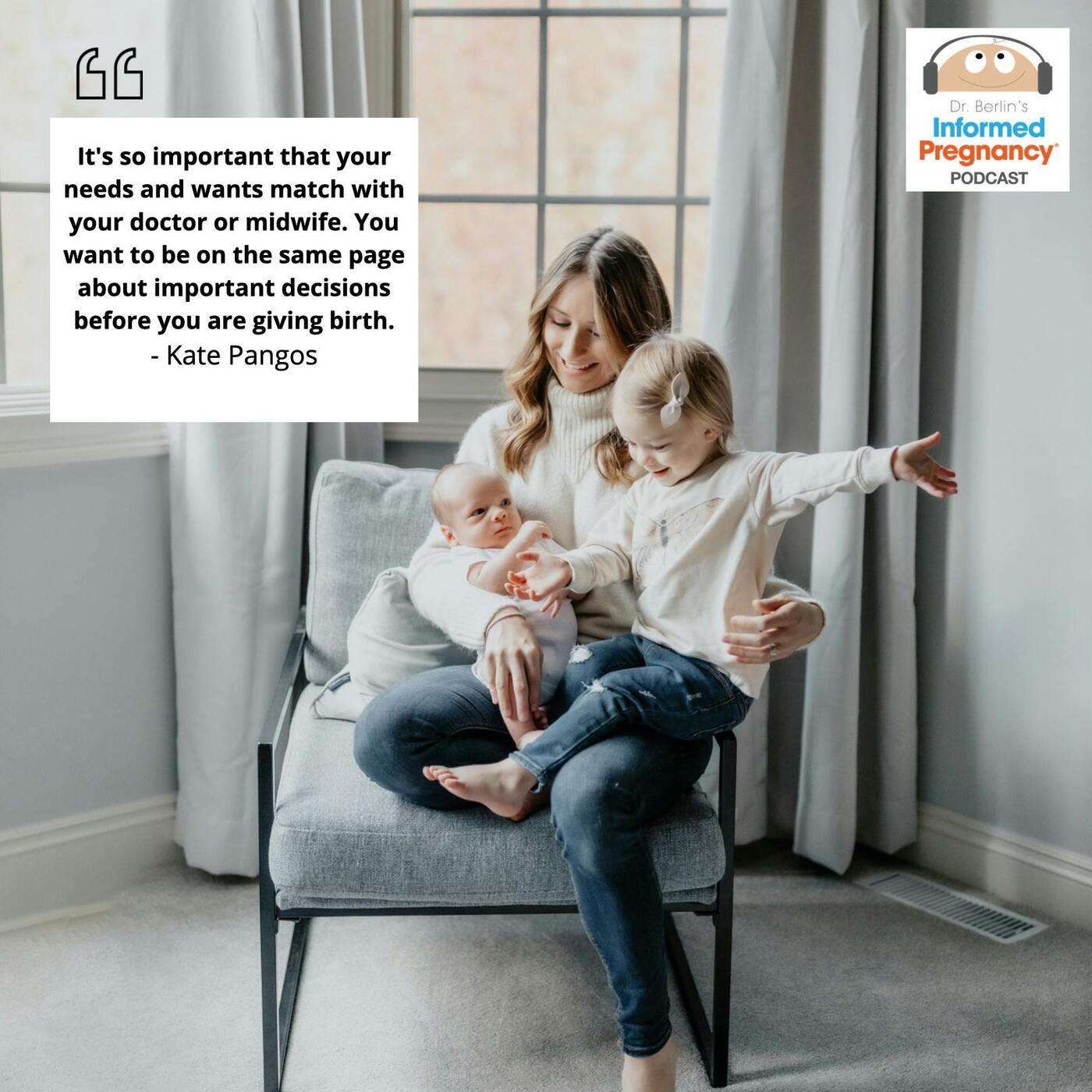
Kate Pangos [30:46] Yeah, anywhere in the world. I mean, Europe or the US or Russia. And so I knew that we weren't going to know probably until August or until I was past 30 weeks pregnant. You know, I told Lori that like going into it and she knew so she was like very helpful with just kind of keeping me emotionally like in the right place because I was so anxious about that. And also the doctor in Russia that I had, and this is really interesting. So I am a very big advocate for like, making sure that you match with your provider, you know, like what you want is what they want. You know, they'll support you. And so same page. Yeah. And because I knew I wasn't most likely not delivering in
[31:27] Russia, at first I was like, I don't really care about the provider here. But then when I met with this person, the first doctor that I met with told me that like I needed to schedule a C-section like immediately. And he measured my hips. I told this to her. He measured my hips and said, Oh, you need to schedule a C-section. And I was like, what? And so I told this to Lori and I was like, I want to switch doctors. And I was like, even though I'm not delivering here, I don't want to go through my prenatal like appointments, having this mental thing going on where I think that like, I can't have a vaginal delivery because this guy said that.
Dr. Elliot Berlin, DC [32:02] How big was your first?
Kate Pangos [32:04] She was only 610. And that was another thing. She thought that my first was going to be over eight pounds when she was measuring during my pregnancy. And then she came out and she was tiny and she was past 41 weeks and she was 610.
Dr. Elliot Berlin, DC [32:16] So that was interesting. I don't even think like we do that much pelvic imagery anymore measuring the pelvis to sort of guess if the baby will be able to make it through or not.
Kate Pangos [32:24] Yeah, I was not a fan of that. So I immediately was like, I need a new doctor. So I found a different one, even though I knew I wasn't delivering there. I was like, I'm getting someone else.
Dr. Elliot Berlin, DC [32:32] Oh, well, that's good. I mean, that's a really interesting point. I see people all the time, like, yeah, it's not exactly a great fit. But, you know, I'll bring my doula and everything will be fine. I'm like, that's a pretty horrible idea. Unless you have to like you have no choice. In your case, you're like, even though it's not going to be my doctor, I still want one who's on the same page with me during the part of the pregnancy that I see them. It's that important.
Kate Pangos [32:52] Yeah, I think it was just like a mental thing for me. I was like, I don't want him to be putting these negative thoughts into my head. Because I think when you're going for a VBAC, it's like you have to be like so positive and so like, hey, I'm going to do this, you know, confident in yourself and in your ability, like your body's ability to do it. And so I wanted someone that was going to be supportive of that.
Dr. Elliot Berlin, DC [33:12] How'd you end up in Los Angeles?
Kate Pangos [33:14] Laurie, well, actually, no. So my husband wanted to train there in the summer. And I had told Laurie too. So I was like, well, let's just go there for like a big chunk of the summer. And then he can train and I got to see Laurie in person a little bit. And then I worked with you, which was amazing. And so yeah, so that's why we were in LA for that.
Dr. Elliot Berlin, DC [33:31] Did you know where you'd be at the end?
Kate Pangos [33:35] No.
Dr. Elliot Berlin, DC [33:36] When did you find out?
Kate Pangos [33:37] We found out when I was like 32 weeks. We actually found out a little bit before we moved, I guess. So right immediately when we found out I started like researching. And this time around, I knew that I wanted to go with a midwife. So I started researching midwives in Cleveland and was just looking at reviews. And I went on Facebook, I got on to the VBAC, you know, the support group for VBAC and I can, I can of Cleveland. International Zazarian Awareness Network. Yeah. So I got on there, I was looking at recommendations on there. And then I kind of like matched it with what I was finding, like doing my own research. And then I ended up once we got here, I met with this midwife that was part of
[34:22] this group with Cleveland Clinic. And I immediately was just like, I fell in love with her. I was like, oh, my gosh, I love her. She's so great. Yes. But the only problem with the group was there were 12 midwives. Oh, it wasn't like a for sure thing that she was going to be the one on call. So these are all the hospital. Yeah, at the hospital. So originally, when I had like looked her up at the hospital where I delivered, they have like a natural floor for like unmedicated deliveries, essentially, which every room has like a tub and they're beautiful rooms, like amazing. And I was like, okay, this is what I want. Because I kind of wanted that feel of like a birth center home birth
[35:05] in the hospital. And so I was like, that's what I want to do. But then once I actually, once I met with her, I found out that if you are having a VBAC, you can't deliver on that floor. So I was like, dang it. So she said, it doesn't make any sense. And they're trying to change it. And she said, actually, they thought that maybe they were going to be able to change it after my delivery. But, you know, I don't know if that ended up happening, but I hope it did. Because so they were on board with a VBAC. Yep. They were, she had actually had a VBAC herself too. That's so awesome, too. So that was great. And I was like, very concerned about the 12 midwives thing. But she was very reassuring with that and said, like, they're
[35:43] very picky about who they hire, basically. They make sure like everyone's kind of like the same and how they practice and like, they all are super VBAC friendly and all that stuff. So
Dr. Elliot Berlin, DC [35:53] that was good. Were there other things you did going to labor this time that you
Kate Pangos [35:58] didn't do last time just to try to get your body ready? Yes. So chiropractic, I did, I didn't do with my first and I did spinning babies. I did like the daily essential videos or the video, the daily essential like exercises. And then I also with my first, I was doing pilates like up until I literally delivered her. And this time I stopped it like a little bit earlier, just because I felt like maybe I was like a little bit tight in my pelvic floor. And I was like, maybe that will help if I'm just like a little more relaxed and not so tight, those muscles, because I'm pretty small. So it's like, I need to create as much space as possible, you know, labor to begin. So this labor, again, I went over my
[36:42] due date. I was like 40 and five, I think, or something like that. And I started having contractions and my husband was on a 10 day road trip and he was on the west coast. And so he was actually in LA, which was so funny. Laurie was like, why don't you just come to LA and have the baby here? So he was in LA and I started having contractions and it was really weird because they were like pretty consistent and close together. I was having like 511, but they weren't super intense yet. Like I was like, more front or more back? More front this time. So that's a good sign to start off. Yeah. So I was happy about that. Actually, my parents were, they came into town since Kevin was out of town. And so we went to happy hour. Cause I was
[37:30] like, gosh, like, you know, it's happening again. I'm not going into labor. I was so far out of like past my due date already. So I was like, I just need to relax. You know, I need to relax. I need to stop thinking about it, distract myself. So we went to happy hour and I was sitting there and I was like, Oh, like I'm having some contractions. And so I started timing them because they seemed like they're getting to be kind of consistent. And I was like texting Laurie, like, okay, like I'm having consistent contractions, but I can still talk through them. I was like eating and stuff, you know, they weren't intense at all, really. But I texted Kevin and I was like, you know, this is the deal. Cause his team had
[38:05] said like, once I go into labor, they'll fly him back right away. And he was about to go to a game and I was like, you know, this is what's happening. I don't know if this is going to lead to anything, if it's going to stop or whatever, but I just want to let you know, like they're kind of consistent. They've been going on for like two or three hours at this point. And he was like, okay. And then he like talked to his coach and stuff and they were like, okay, why don't you just go back? And so he took a red eye home and through the night I was having contractions. So they were getting more intense. And I think at like 1am or 2am, I went to tell my mom like, Hey, I think we might need to like think about going
[38:41] to the hospital soon. And so she was like, okay. So she like started getting everything ready. We like brought the monitor because my daughter is sleeping. We brought the monitor to my dad and we were like, you know, she had the stuff packed and stuff. And then they started slowing down. I was like, no. So then I went back to sleep, woke up in the morning at like, you know, seven or whatever. And I was still having contractions, but they were like really spaced out, like not really, but they were like seven to 10 minutes, let's say they weren't very consistent. So I was like, dang it. Like it's not happening yet. And my husband had taken a red eye. So he was coming back and he was getting in at like 10 in the morning or
[39:19] something. And so I took my daughter to school. I had an appointment that day actually with my midwife. And so I was like talking to Lori. I was like, this is what's happening. And she was like, well, maybe you should see if she can sweep your membranes. And so I went in and we hadn't like really talked about it. She didn't really want to do it because I had had a C-section, but then she sort of was just like, okay, well like it's fine. Like you're over your due date and you know, whatever. And so we did that at the appointment. And I think at the appointment with her, I was like not very dilated. I was like maybe a centimeter and a half, but I was like getting pretty effaced. I think I was like 70%.
Dr. Elliot Berlin, DC [39:55] Oh, okay. So that's sort of different also from the last time.
Kate Pangos [40:00] then I was really happy because it was already better than what happened with Olivia. Like with her, I don't think I ever thinned out because she just was so high.
Dr. Elliot Berlin, DC [40:07] But with some membranes, if you're a little bit dilated so you can kind of get through the cervix, she can get through the cervix and sort of scratch your back of water. Was that uncomfortable?
Kate Pangos [40:19] No, I really didn't think it was uncomfortable at all. So she did that. And she was like, okay, so just go home. And like, I think she told me to do the or one of them told me to do the mile circuit. So I did the mile circuit. And actually, I forgot to mention this. So once I got to Cleveland, too, and I met with this midwife, they for VBACs really want you to have a doula with you. Okay, I had Laurie. And so I was like talking to Laurie too. And I was like, I had asked the midwife for recommendations of people here that I could use. And so I ended up hiring a doula to come with me to the birth.
Dr. Elliot Berlin, DC [40:53] Okay, so one virtual one in person.
Kate Pangos [40:55] Yes, which was amazing, because they were both kind of like giving me different like advice and I was using both of them. And it was really cool. So I was also like talking to my doula here. And they both had recommended the mile circuit, I think. So I did the mile circuit. And then after the membrane sweep and stuff, I went home. And I started having really consistent contractions. It was like three, four minutes apart. They were getting really intense. I was like curb walking outside and stuff. And I was like, okay, like, we need really need to think about going to the hospital because the hospital is like not that close to us either. It's like 25 minutes away. So I
[41:27] was like, I don't want to be so uncomfortable that I'm like right into the hospital when the contractions are super intense. So I was like, Okay, let's just think about going soon. You know, the contractions are getting closer together. And they were like way more intense than the day before. So I was like, this is good. So I think around like 8pm or so we went into the hospital. And I was getting monitored. I got checked. I was like, I hadn't dilated at all still. I think at that point, I had gotten more faced, but I was still so bummed. I was like, no, I was like, why is this happening? Like, why am I not dilating? You know, so I was like, man, like these
[42:03] contractions feel like they're way more intense. You know, it didn't feel like it was prodromal labor anymore. It felt like I was in labor. And I was like, Oh my gosh, like, I can't believe I'm not dilated. So then they were like, well, what you can do is either they talked to me about doing a morphine sleep or something like that. They were like, you can stay at the hospital. We can give you this and you can try to sleep because the contractions were like intense enough where I was like, I don't think I'm going to be able to sleep tonight. And they were watching them on the thing and they were like, yeah, your contractions are really intense. Like, you know, the wave was like
[42:34] super high. And I was like, why am I not dilating, you know? And so then they gave me that option or they were like, or you can go home. You can take the Tylenol PM and try to sleep at home.
Dr. Elliot Berlin, DC [42:45] Yeah. Also two things really quick, the morphine sleeps, they give you IV morphine to just calm everything down, help take the edge off the pain and relax you. And it gives that you get some rest and when it wears off, you're all energized and ready to go. The other cute thing I wanted to say was that your baby's fast asleep on your lap and I hear those cute little sleepy noises. That's very adorable. Okay, back to your story.
Kate Pangos [43:08] So I decided to go home because I was like, I don't want to be in the hospital for that long. And so we stopped because we didn't have Tylenol PM. So we stopped at Target on the way home. I mean, my contractions were so intense at this point, I was like walking to Target, I had to stop like every couple feet, because I was having a contraction. Everyone at the store was probably looking at me like, what is happening to this girl? Like she needs to go to the hospital. And I was like in so much pain, you know, I was having to really like focus, like breathe through these contractions. So I was like so upset that I wasn't dilated. And so we got the
[43:40] stuff. We went home. I like couldn't really sleep. I slept maybe like, once I took Tylenol PM, I probably slept like a couple of hours, but I woke up and was having like even more intense contractions in the middle of the night. I was like texting Lori, I was like, what the heck do I do? Like, this is so frustrating. And I was like, trying to do all these things. I was like getting in all these different positions, I was like walking up the stairs, I was doing lunges, I was doing all this stuff. And then Lori finally just goes like, you need to rest, like, get in the bath, put magnesium in there. And she was like, and just lay in the bath, try to sleep, like lay down, you
[44:15] need to rest. And I was like, okay, because I was trying so hard to like get it going. So I was like being really active, I think. And so she was like, this is clearly not working, like you need to just lay down, which was really difficult at that point, to be honest, because I was in a lot of pain. And I was very like primal at that point, like I was, you know, making a lot of This was going on through the entire day. So the whole next day, after I had gone to the hospital that past night, I was in like having super intense contractions, like very close together. And then I said to Lori, I was like, at what point do I like go into the hospital? And she said, you'll
[44:50] feel a difference, you know, you'll like you'll feel a difference when they start to like get really intense, because mine the whole time had been like pretty consistent and pretty close together. So it was hard. Cause I was like, you know, they tell you to go in at five one one or three, four one one. And then like, I was doing that and it wasn't the time. So I was kind of waiting, waiting. And then like my husband went, he like went to train because his team was on the road. So he went to like practice and I was like, just laboring by myself pretty much. And I was like on the phone with Lori and you know, whatever. And so I was in the bath, like for a long time, I think I almost fell asleep
[45:23] in there. I was like, you know, laying in there for like an hour and a half or two hours. That was the thing that felt really good actually. And then at like six thirty or seven, my husband was home. He had just gotten back and I was like, I'm in so much pain. Like, I mean, I don't know what to do. I can't get comfortable. I was like basically crying. And he was like, OK, like, what do you need me to do? Like, what do you want? I was like, well, honestly, the only thing that's really felt good was the bath. And he was like, hey, let's get in the bath again. Like, so he started making the bath for me. And I had a contraction while he was doing it.
[45:56] So he was doing like the hip squeezes for me. And then my water broke and I was so happy. I was like, you know, like, this is amazing. But the only thing that was hard was I was GBS positive again.
Dr. Elliot Berlin, DC [46:09] Oh, again. So you had to get to the hospital.
Kate Pangos [46:12] Yeah. So was there one code name? No, it was clear.
Dr. Elliot Berlin, DC [46:16] Oh, amazing. OK.
Kate Pangos [46:17] Yeah, it was so funny because both of us like looked at each other. I was like, was that pee or water? You know, like I wasn't sure, but I was like, no, for sure. That was my water because it was a lot. It was like a good amount of fluid. So then we went to the hospital. My Dula met us there and I like texted Laurie that we were going. So she knew. And then we got there and checked in again. And I was like, so nervous, you know, because I had gone in the night before. I was only like a centimeter and a half. And I was like, please, please, please, like, please be dilated. And she checked me and I was like seven centimeters. I was so happy. Wow. I was like, oh, my gosh.
[46:55] Like, this is amazing. You know, like just immediately forgot about the pain, because I was so pumped that I was sending me those. And so that was awesome. So then they were like, well, you're not going anywhere. Like you're staying in the hospital now. And so we had to wait for a room to open up. So I was just in the triage room for a little bit, laboring in there. And then we got into the room. My Dula like set it up like she dimmed all the lights. She put up, you know, the little twinkle lights and stuff and made it like a whole mood. It was amazing. And then it just so happened that the midwife that I love was coming on at 11 and I had gotten to the hospital
[47:31] at like eight or eight thirty or something. And so we were all like so excited for like, she's going to be the one that delivers. This is so great. And we were like, it's meant to be, you know. And so I was so excited. She came in and like she was I mean, she was amazing. She was like in there with me, like the whole labor pretty much like sitting there, like massaging me, doing all this stuff. And I'm like, this is incredible. Like this is exactly the birth experience I wanted to have, you know, besides the whole like prodromal labor for two days. But but I was like, you know, changing positions. I was on the toilet for a little bit. I was like on the birth ball.
[48:06] I was like, you know, just in different positions the whole time moving around the room. And my Dula had this like massage thing that she was doing. And it was amazing. It felt so good. But like still I was having super, super intense contractions, like so close together and mostly in the front. Yep. Still in the front. So when my midwife that I like really loved came on at 11, I had progressed to like almost at a nine. And so I was like super happy because I was like, OK, great. Like this is going almost there. Oh, you know, I'm really close. And then I just got stuck. So the whole night she like checked me a few times. I was stuck. I couldn't get past like a nine.
[48:46] Basically, I was like stuck at a nine. And I was like, oh, my gosh, like I was literally in so much pain. I was like, how am I going to do this? Like, how am I going to push? I haven't slept in two days, you know, like I'm so exhausted. My body is just like I can just feel myself like burning out. And I was like, I need an epidural. Like, I just knew that, like, if I was going to be able to have a vaginal delivery, that's what I needed. And I had gone into this birth, like thinking, like, I really don't want to have one, but I was open to it if it was necessary, you know, and I was trying to really just like listen to like what my body needed.
[49:15] And at that point, I was like, this is the best thing for me if I want to try to have this feedback. And so I was like, I just need to rest for a little bit. So I had to get an epidural, which was really difficult. I was like a little over nine centimeters. So I like was having contractions like almost, you know, back to back. Like I didn't even really have rest. So my midwife was just like. So I had checked into the hospital at like 8 p.m. the night before, and this was 7 a.m. the next day. So I was like laboring through the whole night. And then she was like sitting with me. I got the epidural. And then I was able to sleep and I slept for like
[49:51] two and a half hours. I slept until like nine thirty. And then at that point, she was off. She wasn't. Oh, no. So I was like, oh, man, I have to get. midwives, but luckily like there was a midwife and a student midwife that came on and they were amazing. And so they came in and they were like introduced themselves and the student midwife had been a labor and delivery nurse and she was incredible. And she was like, I forgot to mention this one, my labor and delivery nurse through the night was amazing. And I was throwing up the whole night too. I was, I was super nauseous. I was puking. Yeah. And she was like holding the bucket the whole time. Like she was so positive. And I had put on my birth plan,
[50:34] like my goal was an unmedicated birth. And so I wanted people that were going to be supportive of that. And she was amazing. And you could tell that they had put people in my room that were like very specific to what I needed. You know, everyone that I had was incredible. And she was a young nurse too. So anyways, these midwives came in, they checked me and they were like, okay, you're ready to push. And I was like, oh, and Kevin had fallen asleep too. And so we were like trying to wake him up and he was like more fast up than I was. And so he told me after the fact, he was like, oh my gosh, for the first hour that you were pushing, I was like completely out of it. Like I didn't even know what was going
[51:14] on. What was pushing like for you? Cause that was your first opportunity. I was kind of disappointed because again, like I was hoping to not have an epidural and I wanted to be able to like intuitively push, you know, and it was hard for me. It was really difficult because I felt like I couldn't feel where to push. And it was harder than I wanted it to be, I guess, but they were amazing at coaching me. And also they waited until I had a little more feeling like we didn't push right when I was a 10. They were like, okay, like let us know once you can feel a little bit more. So that way, like, cause I didn't want to just push on my back too. So like they were moving me around. I pushed like on all fours, I pushed on both
[51:52] sides. Like every five contractions, I was like trying to switch my position because I was like, I want this baby to come out, you know? And so, you know, they were great. My doula and my husband were like helping me move. And the nurse that was in there helping me move into different positions and stuff. And then I was pushing, I pushed for three and a half hours.
Dr. Elliot Berlin, DC [52:11] Oh my goodness. Oh, so he, you know, you still got two and a half solid hours of pushing with you, Kevin. Yeah, exactly. I mean, that's a long time for pushing. Was there a concern that you still weren't gonna…
Kate Pangos [52:26] Yeah. So I was like trying really hard to have a positive mentality and I was so upset at one point because one of the doctors had come in and said, and I mean, I don't know if she just didn't think I could hear her or if she just didn't care, but she said to the midwives, like we need to start thinking about getting her ready for a C-section. And I heard her say that and I'm like, that is like the last thing you should say to someone that's trying to have a feedback, you know? And she knew I was trying to have a feedback because she had come in earlier and like talked to me. And so like the midwives kind of just like looked at each other. And then when she left the room, they were like,
[53:04] are you serious? Like they were like, you're doing amazing. Like, don't even think about that. And so I was just like, after that happened though, I was kind of happy in a way that that did happen because it was like so motivating for me. I was like, I did not go through all of this to have a C-section. Like I am getting him out. So then I feel like my pushes were even better because I was so like, I'm not doing that. And I think she would have let me go. Like I think around four, she probably would have cut us off, but I got him out. So I was like, so happy. What was that moment like when? Oh my gosh. It was amazing. And also kind of funny. So they had told Kevin, like if
[53:40] he wanted to catch the baby, he could. And so this was also funny. Like after the fact, he said, like, I kept thinking like, okay, like, when are they going to tell me to go down there? And he was like, and he was just taking a really long time. And I was like, oh my gosh, like, when is this going to happen? You know, like he kept thinking that he was like, oh my gosh, like, and so anyways, they finally were like, okay, like it's time to come down here or whatever. He went down and like he had Declan, our son's name Declan. He like had him under the shoulders and he was holding on to like half of his body, but the other half was like kind of stuck and it like
[54:12] wasn't really coming out. And so he was like, I didn't know if I should like kind of pull I was supposed to just wait. So I was just like really awkwardly standing there, like holding onto his like under his shoulders. And then one of the nurses, I think realized that he didn't know what he was doing. So then they just like grabbed the baby and like brought him to me. So I did skin to skin. Oh my gosh, it was so amazing. I was so happy. And they were worried that he was going to have trouble like breathing and stuff, because, you know, it took forever and it was pushing forever. And so at one point my water, like when it broke, the whole thing didn't break. So they actually did end up like at the very end,
[54:52] they broke the rest of the bag and there was a meconium in that at that point. And so they had the NICU like the team, you know, they had to come into the room. But then afterwards, I had said, like, if he's fine, and he's breathing on his own, and everything's great, like, I don't need him to go to them, you know. And so my nurse told them, and then she after the fact said, like, I've never seen a team leave that quickly before, like, they didn't even ask to take the baby. It was so great. Wow. He was eight, one. So a lot bigger than my first. And he was really long, like super long. I can't remember how long he was, but very long. And he was perfect. Like he was amazing. He was
[55:38] breathing great. Like he got on my boob right away. You know, like I was like breastfeeding. I mean, he was getting colostrum and the nurse like didn't ask to take him. They didn't even weigh him. They didn't weigh him right away at all. Like we had to eventually ask them like, Hey, can we see how much he weighs? Because they just like, let me hold him for like four hours. I was just in there holding him. They did the vitamin K while he was on me. And I didn't do some of the other things. Yeah. And it was amazing. It was so great.
Dr. Elliot Berlin, DC [56:07] Yeah. I mean, just the contrast. I'm trying to picture that room versus the room where your hands are strapped down and your husband's trying to hold the baby on you to feed. It's just a totally different one. So different. I'm so glad for you that you're able to have the birth that you want. It's better to meet you and work with you. And sad that I only had a short time, but it sounds like you found an amazing team in Ohio and they marched you through the finish line with you.
Kate Pangos [56:34] Yeah, they really were amazing. I feel so blessed to have been in the situation that I was in, even though we didn't know where we were going to be, it ended up working out so well. So I was really, really grateful for them.
Dr. Elliot Berlin, DC [56:45] Very cool. And now you're a virtual doula.
Kate Pangos [56:48] Yes.
Dr. Elliot Berlin, DC [56:50] I mean, you have so many different experiences that you bring in with you from your medical training to your first birth experience, second birth experience, having a doula in the room with you, having a virtual doula in the room with you, having experienced all these different types of labor, pre-labor, birth, incredible. The way you also tell your story is just so you really bring us into it. And, you know, almost as if we're on the journey with you, I could feel your energy at the different points when you're like, oh, no, my heart sinks. And then you're like, and then this happened.
Kate Pangos [57:24] I know, I know it was crazy, but I mean, it was amazing. I was just going to say, I love being able to now, you know, help others and be like that support person for especially people that are in my situation where they maybe they don't know where they're delivering or, you know, they're moving. And so it's kind of nice to just be able to like be that for other people.
Dr. Elliot Berlin, DC [57:45] And it sounds like he's off to a good start for a basketball player with all that length.
Kate Pangos [57:50] Yeah.
Dr. Elliot Berlin, DC [57:52] Okay. Thanks a million for sharing your story. Where can we find you online?
Kate Pangos [57:55] So I am on Instagram. It's just Kate Pangos. And then on my Instagram, there's a link in bio for my website. That's just katepangos.com.
Dr. Elliot Berlin, DC [58:04] Very creative.
Kate Pangos [58:05] Yes.
Dr. Elliot Berlin, DC [58:06] Okay. Thanks again at home. Thanks for listening to the informed pregnancy podcast. If you'd like to connect with us, we're on Instagram as well at drberlin, D-O-C-T-O-R-B-E-R-L-I-N.
Want more pregnancy + parenting? Start your FREE TRIAL of Informed Pregnancy+ and get access to all our curated pregnancy and parenting content — original series, iconic birth films like The Business of Being Born, prenatal workouts and more.
