
November 3, 2022 · 51 minutes · Episode 309
About this episode
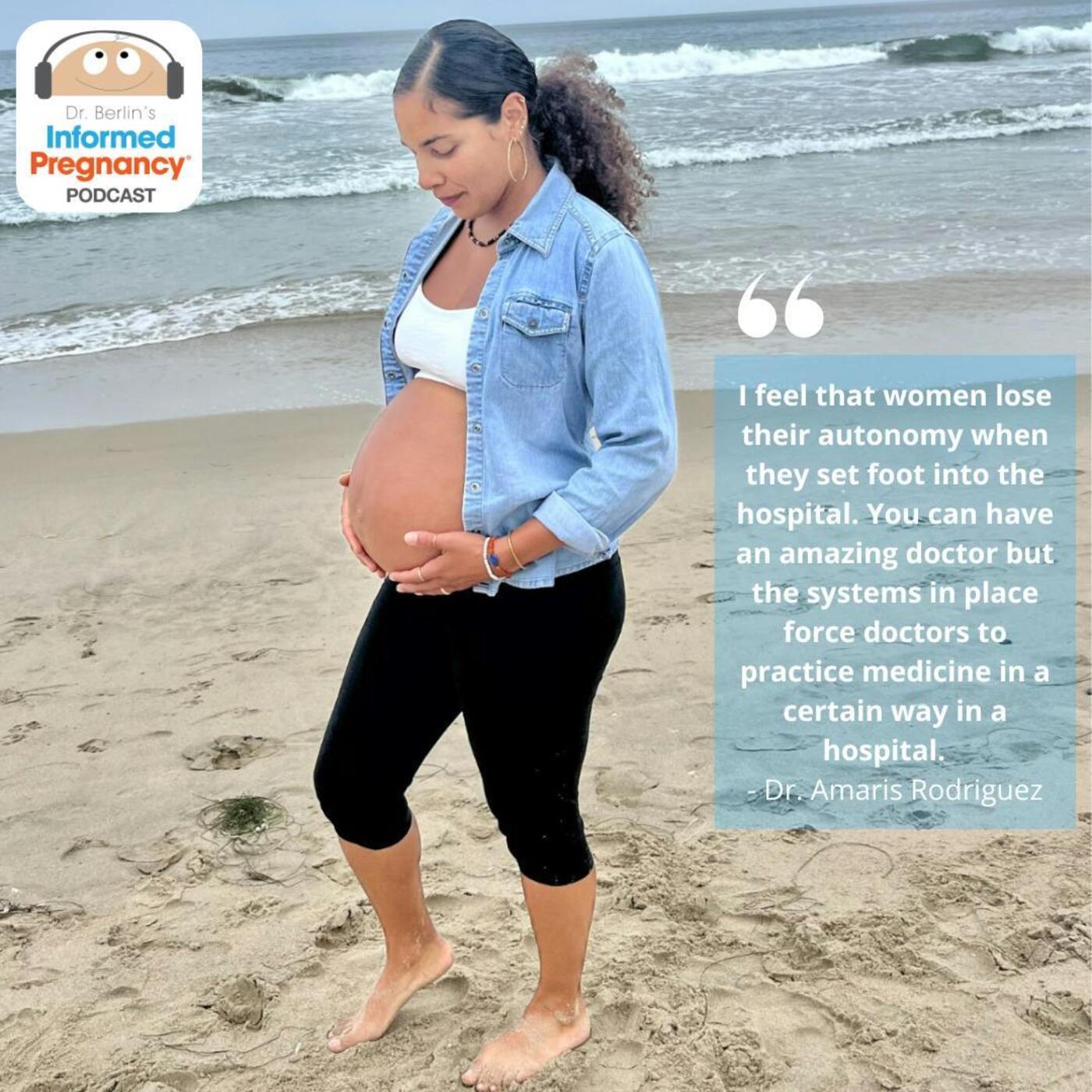
Pharmacologist and Ayurvedic counselor Dr. Amaris Rodriguez is expecting her first child and has plans for an unconventional birth approach. Dr. Rodriguez shares her pregnancy journey thus far, her experience with miscarriage, and her approach to juggling wellness and Western medicine.

Learn more about your ad choices. Visit megaphone.fm/adchoices
See Privacy Policy at https://art19.com/privacy and California Privacy Notice at https://art19.com/privacy#do-not-sell-my-info.
Key quotes
“Ayurveda is an ancient Indian system where you're approaching the body as a whole.”
“And I believe in preventative care. And let's wean these patients off of this medication. Let's try to get them off of this.”
“I want to do a home birth because I want to stick as close to nature as I can with my lifestyle choices. And I believe that my body was built for this. It was made to give birth. And I trust my body to know what to do.”
“I have moments of fear for sure, but I am not fearful.”
“I want to surrender to that pain because I feel like that is me transitioning into motherhood.”
Related episodes
- Ep. 310 Amaris Rodriguez: After Birth
- Ep. 188 Joanna Bavero – Birth Story
- Ep. 200 Daniella Alonso – Before Birth
- Ep. 366 Dr. Erica Rozmid: A Personal Experience with Microcephaly
Transcript
AI-generated transcript with speaker labels — may contain errors, especially names and medical terms. Dr. Elliot Berlin, DC appears in blue; Amaris Rodriguez in orange.
Download PDF of the Transcript
Dr. Elliot Berlin, DC [1:13] Welcome to the informed pregnancy and parenting podcast. I'm your host pregnancy focus chiropractor. Dr. Elliot Berlin My guest today is a doctor of pharmacology and Niagara Vedic counselor who works as a science liaison for a pharmaceutical company on rare pediatric diseases She's currently pregnant with her first and is planning a far less medical birth than most I'm Luis Rodriguez. Welcome to the podcast
Amaris Rodriguez [2:03] Hello, and thank you for having me here. I feel honored to be on your podcast. Dr. Berlin Super excited to share my story. Yes
Dr. Elliot Berlin, DC [2:13] I'm excited to have you and excited to hear your story And also do you have such a warm wonderful energy and it's always an honor and pleasure to be around you So thank you for joining me. Well, thank you. Thank you. Where you from originally?
Amaris Rodriguez [2:26] I'm from the East Coast I was raised in New Jersey. I'm first-generation. My family's from Puerto Rico My parents were born on the island and then they came over here Yeah, so Jersey and then from Jersey. I lived in Philadelphia for quite some time. I Went to college in Philly and I started my career in Philly. So Philly is home for me Probably I feel closer to Philadelphia than I do to New Jersey So yes, I flew from the East Coast to the West Coast recently and I'm a transplant in LA
Dr. Elliot Berlin, DC [3:07] Okay, so many questions so you were born here yes, do you still have a bunch of family in Puerto Rico
Amaris Rodriguez [3:15] So much family so much family in Puerto Rico. Yes, you go a lot. Yes I usually travel three to four times a year Straight we have to stop off and I go straight. I mean if you take Spirit Airlines They're gonna stop you like three times before you get to Puerto Rico But it's a straight shot if you leave from Newark and you can land in San Juan and Puerto Rico It's about three hours. Just don't take Spirit Airlines because they'll protest
Dr. Elliot Berlin, DC [3:49] Well, it's one of our sponsors. Oh, no. No, I'm just kidding. I'm just Totally getting spirits not one of our sponsors, but I've never been on spirit I've never had the pleasure but everyone talks so lowly about Experiences I don't like flying great airlines, so I can't even imagine what that's like Rather just walk. I've banned spirit from my list of choices You have enough spirit without spirit Okay, so you go back a lot and yeah, is the Puerto Rican culture infused into your life
Amaris Rodriguez [4:23] Absolutely. Oh, man. Where do I begin? So my family is quite large I have a humongous a family on both sides on my mom's side and my dad's side We get together a lot My immediate family we get together almost like every single week of her something and it's always Revolving around delicious food. My mom can cook so well. Everybody in my family cooks really really well Everything is surrounded by food. We get together. There's always food and that's what this together. And there's so many of us. It's really beautiful. I'm super blessed to have the family that I have. And I'm really thankful that my parents have passed down that tradition of togetherness. They did a really good job of passing that down to their kids. It's something
[5:22] that I definitely want to pass down to my baby. And I think about that because I'm grateful at how bonded we are. We'll really up each other's butts. We have our bad moments, but we love each other so much. And there's so much support there. And there's so much love. I feel their love all the way from the East coast. I'm here. I'm missing them. And I just feel super supported by them, even though there's a lot of distance
Dr. Elliot Berlin, DC [5:49] there right now. Oh, they could always overnight use them. Yeah, it's really nice to see your parents to pass on the up each other's butts traditions. All right. So you grew up in Philly and then you went to school. What did you study?
Amaris Rodriguez [6:06] I went to school for biochemistry at Temple University. And then from there, I went to school in Massachusetts to become a doctor of pharmacy. I went to an accelerated program. So I graduated in three years and then I went back to Philly and I started working. I was working retail pharmacy for quite some time. So retail pharmacy for about nine years.
Dr. Elliot Berlin, DC [6:33] Oh, you're talking about the regular pharmacist that we all go to to get our gazillion
Amaris Rodriguez [6:37] prescriptions. Oh, yes. Every day for a while. Yes. When you're waiting in line, you're staring at the pharmacist's forehead and we're trying to work as fast as possible. We're just like sweating bullets because we know that there's a line of people upset.
Dr. Elliot Berlin, DC [6:51] You said 15 minutes. Exactly. And then I always thought they should put advertising on your head because we're always looking at your forehead. Right on the forehead. Yeah. You may be mad, but fly spirit and you'll be more mad. Okay. So biochemistry is an interesting
Amaris Rodriguez [7:12] choice. That was your major. Yes. I actually applied to pharmacy school. Like I knew I wanted to go to pharmacy school when I was in high school. I was 14 when I made the decision that I wanted to become a pharmacist. Was that influenced by any kind of experience or you just love drugs? I really was good at math and science and I always was interested in researching ingredients. I would look at ingredients on food, on toothpaste, I would look at the back and see these big long words and had no idea what it was. And I was just so curious about it. And I just would start researching stuff on my own. So when you compare different brands or different items, like, you're not just
[7:56] looking at the packaging, you're literally looking at what's in there, looking at the chemicals, looking at those chemicals. And I was, I want to say I was 14 years old when I knew I wanted to do something in the healthcare industry. Then I was leaning towards doctor pharmacists. I chose pharmacists because I thought it was more conducive to having a family and freeing up time. Whereas, you know, you go the doctor route, gotta do the residency, it's extra schooling. So I went with pharmacy and I graduated from high school in three years. I knew what I wanted to do. So seriously, often looking at those ingredients,
Dr. Elliot Berlin, DC [8:35] even as a kid, I would scrutinize the package also looking into see which one was cheaper. I'm like, Oh, I'll take this one for the price. Yeah. It takes less time and you save money. But here we are in your super healthy spirit. Oh my goodness. Don't say that Dr. Berlin. I don't know anything about spirit airlines. I just remember a comedian talking about it and he's like, uh, yes, we're in the middle. And then like some passed out and like, Hey, is there a doctor on the plane? And he's like, no, on spirit. So I don't get it. But anyway, maybe you should try it once just so I can really appreciate the other airlines that I fly. Um, okay. So pharmaceuticals and working feverishly trying to package those
[9:27] prescriptions for us for nine years. And what happened next? Cause you don't do that anymore.
Amaris Rodriguez [9:33] No, I don't. Honestly, you know, working in that retail setting, I felt like my morals were not lining up with what I was doing. And I felt kind of bad doing that day in and day out. On one hand, I have tuition. I have to pay back. And on the other hand, I have my morals, but I did a little bit of hopping around from pharmacy to pharmacy, just wondering if like, you know, the situation would be better or change. And I found that it was the same, no matter what company I was working for. And at the end of the day, like as a pharmacist, you have metrics that you have to meet. That's vaccination, you know, you have a quota that you got to reach prescriptions. I want you to come back to keep filling this blood pressure
[10:24] medication, because if you don't, then we lose money. And I believe in preventative care. And let's wean these patients off of this medication. Let's try to get them off of this. Like, what can we do? But these pharmacies, that's how they make their money. It's a business. It's a business at the end of the day.
Dr. Elliot Berlin, DC [10:43] So I think a lot of people would prefer to use medication as a crutch to help them get to a point of health where they no longer need it. You know, for example, if you broke a leg, you don't want to walk on crutches for the rest of your life. You want to use them until your leg can heal and then lose the crutch. But yeah, I mean, I can see how any business really is. If you're looking at it straight from a business perspective, it's all about the bottom line. And so it's how much of our product can we get out there, market, push, sell. And in this case, it's a product that, well, on one hand, can be extremely helpful and life-saving. On the other hand, it can cause a lot of harm.
[11:19] So, you know, if there's not deep discretion in how you're pushing, promoting, and meeting your bottom line, I can see how that would be a ethical moral dilemma for you. Absolutely. But I mean, one simple solution is to just not care.
Amaris Rodriguez [11:35] Yeah, which I'm incapable of.
Dr. Elliot Berlin, DC [11:39] I know you are. So where'd you go after you left retail pharmaceuticals?
Amaris Rodriguez [11:44] So while I was in retail, I decided to go to school for Ayurveda. So I let that job fund my Ayurveda schooling. So yeah, I was in school and working full time. And I wanted to work towards getting certified to do consultations with people and approach the body as a whole. Are you familiar with Ayurveda?
Dr. Elliot Berlin, DC [12:11] Maybe you can tell us more about Ayurveda.
Amaris Rodriguez [12:14] Yeah, definitely. So Ayurveda is an ancient Indian system where you're approaching the body as a whole. And when you approach the body as a whole, you're taking into account that person's constitution, how they were born, their dosha, their environment, their relationships, what you're eating day in, day out, their career, what they're doing day to day. And if you compare that to Western medicine, when you go to visit a doctor, it's very different. You go there with a problem and they focus on that problem. I like to think of it as them looking at you as a car. And if you go in with something wrong with the car, they're just going to fix that problem.
[13:00] So if you go in, your arm is hurting, they're going to try to pinpoint exactly where in the arm it's hurting and treat that area rather than looking at you as a whole and addressing everything. And Ayurveda, those consultations, the initial one can take like three hours long because we're asking so many questions to try to get to know you and understand what's going on. We do a tongue assessment. There's a lot that you can tell from a person by looking at their eyes, their tongue, their skin, knowing what they're eating every day. Certain foods can aggravate your constitution. Your constitution is what you're born with. So there's three different doshas. You have kapha, bhitta, and vata.
[13:48] And each of these doshas resides within us. And every person is so unique that we have a different percentage of these doshas within us. So I feel in Western medicine, a lot of the times we have this one size fits all approach to treating people. But in Ayurveda, the approach is so different for every individual. It is so unique. Everybody has a different regimen to follow. I may do a consultation with somebody and tell them, okay, you just get rid of all the pepper, no red pepper, no crushed red pepper. Just get rid of all the spicy stuff because they have so much fire in their dosha. And sometimes you can see that pop up on the face as acne.
[14:36] It's really, really beautiful system. I think I need a little fire in my dosha.
Dr. Elliot Berlin, DC [14:42] If you know what I mean, I don't know what I mean, but hold on. You said so many important things. My doctor definitely treats me like a car because every time I go to him, he's like, you got too much junk in the trunk. You got to take off a little weight. Second of all, what I love about all the holistic I purchased at healthcare, including Ayurveda, is that they don't just look at where the symptom is, right? First of all, the definition of health is not the absence of symptoms. You're going to have no symptoms and still not be healthy. So in that case, what does Western medicine do for you? There's not much because they treat symptoms and making a symptom
[15:15] go away doesn't even mean you necessarily resolve the issue. And the example of that is if we're going to treat it like a car, if the oil leak goes on and that's the symptom, and all we need to do is make the symptom go away. And one of the easiest ways to do that is just cut power to the oil line and it'll go away. But in about 500 miles, your engine is going to fall out and smoke all over you. Exactly. You get it. I get it. And another sort of holistic image that I have in my head that they taught me in practice school that I heard someone say was when you step on a dog's tail, it barks. And if you're looking for the issue where the symptom is by the barking, you're never going to find the support. So I think there's a
[15:58] healthy mix of me and also patients in general get the best kind of health care when you try to get the best of both worlds, the East meets West. And both approaches can be phenomenal. I used to ride ambulances and I can tell you from firsthand experience observationally that if someone's running and falls on a metal spike and it pierces their lung, it is not a good time to discuss crushed red pepper or to do an adjustment or anything. I completely agree. All those two things. And there's a hierarchy. Sometimes you need the drugs and surgery and sometimes they're amazing, incredible innovations that help us get rid of symptoms, find health that we didn't have or crutch along to a point where we can do better on our own.
[16:44] So it's cool that you got to sort of have a taste of both. I want to find out a little bit more about what you're doing now besides your three-hour Ayurvedic consults. And by the way, I've waited online in pharmaceutical retail for retail pharmaceuticals for at least three hours. So I would do a three-hour get more out of that. My favorite thing is when I'm waiting online like, Oh, go where I was about to start. Come back with like candy bar, ice cream. And I'm like, okay, here's your med form. And I'm like, Oh, great. Oh, man. I'm not on that yet. All right. Let's take a little break. We come back. We're going to

Dr. Elliot Berlin, DC [19:53] Welcome back to the podcast. We're talking to Amaris. Does that mean something?
Amaris Rodriguez [19:58] Yes, it means
Dr. Elliot Berlin, DC [20:00] Oh, I can totally see it. I don't know how they knew right when you popped out. But Annalise
Amaris Rodriguez [20:06] is definitely a gift from God. You're a special, special person. Thank you so much, Dr. Breland.
Dr. Elliot Berlin, DC [20:11] All right, so you did the whole-
Amaris Rodriguez [20:12] And so are you.
Dr. Elliot Berlin, DC [20:13] Thank you. Man, if I could sing your praises for about five minutes. If I could sing. That's as much as I can say. All right, here we go. So you biochemistry, which is very off-putting to me, though, just all the different steps between glucose formation and destruction. I couldn't do it. You're a much smarter person than I am. Okay, so then there was biochemistry and then pharmaceuticals, then retail pharmaceuticals. And you just got frustrated with the system of using drugs and surgery as a primary form of health care. And you just studied Ayurveda. And when you talk about Ayurveda, nobody can see this about me, but you glow. Like your ear-to-ear smile, your eyes open up with passion,
[21:00] you glow. And when you talk about drugs and surgery, you're just kind of like, smart. So what are you doing now? Because you're back to working sort of in pharmaceuticals.
Amaris Rodriguez [21:11] Yeah. Yeah. I guess one thing we did kind of skip is while I was doing the Ayurveda thing, I applied for doctors without borders. I was trying to like really get out of retail pharmacy. I applied to doctors without borders. I got into the program.
Dr. Elliot Berlin, DC [21:26] Oh, wow. Okay. Did you travel?
Amaris Rodriguez [21:28] No, I did not get to travel. I was in the program. I waited for a mission for two years. You just have to wait for an opening. And then they stick you into, you know, where the opening is. But that's what it seems like they would need
Dr. Elliot Berlin, DC [21:43] people all day every day.
Amaris Rodriguez [21:44] You would think. But with pharmacists, there's not a lot of open positions. There's only a few pharmacists. You don't need a lot of pharmacists. You need a lot of nurses. You need a lot of doctors. And the pharmacists are the ones that handle the drugs. But you only need one pharmacist and like, yeah, to cover big territory. So I really, really wanted to do that. Didn't work out. Found this medical science liaison career. And it was very appealing to me. So I applied to a pharmaceutical company that is a certified B Corp. I did not even know that existed in the pharmaceutical industry world. And I interviewed with them. I got the position. I was really
[22:28] happy. Because this place is certified B Corp.
Dr. Elliot Berlin, DC [22:32] What does that mean in English?
Amaris Rodriguez [22:34] They're super transparent about their day to day business practices. Very transparent. They care about the environment, meaning a lot of the products that they're pumping out are environmentally friendly. We're talking about inhalers, a lot of inhalers, leave a carbon footprint. They're trying to go green. Equal responsibility. Oh, yeah, tons of it. And that meshed really well. I was really happy to find that pharmaceutical industry. Also, the position that I have is within ultra rare diseases within pediatrics. And these rare diseases, there's no you can't do yoga, you know, you can't, you know, eliminate pepper and stuff from the diet to help these
[23:27] babies. Some of these babies are born with these diseases, and they need treatment immediately. And without this treatment, they can pass. So that's what we were talking about earlier. You need both.
Dr. Elliot Berlin, DC [23:40] Absolutely.
Amaris Rodriguez [23:41] There's some things you can't just green juice out of your system.
Dr. Elliot Berlin, DC [23:45] Exactly. And what we should have is a judicious combination for all the systems for all the health care.
Amaris Rodriguez [23:51] That'd be amazing.
Dr. Elliot Berlin, DC [23:52] Yeah. Yeah. So sharks.
Amaris Rodriguez [23:54] Yes.
Dr. Elliot Berlin, DC [23:55] So what does the liaison do?
Amaris Rodriguez [23:58] We bridge the gap between health care professionals and key opinion leaders within the industry to the company that I'm working for to the pharmaceutical industry. So say, for example, one of the rare diseases that I cover is bubble boy syndrome. Bubble boy syndrome is when your baby is born with a pretty much no immune system.
Dr. Elliot Berlin, DC [24:19] Hence the name. They used to pretty much have to keep them in a bubble so that they wouldn't be exposed to anything because they couldn't fight it off.
Amaris Rodriguez [24:26] Yes. There's a documentary on YouTube for free. If anybody's interested in watching it, it's very, very interesting to see that.
Dr. Elliot Berlin, DC [24:36] Do you know what it's called?
Amaris Rodriguez [24:37] If you just type in bubble boy syndrome in the little search box, you'll see a little baby named David. I think his last name is a vetner, but it's David and just click on that and the whole thing's on YouTube for free.
Dr. Elliot Berlin, DC [24:49] Oh, I mean, that's my favorite price tag.
Amaris Rodriguez [24:52] And so, um, with the medication, they don't need to live in a bubble.
Dr. Elliot Berlin, DC [24:57] Exactly. So like I can see why you feel good about that. Working in a drug like that.
Amaris Rodriguez [25:03] Yes, it's necessary and you have to treat your baby as soon as possible. So if there's a new case in my territory, I work as quickly as possible to get the medication to the baby. I communicate with the key opinion leaders. Any new research, any research projects that key opinion leaders want to initiate within that subject matter, we try to facilitate that because it's only going to help improve treatment for these babies.
Dr. Elliot Berlin, DC [25:36] That's amazing. And you have almost a decade of experience working as quickly as you can to get medications to the baby, so.
Amaris Rodriguez [25:43] Yeah.
Dr. Elliot Berlin, DC [25:43] So look at the retail pharmacy paid off.
Amaris Rodriguez [25:46] Yeah, I'm so happy I'm not doing that anymore. I can't imagine being pregnant and standing on my feet for 12 hours.
Dr. Elliot Berlin, DC [25:52] Yeah. I do have patients that do that and we have long healthy relationships because of all that standing in one place for so long. Yeah, yes. All right, you're pregnant and before you get directly into how you're pregnant too, who's the guy? Where'd you meet him? How did it all come together?
Amaris Rodriguez [26:07] Oh man, my husband, his name is Bryson. Bryson. He actually reached out to me on social media. He saw one of my photos and he fell in love instantly.
Dr. Elliot Berlin, DC [26:21] Oh wow.
Amaris Rodriguez [26:21] No, he saw a photo of me and my grandma on the beach in Puerto Rico.
Dr. Elliot Berlin, DC [26:28] Oh, wow. Yeah. Is he Puerto Rican?
Amaris Rodriguez [26:31] My husband, no, no, no. He's African-American. He's from California. Cali. Yes, yeah.
Dr. Elliot Berlin, DC [26:37] Okay, and then he saw your picture on the beach and he fell for you.
Amaris Rodriguez [26:40] He reached out to me and I never spoke to anybody on social media. People use that as a dating platform or to reach out to people and that was the first time somebody reached out to me to, you know, like one. Yes, like, yes, yeah. And I didn't think he was real at first. He had like a little blue check mark next to his name. I'm like, who is this guy?
Dr. Elliot Berlin, DC [27:12] Doesn't that mean that you're real?
Amaris Rodriguez [27:14] Yeah. But you know, you never know with the internet.
Dr. Elliot Berlin, DC [27:20] Yeah, I've heard some things.
Amaris Rodriguez [27:22] And also people would like hack into accounts and that's actually happened to him. People have hacked into his account and-
Dr. Elliot Berlin, DC [27:29] Oh, that happened to me. See? Yeah, it happened to my mother. See, yeah. Who wants to get into her account? I knew, I was pretty sure because when she started sending me porn every two hours, I was like, no. Oh my gosh, no. Yeah, talk about overdoing the pharmaceuticals. No, no, no. Okay. She doesn't even know what she sent me. I couldn't bring myself to tell her. Oh. But we did get it resolved. Okay, so you met in person at some point.
Amaris Rodriguez [28:00] Yeah, so we spoke on the phone for a few months and then we met in person and I remember asking him to take a photo with a spoon in his hand because I'm like, okay, I need you to take a photo with a spoon in your hand so I know that, you know, it's you.
Dr. Elliot Berlin, DC [28:21] Oh, wow. That's so funny. Okay, first of all, you've been watching too much 90 Day Fiancé. And second of all, his blue check mark is because he's an athlete. Yeah, oh yeah, that was another thing. What's wrong with athletes?
Amaris Rodriguez [28:38] Well, you can say that I was a little scared, you know, about that. I don't know if scared is the word, but I was hesitant. Very, very hesitant.
Dr. Elliot Berlin, DC [28:48] Hesitant because they don't have the settle down life.
Amaris Rodriguez [28:50] Yeah.
Dr. Elliot Berlin, DC [28:51] Okay.
Amaris Rodriguez [28:52] Yeah, yeah. And you know, you hear stories and you know, they go out a lot and this, this, that and the other and there's a spotlight on them and you know, I was hesitant. Yeah. So it took me some time to get over that hurdle.
Dr. Elliot Berlin, DC [29:10] Even after the spoon photo?
Amaris Rodriguez [29:13] Over time, I realized how authentic he was and how true to himself he was and he marches to the beat of his own drum and he was just honest and vulnerable and like, he was just very honest with me and I respected that. And he just always did his own thing. It's like a group of people could be going out and he'll, you know, do his own thing. He does not follow, you know, other people. He's a very authentic person and I respect that. And that's one of the qualities that I love about him. He knows what he wants and he knows who he is.
Dr. Elliot Berlin, DC [29:53] Oh yeah, he wanted you.
Amaris Rodriguez [29:54] Yeah.
Dr. Elliot Berlin, DC [29:58] Yeah. And then he goes and gets it. Yeah. But on the flip side, I mean, out of all the different sports, at least the football season is only like two weeks long. Like a short season. No, no, not two weeks, not two weeks, but I'm just saying compared to like baseball, they play 500 games a year or so. So, you know, it's a shorter season. Yeah. Yeah. But then he has to
Amaris Rodriguez [30:23] travel a lot. I see. Yeah, he does travel. I mean, he doesn't play anymore. But when he was playing, there was a lot of traveling and he didn't want to really continue that lifestyle because he knew it was not conducive to having a family.
Dr. Elliot Berlin, DC [30:39] For a family. Yeah. Well, how long ago was that that you guys got together?
Amaris Rodriguez [30:44] Four to five years, four to five years. And then the relationship grew.
Dr. Elliot Berlin, DC [30:48] Yeah, definitely. And then got married. Yeah. And then you're having a kid. Was kids like something you talked about early on?
Amaris Rodriguez [30:58] Yes, yes. He says that when we first met that I said, I didn't want kids. I didn't want kids unless I was going to be with like a person that I want to have kids with. And I met him and you know, he's the perfect partner for me and my whole perspective on that change. And here we are. And we're expecting a baby in a few weeks.
Dr. Elliot Berlin, DC [31:27] Right. This is where we have to take another break and get serious. We need to talk about how has your pregnancy been? I mean, you're due soon.
Amaris Rodriguez [31:34] Yeah, I'm 38 weeks.
Dr. Elliot Berlin, DC [31:36] Wow. Yeah. And you have more fuego than I ever had in my whole life. You're on fire. You have so much energy. I don't know how you do it. All right, let's take a very quick break. So you don't have the baby before we come back. Welcome back to the Lean Forward Pregnancy Podcast. We're talking to good news. She's still pregnant and she's going to be delivering soon. So how was the pregnancy for you?
Amaris Rodriguez [32:11] It's been a huge blessing, Dr. Berlin. It's been a smooth pregnancy, I guess, before I start talking about this pregnancy. Right. You had a previous pregnancy. I did. I did. So four months prior to this baby, starting as a little zygote, four months prior, we got pregnant. And at 11 weeks, no, 10 weeks, I had a miscarriage.
Dr. Elliot Berlin, DC [32:37] So sorry. And did you know, or did you find out at the doctor?
Amaris Rodriguez [32:42] I remember I took a flight from the West Coast to the East Coast to visit my family. And while I was over there, I started spotting. But it was very light, very light spotting. I told my midwife, she said, don't be alarmed. Some women spot, especially after having sex. And that's what happened. After sex, I started spotting.
Dr. Elliot Berlin, DC [33:09] What airline was that?
Amaris Rodriguez [33:13] I couldn't have been spirit. And then I remember I was supposed to go to New York City. That weekend, I started spotting for my friend's baby's birthday. I canceled everything that weekend because I wanted my body to just rest and relax. And the spotting continued for about a week. I flew back from the East Coast to the West Coast. And when I got to the West Coast, it was super heavy. It was heavy. I was not in pain though. And I went to go get an ultrasound to see how the baby was doing. And there was no heartbeat. So
Dr. Elliot Berlin, DC [33:55] it was very slow with you. Yes. Do you call him Brice or do you just call him Brice? Both. Okay, a little pet name for your husband. Was he with you?
Amaris Rodriguez [34:08] Yeah, yeah, I had a feeling before even going to that ultrasound, I had a feeling something was wrong, even though it was just spotting. And like they were telling me not to be alarmed that sometimes it's normal in pregnancy. I lost my acid reflux. So when I became pregnant, I had some acid reflux. And I noticed that symptom went away. And then the bleeding started. And I just had a feeling something was off.
Dr. Elliot Berlin, DC [34:38] You're good at math. Things weren't ending up well. Yeah. So at the ultrasound, there was no heartbeat. And the
Amaris Rodriguez [34:46] doctor said that it's a missed miscarriage.
Dr. Elliot Berlin, DC [34:50] A missed miscarriage. So the pregnancy must have ended before you even took off. Yeah. To the East Coast. Yeah. Did it make you nervous that it was a result of sex?
Amaris Rodriguez [35:00] Yes. I mean, this pregnancy, like I haven't had complete peace of mind because of the previous experience that I had. And I would say when it comes to working out, when it came to having sex, because I love working out with weights and pushing myself. And I just stopped. I stopped and I just took it really easy. I would walk, stretch yoga.
Dr. Elliot Berlin, DC [35:28] That's like nine times my usual workout routine. It's not me taking anything. Did you get more confidence during like the middle trimester or
Amaris Rodriguez [35:39] no? You're still kind of. I would say during each trimester, I've had something where I was like, no, I'm not going to do that. Like the first trimester, I eased up on working out. The second trimester, I was really nervous because I was flying a lot for work. And there's not a lot of evidence out there for pregnant mamas flying. There's not a lot out there. So I was questioning how safe is it to fly? When I flew from the west coast to the east coast, I started bleeding. So was it from the flight? You know, also my nutrition, you know, is it my fault because I didn't eat enough protein, the protein requirements, according to the Bradley method, it's like 80 to 100 grams of protein a day.
[36:23] It was really hard for me to get all that protein in and it still is, but it's a lot.
Dr. Elliot Berlin, DC [36:29] I can help you with that. I don't know if you've heard of Reese's. It's my favorite protein stores. Okay. So mental health wise, usually those things are really important. Like if you're a work router, especially a heavy sweat work router, push yourself, work router. That's not just good physical, but also keeps your mind clear, you know, your pressure law. Yes. What kind of things have you been able to do to replace that?
Amaris Rodriguez [37:02] Walking, meditating, yoga, and just really taking in this pregnancy. And, you know, I don't want to work out how I was working out, but it's for my baby, you know, so that brings me so much joy and so much happiness. And I don't look at it as, oh man, I don't get to work out like that. And, you know, cuddle bell swings and all this stuff. I'm nurturing a baby and it's so beautiful and the experience has been great. And it's like, my heart is already swollen for this baby that I have not looked at in the face yet.
Dr. Elliot Berlin, DC [37:44] So it's pretty cool. I love that you could shift gears that way. Birth, you're planning a birth. Let's talk about the birth setting, birth providers.
Amaris Rodriguez [37:54] What's the plan? Well, I want to do a home birth because I want to stick as close to nature as I can with my lifestyle choices. And I believe that my body was built for this. It was made to give birth. And I trust my body to know what to do. And I also think, you know, when it comes to healthcare and the hospital setting, women lose their autonomy once you step foot into the hospital. And you can have a terrific doctor. You can have an amazing doctor. But on the other side of it, we have insurers, we have regulations, we have a lot of restrictions in place to prevent litigations from happening.
Dr. Elliot Berlin, DC [38:48] It's defensive medicine that everybody practices now. Just like defensive driving. You should have these three choices, but one of them is kind of risky for me, even if it's not that risky for you. So how about these two choices? Yes. It just keeps going that way. Yes, exactly. And like I said, you can have the terrific doctor, but those systems that are put in place are kind of forcing the doctor to practice medicine a certain way. Which is maybe a downside of giving birth at a hospital. Do you see a downside to giving birth at home? No. I mean, you haven't mentioned the biggest upset of giving birth at home yet, which is there's always really good food at home birth. I don't know why.
[39:25] It's like somebody's like, Hey, can you be my doula? And somebody else at the same time can be my doula and one's at home, one's at the hospital. I'm going for that.
Amaris Rodriguez [39:36] Yeah. You have a full fridge stack with snacks. I also want to be comfortable. And I don't like those bright lights, like stadium lighting right on me. I don't want that. And I want minimal medical intervention, the least amount of intervention, like let my body go through it. I want to feel all the feels. I'm saying this now. what I say in the next podcast, but I want to feel all the feels, you know.
Dr. Elliot Berlin, DC [40:04] I believe it.
Amaris Rodriguez [40:04] I want to surrender to that pain because I feel like that is me transitioning into motherhood. Like that is part of the whole transition that's transforming myself into a mother. Like I've never been a mom before. This is my first baby. And I've spent so many of these years just living for me and getting my stuff together. So this is really exciting for me.
Dr. Elliot Berlin, DC [40:32] You know what you remind me right now of a story I don't think I've ever told them in the podcast. And it was this woman who had a breech baby and she didn't have any options for delivery. She was in an HMO and none of the providers did breech. So she came up with this plan and she labored at home as a first baby, as long as she could. With a midwife, you know, in California, they can't really attend home birth, but you know, in this case, acting more like a doula. And then when she was like, oh, ready to push, she went into the hospital and she's like, I have a baby coming out of me, but first I refused to have a C-section. And there were like two doctors on call,
[41:07] but they were leaving. There was a changing of the guard and two doctors coming in. And the two doctors that were coming in had never seen a breech birth before, never attended one. They were very nervous about the whole situation of the two doctors leaving. One of them, an older guy, had been to a breech birth, many of them actually earlier in his career. Although not recently, he said, I guess I'm gonna stick around and help you out. Very smooth birth, very smooth. I mean, she was just about ready to go push. She went, well, baby came out. And I was like, wow, that's an incredible story. I'm like, you got some serious pulse. And she said, no, Dr. B, I have a vagina.
[41:44] And I was like, touche, touche. But you have that kind of confidence and energy, like you trust your body. And also maybe it's your training from both East and West, like understanding how the body works on a scientific level but being in tune with the Ayurvedic energy. I don't know where it comes from, but I'm jealous. But you also take care of your body, like you're really good to your body and what you put into it and how you exercise it and listen to it. I feel like saying her for some reason, how you listen to her. You guys have a great working relationship, which I think also goes a long way. And who knows, you never know how birth is gonna go.
[42:22] But at this moment, it's like so incredibly, I don't know, inspirational, empowering, amazing to see that kind of relationship that you have with your body and that trust that you have through the pregnancy and that you have for the birth and that you wanna feel things and that you're not, I'm sure there's some anxiousness in there, but that you're not terrified of the whole thing.
Amaris Rodriguez [42:43] Yeah, thank you, Dr. Berlin. I have moments of fear for sure, but I am not fearful. And a lot of that, honestly, comes from the community, from women sharing their stories, from listening to your podcasts and educating myself and reading books. And my midwives are amazing at answering questions. And I'm so grateful for the people that I have in my circle. Super grateful, super grateful for the resources because that gives mama's confidence. And you feel more empowered, the more information you have, it's a win-win.
Dr. Elliot Berlin, DC [43:22] Who's coming to the birth?
Amaris Rodriguez [43:24] It's gonna be me, the baby.
Dr. Elliot Berlin, DC [43:28] Both of you, really? Are invited?
Amaris Rodriguez [43:29] Oh, no, my husband, for sure. My husband was gonna be my doula. Like, listen, you know, maybe you can be the doula, but if it's my husband.
Dr. Elliot Berlin, DC [43:43] Me? I didn't get an invitation. Yeah, what did you see his role as? Oh, you have a doula coming.
Amaris Rodriguez [43:48] Yeah, yeah, yeah, we ended up getting a doula. So did my husband, doula, midwife. And my mom is supposed to fly here, but, you know, we don't know when the baby's coming, so.
Dr. Elliot Berlin, DC [44:02] What do you see your husband's role as compared to the doula?
Amaris Rodriguez [44:06] Oh, man, my husband is going to definitely encourage me and help me when I hit that wall. I know that there's gonna be some wall somewhere that I'm gonna hit, and he's gonna encourage me. And he will have this sense of calmness. He stays calm under pressure, which is really great. And definitely support, massage, feed me. He, you know, he wants to make sure that we have all the snacks that I like here that I want.
Dr. Elliot Berlin, DC [44:39] He wants to be fed, too. That's what you're gonna do, is feed your husband. What are you gonna listen to?
Amaris Rodriguez [44:46] Man, I started a birthing playlist with, you know, this like zen-like music. I have that, but I'm like, you know, I might just want something more upbeat, but I'm not gonna know until I'm in the moment. Yeah, but I did do the whole Zen playlist.
Dr. Elliot Berlin, DC [45:03] I always recommend like at least three different playlists, meaning section one is just like, things are just gearing up and slowly, hopefully easing into something that'll keep you calm and you know, whatever the section two where it starts to pick up some more. That's just my stupid observations. Section two is there's the pick up some more something that's repetitive, you know, like kind of meditative in some ways. I've been to births where they play like three hours of African drumming and it's just repetition. Like it helps you turn off your conscious part of your mind and tap into the older part of your brain where all the instructions are and how to get this
[45:44] thing done the most efficient and optimal way. And then like the third one is like that more like upbeat when it's like you need to come out of that and be a little more active and find your energy a little beady. That's food from thought observations from a quasi certified Naledula. So there's that. Are you like water or land?
Amaris Rodriguez [46:04] Water.
Dr. Elliot Berlin, DC [46:05] Yes, I see it. I can see water. Yeah. Cool.
Amaris Rodriguez [46:10] Hopefully Bryson gets in the pool with me.
Dr. Elliot Berlin, DC [46:12] I don't see why not. Did you rent a tub? Like a big one that you can.
Amaris Rodriguez [46:16] Yeah, we actually just got it today. The aqua doula.
Dr. Elliot Berlin, DC [46:20] Ah, aqua doula. So you have a backup plan. Like I was saying, this is true of you too, that the birth we just talked about is your goal, your target, your plan A, your first pager, your flip the chart, but you have plans for backup should you want them or need them.
Amaris Rodriguez [46:34] Yeah, definitely. I have a backup OB and if there's an emergency, you know, take me, I will surrender to the hospital. I want that to be like an emergency situation if that happens.
Dr. Elliot Berlin, DC [46:51] I know what you mean by that. It sounds weird, but I know what you mean by that. You don't want an emergency, but you want it to be that if you had no choices where you're going to the hospital. All right. I have two more things, predictions. Do you have a prediction on where in your 40 week count or so your baby will come?
Amaris Rodriguez [47:13] Oh man, this is a tough one. At first I thought it was going to come after 40 weeks and now I'm starting to think it's going to come before 40 weeks. So I'm at 38. I think it's going to come before.
Dr. Elliot Berlin, DC [47:27] So in the next two weeks?
Amaris Rodriguez [47:28] Yeah.
Dr. Elliot Berlin, DC [47:29] Okay.
Amaris Rodriguez [47:30] I think it's going to come before the due date.
Dr. Elliot Berlin, DC [47:32] Is that because you're feeling things physically in your body or you just had a different intuition?
Amaris Rodriguez [47:38] Just different intuition. I felt some, you know, Braxton Hicks last week.
Dr. Elliot Berlin, DC [47:44] Oh, what'd that feel like?
Amaris Rodriguez [47:45] Like cramping and it happened three times and then it went away.
Dr. Elliot Berlin, DC [47:50] Okay.
Amaris Rodriguez [47:51] And that was that.
Dr. Elliot Berlin, DC [47:52] Sounds like the orchestra was starting to warm up in the pit.
Amaris Rodriguez [47:54] Yeah.
Dr. Elliot Berlin, DC [47:55] And that's what made me kind of think, all right, this baby's getting ready. All right. I still think three days after the due date, but you know, your intuition is probably more reliable. Okay. So there's that. Do you have a how long labor will be prediction?
Amaris Rodriguez [48:12] You know, my husband asked me this yesterday. I think more than 24 hours.
Dr. Elliot Berlin, DC [48:16] And less than?
Amaris Rodriguez [48:18] Less than five days.
Dr. Elliot Berlin, DC [48:20] Okay. That's like price is right. One dollar, one dollar. We're going to go with one dollar. Okay. And then size?
Amaris Rodriguez [48:29] Six pounds and some change for sure.
Dr. Elliot Berlin, DC [48:31] Really?
Amaris Rodriguez [48:32] Yes.
Dr. Elliot Berlin, DC [48:33] How tall is your husband?
Amaris Rodriguez [48:34] I think the baby's going to be on a smaller size. Bryce is six, three.
Dr. Elliot Berlin, DC [48:38] Okay.
Amaris Rodriguez [48:39] I hope I'm not off by an inch because he's gonna be like, I'm six, four.
Dr. Elliot Berlin, DC [48:42] It's fluid. It changes over your lifetime. Okay. Yeah, I'm going with a bigger baby for you. Seven point four.
Amaris Rodriguez [48:49] No, no, six pounds. Listen, so I went to go visit my OB. I think it was at 36 weeks. And he was telling me that the baby's small for the baby's gestational age. Okay.
Dr. Elliot Berlin, DC [49:04] And he predicted a further out due date,
Amaris Rodriguez [49:07] which is three weeks past the original due date.
Dr. Elliot Berlin, DC [49:12] Oh, wow.
Amaris Rodriguez [49:12] Because of the size.
Dr. Elliot Berlin, DC [49:13] Because of the size. Wait, how sure are we are of the conception date?
Amaris Rodriguez [49:18] I'm pretty sure. Yeah, I'm sure of it.
Dr. Elliot Berlin, DC [49:21] You're sure. Okay. I'm still going seven point four. I don't know. Look, do you know gender?
Amaris Rodriguez [49:28] Yes, but we're not telling.
Dr. Elliot Berlin, DC [49:30] Yeah. Just so you know, when I guess gender, I'm right about almost 15% of the time. So my guesses are worth absolutely nothing, but I'm going with seven point four. I'm going with three days past your due date. Okay. And I'm going with 19 hours of labor.
Amaris Rodriguez [49:47] Okay. All right. I'll take 19. Sweet.
Dr. Elliot Berlin, DC [49:51] I hope I'm in the ballpark on at least one of those. And then my last thing, I've never done this before. Does pregnant. One thing, send a message for our next episode to new mommy, Amaris. What would you want to tell her?
Amaris Rodriguez [50:07] Oh man, a message for mommy. Gift from God. To definitely enjoy the moments of stillness and silence with your baby, because I'm anticipating it being a lot of waking up. In the middle of the night and a lot of stillness and embracing that with your baby. Embracing that with my baby. But quiet. And not feeling antsy and not feeling like I need to do something because we fill our lives with so much busy work, right? But you only get to experience this one time. You know, every baby is different. So, you know, I'm only gonna get to experience this once with this baby.
Dr. Elliot Berlin, DC [51:03] Oh, I just moved my oldest son to the East Coast and I moved him into a place there post high school. It's full of the coop and it hasn't even fully processed for me at this point. But what I will say is everyone tells you that it goes very quickly. And what I found is it goes lightning fast. But what they didn't tell me that would have been helpful to know is that it goes lightning fast in slow motion. And you're constantly, all of us are pulled in 800 directions. We got this to do that, to do the other thing. You're always making decisions, even if you're not thinking about it consciously about which things to do and which things to hold off on.
[51:47] And because it's going so slowly, slow motion, you know, I think it's natural instinct to put, do that later, you know. And then you don't realize that it went lightning fast until it's done. And everyone's gonna tell you it goes so fast, but I think, hopefully you'll keep in mind it goes so fast, but even when it doesn't feel fast, it's moving fricking fast. So I love your advice to new mommy, Maurice, to embrace those moments and just, you know, honor them, value them and prioritize them. Cool. Yeah.
Amaris Rodriguez [52:28] Congratulations to your son, by the way.
Dr. Elliot Berlin, DC [52:31] Thank you. Okay, I'm so glad we finally got one out of the house. Jeez.
Amaris Rodriguez [52:35] I'm sure, I'm sure you miss him.
Dr. Elliot Berlin, DC [52:39] I miss him so much. I just talked to him today. Like, ah, how's it going? He's like, I've been away for 11 hours, dad. I'm like, okay. All right. Next time we talk to you, we'll have your baby. We'll have the rest of the story. And I can't say it enough. You're an amazing person to be around. You have such a wealth of different backgrounds and different perspectives on health and life. And that's great to learn from you. So thank you for sharing.
Amaris Rodriguez [53:05] Thank you, Dr. Berlin. I appreciate it. And thanks again for having me on here. And thank you for everything that you do.
Dr. Elliot Berlin, DC [53:11] You're welcome. And at home, thanks for listening to the Informed Pregnancy podcast. If you want to connect with us, check out our brand new, well, resurgence of our blog, the Informed Pregnancy blog. You can find it and our other media at informedpregnancy.com.
Want more pregnancy + parenting? Start your FREE TRIAL of Informed Pregnancy+ and get access to all our curated pregnancy and parenting content — original series, iconic birth films like The Business of Being Born, prenatal workouts and more.
