
December 8, 2022 · 42 minutes · Episode 314
About this episode
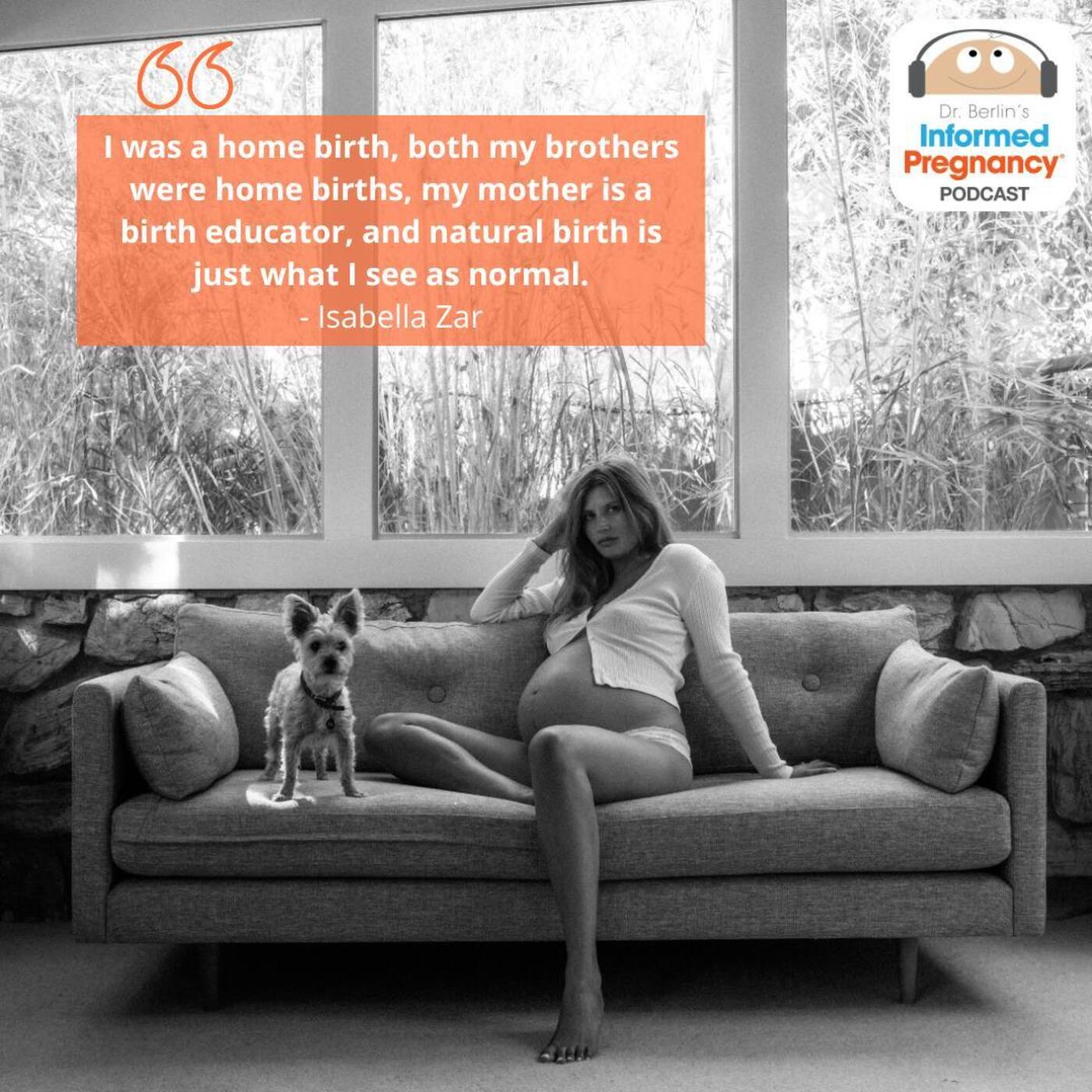
Isabella Zar, nutritionist and founder of the mushroom dietary supplement company Fungirl, shares about expecting her first child and planning a home birth.

Learn more about your ad choices. Visit megaphone.fm/adchoices
See Privacy Policy at https://art19.com/privacy and California Privacy Notice at https://art19.com/privacy#do-not-sell-my-info.
Key quotes
“And so natural bath is just what I grew up with and what I saw as normal.”
“You know, the bath is sacred and I'm excited to experience it in its natural form.”
“okay, however this baby comes out, I want to be healthy. I want her to be healthy and both of us to be safe.”
“I'm not pushing anything on anyone, but I hope that I can be an experience that people look to and see this positive home birth story, you know?”
“reminding myself that my body is never going to create something that's too big that it can't come out.”
Related episodes
- Ep. 385 Needed: Holistic Nutrition with Ryan Woodbury
- Ep. 358 HealthyGirl Kitchen with Danielle Brown: Before Birth
- Ep. 310 Amaris Rodriguez: After Birth
- Ep. 309 Amaris Rodriguez – Before Birth
Transcript
AI-generated transcript with speaker labels — may contain errors, especially names and medical terms. Dr. Elliot Berlin, DC appears in blue; Isabella Zar in orange.
Download PDF of the Transcript
Dr. Elliot Berlin, DC [1:36] Welcome to the informed pregnancy and parenting podcast. I'm your host dr Elliott Berlin my guest today is nutritionist and founder of medicinal mushroom focus company Fun girl who is currently pregnant with her first child and planning a home birth with a midwife and her mother is her doula Isabella's are welcome to the podcast
Isabella Zar [1:54] Hello, thank you for having me. I'm excited to be here
Dr. Elliot Berlin, DC [1:57] Oh, I can't wait to pick your brain about all things that I know nothing about but before we get to that you're just
Isabella Zar [2:02] Holding up your other doula. Yes. This is my assistant doula If my mom doesn't make it in time from Australia, then he's gonna step in my eight pound dog What kind of doggy? He's a Maltese Yorkie. I'm Morky. I'm Morky
Dr. Elliot Berlin, DC [2:20] Morky excellent. He looks to like so it's fun for me to always meet another male doula. Oh, yeah There's not many of you on the field. Oh, we're in limited supply. Let's start with the beginning
Isabella Zar [2:32] You don't sound like in a yucca. Where are you from? I am from Australia. I grew up in Sydney I moved here three and a half years ago and yeah I definitely have like a not a super strong accent So some people kind of like find it hard to decipher exactly where I'm from. But yeah Australian I think the initial confusion is Australia or New Zealand
Dr. Elliot Berlin, DC [2:53] Yes, that's an easy one that people make all the time and then if we're getting a little bit more is like is that
Isabella Zar [2:59] South Africa, maybe it's Somewhere in the United Kingdom. Yeah, I get the UK a lot my parents aren't Australian Which is why I believe I sound the way I sound my dad's German. My mom was born in New Zealand So neither of them have crazy strong Australian accents either so didn't okay But they have a mix of sort of European and a little fusion ships, New Zealand over there
Dr. Elliot Berlin, DC [3:23] Yeah, and then the islands very confusing Yes, but it kind of explains you a little bit. You're kind of a nice blend of all things interesting All right, what brought you to the US Los Angeles in particular about three years ago
Isabella Zar [3:41] My husband the main reason we met and got married really quickly It was all within like a few months really I think like three four months after meeting spending time together we got married and Then I finished my degree I finished studying back home in Australia and then I moved over to LA to start a life here with him
Dr. Elliot Berlin, DC [4:04] That's really quick even for my people orthodox Jews usually go on two dates and then decide if they're gonna keep it or not And if they do a few more dates and then they're married very quickly you're competing with that Yeah, why so fast? How'd you meet?
Isabella Zar [4:18] We met at a cafe We'll come back to this cafe as well because it's also part of like how I got into what I'm doing Foreshadowing yeah, but we met at this little vegan cafe called Orchard Street in Bondi I was sitting there at the bar having a drink my friend worked there at the time I was crying over my ex-boyfriend who had just broken up with and then he walked in and sat next to me I don't know the timing was like very special and that he was only there for like another 12 hours or something before he caught a flight And we met and kind of just hit it off pretty quickly kind of can't wait to see the movie it would make such a good movie. I just need to write a script and that's what I'm saying. Wow.
Dr. Elliot Berlin, DC [5:05] All right. What you do now is you're a nutritionist and you've created a medicinal mushroom focus company called fun girl. In the second segment, we're going to talk all about that, but you guys got together, got married very quickly and now you're pregnant. So how
Isabella Zar [5:20] long ago was it that you met? Well, it's been three years now. Okay. Over three and a half years. So you waited a second before having the baby. Yes. Yeah. It was definitely by choice. I'm 28 right now. I always knew that I wanted to have kids young, but it was interesting. As soon as I got married, I had this shift because I was like, Oh, wow. I could actually have babies right now. Like I'm married. I have a husband. Like I feel safe enough that I could have kids with this person. It kind of made me retract from that feeling. All of a sudden I was like, Oh, maybe I'm good for a while actually. I didn't dip my toe into that pool just yet. Yeah. I was 25 when we got married. Having kids that quick was not what I wanted in the
[6:10] end. And plus it gave us time to just be a couple and be together. Like we barely knew each other. We were like strangers reading vows to each other. It was really special to have that time of our relationship, just getting to know each other without a baby.
Dr. Elliot Berlin, DC [6:26] I have a question about that too, but I just had an image of my head where you're kind of at the altar and you like whisper in his ear, who's that? Oh, that's my brother.
Isabella Zar [6:36] Okay. So we didn't even have a wedding. We just eloped at Santa Barbara courthouse.
Dr. Elliot Berlin, DC [6:41] Oh, wow. Well, that's what I was going to ask you also. This whole thing kind of is pandemicy. It was pre pandemic when you got married. Yes. Okay. And then, okay, you get married, the world falls apart and then you wait a year or two and have a baby.
Isabella Zar [6:57] Yeah. We really got to know each other during COVID, like most people. So that was like a
Dr. Elliot Berlin, DC [7:02] good intensive time just sped up. Are your families, I mean, were they there? It was
Isabella Zar [7:07] just the two of you. No, it was the two of us. And then one of his closest friends married us. And then his wife was there as well. Oh, his closest friend's wife,
Dr. Elliot Berlin, DC [7:19] not your husband's wife. Yes. Okay. It was the four of you, a double date, but it started
Isabella Zar [7:28] different than it ended. Yeah. It honestly wasn't really planned that well either. We knew that we were going to get married sometime within this two week period for visa reasons. We had to do it within a timeframe. Oh, this sounds like 90 day fiance. Basically. But we woke up one morning, we were in Santa Barbara, we were doing this whole wine tasting trip with our friends and we woke up and we were like, okay, maybe this is the day. Like let's just walk over to the courthouse, see what we like. And all of a sudden we're just like getting married. It just like happened. Wow. That's my other questions. How do your families get that? Well, they knew that we got engaged. So it was funny. I remember
[8:14] cause we went on a trip to Byron Bay when we were still in Australia spending time together and no one had met him. None of my friends, none of my family. And I came back from this trip engaged and I sat down at my parents with my mom and my dad and I was like, oh mom, I have to tell you something. And she was like, what? And she's like mid eating a salad. She's like, are you pregnant? I was like, no, not quite. I'm engaged. And her face was just so like, she couldn't understand why she's like, I don't get it. She hadn't met him. No one had met him. It was a little confusing at first, but as a dad, I would be like,
Dr. Elliot Berlin, DC [8:55] what? Yeah. I don't have a clear vision of how it's going to go, but I do sort of have some kind of expectation that we'll meet, you know, the old traditional, like I asked my father-in-law before I proposed to my wife, you know, for quote unquote, his permission for her hand in marriage. If I remember correctly, he said no, but I asked at least. I asked. In any way. Yeah. So yeah, I could see the shock. I can almost see how pregnancy would be less shocking. Yeah. Honestly, it would have been if I was just like accidentally pregnant. I think that would have been way more like, Oh, oops. Yeah. Okay. So did you have a
Isabella Zar [9:34] celebration with family at some later point or? We did. We did something in Australia with my closest friends and family. And then we had an engagement party in America when I came over right before we got married. Okay. So all bases covered. Exactly. We always wanted to have a wedding. And then by the time I moved over here, it was like three months and then COVID happened. No. and was traveling. And then all of a sudden we're married for three and a half years. And it's like, we're such old news. Like that's not exciting anymore. I don't know.
Dr. Elliot Berlin, DC [10:08] You might as well wait seven more years and have a party when you renew your vows.
Isabella Zar [10:12] That's exactly what we've said. We'll just do a vow renewal party.
Dr. Elliot Berlin, DC [10:16] Just the four of you?
Isabella Zar [10:17] Yeah.
Dr. Elliot Berlin, DC [10:19] All right. Let's take a little break. When we come back, I am so curious to know about these mushrooms. Don't go anywhere. We will be right back.

Dr. Elliot Berlin, DC [12:51] Welcome back to the Inform Pregnancy Podcast. We're talking to Iza Belazar. And okay, tell me about mushrooms. How did you get into this nutrition? You're very fit. Your body's very strong and healthy. How did that all begin and evolve?
Isabella Zar [13:05] Well, I guess it kind of goes back to how I was brought up. My parents are kind of more on the earthy side. You know, we never had Advil and things like that in the house. I remember like as a kid, whenever I had a toothache, my mom would give me the head of a clove and she'd crush it onto the tooth that was aching and it's a natural astringent. So it would create a little numbing effect. So that was kind of the feel in our household. It was very natural.
Dr. Elliot Berlin, DC [13:35] Yeah, your food is medicine.
Isabella Zar [13:37] Exactly. My parents had a restaurant when they moved to Australia. So cooking with fresh, healthy food was always really important to my parents. And I just grew up seeing that. And then I guess I got more and more interested in food as I started getting older. I'd cook a lot with my dad. And then when I was about 15, I started modeling. And that's when I became more aware of the physical side of me. I mean, you're always aware of your physical side, obviously, but it was different. All of a sudden, it was like really about the way I looked at my body and my face and how I took care of myself. And I definitely took that to an extreme, I think, as a young girl that can kind of
[14:24] mess with you. So I definitely developed some eating disorder kind of things. I had a funny relationship with food for a long, long time. But that almost triggered my interest in healthy eating even more. So it was like it became a little obsessive. But then I had a switch when I was about 19. I remember just like feeling so disconnected from myself. And I was in this world that was completely unhealthy and was glamorized. And it was anything but that. And I just remember that. wanting nothing to do with it, I really didn't. So I just kind of like quit anything fashion related and modeling. And I started googling courses of like, what can I do with food and healthy cooking
[15:13] and blah, blah, blah. And I came across like a nutrition college in Sydney. And I didn't even know it was a thing becoming a nutritionist. I mean, I'd seen dietitians growing up, but nutrition I didn't know was a career path that I could even explore. So that was when it kind of all started. I remember enrolling in this course and three months later I was taking it and
Dr. Elliot Berlin, DC [15:33] I just became obsessed. Okay. A bunch of questions. Number one, what kind of restaurant did your
Isabella Zar [15:39] parents have? It was in the rocks in Sydney. And it was kind of just like modern Australian, but had a European influence because my dad was from Germany. He liked to get creative with
Dr. Elliot Berlin, DC [15:54] food. Yeah. That's a hard tagline for marketing purposes. And then do you have siblings?
Isabella Zar [16:02] I've got two brothers, an older brother and a younger one.
Dr. Elliot Berlin, DC [16:05] Oh, right. You're the cream and the Oreo cookie. I'm right in the middle.
Isabella Zar [16:09] Do either of your brothers have kids? Yes. My older brother has three kids. Oh, wow. You guys catch enough to do. Yeah. And then my younger brother is
Dr. Elliot Berlin, DC [16:21] six weeks behind me having his first. No kidding. Okay. Wow. Okay. So your parents are going to be
Isabella Zar [16:26] busy. They're going to be so busy. I mean, that's five grandkids by the end of the year. That's a lot. It's a lot of nappies to change. Well, sadly, luckily for them, I'm not nearby. They don't have to change any nappies for me, but no. Yeah. You can't really do virtual nappy
Dr. Elliot Berlin, DC [16:40] changing. Sadly. No, we've got to figure out a way. When you were modeling, what kind of
Isabella Zar [16:44] modeling were you doing? A lot of like e-commerce stuff, like magazines, clothing labels, nothing crazy. I was doing it part-time and I did it for a few years.
Dr. Elliot Berlin, DC [16:59] And were there elements about it that were a bad experience for you or did you not like what the industry sort of projects for other women or both?
Isabella Zar [17:11] Both, honestly. Going into it, I remember thinking it was just the most glamorous thing that you could do. It was like, oh my gosh, like you see these women and they're gorgeous and they're done up and it looks so fun from the outside. And listen, it was fun. I had a ton of fun, but I also think it made me grow up really quickly because I was surrounded by people that were much older than me, had been in the industry for a long time. And then it created this really unhealthy relationship between me and my body.
Dr. Elliot Berlin, DC [17:47] And you wanted something different. It's pretty cool that at that age and in that glamour, you were able to realize that and walk away from it.
Isabella Zar [17:55] Yes. I've always been told that I'm an old soul. So I kind of was just like the quiet one that would just see things and I'd really like take it in and listen and also very intuitive. And it just got to a point where it didn't feel right anymore. I was like,
Dr. Elliot Berlin, DC [18:11] something's not good here. Unlike your parents' restaurant, I think old soul is a great tagline for you. Like having to spend time with you. There's this like deep sense of maturity and observation and understanding that I'm almost envious of. It's cool. And it's one of your like puzzle pieces that make you a very interesting puzzle. Okay. So that's 19 then you've had that realization. You are excited about nutrition.
Isabella Zar [18:36] Where does it go from there? Yes. So I'm deep in my course. It was four years. I remember we touched base on mushrooms at one point, no idea where it was, but mushrooms did come up for a little bit. There's certain topics we kind of like brushed over quickly, but I remember learning about them and being really fascinated. And I ended up kind of diving into them more myself just on the side. And then what coincided with that is I actually started working at that cafe where I met my now husband and I took my old friend's job. So she left the cafe. I took her job at this cafe while I was studying. And it's kind of similar to moon juice, a little different,
[19:26] a big focus on adaptogens. You'd make certain lattes with adaptogens and mushrooms. And it was so fun. People would come in and they'd ask for something specific to help them with a certain feeling. So someone came in, they're like, I'm feeling like super fatigued today. Like what powders can you give me to help with that? And I'd be like, oh, perfect. Let's give you a little like cordyceps for energy and some maca to like give you that spark. So I got to play this role of helping people with whatever they were going through by choosing from my wall of alchemy powders behind me. It was so fun. So that just drove that passion even deeper.
Dr. Elliot Berlin, DC [20:05] And it's all food based, plant based. Yeah. Yeah. Yeah. Yeah. They're all, it's not like a snake venom and other weird things like that. Yeah. No, okay. Okay. So I can see how that gets even more excited about using
Isabella Zar [20:20] the medicinal power of food to help people. Oh yeah. And I started feeling the differences myself as I started taking these powders as well. For example, lion's mane is a mushroom. My favorite, favorite mushroom. It's so incredibly good for your brain. It literally increases the growth of neurotransmitters in your brain. So just like it makes you fire, like much more optimally than you normally do, but not in like a caffeine kind of way. It just gives you this like brain boost and increases your memory and focus and concentration. So I remember when I started taking lion's mane consistently every day, and then I'd stop for a couple of days, I felt that dip and I was like, Whoa, I'm not functioning
[21:06] as well as I was like a week ago. So that's when I started to really kind of feel the difference myself. Sometimes it's hard to like, we take so many supplements and things and it's like, well, what is actually working? Sometimes I was feeling the difference firsthand
Dr. Elliot Berlin, DC [21:20] and that was insane to me. I have the same exact experience with vitamin S and vitamin P. I sometimes take one, sometimes take the other, you know, Starbucks repeats coffee. And then if I don't take it for a day or two, I feel the dip. You definitely feel the dip from that. Lion's mane coffee, that could be my new venture. I have a question. So do any of these mushrooms have the hallucinogenic or psychedelic
Isabella Zar [21:46] effects? Yes. I mean, not the ones that I'm using at the cafe. I mean, there's so many different types of mushrooms. So you've got the ones that are psychedelic with psilocybin, and then you have the ones that are not. I started playing with the ones that were not psychedelic at the beginning for years. And it wasn't until I actually came to the state that I first started trying psilocybin mushrooms, the psychedelic ones.
Dr. Elliot Berlin, DC [22:15] We have that effect on a lot of people. Apparently you guys do. You guys like them over here, which I'm all for. We like not feeling like ourselves. Yeah, apparently. Have you been experimenting with other drugs as a teenager?
Isabella Zar [22:31] Like, you know, smoking weed and things like that, but like nothing crazy, like
Dr. Elliot Berlin, DC [22:36] not mind-altering things like that. We'll have to get creative with the movie script. Exactly. So in your experimentation with more psychedelic mushrooms,
Isabella Zar [22:47] what was your experience with them? I didn't know what to expect. I'm trying to think the first time I took them, I can't really pinpoint the first time. That might be because I think I was in Big Sur, which was the perfect place to take them, to be honest, surrounded by nature with people that you feel safe with in the right environment. Like that is everything like set and setting where you are. And then also how you're feeling yourself. So how do you consume them physically? Different ways you can eat them raw, literally like it could be a dried mushroom and you can just eat some of that. That's what I would do at first. I really liked they're super earthy tasting, like really tastes
[23:34] like they're just from the ground, which they are. They are. But I liked that taste. So I would just eat them dried and raw. But some people grind them up into powders and you can have them in different forms and chocolate and honey and capsules. My first thought would be pizza. Oh yeah. Pizza's a great way to go. Thank you.
Dr. Elliot Berlin, DC [23:58] In fact, because your company is called Fun Girl, which we're going to talk about in a second, but if I could think of another venture, I would open a medicinal mushroom pizza store. And here's my name for it. Fungi. Yeah. So perfect. Fungi. Mushrooms are fungi. Yeah. And maybe we need a sibling to your company. Okay. Lion's mane pizza. Yes. So sharks. Yeah. All right. So you're experimenting with the more fun mushrooms and what does that
Isabella Zar [24:28] lead you? Oh man, there's a lot that came from playing with them. At first, I guess, when I would take them, it was definitely more an environment with friends. It was social. I just noticed that people were really using them a lot recreationally and they really like open you up. Like they're expanders. They open up your mind and your heart. And honestly, the person I am today, I'm very different to how I was three years ago. And I have to pay a lot of that to my use of psilocybin. Like I really think it just opened me up as a person and it just showed me how to be more empathetic and caring and slow down and see the world for what it has to offer and what it is and it just helped me grow a lot. So for me they're really
[25:20] special and they're sacred so I started to feel this shift and not wanting to use them in such recreational settings. So I really like pulled it back and then I started playing with microdosing them. So you just have a really small dose, 0.1 of a gram every day. You do it for like a couple of days and then you take a break. I mean that's like taking any sort of supplement you know but this was like really good for your brain. You can function throughout the day. It's not like you're taking some substance that's tripping you out or anything. You don't even feel a dose at that stage so it's like I could still walk and do this podcast and microdose. Not that I am now because I'm pregnant but the point is you could take a low dose and
[26:02] reap the benefits from them. It helps with anxiety and depression and PTSD and a ton of
Dr. Elliot Berlin, DC [26:08] things like that. I have two thoughts about that. Number one it seems like it's going to be a really tiny pizza. It's going to be minuscule. And then number two is it seems like half of all Americans are on medicine for those things anyway. Anxiety, depression and whatnot. So going back to food as medicine, microdosing some mushrooms seems like not a
Isabella Zar [26:30] crazy idea. No it's not. I know a ton of people that have gone from taking prescription medications for certain things switched to microdosing and not even needed their other meds anymore and they're feeling better than they ever have. It's really powerful.
Dr. Elliot Berlin, DC [26:48] Since we're based in America I would say don't make any changes without consulting your doctor. I've never done I don't think ever any kind of recreational drug and you're selling it well. You're selling it very well. I want to feel the way you described open on the inside and just take off some of the tough boundaries that I've built up over the years to be protective and defensive and in the harsh world. Your company is not about those mushrooms. They are medicinal but not psychedelic. Is there any other big takeaway from your time with the
Isabella Zar [27:22] psychedelic mushrooms? I wish everyone could be taking them. I think the world would be a very different place if we were. You know I feel like there should be a filter you know for certain people you know like someone with road rage and then that's it. This is guy with road rage and this is guy who would have had road rage on a fun mushroom. Be a very different version. This is what my life is like on Instagram and this is my real life. It's the exact
Dr. Elliot Berlin, DC [27:52] opposite. Okay let's talk about Fun Girls. So your passion here has led you to continue trying to help people with the power of food being medicine. What kind of products have you
Isabella Zar [28:05] developed? Yes so I have got a range of chocolate bars medicinal mushroom chocolate bars which are clean organic vegan. There's no milk? No they don't even need it. Next time I see you I'm gonna bring you some to try. Okay fine. Don't even miss the milk and I'm not even vegan but if I'm gonna have a treat I want it to be clean. It's not even milk it's like a milk solid when it's in a chocolate bar and just like it makes you feel funny. So I feel funny anyway. Are there different ones for different things? Yes so I launched with my first one which is called the main bar. I don't in there. You know my favorite lion's mane and that was all about being like a brain bar. So the whole idea behind Fun Girl was I wanted people to be
[29:00] able to incorporate mushrooms into their day to day even if it's in a smaller amount you know like okay if you take a mushroom coffee great you get a little there if you want some chocolate at night time have some fun girl you get a little there so you're getting more than you think you are. So yeah so I made the lion's mane bar and that was all about giving you like a brain boost getting that dose and then people really wanted more of an all-encompassing one so I ended up doing the mush pit bar which is four different mushrooms you've got lion's mane reishi cordyceps and chaga so that gives you a real boost of all those four mushrooms in the chocolate. Is it the mush pit? Yeah very cute I like all your names. Thank you. So yeah so
[29:50] that's what I launched Fun Girl with and they've evolved you know when I launched it the packaging was different the chocolate was different and now it's at a point where I'm, you know, hate to be biased, but they taste really good and they're doing well. People really love them. It's just a nice, healthy treat to have.
Dr. Elliot Berlin, DC [30:09] Are they contraindicated during pregnancy?
Isabella Zar [30:12] You know, there aren't any studies like most things with pregnancy. They just haven't done any studies on women and mushrooms, women being pregnant, taking mushrooms, uh, I'm still taking mushrooms in powder form and in the chocolate, I just have way smaller amounts.
Dr. Elliot Berlin, DC [30:30] Okay. And you're taking these kinds of mushrooms, not the psychedelic ones.
Isabella Zar [30:34] No.
Dr. Elliot Berlin, DC [30:36] Okay. Well, color me curious. Made me wonder, but I could almost already taste the passion that's in your product, knowing that it comes from personal experience, personal involvement, and wanting other people to get the benefits out of them that you do. That's really cool. Uh, how pregnant are you? How many weeks are you?
Isabella Zar [30:58] Oh, 39 weeks.
Dr. Elliot Berlin, DC [31:00] Okay. So according to my calculator, you're going to be a mum pretty soon. Let's take one more break. When we come back, we'll find out what's in store for your birth. Welcome back to the podcast during the break. I realized I'm hungry for chocolate and mushrooms now. So thank you. You're 39 weeks going to have a baby soon. What's your plan?
Isabella Zar [31:30] My plan is to rest until this child comes, um, having a home bath. I have my midwife, Katie Hamilton, where I feel so lucky to have found. Angel from heaven. Oh, she's the best. Honestly, feel very aligned with her.
Dr. Elliot Berlin, DC [31:49] I feel compelled to ask this question since less than 2% of people in America have babies at home. Why?
Isabella Zar [31:55] I was a home birth. Both of my brothers were a home birth. My mom, she is a former doula birth educator. She's been in the bath world for a really, really long time. And so natural bath is just what I grew up with and what I saw as normal.
Dr. Elliot Berlin, DC [32:13] How much younger is your younger brother?
Isabella Zar [32:15] Two years younger. And then my older brother is six years older.
Dr. Elliot Berlin, DC [32:19] Were you at the birth of your little brother?
Isabella Zar [32:22] I was. Yeah. I don't remember it, but I was somewhere in the house.
Dr. Elliot Berlin, DC [32:26] Okay. You have exposure from a very young age to birth, like being a normal, natural kind of thing.
Isabella Zar [32:31] Yeah.
Dr. Elliot Berlin, DC [32:32] Okay.
Isabella Zar [32:33] I remember being a kid and when people would ask, where were you born? I was so embarrassed that I was born so hippie and weird. I would lie and I'd make up like the nearest hospital St. John's or whatever.
Dr. Elliot Berlin, DC [32:49] It's kind of interesting. We had our fourth baby at home and we rent our house. Our landlord has the house right next door and he lives there. So I came out one morning and I'm like, Hey, I get a mazel tov. We had a boy and he's like, Oh really? Um, tell me what room Alyssa is and my wife, you know, at the hospital because we'll send flowers. I'm like, Oh, she's, um, at the moment in our bedroom. And he's like, what, when did you have the baby? She's already home. I'm like, well, we had the baby at home. He's like, you didn't make it to the hospital in time. I'm like, um, we plan to have the baby at home. And at that second, like his brain went to a completely different area,
[33:26] which was like, Oh my goodness. How are the floors? Yeah. Being the landlord. That's where you went, but he wasn't thinking about the floors when he thought we did it by accident. It was only like when we planned to have the baby at home. It was like, how are my flush? Um, anyway, so, uh, yes, whatever. Like I said, less than 2% of people do it in my community. It's a lot less common and percentage.
Isabella Zar [33:53] I didn't realize that's what it was. That's low.
Dr. Elliot Berlin, DC [33:56] Yeah, it's low. You're weird. Um, so in your mind, what are the pros and cons of home birth? And as a follow-up, what are you excited about or nervous about?
Isabella Zar [34:09] Pros and cons, you know, I didn't immediately decide on a home birth. It actually took me a minute to get there. But when I would think about giving birth in a hospital and that environment, I just knew that it wasn't where I wanted to be. I didn't want to be somewhere like sterile with hundreds of people that you didn't know running around and this sense of emergency and knowing that I would be on this time limit. Like hospitals are a business. Like they're trying to get people in and out. And I get that, but I know that birth is also this mysterious thing that could happen in 20 minutes or 45 hours, you know? It's like, you can't put a time limit on it.
[34:53] So I never wanted that feeling. And also it's like the hospital to me, I'm like, that's where people go when they're sick. You know, the bath is sacred and I'm excited to experience it in its natural form. But yeah, it took me a minute to get there. I was definitely a little nervous. As you know, I've expressed that to you. So the pros for me about a home both are being in your own environment, having all your things around you, not having to rush to the hospital, going at your own pace, you know, you can walk around and eat and drink, jump in the shower, have a bath, lie on the bed, watch a movie, whatever.
Dr. Elliot Berlin, DC [35:28] Snack on mushrooms. Whatever you need. And in that sense, what are the cons of home birth?
Isabella Zar [35:37] The cons of home birth for me, there aren't many, to be honest. I mean, the one that comes to mind is if something actually does go wrong or there is something that needs medical attention, whether it's myself or the baby, well, I mean, there's a ton that the midwife can do to help with certain things, but if there's something that the midwife can't do, I'm not just in the hospital, able to go to the operating room or whatever and have an emergency C-section or something like that. That's kind of where I go.
Dr. Elliot Berlin, DC [36:08] First of all, you left out your husband. I can't tell you how many times it's the husband who needs medical care from, you know, passing out, smacking their head on the floor. But if any of you do need more hospital-based medical care, do you have a plan for that?
Isabella Zar [36:24] There's a seat is like five minutes away.
Dr. Elliot Berlin, DC [36:26] So, okay. So that's a hospital, a local hospital right near you.
Isabella Zar [36:30] Yeah.
Dr. Elliot Berlin, DC [36:31] Okay. This thought goes through my mind a lot, like from when I used to live in Nebraska, like when you're in Nebraska, giving birth at a hospital frequently, there's no surgeon in the hospital while you're giving birth there. There's no anesthesiologist in the hospital where you're giving birth. They're not just waiting for a birth crash to happen. If something comes up, they need to assemble a team and get the operating theater ready. And here is Cedars, the hospital we referenced as 9,000 babies a year. They always have surgeons and anesthesiologists and techs ready to go. And so quite conceivably, somebody who lived where you are, having a
[37:08] home birth who needed some sort of intervention quickly might get it substantially faster than someone giving birth in a hospital in Nebraska.
Isabella Zar [37:18] Yeah.
Dr. Elliot Berlin, DC [37:19] Right. And I'm not trashing Nebraska, I'm just saying it's a practical reality is that when you live in the bigger cities, you have these kinds of hospitals accessible to you when you live in smaller, out of the big city hospitals, then oftentimes that's the scenario. And it's not like your midwife isn't trained to, like you said, to handle certain types of emergencies and to stabilize and transport. So it's just a food for thought idea. There are some people who are very excited about home birth and love it. Some people are very not excited about it and hate it. But one thing I think that they don't think about is like you're in a place where you have access to care very, very quickly.
[37:53] Should you know if not emergency, if you felt like, for whatever reason, you transferred to the hospital to continue laboring there, is that something that you're okay with if you feel like you need it in the moment?
Isabella Zar [38:07] I am. I've definitely come to peace with the idea that anything could happen for me. I really didn't want to have a C-section. That was like what I was trying to avoid, but now I think just throughout my pregnancy, I think your mindset kind of shifts a little. And like for me, it's like, okay, however this baby comes out, I want to be healthy. I want her to be healthy and both of us to be safe. However that's done, it's going to be done. Like it's going to play out how it's meant to. So I am okay if that were to happen, if I were to transfer and continue laboring there, obviously that's not my idea. That's not my goal, but I feel like I have to be open to any
[38:48] possibility.
Dr. Elliot Berlin, DC [38:50] Right. It's not the path that you're hoping to take to the destination that you're planning to get to.
Isabella Zar [38:55] No, not at all.
Dr. Elliot Berlin, DC [38:55] But if a detour comes up, you're okay moving to a different way to get from point A to point B. I feel like you have to be, right? Well, you do, but not everybody is. So it's nice that you're able to, and because you're incredibly cool and you're an open book with no TMI button, you've also agreed to do our new program called my birth, where you'll come back not only to share your birth experience on the podcast here in an after episode, but also on our new streaming platform and foreign pregnancy class with pictures and videos. So we'll be right there with you. We'll all be your doula.
Isabella Zar [39:33] I know I'm excited. Even through this decision to have a home birth, it's definitely opened up a lot of conversations within my own network of friends. So, you know, I'm not pushing anything on anyone, but I hope that I can be an experience that people look to and see this positive home birth story, you know? However it ends up, I hope that I can help inspire people to like, at least explore the option.
Dr. Elliot Berlin, DC [40:00] Sure. Yeah. And also, I think your open-mindedness and flexibility are admirable. And it's your thing. You look at something 360 and not just focusing on one dot on the picture. So I think that's
Isabella Zar [40:13] healthy. At your home birth, who's going to be there? I'm going to have Katie, my midwife, my mom, my doula, and my husband Aaron. And your yorkle, your dog. Oh my gosh, how could I forget? My doula assistant, Bubba. Bubba. This is my doula Bubba. No, that's going to work well for the movie. He's great. He'll be there. He's a Morkie. That's what I was going for.
Dr. Elliot Berlin, DC [40:43] Oh yeah, a Morkie. Morkie Bubba. Yes. And then the midwife will have an assistant, as they usually do. So that's four people? Well, it depends. You and your partner, your mom, your midwife, your midwife assistant, and your Morkie. And then eventually the baby. Yeah. So six, soon to be seven. That is plenty. I had questions like,
Isabella Zar [41:10] are you going to have a photographer, videographer, this, that? I'm like, I want as few people there as possible. Kind of like when you conceive. Yes. I want privacy. It's an intimate experience. Yeah.
Dr. Elliot Berlin, DC [41:26] Okay, cool. Any predictions on the baby's size?
Isabella Zar [41:31] From the patients, my midwife said that it's a girl. She feels like kind of average size, probably about like seven pounds right now. So I'm hoping like a nice 7.2 baby comes out.
Dr. Elliot Berlin, DC [41:46] Okay. My prediction is going to be eight. Really? Does that even change anything a tiny bit for you? Normal goes up to at least nine and a half. Oh, man. It's a weird calculation that your brain is doing right now, because you're thinking of two static things, the size of your pelvis and the size of your baby. Right. But neither one of those is a static thing. Your pelvis is a whole bunch of bones connected by soft tissue like ligaments and cartilage. They can expand and contract quite a bit. I've seen smaller, like really petite ballerina girls have a 10 and a half pound baby. No problem, by the way, not even tearing. And your baby's head is not a solid bone either. It's a bunch of bones that
[42:31] are able to mold through a smaller space. So sometimes I think what gets lost is the physiology of how a larger structure can come through smaller. And your soft tissue also is designed in that neighborhood to expand quite a bit and then shrink back down to how it was. Perhaps this visual will be helpful. Maybe not, but almost like an elevator door. It opens up,
Isabella Zar [42:51] somebody comes out and closes back up again. Yeah. No, you're completely right. And a mantra that has been helping me is reminding myself that my body is never going to create something that's too big that it can't come out. Like our bodies are so smart and complex and whatever's growing inside of us is able to come out of our bodies.
Dr. Elliot Berlin, DC [43:13] Sure. That might not be exactly true if there was some sort of genetic mishap or something like that. But in your case, everything is looking just fine, normal, eight pounds, eight and a half pounds is totally within the normal realm. It's just that your logic brain starts to run away with that and try to figure out all the what ifs and that's where anxiety comes in. So it's a natural thought. I'd be worried about you if you never had thoughts like that.
Isabella Zar [43:38] Yeah, no, they're definitely there. Don't worry.
Dr. Elliot Berlin, DC [43:40] Okay, sweet. No, I'm not worried about it. Okay. Well, time to end this gig. You're amazing to talk to and I'm very excited. I would send you the most positive birth energy possible. You and your six probably well-fed guests. And I look forward to talking to you on the other side.
Isabella Zar [43:59] Yes, me too. Excited to share the story on the other side.
Dr. Elliot Berlin, DC [44:03] Where can we find you and our fun girl online?
Isabella Zar [44:07] Yes, fun girl, mainly on Instagram at fun girl website, fun girl goods.com. That's where you can find all our goodies.
Dr. Elliot Berlin, DC [44:17] Okay. So that's where we find you online. Great listeners. Thanks for listening to us. And if you want to find us online, I would go at this point to either inform pregnancy.com where you are not going to just see our podcasts or access to our documentaries and things like that, our blog, which is exploding right now, but all the details about the new informed pregnancy plus streaming channel will be there alternately. If you're a visual person, go to Instagram and we're at Dr. Berlin D O C T O R B E R L I N. You
Want more pregnancy + parenting? Start your FREE TRIAL of Informed Pregnancy+ and get access to all our curated pregnancy and parenting content — original series, iconic birth films like The Business of Being Born, prenatal workouts and more.
