
February 16, 2023 · 40 minutes · Episode 327
About this episode
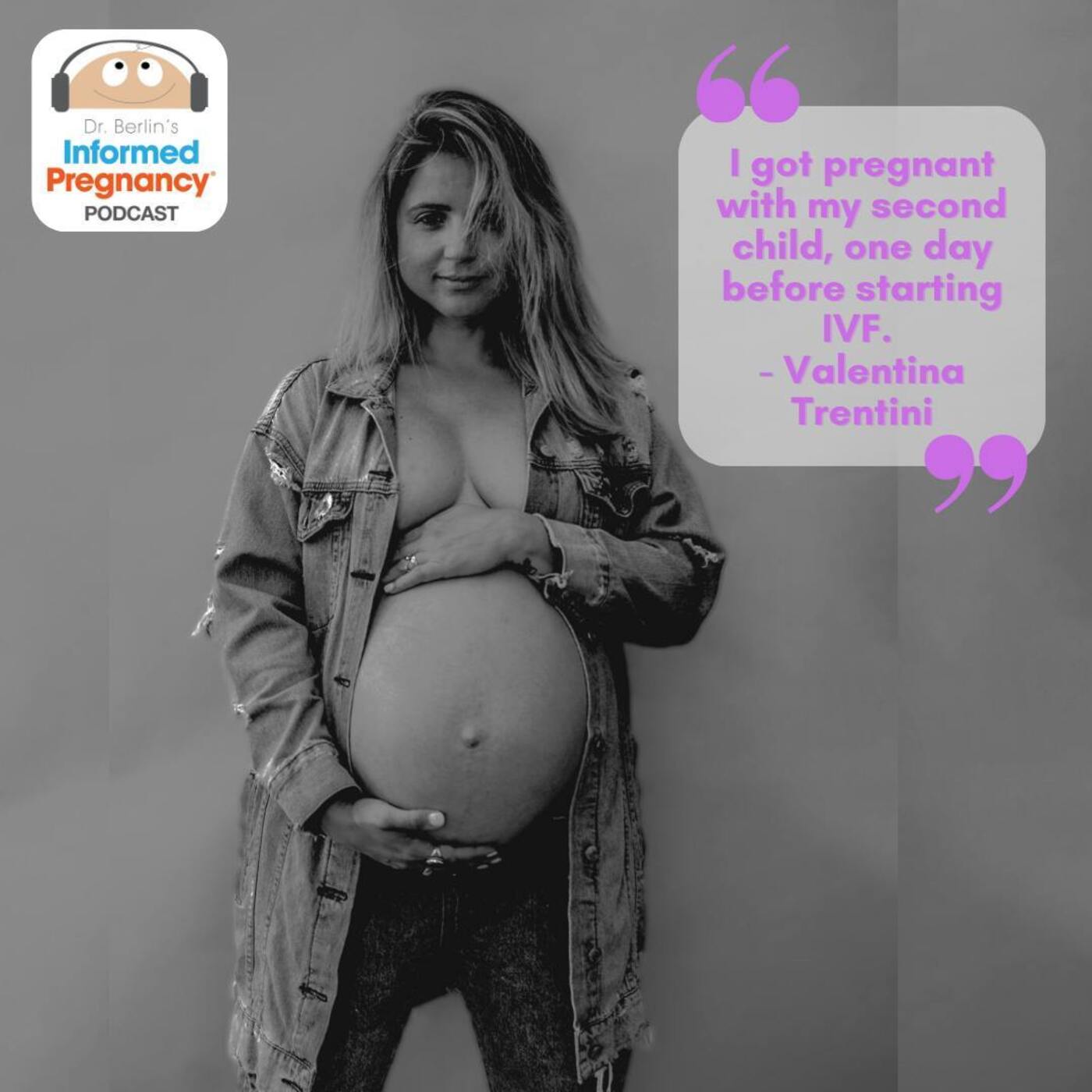
Italian-American artist and soon to be mother of two Valentina Trentini talks about the complications with her first delivery resulting in a fractured tailbone, her fertility journey with baby number two, and her plans for the upcoming birth.

Connect with Valentina online: https://www.instagram.com/brushettasigns/?hl=en
Keep up with Dr. Berlin and the Informed Pregnancy Project online!
www.instagram.com/doctorberlin/
www.facebook.com/InformedPregnancy
Learn more about your ad choices. Visit megaphone.fm/adchoices
See Privacy Policy at https://art19.com/privacy and California Privacy Notice at https://art19.com/privacy#do-not-sell-my-info.
Key quotes
“So my plan was stay home as much as you can, don't get an epidural, basically go with the flow and see how it goes. But of course, birth never goes to plan.”
“Yeah, so for me, I knew the pain because when I was 18, during the snowboarding competition, I broke my tailbone and I knew the pain. I knew how bad it is, and I knew exactly where the pain is.”
“you know, everyone always talk about how amazing pregnancy is and how great this time is, but they don't ever talk about the worst part of it, which is like when you have a miscarriage, what are you gonna do? I feel very lonely, very, very lonely.”
“very, very, very anxious, very anxious. It was not easy. Again, there's no support. If you were just, you know, like at the hospital, even the nurses, they don't know how to talk with you. They just assume that you're the happiest person on earth because you're pregnant, which I wasn't because I was just a nerve wreck.”
“I cannot be in control of this pregnancy, but I can be in control of other stuff. So for me, being in control of like the team that is taking care of me, it's very important for my mental health. That's for me is the most important thing.”
Related episodes
- Ep. 329 Valentina Trentini: After Birth
- Ep. 379 Bonnie Wright: Before Birth
- Ep. 355 Rumer Willis: Before Birth
- Ep. 335 Natalie Dreyfuss: Before Birth
Transcript
AI-generated transcript with speaker labels — may contain errors, especially names and medical terms. Dr. Elliot Berlin, DC appears in blue; Valentina Trentini in orange.
Download PDF of the Transcript
Dr. Elliot Berlin, DC [1:13] Welcome to the important pregnancy and parenting podcast. I'm your host pregnancy focus carpreter. Dr. Elliott Berlin today I'm talking to an Italian American artist painter we're gonna find out more about that and soon to be mother of two and her experiences with her first birth where She fractured her tailbone and then secondary infertility and now pregnant and about to have a kid Valentina Trentini, welcome to the podcast
Valentina Trentini [2:01] Hi, thank you for having me
Dr. Elliot Berlin, DC [2:04] How many weeks are you with this kid?
Valentina Trentini [2:08] 30 and a half so we have plenty of time. Yes
Dr. Elliot Berlin, DC [2:12] All right, let's start at the beginning where you from originally
Valentina Trentini [2:14] I'm from the London in Italy in the north and then I moved here like about ten years ago for work. Well
Dr. Elliot Berlin, DC [2:22] Thank you What's it like in northern Italy?
Valentina Trentini [2:26] it's like a crazy part of Italy because it's like very it's not like mellow and chill like the rest of Italy like You know, it's fine. The food is great. The wine is amazing. I mean when you say Italy I gain weight every time
Dr. Elliot Berlin, DC [2:44] Yeah, you know about what the food could be like what brought you to the US
Valentina Trentini [2:49] So ten years ago. I received an offer a job offer as a store manager for an Italian shoes company They were opening a new store in LA. So they asked me to manage a store And I was like, why not? I always wanted to live in LA and they accepted and I moved here I didn't have any friends. I didn't know anyone and then slowly but surely I started to meet tons of people and now I'm here
Dr. Elliot Berlin, DC [3:15] Did you meet your husband here?
Valentina Trentini [3:17] Yep, I got my man. My husband here in LA at a photography exhibition. Oh, wow. Okay, and you're also an artist Yeah, i'm a muralist and a sign painter. How did you get into that? I always been very artistic since I was a kid and then I went to Art high school and then I became a graphic designer and then when I moved here and when I was working at the store I got a little bit bored so I was like let me do something more artistic and I started to learn calligraphy on my own on the side and then I wanted to do something more and be more and more and more and more artistic and then I find out about sign painting and murals and
Dr. Elliot Berlin, DC [3:59] That's how I got into it. It's so amazing to me because I have a hard time with big pictures in general And it's incredible to me like I couldn't make anything like that even in a small space But to map it out and plan it and get all the it's incredible We're gonna have to put up some of your beautiful artwork on the socials when this comes out
Valentina Trentini [4:18] It's very fun. It's very very fun
Dr. Elliot Berlin, DC [4:21] Uh, and then how you met your husband is kind of fun. How did that come about?
Valentina Trentini [4:25] I met him at a photography exhibition and at the sunset marquis here in la And then I didn't like him at all. I was with my best friend He was with his best friend And you know, he was talking and I just stood up and left because I was like this guy is not interesting Actually a month later my best friend was like oh you need to start dating that you need to download This app is called hint. She's friend of your friends on facebook And I was like, okay, let's do it. I'm not italians at the time We're not really into you dating apps and but I did it anyway The first person I saw on the app was him. And I texted him and I was like, I know you. He was like, no, I don't think we know each other,
[5:08] but do you want to hang out? I was like, okay. And then after five minutes into our dinner, we realized that we talked a month and a half before and we laughed. And then we lived like we lived together and we've been together for like eight years.
Dr. Elliot Berlin, DC [5:28] Look at that, love at second sight.
Valentina Trentini [5:31] Yes, absolutely.
Dr. Elliot Berlin, DC [5:33] That could be a whole book. Okay, so kids, did you talk about kids early on? Was there a decision, hey, this is a good time?
Valentina Trentini [5:41] We talked about it like around like a year, year and a half into our relationship. We wanted to have kids and we started to like, try to have kids. And we tried like for like three to four months, no more than that. And then I got pregnant basically like right away. Never had a problem with that pregnancy. Never had a, like nothing. Everything was like perfect. Yeah, the first pregnancy was amazing.
Dr. Elliot Berlin, DC [6:06] What was your form of birth control before that?
Valentina Trentini [6:09] I took a pill for like 15 years, 17 years. I started very early when I was 14 because I had acne and that was the only thing in Italy that your gynecologist was prescribing you to like treat it. And then I continued to take it for like 17 years. It was a lot. Yeah, it wasn't that great. I wasn't feeling that good. That's why when I met my husband, like when I was around 30, 32, I stopped. I was like, this is too much. I don't wanna continue anymore.
Dr. Elliot Berlin, DC [6:40] Was that when you started to have kids or before that?
Valentina Trentini [6:43] No, it was before that. It was like, let's say like eight months, 10 months before that.
Dr. Elliot Berlin, DC [6:49] Okay. Yeah. And then after that you said let's have kids and then three months after that you got pregnant?
Valentina Trentini [6:55] Yeah, yeah. Something like that.
Dr. Elliot Berlin, DC [6:56] So what did you do for the 10 months to prevent pregnancy?
Valentina Trentini [6:59] You know, we use a condom and-
Dr. Elliot Berlin, DC [7:03] Did you have regular cycles?
Valentina Trentini [7:05] Yeah, very regular. I'm like a Swiss clock. Oh. Like, you know, like that's what we say in Italy. So, and you're like, you know, on point every month at 28 days, I get my period and I was getting my period. And it was always five days, no matter what. Wow.
Dr. Elliot Berlin, DC [7:21] Five days, that's it. That sounds more German than I am.
Valentina Trentini [7:24] Yes, yes.
Dr. Elliot Berlin, DC [7:26] Okay. So then you get pregnant. How was that first pregnancy?
Valentina Trentini [7:30] It was amazing. I was very relaxed. I was very calm. I really, really enjoyed it. I was still working, but I was like going to the pool every day to like do laps and I really, really enjoyed it. It was very easy. Very, very easy pregnancy.
Dr. Elliot Berlin, DC [7:48] You sound European.
Valentina Trentini [7:49] Yeah.
Dr. Elliot Berlin, DC [7:51] Okay. So what happened with life for birth and did you have a particular plan, a thought on how you wanted it to go? Did you do any prep?
Valentina Trentini [8:00] I did, because I lost my mom in 2014 and I moved here and I didn't have anyone here. I just had my husband's family. I decided to have a doula to help me navigate through like late stage of pregnancy and then birth and then postpartum. And it was very, very helpful. We decided, oh, maybe let's not get an epidural if I can, let's stay at home as much as I can until my water breaks. So my plan was stay home as much as you can, don't get an epidural, basically go with the flow and see how it goes. But of course, birth never goes to plan.
Dr. Elliot Berlin, DC [8:38] Okay, how did it start?
Valentina Trentini [8:40] I woke up at 2 a.m., started to have contractions and actually they were pretty close together. Called my doula, I would say like around four because I was like, oh, maybe it's not that bad. I could handle it. And then she showed up at four and she was like, your contractions are very, very close together. Like, you should have called me before. I was like, I could handle it, no big deal. And then we stayed home until 9 a.m. I was at home until 9 a.m. And then at 9 a.m., I was like, I cannot take it anymore. I was having a hard time breathing and my contractions were not like minutes apart anymore. They were like next to each other.
Dr. Elliot Berlin, DC [9:21] No breaks?
Valentina Trentini [9:21] No breaks at all. So I was done and I got to the hospital and I couldn't take it anymore. I was in a lot of pain and I think my body went in complete shock because of the pain. The doctor was like, if you don't wanna take it again and if you do it all, don't do it because you're two hours away from giving birth. But for me, I reached my limit.
Dr. Elliot Berlin, DC [9:41] Do you remember where the pain was that was sort of overwhelming you?
Valentina Trentini [9:45] I think it was in my back.
Dr. Elliot Berlin, DC [9:48] Your lower back?
Valentina Trentini [9:49] Yeah, in my lower back. I couldn't even stand straight. I think that the fact that I was overwhelmed by the contractions and I was having a hard time breathing, that for me was like a little bit too much. And I started to get scared how was the epidural for you when they put the needle in I didn't even feel it I was like this is the dream, but then a little bit You know they give you a remote that I could control them That dosage of the epidural and I think I got too much because I was in a lot of pain
Dr. Elliot Berlin, DC [10:18] What kind of pain from too much?
Valentina Trentini [10:20] When I got to the hospital the pain was like unbearable for me
Dr. Elliot Berlin, DC [10:24] And I think that oh you're saying you overdid it with the other girl because
Valentina Trentini [10:28] Yes, I did overdo with the epidural and I think I made a mistake Because they couldn't feel my left leg anymore my right leg I could still feel it But for me like my body because was in shock It just shut down and I went to the hospital that I was seven and a half centimeters dilated Wow, and then my body was like just shut down and body was like I cannot do this anymore You need to relax. You need to stop. It's just becoming too much. So labor stopped happening Labor stopped I Completely stopped for 10 hours. Wow, was that like restful for you at least like recovery wise? I could rest a little bit I was very lucky if I have to be honest because I was at the Kaiser hospital and they offered you a midwife during
[11:14] The day and my midwife was really good She was very very very very amazing and she was like, I'm not gonna call the doctor I want you to have a vaginal birth I don't want to give you a c-section because by the time that I got to the hospital they broke my water like two Hours later, so I was for a few hours in the bed with my water on the clock Yeah, seriously, and then she was like I have the feeling that you need to be alone for like a little bit So everyone went out like left the room. I was alone. I put some music on I started to breathe and then Around like well, let's say like 40 45 minutes later. She came back and she was like, well you're there
Dr. Elliot Berlin, DC [11:57] We have almost 10 centimeters. We start pushing now. Okay, so you didn't need to augment your labor with like pitocin It just they did they did it didn't work. Oh So you just had a way for your body to be ready again. Yeah
Valentina Trentini [12:14] Well, she was actually the best part of everything It was easy it felt very natural it felt like okay I got this and Actually, it felt like 10 minutes I thought 10 minutes went past and then the doctor came in and I was like, what do you mean? The doctor is already here. Like it's just a minute. They're like, no, honey. You've been pushing from an hour It wasn't bad I felt empowered I was like I got this that was really good was the
Dr. Elliot Berlin, DC [12:47] Epidural turned down. Could you feel things? I
Valentina Trentini [12:50] Actually could feel things because I stopped like giving myself epidural like I think two hours before you stopped Yeah, so I could feel it because also the doctor like when the head came out left the head like halfway Yeah, so she was like I'm gonna leave her here for like a second because I don't want you to rip and I was like Okay, we got this. It's fine And then after a little bit, I couldn't take it anymore. It was like very painful, but That prevented me like I'm tearing so you didn't tear or just a minimal tear not nothing. No
Dr. Elliot Berlin, DC [13:26] Not even a stitch. All right. Well, let's take a little break because something didn't go exactly according to plan Let's take a little break and come back and find out what that was all about

Dr. Elliot Berlin, DC [15:34] Welcome back to the podcast. We're talking Valentina Trentini. So you had the baby, pushing was easy, but then what happened afterwards?
Valentina Trentini [15:42] What happened is they put me in a different room and the epidural started to slowly leave my body.
Dr. Elliot Berlin, DC [15:49] Meaning you started to feel everything again?
Valentina Trentini [15:51] Yes, I started to feel everything again and I started to feel this super sharp pain in my lower back and in my tailbone. And I told everyone, I was like, there is something wrong, there is something wrong. My tailbone is hurting really bad and everyone didn't believe me. Not a single person believed me. They were like, no, you just gave birth, you don't know what it is. No, I know my body and the pain is different.
Dr. Elliot Berlin, DC [16:18] Can I just go back a second before that? Because you do seem to know your body really well. Some people do more than others, or some people are a little more connected than others. There's a lot of noise and clouting around, so sometimes we're not so in tune. In terms of your connection with your body, were you prior to pregnancy a healthy person? Did you exercise and were you a worker outer? Were you a healthy eater?
Valentina Trentini [16:43] I've always been very healthy. I've always been a very active person. I was a snowboarder through my teenage years until I was 25. Previous to that, I was a gymnast. And I always eat very healthy. Italians, we eat a lot of pasta and pizza, but we're healthy people, you know?
Dr. Elliot Berlin, DC [17:02] Because you drink a lot of wine.
Valentina Trentini [17:04] Yeah, because you drink a lot of wine.
Dr. Elliot Berlin, DC [17:07] I was a gymnast one time when I tried to go ice scanning, but that's a whole separate issue.
Valentina Trentini [17:12] Yeah, so for me, I knew the pain because when I was 18, during the snowboarding competition, I broke my tailbone and I knew the pain. I knew how bad it is, and I knew exactly where the pain is. And so I got really upset when nobody was believing me because I was like, I told you.
Dr. Elliot Berlin, DC [17:33] I also wondered, did you tell them that you had a previous tailbone injury and this is what it felt like?
Valentina Trentini [17:36] Yes.
Dr. Elliot Berlin, DC [17:37] And they still weren't buying it?
Valentina Trentini [17:39] Yeah, I did. And the thing it's like, I don't think that anyone would actually think that I would break my tailbone during giving birth. It's like those things that maybe they don't.
Dr. Elliot Berlin, DC [17:52] No, it does happen. It's kind of rare, but it does happen. And especially if you have a previous fracture and you know what it feels like, again, you're someone who has always been athletic and in touch with your body. So like, why not believe you? Okay, so then nobody did anything to help treat it?
Valentina Trentini [18:08] No, basically, like I went to my previous gynecologist and she was like, oh, I'm gonna assign you to a physical therapist, but the regular physical therapists, they don't know what to do. They were giving me exercises and I was like, this is not an exercise kind of pain. This is something different. So I went to like a physical therapist here for like six to eight months and nothing happened. Nothing. I couldn't hold my baby. I couldn't sleep on my side. I couldn't sleep on my, but yeah, I couldn't sleep, period. When I was sitting down, I was feeling my tailbone popping in and out, which was the worst thing.
Dr. Elliot Berlin, DC [18:45] Painfully? Oh.
Valentina Trentini [18:47] Painfully, yeah. And I was hearing it. Like I was hearing this loud pop, so.
Dr. Elliot Berlin, DC [18:53] Can I ask a question? When you injured at snowboarding, was there anything specific you did for recovery then?
Valentina Trentini [18:58] No, basically when I went to the hospital, they were like, we can put you a cast from your neck to your knees and just you stay in a cast for like a month and a half. But if not, there is nothing you can do about it.
Dr. Elliot Berlin, DC [19:13] Wow.
Valentina Trentini [19:13] And I was like, well, you know.
Dr. Elliot Berlin, DC [19:14] I've never even heard of that. That's crazy. Thank you.
Valentina Trentini [19:17] I was 18, so it was like 20 years ago.
Dr. Elliot Berlin, DC [19:20] So you push through it and just deal with it.
Valentina Trentini [19:22] Yeah.
Dr. Elliot Berlin, DC [19:23] Yeah, maybe we have a better remedy today. I don't know. Hopefully. And then the physical therapist that you were seeing here in the US was not a specialist, not a pelvic health physical therapist.
Valentina Trentini [19:34] Not a specialist. And I didn't even know, but if I have to be honest, I didn't even know that you can see a specialist for your pelvic floor, for like, you know, that specific area. I didn't know. And nobody told me, not even my doctor told me. And you know, that's why she is not my doctor anymore.
Dr. Elliot Berlin, DC [19:52] I mean, not being able to hold your baby, you're such a passionate mama. That must've been really challenging.
Valentina Trentini [19:59] It was. was really challenging because I couldn't do anything. I really couldn't do anything. And then not only I broke my kill bone, but the bone was not in place. So for me, it was like a struggle, a struggle for eight months. Then, you know, it's a very hard recovery. Eight months is a very hard recovery.
Dr. Elliot Berlin, DC [20:18] It's such a long time and it's such a painful situation and physically, but then emotionally, those eight months are the months like, you know, you want to be doing everything for your baby. I'm so sorry. How did you eventually resolve?
Valentina Trentini [20:30] I finally decided to take my baby, went to Italy to visit my family for like a vacation for two weeks. And I saw this physical therapist and osteopath that she's treating my family from like years. And she was amazing, three sessions with her and my kill bone went back in place. Still hurting, but at least it was in place and I could like sit and I could like do everyday stuff, you know? And it was very painful, but it was really worth it.
Dr. Elliot Berlin, DC [21:01] What did she do?
Valentina Trentini [21:02] So basically she started to massage all the muscles around my vagina because the muscles were so tight that they were holding everything. And-
Dr. Elliot Berlin, DC [21:11] Oh, your pelvic floor muscles.
Valentina Trentini [21:12] Yes. If I have to be honest, that's the only thing I remember because it was so painful that I just remembered after the third session, I could walk, I could put tight jeans on and bend over and not feeling pain. It was like a little bit like, you know, I could feel it, but I was not in pain anymore after eight months.
Dr. Elliot Berlin, DC [21:32] Right, those pelvic floor muscles run like a hammock from behind your pubic bone in the front to in front of your tailbone in the back. And when it's super tight, like they're pulling so hard, it's very difficult to recover. So it sounds like she went internally to find those muscles and release them manually.
Valentina Trentini [21:49] Yeah.
Dr. Elliot Berlin, DC [21:50] And then you could start to heal.
Valentina Trentini [21:52] Yeah, that's exactly what it was.
Dr. Elliot Berlin, DC [21:54] Here, that's a specialty pelvic health physical therapy. All right, then you recovered. And at what point did you start thinking, yeah, let's do this again?
Valentina Trentini [22:01] I started to think about it like two years later. So we were in, during the pandemic, it was 2020, September, and I got pregnant again.
Dr. Elliot Berlin, DC [22:10] Right, when you started trying?
Valentina Trentini [22:12] I started trying like, even then, like it was like two, three months.
Dr. Elliot Berlin, DC [22:17] Okay.
Valentina Trentini [22:17] And then I got pregnant. It always been like kind of easy for me to get pregnant.
Dr. Elliot Berlin, DC [22:22] It's a gift, it's a gift. Everybody has like some things that come easy to us and other things that we struggle with. Thankfully at that time it was a gift.
Valentina Trentini [22:30] Yeah, yeah. After that, I had my first miscarriage, I had five and a half weeks, which was very traumatic because I didn't understand what was going on.
Dr. Elliot Berlin, DC [22:39] Okay, so before we jump into that, a few questions, if you don't mind. Number one, you were trying to get pregnant. How did you find out that you were pregnant?
Valentina Trentini [22:49] I was taking tests all the time.
Dr. Elliot Berlin, DC [22:52] So because- Did you have your cycle back, your German Swiss clock cycle?
Valentina Trentini [22:57] Oh yeah, I started to get my cycle back after my daughter was five months. So like a perfect cycle, five months.
Dr. Elliot Berlin, DC [23:07] Wow, okay. My cycle has been off kilter since the first baby came. The male punctuation is real. Okay, so then you figured out you were pregnant and you must've figured out somewhere around four weeks.
Valentina Trentini [23:21] Yeah, because with my first daughter, I found out that I was pregnant with her at four weeks because I wanted the gynecologist for like a regular like checkup. And they were like, you're pregnant, we're not checking you. It's like, oh, okay. So yeah, so I did that and I took a test and I was positive right away. Excited. And very excited because you know, I always like, me and my brother are four and a half years apart and I wanted to have my kids like a little bit closer in age.
Dr. Elliot Berlin, DC [23:49] But then you said you miscarried at five and a half weeks, so about a week and a half later.
Valentina Trentini [23:54] Five and a half weeks, I miscarried. I found out on a Thursday or on a Tuesday, more or less, like five days later, I found out that I was having a miscarriage.
Dr. Elliot Berlin, DC [24:04] How did you figure it out? Like what was happening?
Valentina Trentini [24:07] In the morning, I saw like a little bit like pink when I went to the bathroom and I was like, well, it's normal to have like, you know, like a little bit of pink and urine like when you're at the beginning. But I was like, ah, I don't want to, you know, pay too much attention, went out with a friend. And then when I came back home in the afternoon, I went to the bathroom again and I was like, this is a lot of blood. I need to go to the hospital right away. And then when I went to the hospital, they were amazing with me. They were super understanding, like very nice. I did all the tests that they had to do. They did also an ultrasound to see if something
[24:44] was still inside my uterus, which was the most painful thing. Yeah, that's how I am.
Dr. Elliot Berlin, DC [24:49] Oh, is it a vaginal ultrasound?
Valentina Trentini [24:51] It's a vaginal ultrasound, yeah.
Dr. Elliot Berlin, DC [24:53] But it sounds like more than physically it was emotionally painful for you.
Valentina Trentini [24:57] It was really because I never expected it. You know, like nobody ever really talk about miscarriages and you also feel that there is something wrong with you. I did something wrong and that's why I had a miscarriage, which is not your fault, but at the same time, you know, everyone always talk about how amazing pregnancy is and how great this time is, but they don't ever talk about the worst part of it, which is like when you have a miscarriage, what are you gonna do? I feel very lonely, very, very lonely.
Dr. Elliot Berlin, DC [25:30] Yeah, and it's unfortunate. I think it's starting to change a little bit, but still so many people have miscarriages. It's sort of a natural part in the early phase, a natural part of having kids. Your body has to figure out, is this compatible or not? And you know, it sort of puts an end to the ones that aren't going to be compatible or they just aren't compatible and don't thrive. It doesn't mean you did anything right at all. And in some ways it means you did something right. Like if two kids eat something that's toxic and one of them turns green and throws up and the other one doesn't, the one who turned green and got rid of it is gonna be healthier than the one who didn't, right?
[26:03] They're gonna struggle down the road. But it just is not talked about very often. Right now, it's interesting. We just put up on Informed Pregnancy Plus a series out of Australia called You Are Not Alone, and it is all about miscarriage and how lonely people feel and trying to get the dialogue going so that you don't have to be alone when that happens. So you didn't have to do anything surgical there, right? Because your body expelled the baby naturally.
Valentina Trentini [26:29] Yeah, thank goodness, yes.
Dr. Elliot Berlin, DC [26:32] Did you just pick up the pieces and say, let's try again?
Valentina Trentini [26:36] I just think, yeah. I was like, okay, this can happen. It's fine. Let's just like try again in a month. You know, like a couple of months and let's see how it goes. And actually a couple of months later, I was pregnant again. And if I have to be honest, we didn't really try. It was like one time and I was pregnant again. And I was like, okay, so let's see how this goes. But we were in 2020 in the middle of the pandemic. And then when I called the hospital, they were like, oh, you can have an ultrasound at 12 weeks. We don't see anyone before 12 weeks now. So I was like, okay, I'm gonna wait the 12 weeks. But then I knew that something was wrong
[27:13] because my body wasn't really doing its thing. My breast wasn't really sore. I don't know, there was something off. I knew that there was something off. And then when the 12 weeks hit, I went to get an ultrasound. And the first thing that the doctor told me, which was a nurse practitioner actually, was not even a doctor. And she was like, well, there is something wrong. You're having a molar pregnancy. And I was like, what are you talking about? I don't even know what that is. And she explained to me that it happens to one in a thousand. And basically the fetus is not growing and I have to have a DNC, like a surgery.
Dr. Elliot Berlin, DC [27:52] Oh, what was that like?
Valentina Trentini [27:54] I did not understand what she was saying. My brain was just not functioning. And I was like, okay, she said something but I don't understand. This was the biggest trauma I ever had, which is like seeing in that little computer, all this like roots, what I call the roots in my uterus. It looked like that a tree was growing and all these roots were in my uterus and it wasn't clean. And it was like pretty traumatic to see. To the point that every time I had an ultrasound after that, I always like looked at the screen in like panic because I didn't want to see that ever again. And then I was supposed to have a surgery three days later, but then with COVID again,
[28:37] everything, you know, like we were delayed. And then like three days later, Christmas Eve, we got COVID all of a sudden after eight months of not seeing anyone. And then on Monday, I was supposed to have my surgery. And then what happened is that I have to call the hospital and be like, okay, I have COVID. My husband has COVID. I'm still negative, but I don't think it's okay. It's appropriate for me to come. And they were like, okay, we're gonna call you two weeks. And I was like, I don't think I have two weeks. I feel that there is something that has to be done right now. And they were like, okay, we're gonna call you tomorrow, but actually nobody ever did.
[29:11] So a week went by and at 3 a.m. on a Sunday, I started to have contraction. Like I was nine months pregnant and it was painful. I was losing tons of blood. And then like at 8 a.m. to five hours later, I decided to go to ER. I called the hospital and they were like, run to the ER. We're gonna tell them that even if you're positive for COVID, we were gonna tell them they're gonna take care of you. So I ran to ER. Thank goodness there was nobody. I was the only one in ER. They put me in a separate room. I had three nurses and a doctor, which now he's my gynecologist, which is the best person I ever met in my life. And he was like, we need to like
[29:56] give you an emergency DNC because you're in so much pain. pain that three doses of morphine didn't do anything. So, yeah, so that's what happened.
Dr. Elliot Berlin, DC [30:06] Wow. That's so intense on so many levels and also complicated by the pandemic. Did you turn out to be positive?
Valentina Trentini [30:14] Oh, yeah, I turned out to be positive. I had COVID and when he told me you have COVID, I was like, what is going to happen? He was like, I'm going to take care of you. It's just that I have to put you in a different room because at the time it was like a surgery room for COVID patients, surgery room for known COVID patients. So that's how it worked at the time. But the most scary part, it was like, they took me down to the ultrasound lab and the person who does the ultrasound asked me to stand up. And when I stood up, all this blood came out and I saw her scared and I was like, Oh my God, something is wrong. So yeah. And I was alone, completely alone, not a single person with me because nobody could come in.
Dr. Elliot Berlin, DC [31:00] So that's so hard. Not even your partner.
Valentina Trentini [31:03] No, nobody. He was positive anyway, but even if he wasn't, I don't think they were letting them in at that time.
Dr. Elliot Berlin, DC [31:09] No, I think in 2020, nobody could go in. Obviously you're pregnant now, 38 and a half weeks. Still so heartbreaking to hear. Let's take a little break and find out what happened after that. We'll be right back. Welcome back to the podcast. We're Tucker and Valentina. And wow. After the first time you just got pregnant quickly and had a great pregnancy, great birth, a rough postpartum, then your first pregnancy was a five and a half week miscarriage. A couple of months later you got pregnant with a molar pregnancy. That's because of the pandemic didn't get treated right away and you had a very intense DNC and now you're pregnant and everything's going great.
[32:01] But there was more in between.
Valentina Trentini [32:03] Yeah. So for six months after I got the my molar pregnancy, I got checked every month and everything went fine. And then in August, 2021, I got pregnant again and everything seemed fine. Even then, like we didn't even try. It happened once. And you know, like all my friends got pregnant, like, oh, like we did it once. Then we got pregnant and I was like, well, it doesn't really work like that for me, but actually that time it worked for me.
Dr. Elliot Berlin, DC [32:31] We can say you did it once. Was that like a conscious choice?
Valentina Trentini [32:34] Let's see if we can get pregnant again. Yeah, let's say yes. Let's say yes. No, it's just that, you know, like we really wanted to have another kid and we're like, it doesn't matter if we use contraception is not because we want another kid. So actually it worked out pretty well, but then around nine weeks I got another miscarriage. So we heard the heartbeat at seven and a half weeks and I went back in at nine and no heartbeat.
Dr. Elliot Berlin, DC [33:01] Oh wow. So seven and a half, everything was good.
Valentina Trentini [33:04] Yeah. And then nine weeks.
Dr. Elliot Berlin, DC [33:06] Do they have any idea why?
Valentina Trentini [33:08] No, my doctor was like, listen, because of your age, because of, you know, everything that happened to you, like this can happen. Like it happens to one in four women. And it was like, actually I have the feeling that it happens in one in three, because, you know, like, I don't always get reported.
Dr. Elliot Berlin, DC [33:26] Yeah. And so do you want to say your age?
Valentina Trentini [33:31] Yeah, I'm 38. So I was 37 at the time.
Dr. Elliot Berlin, DC [33:34] Yeah. I mean, pretty, huh? Yeah, you know, but I think that for, over 35, I get it. But also, I mean, you also have to take into account that you are a super healthy person. So even though your age is over 35, which I don't think is a magic number, your clinical health profile is very good. Like you don't have diabetes, you don't have hypertension, you don't have obesity. Like there's a lot of great things working in your favor. What's going on in your mind at this point? Like that's three strikes, so to speak. Like I'm just thinking emotionally, like each time, is it harder to pick up the pieces and try again?
Valentina Trentini [34:09] I think that by the third time I was exhausted, I looked at my doctor and I was like, I'm not even going to try anymore. And I remember him saying, like, you should not say that this happens, but you never know because after a few miscarriages, like 80% of the women get pregnant and they have a full term pregnancy. And actually he was right. But at the same time, like when you're in the moment, you're like, everything is happening to me. I'm alone. Everyone is getting pregnant really easily and is keeping the babies. And, you know, it's like, you always think that you're the only person in the entire world that is going through that, which is not true. But at the same time, you know,
[34:51] that's what you feel like because there is no support available or you have to really like look for it and search for it.
Dr. Elliot Berlin, DC [35:00] not obvious, but it's there. You know, with your courage and talking about it so openly and freely and passionately, hopefully that'll help change that landscape for people. I really hope so. Especially since you always change the landscape with your artwork. Thank you very much. All right. So now you're pregnant. Yeah. How did this pregnancy come to be?
Valentina Trentini [35:25] This was the hardest pregnancy. Very anxious pregnancy. I have to be honest, like I didn't enjoy it. I enjoyed it from 30 weeks to 35 weeks. I was very happy. Now I'm 38 and a half and I'm exhausted, but the pregnancy was very, very, very hard because it took me six months, not that much to get pregnant again. I went to this fertility doctor that she's amazing. And we found out that I got hit by secondary infertility, which I had three follicles left and she had the feeling that these follicles were in great shape. So we started this treatment with this hormone that is called DHA. And it wasn't easy because I had to take pills for six months and it took a toll on my body. But you know,
[36:17] everything is fine now. But I think that since day one that I found out that I was pregnant, because the other fun story is that I got pregnant the day before starting IVF. On a Monday, I was like, let me take a test just in case, because tomorrow morning I have to start the medicine, the injections for the IVF, because that's the route that we wanted to take. And then I was like, well, I'm pregnant. Let me take another test. Well, I'm pregnant again.
Dr. Elliot Berlin, DC [36:45] Nobody ever tests the first test.
Valentina Trentini [36:48] I was like, well, if I had another one, I would. I know that should come as a 10 bag. Yeah. But yeah. So what happened is that I got pregnant, but since day one, I was like, very, very, very anxious, very anxious. It was not easy. Again, there's no support. If you were just, you know, like at the hospital, even the nurses, they don't know how to talk with you. They just assume that you're the happiest person on earth because you're pregnant, which I wasn't because I was just a nerve wreck.
Dr. Elliot Berlin, DC [37:21] Is it different in Italy?
Valentina Trentini [37:24] So in Italy, it's different just because we have our doctors since we are babies, you know, like it's very hard for us to like change doctors, especially like the family doctor or gynecologist, you have them for like 20 years until they retire. So, or until you want to change because, you know, you've found someone that you like more. But the thing is, my best friend's mom was my gynecologist for 20 years and she always been a gynecologist. Here, I have to change like five different gynecologists because of health insurance. So you don't develop that kind of relationship. No, you're just know each other very well. No, you're just a number. You're just the patient that shows up at 10 AM in the office.
[38:08] That's it. You're no more than that. And that I think is the hardest part. I'm personally very, very lucky because my gynecologist doesn't make me feel like I'm a number. He really cares about me and really listens to what my buddy is telling me. And you know, like he listens
Dr. Elliot Berlin, DC [38:26] and that's the most important thing for me. So two questions because you're going to come back and share this birth story with us on the other side. But two questions. One is, what are some of the things you did to help you conquer the anxiety during pregnancy? It sounds like it was running high. And then the other one will be, what are you doing to prepare for this birth, especially in light of your tailbone injury last time?
Valentina Trentini [38:51] Well, I did and I'm still doing a lot of therapy. So once a week, I talk to my therapist about like all my anxiety because it's like really helping me a lot. Since day one, I wanted to have a good team of physicians and people that could help me. So I found like, for me, what is the best acupuncturist, the best chiropractor, which is you, who are the best gynecologist. You know, like for me, the most important thing it's like, I cannot be in control of this pregnancy, but I can be in control of other stuff. So for me, being in control of like the team that is taking care of me, it's very important for my mental health. That's for me is the most important thing.
[39:29] And, you know, like it can happen that my tailbone is going to break again, but this time I'm seeing a doula every week and we're doing Pilates together and pelvic floor exercises to like strengthen my pelvic floor even more. And hopefully this time I'm going to be able to like push in a different position that is not on my back. Hopefully if I get an epidural, they're going to allow me to get a walk in epidural so I can feel my legs and still like try different positions. If not, you know, I need to… see what's going to happen when I'm in the delivery room, but I got my donor pillow just in case if I'm on my back, but I feel stronger and I feel better this time because this time
[40:13] I took all these steps to make my body feel stronger, to make my body feel like, okay, we can do this. It doesn't have to happen again. Let's see how it goes. But I'm
Dr. Elliot Berlin, DC [40:26] positive that this time is not going to happen. Okay. Well, you know, you've been through a lot and hopefully when the pendulum swings in your favor, it swings at least as far, if not further than when it was against you and hopefully have a really beautiful birth and no injury. But now, you know, there is pelvic health physical therapy in the US and I know you're very close to the end. It just occurred to me though, you might even want to do a visit before your birth because while you're strengthening your pelvic floor, if it's too tight going in, they could also release it a bit so that you're strong but not tight and maybe that added layer of function could be helpful for you. All right. I feel super blessed that I ever
[41:07] got to meet you and hang out with you. The energy that comes shooting out of you, just the passion for life and maternal energy is so inspiring, especially after you've been through all these hardships. So I just thank the universe for somehow crossing our paths and just honored to play a tiny role in your epic journey here and look forward to hearing the rest of the story on the other side. Thank you. Very grateful to have you and
Valentina Trentini [41:36] I hope you get your power back. Thank you. In the middle of a power outage.
Dr. Elliot Berlin, DC [41:40] So Valentina, where can we find you in your beautiful artwork online?
Valentina Trentini [41:44] You can find me at bruschetta science on Instagram and that's where I have all my artwork.
Dr. Elliot Berlin, DC [41:51] And this bruschetta just makes me so hungry.
Valentina Trentini [41:56] Yeah, that's what it's there for.
Dr. Elliot Berlin, DC [42:00] I'll check you out bruschetta science on Instagram and we're over there too at Dr. Berlin. D-O-C-T-O-R-B-E-R-L-I-N.
Want more pregnancy + parenting? Start your FREE TRIAL of Informed Pregnancy+ and get access to all our curated pregnancy and parenting content — original series, iconic birth films like The Business of Being Born, prenatal workouts and more.
