
April 3, 2023 · 53 minutes · Episode 339
About this episode
Doula, antenatal educator, writer, and podcaster Sallyann Beresford has over 20 years of experience in birthwork. She shares her own birth experiences, her path to birth work, and guidance for expecting and new parents.

Connect with Sallyann online: www.instagram.com/theultimatebirthpartner and https://www.birthability.co.uk/
Keep up with Dr. Berlin and the Informed Pregnancy Project online!
www.instagram.com/doctorberlin/
www.facebook.com/InformedPregnancy
Learn more about your ad choices. Visit megaphone.fm/adchoices
See Privacy Policy at https://art19.com/privacy and California Privacy Notice at https://art19.com/privacy#do-not-sell-my-info.
Key quotes
“because if you don't get hormones, you won't get birth.”
“doula, being not doing, it's not about what you're doing, it's about what you're not doing.”
“And I always say it's your greatest superpower.”
“is that it's either physiological or it's not.”
“And if you meddle, it's no longer physiological.”
Related episodes
- Ep. 419 In Conversation with Trainer Natalie
- Ep. 399 All About VBACs with Meagan Heaton
- Ep. 396 First Baby After 40 with Rachel Gerrol
- Ep. 412 A Birth Story with Joanna Bavero
Transcript
AI-generated transcript with speaker labels — may contain errors, especially names and medical terms. Dr. Elliot Berlin, DC appears in blue; Sallyann Beresford in orange.
Download PDF of the Transcript
Dr. Elliot Berlin, DC [1:36] Welcome to the informed pregnancy and parenting podcast. I'm your host pregnancy focus carprector. Dr. Elliot Berlin My guest today is a doula antenatal educator author and podcast host We'll be talking about her first two personal birth experiences and how they shaped her career and life mission And she's even going to give us some tidbits from her two books labor of love and the art of giving birth Sallyann Beresford welcome to the podcast Thank you so much for having me. It's a pleasure to be here. Well, there's so much to learn I love that we're expanding most of our guests started off in the Los Angeles area then we did California Then span the United States North America and now we're going worldwide and there's so much
[2:22] interesting talent and data from different parts of the world and like the more you look the deeper you look the more you Realize, wait a second. This thing is like we're all struggling with the same issues When it comes to pregnancy and birth, but there's like different pearls of wisdom on how to make the experiences better And so I'm very very excited to have you here today Let's start at the beginning. Where are you from originally?
Sallyann Beresford [2:47] So I'm from the UK I was born in Wales in a very small town and I was born at home in the 1970s and my mother had to go and fetch the midwife while my father I suppose had to go and fetch the midwife from a few doors along to come and Help support my mom. So it was a very lovely experience for her Which I guess is something that really stuck with me throughout my life actually
Dr. Elliot Berlin, DC [3:12] How easy can be? Yeah, it sounds like it was a very lovely experience for you as well. Yeah
Sallyann Beresford [3:19] What was it like growing up there? I mean, it was amazing Wales in itself was always way behind anywhere else. There weren't big hospitals. There weren't big schools It was very sort of small and intimate everyone knew each other So it was a wonderful upbringing, you know playing out on the streets. Nobody ever worried that you'd be stolen There was a lot less fear then so it was much easier. I suppose and
Dr. Elliot Berlin, DC [3:43] Flash-forward now you're a doula. We said antenatal educator, which is a word We don't really use here that much. That's pre prenatal education Education you've written a couple of books. You have a lovely podcast I'd love to know how you got there. Was that always something that was on your mind you wanted to be in birth work?
Sallyann Beresford [4:04] No, I guess it completely stems from my own birth experiences I mean my first child was born in hospital a classic first birth everything you can imagine from one intervention spiraling out of control into more interventions and you know ending up with infant resuscitators running into the Room to rescue me and my baby who had gone into distress and I knew it didn't have to be like that I always knew that birth could be lovely because of the way I was born and You know the stories I heard about birth as I was growing up It was a very natural normal physiological event that I knew I was capable of having so whilst I wouldn't say my first birth was
[4:49] Traumatic I would say that I always knew I wasn't going to do it like that again And I suppose that's the starting point for me of move moving into this work was to have that experience myself, which I think is really common, isn't it? A lot of birth workers probably share a similar experience to the reason why they got involved in supporting and advocating for others, trying to help other people not have the experiences that they had.
Dr. Elliot Berlin, DC [5:20] Before that, did you have different career aspirations?
Sallyann Beresford [5:24] No, I was working in London as a nanny, working with children.
Dr. Elliot Berlin, DC [5:29] So not so far off.
Sallyann Beresford [5:31] Yeah, I suppose. But I guess the way I see this in a shift is that, for me, becoming a doula was about supporting women. Whereas when I was a nanny, I suppose I was just really interested in the kids and really loved being with the kids. So yeah, I guess you're quite, you know, it isn't too far off, is it, really? But I never put that together.
Dr. Elliot Berlin, DC [5:53] Family supporter.
Sallyann Beresford [5:55] Yeah, exactly.
Dr. Elliot Berlin, DC [5:57] All right, well, let's talk about that first birth. You were born at home in Wales. Did you consider home birth for your own?
Sallyann Beresford [6:05] I guess I considered it. I had a very lovely pregnancy yoga teacher that spoke a lot about home birth, who showed videos of birth at home. But I guess in many respects, it wasn't something that I had, you know, plans in place for. I just followed the normal sort of pattern of, you know, where everybody went, which was our local hospital. And I didn't really think about the fact that there were alternative options for me. That wasn't something that I had, you know, considered.
Dr. Elliot Berlin, DC [6:39] I mean, in the United States now, about 98% of people give birth in the hospital. Is that similar? And also there's a whole different element to how the medical system works, insurance and otherwise, where you live versus in the United States. But is that typical that, like, the overwhelming majority of people give birth at the hospital?
Sallyann Beresford [6:58] Yeah. I mean, birth is free in the UK, isn't it? That's the kind of message that everybody has. It's like, you don't have to pay for anything. You don't need insurance. So you just get given this, you know, service. And I think a lot of people believe, because our service is mostly run by midwives, that it is a superior service, that it is an excellent service. But unfortunately, that isn't what happens and the experience that people have isn't a very positive one because this service, this free service comes with a lot of issues that, you know, we don't always appreciate. And that spiral of intervention, once you're on that spiral, it's really hard to get off and you lose control
[7:43] and you don't realize just how easy it is to give away your control in that scenario. And I think that's what I felt for sure. I went in far too early. I accepted an epidural far too quickly. Didn't give my body a chance to get itself, you know, going with the oxytocin. Didn't really understand what oxytocin was. I think that's probably where the starting point came from. That my level of understanding about the way the body gives birth just wasn't very strong. I didn't know enough.
Dr. Elliot Berlin, DC [8:18] What kind of preparation had you done?
Sallyann Beresford [8:23] I did a course with a company called the NCT, the National Childbirth Trust in the UK. They're massive and they are a charity that provides education. You pay for it, but you go along and the idea is that you meet lots of friends and you've got friends for life. And the information that I was given, I thought at the time was the best. And I don't dispute the fact that the information I was given was really useful, but it didn't give me the level of information I needed to understand exactly what I was going to be doing and what I needed to have on board, which was, you know, I didn't really grasp the fact that hormones are the be all and end all.
[9:05] You need to understand hormones in my opinion, first and foremost, because if you don't get hormones, you won't get birth. And that is the saying that I now use as a mantra because I know how much of a difference it makes to people when they do understand how hormones affect the birthing process.
Dr. Elliot Berlin, DC [9:24] And you're talking about the hormones that you make naturally, not the artificial sort of counterparts that we can synthesize in the lab.
Sallyann Beresford [9:32] Yeah, exactly. Because they're not exactly the same, they work differently. No, and the other thing I did have, we call it Sintosanon, you call it Pitocin. I did have that during my labor because I had an epidural which slowed my labor down. So then I was given drugs to speed my labor up. And, you know, that had a huge impact on my ability to bond with my… baby. I 100% believe that. Looking back in that early postnatal period, how I felt about my baby, how I, you know, did struggle to bond with him for a while. I do believe that it suppressed my natural production of oxytocin that would have helped me bond with him quicker and easier.
Dr. Elliot Berlin, DC [10:21] Right, because seemingly oxytocin, what do you guys call it?
Sallyann Beresford [10:26] Centosanon.
Dr. Elliot Berlin, DC [10:27] Centosanon sounds like a planet in a sci-fi movie. I'm gonna head out to Centosanon right now. Okay, so it acts on the uterus to make the uterus contract, but not really on the brain where it has all these incredible love bonding kind of effects. So in a nutshell, it sounds like you were pregnant, you were happy, you did a course, right? So you did your homework, you were giving birth, seemingly with midwives running the show. And what could possibly go wrong? But then it sounds like you were, I don't want to put words in your mouth, but if I'm summarizing correctly, it sounds like you feel like you didn't have enough information to make the choices that you would have wanted to
[11:13] make in retrospect.
Sallyann Beresford [11:15] Absolutely, that's exactly why I think that I then went on to become a doula, to become, you know, someone who writes books about how to inform yourself, because to me, that was what was lacking. You know, I wish it had been different, but that is the way it was. Both me and my husband were clueless completely.
Dr. Elliot Berlin, DC [11:38] Right. That is a familiar story. You know, the Business of Being Born film, it's all about that cascade of interventions. And that's one of those things where, you know, I would have thought in a completely different medical system, that would be a different story. It wouldn't work the same way. But it sounds like it's almost universal when it comes to the modern healthcare approach to childbirth. But you did say like, after your baby came out, the team came rushing in to rescue you. What did you mean by that?
Sallyann Beresford [12:15] So my son, when I was pushing, being made to push, forced pushing, purple pushing, we call it, I don't know if you use the same phrase, but the idea that I was being very much guided, told when to push, because I couldn't feel obviously my contractions due to the epidural. So I was being made to push and, you know, I got burst blood vessels in my eyes. I, you know, everything was just not getting the baby out fast enough.
Dr. Elliot Berlin, DC [12:43] Is that what the purple refers to?
Sallyann Beresford [12:46] Yes. Everything's purple because you're holding your breath and pushing with someone counting you to get through the entire contraction. And then my son went into distress. His heart rate dropped and yeah, they ended up coming in and trying to rescue him because obviously he needed to be born. I was given an episiotomy to make myself bigger in order for him to come out easier. Even though I was saying, please don't cut me, please don't cut me. They did. And, you know, obviously once he was out, they were able to support him to be okay. And then I didn't see him then for about 45 minutes, because once he'd been given back to us as a unit, he went to my husband first, and then he went to my mother before about 45
[13:37] minutes later, he came to me. I actually didn't meet him for quite some time. No, as I say, I didn't personally perceive it to be traumatic, but I knew it didn't have to be that way. I knew there was a better way to give birth to babies than the way that I experienced birth.
Dr. Elliot Berlin, DC [13:58] I mean, from the births I've intended as a doula, the intense craving of the mother to be with her baby makes it such that every minute usually looks like hours. And 45 minutes is a long time.
Sallyann Beresford [14:13] It's interesting because my son was born, he's 24 now, he was born in 1998. And I honestly think that at that time skin to skin was barely known about, like it wasn't something at that time that was heavily promoted. We've come a long way since then, and things are a lot better with regards to skin to skin. So it wouldn't have crossed anyone's mind that the best place for my son was to be with me. They didn't even, you know, consider that as being something that was important.
Dr. Elliot Berlin, DC [14:47] Interesting how things change. I've been saying that lately, like there is this big push, this palpable push that you see now, no pun intended, for, you know, re-empowerment of childbirth. the person who's giving birth in the driver's seat and giving them the information and making sure that they have awareness of different choices, options, pros, cons, and that they are the one who is primarily making the ultimate choices. And it's kind of really cool to watch. And I think that's part of the reason that, at least here in the US, there's a bigger push towards birth outside the hospital and birthing centers and at home. But still, the overwhelming majority is in the hospital. And that's fine too, but we've got to figure out
[15:33] more creative ways to make that experience equally empowered. Let's take a quick break, and when we come back, we'll find out about your second birth experience and how that Welcome back. We're talking to Sally Ann Berris. Okay. Your first birth, not traumatic for you. You wouldn't use the word trauma to describe it, but also not what you envisioned and not exactly how you wanted it to go. What did you take from that birth into your second pregnancy and your second birth to make things different? Well, I think from the outset, I
Sallyann Beresford [17:43] knew if I was going to have another child that I would be doing it differently. And I did a lot more research, a lot more reading, a lot more understanding what my options were. And whilst I hadn't wanted necessarily to give birth at home, I did know that I wanted to have my baby in water, which at that time was really quite new. So my second child was born in 2000 and yeah, we'd had a water birth installed in the local hospital. So for me, I was overjoyed because I thought, well, that's perfect. But as my pregnancy progressed, I discovered that no one ever gave birth in that pool. That pool was not used. Yeah. And that the midwives didn't feel confident or competent to use it. So as my
[18:31] pregnancy continued and I was learning more and more about my options, I again spoke to my pregnancy yoga teacher, who was a huge influence for me at that time. And she said, well, you know, Sally Ann, the only way that you can guarantee a water birth is to have one at home. And I was like, well, you know, I'm not going to do that. And she was like, no, I really think that if you consider this as a valid option and you start looking into it more, you'll recognize the benefits. And that's what I did in the end. I decided that I was going to have a home water birth, but the midwives weren't sure that that was a good plan at all. And by the time I got to 37 weeks, my husband was away on business in Singapore.
[19:18] And I got this little tap at the door and a midwife knocked and said, do you mind if I come in? And I was like, no, that's fine. She was a lovely lady. She was one of the local midwife team. I knew her quite well. And she said, we've just had a meeting about you, Sally Ann. And unfortunately, we can't support your decision to give birth in water at home. And I was absolutely horrified. I was 37 weeks pregnant. Oh, my goodness. Why did they say why? Because they didn't have any training and they didn't feel confident in supporting and facilitating a water birth. So I went back to my pregnancy yoga teacher who gave me the name of a lovely lady who ran and
[20:00] organization called AIMS, which is the Association for Improvements in Maternity Services. And I gave this lady a call and she helped me write a letter to my local trust that said, you cannot deny me this is an option that I can have. It is a perfectly safe one and a valid one. And you can't say that I can't have it. I mean, obviously it didn't speak like that, but it was roughly what it was about. And the midwife came back to me and she said, you're right, we can't stop you. And we've had a conversation and we will support you. We've sat down as many midwives as would agree. And what we've done is we've come up with a rotor of midwives that have agreed to be on call specifically for you. But I do need you to know that they're
[20:49] all very worried and very scared. And I don't know how that's going to affect your birth. So my husband came back from his trip and I sat him down and I said, look, I think we're going to have to hire an independent midwife. And he was horrified. You know, we don't have the money. It's not something that we budgeted for or planned for. And I said to him, I don't think we can afford not to. I think if this birth goes the way, I think it might with the experience that we had the first time. I just don't think I would come through that again in the right way. And I think this is a very important financial outlay that we have to have. And eventually he agreed, which I was delighted by. And so we met a wonderful
[21:33] midwife called Sarah who came to our home at 38 weeks pregnant. And she supported our beautiful home birth that we had in water. And it was amazing. And my husband was overjoyed. He went from being, you know, the most sceptical person, somebody that was really unsure about this idea, this crackpot idea about giving birth at home in a pool. And then as soon as my daughter Lauren was born, we both set up a home birth support group for others just like us who were in that scenario, which we ran from our home for many years. So he was a complete convert. And he was very supportive and helped a lot of other families and a lot of other fathers to recognize why this is a safe and valid option for women who choose it,
[22:26] if that's something that they felt confident with. So I was very lucky that he had that experience too, because the first birth was also very difficult for him, which I didn't really know. And difficult for him emotionally? Yeah, he didn't really talk much about it until after the second birth. But yeah, he finally opened up and shared how hard it was for him to experience that birth and to watch me, you know, go through the interventions and to have the experience where our son Joseph was, you know, having to be resuscitated at the end. And to recognize that it was all caused by the interventions rather than because there was a
Dr. Elliot Berlin, DC [23:07] genuine issue. Right. So that's something that's hard to articulate. Two things flow into my mind. Number one, the number of people who say, Oh, thank goodness I gave birth at the hospital because this happened. And if this would have happened at home, what would we have done? But, you know, it's clear that sometimes that happened because of all the interventions that happened that wouldn't have happened at home. So it's not an easy black and white calculation. The other thing is partners and dads in particular sometimes don't share how they felt. I don't know, because really it's your gig as the person giving birth or men sometimes keep our feelings inside as a tendency. But I've been asked now a few times to have more
[23:56] partners and more dads on the podcast to kind of share what their experience was like through birth. So we're going to try to do that. And you just reinforced that for me. You did say that you did more research and you read more before this second birth. Was there anything in particular that you consumed that was especially helpful to you?
Sallyann Beresford [24:18] I'm not sure. There was very limited resources at that time because, you know, it was in 2000. So even the internet really wasn't much, you know, help in that. But the publications that I read regarding the Ames work, as I said, the lady that I spoke to and other things that supported physiological birth, I'm just trying to think Michel Odont was a huge influence for me. And in fact, Michel Odont was the person I trained with when I did my doula training in the end because of the influence he had and the way that he spoke about birth in general. And yeah, just things that were really helping. Watching videos that were were again supporting the way that I wanted to give birth.
Dr. Elliot Berlin, DC [25:04] Did you give birth in a tub that was built into your house or did you like rent a birth pool?
Sallyann Beresford [25:11] We rented one and in those days, it was fiberglass panels that you bolted together and then you put a liner over. I did go on to have two more children at home. So my third and fourth child were also born in the same room. But as time went by, I was able to hire inflatable pools and use the birth pool in a box one that I am having. Yeah. And it's gotten easier. The technology has changed. So much more comfortable. So much more comfortable than the fiberglass ones that were very, very harsh on the knees.
Dr. Elliot Berlin, DC [25:46] I mean, I don't know if you can remember back to this, but like going into it because it sounds like, even though you were born at home, it sounds like it didn't come easy to you. It wasn't the most natural thought for you even after your first experience at the hospital to say, yeah, I'll give birth at home. Did you go into that birth and that 37 weeks to change your whole plan, I mean, your provider, did you go in with anxieties, with fears, concerns either about the safety and or the intensity?
Sallyann Beresford [26:19] No, that's the irony is that I wasn't really ever worried about what childbirth would be like. I think I was more worried about what people would think of me. And I would always describe myself as someone that's reasonably shy. And even now I'm 52, I'm not shy at all in terms of the way that people would perceive me. But if you scratch the surface just underneath that, I would do want to be a good girl. And I do want people to like me. And I think that's where my issues lay. I think that's where I struggled to speak up and plan something that was different to what everybody else was doing. It's not so different now because obviously we've moved on a lot
[27:01] and it is more common to hear of people giving birth at home even if that's not a choice that you make, you at least know that that's on the menu for some people. I know it's different in the States than it is in the UK. But for me, there weren't any lovely little brochures with options of where you go. It was hospital or nothing. There weren't even any midwife led units. In that time there wasn't, there was probably one or two in London, but that was all. So, I'd heard about Ina Mae and the farm and there was some stuff that we knew about what was going on in other parts of the world, but nothing that was available to me. And so I just did what everybody else did
[27:45] and just complied.
Dr. Elliot Berlin, DC [27:47] Right, it's hard to imagine how it was versus how it is. And even here in the US, over the past, I don't know, 10 or 12 years, it's gone from like 1% out of hospital birth to 2%. So even though it's still a very small percentage, it's twice as many people. And it's a trend that's growing and I think that the pandemic has maybe accelerated that trend a little bit because people who are maybe on the fence kind of got pushed into, I'm gonna try to do this out of the hospital because everybody who has COVID is in the hospital the restrictions that came with it just made the thought of giving birth in the hospital so much less appealing. So I think in that time and right afterwards,
[28:30] a lot of people who are not necessarily home birthers gave it a whirl. And some of them really surprised themselves at how amazing it is. And I'm sure some of them were like, okay, now that the pandemic's over, I'm back to the hospital. So that first birth, it sounds like it went really well for you. Were there any highlight moments? That first home birth, I should say.
Sallyann Beresford [28:52] Just the fact we could snuggle up as a family immediately afterwards and really bond that nobody else touched my baby, but me. And there were so many huge benefits to being in our own home environment. And now we know more about the microbiome, goodness me, there's huge benefits there that we didn't even know about in 2000 that weren't really on my radar that now I can see why my child is so healthy and so well. Whereas my son who was born in hospital that was given antibiotics because that's just what they do, he's had no amount of skin issues, that there's so many problems that he's encountered with regarding his health. But now my girls that were born at home
[29:42] all had lovely, healthy skin and great sleepers and really healthy digestive systems that weren't affected by the things that they didn't need to have but wouldn't have been given had they been born in hospital.
Dr. Elliot Berlin, DC [29:58] Quite interesting. And that changed you. That led you, as you said, on this path to wanting to support other people through the process in an empowered way. What were the early steps that you took to get to where you are now?
Sallyann Beresford [30:14] Well, my friend Debbie, who is American, she told me about being a doula. She was becoming one, and she was like, oh, you should do this, you'd love it. And so I looked into it, and I had signed up to do some volunteer work at my local hospital as a member of a panel of people that were helping to improve maternity services. And so I took this information to them and said, did you know that there's this thing called a doula? And they were like, oh, we don't want to know about that. We don't want to know. So I thought, well, I'm going to do it then. And I went home and I looked it up and I saw that Michelle Odont, the famous French obstetrician,
[30:49] was running doula courses in the UK. And I was like, this is a sign. This is exactly what I need to do. And I took myself off to London and did the training. And the thing about Michelle Odont that is really amazing is that his belief in the physiology of birth is so deep and so incredibly inspiring that for me, I just knew from the outset how to support women who wanted physiological birth. We didn't call it that then. Physiological or physiologic is a word that seems to have come out in the last few years, but it was normal. It was natural birth. That's how it was perceived. And we just knew that all you needed to do was just help support somebody
[31:35] who was choosing to give birth in that way and try and help them. And in those days, doulas, they didn't have a voice. They weren't advocates in the same way that they are now. I think that even that role of a doula has evolved so much. But being there and giving the confidence to others to step into that power was how I saw my role, to be able to just sit quietly in the corner and do very little and observe, but hold that space. And it's become more now purely because I do find I have to speak now. I have to actually say, I'm sorry, but she said no, or can we have another look at this birth plan because, you know, and actually advocate for them
[32:19] in a more vocal way. But I didn't have to do that in the early days. So yeah, I trained. I became a doula and then I had more children. So I had kind of like peaks and troughs of work where I dipped in and out for a year or two while I was feeding and, you know, having young children. But when the children became, you know, sort of quite independent of me, I also increased my workload and started teaching the antenatal education as well alongside it purely because it was another way of reaching more people, another way of being able to say, you might not have a doula because that's not something that you've chosen, but let me help you to learn more
[33:02] by giving you this level of information that maybe you wouldn't get if you did a different course. And that's where the birth partner inspiration came from because I rewrote my whole course to ensure that birth partners got the level of information that they needed to support their person, their pregnant woman person to have the birth that they wanted just so that they felt that they knew what they were doing. And once I focused in on the birth partners more, the whole experience changed for the women, completely changed, which is why I decided to write that first book, Labour of Love, purely because I could see how much of a difference it made with a confident birth partner.
Dr. Elliot Berlin, DC [33:45] That's really powerful. And I want to explore that more deeply and your other book, The Art of Giving Birth, let's take one more break and when we come back, we'll dive deep into your literature. We'll be right back.

Dr. Elliot Berlin, DC [34:40] Welcome back to the podcast. We're talking of Sally Ann Beresford. Okay, so what a journey. I mean, nanny to hospital birth that you didn't love to home birth with a new midwife at 37 weeks, water birth, and a great experience for you and empowering one that then. led you down this path of childbirth education, and do the work, and learning from Michel Audant, like directly from the source, it's kind of amazing how having someone on the inside realize, you know, the power of leaving birth and trusting the wisdom that is within. And I see that sometimes. I'll just show somebody a video of an elephant giving birth and how this one video in particular, she'll give birth. And you don't see fear. You can
[35:32] tell fear on an animal's face. You don't see fear. You see some intensity, which is quiet, and she's composed, and she kind of seems to know exactly what she's doing. And the baby comes out, and she immediately turns around and starts doing neonatal care, inspecting the baby. Is everything okay? This one, the baby's not breathing right away. And then she tries kicking the baby, kind of like how we would maybe slap their bum. And that still doesn't work. And then she does this maneuver where she wraps her trunk around the baby's little trunk, and then lifts and gives a little yank. And you almost hear the chiropractic adjustment happen. I hear it. And the baby starts breathing. And it's like, what?
[36:12] How does she know? She clearly didn't read a book, or take class, or listen to a podcast, or have a doula, or midwife, or doctor. Nobody. She doesn't have a partner there. She's all by herself. And it just makes you kind of close your eyes and take a deep breath and realize there is so much hardwiring, innate intelligence built into your system that just gets buried, buried under all this noise. And you don't get a chance. And you know, if things are going well, it's a much more brilliant system than our educated intelligence, what we've been able to learn through studying. And while we've learned a lot, it's a small fraction of what is the doctor within what your body knows how to do on its
[36:53] own. So you have this home birth. And then, did you have your son at your home birth?
Sallyann Beresford [36:59] Yeah, they were all present for each birth, apart from the last one. Bless her, she'll never get to see her siblings be born. But yes, each time they were there at the birth, and it was just such a joy to see their faces. By the time Darcy, my youngest, was born, Joseph was seven. So he wasn't in the room until she was crowning. And then I just sort of said, do you want to come in? And he was like, okay. And all they can see, I mean, you know, they can just see the baby being lifted up to the surface. So it wasn't that they were exposed to anything front and center. It was a very beautiful, calm experience. And I know that isn't the same for everybody. You know, if you are someone that likes to make a lot of
[37:39] noise in labor, obviously preparing, I did prepare them all. I talked to them about what sounds I might make, what they would sound like, why I'd be making sounds in that way. And then obviously what it would be like to sort of see that the babies come up and they just all loved it and sort of stood there in awe and just joy to be part of that experience. So it was
Dr. Elliot Berlin, DC [38:01] magical. And also the fact that they were exposed to what you called physiological birth from a young age. It's something that I think most people don't see until they're in labor themselves. So, you know, birth at all, except outside of like TV and movies and things, you know, let's dramatize for the sake of production. So it's really cool that your kids have had that exposure. I always used to think, wow, when I would be a doula at home birth and well, yeah, the three year old is going to come down. I'm like, oh, that's going to be interesting. And it's always so beautiful. Like I would think they would be traumatized by it and terrified by it. And they're not, they're just curious or interested.
[38:43] And I'm sure every kid is different, but I'm always surprised by how great it seems for everyone involved. Mom also just kind of tends to get pretty relaxed. When the other kids come by, you guys have a way of going into mommy mode where you're just taking care of the baby you're giving birth to and the one you already gave birth to. And it almost seems kind of relaxing and just kind of letting your mind get out of the moment for a second and just surrendering into it. So you can do what you always do. It just take care of your
Sallyann Beresford [39:14] young. I get a lot of people ask me who, when they're planning their subsequent birth, ask me about their older child or children and also pets as well, particularly dogs. And they already know whether they would be able to relax with their child or pet around. So it's a no brainer from that perspective. If you've got a child that you couldn't relax in front of, you do need someone to come and pick them up and take them to their house or out to the park or whatever it is that your arrangements have been made for. I think if you know you can relax around your child, then having the potential for them to come and be part of that birth is easy then, isn't it? I was at a birth a couple of days ago.
[40:00] and the child slept through the whole thing, didn't wake up once. So, you know, there was never an issue, but there was childcare in place just in case that did happen. But a lot of women do give birth overnight when their children are in bed, knowing that, you know, they're safe, because I think that's the other thing is a lot of people never leave their child with anyone until they're pregnant again. And then they worry about where their child will go during labor, so they often have the birth they're meant to have purely because their child is safe upstairs.
Dr. Elliot Berlin, DC [40:32] I mean, that's what happened with us. We had three kids sleeping while we gave birth to our only home birth. Mostly my wife did the giving birth to our only home birth at home. And it was the middle of the night when she went into labor, and they were still sleeping after he arrived. It's interesting. I just wrote a blog post for our Informed Pregnancy blog about my observations of dogs at birth, probably a little more pertinent to write one about children at birth. Okay, let's move on. You wrote these two beautiful books. One is called Your First is Labor of Love, the ultimate guide to being a birth partner. You started touching on the importance of having the birth partner
[41:12] sort of play a key role. Tell me more about that and the book.
Sallyann Beresford [41:16] Well, I feel really strongly because a lot of birth preparation classes talk about the role of the birth partner. And a lot of people will say, oh, yeah, you know, we cover that. We cover that. Don't worry. We cover it. But actually, it isn't very well covered. And what most partners are given is the acronym brain benefits, risks, alternative instincts and nothing. So they have this great acronym. But by the time you get to use that acronym, things have already gone too far. You shouldn't be needing to get into conversations about asking questions regarding your options, your rights, etc. You should be understanding what's happening way, way before that. And for me, I always say if you don't get hormones,
[42:06] you won't get birth. And that's because if you don't understand the physiological needs of a labouring woman in those early stages, you can literally mess that birth up for her. If you're too talkative, if you don't understand what she needs in terms of refreshments and, you know, popping to the toilet regularly to keep her bladder empty, to help her into positions that facilitate rest and relaxation, to help to understand the power of oxytocin and what that hormone needs to survive. I mean, I went to a birth the other day and I really needed upon arrival to shut that atmosphere down because they were having a party in the middle of the kitchen. They were chatting, they were doing this,
[42:52] they were doing that. There was no oxytocin production. And I know how exhausting labour very quickly, actually, if you don't, you know, get on track quite soon. And I was only acting in a way that was supporting what my client had told me she wanted to achieve for her birth. So we got the lights out, we got her cosy, we got her comfy. We made sure that she'd got all of her physiological needs met with regards to drinks and snacks, etc. And then we stopped talking and we stopped having a party. And before we know it, her labour kicks off and she's, you know, in the throes of established labour and giving birth within no time. Now, I don't think most partners understand how they can help support that and how much
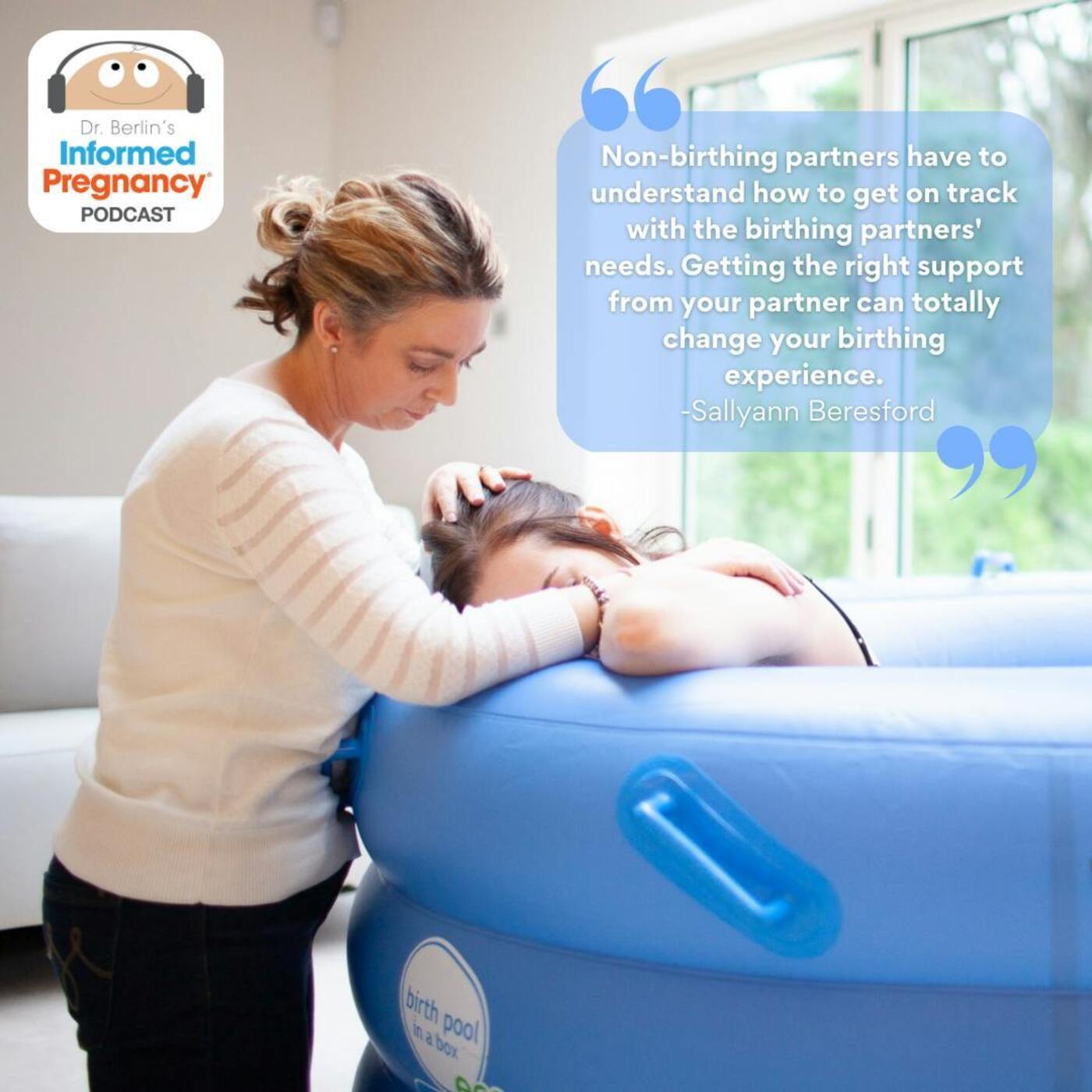
[43:39] of a difference they can make if they get it wrong. So when I was teaching this in my classes, people were going away and having really, really amazing birth experiences and coming back and saying, the reason I know it went so well was because I got the right support from my partner because they understood what to do. And it's, you know, that saying when you're a doula, being not doing, it's not about what you're doing, it's about what you're not doing. And you need to know what that isn't in order to, you know, does that make sense?
Dr. Elliot Berlin, DC [44:12] AC Yeah, it reminds me of jazz. It's all about the notes that you don't play.
Sallyann Beresford [44:17] Yeah, for sure. So I decided at the start of lockdown that that course would be made into a book because I couldn't go to work in the same way that I did before. So the weather was beautiful in England that whole spring and summer, we had the most gorgeous weather. No planes were in the sky. It was just all clear and so lovely. And I sat down and I put my heart and soul into this book, 22 years of doula experience and teaching everything I knew about birth and women. And I wanted the book to be for the woman as well. You know, there's a lot of partners that won't read, they won't pick up a book. So even for the women themselves to be able to write post-it notes on certain pages and
[45:05] say, right, if you only take away these five things from this book, these are the things I need you to know about me and what I want to achieve. So I wrote the book for everybody, for mothers, for sisters, for midwives, for doctors, for anyone that supports a pregnant woman or person on their journey to giving birth to a baby. And it isn't about a particular type of birth. I want her to focus on her plan A. What is her plan A? What does she want to achieve? And then how can we help her to achieve that? And as you go through the book, there's different chapters on where to have the baby. What are the stages of labor? There's different tips in there for the birth partner role in general.
[45:49] And there's one in there that I really feel is important, and that's control control, because some women really struggle to get out of their heads and into their bodies. And as a birth partner, you need to know that in pregnancy, you need to understand who you're dealing with and what they're like, because no one gets them more than you will. If you're their, you know, their romantic partner, particularly, you'll understand what makes them tick. And that is really important to me for you to be able to recognize when she's overthinking when she's overanalyzing, when she isn't relaxing. And, you know, I'm not suggesting that you look at her and go, well, I wish you
[46:31] just relax. You need to know how to help her soften, how to help her get into that parasympathetic nervous system that helps the body to open and dilate. And once you get that, that's where the magic really does happen. And these are the empowered birth experiences that women are telling me that they're having, because their partner understood the role of being, not doing. And for me, that was so important.
Dr. Elliot Berlin, DC [47:00] That's really powerful. You know, I've been to a lot of birth and sometimes I have the luxury of being at a birth with a well-seasoned, talented doula because I do bodywork. And so I get to sometimes just be a fly in the wall and watch amazing births, support people doing their craft. And what you're saying right now is just resonating hardcore how some of the best doula moments are just being there in the right way for that person. You also have a second book, The Art of Giving Birth, Five Key Physiological Principles. Tell me about that.
Sallyann Beresford [47:39] Well, understanding physiological birth was something that obviously it took me a while to grasp. And then Michelle Adant helped me to really get to know it through my work as a doula. And I didn't see a Caesarean section for 15 years, which I was so impressed with that none of my clients ended up in a Caesarean because they were able to understand just how their bodies were working. And once I got through the first book and had a year off, I decided that my second book needed to focus specifically on just physiological birth. So if you wanted to have anything other than physiological, this is not the book for you. And I came up with the five key principles quite easily.
[48:27] I'll tell you what they are. I sat down with a pen and a paper and I was like, if you could just choose five things, what would they be? And so the first one is to understand your hormones. And, you know, like I said, if you can really hone in on the importance of that production of oxytocin and to recognise how the body produces it, that was what I was keen to explore. And also that adrenaline isn't the enemy. Adrenaline is just really essential that it's only produced at a particular part of the labour and that you understand how it can affect you. So when you know yourself as a person, when you really hone in on the type of person you are, are you very into controlling things?
[49:16] Do you like everything to be a particular way? Once you can understand that, that's when you can learn more about how to ensure your hormones don't end up being produced at the wrong time, because you can work out by reading this particular part of the book, what you need to know about yourself. So to me, that was crucial that it was the first principle. The second one was to trust your instincts, because again, we've got these wonderful instincts, you've already mentioned them in this conversation, and we just don't lean into them enough. Learning to trust your instincts and learning to, you know, really allow your instincts to shine is essential for me.
[49:56] And I always say it's your greatest superpower. you know, once women can understand that it works well. The next one is to prepare your birth partner. So there's quite a lot of information in that chapter about the role of the birth partner and what they can do to ensure that you are well supported for a physiological birth because obviously that's what this book is about. Then it was about knowing your rights and this is a huge meaty chapter because there's a lot of information you need to know about your rights and how to practice things like saying no, not right now. Being able to remember that this is your body and you get to say what happens to it and what doesn't
[50:37] because I think that once you start to read more and more and Instagram's been amazing, podcasts like these are amazing for us to gain more confidence in our rights as human beings. But it's still hard when you're very heavily pregnant and you're vulnerable and you're going into conversations with people who aren't explaining risk correctly to you. They're giving you information that is a bit snidey and a bit sneaky and saying, oh, I know your risk doubles but not giving you that absolute risk for what you're experiencing. So getting into all of that nitty gritty was important to me and I wanted it all in that chapter. So the next one is to trust your body.
[51:22] And I put that last, you might think it should go first but actually it was last for a really good reason because when you get into all of the other knowledge and you've understood about your instincts and you know your rights and you really recognize everything else about your hormones, that's when you can really trust your body. Let go and get on with the job of giving birth to your baby. So those are my five key principles. I've also got chapters in there on birth plans, final preparations, and I also write, anyone can access the first chapter for free. If they want to, I can send a link for you to put in your show notes. But the first chapter is to understand
[52:02] the three different ways that you can give birth because for me, this is the most important part is that it's either physiological or it's not. You can't have it both ways. You either leave the body alone, untouched, unhurried, undisturbed, or you meddle. And if you meddle, it's no longer physiological. And when people grasp that, that's when they can have the most powerful experience because they recognize that even the slightest thing like a cervical sweep or other people recommending position changes, things that aren't instinctive and don't come from you, this is when we end up with babies that don't come out easily, that get stuck, that don't have easy journeys through
[52:45] because we're meddling.
Dr. Elliot Berlin, DC [52:47] Or as you mentioned, the purple pushing, which was one of my first observations about birth at home is one of the first home births I did. They never checked her cervix ever. And even though they could tell, until she asked for it, they never checked her cervix. When they asked for it, she was already 10 centimeters, but they suggested she probably was. And they didn't start coaching her and pushing. They said, when you feel like pushing, let us know. And it was over an hour that she was at 10 centimeters before she started pushing. She felt it and she moved along and I could just see how at the hospital, once they figure you're 10 centimeters,
[53:26] it's like push, push, push, push, push, and then it can go on for hours. Really interesting. Sally, and I learned so much from you in this hour and I appreciate you very much. I have your books, both of them, and I'm going to plow through them and try to learn as much as I can from your personal experience and your work experience and your deep wisdom that you've gathered and shared. I appreciate you. Where can we find you online?
Sallyann Beresford [53:54] So I have an Instagram handle at The Ultimate Birth Partner and I've got a podcast which is called The Ultimate Birth Partner Podcast. And I have a website which is birthability.co.uk. So you can find me there. But the best place is if you go to my Instagram account, I've got my link tree and all the links for everything on my link tree will help you to find whatever you need and as I say, you can download the free chapter of the book so you can see if you like it.
Dr. Elliot Berlin, DC [54:27] And just one more time, that Instagram handle is?
Sallyann Beresford [54:30] At The Ultimate Birth Partner.
Dr. Elliot Berlin, DC [54:33] At The Ultimate Birth Partner. And the two books are Labor of Love, The Ultimate Guide to Being a Birth Partner and The Order of Giving Birth, Five Key Physiological Principles. Thank you so much again for joining us. At home, thanks for listening to our podcast. We talked a lot about hormones and physiological birth and if you haven't seen it, I think this is an amazing time to check out the film Orgasmic Birth. It's currently streaming on Informed Pregnancy Plus, which you can access at informedpregnancy.tv.
Want more pregnancy + parenting? Start your FREE TRIAL of Informed Pregnancy+ and get access to all our curated pregnancy and parenting content — original series, iconic birth films like The Business of Being Born, prenatal workouts and more.
