
March 30, 2023 · 58 minutes · Episode 338
About this episode
Humanitarian and award winning actress Freida Pinto, known for her roles in Slumdog Millionaire and Rise of the Planet of the Apes, is about to become a mother. Freida shares her journey to becoming a mother and the differences between Indian and American birth culture.

Connect with Freida online: www.instagram.com/freidapinto
Keep up with Dr. Berlin and the Informed Pregnancy Project online!
www.instagram.com/doctorberlin/
www.facebook.com/InformedPregnancy
Learn more about your ad choices. Visit megaphone.fm/adchoices
See Privacy Policy at https://art19.com/privacy and California Privacy Notice at https://art19.com/privacy#do-not-sell-my-info.
Key quotes
“And I said something like, I wanna stand on the world stage and I want what I do to make a difference.”
“And in that moment well, I do want to share this because I think it's very important no matter how knowledgeable or informed or wise you think you are I feel somewhere deep down in the DNA of every woman Is ingrained some level of guilt some level of self-blame and some level of shame”
“And I don't wanna say birth plan because you can have a plan, but then sometimes something else might happen, which might shift your plan. And you just have to stay open to how best you can use this newly thrown curve ball into your plan and still make it your own.”
“And so I feel like on a big high level level, policy change is very much required. I mean, six weeks of paid leave will not cut it, you know?”
“Spend it on the things that are far more important, which is put the mother first, put the mother first.”
Related episodes
- Ep. 329 Valentina Trentini: After Birth
- Ep. 345 Selah Victor: After Birth
- Ep. 335 Natalie Dreyfuss: Before Birth
- Ep. 327 Valentina Trentini: Before Birth
Transcript
AI-generated transcript with speaker labels — may contain errors, especially names and medical terms. Dr. Elliot Berlin, DC appears in blue; Freida Pinto in orange.
Download PDF of the Transcript
Dr. Elliot Berlin, DC [0:55] Welcome to the Informed Pregnancy and Parenting podcast. I'm your host, Dr. Elliott Berlin. My guest today is an acclaimed actress originally from Bombay, India, who has captured audiences worldwide with her performances in award-winning films such as Slumdog Millionaire, Rise of the Planet Apes, and The Immortals. In addition to her incredible acting skills and career success, she's also a passionate advocate for women's rights and a dedicated humanitarian. Today, we'll discuss her journey through motherhood, including some of the differences between Indian and American birth culture. Frida Pinto, welcome to the podcast.
Freida Pinto [2:13] Thank you so much, Doc. It's so lovely to be on your podcast. I might have told you that the first time I heard of your podcast was through Mandy Moore because she had reposted some of the videos and I started going deeper and deeper and deeper down into your other episodes and guests and I just found it so informative. So I'm A, very happy that you're in my life and B, I'm very happy on many, many, many mother's lives.
Dr. Elliot Berlin, DC [2:38] Oh, thank you so much. That means the world to me, especially coming from you, such a giver. Let's start at the beginning. So you're from Bombay. What was that like growing up?
Freida Pinto [2:49] You know, very, very transformative. And I can say that now in retrospect, because obviously when you're a child, you're not thinking about this is going to be actually a very important experience in my life growing up in a culture which is so diverse, so secular. We have all these various religions that coexist in India. We have different people of different classes that coexist in India, in Bombay specifically. So I was too young to understand how that was going to shape me or inform how I look at the world and how open I will be to different opinions and different people. It really shapes up tolerance. So I really do credit my upbringing, my childhood in India and Bombay to being the
[3:39] open person that I can be today, even though, you know, we're just surrounded by Indians, no other people from other countries. But there is a lot that is going on within that beautiful, big, complex country and definitely complex city. What do you want to specifically know about my childhood? Because there's so much to it.
Dr. Elliot Berlin, DC [3:57] Well, I don't know. You're kind of an amazing person today. So I always wonder where that came from and how it was nurtured. Do you have siblings?
Freida Pinto [4:06] I do. I have an older sister who is four years older than I am. And when we were growing up, I really looked up to her and wanted to emulate her. I wanted to use clothes. I was all about hand-me-downs. Don't buy me new stuff. What my sister had, I wanted. And she kind of found them very annoying. You know, I was a typical younger sister who was just like, you know, following her around everywhere, wanted to live in her shadow. And she just found that, like her little baby pest, you know. And she loved me for that, but she also wanted me away from her. And like, you know, siblings go through sometimes in their lives. We had moments where we were close, the moments where we were not so close.
[4:49] And now we're inseparable. We're like each other's best friends. I rely on her for her wisdom and her perspective on life, which is different from. mind, but also complimentary, if that makes sense, I think I almost need someone like her in my life to make sense of what I am going through. And I have great perspective too, I would like to believe and you know, we share that with each other. But yeah, I think we're just so bonded. They're so close to each other.
Dr. Elliot Berlin, DC [5:20] Did you guys leave India for travel?
Freida Pinto [5:23] Together? Yes, we did. We traveled much later in life outside India. We went to Barcelona. In fact, just the other day she was sending me pictures about this fun trip we had when we went to Barcelona. When I was nominated to the BAFTA, she traveled with me with my mom to London. So that was a lovely experience. But I will tell you India is such a, like I said, a diverse country, you can find the landscapes and scenes that you see in let's say Switzerland, or Morocco, Afghanistan, or the beautiful beaches of Southeast Asia, you can find a little bit of all of that in India. And so my parents made it a point that we traveled and really got to know our country. And you know, my
[6:08] mom's brother was in the military in the army, and so in the armed forces. And so he was always posted somewhere in India, and we would go and visit him and from there use that as an opportunity to see more of India. So India is so diverse. I mean, I really there's just so much to see and I still don't feel I've seen at all. But my sister and I did make a lot of travel trips and you know, vacations together within the country.
Dr. Elliot Berlin, DC [6:36] How did you get into acting?
Freida Pinto [6:40] So I think a part of it was that it was kind of ingrained in my DNA even before I knew it, you know, I have a very dramatic godmother, my mom's sister, my mom can be very dramatic, but you know, it's all not professionally used, but somehow used in family life and everyday life. So I kind of think I inherited it from them. And my dad always says this, that if I became a doctor, or an engineer, he'd be very worried for me, because he just knew from the very beginning, I wouldn't be happy. That isn't what I was cut out to do. They saw me being creative from the time I was really, really little. Yeah, so I should tell you, I was born in a middle class family born and raised as a
[7:28] good Catholic girl, I went to Sunday school. And part of the reason why I enjoyed going to Sunday school was not necessarily, you know, being immersed in religion or Catholicism or any of that, it was really the extracurricular that I found to be very much part of it, which is I was allowed to write and perform my own plays. So I was, you know, always writing, I conducted the children's choir. So a lot of my, yeah, I did that. And I was very passionate about it. One of the things that I always, my sister actually reminded me and I feel like, even before I knew it, it was already my life's mission. I love watching other people shine. And I love being part of that
[8:14] journey, when someone is shining, you know, I love being someone who either set up the foundation or came while the foundation was already set and just kind of mentored or set someone forward. I just love the activity of doing that. And I think that has informed the producer in me without even knowing that I was already doing it. So that was what I feel like I already had cemented my place in the creative world in the producing world, very, very early on. And so acting happened. I think it was all about being in the right place in the right time. I started off as a model, wasn't interested in it, because no one wanted my opinion. And I had a lot of
[8:55] them. And I wanted to be part of the journey of creating a photograph or creating a video. And I was always told to just shut up and do the work. You know, just do what you've been told you're a model, just stand there and smile. And you know what, there's a time and place for that. And maybe I had way too many opinions, but I just knew that was not for me. And then I hosted a travel show and I traveled all over Southeast Asia. I traveled to the Fiji Islands for the first time, which is Asia Pacific, Singapore, Malaysia, Indonesia, like Thailand, like travel, travel, travel loved it so much. And just when that show was coming to an end, after nine months, I
[9:36] literally felt, oh my god, this is the end of my life. What am I going to do next? And then started the six month long audition process for a little film that we did not know was going to be called Slumdog Millionaire. It was just a little film that I went on audition for. And there were at least like 3000, 4000 other hopefuls all over the world. And so I really feel right place right time, passion, manifestation, always wanted to do this. That's where I landed.
Dr. Elliot Berlin, DC [10:06] Okay.
Freida Pinto [10:07] That's the start of my career.
Dr. Elliot Berlin, DC [10:08] The travel show around Asia sounds amazing. That's so good. Say good.
Freida Pinto [10:12] I don't know. Sometimes I really talked about the most silly things, but I really enjoyed it. I was like, this is a pillar. Sometimes it was really nothing to show when I just talk about a pillar. But anyway, I really enjoyed it. It really opened my eyes. I traveled so much within India and it really opened my eyes to culture, to again, respecting things that were different from how I was raised or who I was.
Dr. Elliot Berlin, DC [10:35] And you said six month audition process. Very long. What happens over six months?
Freida Pinto [10:43] So have you seen the film? Have you seen Slumdog Millionaire?
Dr. Elliot Berlin, DC [10:46] I haven't seen it.
Freida Pinto [10:47] Okay. You haven't seen it. Okay. So there are three age groups in the film. My character's name is Latika in the film. And there is a little Latika and then a teenage Latika and then not adult Latika, I wouldn't say I was like, you know, 14 year old, 13 year old Latika, and then a 17 year old Latika. And I was supposed to play the 17 year old, but when we started the audition process, they auditioned me for someone even younger and they thought they were going to shift all the ages. And you can only imagine the task that the casting director has upon her and the entire team as upon them to find the right children, to teenager, to slightly older teenager, to kind of resemble each other.
[11:29] Don't have to necessarily resemble each other, but feel like they're part of the same story. So as frustrating as it was for me, because I was like, I know you like me because I've been narrowed down to like the final 10, just give me the part, but they have to find the older character first. And they had to find the main male lead first and then match us all. So it was like a jigsaw puzzle. We really had to put it all together. And I feel like those six months auditioning for the film with Danny Boyle, wonderful, wonderful British director. I mean, literally, you know, made me who I am today was actually my acting course in a way I was going in every time they were
[12:11] throwing in new challenges, new hurdles, also testing my patience, also testing my level of commitment and dedication. And I feel like it was like a mini acting school for me. I've never been to acting schools or drama school rather. And this was like that course for me. That's still today. I still haven't been there.
Dr. Elliot Berlin, DC [12:30] That's so interesting. So on the job learning on the job learning. Yeah. Wow. Okay. So growing up in India, were you inspired by any particular type of entertainment? What were you exposed to? What, what did you long for?
Freida Pinto [12:44] That's a very good question. So my father loved old films from the Indian cinema and the Indian film industry is kind of very robust. We have, you know, the typical commercial films, but then we also have something that they call art house films, which, you know, gets like a negative connotation in India that it is slow and boring, but it is, and they're very, very well artfully done, but those were the films that my father really exposed me to. So there's this actress who I still say is my role model. She passed away in 1984, Smitha Patil. And she was absolutely brilliant, absolutely brilliant. We might just have to check the age edits 1984. I'm not entirely sure, but I think it was 1984.
[13:30] And so Smitha Patil, she was kind of a revolutionary of her time. She would play these female protagonist roles that were groundbreaking, that were bold, that were taking a stand that was, you know, against the patriarchy. And, and I just found it to be just so inspiring because that was not what we were necessarily always surrounded by growing up in India and cinema. But the roles that she took on really informed that if I ever did something, I wanted to feel that guttural and that it's like, it's coming from deep within my body. It is matched with my instinct. So those are the films that my father exposed me to. And then when I went to college, I studied film and literature, which
[14:14] was one of my subjects when I was studying English literature. And I was exposed to a lot of world cinema and Wonkar Wye became one of my favorite filmmakers and I still still date, you know, I still harbor the hope that one day I'll get to work with him.
Dr. Elliot Berlin, DC [14:31] So it was a conscious choice to, cause it looks like most of your work is in the British and US industry. Was it a conscious choice to not pursue Indian film?
Freida Pinto [14:46] Wasn't a conscious choice at all. It was just about going with the flow, really keeping my eyes open to what was being presented to me. I really trust that there is a force that that is greater than us, and some call it God, some call it the universe, call it whatever you might want to. But I feel there's a force and this field of energy that we all feed off. And if you kind of just stay committed to putting out what you really want to do and then going with the flow, I think it just leads you to your, it starts showing you the path. And that's exactly what I felt because, listen, Slondog Millionaire was going straight to DVD. A lot of people don't know this.
[15:31] This was the year of the recession. Warner Brothers was the studio that the film was going to be released under, our distribution angle, they were folding in. And we were going straight to DVD. This little film was never going to be seen by anybody probably. And then somehow we got into the Toronto Film Festival and all of us actors, nobody knows us. We've never done a movie before. We're just literally nobodies at this point in time. We walked down the red carpet, again, a very funny story. There was no press at the red carpet because they were like, who are these kids? Why should we come and take their photographs? So we had to hire our own photographs
[16:10] and basically stage our own red carpet and then release those photos because we had nothing. And it was all done in the most playful, innocent way because we were not thinking of becoming stars. We were just happy that the film finally got a chance that people were gonna watch it. We got a standing ovation at the end of the movie and from then on, it was nonstop. And that just made me realize that if I don't seize the opportunity and go with the flow, then this one will be gone too. So just stay open and just go with the flow. And that's how it happened. There was no conscious decision to be part of Hollywood. There was no conscious decision to just do British cinema or not do Indian cinema.
[16:51] It was just going with the flow. But I will tell you, when I was very, very young, I would have this vision that I was on a world stage. And I don't know what that really meant because my Sunday school teacher asked me the question, like, so what do you wanna be when you grow up? Typical question you ask every kid. And I said something like, I wanna stand on the world stage and I want what I do to make a difference. That's all I remember. And I don't know why I said that. She still reminds me that I did. And I actually remember that I did say that. So yeah, just following my path.
Dr. Elliot Berlin, DC [17:24] And you've only grown from there. Before we jump into your new role as a mother, do you have a favorite role that you've played and something on your wish list that you hope to do?
Freida Pinto [17:38] Yeah, one of my favorite roles that I played was this TV show called Gorilla. It was on Showtime and Sky Atlantic in the UK. And it came at a time when I, various reasons, I think the role was beautifully written, super radical, very required. It was also very misunderstood when the TV show came out. It felt like I was taking away roles from other people, from other communities, but actually that wasn't true. There was a lot of true inspiration behind the character that I played. However, despite the backlash the show got, I realized how proud I was of the role and that no amount of backlash could make me not feel proud of it or no amount of backlash could make me regret it.
[18:26] And that just made me realize I had grown in my profession, that I was fully committed and that I was fully taking responsibility. And I went into it with my eyes open and I walked out of it with my eyes even more open.
Dr. Elliot Berlin, DC [18:40] Wow, that's so powerful. That's so powerful. And wow, what a distance from when you were modeling and they were just like, shut up and… Shut up and pose.
Freida Pinto [18:51] Down there, yeah, pose.
Dr. Elliot Berlin, DC [18:53] And then what about aspiration, something you'd like to do?
Freida Pinto [18:56] Yes, something I'd like to do. There's a lot that I would like to do, but I think from the point of view, I do a lot of drama. I should just say that I do a lot of drama. I have a tempted comedy and I do like it. But one thing that I'm really hoping to do is a really memorable rom-com because there are many rom-coms, right? There are many, many rom-coms, but a memorable rom-com would be Bridget Jones' Diary. So I'm really hoping to do a memorable one.
Dr. Elliot Berlin, DC [19:26] Well, I'll watch that.
Freida Pinto [19:27] Yeah, I know you will.
Dr. Elliot Berlin, DC [19:29] You know, I always feel bad because I don't really watch TV and movies because of my face blindness. So when a character comes out and then goes away and comes out, I'm like, who's that? Every time, every time. It's the most annoying thing for me or for anybody around me. It's like hard work to try to follow things. But I will watch your memorable rom-com. Okay. Let's take a little break. When we come back, we'll find out how you got from there to motherhood and how that's going. We'll be right back.

Dr. Elliot Berlin, DC [21:35] Welcome back. We are talking to Frida Pinto. Okay. Now you don't live in Bombay anymore. Where do you live now?
Freida Pinto [21:42] I live between Los Angeles, California, and Austin, Texas now, but I do go back to Bombay every now and then. It's been a few years. Actually, I'm going back next week. I'm so excited.
Dr. Elliot Berlin, DC [21:54] Oh, wow. How nice.
Freida Pinto [21:56] Back in I think almost three years now because of the pandemic, I didn't travel much. And then I had a baby, so I didn't travel much, but home now is between Los Angeles and Austin.
Dr. Elliot Berlin, DC [22:08] How do you like US living?
Freida Pinto [22:10] I do love it quite a lot. I feel this is my home and I don't know where else I would be at this point. The two cities I mentioned have an equal measure hold importance in my heart, in my growth, in my friendships, and my friends who have become family. And also Austin, I particularly chose for peace of mind. I love Los Angeles, but I couldn't be here all year round. There is a certain frenetic energy that I enjoy, but I can also feel very anxious in that frenetic energy all the time. So I escape every now and then. So you have the recharge, exactly the recharge, the rethinking what creativity really means. And I feel I can do that in more quiet spaces, quiet places.
[22:57] And I will say I've been talking about the American dream quite a lot, especially after this year's Oscars, even more so. And there is still in my mind and in my heart, I do believe that this is still the land of opportunity. It is still unfair in many, many ways, in many ways. And no country is perfect. Neither is India. No country is perfect. But this country still presents a lot of opportunity, and I also believe hard work always pays off.
Dr. Elliot Berlin, DC [23:28] I mean, I think that's true. Everything that you just said, I agree with. And how did you meet your partner?
Freida Pinto [23:35] I met my partner when I was filming in New York. I was filming this TV show called The Path. And my co-star, Aaron Paul, the most loveliest person ever, he loves love. He loves the idea of love. He wants all his friends to be in love. And I was not in love at that point in time. I was living in New York for the first time. It was actually a dream, by the way. I always wanted to live in New York. But for some reason, I was always working and traveling. And so LA became home based. And then this TV show presented this opportunity for me to live in New York. And I was living my best single life, going on noncommittal dates and truly enjoying life.
[24:16] And then Aaron decides to kind of put a little twist to my single life. And he goes, what kind of guy do you want to date? You see, I feel like you go on a lot of dates. And what kind of guy do you want to date? And I was like, Aaron, don't match me. Don't set me up. I am not ready for that. And I also don't want to do that because what if this person you know you set me up with ends up being a D bag. And then I have to come back to set and look at your face for the next six months. Don't do it. Don't do it. Don't do it. But he's very stubborn. And I'm so glad that he is stubborn and so full of heart. He introduced me to his best friend, Corey.
[24:56] Oh, because the two things I said was because he said, what kind of a person do you want? right. And I just had to kind of shut him up. And so I just said, someone who operates from a place of spontaneity and someone who just loves travel and culture. And I just left it at that. And there you go. The next thing, you know, he's introducing me to his very adventurous friend, Corey, who's traveled to more than 68 countries. And basically more than 68 countries has literally has a truck and a tent a catch to his truck, loves to camp, almost never says no. If there's a plan, yeah, he's in. So it's amazing that I just said it and he just knew it. Make a really, really well. Thank you. Aaron Paul.
Dr. Elliot Berlin, DC [25:43] Aaron Paul needs an app. That's so cool. Okay. And then how long have you guys been together now?
Freida Pinto [25:53] We've been together now for about four and a half, five years, actually five years, but we've been married for two years. Yeah.
Dr. Elliot Berlin, DC [25:59] Congratulations. And like starting a family was motherhood, parenting family, something that you had thought about, you know, either as a kid or teenager, or when you started to date and together, how did that come up for you? And what kind of thoughts did you have on it together?
Freida Pinto [26:17] So when I was a kid, for sure, I thought of myself having a wedding and I would get married. And I thought of myself having kids. And you know, most of these things I thought would happen when my mother had kids, which was around the age of 26. And I was born when my mom was 30. So I thought somewhere in the twenties, all of this would happen. But my gosh, doc, the twenties are so confounding. And I would never want to be anywhere in my twenties again, teenage years. Great. I wouldn't mind going back there. Thirties. Great. I wouldn't mind going back there as well. Cause I'm almost towards the end of my thirties. I'm looking forward to the forties, but oh my God, please do.
[26:59] I am looking forward to my forties. I hear it gets even better. I mean, I feel better every single day, but the twenties were really not good. I really did not know who I was in my twenties. I was, I was really trying to figure things out. I was always left confused. I felt like I had good instincts, but could never really reach out to them. Also, you know, a huge thing happened in the twenties, which is my career. I struck this pot of gold and slumdog millionaire and life just changed very dramatically. So there was a lot of adjusting to do in my twenties. So I actually stopped thinking about kids and marriage and all of that stuff. You know, I was somewhere in my late twenties,
[27:44] early thirties in a very toxic relationship and I needed to get out of it, but somehow I found myself going deeper and deeper into it. And then a year and a half later when I got out of it, which is when I went to New York, I was like, don't get me anywhere close to the idea of a relationship that could turn into a marriage and don't get me anywhere close to the idea of children. I just ran away from it. I was like, it's not for me. It's not for me. And my sister kept saying that to me. She goes, you know, it's a good phase that you are in. Just be in it, think about it, but also don't make final decisions in this phase, because I think you're going to change your mind when you meet someone you
[28:23] really want to partner up with. And well, that was Corey who was very sure he wanted to be a dad. Very, very sure. All he wanted to do was be a dad. And on our very first date, I will never forget it was a lunch date because I don't do dinner dates and drinks if I'm meeting someone for the first time. I do lunch and coffee, which I know is so unromantic for a lot of people, but whatever. That's how I do it. It seems pretty LA. It does it to me. Okay, good. Maybe somebody deep down I've become very LA and I don't realize it. Anyway, I had lunch with Corey in New York and after the lunch, he texts me, you know, we're going to get married, right?
[29:06] And I'm going to marry you. I don't want to ever speak to this person again, how very bold, but how very interesting as well. I was both attracted and both put off at the same time and say he was right. He was right. He knew it. And, you know, as I've been continued dating Corey and realized that this man doesn't trigger my anxiety, does not make me feel like I have to be on, you know, I don't have to always be on. I can just be myself. That's when I realized I wasn't something different for the first time.
Dr. Elliot Berlin, DC [29:44] Well, that's pretty powerful, too. You have all these like powerful milestones.
Freida Pinto [29:51] I think about all of them in retrospect. I think about things now in the moment because I'm also a mom and I think it has really kind of. Harnessed my ability to really tap into my instinct and feel confident about it But a lot of things I do think of in retrospect as well. Oh that happened for a reason I can see the picture now I didn't see it back then or in that moment. I knew something magical was happening, but I see how it all played out It's kind of beautiful. I think some of my stories come from that the stories that I want to tell Yeah, what you know, yeah
Dr. Elliot Berlin, DC [30:27] Once you decided on kids did pregnancy come easy
Freida Pinto [30:32] Pregnancy came very easy But the first pregnancy did not stick and that wasn't easy at all This um a miscarriage. Yeah, I Thank you. I never thought that I would ever have miscarriage I'm sure most women don't think that way but more so because I you know you As a woman who gets pregnant you think health is paramount and yes All of that is paramount like you've got to be healthy. You've got to be rested all of that stuff is important, but there are other things that are not in your control and that design is also dependent on what is going on internally and what is going on with the conception, you know and the pregnancy that I had was defined as a triploidy which is a chromosomal abnormality and
[31:26] The pregnancy wasn't going to stick anyway, you know, I was in my 12th week and that's when We couldn't find the heartbeat and it completely destroyed me And in that moment well, I do want to share this because I think it's very important no matter how knowledgeable or informed or wise you think you are I feel somewhere deep down in the DNA of every woman Is ingrained some level of guilt some level of self-blame and some level of shame And the first thing that came out of my mouth when nurse practitioner is trying to find the heartbeat and she couldn't find it And she said oh mama I can't find the heartbeat and she held my hand and the first thing that came out of my mouth was
[32:06] Is it because I exercised too hard? Oh my goodness And I don't even know how I put that in my head I couldn't even stop it I just blurted it and the next thing I said was is it because I took my thyroid medication too late and None of it was connected to why I miscarried, but that's how you know, we all think and Well, it took me a while to come out of it. Luckily and unluckily for me. I was filming I was in literally in the middle of filming a high-octane thriller Where I had to scream and cry and then be scared And run and I had an emergency DNC This was all in Albuquerque and I found the most amazing MFM in Albuquerque who supported me. Dr Rumer and I feel like that was a very eye-opening experience for me really really eye-opening
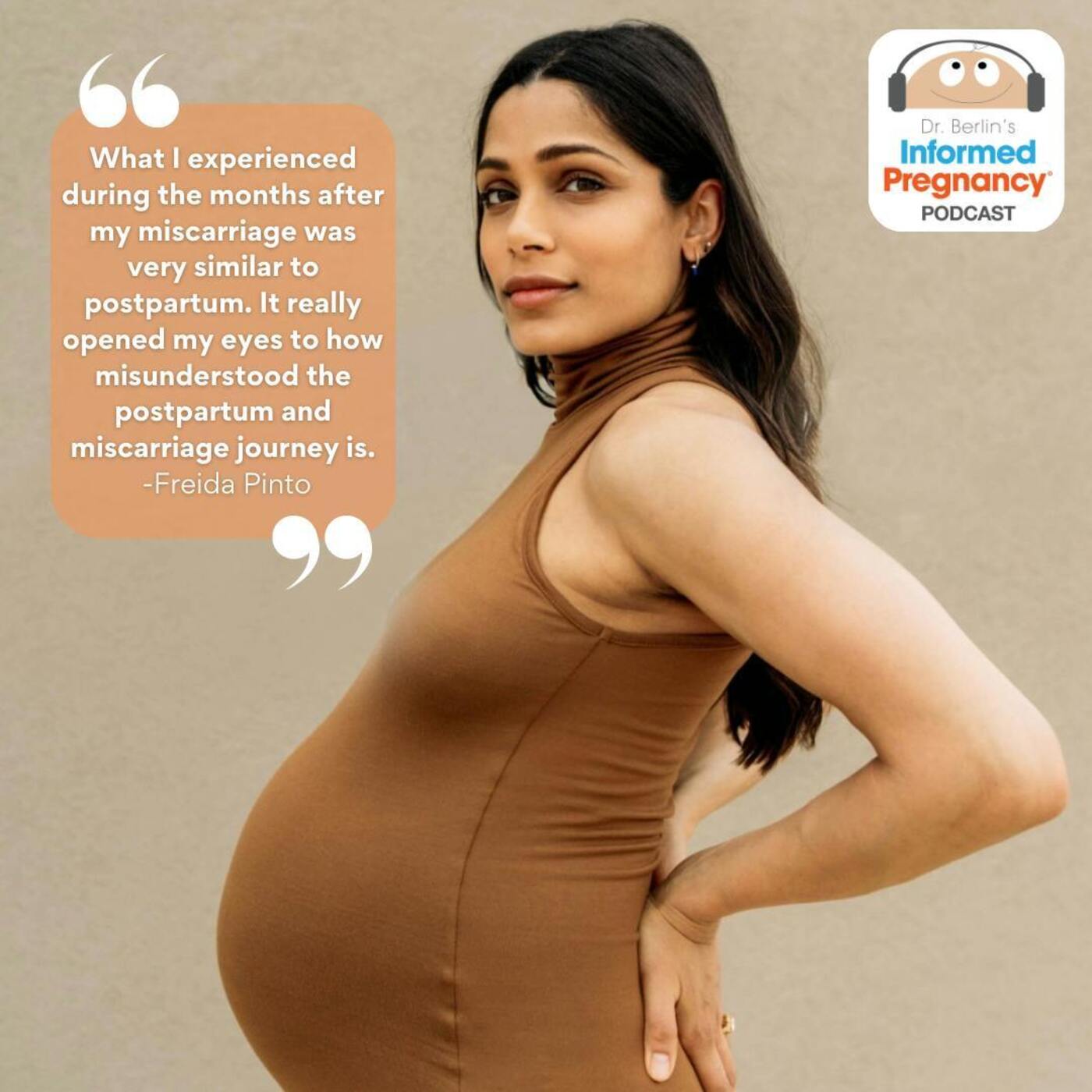
[33:02] Because I was not only going through you know, the pregnancy was actually very hard the first pregnancy I always had a lot of back pain. I was very very nauseous. I could barely eat It's always super tired and I did not connect any of that to oh the pregnancy won't last because a lot of women have Difficult pregnancies and they go on to have healthy babies That part of the pregnancy correct, correct, and I didn't think of it I didn't make much of it But I think it was very eye-opening because what I experienced during the months following the miscarriage was very much a little bit Like postpartum, you know halos Hemorrhoids Physically like postpartum
[33:44] Physically like postpartum and I wasn't even thinking postpartum because why would anyone be thinking postpartum, you know When you get pregnant you're thinking about the joy of the pregnancy and the discomfort that you might be feeling with the pregnancy but you don't ever think of postpartum and it really opened my eyes to a how misunderstood the postpartum journey is Because it kind of almost hits early on in a miscarriage if you end up going through it But also we are never prepared for it Never prepared for it. So it's super interesting to me
Dr. Elliot Berlin, DC [34:18] Obviously miscarriage is pretty common. I only say that now, you know that miscarriage is pretty common especially in the first trimester, although 12 weeks is very hard and The reaction that you had is pretty typical of what I see a lot of you know, not just sadness But you know, what did I do wrong? And more often than not it's almost like your body did something right which was to identify this as a non-compatible with life pregnancy Self-terminate and get ready to start again But what I never thought about until this moment is the postpartum Element after a miscarriage. I never thought about that, but it makes so much sense
Freida Pinto [34:59] it makes lot of sense. And I had someone really important in my life at that point who held my hand through it all. Her name is Alisa Vitti and she's written two books. The first one's called The Woman Code and the second one's called In the Flow. And it's all about hormones and it's all about what happens with your body through your menstrual years but then also around pregnancy and then postpartum and then finally menopause and beyond. And so I kind of really reached out to her and I told her I'm experiencing something that I never thought I would experience. I'd never had hemorrhoids and the miscarriage, the emergency DNC that followed that then led
[35:37] to other gut issues which by the way was also made worse because I was filming night shoots, 11 continuous nights right after the miscarriage. So it was brutal, absolutely brutal. No one knew I was pregnant and hence just a few people knew that I had a miscarriage because I had to take one day off. I just had to take one day off. And then I came back and then there were these running scenes and whatnot. And I had excessive bleeding actually after my emergency DNC which is why I had to take the one day off because I was in the hospital getting bags of blood. And it was also now on a mental level very traumatizing because I wanted to mourn but at the same time I just wanted to get my job done and I just felt like this was my
[36:24] responsibility. I cannot let down an entire production and I also looked at it as a way to escape the pain. But when it all got done, when we finally ended up filming, ended up wrapping the movie, I went back to Austin and I just started eating anything and everything I could. Things that were self-sabotage-y, things that just felt good at that moment and that also affects how your body heals. I learned that the hard way and I don't regret doing any of that but it took me a month and a half to recover from what I was putting myself
Dr. Elliot Berlin, DC [37:00] through. I mean I just can't even know how hard that is to go through just by itself but then to just have to like be so on and on camera, just on camera and on camera and active and as if nothing happened and surrounded by people who have no idea that this is what you're
Freida Pinto [37:18] going through. I remember that my costume, I had to tell my costume department, the head of the department, I had to tell her because I had to wear these pads to absorb the blood loss which means the way my clothes would fit would also look weird you know and so I had to tell her and the way that the three women from the department stepped in and held me so close because most of the project was surrounded by mostly men and I did not know who to reach out to and I finally told Alexandra one of our female producers but I also told the costume department and gosh it just makes me so emotional the way they held space for me every single day just made me feel like I wasn't alone even though it felt like a very lonely experience
[38:05] I felt like that space was held for me and the other person I actually want to credit is actually my trainer Patrick Murphy who actually introduced me to you as well he also held space for me because I had to kind of physically stay active in some way shape or form for this film you know and he tailored and changed everything about my workout routine to just help my body cope through what it was going through and I think all of those elements really came together for me and last but not the least Corey like he literally drove down back from Austin this was all during the pandemic drove back from Austin stayed with me and really really took care
Dr. Elliot Berlin, DC [38:42] of me wow I'm so sorry that you had that difficult experience and I'm glad for you that you were able to find support it sounds like some really solid support and I'm grateful to you for sharing because I say it all the time it's conversation that needs to be had and isn't had on a wide enough scale so thank you let's take another little break we come back we'll find about your recent pregnancy birth and postpartum we will be right back welcome back to the podcast we're talking to Frida Pinto okay now you have a child how was your pregnancy your second pregnancy through the trimesters my second
Freida Pinto [39:35] pregnancy wasn't again getting pregnant wasn't difficult either partly I credit that to my brain that operates like a scientist at times which is with my first pregnancy and also my second pregnancy I tracked everything from ovulation days and you know I knew which phase of my menstrual cycle I was and I was very much on top of it and very very in tune with my body so after the miscarriage after I took about a month and a half to really kind of heal my body and prepare my body once again it really didn't take me very long to get pregnant again I was pregnant four months after my miscarriage and I was on another film set in Ireland this time in
[40:19] a corset how do you do that I was shooting a period film that I was also producing and I was trying to get this film off the ground for four years and finally it happened and I also got pregnant at the same time and again on the first day of filming I literally knew I was pregnant and did not tell anybody but I did tell my co-star like I was saying it changed my perspective on early sharing my miscarriage and this time around it was largely a female driven project as well I took a lot of people into confidence and I told them and I also told them I was very nervous and very scared because the miscarriage experience had marred me a little bit scarred me a little bit and had made me very anxious so I had enough support from the
[41:05] very beginning and by the way this time around I did everything differently I did not do any kind of early screening I just went with my gut instinct I did call Dr. Rumer from Albuquerque far too many times but to tell him I was scared and nervous and he really encouraged me to just stay with my instincts he was like you're gonna be fine what has to happen will happen but you're gonna be fine and it was you know apart from the bloating but I've realized now that one of my biggest telltale signs that I'm pregnant is really not my pregnant tummy is my bloating I bloat immediately through both these pregnancies and it was wonderful I did not have the back pain that I had last time I had the mild nauseous feeling
[41:49] I managed to eat bland food through it all I managed to work out through the entire first trimester with Patrick Murphy it was a very largely different experience and it baffled me how four months prior to this pregnancy the previous pregnancy was riddled with so much more pain and discomfort and like I said in this movie I was in a corset so somehow I got through it I got through my entire first trimester filming this movie called Mr. Malcolm's List in Ireland and not a single screening just you know keeping myself as healthy as I could keeping myself active and keeping my brain as calm and my mind as calm as I possibly could that was my first trimester did you work through the other trimesters I worked through
[42:34] my second trimester as well not in a corset not in a corset but in a Christmas movie which you know you don't want to see it was not a pregnant character but I'd already signed onto the movie and then I told the director that hey you might want to recast me because my character because I'm pregnant and I'm more than happy to shoot while I'm pregnant I don't have an issue shooting while I'm pregnant but I will be showing somewhere through the filming of this period and this movie and they were like confident they could shoot it in ways that you not see my pregnancy and actually I do believe that you see my pregnancy a little more in my in Mr. Malcolm's List than you see in the second one really because yeah because I
[43:17] was so bloated in the first one that and not a lot of people knew that I did have to somehow slip it in to the producers and then the DOP found out and was trying his best to shoot without like and also you don't think someone is going to be looking pregnant in the first trimester but I feel like my corset did push out at certain points and I was like oh god release the corset whereas the second one we just can't shoot certain angles and it was out there in the open everyone knew I was pregnant but it was fun I had so much fun I was shooting in London and by the way all during the pandemic so there was a level of fear which is oh my god I don't want to get sick and I don't want to be ill but at the same time
[44:00] there was this excitement that I get to stay active and I get to do a thing I love and make these memories with this child who is soon going to be born you know first credits first credits my gosh yeah he was in every film I did what were your thoughts during pregnancy what influenced your thoughts on how to give birth I think that's again a very very good question so after the miscarriage my focus had actually shifted from preparing for the trimesters to preparing for the postpartum journey and that became something that took a lot of importance in my planning head because of what I had experienced but because of what I had constantly was told by my American mother friends that their postpartum journey was brutal
[44:51] that they had pelvic floor dysfunction that the doctors didn't listen to them and then they would start sharing their birth stories to me and telling me how certain interventions were forced on them, or they were made to feel scared that this intervention was required. And so I kind of backtracked a little bit and I said to myself, now I need to plan what this birth is gonna look like along with the postpartum journey. So I read a book called A Guide to Childbirth by Ina Megatkin, who is, I guess, Tennessee's most acclaimed midwife, I would say America's most acclaimed midwife. And the first 60 pages of the book are all about various women who have had their babies with Ina Megatkin,
[45:35] all of their birth experiences and how varied they all were. And some of them were having their first child, and some of them were having a V-back, and some of them were having their third child. And it was insane how different and vastly different each woman's experience was. And I really took that all in. I absorbed all of that. And I sat with all of the stories and started envisioning what I would want my birth to be like. Now I did choose Austin to be the place where I would give birth. And I did choose a hospital where I would give birth, but I was very clear to myself, my doctor and my husband, that I wanted to labor as much as possible at home
[46:15] in the comfort of my home. And I was also very clear that I had a birth intention. And I don't wanna say birth plan because you can have a plan, but then sometimes something else might happen, which might shift your plan. And you just have to stay open to how best you can use this newly thrown curve ball into your plan and still make it your own. And so I had intentions. And with intentions, you can mold around it. My intention was I wanna have an unmedicated birth. I wanted to labor on my hands and knees because that's my most comfortable position. I have a lower back issue, a chronic lower back condition. And I wanted to push on hands and knees
[46:56] if the doctor would allow it because I know that Western-trained OB-GYNs are not necessarily trained in any other position other than being on the back. So I was aware of all of this. I had read all of this in Ina May Gaskin's book, but I would advocate for myself and my husband and my postpartum doula would advocate for me as much as possible. And I will say that 98% of my intentions were met by myself and by my doctor and by everyone surrounding me. The 2% that I kind of felt like take the path of least resistance, you are about to push this baby out is when the doctor did not allow me to push on my hands and knees. And she put me on my back
[47:37] because I did not have an epidural. And in her mind, that would have been the better way to go. Anyway, path of least resistance, I could hear Corrie really advocating for me. No, she wants to go hands and knees. It feels better for her. I could hear Jillian, my postpartum doula go. And I looked at both of them. Looked at my doctor. And in the state of like trance-like state, I was like, we're not gonna argue right now because I don't see her changing her mind and this might turn out into an argument. I will make this as comfortable as possible for me on my back and let's go for it. And Rumi came 10 days early kicking and screaming, six hours of labor.
Dr. Elliot Berlin, DC [48:14] Six?
Freida Pinto [48:15] Six.
Dr. Elliot Berlin, DC [48:16] Wow. Wow.
Freida Pinto [48:18] I had a very Hollywood kind of laboring experience. You know, they say your water almost never breaks. I had my water break all over my carpet.
Dr. Elliot Berlin, DC [48:27] Oh, at least you're home.
Freida Pinto [48:29] At least I'm home, exactly. I had all of that happen. I was like, oh, you told me this almost never happens. It all happens in a hospital or someone kind of breaks your bag of waters, but my body did it for itself.
Dr. Elliot Berlin, DC [48:40] Okay, so why was unmedicated important to you?
Freida Pinto [48:44] It was important to me because throughout my life, I've had this one kind of, I don't know how to put it, it's not a mantra really, but it's just something that I believe in, a belief that I want to experience and feel everything and be very aware of what I'm feeling experiencing and be very present. And I'm also aware of my threshold for pain. Like I have high pain tolerance, so I was aware of that as well. And so going into it, I knew it was also a mind over matter kind of thing and that I was doing pretty well with my yoga and my breathing techniques. And I was also inspired by the things that I read in Inami Gaskin's book. So I kind of really wanted to enjoy
[49:22] what my ancestors enjoyed if it was written for me.
Dr. Elliot Berlin, DC [49:26] So in the end, you did that. What were the sensations that you had?
Freida Pinto [49:32] Oh, I will never forget. I won't be able to recreate that pain in any which way. I don't even want to call it pain because it's even higher than pain. It's not painful, it's out of this world, but the pressure that I felt in my abdomen, it was almost like it zapped the air out of my body. It literally was like I couldn't breathe. Like I was winded every time a contraction came by. And I remember that it just like put me in this trance like phase where I was not moaning very loudly. It was just like, like my breath was just taken away from me and I was finding deeper and deeper and deeper places to go to find new air. Like almost creating an imaginary lung for myself, you know, two imaginary lungs outside
[50:21] of my body. So it was a very out of body experience. And I will say this, which is kind of scary to say sometimes, but I will say I will do pushing a baby out without an epidural any day over breastfeeding because the initial days of breastfeeding were possibly the most confusing. It almost like kind of demoralized me at times because it was so difficult. Well, in the end, I breastfed Rumi for, you know, 16 months, I still nurse him sometimes. The initial days of breastfeeding, God, I wasn't prepared for it.
Dr. Elliot Berlin, DC [50:56] Okay. So that brings me to my next question, because I know you were concerned about postpartum. I mean, with breastfeeding being that much of a struggle, that can't be helpful on top of everything else that happens postpartum. So like what was your general postpartum experience? A, how was it and how was it compared to what you thought it would be? And then B, how did you deal with breastfeeding struggles?
Freida Pinto [51:22] Yeah. So along with reading Ina Meghaskan's book, I had read another book by Kimberly Ann Johnson called The Fourth Trimaster. Now I'm not a lot about reading books and then, you know, because you can't put a mother in a book, you can't put a baby in a book. Everyone has their own individual experiences. But culturally, I come from India, so I was already informed with the wisdom and the knowledge of age old practices from Ayurveda and how you help with the postpartum journey and help mothers cope to the postpartum journey. So I knew I could create a postpartum sanctuary for myself, for the physical healing, which will then also have its benefits on mental healing and just
[52:01] taking time to yourself, et cetera, et cetera. I had my mom with me from India. I had my postpartum doula. I also had support from my Ayurveda consultant here in Los Angeles. So in many ways, I felt like I was cocooned into a space of a lot of warmth and nurturing and nourishment. Food wise, I always say, you know, it's really important. The first meal that you have at the hospital or after you've given birth. Yeah, go out, do whatever you want to. But like just make sure that you're nourishing your body. So my first meal was a warm broth with chicken and vegetables and rice. And I just wanted it to be that way. It felt so nourishing. But then as I progressed and my first three months was brilliant, by the way,
[52:45] brilliant, because I had so much care. But the breastfeeding journey, I don't think I could ever be prepared for that. I had done a lactation course just to help myself understand what I was going through, but Rumi had his own plan. He wanted to have a very shallow, interesting latch that only made my nipples hurt and bleed. And in the middle of the night, feeding, when I would hear him crying and, you know, he'd be brought to me, my toes would just curl from the pain I knew I was about to experience. And I would literally sit in bed and cry going, I don't want to give up. I want to keep going, but why is it so hard? Why is this so hard? Everything else is, you know, my body is finding its way to come back
[53:32] and come back, by the way, not snap back to what it was before, but find its place to heal. But why was breastfeeding so hard? It took me about two months to figure out our little, you know, compatibility with breastfeeding. Rumi and I really struggled. I mean, he struggled because I was always in pain, but he got fed. He was properly fed, no problem, but it was very hard for sure. It's just a warrior mentality that you're going to get through it.
Dr. Elliot Berlin, DC [53:59] But it sounds to me like I would have quit.
Freida Pinto [54:01] And, you know, if someone wants to quit because it's really hard, then so be it. There is nothing wrong in it. Everyone needs to choose what is right for them. I just have a don't give up mentality, which is sometimes doesn't work in my favor, by the way. But in this case, it works out just fine. Cause sometimes it's okay to give up. It's really okay to give up. You don't kind of become a smaller person or a weaker person because you've given up. You've made a choice for yourself. And that in itself is a very strong thing to do.
Dr. Elliot Berlin, DC [54:29] Well, Frida, you just made me feel a lot better about my hypothetical mommy self, struggling with postpartum and giving up. So a couple more questions as we're tapering down here. Number one, your postpartum cocoon that you created sounds very much like how things might've been, you know, a century or two ago, where you are just surrounded by people from your family, your village, whatever that is for you nurturing. you're supporting you and helping you. And it sounds like that kind of really worked for you. Would you sort of compare Indian birth culture to U S birth culture? And are there things that we can learn from and improve here?
Freida Pinto [55:16] Yeah, so much, so much because they're vastly different. There is a very go, go, go competitive, comparative foster is better mentality here in the United States. Snap back, you know, go get snatched again. Like it's just very depressing when a woman has just gone through this complete body opening transformative experience and is then asked to just shut down and pretend like nothing happened and just get back to work. And so I feel like on a big high level level, policy change is very much required. I mean, six weeks of paid leave will not cut it, you know? And in some cases that doesn't even exist. As we all know that that doesn't even exist.
[56:02] So on a policy level, there's a lot that needs to be done. On a more familial level and a more community level, I think understanding what that postpartum journey is for a mother, for a new mom, or for a second, third, fourth time mom is very important. Family members need to understand what they're walking into and the expectation to just snap back is something that they have to realize is something that the society and the system has put on us, but it is not natural. It is in no way is natural at all. Sorry, if you can hear Rumi crying, can you? If you can't, it's fantastic. So I feel making space for a new mom. One of the things I always say, you know, baby showers are huge in
[56:49] this country and people love doing big celebrations on finding the gender of the baby and whatnot. If we can spend our money for our friends, our family members on helping them access things like a postpartum doula, because those things are expensive and policy change, as I'm talking about it, insurance doesn't cover that. It's brutal. It's absolutely brutal. It's expensive. And it's not lost on me that I speak from a place of privilege that I can actually have access to these things because my money can pay for it, even though my insurance doesn't. An education about what your body is going through. So basically helping the mother through meal trains or subscribing them to some
[57:30] kind of a meal service, helping them have access to a pelvic floor therapist. The first 30 days if possible to really help the mother just rest and recover because a nourished mother is equal to a nourished baby. So instead of spending money on a new fancy crib and lots and lots of newborn clothes, which quite frankly, the baby never wears. I've now seen that the baby's in a nappy or a diaper the whole time. So don't spend the money on that. Spend it on the things that are far more important, which is put the mother first, put the mother first. And I can go on and on, but there's books and books available out there. I really highly recommend reading Kimberly Ann Johnson's book,
[58:10] the fourth trimester. I also recommend reading, you know, May Gaskin's book. There's information out there on how we can help moms. And by the way, if I have to plug in something that I am working on, I have the chief impact officer of a brand company called Anya, where we are providing verified information from resources like Ayurvedic consultants, acupuncturists, chiropractors, pelvic floor therapists, OBGYN, postpartum doulas, all on their website for free. And the subscription is for products, but all of that information is available. Not Dr. Google, go away from Dr. Google. Dr. Google is damaging. Dr.
Dr. Elliot Berlin, DC [58:50] Google speaks so many languages. All right, Frida, thank you so much. This has been an incredible episode. I learned a lot and I really appreciate you sharing your personal journey with us. Where can we find you online?
Freida Pinto [59:05] On my Instagram account, which is at Frida Pinto, F R E I D A Pinto. I don't do anything. I don't tweet and I am not on Facebook. I'm not a big social media person, but if I have something important to say, I always find my way to put it out there.
Dr. Elliot Berlin, DC [59:22] Okay. Well, I'll look for you there on Instagram. And one thing I wanted to tell you is we are doing on informed pregnancy plus a video streaming platform, a series called baby booknuck, which is a video reviews of books related to pregnancy, parenting, and postpartum. And two of the books on our list are the fourth trimester and IMA's guide to childbirth. So we'll have them up there pretty soon. Those are two great recommendations from you and we'll be covering them. Thanks again. And at home, if you want to find us online, you can visit informedpregnancy.com.
Want more pregnancy + parenting? Start your FREE TRIAL of Informed Pregnancy+ and get access to all our curated pregnancy and parenting content — original series, iconic birth films like The Business of Being Born, prenatal workouts and more.
